

Lifetime economic impact of the burden of childhood stunting attributable to maternal psychosocial risk factors in 137 low/middle-income countries
Open accessThe DOI matches its Crossref record; 40 of the 40 references it cites were found in a registry or an index.
Abstract
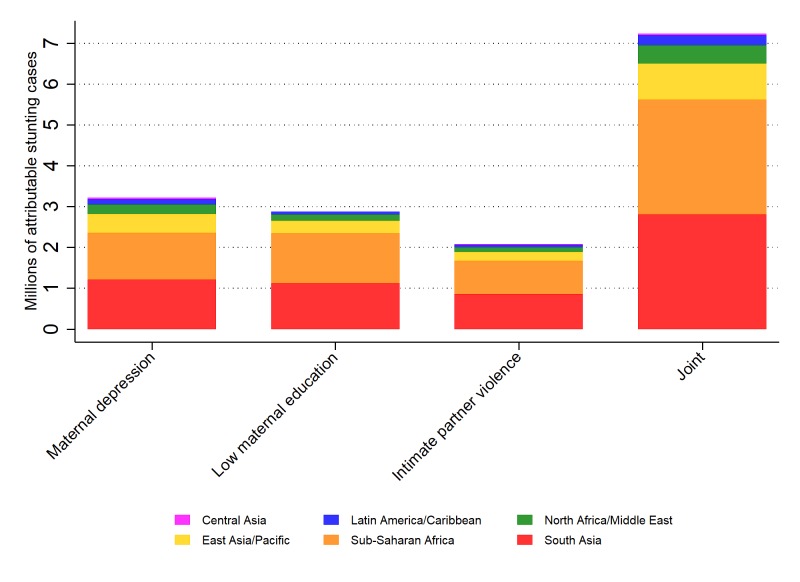
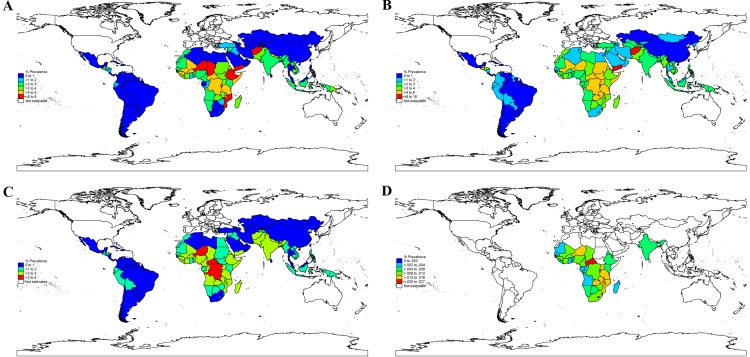
Introduction: The first 1000 days of life is a period of great potential and vulnerability. In particular, physical growth of children can be affected by the lack of access to basic needs as well as psychosocial factors, such as maternal depression. The objectives of the present study are to: (1) quantify the burden of childhood stunting in low/middle-income countries attributable to psychosocial risk factors; and (2) estimate the related lifetime economic costs. Methods: A comparative risk assessment analysis was performed with data from 137 low/middle-income countries throughout Asia, Latin America and the Caribbean, North Africa and the Middle East, and sub-Saharan Africa. The proportion of stunting prevalence, defined as <−2 SDs from the median height for age according to the WHO Child Growth Standards, and the number of cases attributable to low maternal education, intimate partner violence (IPV), maternal depression and orphanhood were calculated. The joint effect of psychosocial risk factors on stunting was estimated. The economic impact, as reflected in the total future income losses per birth cohort, was examined. Results: Approximately 7.2 million cases of stunting in low/middle-income countries were attributable to psychosocial factors. The leading risk factor was maternal depression with 3.2 million cases attributable. Maternal depression also demonstrated the greatest economic cost at $14.5 billion, followed by low maternal education ($10.0 billion) and IPV ($8.5 billion). The joint cost of these risk factors was $29.3 billion per birth cohort. Conclusion: The cost of neglecting these psychosocial risk factors is significant. Improving access to formal secondary school education for girls may offset the risk of maternal depression, IPV and orphanhood. Focusing on maternal depression may play a key role in reducing the burden of stunting. Overall, addressing psychosocial factors among perinatal women can have a significant impact on child growth and well-being in the developing world.
Overview
The claims and statistics of this paper haven’t been checked yet.
Free: it reads the open-access text and checks the first 5 claims that cite a source we can check. Create a free account to check every claim.
Integrity signals
Registry
Cites
Statistics
Figures
Verification
Claims the paper makes
The claims and statistics of this paper haven’t been checked yet.
Free: it reads the open-access text and checks the first 5 claims that cite a source we can check. Create a free account to check every claim.
Claims other papers make about this one
Each is checked against this paper’s own text: does it say what the citing paper says it does?
The source backs part of the claim, not all of it — or backs it for a different population, condition or comparison.
In the citing paper
“For children and families in developing countries, resource deprivation is often a driving force for increased interpersonal conflict, ultimately leaving women and children more vulnerable to violence exposure (Smith Fawzi et al., 2019).”
From The Intergenerational Transmission of Emotional Intimate Partner Violence: a Systematic Review and Meta-Analysis (2025) · cites this paper as Smith Fawzi et al., 2019
Experimental — accuracy not yet measured
Self-check
Percentages, sums and reported differences re-computed from the paper’s own numbers.
The self-check needs the paper’s full text.
Citations
Cites
Lim, S. S., Vos, T., Flaxman, A. D., Danaei, G., Shibuya, K., Adair-Rohani, H., AlMazroa, M. A., Amann, M., Anderson, H. R., Andrews, K. G., et al. (2012) · The Lancet · doi:10.1016/s0140-6736(12)61766-8 · Cited by 11,805 · cited 2×
“20 21 These methods are widely used for estimating the burden of disease attributable to risk factors independent from one another (holding other risk factors constant), as described elsewhere.”
BackgroundMethodSelf-citationWorld Population Prospects The 2006 Revision
Zlotnik, H. (2007) · United Nations eBooks · Cited by 7,971
The Lifelong Effects of Early Childhood Adversity and Toxic Stress
Shonkoff, J. P., Garner, A. S., THE COMMITTEE ON PSYCHOSOCIAL ASPECTS OF CHILD AND FAMILY HEALTH, C. O. E. C., Siegel, B. S., Dobbins, M. I., Earls, M. F., Garner, A. S., McGuinn, L., Pascoe, J., & Wood, D. L. (2012) · Pediatrics · doi:10.1542/peds.2011-2663 · Cited by 5,164
Developmental potential in the first 5 years for children in developing countries
Grantham-McGregor, S., Cheung, Y. B., Cueto, S., Glewwe, P., Richter, L., & Strupp, B. (2007) · The Lancet · doi:10.1016/s0140-6736(07)60032-4 · Cited by 3,630 · cited 2×
“With regard to psychological factors, maternal depression, parental alcohol/substance abuse, IPV and child abuse are factors that place a child at risk of toxic stress.(3) 11 The social context, such as being an orphan or suffering from economic insecurity related to low parental education, can also place young childr…”
BackgroundFerrari, A. J., Charlson, F. J., Norman, R. E., Patten, S. B., Freedman, G., Murray, C. J. L., Vos, T., & Whiteford, H. A. (2013) · PLoS Medicine · doi:10.1371/journal.pmed.1001547 · Cited by 3,115
Child development: risk factors for adverse outcomes in developing countries
Walker, S. P., Wachs, T. D., Meeks Gardner, J., Lozoff, B., Wasserman, G. A., Pollitt, E., & Carter, J. A. (2007) · The Lancet · doi:10.1016/s0140-6736(07)60076-2 · Cited by 2,133 · cited 2×
“Psychosocial risk encompasses a broad range of factors including parental depression and other mental health problems, intimate partner violence (IPV), child abuse, parental use of alcohol and/or other substances particularly during pregnancy, low maternal education and orphanhood, among other factors.(2) The combinat…”
BackgroundManuscripts Accepted for Publication
(2005) · Child Development · doi:10.1111/j.1467-8624.2005.00876.x · Cited by 2,047
Predictors of Postpartum Depression: An Update
Beck, C. T. (2001) · Nursing Research · doi:10.1097/00006199-200109000-00004 · Cited by 1,915
Inequality in early childhood: risk and protective factors for early child development
Walker, S. P., Wachs, T. D., Grantham-McGregor, S., Black, M. M., Nelson, C. A., Huffman, S. L., Baker-Henningham, H., Chang, S. M., Hamadani, J. D., Lozoff, B., et al. (2011) · The Lancet · doi:10.1016/s0140-6736(11)60555-2 · Cited by 1,756 · cited 1×
“There are also a number of other repercussions of untreated maternal depression, including reduced cognitive development of children possibly related to less stimulation provided by the mother.(5) If the woman’s income is needed for the household, the mother may not have the capacity”
BackgroundThe Global Prevalence of Intimate Partner Violence Against Women
Devries, K. M., Mak, J. Y. T., García-Moreno, C., Petzold, M., Child, J. C., Falder, G., Lim, S., Bacchus, L. J., Engell, R. E., Rosenfeld, L., et al. (2013) · Science · doi:10.1126/science.1240937 · Cited by 1,460
Abramsky, T., Watts, C. H., Garcia-Moreno, C., Devries, K., Kiss, L., Ellsberg, M., Jansen, H. A., & Heise, L. (2011) · BMC Public Health · doi:10.1186/1471-2458-11-109 · Cited by 1,413 · cited 4×
“Although IPV may precede depression, treatment of maternal depression can also potentially reduce the recurrence of IPV.”
BackgroundInfluentialGBD 2010: design, definitions, and metrics
Murray, C. J., Ezzati, M., Flaxman, A. D., Lim, S., Lozano, R., Michaud, C., Naghavi, M., Salomon, J. A., Shibuya, K., Vos, T., et al. (2012) · The Lancet · doi:10.1016/s0140-6736(12)61899-6 · Cited by 1,103
Self-citationPronyk, P. M., Hargreaves, J. R., Kim, J. C., Morison, L. A., Phetla, G., Watts, C., Busza, J., & Porter, J. D. (2006) · The Lancet · doi:10.1016/s0140-6736(06)69744-4 · Cited by 919 · cited 1×
“through advancing income- generating initiatives for women.(32) Persistent challenges in access to education and economic opportunities promote gender inequality; this can create the context for higher maternal mortality resulting in orphanhood, since women may have less agency to access antenatal care and delivery wi…”
BackgroundComparative quantification of health risks conceptual framework and methodological issues
Murray, C. J., Ezzati, M., Lopez, A. D., Rodgers, A., & Vander Hoorn, S. (2003) · Population Health Metrics · doi:10.1186/1478-7954-1-1 · Cited by 887
Self-citationChristian, P., Lee, S. E., Donahue Angel, M., Adair, L. S., Arifeen, S. E., Ashorn, P., Barros, F. C., Fall, C. H., Fawzi, W. W., Hao, W., et al. (2013) · International Journal of Epidemiology · doi:10.1093/ije/dyt109 · Cited by 582 · cited 1×
“Without country-specific meta-analyses generating reliable effect sizes, further refinement of this assumption is not possible; however, not only is this a common assumption,(21) multicountry studies of other childhood risk factors suggest that these effect sizes may not vary substantially by context.(43) In addition,…”
BackgroundSelf-citationDanaei, G., Andrews, K. G., Sudfeld, C. R., Fink, G., McCoy, D. C., Peet, E., Sania, A., Smith Fawzi, M. C., Ezzati, M., & Fawzi, W. W. (2016) · PLOS Medicine · doi:10.1371/journal.pmed.1002164 · Cited by 534 · cited 2×
“21 These methods are widely used for estimating the burden of disease attributable to risk factors independent from one another (holding other risk factors constant), as described elsewhere.(22) Estimating PAFs requires data on the exposure prevalence of the risk factor of interest and the relative risk (RR; here appr…”
MethodSelf-citation4.1 The WHO Child Growth Standards
de Onis, M. (2015) · World Review of Nutrition and Dietetics · doi:10.1159/000360352 · Cited by 459
Surkan, P. J., Kennedy, C. E., Hurley, K. M., & Black, M. M. (2011) · Bulletin of the World Health Organization · doi:10.2471/blt.11.088187 · Cited by 458 · cited 1×
“Based on this literature search, only one study was identified that performed a formal meta-analysis on the association between maternal depression and childhood stunting.(13) Since this was the only meta-analysis, studies that were based on analysis of Demographic and Health Survey (DHS) data across a broad range of…”
BackgroundRahman, A., Fisher, J., Bower, P., Luchters, S., Tran, T., Yasamy, M. T., Saxena, S., & Waheed, W. (2013) · Bulletin of the World Health Organization · doi:10.2471/blt.12.109819 · Cited by 403 · cited 2×
“treated through services provided by trained lay counsellors.(37) More recently, a meta-analysis of strategies to treat maternal depression through the use of non-specialist community health workers found that maternal depression could be effectively treated in resource-limited settings.”
BackgroundStevens, G. A., Finucane, M. M., Paciorek, C. J., Flaxman, S. R., White, R. A., Donner, A. J., & Ezzati, M. (2012) · The Lancet · doi:10.1016/s0140-6736(12)60647-3 · Cited by 384 · cited 1×
“We used estimates of the prevalence of stunting among children under 5 years of age for each country as published from the 2011 Nutrition Impact Model Study (NIMS).(8) To estimate the number and prevalence of stunting among children 2 years of age, we needed to adjust the NIMS estimates to be accurate for our age grou…”
MethodSelf-citationMaternal education and child nutritional status in Bolivia: finding the links
Frost, M. B., Forste, R., & Haas, D. W. (2005) · Social Science & Medicine · doi:10.1016/j.socscimed.2004.05.010 · Cited by 365 · cited 1×
“Low maternal education, which is often coupled with poverty and food insecurity, 27 demonstrated a significant impact within this group of psychosocial risk factors.”
BackgroundPediatric Stress: Hormonal Mediators and Human Development
Charmandari, E., Kino, T., Souvatzoglou, E., & Chrousos, G. P. (2003) · Hormone Research in Paediatrics · doi:10.1159/000069325 · Cited by 363
Food insecurity and maternal depression in rural, low-income families: a longitudinal investigation
Huddleston-Casas, C., Charnigo, R., & Simmons, L. A. (2009) · Public Health Nutrition · doi:10.1017/s1368980008003650 · Cited by 222
Food insecurity in rural Tanzania is associated with maternal anxiety and depression
Hadley, C., & Patil, C. L. (2006) · American Journal of Human Biology · doi:10.1002/ajhb.20505 · Cited by 221
Use and Misuse of Stunting as a Measure of Child Health
Perumal, N., Bassani, D. G., & Roth, D. E. (2018) · The Journal of Nutrition · doi:10.1093/jn/nxx064 · Cited by 183 · cited 1×
“In addition, stunting defined as <−2 SD HAZ may not fully capture linear growth faltering and may be an underestimate of impaired child growth.(42) As all effect sizes were reported as ORs, we assumed that they approximated the RR which will lead to an overestimate of the PAF (and a resulting overestimate of the effec…”
BackgroundReyes, H., Pérez‐Cuevas, R., Sandoval-Priego, A. A., Castillo, R., Santos, J. I., Doubova, S. V., & Gutiérrez, G. (2004) · BMC Public Health · doi:10.1186/1471-2458-4-57 · Cited by 139
Fink, G., Peet, E. D., Danaei, G., Andrews, K. G., McCoy, D. C., Sudfeld, C. R., Fawzi, M. C. S., Ezzati, M., & Fawzi, W. W. (2016) · American Journal of Clinical Nutrition · doi:10.3945/ajcn.115.123968 · Cited by 137 · cited 1×
“25 To quantify the economic burden caused by these early life growth restrictions, we followed the model developed in Fink et al 26 and computed the net present value of total future income losses per birth cohort in each country attributable to each risk factor.”
MethodSelf-citationDeterminants of skilled birth attendants for delivery in Nepal
Baral, Y. R., Lyons, K., Skinner, J., & van Teijlingen, E. (2012) · Kathmandu University Medical Journal · doi:10.3126/kumj.v8i3.6223 · Cited by 127 · cited 1×
“Persistent challenges in access to education and economic opportunities promote gender inequality; this can create the context for higher maternal mortality resulting in orphanhood, since women may have less agency to access antenatal care and delivery with a skilled birth attendant.(33)”
BackgroundChai, J., Fink, G., Kaaya, S., Danaei, G., Fawzi, W., Ezzati, M., Lienert, J., & Smith Fawzi, M. C. (2016) · Bulletin of the World Health Organization · doi:10.2471/blt.15.152462 · Cited by 118 · cited 2×
“24 In a recent analysis of DHS data from 29 low/middle-income countries, the overall prevalence of IPV (physical and/or sexual abuse) was over 30%.(15) Investment in secondary school education for girls may serve as a preventive mechanism for IPV.”
BackgroundSelf-citationMiyake, Y., Tanaka, K., Sasaki, S., & Hirota, Y. (2010) · Journal of Affective Disorders · doi:10.1016/j.jad.2010.10.024 · Cited by 114 · cited 1×
“Increasing access to formal education for girls may potentially reduce the risk of IPV and prevent depression among young women.(34) 35 In addition, there is increasing evidence that maternal depression can be readily identified(36) and effectively”
BackgroundKabir, Z. N., Nasreen, H. E., & Edhborg, M. (2014) · Global Health Action · doi:10.3402/gha.v7.24725 · Cited by 81 · cited 1×
“Some of the effect of IPV on stunting may be mediated through maternal depression.(23) 24 In order to account for this, we calculated the direct effect of IPV on stunting (ie, not through maternal depression) by removing 25% of the excess RR of IPV.”
BackgroundAssociations of gender inequality with child malnutrition and mortality across 96 countries
Marphatia, A. A., Cole, T. J., Grijalva-Eternod, C., & Wells, J. C. K. (2016) · Global Health, Epidemiology and Genomics · doi:10.1017/gheg.2016.1 · Cited by 75
Fink, G., Sudfeld, C. R., Danaei, G., Ezzati, M., & Fawzi, W. W. (2014) · PLoS ONE · doi:10.1371/journal.pone.0102391 · Cited by 56 · cited 1×
“To estimate the combined impact of maternal depression, IPV and low maternal education we used a simple relationship to estimate the joint PAF while preventing ‘double counting’, as a single case of stunting can be attributed to more than one risk factor.(14) The relationship is captured by the formula below which ass…”
MethodSelf-citationMaternal resources and household food security: evidence from Nicaragua
Schmeer, K. K., Piperata, B. A., Rodríguez, A. H., Torres, V. M. S., & Cárdenas, F. J. C. (2015) · Public Health Nutrition · doi:10.1017/s1368980014003000 · Cited by 43 · cited 1×
“In resource-limited households, this may have a direct impact on food security for the family.(41) Given these contextual issues in resource-limited settings, linking maternal education and entrepreneurship programmes to depression treatment interventions may result in better overall well-being of depressed perinatal…”
BackgroundIntrahousehold Inequalities in Child Rights and Well-Being. A Barrier to Progress?
RODRIGUEZ, L. J. (2016) · World Development · doi:10.1016/j.worlddev.2016.02.005 · Cited by 42 · cited 1×
“30 Correspond-ingly, although there are many potential precipitating factors related to maternal depression, IPV is one key variable.”
BackgroundInvestment in early childhood development
Black, M. M., & Hurley, K. M. (2014) · The Lancet · doi:10.1016/s0140-6736(14)60607-3 · Cited by 39 · cited 1×
“In particular, research has shown that the first 1000 days of life, prenatally through 2 years of age, are critical with respect to children’s physical development.(1) The rapid growth trajectories of the first 2 years of children’s lives make infants and Key questions”
MethodFinlay, J. E., Fink, G., McCoy, D. C., Tavárez, L. C., Chai, J., Danaei, G., Ezzati, M., Fawzi, W. W., & Fawzi, M. C. S. (2016) · Journal of Epidemiology & Community Health · doi:10.1136/jech-2015-206346 · Cited by 30 · cited 1×
“Since this was the only meta-analysis, studies that were based on analysis of Demographic and Health Survey (DHS) data across a broad range of low/ middle-income countries were used for other psychosocial variables, including low maternal education,(14) IPV(15) and orphanhood.(16) For other psychosocial risk factors t…”
MethodSelf-citationAlvarado-Esquivel (2014) · Journal of Clinical Medicine Research · doi:10.14740/jocmr1883w · Cited by 28 · cited 1×
“34 35 In addition, there is increasing evidence that maternal depression can be readily identified 36 treated through services provided by trained lay counsel-lors.”
BackgroundMaternal depression symptoms are highly prevalent among food-insecure households in Ethiopia
Gebreyesus, S. H., Endris, B. S., Hanlon, C., & Lindtjørn, B. (2017) · Public Health Nutrition · doi:10.1017/s1368980017003056 · Cited by 27 · cited 1×
“40 Despite the fact that treatment strategies for depression have demonstrated to be effective and at relatively low cost when implemented by lay counsellors, 37 the cost of not treating depression can be quite high.”
BackgroundDepressive disorder in pregnant Latin women: does intimate partner violence matter?
Fonseca‐Machado, M. D. O., Alves, L. C., Monteiro, J. C. D. S., Stefanello, J., Nakano, A. M. S., Haas, V. J., & Gomes‐Sponholz, F. (2015) · Journal of Clinical Nursing · doi:10.1111/jocn.12728 · Cited by 26 · cited 1×
“23 24 In order to account for this, we calculated the direct effect of IPV on stunting (ie, not through maternal depression) by removing 25% of the excess RR of IPV.”
Background
Cited by
Role of Maternal in Preventing Stunting: a Systematic Review
Saleh, A., Syahrul, S., Hadju, V., Andriani, I., & Restika, I. (2021) · Gaceta Sanitaria · doi:10.1016/j.gaceta.2021.10.087 · Cited by 324
McNab, S., Dryer, S., Fitzgerald, L., Gomez, P., Bhatti, A. M., Kenyi, E. E., Somji, A., Khadka, N., & Stalls, S. (2022) · BMC Pregnancy and Childbirth · doi:10.1186/s12884-022-04589-z · Cited by 113
“2 million cases of stunting in LMICs have been estimated to be attributable to psychosocial factors, which include CPMDs [30].”
BackgroundAdverse Childhood Experiences: Prevalence and Association With Adolescent Health in Malawi
Kidman, R. C., Piccolo, L. D. R., & Kohler, H. (2019) · American Journal of Preventive Medicine · doi:10.1016/j.amepre.2019.08.028 · Cited by 93
Prasetyo, A., Noviana, N., Rosdiana, W., Anwar, M. A., Hartiningsih, Hendrixon, Harwijayanti, B. P., & Fahlevi, M. (2023) · Sustainability · doi:10.3390/su15031821 · Cited by 87
Prevalence and risk predictors of childhood stunting in Bangladesh
Abdulla, F., Rahman, A., & Hossain, M. M. (2023) · PLoS ONE · doi:10.1371/journal.pone.0279901 · Cited by 81
Metadata
- Authors
- Smith Fawzi, M. C., Andrews, K. G., Fink, G., Danaei, G., McCoy, D. C., Sudfeld, C. R., Peet, E. D., Cho, J., Liu, Y., Finlay, J. E., Ezzati, M., Kaaya, S. F., & Fawzi, W. W.
- Affiliations
- Department of Global Health and Social Medicine, Harvard Medical School, Boston, Massachusetts, USA
- Harvard University (US)
- Swiss Tropical and Public Health Institute (CH)
- RAND Corporation (US)
- NYU Langone Health (US)
- The University of Texas Health Science Center at Houston (US)
- Imperial College London (GB)
- Muhimbili University of Health and Allied Sciences (TZ)
- ORCID
- Venue
- BMJ Global Health
- Publisher
- BMJ
- Published
- 2019-01
- Volume
- 4
- Issue
- 1
- Pages
- e001144
- ISSN
- 2059-7908 (ISSN-L)
- PMC
- PMC6340061
- OpenAlex
- W2910111954
- Cited by
- 55
- References
- 40
- Citations by year
- 2026: 7 · 2025: 5 · 2024: 9 · 2023: 10 · 2022: 12 · 2021: 5 · 2020: 4 · 2019: 3
- FWCI
- 4.57
- Type
- journal article
- Language
- en
- Open access
- gold
- doi.org
- Licence
- cc-by-nc
- Locations
- BMJ Global Health (publishedVersion, cc-by-nc)
- Europe PMC (PubMed Central) (publishedVersion, other-oa)
- PubMed Central (publishedVersion, cc-by-nc)
- PubMed (publishedVersion)
- edoc (University of Basel) (acceptedVersion)
- DOAJ (DOAJ: Directory of Open Access Journals) (submittedVersion)
- Spiral (Imperial College London) (submittedVersion, cc-by-nc)
- edoc (University of Basel)
- Funders
- Grand Challenges Canada (0073-03)
- Topics
- Health Sciences › Nursing › Nutrition and Dietetics › Child Nutrition and Water Access
- Health Sciences › Medicine › Pediatrics, Perinatology and Child Health › Public Health and Nutrition
- Health Sciences › Medicine › Pediatrics, Perinatology and Child Health › Global Maternal and Child Health
- Keywords
- child stunting, maternal depression, intimate partner violence, psychosocial risk factors, income loss, child growth, low-middle income countries, attributable burden, first 1000 days
About these checks
Registry, retraction, Cites and statistics results are computed, not judged, with one exception: a printed reference that no index lists is read once by a model before it counts as a citation error. Claims are extracted by a model and kept only when their quote appears verbatim in the text; each cited source is then checked, with a model’s help, for whether it says what the claim relies on. Those verdicts can be wrong — read the claim’s quote and the cited source before relying on one.
Statistics and arithmetic are recomputed, not judged.
Confidence bands are shown only for fields calibrated on our annotated test set. None is calibrated yet, so no band is shown.
What counts as a claim ›How we measure confidence ›How we check this ›
Are you an author, or do you see a problem with this page? Request a review
Data sources
Bibliographic data: Semantic Scholar, OpenAlex, Crossref.
Contains information from the Semantic Scholar Academic Graph Datasets, made available under the ODC Attribution License (ODC-BY 1.0).
Semantic Scholar’s data is described in: Kinney, R., et al. (2023). The Semantic Scholar Open Data Platform. arXiv:2301.10140.
