

Polycystic ovary syndrome: pathophysiology and therapeutic opportunities
Open accessThe DOI matches its Crossref record; 155 of the 157 references it cites were found in a registry or an index.
Abstract
Polycystic ovary syndrome is characterised by excessive levels of androgens and ovulatory dysfunction, and is a common endocrine disorder in women of reproductive age. Polycystic ovary syndrome arises as a result of polygenic susceptibility in combination with environmental influences that might include epigenetic alterations and in utero programming. In addition to the well recognised clinical manifestations of hyperandrogenism and ovulatory dysfunction, women with polycystic ovary syndrome have an increased risk of adverse mental health outcomes, pregnancy complications, and cardiometabolic disease. Unlicensed treatments have limited efficacy, mostly because drug development has been hampered by an incomplete understanding of the underlying pathophysiological processes. Advances in genetics, metabolomics, and adipocyte biology have improved our understanding of key changes in neuroendocrine, enteroendocrine, and steroidogenic pathways, including increased gonadotrophin releasing hormone pulsatility, androgen excess, insulin resistance, and changes in the gut microbiome. Many patients with polycystic ovary syndrome have high levels of 11-oxygenated androgens, with high androgenic potency, that might mediate metabolic risk. These advances have prompted the development of new treatments, including those that target the neurokinin-kisspeptin axis upstream of gonadotrophin releasing hormone, with the potential to lessen adverse clinical sequelae and improve patient outcomes.
Overview
The claims and statistics of this paper haven’t been checked yet.
Free: it reads the open-access text and checks the first 5 claims that cite a source we can check. Create a free account to check every claim.
Integrity signals
Registry
Cites
Statistics
Figures
Verification
Claims the paper makes
The claims and statistics of this paper haven’t been checked yet.
Free: it reads the open-access text and checks the first 5 claims that cite a source we can check. Create a free account to check every claim.
Claims other papers make about this one
Each is checked against this paper’s own text: does it say what the citing paper says it does?
The cited source says what the claim attributes to it.
In the citing paper
“Although traditionally classified as a reproductive disorder, PCOS is now recognized as a metabolic disorder which is associated with obesity, and which increases risk for type 2 diabetes and cardiovascular disease [3].”
From Role of Omega-3 Fatty Acids in Improving Metabolic Dysfunctions in Polycystic Ovary Syndrome (2024) · cites this paper as [3]
Self-check
Percentages, sums and reported differences re-computed from the paper’s own numbers.
The self-check needs the paper’s full text.
Citations
Cites
Dapagliflozin in Patients with Heart Failure and Reduced Ejection Fraction
McMurray, J. J. V., Solomon, S. D., Inzucchi, S. E., Køber, L., Kosiborod, M. N., Martinez, F. A., Ponikowski, P., Sabatine, M. S., Anand, I. S., Bělohlávek, J., et al. (2019) · New England Journal of Medicine · doi:10.1056/nejmoa1911303 · Cited by 7,140 · cited 1×
“19 Circulating levels of kisspeptin are higher in patients with polycystic ovary syndrome than in controls 20 and although the origin of this excess is not entirely clear, a raised pulse frequency of kisspeptin in women with oligomenorrhoea and polycystic ovary syndrome suggests a hypothalamic…”
The Molecular Biology, Biochemistry, and Physiology of Human Steroidogenesis and Its Disorders
Miller, W. L., & Auchus, R. J. (2011) · Endocrine Reviews · doi:10.1210/er.2010-0013 · Cited by 2,458 · cited 1×
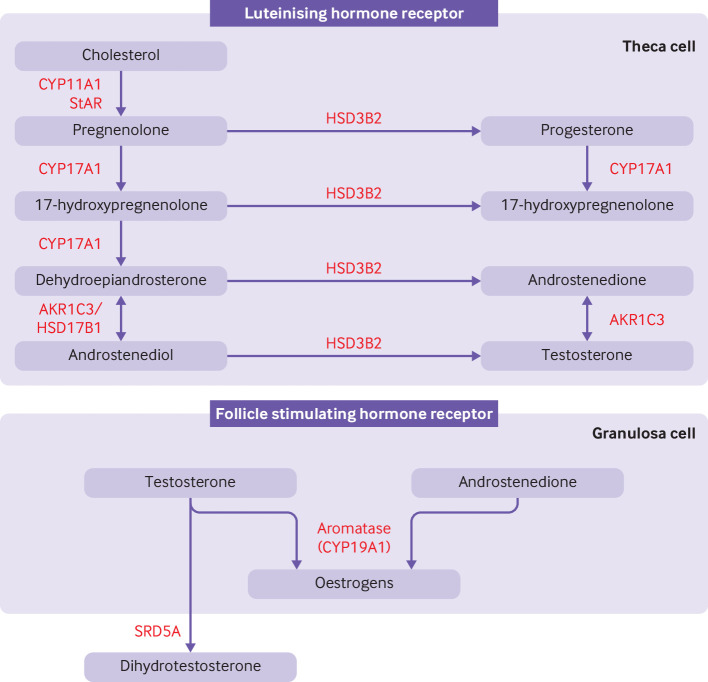
“33 36 Figure 2 summarises the classical pathway of steroidogenesis.”
Tirzepatide versus Semaglutide Once Weekly in Patients with Type 2 Diabetes
Frías, J. P., Davies, M. J., Rosenstock, J., Pérez Manghi, F. C., Fernández Landó, L., Bergman, B. K., Liu, B., Cui, X., & Brown, K. (2021) · New England Journal of Medicine · doi:10.1056/nejmoa2107519 · Cited by 2,096 · cited 1×
“…analogues, such as semaglutide or dulaglu-tide, 139 140 or dual GLP- 1-glucose dependent insuli-notropic polypeptide agonists, such as tirzepatide, 141 could provide more therapeutic opportunities, with the potential benefits of greater effects on weight loss, longer duration of action, and…”
Polycystic Ovary Syndrome: Definition, Aetiology, Diagnosis and Treatment
Escobar-Morreale, H. F. (2018) · Nature Reviews Endocrinology · doi:10.1038/nrendo.2018.24 · Cited by 2,083 · cited 2×
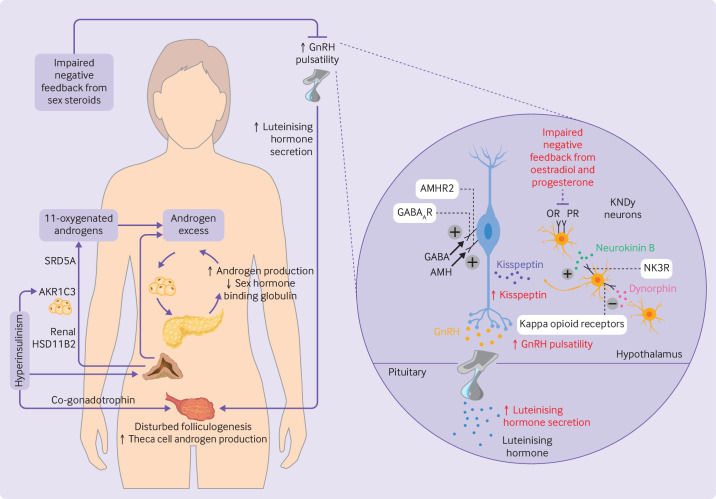
“7 54 Several studies have also implicated hyperandrogenism in the accumulation of abdominal and visceral adipose tissue in polycystic ovary syndrome 55 56 ; this hyperandrogenism further drives insulin resistance and consequent production of androgens (figure 1).”
Ehrmann, D. A. (2005) · New England Journal of Medicine · doi:10.1056/nejmra041536 · Cited by 1,881
Yki-Järvinen, H. (2004) · New England Journal of Medicine · doi:10.1056/nejmra041001 · Cited by 1,830
Rosenfield, R. L., & Ehrmann, D. A. (2016) · Endocrine Reviews · doi:10.1210/er.2015-1104 · Cited by 1,603
Teede, H., Deeks, A., & Moran, L. (2010) · BMC Medicine · doi:10.1186/1741-7015-8-41 · Cited by 1,565 · cited 1×
“81 Patients with polycystic ovary syndrome are at increased risk of mental health disorders, 82 83 endometrial cancer, 84 and ovarian hyperstimulation syndrome after induction of ovulation.”
Criteria, Prevalence, and Phenotypes of Polycystic Ovary Syndrome
Lizneva, D., Suturina, L., Walker, W., Brakta, S., Gavrilova-Jordan, L., & Azziz, R. (2016) · Fertility and Sterility · doi:10.1016/j.fertnstert.2016.05.003 · Cited by 1,358
Quorum sensing triggers the stochastic escape of individual cells from Pseudomonas putida biofilms
Cárcamo-Oyarce, G., Lumjiaktase, P., Kümmerli, R., & Eberl, L. (2015) · Nature Communications · doi:10.1038/ncomms6945 · Cited by 958
Research works printed but not linked: 2
- 10.1210/endocr/bqab087 · DOI
- 10.1038/ncomms6945 · DOI · Paper page
Cited by
Items 101–153 of 153
From photonic principles to clinical practice: A review of medical laser technologies
Binzowaimil, A. M. (2026) · Optics and Lasers in Engineering · doi:10.1016/j.optlaseng.2026.109772
Lu, S., Ye, S., Luo, X., & Zhang, B. (2026) · International Journal of Women s Health · doi:10.2147/ijwh.s593314 · Cited by 1
Markanday, T. M., Sushma, B. J., & Dwivedi, J. (2026) · International Journal of Drug Delivery Technology · doi:10.25258/ijddt.16.20s.64
Buczkowska, E., Marciszewska, A., Piechowicz, A., Popczyk, N., Przybyłowska, A., Jopek, J., Popczyk, M., Bryksy, S., Tymchenko, H., & Kaźmierczyk, J. (2026) · Quality in Sport · doi:10.12775/qs.2026.55.70895
A.Sharhan, Z., Ibrahim, S. A., & Al-Taie, Z. S. (2026) · AIP conference proceedings · doi:10.1063/5.0329997
Endocrine aspects of infertility in polycystic ovary syndrome
Holubava, D. A. (2026) · Medical Journal · doi:10.51922/1818-426x.2026.2.53
A Review of the Potential Therapeutic Benefits of Quercetin for Uterine-Related Conditions
Leone, M. A., Kurman, G., Bright, M., Gregersen, P. K., & Metz, C. N. (2026) · Biomedicines · doi:10.3390/biomedicines14061205
Monika, R., & Sampathkumar, P. (2026) · International Journal of Drug Delivery Technology · doi:10.25258/ijddt.16.41s.105
Ye, K., Liu, L., Fang, J., Tian, M., Han, X., Chen, X., Wang, D., Liu, Y., & Xia, Q. (2026) · Biochemical and Biophysical Research Communications · doi:10.1016/j.bbrc.2026.154116
Tùng, T. T., & Hien, D. T. T. (2026) · Tạp chí Nghiên cứu Y học · doi:10.52852/tcncyh.v202i5e18.4808
Zarei, M., & Hajiani, Y. (2026) · Diabetology & Metabolic Syndrome · doi:10.1186/s13098-026-02196-y
“These metabolic effects are accompanied by clinically meaningful weight loss, which appears to be a major driver of downstream reproductive improvements and contributes to attenuation of insulin-driven ovarian androgen synthesis and partial restoration of reproductive endocrine balance [236, 237].”
Nagaraju, R., Yalavarthi, P. R., Kopperla, A., Poka, L. P., Varagani, J. R., Kudipudi, S., & Harichandan Sai, K. V. V. S. (2026) · Indian Journal of Medical Sciences · doi:10.25259/ijms_216_2025
Computational Modelling in Polycystic Ovary Syndrome: A Comprehensive Review
-, P. S. K., Jawahire, S., Burli, S. C., Dhole, V. R., & Patil, A. (2026) · International Journal of Drug Delivery Technology · doi:10.25258/ijddt.16.55s.36
ÖNAL, A. Ö., Köroğlu, N., Cumbul, A., Sumer, E., & Coşkun, K. A. (2026) · Frontiers in Endocrinology · doi:10.3389/fendo.2026.1850337
“Consequently, follicular growth is arrested, dominant follicle selection is impaired, and chronic anovulation develops (3).”
Ganjoo, A., Kalra, S., Kohli, M., Damisetty, R., Verma, S., Kandhari, R., Sharma, B., Deka, N., Beatrice, A., Pradhan, A. R., et al. (2026) · Cureus · doi:10.7759/cureus.111393
Bajpai, A., & Sharma, D. (2026) · Journal of Human Reproductive Sciences · doi:10.4103/jhrs.jhrs_30_26
Xu, W., Lu, C., Xu, J., & Wang, L. (2026) · Neuroscience & Biobehavioral Reviews · doi:10.1016/j.neubiorev.2026.106846
Üstünbaş, E., Tunçak, S., Mutlu, S., Çakır, C., & Çakır, A. (2026) · Uludağ Üniversitesi Tıp Fakültesi Dergisi · doi:10.32708/uutfd.1885084
Hereditary Genetic Mutations in Polycystic Ovary Syndrome (PCOS): Current State of the Problem
Osinnyaya, M. R., Shestakov, E. R., Ovcharova, E. V., Muradalieva, M. S., Shuchkina, M. V., Omarova, Z. G., Shabanova, E. V., Lysyuk, V. V., Kovyrshina, D. S., & Pererva, V. V. (2026) · Journal Of Biochemical Technology · doi:10.51847/gm40s1ua1t
CORRELATION BETWEEN NEOPTERIN AND SOME ACUTE PHASE PROTEINS IN WOMEN WITH PCOS
Chabuk, S. K. (2026) · Jana Nexus Journal of Health and Medicine · doi:10.21474/jnhm01/160
Aihaiti, R., Zhu, Z., Wu, X., Xia, L., & Niu, Z. (2026) · Journal of Clinical Hypertension · doi:10.1111/jch.70334
MicroRNA-205-5p: a candidate biomarker and mechanistic mediator in polycystic ovary syndrome
Gu, X., Zhang, Y., Gao, R., 郝素芳, & Wu, T. (2026) · BMC Medical Genomics · doi:10.1186/s12920-026-02436-0
The Intervention Effects of Common Dietary Patterns on Polycystic Ovary Syndrome
Wu, Y. (2026) · Exploring Science Academic Conference Series · doi:10.70267/shbe.2026139144
“Clinical features present with prolonged menstrual cycles, abnormal menstrual flow, persistent failure of ovulation, and some hyperandrogenic symptoms [2].”
Setio, E. T., Meidyana, S., Taufani, M. I., & Santoso, B. (2026) · Heliyon · doi:10.1016/j.heliyon.2026.e45280
Liu, Y., Liu, Y., Zhao, Y., Luo, Y., & Hao, X. (2026) · Frontiers in Endocrinology · doi:10.3389/fendo.2026.1893963
Shi, X., & Zhang, W. (2026) · Frontiers in Medicine · doi:10.3389/fmed.2026.1912483
“Hyperinsulinemia then enhances the release of kisspeptin, which amplifies androgen synthesis and worsens HA (100).”
Packirisamy, S., Vijayakumari, R. S., Abirami, A. A., & Parsanathan, R. (2026) · ChemistrySelect · doi:10.1002/slct.74226
Elhennawy, F., Naji, B., & Butler, A. E. (2026) · Frontiers in Endocrinology · doi:10.3389/fendo.2026.1900535
Nutrition and polycystic ovary syndrome: emerging evidence for dietary management
Ghafar, E. A., Munawar, A., Butt, A. Q., Kazmi, S. M. U., & Alishba, A. (2026) · Journal of Prevention Diagnosis and Management of Human Diseases · doi:10.55529/jpdmhd.61.40.51
Liu, Y., Gong, Y., Ge, H., Zhu, M., Yu, H., Feng, J., Hu, X., He, H., Gao, J., & Wu, X. (2026) · Frontiers in Nutrition · doi:10.3389/fnut.2026.1892813
“The pathophysiology of PMOS is complex and multifactorial; insulin resistance (IR) and consequent hyperinsulinemia are recognized as central features that exacerbate hyperandrogenism and underlie many of its associated metabolic and reproductive dysfunctions (4, 5).”
Samareh, A. N., Samare‐Najaf, M., Ghafari, M., Pourghadamyari, H., Asadikaram, G., Barkam, M., & Rastegar, S. (2026) · Reproductive Sciences · doi:10.1007/s43032-026-02176-7
Kothe, U., Nair, N., Balwir, T., & Hadge, G. (2026) · Asian Pacific Journal of Reproduction · doi:10.4103/apjr.apjr_162_26
Quality of Life Improvement in PCOD Through Homoeopathy by using Synthesis Repertory: A Pilot Study
Jyothi, D. V. S., Vilas, D. P., Sucharitha, & Bevinamarad, S. (2026) · International Journal of Research and Review · doi:10.52403/ijrr.20260848
Wu, S., Shi, J., He, C., Chen, J., Guo, Q., Li, S., Tong, J., Chen, Q., Yan, Z., Du, J., et al. (2026) · Frontiers in Endocrinology · doi:10.3389/fendo.2026.1904695
Pan, M., Huang, J., Yan, J., Mo, J., Dong, K., Ding, Y., Zhang, G., Huang, W., Yang, Z., Wang, N., et al. (2026) · Bioorganic Chemistry · doi:10.1016/j.bioorg.2026.110474
Epigenetic Mechanisms Underlying Polycystic Ovary Syndrome.
Armas‐López, L. (2026) · The Journal of Reproduction · doi:10.58779/tjorvol4num1/4
Li, Q., Zhang, W., & Wang, W. (2026) · Journal of Radiation Research and Applied Sciences · doi:10.1016/j.jrras.2026.102665
Ye, T., Wang, J., Guo, X., Liu, X., Li, Y., & Wu, Q. (2026) · Frontiers in Endocrinology · doi:10.3389/fendo.2026.1951746
Wang, L., Tang, Z., Zhu, H., Yu, H., Xue, X., & Zhang, W. (2026) · Biomedicines · doi:10.3390/biomedicines14102205
Murawski, M., Góral, A., Miszczak, M. M., & Prescha, A. (2026) · Nutrients · doi:10.3390/nu18193218
Benjamin, J. J., & Mathews, R. R. (2026) · doi:10.25259/jmars_4_2026
The Diagnostic Role of Ultrasound in Polycystic Ovarian Syndrome: A Clinical Perspective
Soni, D. (2025) · Journal of chemical health risks
Abdelrazzak, A., Salman, F. K., Hammoud, A., & Jallad, K. (2026) · Cureus · doi:10.7759/cureus.117455
Mithun, P., Chandrika, M., & Suresh, A. (2026) · International Conference on Soft Computing for Security Applications (ICSCSA) · doi:10.1109/icscsa69367.2026.11707860
Sudershan, A., Bala, A., Sheikh, B. A., Sudershan, S., Younis, M., & Kumar, P. (2026) · Biosciences Biotechnology Research Asia · doi:10.13005/bbra/3546
Kaur, S. (2026) · International Journal of Advanced Research in Science Communication and Technology · doi:10.48175/ijarsct-38951
Lewter, T., Lowery, K., Muhammad, S., Beyene, E., Elkomi, R., Agha, M. A., Erskine, A. B., Zinabu, S., & Michael, M. (2026) · Georgetown Medical Review · doi:10.52504/001c.170254
A comprehensive overview of polycystic ovary syndrome
Talebian, N. (2025) · Sarem Journal of Medical Research · doi:10.66224/sjrm.10.3.4
Soumya, Upadhyay, S., Priyanshu, Kohli, D., & Rawat, B. S. (2026) · International Journal of Translational Medicine · doi:10.3390/ijtm6040048
Mohamed, M. S., Farrag, A., & Bachkangi, P. (2026) · Gynecological Endocrinology · doi:10.1080/09513590.2026.2757301
Zhuang, M., Zongnan, L. I. U., Yan, H., Mingyue, Y. I. N., ZHANG, Y., & Donglin, S. H. I. (2026) · Journal of Zhejiang University (Medical Sciences) · doi:10.3724/zdxbyxb-2026-0084
Yu, J., Lei, B., Zhang, M., Sun, L., Qu, C., Hannig, M., & Liu, Y. (2026) · Frontiers in Immunology · doi:10.3389/fimmu.2026.2000537
Devi, A., Tiwari, P., Mishra, S. B., Singh, S. K., Mukerjee, A., & Srivastava, M. (2026) · Journal of Holistic Integrative Pharmacy · doi:10.1016/j.jhip.2026.10.002
Metadata
- Authors
- Dong, J., & Rees, D. A.
- Affiliations
- Cardiff University (GB)
- Neuroscience and Mental Health Innovation Institute, School of Medicine, Cardiff University, Cardiff, UK
- ORCID
- Dong, Jiawen
- Venue
- BMJ Medicine
- Publisher
- BMJ
- Published
- 2023-10
- Volume
- 2
- Issue
- 1
- Pages
- e000548
- ISSN
- 2754-0413 (ISSN-L)
- PMC
- PMC10583117
- OpenAlex
- W4387569535
- Cited by
- 123
- References
- 157
- Citations by year
- 2026: 64 · 2025: 46 · 2024: 12 · 2023: 1
- FWCI
- 4.99
- Type
- journal article
- Language
- en
- Open access
- gold
- doi.org
- Licence
- Locations
- BMJ Medicine (publishedVersion, cc-by-nc)
- PubMed Central (publishedVersion, cc-by-nc)
- PubMed (publishedVersion)
- ORCA Online Research @Cardiff (Cardiff University) (acceptedVersion, cc-by-nc)
- DOAJ (DOAJ: Directory of Open Access Journals) (submittedVersion, cc-by-sa)
- Funders
- Anonymous benefactor grant to Cardiff University (521809)
- Topics
- Health Sciences › Medicine › Reproductive Medicine › Ovarian function and disorders
- Health Sciences › Medicine › Reproductive Medicine › Reproductive Biology and Fertility
- Life Sciences › Biochemistry, Genetics and Molecular Biology › Genetics › Genetic and Kidney Cyst Diseases
- Keywords
- polycystic ovary syndrome, pathophysiology, hyperandrogenism, ovulatory dysfunction, insulin resistance, 11-oxygenated androgens, kisspeptin, gut microbiota, steroidogenesis, epigenetic programming, cardiometabolic disease, pregnancy complications, mental health, polygenic predisposition, adipocyte biology, metabolomics, drug development
About these checks
Registry, retraction, Cites and statistics results are computed, not judged, with one exception: a printed reference that no index lists is read once by a model before it counts as a citation error. Claims are extracted by a model and kept only when their quote appears verbatim in the text; each cited source is then checked, with a model’s help, for whether it says what the claim relies on. Those verdicts can be wrong — read the claim’s quote and the cited source before relying on one.
Statistics and arithmetic are recomputed, not judged.
Confidence bands are shown only for fields calibrated on our annotated test set. None is calibrated yet, so no band is shown.
What counts as a claim ›How we measure confidence ›How we check this ›
Are you an author, or do you see a problem with this page? Request a review
Data sources
Bibliographic data: Semantic Scholar, OpenAlex, Crossref.
Contains information from the Semantic Scholar Academic Graph Datasets, made available under the ODC Attribution License (ODC-BY 1.0).
Semantic Scholar’s data is described in: Kinney, R., et al. (2023). The Semantic Scholar Open Data Platform. arXiv:2301.10140.
