

Enhanced long-term dietary change and adherence in a nutrigenomics-guided lifestyle intervention compared to a population-based (GLB/DPP) lifestyle intervention for weight management: results from the NOW randomised controlled trial
Open accessThe DOI matches its Crossref record; 38 of the 38 references it cites were found in a registry or an index.
Abstract
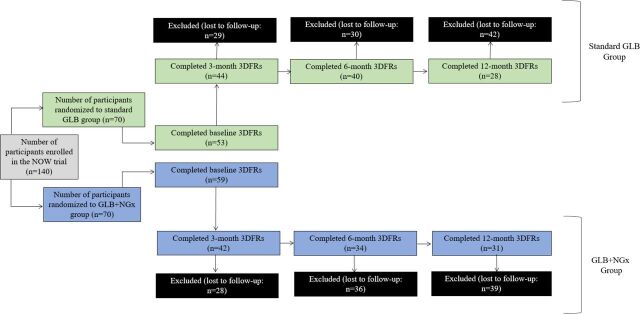
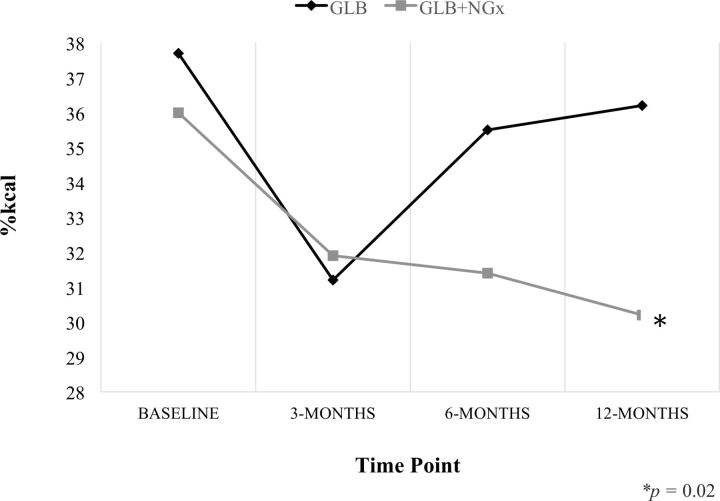
Background: Adherence to nutritional guidelines for chronic disease prevention and management remains a challenge in clinical practice. Innovative strategies are needed to help optimise dietary behaviour change. Objective: The objective of this study was to determine if a nutrigenomics-guided lifestyle intervention programme could be used to motivate greater dietary adherence and change in dietary intake short-term, moderate-term and long-term compared to the gold-standard population-based weight management intervention (Group Lifestyle Balance (GLB)/Diabetes Prevention Programme (DPP)). Design: The Nutrigenomics, Overweight/Obesity, and Weight Management (NOW) randomised controlled trial is a pragmatic, parallel-group, superiority clinical trial (n=140), which was conducted at the East Elgin Family Health Team (EEFHT). GLB weight management groups were prerandomised 1:1 to receive either the standard GLB programme or a modified GLB+nutrigenomics (GLB+NGx) programme. Three 24-hour recalls were collected at baseline, 3, 6 and 12 months using the validated multiple pass method. Research assistants collecting the three 24-hour recalls were blinded to the participants’ group assignments. Statistical analyses included split plot analyses of variance (ANOVAs), two-way ANOVAs, binary logistic regression, χ 2 and Fisher’s exact tests. Using the Theory of Planned Behaviour as guidance, key confounding factors of behaviour change were considered in the analyses. This study was registered with clinicaltrials.gov ( NCT03015012 ). Results: Only the GLB+NGx group significantly reduced their total fat intake from baseline to 12-month follow-up (from 36.0%±4.8% kcal to 30.2%±8.7% kcal, p=0.02). Long-term dietary adherence to total fat and saturated fat guidelines was also significantly (p<0.05) greater in the GLB+NGx group compared to the standard GLB group. Conclusions: Weight management interventions guided by nutrigenomics can motivate long-term improvements in dietary fat intake above and beyond gold-standard population-based interventions.
Overview
The claims and statistics of this paper haven’t been checked yet.
Free: it reads the open-access text and checks the first 5 claims that cite a source we can check. Create a free account to check every claim.
Integrity signals
Registry
Cites
Statistics
Figures
Verification
Claims the paper makes
The claims and statistics of this paper haven’t been checked yet.
Free: it reads the open-access text and checks the first 5 claims that cite a source we can check. Create a free account to check every claim.
Claims other papers make about this one
Each is checked against this paper’s own text: does it say what the citing paper says it does?
The source backs part of the claim, not all of it — or backs it for a different population, condition or comparison.
In the citing paper
“Recent precision-based trials underscore the efficacy of personalized weight loss interventions, providing promising data for future, individualized approaches.”
From Beyond Calories: Individual Metabolic and Hormonal Adaptations Driving Variability in Weight Management—A State-of-the-Art Narrative Review (2024) · cites this paper as [93]
Experimental — accuracy not yet measuredThe cited source says what the claim attributes to it.
In the citing paper
“Findings from single studies suggested that personalization of dietary recommendations based on genetic profiles may support adherence, although data remain limited [114].”
From Dietary and Behavioral Strategies for Weight Loss and Weight Loss Maintenance: A Narrative Review (2025) · cites this paper as [114]
In the citing paper
“The study incorporated the theory of planned behavior to control confounders, suggesting that personalized, genetic-based advice enhances dietary change beyond traditional guidelines, supporting nutrigenomics as an effective tool for sustained weight management [93].”
From Beyond Calories: Individual Metabolic and Hormonal Adaptations Driving Variability in Weight Management—A State-of-the-Art Narrative Review (2024) · cites this paper as [93]
In the citing paper
“At 12 months, only the GLB + NGx group achieved a significant reduction in total fat intake from 36.0% ± 4.8% kcal to 30.2% ± 8.7% kcal (p = 0.02) and greater adherence to fat and saturated fat guidelines (p < 0.05).”
From Beyond Calories: Individual Metabolic and Hormonal Adaptations Driving Variability in Weight Management—A State-of-the-Art Narrative Review (2024) · cites this paper as [93]
Self-check
Percentages, sums and reported differences re-computed from the paper’s own numbers.
The self-check needs the paper’s full text.
Citations
Cites
The theory of planned behavior
Ajzen, I. (1991) · Organizational Behavior and Human Decision Processes · doi:10.1016/0749-5978(91)90020-t · Cited by 134,657 · cited 1×
“9 Furthermore, researchers in the field of genetic testing behaviour change research have called to action academia to incorporate this theory into genetic testing behaviour change studies in order to account for potential confounding factors; this has been further detailed elsewhere.”
Reduction in the incidence of type 2 diabetes with lifestyle intervention or metformin
(2002) · New England Journal of Medicine · doi:10.1056/nejmoa012512 · Cited by 19,011
Lippa, N. C., & Sanderson, S. C. (2013) · Human Heredity · doi:10.1159/000353712 · Cited by 6,078
Sontrop, J. M., Dixon, S. N., Garg, A. X., Buendia-Jimenez, I., Dohein, O., Huang, S.-H. S., & Clark, W. F. (2013) · American Journal of Nephrology · doi:10.1159/000350377 · Cited by 5,871
Trumbo (2001) · doi:10.1016/s0002-8223(01)00078-5 · Cited by 4,852
Feiner, N., Motone, F., Meyer, A., & Kuraku, S. (2019) · Scientific Reports · doi:10.1038/s41598-019-40055-1 · Cited by 1,987
Dietary assessment methods in epidemiologic studies
Shim, J.-S., Oh, K., & Kim, H. C. (2014) · Epidemiology and Health · doi:10.4178/epih/e2014009 · Cited by 1,545
Anderson, T. J., Grégoire, J., Pearson, G. J., Barry, A. R., Couture, P., Dawes, M., Francis, G. A., Genest, J., Grover, S., Gupta, M., et al. (2016) · Canadian Journal of Cardiology · doi:10.1016/j.cjca.2016.07.510 · Cited by 1,173
Conway, J. M., Ingwersen, L. A., Vinyard, B. T., & Moshfegh, A. J. (2003) · The American Journal of Clinical Nutrition · doi:10.1093/ajcn/77.5.1171 · Cited by 820 · cited 1×
“25 Additionally, these 3 days of dietary recalls provided highly detailed nutritional intake data, which is a strength of this dietary collection method.”
The Extended Parallel Process Model: Illuminating the Gaps in Research
Popova, L. (2012) · Health Education & Behavior · doi:10.1177/1090198111418108 · Cited by 361
Cited by
Jinnette, R., Narita, A., Manning, B., McNaughton, S. A., Mathers, J. C., & Livingstone, K. M. (2020) · Advances in Nutrition · doi:10.1093/advances/nmaa144 · Cited by 174
“The duration of follow-up ranged from ≤3 mo (11, 24, 26, 27), 6 mo (9, 14, 17, 25), to 12 mo (12, 13, 15).”
BackgroundMethodInfluentialPrecision nutrition: A review of current approaches and future endeavors
Livingstone, K. M., Ramos-López, O., Përusse, L., Kato, H., Ordovás, J. M., & Martínez, J. A. (2022) · Trends in Food Science & Technology · doi:10.1016/j.tifs.2022.08.017 · Cited by 152
Shyam, S., Lee, K. X., Tan, A. S. W., Khoo, T. A., Harikrishnan, S., Lalani, S. A., & Ramadas, A. (2022) · Nutrients · doi:10.3390/nu14194104 · Cited by 76
“Five of these interventions [17,18,20–28,30,31] were delivered online, whereas the other interventions were delivered face to face in primary care [16,32], weight loss clinics [19], or institutional [29] settings.”
BackgroundInfluentialGoals in Nutrition Science 2020-2025
Bassaganya-Riera, J., Berry, E. M., Blaak, E. E., Burlingame, B., le Coutre, J., van Eden, W., El‐Sohemy, A., German, J. B., Knorr, D., Lacroix, C., et al. (2021) · Frontiers in Nutrition · doi:10.3389/fnut.2020.606378 · Cited by 81
“This applies to healthy, young adults as well as older adults who are overweight or obese (30, 31).”
BackgroundMansour, S., Alkhaaldi, S. M. I., Sammanasunathan, A. F., Ibrahim, S. M., Farhat, J., & Al‐Omari, B. (2024) · Nutrients · doi:10.3390/nu16050581 · Cited by 80
“In the long term, the benefits of PN use were associated with a decrease in total fat intake, in addition to compliance with nutritional advice [120].”
BackgroundPrecision Nutrition to Improve Risk Factors of Obesity and Type 2 Diabetes
Antwi, J. (2023) · Current Nutrition Reports · doi:10.1007/s13668-023-00491-y · Cited by 62
“More specifically, the investigators described that the use of precision nutrition increased motivation to long-term reduction in total fat intake, and long-term adherence to total fat and saturated fat advice [133].”
BackgroundTheodorakis, N., Kreouzi, M., Pappas, A., & Nikolaou, M. (2024) · International Journal of Molecular Sciences · doi:10.3390/ijms252413438 · Cited by 43
de Hoogh, I. M., Winters, B., Nieman, K. M., Bijlsma, S., Krone, T., van den Broek, T. J., Anderson, B. D., Caspers, M. P. M., Anthony, J. C., & Wopereis, S. (2021) · Nutrients · doi:10.3390/nu13061763 · Cited by 50
“Previous research comparing DNAbased dietary guidelines with population-based dietary guidelines indeed showed greater changes in the intake of specific dietary components in the personalized group [89,90].”
ResultOptimizing Maternal Nutrition: The Importance of a Tailored Approach
Brink, L., Bender, T. M., Davies, R., Luo, H., Miketinas, D. C., Shah, N., Loveridge, N., Gross, G., & Fawkes, N. (2022) · Current Developments in Nutrition · doi:10.1093/cdn/nzac118 · Cited by 69
“Termed “nutrigenetics,” this specific area of genetic research is a tool that could be successfully harnessed to provide individualized nutrition advice (97, 98).”
BackgroundDobroslavska, P., Silva, M. L., Vicente, F., & Pereira, P. M. D. C. C. (2024) · Nutrients · doi:10.3390/nu16111725 · Cited by 49
“…a reduction in the intake of calories, carbohydrates, sugar, total fat and saturated fat, which are related to significant weight loss, a reduction in waist circumference and an increase in high-density lipoprotein (HDL) and a decrease in total cholesterol and low-density lipoprotein (LDL) [79,80].”
BackgroundThe Evolution of Science and Regulation of Dietary Supplements: Past, Present, and Future
Coates, P. M., Bailey, R. L., Blumberg, J. B., El‐Sohemy, A., Floyd, Z. E., Goldenberg, J. Z., Shunney, A. G., Holscher, H. D., Nkrumah-Elie, Y. M., Rai, D., et al. (2024) · Journal of Nutrition · doi:10.1016/j.tjnut.2024.06.017 · Cited by 51
“Some randomized controlled clinical trials demonstrate that giving DNA-based dietary advice to individuals can be superior to population-based recommendations for improving compliance [90,91].”
BackgroundHorne, J. R., Gilliland, J., O’Connor, C. P., Seabrook, J. A., & Madill, J. (2020) · Obesity · doi:10.1002/oby.22880 · Cited by 40
“Second, although the biological mechanisms promoting weight regain provide a plausible explanation for our findings, it is also possible that participants noticed some weight regain occurring between 6 and 12 months, thus becoming increasingly motivated at 12 months to follow the genetically guided advice (31).”
BackgroundSelf-citationMoving towards more sustainable diets: Is there potential for a personalised approach in practice?
Davies, K. P., Gibney, E. R., & O’Sullivan, A. M. (2023) · Journal of Human Nutrition and Dietetics · doi:10.1111/jhn.13218 · Cited by 40
Components, prospects and challenges of personalized prevention
Jaskulski, S., Nuszbaum, C., & Michels, K. B. (2023) · Frontiers in Public Health · doi:10.3389/fpubh.2023.1075076 · Cited by 47
“(43) (Canada) 112 (140): 18 m/ 122w; 53.”
BackgroundReprint of: Precision nutrition: A review of current approaches and future endeavors
Livingstone, K. M., Ramos-López, O., Përusse, L., Kato, H., Ordovás, J. M., & Martínez, J. A. (2022) · Trends in Food Science & Technology · doi:10.1016/j.tifs.2022.10.010 · Cited by 33
Horne, J. R., Nielsen, D. E., Madill, J., Robitaille, J., Vohl, M.-C., & Mutch, D. M. (2021) · Journal of the Academy of Nutrition and Dietetics · doi:10.1016/j.jand.2021.02.008 · Cited by 36
Self-citationNutrition for precision health: The time is now
Qi, L. (2022) · Obesity · doi:10.1002/oby.23448 · Cited by 34
“(NOW) randomized controlled trial tested a Group Lifestyle Balance (GLB) intervention plus a genetic-report-based nutrition plan, namely, a nutrigenomics program (50).”
MethodKarvela, M., Golden, C. T., Bell, N., Martin-Li, S., Bedzo-Nutakor, J., Bosnic, N., DeBeaudrap, P., de Mateo-Lopez, S., Alajrami, A., Qin, Y., et al. (2024) · Scientific Reports · doi:10.1038/s41598-024-55105-6 · Cited by 23
Hillesheim, E., Yin, X., Sundaramoorthy, G. P., & Brennan, L. (2023) · Molecular Nutrition & Food Research · doi:10.1002/mnfr.202200620 · Cited by 32
Ethics of the clinical practice of nutrigenetics and nutrigenomics
Ceriani, F., Montalván, M., Quintero, B., Suárez, R., Bautista-Valarezo, E., & Frías-Toral, E. (2023) · Clinical Nutrition Open Science · doi:10.1016/j.nutos.2023.04.006 · Cited by 19
Dietary and Behavioral Strategies for Weight Loss and Weight Loss Maintenance: A Narrative Review
Żurawski, T., & Bartosiewicz, A. (2025) · Nutrients · doi:10.3390/nu18010012 · Cited by 18
“Findings from single studies suggested that personalization of dietary recommendations based on genetic profiles may support adherence, although data remain limited [114].”
Vrânceanu, M., Pickering, C., Filip, L. A., Pralea, I.-E., Sundaram, S. K., AlSaleh, A. F. F., Popa, D., & Grimaldi, K. A. (2020) · BMC Nutrition · doi:10.1186/s40795-020-00370-7 · Cited by 20
Recent advances and current controversies in genetic testing for personalized nutrition
García‐Bailo, B., & El‐Sohemy, A. (2021) · Current Opinion in Clinical Nutrition & Metabolic Care · doi:10.1097/mco.0000000000000763 · Cited by 21
Metabotyping: a tool for identifying subgroups for tailored nutrition advice
Hillesheim, E., & Brennan, L. (2023) · Proceedings of The Nutrition Society · doi:10.1017/s0029665123000058 · Cited by 19
Horne, J. R., Gilliland, J., Vohl, M., & Madill, J. (2020) · Nutrients · doi:10.3390/nu12123768 · Cited by 21
“Interestingly, there have been only four long-term (12-month) RCTs assessing changes in nutrition in genetic interventions compared to population-based interventions [8,9,11,20,24].”
BackgroundInfluentialSelf-citationSaba, A., Eid, N. M. S., Volpi, E. V., & Tewfik, I. (2024) · Clinical Nutrition ESPEN · doi:10.1016/j.clnesp.2024.10.149 · Cited by 15
Harnessing precision nutrition to individualize weight restoration in anorexia nervosa
Rodriguez, I. F. M., Huckins, L. M., Bulik, C. M., Xu, J., & IGUDESMAN, D. A. (2025) · Journal of Eating Disorders · doi:10.1186/s40337-025-01209-x · Cited by 13
Han, H. Y., Paquet, C., Dubé, L., & Nielsen, D. E. (2020) · Nutrients · doi:10.3390/nu12113349 · Cited by 12
“Indeed, consistent evidence from randomized controlled trials reports positive dietary behavioral outcomes following disclosure of genetic information related to nutrition [41,42].”
Hillesheim, E., & Brennan, L. (2023) · Frontiers in Nutrition · doi:10.3389/fnut.2023.1282741 · Cited by 12
King, A., Graham, C., Glaister, M., Anastacio, V. D. S., Pilić, L., & Mavrommatis, Y. (2023) · Nutrition Reviews · doi:10.1093/nutrit/nuad001 · Cited by 14
Exploring the future of nutrigenomics: dietitians’ perceptions on integration in Indian practice
Rosario, N. A. D. D., Gokhale, D., & Gore, M. (2025) · Genes & Nutrition · doi:10.1186/s12263-024-00760-7 · Cited by 9
“Personalized nutrition recommendations, such as those guided by nutrigenomics, are found to be more effective than general guidelines in improving individuals’ health and performance outcomes while eliciting sustained positive behaviour change [11].”
Davies, K. P., Gibney, E. R., Leonard, U. M., Lindberg, L., Woodside, J. V., Kiely, M. E., Nugent, A. P., Arranz, E., Conway, M. C., McCarthy, S. N., et al. (2024) · European Journal of Nutrition · doi:10.1007/s00394-024-03457-0 · Cited by 13
Navratilova, H. F., Whetton, A. D., & Geifman, N. (2025) · Journal of Medical Internet Research · doi:10.2196/75106 · Cited by 10
“A previous study by Horne et al [29] found that individuals with multiple genetic variants and genetically based nutrition recommendations were advised to focus on achieving 1 nutrition target of their choosing before moving on to another when they felt ready for further dietary changes.”
Nacis, J. S., Labrador, J. P. H., Ronquillo, D. G. D., Rodriguez, M. P., Dablo, A. M. F. D., Frane, R. D., Madrid, M. L., Santos, N. L. C., Carrillo, J. J. V., Fernandez, M. G., et al. (2023) · Frontiers in Nutrition · doi:10.3389/fnut.2023.1238234 · Cited by 7
“Available evidence showed none or modest improvements in weight, lifestyle, and dietary behavior when advice was linked to genetic profiles (24, 26–28) or when genetic risks were disclosed to the participants (24, 25, 29, 30).”
BackgroundGuidance and Position of RINN22 regarding Precision Nutrition and Nutriomics
Ramos-López, O., Assmann, T. S., Muñoz, E. Y. A., Baquerizo-Sedano, L., Barrón‐Cabrera, E., Bernal, C., Bressan, J., Cuevas‐Sierra, A., Dávalos, A., la Cruz-Mosso, U. D., et al. (2024) · Lifestyle Genomics · doi:10.1159/000542789 · Cited by 21
“Also, in the randomized NOW study, it was demonstrated that participants assigned to receive the nutrigenomic-oriented group lifestyle program signi fi - cantly reduced their total fat intake [31].”
Genotype-informed nutrition counselling in clinical practice
Kohlmeier, M., Baah, E., Washko, M. F., & Adams, K. M. (2023) · BMJ Nutrition Prevention & Health · doi:10.1136/bmjnph-2023-000808 · Cited by 7
Ferguson, L. R., & Barnett, M. P. G. (2022) · Nutrients · doi:10.3390/nu14091743 · Cited by 7
“A Canadian-based study (the NOW randomised controlled trial) has recently shown significantly enhanced long-term adherence to a nutrigenomics-guided lifestyle intervention as compared with individuals with a population-based lifestyle intervention for weight management [40].”
BackgroundCharacterizing Precision Nutrition Discourse on Twitter: Quantitative Content Analysis
Batheja, S., Schopp, E. M., Pappas, S., Ravuri, S. C., & Persky, S. (2023) · Journal of Medical Internet Research · doi:10.2196/43701 · Cited by 5
King, A., Saifi, S., Smith, J., Pilić, L., Graham, C., Anastacio, V. D. S., Glaister, M., & Mavrommatis, Y. (2021) · Nutrition and Health · doi:10.1177/02601060211032882 · Cited by 5
“…genotype significantly improved the fat quality of their diet (Hietaranta-Luoma et al., 2014), reduced sodium (Nielsen and El-Sohemy, 2014), fat (Horne et al., 2020) and saturated fat intake (Fallaize et al., 2016), improved their adherence to a Mediterranean diet (Livingstone et al., 2016),…”
BackgroundLee, G. Y., Chung, K., Lee, J., Kim, J.-H., & Han, S. N. (2023) · PLoS ONE · doi:10.1371/journal.pone.0291052 · Cited by 3
“It has been reported that individuals who received personalized advice based on dietary patterns, phenotypes, and genetic information showed significant improvements in Healthy Eating Index-2010 and Mediterranean scores and increased consumption of fruits and vegetables compared to those who only received generalized…”
BackgroundEmerging Perspectives on the Set of Conditions That Lead to the Emergence of Metabolic Syndrome
Tarcău, B.-M., Vicaș, L. G., Filip, L. A., Maghiar, F., Şandor, M. I., Pallag, A., Jurca, T., Muresan, M. E., & Marian, E. (2023) · Journal of Personalized Medicine · doi:10.3390/jpm14010032 · Cited by 7
“Over and above the gold-standard population-based therapies, weight control strategies, and nutrigenomics-guided interventions can support long-term changes in dietary fat intake [84].”
Kapellou, A., Silva, G. V., Pilić, L., & Mavrommatis, Y. (2021) · Nutrition and Health · doi:10.1177/02601060211026834 · Cited by 8
King, A., Glaister, M., Lawrence, K., Pilić, L., & Mavrommatis, Y. (2024) · Journal of Nutritional Science · doi:10.1017/jns.2024.50 · Cited by 3
Nacis, J. S., Labrador, J. P. H., Ronquillo, D. G. D., Rementilla, J. C., Rodriguez, M. P., Madrid, M. L., Frane, R. D., Santos, N. L., Dablo, A. M. F. D., Carrillo, J. J. V., et al. (2026) · Genes & Nutrition · doi:10.1186/s12263-026-00794-z · Cited by 5
“…26], evidence on the effectiveness of gene-based recommendations remain inconclusive: some trials report no added benefit beyond standard approaches [26, 27], while others suggest improvements in weight, dietary behavior, or lifestyle modification when advice is personalized to genotype [28–31].”
Nutrigenomics and the interface between diet and gene expression
Logamani, S., & Parthasarathi, T. (2026) · Food and Humanity · doi:10.1016/j.foohum.2026.101104 · Cited by 3
Swank, C., McShan, E., Bottiglieri, T., Zurawski, S., Callender, L., Bennett, M., Dubiel, R., & Driver, S. J. (2023) · Nutrition Metabolism and Cardiovascular Diseases · doi:10.1016/j.numecd.2023.09.007 · Cited by 2
Nacis, J. S., Labrador, J. P. H., Ronquillo, D. G. D., Rementilla, J. C., Rodriguez, M. P., Madrid, M. L., Frane, R. D., Santos, N. L. C., Dablo, A. M. F. D., Carrillo, J. J. V., et al. (2025) · medRxiv · doi:10.1101/2025.03.02.25323063 · Cited by 2
Rodrigues, K., Mendes, M. M., Franco‐Gedda, L. P., da Silva, N. R., Oliveira, M., Silva, F. M. D. C. E., Corgosinho, F. C., Coelho, K. S., Lajolo, F. M., Aldrighi, J. M., et al. (2025) · Clinical Nutrition ESPEN · doi:10.1016/j.clnesp.2025.07.008 · Cited by 1
Russo, L., Lentini, N., Farina, S., Cristiano, A., Adduci, A., Perilli, A., Cao, C., Pastorino, R., Boccia, S., & Ioannidis, J. P. A. (2026) · BMJ Medicine · doi:10.1136/bmjmed-2025-002347 · Cited by 1
“Also, Horne et al 68 found an improvement in saturated fat consumption, with a target of 10% of calories (relative risk 2.03, 95% CI 1.05 to 3.92).”
InfluentialDong, O. M. (2021) · Lifestyle Genomics · doi:10.1159/000517760 · Cited by 1
Martin, R. L. (2021) · Lifestyle Genomics · doi:10.1159/000512690
Anderson, S., Brown, C., Venneri, K., Horne, J. R., Matthews, J. I., & Madill, J. (2021) · Transplantology · doi:10.3390/transplantology2020020
“, for total fat and saturated fat intake) with nutrigenomics-based advice compared to population-based advice [50].”
Self-citation¿MEJORA LA DIETA BASADA EN EL ADN LOS PARÁMETROS DE SALUD Y LA COMPOSICIÓN CORPORAL?
Arreguín, A., & Ríos-Lugo, M. J. (2024) · Actas del Congreso de Investigación, Desarrollo e Innovación IDI-UNICyT · doi:10.47300/actasidi-unicyt-2023-35
“Las intervenciones de nutrición personalizada se están utilizando en los últimos años para mejorar la ingesta dietética Horne et al. (2018) y la pérdida de peso Horne et al. (2020).”
BackgroundA importância da nutrigenômica e da nutrigenética nas doenças crônicas não transmissíveis
Salviano, A. L. G., Bezerra, M. P., & Maynard, D. D. C. (2024) · Research Society and Development · doi:10.33448/rsd-v13i6.46106
Hosoda, C., Ochiai, R., Hosokawa, K., Nakamura, Y., Matsuhashi, T., & Okanoya, K. (2025) · Scientific Reports · doi:10.1038/s41598-025-98655-z
“Past studies highlight that long-term and targeted approaches are often necessary to achieve meaningful dietary changes 54 .”
The Complexities of Metabolic Flexibility and Precision Approaches to Sustainable Weight Management
Theodorakis, N., Kreouzi, M., Pappas, A., Feretzakis, G., Sakagianni, A., Kalodanis, K., Αναστασίου, Α., Nikolaou, M., & Koumpouros, Y. (2025) · IGI Global eBooks · doi:10.4018/979-8-3693-5787-3.ch005 · Cited by 1
Wang, D., Rojo‐Tirado, M. Á., & Katzmarzyk, P. T. (2025) · Annals of Behavioral Medicine · doi:10.1093/abm/kaaf083
Beyond Symptom Relief: A Review of Low-FODMAP Diet Implementation in Irritable Bowel Syndrome
Judijanto, L. (2025) · European Journal of Medical and Health Research · doi:10.59324/ejmhr.2025.3(6).22
Precision nutrition and the role of genetics in managing obesity and metabolic syndrome
Lainumngen, N. (2025) · วารสารวิจัยและพัฒนาผลิตภัณฑ์อาหาร · doi:10.56825/jfrpd.2025.5526300
McEnaney, F., Wheatley, S. D., Gandhi, N., McGregor, L., Rose, J., Llewellyn, A., Dey, K., Dutton, J., Matthews, J., Kale, S., et al. (2026) · Research Square · doi:10.21203/rs.3.rs-8682099/v1
Jung, S. H., & Park, Y. K. (2026) · Healthcare · doi:10.3390/healthcare14060766
“Popova [11] found that providing genetic feedback enhanced individuals’ perceived control and motivation for lifestyle modification, resulting in stronger behavioral responses.”
InfluentialGenomics Medicine and Personalized Nutrition
Rajasekaran, A., Chen, J., & Davison, K. (2026) · Springer eBooks · doi:10.1007/978-3-032-25402-3_11
Bensimhon, M., Lichtenstein, A. H., & Birk, R. Z. (2026) · Nutrients · doi:10.3390/nu18162618
“…despite genotype-specific effects [39], the large DIETFITS trial found no genotype– diet interactions [26], and while the pragmatic NOW trial reported modest benefits and improved adherence [40,41], the PREVENTOMICS [42] and POINTS [43] trials showed little or no advantage over standard care.”
Diaz, A., Apolaya-Segura, M., Sevillano, O. R., Marín-Sánchez, O., Vértiz-Osores, J. J., Carrasco, A. G. M., Llanos-Diaz, S. N., & Diaz-Obregón, D. Z. (2026) · Medical Sciences · doi:10.3390/medsci14050508
“Despite increasing scientific and commercial interest in precision nutrition, evidence regarding the effectiveness of nutrigenomic-guided nutraceutical interventions on biomarkers of cellular aging remains limited and fragmented [15,16].”
Personalized Nutrition for Hypertension: Current Evidence and Future Directions
Cheong, P., Mangan, C., Clarke, E. D., Stanford, J., Cairns, M. J., Collins, C. E., Marques, F. Z., & Snelson, M. (2026) · Circulation Genomic and Precision Medicine · doi:10.1161/circgen.125.005566
Metadata
- Authors
- Horne, J., Gilliland, J., O'Connor, C., Seabrook, J., & Madill, J.
- Affiliations
- Western University (CA)
- Lawson Health Research Institute, London, Ontario, Canada
- Corresponding author
- Horne, Justine
- Venue
- BMJ Nutrition, Prevention & Health
- Publisher
- BMJ
- Published
- 2020-05-21
- Volume
- 3
- Issue
- 1
- Pages
- 49-59
- ISSN
- 2516-5542 (ISSN-L)
- PMC
- PMC7664486
- OpenAlex
- W3027262175
- Cited by
- 65
- References
- 38
- Citations by year
- 2026: 9 · 2025: 11 · 2024: 11 · 2023: 14 · 2022: 6 · 2021: 9 · 2020: 5
- FWCI
- 4.98
- Type
- journal article
- Language
- en
- Open access
- gold
- doi.org
- Licence
- Locations
- BMJ Nutrition Prevention & Health (publishedVersion, cc-by-nc)
- PubMed Central (publishedVersion, cc-by-nc)
- PubMed (publishedVersion)
- DOAJ (DOAJ: Directory of Open Access Journals) (submittedVersion, cc-by-sa)
- Funders
- CIHR (395167)
- Topics
- Life Sciences › Biochemistry, Genetics and Molecular Biology › Genetics › Nutrition, Genetics, and Disease
- Health Sciences › Medicine › Public Health, Environmental and Occupational Health › Nutritional Studies and Diet
- Health Sciences › Nursing › Nutrition and Dietetics › Nutrition, Health and Food Behavior
- Keywords
- nutrigenomics, dietary adherence, dietary behavior change, weight management, lifestyle intervention, diabetes prevention programmes, overweight and obesity, dietary fat intake, saturated fat intake, theory of planned behavior, personalized nutrition
About these checks
Registry, retraction, Cites and statistics results are computed, not judged, with one exception: a printed reference that no index lists is read once by a model before it counts as a citation error. Claims are extracted by a model and kept only when their quote appears verbatim in the text; each cited source is then checked, with a model’s help, for whether it says what the claim relies on. Those verdicts can be wrong — read the claim’s quote and the cited source before relying on one.
Statistics and arithmetic are recomputed, not judged.
Confidence bands are shown only for fields calibrated on our annotated test set. None is calibrated yet, so no band is shown.
What counts as a claim ›How we measure confidence ›How we check this ›
Are you an author, or do you see a problem with this page? Request a review
Data sources
Bibliographic data: Semantic Scholar, OpenAlex, Crossref.
Contains information from the Semantic Scholar Academic Graph Datasets, made available under the ODC Attribution License (ODC-BY 1.0).
Semantic Scholar’s data is described in: Kinney, R., et al. (2023). The Semantic Scholar Open Data Platform. arXiv:2301.10140.
