

Enhanced long-term dietary change and adherence in a nutrigenomics-guided lifestyle intervention compared to a population-based (GLB/DPP) lifestyle intervention for weight management: results from the NOW randomised controlled trial
Open accessThe DOI matches its Crossref record; 38 of the 38 references it cites were found in a registry or an index.
Abstract
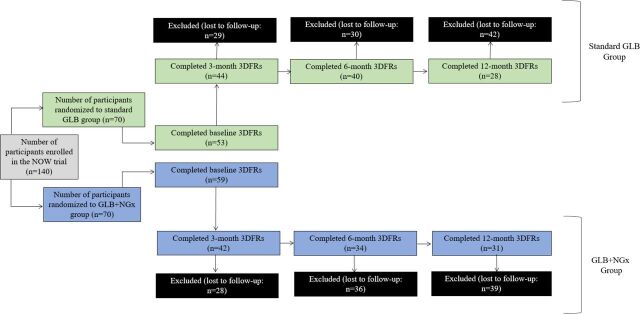
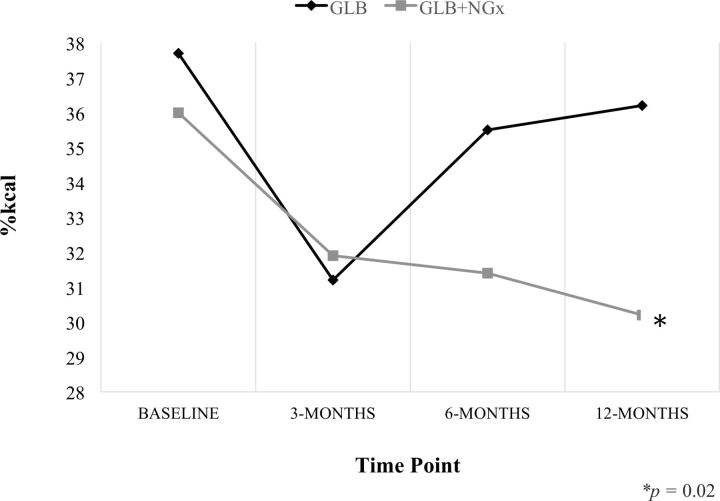
Background: Adherence to nutritional guidelines for chronic disease prevention and management remains a challenge in clinical practice. Innovative strategies are needed to help optimise dietary behaviour change. Objective: The objective of this study was to determine if a nutrigenomics-guided lifestyle intervention programme could be used to motivate greater dietary adherence and change in dietary intake short-term, moderate-term and long-term compared to the gold-standard population-based weight management intervention (Group Lifestyle Balance (GLB)/Diabetes Prevention Programme (DPP)). Design: The Nutrigenomics, Overweight/Obesity, and Weight Management (NOW) randomised controlled trial is a pragmatic, parallel-group, superiority clinical trial (n=140), which was conducted at the East Elgin Family Health Team (EEFHT). GLB weight management groups were prerandomised 1:1 to receive either the standard GLB programme or a modified GLB+nutrigenomics (GLB+NGx) programme. Three 24-hour recalls were collected at baseline, 3, 6 and 12 months using the validated multiple pass method. Research assistants collecting the three 24-hour recalls were blinded to the participants’ group assignments. Statistical analyses included split plot analyses of variance (ANOVAs), two-way ANOVAs, binary logistic regression, χ 2 and Fisher’s exact tests. Using the Theory of Planned Behaviour as guidance, key confounding factors of behaviour change were considered in the analyses. This study was registered with clinicaltrials.gov ( NCT03015012 ). Results: Only the GLB+NGx group significantly reduced their total fat intake from baseline to 12-month follow-up (from 36.0%±4.8% kcal to 30.2%±8.7% kcal, p=0.02). Long-term dietary adherence to total fat and saturated fat guidelines was also significantly (p<0.05) greater in the GLB+NGx group compared to the standard GLB group. Conclusions: Weight management interventions guided by nutrigenomics can motivate long-term improvements in dietary fat intake above and beyond gold-standard population-based interventions.
Overview
The claims and statistics of this paper haven’t been checked yet.
Free: it reads the open-access text and checks the first 5 claims that cite a source we can check. Create a free account to check every claim.
Integrity signals
Registry
Cites
Statistics
Figures
Verification
Claims the paper makes
The claims and statistics of this paper haven’t been checked yet.
Free: it reads the open-access text and checks the first 5 claims that cite a source we can check. Create a free account to check every claim.
Claims other papers make about this one
Each is checked against this paper’s own text: does it say what the citing paper says it does?
The source backs part of the claim, not all of it — or backs it for a different population, condition or comparison.
In the citing paper
“Recent precision-based trials underscore the efficacy of personalized weight loss interventions, providing promising data for future, individualized approaches.”
From Beyond Calories: Individual Metabolic and Hormonal Adaptations Driving Variability in Weight Management—A State-of-the-Art Narrative Review (2024) · cites this paper as [93]
Experimental — accuracy not yet measuredThe cited source says what the claim attributes to it.
In the citing paper
“Findings from single studies suggested that personalization of dietary recommendations based on genetic profiles may support adherence, although data remain limited [114].”
From Dietary and Behavioral Strategies for Weight Loss and Weight Loss Maintenance: A Narrative Review (2025) · cites this paper as [114]
In the citing paper
“The study incorporated the theory of planned behavior to control confounders, suggesting that personalized, genetic-based advice enhances dietary change beyond traditional guidelines, supporting nutrigenomics as an effective tool for sustained weight management [93].”
From Beyond Calories: Individual Metabolic and Hormonal Adaptations Driving Variability in Weight Management—A State-of-the-Art Narrative Review (2024) · cites this paper as [93]
In the citing paper
“At 12 months, only the GLB + NGx group achieved a significant reduction in total fat intake from 36.0% ± 4.8% kcal to 30.2% ± 8.7% kcal (p = 0.02) and greater adherence to fat and saturated fat guidelines (p < 0.05).”
From Beyond Calories: Individual Metabolic and Hormonal Adaptations Driving Variability in Weight Management—A State-of-the-Art Narrative Review (2024) · cites this paper as [93]
Self-check
Percentages, sums and reported differences re-computed from the paper’s own numbers.
The self-check needs the paper’s full text.
Citations
Cites
The theory of planned behavior
Ajzen, I. (1991) · Organizational Behavior and Human Decision Processes · doi:10.1016/0749-5978(91)90020-t · Cited by 134,657 · cited 1×
“9 Furthermore, researchers in the field of genetic testing behaviour change research have called to action academia to incorporate this theory into genetic testing behaviour change studies in order to account for potential confounding factors; this has been further detailed elsewhere.”
Reduction in the incidence of type 2 diabetes with lifestyle intervention or metformin
(2002) · New England Journal of Medicine · doi:10.1056/nejmoa012512 · Cited by 19,011
Lippa, N. C., & Sanderson, S. C. (2013) · Human Heredity · doi:10.1159/000353712 · Cited by 6,078
Sontrop, J. M., Dixon, S. N., Garg, A. X., Buendia-Jimenez, I., Dohein, O., Huang, S.-H. S., & Clark, W. F. (2013) · American Journal of Nephrology · doi:10.1159/000350377 · Cited by 5,871
Trumbo (2001) · doi:10.1016/s0002-8223(01)00078-5 · Cited by 4,852
Feiner, N., Motone, F., Meyer, A., & Kuraku, S. (2019) · Scientific Reports · doi:10.1038/s41598-019-40055-1 · Cited by 1,987
Dietary assessment methods in epidemiologic studies
Shim, J.-S., Oh, K., & Kim, H. C. (2014) · Epidemiology and Health · doi:10.4178/epih/e2014009 · Cited by 1,545
Anderson, T. J., Grégoire, J., Pearson, G. J., Barry, A. R., Couture, P., Dawes, M., Francis, G. A., Genest, J., Grover, S., Gupta, M., et al. (2016) · Canadian Journal of Cardiology · doi:10.1016/j.cjca.2016.07.510 · Cited by 1,173
Conway, J. M., Ingwersen, L. A., Vinyard, B. T., & Moshfegh, A. J. (2003) · The American Journal of Clinical Nutrition · doi:10.1093/ajcn/77.5.1171 · Cited by 820 · cited 1×
“25 Additionally, these 3 days of dietary recalls provided highly detailed nutritional intake data, which is a strength of this dietary collection method.”
The Extended Parallel Process Model: Illuminating the Gaps in Research
Popova, L. (2012) · Health Education & Behavior · doi:10.1177/1090198111418108 · Cited by 361
Hydes, T. J., Burton, R., Inskip, H., Bellis, M. A., & Sheron, N. (2019) · BMC Public Health · doi:10.1186/s12889-019-6576-9 · Cited by 327
Health Behavior Changes After Genetic Risk Assessment for Alzheimer Disease: The REVEAL Study
Chao, S., Roberts, J. S., Marteau, T. M., Silliman, R., Cupples, L. A., & Green, R. C. (2008) · Alzheimer Disease & Associated Disorders · doi:10.1097/wad.0b013e31815a9dcc · Cited by 243 · cited 1×
“33 34 There have been no RCTs demonstrating that nutrigenomics is ineffective at motivating changes in dietary intake after 12-month follow-up.”
Corella, D. (2009) · Archives of Internal Medicine · doi:10.1001/archinternmed.2009.343 · Cited by 170
Disclosure of genetic information and change in dietary intake: a randomized controlled trial
Nielsen, D. E., & El-Sohemy, A. (2014) · PLoS ONE · doi:10.1371/journal.pone.0112665 · Cited by 157 · cited 1×
“33 34 There have been no RCTs demonstrating that nutrigenomics is ineffective at motivating changes in dietary intake after 12-month follow-up.”
Josse, A. R., Costa, L. A. D., Campos, H., & El‐Sohemy, A. (2012) · American Journal of Clinical Nutrition · doi:10.3945/ajcn.112.038794 · Cited by 107
Weight Loss Through Living Well
McTigue, K. M., Conroy, M. B., Bigi, L., Murphy, C., & McNeil, M. (2009) · The Diabetes Educator · doi:10.1177/0145721709332815 · Cited by 103
Food choice motives, attitude towards and intention to adopt personalised nutrition
Rankin, A., Bunting, B. P., Poínhos, R., van der Lans, I. A., Fischer, A. R. H., Kuznesof, S. A., de Almeida, M., Markovina, J., Frewer, L. J., & Stewart-Knox, B. J. (2018) · Public Health Nutrition · doi:10.1017/s1368980018001234 · Cited by 97 · cited 1×
“29 Our finding that GLB+NGx group participants who dropped out at 3 months had a significantly lower income, on average, compared with 3-month dropouts from the standard GLB group was interesting.”
Dietary intake in the Diabetes Prevention Program cohort: baseline and 1-year post-randomization
Mayer‐Davis, E. J., Sparks, K. C., Km, H., Costacou, T., Lovejoy, J. C., Regensteiner, J. G., Hoskin, M. A., Kriska, A. M., & Bray, G. A. (2004) · Annals of Epidemiology · doi:10.1016/j.annepidem.2004.02.004 · Cited by 96
Horne, J., Madill, J., O’Connor, C., Shelley, J., & Gilliland, J. (2018) · Lifestyle Genomics · doi:10.1159/000488086 · Cited by 94 · cited 3×
“8 This is concerning given that the TPB is one of the most widely accepted behaviour change theories.”
InfluentialSelf-citationThe Consumption of Protein-Rich Foods in Older Adults: An Exploratory Focus Group Study
Best, R. L., & Appleton, K. M. (2013) · Journal of Nutrition Education and Behavior · doi:10.1016/j.jneb.2013.03.008 · Cited by 75 · cited 1×
“30 31 However, the finding that dropouts from the GLB+NGx group tended to have lower incomes was not consistent after 6 and 12 months, and therefore, future research should explore this phenomenon further.”
Hietaranta-Luoma, H.-L., Tahvonen, R., Iso-Touru, T., Puolijoki, H., & Hopia, A. (2014) · Lifestyle Genomics · doi:10.1159/000371743 · Cited by 69
Barriers to and Facilitators of the Consumption of Animal-Based Protein-Rich Foods in Older Adults
Appleton, K. M. (2016) · Nutrients · doi:10.3390/nu8040187 · Cited by 61 · cited 1×
“30 31 However, the finding that dropouts from the GLB+NGx group tended to have lower incomes was not consistent after 6 and 12 months, and therefore, future research should explore this phenomenon further.”
Morin, K. (2009) · OMICS A Journal of Integrative Biology · doi:10.1089/omi.2008.0047 · Cited by 60
Saukko, P. M. (2013) · Proceedings of The Nutrition Society · doi:10.1017/s0029665112002960 · Cited by 58
A Scientific Perspective of Personalised Gene-Based Dietary Recommendations for Weight Management
Drabsch, T., & Holzapfel, C. (2019) · Nutrients · doi:10.3390/nu11030617 · Cited by 57 · cited 1×
“…indicating positive consumer attitudes towards genetic-based dietary advice, 3 7 several indications that a one- size-fits all approach to weight management is not optimal, 6 and the potential for genetically guided, actionable nutrition recommendations to help motivate changes in dietary intake.”
Meisel, S. F., Beeken, R. J., van Jaarsveld, C. H. M., & Wardle, J. (2015) · Obesity · doi:10.1002/oby.20958 · Cited by 55
Cormier, H., Tremblay, B. L., Paradis, A. ‐., Garneau, V., Desroches, S., Robitaille, J., & Vohl, M. ‐. (2014) · Journal of Human Nutrition and Dietetics · doi:10.1111/jhn.12194 · Cited by 53
Nielsen, D. E., Shih, S., & El-Sohemy, A. (2014) · Lifestyle Genomics · doi:10.1159/000365508 · Cited by 52
Rief, W., Conradt, M., Dierk, J., Rauh, E., Schlumberger, P., Hinney, A., & Hebebrand, J. (2007) · Journal of General Internal Medicine · doi:10.1007/s11606-007-0353-7 · Cited by 45
Understanding the Nutrigenomic Definitions and Concepts at the Food–Genome Junction
Subbiah, M. T. R. (2008) · OMICS A Journal of Integrative Biology · doi:10.1089/omi.2008.0033 · Cited by 45
Genetic Polymorphisms in ADORA2A and CYP1A2 Influence Caffeine’s Effect on Postprandial Glycaemia
Banks, N. F., Tomko, P. M., Colquhoun, R. J., Muddle, T. W. D., Emerson, S. R., & Jenkins, N. D. M. (2019) · Scientific Reports · doi:10.1038/s41598-019-46931-0 · Cited by 45
Xiao, L., Yank, V, Wilson, S. R., Lavori, P. W., & Ma, J. (2013) · Nutrition & Diabetes · doi:10.1038/nutd.2013.17 · Cited by 39
O’Connor, S. G., Habre, R., Bastain, T. M., Toledo‐Corral, C. M., Gilliland, F. D., Eckel, S. P., Cabison, J., Naya, C. H., Farzan, S. F., Chu, D., et al. (2019) · BMC Public Health · doi:10.1186/s12889-019-6583-x · Cited by 39
Two-Year Results of Translating the Diabetes Prevention Program Into an Urban, Underserved Community
Piatt, G. A., Seidel, M. C., Chen, H.-Y., Powell, R. O., & Zgibor, J. C. (2012) · The Diabetes Educator · doi:10.1177/0145721712458834 · Cited by 34
Horne, J. R., Madill, J., & Gilliland, J. (2017) · Personalized Medicine · doi:10.2217/pme-2017-0038 · Cited by 31
Self-citationMarcotte, B. V., Cormier, H., Garneau, V., Robitaille, J., Desroches, S., & Vohl, M. (2018) · Lifestyle Genomics · doi:10.1159/000499626 · Cited by 28
Horne, J. R., Gilliland, J., O’Connor, C. P., Seabrook, J. A., Hannaberg, P., & Madill, J. (2019) · BMC Public Health · doi:10.1186/s12889-019-6621-8 · Cited by 17
Self-citationJenkins, N. D. M., Colquhoun, R. J., Tomko, P. M., Gradnigo, T., Magrini, M. A., Muddle, T. W. D., Fleming, S. R., Ferrell, M. C., & El‐Sohemy, A. (2018) · Experimental Physiology · doi:10.1113/ep087145 · Cited by 9
Cited by
Jinnette, R., Narita, A., Manning, B., McNaughton, S. A., Mathers, J. C., & Livingstone, K. M. (2020) · Advances in Nutrition · doi:10.1093/advances/nmaa144 · Cited by 174
“The duration of follow-up ranged from ≤3 mo (11, 24, 26, 27), 6 mo (9, 14, 17, 25), to 12 mo (12, 13, 15).”
BackgroundMethodInfluentialPrecision nutrition: A review of current approaches and future endeavors
Livingstone, K. M., Ramos-López, O., Përusse, L., Kato, H., Ordovás, J. M., & Martínez, J. A. (2022) · Trends in Food Science & Technology · doi:10.1016/j.tifs.2022.08.017 · Cited by 152
Shyam, S., Lee, K. X., Tan, A. S. W., Khoo, T. A., Harikrishnan, S., Lalani, S. A., & Ramadas, A. (2022) · Nutrients · doi:10.3390/nu14194104 · Cited by 76
“Five of these interventions [17,18,20–28,30,31] were delivered online, whereas the other interventions were delivered face to face in primary care [16,32], weight loss clinics [19], or institutional [29] settings.”
BackgroundInfluentialGoals in Nutrition Science 2020-2025
Bassaganya-Riera, J., Berry, E. M., Blaak, E. E., Burlingame, B., le Coutre, J., van Eden, W., El‐Sohemy, A., German, J. B., Knorr, D., Lacroix, C., et al. (2021) · Frontiers in Nutrition · doi:10.3389/fnut.2020.606378 · Cited by 81
“This applies to healthy, young adults as well as older adults who are overweight or obese (30, 31).”
BackgroundMansour, S., Alkhaaldi, S. M. I., Sammanasunathan, A. F., Ibrahim, S. M., Farhat, J., & Al‐Omari, B. (2024) · Nutrients · doi:10.3390/nu16050581 · Cited by 80
“In the long term, the benefits of PN use were associated with a decrease in total fat intake, in addition to compliance with nutritional advice [120].”
Background
Metadata
- Authors
- Horne, J., Gilliland, J., O'Connor, C., Seabrook, J., & Madill, J.
- Affiliations
- Western University (CA)
- Lawson Health Research Institute, London, Ontario, Canada
- Corresponding author
- Horne, Justine
- Venue
- BMJ Nutrition, Prevention & Health
- Publisher
- BMJ
- Published
- 2020-05-21
- Volume
- 3
- Issue
- 1
- Pages
- 49-59
- ISSN
- 2516-5542 (ISSN-L)
- PMC
- PMC7664486
- OpenAlex
- W3027262175
- Cited by
- 65
- References
- 38
- Citations by year
- 2026: 9 · 2025: 11 · 2024: 11 · 2023: 14 · 2022: 6 · 2021: 9 · 2020: 5
- FWCI
- 4.98
- Type
- journal article
- Language
- en
- Open access
- gold
- doi.org
- Licence
- Locations
- BMJ Nutrition Prevention & Health (publishedVersion, cc-by-nc)
- PubMed Central (publishedVersion, cc-by-nc)
- PubMed (publishedVersion)
- DOAJ (DOAJ: Directory of Open Access Journals) (submittedVersion, cc-by-sa)
- Funders
- CIHR (395167)
- Topics
- Life Sciences › Biochemistry, Genetics and Molecular Biology › Genetics › Nutrition, Genetics, and Disease
- Health Sciences › Medicine › Public Health, Environmental and Occupational Health › Nutritional Studies and Diet
- Health Sciences › Nursing › Nutrition and Dietetics › Nutrition, Health and Food Behavior
- Keywords
- nutrigenomics, dietary adherence, dietary behavior change, weight management, lifestyle intervention, diabetes prevention programmes, overweight and obesity, dietary fat intake, saturated fat intake, theory of planned behavior, personalized nutrition
About these checks
Registry, retraction, Cites and statistics results are computed, not judged, with one exception: a printed reference that no index lists is read once by a model before it counts as a citation error. Claims are extracted by a model and kept only when their quote appears verbatim in the text; each cited source is then checked, with a model’s help, for whether it says what the claim relies on. Those verdicts can be wrong — read the claim’s quote and the cited source before relying on one.
Statistics and arithmetic are recomputed, not judged.
Confidence bands are shown only for fields calibrated on our annotated test set. None is calibrated yet, so no band is shown.
What counts as a claim ›How we measure confidence ›How we check this ›
Are you an author, or do you see a problem with this page? Request a review
Data sources
Bibliographic data: Semantic Scholar, OpenAlex, Crossref.
Contains information from the Semantic Scholar Academic Graph Datasets, made available under the ODC Attribution License (ODC-BY 1.0).
Semantic Scholar’s data is described in: Kinney, R., et al. (2023). The Semantic Scholar Open Data Platform. arXiv:2301.10140.
