

Does cognitive behaviour therapy have an enduring effect that is superior to keeping patients on continuation pharmacotherapy? A meta-analysis
Open accessThe DOI matches its Crossref record; 30 of the 31 references it cites were found in a registry or an index.
Abstract
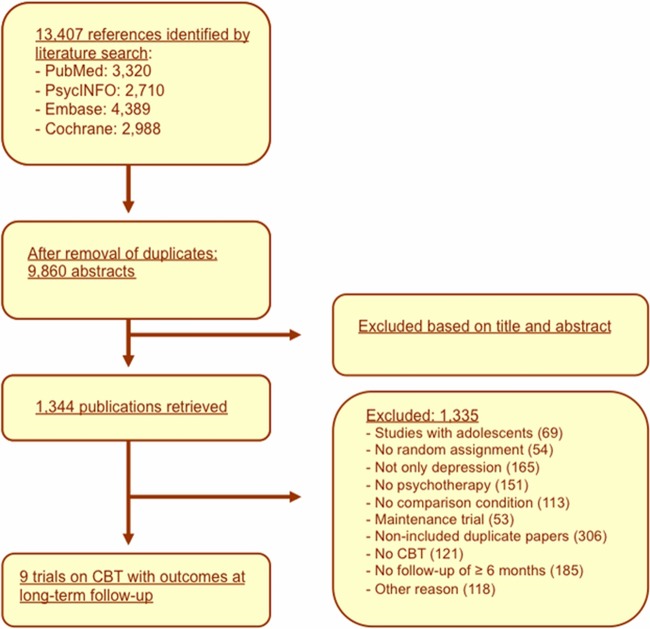
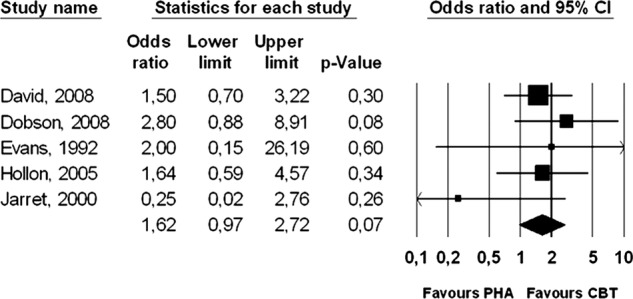
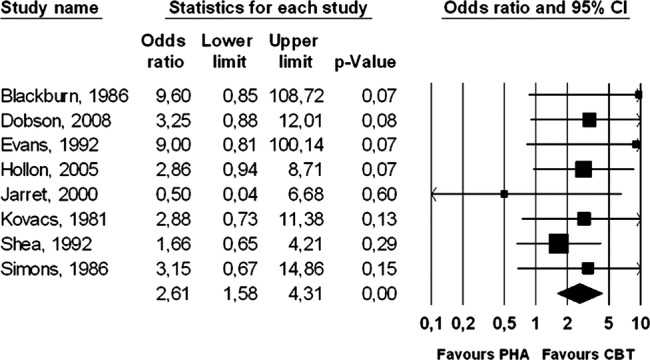
Objectives: Although cognitive behaviour therapy (CBT) and pharmacotherapy are equally effective in the acute treatment of adult depression, it is not known how they compare across the longer term. In this meta-analysis, we compared the effects of acute phase CBT without any subsequent treatment with the effects of pharmacotherapy that either were continued or discontinued across 6–18 months of follow-up. Design: We conducted systematic searches in bibliographical databases to identify relevant studies, and conducted a meta-analysis of studies meeting inclusion criteria. Setting: Mental healthcare. Participants: Patients with depressive disorders. Interventions: CBT and pharmacotherapy for depression. Outcome measures: Relapse rates at long-term follow-up. Results: 9 studies with 506 patients were included. The quality was relatively high. Short-term outcomes of CBT and pharmacotherapy were comparable, although drop out from treatment was significantly lower in CBT. Acute phase CBT was compared with pharmacotherapy discontinuation during follow-up in eight studies. Patients who received acute phase CBT were significantly less likely to relapse than patients who were withdrawn from pharmacotherapy (OR=2.61, 95% CI 1.58 to 4.31, p<0.001; numbers-needed-to-be-treated, NNT=5). The acute phase CBT was compared with continued pharmacotherapy at follow-up in five studies. There was no significant difference between acute phase CBT and continued pharmacotherapy, although there was a trend (p<0.1) indicating that patients who received acute phase CBT may be less likely to relapse following acute treatment termination than patients who were continued on pharmacotherapy (OR=1.62, 95% CI 0.97 to 2.72; NNT=10). Conclusions: We found that CBT has an enduring effect following termination of the acute treatment. We found no significant difference in relapse after the acute phase CBT versus continuation of pharmacotherapy after remission. Given the small number of studies, this finding should be interpreted with caution pending replication.
Overview
The claims and statistics of this paper haven’t been checked yet.
Free: it reads the open-access text and checks the first 5 claims that cite a source we can check. Create a free account to check every claim.
Integrity signals
Registry
Cites
Statistics
Figures
Verification
Claims the paper makes
The claims and statistics of this paper haven’t been checked yet.
Free: it reads the open-access text and checks the first 5 claims that cite a source we can check. Create a free account to check every claim.
Claims other papers make about this one
Each is checked against this paper’s own text: does it say what the citing paper says it does?
The cited source says what the claim attributes to it.
In the citing paper
“Cognitive behaviour therapy (CBT) appears to have an enduring effect that reduces risk for relapse to the same extent as continuation ADM (Cuijpers et al., 2013)”
From Risk factors for relapse and recurrence of depression in adults and how they operate: A four-phase systematic review and meta-synthesis (2018) · cites this paper as Cuijpers et al., 2013
In the citing paper
“Subsequent studies, however, have reported that the acute phase of CBT is effective at reducing the risk of depressive relapse.[48][49][50][51]”
From Mindfulness-based cognitive therapy for prevention and time to depressive relapse: Systematic review and network meta-analysis (2021) · cites this paper as [48]
Self-check
Percentages, sums and reported differences re-computed from the paper’s own numbers.
The self-check needs the paper’s full text.
Citations
Cites
Measuring inconsistency in meta-analyses
Higgins, J. P. T., Thompson, S. G., Deeks, J. J., & Altman, D. G. (2003) · BMJ · doi:10.1136/bmj.327.7414.557 · Cited by 63,139 · cited 1×
“A value of 0% indicates no observed heterogeneity, and larger values show increasing heterogeneity, with 25% as low, 50% as moderate, and 75% as high heterogeneity.(15) We calculated 95% CIs around I(2),(16) using the non-central χ(2)-based approach within the heterogi module for Stata.”
MethodCochrane Handbook for Systematic Reviews of Interventions: Cochrane Book Series
(2008) · doi:10.1002/9780470712184 · Cited by 25,048
Borenstein, M., Hedges, L. V., Higgins, J. P. T., & Rothstein, H. R. (2009) · doi:10.1002/9780470743386 · Cited by 14,225
Duval, S., & Tweedie, R. (2000) · Biometrics · doi:10.1111/j.0006-341x.2000.00455.x · Cited by 14,099
Borenstein, M., Hedges, L. V., Higgins, J. P. T., & Rothstein, H. R. (2021) · doi:10.1002/9781119558378 · Cited by 9,799
Cognitive Therapy for Depression: (675542012-001)
(2012) · PsycEXTRA Dataset · doi:10.1037/e675542012-001 · Cited by 9,663
The file drawer problem and tolerance for null results.
Rosenthal, R. (1979) · Psychological Bulletin · doi:10.1037/0033-2909.86.3.638 · Cited by 9,068 · cited 1×
“We also calculated Orwin’s fail-safe N, which indicates the number of missing studies needed to make the effect size insignificant.(20)”
MethodFrank, E. (1991) · Archives of General Psychiatry · doi:10.1001/archpsyc.1991.01810330075011 · Cited by 1,959 · cited 2×
“intended to reduce the risk for recurrence, the onset of a wholly new episode, and is standard for chronic or recurrent patients.(7) Although several studies have compared the long-term”
BackgroundAn Assessment of Clinically Useful Measures of the Consequences of Treatment
Laupacis, A., Sackett, D. L., & Roberts, R. S. (1988) · New England Journal of Medicine · doi:10.1056/nejm198806303182605 · Cited by 1,681 · cited 1×
“NNT indicates the number of patients that would have to be treated in order to generate one additional positive outcome.(14) Therefore, we also calculated NNT for all comparisons.”
PRACTICE GUIDELINE FOR THE Treatment of Patients With Major Depressive Disorder
Gelenberg, A. J., Freeman, P. B., Markowitz, J. C., Rosenbaum, J. F., Thase, M. E., Trivedi, M. H., & Rhoads, R. S. (2010) · Cited by 1,521
Research works printed but not linked: 2
- Cuijpers P Berking M Andersson G A meta-analysis of cognitive behavior therapy for adult depression, alone and in comparison to other treatments. Can J Psychiat 2013 (in press) 23870719 · DOI · Paper page
- Beck AT Rush J Shaw B Cognitive therapy of depression. New York: Guilford Press, 1979
Cited by
Items 101–200 of 254
Evolutionary theory and the treatment of depression: It is all about the squids and the sea bass
Hollon, S. D., Andrews, P. W., Singla, D. R., Maslej, M. M., & Mulsant, B. H. (2021) · Behaviour Research and Therapy · doi:10.1016/j.brat.2021.103849 · Cited by 23
Self-citationThe efficacy of CBT for severe mental illness and the challenge of dissemination in routine care
van der Gaag, M. (2014) · World Psychiatry · doi:10.1002/wps.20162 · Cited by 23
“er relapses in cases of depression (1).”
Papers that summarise other papers (systematic reviews and meta‐analyses)
Greenhalgh, T., & Dijkstra, P. (2024) · Wiley eBooks · doi:10.1002/9781394206933.ch9 · Cited by 19
Voderholzer, U., & Barton, B. B. (2016) · Verhaltenstherapie · doi:10.1159/000446674 · Cited by 22
Psychotherapy for depression and anxiety in low- and middle-income countries
Cuijpers, P., Eylem, O., Karyotaki, E., Zhou, X., & Sijbrandij, M. (2019) · Global Mental Health and Psychotherapy · doi:10.1016/b978-0-12-814932-4.00008-2 · Cited by 15
Self-citationPresentation of benefits and harms of antidepressants on websites: A cross-sectional study
Demasi, M., & Gøtzsche, P. C. (2020) · International Journal of Risk & Safety in Medicine · doi:10.3233/jrs-191023 · Cited by 22
“Psychotherapy has less harms than antidepressants and is often superior, particularly in the long run [45,46], which is why we included it as one of the criteria for informed consent.”
BackgroundHarvey, A. G., Dong, L., Lee, J. Y., Gumport, N. B., Hollon, S. D., Rabe‐Hesketh, S., Hein, K., Haman, K., McNamara, M. E., Weaver, C., et al. (2017) · Trials · doi:10.1186/s13063-017-2276-x · Cited by 19
“Meta-analyses confirm CT as a frontline treatment [42, 43].”
BackgroundSelf-citationVittengl, J. R., Clark, L. A., Thase, M. E., & Jarrett, R. B. (2016) · Journal of Affective Disorders · doi:10.1016/j.jad.2016.04.017 · Cited by 20
Amsterdam, J. D., & Kim, T. T. (2019) · Journal of Clinical Psychopharmacology · doi:10.1097/jcp.0000000000001049 · Cited by 17
“antidepressant therapy) in subjects with recurrent depression who have received repeated antidepressant treatment trials.(11,33) Other clinical and demographic factors, like illness duration, illness severity, and female sex, that are associated with illness heritability have been suggested as possible contributors to…”
BackgroundAlavi, N., Stephenson, C., Omrani, M., Gerritsen, C. J., Martin, M. S., Knyahnytskyi, A., Zhu, Y., Kumar, A., Jagayat, J., Shirazi, A., et al. (2021) · JMIR Research Protocols · doi:10.2196/30845 · Cited by 21
“Psychotherapy can be more cost-effective, decrease relapse prevalence, outperform many pharmacotherapies, and be the intervention of preference for many patients when treating anxiety disorders [18-23].”
Cuijpers, P. J., de Wit, L. M., Weitz, E. S., Andersson, G., & Huibers, M. J. H. (2015) · Journal of Evidence-Based Psychotherapies · Cited by 36
Self-citationKennedy, J. C., Dunlop, B. W., Craighead, L. W., Nemeroff, C. B., Mayberg, H. S., & Craighead, W. E. (2018) · Journal of Consulting and Clinical Psychology · doi:10.1037/ccp0000279 · Cited by 17
“Cognitive behavioral therapy (CBT), an evidence-based psychotherapy and alternative first-line treatment approach to ADMs, also appears to reduce the risk of relapse and recurrence.”
InfluentialTestosterone Replacement Therapy in the Treatment of Depression
Anderson, D. J., Vazirnia, P., Loehr, C. A., Sternfels, W., Hasoon, J. J., Viswanath, O., Kaye, A. D., & Urits, I. (2022) · Health Psychology Research · doi:10.52965/001c.38956 · Cited by 21
The diagnosis and treatment of unipolar depression—National Disease Management Guideline
Härter, M. C., & Prien, P. (2023) · Deutsches Ärzteblatt international · doi:10.3238/arztebl.m2023.0074 · Cited by 34
Sinniah, A., Oei, T. P. S., Maniam, T., & Subramaniam, P. (2017) · Psychiatry Research · doi:10.1016/j.psychres.2017.04.026 · Cited by 17
Feurer, C., Francis, J., Ajilore, O., Craske, M. G., Phan, K. L., & Klumpp, H. (2021) · Cognitive Therapy and Research · doi:10.1007/s10608-021-10222-8 · Cited by 19
Hauschildt, M., Arlt, S., Moritz, S., Yassari, A. H., & Jelinek, L. (2022) · Clinical Psychology & Psychotherapy · doi:10.1002/cpp.2733 · Cited by 19
Treatments for partial remission of major depressive disorder: a systematic review and meta-analysis
Gülpen, J., Brouwer, M. E., Geurtsen, G. J., van Dis, E. A. M., Denys, D. A. J. P., & Bockting, C. (2023) · BMJ Mental Health · doi:10.1136/bmjment-2023-300827 · Cited by 15
“45 46 In contrast, preventive effects of ADM disappear when they are discontinued or tapered.”
BackgroundSelf-citationAndersson, G., Wagner, B., & Cuijpers, P. J. (2016) · Springer eBooks · doi:10.1007/978-3-319-06083-5_2 · Cited by 18
Self-citationSolomonov, N., & Barber, J. P. (2015) · Epidemiology and Psychiatric Sciences · doi:10.1017/s2045796015000815 · Cited by 16
“…CBT (e.g., Tolin, 2010; Marcus et al. 2014), they have been criticised (Leichsenring & Rabung, 2010; Baardseth et al. 2013), and others found that it is as effective as alternative treatments (e.g. Leichsenring, 2001; Cuijpers et al. 2008, 2013a; Beltman et al. 2010; Driessen et al. 2013, 2015b).”
BackgroundInfluentialWaltman, S. H., Creed, T. A., & Beck, A. T. (2016) · Clinical Psychology Science and Practice · doi:10.1111/cpsp.12152 · Cited by 19
Zieve, G. G., Dong, L., & Harvey, A. G. (2019) · Behaviour Change · doi:10.1017/bec.2019.1 · Cited by 15
“Meta-analyses confirm cognitive therapy as a frontline treatment (Cuijpers et al., 2013).”
BackgroundJohansson, R. (2013) · Linköping studies in behavioural science · doi:10.3384/diss.diva-100385 · Cited by 18
What we got wrong about depression and its treatment
Hollon, S. D. (2024) · Behaviour Research and Therapy · doi:10.1016/j.brat.2024.104599 · Cited by 16
Self-citationYılmaz, O., MIRÇIK, A. B., Kunduz, M., ÇOMBAŞ, M., Öztürk, A., Deveci, E., & Kırpınar, İ. (2019) · Psychiatry Investigation · doi:10.30773/pi.2019.03.14 · Cited by 16
Treatment of depression in children and adolescents
Leichsenring, F., Luyten, P., Abbass, A. A., Rabung, S., & Steinert, C. (2021) · The Lancet Psychiatry · doi:10.1016/s2215-0366(20)30492-2 · Cited by 13
Schaub, A., Goldmann, U., Mueser, T., Goerigk, S. A., Hautzinger, M., Elisabeth, R., Charypar, M., Engel, R. R., & Möller, H. (2018) · Journal of Affective Disorders · doi:10.1016/j.jad.2018.05.081 · Cited by 17
Smith, O. R. F., Sæther, S. M. M., Haug, E., & Knapstad, M. (2022) · BMC Psychiatry · doi:10.1186/s12888-022-04227-0 · Cited by 13
“In general, there is a paucity of studies that have examined the long-term effectiveness of CBT on anxiety and depression [53, 54], and as such our study aids to fill this existing knowledge gap.”
Backgroundde Jonge, M., Bockting, C., Kikkert, M., Bosmans, J. E., & Dekker, J. (2015) · BMC Psychiatry · doi:10.1186/s12888-015-0508-8 · Cited by 11
“We know that acute phase treatment of depression with Cognitive Therapy (A-CT) has a prophylactic effect [11].”
BackgroundSelf-citationAldridge, L. R., Luitel, N. P., Jordans, M. J. D., Bass, J., & Patenaude, B. (2022) · Cambridge Prisms Global Mental Health · doi:10.1017/gmh.2022.54 · Cited by 13
Jarrett, R. B., Minhajuddin, A., Vittengl, J. R., Clark, L. A., & Thase, M. E. (2015) · Journal of Consulting and Clinical Psychology · doi:10.1037/ccp0000069 · Cited by 12
“…(b) 54% relapse or recur within 2 years; and (c) compared to assessment-only controls, continuation-phase CT (C–CT) improved long-term outcome by reducing relapse and recurrence 21% while provided and 29% over follow-up (Vittengl, Clark, Dunn, & Jarrett, 2007; replicated by Cuijpers et al., 2013).”
Vittengl, J. R., Clark, L. A., Thase, M. E., & Jarrett, R. B. (2017) · Psychiatry Research · doi:10.1016/j.psychres.2017.03.032 · Cited by 13
“Acute-phase treatments, including cognitive therapy (A-CT) and pharmacotherapy, reduce depressive symptoms substantially, but major depressive relapses or recurrences are common (Cuijpers et al., 2013a, 2013b; Vittengl et al., 2007).”
BackgroundTreatment-resistant depression reconsidered
Schroder, H. S., Patterson, E. H., & Hirshbein, L. (2022) · SSM - Mental Health · doi:10.1016/j.ssmmh.2022.100081 · Cited by 18
Herzog, P., Feldmann, M., Κube, T., Langs, G., Gärtner, T., Rauh, E., Doerr, R., Hillert, A., Voderholzer, U., Rief, W., et al. (2022) · Journal of Affective Disorders · doi:10.1016/j.jad.2022.02.057 · Cited by 10
Cognitive therapy to prevent depressive relapse in adults
Vittengl, J. R., & Jarrett, R. B. (2015) · Current Opinion in Psychology · doi:10.1016/j.copsyc.2015.01.016 · Cited by 10
Andrews, P. W., & Amsterdam, J. D. (2020) · Psychiatria Polska · doi:10.12740/pp/120084 · Cited by 11
“Moreover, we suggest that the relapse that often occurs after discontinuation [14, 24, 25, 37] represents an overshoot caused by the increase in serotonin content and transmission during this period.”
BackgroundFournier, J. C. J., Forand, N. R., Wang, Z., Li, Z., Iyengar, S., DeRubeis, R. J., Shelton, R. C., Amsterdam, J. D., Jarrett, R. B., Vittengl, J. R., et al. (2022) · Cognitive Therapy and Research · doi:10.1007/s10608-021-10281-x · Cited by 11
Self-citationDevelopment and preliminary validation of the treatment adherence rating scale
Gumport, N. B., Dong, L., Lee, J. Y., Zhao, X., & Harvey, A. G. (2022) · Journal of Behavior Therapy and Experimental Psychiatry · doi:10.1016/j.jbtep.2022.101832 · Cited by 12
Depressed individuals express more distorted thinking on social mediaPreprint
Bathina, K. C., ten Thij, M., Lorenzo‐Luaces, L., Rutter, L. A., & Bollen, J. (2020) · arXiv (Cornell University) · doi:10.48550/arxiv.2002.02800 · Cited by 10
Ezawa, I. D., Robinson, N., & Hollon, S. D. (2024) · Annual Review of Clinical Psychology · doi:10.1146/annurev-clinpsy-080822-040442 · Cited by 11
Self-citationThe Nature of Client Agency Prior to Therapy: A Qualitative Study on Clients’ Narratives
Acke, E., Smet, M. M. D., Nieuwenhove, K. V., & Meganck, R. (2022) · Psychologica Belgica · doi:10.5334/pb.1104 · Cited by 9
Feixas, G., Paz, C., García‐Grau, E., Montesano, A., Medina, J. C., Bados, A., Trujillo, A., Garzón, E. O., Compañ, V., Salla, M., et al. (2018) · PLoS ONE · doi:10.1371/journal.pone.0208245 · Cited by 11
Cognitive Behavior Therapy for Depression From an Evolutionary Perspective
Hollon, S. D., Andrews, P. W., & Thomson, J. A. (2021) · Frontiers in Psychiatry · doi:10.3389/fpsyt.2021.667592 · Cited by 12
Self-citationModeration, mediation, and moderated mediation
Hollon, S. D. (2019) · World Psychiatry · doi:10.1002/wps.20665 · Cited by 10
Self-citationSugarman, M. A. (2016) · Journal of Mental Health · doi:10.3109/09638237.2016.1139071 · Cited by 11
“…pharmacotherapy and psychotherapy (Casacalenda et al., 2002; Cuijpers et al., 2008, 2013a,b; Huhn et al., 2014; Imel et al., 2008; Spielmans et al., 2011), and pharmacological treatment may be superior to psychotherapy in the treatment of dysthymia (Cuijpers et al., 2008, 2013b; Imel et al., 2008).”
BackgroundResultInfluentialKaryotaki, E., Smit, Y., Cuijpers, P. J., Debauche, M., Keyser, T. D., Habraken, H., Pitchot, W., Reas, F., Salomez, D., Gillain, B., et al. (2014) · doi:10.57598/r230c · Cited by 13
Self-citationSchienle, A., & Jurinec, N. (2021) · Psychology Research and Behavior Management · doi:10.2147/prbm.s294940 · Cited by 9
Baranov, V. (2019) · AEA Randomized Controlled Trials · doi:10.1257/rct.4687 · Cited by 21
“The largest trial had 248 with a follow-up of 3.5 years (Cuijpers et al., 2013; Wiles et al., 2016).”
InfluentialIs perceived control of depression related to therapy outcome for depression? A longitudinal study
Ulleberg, P., Berge, T., Lending, H. D., Skule, C., & Landrø, N. I. (2021) · Journal of Psychiatric Research · doi:10.1016/j.jpsychires.2021.06.025 · Cited by 8
Ma, M., Yang, M., Li, Y., Hou, L., Li, M., Wang, X., Li, Z., Guo, K., Liu, X., Cheng, Y., et al. (2023) · Behaviour Research and Therapy · doi:10.1016/j.brat.2023.104397 · Cited by 9
Can network meta-analysis substitute for direct comparisons in psychotherapy trials?
Swartz, H. A., & Fournier, J. (2019) · JAMA Psychiatry · doi:10.1001/jamapsychiatry.2019.0243 · Cited by 6
Moradveisi, L., Huibers, M. J. H., & Arntz, A. (2015) · Behaviour Research and Therapy · doi:10.1016/j.brat.2015.04.007 · Cited by 6
“The superiority of CBTover ADM became signi fi cant after exclusion of one outlier, OR ¼ 1.77, p 0.05 (Cuijpers et al., 2013).”
InfluentialSECCION IX. Síndrome Post COVID-19: complicaciones tardías y rehabilitación
Saavedra, C. (2021) · Infectio · doi:10.22354/in.v25i4.979 · Cited by 15
Vittengl, J. R., Clark, L. A., Thase, M. E., & Jarrett, R. B. (2021) · Behaviour Research and Therapy · doi:10.1016/j.brat.2021.103996 · Cited by 6
Griffin, L. B., Miller, E. S., & Howard, E. (2022) · The Journal of Perinatal & Neonatal Nursing · doi:10.1097/jpn.0000000000000688 · Cited by 6
Bruijniks, S. J. E., Hollon, S. D., Lemmens, L. H. J. M., Peeters, F. P. M. L., Arntz, A. R., Cuijpers, P. J., Twisk, J. W. R., Dingemanse, P., Willems, L., van Oppen, P., et al. (2023) · Psychological Medicine · doi:10.1017/s0033291723002143 · Cited by 7
“Response rates seem comparable for psychotherapy and pharmacotherapy (Cuijpers et al., 2020), while relapse rates have reported to be lower in psychotherapy compared to pharmacotherapy or control conditions (Bockting, Hollon, Jarrett, Kuyken, & Dobson, 2015; Cuijpers et al., 2013a).”
Self-citationHøstmælingen, A., Ulvenes, P., Nissen‐Lie, H. A., Eielsen, M., & Wampold, B. E. (2022) · Journal of Counseling Psychology · doi:10.1037/cou0000572 · Cited by 5
Berger, T., van Calker, D., Brakemeier, E., & Schramm, E. (2019) · Elsevier eBooks · doi:10.1016/b978-3-437-22485-0.00011-7 · Cited by 9
Bockting, C., Breedvelt, J., & Brouwer, M. E. (2021) · Elsevier eBooks · doi:10.1016/b978-0-12-818697-8.00224-7 · Cited by 6
Self-citationOrmel, J., Bosker, F. J., Hollon, S. D., & Ruhé, H. G. (2020) · European Psychiatry · doi:10.1192/j.eurpsy.2020.86 · Cited by 5
“First, the excess risk of symptom-return in remitted patients after AD discontinuation relative to that in remitted patients after Cognitive Behavioral Therapy (CBT) discontinuation [21] andADcontinuation [22].”
ResultSelf-citationTreatment of Depression Versus Treatment of PTSD
Hollon, S. D. (2019) · American Journal of Psychiatry · doi:10.1176/appi.ajp.2019.19020173 · Cited by 7
Self-citationGerman, R. E., Lorenzo‐Luaces, L., & DeRubeis, R. J. (2014) · International Journal of Cognitive Therapy · doi:10.1521/ijct.2014.7.3.272 · Cited by 4
Die unterschiedlichen und sich wandelnden Recovery-Konzepte
Winter, K., Radtke, M., & Berger, T. (2015) · InFo Neurologie + Psychiatrie · doi:10.1007/s15005-015-1216-0 · Cited by 5
“Diese Nachhaltigkeit (bezogen auf Rezidivprophylaxe, anhaltend niedrige Symptomlast und Funktionsniveau) war signikant höher als bei psychopharmakologischer Behandlung [20, 21] (▶Abb.”
BackgroundBarton, B. B., Schramm, E., & Voderholzer, U. (2017) · Zeitschrift für Psychiatrie Psychologie und Psychotherapie · doi:10.1024/1661-4747/a000336 · Cited by 5
“Im Rahmen einer Meta-Analyse konnten Cuijpers et al. (2013) fünf Studien identifizieren, in denen die Wirksamkeit einer abgeschlossenen Akuttherapie mit KVT mit einer medikamentösen Erhaltungstherapie verglichen wurde.”
BackgroundThe Development and Validation of the Memory Support Treatment Provider Checklist
Gumport, N. B., Zieve, G. G., Dong, L., & Harvey, A. G. (2020) · Behavior Therapy · doi:10.1016/j.beth.2020.11.005 · Cited by 4
Riffer, F., Knopp, M., Oppenauer, C., & Sprung, M. S. (2022) · Psychotherapie Forum · doi:10.1007/s00729-022-00194-9 · Cited by 4
Ideas equivocadas sobre la depresión y su tratamiento (II)
Sanz, J., & García‐Vera, M. P. (2017) · Papeles del Psicólogo - Psychologist Papers · doi:10.23923/pap.psicol2017.2834 · Cited by 7
Process Trumps Protocol: What I Liked About Hofmann and Hayes
Hollon, S. D. (2018) · Clinical Psychological Science · doi:10.1177/2167702618797111 · Cited by 4
Self-citationDépression du sujet âgé au Sénégal : déterminants actuels et particularités de la prise en charge
Coumé, M., Toure, E. M., Ba, M., & Diop, C. T. (2021) · NPG. Neurologie, psychiatrie, gériatrie/NPG · doi:10.1016/j.npg.2020.11.005 · Cited by 3
Trinkler, C., Strauss, B. M., & Gumz, A. (2022) · Die Psychotherapie · doi:10.1007/s00278-022-00634-6 · Cited by 3
“2 Prüfkriterien zummethodischenUmgangmit psychischen Komorbiditäten in ausgewähltenMetaanalysen Komorbidität alsKurzquellenangabe Untersuchte Behandlungsmethode(n) Klinischer Faktor in Primäranalyse Klinischer Faktor in Subgruppenanalyse Einschlusskriterium Ausschlusskriterium Abbass et al. (2011) Psychotherapie + – +…”
Basic mechanisms of, and treatment targets for, depressive disorders
Pereira, M., Andreatini, R., & Svenningsson, P. (2020) · doi:10.1093/med/9780198713005.003.0074 · Cited by 3
Mutyambizi-Mafunda, V., MYERS, B. J., Sorsdahl, K. R., Chanakira, E., Lund, C., & Cleary, S. (2021) · Global Health Action · doi:10.1080/16549716.2021.1972561 · Cited by 3
“Psychological treatments are promoted by the World Health Organisation (WHO) as first line treatments for CMDs [13], with evidence suggesting that these treatments have enduring effects superior to continued pharmacotherapy in highincome countries (HICs) [14].”
BackgroundLy, K. H. (2015) · Linköping University Electronic Press eBooks · doi:10.3384/diss.diva-113996 · Cited by 17
Finally moving beyond the horse race: CBT and psychodynamic therapy equally effective for depression
Luyten, P. (2014) · Evidence-Based Mental Health · doi:10.1136/eb-2014-101770 · Cited by 3
Schene, A. H. (2014) · Journal of Depression & Anxiety · doi:10.4172/2167-1044.s2-001 · Cited by 2
“This issue of remission/recurrence of course is interesting because one important advantage of CBT in comparison with AD is its prophylactic effect on depression recurrence after acute CBT/AD treatment has been stopped [49-51].”
Bolinski, F., Hendriks, G., Bardoel, S., Hollon, S. D., Martell, C. R., & Huibers, M. J. H. (2018) · International Journal of Cognitive Therapy · doi:10.1007/s41811-018-0027-8 · Cited by 8
Self-citationKlumpp, H., Jimmy, J., Burkhouse, K. L., Bhaumik, R., Francis, J., Craske, M. G., Phan, K. L., & Ajilore, O. (2020) · Psychological Medicine · doi:10.1017/s0033291720003979 · Cited by 4
Sinyor, M. (2019) · Annals of Internal Medicine · doi:10.7326/m19-2623 · Cited by 4
“On the other hand, their findings are highly consistent with clinical experience, common sense, and previous evidence that, compared with SGAs, CBT may have fewer patients drop out and a more enduring effect after discontinuation (7).”
ResultAdvances in non-pharmacological therapies for depressive disorders: A systematic review
Liu, H., Cai, J., Mao, L., Dai, B., Wang, Y., Gao, Y., Gu, Q., Liu, Y., Jing, R., Zhou, X., et al. (2026) · Brain Behavior and Immunity Integrative · doi:10.1016/j.bbii.2026.100177 · Cited by 2
Yılmaz, O., MIRÇIK, A. B., Kunduz, M., ÇOMBAŞ, M., Öztürk, A., Deveci, E., & Kırpınar, İ. (2019) · Archives of Clinical Psychiatry (São Paulo) · doi:10.1590/0101-60830000000217 · Cited by 5
Chong, S. A., Mok, Y. M., & Subramaniam, M. (2017) · Annals of the Academy of Medicine Singapore · doi:10.47102/annals-acadmedsg.v46n4p121 · Cited by 2
Sextl-Plötz, T., Franke, M., Baumeister, H., & Ebert, D. D. (2023) · Springer eBooks · doi:10.1007/978-3-662-65816-1_3 · Cited by 2
Cognitive behavioural interventions for palliative care in adult patients: A scoping review
Wilaras, A. (2024) · Progress in Palliative Care · doi:10.1080/09699260.2024.2408127 · Cited by 2
“Findings from the synthesis of this review suggest that CBI can have positive effects in managing psychological and physical symptoms, which is consistent with previous reports on the benefits of CBT [5, 8, 9].”
Stepped Care for Depression: A Systematic Review and Feasibility Study
Hill, J. J. (2016) · Figshare · Cited by 2
Skule, C., Ulleberg, P., Berge, T., Lending, H. D., Egeland, J., & Landrø, N. I. (2017) · Frontiers in Psychology · doi:10.3389/fpsyg.2017.00788 · Cited by 2
“There is strong documentation for the effectiveness of psychosocial treatments, such as cognitive behavioral therapy (Oei and Dingle, 2008; Cuijpers et al., 2013; Hans and Hiller, 2013) and psychoeducation for depression (Clark et al.”
BackgroundCombined Treatment With CBT and Psychopharmacology
Lee, J., Hearon, B. A., & Otto, M. W. (2017) · Elsevier eBooks · doi:10.1016/b978-0-12-803457-6.00006-4 · Cited by 3
Huibers, M. J. H., van Bronswijk, S. C., Peeters, F. P. M. L., & Lemmens, L. H. J. M. (2022) · Psychotherapy Research · doi:10.1080/10503307.2022.2064251 · Cited by 2
“Moreover, CT has proven to have prophylactic, enduring effects that are superior to pharmacotherapy (Cuijpers et al., 2013), which also implies that patients learn something in therapy that helps them to stay better in the long term and that associated therapy processes might be linked to long-term…”
BackgroundRohan, K. J., Terman, J. M., Norton, R. J., McCormick, B. M., Vacek, P. M., & DeSarno, M. (2022) · Cognitive Therapy and Research · doi:10.1007/s10608-022-10344-7 · Cited by 2
Cognitive and Behavioral Therapies
Thase, M. E., Khazanov, G. K., & Wright, J. H. (2023) · Springer eBooks · doi:10.1007/978-3-030-42825-9_35-1 · Cited by 5
Bockting, C. (2015) · Utrecht University Repository (Utrecht University) · Cited by 2
Self-citationPrognosis of unipolar depression
Boberg, M., & Videbech, P. (2024) · Ugeskrift for Læger · doi:10.61409/v02240120 · Cited by 1
Perry, J. C., Starrs, C. J., Semeniuk, T., Banon, E., & Westreich, R. (2025) · Research in Psychotherapy Psychopathology Process and Outcome · doi:10.4081/ripppo.2025.885 · Cited by 2
“Furthermore, psychotherapy may also delay recurrence (Biesheuvel-Leliefeld et al. , 2015; Cuijpers et al. , 2013), even after successful treatment with antidepressant medications (ADM; Guidi & Fava, 2020).”
IOM REPORT ON PSYCHOSOCIAL TREATMENTS: CBT PERSPECTIVE
Hollon, S. D. (2015) · Depression and Anxiety · doi:10.1002/da.22444 · Cited by 2
Self-citationYoshinaga, N., Nosaki, A., Unozawa, K., Urao, Y., Hayashi, Y., & Shimizu, E. (2015) · Anxiety Disorder Research · doi:10.14389/jsad.6.2_100 · Cited by 1
Yoga for Chronic Depressive Symptoms in Pregnancy: A Commentary and Call to Action
Kinser, P. (2015) · Journal of Yoga & Physical Therapy · doi:10.4172/2157-7595.1000197 · Cited by 1
Acevedo, J. F. V. (2019) · Drugs and Addictive Behavior · doi:10.21501/24631779.3162 · Cited by 1
Principles over Process: Fifty Years a Cognitive Therapist
Hollon, S. D. (2024) · Journal of Contemporary Psychotherapy · doi:10.1007/s10879-024-09619-9 · Cited by 2
“…shown to be efficacious and, better still, specific (relative to generic control conditions) in the treat - ment of depression (Hollon et al., 2014) and if it turned out to be enduring then that was better still, as cognitive therapy appears to be relative to medication (Cuijpers et al., 2013).”
Self-citationPsychological and Social Treatment of Depression
Moorey, S. (2024) · Cambridge University Press eBooks · doi:10.1017/9781911623861.007 · Cited by 1
Berger, D. (2015) · F1000Research · doi:10.12688/f1000research.6954.1 · Cited by 2
Tsai, A. C. (2017) · PLoS Medicine · doi:10.1371/journal.pmed.1002372 · Cited by 1
“This feature would give PM+ and related behavioral interventions an advantage over medication-driven treatment strategies [61] in settings where the rare prescriber is available yet pharmacies are beleaguered by frequent stock outs.”
Background
Metadata
- Authors
- Cuijpers, P., Hollon, S. D., van Straten, A., Bockting, C., Berking, M., & Andersson, G.
- Affiliations
- Amsterdam Public Health (NL)
- Vanderbilt University (US)
- University of Groningen (NL)
- Philipps University of Marburg (DE)
- Linköping University (SE)
- Corresponding author
- Cuijpers, Pim
- Venue
- BMJ Open
- Publisher
- BMJ
- Published
- 2013
- Volume
- 3
- Issue
- 4
- Pages
- e002542
- ISSN
- 2044-6055 (ISSN-L)
- PMC
- PMC3641456
- OpenAlex
- W2154672619
- Cited by
- 253
- References
- 31
- Citations by year
- 2026: 8 · 2025: 6 · 2024: 10 · 2023: 10 · 2022: 24 · 2021: 26 · 2020: 24 · 2019: 28 · 2018: 11 · 2017: 29 · 2016: 25 · 2015: 31 · 2014: 17 · 2013: 3
- FWCI
- 4.21
- Type
- journal article
- Language
- en
- Open access
- gold
- doi.org
- Licence
- cc-by-nc
- Locations
- BMJ Open (publishedVersion, cc-by-nc)
- Europe PMC (PubMed Central) (publishedVersion, cc-by-nc)
- PubMed Central (publishedVersion, cc-by-nc)
- PubMed (publishedVersion)
- University of Groningen research database (University of Groningen / Centre for Information Technology) (publishedVersion, cc-by-nc)
- VU Research Portal (publishedVersion, other-oa)
- Ghent University Academic Bibliography (Ghent University) (submittedVersion, cc-by-nc)
- Data Archiving and Networked Services (DANS) (submittedVersion, other-oa)
- Data Archiving and Networked Services (DANS) (submittedVersion)
- DiVA (Linkoping University) (submittedVersion, other-oa)
- Digital Academic REpository of VU University Amsterdam (Vrije Universiteit Amsterdam) (submittedVersion)
- Pure Amsterdam UMC (submittedVersion)
- Multilingual Matters (Channel View Publications) (submittedVersion, cc-by-nc)
- University of Groningen research database (University of Groningen / Centre for Information Technology) (submittedVersion, cc-by-nc)
- Topics
- Social Sciences › Psychology › Experimental and Cognitive Psychology › Anxiety, Depression, Psychometrics, Treatment, Cognitive Processes
- Social Sciences › Psychology › Clinical Psychology › Psychotherapy Techniques and Applications
- Health Sciences › Medicine › Pharmacology (medical) › Treatment of Major Depression
- Keywords
- cognitive behavioral therapy, depression, relapse prevention, long-term follow-up, acute phase treatment, treatment withdrawal, treatment discontinuation, remission
About these checks
Registry, retraction, Cites and statistics results are computed, not judged, with one exception: a printed reference that no index lists is read once by a model before it counts as a citation error. Claims are extracted by a model and kept only when their quote appears verbatim in the text; each cited source is then checked, with a model’s help, for whether it says what the claim relies on. Those verdicts can be wrong — read the claim’s quote and the cited source before relying on one.
Statistics and arithmetic are recomputed, not judged.
Confidence bands are shown only for fields calibrated on our annotated test set. None is calibrated yet, so no band is shown.
What counts as a claim ›How we measure confidence ›How we check this ›
Are you an author, or do you see a problem with this page? Request a review
Data sources
Bibliographic data: Semantic Scholar, OpenAlex, Crossref.
Contains information from the Semantic Scholar Academic Graph Datasets, made available under the ODC Attribution License (ODC-BY 1.0).
Semantic Scholar’s data is described in: Kinney, R., et al. (2023). The Semantic Scholar Open Data Platform. arXiv:2301.10140.
