

Does cognitive behaviour therapy have an enduring effect that is superior to keeping patients on continuation pharmacotherapy? A meta-analysis
Open accessThe DOI matches its Crossref record; 30 of the 31 references it cites were found in a registry or an index.
Abstract
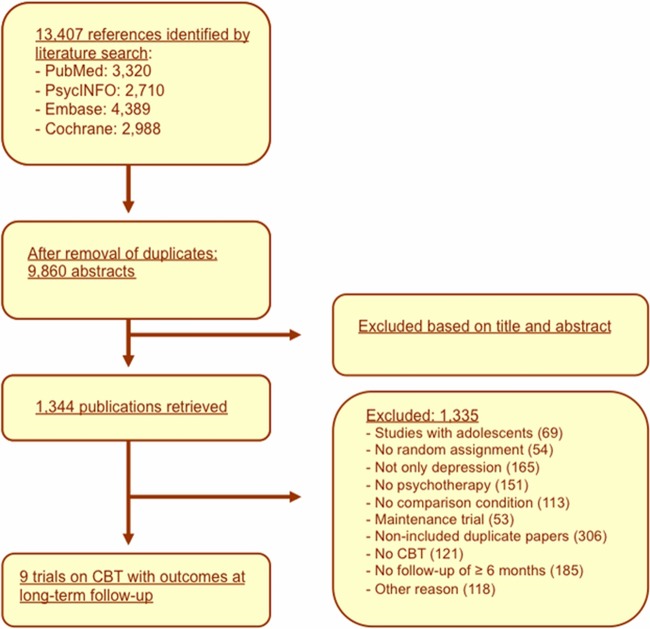
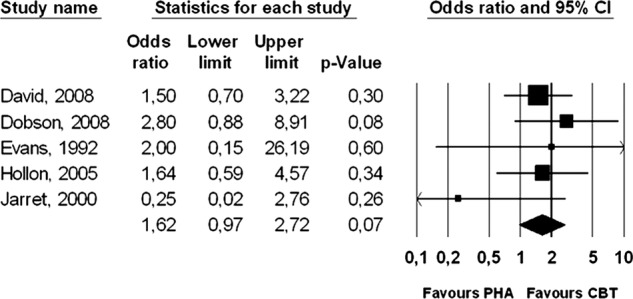
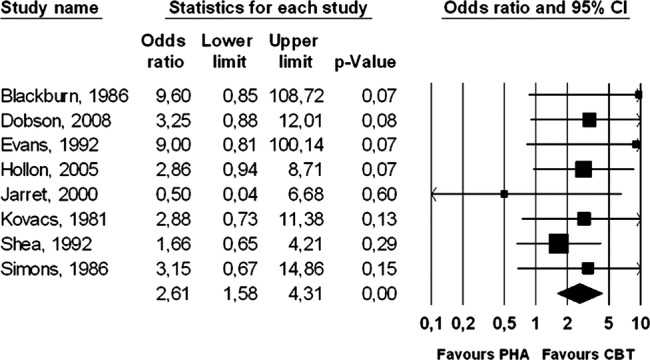
Objectives: Although cognitive behaviour therapy (CBT) and pharmacotherapy are equally effective in the acute treatment of adult depression, it is not known how they compare across the longer term. In this meta-analysis, we compared the effects of acute phase CBT without any subsequent treatment with the effects of pharmacotherapy that either were continued or discontinued across 6–18 months of follow-up. Design: We conducted systematic searches in bibliographical databases to identify relevant studies, and conducted a meta-analysis of studies meeting inclusion criteria. Setting: Mental healthcare. Participants: Patients with depressive disorders. Interventions: CBT and pharmacotherapy for depression. Outcome measures: Relapse rates at long-term follow-up. Results: 9 studies with 506 patients were included. The quality was relatively high. Short-term outcomes of CBT and pharmacotherapy were comparable, although drop out from treatment was significantly lower in CBT. Acute phase CBT was compared with pharmacotherapy discontinuation during follow-up in eight studies. Patients who received acute phase CBT were significantly less likely to relapse than patients who were withdrawn from pharmacotherapy (OR=2.61, 95% CI 1.58 to 4.31, p<0.001; numbers-needed-to-be-treated, NNT=5). The acute phase CBT was compared with continued pharmacotherapy at follow-up in five studies. There was no significant difference between acute phase CBT and continued pharmacotherapy, although there was a trend (p<0.1) indicating that patients who received acute phase CBT may be less likely to relapse following acute treatment termination than patients who were continued on pharmacotherapy (OR=1.62, 95% CI 0.97 to 2.72; NNT=10). Conclusions: We found that CBT has an enduring effect following termination of the acute treatment. We found no significant difference in relapse after the acute phase CBT versus continuation of pharmacotherapy after remission. Given the small number of studies, this finding should be interpreted with caution pending replication.
Overview
The claims and statistics of this paper haven’t been checked yet.
Free: it reads the open-access text and checks the first 5 claims that cite a source we can check. Create a free account to check every claim.
Integrity signals
Registry
Cites
Statistics
Figures
Verification
Claims the paper makes
The claims and statistics of this paper haven’t been checked yet.
Free: it reads the open-access text and checks the first 5 claims that cite a source we can check. Create a free account to check every claim.
Claims other papers make about this one
Each is checked against this paper’s own text: does it say what the citing paper says it does?
The cited source says what the claim attributes to it.
In the citing paper
“Cognitive behaviour therapy (CBT) appears to have an enduring effect that reduces risk for relapse to the same extent as continuation ADM (Cuijpers et al., 2013)”
From Risk factors for relapse and recurrence of depression in adults and how they operate: A four-phase systematic review and meta-synthesis (2018) · cites this paper as Cuijpers et al., 2013
In the citing paper
“Subsequent studies, however, have reported that the acute phase of CBT is effective at reducing the risk of depressive relapse.[48][49][50][51]”
From Mindfulness-based cognitive therapy for prevention and time to depressive relapse: Systematic review and network meta-analysis (2021) · cites this paper as [48]
Self-check
Percentages, sums and reported differences re-computed from the paper’s own numbers.
The self-check needs the paper’s full text.
Citations
Cites
Measuring inconsistency in meta-analyses
Higgins, J. P. T., Thompson, S. G., Deeks, J. J., & Altman, D. G. (2003) · BMJ · doi:10.1136/bmj.327.7414.557 · Cited by 63,139 · cited 1×
“A value of 0% indicates no observed heterogeneity, and larger values show increasing heterogeneity, with 25% as low, 50% as moderate, and 75% as high heterogeneity.(15) We calculated 95% CIs around I(2),(16) using the non-central χ(2)-based approach within the heterogi module for Stata.”
MethodCochrane Handbook for Systematic Reviews of Interventions: Cochrane Book Series
(2008) · doi:10.1002/9780470712184 · Cited by 25,048
Borenstein, M., Hedges, L. V., Higgins, J. P. T., & Rothstein, H. R. (2009) · doi:10.1002/9780470743386 · Cited by 14,225
Duval, S., & Tweedie, R. (2000) · Biometrics · doi:10.1111/j.0006-341x.2000.00455.x · Cited by 14,099
Borenstein, M., Hedges, L. V., Higgins, J. P. T., & Rothstein, H. R. (2021) · doi:10.1002/9781119558378 · Cited by 9,799
Cognitive Therapy for Depression: (675542012-001)
(2012) · PsycEXTRA Dataset · doi:10.1037/e675542012-001 · Cited by 9,663
The file drawer problem and tolerance for null results.
Rosenthal, R. (1979) · Psychological Bulletin · doi:10.1037/0033-2909.86.3.638 · Cited by 9,068 · cited 1×
“We also calculated Orwin’s fail-safe N, which indicates the number of missing studies needed to make the effect size insignificant.(20)”
MethodFrank, E. (1991) · Archives of General Psychiatry · doi:10.1001/archpsyc.1991.01810330075011 · Cited by 1,959 · cited 2×
“intended to reduce the risk for recurrence, the onset of a wholly new episode, and is standard for chronic or recurrent patients.(7) Although several studies have compared the long-term”
BackgroundAn Assessment of Clinically Useful Measures of the Consequences of Treatment
Laupacis, A., Sackett, D. L., & Roberts, R. S. (1988) · New England Journal of Medicine · doi:10.1056/nejm198806303182605 · Cited by 1,681 · cited 1×
“NNT indicates the number of patients that would have to be treated in order to generate one additional positive outcome.(14) Therefore, we also calculated NNT for all comparisons.”
PRACTICE GUIDELINE FOR THE Treatment of Patients With Major Depressive Disorder
Gelenberg, A. J., Freeman, P. B., Markowitz, J. C., Rosenbaum, J. F., Thase, M. E., Trivedi, M. H., & Rhoads, R. S. (2010) · Cited by 1,521
Research works printed but not linked: 2
- Cuijpers P Berking M Andersson G A meta-analysis of cognitive behavior therapy for adult depression, alone and in comparison to other treatments. Can J Psychiat 2013 (in press) 23870719 · DOI · Paper page
- Beck AT Rush J Shaw B Cognitive therapy of depression. New York: Guilford Press, 1979
Cited by
Learned helplessness at fifty: Insights from neuroscience.
Maier, S. F., & Seligman, M. E. P. (2016) · Psychological Review · doi:10.1037/rev0000033 · Cited by 1,031
Cuijpers, P., Karyotaki, E., Weitz, E., Andersson, G., Hollon, S. D., & van Straten, A. (2014) · Journal of Affective Disorders · doi:10.1016/j.jad.2014.02.026 · Cited by 586
Self-citationCuijpers, P., Noma, H., Karyotaki, E., Vinkers, C. H., Cipriani, A., & Furukawa, T. A. (2020) · World Psychiatry · doi:10.1002/wps.20701 · Cited by 540
Self-citationPatel, V., Weobong, B., Weiss, H. A., Anand, A., Bhat, B., Katti, B., Dimidjian, S., Araya, R., Hollon, S. D., King, M., et al. (2017) · The Lancet · doi:10.1016/s0140-6736(16)31589-6 · Cited by 448
Self-citationBuckman, J. E. J., Underwood, A., Clarke, K., Saunders, R., Hollon, S. D., Fearon, P., & Pilling, S. (2018) · Clinical Psychology Review · doi:10.1016/j.cpr.2018.07.005 · Cited by 398
“Cognitive behaviour therapy (CBT) appears to have an enduring effect that reduces risk for relapse to the same extent as continuation ADM (Cuijpers et al., 2013) and that enduring effect may extend to the prevention of recurrence among recovered patients (Dobson et al.”
BackgroundSelf-citationLinardon, J., Wade, T. D., de la Piedad Garcia, X., & Brennan, L. (2017) · Journal of Consulting and Clinical Psychology · doi:10.1037/ccp0000245 · Cited by 379
“This result is consistent with a recent meta-analysis on treatment for adult depression (Cuijpers et al., 2013), which found that while CBT was superior to pharmacotherapy at 12 month follow-up in studies that discontinued medication at posttreatment, CBT and pharmacotherapy were equally…”
ResultMillan, M. J., Fone, K., Steckler, T., & Horan, W. P. (2014) · European Neuropsychopharmacology · doi:10.1016/j.euroneuro.2014.03.008 · Cited by 347
van Dis, E. A. M., van Veen, S. C., Hagenaars, M. A., Batelaan, N. M., Bockting, C. L. H., van den Heuvel, R. M., Cuijpers, P., & Engelhard, I. M. (2020) · JAMA Psychiatry · doi:10.1001/jamapsychiatry.2019.3986 · Cited by 335
Self-citationBockting, C. L., Hollon, S. D., Jarrett, R. B., Kuyken, W., & Dobson, K. (2015) · Clinical Psychology Review · doi:10.1016/j.cpr.2015.02.003 · Cited by 295
Self-citationPsychological Treatment of Depression in Primary Care: Recent Developments
Cuijpers, P., Quero, S., Dowrick, C., & Arroll, B. (2019) · Current Psychiatry Reports · doi:10.1007/s11920-019-1117-x · Cited by 296
Self-citationRiper, H., Andersson, G., Hunter, S. B., Wit, J., Berking, M., & Cuijpers, P. (2014) · Addiction · doi:10.1111/add.12441 · Cited by 276
“A similar enduring CBT effect for patients with depression only has been found in a recent metaanalysis [62].”
BackgroundSelf-citationCuijpers, P. (2017) · Canadian Psychology / Psychologie canadienne · doi:10.1037/cap0000096 · Cited by 231
“In another meta-analysis we examined whether the amount, frequency, and intensity of therapy was related to the effect sizes (in this meta-analysis we only included studies on individual therapies; Cuijpers, Huibers, Ebert, Koole, & Andersson, 2013).”
MethodSelf-citationInternet-Based Cognitive-Behavioral Therapy for Depression: Current Progress and Future Directions
Webb, C. A., Rosso, I. M., & Rauch, S. L. (2017) · Harvard Review of Psychiatry · doi:10.1097/hrp.0000000000000139 · Cited by 217
More treatment but no less depression: The treatment-prevalence paradox
Ormel, J., Hollon, S. D., Kessler, R. C., Cuijpers, P., & Monroe, S. M. (2022) · Clinical Psychology Review · doi:10.1016/j.cpr.2021.102111 · Cited by 213
Self-citationBaranov, V., Bhalotra, S., Biroli, P., & Maselko, J. (2020) · American Economic Review · doi:10.1257/aer.20180511 · Cited by 210
Placebo effect in the treatment of depression and anxiety
Kirsch, I. (2019) · Frontiers in Psychiatry · doi:10.3389/fpsyt.2019.00407 · Cited by 205
Fiest, K. M., Walker, J. R., Bernstein, C. N., Graff, L. A., Zarychanski, R., Abou-Setta, A. M., Patten, S. B., Sareen, J., Bolton, J. M., Marriott, J. J., et al. (2016) · Multiple Sclerosis and Related Disorders · doi:10.1016/j.msard.2015.10.004 · Cited by 198
“A recent metaanalysis reported that acute psychological therapy was as effective in preventing depression relapse as sustained pharmacotherapy, and more effective than when pharmacotherapy was discontinued within 6–18 months of initiation (Cuijpers et al., 2013).”
Chaves, C., Lopez-Gomez, I., Hervas, G., & Vazquez, C. (2017) · Cognitive Therapy and Research · doi:10.1007/s10608-016-9778-9 · Cited by 196
“In fact, according to Cuijpers et al. (2013a) the mean number of participants included in comparisons between CBT and another psychotherapy is 52, ranging from 13 to 178.”
BackgroundResultLorenzo-Luaces, L., German, R. E., & DeRubeis, R. J. (2015) · Clinical Psychology Review · doi:10.1016/j.cpr.2014.12.003 · Cited by 190
“…than does equally brief treatment with antidepressant medications (Cuijpers, Hollon, et al., 2013), yet the data on the acute effects of these two treatments would suggest that they are approximately equally efficacious (Cuijpers, van Straten, van Oppen, & Andersson, 2008; Cuijpers et al., 2013).”
BackgroundWeitz, E. S., Hollon, S. D., Twisk, J., van Straten, A., Huibers, M. J. H., David, D., DeRubeis, R. J., Dimidjian, S., Dunlop, B. W., Cristea, I. A., et al. (2015) · JAMA Psychiatry · doi:10.1001/jamapsychiatry.2015.1516 · Cited by 187
Self-citationHollon, S. D., DeRubeis, R. J., Fawcett, J., Amsterdam, J. D., Shelton, R. C., Zajecka, J., Young, P. R., & Gallop, R. (2014) · JAMA Psychiatry · doi:10.1001/jamapsychiatry.2014.1054 · Cited by 179
Self-citationRetractedCuijpers, P., Weitz, E., Twisk, J., Kuehner, C., Cristea, I., David, D., DeRubeis, R. J., Dimidjian, S., Dunlop, B. W., Faramarzi, M., et al. (2014) · Depression and Anxiety · doi:10.1002/da.22328 · Cited by 158
“Furthermore, our analysis was only aimed at short-term outcomes because the trials did not provide sufficient data at followup to attempt to replicate the finding that CBT has an enduring effect (relative to prior medication) that lasts at least 2 years after treatment is discontinued.[42] Finally, our analyses were l…”
Self-citationEffect of psychotherapy for depression on quality of life: meta-analysis
Kolovos, S., Kleiboer, A., & Cuijpers, P. (2016) · British Journal of Psychiatry · doi:10.1192/bjp.bp.115.175059 · Cited by 153
Self-citationCristea, I. A., Huibers, M. J. H., David, D., Hollon, S. D., Andersson, G., & Cuijpers, P. (2015) · Clinical Psychology Review · doi:10.1016/j.cpr.2015.08.003 · Cited by 135
Self-citationWeobong, B., Weiss, H. A., McDaid, D., Singla, D. R., Hollon, S. D., Nadkarni, A., Park, A.-L., Bhat, B., Katti, B., Anand, A., et al. (2017) · PLOS Medicine · doi:10.1371/journal.pmed.1002385 · Cited by 135
“Psychological treatments (PTs) are recommended as first-line interventions [5], not only because they are as efficacious as pharmacological treatments, but also because they produce sustained effects after treatment termination [6].”
BackgroundSelf-citationFurukawa, T. A., Shinohara, K., Sahker, E., Karyotaki, E., Miguel, C., Ciharova, M., Bockting, C. L. H., Breedvelt, J. J. F., Tajika, A., Imai, H., et al. (2021) · World Psychiatry · doi:10.1002/wps.20906 · Cited by 126
Self-citationLong-term effects of internet-supported cognitive behaviour therapy
Andersson, G., Rozental, A., Shafran, R., & Carlbring, P. (2018) · Expert Review of Neurotherapeutics · doi:10.1080/14737175.2018.1400381 · Cited by 117
Self-citationHuibers, M. J. H., Lorenzo-Luaces, L., Cuijpers, P., & Kazantzis, N. (2021) · Frontiers in Psychiatry · doi:10.3389/fpsyt.2020.607508 · Cited by 125
“CBT is an effective treatment in the acute phase of depression (36), can prevent future relapse (37, 38) and is a recommended choice of treatment in clinical guidelines (39).”
BackgroundSelf-citationIndividuals with depression express more distorted thinking on social media
Bathina, K. C., ten Thij, M., Lorenzo‐Luaces, L., Rutter, L. A., & Bollen, J. (2021) · Nature Human Behaviour · doi:10.1038/s41562-021-01050-7 · Cited by 174
Brakemeier, E., Merkl, A., Wilbertz, G., Quante, A., Regen, F., Bührsch, N., van Hall, F., Kischkel, E., Danker‐Hopfe, H., Anghelescu, I. G., et al. (2013) · Biological Psychiatry · doi:10.1016/j.biopsych.2013.11.030 · Cited by 134
Internet-supported versus face-to-face cognitive behavior therapy for depression
Andersson, G., Topooco, N., Havik, O., & Nordgreen, T. (2016) · Expert Review of Neurotherapeutics · doi:10.1586/14737175.2015.1125783 · Cited by 117
“[3] Interestingly, psychological treatments tend to be preferred by many patients and initial evidence suggests that psychological treatments may be more suitable to prevent relapse compared to medication.[4] In spite of efforts to disseminate evidencebased psychological treatments for depression —most often cognitive…”
BackgroundSelf-citationBuckman, J. E. J., Saunders, R., Stott, J., Arundell, L.-L., O'Driscoll, C., Davies, M. R., Eley, T. C., Hollon, S. D., Kendrick, T., Ambler, G., et al. (2021) · Epidemiology and Psychiatric Sciences · doi:10.1017/s2045796021000342 · Cited by 114
“…there is an approximate equivalence (on average) in the effectiveness of the most common types of treatment for depression (Menchetti et al ., 2010; Cuijpers et al ., 2013; Weitz et al ., 2017; Cipriani et al ., 2018), and a number of prognostic factors have been found to be associated with…”
Self-citationWojnarowski, C., Firth, N., Finegan, M., & Delgadillo, J. (2019) · Behavioural and Cognitive Psychotherapy · doi:10.1017/s1352465819000080 · Cited by 108
Trajectories of depression and anxiety symptom change during psychological therapy
Saunders, R., Buckman, J. E. J., Cape, J., Fearon, P., Leibowitz, J., & Pilling, S. (2019) · Journal of Affective Disorders · doi:10.1016/j.jad.2019.02.043 · Cited by 99
Development of Clinical Practice Guidelines
Hollon, S. D., Areán, P. A., Craske, M. G., Crawford, K. A., Kivlahan, D. R., Magnavita, J. J., Ollendick, T. H., Sexton, T. L., Spring, B., Bufka, L. F., et al. (2014) · Annual Review of Clinical Psychology · doi:10.1146/annurev-clinpsy-050212-185529 · Cited by 97
“Panel b is even more informative because it suggests a preventive effect in aggregate (a nonsignificant trend) for prior CBT relative to continuation medication, despite the fact that differences were not significant in any one of the individual studies (Cuijpers et al. 2013).”
BackgroundResultSelf-citationMcCartney, M., Nevitt, S., Lloyd, A., Hill, R., White, R., & Duarte, R. (2021) · Acta Psychiatrica Scandinavica · doi:10.1111/acps.13242 · Cited by 93
Jonsson, U., Bertilsson, G., Allard, P., Gyllensvärd, H., Söderlund, A., Tham, A., & Andersson, G. (2016) · PLOS ONE · doi:10.1371/journal.pone.0160859 · Cited by 87
“These aspects are of great importance, as it is possible that psychological treatments might help to prevent recurrence even after the treatment has ended [51].”
BackgroundSelf-citationZhou, T., Li, X., Pei, Y., Gao, J., & Kong, J. (2016) · BMC Psychiatry · doi:10.1186/s12888-016-1061-9 · Cited by 89
“dence shows that psychological treatments such as CBT tend to be preferred by many individuals with elevated depressive symptoms, compared to medication [19].”
BackgroundMiklowitz, D. J., Schneck, C. D., Walshaw, P. D., Singh, M. K., Sullivan, A. E., Suddath, R. L., Forgey Borlik, M., Sugar, C. A., & Chang, K. D. (2020) · JAMA Psychiatry · doi:10.1001/jamapsychiatry.2019.4520 · Cited by 84
Andrews, G., & Williams, A. D. (2014) · Clinical Psychology Review · doi:10.1016/j.cpr.2014.05.006 · Cited by 85
“CBT compared to discontinuing pharmacotherapy (Cuijpers et al., 2013) and cognitive therapies produce better long-term outcomes when administered subsequent to other treatments (Bockting, Spinhoven, Wouters, Koeter, & Schene, 2009; Fava et al.”
BackgroundCuijpers, P., Oud, M., Karyotaki, E., Noma, H., Quero, S., Cipriani, A., Arroll, B., & Furukawa, T. A. (2021) · The Annals of Family Medicine · doi:10.1370/afm.2676 · Cited by 67
Self-citationBeevers, C. G., Pearson, R., Hoffman, J. S., Foulser, A. A., Shumake, J., & Meyer, B. (2017) · Journal of Consulting and Clinical Psychology · doi:10.1037/ccp0000171 · Cited by 69
Santamarina‐Perez, P., Mendez, I., Singh, M. K., Berk, M., Picado, M., Font, E., Moreno, E., Martínez, E., Morer, A., Borràs, R., et al. (2020) · Suicide and Life-Threatening Behavior · doi:10.1111/sltb.12612 · Cited by 67
Dunlop, B. W., LoParo, D., Kinkead, B., Mletzko-Crowe, T., Cole, S. P., Nemeroff, C. B., Mayberg, H. S., & Craighead, W. E. (2019) · American Journal of Psychiatry · doi:10.1176/appi.ajp.2018.18091075 · Cited by 67
“The protective effect of CBT against recurrence is particularly evident if the antidepressant medication is discontinued during maintenance treatment (12, 13).”
Eggart, M., Todd, J., & Valdés‐Stauber, J. (2021) · PLoS ONE · doi:10.1371/journal.pone.0253913 · Cited by 85
Psychotherapies for adult depression: recent developments
Cuijpers, P. (2015) · Current Opinion in Psychiatry · doi:10.1097/yco.0000000000000121 · Cited by 64
Self-citationBernard, P., Romain, A.-J., Caudroit, J., Chevance, G., Carayol, M., Gourlan, M., Needham Dancause, K., & Moullec, G. (2018) · Health Psychology · doi:10.1037/hea0000578 · Cited by 64
Roberts, C., Sahakian, B. J., & Robbins, T. W. (2020) · Neuroscience & Biobehavioral Reviews · doi:10.1016/j.neubiorev.2020.09.001 · Cited by 66
Lorenzo‐Luaces, L., Peipert, A., Jesús-Romero, R. D., Rutter, L. A., & Rodríguez‐Quintana, N. (2020) · International Journal of Cognitive Therapy · doi:10.1007/s41811-020-00094-3 · Cited by 72
Cubillos, L., Bartels, S. M., Torrey, W. C., Naslund, J. A., Uribe-Restrepo, J. M., Gaviola, C., Castro, S., John, D. T., Williams, M. J., Cepeda, M., et al. (2020) · BJPsych Bulletin · doi:10.1192/bjb.2020.35 · Cited by 73
Bajbouj, M., Aust, S., Spies, J., Herrera-Meléndez, A. L., Mayer, S. V., Peters, M., Plewnia, C., Fallgatter, A. J., Frase, L., Normann, C., et al. (2017) · European Archives of Psychiatry and Clinical Neuroscience · doi:10.1007/s00406-017-0859-x · Cited by 69
“Patients learn skills that they can use in everyday life even after the acute phase of the treatment has ended [16], e.”
BackgroundImproving outcome for mental disorders by enhancing memory for treatment
Harvey, A. G., Lee, J., Smith, R. L., Gumport, N. B., Hollon, S. D., Rabe-Hesketh, S., Hein, K., Dolsen, E. A., Haman, K. L., Kanady, J. C., et al. (2016) · Behaviour Research and Therapy · doi:10.1016/j.brat.2016.03.007 · Cited by 60
“Recent meta-analyses confirm CT as an important and frontline treatment for MDD (e.g., Cuijpers et al., 2013).”
Self-citationWebb, C. A., Beard, C., Kertz, S. J., Hsu, K. J., & Björgvinsson, T. (2016) · Behaviour Research and Therapy · doi:10.1016/j.brat.2016.03.006 · Cited by 59
“Despite the large body of evidence supporting the overall efficacy of CBT in alleviating depressive symptoms (Cuijpers et al., 2013), the mechanisms that account for symptom improvement remain poorly understood.”
BackgroundSchramm, E., Zobel, I., Schoepf, D., Fangmeier, T., Schnell, K., Walter, H., Drost, S., Schmidt, P., Brakemeier, E.-L., Berger, M., et al. (2015) · Psychotherapy and Psychosomatics · doi:10.1159/000381957 · Cited by 59
Yuan, S., Wu, H., Wu, Y., Xu, H., Yu, J., Zhong, Y., Zhang, N., Li, J., Xu, Q., & Wang, C. (2022) · Frontiers in Psychology · doi:10.3389/fpsyg.2022.853804 · Cited by 91
Evidence-Based Applications of Combination Psychotherapy and Pharmacotherapy for Depression
Dunlop, B. W. (2016) · FOCUS The Journal of Lifelong Learning in Psychiatry · doi:10.1176/appi.focus.20150042 · Cited by 112
Fordham, B., Sugavanam, T., Edwards, K., Hemming, K., Howick, J., Copsey, B. J., Lee, H., Kaidesoja, M., Kirtley, S., Hopewell, S., et al. (2021) · Health Technology Assessment · doi:10.3310/hta25090 · Cited by 69
Enticott, J., Dawadi, S., Shawyer, F., Inder, B., Fossey, E. M., Teede, H. J., Rosenberg, S. P., Ozols, I., & Meadows, G. N. (2022) · Frontiers in Psychiatry · doi:10.3389/fpsyt.2022.815904 · Cited by 69
DeRubeis, R. J., Zajecka, J., Shelton, R. C., Amsterdam, J. D., Fawcett, J., Xu, C., Young, P. R., Gallop, R., & Hollon, S. D. (2020) · JAMA Psychiatry · doi:10.1001/jamapsychiatry.2019.3900 · Cited by 48
Self-citationD'Agostino, A., Ferrara, P., Terzoni, S., Ostinelli, E. G., Carrara, C., Prunas, C., Gambini, O., & Destrebecq, A. (2020) · Journal of Affective Disorders · doi:10.1016/j.jad.2020.07.026 · Cited by 47
Bockting, C., Smid, N. H., Koeter, M. W. J., Spinhoven, P., Beck, A. T., & Schene, A. H. (2015) · Journal of Affective Disorders · doi:10.1016/j.jad.2015.06.048 · Cited by 56
“In contrast to acute phase AD treatment, acute phase cognitive therapy (CT) has enduring preventive effects, as demonstrated in several meta-analyses, e.g. Vittengl et al. (2007), Guidi et al. (2010), Cuijpers et al. (2013).”
BackgroundResultSelf-citationCuijpers, P., Karyotaki, E., Andersson, G., Li, J., Mergl, R., & Hegerl, U. (2015) · European Psychiatry · doi:10.1016/j.eurpsy.2015.06.005 · Cited by 44
“Nor did we examine long-term effects [10].”
Self-citationBehavioral activation versus physical activity via the internet: A randomized controlled trial
Nyström, M. B. T., Stenling, A., Sjöström, E., Neely, G., Lindner, P., Hassmén, P., Andersson, G., Martell, C., & Carlbring, P. (2017) · Journal of Affective Disorders · doi:10.1016/j.jad.2017.03.018 · Cited by 42
Self-citationLemmens, L. H. J. M., van Bronswijk, S. C., Peeters, F., Arntz, A., Hollon, S. D., & Huibers, M. J. H. (2019) · Psychological Medicine · doi:10.1017/s0033291718001083 · Cited by 41
Self-citationCuijpers, P., Weitz, E., Lamers, F., Penninx, B. W., Twisk, J., DeRubeis, R. J., Dimidjian, S., Dunlop, B. W., Jarrett, R. B., Segal, Z. V., et al. (2017) · Depression and Anxiety · doi:10.1002/da.22580 · Cited by 40
“We consideredapsychological intervention tobeCBTwhencognitive restructuringwas the core component of the treatment for adults (Cuijpers et al., 2013b).”
BackgroundSelf-citationKäll, A., Backlund, U., Shafran, R., & Andersson, G. (2020) · Internet Interventions · doi:10.1016/j.invent.2019.100301 · Cited by 40
Self-citationKhazaal, Y., Chatton, A., Dieben, K., Huguelet, P., Boucherie, M., Monney, G., Lecardeur, L., Salamin, V., Bretel, F., Azoulay, S., et al. (2015) · Frontiers in Psychiatry · doi:10.3389/fpsyt.2015.00066 · Cited by 45
Abdollahpour, S., Taghipour, A., Mousavi Vahed, S. H., & Latifnejad Roudsari, R. (2022) · Journal of Obstetrics and Gynaecology · doi:10.1080/01443615.2021.1904217 · Cited by 33
“Cognitive behavioural therapy (CBT) is one of the strongest types of psychological method that focuses on rooting out individual problems (Cuijpers et al. 2013).”
BackgroundA meta-analysis of CBT efficacy for depression comparing adults and older adults
Werson, A., Meiser‐Stedman, R., & Laidlaw, K. (2022) · Journal of Affective Disorders · doi:10.1016/j.jad.2022.09.020 · Cited by 51
Fu, C. H. Y., Fan, Y., & Davatzikos, C. A. (2019) · NeuroImage Clinical · doi:10.1016/j.nicl.2019.101997 · Cited by 47
(2017) · Europe PMC (PubMed Central) · Cited by 148
Gains in employment status following antidepressant medication or cognitive therapy for depression
Fournier, J. C., DeRubeis, R. J., Amsterdam, J., Shelton, R. C., & Hollon, S. D. (2015) · British Journal of Psychiatry · doi:10.1192/bjp.bp.113.133694 · Cited by 36
Self-citationMelkonian, M., McDonald, S., Scott, A. J., Karin, E., Dear, B. F., & Wootton, B. M. (2022) · Journal of Affective Disorders · doi:10.1016/j.jad.2022.08.037 · Cited by 41
Boccia, M., Piccardi, L., & Guariglia, P. (2015) · Brain Imaging and Behavior · doi:10.1007/s11682-015-9429-x · Cited by 37
Identifying active ingredients in cognitive-behavioral therapies: What if we didn't?Preprint
Lorenzo‐Luaces, L. (2022) · PsyArXiv (OSF Preprints) · doi:10.1016/j.brat.2023.104365 · Cited by 41
Recent Developments in the Treatment of Depression
Hollon, S. D., Cohen, Z. D., Singla, D. R., & Andrews, P. W. (2019) · Behavior Therapy · doi:10.1016/j.beth.2019.01.002 · Cited by 41
Self-citationPerry, J. C., Banon, E., & Bond, M. (2020) · The Journal of Nervous and Mental Disease · doi:10.1097/nmd.0000000000001112 · Cited by 38
“…with greater improvement in depression than control conditions (Casacalenda et al., 2002; Cuijpers et al., 2013; Driessen et al., 2015; Leichsenring, 2001; Leichsenring et al., 2015; Steinert et al., 2017) and may delay recurrence (Biesheuvel-Leliefeld et al., 2015; Cuijpers et al., 2013).”
BackgroundLing, C., Evans, D., Zhang, Y., Luo, J., Hu, Y., Ouyang, Y., Tang, J., & Kuang, Z. (2020) · BMC Psychiatry · doi:10.1186/s12888-020-02754-2 · Cited by 43
Shaping therapeutic trajectories in mental health: Instructive vs. permissive causality
Branchi, I., & Giuliani, A. (2020) · European Neuropsychopharmacology · doi:10.1016/j.euroneuro.2020.12.001 · Cited by 37
Do Acute Benefits of Interpersonal Psychotherapy for Posttraumatic Stress Disorder Endure?
Markowitz, J. C., Choo, T.-H. J., & Neria, Y. (2017) · The Canadian Journal of Psychiatry · doi:10.1177/0706743717720690 · Cited by 32
In-Session Stuck Points and Pitfalls of Community Clinicians Learning CBT: Qualitative Investigation
Waltman, S. H., Hall, B. C., McFarr, L. M., Beck, A. T., & Creed, T. A. (2016) · Cognitive and Behavioral Practice · doi:10.1016/j.cbpra.2016.04.002 · Cited by 36
Hauksson, P., Ingibergsdóttir, S., Gunnarsdóttir, T., & Jónsdóttir, I. H. (2017) · Nordic Journal of Psychiatry · doi:10.1080/08039488.2017.1331263 · Cited by 29
“(9) indicates that combined treatment of CBT and pharmacotherapy is significantly more effective than pharmacotherapy alone, and studies suggest long-lasting effects and costeffectiveness of CBT (10,11).”
BackgroundRøssberg, J. I., Evensen, J. H., Dammen, T., Wilberg, T., Klungsøyr, O., Jones, M., Bøen, E., Egeland, R., Breivik, R., Løvgren, A., et al. (2021) · BMC Psychology · doi:10.1186/s40359-021-00517-6 · Cited by 35
“Psychotherapy and antidepressant medications constitute the predominant treatments for MDD [61] and large meta-analyses have concluded these to be equally effective [24, 25].”
BackgroundGili, M., Vicens, C., Roca, M., Andersen, P., & McMillan, D. (2014) · Preventive Medicine · doi:10.1016/j.ypmed.2014.07.035 · Cited by 35
Model-Based Economic Evaluation of Treatments for Depression: A Systematic Literature Review
Kolovos, S., Bosmans, J. E., Riper, H. M., Chevreul, K., Coupé, V. M. H., & van Tulder, M. W. (2017) · PharmacoEconomics - Open · doi:10.1007/s41669-017-0014-7 · Cited by 31
“analysis showed that cognitive behavioural therapy and continuation of pharmacotherapy had similar long-term effects on depression [53].”
Backgroundde Jonge, M., Bockting, C., Kikkert, M., van Dijk, M. K., van Schaik, A., Peen, J., Hollon, S. D., & Dekker, J. (2019) · Journal of Consulting and Clinical Psychology · doi:10.1037/ccp0000395 · Cited by 30
Self-citationCohen, Z. D., DeRubeis, R. J., Hayes, R., Watkins, E. R., Lewis, G., Byng, R., Byford, S., Crane, C., Kuyken, W., Dalgleish, T., et al. (2023) · Clinical Psychological Science · doi:10.1177/21677026221076832 · Cited by 25
“) – we evaluated MBCT combined with support to taper or discontinue ADM against maintenance of a clinical dose of ADM for two years in patients (age ≥ 18 years) with recurrent depression (at least 3 previous episodes) who were in partial or full remission on ADM ‡ .”
Hollon, S. D. (2015) · Epidemiology and Psychiatric Sciences · doi:10.1017/s2045796015000748 · Cited by 28
“Cuijpers et al. (2013) found evidence for an enduring effect for prior CT v. prior ADM in six of eight comparisons (with non-significant differences favouring prior CT in the seventh).”
ResultSelf-citationLong-term effects of depression treatment
Uher, R., & Pavlová, B. (2016) · The Lancet Psychiatry · doi:10.1016/s2215-0366(15)00578-7 · Cited by 31
Klein, J. P., Späth, C., Schröder, J., Meyer, B., Greiner, W., Hautzinger, M., Lutz, W., Rose, M., Vettorazzi, E., Andersson, G., et al. (2017) · Behaviour Research and Therapy · doi:10.1016/j.brat.2017.07.013 · Cited by 26
Self-citationZhou, S., Hou, Y., Liu, D., & Zhang, X. (2017) · Chinese Medical Journal · doi:10.4103/0366-6999.219149 · Cited by 32
“It has been shown that psychotherapies are about equally effective as pharmacotherapies for depression.[11] Although more and more patients prefer psychotherapies,[12] a number of different treatment options have been developed, including cognitive behavioral therapy (CBT) and interpersonal psychotherapy (IPT), which…”
BackgroundCognitive-Behavioral Psychotherapy
German, R. E., & DeRubeis, R. J. (2015) · Elsevier eBooks · doi:10.1016/b978-0-12-397045-9.00018-5 · Cited by 25
Cuijpers, P., & Gentili, C. (2017) · Research in Psychotherapy: Psychopathology, Process and Outcome · doi:10.4081/ripppo.2017.273 · Cited by 24
“Although most of these trials have focused on cognitive behavior therapies (Cuijpers et al., 2013; Furukawa et al., 2014), several other types of treatment have been found to be effective in the treatment of depression in dozens of randomized trials, including interpersonal psychotherapy (Churchill…”
BackgroundSelf-citationHollon, S. D., DeRubeis, R. J., Andrews, P. W., & Thomson, J. A. (2020) · Cognitive Therapy and Research · doi:10.1007/s10608-020-10132-1 · Cited by 26
Self-citationUsing a peer evaluation system to assess faculty performance and competence.
Rosenbaum, M., Ferguson, K. J., Kreiter, C. D., & Johnson, C. A. (2005) · PubMed · Cited by 26
The antidepressant standoff: Why it continues and how to resolve it
Ormel, J., Spinhoven, P., de Vries, Y. A., Cramer, A. O. J., Siegle, G. J., Bockting, C. L. H., & Hollon, S. D. (2020) · Psychological Medicine · doi:10.1017/s0033291719003295 · Cited by 22
“Critics of ADMs often advocate psychological treatments, especially cognitive behavioral therapy (CBT), interpersonal therapy (IPT), mindfulness-based cognitive therapy (MBCT), and problem-solving therapy (PST).”
InfluentialSelf-citationSaunders, R., Cohen, Z. D., Ambler, G., DeRubeis, R. J., Wiles, N., Kessler, D., Gilbody, S., Hollon, S. D., Kendrick, T., Watkins, E., et al. (2021) · Journal of Personalized Medicine · doi:10.3390/jpm11121295 · Cited by 21
Self-citationDong, L., Zieve, G. G., Gumport, N. B., Armstrong, C. C., Alvarado-Martinez, C. G., Martinez, A., Howlett, S. A., Fine, E., Tran, M., McNamara, M. E., et al. (2022) · Behaviour Research and Therapy · doi:10.1016/j.brat.2022.104167 · Cited by 23
Self-citationAssociations between psychological therapy outcomes for depression and incidence of dementia
John, A., Saunders, R., Desai, R., Bell, G., Fearn, C., Buckman, J. E. J., Brown, B., Nurock, S., Michael, S., Ware, P., et al. (2022) · Psychological Medicine · doi:10.1017/s0033291722002537 · Cited by 29
“Patients frequently indicate preferences for psychological over pharmacological interventions (McHugh, Whitton, Peckham, Welge, & Otto, 2013), and these therapies may provide longer-term relapse prevention benefits (Clarke, Mayo-Wilson, Kenny, & Pilling, 2015; Cuijpers et al., 2013).”
BackgroundPredicting relapse in major depression after successful initial pharmacological treatment
Akechi, T., Mantani, A., Kurata, K., Hirota, S., Shimodera, S., Yamada, M., Inagaki, M., Watanabe, N., Kato, T., & Furukawa, T. A. (2019) · Journal of Affective Disorders · doi:10.1016/j.jad.2019.03.004 · Cited by 28
Metadata
- Authors
- Cuijpers, P., Hollon, S. D., van Straten, A., Bockting, C., Berking, M., & Andersson, G.
- Affiliations
- Amsterdam Public Health (NL)
- Vanderbilt University (US)
- University of Groningen (NL)
- Philipps University of Marburg (DE)
- Linköping University (SE)
- Corresponding author
- Cuijpers, Pim
- Venue
- BMJ Open
- Publisher
- BMJ
- Published
- 2013
- Volume
- 3
- Issue
- 4
- Pages
- e002542
- ISSN
- 2044-6055 (ISSN-L)
- PMC
- PMC3641456
- OpenAlex
- W2154672619
- Cited by
- 253
- References
- 31
- Citations by year
- 2026: 8 · 2025: 6 · 2024: 10 · 2023: 10 · 2022: 24 · 2021: 26 · 2020: 24 · 2019: 28 · 2018: 11 · 2017: 29 · 2016: 25 · 2015: 31 · 2014: 17 · 2013: 3
- FWCI
- 4.21
- Type
- journal article
- Language
- en
- Open access
- gold
- doi.org
- Licence
- cc-by-nc
- Locations
- BMJ Open (publishedVersion, cc-by-nc)
- Europe PMC (PubMed Central) (publishedVersion, cc-by-nc)
- PubMed Central (publishedVersion, cc-by-nc)
- PubMed (publishedVersion)
- University of Groningen research database (University of Groningen / Centre for Information Technology) (publishedVersion, cc-by-nc)
- VU Research Portal (publishedVersion, other-oa)
- Ghent University Academic Bibliography (Ghent University) (submittedVersion, cc-by-nc)
- Data Archiving and Networked Services (DANS) (submittedVersion, other-oa)
- Data Archiving and Networked Services (DANS) (submittedVersion)
- DiVA (Linkoping University) (submittedVersion, other-oa)
- Digital Academic REpository of VU University Amsterdam (Vrije Universiteit Amsterdam) (submittedVersion)
- Pure Amsterdam UMC (submittedVersion)
- Multilingual Matters (Channel View Publications) (submittedVersion, cc-by-nc)
- University of Groningen research database (University of Groningen / Centre for Information Technology) (submittedVersion, cc-by-nc)
- Topics
- Social Sciences › Psychology › Experimental and Cognitive Psychology › Anxiety, Depression, Psychometrics, Treatment, Cognitive Processes
- Social Sciences › Psychology › Clinical Psychology › Psychotherapy Techniques and Applications
- Health Sciences › Medicine › Pharmacology (medical) › Treatment of Major Depression
- Keywords
- cognitive behavioral therapy, depression, relapse prevention, long-term follow-up, acute phase treatment, treatment withdrawal, treatment discontinuation, remission
About these checks
Registry, retraction, Cites and statistics results are computed, not judged, with one exception: a printed reference that no index lists is read once by a model before it counts as a citation error. Claims are extracted by a model and kept only when their quote appears verbatim in the text; each cited source is then checked, with a model’s help, for whether it says what the claim relies on. Those verdicts can be wrong — read the claim’s quote and the cited source before relying on one.
Statistics and arithmetic are recomputed, not judged.
Confidence bands are shown only for fields calibrated on our annotated test set. None is calibrated yet, so no band is shown.
What counts as a claim ›How we measure confidence ›How we check this ›
Are you an author, or do you see a problem with this page? Request a review
Data sources
Bibliographic data: Semantic Scholar, OpenAlex, Crossref.
Contains information from the Semantic Scholar Academic Graph Datasets, made available under the ODC Attribution License (ODC-BY 1.0).
Semantic Scholar’s data is described in: Kinney, R., et al. (2023). The Semantic Scholar Open Data Platform. arXiv:2301.10140.
