

Sleep and use of electronic devices in adolescence: results from a large population-based study
Open accessThe DOI matches its Crossref record; 38 of the 38 references it cites were found in a registry or an index.
Abstract
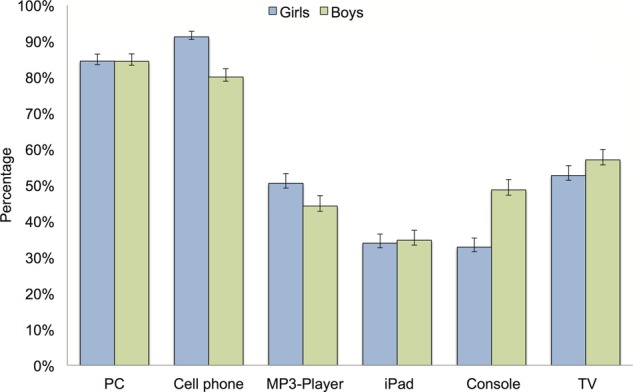
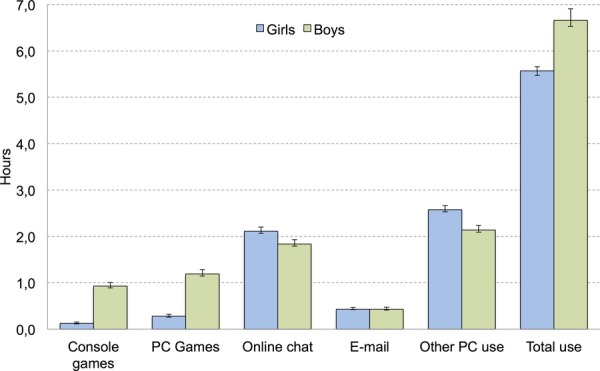
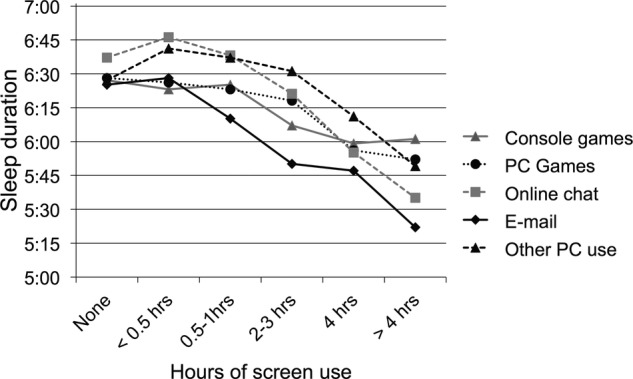
Objectives: Adolescents spend increasingly more time on electronic devices, and sleep deficiency rising in adolescents constitutes a major public health concern. The aim of the present study was to investigate daytime screen use and use of electronic devices before bedtime in relation to sleep. Design: A large cross-sectional population-based survey study from 2012, the youth@hordaland study, in Hordaland County in Norway. Setting: Cross-sectional general community-based study. Participants: 9846 adolescents from three age cohorts aged 16–19. The main independent variables were type and frequency of electronic devices at bedtime and hours of screen-time during leisure time. Outcomes: Sleep variables calculated based on self-report including bedtime, rise time, time in bed, sleep duration, sleep onset latency and wake after sleep onset. Results: Adolescents spent a large amount of time during the day and at bedtime using electronic devices. Daytime and bedtime use of electronic devices were both related to sleep measures, with an increased risk of short sleep duration, long sleep onset latency and increased sleep deficiency. A dose–response relationship emerged between sleep duration and use of electronic devices, exemplified by the association between PC use and risk of less than 5 h of sleep (OR=2.70, 95% CI 2.14 to 3.39), and comparable lower odds for 7–8 h of sleep (OR=1.64, 95% CI 1.38 to 1.96). Conclusions: Use of electronic devices is frequent in adolescence, during the day as well as at bedtime. The results demonstrate a negative relation between use of technology and sleep, suggesting that recommendations on healthy media use could include restrictions on electronic devices.
Overview
The claims and statistics of this paper haven’t been checked yet.
Free: it reads the open-access text and checks the first 5 claims that cite a source we can check. Create a free account to check every claim.
Integrity signals
Registry
Cites
Statistics
Figures
Verification
Claims the paper makes
The claims and statistics of this paper haven’t been checked yet.
Free: it reads the open-access text and checks the first 5 claims that cite a source we can check. Create a free account to check every claim.
Claims other papers make about this one
Each is checked against this paper’s own text: does it say what the citing paper says it does?
The source backs part of the claim, not all of it — or backs it for a different population, condition or comparison.
In the citing paper
“which can impair cognitive function and academic performance (Hysing et al., 2015).”
From The impact of digital technology, social media, and artificial intelligence on cognitive functions: a review (2023) · cites this paper as Hysing et al., 2015
Experimental — accuracy not yet measuredThe source backs part of the claim, not all of it — or backs it for a different population, condition or comparison.
In the citing paper
“Adolescents who used electronic devices at bedtime had increased sleep problems and daytime sleepiness, which can impair cognitive function and academic performance (Hysing et al., 2015).”
From The impact of digital technology, social media, and artificial intelligence on cognitive functions: a review (2023) · cites this paper as Hysing et al., 2015
Experimental — accuracy not yet measuredThe source backs part of the claim, not all of it — or backs it for a different population, condition or comparison.
In the citing paper
“Drawing on data from large epidemiological studies suggesting that refraining from screen use for the hour prior to bedtime alleviates potential interference from screens,42”
From Pilot evaluation of the Sleep Ninja: A smartphone application for adolescent insomnia symptoms (2019) · cites this paper as [42]
Experimental — accuracy not yet measuredThe cited source says what the claim attributes to it.
In the citing paper
“While previous studies have shown that digital media use and screen time are inversely correlated with nocturnal sleep, 16,41”
From Associations of time spent on homework or studying with nocturnal sleep behavior and depression symptoms in adolescents from Singapore (2020) · cites this paper as [41]
The check wasn’t confident either way, so it gives no verdict — never disputed.
In the citing paper
“This quality threshold was used in this review as it has been used in previous reviews of SRH interventions in humanitarian settings.2 17”
From A systematic review of newborn health interventions in humanitarian settings (2022) · cites this paper as [2]
Experimental — accuracy not yet measured
3 more claims about this paper
Create a free account to see every claim other papers make about this one.
Self-check
Percentages, sums and reported differences re-computed from the paper’s own numbers.
The self-check needs the paper’s full text.
Citations
Cites
Podsakoff, P. M., MacKenzie, S. B., Lee, J.-Y., & Podsakoff, N. P. (2003) · Journal of Applied Psychology · doi:10.1037/0021-9010.88.5.879 · Cited by 82,194
Interaction revisited: the difference between two estimates.
Altman, D. G., & Bland, J. M. (2003) · BMJ · doi:10.1136/bmj.326.7382.219 · Cited by 3,203
Self-Reported and Measured Sleep Duration: How Similar Are They?
Lauderdale, D. S., Knutson, K. L., Yan, L. L., Liu, K., & Rathouz, P. J. (2008) · Epidemiology · doi:10.1097/ede.0b013e318187a7b0 · Cited by 1,565
Dewald, J. F., Meijer, A. M., Oort, F. J., Kerkhof, G. A., & Bögels, S. M. (2010) · Sleep Medicine Reviews · doi:10.1016/j.smrv.2009.10.004 · Cited by 1,526
Electronic media use and sleep in school-aged children and adolescents: A review
Cain, N., & Gradisar, M. (2010) · Sleep Medicine · doi:10.1016/j.sleep.2010.02.006 · Cited by 1,376
A Phase Response Curve to Single Bright Light Pulses in Human Subjects
Khalsa, S. B. S., Jewett, M. E., Cajochen, C., & Czeisler, C. A. (2003) · The Journal of Physiology · doi:10.1113/jphysiol.2003.040477 · Cited by 1,040
Pubertal Changes in Daytime Sleepiness
Mary, A. C., Harvey, K., Duke, P., Thomas, F. A., Iris, F. L., & William, C. D. (1980) · Sleep · doi:10.1093/sleep/2.4.453 · Cited by 545
Quantitative criteria for insomnia
Lichstein, K. L., Durrence, H. H., Taylor, D. J., Bush, A. J., & Riedel, B. W. (2003) · Behaviour Research and Therapy · doi:10.1016/s0005-7967(02)00023-2 · Cited by 531
Television-viewing Habits and Sleep Disturbance in School Children
Owens, J., Maxim, R., McGuinn, M., Nobile, C., Msall, M., & Alario, A. (1999) · Pediatrics · doi:10.1542/peds.104.3.e27 · Cited by 427
Adam, E. K., Snell, E. K., & Pendry, P. (2007) · Journal of Family Psychology · doi:10.1037/0893-3200.21.1.4 · Cited by 405
Research works printed but not linked: 2
- National Sleep Foundation: Sleep In America Poll. http://wwwsleepfoundationorg/article/sleep-america-polls/2006-teens-and-sleep. vol. 2006; 2006.
- 10.1186/1471–2458–10–66 · DOI · Paper page
Cited by
Items 501–600 of 679
Current and Future Perspectives on Light Therapy Using Wearable Devices
Lee, J., Lee, J., & Kim, S. J. (2021) · Chronobiology in Medicine · doi:10.33069/cim.2021.0019 · Cited by 1
Pubertad precoz en niñas: potencial impacto de la pandemia y el confinamiento por COVID-19
Benedetto, M., Alonso, G., Eymann, A. M., Perez, L., & Terrasa, S. (2021) · Evidencia actualizacion en la práctica ambulatoria · doi:10.51987/evidencia.v24i4.6974 · Cited by 1
Bakke, J. V., & Fostervold, K. I. (2019) · Current topics in environmental health and preventive medicine · doi:10.1007/978-981-32-9182-9_4 · Cited by 1
(2019) · Journal of Content Community and Communication · doi:10.31620/jccc.12.19/16 · Cited by 2
Risk Taking Behaviour in Young Adults: The Role of Sleep and Associated Psychophysiological States
Rossa, K. R. (2018) · Queensland University of Technology · doi:10.5204/thesis.eprints.118059 · Cited by 2
Fathers’ preconception smoking and offspring DNA methylation: A two generation studyPreprint
Kitaba, N. T., Knudsen, G. T. M., Johannessen, A., Rezwan, F. I., Malinovschi, A., Oudin, A., Benediktsdóttir, B., Martino, D., González, F. J. C., Gómez, L. P., et al. (2023) · bioRxiv (Cold Spring Harbor Laboratory) · doi:10.1101/2023.01.13.523912 · Cited by 1
Maharjan, K., Paudel, R., & Kunwar, K. (2023) · medRxiv · doi:10.1101/2023.09.18.23295755 · Cited by 2
Change between 2009 and 2012 in the number of students per school computer
(2015) · Programme for international student assessment/Internationale Schulleistungsstudie · doi:10.1787/9789264239555-graph29-en · Cited by 1
(2015) · Programme for international student assessment/Internationale Schulleistungsstudie · doi:10.1787/9789264239555-graph20-en · Cited by 1
Bowman, J., Brock, E., & Vosper, H. (2024) · medRxiv · doi:10.1101/2024.12.23.24318603 · Cited by 1
Bonilla, P., McBride, D., Shanks, A., Kartik, J., Bhan, A., & Porcu, A. (2025) · bioRxiv (Cold Spring Harbor Laboratory) · doi:10.1101/2025.01.31.635947 · Cited by 2
The Impact of Tiktok’s Fast-Paced Content on Attention Span of StudentsPreprint
Opara, E., Theresa, A. M.-E., & Tolorunleke, C. A. (2025) · SSRN Electronic Journal · doi:10.2139/ssrn.5096965 · Cited by 6
The impact of e-reading on sleep
Pallesen, S., & Grønli, J. (2016) · Sleep Medicine · doi:10.1016/j.sleep.2016.07.005
Self-citationCoyne, B., & McCoy, S. (2016) · RePEc: Research Papers in Economics
The impact of a delayed school start-time on high school students' sleep
Ibrahim, R. E. (2016)
Patient complaining of an irregular sleep rhythm – case study
Wichniak, A., Wierzbicka, A., Szaulińska, K., Poradowska, E., & Jernajczyk, W. (2017) · Postępy Psychiatrii i Neurologii · doi:10.5114/ppn.2017.70550
Impact de l’usage des écrans sur le sommeil
Vecchierini, M. (2017) · L Aide-Soignante · doi:10.1016/j.aidsoi.2017.07.008
Easey, K., Timpson, N. J., & Munafo, M. R. (2018) · bioRxiv (Cold Spring Harbor Laboratory) · doi:10.1101/307462
CIRCADIAN COMPUTING: SENSING AND STABILIZING BIOLOGICAL RHYTHMS
Abdullah, S. (2017) · eCommons (Cornell University) · doi:10.7298/x4rx997p
A 14-year-old girl who watches TV to fall asleep
DelRosso, L. M. (2016) · Elsevier eBooks · doi:10.1016/b978-0-323-39277-8.00023-3
Korman, M., Meir-Yalon, L., Egbarieh, N., & Karni, A. (2018) · bioRxiv (Cold Spring Harbor Laboratory) · doi:10.1101/426916
Schaefer, A. A. (2018) · Cited by 1
Impact of media on sleep and health in children and adolescents
Žalalytė, Ž., Praninskienė, R., & Mameniškienė, R. (2018) · Neurologijos seminarai · doi:10.29014/ns.2018.33
Lång, S. (2018) · Työväentutkimus Vuosikirja
Ong, C. H. (2018) · Aston Publications Explorer (Aston University) · doi:10.48780/publications.aston.ac.uk.00037815
Chronotype and Performance in Students
Shimura, A. (2020) · Elsevier eBooks · doi:10.1016/b978-0-12-816658-1.00002-8 · Cited by 1
Mamun, A. A., Scott, J. G., Najman, J. M., Williams, G. M., Alati, R., & Fatima, Y. (2020) · Sleep Health · doi:10.1016/j.sleh.2019.12.007 · Cited by 1
Tassé, A. J. O., Tsanou, B., Lubuma, J. M.-S., & Woukeng, J. L. (2020) · medRxiv · doi:10.1101/2020.06.03.20121319
Akçay, B. D., & Akçay, D. (2020) · Journal of Turkish Sleep Medicine · doi:10.4274/jtsm.galenos.2020.41736 · Cited by 1
Venkatesh, A. (2020) · International Journal of Current Science Research and Review · doi:10.47191/ijcsrr/v3-i12-07 · Cited by 1
Rekruttering til Hjerteskolen – tilfeldig eller velbegrunnet helsepedagogisk tiltak?
Svegården, K., & Tveiten, S. (2021) · Sykepleien Forskning · doi:10.4220/sykepleienf.2021.83290 · Cited by 1
Detrimental Impact of Digitalization on Pupils’ Personality Traits and Physiological Development
Kalenova, A. (2021) · Scientific Research and Development Socio-Humanitarian Research and Technology · doi:10.12737/2306-1731-2021-10-1-15-20
Albelda, N., Simkins, C., Tal-Shir, D., & Levit‐Binnun, N. (2018) · PsyArXiv (OSF Preprints) · doi:10.31234/osf.io/6mysa
Valentim, P. A. P., & Bacatum, C. M. J. (2021) · Revista Recien · doi:10.24276/rrecien2021.11.34.33-40 · Cited by 1
Trends in utilisation of hypnotics among Scandinavian young people
Arango, C., & Pina‐Camacho, L. (2021) · Acta Psychiatrica Scandinavica · doi:10.1111/acps.13341
Qaisar, R. (2021) · Pakistan Social Sciences Review · doi:10.35484/pssr.2021(5-ii)64 · Cited by 2
Associations Between Social Media and Well-Being and Sleep Quality in Medical and Health Professions
Hilliard, D. D., DeShields, S. C., & Cunningham, T. D. (2018) · JMU Scholoraly Commons (James Madison University)
Geopathogenic zones, mobile phones and their influence on human organism, animals and trees
Duranková, S., Kalavsky, R., & Bernasovská, J. (2021) · Heritage and Sustainable Development · doi:10.37868/hsd.v3i2.61
Sheldrick, M. P. R. (2021) · Cronfa (Swansea University) · doi:10.23889/suthesis.58523 · Cited by 1
Svegården, K., & Tveiten, S. (2021) · Sykepleien Forskning · doi:10.4220/sykepleienf.2021.83290en
Hori, R., Shibata, E., Okajima, I., Matsunaga, M., Umemura, T., Narisada, A., & Suzuki, K. (2021) · Research Square · doi:10.21203/rs.3.rs-1120871/v1
de Oliveira, A. L. R., de Araújo, S. B. S., Oliveira, F. E. S., Amóra, S. S. A., Moreira, A. D. C., de Medeiros, N. O., da Silva, D. F. F., & Obeid, G. D. C. I. (2021) · doi:10.22533/at.ed.62521101218
Electronic gadgets use and sleep quality among medical students during COVID-19 LockdownPreprint
Upreti, M., & Dawadi, A. (2022) · Research Square · doi:10.21203/rs.3.rs-1222365/v1 · Cited by 3
2-3-Year-Old Children and the Use of Smart Devices
Kalniņa, D., & Kalnins, A. (2022) · IGI Global eBooks · doi:10.4018/978-1-6684-5360-5.ch030
Fachrurrozi, A. (2022) · Advances in Social Science, Education and Humanities Research/Advances in social science, education and humanities research · doi:10.2991/assehr.k.220203.040 · Cited by 1
Joshi, D., Neupane, U., & Chitrakar, R. (2021) · MedS Alliance Journal of Medicine and Medical Sciences · doi:10.3126/mjmms.v1i1.42918
The Mind In Its Own Place: The Difficulties and Benefits of Thinking for PleasurePreprint
Wilson, T. D., Westgate, E. C., Buttrick, N., & Gilbert, D. T. (2019) · PsyArXiv (OSF Preprints) · doi:10.31234/osf.io/6ztjx
Narizhnaya, M., & Ebben, M. R. (2016) · Springer eBooks · doi:10.1007/978-3-319-41742-4_10
Yuen, K. (2016) · Elsevier eBooks · doi:10.1016/b978-0-12-809324-5.00877-4
List of tables available on line
OECD (2015) · Programme for international student assessment/Internationale Schulleistungsstudie · doi:10.1787/9789264239555-13-en
Effects of excessive use of technology on physical health
Šace, M., Nystrom, E., & Ļebedeva, E. (2022) · doi:10.56002/ceos.0069_cimne_1_2
Adolescents’ Smartphone Use in the Sleeping Environment: Parents’ Attitudes and Involvement
Dor, A., & Tzischinsky, O. (2022) · Information Technology Education and Society · doi:10.7459/ites/18.1.03
Avhengighetssamfunnet: Livsstil, nytelse og ytelse i vår samtid
Karlsen, J. E. (2022) · doi:10.31265/usps.253
Crosley‐Lyons, R., Penner, M., & Ausenhus, C. (2022) · Elsevier eBooks · doi:10.1016/b978-0-12-818872-9.00162-x
Okorie, C. U. A. (2022) · Elsevier eBooks · doi:10.1016/b978-0-12-818872-9.00134-5
Amorim, V. E. M., Saraiva, R. L., Lima, R., Oliveira, M. H. D. S. C. M., Ferreira, E. N., Melo, L. G. M., Pimentel, K. J. C., Soares, K. T., Neto, J. R. D. P., da Silva, L. E. V., et al. (2023) · International Journal of Health Science · doi:10.22533/at.ed.1593302320042
Sport und gesunder Lebensstil im Kindes- und Jugendalter
Kothgassner, O. D., & Plener, P. L. (2022) · Springer Reference Medizin · doi:10.1007/978-3-662-49289-5_77-1
Reducing light intensity using blue light filter on LED-based smartphone screen
Santoso, M. Y., Anindita, G., Khairansyah, M. D., Endrasmono, J., & Setiawan, E. (2023) · AIP conference proceedings · doi:10.1063/5.0130849
The Social Contexts of Young People - Engaging Youth and Young Adults
Herzog, P. S. (2023) · Education and human development · doi:10.5772/intechopen.111025 · Cited by 1
de Leon, E. P., Villafuerte, F. B., Torres, R. B., González, C. C., Monroy, E. J., & Zavala-Cruz, G. G. (2022) · Latin American Journal of Clinical Sciences and Medical Technology · doi:10.34141/ljcs8251379
Hoedlmoser, K., Kapser, V., & Bothe, K. (2023) · Pädiatrie & Pädologie · doi:10.1007/s00608-023-01141-w
Radzlan, R., Yusoff, I. S. M., & Halim, M. S. A. (2023) · International Journal of Academic Research in Business and Social Sciences · doi:10.6007/ijarbss/v13-i18/19955
Spielsucht als Herausforderung für Gesundheit und Wohlbefinden von Jugendlichen
Konig, A. S. (2022) · Springer eBooks · doi:10.1007/978-3-658-35744-3_18
Katiandagho, A. O. (2023) · Bonafide Jurnal Teologi dan Pendidikan Kristen · doi:10.46558/bonafide.v4i2.211 · Cited by 10
Reasons for Temporary or Permanent Suspension of Using Electronic Accounts on Social Media Platforms
Kamel, A. M. (2023) · Dirasat Human and Social Sciences · doi:10.35516/hum.v50i6.6588 · Cited by 1
Agbaraolorunpo, F. M., Ogunyemi, A. O., Ogunlunsi, K., & Jimoh, W. (2024) · International Journal of Community Medicine and Public Health · doi:10.18203/2394-6040.ijcmph20240247
Electronic device use and its adversities among BPH students of Kathmandu valley
Sharma, P., Singh, B. K., Neupane, M., Shrestha, N., & Chand, P. (2024) · International Journal of Community Medicine and Public Health · doi:10.18203/2394-6040.ijcmph20240606
Lourenço, B. (2023) · Digital Library of Theses and Dissertations (Universidade de São Paulo) · doi:10.11606/t.5.2023.tde-22022024-123622
Piboonworakulkij, R. (2019) · Journal of Nursing Science Chulalongkorn University · doi:10.58837/chula.cuns.31.2.6
Kobayashi, R., & Negoro, H. (2023) · Global Journal of Medical Research · doi:10.34257/gjmrfvol23is7pg21
Restless-Legs-Syndrom im Kindes- und Jugendalter
Mollin, J., Klug, L., Joost, T., Beyer, U., Mayer, F., & Erler, T. (2024) · Kinder- und Jugendmedizin · doi:10.1055/a-2250-0445
Akodu, A. K., Akanni, B. F., Osuntoki, A. A., & Zibiri, R. A. (2023) · Journal of Occupational Health and Epidemiology · doi:10.61186/johe.12.4.242 · Cited by 1
Tuğral, A., & Çam, Y. (2024) · Ergoterapi ve Rehabilitasyon Dergisi · doi:10.30720/ered.1388459 · Cited by 1
Use of multimedia devices in pediatric age: risks or advantages? A survey in an Italian center
Lazzareschi, I., Curatola, A., PASCALIS, S. D., BERNARDO, L., Gatto, A., Ferretti, S., Valentini, P., & Ferrara, P. (2024) · Minerva Pediatrics · doi:10.23736/s2724-5276.22.06097-9 · Cited by 1
Blažević, I., & Hromin, N. (2024) · Croatian Journal of Education - Hrvatski časopis za odgoj i obrazovanje · doi:10.15516/cje.v26i2.4996
Change between 2009 and 2012 in the share of students with access to computers at school
(2015) · Programme for international student assessment/Internationale Schulleistungsstudie · doi:10.1787/9789264239555-graph27-en
Navigation behaviour of students unsuccessful on Task 2 in the unit SERAING
(2015) · Programme for international student assessment/Internationale Schulleistungsstudie · doi:10.1787/9789264239555-graph90-en
Explained variation in the digital reading performance of countries and economies
(2015) · Programme for international student assessment/Internationale Schulleistungsstudie · doi:10.1787/9789264239555-graph59-en
(2015) · Programme for international student assessment/Internationale Schulleistungsstudie · doi:10.1787/9789264239555-graph18-en
Change between 2009 and 2012 in ICT use outside of school for schoolwork
(2015) · Programme for international student assessment/Internationale Schulleistungsstudie · doi:10.1787/9789264239555-graph24-en
Change between 2009 and 2012 in the share of school computers that are connected to the Internet
(2015) · Programme for international student assessment/Internationale Schulleistungsstudie · doi:10.1787/9789264239555-graph30-en
(2015) · Programme for international student assessment/Internationale Schulleistungsstudie · doi:10.1787/9789264239555-graph69-en
Students' skills in reading, by index of ICT use outside of school for schoolwork
(2015) · Programme for international student assessment/Internationale Schulleistungsstudie · doi:10.1787/9789264239555-graph80-en
(2015) · Programme for international student assessment/Internationale Schulleistungsstudie · doi:10.1787/9789264239555-graph75-en
(2015) · Programme for international student assessment/Internationale Schulleistungsstudie · doi:10.1787/9789264239555-graph78-en
(2015) · Programme for international student assessment/Internationale Schulleistungsstudie · doi:10.1787/9789264239555-graph52-en
(2015) · Programme for international student assessment/Internationale Schulleistungsstudie · doi:10.1787/9789264239555-graph51-en
Students and teachers using computers during mathematics lessons
(2015) · Programme for international student assessment/Internationale Schulleistungsstudie · doi:10.1787/9789264239555-graph22-en
Early exposure to computers, by gender
(2015) · Programme for international student assessment/Internationale Schulleistungsstudie · doi:10.1787/9789264239555-graph65-en
Common computer leisure activities outside of school, by students' socio-economic status
(2015) · Programme for international student assessment/Internationale Schulleistungsstudie · doi:10.1787/9789264239555-graph68-en
Teaching practices and disciplinary climate, by computer use in mathematics lessons
(2015) · Programme for international student assessment/Internationale Schulleistungsstudie · doi:10.1787/9789264239555-graph34-en
Comparing countries' and economies' performance in digital reading
(2015) · Programme for international student assessment/Internationale Schulleistungsstudie · doi:10.1787/9789264239555-graph37-en
Change between 2009 and 2012 in the share of students with access to the Internet at school
(2015) · Programme for international student assessment/Internationale Schulleistungsstudie · doi:10.1787/9789264239555-graph28-en
(2015) · Programme for international student assessment/Internationale Schulleistungsstudie · doi:10.1787/9789264239555-graph14-en
Age at first use of the Internet
(2015) · Programme for international student assessment/Internationale Schulleistungsstudie · doi:10.1787/9789264239555-graph10-en
Trends in mathematics performance and number of computers in schools
(2015) · Programme for international student assessment/Internationale Schulleistungsstudie · doi:10.1787/9789264239555-graph74-en
Metadata
- Authors
- Hysing, M., Pallesen, S., Stormark, K. M., Jakobsen, R., Lundervold, A. J., & Sivertsen, B.
- Affiliations
- Uni Research (Norway) (NO)
- Haukeland University Hospital (NO)
- Norwegian Institute of Public Health (NO)
- Corresponding author
- Hysing, Mari
- ORCID
- Venue
- BMJ Open
- Publisher
- BMJ
- Published
- 2015-01
- Volume
- 5
- Issue
- 1
- Pages
- e006748
- ISSN
- 2044-6055 (ISSN-L)
- PMC
- PMC4316480
- OpenAlex
- W2157102249
- Cited by
- 678
- References
- 38
- Citations by year
- 2026: 41 · 2025: 47 · 2024: 56 · 2023: 56 · 2022: 79 · 2021: 66 · 2020: 79 · 2019: 55 · 2018: 60 · 2017: 42 · 2016: 33 · 2015: 64
- FWCI
- 100.41
- Type
- journal article
- Language
- en
- Open access
- gold
- doi.org
- Licence
- cc-by-nc
- Locations
- BMJ Open (publishedVersion, cc-by-nc)
- Europe PMC (PubMed Central) (publishedVersion, cc-by-nc)
- PubMed Central (publishedVersion, cc-by-nc)
- PubMed (publishedVersion)
- NORA - Norwegian Open Research Archives (submittedVersion, cc-by-nc)
- BIBSYS Brage (BIBSYS (Norway)) (submittedVersion)
- NORA - Norwegian Open Research Archives (submittedVersion, other-oa)
- Topics
- Social Sciences › Psychology › Experimental and Cognitive Psychology › Sleep and related disorders
- Social Sciences › Sociology and Political Science › Impact of Technology on Adolescents
- Social Sciences › Education › Child Development and Digital Technology
- Keywords
- adolescent sleep, screen time, electronic devices, bedtime screen use, sleep duration, sleep latency, insufficient sleep, computer use, media use
- MeSH terms
- Adolescent, Adolescent Behavior, Computers, Cross-Sectional Studies, Electronics, Female, Humans, Disorders of Excessive Somnolence, Sleep Initiation and Maintenance Disorders, Male, Norway, Surveys and Questionnaires, Risk Factors, Schools, Sleep, Technology, Television, Video Games, Cell Phone, Electrical Equipment and Supplies, Self Report
About these checks
Registry, retraction, Cites and statistics results are computed, not judged, with one exception: a printed reference that no index lists is read once by a model before it counts as a citation error. Claims are extracted by a model and kept only when their quote appears verbatim in the text; each cited source is then checked, with a model’s help, for whether it says what the claim relies on. Those verdicts can be wrong — read the claim’s quote and the cited source before relying on one.
Statistics and arithmetic are recomputed, not judged.
Confidence bands are shown only for fields calibrated on our annotated test set. None is calibrated yet, so no band is shown.
What counts as a claim ›How we measure confidence ›How we check this ›
Are you an author, or do you see a problem with this page? Request a review
Data sources
Bibliographic data: Semantic Scholar, OpenAlex, Crossref.
Contains information from the Semantic Scholar Academic Graph Datasets, made available under the ODC Attribution License (ODC-BY 1.0).
Semantic Scholar’s data is described in: Kinney, R., et al. (2023). The Semantic Scholar Open Data Platform. arXiv:2301.10140.
