

Sleep and use of electronic devices in adolescence: results from a large population-based study
Open accessThe DOI matches its Crossref record; 38 of the 38 references it cites were found in a registry or an index.
Abstract
Objectives: Adolescents spend increasingly more time on electronic devices, and sleep deficiency rising in adolescents constitutes a major public health concern. The aim of the present study was to investigate daytime screen use and use of electronic devices before bedtime in relation to sleep. Design: A large cross-sectional population-based survey study from 2012, the youth@hordaland study, in Hordaland County in Norway. Setting: Cross-sectional general community-based study. Participants: 9846 adolescents from three age cohorts aged 16–19. The main independent variables were type and frequency of electronic devices at bedtime and hours of screen-time during leisure time. Outcomes: Sleep variables calculated based on self-report including bedtime, rise time, time in bed, sleep duration, sleep onset latency and wake after sleep onset. Results: Adolescents spent a large amount of time during the day and at bedtime using electronic devices. Daytime and bedtime use of electronic devices were both related to sleep measures, with an increased risk of short sleep duration, long sleep onset latency and increased sleep deficiency. A dose–response relationship emerged between sleep duration and use of electronic devices, exemplified by the association between PC use and risk of less than 5 h of sleep (OR=2.70, 95% CI 2.14 to 3.39), and comparable lower odds for 7–8 h of sleep (OR=1.64, 95% CI 1.38 to 1.96). Conclusions: Use of electronic devices is frequent in adolescence, during the day as well as at bedtime. The results demonstrate a negative relation between use of technology and sleep, suggesting that recommendations on healthy media use could include restrictions on electronic devices.
Overview
The claims and statistics of this paper haven’t been checked yet.
Free: it reads the open-access text and checks the first 5 claims that cite a source we can check. Create a free account to check every claim.
Integrity signals
Registry
Cites
Statistics
Figures
Verification
Claims the paper makes
The claims and statistics of this paper haven’t been checked yet.
Free: it reads the open-access text and checks the first 5 claims that cite a source we can check. Create a free account to check every claim.
Claims other papers make about this one
Each is checked against this paper’s own text: does it say what the citing paper says it does?
The source backs part of the claim, not all of it — or backs it for a different population, condition or comparison.
In the citing paper
“which can impair cognitive function and academic performance (Hysing et al., 2015).”
From The impact of digital technology, social media, and artificial intelligence on cognitive functions: a review (2023) · cites this paper as Hysing et al., 2015
Experimental — accuracy not yet measuredThe source backs part of the claim, not all of it — or backs it for a different population, condition or comparison.
In the citing paper
“Adolescents who used electronic devices at bedtime had increased sleep problems and daytime sleepiness, which can impair cognitive function and academic performance (Hysing et al., 2015).”
From The impact of digital technology, social media, and artificial intelligence on cognitive functions: a review (2023) · cites this paper as Hysing et al., 2015
Experimental — accuracy not yet measuredThe source backs part of the claim, not all of it — or backs it for a different population, condition or comparison.
In the citing paper
“Drawing on data from large epidemiological studies suggesting that refraining from screen use for the hour prior to bedtime alleviates potential interference from screens,42”
From Pilot evaluation of the Sleep Ninja: A smartphone application for adolescent insomnia symptoms (2019) · cites this paper as [42]
Experimental — accuracy not yet measuredThe cited source says what the claim attributes to it.
In the citing paper
“While previous studies have shown that digital media use and screen time are inversely correlated with nocturnal sleep, 16,41”
From Associations of time spent on homework or studying with nocturnal sleep behavior and depression symptoms in adolescents from Singapore (2020) · cites this paper as [41]
The check wasn’t confident either way, so it gives no verdict — never disputed.
In the citing paper
“This quality threshold was used in this review as it has been used in previous reviews of SRH interventions in humanitarian settings.2 17”
From A systematic review of newborn health interventions in humanitarian settings (2022) · cites this paper as [2]
Experimental — accuracy not yet measured
3 more claims about this paper
Create a free account to see every claim other papers make about this one.
Self-check
Percentages, sums and reported differences re-computed from the paper’s own numbers.
The self-check needs the paper’s full text.
Citations
Cites
Podsakoff, P. M., MacKenzie, S. B., Lee, J.-Y., & Podsakoff, N. P. (2003) · Journal of Applied Psychology · doi:10.1037/0021-9010.88.5.879 · Cited by 82,194
Interaction revisited: the difference between two estimates.
Altman, D. G., & Bland, J. M. (2003) · BMJ · doi:10.1136/bmj.326.7382.219 · Cited by 3,203
Self-Reported and Measured Sleep Duration: How Similar Are They?
Lauderdale, D. S., Knutson, K. L., Yan, L. L., Liu, K., & Rathouz, P. J. (2008) · Epidemiology · doi:10.1097/ede.0b013e318187a7b0 · Cited by 1,565
Dewald, J. F., Meijer, A. M., Oort, F. J., Kerkhof, G. A., & Bögels, S. M. (2010) · Sleep Medicine Reviews · doi:10.1016/j.smrv.2009.10.004 · Cited by 1,526
Electronic media use and sleep in school-aged children and adolescents: A review
Cain, N., & Gradisar, M. (2010) · Sleep Medicine · doi:10.1016/j.sleep.2010.02.006 · Cited by 1,376
A Phase Response Curve to Single Bright Light Pulses in Human Subjects
Khalsa, S. B. S., Jewett, M. E., Cajochen, C., & Czeisler, C. A. (2003) · The Journal of Physiology · doi:10.1113/jphysiol.2003.040477 · Cited by 1,040
Pubertal Changes in Daytime Sleepiness
Mary, A. C., Harvey, K., Duke, P., Thomas, F. A., Iris, F. L., & William, C. D. (1980) · Sleep · doi:10.1093/sleep/2.4.453 · Cited by 545
Quantitative criteria for insomnia
Lichstein, K. L., Durrence, H. H., Taylor, D. J., Bush, A. J., & Riedel, B. W. (2003) · Behaviour Research and Therapy · doi:10.1016/s0005-7967(02)00023-2 · Cited by 531
Television-viewing Habits and Sleep Disturbance in School Children
Owens, J., Maxim, R., McGuinn, M., Nobile, C., Msall, M., & Alario, A. (1999) · Pediatrics · doi:10.1542/peds.104.3.e27 · Cited by 427
Adam, E. K., Snell, E. K., & Pendry, P. (2007) · Journal of Family Psychology · doi:10.1037/0893-3200.21.1.4 · Cited by 405
Research works printed but not linked: 2
- National Sleep Foundation: Sleep In America Poll. http://wwwsleepfoundationorg/article/sleep-america-polls/2006-teens-and-sleep. vol. 2006; 2006.
- 10.1186/1471–2458–10–66 · DOI · Paper page
Cited by
Twenge, J. M., Joiner, T. E., Rogers, M. L., & Martin, G. N. (2018) · Clinical Psychological Science · doi:10.1177/2167702617723376 · Cited by 1,705
Children and Adolescents and Digital Media
Reid Chassiakos, Y. (., Radesky, J., Christakis, D., Moreno, M. A., Cross, C., COUNCIL ON COMMUNICATIONS AND MEDIA, Hill, D., Ameenuddin, N., Hutchinson, J., Levine, A., et al. (2016) · Pediatrics · doi:10.1542/peds.2016-2593 · Cited by 1,340
Lissak, G. (2018) · Environmental Research · doi:10.1016/j.envres.2018.01.015 · Cited by 1,024
Epidemiology of Obesity and Diabetes and Their Cardiovascular Complications
Bhupathiraju, S. N., & Hu, F. B. (2016) · Circulation Research · doi:10.1161/circresaha.115.306825 · Cited by 945
Twenge, J. M., Martin, G. N., & Campbell, W. K. (2018) · Emotion · doi:10.1037/emo0000403 · Cited by 750
Carter, B., Rees, P., Hale, L., Bhattacharjee, D., & Paradkar, M. S. (2016) · JAMA Pediatrics · doi:10.1001/jamapediatrics.2016.2341 · Cited by 718
Interplay between social media use, sleep quality, and mental health in youth: a systematic review
Alonzo, R., Hussain, J., Stranges, S., & Anderson, K. K. (2021) · Sleep Medicine Reviews · doi:10.1016/j.smrv.2020.101414 · Cited by 456
Bedtime mobile phone use and sleep in adults
Exelmans, L., & Van den Bulck, J. (2016) · Social Science & Medicine · doi:10.1016/j.socscimed.2015.11.037 · Cited by 445
Digital Media and Sleep in Childhood and Adolescence
LeBourgeois, M. K., Hale, L., Chang, A.-M., Akacem, L. D., Montgomery-Downs, H. E., & Buxton, O. M. (2017) · Pediatrics · doi:10.1542/peds.2016-1758j · Cited by 383
Thomée, S. (2018) · International Journal of Environmental Research and Public Health · doi:10.3390/ijerph15122692 · Cited by 323
Sleep and Cardio-Metabolic Disease
Cappuccio, F. P., & Miller, M. A. (2017) · Current Cardiology Reports · doi:10.1007/s11886-017-0916-0 · Cited by 313
Youth Screen Media Habits and Sleep
Hale, L., Kirschen, G. W., LeBourgeois, M. K., Gradisar, M., Garrison, M. M., Montgomery-Downs, H., Kirschen, H., McHale, S. M., Chang, A.-M., & Buxton, O. M. (2018) · Child and Adolescent Psychiatric Clinics of North America · doi:10.1016/j.chc.2017.11.014 · Cited by 312
“In relation to a growing interest in the association between screen time and sleep patterns, data frommore than 60 associated studies have been examined in 2 systematic literature reviews3,30 and 2 related metaanalyses.31,32 In the time since those articles were published, at least a dozen more studies have surfaced (…”
InfluentialTwenge, J. M., Krizan, Z., & Hisler, G. (2017) · Sleep Medicine · doi:10.1016/j.sleep.2017.08.013 · Cited by 303
Shanmugasundaram, M., & Tamilarasu, A. (2023) · Frontiers in Cognition · doi:10.3389/fcogn.2023.1203077 · Cited by 291
Barnett, T. A., Kelly, A. S., Young, D. R., Perry, C. K., Pratt, C. A., Edwards, N. M., Rao, G., Vos, M. B., & On behalf of the American Heart Association Obesity Committee of the Council on Lifestyle and Cardiometabolic Health; Council on Cardiovascular Disease in the Young; and Stroke Council (2018) · Circulation · doi:10.1161/cir.0000000000000591 · Cited by 249
The Negative Effects of Digital Technology Usage on Children’s Development and Health
Mustafaoğlu, R., Zirek, E., Yasacı, Z., & Razak Özdinçler, A. (2018) · Addicta: The Turkish Journal on Addictions · doi:10.15805/addicta.2018.5.2.0051 · Cited by 246
Roberts, S. S. H., Teo, W.-P., & Warmington, S. A. (2019) · British Journal of Sports Medicine · doi:10.1136/bjsports-2018-099322 · Cited by 229
Tamura, H., Nishida, T., Tsuji, A., & Sakakibara, H. (2017) · International Journal of Environmental Research and Public Health · doi:10.3390/ijerph14070701 · Cited by 224
Digital media use and sleep in late adolescence and young adulthood: A systematic review
Brautsch, L. A., Lund, L., Andersen, M. M., Jennum, P. J., Folker, A. P., & Andersen, S. (2023) · Sleep Medicine Reviews · doi:10.1016/j.smrv.2022.101742 · Cited by 218
The influence of blue light on sleep, performance and wellbeing in young adults: A systematic review
Silvani, M. I., Werder, R., & Perret, C. (2022) · Frontiers in Physiology · doi:10.3389/fphys.2022.943108 · Cited by 199
Ho, I. S.-S., Azcoaga-Lorenzo, A., Akbari, A., Davies, J., Hodgins, P., Khunti, K., Kadam, U., Lyons, R., McCowan, C., Mercer, S. W., et al. (2022) · BMJ Open · doi:10.1136/bmjopen-2021-057017 · Cited by 177
TFOS Lifestyle: Impact of the digital environment on the ocular surface
Wolffsohn, J. S., Lingham, G., Downie, L. E., Huntjens, B., Inomata, T., Jivraj, S., Kobia-Acquah, E., Muntz, A., Mohamed-Noriega, K., Plainis, S., et al. (2023) · The Ocular Surface · doi:10.1016/j.jtos.2023.04.004 · Cited by 166
Twenge, J. M., Hisler, G. C., & Krizan, Z. (2019) · Sleep Medicine · doi:10.1016/j.sleep.2018.11.009 · Cited by 162
Rosen, L., Carrier, L. M., Miller, A., Rokkum, J., & Ruiz, A. (2016) · Sleep Health · doi:10.1016/j.sleh.2015.11.003 · Cited by 157
Stagi, S., MASI, S. D., Bencini, E., Losi, S., Paci, S., Parpagnoli, M., Ricci, F., Ciofi, D., & Azzari, C. (2020) · The Italian Journal of Pediatrics/Italian journal of pediatrics · doi:10.1186/s13052-020-00931-3 · Cited by 162
Smolensky, M. H., Sackett-Lundeen, L. L., & Portaluppi, F. (2015) · Chronobiology International · doi:10.3109/07420528.2015.1072002 · Cited by 148
Harbard, E., Allen, N. B., Trinder, J., & Bei, B. (2016) · Journal of Adolescent Health · doi:10.1016/j.jadohealth.2015.12.011 · Cited by 140
Goldstone, A., Javitz, H. S., Claudatos, S. A., Buysse, D. J., Hasler, B. P., de Zambotti, M., Clark, D. B., Franzen, P. L., Prouty, D., Colrain, I. M., et al. (2020) · Journal of Adolescent Health · doi:10.1016/j.jadohealth.2019.12.005 · Cited by 154
Media devices in pre-school children: the recommendations of the Italian pediatric society
Bozzola, E., Spina, G., Ruggiero, M., Memo, L., Agostiniani, R., Bozzola, M., Corsello, G., & Villani, A. (2018) · Italian Journal of Pediatrics · doi:10.1186/s13052-018-0508-7 · Cited by 129
The Relationship Between Sleep Quality and Internet Addiction Among Female College Students
Lin, P.-H., Lee, Y.-C., Chen, K.-L., Hsieh, P.-L., Yang, S.-Y., & Lin, Y.-L. (2019) · Frontiers in Neuroscience · doi:10.3389/fnins.2019.00599 · Cited by 125
Prevalence and Possible Factors of Myopia in Norwegian Adolescents
Hagen, L. A., Gjelle, J. V. B., Arnegard, S., Pedersen, H. R., Gilson, S. J., & Baraas, R. C. (2018) · Scientific Reports · doi:10.1038/s41598-018-31790-y · Cited by 145
Hisler, G., Twenge, J. M., & Krizan, Z. (2020) · Sleep Medicine · doi:10.1016/j.sleep.2019.08.007 · Cited by 121
Perrault, A. A., Bayer, L., Peuvrier, M., Afyouni, A., Ghisletta, P., Brockmann, C., Spiridon, M., Hulo Vesely, S., Haller, D. M., Pichon, S., et al. (2019) · Sleep · doi:10.1093/sleep/zsz125 · Cited by 119
Chinoy, E. D., Duffy, J. F., & Czeisler, C. A. (2018) · Physiological Reports · doi:10.14814/phy2.13692 · Cited by 116
“…the evenings, as is typical among adolescents and young adults who frequently multitask using different LE-devices (Van den Bulck 2007; Foley et al. 2013; Gradisar et al. 2013; Arora et al. 2014; Gamble et al. 2014; Hale and Guan 2015; Hysing et al. 2015; Lemola et al. 2015; Levenson et al. 2016).”
BackgroundResultInfluentialWallace, D. D., Boynton, M. H., & Lytle, L. A. (2017) · Journal of American College Health · doi:10.1080/07448481.2016.1269111 · Cited by 116
Video game addiction and psychological distress among expatriate adolescents in Saudi Arabia
Saquib, N., Saquib, J., Wahid, A., Ahmed, A. A., Dhuhayr, H. E., Zaghloul, M. S., Ewid, M., & Al-Mazrou, A. (2017) · Addictive Behaviors Reports · doi:10.1016/j.abrep.2017.09.003 · Cited by 116
Sleep mediates the association between adolescent screen time and depressive symptoms.
Li, X., Buxton, O. M., Lee, S., Chang, A.-M., Berger, L. M., & Hale, L. (2019) · Sleep Medicine · doi:10.1016/j.sleep.2019.01.029 · Cited by 115
“In addition to bedtime screen activities, both daytime and pre-bedtime screen use have been found to be associated with poor sleep outcomes (Hysing et al., 2015; Kubiszewski, Fontaine, Rusch, & Hazouard, 2014; Munezawa et al., 2011).”
BackgroundTelecommunication devices use, screen time and sleep in adolescents
Cabré-Riera, A., Torrent, M., Donaire-Gonzalez, D., Vrijheid, M., Cardis, E., & Guxens, M. (2019) · Environmental Research · doi:10.1016/j.envres.2018.10.036 · Cited by 115
Foerster, M., Henneke, A., Chetty-Mhlanga, S., & Röösli, M. (2019) · International Journal of Environmental Research and Public Health · doi:10.3390/ijerph16030518 · Cited by 113
Impact of Media Use on Adolescent Sleep Efficiency
Fobian, A. D., Avis, K., & Schwebel, D. C. (2016) · Journal of Developmental & Behavioral Pediatrics · doi:10.1097/dbp.0000000000000239 · Cited by 111
Impacts of artificial light at night on sleep: A review and prospectus
Aulsebrook, A. E., Jones, T. M., Mulder, R. A., & Lesku, J. A. (2018) · Journal of Experimental Zoology Part A Ecological and Integrative Physiology · doi:10.1002/jez.2189 · Cited by 128
Rezaei, M., Khormali, M., Akbarpour, S., Sadeghniiat-Hagighi, K., & Shamsipour, M. (2018) · Sleep Science · doi:10.5935/1984-0063.20180043 · Cited by 129
He, J., Tu, Z., Xiao, L., Su, T., & Tang, Y. (2020) · PLoS ONE · doi:10.1371/journal.pone.0228756 · Cited by 119
Kim, S., Favotto, L., Halladay, J., Wang, L., Boyle, M. H., & Georgiades, K. (2020) · Social Psychiatry and Psychiatric Epidemiology · doi:10.1007/s00127-020-01833-9 · Cited by 100
Sleep during development: Sex and gender differences
Franco, P., Putois, B., Guyon, A., Raoux, A., Papadopoulou, M. T., Guignard‐Perret, A., Bat‐Pitault, F., Hartley, S., & Plancoulaine, S. (2020) · Sleep Medicine Reviews · doi:10.1016/j.smrv.2020.101276 · Cited by 118
Sivertsen, B., Råkil, H., Munkvik, E., & Lønning, K. J. (2019) · BMJ Open · doi:10.1136/bmjopen-2018-025200 · Cited by 97
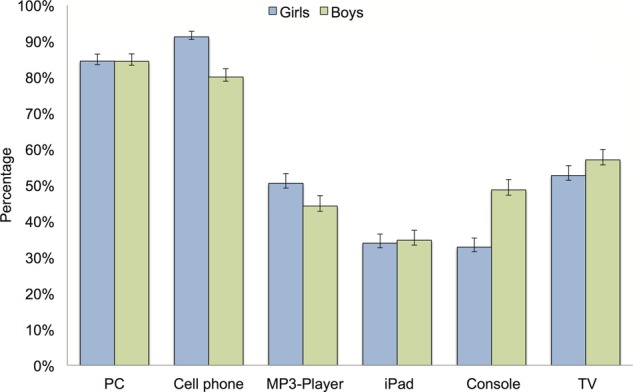
“Use of electronic devices at bedtime was assessed using a newly developed questionnaires assessing use a wide range of new electronic devices.(40) Adolescents reported use of six different electronic media devices and on whether they used them in the bedroom during the last hour before they went to sleep.”
MethodSelf-citationRecent Updates in the Social and Environmental Determinants of Sleep Health
Hale, L. E., Emanuele, E., & James, S. (2015) · Current Sleep Medicine Reports · doi:10.1007/s40675-015-0023-y · Cited by 109
Adolescents with a smartphone sleep less than their peers
Schweizer, A., Berchtold, A., Barrense-Dias, Y., Akre, C., & Suris, J.-C. (2017) · European Journal of Pediatrics · doi:10.1007/s00431-016-2823-6 · Cited by 93
Carpi, M., Cianfarani, C., & Vestri, A. (2022) · International Journal of Environmental Research and Public Health · doi:10.3390/ijerph19052874 · Cited by 164
The Impact of Social Media Use on Sleep and Mental Health in Youth: a Scoping Review
Yu, D. J., Wing, Y. K., Li, T. M. H., & Chan, N. Y. (2024) · Current Psychiatry Reports · doi:10.1007/s11920-024-01481-9 · Cited by 165
Hjetland, G. J., Skogen, J. C., Hysing, M., & Sivertsen, B. (2021) · Frontiers in Public Health · doi:10.3389/fpubh.2021.794307 · Cited by 85
Self-citationAdolescent sleep restriction effects on cognition and mood
Short, M. A., & Chee, M. W. L. (2019) · Progress in brain research · doi:10.1016/bs.pbr.2019.02.008 · Cited by 98
Children’s Health in the Digital Age
Dresp, B. (2020) · International Journal of Environmental Research and Public Health · doi:10.3390/ijerph17093240 · Cited by 144
Jniene, A., Errguig, L., Hangouche, A. J. E., Rkain, H., Aboudrar, S., Ftouh, M. E., & Dakka, T. (2019) · BioMed Research International · doi:10.1155/2019/7012350 · Cited by 117
Rångtell, F. H., Ekstrand, E., Rapp, L., Lagermalm, A., Liethof, L., Búcaro, M. O., Lingfors, D., Broman, J.-E., Schiöth, H. B., & Benedict, C. (2016) · Sleep Medicine · doi:10.1016/j.sleep.2016.06.016 · Cited by 83
“These figures are alarming given that several epidemiological studies have associated evening use of screen-based technologies with impaired nocturnal sleep [2,3].”
BackgroundRod, N. H., Dissing, A. S., Clark, A., Gerds, T. A., & Lund, R. (2018) · PLOS ONE · doi:10.1371/journal.pone.0204811 · Cited by 83
Pilot evaluation of the Sleep Ninja: A smartphone application for adolescent insomnia symptoms
Werner-Seidler, A., Wong, Q., Johnston, L., O’Dea, B., Torok, M., & Christensen, H. (2019) · BMJ Open · doi:10.1136/bmjopen-2018-026502 · Cited by 82
Adolescent Sleep and the Impact of Technology Use Before Sleep on Daytime Function
Johansson, A. E. E., Petrisko, M. A., & Chasens, E. R. (2016) · Journal of Pediatric Nursing · doi:10.1016/j.pedn.2016.04.004 · Cited by 82
Firth, J., Torous, J., López‐Gil, J. F., Linardon, J., Milton, A., Lambert, J., Smith, L., Jarić, I., Fabian, H., Vancampfort, D., et al. (2024) · World Psychiatry · doi:10.1002/wps.21188 · Cited by 80
Nouveaux médias sociaux, nouveaux comportements de sommeil chez les adolescents
Royant-Parola, S., Londe, V., Tréhout, S., & Hartley, S. (2017) · L Encéphale · doi:10.1016/j.encep.2017.03.009 · Cited by 106
Xu, F., Adams, S. K., Cohen, S. A., Earp, J. E., & Greaney, M. L. (2019) · International Journal of Environmental Research and Public Health · doi:10.3390/ijerph16091524 · Cited by 79
Dibben, G. O., Martin, A., Shore, C. B., Johnstone, A., McMellon, C., Palmer, V., Pugmire, J., Riddell, J., Skivington, K., Wells, V., et al. (2023) · Journal of Sleep Research · doi:10.1111/jsr.13899 · Cited by 80
Salfi, F., Amicucci, G., Corigliano, D., D’Atri, A., Viselli, L., Tempesta, D., & Ferrara, M. (2021) · SLEEP · doi:10.1093/sleep/zsab080 · Cited by 90
Electronic Device Use before Bedtime and Sleep Quality among University Students
Pham, H. T., Chuang, H.-L., Kuo, C., Yeh, T., & Liao, W. (2021) · Healthcare · doi:10.3390/healthcare9091091 · Cited by 146
Yeo, S. C., Tan, J., Lo, J. C., Chee, M. W. L., & Gooley, J. J. (2020) · Sleep Health · doi:10.1016/j.sleh.2020.04.011 · Cited by 75
Gong, Q., Li, H., Zhang, X. H., Zhang, T., Cui, J., & Xu, G. Z. (2017) · Sleep Medicine · doi:10.1016/j.sleep.2017.06.024 · Cited by 75
Symptoms associated with reading from a smartphone in conditions of light and dark
Antona, B., Barrio, A. R., Gascó, A., Pinar, A., González‐Pérez, M., & Puell, M. C. (2017) · Applied Ergonomics · doi:10.1016/j.apergo.2017.10.014 · Cited by 81
Electronic Media Use and Sleep Quality: Updated Systematic Review and Meta-Analysis
Han, X., Zhou, E., & Liu, D. (2024) · Journal of Medical Internet Research · doi:10.2196/48356 · Cited by 138
Lack of sleep is associated with internet use for leisure
Kim, S. Y., Kim, M.-S., Park, B., Kim, J.-H., & Choi, H. G. (2018) · PLOS ONE · doi:10.1371/journal.pone.0191713 · Cited by 73
Maurya, C., Muhammad, T., Maurya, P., & Dhillon, P. (2022) · BMC Public Health · doi:10.1186/s12889-022-14076-x · Cited by 116
Vedaa, Ø., Krossbakken, E., Grimsrud, I. D., Bjorvatn, B., Sivertsen, B., Magerøy, N., Einarsen, S. V., & Pallesen, S. (2015) · Sleep Medicine · doi:10.1016/j.sleep.2015.12.002 · Cited by 88
Self-citationHysing, M., Lundervold, A. J., Posserud, M.-B., & Sivertsen, B. (2016) · Behavioral Sleep Medicine · doi:10.1080/15402002.2015.1048448 · Cited by 72
“…devices do you use in your bedroom the last hour before going to sleep?” and the indicated devices comprised PC, cell phone, MP3 player, tablet, game console, and TV. Detailed information on this instrument and the link to sleep problems has been published elsewhere (Hysing et al., 2015).”
BackgroundInfluentialSelf-citationScreen viewing behavior and sleep duration among children aged 2 and below
Chen, B., van Dam, R. M., Tan, C. S., Chua, H. L., Wong, P. G., Bernard, J. Y., & Müller-Riemenschneider, F. (2019) · BMC Public Health · doi:10.1186/s12889-018-6385-6 · Cited by 73
The Effects of the Removal of Electronic Devices for 48 Hours on Sleep in Elite Judo Athletes
Dunican, I. C., Martin, D. T., Halson, S. L., Reale, R. J., Dawson, B. T., Caldwell, J. A., Jones, M. J., & Eastwood, P. R. (2017) · Journal of Strength and Conditioning Research · doi:10.1519/jsc.0000000000001697 · Cited by 71
Sigmund, E., Sigmundová, D., Badura, P., Kalman, M., Hamrik, Z., & Pavelka, J. (2015) · International Journal of Environmental Research and Public Health · doi:10.3390/ijerph120911848 · Cited by 70
Montagni, I., Guichard, E., & Kurth, T. (2016) · BMJ Open · doi:10.1136/bmjopen-2015-009089 · Cited by 69
Foulkes, L., McMillan, D., & Gregory, A. M. (2019) · Sleep Health · doi:10.1016/j.sleh.2019.01.003 · Cited by 114
Huang, X.-C., Zhang, Y.-N., Wu, X., Jiang, Y., Cai, H., Deng, Y.-Q., Luo, Y., Zhao, L., Liu, Q.-L., Luo, S.-Y., et al. (2023) · BMC Public Health · doi:10.1186/s12889-023-16637-0 · Cited by 103
Tanhan, F., ÖZOK, H. İ., Kaya, A., & Yıldırım, M. (2023) · Current Psychology · doi:10.1007/s12144-023-04242-8 · Cited by 92
Predictors of Cardiac Rehabilitation Utilization in England: Results From the National Audit
Sumner, J., Grace, S. L., & Doherty, P. (2016) · Journal of the American Heart Association · doi:10.1161/jaha.116.003903 · Cited by 80
Sleep hygiene behaviours in Iranian adolescents: an application of the Theory of Planned Behavior
Strong, C., Lin, C., Jalilolghadr, S., Updegraff, J. A., Broström, A., & Pakpour, A. H. (2017) · Journal of Sleep Research · doi:10.1111/jsr.12566 · Cited by 84
Social Media Use and Sleep Disturbance among Adolescents: A Cross-Sectional Study
Pirdehghan, A., Khezmeh, E., & Panahi, S. (2021) · Iranian Journal of Psychiatry · doi:10.18502/ijps.v16i2.5814 · Cited by 36
Herbert, A., Heron, J. E., Barnes, M., Barter, C., Feder, G. S., Meghrawi, K., Szilassy, E., Fraser, A., & Howe, L. D. (2022) · BMC Medicine · doi:10.1186/s12916-021-02182-3 · Cited by 73
Chaudhury, S., Patil, A., Bhavya, & Srivastava, S. (2019) · Industrial Psychiatry Journal · doi:10.4103/ipj.ipj_93_18 · Cited by 104
Moyano, D. B., Fernández, M. S. J., & González‐Lezcano, R. A. (2020) · Sustainability · doi:10.3390/su12104263 · Cited by 74
Impact of environmental factors on mental health of children and adolescents: A systematic review
Basu, S., & Banerjee, B. (2020) · Children and Youth Services Review · doi:10.1016/j.childyouth.2020.105515 · Cited by 88
Sleep problems in excessive technology use among adolescent: a systemic review and meta-analysis
Mei, X., Zhou, Q., Li, X., Jing, P., Wang, X., & Hu, Z. (2018) · Sleep Science and Practice · doi:10.1186/s41606-018-0028-9 · Cited by 83
Disruption of Circadian Rhythms by Light During Day and Night
Figueiro, M. G. (2017) · Current Sleep Medicine Reports · doi:10.1007/s40675-017-0069-0 · Cited by 78
Media Use and Sleep in Teenagers: What Do We Know?
Hale, L. E., Li, X., Hartstein, L. E., & LeBourgeois, M. K. (2019) · Current Sleep Medicine Reports · doi:10.1007/s40675-019-00146-x · Cited by 79
Incidence of a Non-Sustainability Use of Technology on Students’ Reading Performance in Pisa
Cano, E. V., Galán, J. G., Moro, A. I., & Menéses, E. L. (2020) · Sustainability · doi:10.3390/su12020749 · Cited by 83
Polos, P. G., Bhat, S., Gupta, D., O'Malley, R. J., DeBari, V. A., Upadhyay, H., Chaudhry, S., Nimma, A., Pinto‐Zipp, G., & Chokroverty, S. (2015) · Journal of Adolescence · doi:10.1016/j.adolescence.2015.08.002 · Cited by 62
Ali, A., Siddiqui, A. A., Arshad, M. S., Iqbal, F., & Arif, T. B. (2021) · Annales Médico-psychologiques revue psychiatrique · doi:10.1016/j.amp.2021.02.004 · Cited by 74
Sleep and pre-bedtime activities in New Zealand adolescents: differences by ethnicity
Galland, B. C., de Wilde, T., Taylor, R. W., & Smith, C. (2020) · Sleep Health · doi:10.1016/j.sleh.2019.09.002 · Cited by 59
Ventura, P. S., Ortigoza, A. F., Castillo, Y., Bosch, Z., Casals, S., Girbau, C., Siurana, J. M., Arce, A., Torres, M., & Herrero, F.-J. (2021) · Nutrients · doi:10.3390/nu13051657 · Cited by 68
Quante, M., Khandpur, N., Kontos, E. Z., Bakker, J. P., Owens, J. A., & Redline, S. (2019) · Sleep Medicine · doi:10.1016/j.sleep.2018.10.044 · Cited by 57
Shimura, A., Hideo, S., Takaesu, Y., Nomura, R., Komada, Y., & Inoue, T. (2017) · Sleep Medicine · doi:10.1016/j.sleep.2017.10.011 · Cited by 64
Fatores associados a distúrbios do sono em estudantes universitários
Carone, C. M. D. M., Del‐Ponte, B., Tovo‐Rodrigues, L., Tavares, P. D. S., Carpena, M. X., & Santos, I. S. (2020) · Cadernos de Saúde Pública · doi:10.1590/0102-311x00074919 · Cited by 110
Chung, N., Bin, Y. S., Cistulli, P. A., & Chow, C. M. (2020) · International Journal of Environmental Research and Public Health · doi:10.3390/ijerph17082677 · Cited by 56
Rashid, S. M. M., Mawah, J., Banik, E., Akter, Y., Deen, J. I., Jahan, A., Khan, N. M., Rahman, M. M., Lipi, N., Akter, F., et al. (2021) · Health Science Reports · doi:10.1002/hsr2.388 · Cited by 85
Bartel, K., Williamson, P., van Maanen, A., Cassoff, J., Meijer, A. M., Oort, F. J., Knaüper, B., Gruber, R., & Gradisar, M. (2016) · Sleep Medicine · doi:10.1016/j.sleep.2016.07.007 · Cited by 66
Metadata
- Authors
- Hysing, M., Pallesen, S., Stormark, K. M., Jakobsen, R., Lundervold, A. J., & Sivertsen, B.
- Affiliations
- Uni Research (Norway) (NO)
- Haukeland University Hospital (NO)
- Norwegian Institute of Public Health (NO)
- Corresponding author
- Hysing, Mari
- ORCID
- Venue
- BMJ Open
- Publisher
- BMJ
- Published
- 2015-01
- Volume
- 5
- Issue
- 1
- Pages
- e006748
- ISSN
- 2044-6055 (ISSN-L)
- PMC
- PMC4316480
- OpenAlex
- W2157102249
- Cited by
- 678
- References
- 38
- Citations by year
- 2026: 41 · 2025: 47 · 2024: 56 · 2023: 56 · 2022: 79 · 2021: 66 · 2020: 79 · 2019: 55 · 2018: 60 · 2017: 42 · 2016: 33 · 2015: 64
- FWCI
- 100.41
- Type
- journal article
- Language
- en
- Open access
- gold
- doi.org
- Licence
- cc-by-nc
- Locations
- BMJ Open (publishedVersion, cc-by-nc)
- Europe PMC (PubMed Central) (publishedVersion, cc-by-nc)
- PubMed Central (publishedVersion, cc-by-nc)
- PubMed (publishedVersion)
- NORA - Norwegian Open Research Archives (submittedVersion, cc-by-nc)
- BIBSYS Brage (BIBSYS (Norway)) (submittedVersion)
- NORA - Norwegian Open Research Archives (submittedVersion, other-oa)
- Topics
- Social Sciences › Psychology › Experimental and Cognitive Psychology › Sleep and related disorders
- Social Sciences › Sociology and Political Science › Impact of Technology on Adolescents
- Social Sciences › Education › Child Development and Digital Technology
- Keywords
- adolescent sleep, screen time, electronic devices, bedtime screen use, sleep duration, sleep latency, insufficient sleep, computer use, media use
- MeSH terms
- Adolescent, Adolescent Behavior, Computers, Cross-Sectional Studies, Electronics, Female, Humans, Disorders of Excessive Somnolence, Sleep Initiation and Maintenance Disorders, Male, Norway, Surveys and Questionnaires, Risk Factors, Schools, Sleep, Technology, Television, Video Games, Cell Phone, Electrical Equipment and Supplies, Self Report
About these checks
Registry, retraction, Cites and statistics results are computed, not judged, with one exception: a printed reference that no index lists is read once by a model before it counts as a citation error. Claims are extracted by a model and kept only when their quote appears verbatim in the text; each cited source is then checked, with a model’s help, for whether it says what the claim relies on. Those verdicts can be wrong — read the claim’s quote and the cited source before relying on one.
Statistics and arithmetic are recomputed, not judged.
Confidence bands are shown only for fields calibrated on our annotated test set. None is calibrated yet, so no band is shown.
What counts as a claim ›How we measure confidence ›How we check this ›
Are you an author, or do you see a problem with this page? Request a review
Data sources
Bibliographic data: Semantic Scholar, OpenAlex, Crossref.
Contains information from the Semantic Scholar Academic Graph Datasets, made available under the ODC Attribution License (ODC-BY 1.0).
Semantic Scholar’s data is described in: Kinney, R., et al. (2023). The Semantic Scholar Open Data Platform. arXiv:2301.10140.
