

Sleep and use of electronic devices in adolescence: results from a large population-based study
Open accessThe DOI matches its Crossref record; 38 of the 38 references it cites were found in a registry or an index.
Abstract
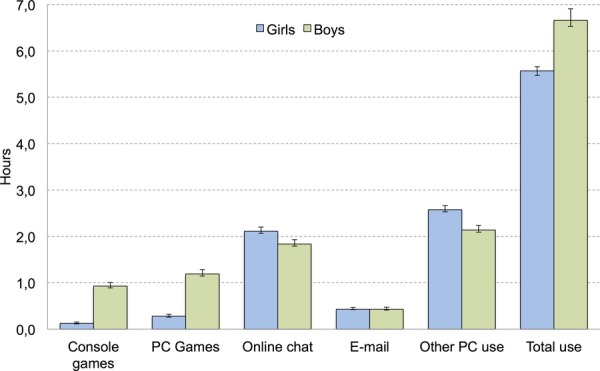
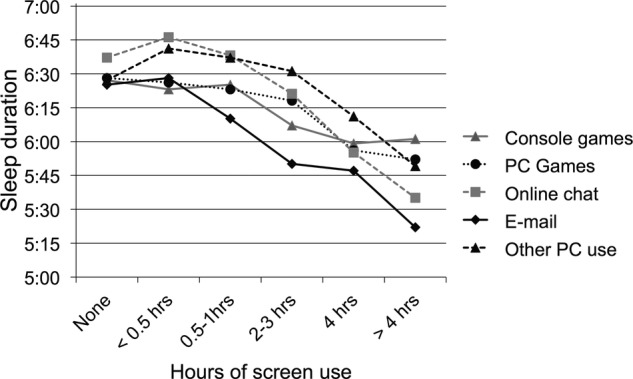
Objectives: Adolescents spend increasingly more time on electronic devices, and sleep deficiency rising in adolescents constitutes a major public health concern. The aim of the present study was to investigate daytime screen use and use of electronic devices before bedtime in relation to sleep. Design: A large cross-sectional population-based survey study from 2012, the youth@hordaland study, in Hordaland County in Norway. Setting: Cross-sectional general community-based study. Participants: 9846 adolescents from three age cohorts aged 16–19. The main independent variables were type and frequency of electronic devices at bedtime and hours of screen-time during leisure time. Outcomes: Sleep variables calculated based on self-report including bedtime, rise time, time in bed, sleep duration, sleep onset latency and wake after sleep onset. Results: Adolescents spent a large amount of time during the day and at bedtime using electronic devices. Daytime and bedtime use of electronic devices were both related to sleep measures, with an increased risk of short sleep duration, long sleep onset latency and increased sleep deficiency. A dose–response relationship emerged between sleep duration and use of electronic devices, exemplified by the association between PC use and risk of less than 5 h of sleep (OR=2.70, 95% CI 2.14 to 3.39), and comparable lower odds for 7–8 h of sleep (OR=1.64, 95% CI 1.38 to 1.96). Conclusions: Use of electronic devices is frequent in adolescence, during the day as well as at bedtime. The results demonstrate a negative relation between use of technology and sleep, suggesting that recommendations on healthy media use could include restrictions on electronic devices.
Overview
The claims and statistics of this paper haven’t been checked yet.
Free: it reads the open-access text and checks the first 5 claims that cite a source we can check. Create a free account to check every claim.
Integrity signals
Registry
Cites
Statistics
Figures
Verification
Claims the paper makes
The claims and statistics of this paper haven’t been checked yet.
Free: it reads the open-access text and checks the first 5 claims that cite a source we can check. Create a free account to check every claim.
Claims other papers make about this one
Each is checked against this paper’s own text: does it say what the citing paper says it does?
The source backs part of the claim, not all of it — or backs it for a different population, condition or comparison.
In the citing paper
“which can impair cognitive function and academic performance (Hysing et al., 2015).”
From The impact of digital technology, social media, and artificial intelligence on cognitive functions: a review (2023) · cites this paper as Hysing et al., 2015
Experimental — accuracy not yet measuredThe source backs part of the claim, not all of it — or backs it for a different population, condition or comparison.
In the citing paper
“Adolescents who used electronic devices at bedtime had increased sleep problems and daytime sleepiness, which can impair cognitive function and academic performance (Hysing et al., 2015).”
From The impact of digital technology, social media, and artificial intelligence on cognitive functions: a review (2023) · cites this paper as Hysing et al., 2015
Experimental — accuracy not yet measuredThe source backs part of the claim, not all of it — or backs it for a different population, condition or comparison.
In the citing paper
“Drawing on data from large epidemiological studies suggesting that refraining from screen use for the hour prior to bedtime alleviates potential interference from screens,42”
From Pilot evaluation of the Sleep Ninja: A smartphone application for adolescent insomnia symptoms (2019) · cites this paper as [42]
Experimental — accuracy not yet measuredThe cited source says what the claim attributes to it.
In the citing paper
“While previous studies have shown that digital media use and screen time are inversely correlated with nocturnal sleep, 16,41”
From Associations of time spent on homework or studying with nocturnal sleep behavior and depression symptoms in adolescents from Singapore (2020) · cites this paper as [41]
The check wasn’t confident either way, so it gives no verdict — never disputed.
In the citing paper
“This quality threshold was used in this review as it has been used in previous reviews of SRH interventions in humanitarian settings.2 17”
From A systematic review of newborn health interventions in humanitarian settings (2022) · cites this paper as [2]
Experimental — accuracy not yet measured
3 more claims about this paper
Create a free account to see every claim other papers make about this one.
Self-check
Percentages, sums and reported differences re-computed from the paper’s own numbers.
The self-check needs the paper’s full text.
Citations
Cites
Podsakoff, P. M., MacKenzie, S. B., Lee, J.-Y., & Podsakoff, N. P. (2003) · Journal of Applied Psychology · doi:10.1037/0021-9010.88.5.879 · Cited by 82,194
Interaction revisited: the difference between two estimates.
Altman, D. G., & Bland, J. M. (2003) · BMJ · doi:10.1136/bmj.326.7382.219 · Cited by 3,203
Self-Reported and Measured Sleep Duration: How Similar Are They?
Lauderdale, D. S., Knutson, K. L., Yan, L. L., Liu, K., & Rathouz, P. J. (2008) · Epidemiology · doi:10.1097/ede.0b013e318187a7b0 · Cited by 1,565
Dewald, J. F., Meijer, A. M., Oort, F. J., Kerkhof, G. A., & Bögels, S. M. (2010) · Sleep Medicine Reviews · doi:10.1016/j.smrv.2009.10.004 · Cited by 1,526
Electronic media use and sleep in school-aged children and adolescents: A review
Cain, N., & Gradisar, M. (2010) · Sleep Medicine · doi:10.1016/j.sleep.2010.02.006 · Cited by 1,376
A Phase Response Curve to Single Bright Light Pulses in Human Subjects
Khalsa, S. B. S., Jewett, M. E., Cajochen, C., & Czeisler, C. A. (2003) · The Journal of Physiology · doi:10.1113/jphysiol.2003.040477 · Cited by 1,040
Pubertal Changes in Daytime Sleepiness
Mary, A. C., Harvey, K., Duke, P., Thomas, F. A., Iris, F. L., & William, C. D. (1980) · Sleep · doi:10.1093/sleep/2.4.453 · Cited by 545
Quantitative criteria for insomnia
Lichstein, K. L., Durrence, H. H., Taylor, D. J., Bush, A. J., & Riedel, B. W. (2003) · Behaviour Research and Therapy · doi:10.1016/s0005-7967(02)00023-2 · Cited by 531
Television-viewing Habits and Sleep Disturbance in School Children
Owens, J., Maxim, R., McGuinn, M., Nobile, C., Msall, M., & Alario, A. (1999) · Pediatrics · doi:10.1542/peds.104.3.e27 · Cited by 427
Adam, E. K., Snell, E. K., & Pendry, P. (2007) · Journal of Family Psychology · doi:10.1037/0893-3200.21.1.4 · Cited by 405
Research works printed but not linked: 2
- National Sleep Foundation: Sleep In America Poll. http://wwwsleepfoundationorg/article/sleep-america-polls/2006-teens-and-sleep. vol. 2006; 2006.
- 10.1186/1471–2458–10–66 · DOI · Paper page
Cited by
Items 101–200 of 679
The association of smartphone use and depression in Japanese adolescents
Nishida, T., Tamura, H., & Sakakibara, H. (2019) · Psychiatry Research · doi:10.1016/j.psychres.2019.01.074 · Cited by 50
Ong, J. L., Lo, J. C., Gooley, J. J., & Chee, M. W. L. (2016) · Sleep · doi:10.5665/sleep.5840 · Cited by 51
Spathis, A., Hatcher, H. M., Booth, S., Gibson, F., Stone, P., Abbas, L., Barclay, M., Brimicombe, J. D., Thiemann, P., McCabe, M. G., et al. (2017) · Journal of Adolescent and Young Adult Oncology · doi:10.1089/jayao.2017.0037 · Cited by 58
Dutta, K., Mukherjee, R., Sen, D., & Sahu, S. (2020) · Biological Rhythm Research · doi:10.1080/09291016.2020.1825284 · Cited by 60
Hammoudi, S. F., Mreydem, H. W., Ali, B. T. A., Saleh, N. O., Chung, S., Hallit, S. R., & Salameh, P. (2021) · Psychiatry Investigation · doi:10.30773/pi.2021.0120 · Cited by 59
Dubey, M., Nongkynrih, B., Gupta, S., Kalaivani, M., Goswami, A. K., & Salve, H. R. (2018) · Journal of Family Medicine and Primary Care · doi:10.4103/jfmpc.jfmpc_190_18 · Cited by 56
Lee, P. H., Tse, A. C. Y., Wu, C. S. T., Mak, Y. W., & Lee, U. (2021) · Journal of Sleep Research · doi:10.1111/jsr.13213 · Cited by 49
Bedtime Electronic Media Use and Sleep in Children with Autism Spectrum Disorder
Mazurek, M. O., Engelhardt, C. R., Hilgard, J., & Sohl, K. (2016) · Journal of Developmental & Behavioral Pediatrics · doi:10.1097/dbp.0000000000000314 · Cited by 62
Sleep problems and mental health among young Norwegian adolescents
Hestetun, I., Svendsen, M. V., & Oellingrath, I. M. (2018) · Nordic Journal of Psychiatry · doi:10.1080/08039488.2018.1499043 · Cited by 60
Countering the Troubling Increase in Mental Health Symptoms Among U.S. College Students
Eisenberg, D. (2019) · Journal of Adolescent Health · doi:10.1016/j.jadohealth.2019.08.003 · Cited by 66
Association Between Substance Use and Insufficient Sleep in U.S. High School Students
Kwon, M., Seo, Y. S., Park, E., & Chang, Y. (2020) · The Journal of School Nursing · doi:10.1177/1059840519901161 · Cited by 50
Jakobsson, M., Josefsson, K., Jutengren, G., Sandsjö, L., & Högberg, K. M. (2018) · Scandinavian Journal of Caring Sciences · doi:10.1111/scs.12621 · Cited by 71
Throuvala, M. A., Griffiths, M. D., Rennoldson, M., & Kuss, D. J. (2020) · International Journal of Mental Health and Addiction · doi:10.1007/s11469-019-00213-y · Cited by 67
Quality of Sleep Among Bedtime Smartphone Users
Krishnan, B. G., Sanjeev, R. K., & Latti, R. G. (2020) · International Journal of Preventive Medicine · doi:10.4103/ijpvm.ijpvm_266_19 · Cited by 66
Kortesoja, L., Vainikainen, M., Hotulainen, R., & Merikanto, I. (2022) · Journal of Youth and Adolescence · doi:10.1007/s10964-022-01703-4 · Cited by 66
M-Learning? When it comes to learning, smartphones are a liability, not an asset
Spitzer, M. (2015) · Trends in Neuroscience and Education · doi:10.1016/j.tine.2015.11.004 · Cited by 54
The potential influence of LED lighting on mental illness
Bauer, M., Glenn, T., Monteith, S., Gottlieb, J. F., Ritter, P. S., Geddes, J., & Whybrow, P. C. (2018) · The World Journal of Biological Psychiatry · doi:10.1080/15622975.2017.1417639 · Cited by 46
Bourchtein, E., Langberg, J. M., Cusick, C. N., Breaux, R. P., Smith, Z. R., & Becker, S. P. (2019) · Journal of Pediatric Psychology · doi:10.1093/jpepsy/jsy101 · Cited by 44
Gába, A., Dygrýn, J., Štefelová, N., Rubín, L., Hron, K., Jakubec, L., & Pedišić, Ž. (2020) · International Journal of Behavioral Nutrition and Physical Activity · doi:10.1186/s12966-020-01004-8 · Cited by 46
Perceived Social Support and Sustained Physical Activity During the COVID-19 Pandemic
Hailey, V., Fisher, A., Hamer, M., & Fancourt, D. E. (2022) · International Journal of Behavioral Medicine · doi:10.1007/s12529-022-10125-2 · Cited by 58
Lang, C. J., Reynolds, A. C., Appleton, S., Taylor, A. W., Gill, T. K., McEvoy, R. D., Ferguson, S. A., & Adams, R. A. (2018) · Sleep Medicine · doi:10.1016/j.sleep.2018.06.014 · Cited by 48
Thoma, V. K., Schulz-Zhecheva, Y., Oser, C., Fleischhaker, C., Biscaldi, M., & Klein, C. (2018) · Journal of Attention Disorders · doi:10.1177/1087054718802014 · Cited by 61
Marsh, E. A., Keddie, S., Terris‐Prestholt, F., D’Sa, S., & Lunn, M. P. (2020) · Journal of Neurology Neurosurgery & Psychiatry · doi:10.1136/jnnp-2020-324012 · Cited by 43
So Much to Do Before I Sleep: Investigating Adolescent-Perceived Barriers and Facilitators to Sleep
Gaarde, J., Hoyt, L. T., Ozer, E. J., Maslowsky, J., Deardorff, J., & Kyauk, C. K. (2018) · Youth & Society · doi:10.1177/0044118x18756468 · Cited by 55
Xie, Y. J., Cheung, D. S. K., Loke, A. Y., Nogueira, B. O. C. L., Liu, M., Leung, A. Y. M., Tsang, A. S. M., Leong, C. S., & Molassiotis, A. (2020) · Journal of Medical Internet Research · doi:10.2196/18095 · Cited by 49
Sleep, Anxiety, and Academic Performance: A Study of Adolescents From Public High Schools in China
Zhang, X., Dimitriou, D., & Halstead, E. J. (2021) · Frontiers in Psychology · doi:10.3389/fpsyg.2021.678839 · Cited by 62
Electronic Screen Use and Sleep Duration and Timing in Adults
Zhong, C., Masters, M., Donzella, S. M., Diver, W. R., & Patel, A. V. (2025) · JAMA Network Open · doi:10.1001/jamanetworkopen.2025.2493 · Cited by 82
Delayed sleep phase disorder: clinical perspective with a focus on light therapy
Figueiro, M. G. (2016) · Nature and Science of Sleep · doi:10.2147/nss.s85849 · Cited by 47
Caumo, G. H., Spritzer, D. T., Carissimi, A., & Tonon, A. C. (2020) · Sleep Health · doi:10.1016/j.sleh.2019.12.004 · Cited by 61
Hagen, I., Skjelstad, S., & Nayar, U. S. (2023) · Frontiers in Psychology · doi:10.3389/fpsyg.2023.1083028 · Cited by 63
Sex differences in insomnia and risk for psychopathology in adolescence
Marver, J. E., & McGlinchey, E. L. (2019) · Current Opinion in Psychology · doi:10.1016/j.copsyc.2019.09.004 · Cited by 44
Smith, C., de Wilde, T., Taylor, R. W., & Galland, B. C. (2020) · Journal of Adolescent Health · doi:10.1016/j.jadohealth.2019.12.007 · Cited by 40
Melanopsin: From a small molecule to brain functions
Duda, M., Domagalik, A., Orlowska‐Feuer, P., Krzysztynska‐Kuleta, O. I., Beldzik, E., Smyk, M. K., Stachurska, A., Ogińska, H., Jeczmien‐Lazur, J. S., Fąfrowicz, M., et al. (2020) · Neuroscience & Biobehavioral Reviews · doi:10.1016/j.neubiorev.2020.03.012 · Cited by 45
Otsuka, Y., Kaneita, Y., Itani, O., Matsumoto, Y., Jike, M., Higuchi, S., Kanda, H., Kuwabara, Y., Kinjo, A., & Osaki, Y. (2021) · SLEEP · doi:10.1093/sleep/zsab175 · Cited by 59
Varghese, N. E., Santoro, E., Lugo, A., Madrid-Valero, J. J., Ghislandi, S., Torbica, A., & Gallus, S. (2021) · Journal of Medical Internet Research · doi:10.2196/20319 · Cited by 38
“Use of PC in particular has been shown to be associated with reduced sleep duration, poor sleep, and sleep-onset latency [1,57,58].”
BackgroundResultInfluentialDo both timing and duration of screen use affect sleep patterns in adolescents?
Hartley, S., Royant‐Parola, S., Zayoud, A., Gremy, I. M., & Matulonga, B. (2022) · PLoS ONE · doi:10.1371/journal.pone.0276226 · Cited by 52
Sleep Research: A Primer for Media Scholars
Exelmans, L., & Van den Bulck, J. (2019) · Health Communication · doi:10.1080/10410236.2017.1422100 · Cited by 38
Impact of smartphone use on quality of sleep among medical students
Kurugodiyavar, M. D., Sushma, H. R., Godbole, M., & Nekar, M. S. (2017) · International Journal of Community Medicine and Public Health · doi:10.18203/2394-6040.ijcmph20175604 · Cited by 50
Sleep in Teens With Type 1 Diabetes: Perspectives From Adolescents and Their Caregivers
Bergner, E. M., Williams, R., Hamburger, E. R., Lyttle, M., Davis, A. C., Malow, B., Simmons, J. H., Lybarger, C., Capin, R., & Jaser, S. S. (2018) · The Diabetes Educator · doi:10.1177/0145721718799086 · Cited by 37
Saunders, T. J., McIsaac, T., Campbell, J., Douillette, K., Janssen, I., Tomasone, J. R., Ross‐White, A., Prince, S. A., & Chaput, J. (2022) · Health Promotion and Chronic Disease Prevention in Canada · doi:10.24095/hpcdp.42.4.03 · Cited by 52
Health Effects of Disrupted Circadian Rhythms by Artificial Light at Night
Davis, L. K., Bumgarner, J. R., Nelson, R. J., & Fonken, L. K. (2023) · Policy Insights from the Behavioral and Brain Sciences · doi:10.1177/23727322231193967 · Cited by 47
Ngantcha, M. E., Janssen, É., Godeau, E., Ehlinger, V., Nézet, O. L., Beck, F., & Spilka, S. (2018) · Journal of Physical Activity and Health · doi:10.1123/jpah.2017-0272 · Cited by 51
Smartphone Addiction, Sleep Quality and Mechanism
Moattari, M., Moattari, F., Kaka, G., Mohseni, K. H., Sadraie, S. H., & Majid, N. (2018) · International Journal of Cognition and Behaviour · doi:10.23937/ijcb-2017/1710002 · Cited by 58
Bottolfs, M., Støa, E. M., Reinboth, M. S., Svendsen, M. V., Schmidt, S. K., Oellingrath, I. M., & Bratland‐Sanda, S. (2020) · Journal of International Medical Research · doi:10.1177/0300060520903656 · Cited by 46
Association of screen time and sleep duration among Spanish 1‐14 years old children
Cartanyà‐Hueso, À., Lidón‐Moyano, C., Martín‐Sánchez, J. C., González‐Marrón, A., Santander, N. M., Catalina, Q. M., & Martínez-Sánchez, J. M. (2020) · Paediatric and Perinatal Epidemiology · doi:10.1111/ppe.12695 · Cited by 47
Biggins, M., Purtill, H., Fowler, P., Bender, A. M., Sullivan, K. O., Samuels, C. H., & Cahalan, R. (2020) · The Physician and Sportsmedicine · doi:10.1080/00913847.2020.1850149 · Cited by 46
Kouros, C. D., Keller, P. S., Martín‐Piñón, O., & El‐Sheikh, M. (2022) · Child Development · doi:10.1111/cdev.13798 · Cited by 39
Dejenie, T. A., Medhin, M. T. G., Admasu, F. T., Adella, G. A., Enyew, E. F., Kifle, Z. D., Seid, M. A., Mengstie, M. A., & Abebe, E. C. (2022) · Frontiers in Endocrinology · doi:10.3389/fendo.2022.1064969 · Cited by 48
Sleep Patterns, Eating Behavior and the Risk of Noncommunicable Diseases
Gomes, S., Ramalhete, C., Ferreira, I., Bicho, M., & Valente, A. (2023) · Nutrients · doi:10.3390/nu15112462 · Cited by 59
Bedtime Screen Use Behaviors and Sleep Outcomes in Early Adolescents: A Prospective Cohort Study
Nagata, J. M., Cheng, C. M., Shim, J. E., Kiss, O., Ganson, K. T., Testa, A. M., He, J., & Baker, F. C. (2024) · Journal of Adolescent Health · doi:10.1016/j.jadohealth.2024.06.006 · Cited by 57
Das‐Friebel, A., Perkinson‐Gloor, N., Brand, S., Dewald‐Kaufmann, J., Grob, A., Wolke, D., & Lemola, S. (2018) · Sleep Medicine · doi:10.1016/j.sleep.2018.11.010 · Cited by 39
Circadian misalignment and weekend alcohol use in late adolescent drinkers: preliminary evidence
Hasler, B. P., Bruce, S. A., Scharf, D. M., Ngari, W., & Clark, D. B. (2019) · Chronobiology International · doi:10.1080/07420528.2019.1586720 · Cited by 37
The effects of different bedroom light environments in the evening on adolescents
Wen, P., Tan, F., Wu, M., Cai, Q., Xu, R., Zhang, X., Wang, Y., Khan, M. S. A., Chen, W., & Hu, X. (2021) · Building and Environment · doi:10.1016/j.buildenv.2021.108321 · Cited by 35
Cha, J. H., Choi, Y., Ryu, S., & Moon, J. (2023) · PLoS ONE · doi:10.1371/journal.pone.0294553 · Cited by 51
Leisure time computer use and overweight development in young adults – a prospective study
Thomée, S., Lissner, L., Hagberg, M., & Grimby‐Ekman, A. (2015) · BMC Public Health · doi:10.1186/s12889-015-2131-5 · Cited by 43
TEMPO DE TELA, PERCEPÇÃO DA QUALIDADE DE SONO E EPISÓDIOS DE PARASSONIA EM ADOLESCENTES
da Silva, A. O., de Oliveira, L. M. F. T., dos Santos, M. A. M., & Tassitano, R. M. (2017) · Revista Brasileira de Medicina do Esporte · doi:10.1590/1517-869220172305163582 · Cited by 72
Kim, H. R., & Han, M. A. (2020) · Psychiatry Investigation · doi:10.30773/pi.2020.0007 · Cited by 33
Occupational harmony: Embracing the complexity of occupational balance
Liu, Y., Zemke, R., Liang, L., & Gray, J. M. (2021) · Journal of Occupational Science · doi:10.1080/14427591.2021.1881592 · Cited by 50
Daily timing of the adolescent sleep phase: Insights from a cross-species comparison
Hummer, D. L., & Lee, T. M. (2016) · Neuroscience & Biobehavioral Reviews · doi:10.1016/j.neubiorev.2016.07.023 · Cited by 43
Kawuki, J., Gatasi, G., Sserwanja, Q., Mukunya, D., & Musaba, M. W. (2023) · BMC Infectious Diseases · doi:10.1186/s12879-023-08187-y · Cited by 43
What keeps children with cystic fibrosis awake at night?
Vandeleur, M., Walter, L. M., Armstrong, D., Robinson, P. J., Nixon, G. M., & Horne, R. S. C. (2017) · Journal of Cystic Fibrosis · doi:10.1016/j.jcf.2017.04.012 · Cited by 35
de Lima, T. R., & Silva, D. A. S. (2018) · World Journal of Pediatrics · doi:10.1007/s12519-018-0136-8 · Cited by 38
Khan, A., Dix, C. F., Burton, N. W., Khan, S. R., & Uddin, R. (2020) · EClinicalMedicine · doi:10.1016/j.eclinm.2020.100681 · Cited by 37
Use of hypnotic drugs among children, adolescents, and young adults in Scandinavia
Wesselhoeft, R. T., Rasmussen, L., Jensen, P. B., Jennum, P., Skurtveit, S. O., Hartz, I., Reutfors, J., Damkier, P., Bliddal, M., & Pottegård, A. (2021) · Acta Psychiatrica Scandinavica · doi:10.1111/acps.13329 · Cited by 37
Jealousy in adolescents' daily lives: How does it relate to interpersonal context and well‐being?
Lennarz, H. K., Lichtwarck‐Aschoff, A., Finkenauer, C., & Granic, I. (2016) · Journal of Adolescence · doi:10.1016/j.adolescence.2016.09.008 · Cited by 42
Sleep in adolescence: sex matters?
de Matos, M. G., Marques, A., Peralta, M., Gaspar, T., Simões, C., Pinto, H. R., Pinto, T. R., Godeau, E., & Paiva, T. (2019) · Sleep Science · doi:10.5935/1984-0063.20190075 · Cited by 36
Almeneessier, A. S., Pandi-Perumal, S. R., & BaHammam, A. S. (2018) · Current Sleep Medicine Reports · doi:10.1007/s40675-018-0124-5 · Cited by 33
Training load and schedule are important determinants of sleep behaviours in youth‐soccer players
Whitworth‐Turner, C. M., Michele, R. D., Muir, I. H., Gregson, W. A., & Drust, B. (2018) · European Journal of Sport Science · doi:10.1080/17461391.2018.1536171 · Cited by 40
Magee, L., Goldsmith, L. P., Chaudhry, U. A. R., Donin, A. S., Wahlich, C., Stovold, E. M., Nightingale, C. M., Rudnicka, A. R., & Owen, C. G. (2022) · Archives of Pediatrics and Adolescent Medicine · doi:10.1001/jamapediatrics.2022.3172 · Cited by 36
Arrona‐Palacios, A. (2017) · Journal of Adolescence · doi:10.1016/j.adolescence.2017.10.009 · Cited by 29
Olorunmoteni, O. E., Fatusi, A. O., Komolafe, M. A., & Omisore, A. (2018) · Sleep Health · doi:10.1016/j.sleh.2018.09.002 · Cited by 24
Lee, P. H., Tse, A. C. Y., Wu, C. S. T., Mak, Y. W., & Lee, U. (2021) · Psychiatry Investigation · doi:10.30773/pi.2020.0197 · Cited by 37
Figueiredo, P., Costa, J. A., Lastella, M., Morais, J., & Brito, J. (2021) · International Journal of Environmental Research and Public Health · doi:10.3390/ijerph18042076 · Cited by 36
Akowuah, P. K., Nti, A. N., Ankamah‐Lomotey, S., Frimpong, A. A., Fummey, J., Boadi, P., Osei-Poku, K., & Adjei‐Anang, J. (2021) · Advances in Public Health · doi:10.1155/2021/6611348 · Cited by 32
Jeong, D., Lee, H., & Kim, J. (2023) · BMC Women s Health · doi:10.1186/s12905-023-02600-z · Cited by 58
Heradstveit, O., Skogen, J. C., Hetland, J., Stewart, R. J., & Hysing, M. (2019) · Frontiers in Psychology · doi:10.3389/fpsyg.2019.01003 · Cited by 31
Self-citationTian, S., Zhang, T., Miao, Y.-M., & Pan, C. (2021) · Journal of Affective Disorders · doi:10.1016/j.jad.2021.01.010 · Cited by 36
Rocchetti, T. T., Silbert, S., Gostnell, A., Kubasek, C., & Widen, R. E. (2016) · Journal of Clinical Microbiology · doi:10.1128/jcm.00241-16 · Cited by 34
Alsalman, Z., Debel, F. A. A., Zakaria, F. M. A., Shafey, M., & Darwish, M. A. (2020) · Journal of Family and Community Medicine · doi:10.4103/jfcm.jfcm_140_19 · Cited by 33
A comparison of sleep patterns in youth soccer players and non-athletes
Whitworth‐Turner, C. M., Michele, R. D., Muir, I. H., Gregson, W. A., & Drust, B. (2017) · Science and Medicine in Football · doi:10.1080/24733938.2017.1366040 · Cited by 35
Kallestad, H., Vedaa, Ø., Scott, J. L., Morken, G., Pallesen, S., Harvey, A. G., Gehrman, P., Thorndike, F. P., Ritterband, L. M., Stiles, T. C., et al. (2018) · BMJ Open · doi:10.1136/bmjopen-2018-025152 · Cited by 29
Self-citationEvening electronic device use and sleep patterns in athletes
Jones, M. J., DAWSON, B. T., Gucciardi, D. F., Eastwood, P. R., Miller, J., Halson, S. L., Dunican, I. C., & Peeling, P. (2018) · Journal of Sports Sciences · doi:10.1080/02640414.2018.1531499 · Cited by 33
Hamre, R., Smith, O. R. F., Samdal, O., & Haug, E. (2022) · International Journal of Environmental Research and Public Health · doi:10.3390/ijerph19031765 · Cited by 39
Thomas, G., Bennie, J. A., De Cocker, K., Dwi Andriyani, F., Booker, B., & Biddle, S. J. H. (2022) · JMIR Pediatrics and Parenting · doi:10.2196/28208 · Cited by 26
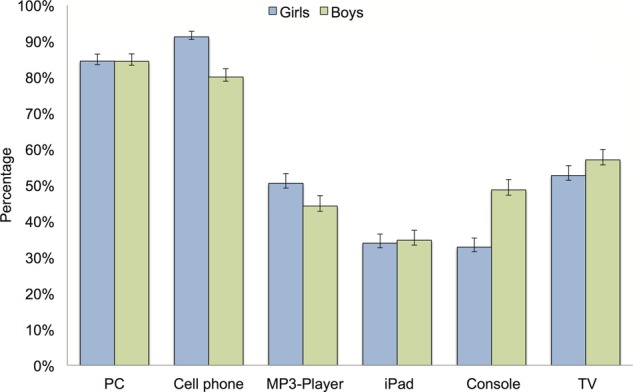
“For instance, using data from a large population-based survey of adolescents in Norway (n=9846), Hysing et al showed that approximately 80% of boys and 90% of girls used a cell phone in the hour before going to sleep [61].”
MethodMilkins, B., Notebaert, L., MacLeod, C., & Clarke, P. (2016) · Clinical Psychological Science · doi:10.1177/2167702615626898 · Cited by 32
Hasuo, H., Kanbara, K., & Fukunaga, M. (2020) · Frontiers in Medicine · doi:10.3389/fmed.2020.00061 · Cited by 31
The association between screen time and reported depressive symptoms among adolescents in Sweden
Ma, L., Evans, B., Kleppang, A. L., & Hagquist, C. (2021) · Family Practice · doi:10.1093/fampra/cmab029 · Cited by 25
Laksono, S., Yanni, M., Iqbal, M., & Prawara, A. S. (2022) · Sleep Disorders · doi:10.1155/2022/9969107 · Cited by 33
Relationship between Sedentary Time, Physical Activity and Multiple Lifestyle Factors in Children
Sheldrick, M. P. R., Tyler, R., Mackintosh, K. A., & Stratton, G. (2018) · Journal of Functional Morphology and Kinesiology · doi:10.3390/jfmk3010015 · Cited by 34
Männikkö, N., Ruotsalainen, H., Tolvanen, A. J., & Kääriäinen, M. (2019) · International Journal of Mental Health and Addiction · doi:10.1007/s11469-019-00100-6 · Cited by 33
Orth, Z., & van Wyk, B. E. (2020) · BMJ Open · doi:10.1136/bmjopen-2020-037237 · Cited by 24
Digital game addiction and lifestyle behaviors in Turkish adolescents
AKSOY, Z., & Erol, S. (2021) · Clinical and Experimental Health Sciences · doi:10.33808/clinexphealthsci.885988 · Cited by 33
Vézina‐Im, L., Beaulieu, D., Turcotte, S., Roussel-Ouellet, J., Labbé, V., & Bouchard, D. (2022) · International Journal of Environmental Research and Public Health · doi:10.3390/ijerph19159019 · Cited by 33
Media devices, family relationships and sleep patterns among adolescents in an urban area
Continente, X., Pérez, A., Espelt, A., & López, M. J. (2016) · Sleep Medicine · doi:10.1016/j.sleep.2016.04.006 · Cited by 29
Age and sex differences in bedroom habits and bedroom preferences
Bjorvatn, B., Mrdalj, J., Saxvig, I. W., Aasnæs, T., Pallesen, S., & Waage, S. (2017) · Sleep Medicine · doi:10.1016/j.sleep.2017.01.003 · Cited by 27
Self-citationWang, C., Li, K., Kim, M., Lee, S., & Seo, D. (2018) · Addictive Behaviors · doi:10.1016/j.addbeh.2018.10.037 · Cited by 34
How internal and external cues for bedtime affect sleep and adaptive functioning in adolescents
Short, M. A., Kuula, L., Gradisar, M., & Pesonen, A. (2018) · Sleep Medicine · doi:10.1016/j.sleep.2018.11.018 · Cited by 26
Digital media and depressive symptoms among Chinese adolescents: A cross-sectional study
Zhang, J., Hu, H., Hennessy, D., Zhao, S., & Zhang, Y. (2019) · Heliyon · doi:10.1016/j.heliyon.2019.e01554 · Cited by 21
Vaquero‐Solís, M., Tapia‐Serrano, M. Á., Alcalá, D. H., Sierra-Díaz, M. J., & Miguel, P. A. S. (2021) · International Journal of Environmental Research and Public Health · doi:10.3390/ijerph18147550 · Cited by 28
Metadata
- Authors
- Hysing, M., Pallesen, S., Stormark, K. M., Jakobsen, R., Lundervold, A. J., & Sivertsen, B.
- Affiliations
- Uni Research (Norway) (NO)
- Haukeland University Hospital (NO)
- Norwegian Institute of Public Health (NO)
- Corresponding author
- Hysing, Mari
- ORCID
- Venue
- BMJ Open
- Publisher
- BMJ
- Published
- 2015-01
- Volume
- 5
- Issue
- 1
- Pages
- e006748
- ISSN
- 2044-6055 (ISSN-L)
- PMC
- PMC4316480
- OpenAlex
- W2157102249
- Cited by
- 678
- References
- 38
- Citations by year
- 2026: 41 · 2025: 47 · 2024: 56 · 2023: 56 · 2022: 79 · 2021: 66 · 2020: 79 · 2019: 55 · 2018: 60 · 2017: 42 · 2016: 33 · 2015: 64
- FWCI
- 100.41
- Type
- journal article
- Language
- en
- Open access
- gold
- doi.org
- Licence
- cc-by-nc
- Locations
- BMJ Open (publishedVersion, cc-by-nc)
- Europe PMC (PubMed Central) (publishedVersion, cc-by-nc)
- PubMed Central (publishedVersion, cc-by-nc)
- PubMed (publishedVersion)
- NORA - Norwegian Open Research Archives (submittedVersion, cc-by-nc)
- BIBSYS Brage (BIBSYS (Norway)) (submittedVersion)
- NORA - Norwegian Open Research Archives (submittedVersion, other-oa)
- Topics
- Social Sciences › Psychology › Experimental and Cognitive Psychology › Sleep and related disorders
- Social Sciences › Sociology and Political Science › Impact of Technology on Adolescents
- Social Sciences › Education › Child Development and Digital Technology
- Keywords
- adolescent sleep, screen time, electronic devices, bedtime screen use, sleep duration, sleep latency, insufficient sleep, computer use, media use
- MeSH terms
- Adolescent, Adolescent Behavior, Computers, Cross-Sectional Studies, Electronics, Female, Humans, Disorders of Excessive Somnolence, Sleep Initiation and Maintenance Disorders, Male, Norway, Surveys and Questionnaires, Risk Factors, Schools, Sleep, Technology, Television, Video Games, Cell Phone, Electrical Equipment and Supplies, Self Report
About these checks
Registry, retraction, Cites and statistics results are computed, not judged, with one exception: a printed reference that no index lists is read once by a model before it counts as a citation error. Claims are extracted by a model and kept only when their quote appears verbatim in the text; each cited source is then checked, with a model’s help, for whether it says what the claim relies on. Those verdicts can be wrong — read the claim’s quote and the cited source before relying on one.
Statistics and arithmetic are recomputed, not judged.
Confidence bands are shown only for fields calibrated on our annotated test set. None is calibrated yet, so no band is shown.
What counts as a claim ›How we measure confidence ›How we check this ›
Are you an author, or do you see a problem with this page? Request a review
Data sources
Bibliographic data: Semantic Scholar, OpenAlex, Crossref.
Contains information from the Semantic Scholar Academic Graph Datasets, made available under the ODC Attribution License (ODC-BY 1.0).
Semantic Scholar’s data is described in: Kinney, R., et al. (2023). The Semantic Scholar Open Data Platform. arXiv:2301.10140.
