

Comparative safety of the sodium glucose co-transporter 2 (SGLT2) inhibitors: a systematic review and meta-analysis
Open accessThe DOI matches its Crossref record; 144 of the 145 references it cites were found in a registry or an index.
Abstract
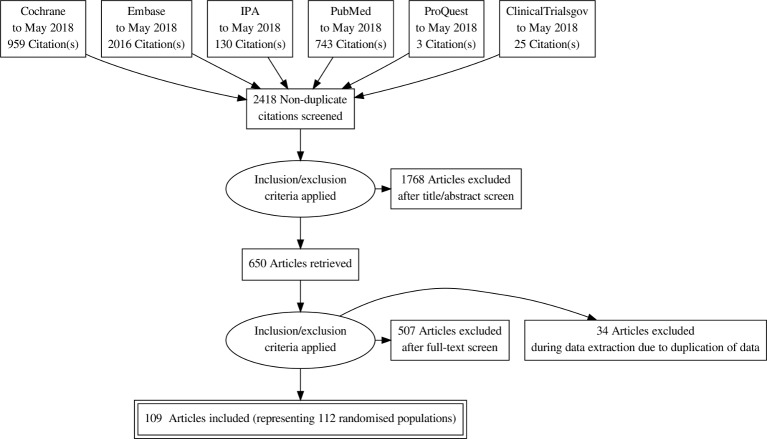
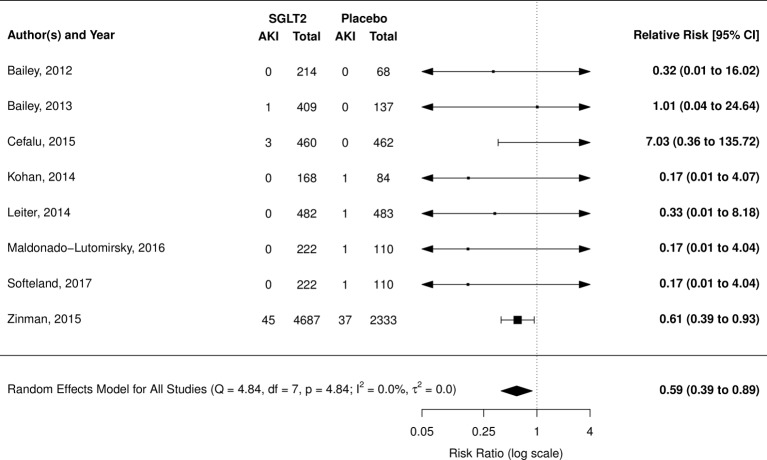
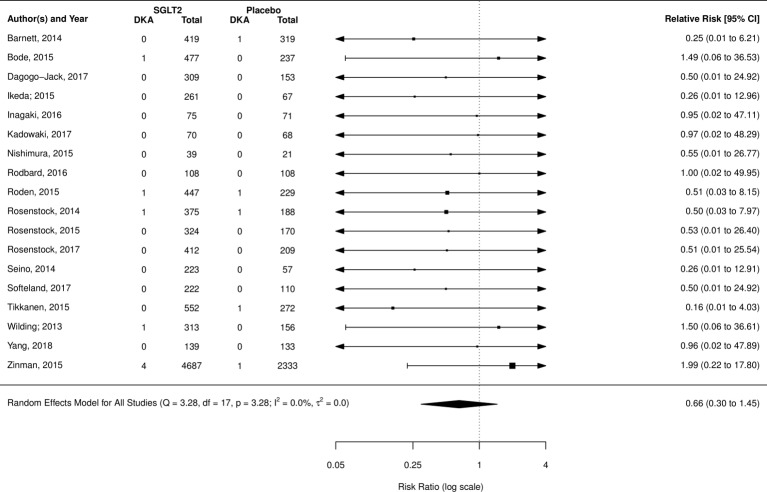
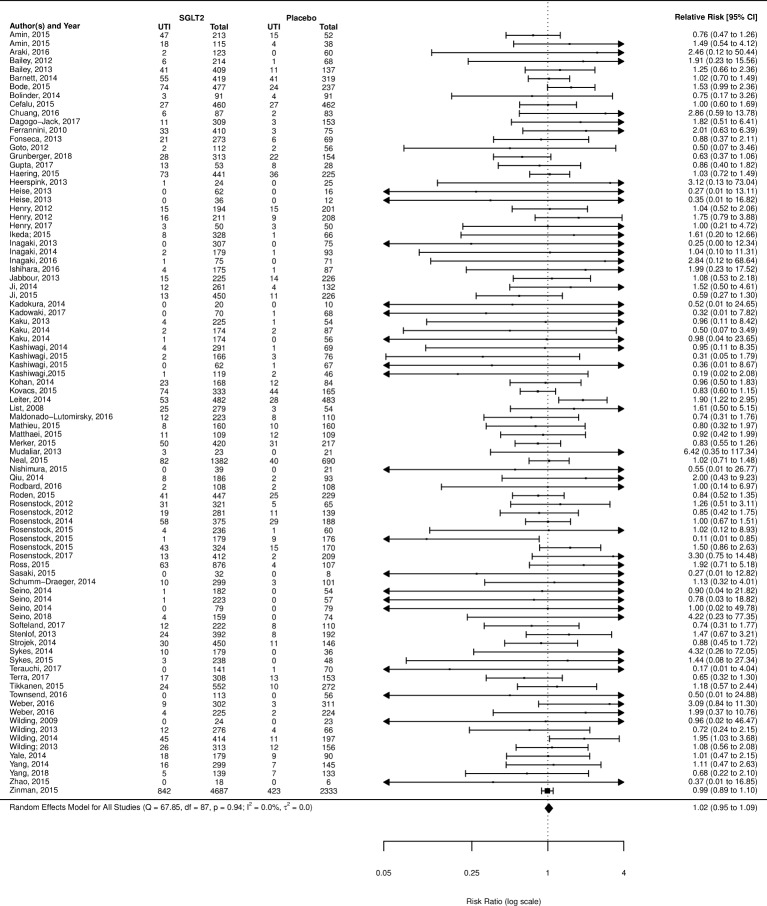
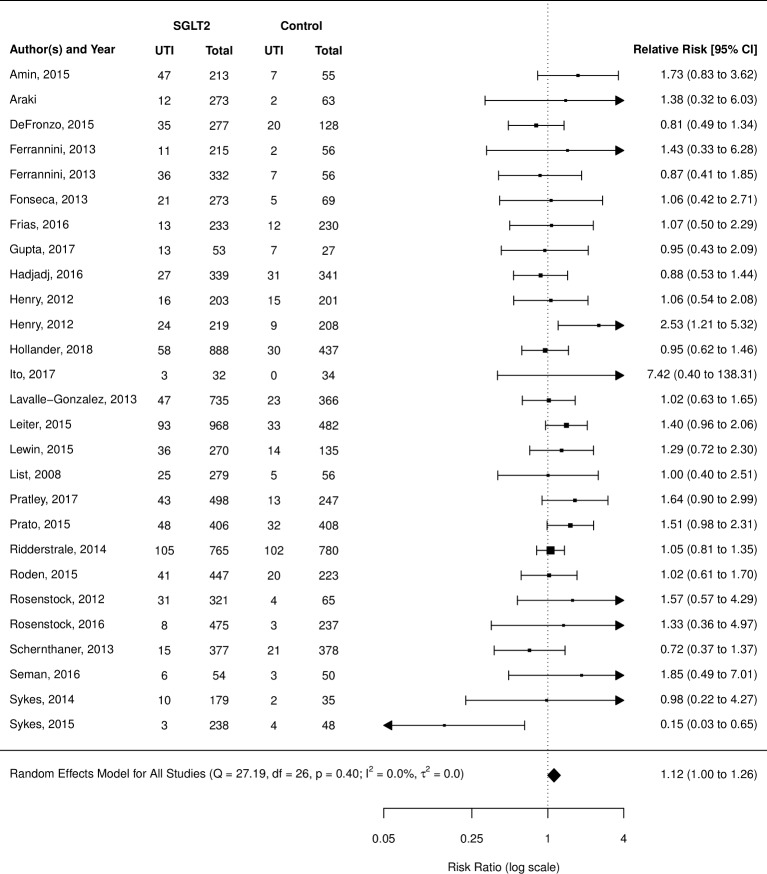
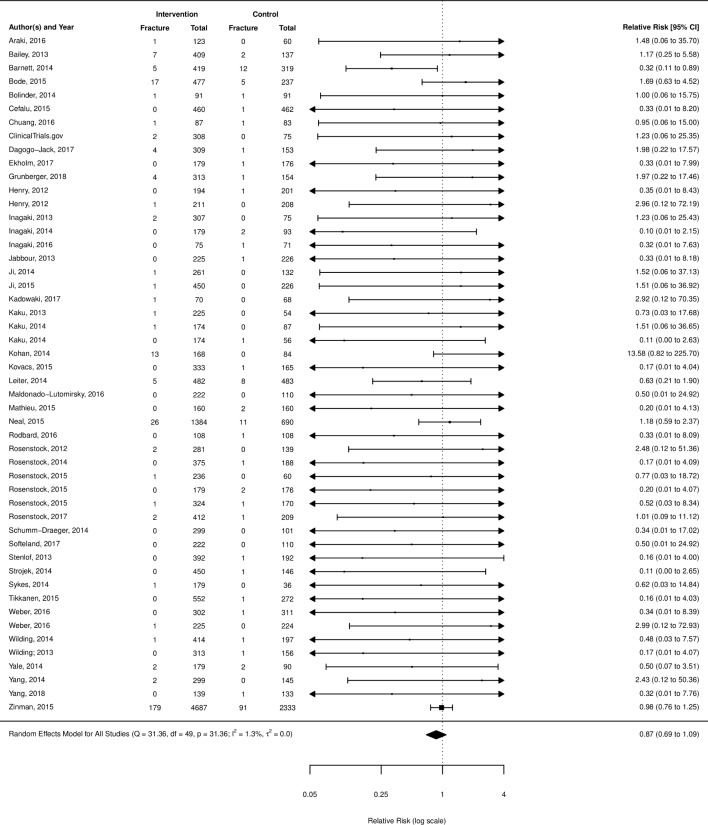
Objective: To estimate the association between the use of sodium glucose co-transporter-2 (SGLT2) inhibitors and postmarket harms as identified by drug regulatory agencies. Design: We conducted a systematic review and meta-analysis of randomised controlled trials (RCT). Six large databases were searched from inception to May 2018. Random effects models were used to estimate pooled relative risks (RRs). Intervention: SGLT2 inhibitors, compared with placebo or active comparators. Primary outcomes: Acute kidney injury (AKI), diabetic ketoacidosis (DKA), urinary tract infections (UTI), bone fractures and lower limb amputations. Results: We screened 2418 citations of which 109 were included. Most studies included one of four SGLT2 inhibitors, dapagliflozin, canagliflozin, empagliflozin and ipragliflozin. When compared with placebo, SGLT2 inhibitors were found to be significantly protective against AKI (RR=0.59; 95% CI 0.39 to 0.89; I 2=0.0%), while no difference was found for DKA (RR 0.66; 95% CI 0.30 to 1.45, I 2=0.0%), UTI (RR 1.02; 95% CI 0.95 to 1.09, I 2=0.0%) or bone fracture (RR 0.87; 95% CI 0.69 to 1.09, I 2=1.3%). Three studies reported on amputation, with one finding a significant increase risk. No increased risk for either outcome was found when compared with active controls. Subgroup analysis did show an increased risk of UTI with dapagliflozin only (RR 1.21; 95% CI 1.02 to 1.43, I 2=0.0%), but no other analysis supported an increased risk of AKI, DKA, UTI or fracture. Conclusions: Current evidence from RCTs does not suggest an increased risk of harm with SGLT2 inhibitors as a class over placebo or active comparators with respect to AKI, DKA, UTI or fracture. However, wide CIs for many comparisons suggest limited precision, and therefore clinically important adverse events cannot be ruled out. Dapagliflozin, appears to independently increase the risk of UTI, although the mechanism for this intraclass variation in risk is unclear. PROSPERO registration number: CRD42016038715.
Overview
The claims and statistics of this paper haven’t been checked yet.
Free: it reads the open-access text and checks the first 5 claims that cite a source we can check. Create a free account to check every claim.
Integrity signals
Registry
Cites
Statistics
Figures
Verification
Claims the paper makes
The claims and statistics of this paper haven’t been checked yet.
Free: it reads the open-access text and checks the first 5 claims that cite a source we can check. Create a free account to check every claim.
Claims other papers make about this one
Each is checked against this paper’s own text: does it say what the citing paper says it does?
The source backs part of the claim, not all of it — or backs it for a different population, condition or comparison.
In the citing paper
“Despite theoretical concerns for acute kidney injury and urinary tract infection, SGLT2 inhibitors do not increase these risks and acute kidney injury is less common (69,95).”
From SGLT2 inhibition for CKD and cardiovascular disease in type 2 diabetes: report of a scientific workshop sponsored by the National Kidney Foundation (2021) · cites this paper as [95]
Experimental — accuracy not yet measuredIn the citing paper
“Higher risks for amputation and fracture were not observed in CVOTs of other SGLT2 inhibitors or with canagliflozin in the CREDENCE trial (14,69,95).”
From SGLT2 inhibition for CKD and cardiovascular disease in type 2 diabetes: report of a scientific workshop sponsored by the National Kidney Foundation (2021) · cites this paper as [95]
Self-check
Percentages, sums and reported differences re-computed from the paper’s own numbers.
The self-check needs the paper’s full text.
Citations
Cites
Preferred Reporting Items for Systematic Reviews and Meta-Analyses: the PRISMA statement
Moher, D., Liberati, A., Tetzlaff, J., Altman, D. G., & for the PRISMA Group (2009) · BMJ · doi:10.1136/bmj.b2535 · Cited by 83,823
Measuring inconsistency in meta-analyses
Higgins, J. P. T., Thompson, S. G., Deeks, J. J., & Altman, D. G. (2003) · BMJ · doi:10.1136/bmj.327.7414.557 · Cited by 63,139 · cited 2×
“Statistical heterogeneity was evaluated using the I(2) statistic, with significant heterogeneity defined as an I(2)>50%.(34) To explore treatment effect heterogeneity, we conducted numerous subgroup analyses according to individual”
MethodPreferred reporting items for systematic reviews and meta-analyses: the PRISMA Statement.
(2009) · PubMed Central · Cited by 44,859
Preferred reporting items for systematic reviews and meta-analyses: The PRISMA statement
Moher, D., Liberati, A., Tetzlaff, J., Altman, D. G., & the PRISMA Group* (2009) · Annals of Internal Medicine · doi:10.7326/0003-4819-151-4-200908180-00135 · Cited by 37,554
The Cochrane Collaboration's tool for assessing risk of bias in randomised trials
Higgins, J. P. T., Altman, D. G., Gotzsche, P. C., Juni, P., Moher, D., Oxman, A. D., Savovic, J., Schulz, K. F., Weeks, L., Sterne, J. A. C., et al. (2011) · BMJ · doi:10.1136/bmj.d5928 · Cited by 33,817 · cited 4×
“risk of bias assessment Each included study was critically appraised using the Cochrane Collaboration domain-based tool for assessing the risk of bias for RCTs.(32) This tool captures six main sources of bias, including: randomisation sequence, allocation concealment, blinding of participant and researcher, blinded ou…”
InfluentialDermyshi, E., Wang, Y., Yan, C., Hong, W., Qiu, G., Gong, X., & Zhang, T. (2017) · Neonatology · doi:10.1159/000454668 · Cited by 24,451
Empagliflozin, Cardiovascular Outcomes, and Mortality in Type 2 Diabetes
Zinman, B., Wanner, C., Lachin, J. M., Fitchett, D., Bluhmki, E., Hantel, S., Mattheus, M., Devins, T., Johansen, O. E., Woerle, H. J., et al. (2015) · New England Journal of Medicine · doi:10.1056/nejmoa1504720 · Cited by 12,315 · cited 1×
“large study.(142) When the analyses were re-run using a fixed-effects model, the risk estimates remained the same or had slightly smaller CIs.”
MethodCanagliflozin and Cardiovascular and Renal Events in Type 2 Diabetes
Neal, B., Perkovic, V., Mahaffey, K. W., de Zeeuw, D., Fulcher, G., Erondu, N., Shaw, W., Law, G., Desai, M., & Matthews, D. R. (2017) · New England Journal of Medicine · doi:10.1056/nejmoa1611925 · Cited by 7,830 · cited 2×
“Data were identified on amputation for three studies.(23) 46 107 One case of amputation was found in the ClinicalTrials.”
BackgroundLiraglutide and Cardiovascular Outcomes in Type 2 Diabetes
Marso, S. P., Daniels, G. H., Brown-Frandsen, K., Kristensen, P., Mann, J. F. E., Nauck, M. A., Nissen, S. E., Pocock, S., Poulter, N. R., Ravn, L. S., et al. (2016) · New England Journal of Medicine · doi:10.1056/nejmoa1603827 · Cited by 7,629 · cited 1×
“The Canagliflozin Cardiovascular Assessment Study (CANVAS), Liraglutide Effect and Action in Diabetes: Evaluation of Cardiovascular Outcome Results (LEADER) trial and the Trial to Evaluate Cardiovascular and Other Long-term Outcomes with Semaglutide in Subjects with Type 2 Diabetes (SUSTAIN-6) have also demonstrated s…”
BackgroundSemaglutide and Cardiovascular Outcomes in Patients with Type 2 Diabetes
Marso, S. P., Bain, S. C., Consoli, A., Eliaschewitz, F. G., Jódar, E., Leiter, L. A., Lingvay, I., Rosenstock, J., Seufert, J., Warren, M. L., et al. (2016) · New England Journal of Medicine · doi:10.1056/nejmoa1607141 · Cited by 6,900
Research works printed but not linked: 5
- Health Canada. Summary Safety Review - Sodium Glucose Cotransporter 2 (SGLT2) Inhibitors INVOKANA (canagliflozin) and FORXIGA (dapagliflozin) - Evaluation of a Potential Risk of Acute Kidney Injury. 2015 http://www.hc-sc.gc.ca/dhp-mps/medeff/reviews-examens/sglt2-eng.php (Accessed 10 Dec 2015).
- Health Canada Forxiga, Invokana. Health Canada begins safety review of diabetes drugs known as SGLT2 inhibitors and risk of ketoacidosis. http://healthycanadians.gc.ca/recall-alert-rappel-avis/hc-sc/2015/53892a-eng.php (Accessed 10 Dec 2015).
- Donnan J, Marra C, Aubrey Bassler K, et al Comparative safety of the sodium glucose co-transporter 2 (SGLT2) inhibitors: a systematic review and network meta-analysis. 2017 PROSPERO 2016:CRD42016038715 Available from http://www.crd.york.ac.uk/PROSPERO_REBRANDING/display_record.asp?ID=CRD42016038715 PMC6361337 30813108
- Maldonado-Lutomirsky M, Søfteland E, Meier J, et al Empagliflozin (EMPA) as add-on to linagliptin (LINA) and metformin in patients with type 2 diabetes (T2DM): A 24-week randomised, double-blind, parallel-group trial. Diabetologia 2016; 59: S93.
- Zinman B, Wanner C, Lachin JM, et al Empagliflozin, cardiovascular outcomes, and mortality in Type 2 diabetes. N Engl J Med 2015; 373: 2117– 28. 10.1056/NEJMoa1504720 26378978 · DOI · Paper page
Cited by
Items 101–200 of 220
Jarraya, F., Niang, A., Bagha, H., Tannor, E. K., Sumaili, E. K., Wan, D. I. M., Chothia, M., Mengistu, Y. T., Kaze, F. F., Ulasi, I., et al. (2023) · Kidney International Reports · doi:10.1016/j.ekir.2023.12.019 · Cited by 15
“67,78,118,119 In the CREDENCE trial, the rate of UTI with canagli fl ozin was not signi fi cantly different from the placebo.”
BackgroundRe-emergence of a forgotten diabetes complication: Euglycemic diabetic ketoacidosis
Dağdeviren, M., Akkan, T., & Ertuğrul, D. T. (2024) · Turkish Journal of Emergency Medicine · doi:10.4103/tjem.tjem_110_23 · Cited by 21
“[46,47] The risk increases in patients using SGLT‑2 inhibitors, especially in the presence of other causes that may cause DKA.”
BackgroundBelančić, A., & Majanović, S. K. (2023) · Diabetology · doi:10.3390/diabetology4030022 · Cited by 15
Delanaye, P., & Scheen, A. J. (2021) · Diabetes Epidemiology and Management · doi:10.1016/j.deman.2021.100021 · Cited by 14
Park, H. K., Kim, K., Min, K., Sohn, T. S., Jeong, I., Ahn, C. W., Kim, N. H., Park, I. B., Cho, H., Chung, C. H., et al. (2023) · Diabetes Obesity and Metabolism · doi:10.1111/dom.15164 · Cited by 16
“43).(47,48) This study had few limitations as we did not collect data on lifestyle indicators such as patients' daily diet or physical activity, which can have an effect on body weight.”
BackgroundChuang, M., Tang, Y., Chen, J., Pan, H., Liao, H., Chu, W.-K., Cheng, C., Wu, V., & Heung, M. (2024) · Diabetes & Metabolism Journal · doi:10.4093/dmj.2023.0201 · Cited by 18
Mazer, C. D., Arnaout, A., Connelly, K. A., Gilbert, J. D., Glazer, S. A., Verma, S., & Goldenberg, R. (2019) · Current Opinion in Cardiology · doi:10.1097/hco.0000000000000704 · Cited by 15
Londzin, P., Brudnowska, A., Kurkowska, K., Wilk, K., Olszewska, K., Ziembiński, Ł., Janas, A., Cegieła, U., & Folwarczna, J. (2022) · Biomedicine & Pharmacotherapy · doi:10.1016/j.biopha.2022.113679 · Cited by 11
Hazique, M., SURANA, A., Sinha, M., & Anand, A. (2023) · Clinical Case Reports · doi:10.1002/ccr3.6803 · Cited by 12
Buckley, J., Riddell, M. C., Mellor, D. D., Bracken, R. M., Ross, M., Gerche, A. L., & Poirier, P. (2020) · British Journal of Sports Medicine · doi:10.1136/bjsports-2020-102446 · Cited by 19
Hussain, M., Elahi, A., Iqbal, J., Ghafoor, M. B., Rehman, H., & Akhtar, S. (2021) · Cureus · doi:10.7759/cureus.14268 · Cited by 11
“SGLT-2 inhibitors have excellent efficacy, safety, and tolerability profiles without significant risk of hypoglycemia [6].”
BackgroundNani, A., Carrara, F., Paulesu, C. M. E., Fratte, C. D., Padroni, M., Enisci, S., Bilancio, M. C., Romio, M. S., Bertuzzi, F., & Pintaudi, B. (2023) · Journal of Clinical Medicine · doi:10.3390/jcm12123958 · Cited by 10
SGLT-2 inhibitors in heart failure and chronic kidney disease: A review for internists
Jaswaney, R., Sokoloff, S., Rakita, V., & Rubin, D. J. (2024) · Cleveland Clinic Journal of Medicine · doi:10.3949/ccjm.91a.23093 · Cited by 15
“41 Canaglifl ozin has been associated with an increased risk for lower-limb amputation as well as bone fracture, 34,39 and alternative SGLT-2 inhibitors should be considered in patients with risk factors for these conditions.”
BackgroundCao, H., Liu, Y., Tian, Z., Lian, Y., Jia, J., Liu, M. R., & Dong, L. (2021) · Diabetes Research and Clinical Practice · doi:10.1016/j.diabres.2021.109033 · Cited by 12
Renoprotection with sodium‐glucose cotransporter‐2 inhibitors in children: Knowns and unknowns
Jiang, B., Cheng, Z., Liu, F., Li, Q., Fu, H., & Mao, J. (2021) · Nephrology · doi:10.1111/nep.13979 · Cited by 11
“A meta-analysis on 110 studies reported the incidence of UTI related to SGLT2 inhibitors therapy and found that patients with dapagliflozin were at a higher risk of UTI than those with placebo; however, such risk was not observed in patients with the empagliflozin, canagliflozin, ipragliflozin, or non-marketed SGLT2 i…”
BackgroundKhashayar, P., Rad, F. F., Tabatabaei‐Malazy, O., Golabchi, S. M., Khashayar, P., Mohammadi, M., Ebrahimpour, S., & Larijani, B. A. (2024) · Diabetology & Metabolic Syndrome · doi:10.1186/s13098-024-01518-2 · Cited by 13
“The data for the effect of DPP-4i on fracture risk was inconclusive with RR ranging from 0.95 to 1.15 and OR ranging from 0.57 to 2.80 versus consumption placebo or other hypoglycemic agents [23, 24, 46–51, 65, 67–71].”
InfluentialGeng, Q., Hou, F., Zhang, Y., Wang, Z., & Zhao, M. (2022) · Journal of Hypertension · doi:10.1097/hjh.0000000000003106 · Cited by 9
“[25] showed that canagliflozin did not increase the risk of UTI.”
BackgroundDanysh, H. E., Johannes, C. B., Beachler, D. C., Layton, J. B., ZIEMIECKI, R. M., Arana, A., Dinh, J., Li, L., Calingaert, B., Pladevall, M., et al. (2022) · Drug Safety · doi:10.1007/s40264-022-01262-4 · Cited by 11
Lee, K., Noh, J. H., Park, S., Choi, K. M., Kang, S., Won, K. C., Cho, H., & Moon, M. K. (2023) · International Journal of Heart Failure · doi:10.36628/ijhf.2022.0028 · Cited by 8
A practical approach to hyperinsulinaemia in horses with equine metabolic syndrome
Sundra, T., Rossi, G., Rendle, D. I., & Lester, G. D. (2024) · Equine Veterinary Education · doi:10.1111/eve.13938 · Cited by 12
Moon, J. S., Kim, N. H., Na, J. O., Cho, J., Jeong, I., Lee, S. H., Mok, J., Kim, N. H., Chung, D. J., Cho, J., et al. (2022) · Diabetes & Metabolism Journal · doi:10.4093/dmj.2021.0356 · Cited by 9
“Sodium-glucose cotransporter-2 inhibitors (SGLT2is) are a relatively new class of glucose-lowering drug (GLDs) that exert their effect through an insulin-independent mechanism of action by reducing renal glucose reabsorption, and are being increasingly used for cardiorenal protection, body weight reduction, and blood…”
BackgroundResultChee, Y. J., & Dalan, R. (2024) · Biomedicines · doi:10.3390/biomedicines12071386 · Cited by 10
“SGLT2 is expressed mainly in the early segments of the proximal tubule of the nephron and mediates the reabsorption of more than 90% of filtered glucose [90].”
BackgroundPark, M., Mun, S., Zhuang, W., Jeong, J., Kim, H. R., Park, H., Han, E.-T., Han, J., Chun, W., Li, H., et al. (2024) · European Journal of Pharmacology · doi:10.1016/j.ejphar.2024.176589 · Cited by 6
Xu, J., Sun, A., Yang, Y., Shi, Y., Su, J., Eadon, M. T., & Zhang, P. (2025) · Clinical Journal of the American Society of Nephrology · doi:10.2215/cjn.0000000687 · Cited by 9
Xu, C., He, L., Zhang, J., Xu, L., Dong, J., & Liao, L. (2022) · Metabolites · doi:10.3390/metabo12100979 · Cited by 11
Johannes, C. B., Beachler, D. C., Layton, J. B., Danysh, H. E., ZIEMIECKI, R. M., Arana, A., Dinh, J., Li, L., Calingaert, B., Pladevall, M., et al. (2022) · Drug Safety · doi:10.1007/s40264-022-01263-3 · Cited by 9
Kunter, U. (2020) · Der Nephrologe · doi:10.1007/s11560-020-00408-8 · Cited by 6
“Patienten mit diabetischer Nephropathie erhalten häufig die nephroprotektiven SGLT2(„sodium-glucose linked transporter 2“)-Inhibitoren, die als Glukosurika mit einer erhöhten Inzidenz von urogenitalen Infektionen, insbesondere mit Candida, aber auch von HWI in Verbindung gebracht werden [3, 4].”
BackgroundBRASH syndrome associated with angiotensin receptor blocker and SGLT2 inhibitor
Nagamine, T. (2021) · Canadian Journal of Emergency Medicine · doi:10.1007/s43678-021-00213-9 · Cited by 6
Considerations and possibilities for sodium-glucose cotransporter 2 inhibitors in pediatric CKD
Kula, A. J. (2022) · Pediatric Nephrology · doi:10.1007/s00467-022-05456-x · Cited by 8
Zhang, H., Zhu, X., Li, X., Chen, H., Wu, M., Li, C., Liu, J., Liu, C., Zhang, Y., & Ding, Y. (2019) · Diabetes Obesity and Metabolism · doi:10.1111/dom.13887 · Cited by 7
“The maximum recommended starting dose is 12 mg, with a 10-fold safety factor.(13,14) A dosage of 10 to 200 mg was selected for use in clinical trials, based on pre-clinical empirical data on the drug's activity and toxicity.”
MethodLiu, Y., Zhao, X., Wang, X., & Zhou, Q. (2025) · Frontiers in Pharmacology · doi:10.3389/fphar.2025.1534628 · Cited by 6
Zhou, Z., & Yao, X. (2024) · Heliyon · doi:10.1016/j.heliyon.2024.e33306 · Cited by 7
“Only higher doses (10 mg of mg) slightly increased risk of urinary tract infection (RR 1.21; 95%CI 1.021.43) [23].”
BackgroundInfluentialSGLT2-Hemmer als Ursache für die Entstehung einer Ketoazidose
Emmelheinz, M., Roden, M., & Müssig, K. (2019) · Diabetologie und Stoffwechsel · doi:10.1055/a-1011-8694 · Cited by 4
“Eine aktuelle Metaanalyse randomisierter kontrollierter Studien zeigte wiederum kein erhöhtes Risiko für eine diabetische Ketoazidose unter der Einnahme von SGLT2Inhibitoren im Vergleich zu Plazebo [9].”
BackgroundChen, C., Wu, B., Zhang, C., & Xu, T. (2022) · Expert Opinion on Drug Safety · doi:10.1080/14740338.2022.2120609 · Cited by 5
Ma, J., Lu, J., Shen, P., Zhao, X., & Zhu, H. (2023) · Renal Failure · doi:10.1080/0886022x.2023.2222847 · Cited by 8
Yang, A., & Chen, H. (2020) · International Journal of Clinical Pharmacy · doi:10.1007/s11096-020-01210-1 · Cited by 5
O’Brolchain, A., Maletsky, J., Mian, I., & Edwards, S. (2024) · Journal of Diabetes Research · doi:10.1155/2024/1849522 · Cited by 7
“DKAinpatients with type 2 diabetes is rare [22], and SGLT2i-related DKA is even more so [23].”
BackgroundGLP-1RA and SGLT2i: Cardiovascular Impact on Diabetic Patients
Montoya, P. A., Evelyn, B., Folino, C., & Allo, Y. J. M. (2020) · Current Hypertension Reviews · doi:10.2174/1573402116999201124123549 · Cited by 4
Soares, R. R., Viggiani, L. F., Filho, J. M. R., & Joviano‐Santos, J. V. (2024) · Chemico-Biological Interactions · doi:10.1016/j.cbi.2024.111229 · Cited by 6
Vieira, A. B., Cavanaugh, S. M., Ciambarella, B. T., & Machado, M. V. R. (2025) · Frontiers in Veterinary Science · doi:10.3389/fvets.2025.1480977 · Cited by 4
Lin, H.-J., Chuang, H., Jhan, P., Ye, H.-Y., Lee, I., Hsiao, T., & Liu, P. (2022) · Microbiology Research · doi:10.3390/microbiolres14010003 · Cited by 4
SGLT2 inhibitors: Exploring the effects in humans and horses
Sundra, T., Matthews, V. B., Harris, P. A., & Rendle, D. I. (2024) · Equine Veterinary Education · doi:10.1111/eve.14071 · Cited by 3
El-Gazar, R. A., Zarif, B., Ali, A. A., William, M. M., Abbassi, M., & Sabry, N. A. (2025) · Heart & Lung · doi:10.1016/j.hrtlng.2025.03.007 · Cited by 3
SGLT2 inhibitors for kidney protection in children: expanding horizons beyond endocrinology
Pucci, C., Marazza, D. S., Preka, E., Mastrangelo, A., Montini, G., & Boyer, O. (2025) · Pediatric Nephrology · doi:10.1007/s00467-025-06838-7 · Cited by 9
Jeon, B. J., Ko, Y. J., Park, J. Y., Bae, J. H., & Tae, B. S. (2025) · Journal of Korean Medical Science · doi:10.3346/jkms.2025.40.e244 · Cited by 3
Coutsoumbas, G. V., Zagnoni, S., Corona, G., & Pasquale, G. D. (2020) · European Heart Journal Supplements · doi:10.1093/eurheartj/suaa138 · Cited by 3
Tommerdahl, K. L., Kula, A. J., & Bjornstad, P. (2023) · Expert Opinion on Pharmacotherapy · doi:10.1080/14656566.2023.2203319 · Cited by 6
“There appears to be a class-effect in terms of efficacy and safety of SGLT2is [77,78]; yet currently no SGLT2is are approved by the FDA for use in persons younger than 18 years of age.”
BackgroundAlKindi, F., Boobes, Y., Shalwani, F., Ansari, J., & Almazrouei, R. A. (2024) · Cureus · doi:10.7759/cureus.53816 · Cited by 5
“In fact, the use of SGLT2i in patients with T2DM diabetes has been associated with an increased risk of DKA, ranging from two to sevenfolds [4-6].”
FARSANI, S. F. F., Iglay, K., Zhang, L., Niyonkuru, C., Nessralla, L., & Girman, C. J. (2024) · Pharmacoepidemiology and Drug Safety · doi:10.1002/pds.5800 · Cited by 3
“3 14 – 17 Two incretin-based therapies, dipeptidyl-peptidase-4 (DPP-4) inhibitors and glucagon-like peptide-1 receptor agonists (GLP-1 RAs), have been linked with the development of acute pancreatitis, although overall drug-associated acute pancreatitis is relatively uncommon 15,18 and some studies…”
BackgroundPark, S., Jeong, J., Woo, Y., Choi, Y. J., & Shin, S. (2023) · Scientific Reports · doi:10.1038/s41598-023-45793-x · Cited by 4
“Previous studies demonstrated that SGLT-2 inhibitor use led to elevated genital infection risks 25 ; however, mixed results have been reported thus far regarding its potential to increase UTI risks 26–32 .”
ResultThe expert consensus on care and education for patients with diabetic kidney disease in Taiwan
Hsu, C., Yeh, C.-Y., Yen, T.-Y., Chen, C., Chen, J.-F., Chu, C., Huang, C., Lin, C., Lin, S., Liu, F.-H., et al. (2024) · Primary care diabetes · doi:10.1016/j.pcd.2024.02.003 · Cited by 3
Sood, A., Sawhney, A., Borokhovsky, B., Vyas, A. V., & Gupta, R. (2025) · Expert Opinion on Drug Safety · doi:10.1080/14740338.2025.2462671 · Cited by 3
“A meta-analysis of 109 studies did not reveal an increased risk of DKA with SGLT2i in type 2 diabetics, however, the study reported wide Confidence Intervals suggesting limited precision [45].”
Londzin, P., Zych, M., Janas, A., Siudak, S., & Folwarczna, J. (2025) · Biomedicine & Pharmacotherapy · doi:10.1016/j.biopha.2025.117912 · Cited by 3
Dissanayake, H. A., Dilrukshi, S., Ratnasamy, V., Soysa, P., Samarathunga, T., Bandara, P., Silva, L. D., & Katulanda, P. (2022) · Primary care diabetes · doi:10.1016/j.pcd.2022.11.005 · Cited by 3
Isidto, R., Danguilan, R. A., Naidas, O. D., Villanueva, R. T., Arakama, M.-H., & Paraiso, L. M. (2023) · International Journal of Nephrology and Renovascular Disease · doi:10.2147/ijnrd.s387262 · Cited by 5
“A meta-analysis did not find an increased risk of AKI, DKA, urinary tract infection, or fracture compared with active comparators or placebo.(95) Indeed, in a network meta-analysis, SGLT2 inhibitors were associated with a lower risk of AKI compared with placebo and active comparators.”
ResultAbunada, O., Hassan, F., Kumar, N., Kumar, S., Majeed, I., Batra, K., Kumar, D., Deepika, D., Turesh, M., Ashraf, T., et al. (2025) · Annals of Medicine and Surgery · doi:10.1097/ms9.0000000000004512 · Cited by 2
“Nonetheless, further investigations are needed, as conflicting data exist in the literature, including meta-analyses and FDA warnings about serious UTI risks associated with SGLT2 inhibitors [ 41–43 ] .”
Guo, Y., Gao, W., Li, S., An, X., & Liu, Z. (2026) · Frontiers in Endocrinology · doi:10.3389/fendo.2025.1596888 · Cited by 3
Effects of gliflozins on bone health of patients with chronic kidney disease: a systematic review
de Oliveira, M. C., Rufino, L., Lourenço, A. L. M., Corrêa, E. A., Mac‐Way, F., Pelepenko, L. E., Câmara, N. O. S., & de Oliveira, R. B. (2026) · Journal of Nephrology · doi:10.1093/joneph/aajag035 · Cited by 2
Silva, L. K., Morais, B. P., Pinto, C. T., Maciel, J. J. R., Rezende, L. G., Moser, L. L., & Carvalho, L. (2021) · Brazilian Journal of Health Review · doi:10.34119/bjhrv4n5-201 · Cited by 6
Do We Stop SGLT2 Inhibitor After UTI With Septic Shock?
Arnaud-Borboa, I., & Sheth, M. A. (2023) · The American Journal of Medicine · doi:10.1016/j.amjmed.2023.10.036 · Cited by 2
Surkov, A. N., Baranov, A. A., Namazova-Baranova, L. S., Левоновна, А. А., Bessonov, E. E., & Zhurkova, N. V. (2023) · Педиатрическая фармакология · doi:10.15690/pf.v20i5.2646 · Cited by 3
Risk factors associated with SGLT2 inhibitor discontinuation in diabetic patients with heart failure
Kim, M., Heo, S.-J., Kim, M., Park, J., Bae, S., Roh, J. W., Lee, O., Kim, Y., Im, E., Jung, I. H., et al. (2024) · PLoS ONE · doi:10.1371/journal.pone.0314305 · Cited by 3
Zhang, H., Liu, J., Zhu, X., Li, X., Chen, H., Wu, M., Li, C., & Ding, Y. (2020) · Clinical Therapeutics · doi:10.1016/j.clinthera.2020.03.007 · Cited by 2
INIBIDORES DO COTRANSPORTADOR DE SÓDIO E GLICOSE DO TIPO 2: EFEITOS ALÉM DA GLICOSÚRIA
da Silva, D. G., Rodrigues, B. F. B., Brito, J. D. S., Afonso, D. M., & Amato, A. A. (2015) · Brasília Médica · doi:10.5935/2236-5117.2015v52n3/4a05 · Cited by 4
Tang, Y., Zhang, Y., Liu, X., Chen, G., Yin, L., & Wu, M. (2026) · Journal of International Medical Research · doi:10.1177/03000605261421036 · Cited by 2
Doi, Y., Hamano, T., Fukuda‐Doi, M., & Isaka, Y. (2026) · Nephrology Dialysis Transplantation · doi:10.1093/ndt/gfag062 · Cited by 2
Zediker, M., Franklin, J., Davis, K., & Yunusa, I. U. (2026) · International Journal of Clinical Practice · doi:10.1155/ijcp/5197466 · Cited by 2
Funguria with severe complications in diabetic patients receiving SGLT2 inhibitors
Buil, J. B., Sterenborg, R. B. T. M., Verweij, P. E., Elferink, P. O., van der Heijden, W. A., van de Veerdonk, F. L., & Brüggemann, R. J. M. (2026) · Clinical Microbiology and Infection · doi:10.1016/j.cmi.2026.04.019 · Cited by 1
Akute diabetische Stoffwechselentgleisungen
Mertens, M., Dauben, L., Roden, M., & Müssig, K. (2021) · DMW - Deutsche Medizinische Wochenschrift · doi:10.1055/a-1270-8878 · Cited by 1
“Der mögliche Zusammenhang zwischen einer Behandlung mit SGLT-2-Hemmern und einer diabetischen Ketoazidose wurde erst kürzlich in einer Reihe von Übersichtsarbeiten und Metaanalysen beleuchtet [18].”
Hayes, K. N., Hundal, A. K., & Cadarette, S. M. (2021) · JBI Evidence Synthesis · doi:10.11124/jbies-20-00518 · Cited by 1
Sodium-glucose cotransporter-2 inhibitors: A treatment option for recurrent vasovagal syndrome?
Sanoudou, D., Mantzoros, C. S., & Hill, M. A. (2022) · Metabolism · doi:10.1016/j.metabol.2022.155309 · Cited by 1
Ashfaq, M., Shafique, S., Niazi, Z. B. M., Shah, S. Y., Memon, S., Qureshi, K., & Banaras, F. (2023) · International Journal of Health Sciences · doi:10.53730/ijhs.v7ns1.14435 · Cited by 2
“Dapagliflozin increases the glucose concentration leading to bacterial growth and colonization in urine in turn causes UTIs [20].”
BackgroundAshfaq, M., Shafique, S., Niazi, Z. B. M., Shah, S. Y., Memon, S., Qureshi, K., & Banaras, F. (2023) · International Journal of Health Sciences · doi:10.53730/ijhs.v7ns1.14444 · Cited by 3
Linhares, M. R., Souza, A. V. A. D., Araujo, P. D. P., Silva, R. S. E., Lima, B. W. V., Pinho, P. H. B. C. D. A., Tavares, T. D. S. F., Franklin, T. F. S., Rafael, K. Y. A., Machado, M. D. M., et al. (2023) · STUDIES IN HEALTH SCIENCES · doi:10.54022/shsv4n4-016 · Cited by 1
Gerber, A., Rupp, V., Ryabenkova, N., & Mikhelzon, N. (2024) · Annals of Pharmacotherapy · doi:10.1177/10600280241227973 · Cited by 1
“An analysis by Donnan et al 20 and another by Liu et al 21 both found an increased risk of UTI with the use of dapagliflozin compared with placebo or active comparators.”
(2024) · Jordan Journal of Biological Sciences · doi:10.54319/jjbs/170110 · Cited by 5
“DPP-4 inhibitors (Horii et al., 2020) (Scheen, 2019) (Donnan et al., 2019) (FDA, 2015) Hypoglycemia, genital infections, urinary tract infections, ketoacidosis.”
Backgroundde Britto, M. F., de Oliveira, A. L. M., Simões, R., Guimarães, N. S., Polese, J. C., & de Souza, A. H. (2024) · Journal of Advances in Medicine and Medical Research · doi:10.9734/jammr/2024/v36i75486 · Cited by 1
SGLT2-Inhibitoren bei diabetischer Nephropathie: Mechanismen und klinische Wirkung
Dumann, E., Haller, H. G., & Menne, J. (2020) · Der Nephrologe · doi:10.1007/s11560-020-00410-0 · Cited by 1
“↓ systemische Inflammation Risikoreduktion für Progress einer chronischen Nierenerkrankung [30–32] HämatokritErhöhung Reduzierter ATP- und Sauerstoffverbrauch für Na-Glukose-Transport→ Reduktion der tubulointerstitiellenHypoxie→ ? verbesserte EPO-Produktion durch interstitielle Fibroblasten im proximalen Tubulus [33]…”
BackgroundInfluential(2021) · Diabetes & Obesity International Journal · doi:10.23880/doij-16000242 · Cited by 2
Batyushin, М. М., Вачугова, А. А., Gilyarevskiy, S. R., Dzherieva, I. S., Zakaryaeva, N. A., Zykov, M. V., Ivanenko, V. V., Isaeva, U. S., Кanorskiy, S. G., Kiselevа, M. A., et al. (2021) · South Russian Journal of Therapeutic Practice · doi:10.21886/2712-8156-2021-2-2-104-110 · Cited by 1
Septic Shock Due to Urinary Tract Infection in an Immunosuppressed Patient Prescribed Dapagliflozin
Suetani, Y., Arita, Y., Iida, Y., & Ogasawara, N. (2022) · Cureus · doi:10.7759/cureus.30552 · Cited by 3
“reported that SGLT2 inhibitors did not increase these adverse events in their meta-analyses of randomized controlled trials [6].”
BackgroundSafety of SGLT2 Inhibitors in CKD: Walking the Fine Line
Dobre, M. A. (2022) · Clinical Journal of the American Society of Nephrology · doi:10.2215/cjn.04900422 · Cited by 1
Fisher, M., Llano, A., & McKay, G. (2022) · Wiley eBooks · doi:10.1002/9781119785033.ch5 · Cited by 1
La dapagliflozine (Forxiga® et Xigduo®)
Bauduceau, B., & Bordier, L. (2020) · Médecine des Maladies Métaboliques · doi:10.1016/j.mmm.2020.10.007 · Cited by 4
Martínez, F. A. (2021) · European Cardiology Review · doi:10.15420/ecr.2020.38
Important Things Internists Should Know about Sodium-Glucose Co-Transporter 2 Inhibitors
Oleynick, C. J., Motazedian, P., & Prosperi‐Porta, G. (2021) · Canadian Journal of General Internal Medicine · doi:10.22374/cjgim.v16i1.432
Mertens, M., Dauben, L., Roden, M., & Müssig, K. (2021) · Diabetes aktuell · doi:10.1055/a-1645-9436
Lu, H. Y., Hullin, R., Yerly, P., Meyer, P., Kosinski, C., & Daux, A. (2021) · JMIG · doi:10.53738/revmed.2021.17.740.1034
Inhibiteurs du SGLT2 : que des bénéfices ?
Sciotto, L., & Jornayvaz, F. R. (2021) · JMIG · doi:10.53738/revmed.2021.17.741.1072 · Cited by 2
Empagliflozin as a part of optimal medical therapy for chronic heart failure
Uskach, T. M. (2022) · Russian Cardiology Bulletin · doi:10.17116/cardiobulletin20221702116 · Cited by 1
Jahangiri, D., Najmaldin, A., & Bhaskar, L. V. (2021) · Journal of Renal Injury Prevention · doi:10.34172/jrip.2022.31947
“Another meta-analysis found that SGLT2i such as empagliflozin, ipragliflozin, canagliflozin and dapagliflozin were significantly protective against acute renal failure when compared to placebo (25).”
Zheng, Z., He, D., Chen, J., Xie, X., Lu, Y., Wu, B., & Jiang, X. (2022) · Research Square · doi:10.21203/rs.3.rs-1850015/v1
Payudis, A. N., Efremova, O. A., Камышникова, Л. А., Pavlovа, Y. S., Dudchenko, O. V., Khamnagadaev, I. I., & Голивец, Т. П. (2022) · The Clinician · doi:10.17650/1818-8338-2022-16-2-k656
SGLT-2 inhibitors: new effective drugs for treatment of heart failure
KRÓL, O., Gładysz, K., Szydłowska, J., ŻUCHNIK, O., Kwiatkowski, P., Czelej, M., KŁOS, A., GIEROBA, K., Szydłowski, M., & Zuchniak, P. (2022) · Journal of Education Health and Sport · doi:10.12775/jehs.2023.13.02.007
Chou, O. H. I., Zhou, J., Satti, D. I., Mui, J. V., Lin, K., Lee, S., Wong, W. T., Wai, A. K. C., Liu, T., Cheung, B. M. Y., et al. (2023) · medRxiv · doi:10.1101/2023.02.13.23285846
“However, the conclusion was limited by the wide confidence interval.(13) Moreover, a study demonstrated that the risk of fractures were not different between SGLT2I and DPP4 among elderly patients.”
Resultder Beek, A. B. V. D. A. (2023) · University of Groningen research database (University of Groningen / Centre for Information Technology) · doi:10.33612/diss.637600695
Sodium–glucose cotransporter 2 inhibitors
Seferovic, P. M., Cosentino, F., Rosano, G., & Januzzi, J. L. (2023) · Oxford University Press eBooks · doi:10.1093/med/9780198891628.003.0050
Alsheikh, A., Al-Jedai, A. H., Almudaiheem, H., Alaidarous, S. B., Alshehri, A. A., Elbadawi, H., Alghamdi, S., Aljehani, F., Alobaidi, S. A., Altuwaijri, T. A., et al. (2023) · International Journal of Clinical Medicine · doi:10.4236/ijcm.2023.1412045
Tan, B., & Çifci, A. (2024) · Ankyra Medical Journal · doi:10.51271/ankmj-0001 · Cited by 1
Uso de inibidores do cotransportador sódio-glicose 2 e sua relação com infecções geniturinárias
Pedrosa, D. F., Vilhena, D. V., Machado, A. M., Pinheiro, M. E. S., Mota, G. G., Vargas, E. J. C., Pereira, L. H. M. D., Andrade, S. O., Filho, F. R. P., Castro, P. E. S. D., et al. (2024) · Brazilian Journal of Health Review · doi:10.34119/bjhrv7n1-233
Metadata
- Authors
- Donnan, J. R., Grandy, C. A., Chibrikov, E., Marra, C. A., Aubrey-Bassler, K., Johnston, K., Swab, M., Hache, J., Curnew, D., Nguyen, H., & Gamble, J.-M.
- Affiliations
- Memorial University of Newfoundland (CA)
- Corresponding author
- Gamble, John-Michael
- Venue
- BMJ Open
- Publisher
- BMJ
- Published
- 2019-01
- Volume
- 9
- Issue
- 1
- Pages
- e022577
- ISSN
- 2044-6055 (ISSN-L)
- PMC
- PMC6361337
- OpenAlex
- W2913306188
- Cited by
- 222
- References
- 145
- Citations by year
- 2026: 17 · 2025: 15 · 2024: 35 · 2023: 33 · 2022: 34 · 2021: 37 · 2020: 36 · 2019: 14
- FWCI
- 4.64
- Type
- journal article
- Language
- en
- Open access
- gold
- doi.org
- Licence
- cc-by-nc
- Locations
- BMJ Open (publishedVersion, cc-by-nc)
- Europe PMC (PubMed Central) (publishedVersion, other-oa)
- PubMed Central (publishedVersion, cc-by-nc)
- PubMed (publishedVersion)
- DOAJ (DOAJ: Directory of Open Access Journals) (submittedVersion)
- Funders
- Canadian Diabetes Association
- Newfoundland and Labrador Centre for Applied Health Research
- Topics
- Health Sciences › Medicine › Endocrinology, Diabetes and Metabolism › Diabetes Treatment and Management
- Life Sciences › Pharmacology, Toxicology and Pharmaceutics › Toxicology › Pharmacovigilance and Adverse Drug Reactions
- Health Sciences › Medicine › Pharmacology (medical) › Pharmacology and Obesity Treatment
- Keywords
- SGLT2 inhibitors, dapagliflozin, canagliflozin, empagliflozin, ipragliflozin, acute kidney injury, diabetic ketoacidosis, urinary tract infection, bone fractures, lower limb amputation, drug safety, adverse drug reactions, type 2 diabetes
- MeSH terms
- Canagliflozin, Sodium-Glucose Transporter 2 Inhibitors, Amputation, Surgical, Benzhydryl Compounds, Glucosides, Humans, Thiophenes, Urinary Tract Infections, Randomized Controlled Trials as Topic, Diabetic Ketoacidosis, Fractures, Bone, Acute Kidney Injury
About these checks
Registry, retraction, Cites and statistics results are computed, not judged, with one exception: a printed reference that no index lists is read once by a model before it counts as a citation error. Claims are extracted by a model and kept only when their quote appears verbatim in the text; each cited source is then checked, with a model’s help, for whether it says what the claim relies on. Those verdicts can be wrong — read the claim’s quote and the cited source before relying on one.
Statistics and arithmetic are recomputed, not judged.
Confidence bands are shown only for fields calibrated on our annotated test set. None is calibrated yet, so no band is shown.
What counts as a claim ›How we measure confidence ›How we check this ›
Are you an author, or do you see a problem with this page? Request a review
Data sources
Bibliographic data: Semantic Scholar, OpenAlex, Crossref.
Contains information from the Semantic Scholar Academic Graph Datasets, made available under the ODC Attribution License (ODC-BY 1.0).
Semantic Scholar’s data is described in: Kinney, R., et al. (2023). The Semantic Scholar Open Data Platform. arXiv:2301.10140.
