

Effects of screentime on the health and well-being of children and adolescents: a systematic review of reviews
Open accessThe DOI matches its Crossref record; 29 of the 29 references it cites were found in a registry or an index.
Abstract
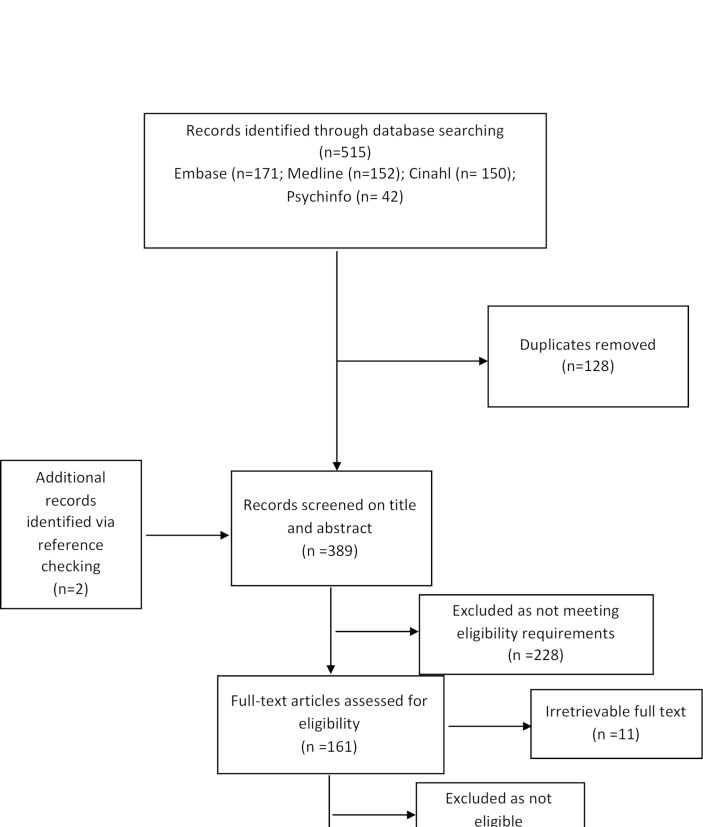
Objectives: To systematically examine the evidence of harms and benefits relating to time spent on screens for children and young people’s (CYP) health and well-being, to inform policy. Methods: Systematic review of reviews undertaken to answer the question ‘What is the evidence for health and well-being effects of screentime in children and adolescents (CYP)?’ Electronic databases were searched for systematic reviews in February 2018. Eligible reviews reported associations between time on screens (screentime; any type) and any health/well-being outcome in CYP. Quality of reviews was assessed and strength of evidence across reviews evaluated. Results: 13 reviews were identified (1 high quality, 9 medium and 3 low quality). 6 addressed body composition; 3 diet/energy intake; 7 mental health; 4 cardiovascular risk; 4 for fitness; 3 for sleep; 1 pain; 1 asthma. We found moderately strong evidence for associations between screentime and greater obesity/adiposity and higher depressive symptoms; moderate evidence for an association between screentime and higher energy intake, less healthy diet quality and poorer quality of life. There was weak evidence for associations of screentime with behaviour problems, anxiety, hyperactivity and inattention, poorer self-esteem, poorer well-being and poorer psychosocial health, metabolic syndrome, poorer cardiorespiratory fitness, poorer cognitive development and lower educational attainments and poor sleep outcomes. There was no or insufficient evidence for an association of screentime with eating disorders or suicidal ideation, individual cardiovascular risk factors, asthma prevalence or pain. Evidence for threshold effects was weak. We found weak evidence that small amounts of daily screen use is not harmful and may have some benefits. Conclusions: There is evidence that higher levels of screentime is associated with a variety of health harms for CYP, with evidence strongest for adiposity, unhealthy diet, depressive symptoms and quality of life. Evidence to guide policy on safe CYP screentime exposure is limited. PROSPERO registration number: CRD42018089483.
Overview
The claims and statistics of this paper haven’t been checked yet.
Free: it reads the open-access text and checks the first 5 claims that cite a source we can check. Create a free account to check every claim.
Integrity signals
Registry
Cites
Statistics
Figures
Verification
Claims the paper makes
The claims and statistics of this paper haven’t been checked yet.
Free: it reads the open-access text and checks the first 5 claims that cite a source we can check. Create a free account to check every claim.
Claims other papers make about this one
Each is checked against this paper’s own text: does it say what the citing paper says it does?
The source backs part of the claim, not all of it — or backs it for a different population, condition or comparison.
In the citing paper
“The results of the current review largely align with past systematic reviews, which have concluded that there is a positive association between screen time and depressive symptoms (Hoare et al., 2016;Liu et al., 2016;Stiglic & Viner, 2019;Wang et al., 2019), and a weak association between screen time and both anxiety and self-esteem (Stiglic & Viner, 2019).”
From The relationship between screen time and mental health in young people: A systematic review of longitudinal studies (2021) · cites this paper as Stiglic & Viner, 2019
Experimental — accuracy not yet measuredThe source backs part of the claim, not all of it — or backs it for a different population, condition or comparison.
In the citing paper
“This may partly be driven by the detrimental effects of screen time on mental health, including increased severity of anxiety and depressive symptoms, which have been well documented (Stiglic & Viner, 2019).”
From Social Media and Mental Health: Benefits, Risks, and Opportunities for Research and Practice (2020) · cites this paper as Stiglic & Viner, 2019
Experimental — accuracy not yet measuredThe cited source says what the claim attributes to it.
In the citing paper
“Possible mechanisms include more sedentary behavior250 and greater energy intake for children, teens, and young adults.251”
From Digital Ecosystems, Children, and Adolescents: Technical Report (2026) · cites this paper as [251]
The cited source says what the claim attributes to it.
In the citing paper
“More screen time has been associated with depressive symptoms among children and adolescents in several systematic reviews [11, 12, 43–50].”
From Screen time and mental health: a prospective analysis of the Adolescent Brain Cognitive Development (ABCD) Study (2024) · cites this paper as [48]
In the citing paper
“A systematic review of 13 published reviews concluded that there is moderately strong evidence for a positive association between screen time and depressive symptoms in children and adolescents, but not behavior problems, anxiety, hyperactivity and inattention, self-esteem, well-being, and psychosocial health (Stiglic & Viner, 2019).”
From The relationship between screen time and mental health in young people: A systematic review of longitudinal studies (2021) · cites this paper as Stiglic & Viner, 2019
1 more claim about this paper
Create a free account to see every claim other papers make about this one.
Self-check
Percentages, sums and reported differences re-computed from the paper’s own numbers.
The self-check needs the paper’s full text.
Citations
Cites
Liberati, A., Altman, D. G., Tetzlaff, J., Mulrow, C., Gøtzsche, P. C., Ioannidis, J. P. A., Clarke, M., Devereaux, P. J., Kleijnen, J., & Moher, D. (2009) · PLoS Medicine · doi:10.1371/journal.pmed.1000100 · Cited by 28,164
Liberati, A., Altman, D. G., Tetzlaff, J., Mulrow, C., Gotzsche, P. C., Ioannidis, J. P. A., Clarke, M., Devereaux, P. J., Kleijnen, J., & Moher, D. (2009) · BMJ · doi:10.1136/bmj.b2700 · Cited by 17,648
Systematic review of sedentary behaviour and health indicators in school-aged children and youth.
Tremblay, M. S., LeBlanc, A. G., Kho, M. E., Saunders, T. J., Larouche, R., Colley, R. C., Goldfield, G., & Gorber, S. (2011) · International Journal of Behavioral Nutrition and Physical Activity · doi:10.1186/1479-5868-8-98 · Cited by 2,085
Gross, K. S., Brandner, D. D., Martinez, L. A., Olive, M. F., Meisel, R. L., & Mermelstein, P. G. (2016) · PLOS ONE · doi:10.1371/journal.pone.0162755 · Cited by 1,609
Screen time and sleep among school-aged children and adolescents: a systematic literature review
Hale, L., & Guan, S. (2015) · Sleep Medicine Reviews · doi:10.1016/j.smrv.2014.07.007 · Cited by 1,468
Carson, V., Hunter, S., Kuzik, N., Gray, C. E., Poitras, V. J., Chaput, J.-P., Saunders, T. J., Katzmarzyk, P. T., Okely, A. D., Connor Gorber, S., et al. (2016) · Applied Physiology, Nutrition, and Metabolism · doi:10.1139/apnm-2015-0630 · Cited by 1,380
Children and Adolescents and Digital Media
Reid Chassiakos, Y. (., Radesky, J., Christakis, D., Moreno, M. A., Cross, C., COUNCIL ON COMMUNICATIONS AND MEDIA, Hill, D., Ameenuddin, N., Hutchinson, J., Levine, A., et al. (2016) · Pediatrics · doi:10.1542/peds.2016-2593 · Cited by 1,340
Przybylski, A. K., & Weinstein, N. (2017) · Psychological Science · doi:10.1177/0956797616678438 · Cited by 890
Wu, X. Y., Han, L. H., Zhang, J. H., Luo, S., Hu, J. W., & Sun, K. (2017) · PLOS ONE · doi:10.1371/journal.pone.0187668 · Cited by 664 · cited 1×
“HRQOL as a formal measured construct was examined by Wu et al, 22 who reported consistent evidence that greater screentime was associated with lower measured HRQOL in 11/13 cross-sectional and 4/4 longitudinal studies.”
MethodHoare, E., Milton, K., Foster, C., & Allender, S. (2016) · International Journal of Behavioral Nutrition and Physical Activity · doi:10.1186/s12966-016-0432-4 · Cited by 616 · cited 1×
“Only Hoare et al 20 reported on associations with anxiety, and found moderate evidence for a positive association between screentime duration and severity of anxiety symptoms.”
BackgroundSedentary Behavior and Dietary Intake in Children, Adolescents, and Adults
Pearson, N., & Biddle, S. J. H. (2011) · American Journal of Preventive Medicine · doi:10.1016/j.amepre.2011.05.002 · Cited by 604 · cited 3×
“LeBlanc et al 18 Duch et al 9 Costigan et al 8 Tremblay et al 10 van Ekris et al 11 Carson et al 17 Diet and energy intake Costigan et al 8 Pearson and Biddle 19 Marsh et al 1 Mental health outcomes including quality of life LeBlanc et al 18 Costigan et al 8 Tremblay et al 10 Suchert et al 21 Carson et al 17 Hoare et…”
BackgroundClinical and psychological effects of excessive screen time on children
Domingues‐Montanari, S. (2017) · Journal of Paediatrics and Child Health · doi:10.1111/jpc.13462 · Cited by 524 · cited 2×
“There is also evidence that high screentime is associated with deleterious effects on irritability, low mood and cognitive and socioemotional development, leading to poor educational performance.(4) Because of these concerns, expert groups have suggested controlling screentime for children.”
BackgroundScreen time use in children under 3 years old: a systematic review of correlates
Duch, H., Fisher, E. M., Ensari, I., & Harrington, A. (2013) · International Journal of Behavioral Nutrition and Physical Activity · doi:10.1186/1479-5868-10-102 · Cited by 424
Screen time and young children: Promoting health and development in a digital world
Canadian Paediatric Society, D. H. T. F., Ponti, M., Bélanger, S., Grimes, R., Heard, J., Johnson, M., Moreau, E., Norris, M., Shaw, A., Stanwick, R., et al. (2017) · Paediatrics & Child Health · doi:10.1093/pch/pxx123 · Cited by 398
Systematic review of sedentary behaviour and health indicators in the early years (aged 0–4 years)
LeBlanc, A. G., Spence, J. C., Carson, V., Connor Gorber, S., Dillman, C., Janssen, I., Kho, M. E., Stearns, J. A., Timmons, B. W., & Tremblay, M. S. (2012) · Applied Physiology, Nutrition, and Metabolism · doi:10.1139/h2012-063 · Cited by 336
Suchert, V., Hanewinkel, R., & Isensee, B. (2015) · Preventive Medicine · doi:10.1016/j.ypmed.2015.03.026 · Cited by 329 · cited 1×
“One review suggested there was a curvilinear relationship between screentime and depressive symptoms.(21) Overall the quality of included reviews was moderate, with only one high-quality review and three low-quality reviews included.”
BackgroundEffects of Television on Metabolic Rate: Potential Implications For Childhood Obesity
Klesges, R. C., Shelton, M. L., & Klesges, L. M. (1993) · Pediatrics · doi:10.1542/peds.91.2.281 · Cited by 314 · cited 1×
“There is evidence that screentime is associated with obesity, with suggested mechanisms an increase in energy intake,(1) the displacement of time available for physical activity(2) or more directly through reduction in metabolic rate.(3) There is also evidence that high screentime is associated with deleterious effect…”
BackgroundCostigan, S. A., Barnett, L., Plotnikoff, R. C., & Lubans, D. R. (2013) · Journal of Adolescent Health · doi:10.1016/j.jadohealth.2012.07.018 · Cited by 290 · cited 1×
“In medium-quality reviews, Costigan et al 8”
the HBSC Physical Activity Focus Group, Iannotti, R. J., Janssen, I., Haug, E., Kololo, H., Annaheim, B., & Borraccino, A. (2009) · International Journal of Public Health · doi:10.1007/s00038-009-5410-z · Cited by 239
van Ekris, E., Altenburg, T. M., Singh, A. S., Proper, K. I., Heymans, M. W., & Chinapaw, M. J. M. (2016) · Obesity Reviews · doi:10.1111/obr.12426 · Cited by 191
Azevedo e Silva, G., de Moura, L., Curado, M. P., Gomes, F. D. S., Otero, U., Rezende, L. F. M. D., Daumas, R. P., Guimarães, R. M., Meira, K. C., Leite, I. D. C., et al. (2016) · PLOS ONE · doi:10.1371/journal.pone.0148761 · Cited by 176
Marsh, S., Ni Mhurchu, C., & Maddison, R. (2013) · Appetite · doi:10.1016/j.appet.2013.08.017 · Cited by 175 · cited 3×
“In a medium-quality review of experimental studies, Marsh et al 1 reported that there was strong evidence that i) screentime in the absence of food advertising was associated with increased dietary intake compared with non-screen behaviour; ii) television screentime increases intake of very…”
BackgroundStraker, L., Zabatiero, J., Danby, S., Thorpe, K., & Edwards, S. (2018) · The Journal of Pediatrics · doi:10.1016/j.jpeds.2018.07.019 · Cited by 167 · cited 4×
“12 Others have noted that education and industry sectors frequently promote expanded use of digital devices by CYP.”
BackgroundInfluentialOliveira, R. G. D., & Guedes, D. P. (2016) · PLOS ONE · doi:10.1371/journal.pone.0168503 · Cited by 144
The evolution of a new publication type: Steps and challenges of producing overviews of reviews
Thomson, D., Russell, K., Becker, L., Klassen, T., & Hartling, L. (2010) · Research Synthesis Methods · doi:10.1002/jrsm.30 · Cited by 109 · cited 1×
“RoR are a methodology that is being developed and there is no agreed best practice; such reviews are only as good as the reviews included and the primary studies that are included within them.(27) There were limitations regarding the reviews included in our study in terms of heterogeneity between reviews in definition…”
MethodCaird, J., Sutcliffe, K., Kwan, I., Dickson, K., & Thomas, J. (2015) · Evidence & Policy · doi:10.1332/174426514x13988609036850 · Cited by 81 · cited 1×
“Instead we weighed findings according to the size and quality of reviews (as assessed by AMSTAR) as well as the design of primary studies.(16) In summarising findings across reviews, we defined strong evidence as consistent evidence of an association reported by multiple high-quality reviews, moderately strong evidenc…”
MethodJago, R., Sebire, S. J., Gorely, T., Cillero, I., & Biddle, S. J. (2011) · International Journal of Behavioral Nutrition and Physical Activity · doi:10.1186/1479-5868-8-85 · Cited by 66 · cited 1×
“None examined multiple concurrent screen use, although there is increasing evidence that CYP may combine screen-use such as using smartphones while watching television; young people report using multiple screens to facilitate filtering out of unwanted content, including advertisements.(25) Thus, it is unclear to what…”
BackgroundFerguson, C. J., & Beresin, E. V. (2017) · Preventive Medicine · doi:10.1016/j.ypmed.2017.02.009 · Cited by 38 · cited 1×
“Others have pointed out similar limitations in the literature on screen use and violence 7 and that educational use of screens is promoted in many educational systems.”
BackgroundShackleton, N., Jamal, F., Viner, R., Dickson, K., Hinds, K., Patton, G. C., & Bonell, C. P. (2016) · Health & Place · doi:10.1016/j.healthplace.2016.04.002 · Cited by 26 · cited 2×
“In summarising findings across reviews, we defined strong evidence as consistent evidence of an association reported by multiple high-quality reviews, moderately strong evidence as consistent evidence across multiple medium-quality reviews, moderate evidence as largely consistent evidence across medium-quality reviews…”
MethodResultSelf-citation
Cited by
Hampl, S. E., Hassink, S. G., Skinner, A. C., Armstrong, S. C., Barlow, S. E., Bolling, C. F., Avila Edwards, K. C., Eneli, I., Hamre, R., Joseph, M. M., et al. (2023) · Pediatrics · doi:10.1542/peds.2022-060640 · Cited by 1,389
Social media use and its impact on adolescent mental health: An umbrella review of the evidence.
Valkenburg, P. M., Meier, A., & Beyens, I. (2022) · Current opinion in psychology · doi:10.1016/j.copsyc.2021.08.017 · Cited by 767
Social Media and Mental Health: Benefits, Risks, and Opportunities for Research and Practice
Naslund, J. A., Bondre, A., Torous, J., & Aschbrenner, K. A. (2020) · Journal of Technology in Behavioral Science · doi:10.1007/s41347-020-00134-x · Cited by 746
Carroll, N., Sadowski, A., Laila, A., Hruska, V., Nixon, M., Ma, D., Haines, J., & Study, O. B. O. T. G. F. H. (2020) · Nutrients · doi:10.3390/nu12082352 · Cited by 579
“A systematic review by Stiglic and Viner [24] exploring the health harms from excessive screen use in children and adolescents observed that higher levels of screen time to be strongly associated with greater adiposity, less healthful diets, depressive symptoms as well as lower quality of life.”
BackgroundParenting for a Digital Future: How Hopes and Fears about Technology Shape Children's Lives
Livingstone, S., & Blum-Ross, A. (2020) · doi:10.1093/oso/9780190874698.001.0001 · Cited by 463
Metadata
- Authors
- Stiglic, N., & Viner, R. M.
- Affiliations
- University College London (GB)
- Corresponding author
- Viner, Russell M
- ORCID
- Viner, Russell M
- Venue
- BMJ Open
- Publisher
- BMJ
- Published
- 2019-01
- Volume
- 9
- Issue
- 1
- Pages
- e023191
- ISSN
- 2044-6055 (ISSN-L)
- PMC
- PMC6326346
- OpenAlex
- W2907375908
- Cited by
- 1,259
- References
- 29
- Citations by year
- 2026: 193 · 2025: 193 · 2024: 179 · 2023: 161 · 2022: 201 · 2021: 148 · 2020: 142 · 2019: 37
- FWCI
- 38.03
- Type
- journal article
- Language
- en
- Open access
- gold
- doi.org
- Licence
- cc-by-nc
- Locations
- BMJ Open (publishedVersion, cc-by-nc)
- Europe PMC (PubMed Central) (publishedVersion, other-oa)
- PubMed Central (publishedVersion, cc-by-nc)
- PubMed (publishedVersion)
- DOAJ (DOAJ: Directory of Open Access Journals) (submittedVersion)
- UCL Discovery (University College London) (submittedVersion)
- Funders
- National Institute for Health and Care Research (NF-SI-0515-10085)
- Topics
- Social Sciences › Education › Child Development and Digital Technology
- Health Sciences › Medicine › Public Health, Environmental and Occupational Health › Physical Activity and Health
- Social Sciences › Sociology and Political Science › Impact of Technology on Adolescents
- Keywords
- screen time, children and adolescents, child health, well-being, obesity, adiposity, depressive symptoms, diet quality, energy intake, sleep, cardiorespiratory fitness, cognitive development, educational attainment, quality of life, mental health, cardiovascular risk, threshold effects
- MeSH terms
- Screen Time, Adolescent, Adolescent Behavior, Child, Child Behavior, Child, Preschool, Depression, Feeding Behavior, Humans, Quality of Life, Review Literature as Topic, Exercise, Pediatric Obesity
About these checks
Registry, retraction, Cites and statistics results are computed, not judged, with one exception: a printed reference that no index lists is read once by a model before it counts as a citation error. Claims are extracted by a model and kept only when their quote appears verbatim in the text; each cited source is then checked, with a model’s help, for whether it says what the claim relies on. Those verdicts can be wrong — read the claim’s quote and the cited source before relying on one.
Statistics and arithmetic are recomputed, not judged.
Confidence bands are shown only for fields calibrated on our annotated test set. None is calibrated yet, so no band is shown.
What counts as a claim ›How we measure confidence ›How we check this ›
Are you an author, or do you see a problem with this page? Request a review
Data sources
Bibliographic data: Semantic Scholar, OpenAlex, Crossref.
Contains information from the Semantic Scholar Academic Graph Datasets, made available under the ODC Attribution License (ODC-BY 1.0).
Semantic Scholar’s data is described in: Kinney, R., et al. (2023). The Semantic Scholar Open Data Platform. arXiv:2301.10140.
