

Effects of screentime on the health and well-being of children and adolescents: a systematic review of reviews
Open accessThe DOI matches its Crossref record; 29 of the 29 references it cites were found in a registry or an index.
Abstract
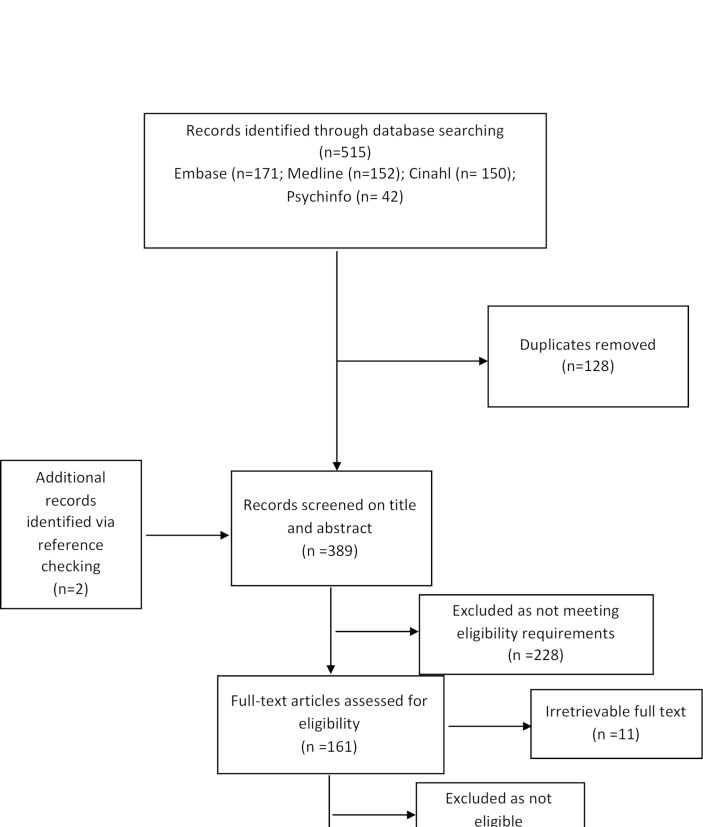
Objectives: To systematically examine the evidence of harms and benefits relating to time spent on screens for children and young people’s (CYP) health and well-being, to inform policy. Methods: Systematic review of reviews undertaken to answer the question ‘What is the evidence for health and well-being effects of screentime in children and adolescents (CYP)?’ Electronic databases were searched for systematic reviews in February 2018. Eligible reviews reported associations between time on screens (screentime; any type) and any health/well-being outcome in CYP. Quality of reviews was assessed and strength of evidence across reviews evaluated. Results: 13 reviews were identified (1 high quality, 9 medium and 3 low quality). 6 addressed body composition; 3 diet/energy intake; 7 mental health; 4 cardiovascular risk; 4 for fitness; 3 for sleep; 1 pain; 1 asthma. We found moderately strong evidence for associations between screentime and greater obesity/adiposity and higher depressive symptoms; moderate evidence for an association between screentime and higher energy intake, less healthy diet quality and poorer quality of life. There was weak evidence for associations of screentime with behaviour problems, anxiety, hyperactivity and inattention, poorer self-esteem, poorer well-being and poorer psychosocial health, metabolic syndrome, poorer cardiorespiratory fitness, poorer cognitive development and lower educational attainments and poor sleep outcomes. There was no or insufficient evidence for an association of screentime with eating disorders or suicidal ideation, individual cardiovascular risk factors, asthma prevalence or pain. Evidence for threshold effects was weak. We found weak evidence that small amounts of daily screen use is not harmful and may have some benefits. Conclusions: There is evidence that higher levels of screentime is associated with a variety of health harms for CYP, with evidence strongest for adiposity, unhealthy diet, depressive symptoms and quality of life. Evidence to guide policy on safe CYP screentime exposure is limited. PROSPERO registration number: CRD42018089483.
Overview
The claims and statistics of this paper haven’t been checked yet.
Free: it reads the open-access text and checks the first 5 claims that cite a source we can check. Create a free account to check every claim.
Integrity signals
Registry
Cites
Statistics
Figures
Verification
Claims the paper makes
The claims and statistics of this paper haven’t been checked yet.
Free: it reads the open-access text and checks the first 5 claims that cite a source we can check. Create a free account to check every claim.
Claims other papers make about this one
Each is checked against this paper’s own text: does it say what the citing paper says it does?
The source backs part of the claim, not all of it — or backs it for a different population, condition or comparison.
In the citing paper
“The results of the current review largely align with past systematic reviews, which have concluded that there is a positive association between screen time and depressive symptoms (Hoare et al., 2016;Liu et al., 2016;Stiglic & Viner, 2019;Wang et al., 2019), and a weak association between screen time and both anxiety and self-esteem (Stiglic & Viner, 2019).”
From The relationship between screen time and mental health in young people: A systematic review of longitudinal studies (2021) · cites this paper as Stiglic & Viner, 2019
Experimental — accuracy not yet measuredThe source backs part of the claim, not all of it — or backs it for a different population, condition or comparison.
In the citing paper
“This may partly be driven by the detrimental effects of screen time on mental health, including increased severity of anxiety and depressive symptoms, which have been well documented (Stiglic & Viner, 2019).”
From Social Media and Mental Health: Benefits, Risks, and Opportunities for Research and Practice (2020) · cites this paper as Stiglic & Viner, 2019
Experimental — accuracy not yet measuredThe cited source says what the claim attributes to it.
In the citing paper
“Possible mechanisms include more sedentary behavior250 and greater energy intake for children, teens, and young adults.251”
From Digital Ecosystems, Children, and Adolescents: Technical Report (2026) · cites this paper as [251]
The cited source says what the claim attributes to it.
In the citing paper
“More screen time has been associated with depressive symptoms among children and adolescents in several systematic reviews [11, 12, 43–50].”
From Screen time and mental health: a prospective analysis of the Adolescent Brain Cognitive Development (ABCD) Study (2024) · cites this paper as [48]
In the citing paper
“A systematic review of 13 published reviews concluded that there is moderately strong evidence for a positive association between screen time and depressive symptoms in children and adolescents, but not behavior problems, anxiety, hyperactivity and inattention, self-esteem, well-being, and psychosocial health (Stiglic & Viner, 2019).”
From The relationship between screen time and mental health in young people: A systematic review of longitudinal studies (2021) · cites this paper as Stiglic & Viner, 2019
1 more claim about this paper
Create a free account to see every claim other papers make about this one.
Self-check
Percentages, sums and reported differences re-computed from the paper’s own numbers.
The self-check needs the paper’s full text.
Citations
Cites
Liberati, A., Altman, D. G., Tetzlaff, J., Mulrow, C., Gøtzsche, P. C., Ioannidis, J. P. A., Clarke, M., Devereaux, P. J., Kleijnen, J., & Moher, D. (2009) · PLoS Medicine · doi:10.1371/journal.pmed.1000100 · Cited by 28,164
Liberati, A., Altman, D. G., Tetzlaff, J., Mulrow, C., Gotzsche, P. C., Ioannidis, J. P. A., Clarke, M., Devereaux, P. J., Kleijnen, J., & Moher, D. (2009) · BMJ · doi:10.1136/bmj.b2700 · Cited by 17,648
Systematic review of sedentary behaviour and health indicators in school-aged children and youth.
Tremblay, M. S., LeBlanc, A. G., Kho, M. E., Saunders, T. J., Larouche, R., Colley, R. C., Goldfield, G., & Gorber, S. (2011) · International Journal of Behavioral Nutrition and Physical Activity · doi:10.1186/1479-5868-8-98 · Cited by 2,085
Gross, K. S., Brandner, D. D., Martinez, L. A., Olive, M. F., Meisel, R. L., & Mermelstein, P. G. (2016) · PLOS ONE · doi:10.1371/journal.pone.0162755 · Cited by 1,609
Screen time and sleep among school-aged children and adolescents: a systematic literature review
Hale, L., & Guan, S. (2015) · Sleep Medicine Reviews · doi:10.1016/j.smrv.2014.07.007 · Cited by 1,468
Carson, V., Hunter, S., Kuzik, N., Gray, C. E., Poitras, V. J., Chaput, J.-P., Saunders, T. J., Katzmarzyk, P. T., Okely, A. D., Connor Gorber, S., et al. (2016) · Applied Physiology, Nutrition, and Metabolism · doi:10.1139/apnm-2015-0630 · Cited by 1,380
Children and Adolescents and Digital Media
Reid Chassiakos, Y. (., Radesky, J., Christakis, D., Moreno, M. A., Cross, C., COUNCIL ON COMMUNICATIONS AND MEDIA, Hill, D., Ameenuddin, N., Hutchinson, J., Levine, A., et al. (2016) · Pediatrics · doi:10.1542/peds.2016-2593 · Cited by 1,340
Przybylski, A. K., & Weinstein, N. (2017) · Psychological Science · doi:10.1177/0956797616678438 · Cited by 890
Wu, X. Y., Han, L. H., Zhang, J. H., Luo, S., Hu, J. W., & Sun, K. (2017) · PLOS ONE · doi:10.1371/journal.pone.0187668 · Cited by 664 · cited 1×
“HRQOL as a formal measured construct was examined by Wu et al, 22 who reported consistent evidence that greater screentime was associated with lower measured HRQOL in 11/13 cross-sectional and 4/4 longitudinal studies.”
MethodHoare, E., Milton, K., Foster, C., & Allender, S. (2016) · International Journal of Behavioral Nutrition and Physical Activity · doi:10.1186/s12966-016-0432-4 · Cited by 616 · cited 1×
“Only Hoare et al 20 reported on associations with anxiety, and found moderate evidence for a positive association between screentime duration and severity of anxiety symptoms.”
Background
Cited by
Hampl, S. E., Hassink, S. G., Skinner, A. C., Armstrong, S. C., Barlow, S. E., Bolling, C. F., Avila Edwards, K. C., Eneli, I., Hamre, R., Joseph, M. M., et al. (2023) · Pediatrics · doi:10.1542/peds.2022-060640 · Cited by 1,389
Social media use and its impact on adolescent mental health: An umbrella review of the evidence.
Valkenburg, P. M., Meier, A., & Beyens, I. (2022) · Current opinion in psychology · doi:10.1016/j.copsyc.2021.08.017 · Cited by 767
Social Media and Mental Health: Benefits, Risks, and Opportunities for Research and Practice
Naslund, J. A., Bondre, A., Torous, J., & Aschbrenner, K. A. (2020) · Journal of Technology in Behavioral Science · doi:10.1007/s41347-020-00134-x · Cited by 746
Carroll, N., Sadowski, A., Laila, A., Hruska, V., Nixon, M., Ma, D., Haines, J., & Study, O. B. O. T. G. F. H. (2020) · Nutrients · doi:10.3390/nu12082352 · Cited by 579
“A systematic review by Stiglic and Viner [24] exploring the health harms from excessive screen use in children and adolescents observed that higher levels of screen time to be strongly associated with greater adiposity, less healthful diets, depressive symptoms as well as lower quality of life.”
BackgroundParenting for a Digital Future: How Hopes and Fears about Technology Shape Children's Lives
Livingstone, S., & Blum-Ross, A. (2020) · doi:10.1093/oso/9780190874698.001.0001 · Cited by 463
Pandya, A., & Lodha, P. (2021) · Frontiers in Human Dynamics · doi:10.3389/fhumd.2021.684137 · Cited by 371
Möhring, K., Naumann, E., Reifenscheid, M., Wenz, A., Rettig, T., Krieger, U., Friedel, S., Finkel, M., Cornesse, C., & Blom, A. G. (2021) · European Societies · doi:10.1080/14616696.2020.1833066 · Cited by 354
“…of stressors related to lower SWB: economic hardship, job loss, increased health risks and uncertainties, a reduction of social contacts outside of the household, increased screen-time and fewer opportunities for physical activity (e.g. Mata et al. 2012; Blom et al. 2017; Stiglic and Viner 2019).”
BackgroundEirich, R., McArthur, B. A., Anhorn, C., McGuinness, C., Christakis, D. A., & Madigan, S. (2022) · JAMA Psychiatry · doi:10.1001/jamapsychiatry.2022.0155 · Cited by 293
Viner, R. M., Gireesh, A., Stiglic, N., Hudson, L. D., Goddings, A.-L., Ward, J. L., & Nicholls, D. E. (2019) · The Lancet Child & Adolescent Health · doi:10.1016/s2352-4642(19)30186-5 · Cited by 295
Self-citationTang, S., Werner-Seidler, A., Torok, M., Mackinnon, A. J., & Christensen, H. (2021) · Clinical Psychology Review · doi:10.1016/j.cpr.2021.102021 · Cited by 284
Muppalla, S. K., Vuppalapati, S., Reddy Pulliahgaru, A., & Sreenivasulu, H. (2023) · Cureus · doi:10.7759/cureus.40608 · Cited by 284
“Early excessive screen-watching habits seem to follow throughout time and tend to cluster with other harmful lifestyle behaviors including a poor diet and lack of sleep [24].”
Nagata, J. M., Cortez, C. A., Cattle, C. J., Ganson, K. T., Iyer, P., Bibbins-Domingo, K., & Baker, F. C. (2022) · JAMA Pediatrics · doi:10.1001/jamapediatrics.2021.4334 · Cited by 265
Deng, J., Zhou, F., Hou, W., Heybati, K., Lohit, S., Abbas, U., Silver, Z., Wong, C. Y., Chang, O., Huang, E., et al. (2023) · Annals of the New York Academy of Sciences · doi:10.1111/nyas.14947 · Cited by 283
Social media, internet use and suicide attempts in adolescents
Sedgwick, R., Epstein, S., Dutta, R., & Ougrin, D. (2019) · Current Opinion in Psychiatry · doi:10.1097/yco.0000000000000547 · Cited by 260
Trott, M., Driscoll, R., Iraldo, E., & Pardhan, S. (2022) · eClinicalMedicine · doi:10.1016/j.eclinm.2022.101452 · Cited by 266
“127,133,134 It is therefore recommended that screen time be reduced wherever possible (for example, leisure time screen time) to negate these negative outcomes.”
Screen Time and Problem Behaviors in Children: Exploring the Mediating Role of Sleep Duration
Guerrero, M. D., Barnes, J. D., Chaput, J.-P., & Tremblay, M. S. (2019) · International Journal of Behavioral Nutrition and Physical Activity · doi:10.1186/s12966-019-0862-x · Cited by 240
“Consistent with findings from Stiglic and Viner’s [5] systematic review on ST and health outcomes among children and adolescents, our results revealed that television/movie viewing was not associated with attention problems.”
BackgroundResultInfluentialNobari, H., Fashi, M., Eskandari, A., Villafaina, S., Murillo-Garcia, Á., & Pérez-Gómez, J. (2021) · International Journal of Environmental Research and Public Health · doi:10.3390/ijerph18094563 · Cited by 204
“This is quite relevant since a previous systematic review of reviews indicated that the evidence that screen time was associated with poorer HRQoL was moderate [8].”
BackgroundChampion, K. E., Parmenter, B., McGowan, C., Spring, B., Wafford, Q. E., Gardner, L. A., Thornton, L., McBride, N., Barrett, E. L., Teesson, M., et al. (2019) · The Lancet Digital Health · doi:10.1016/s2589-7500(19)30088-3 · Cited by 197
Chen, X., Qi, H., Liu, R., Feng, Y., Li, W., Xiang, M., Cheung, T., Jackson, T., Wang, G., & Xiang, Y.-T. (2021) · Translational Psychiatry · doi:10.1038/s41398-021-01271-4 · Cited by 184
U.S. Children Meeting Physical Activity, Screen Time, and Sleep Guidelines
Friel, C. P., Duran, A. T., Shechter, A., & Diaz, K. M. (2020) · American Journal of Preventive Medicine · doi:10.1016/j.amepre.2020.05.007 · Cited by 178
Chao, M., Lei, J., He, R., Jiang, Y., & Yang, H. (2023) · Psychiatry Research · doi:10.1016/j.psychres.2023.115247 · Cited by 166
Kenđel Jovanović, G., Dragaš Zubalj, N., Klobučar Majanović, S., Rahelić, D., Rahelić, V., Vučak Lončar, J., & Pavičić Žeželj, S. (2021) · Nutrients · doi:10.3390/nu13113788 · Cited by 166
Social media use and health risk behaviours in young people: systematic review and meta-analysis
Purba, A. K., Thomson, R. M., Henery, P. M., Pearce, A., Henderson, M., & Katikireddi, S. V. (2023) · BMJ · doi:10.1136/bmj-2022-073552 · Cited by 158
Digital media: Promoting healthy screen use in school-aged children and adolescents
Canadian Paediatric Society, D. H. T. F. (2019) · Paediatrics & Child Health · doi:10.1093/pch/pxz095 · Cited by 153
“While screen use alone may not directly displace PA, research tends to confirm that already inactive adolescents spend more time using screens (17,41,71).”
InfluentialOhme, J., Araujo, T., de Vreese, C. H., & Piotrowski, J. T. (2021) · Mobile Media & Communication · doi:10.1177/2050157920959106 · Cited by 151
Claussen, A. H., Holbrook, J. R., Hutchins, H. J., Robinson, L. R., Bloomfield, J., Meng, L., Bitsko, R. H., O’Masta, B., Cerles, A., Maher, B., et al. (2024) · Prevention Science · doi:10.1007/s11121-022-01358-4 · Cited by 145
“For example, there is stronger evidence for media exposure as a risk for obesity and depression than for ADHD symptoms (Stiglic & Viner, 2019).”
Sanders, T., Noetel, M., Parker, P., Del Pozo Cruz, B., Biddle, S., Ronto, R., Hulteen, R., Parker, R., Thomas, G., De Cocker, K., et al. (2023) · Nature Human Behaviour · doi:10.1038/s41562-023-01712-8 · Cited by 148
“Although there have been other overviews of reviews on screen use, these have tended to focus on a single domain (for example, health 21 ), focus on a particular exposure (for example, social media 22,23 ) or provide only a narrative summary of the literature 24 .”
Measurement of screen time among young children aged 0–6 years: A systematic review
Byrne, R., Terranova, C. O., & Trost, S. G. (2021) · Obesity Reviews · doi:10.1111/obr.13260 · Cited by 140
Screen Use and Mental Health Symptoms in Canadian Children and Youth During the COVID-19 Pandemic
Li, X., Vanderloo, L. M., Keown-Stoneman, C. D. G., Cost, K. T., Charach, A., Maguire, J. L., Monga, S., Crosbie, J., Burton, C., Anagnostou, E., et al. (2021) · JAMA Network Open · doi:10.1001/jamanetworkopen.2021.40875 · Cited by 135
Smartphone use as a possible risk factor for myopia
Mccrann, S., Loughman, J., Butler, J. S., Paudel, N., & Flitcroft, D. I. (2021) · Clinical and Experimental Optometry · doi:10.1111/cxo.13092 · Cited by 123
Poulain, T., Ludwig, J., Hiemisch, A., Hilbert, A., & Kiess, W. (2019) · International Journal of Environmental Research and Public Health · doi:10.3390/ijerph16234651 · Cited by 122
“media use on social life, physical and mental health [6], cognitive skills, and brain functioning [7], this development is alarming.”
BackgroundXie, G., Deng, Q., Cao, J., & Chang, Q. (2020) · The Italian Journal of Pediatrics/Italian journal of pediatrics · doi:10.1186/s13052-020-0776-x · Cited by 165
Mineshita, Y., Kim, H., Chijiki, H., Nanba, T., Shinto, T., Furuhashi, S., Oneda, S., Kuwahara, M., Suwama, A., & Shibata, S. (2021) · BMC Public Health · doi:10.1186/s12889-021-10484-7 · Cited by 171
Hodes, L. N., & Thomas, K. G. F. (2021) · Computers in Human Behavior · doi:10.1016/j.chb.2020.106616 · Cited by 110
Goodyear, V. A., Randhawa, A., Adab, P., Al-Janabi, H., Fenton, S., Jones, K., Michail, M., Morrison, B., Patterson, P., Quinlan, J., et al. (2025) · The Lancet Regional Health - Europe · doi:10.1016/j.lanepe.2025.101211 · Cited by 111
“Additionally, future research may explore other in-school behaviours that may bene fi t from a restrictive school phone policy, such as face-to-face interactions or bullying, 19 and/or whether different policy types within restrictive categories or length of policy implementation in fl uence outcomes.”
Khan, A., Lee, E.-Y., Rosenbaum, S., Khan, S. R., & Tremblay, M. S. (2021) · The Lancet Child & Adolescent Health · doi:10.1016/s2352-4642(21)00200-5 · Cited by 108
Alosaimi, N., Sherar, L. B., Griffiths, P. L., & Pearson, N. (2023) · BMC Public Health · doi:10.1186/s12889-023-16372-6 · Cited by 147
Screen time as an index of family distress
Hartshorne, J. K., Huang, Y. T., Lucio Paredes, P. M., Oppenheimer, K., Robbins, P. T., & Velasco, M. D. (2021) · Current Research in Behavioral Sciences · doi:10.1016/j.crbeha.2021.100023 · Cited by 106
Beeres, D. T., Andersson, F., Vossen, H. G. M., & Galanti, M. R. (2021) · Journal of Adolescent Health · doi:10.1016/j.jadohealth.2020.07.042 · Cited by 102
Screen Time and Its Health Consequences in Children and Adolescents
Priftis, N., & Panagiotakos, D. (2023) · Children · doi:10.3390/children10101665 · Cited by 100
“Excessive ST is thought to affect the cardiovascular system according to various researchers [7,9,20–22], and a dose-dependent negative association has been documented after exceeding a 2 h threshold of daily ST [20].”
BackgroundResultInfluentialKim, S., Favotto, L., Halladay, J., Wang, L., Boyle, M. H., & Georgiades, K. (2020) · Social Psychiatry and Psychiatric Epidemiology · doi:10.1007/s00127-020-01833-9 · Cited by 100
Naslund, J. A., Gonsalves, P. P., Gruebner, O., Pendse, S. R., Smith, S. L., Sharma, A., & Raviola, G. (2019) · Current Treatment Options in Psychiatry · doi:10.1007/s40501-019-00186-8 · Cited by 99
Nagata, J. M., Al-Shoaibi, A. A. A., Leong, A. W., Zamora, G., Testa, A., Ganson, K. T., & Baker, F. C. (2024) · BMC Public Health · doi:10.1186/s12889-024-20102-x · Cited by 103
Screen time and developmental health: results from an early childhood study in Canada
Kerai, S. M., Almas, A. N., Guhn, M., Forer, B., & Oberle, E. (2022) · BMC Public Health · doi:10.1186/s12889-022-12701-3 · Cited by 183
Xiao, Y., Meng, Y., Brown, T. T., Keyes, K. M., & Mann, J. J. (2025) · JAMA · doi:10.1001/jama.2025.7829 · Cited by 156
Varadarajan, S., Venguidesvarane, A. G., Ramaswamy, K. N., Rajamohan, M., Krupa, M., & Christadoss, S. B. W. (2021) · PLoS ONE · doi:10.1371/journal.pone.0254102 · Cited by 155
Digital screen time during the COVID-19 pandemic: a public health concern
Sultana, A., Tasnim, S., Hossain, M. M., Bhattacharya, S., & Purohit, N. (2021) · F1000Research · doi:10.12688/f1000research.50880.1 · Cited by 122
Weaver, R. G., Hunt, E. T., Armstrong, B., Beets, M. W., Brazendale, K., Turner‐McGrievy, G. M., Pate, R. R., Youngstedt, S. D., Dugger, R., Parker, H., et al. (2021) · American Journal of Preventive Medicine · doi:10.1016/j.amepre.2021.04.007 · Cited by 104
Moitra, P., & Madan, J. (2022) · PLOS ONE · doi:10.1371/journal.pone.0264951 · Cited by 92
The Relationship Between Screen and Outdoor Time With Rates of Myopia in Spanish Children
Alvarez-Peregrina, C. C., Sánchez‐Tena, M. Á., Martínez-Pérez, C., & Villa-Collar, C. C. (2020) · Frontiers in Public Health · doi:10.3389/fpubh.2020.560378 · Cited by 119
Łuszczki, E., Bartosiewicz, A., Pezdan-Śliż, I., Kuchciak, M., Jagielski, P., Oleksy, Ł., Stolarczyk, A., & Dereń, K. (2021) · Nutrients · doi:10.3390/nu13072447 · Cited by 108
Life Interrupted: Family Routines Buffer Stress during the COVID-19 Pandemic
Bates, C. R., Nicholson, L. M., Rea, E. M., Hagy, H. A., & Bohnert, A. M. (2021) · Journal of Child and Family Studies · doi:10.1007/s10826-021-02063-6 · Cited by 87
Caner, N., & Evgin, D. (2021) · International Journal of Mental Health Nursing · doi:10.1111/inm.12912 · Cited by 108
Musa, S., Elyamani, R., & Dergaa, I. (2022) · PLoS ONE · doi:10.1371/journal.pone.0265560 · Cited by 110
Pedersen, J., Rasmussen, M. G. B., Sørensen, S. O., Mortensen, S. R., Olesen, L. G., Brønd, J. C., Brage, S., Kristensen, P. L., & Grøntved, A. (2022) · JAMA Pediatrics · doi:10.1001/jamapediatrics.2022.1519 · Cited by 79
Svensson, R., Johnson, B., & Olsson, A. (2022) · BMC Public Health · doi:10.1186/s12889-022-12670-7 · Cited by 79
“Whereas the majority of studies – many of which have been based on crosssectional designs – have found a negative association [8, 11], the few available longitudinal studies have shown either that social media use predicts lower well-being in terms of depression and internalizing symptoms (e.”
Backgrounddel Pozo-Cruz, B., Perales, F., Parker, P. D., Lonsdale, C., Noetel, M., Hesketh, K. D., & Sanders, T. (2019) · International Journal of Behavioral Nutrition and Physical Activity · doi:10.1186/s12966-019-0816-3 · Cited by 95
Social epidemiology of early adolescent problematic screen use in the United States
Nagata, J. M., Singh, G., Sajjad, O. M., Ganson, K. T., Testa, A. M., Jackson, D. B., Assari, S., Murray, S. B., Bibbins-Domingo, K. B., & Baker, F. C. (2022) · Pediatric Research · doi:10.1038/s41390-022-02176-8 · Cited by 101
Screen Use During Meals Among Young Children: Exploration of Associated Variables
Jusienė, R., Urbonas, V., Laurinaitytė, I., Rakickienė, L., Breidokienė, R., Kuzminskaitė, M., & Praninskienė, R. (2019) · Medicina · doi:10.3390/medicina55100688 · Cited by 99
“, sedentary behavior [4,9,11–14], everyday eating [12,15–19] and sleeping behaviors [18,20,21], as well as general health and psychological wellbeing [5,13,14,22] in”
BackgroundScreen time and early childhood development in Ceará, Brazil: a population-based study
Rocha, H. A. L., Correia, L. L., Leite, Á. J. M., Machado, M. M. T., Lindsay, A. C., Rocha, S. G. M. O., Campos, J. S., Silva, A. C. E., & Sudfeld, C. R. (2021) · BMC Public Health · doi:10.1186/s12889-021-12136-2 · Cited by 155
“Multiple studies have found that increased screen time for children is associated with an increased risk of obesity, attention problems and hyperactivity, sleep problems, unsatisfactory academic performance, and unhappiness [3, 4].”
BackgroundVirtual sports deserve real sports medical attention
Pereira, A. M., Brito, J., Figueiredo, P., & Verhagen, E. A. L. M. (2019) · BMJ Open Sport & Exercise Medicine · doi:10.1136/bmjsem-2019-000606 · Cited by 86
Schmidt-Persson, J., Rasmussen, M. G. B., Sørensen, S. O., Mortensen, S. R., Olesen, L. G., Brage, S., Kristensen, P. L., Bilenberg, N., & Grøntved, A. (2024) · JAMA Network Open · doi:10.1001/jamanetworkopen.2024.19881 · Cited by 73
Stavropoulos, V., Motti-Stefanidi, F., & Griffiths, M. D. (2022) · European Psychologist · doi:10.1027/1016-9040/a000451 · Cited by 73
Dynamics of adolescents’ smartphone use and well-being are positive but ephemeral
Marciano, L., Driver, C. C., Schulz, P. J., & Camerini, A.-L. (2022) · Scientific Reports · doi:10.1038/s41598-022-05291-y · Cited by 70
Peters, D. (2022) · International Journal of Human-Computer Interaction · doi:10.1080/10447318.2022.2089812 · Cited by 102
Media use, attention, mental health and academic performance among 8 to 12 year old children
Cardoso-Leite, P., Buchard, A., Tissieres, I., Mussack, D., & Bavelier, D. (2021) · PLOS ONE · doi:10.1371/journal.pone.0259163 · Cited by 72
“Although these results could appear to contradict those published in the past [15, 82, 102], these past studies used total media time without controlling for other types of media consumption.”
ResultBohnert, M., & Gracia, P. (2021) · Child Indicators Research · doi:10.1007/s12187-020-09767-z · Cited by 71
“Recent studies on child digital engagement and well-being have provided results that are often mixed and inconclusive (Castellacci and Tveito 2018; Orben and Przybylski 2019a, b; Stiglic and Viner 2019).”
ResultZhang, Y., Tian, S., Zou, D., Zhang, H., & Pan, C. (2022) · BMC Public Health · doi:10.1186/s12889-022-13155-3 · Cited by 108
“These health issues are not included in previous reviews [8], and the mechanisms related to which are unclear.”
BackgroundInfluentialRocka, A. A., Jasielska, F., Madras, D. K., Krawiec, P., & Pac‐Kożuchowska, E. (2022) · Nutrients · doi:10.3390/nu14142985 · Cited by 123
“There are some data also suggesting an association between screen time and the mental health of children and adolescents [21,22].”
BackgroundInfluentialSleep, screen time and behaviour problems in preschool children: an actigraphy study
Kahn, M., Schnabel, O., Gradisar, M., Rozen, G. S., Slone, M., Atzaba‐Poria, N., Tikotzky, L., & Sadeh, A. (2020) · European Child & Adolescent Psychiatry · doi:10.1007/s00787-020-01654-w · Cited by 91
Screen time and its effect on dietary habits and lifestyle among schoolchildren
Tambalis, K. D., Panagiotakos, D. B., Psarra, G., & Sidossis, L. S. (2020) · Central European Journal of Public Health · doi:10.21101/cejph.a6097 · Cited by 85
Rasmussen, M. G. B., Pedersen, J., Olesen, L. G., Brage, S., Klakk, H., Kristensen, P. L., Brønd, J. C., & Grøntved, A. (2020) · BMC Public Health · doi:10.1186/s12889-020-8458-6 · Cited by 65
International school-related sedentary behaviour recommendations for children and youth
Saunders, T. J., Rollo, S., Kuzik, N., Demchenko, I., Bélanger, S. A., Brisson‐Boivin, K., Carson, V., da Costa, B. G. G., Davis, M. J., Hornby, S., et al. (2022) · International Journal of Behavioral Nutrition and Physical Activity · doi:10.1186/s12966-022-01259-3 · Cited by 91
“Screen-based sedentary behaviours often demonstrate deleterious associations with a range of health outcomes among school-aged children and youth aged 5–18 years, including body composition, cardiometabolic risk, behavioural conduct, fitness, selfesteem [3, 4] and sleep [5, 6].”
BackgroundTammisalo, K., & Rotkirch, A. (2022) · Journal of Social and Personal Relationships · doi:10.1177/02654075221087942 · Cited by 106
“So far, ICT ’ s effects on the relationship level have received considerably less attention compared to the extensively studied psychological outcomes, such as depression and health (Dickson et al., 2018; Stiglic & Viner, 2019).”
BackgroundScreen time in children and adolescents: is there evidence to guide parents and policy?
Ashton, J. J., & Beattie, R. M. (2019) · The Lancet Child & Adolescent Health · doi:10.1016/s2352-4642(19)30062-8 · Cited by 80
Kardefelt‐Winther, D., Rees, G., & Livingstone, S. (2020) · Journal of Child Psychology and Psychiatry · doi:10.1111/jcpp.13280 · Cited by 65
Kim, H., Ma, J., Harada, K., Lee, S., & Gu, Y. (2020) · International Journal of Environmental Research and Public Health · doi:10.3390/ijerph17249320 · Cited by 71
Loo, B. K. G., Okely, A. D., Pulungan, A. B., & Jalaludin, M. Y. (2021) · British Journal of Sports Medicine · doi:10.1136/bjsports-2021-104527 · Cited by 74
Harrison, L., Carducci, B., Klein, J. D., & Bhutta, Z. A. (2022) · BMJ Global Health · doi:10.1136/bmjgh-2022-010713 · Cited by 75
Sleep duration in preschool children and impact of screen time
Lan, Q.-Y., Chan, K. C., Yu, K. N., Chan, N. Y., Wing, Y. K., Li, A. M., & Au, C. T. (2020) · Sleep Medicine · doi:10.1016/j.sleep.2020.09.024 · Cited by 63
Do games reduce maths anxiety? A meta-analysis
Dondio, P., Gusev, V., & Rocha, M. (2022) · Computers & Education · doi:10.1016/j.compedu.2022.104650 · Cited by 120
Chen, B., Bernard, J. Y., Padmapriya, N., Ning, Y., Cai, S., Lança, C., Tan, K. H., Yap, F., Chong, Y.-S., Shek, L., et al. (2020) · The Lancet Child & Adolescent Health · doi:10.1016/s2352-4642(19)30424-9 · Cited by 57
Männikkö, N., Ruotsalainen, H., Miettunen, J., Marttila-Tornio, K., & Kääriäinen, M. (2020) · Heliyon · doi:10.1016/j.heliyon.2020.e03415 · Cited by 58
“Even if nowadays young people participate in a wide spectrum of online activities, for instance by using mobile screen devices, recent reviews of screen use impacts on health have highlighted that previous studies have been predominantly based on screen activities such as television viewing and gaming (Arundell et al.…”
BackgroundInfluentialAdherence to 24-hour movement guidelines among Portuguese preschool children: the prestyle study
Vale, S. M. C. G., & Mota, J. A. P. S. (2020) · Journal of Sports Sciences · doi:10.1080/02640414.2020.1775385 · Cited by 65
Irmer, A., & Schmiedek, F. (2023) · Communications Psychology · doi:10.1038/s44271-023-00013-0 · Cited by 58
Leppänen, M. H., Ray, C., Wennman, H., Alexandrou, C., Sääksjärvi, K., Koivusilta, L. K., Erkkola, M., & Roos, E. (2019) · BMC Public Health · doi:10.1186/s12889-019-7967-7 · Cited by 73
Gilchrist, J. D., Battista, K., Patte, K. A., Faulkner, G., Carson, V., & Leatherdale, S. T. (2021) · Mental Health and Physical Activity · doi:10.1016/j.mhpa.2020.100380 · Cited by 57
Dubuc, M.-M., Aubertin-Leheudre, M., & Karelis, A. D. (2019) · International Journal of Environmental Research and Public Health · doi:10.3390/ijerph17010243 · Cited by 56
“However, few studies have investigated, in the same study, the relationships between lifestyle habits with academic performance and cognitive control [39,40].”
BackgroundScreen time in 36-month-olds at increased likelihood for ASD and ADHD
Hill, M. M., Gangi, D., Miller, M., Rafi, S. M., & Ozonoff, S. (2020) · Infant Behavior and Development · doi:10.1016/j.infbeh.2020.101484 · Cited by 56
Jensen, M., Carpentier, F. R. D., Corvalán, C., Popkin, B. M., Evenson, K. R., Adair, L. S., & Taillie, L. S. (2020) · Appetite · doi:10.1016/j.appet.2021.105670 · Cited by 77
Zhang, X., Li, Z., Zhang, M., Yin, M., Yang, Z., Gao, D., & Li, H. (2025) · Journal of Affective Disorders · doi:10.1016/j.jad.2025.03.141 · Cited by 56
Editorial: Educational technology and addictions
Melo, C., Madariaga, L., Nussbaum, M., Heller, R. S., Bennett, S., Tsai, C., & van Braak, J. (2019) · Computers & Education · doi:10.1016/j.compedu.2019.103730 · Cited by 68
Cao, S., & Li, H. (2023) · International Journal of Environmental Research and Public Health · doi:10.3390/ijerph20043510 · Cited by 95
“Stiglic and Viner reviewed 13 articles and concluded that higher levels of screen time were associated with various health harms such as obesity, unhealthy diet, depressive symptoms, and lower quality of life [70].”
BackgroundFairclough, S. J., Tyler, R., Dainty, J. R., Dumuid, D., Richardson, C., Shepstone, L., & Atkin, A. J. (2021) · Journal of Sports Sciences · doi:10.1080/02640414.2021.1890351 · Cited by 59
“, TV viewing, video gaming, computer use) has different associations with health than overall ST (25), and among youth there is moderately-strong and moderate evidence for screen time associations with depression and quality of life, respectively (19).”
BackgroundMental Health in Youth Athletes
Walton, C. C., Rice, S., Hutter, V., Currie, A., Reardon, C. L., & Purcell, R. (2021) · Advances in Psychiatry and Behavioral Health · doi:10.1016/j.ypsc.2021.05.011 · Cited by 75
“75 PLEASE CITE AS: Walton, C. C., Rice, S., Hutter, R. I., Currie, A., Reardon”
Priorities for the child public health response to the COVID-19 pandemic recovery in England
Hefferon, C., Taylor, C. J., Bennett, D. L., Falconer, C., Campbell, M., Williams, J. G., Schwartz, D., Kipping, R., & Taylor-Robinson, D. C. (2020) · Archives of Disease in Childhood · doi:10.1136/archdischild-2020-320214 · Cited by 63
Raza, S. H., Yousaf, M., Sohail, F., Munawar, R., Ogadimma, E. C., & Siang, J. M. L. D. (2021) · Psychology Research and Behavior Management · doi:10.2147/prbm.s328416 · Cited by 71
Association between 24-hour movement behaviors and health-related quality of life in children
Xiong, X., Dalziel, K., Carvalho, N., Xu, R., & Huang, L. (2021) · Quality of Life Research · doi:10.1007/s11136-021-02901-6 · Cited by 53
“Several studies have investigated the relationship between HRQOL and physical activity, screen use, and sleep separately [5, 9, 27] or a combination of two of them in selected age groups of children [28, 29].”
BackgroundOh, C., Carducci, B., Vaivada, T., & Bhutta, Z. A. (2022) · Pediatrics · doi:10.1542/peds.2021-053852h · Cited by 49
Managing Screen Use in the Under-Fives: Recommendations for Parenting Intervention Development
Morawska, A., Mitchell, A. E., & Tooth, L. R. (2023) · Clinical Child and Family Psychology Review · doi:10.1007/s10567-023-00435-6 · Cited by 51
“Given evidence of the considerable negative influences of excessive screen use on children’s development (Stiglic & Viner, 2019) and the important role of parents in influencing children’s screen use, interventions that directly target parents may be a promising avenue for supporting the…”
BackgroundInfluential
Metadata
- Authors
- Stiglic, N., & Viner, R. M.
- Affiliations
- University College London (GB)
- Corresponding author
- Viner, Russell M
- ORCID
- Viner, Russell M
- Venue
- BMJ Open
- Publisher
- BMJ
- Published
- 2019-01
- Volume
- 9
- Issue
- 1
- Pages
- e023191
- ISSN
- 2044-6055 (ISSN-L)
- PMC
- PMC6326346
- OpenAlex
- W2907375908
- Cited by
- 1,259
- References
- 29
- Citations by year
- 2026: 193 · 2025: 193 · 2024: 179 · 2023: 161 · 2022: 201 · 2021: 148 · 2020: 142 · 2019: 37
- FWCI
- 38.03
- Type
- journal article
- Language
- en
- Open access
- gold
- doi.org
- Licence
- cc-by-nc
- Locations
- BMJ Open (publishedVersion, cc-by-nc)
- Europe PMC (PubMed Central) (publishedVersion, other-oa)
- PubMed Central (publishedVersion, cc-by-nc)
- PubMed (publishedVersion)
- DOAJ (DOAJ: Directory of Open Access Journals) (submittedVersion)
- UCL Discovery (University College London) (submittedVersion)
- Funders
- National Institute for Health and Care Research (NF-SI-0515-10085)
- Topics
- Social Sciences › Education › Child Development and Digital Technology
- Health Sciences › Medicine › Public Health, Environmental and Occupational Health › Physical Activity and Health
- Social Sciences › Sociology and Political Science › Impact of Technology on Adolescents
- Keywords
- screen time, children and adolescents, child health, well-being, obesity, adiposity, depressive symptoms, diet quality, energy intake, sleep, cardiorespiratory fitness, cognitive development, educational attainment, quality of life, mental health, cardiovascular risk, threshold effects
- MeSH terms
- Screen Time, Adolescent, Adolescent Behavior, Child, Child Behavior, Child, Preschool, Depression, Feeding Behavior, Humans, Quality of Life, Review Literature as Topic, Exercise, Pediatric Obesity
About these checks
Registry, retraction, Cites and statistics results are computed, not judged, with one exception: a printed reference that no index lists is read once by a model before it counts as a citation error. Claims are extracted by a model and kept only when their quote appears verbatim in the text; each cited source is then checked, with a model’s help, for whether it says what the claim relies on. Those verdicts can be wrong — read the claim’s quote and the cited source before relying on one.
Statistics and arithmetic are recomputed, not judged.
Confidence bands are shown only for fields calibrated on our annotated test set. None is calibrated yet, so no band is shown.
What counts as a claim ›How we measure confidence ›How we check this ›
Are you an author, or do you see a problem with this page? Request a review
Data sources
Bibliographic data: Semantic Scholar, OpenAlex, Crossref.
Contains information from the Semantic Scholar Academic Graph Datasets, made available under the ODC Attribution License (ODC-BY 1.0).
Semantic Scholar’s data is described in: Kinney, R., et al. (2023). The Semantic Scholar Open Data Platform. arXiv:2301.10140.
