

The DOI matches its Crossref record; 30 of the 30 references it cites were found in a registry or an index.
Developing assistive robots for people with mild cognitive impairment and mild dementia: a qualitative study with older adults and experts in aged care
Open accessAbstract
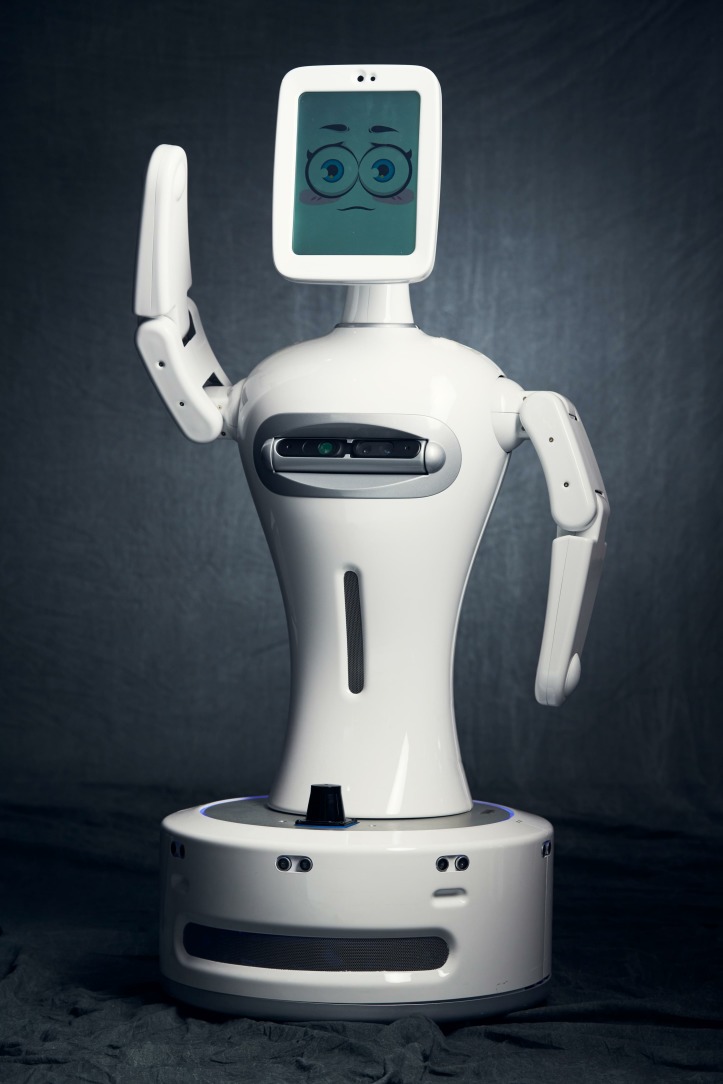
OBJECTIVES: This research is part of an international project to design and test a home-based healthcare robot to help older adults with mild cognitive impairment (MCI) or early dementia. The aim was to investigate the perceived usefulness of different daily-care activities for the robot, developed from previous research on needs. DESIGN: Qualitative descriptive analysis using semistructured interviews. Two studies were conducted. In the first study, participants watched videos of a prototype robot performing daily-care activities; in the second study, participants interacted with the robot itself. SETTING: Interviews were conducted at a university and a retirement village. PARTICIPANTS: In study 1, participants were nine experts in aged care and nine older adults living in an aged care facility. In study 2, participants were 10 experts in aged care. RESULTS: The themes that emerged included aspects of the robot's interactions, potential benefits, the appearance, actions and humanness of the robot, ways to improve its functionality and technical issues. Overall, the activities were perceived as useful, especially the reminders and safety checks, with possible benefits of companionship, reassurance and reduced caregiver burden. Suggestions included personalising the robot to each individual, simplifying the language and adding more activities. Technical issues still need to be fixed. CONCLUSION: This study adds to knowledge about healthcare robots for people with MCI by developing and testing a new robot with daily-care activities including safety checks. The robot was seen to be potentially useful but needs to be tested with people with MCI.
Overview
The claims and statistics of this paper haven’t been checked yet.
Run the check — free, no account needed. It reads the open-access text and checks the sources it cites.
Integrity signals
Registry
Cites
Statistics
Figures
Verification
Claims the paper makes
The claims and statistics of this paper haven’t been checked yet.
Run the check — free, no account needed. It reads the open-access text and checks the sources it cites.
Claims other papers make about this one
Each is checked against this paper’s own text: does it say what the citing paper says it does?
In the citing paper
“Four main themes were evident from the analysis: interactions, benefits, the robot, and improved functionality [40].”
From Participatory Design, Development, and Testing of Assistive Health Robots with Older Adults: An International Four-year Project (2022) · cites this paper as [40]
In the citing paper
“Five main themes were evident from the analysis: interactions, benefits, the robot, improved functionality, and technical difficulties [40].”
From Participatory Design, Development, and Testing of Assistive Health Robots with Older Adults: An International Four-year Project (2022) · cites this paper as [40]
In the citing paper
“This differs from previously developed technologies for older adults, which rely on developers and engineers imagining the health needs of older adults [20,57] and often begins by creating a product and then searching for a problem for it to solve [40].”
From Participatory Design, Development, and Testing of Assistive Health Robots with Older Adults: An International Four-year Project (2022) · cites this paper as [40]
In the citing paper
“The feedback from users indicated that robots hold promise for use by older adults, especially in providing reminders for medication, health and wellbeing, and delivering cognitively stimulating games [37,39,40,43].”
From Participatory Design, Development, and Testing of Assistive Health Robots with Older Adults: An International Four-year Project (2022) · cites this paper as [40]
Self-check
Percentages, sums and reported differences re-computed from the paper’s own numbers.
The self-check needs the paper’s full text.
Citations
Cites
Lincoln, Y. S., Guba, E. G., & Pilotta, J. J. (1985) · International Journal of Intercultural Relations · doi:10.1016/0147-1767(85)90062-8 · Cited by 45,787
Standards for Reporting Qualitative Research: A Synthesis of Recommendations
O’Brien, B. C., Harris, I. B., Beckman, T. J., Reed, D. A., & Cook, D. A. (2014) · Academic Medicine · doi:10.1097/acm.0000000000000388 · Cited by 12,211
The Patient Health Questionnaire-2: Validity of a Two-Item Depression Screener
Kroenke, K., Spitzer, R. L., & Williams, J. B. W. (2003) · Medical Care · doi:10.1097/01.mlr.0000093487.78664.3c · Cited by 6,359
Gauthier, S. G., Reisberg, ., Zaudig, M., Petersen, R. C., Ritchie, K. A., Broich, K., Belleville, S., Brodaty, H., Bennett, D. A., Chertkow, H. M., et al. (2006) · The Lancet · doi:10.1016/s0140-6736(06)68542-5 · Cited by 4,094
Petersen, R. C. (2016) · CONTINUUM Lifelong Learning in Neurology · doi:10.1212/con.0000000000000313 · Cited by 1,082
Older adults' attitudes towards and perceptions of ‘smart home’ technologies: a pilot study
Demiris, G., Rantz, M., Aud, M. A., Marek, K. D., Tyrer, H. W., Skubic, M., & Hussam, A. A. (2004) · Medical Informatics and the Internet in Medicine · doi:10.1080/14639230410001684387 · Cited by 698
Jekel, K., Damian, M., Wattmo, C., Hausner, L., Bullock, R., Connelly, P. J., Dubois, B., Eriksdotter, M., Ewers, M., Graessel, E., et al. (2015) · Alzheimer's Research & Therapy · doi:10.1186/s13195-015-0099-0 · Cited by 640
Mental symptoms in Parkinson's disease are important contributors to caregiver distress
Aarsland, D., Larsen, J. P., Karlsen, K., Lim, N. G., & Tandberg, E. (1999) · International Journal of Geriatric Psychiatry · doi:10.1002/(sici)1099-1166(199910)14:10 · Cited by 484
The Role of Healthcare Robots for Older People at Home: A Review
Robinson, H., MacDonald, B., & Broadbent, E. (2014) · International Journal of Social Robotics · doi:10.1007/s12369-014-0242-2 · Cited by 459
Self-citationSocial categorization of social robots: Anthropomorphism as a function of robot group membership
Eyssel, F., & Kuchenbrandt, D. (2012) · British Journal of Social Psychology · doi:10.1111/j.2044-8309.2011.02082.x · Cited by 360
Research works printed but not linked: 1
- Meiland, 2012, Constructing ambient intelligence. AmI 2011. communications in computer and information science, 277, 146
Cited by
Sorted by citations
Items 101–109 of 109
Care Robots for Dementia in Jilin Province: Challenges and Future Directions
Xiangyu, L. (2025) · IEEE Intl Conf on Dependable, Autonomic and Secure Computing, Intl Conf on Pervasive Intelligence and Computing, Intl Conf on Cloud and Big Data Computing, Intl Conf on Cyber Science and Technology Congress (DASC/PiCom/CBDCom/CyberSciTech) · doi:10.1109/cyberscitech68397.2025.00099
Robots and Innovations in Health
Ruiz, L. K. F. T., & Haddad, M. D. C. F. L. (2026) · Springer eBooks · doi:10.1007/978-3-031-89820-4_22
Empowering Disabled and Elderly Individuals with a Knowledge-Seeking Robot
Alotaibi, F., Naji, M. F., Alsulaili, H., Aldhafiri, R., Alotaibi, F., & Aladwani, S. (2025) · International Conference on ICT & Accessibility (ICTA) · doi:10.1109/icta-atsn68371.2025.11398237
Kirjavainen, E., Colley, A., Väänänen, K., & Häkkilä, J. (2026) · ACM International Symposium on Pervasive Displays (PerDis) · doi:10.1145/3797993.3798029
Embodied Intelligence Applications in Health Care Populations: Scoping Review
Shu, W., Ying, Z., Sun, E., Deng, L., & Ye, X. (2026) · Journal of Medical Internet Research · doi:10.2196/83871
Should Care Robots Answer? Rethinking Moral Answerability Beyond Humans
Kropf, M. (2026) · Nursing Inquiry · doi:10.1111/nin.70150
Xu, W., Zhou, X., Zeng, Y., Han, S., & Hong, Y. (2026) · Frontiers in Rehabilitation Sciences · doi:10.3389/fresc.2026.1883386
Respess, S., & Counted, V. (2026) · Springer eBooks · doi:10.1007/978-3-032-29101-1_6
Home Robots for Older Adults and Their Caregivers: Identifying Deployment Requirements
Olatunji, S., Tsai, Y.-L., Falcon, V., Mahajan, H., Mudar, R. A., & Rogers, W. A. (2026) · Proceedings of the Human Factors and Ergonomics Society Annual Meeting · doi:10.1177/10711813261493615
Metadata
- Authors
- Law, M., Sutherland, C., Ahn, H. S., MacDonald, B. A., Peri, K., Johanson, D. L., Vajsakovic, D.-S., Kerse, N., & Broadbent, E.
- Affiliations
- University of Auckland (NZ)
- Corresponding author
- Broadbent, Elizabeth
- ORCID
- Venue
- BMJ Open
- Publisher
- BMJ
- Published
- 2019-09
- Volume
- 9
- Issue
- 9
- Pages
- e031937
- ISSN
- 2044-6055 (ISSN-L)
- PMC
- PMC6773341
- OpenAlex
- W2976062348
- Cited by
- 109
- References
- 30
- Citations by year
- 2026: 10 · 2025: 22 · 2024: 13 · 2023: 10 · 2022: 26 · 2021: 22 · 2020: 6
- FWCI
- 16.96
- Type
- journal article
- Language
- en
- Open access
- gold
- doi.org
- Licence
- cc-by-nc
- Locations
- BMJ Open (publishedVersion, cc-by-nc)
- Europe PMC (PubMed Central) (publishedVersion, cc-by-nc)
- PubMed Central (publishedVersion, cc-by-nc)
- PubMed (publishedVersion)
- DOAJ (DOAJ: Directory of Open Access Journals) (submittedVersion)
- HighWire Press Open Archive (submittedVersion)
- ResearchSpace (University of Auckland) (submittedVersion, cc-by-nc)
- Funders
- Ministry of Trade, Industry & Energy (MOTIE, Korea) under Industrial Technology Innovation Program (No.10063300)
- Topics
- Social Sciences › Psychology › Social Psychology › Social Robot Interaction and HRI
- Health Sciences › Medicine › Geriatrics and Gerontology › Technology Use by Older Adults
- Health Sciences › Medicine › Psychiatry and Mental health › Dementia and Cognitive Impairment Research
- Keywords
- assistive robots, healthcare robots, mild cognitive impairment, early-stage dementia, older adults, home care, perceived usefulness, robot appearance, reminders, safety inspection, caregiver burden, elderly care
- MeSH terms
- Activities of Daily Living, Aged, Attitude of Health Personnel, Dementia, Expert Testimony, Female, Geriatrics, Humans, Male, Robotics, Self-Help Devices, Technology Assessment, Biomedical, Reminder Systems, Caregivers, Needs Assessment, Qualitative Research, Cognitive Dysfunction
About these checks
Registry, retraction, Cites and statistics results are computed, not judged, with one exception: a printed reference that no index lists is read once by a model before it counts as a citation error. Claims are extracted by a model and kept only when their quote appears verbatim in the text; each cited source is then checked, with a model’s help, for whether it says what the claim relies on. Those verdicts can be wrong — read the claim’s quote and the cited source before relying on one.
Statistics and arithmetic are recomputed, not judged.
Confidence bands are shown only for fields calibrated on our annotated test set. None is calibrated yet, so no band is shown.
What counts as a claim ›How we measure confidence ›How we check this ›
Are you an author, or do you see a problem with this page? Request a review
