

Clinical and cost-effectiveness of an online-delivered group-based pain management programme in improving pain-related disability for people with persistent pain - Protocol for a non-inferiority randomised controlled trial (iSelf-help trial)
Open accessThe DOI matches its Crossref record; 60 of the 68 references it cites were found in a registry or an index; 16 of the 40 sources its claims cite were checked for support.
Abstract
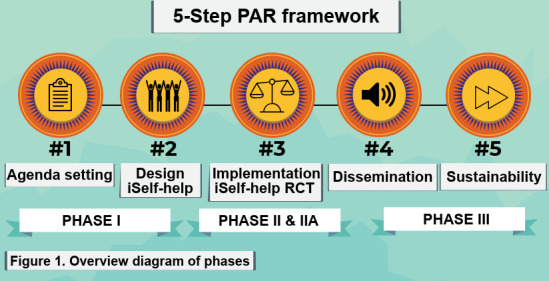
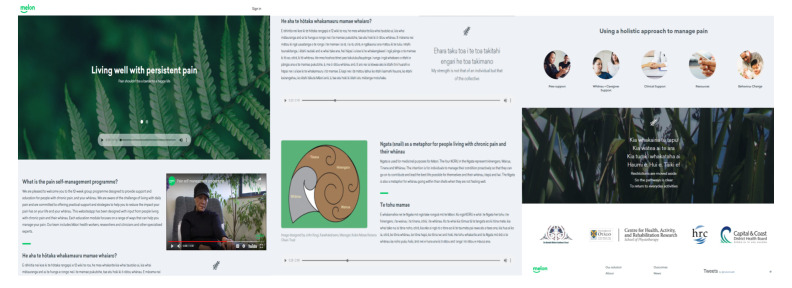
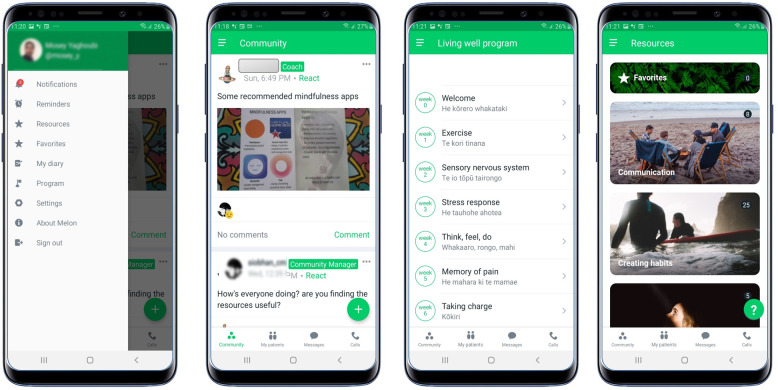
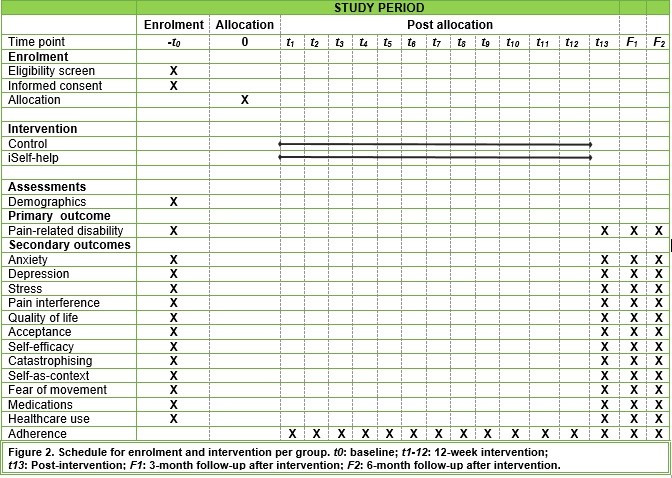
Introduction Persistent non-cancer pain affects one in five adults and is more common in Maori - the Indigenous population of New Zealand (NZ), adults over 65 years, and people living in areas of high deprivation. Despite the evidence supporting multidisciplinary pain management programmes (PMPs), access to PMPs is poor due to long waiting lists. Although online-delivered PMPs enhance access, none have been codesigned with patients or compared with group-based, in-person PMPs. This non-inferiority trial aims to evaluate the clinical and cost-effectiveness of a cocreated, culturally appropriate, online-delivered PMP (iSelf-help) compared with in-person PMP in reducing pain-related disability. Methods and analysis Mixed-methods, using a modified participatory action research (PAR) framework, involving three phases. Phase I involved cocreation and cultural appropriateness of iSelf-help by PAR team members. Phase II: The proposed iSelf-help trial is a pragmatic, multicentred, assessor-blinded, two-arm, parallel group, non-inferiority randomised controlled trial. Adults (n=180, age =18 years) with persistent non-cancer pain eligible for a PMP will be recruited and block randomised (with equal probabilities) to intervention (iSelf-help) and control groups (in-person PMP). The iSelf-help participants will participate in two 60-minute video-conferencing sessions weekly for 12 weeks with access to cocreated resources via smartphone application and a password-protected website. The control participants will receive group-based, in-person delivered PMP. Primary outcome is pain-related disability assessed via modified Roland Morris Disability Questionnaire at 6 months post intervention. Secondary outcomes include anxiety, depression, stress, pain severity, quality of life, acceptance, self-efficacy, catastrophising and fear avoidance. Data will be collected at baseline, after the 12-week intervention, and at 3 and 6 months post intervention. We will conduct economic analyses and mixed-method process evaluations (Phase IIA). Ethics and dissemination The Health and Disability Ethics Committee approved the study protocol (HDEC18/ CEN/162). Phase III involves dissemination of findings guided by the PAR team as outcomes become apparent. © Author(s) (or their employer(s)) 2021.
Overview
CoChat Summary
## TL;DR
This is a protocol for a pragmatic, multicentred, assessor-blinded, two-arm non-inferiority RCT testing whether a cocreated online group pain management programme (iSelf-help) is not worse than in-person multidisciplinary PMP for reducing pain-related disability at 6 months. The planned sample is 180 adults with persistent non-cancer pain, and the study also includes cost-effectiveness and process evaluations.
## Key findings
- Not stated in the paper.
- The trial will recruit n=180 adults aged ≥18 years with persistent non-cancer pain, randomized equally to iSelf-help or in-person PMP.
- The primary outcome is pain-related disability on the modified Roland Morris Disability Questionnaire (RMDQ) at 6 months post-intervention; the non-inferiority margin is a 3-point difference on the RMDQ.
- The sample size calculation assumes 80% power, a 95% one-sided CI, 20% loss to follow-up, and a target of n=90 per arm at baseline (18 groups of 10 in total).
## Methods
- Design: Mixed-methods study using a modified participatory action research framework; Phase II is a pragmatic, multicentred, assessor-blinded, parallel-group, non-inferiority randomized controlled trial with embedded process evaluation.
- Sample/data: Adults with persistent non-cancer pain referred to two tertiary pain services in New Zealand (Wellington and Christchurch); planned sample n=180, stratified by ethnicity (Māori or non-Māori).
- Main analysis: Linear mixed models for longitudinal outcomes; intention-to-treat as the primary analysis, with per-protocol analysis for those attending at least 70% of sessions, and economic evaluation using incremental cost-effectiveness ratios per 3-point RMDQ improvement and per QALY gained.
## Limitations
- The paper states that using only two of the three major tertiary pain services in NZ as trial sites may limit national generalisability.
- Because this is a protocol, no trial results are reported yet; this is evident from the text.
- The authors note that previous online non-inferiority trials were conducted in veterans, making those findings less generalisable; this is background rationale rather than a limitation of this specific protocol.
Model-written summary. Check it against the paper before relying on it.
Integrity signals
Registry
Cites
Statistics
Figures
Verification
Claims the paper makes
10 Valid · 3 Not valid · 16 Not checked · 27 Own results and interpretations
Some cited sources support this claim and some don’t — read each source’s verdict below.
In the paper
“Previous persistent pain RCTs28 46 have used modified RMDQ as a primary outcome measure.”
§ Clinical and cost-effectiveness of an online-delivered group-based pain management programme in improving pain-related disability for people with persistent pain—protocol for a non-inferiority randomised controlled trial (iSelf-help trial) > Methods > Outcome measures
What the sources say
- Disputedcites [28] Heapy AA, Higgins DM, Goulet JL, et al Interactive voice response–based self-management for chronic back pain: the COPES noninferiority randomized trial. JAMA Internal Medicine 2017; 177: p765– 73. PMC5818820 28384682 sourceExperimental — accuracy not yet measured
The paper’s Primary Outcome section identifies average pain intensity on an 11-point NRS as the primary outcome. Its Secondary Outcomes section lists the RMDQ as a measure of physical functioning, not as a primary outcome, and does not describe it as modified. The indexed copy does not provide page numbers for these sections. (LLM, conf=0.90)
Checked by a reasoning model — may be wrong.
- Supportedcites [46] Dear BF, Gandy M, Karin E, et al The pain course: a randomised controlled trial examining an internet-delivered pain management program when provided with different levels of clinician support. Pain 2015; 156: 1920. 10.1097/j.pain.0000000000000251 26039902 PMC4770347 source
The Methods (§2.2) describe this as a randomised controlled trial for chronic pain and state that it used a modified RMDQ. The Results (§3.2) identify disability, assessed with the RMDQ, as a primary outcome. Page numbers are not provided in our copy. (LLM, conf=0.93)
plain- Asserted: passes — The authors put it forward as true.
- Checkable: passes — It can be checked against evidence.
- Load-bearing: passes — The paper’s conclusions depend on it.
- Based: passes — The paper gives a reason why it holds.
- Disputed
The cited sources support only part of this claim — read each source’s verdict below.
In the paper
“A growing number of reviews suggest online-delivered CBT-based interventions have mild to moderate effects in improving pain severity and pain-related disability for those with persistent pain.24 25”
§ Clinical and cost-effectiveness of an online-delivered group-based pain management programme in improving pain-related disability for people with persistent pain—protocol for a non-inferiority randomised controlled trial (iSelf-help trial) > Introduction
What the sources say
- Could not verifycites [24] Eccleston C, Fisher E, Craig L, et al Psychological therapies (internet-delivered) for the management of chronic pain in adults. Cochrane Database Syst Rev 2014; 2: pCD010152. 10.1002/14651858.CD010152.pub2 PMC6685592 24574082 sourceExperimental — accuracy not yet measured
The available passages (title and bibliographic entries; no page numbers) identify a review of Internet-delivered psychological therapies for adults with chronic pain, but report no treatment outcomes. Searches for pain severity, disability, CBT, and effect sizes returned no findings in our copy, so the claimed mild-to-moderate improvements cannot be verified. (LLM, conf=0.72)
- Supportedcites [25] Buhrman M, Gordh T, Andersson G Internet interventions for chronic pain including headache: a systematic review. Internet Interv 2016; 4: 17– 34. 10.1016/j.invent.2015.12.001 30135787 PMC6096254 source
The Introduction describes several recent reviews of internet-based CBT for chronic pain. The Discussion reports modest effects on both pain severity and interference/disability; the review’s average effects were small (Hedges’ g = −0.33 and −0.39, respectively). (LLM, conf=0.90)
hedgedstates a cause- Asserted: passes — The authors put it forward as true.
- Checkable: passes — It can be checked against evidence.
- Load-bearing: passes — The paper’s conclusions depend on it.
- Based: passes — The paper gives a reason why it holds.
- Could not verify
The cited sources support only part of this claim — read each source’s verdict below.
In the paper
“Online technologies have been shown to be efficient and cost-effective in managing long-term health conditions such as hypertension, diabetes, anxiety and depression at the population-level with a high degree of fidelity.22”
§ Clinical and cost-effectiveness of an online-delivered group-based pain management programme in improving pain-related disability for people with persistent pain—protocol for a non-inferiority randomised controlled trial (iSelf-help trial) > Introduction
What the sources say
- Partly supportedcites [22] Slater H, Dear BF, Merolli MA, et al Use of eHealth technologies to enable the implementation of musculoskeletal models of care: evidence and practice. Best Pract Res Clin Rheumatol 2016; 30: 483– 502. 10.1016/j.berh.2016.08.006 27886943 sourceExperimental — accuracy not yet measured
The Online pain care interventions section reports that internet-delivered pain-management programs can be cost-effective and improve some patient-reported outcomes. It does not establish efficient, cost-effective management of hypertension, diabetes, anxiety and depression at the population level with high fidelity; it notes inconsistent clinical improvements and few evaluations in large cohorts. No page number was supplied for these passages. (LLM, conf=0.85)
boostedstates a cause- Asserted: passes — The authors put it forward as true.
- Checkable: passes — It can be checked against evidence.
- Load-bearing: unclear — It is unclear whether the paper’s conclusions depend on it.
- Based: passes — The paper gives a reason why it holds.
- Partly supported
The cited sources that could be checked couldn’t confirm or dispute this claim.
In the paper
“Online-delivered interventions can become a potential solution for addressing some barriers to accessing pain management services.21”
§ Clinical and cost-effectiveness of an online-delivered group-based pain management programme in improving pain-related disability for people with persistent pain—protocol for a non-inferiority randomised controlled trial (iSelf-help trial) > Introduction
What the sources say
- Could not verifycites [21] Eccleston C, Fisher E, Craig L, et al Psychological therapies (internet-delivered) for the management of chronic pain in adults. Cochrane Database Syst Rev 2014; 2: CD010152. 10.1002/14651858.CD010152.pub2 PMC6685592 24574082 sourceExperimental — accuracy not yet measured
The available copy identifies the review as concerning Internet-delivered psychological therapies for chronic pain, but the passages contain no discussion of barriers to accessing pain management services. Searches for access barriers and related terms returned only bibliographic material, so the attributed claim cannot be verified from this copy. (LLM, conf=0.72)
plainstates a possible cause- Asserted: passes — The authors put it forward as true.
- Checkable: passes — It can be checked against evidence.
- Load-bearing: passes — The paper’s conclusions depend on it.
- Based: passes — The paper gives a reason why it holds.
- Could not verify
Every source the paper cites for this claim was checked and supports it.
In the paper
“Two recent feasibility studies have, however, demonstrated that online-delivered group-based PMPs are feasible in a tertiary pain service setting33 and can be delivered successfully for people living in rural and remote areas.34”
§ Clinical and cost-effectiveness of an online-delivered group-based pain management programme in improving pain-related disability for people with persistent pain—protocol for a non-inferiority randomised controlled trial (iSelf-help trial) > Introduction
What the sources say
- Supportedcites [34] Scriven H, Doherty DP, Ward EC Evaluation of a multisite telehealth group model for persistent pain management for rural/remote participants. Rural Remote Health 2019; 19: p4710. 10.22605/RRH4710 30884951 source
The Conclusions report that rural and remote participants benefited from a multisite telehealth group pain-management program and rated the experience positively, with minimal technical difficulties. This supports the claim that such programs can be delivered successfully for this population. (LLM, conf=0.93)
boostedstates a cause- Asserted: passes — The authors put it forward as true.
- Checkable: passes — It can be checked against evidence.
- Load-bearing: passes — The paper’s conclusions depend on it.
- Based: passes — The paper gives a reason why it holds.
- Supported
14 more claims
Create a free account to see all 56 claims and to verify the 2 references still open.
- Probably not a substantial claim. 31
- It may state two separate claims as one. 9
Citations
Cites
Three Approaches to Qualitative Content Analysis
Hsieh, H.-F., & Shannon, S. E. (2005) · Qualitative Health Research · doi:10.1177/1049732305276687 · Cited by 44,601
James, S. L., Abate, D., Abate, K. H., Abay, S. M., Abbafati, C., Abbasi, N., Abbastabar, H., Abd-Allah, F., Abdela, J., Abdelalim, A., et al. (2018) · The Lancet · doi:10.1016/s0140-6736(18)32279-7 · Cited by 13,867
Vos, T., Abajobir, A. A., Abate, K. H., Abbafati, C., Abbas, K. M., Abd-Allah, F., Abdulkader, R. S., Abdulle, A. M., Abebo, T. A., Abera, S. F., et al. (2017) · The Lancet · doi:10.1016/s0140-6736(17)32154-2 · Cited by 13,220
A General Inductive Approach for Analyzing Qualitative Evaluation Data
Thomas, D. R. (2006) · American Journal of Evaluation · doi:10.1177/1098214005283748 · Cited by 10,858
The Pain Catastrophizing Scale: Development and validation.
Sullivan, M. J. L., Bishop, S. R., & Pivik, J. (1995) · Psychological Assessment · doi:10.1037//1040-3590.7.4.524 · Cited by 8,227
Process evaluation of complex interventions: Medical Research Council guidance
Moore, G. F., Audrey, S., Barker, M., Bond, L., Bonell, C., Hardeman, W., Moore, L., O'Cathain, A., Tinati, T., Wight, D., et al. (2015) · BMJ · doi:10.1136/bmj.h1258 · Cited by 6,204
Core outcome measures for chronic pain clinical trials: IMMPACT recommendations
Dworkin, R. H., Turk, D. C., Farrar, J. T., Haythornthwaite, J. A., Jensen, M. P., Katz, N. P., Kerns, R. D., Stucki, G., Allen, R. R., Bellamy, N., et al. (2005) · Pain · doi:10.1016/j.pain.2004.09.012 · Cited by 3,732
Core outcome domains for chronic pain clinical trials: IMMPACT recommendations
Turk, D. C., Dworkin, R. H., Allen, R. R., Bellamy, N., Brandenburg, N., Carr, D. B., Cleeland, C., Dionne, R., Farrar, J. T., Galer, B. S., et al. (2003) · Pain · doi:10.1016/j.pain.2003.08.001 · Cited by 3,510
A classification of chronic pain for ICD-11
Treede, R.-D., Rief, W., Barke, A., Aziz, Q., Bennett, M. I., Benoliel, R., Cohen, M., Evers, S., Finnerup, N. B., First, M. B., et al. (2015) · Pain · doi:10.1097/j.pain.0000000000000160 · Cited by 2,822
Self-management approaches for people with chronic conditions: a review
Barlow, J., Wright, C., Sheasby, J., Turner, A., & Hainsworth, J. (2002) · Patient Education and Counseling · doi:10.1016/s0738-3991(02)00032-0 · Cited by 2,800
Using Community-Based Participatory Research to Address Health Disparities
Wallerstein, N. B., & Duran, B. (2006) · Health Promotion Practice · doi:10.1177/1524839906289376 · Cited by 2,243
The Roland–Morris Disability Questionnaire and the Oswestry Disability Questionnaire
Roland, M., & Fairbank, J. (2000) · Spine · doi:10.1097/00007632-200012150-00006 · Cited by 1,911
The pain self-efficacy questionnaire: Taking pain into account
Nicholas, M. K. (2007) · European Journal of Pain · doi:10.1016/j.ejpain.2005.12.008 · Cited by 1,656
Psychological therapies for the management of chronic pain (excluding headache) in adults
Williams, A. C. D. C., Eccleston, C., & Morley, S. (2012) · Cochrane Database of Systematic Reviews · doi:10.1002/14651858.cd007407.pub3 · Cited by 1,634
Process evaluation in randomised controlled trials of complex interventions
Oakley, A., Strange, V., Bonell, C., Allen, E., & Stephenson, J. (2006) · BMJ · doi:10.1136/bmj.332.7538.413 · Cited by 1,247
Keller, S., Bann, C. M., Dodd, S. L., Schein, J., Mendoza, T. R., & Cleeland, C. S. (2004) · The Clinical Journal of Pain · doi:10.1097/00002508-200409000-00005 · Cited by 1,233
Outcome Measures for Low Back Pain Research: A Proposal for Standardized Use
Deyo, R. A., Battie, M., Beurskens, A. J. H. M., Bombardier, C., Croft, P., Koes, B., Malmivaara, A., Roland, M., Von Korff, M., & Waddell, G. (1998) · Spine · doi:10.1097/00007632-199809150-00018 · Cited by 1,229
Kamper, S. J., Apeldoorn, A. T., Chiarotto, A., Smeets, R. J. E. M., Ostelo, R. W. J. G., Guzman, J., & van Tulder, M. W. (2015) · BMJ · doi:10.1136/bmj.h444 · Cited by 1,092
Osman, A., Wong, J. L., Bagge, C. L., Freedenthal, S., Gutierrez, P. M., & Lozano, G. (2012) · Journal of Clinical Psychology · doi:10.1002/jclp.21908 · Cited by 1,064
Self-management interventions for chronic illness
Newman, S., Steed, L., & Mulligan, K. (2004) · The Lancet · doi:10.1016/s0140-6736(04)17277-2 · Cited by 992
Nominal group technique: An effective method for obtaining group consensus
Harvey, N., & Holmes, C. A. (2012) · International Journal of Nursing Practice · doi:10.1111/j.1440-172x.2012.02017.x · Cited by 808
Grant, A., Treweek, S., Dreischulte, T., Foy, R., & Guthrie, B. (2013) · Trials · doi:10.1186/1745-6215-14-15 · Cited by 541
Eccleston, C., Blyth, F. M., Dear, B. F., Fisher, E. A., Keefe, F. J., Lynch, M. E., Palermo, T. M., Reid, M. C., & Williams, A. C. D. C. (2020) · Pain · doi:10.1097/j.pain.0000000000001885 · Cited by 480
The Global Burden of Musculoskeletal Pain—Where to From Here?
Blyth, F. M., Briggs, A. M., Schneider, C. H., Hoy, D. G., & March, L. M. (2019) · American Journal of Public Health · doi:10.2105/ajph.2018.304747 · Cited by 454
Bouwmans, C., De Jong, K., Timman, R., Zijlstra-Vlasveld, M., Van der Feltz-Cornelis, C., Tan, S. S., & Hakkaart-van Roijen, L. (2013) · BMC Health Services Research · doi:10.1186/1472-6963-13-217 · Cited by 401
Pain self-efficacy beliefs and pain behaviour. A prospective study
Asghari, A., & Nicholas, M. K. (2001) · Pain · doi:10.1016/s0304-3959(01)00344-x · Cited by 337
Fish, R. A., McGuire, B., Hogan, M., Morrison, T. G., & Stewart, I. (2010) · Pain · doi:10.1016/j.pain.2009.12.016 · Cited by 306
Psychological therapies (Internet-delivered) for the management of chronic pain in adults
Eccleston, C., Fisher, E., Craig, L., Duggan, G. B., Rosser, B. A., & Keogh, E. (2014) · Cochrane Database of Systematic Reviews · doi:10.1002/14651858.cd010152.pub2 · Cited by 271
Internet interventions for chronic pain including headache: a systematic review
Buhrman, M., Gordh, T., & Andersson, G. (2016) · Internet Interventions · doi:10.1016/j.invent.2015.12.001 · Cited by 223
Psychometric Properties of the Tampa Scale for Kinesiophobia-11 (TSK-11)
Tkachuk, G. A., & Harris, C. A. (2012) · The Journal of Pain · doi:10.1016/j.jpain.2012.07.001 · Cited by 220
Dear (2015) · doi:10.1097/j.pain.0000000000000251 · Cited by 187
Jensen, M. P., Strom, S. E., Turner, J. A., & Romano, J. M. (1992) · Pain · doi:10.1016/0304-3959(92)90156-6 · Cited by 187
Conner-Spady, B. L., Marshall, D. A., Bohm, E., Dunbar, M. J., Loucks, L., Khudairy, A. A., & Noseworthy, T. W. (2015) · Quality of Life Research · doi:10.1007/s11136-014-0910-6 · Cited by 187
Borek, A. J., Abraham, C., Greaves, C. J., Gillison, F., Tarrant, M., Morgan-Trimmer, S., McCabe, R., & Smith, J. R. (2019) · Health Psychology Review · doi:10.1080/17437199.2019.1625282 · Cited by 152
The social threats of COVID-19 for people with chronic pain
Karos, K., McParland, J. L., Bunzli, S., Devan, H., Hirsh, A., Kapos, F. P., Keogh, E., Moore, D., Tracy, L. M., & Ashton-James, C. E. (2020) · Pain · doi:10.1097/j.pain.0000000000002004 · Cited by 149
Self-citationSelf-management intervention for chronic pain in older adults: A randomised controlled trial
Nicholas, M. K., Asghari, A., Blyth, F. M., Wood, B. M., Murray, R., McCabe, R., Brnabic, A., Beeston, L., Corbett, M., Sherrington, C., et al. (2013) · Pain · doi:10.1016/j.pain.2013.02.009 · Cited by 137
Herbert, M. S., Afari, N., Liu, L., Heppner, P., Rutledge, T., Williams, K., Eraly, S., VanBuskirk, K., Nguyen, C., Bondi, M., et al. (2017) · The Journal of Pain · doi:10.1016/j.jpain.2016.10.014 · Cited by 137
A checklist to improve reporting of group-based behaviour-change interventions
Borek, A. J., Abraham, C., Smith, J. R., Greaves, C. J., & Tarrant, M. (2015) · BMC Public Health · doi:10.1186/s12889-015-2300-6 · Cited by 135
Hogg, M. N., Gibson, S., Helou, A., DeGabriele, J., & Farrell, M. J. (2012) · Medical Journal of Australia · doi:10.5694/mja12.10140 · Cited by 133
Heapy, A. A., Higgins, D. M., Cervone, D., Wandner, L., Fenton, B. T., & Kerns, R. D. (2015) · The Clinical Journal of Pain · doi:10.1097/ajp.0000000000000185 · Cited by 128
Briggs, A. M., Shiffman, J., Shawar, Y. R., Åkesson, K., Ali, N., & Woolf, A. D. (2020) · Best Practice & Research Clinical Rheumatology · doi:10.1016/j.berh.2020.101549 · Cited by 119
Palmer, S. C., Gray, H., Huria, T., Lacey, C., Beckert, L., & Pitama, S. G. (2019) · International Journal for Equity in Health · doi:10.1186/s12939-019-1057-4 · Cited by 109
Developing, Testing, and Sustaining Rehabilitation Interventions Via Participatory Action Research
Ehde, D. M., Wegener, S. T., Williams, R. M., Ephraim, P. L., Stevenson, J. E., Isenberg, P. J., & MacKenzie, E. J. (2012) · Archives of Physical Medicine and Rehabilitation · doi:10.1016/j.apmr.2012.10.025 · Cited by 105
Heapy, A. A., Higgins, D. M., Goulet, J. L., LaChappelle, K. M., Driscoll, M. A., Czlapinski, R. A., Buta, E., Piette, J. D., Krein, S. L., & Kerns, R. D. (2017) · JAMA Internal Medicine · doi:10.1001/jamainternmed.2017.0223 · Cited by 101
Slater, H., Dear, B. F., Merolli, M. A., Li, L. C., & Briggs, A. M. (2016) · Best Practice & Research Clinical Rheumatology · doi:10.1016/j.berh.2016.08.006 · Cited by 88
Yu, L., McCracken, L. M., & Norton, S. (2016) · Journal of Contextual Behavioral Science · doi:10.1016/j.jcbs.2016.07.006 · Cited by 65
Chronic pain – Is it a public health problem?
Blyth, F. M. (2008) · Pain · doi:10.1016/j.pain.2008.04.013 · Cited by 64
Patterns of chronic pain in the New Zealand population.
Dominick, C. H., Blyth, F., & Nicholas, M. K. (2011) · PubMed · Cited by 59
Online teletherapy for chronic pain: A systematic review
Mariano, T. Y., Wan, L., Edwards, R. R., & Jamison, R. N. (2021) · Journal of Telemedicine and Telecare · doi:10.1177/1357633x19871746 · Cited by 52
Scriven, H., Doherty, D., & Ward, E. (2019) · Rural and Remote Health · doi:10.22605/rrh4710 · Cited by 41
Seekins, T., & White, G. W. (2013) · Archives of Physical Medicine and Rehabilitation · doi:10.1016/j.apmr.2012.07.033 · Cited by 39
Management of chronic pain through pain management programmes
Wilson, I. R. (2017) · British Medical Bulletin · doi:10.1093/bmb/ldx032 · Cited by 36
Two New Zealand outbreaks of norovirus gastroenteritis linked to commercially farmed oysters.
Wall, R., Dymond, N., Bell, A., et al. (2011) · PubMed · Cited by 29
(2018) · PubMed · Cited by 24
Dear, B. F., Courtney, C., Khor, K. E., McDonald, S., Ricciardi, T., Gandy, M., Fogliati, V. J., & Titov, N. (2018) · The Clinical Journal of Pain · doi:10.1097/ajp.0000000000000565 · Cited by 19
Nasal carriage of Staphylococcus aureus in healthy Aucklanders.
Best, N., Fraser, J. D., Rainey, P. B., et al. (2011) · PubMed · Cited by 13
(2011) · PubMed · Cited by 8
Are we really ready for telehealth cognitive behavioral therapy for pain?
Jamison, R. N. (2017) · Pain · doi:10.1097/j.pain.0000000000000801 · Cited by 8
Portelli, P., & Eldred, C. (2017) · Computers in Human Behavior · doi:10.1016/j.chb.2017.07.034 · Cited by 7
McGavock, Z. C. (2011) · Massey Research Online (Massey University) · Cited by 3
Research works printed but not linked: 1
- Eccleston C, Fisher E, Craig L, et al Psychological therapies (internet-delivered) for the management of chronic pain in adults. Cochrane Database Syst Rev 2014; 2: pCD010152. 10.1002/14651858.CD010152.pub2 PMC6685592 24574082 · DOI · Paper page
Cited by
Devan, H., Perry, M., Yaghoubi, M., & Hale, L. A. (2021) · Research Involvement and Engagement · doi:10.1186/s40900-021-00275-0 · Cited by 31
“The co-designed iSelf-help is currently under evaluation to assess the clinical and costeffectiveness in improving pain-related disability as compared to in-person delivered pain management programme using a non-inferiority RCT design [28].”
MethodSelf-citationiSelf-Help: a co-designed, culturally appropriate, online pain management programme in Aotearoa
Perry, M., Devan, H., Davies, C., Hempel, D., Ingham, T. R., Jones, B. H., Reid, S. E., Saipe, B., Patient Advisory Group members, Godfrey, H. K., et al. (2022) · Research Involvement and Engagement · doi:10.1186/s40900-022-00339-9 · Cited by 24
“We are currently evaluating if iSelf-help is acceptable to users, and whether the programme is clinically and cost effective as compared to the hospital-based pain management programme [32].”
ResultSelf-citationHale, L. A., Perry, M., Gray, A. R., Leung, W. C. Y., Dean, S. G., Hempel, D., Davies, C., Dowell, A., Grainger, R., Ingham, T. R., et al. (2025) · Journal of Pain · doi:10.1016/j.jpain.2025.105447 · Cited by 5
Self-citationBurke, C. A., Salcedo, S., Bejarano, G., Knisely, M. R., Ford, C. G., Allen, K. D., Ma, J. E., Blalock, D. V., Ear, B., Cantrell, S. E., et al. (2023) · Telemedicine Journal and e-Health · doi:10.1089/tmj.2022.0308 · Cited by 3
“20,22 In the only protocol to combine both movement and behavioral approaches, adults with persistent chronic pain (target n = 180) will be randomized to receive either an in-person or a virtual group-based pain management program.”
Davies, C., Devan, H., Reid, S. E., Haribhai-Thompson, J., Hempel, D., Aho-White, I. J. T., & Morenga, L. T. (2024) · Journal of Pain · doi:10.1016/j.jpain.2024.104760 · Cited by 9
Self-citation
Metadata
- Authors
- Hale, L., Devan, H., Davies, C., Dean, S. G., Dowell, A., Grainger, R., Gray, A. R., Hempel, D., Ingham, T., Jones, B., Leung, W., Mills, J., Saipe, B., Shipton, E., & Perry, M.
- Affiliations
- University of Otago (NZ)
- Centre for Health, Activity and Rehabilitation Research (CHARR), School of Physiotherapy, Wellington, New Zealand
- Tū Kotahi Māori Asthma Trust (NZ)
- University of Exeter (GB)
- Capital and Coast District Health Board (NZ)
- Burwood Hospital (NZ)
- Corresponding author
- Hale, Leigh
- ORCID
- Venue
- BMJ Open
- Publisher
- BMJ
- Published
- 2021-02
- Volume
- 11
- Issue
- 2
- Pages
- e046376
- ISSN
- 2044-6055 (ISSN-L)
- PMC
- PMC7868244
- OpenAlex
- W3128287880
- Semantic Scholar
- 7dcb0f47c7601eb615289a5846ec775a08371149
- Cited by
- 13
- References
- 68
- Citations by year
- 2026: 1 · 2025: 3 · 2024: 1 · 2023: 1 · 2022: 4 · 2021: 3
- FWCI
- 1.31
- Type
- journal article
- Language
- en
- Open access
- gold
- doi.org
- Licence
- Locations
- BMJ Open (publishedVersion, cc-by-nc)
- PubMed Central (publishedVersion, cc-by-nc)
- PubMed (publishedVersion)
- DOAJ (DOAJ: Directory of Open Access Journals) (submittedVersion)
- Funders
- National Institute for Health and Care Research
- Department of Health and Social Care
- Health Research Council of New Zealand (18/254)
- Topics
- Health Sciences › Health Professions › Physical Therapy, Sports Therapy and Rehabilitation › Musculoskeletal pain and rehabilitation
- Social Sciences › Psychology › Applied Psychology › Digital Mental Health Interventions
- Health Sciences › Medicine › Pediatrics, Perinatology and Child Health › Pediatric Pain Management Techniques
- Keywords
- group intervention, pain-related disability, culturally appropriate care, Māori, participatory action research, co-creation, videoconferencing, cost-effectiveness, anxiety and depression, fear avoidance, self-efficacy, pain catastrophizing, quality of life
- MeSH terms
- Equivalence Trials as Topic, Adolescent, Adult, Cost-Benefit Analysis, Humans, New Zealand, Pain, Quality of Life, Multicenter Studies as Topic, Randomized Controlled Trials as Topic, Pain Management, Pragmatic Clinical Trials as Topic
About these checks
Registry, retraction, Cites and statistics results are computed, not judged, with one exception: a printed reference that no index lists is read once by a model before it counts as a citation error. Claims are extracted by a model and kept only when their quote appears verbatim in the text; each cited source is then checked, with a model’s help, for whether it says what the claim relies on. Those verdicts can be wrong — read the claim’s quote and the cited source before relying on one.
The claim verdicts this report counts are experimental: their accuracy is not yet measured.
A language model drew the claims from the paper on 2026-10-11, under version 3 of the claim definition (model deepseek-v4.1-flash, prompt extract-v3).
A second model labelled each claim on 2026-10-11 (model jev-1.13-20260917, definition revision gold-guideline-v0.2).
Cited sources are checked with a language model’s help (gpt-6-sol).
Statistics and arithmetic are recomputed, not judged.
Confidence bands are shown only for fields calibrated on our annotated test set. None is calibrated yet, so no band is shown.
What counts as a claim ›How we measure confidence ›How we check this ›
Are you an author, or do you see a problem with this page? Request a review
Data sources
Bibliographic data: Semantic Scholar, OpenAlex, Crossref.
Contains information from the Semantic Scholar Academic Graph Datasets, made available under the ODC Attribution License (ODC-BY 1.0).
Semantic Scholar’s data is described in: Kinney, R., et al. (2023). The Semantic Scholar Open Data Platform. arXiv:2301.10140.
