

The DOI matches its Crossref record; 12 of the 12 references it cites were found in a registry or an index.
Enhancing emotion regulation with an in situ socially assistive robot among LGBTQ+ youth with self-harm ideation: protocol for a randomised controlled trial
Abstract
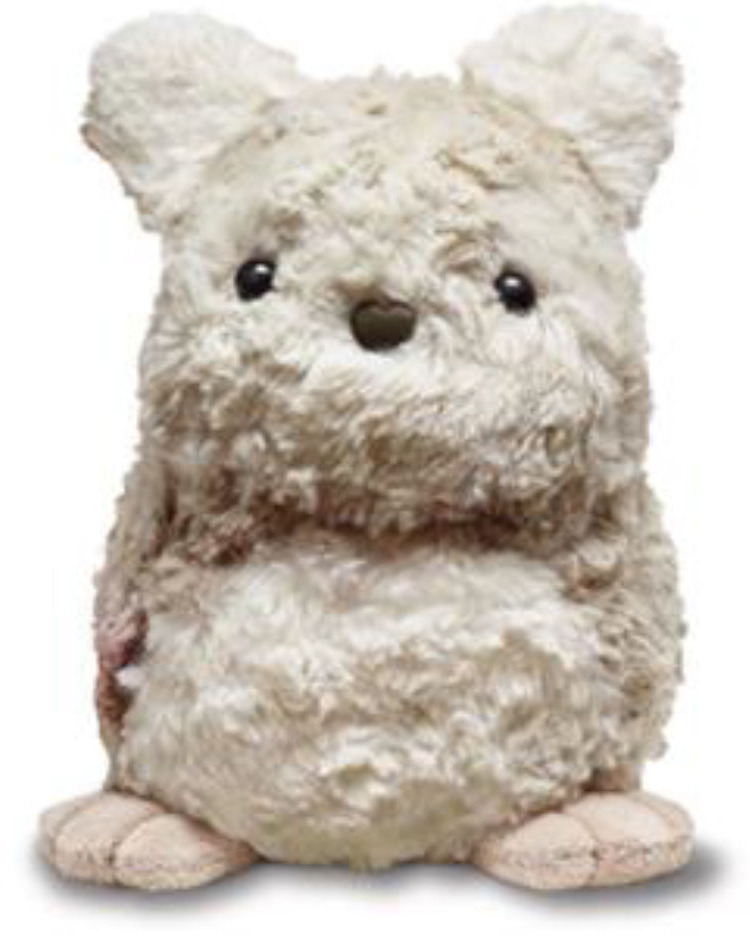
Introduction: Purrble, a socially assistive robot, was codesigned with children to support in situ emotion regulation. Preliminary evidence has found that LGBTQ+ youth are receptive to Purrble and find it to be an acceptable intervention to assist with emotion dysregulation and their experiences of self-harm. The present study is designed to evaluate the impact of access to Purrble among LGBTQ+ youth who have self-harmful thoughts, when compared with waitlist controls. Methods and analysis: The study is a single-blind, randomised control trial comparing access to the Purrble robot with waitlist control. A total of 168 LGBTQ+ youth aged 16–25 years with current self-harmful ideation will be recruited, all based within the UK. The primary outcome is emotion dysregulation (Difficulties with Emotion Regulation Scale-8) measured weekly across a 13-week period, including three pre-deployment timepoints. Secondary outcomes include self-harm (Self-Harm Questionnaire), anxiety (Generalised Anxiety Disorder-7) and depression (Patient Health Questionnaire-9). We will conduct analyses using linear mixed models to assess primary and secondary hypotheses. Intervention participants will have unlimited access to Purrble over the deployment period, which can be used as much or as little as they like. After all assessments, control participants will receive their Purrble, with all participants keeping the robot after the end of the study. After the study has ended, a subset of participants will be invited to participate in semistructured interviews to explore engagement and appropriation of Purrble, considering the young people’s own views of Purrble as an intervention device. Ethics and dissemination: Ethical approval was received from King’s College London (RESCM-22/23-34570). Findings will be disseminated in peer review open access journals and at academic conferences. Trial registration number: NCT06025942 .
Overview
The claims and statistics of this paper haven’t been checked yet.
Run the check — free, no account needed. It reads the open-access text and checks the sources it cites.
Integrity signals
Registry
Cites
Statistics
Figures
Verification
Claims the paper makes
The claims and statistics of this paper haven’t been checked yet.
Run the check — free, no account needed. It reads the open-access text and checks the sources it cites.
Claims other papers make about this one
Each is checked against this paper’s own text: does it say what the citing paper says it does?
In the citing paper
“The trial protocol, including the stratification and outcome measures, was pre-registered and published in advance (Williams et al., 2024).”
From Artificial intelligence and immersive technologies for LGBTQ+ youth: a narrative review (2026) · cites this paper as Williams et al., 2024
Self-check
Percentages, sums and reported differences re-computed from the paper’s own numbers.
The self-check needs the paper’s full text.
Citations
Cites
The PHQ-9: Validity of a brief depression severity measure
Kroenke, K., Spitzer, R. L., & Williams, J. B. W. (2001) · Journal of General Internal Medicine · doi:10.1046/j.1525-1497.2001.016009606.x · Cited by 44,910
Haas, A. P., Eliason, M., Mays, V. M., Mathy, R. M., Cochran, S. D., D'Augelli, A. R., Silverman, M. M., Fisher, P. W., Hughes, T., Rosario, M., et al. (2010) · Journal of Homosexuality · doi:10.1080/00918369.2011.534038 · Cited by 1,236
Marshal, M. P., Dietz, L. J., Friedman, M. S., Stall, R., Smith, H. A., McGinley, J., Thoma, B. C., Murray, P. J., D'Augelli, A. R., & Brent, D. A. (2011) · Journal of Adolescent Health · doi:10.1016/j.jadohealth.2011.02.005 · Cited by 1,215
Sloan, E., Hall, K., Moulding, R., Bryce, S., Mildred, H., & Staiger, P. K. (2017) · Clinical Psychology Review · doi:10.1016/j.cpr.2017.09.002 · Cited by 1,052
Mars, B., Heron, J., Klonsky, E. D., Moran, P., O'Connor, R. C., Tilling, K., Wilkinson, P., & Gunnell, D. (2019) · The Lancet Psychiatry · doi:10.1016/s2215-0366(19)30030-6 · Cited by 546 · cited 1×
“10 11 Despite the considerable risk of self-harm and associated adverse outcomes, 12 13 there is a lack of evidence-based interventions to support LGBTQ+ youth struggling with self-harmful thoughts and behaviours.”
BackgroundEmotion dysregulation and non-suicidal self-injury: a systematic review and meta-analysis
Wolff, J. C., Thompson, E., Thomas, S. A., Nesi, J., Bettis, A. H., Ransford, B., Scopelliti, K., Frazier, E. A., & Liu, R. T. (2019) · European Psychiatry · doi:10.1016/j.eurpsy.2019.03.004 · Cited by 512
di Giacomo, E., Krausz, M., Colmegna, F., Aspesi, F., & Clerici, M. (2018) · JAMA Pediatrics · doi:10.1001/jamapediatrics.2018.2731 · Cited by 253
Suicidal Thoughts and Behaviors Among LGBTQ Youth: Meta-Analyses and a Systematic Review
Hatchel, T., Polanin, J. R., & Espelage, D. L. (2021) · Archives of Suicide Research · doi:10.1080/13811118.2019.1663329 · Cited by 172
Socially Assistive Robots as Mental Health Interventions for Children: A Scoping Review
Kabacińska, K., Prescott, T. J., & Robillard, J. M. (2021) · International Journal of Social Robotics · doi:10.1007/s12369-020-00679-0 · Cited by 113
Gilbey, D., Morgan, H., Lin, A., & Perry, Y. (2020) · Journal of Medical Internet Research · doi:10.2196/20158 · Cited by 112 · cited 1×
“29 33 These mental health interventions are typically perceived positively by LGBTQ+ youth, 30 32–34 with mixed findings reported by the three studies which considered the impact of the intervention on participants; (1) Rainbow SPARX 32 ; (2) an online writing intervention 31 ; and (3) QueerViBE.”
Background
Research works printed but not linked: 53
- Kendall, 2011, Longer term management of self harm: summary of NICE guidance, BMJ, 343, 10.1136/bmj.d7073 · DOI
- 10.1146/annurev.publhealth.012809.103636 · DOI
- 10.1111/j.1532-7795.2010.00727.x · DOI
- McDermott, 2018, Norms and normalisation: understanding Lesbian, gay, Bisexual, Transgender and queer youth, Suicidality and help-seeking, Culture, Health & Sexuality, 20, 156, 10.1080/13691058.2017.1335435 · DOI
- Irish, 2019, Depression and self-harm from adolescence to young adulthood in sexual minorities compared with Heterosexuals in the UK: a population-based cohort study, Lancet Child Adolesc Health, 3, 91, 10.1016/S2352-4642(18)30343-2 · DOI
- 10.1192/bjp.bp.115.170050 · DOI · Paper page
- Marchi, 2022, Self-harm and Suicidality among LGBTIQ people: a systematic review and meta-analysis, Int Rev Psychiatry, 34, 240, 10.1080/09540261.2022.2053070 · DOI
- Warne, 2023, Emotional dysregulation in childhood and disordered eating and Self‐Harm in adolescence: prospective associations and mediating pathways, J Child Psychol Psychiatry, 64, 797, 10.1111/jcpp.13738 · DOI
- Geulayov, 2018, Incidence of suicide, hospital-presenting non-fatal self-harm, and community-occurring non-fatal self-harm in adolescents in England (the iceberg model of self-harm): a retrospective study, Lancet Psychiatry, 5, 167, 10.1016/S2215-0366(17)30478-9 · DOI
- Geulayov, 2022, Utilization and acceptability of formal and informal support for adolescents following self-harm before and during the first COVID-19 Lockdown: results from a large-scale English schools survey, Front Psychiatry, 13, 10.3389/fpsyt.2022.881248 · DOI
- Holland, 2020, What do young people who Self‐Harm find helpful? A comparative study of young people with and without experience of being looked after in care, Child Adolesc Ment Health, 25, 157, 10.1111/camh.12384 · DOI
- 10.1111/j.1943-278X.2012.00108.x · DOI · Paper page
- 10.1192/bjp.bp.113.141242 · DOI
- 10.1177/1359105318788403 · DOI
- 10.1111/j.1365-2850.2012.01893.x · DOI
- Bathje, 2011, The relationships of public and self-stigma to seeking mental health services, J Ment Health Couns, 33, 161, 10.17744/mehc.33.2.g6320392741604l1 · DOI
- Steinke, 2017, Meeting the needs of sexual and gender minority youth: formative research on potential Digital health interventions, J Adolesc Health, 60, 541, 10.1016/j.jadohealth.2016.11.023 · DOI · Paper page
- Bowen, 2016, mHealth: an Avenue for promoting health among sexual and gender minority populations?, Mhealth, 2, 10.21037/mhealth.2016.09.01 · DOI
- Strauss, 2019, Trans and gender diverse young people’s attitudes towards game-based Digital mental health interventions: A qualitative investigation, Internet Interv, 18, 10.1016/j.invent.2019.100280 · DOI
- Craig, 2014, You can form a part of yourself online: the influence of new media on identity development and coming out for LGBTQ youth, J Gay Lesbian Mental Health, 18, 95, 10.1080/19359705.2013.777007 · DOI · Paper page
- 10.1186/1471-244X-10-1 · DOI
- McIntyre, 2011, Systems-level barriers in Accessing supportive mental health services for sexual and gender minorities: insights from the provider’s perspective, Canad J Commun Mental Health, 30, 173, 10.7870/cjcmh-2011-0023 · DOI
- Martin S . n.d. Developing and evaluating Queervibe: an online intervention to empower Trans and non-binary youth (Doctoral Dissertation, Anglia Ruskin University).
- 10.1037/a0017580 · DOI
- Lucassen, 2015, A novel approach to addressing depression in sexual minority youth, Cognitive and Behavioral Practice, 22, 203, 10.1016/j.cbpra.2013.12.008 · DOI
- Fleming, 2017, Usability of a culturally informed mHealth intervention for symptoms of anxiety and depression: feedback from young sexual minority men, JMIR Hum Factors, 4, 10.2196/humanfactors.7392 · DOI
- Williams, 2022, Feasibility and acceptability of experience sampling among LGBTQ+ young people with self-harmful thoughts and Behaviours, Front Psychiatry, 13, 10.3389/fpsyt.2022.916164 · DOI
- Williams, 2023, Understanding the processes underlying self-harm Ideation and behaviors within LGBTQ+ young people: A qualitative study, Arch Suicide Res, 27, 380, 10.1080/13811118.2021.2003273 · DOI
- Chen, 2019, Association between emotion dysregulation and distinct groups of non-suicidal self-injury in Taiwanese female adolescents, Int J Environ Res Public Health, 16, 10.3390/ijerph16183361 · DOI
- Clapham, 2022, Internalizing and Externalizing symptoms moderate the relationship between emotion dysregulation and suicide Ideation in adolescents, Child Psychiatry Hum Dev, 6, 1
- Kapatais, 2023, The mediating role of emotion regulation on self-harm among gender identity and sexual orientation minority (LGBTQ+) individuals, Arch Suicide Res, 27, 165, 10.1080/13811118.2022.2064254 · DOI
- Fraser, 2018, Non-suicidal self-injury, sexuality concerns, and emotion regulation among sexually diverse adolescents: A multiple mediation analysis, Arch Suicide Res, 22, 432, 10.1080/13811118.2017.1358224 · DOI
- 10.1080/1047840X.2014.940781 · DOI · Paper page
- Fernandez, 2016, Emotion regulation: A Transdiagnostic perspective on a new Rdoc domain, Cognit Ther Res, 40, 426, 10.1007/s10608-016-9772-2 · DOI · Paper page
- 10.1016/j.cpr.2015.09.002 · DOI · Paper page
- Slovák, 2018, "I just let him cry, Proc ACM Hum-Comput Interact, 2, 1, 10.1145/3274429 · DOI
- Theofanopoulou, 2019, A smart toy intervention to promote emotion regulation in middle childhood: feasibility study, JMIR Ment Health, 6, 10.2196/14029 · DOI
- Williams, 2023, Feasibility, perceived impact, and acceptability of a socially Assistive robot to support emotion regulation with highly anxious university students: an open trial, JMIR Ment Health, 10, 10.2196/46826 · DOI
- Papadopoulos, 2020, A systematic review of the literature regarding socially Assistive robots in pre-tertiary education, Computers & Education, 155, 103924, 10.1016/j.compedu.2020.103924 · DOI
- Crossman, 2018, The influence of a socially Assistive robot on mood, anxiety, and arousal in children, Professional Psychology: Research and Practice, 49, 48, 10.1037/pro0000177 · DOI
- Zhou J , Salvendy G . Human aspects of IT for the aged population. design for aging. In: A robot of my own: participatory design of socially assistive robots for independently living older adults diagnosed with depression. InHuman Aspects of IT for the Aged Population. Design for Aging: First International Conference, ITAP 2015, Held as Part of HCI International 2015, Los Angeles, CA, USA, August 2-7, Proceedings, Part I 1 2015 (pp. 104-114). Cham: Springer International Publishing, 2015. doi:10.1007/978-3-319-20892-3 · DOI · Paper page
- Koh, 2021, Impacts of low-cost Robotic pets for older adults and people with dementia: Scoping review, JMIR Rehabil Assist Technol, 8, 10.2196/25340 · DOI · Paper page
- Koh, 2023, The ethics of pet robots in dementia care settings: care professionals’ and Organisational leaders’ ethical intuitions, Front Psychiatry, 14, 10.3389/fpsyt.2023.1052889 · DOI
- 10.7326/0003-4819-152-11-201006010-00232 · DOI · Paper page
- Montgomery, 2018, Reporting randomised trials of social and psychological interventions: the CONSORT-SPI 2018 extension, Trials, 19, 10.1186/s13063-018-2733-1 · DOI
- Daudén Roquet C , Theofanopoulou N , Freeman JL , et al . Exploring situated & embodied support for youth’s mental health: design opportunities for interactive tangible device. CHI ’22; New Orleans LA USA.New York, NY, USA, April 29, 2022:1–16 doi:10.1145/3491102.3502135 · DOI
- Penner, 2023, The development and validation of the difficulties in emotion regulation Scale-8: providing respondents with a uniform context that elicits thinking about situations requiring emotion regulation, J Pers Assess, 105, 657, 10.1080/00223891.2022.2133722 · DOI
- Cohen, 2022, Adolescent dropout from brief Digital mental health interventions within and beyond randomized trials, Internet Interv, 27, 10.1016/j.invent.2022.100496 · DOI
- Shaw, 2021, Living alone, loneliness and lack of emotional support as predictors of suicide and self-harm: A nine-year follow up of the UK Biobank cohort, J Affect Disord, 279, 316, 10.1016/j.jad.2020.10.026 · DOI
- 10.1016/j.adolescence.2012.09.006 · DOI
- 10.1001/archinte.166.10.1092 · DOI · Paper page
- Olderbak, 2023, The process model of emotion regulation questionnaire: assessing individual differences in strategy stage and orientation, Assessment, 30, 2090, 10.1177/10731911221134601 · DOI
- 10.1037/0022-3514.70.2.321 · DOI
Cited by
Sorted by citations
Artificial intelligence and immersive technologies for LGBTQ+ youth: a narrative review
Shekarchi, R., Eleuteri, S., Saladino, V., Calaresi, D., Giordano, F., & Prunas, A. (2026) · Frontiers in Psychology · doi:10.3389/fpsyg.2026.2002054
Metadata
- Authors
- Williams, A. J., Cleare, S., Borschmann, R., Tench, C. R., Gross, J., Hollis, C., Chapman-Nisar, A., Naeche, N., Townsend, E., & Slovak, P.
- Affiliations
- Department of Informatics, King's College London, London, UK
- Murdoch Children's Research Institute, Parkville, Victoria, Australia
- Division of Clinical Neuroscience, University of Nottingham, Nottingham, UK
- Stanford University, Stanford, California, USA
- Division of Psychiatry, University of Nottingham, Nottingham, UK
- University of Nottingham, Nottingham, UK
- School of Psychology, University of Nottingham, Nottingham, UK
- Venue
- BMJ Open
- Publisher
- BMJ
- Published
- 2024-01
- Volume
- 14
- Issue
- 1
- Pages
- e079801
- ISSN
- 2044-6055
- PMC
- PMC10806609
- Cited by
- 8
- References
- 12
- Language
- en
- Funders
- UKRI MRC Digital Youth (MR/W002450/1)
- UKRI UKRI Future Leaders Fellowship (MR/T041897/1)
- UK Research and Innovation
About these checks
Registry, retraction, Cites and statistics results are computed, not judged, with one exception: a printed reference that no index lists is read once by a model before it counts as a citation error. Claims are extracted by a model and kept only when their quote appears verbatim in the text; each cited source is then checked, with a model’s help, for whether it says what the claim relies on. Those verdicts can be wrong — read the claim’s quote and the cited source before relying on one.
Statistics and arithmetic are recomputed, not judged.
Confidence bands are shown only for fields calibrated on our annotated test set. None is calibrated yet, so no band is shown.
What counts as a claim ›How we measure confidence ›How we check this ›
Are you an author, or do you see a problem with this page? Request a review
