

Reducing patient mortality, length of stay and readmissions through machine learning-based sepsis prediction in the emergency department, intensive care unit and hospital floor units
Open accessThe DOI matches its Crossref record; 27 of the 27 references it cites were found in a registry or an index.
Abstract
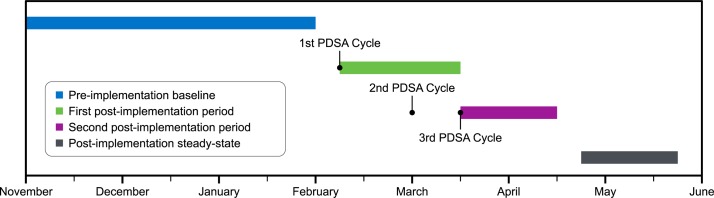
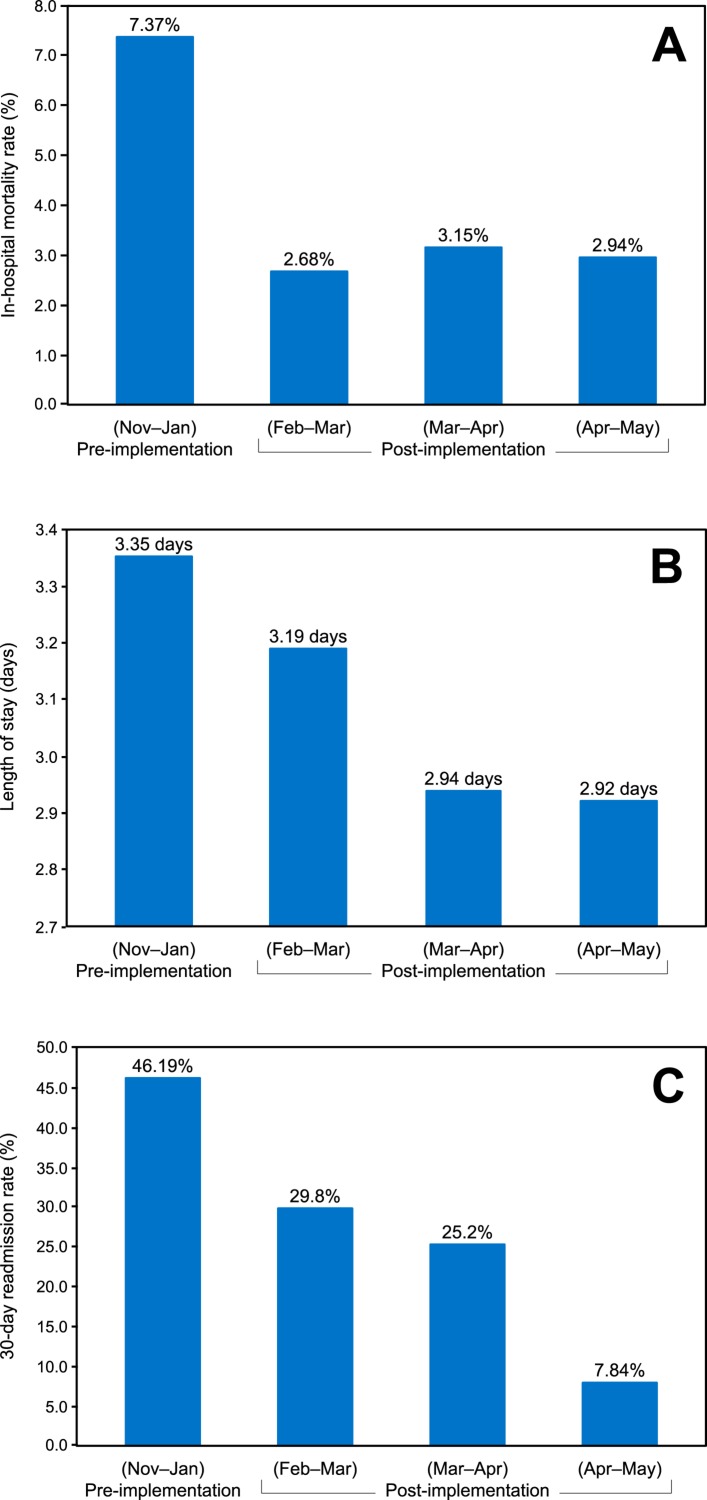
Introduction: Sepsis management is a challenge for hospitals nationwide, as severe sepsis carries high mortality rates and costs the US healthcare system billions of dollars each year. It has been shown that early intervention for patients with severe sepsis and septic shock is associated with higher rates of survival. The Cape Regional Medical Center (CRMC) aimed to improve sepsis-related patient outcomes through a revised sepsis management approach. Methods: In collaboration with Dascena, CRMC formed a quality improvement team to implement a machine learning-based sepsis prediction algorithm to identify patients with sepsis earlier. Previously, CRMC assessed all patients for sepsis using twice-daily systemic inflammatory response syndrome screenings, but desired improvements. The quality improvement team worked to implement a machine learning-based algorithm, collect and incorporate feedback, and tailor the system to current hospital workflow. Results: Relative to the pre-implementation period, the post-implementation period sepsis-related in-hospital mortality rate decreased by 60.24%, sepsis-related hospital length of stay decreased by 9.55% and sepsis-related 30-day readmission rate decreased by 50.14%. Conclusion: The machine learning-based sepsis prediction algorithm improved patient outcomes at CRMC.
Overview
The claims and statistics of this paper haven’t been checked yet.
Free: it reads the open-access text and checks the first 5 claims that cite a source we can check. Create a free account to check every claim.
Integrity signals
Registry
Cites
Statistics
Figures
Verification
Claims the paper makes
The claims and statistics of this paper haven’t been checked yet.
Free: it reads the open-access text and checks the first 5 claims that cite a source we can check. Create a free account to check every claim.
Claims other papers make about this one
Each is checked against this paper’s own text: does it say what the citing paper says it does?
The source backs part of the claim, not all of it — or backs it for a different population, condition or comparison.
In the citing paper
“Three papers using their own hospital data reported inquiries for data sharing were possible [28, 32, 35], two papers reported data would not be shared [25, 31].”
From Machine learning for the prediction of sepsis: a systematic review and meta-analysis of diagnostic test accuracy (2020) · cites this paper as [31]
Experimental — accuracy not yet measuredThe source backs part of the claim, not all of it — or backs it for a different population, condition or comparison.
In the citing paper
“Sepsis-related in hospital mortality rate decreased by 60.24% (p < 0.001)”
From Moving from bytes to bedside: a systematic review on the use of artificial intelligence in the intensive care unit (2021) · cites this paper as [28]
Experimental — accuracy not yet measuredThe cited source says what the claim attributes to it.
In the citing paper
“All 9 papers34,44,46,50,52,58–61 reported decreased mortality, be that all-cause, sepsis-related or both, although this was statistically significant only for 5 studies”
From Deployment of machine learning algorithms to predict sepsis: systematic review and application of the SALIENT clinical AI implementation framework (2023) · cites this paper as [59]
The cited source says what the claim attributes to it.
In the citing paper
“The interventional studies included two pre-post implementation studies (in-hospital) [30, 31] and one ICU randomized controlled trial [32].”
From Machine learning for the prediction of sepsis: a systematic review and meta-analysis of diagnostic test accuracy (2020) · cites this paper as [31]
The cited source says what the claim attributes to it.
In the citing paper
“Only three interventional studies have been identified in this review, which were carried out in different clinical settings and show mixed results [31, 32, 51].”
From Machine learning for the prediction of sepsis: a systematic review and meta-analysis of diagnostic test accuracy (2020) · cites this paper as [31]
2 more claims about this paper
Create a free account to see every claim other papers make about this one.
Self-check
Percentages, sums and reported differences re-computed from the paper’s own numbers.
The self-check needs the paper’s full text.
Citations
Cites
The third international consensus definitions for sepsis and septic shock (Sepsis-3).
Singer, M., Deutschman, C. S., Seymour, C. W., Shankar-Hari, M., Annane, D., Bauer, M., Bellomo, R., Bernard, G. R., Chiche, J.-D., Coopersmith, C. M., et al. (2016) · JAMA · doi:10.1001/jama.2016.0287 · Cited by 28,250 · cited 2×
“background Severe sepsis is characterised by organ failure and carries a mortality rate of over 10%, and the escalation to septic shock presents with refractory hypotension and a mortality rate near 40%.(7) Despite the high frequency and the poor associated outcomes of sepsis, the heterogeneity of both infection types…”
BackgroundMethodBone, R. C., Balk, R. A., Cerra, F. B., Dellinger, R. P., Fein, A. M., Knaus, W. A., Schein, R. M. H., & Sibbald, W. J. (1992) · Chest · doi:10.1378/chest.101.6.1644 · Cited by 13,198
Vincent, J. L., Moreno, R., Takala, J., Willatts, S., De Mendonça, A., Bruining, H., Reinhart, C. K., Suter, P. M., & Thijs, L. G. (1996) · Intensive Care Medicine · doi:10.1007/bf01709751 · Cited by 11,674
Angus, D. C., Linde-Zwirble, W. T., Lidicker, J., Clermont, G., Carcillo, J., & Pinsky, M. R. (2001) · Critical Care Medicine · doi:10.1097/00003246-200107000-00002 · Cited by 8,503
Kumar, A., Roberts, D., Wood, K. E., Light, B., Parrillo, J. E., Sharma, S., Suppes, R., Feinstein, D., Zanotti, S., Taiberg, L., et al. (2006) · Critical Care Medicine · doi:10.1097/01.ccm.0000217961.75225.e9 · Cited by 6,109
Seymour, C. W., Liu, V. X., Iwashyna, T. J., Brunkhorst, F. M., Rea, T. D., Scherag, A., Rubenfeld, G., Kahn, J. M., Shankar-Hari, M., Singer, M., et al. (2016) · JAMA · doi:10.1001/jama.2016.0288 · Cited by 3,939 · cited 1×
“Even consensus definitions of clinical sepsis presentation are difficult to achieve, as indicated by the recent proposed redefinitions of the stages of sepsis (sepsis −3).(8) However, it has been shown in several studies that early recognition of sepsis, and compliance with sepsis treatment bundles, can lead to a redu…”
BackgroundFleischmann, C., Scherag, A., Adhikari, N. K. J., Hartog, C. S., Tsaganos, T., Schlattmann, P., Angus, D. C., & Reinhart, K. (2016) · American Journal of Respiratory and Critical Care Medicine · doi:10.1164/rccm.201504-0781oc · Cited by 3,548 · cited 1×
“Problem Sepsis, a dysregulated host response to infection, is a serious health concern globally.(1) In the USA alone, more than 750 000 individuals are afflicted annually,(2) with a cost of over $20 billion per year.”
BackgroundThe natural history of the systemic inflammatory response syndrome (SIRS). A prospective study
Rangel-Frausto, M. S. (1995) · JAMA · doi:10.1001/jama.273.2.117 · Cited by 2,104
Validation of a modified Early Warning Score in medical admissions
Subbe, C. P. (2001) · QJM · doi:10.1093/qjmed/94.10.521 · Cited by 1,762
A targeted real-time early warning score (TREWScore) for septic shock.
Henry, K. E., Hager, D. N., Pronovost, P. J., & Saria, S. (2015) · Science Translational Medicine · doi:10.1126/scitranslmed.aab3719 · Cited by 598 · cited 1×
“14 Other prior works applying machine learning algorithms to the EHR in the detection or prediction of sepsis include the retrospective studies of Henry et al 16 and Nachimuthu and Haug, 17 and the pilot studies of Sawyer et al .”
Method
Research works printed but not linked: 1
- Singer M, Deutschman CS, Seymour CW, et al The third international consensus definitions for Sepsis and Septic Shock (sepsis-3). JAMA 2016; 315: 801– 10. doi:10.1001/jama.2016.0287 26903338 PMC4968574 · DOI · Paper page
Cited by
Items 101–172 of 172
Novel Techniques to Assess Predictive Systems and Reduce Their Alarm Burden
Handler, J. A., Feied, C. F., & Gillam, M. T. (2022) · IEEE Journal of Biomedical and Health Informatics · doi:10.1109/jbhi.2022.3189312 · Cited by 7
Big Data Applications in Healthcare Administration
Kasten, J. E. (2020) · International Journal of Big Data and Analytics in Healthcare · doi:10.4018/ijbdah.2020070102 · Cited by 7
Bhuyain, M. M. (2024) · American Journal of Interdisciplinary Studies · doi:10.63125/2krdb618 · Cited by 9
Raszke, P., Giebel, G. D., Wasem, J., Adamzik, M., Nowak, H., Palmowski, L., Heinz, P., Timmesfeld, N., Tokic, M. C., Brunkhorst, F. M., et al. (2026) · Journal of Medical Internet Research · doi:10.2196/76772 · Cited by 6
Nair, M., Lundgren, L. E., Soliman, A., Dryselius, P., Fogelberg, E., Petersson, M., Hamed, O., Triantafyllou, M., & Nygren, J. (2024) · JMIR Research Protocols · doi:10.2196/52744 · Cited by 6
Thiboud, P.-E., François, Q., Faure, C., Chaufferin, G., Arribe, B., & Ettahar, N. (2025) · Diagnostics · doi:10.3390/diagnostics15030302 · Cited by 6
Screening Key Indicators for Acute Kidney Injury Prediction Using Machine Learning
Wang, J., Zhu, B., Liu, P., Jia, R., Jia, L., Chen, W., Feng, C., & Li, J. (2021) · International Journal of Computers Communications & Control · doi:10.15837/ijccc.2021.3.4180 · Cited by 6
Utilizing Artificial Intelligence in Critical Care: Adding A Handy Tool to Our Armamentarium
Sharma, M., Taweesedt, P. T., & Surani, S. (2021) · Cureus · doi:10.7759/cureus.15531 · Cited by 6
Chambers, D., Cantrell, A. J., & Booth, A. (2021) · White Rose Research Online (University of Leeds, The University of Sheffield, University of York) · Cited by 6
Zhao, Y., Shu, X., Leung, C.-S., Wong, E. W. M., Xuan, Q., Lee, K., Leung, A. K. H., Ling, L., Shum, H., Wan, W.-L., et al. (2026) · Journal of Medical Systems · doi:10.1007/s10916-026-02355-8 · Cited by 5
READMISSION TO THE INTENSIVE CARE UNIT - EPIDEMIOLOGY, PREDICTION AND CLINICAL CONSEQUENCES
Grochla, M., Saucha, W., Borkowski, J., & Knapik, P. (2019) · Wiadomości Lekarskie · doi:10.36740/wlek201907128 · Cited by 5
A Machine Learning Model to Predict Diuretic Resistance
Mercier, J. A., Ferguson, T. W., & Tangri, N. (2022) · Kidney360 · doi:10.34067/kid.0005562022 · Cited by 5
Artificial intelligence in medicine: The rise of machine learning
Colalillo, J. M., & Smith, J. (2024) · Emergency Medicine Australasia · doi:10.1111/1742-6723.14459 · Cited by 4
Using machine learning for process improvement in sepsis management
Ferreira, L. D., McCants, D., & Velamuri, S. S. N. (2022) · Journal of Healthcare Quality Research · doi:10.1016/j.jhqr.2022.09.006 · Cited by 4
The impact of laboratory data missingness on sepsis diagnosis timeliness
Lam, J. Y., Boussina, A. E., Shashikumar, S. P., Owens, R. L., Nemati, S., & Josef, C. S. (2024) · JAMIA Open · doi:10.1093/jamiaopen/ooae085 · Cited by 4
Albuali, W. H. (2022) · Current Pediatric Reviews · doi:10.2174/1573396318666220912093557 · Cited by 4
Hieu, T. H., Pham, T. T. N., Cucè, F., Nam, N. H., Reda, A., Hassan, O. G., Hung, L. T., Quyen, D. T. K., Aziz, J. M. A., Quang, L. L., et al. (2022) · Hospital Practice · doi:10.1080/21548331.2022.2133414 · Cited by 3
Ibrahim, Z. M., Wu, H., & Dobson, R. (2020) · Frontiers in artificial intelligence and applications · doi:10.3233/faia200298 · Cited by 3
Hsu, T.-Y., Cheng, C.-Y., Chiu, I.-M., Lin, C. R., Cheng, F., Pan, H.-Y., Su, Y., & Li, C.-J. (2024) · Clinical Interventions in Aging · doi:10.2147/cia.s460562 · Cited by 3
Modelling the length of hospital stay in medicine and surgical departments
Fiorillo, A., Picone, I., Latessa, I., & Cuocolo, A. (2021) · International Symposium on Biomedical Engineering and Computational Biology (BECB) · doi:10.1145/3502060.3503639 · Cited by 3
Loperto, I., Scala, A., Borrelli, A., Rossi, G., & Triassi, M. (2021) · International Symposium on Biomedical Engineering and Computational Biology (BECB) · doi:10.1145/3502060.3503658 · Cited by 3
Investigating Presence of Ethnoracial Bias in Clinical Data using Machine LearningPreprint
Velichkovska, B., Gjoreski, H., Denkovski, D., Kalendar, M., Celi, L. A., & Osmani, V. (2021) · medRxiv · doi:10.1101/2021.09.01.21262949 · Cited by 2
Machine Learning in Healthcare: Two Case Studies
Kang, R., Rantanen, E. M., & Youngstrom, E. A. (2022) · Proceedings of the Human Factors and Ergonomics Society Annual Meeting · doi:10.1177/1071181322661518 · Cited by 2
Tsang, G. (2022) · Cronfa (Swansea University) · doi:10.23889/suthesis.61814 · Cited by 2
Development and Validation of an Early Warning System for Septic Shock in Intensive Care Unit
Li, T., Cheng, Z., Jin, X., Lin, L., Nan, S., Lü, X., & Duan, H. (2023) · International Conference on Big Data and Information Analytics (BigDIA) · doi:10.1109/bigdia60676.2023.10429553 · Cited by 2
Wang, Q., Sun, L., Wei, M., & Chen, C. (2025) · SLAS TECHNOLOGY · doi:10.1016/j.slast.2025.100357 · Cited by 2
Application of artificial intelligence techniques in the intensive care unit
Ray, P., Sharma, S., & Raval, R. (2023) · International Journal of Reconfigurable and Embedded Systems (IJRES) · doi:10.11591/ijres.v12.i1.pp42-50 · Cited by 2
LXLMEPS: Leveraging the XGB-lCE-Based Model for Early Prediction of Sepsis
Leyi, Z., Long, Y., Hu, Y., & Li, H. (2023) · Lecture notes in computer science · doi:10.1007/978-981-99-4749-2_36 · Cited by 2
Setiawan, A. K., Darmawan, E. S., & Paramita, S. (2023) · Journals of Ners Community · doi:10.55129/jnerscommunity.v13i2.2840 · Cited by 2
Stingl, C. S., Jarral, R., Wang, Y., Shah, N. R., Kaplan, R. M., Rebitzer, R. S., Woo, V. G. H., Peters, S., Platchek, T. S., & Milstein, A. S. (2026) · Diagnosis · doi:10.1515/dx-2026-0074 · Cited by 1
Applications of AI Techniques in Health Care and Well-Being Systems
Kumar, P. S., Rohit, Jena, S., & Shrivastava, R. (2024) · Lecture notes in networks and systems · doi:10.1007/978-981-99-8451-0_41 · Cited by 1
Mackensen, J. (2026) · Research Square · doi:10.21203/rs.3.rs-10691529/v1 · Cited by 1
Chiu, I.-M., Chuang, Y.-P., Cheng, C.-Y., & Lin, C. R. (2022) · ACIS International Conference on Software Engineering, Artificial Intelligence, Networking and Parallel/Distributed Computing (SNPD) · doi:10.1109/snpd54884.2022.10051794 · Cited by 1
Prediction of sepsis for the intensive care unit patients with stream mining and machine learning
Akyüz, M., Doğan, Y., Koçyiğit, A., & Miran, A. P. (2024) · Pamukkale University Journal of Engineering Sciences · doi:10.5505/pajes.2023.84899 · Cited by 1
Almutiri, H. A., Alrowily, A. D., Matari, Q. Y., Almutiri, F. A., & Alanizi, A. S. (2022) · Saudi Journal of Nursing and Health Care · doi:10.36348/sjnhc.2022.v05i10.007 · Cited by 1
Deep Learning-Based Time Series Analysis for Early Sepsis Prediction in Intensive Care Units
(2026) · National Journal Of Antennas And Propagation · doi:10.31838/njap/08.02.20 · Cited by 1
Prediction of Mortality in Trauma Patients with Insufficient Training Data Using Deep Learning
Helen, A., Rudiman, R., Suryani, M., Lukman, K., Wijaya, A., & Nugraha, P. (2022) · International Journal on Electrical Engineering and Informatics · doi:10.15676/ijeei.2022.14.2.2 · Cited by 1
Understanding machine learning for patient education
Shams, W., Tantray, J., Parveen, H., Nikumbh, P., & Prajapati, B. G. (2025) · Elsevier eBooks · doi:10.1016/b978-0-443-43823-3.00013-3
Innovations in Surgical Quality Improvement
Kelz, R. R., & Hwang, J. (2026) · Success in academic surgery · doi:10.1007/978-3-032-30411-7_13
A Conceptual Early Warning Intelligence Framework for Sepsis-Aware ICU Monitoring Systems
Chen, W., Zhang, L., & Zhao, R. (2022) · Journal of Artificial Intelligence for Healthcare Systems · doi:10.68159/w583237246
False positive analysis of machine-learning based sepsis predictionPreprint
Basu, D., Maharjan, J., Allen, A. O., Thapa, R., Attwood, M. M., Hurtado, M., Iqbal, Z., & Hoffman, J. L. (2022) · Research Square · doi:10.21203/rs.3.rs-1746922/v1
Prediction of mortality in sepsis patients using stacked ensemble machine learning algorithm
Babu, M., Sappani, M., Joy, M., Chandiraseharan, V. K., Jeyaseelan, L., & Sudarsanam, T. (2024) · Journal of Postgraduate Medicine · doi:10.4103/jpgm.jpgm_357_24 · Cited by 1
Burdick, H., Pino, E., Gabel-Comeau, D., Gu, C., Roberts, J., Le, S., Slote, J., Saber, N., Pellegrini, E., Green‐Saxena, A., et al. (2020) · Figshare · doi:10.6084/m9.figshare.13152208
Self-citationGuo, F., Zhu, X., Wu, Z., Zhu, L., Wu, J., & Zhang, F. (2022) · Figshare · doi:10.6084/m9.figshare.20056621
Chen, Q., Li, R., Lin, C., Lai, C., Chen, D., Qu, H., Huang, Y., Lu, W., Tang, Y., & Li, L. (2024) · Figshare · doi:10.6084/m9.figshare.26558174
Heinl, P., Reichl-Streich, A.-J., & Hof, H. (2025) · IEEE International Conference on Healthcare Informatics (ICHI) · doi:10.1109/ichi64645.2025.00078
Hernandez, M., & Vega, C. (2021) · Journal of Health Informatics and Digital Systems · doi:10.68159/r496606198
Tanaka, H., Sato, Y., Mori, K., Okabe, R., & Ito, T. (2021) · Journal of Health Informatics and Digital Systems · doi:10.68159/m177384136
Early Prediction of Sepsis Using Machine Learning Algorithms: A Review
Shanthi, N., Aadhishri, A., Suganthe, R. C., & Gao, X. (2024) · Communications in computer and information science · doi:10.1007/978-3-031-50993-3_10
Ghaljaei, F., Akbarizadeh, M. R., & Naderifar, M. (2024) · Journal of Qualitative Research in Health Sciences · doi:10.34172/jqr.2024.22
Big Data Applications in Healthcare Administration
Kasten, J. E. (2021) · IGI Global eBooks · doi:10.4018/978-1-6684-3662-2.ch048
Mercier, J. A., Sharma, A., & Boseovski, J. (2026) · Kidney360 · doi:10.34067/kid.0000001292
Jain, D., Gupta, A., Pandey, A. K., & Vats, P. (2024) · Wiley eBooks · doi:10.1002/9781119905202.ch26
Machine learning is revolutionising preventive healthcare and patient monitoring: a review
Kohli, Y., Kohli, M., Kohli, A., Uma, M., & Sethuramalingam, P. (2025) · International Journal of Artificial Intelligence in Healthcare · doi:10.1504/ijaih.2025.149245
Pratiwi, E. S., & Ridhuwan, A. M. A. (2026) · The Indonesian Journal of General Medicine · doi:10.70070/8ev40t44
Closing the Detection Gap: Early Recognition of Hospital Onset Sepsis with NEWS2
Bernardo, A. (2026) · Digital USD (University of San Diego) · doi:10.22371/07.2026.036
Viantoro, Y., & Yuniarmi, F. (2026) · The International Journal of Medical Science and Health Research · doi:10.70070/sehv7w52
Singh, I. V., Phillips, G. A., & Khan, S. (2026) · Emergency Medicine Australasia · doi:10.1111/1742-6723.70333
Predictive modeling of corticosteroids sensitivity in sepsis using a supervised learning approach
Lannelongue, E., Grimaud, A., Tillier, C., & Annane, D. (2025) · Journal of Applied Statistics · doi:10.1080/02664763.2025.2593309
Machine learning for the improvement of patient flow
El-Bouri, R. (2021) · Oxford University Research Archive (ORA) (University of Oxford) · doi:10.5287/ora-eqrv9qjzb
Artificial Intelligence for sepsis prediction: A review of real-world clinical implementation
Ashok, A., Maćešić, N., & Peleg, A. Y. (2026) · Clinical Microbiology and Infection · doi:10.1016/j.cmi.2026.10.036
Boussina, A. E. (2024) · eScholarship (California Digital Library)
Nóvoa, J. A. G. (2025) · Investigo repository of University of Vigo (University of Vigo) · doi:10.35869/11093/10523
Dahal, A. A. A. (2024) · Review of Contemporary Philosophy
Sjuksköterskans erfarenhet vid identifiering av sepsis samt hinder för tidig upptäckt
Backlund Bendrén, R., & Engström, E. C. M. (2023) · Lund University Publications Student Papers (Lund University)
Kusbaryanto, Gobel, F. A., Listiowati, E., & Rosyida, A. (2024) · South Eastern European Journal of Public Health · doi:10.70135/seejph.vi.683
Chowdary, B. L. C., Ekanem, P., Jaisharma, K., & Iwendi, C. (2023) · UBIR (University of Greater Manchester)
Evaluating the Impact of an Early Alert Team Implementation on Sepsis Mortality Rates
Hyndman, S. A. (2020) · ScholarWorks (Walden University)
Kim, P. C. (2019) · Digital Scholarship - UNLV (University of Nevada Reno) · doi:10.34917/18608693
Performance improvement programs may help reduce the surgical backlog in South African hospitals
Ramesar, S. V. (2021) · International Surgery Journal · doi:10.18203/2349-2902.isj20212300
Complement factors in murine jejunum mucus and their functional alteration after experimental sepsis
Chakraborty, S. (2021) · OPen Access Repositorium der Universität Ulm (OPARU) (Ulm University) · doi:10.18725/oparu-35115
Zavidić, T., Dejhalla, E., & Zahirović, D. (2025) · Diseases · doi:10.3390/diseases13110376
Metadata
- Authors
- McCoy, A., & Das, R.
- Affiliations
- Cape Regional Medical Center, Cape May Court House, New Jersey, USA
- Dascena (United States) (US)
- Corresponding author
- Das, Ritankar
- ORCID
- Das, Ritankar
- Venue
- BMJ Open Quality
- Publisher
- BMJ
- Published
- 2017-10
- Volume
- 6
- Issue
- 2
- Pages
- e000158
- ISSN
- 2399-6641 (ISSN-L)
- PMC
- PMC5699136
- OpenAlex
- W2766207659
- Cited by
- 148
- References
- 27
- Citations by year
- 2026: 8 · 2025: 12 · 2024: 22 · 2023: 15 · 2022: 28 · 2021: 23 · 2020: 18 · 2019: 17 · 2018: 5
- FWCI
- 8.56
- Type
- journal article
- Language
- en
- Open access
- gold
- doi.org
- Licence
- cc-by-nc
- Locations
- BMJ Open Quality (publishedVersion, cc-by-nc)
- Europe PMC (PubMed Central) (publishedVersion, cc-by-nc)
- PubMed Central (publishedVersion, cc-by-nc)
- PubMed (publishedVersion)
- Topics
- Health Sciences › Medicine › Critical Care and Intensive Care Medicine › Sepsis Diagnosis and Treatment
- Physical Sciences › Computer Science › Artificial Intelligence › Machine Learning in Healthcare
- Health Sciences › Medicine › Nephrology › Acute Kidney Injury Research
- Keywords
- sepsis prediction, machine learning, sepsis treatment, septic shock, in-hospital mortality, length of hospital stay, hospital readmission, early intervention, quality improvement, emergency department, intensive care unit, hospital workflow
About these checks
Registry, retraction, Cites and statistics results are computed, not judged, with one exception: a printed reference that no index lists is read once by a model before it counts as a citation error. Claims are extracted by a model and kept only when their quote appears verbatim in the text; each cited source is then checked, with a model’s help, for whether it says what the claim relies on. Those verdicts can be wrong — read the claim’s quote and the cited source before relying on one.
Statistics and arithmetic are recomputed, not judged.
Confidence bands are shown only for fields calibrated on our annotated test set. None is calibrated yet, so no band is shown.
What counts as a claim ›How we measure confidence ›How we check this ›
Are you an author, or do you see a problem with this page? Request a review
Data sources
Bibliographic data: Semantic Scholar, OpenAlex, Crossref.
Contains information from the Semantic Scholar Academic Graph Datasets, made available under the ODC Attribution License (ODC-BY 1.0).
Semantic Scholar’s data is described in: Kinney, R., et al. (2023). The Semantic Scholar Open Data Platform. arXiv:2301.10140.
