

Reducing patient mortality, length of stay and readmissions through machine learning-based sepsis prediction in the emergency department, intensive care unit and hospital floor units
Open accessThe DOI matches its Crossref record; 27 of the 27 references it cites were found in a registry or an index.
Abstract
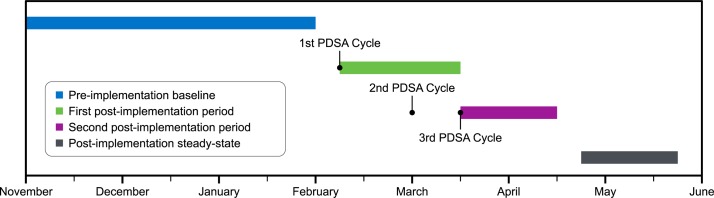
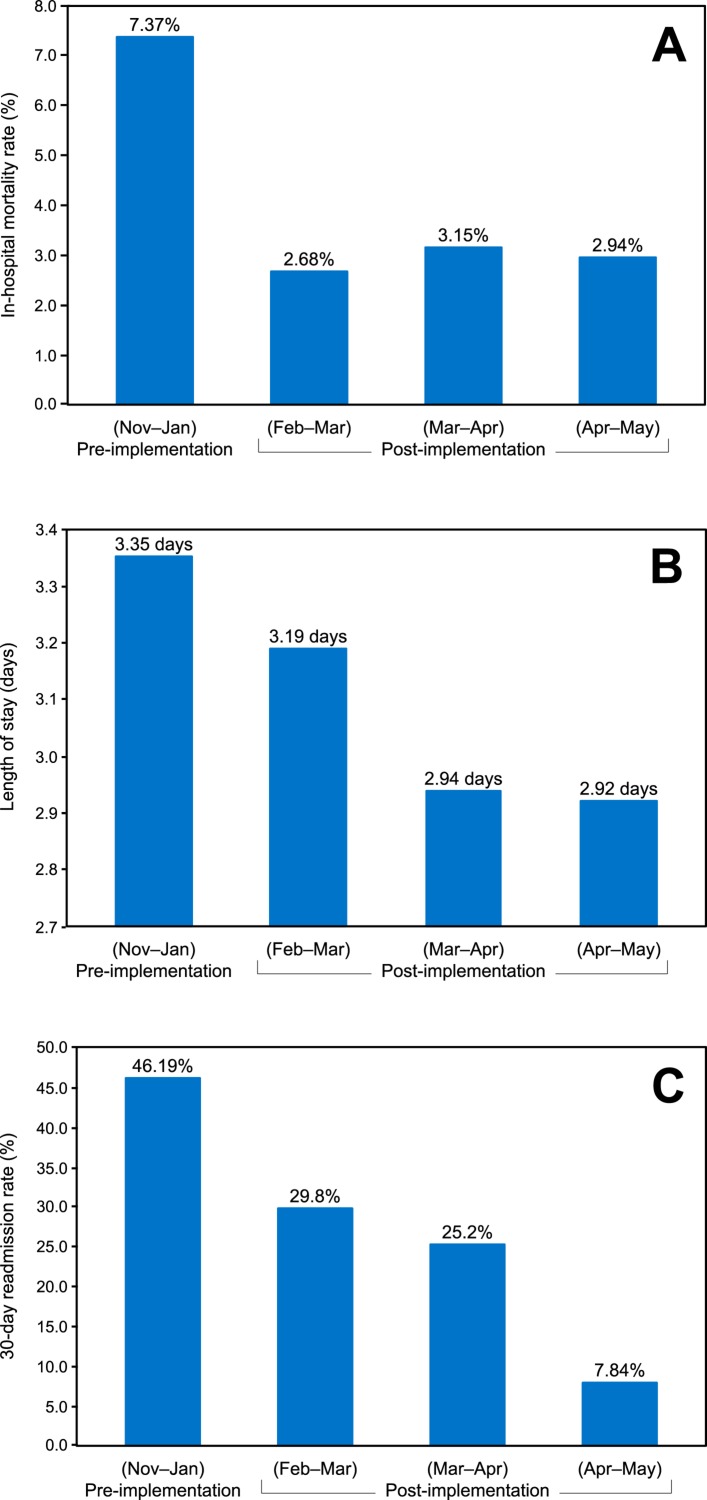
Introduction: Sepsis management is a challenge for hospitals nationwide, as severe sepsis carries high mortality rates and costs the US healthcare system billions of dollars each year. It has been shown that early intervention for patients with severe sepsis and septic shock is associated with higher rates of survival. The Cape Regional Medical Center (CRMC) aimed to improve sepsis-related patient outcomes through a revised sepsis management approach. Methods: In collaboration with Dascena, CRMC formed a quality improvement team to implement a machine learning-based sepsis prediction algorithm to identify patients with sepsis earlier. Previously, CRMC assessed all patients for sepsis using twice-daily systemic inflammatory response syndrome screenings, but desired improvements. The quality improvement team worked to implement a machine learning-based algorithm, collect and incorporate feedback, and tailor the system to current hospital workflow. Results: Relative to the pre-implementation period, the post-implementation period sepsis-related in-hospital mortality rate decreased by 60.24%, sepsis-related hospital length of stay decreased by 9.55% and sepsis-related 30-day readmission rate decreased by 50.14%. Conclusion: The machine learning-based sepsis prediction algorithm improved patient outcomes at CRMC.
Overview
The claims and statistics of this paper haven’t been checked yet.
Free: it reads the open-access text and checks the first 5 claims that cite a source we can check. Create a free account to check every claim.
Integrity signals
Registry
Cites
Statistics
Figures
Verification
Claims the paper makes
The claims and statistics of this paper haven’t been checked yet.
Free: it reads the open-access text and checks the first 5 claims that cite a source we can check. Create a free account to check every claim.
Claims other papers make about this one
Each is checked against this paper’s own text: does it say what the citing paper says it does?
The source backs part of the claim, not all of it — or backs it for a different population, condition or comparison.
In the citing paper
“Three papers using their own hospital data reported inquiries for data sharing were possible [28, 32, 35], two papers reported data would not be shared [25, 31].”
From Machine learning for the prediction of sepsis: a systematic review and meta-analysis of diagnostic test accuracy (2020) · cites this paper as [31]
Experimental — accuracy not yet measuredThe source backs part of the claim, not all of it — or backs it for a different population, condition or comparison.
In the citing paper
“Sepsis-related in hospital mortality rate decreased by 60.24% (p < 0.001)”
From Moving from bytes to bedside: a systematic review on the use of artificial intelligence in the intensive care unit (2021) · cites this paper as [28]
Experimental — accuracy not yet measuredThe cited source says what the claim attributes to it.
In the citing paper
“All 9 papers34,44,46,50,52,58–61 reported decreased mortality, be that all-cause, sepsis-related or both, although this was statistically significant only for 5 studies”
From Deployment of machine learning algorithms to predict sepsis: systematic review and application of the SALIENT clinical AI implementation framework (2023) · cites this paper as [59]
The cited source says what the claim attributes to it.
In the citing paper
“The interventional studies included two pre-post implementation studies (in-hospital) [30, 31] and one ICU randomized controlled trial [32].”
From Machine learning for the prediction of sepsis: a systematic review and meta-analysis of diagnostic test accuracy (2020) · cites this paper as [31]
The cited source says what the claim attributes to it.
In the citing paper
“Only three interventional studies have been identified in this review, which were carried out in different clinical settings and show mixed results [31, 32, 51].”
From Machine learning for the prediction of sepsis: a systematic review and meta-analysis of diagnostic test accuracy (2020) · cites this paper as [31]
2 more claims about this paper
Create a free account to see every claim other papers make about this one.
Self-check
Percentages, sums and reported differences re-computed from the paper’s own numbers.
The self-check needs the paper’s full text.
Citations
Cites
The third international consensus definitions for sepsis and septic shock (Sepsis-3).
Singer, M., Deutschman, C. S., Seymour, C. W., Shankar-Hari, M., Annane, D., Bauer, M., Bellomo, R., Bernard, G. R., Chiche, J.-D., Coopersmith, C. M., et al. (2016) · JAMA · doi:10.1001/jama.2016.0287 · Cited by 28,250 · cited 2×
“background Severe sepsis is characterised by organ failure and carries a mortality rate of over 10%, and the escalation to septic shock presents with refractory hypotension and a mortality rate near 40%.(7) Despite the high frequency and the poor associated outcomes of sepsis, the heterogeneity of both infection types…”
BackgroundMethodBone, R. C., Balk, R. A., Cerra, F. B., Dellinger, R. P., Fein, A. M., Knaus, W. A., Schein, R. M. H., & Sibbald, W. J. (1992) · Chest · doi:10.1378/chest.101.6.1644 · Cited by 13,198
Vincent, J. L., Moreno, R., Takala, J., Willatts, S., De Mendonça, A., Bruining, H., Reinhart, C. K., Suter, P. M., & Thijs, L. G. (1996) · Intensive Care Medicine · doi:10.1007/bf01709751 · Cited by 11,674
Angus, D. C., Linde-Zwirble, W. T., Lidicker, J., Clermont, G., Carcillo, J., & Pinsky, M. R. (2001) · Critical Care Medicine · doi:10.1097/00003246-200107000-00002 · Cited by 8,503
Kumar, A., Roberts, D., Wood, K. E., Light, B., Parrillo, J. E., Sharma, S., Suppes, R., Feinstein, D., Zanotti, S., Taiberg, L., et al. (2006) · Critical Care Medicine · doi:10.1097/01.ccm.0000217961.75225.e9 · Cited by 6,109
Seymour, C. W., Liu, V. X., Iwashyna, T. J., Brunkhorst, F. M., Rea, T. D., Scherag, A., Rubenfeld, G., Kahn, J. M., Shankar-Hari, M., Singer, M., et al. (2016) · JAMA · doi:10.1001/jama.2016.0288 · Cited by 3,939 · cited 1×
“Even consensus definitions of clinical sepsis presentation are difficult to achieve, as indicated by the recent proposed redefinitions of the stages of sepsis (sepsis −3).(8) However, it has been shown in several studies that early recognition of sepsis, and compliance with sepsis treatment bundles, can lead to a redu…”
BackgroundFleischmann, C., Scherag, A., Adhikari, N. K. J., Hartog, C. S., Tsaganos, T., Schlattmann, P., Angus, D. C., & Reinhart, K. (2016) · American Journal of Respiratory and Critical Care Medicine · doi:10.1164/rccm.201504-0781oc · Cited by 3,548 · cited 1×
“Problem Sepsis, a dysregulated host response to infection, is a serious health concern globally.(1) In the USA alone, more than 750 000 individuals are afflicted annually,(2) with a cost of over $20 billion per year.”
BackgroundThe natural history of the systemic inflammatory response syndrome (SIRS). A prospective study
Rangel-Frausto, M. S. (1995) · JAMA · doi:10.1001/jama.273.2.117 · Cited by 2,104
Validation of a modified Early Warning Score in medical admissions
Subbe, C. P. (2001) · QJM · doi:10.1093/qjmed/94.10.521 · Cited by 1,762
A targeted real-time early warning score (TREWScore) for septic shock.
Henry, K. E., Hager, D. N., Pronovost, P. J., & Saria, S. (2015) · Science Translational Medicine · doi:10.1126/scitranslmed.aab3719 · Cited by 598 · cited 1×
“14 Other prior works applying machine learning algorithms to the EHR in the detection or prediction of sepsis include the retrospective studies of Henry et al 16 and Nachimuthu and Haug, 17 and the pilot studies of Sawyer et al .”
MethodNguyen, H. B., Corbett, S. W., Steele, R., Banta, J., Clark, R. T., Hayes, S. R., Edwards, J., Cho, T. W., & Wittlake, W. A. (2007) · Critical Care Medicine · doi:10.1097/01.ccm.0000259463.33848.3d · Cited by 555
Desautels, T., Calvert, J., Hoffman, J., Jay, M., Kerem, Y., Shieh, L., Shimabukuro, D., Chettipally, U., Feldman, M. D., Barton, C., et al. (2016) · JMIR Medical Informatics · doi:10.2196/medinform.5909 · Cited by 509 · cited 2×
“91, respectively,(13) and robustness to missing data.(14) Experiments comparing this machine learning algorithm’s predictions with SIRS criteria have also shown that the algorithm’s predictions are more sensitive and specific four hours in advance, as well as at the time of sepsis onset.”
ResultSelf-citationIwashyna, T. J., Odden, A., Rohde, J., Bonham, C., Kuhn, L., Malani, P., Chen, L., & Flanders, S. (2014) · Medical Care · doi:10.1097/mlr.0b013e318268ac86 · Cited by 358 · cited 3×
“7 The Sepsis-3 gold standard was defined by suspicion of infection, identified by an abnormal white blood cell count alongside an order of antibiotics within a 24-hour period, and organ dysfunction, identified by an increase in SOFA score of ≥ 2 points.”
MethodInfluentialA computational approach to early sepsis detection
Calvert, J. S., Price, D. A., Chettipally, U. K., Barton, C. W., Feldman, M. D., Hoffman, J. L., Jay, M., & Das, R. (2016) · Computers in Biology and Medicine · doi:10.1016/j.compbiomed.2016.05.003 · Cited by 244 · cited 1×
“The machine learning algodiag-nostic (MLA) used in this report has been validated in several retrospective studies, 13–15 demonstrating a sensitivity and specificity of 0.93 and 0.91, respectively, 13 and robustness to missing data.”
MethodInfluentialSelf-citationSimpson, S. Q. (2016) · Chest · doi:10.1016/j.chest.2016.02.653 · Cited by 214
Implementation of a real-time computerized sepsis alert in nonintensive care unit patients*
Sawyer, A. M., Deal, E. N., Labelle, A. J., Witt, C., Thiel, S. W., Heard, K., Reichley, R. M., Micek, S. T., & Kollef, M. H. (2011) · Critical Care Medicine · doi:10.1097/ccm.0b013e318205df85 · Cited by 169 · cited 1×
“Other prior works applying machine learning algorithms to the EHR in the detection or prediction of sepsis include the retrospective studies of Henry et al(16) and Nachimuthu and Haug,(17) and the pilot studies of Sawyer et al.(18)”
MethodDevelopment, implementation, and impact of an automated early warning and response system for sepsis
Umscheid, C. A., Betesh, J., VanZandbergen, C., Hanish, A., Tait, G., Mikkelsen, M. E., French, B., & Fuchs, B. D. (2015) · Journal of Hospital Medicine · doi:10.1002/jhm.2259 · Cited by 168
Hooper, M. H., Weavind, L., Wheeler, A. P., Martin, J. B., Gowda, S. S., Semler, M. W., Hayes, R. M., Albert, D. W., Deane, N. B., Nian, H., et al. (2012) · Critical Care Medicine · doi:10.1097/ccm.0b013e318250a887 · Cited by 121 · cited 1×
“Prospective studies of EHR-tool usage in clinical settings have most often been rules-based, 10 using predetermined score thresholds to rank patient sepsis risk, 11 but demonstrate suboptimal sensitivity and specificity.”
MethodChalupka, A. N., & Talmor, D. S. (2011) · Critical Care Clinics · doi:10.1016/j.ccc.2011.09.003 · Cited by 109
Jaimes, F. A., Garc�s, J., Cuervo, J., Ram�rez, F., Ram�rez, J., Vargas, A., Quintero, C., Ochoa, J., Tandioy, F., Zapata, L., et al. (2003) · Intensive Care Medicine · doi:10.1007/s00134-003-1874-0 · Cited by 87
Jones, S. L., Ashton, C. M., Kiehne, L. B., Nicolas, J. C., Rose, A. L., Shirkey, B. A., Masud, F., & Wray, N. P. (2016) · Medical Care · doi:10.1097/mlr.0000000000000481 · Cited by 69
Faust, J. S., & Weingart, S. D. (2016) · Emergency Medicine Clinics of North America · doi:10.1016/j.emc.2016.09.006 · Cited by 64
High-performance detection and early prediction of septic shock for alcohol-use disorder patients
Calvert, J., Desautels, T., Chettipally, U., Barton, C., Hoffman, J., Jay, M., Mao, Q., Mohamadlou, H., & Das, R. (2016) · Annals of Medicine & Surgery · doi:10.1016/j.amsu.2016.04.023 · Cited by 62 · cited 2×
“The machine learning algodiag-nostic (MLA) used in this report has been validated in several retrospective studies, 13–15 demonstrating a sensitivity and specificity of 0.93 and 0.91, respectively, 13 and robustness to missing data.”
MethodInfluentialSelf-citationJones, A. E., Shapiro, N. I., & Roshon, M. J. (2007) · Academic Emergency Medicine · doi:10.1197/j.aem.2007.04.014 · Cited by 61
Early detection of sepsis in the emergency department using Dynamic Bayesian Networks.
Nachimuthu, S., & Haug, P. J. (2012) · PubMed · Cited by 57
Patel, G. W., Roderman, N. S., Gehring, H., Saad, J., & Bartek, W. (2010) · Annals of Pharmacotherapy · doi:10.1345/aph.1p251 · Cited by 28
Designing and testing computer based screening engine for severe sepsis/septic shock.
Herasevich, V., Afessa, B., Chute, C. G., & Gajic, O. (2008) · PubMed · Cited by 22
Research works printed but not linked: 1
- Singer M, Deutschman CS, Seymour CW, et al The third international consensus definitions for Sepsis and Septic Shock (sepsis-3). JAMA 2016; 315: 801– 10. doi:10.1001/jama.2016.0287 26903338 PMC4968574 · DOI · Paper page
Cited by
Artificial intelligence, bias and clinical safety
Challen, R., Denny, J., Pitt, M., Gompels, L., Edwards, T., & Tsaneva-Atanasova, K. (2019) · BMJ Quality & Safety · doi:10.1136/bmjqs-2018-008370 · Cited by 956
“…is notable however that the sepsis detection system mentioned above 20 has been successfully tested in the different context of a community hospital 5 despite being trained in intensive care, a potential distributional shift, and thus shows some capability of adaptation through ‘transfer learning’.”
Fleuren, L. M., Klausch, T. L. T., Zwager, C. L., Schoonmade, L. J., Guo, T., Roggeveen, L. F., Swart, E. L., Girbes, A. R. J., Thoral, P., Ercole, A., et al. (2020) · Intensive Care Medicine · doi:10.1007/s00134-019-05872-y · Cited by 755
Peiffer-Smadja, N., Rawson, T. M., Ahmad, R., Buchard, A., Georgiou, P., Lescure, F.-X., Birgand, G., & Holmes, A. H. (2020) · Clinical Microbiology and Infection · doi:10.1016/j.cmi.2019.09.009 · Cited by 561
Role of Artificial Intelligence Applications in Real-Life Clinical Practice: Systematic Review
Yin, J., Ngiam, K. Y., & Teo, H. H. (2021) · Journal of Medical Internet Research · doi:10.2196/25759 · Cited by 419
Adams, R., Henry, K. E., Sridharan, A., Soleimani, H., Zhan, A., Rawat, N., Johnson, L., Hager, D. N., Cosgrove, S. E., Markowski, A., et al. (2022) · Nature Medicine · doi:10.1038/s41591-022-01894-0 · Cited by 365
“However, few studies have reported on clinical implementations of these models 11,16,17 .”
Background
Metadata
- Authors
- McCoy, A., & Das, R.
- Affiliations
- Cape Regional Medical Center, Cape May Court House, New Jersey, USA
- Dascena (United States) (US)
- Corresponding author
- Das, Ritankar
- ORCID
- Das, Ritankar
- Venue
- BMJ Open Quality
- Publisher
- BMJ
- Published
- 2017-10
- Volume
- 6
- Issue
- 2
- Pages
- e000158
- ISSN
- 2399-6641 (ISSN-L)
- PMC
- PMC5699136
- OpenAlex
- W2766207659
- Cited by
- 148
- References
- 27
- Citations by year
- 2026: 8 · 2025: 12 · 2024: 22 · 2023: 15 · 2022: 28 · 2021: 23 · 2020: 18 · 2019: 17 · 2018: 5
- FWCI
- 8.56
- Type
- journal article
- Language
- en
- Open access
- gold
- doi.org
- Licence
- cc-by-nc
- Locations
- BMJ Open Quality (publishedVersion, cc-by-nc)
- Europe PMC (PubMed Central) (publishedVersion, cc-by-nc)
- PubMed Central (publishedVersion, cc-by-nc)
- PubMed (publishedVersion)
- Topics
- Health Sciences › Medicine › Critical Care and Intensive Care Medicine › Sepsis Diagnosis and Treatment
- Physical Sciences › Computer Science › Artificial Intelligence › Machine Learning in Healthcare
- Health Sciences › Medicine › Nephrology › Acute Kidney Injury Research
- Keywords
- sepsis prediction, machine learning, sepsis treatment, septic shock, in-hospital mortality, length of hospital stay, hospital readmission, early intervention, quality improvement, emergency department, intensive care unit, hospital workflow
About these checks
Registry, retraction, Cites and statistics results are computed, not judged, with one exception: a printed reference that no index lists is read once by a model before it counts as a citation error. Claims are extracted by a model and kept only when their quote appears verbatim in the text; each cited source is then checked, with a model’s help, for whether it says what the claim relies on. Those verdicts can be wrong — read the claim’s quote and the cited source before relying on one.
Statistics and arithmetic are recomputed, not judged.
Confidence bands are shown only for fields calibrated on our annotated test set. None is calibrated yet, so no band is shown.
What counts as a claim ›How we measure confidence ›How we check this ›
Are you an author, or do you see a problem with this page? Request a review
Data sources
Bibliographic data: Semantic Scholar, OpenAlex, Crossref.
Contains information from the Semantic Scholar Academic Graph Datasets, made available under the ODC Attribution License (ODC-BY 1.0).
Semantic Scholar’s data is described in: Kinney, R., et al. (2023). The Semantic Scholar Open Data Platform. arXiv:2301.10140.
