

Six decades of preventing and treating childhood anxiety disorders: a systematic review and meta-analysis to inform policy and practice
Open accessThe DOI matches its Crossref record; 51 of the 53 references it cites were found in a registry or an index; 12 of the 87 sources its claims cite were checked for support.
Abstract
Question Anxiety disorders are the most prevalent childhood mental disorders. They also start early and persist, causing high individual and collective costs. To inform policy and practice, we therefore asked: What is the best available research evidence on preventing and treating these disorders? Methods We sought randomised controlled trials (RCTs) evaluating interventions addressing anxiety problems in young people. We identified RCTs by searching CINAHL, ERIC, MEDLINE, PsycINFO and Web of Science. Thirty-three RCTs met inclusion criteria—evaluating 8 prevention programmes, 12 psychosocial treatments and 7 pharmacological treatments. We then conducted meta-analyses by intervention type. Findings For prevention, the cognitive-behavioural therapy (CBT) programme Coping and Promoting Strength stood out for reducing anxiety diagnoses. For psychosocial treatment, 9 CBT interventions also reduced diagnoses: Cool Kids ; C ool Little Kids Plus Social Skills; Coping Cat; Coping Koala; One-Session Treatment; Parent Education Program; Skills for Academic and Social Success; Strongest Families and Timid to Tiger . Successful CBT interventions were used with children ranging from pre-schoolers to teens in homes, communities/schools and clinics. For pharmacological treatment, selective-serotonergic-reuptake-inhibitors (SSRIs) significantly improved symptoms. Fluoxetine stood out for also reducing post-test diagnoses, but caused adverse events. Meta-analyses indicated strongest effects for CBT (Log OR=0.95; 95% CI, 0.69 to 1.21) and SSRI treatments (1.57; 1.09 to 2.06). Conclusions CBT is effective for preventing and treating childhood anxiety—across a range of ages and formats. Fluoxetine is also an effective treatment but side effects must be managed. CBT prevention and treatment interventions should be made widely available, adding fluoxetine in severe cases.
Overview
CoChat Summary
TL;DR
This systematic review and meta-analysis found the strongest evidence for CBT in both preventing and treating childhood anxiety disorders, with fluoxetine also showing benefit for symptom improvement and some diagnostic reduction. The authors conclude that CBT prevention and treatment should be widely available, with fluoxetine considered for more severe cases and side effects monitored.
Key findings
- The review included 33 RCTs: 8 prevention programmes, 12 psychosocial treatments, and 7 pharmacological treatments.
- In meta-analysis, CBT treatment programmes significantly outperformed comparison conditions for reducing diagnoses (Log OR=0.95; 95% CI, 0.69 to 1.21), while CBT prevention programmes did not significantly outperform comparison conditions (Log OR=0.50; 95% CI, −0.14 to 1.13).
- SSRIs significantly improved symptoms versus placebo (Log OR=1.57; 95% CI, 1.09 to 2.06); fluoxetine also reduced post-test diagnoses, but the paper notes adverse events.
- Specific CBT interventions with diagnostic benefits included Coping and Promoting Strength for prevention, and 9 CBT treatment interventions including Cool Kids, Coping Cat, Coping Koala, One-Session Treatment, Parent Education Program, SASS, Strongest Families, and Timid to Tiger.
Methods
- Systematic review and meta-analysis of randomised controlled trials evaluating interventions for anxiety problems in people aged 18 years or younger.
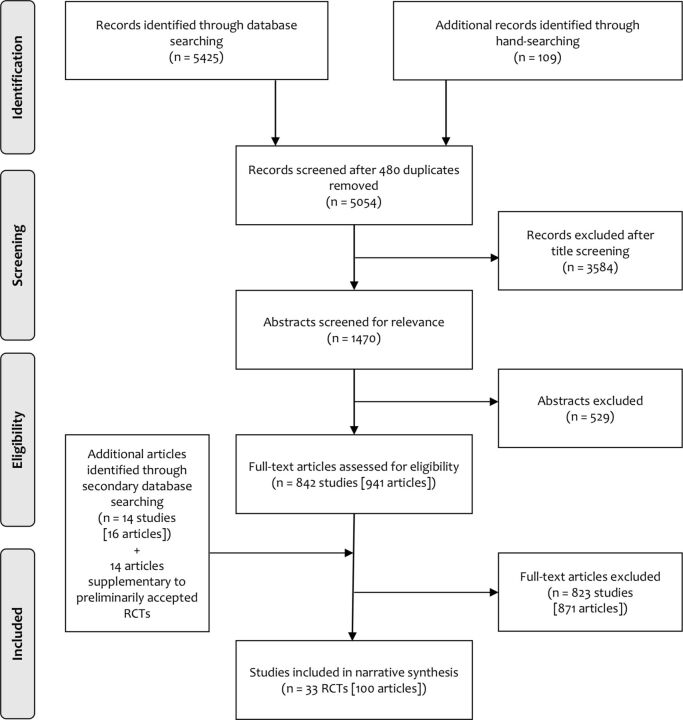
- Searches covered CINAHL, ERIC, MEDLINE, PsycINFO, and Web of Science from January 1950 to May 2018, restricted to English-language articles and high-income countries.
- Separate random-effects meta-analyses were conducted for CBT prevention, CBT treatment, and SSRIs; effect sizes were expressed as odds ratios and heterogeneity assessed with Cochran’s Q and Egger’s tests.
Limitations
- The paper states that inclusion criteria differed for blinding between psychosocial and medication studies, which may introduce bias favouring psychosocial studies; it also notes different follow-up requirements for medication versus psychosocial studies.
- The authors say their high thresholds for study inclusion likely excluded many interventions being implemented.
- Evident from the text: the review was limited to English-language studies and high-income countries, so findings may not generalise to other settings (this is evident from the methods, not stated as a limitation in the paper).
Model-written summary. Check it against the paper before relying on it.
Integrity signals
Registry
Cites
Statistics
Figures
Verification
Claims the paper makes
4 Valid · 1 Not valid · 58 Not checked · 49 Own results and interpretations
The sources with a verdict support this claim; the rest weren’t checked yet, have no full text we could read, or their verdicts aren’t rated yet.
In the paper
“Past reviews/meta-analyses have examined only prevention14–16 or only treatment.17–21”
§ Six decades of preventing and treating childhood anxiety disorders: a systematic review and meta-analysis to inform policy and practice > Objectives
What the sources say
- Not checked yetcites [14] Fisak BJ, Richard D, Mann A. The prevention of child and adolescent anxiety: a meta-analytic review. Prev Sci 2011; 12: 255– 68. 10.1007/s11121-011-0210-0 21437675 source
- Not checked yetcites [15] Teubert D, Pinquart M. A meta-analytic review on the prevention of symptoms of anxiety in children and adolescents. J Anx Disorders 2011; 25: 1046– 59. 10.1016/j.janxdis.2011.07.001 source
- Not checked yetcites [16] Waldron SM, Stallard P, Grist R, et al. The ‘long-term’ effects of universal school-based anxiety prevention trials: a systematic review. Ment Health Prev 2018; 11: 8– 15. 10.1016/j.mhp.2018.04.003 source
- Supportedcites [17] Reynolds S, Wilson C, Austin J, et al. Effects of psychotherapy for anxiety in children and adolescents: a meta-analytic review. Clin Psychol Rev 2012; 32: 251– 62. 10.1016/j.cpr.2012.01.005 22459788 source
Our copy shows Reynolds et al. (2012) is itself a treatment-only meta-analysis: the aims paragraph ('A C C E P T E D') lists four aims all about psychological treatment for anxiety disorders, and the methods section defines the scope as 'psychotherapy for anxiety ... an intervention designed to alleviate the symptoms of diagnosed anxiety disorders or elevated anxiety levels,' stating 'our review is explicitly on psychotherapy for anxiety disorders' and that they searched for treatment trials. It also characterises the prior meta-analyses it compares against (James et al., 2005; In-Albon & Schneider, 2007; Ishikawa et al., 2007; Silverman et al., 2008) as reviews of treatment/psychotherapy, whose stated gaps concern CBT-only inclusion rather than prevention. The prevention half of the citing sentence is carried by the adjacent citations (14–16), not by this source, and our copy makes no claim about prevention reviews. (LLM, conf=0.82)
- Not checked yetcites [18] James AC, James G, Cowdrey FA, et al. Cognitive behavioural therapy for anxiety disorders in children and adolescents. Cochrane Database Syst Rev 2015; 2: CD004690. 10.1002/14651858.CD004690.pub4 PMC6491167 25692403
- Not checked yetcites [19] Higa-McMillan CK, Francis SE, Rith-Najarian L, et al. Evidence base update: 50 years of research on treatment for child and adolescent anxiety. J Clin Child Adolesc Psychol 2016; 45: 91– 113. 10.1080/15374416.2015.1046177 26087438 source
- Not checked yetcites [20] Wang Z, Whiteside SPH, Sim L, et al. Comparative effectiveness and safety of cognitive behavioral therapy and pharmacotherapy for childhood anxiety disorders: a systematic review and meta-analysis. JAMA Pediatr 2017; 171: 1049– 56. 10.1001/jamapediatrics.2017.3036 28859190 PMC5710373 source
- Supportedcites [21] Zhou X, Zhang Y, Furukawa TA, et al. Different types and acceptability of psychotherapies for acute anxiety disorders in children and adolescents: a network meta-analysis. JAMA Psychiatry 2019; 76: 41– 50. 10.1001/jamapsychiatry.2018.3070 30383099 PMC6583467 source
The cited Zhou et al. (2019) network meta-analysis is itself a treatment-only synthesis: its Methods (Search Strategy and Selection Criteria) restrict eligibility to 'any structured psychotherapy for the acute treatment of children and adolescents ... with a primary diagnosis of anxiety disorders', excluding treatment-resistant cases and trials under 6 weeks, and the Limitations (Discussion) confirm that 'we excluded participants with subsyndromal anxiety symptoms', i.e. no indicated/selective prevention populations. The Abstract Findings and Results likewise cover 101 trials of 11 psychotherapies for acute anxiety disorders, with no prevention arm. Thus, as the exemplifying reference in the 'only treatment' cluster, our copy shows this work examined treatment alone; the prevention-only half of the sentence is attributed to other references (14-16), not to this source. (LLM, conf=0.85)
plain- Asserted: passes — The authors put it forward as true.
- Checkable: passes — It can be checked against evidence.
- Load-bearing: passes — The paper’s conclusions depend on it.
- Based: passes — The paper gives a reason why it holds.
The cited sources support only part of this claim — read each source’s verdict below.
In the paper
“This included only 0%–5% of intervention children developing disorders between post-test and 9-month follow-up, compared with 30%–31% of controls.30–32”
§ Six decades of preventing and treating childhood anxiety disorders: a systematic review and meta-analysis to inform policy and practice > Findings > Prevention programmes
What the sources say
- Partly supportedcites [30] Ginsburg GS. The child anxiety prevention study: intervention model and primary outcomes. J Consult Clin Psychol 2009; 77: 580– 7. 10.1037/a0014486 19485597 PMC3373966 sourceExperimental — accuracy not yet measured
Ginsburg (2009) reports exactly the two anchor figures — 0/20 (0%) in the CAPS group versus 6/20 (30%) in the wait-list group developing an anxiety disorder — in Results > Primary Outcomes Analyses: Child Anxiety Diagnoses and in the Abstract. However, in this paper those cases accumulated by the 12-month (1-year) follow-up, not a 9-month follow-up: the Procedure states assessments were pre-, postintervention, and 6 and 12 months after postintervention. The upper ends of the claimed ranges (5% of intervention children, 31% of controls) and the '9-month' interval are not in our copy of this source, and the paper's outcome is specifically anxiety disorders in offspring of anxious parents, not disorders generally. (LLM, conf=0.78)
- Partly supportedcites [31] Ginsburg GS, Drake KL, Tein JY, et al. Preventing onset of anxiety disorders in offspring of anxious parents: a randomized controlled trial of a family-based intervention. Am J Psychiatry 2015; 172: 1207– 14. 10.1176/appi.ajp.2015.14091178 26404420 PMC6013063 sourceExperimental — accuracy not yet measured
Our copy supports the magnitudes for this trial: RESULTS > Onset of Child Anxiety Disorder reports cumulative onset of 5.26% (3 children) in the intervention group versus 30.65% (19) in the information-monitoring control group over the 1-year study (Abstract > Results rounds these to 5% and 31%). However, the interval the claim attributes is not this trial's: Abstract > Method and METHOD > Procedures list assessments only at baseline, end of intervention (8 weeks after randomization) and 6- and 12-month follow-ups, so there is no post-test-to-9-month window, and the onset figures are for the full 12 months rather than the post-intervention period alone. The 0% end of the claimed range does not appear anywhere in our copy; the paper mentions its pilot study (ref 13) only as 'consistent with our pilot study results' without reporting a 0% figure, so that part of the range is not supported by this source. (LLM, conf=0.78)
- Partly supportedcites [32] Pella JE, Drake KL, Tein JY, et al. Child anxiety prevention study: impact on functional outcomes. Child Psychiatry Hum Dev 2017; 48: 400– 10. 10.1007/s10578-016-0667-y 27392728 PMC5219954 sourceExperimental — accuracy not yet measured
The Introduction (Child Anxiety Prevention Study: Impact on Functional Outcomes) states that 5% of children who received CAPS developed an anxiety disorder compared with 31% of the Information Monitoring control group, so those endpoints of the claim's ranges are supported. However, our copy gives this figure at the 12-month follow-up, not 'between post-test and 9-month follow-up' (assessments were at post-intervention/~9 weeks, 6 and 12 months, per Methods > Procedure), and it reports no 0% or 30% values and no second CAPS trial. Moreover, the paper presents these diagnostic figures as results of the previously published efficacy trial it cites (ref. [18], Ginsburg, Drake, Tein, Teetsel & Riddle, 2015, Am J Psychiatry), echoed in the Discussion ('while some children did develop a disorder by the 12 month follow-up [18]'), so it is not the original source of the incidence data. (LLM, conf=0.82)
plain- Asserted: passes — The authors put it forward as true.
- Checkable: passes — It can be checked against evidence.
- Load-bearing: passes — The paper’s conclusions depend on it.
- Based: passes — The paper gives a reason why it holds.
- Partly supported
In the paper
“Six programmes used CBT techniques including psychoeducation, relaxation, cognitive restructuring and exposure exercises.28–30 34–36”
§ Six decades of preventing and treating childhood anxiety disorders: a systematic review and meta-analysis to inform policy and practice > Findings > Prevention programmes
What the sources say
- Not checked yetcites 28–30 34–36
plain- Asserted: passes — The authors put it forward as true.
- Checkable: passes — It can be checked against evidence.
- Load-bearing: unclear — It is unclear whether the paper’s conclusions depend on it.
- Based: passes — The paper gives a reason why it holds.
In the paper
“Similarly, there was no difference among the 3 conditions on symptoms on 4 measures.w56”
§ Six decades of preventing and treating childhood anxiety disorders: a systematic review and meta-analysis to inform policy and practice > Findings > Pharmacological treatments
What the sources say
- Not checked yetcites w56
plain- Asserted: passes — The authors put it forward as true.
- Checkable: passes — It can be checked against evidence.
- Load-bearing: unclear — It is unclear whether the paper’s conclusions depend on it.
- Based: passes — The paper gives a reason why it holds.
A result the paper reports from its own data — it cites no other source for it, so there is none to check. The quote shows it is in the paper.
In the paper
“All treatments were relatively brief, ranging from 3 hours to 6 months.”
§ Six decades of preventing and treating childhood anxiety disorders: a systematic review and meta-analysis to inform policy and practice > Findings > Psychosocial treatments
plain- Asserted: passes — The authors put it forward as true.
- Checkable: passes — It can be checked against evidence.
- Load-bearing: unclear — It is unclear whether the paper’s conclusions depend on it.
- Based: passes — The paper gives a reason why it holds.
33 more claims
Create a free account to see all 112 claims and to verify the 75 references still open.
- It may state two separate claims as one. 63
- Probably not a substantial claim. 18
Claims other papers make about this one
Each is checked against this paper’s own text: does it say what the citing paper says it does?
The cited source says what the claim attributes to it.
In the citing paper
“Although abundant evidence supports the efficacy of cognitive behavioral therapy (CBT) in treating adolescent anxiety, not all teens respond positively to CBT.”
From Combining attachment-based family therapy and cognitive behavioral therapy to improve outcomes for adolescents with anxiety (2023) · cites this paper as [18]
The cited source says what the claim attributes to it.
In the citing paper
“yet access to CBT remains limited.”
From Developing a primary care-based cognitive behavioral intervention for anxiety in children through a participatory approach: a qualitative study. (2026) · cites this paper as [8]
The cited source says what the claim attributes to it.
In the citing paper
“international reviews have highlighted the need to improve access to CBT for childhood anxiety [5, 8].”
From Developing a primary care-based cognitive behavioral intervention for anxiety in children through a participatory approach: a qualitative study. (2026) · cites this paper as [8]
Citations
Cites
Diagnostic and Statistical Manual of Mental Disorders
American Psychiatric Association (2013) · doi:10.1176/appi.books.9780890425596 · Cited by 116,369
Preferred Reporting Items for Systematic Reviews and Meta-Analyses: the PRISMA statement
Moher, D., Liberati, A., Tetzlaff, J., Altman, D. G., & for the PRISMA Group (2009) · BMJ · doi:10.1136/bmj.b2535 · Cited by 83,823
Preferred reporting items for systematic reviews and meta-analyses: the PRISMA Statement.
(2009) · PubMed Central · Cited by 44,859
The Cochrane Collaboration's tool for assessing risk of bias in randomised trials
Higgins, J. P. T., Altman, D. G., Gotzsche, P. C., Juni, P., Moher, D., Oxman, A. D., Savovic, J., Schulz, K. F., Weeks, L., Sterne, J. A. C., et al. (2011) · BMJ · doi:10.1136/bmj.d5928 · Cited by 33,817
Dermyshi, E., Wang, Y., Yan, C., Hong, W., Qiu, G., Gong, X., & Zhang, T. (2017) · Neonatology · doi:10.1159/000454668 · Cited by 24,451
Conducting Meta-Analyses in R with the metafor Package
Viechtbauer, W. (2010) · Journal of Statistical Software · doi:10.18637/jss.v036.i03 · Cited by 20,464
Kessler, R. C., Berglund, P., Demler, O., Jin, R., Merikangas, K. R., & Walters, E. E. (2005) · Archives of General Psychiatry · doi:10.1001/archpsyc.62.6.593 · Cited by 20,391
Preferred Reporting Items for Systematic Reviews and Meta-Analyses: The PRISMA Statement
Moher, D., Liberati, A., Tetzlaff, J., & Altman, D. G. (2009) · Journal of Clinical Epidemiology · doi:10.1016/j.jclinepi.2009.06.005 · Cited by 19,575 · cited 1×
“22 We limited our review to RCTs because this design is the most rigorous way of evaluating interventions.”
Feature Selection with the Boruta Package
Kursa, M. B., & Rudnicki, W. R. (2010) · Journal of Statistical Software · doi:10.18637/jss.v036.i11 · Cited by 5,659
Polanczyk, G. V., Salum, G. A., Sugaya, L. S., Caye, A., & Rohde, L. A. (2015) · Journal of Child Psychology and Psychiatry · doi:10.1111/jcpp.12381 · Cited by 3,990
Cited by
Barican, J. L., Yung, D., Schwartz, C., Zheng, Y., Georgiades, K., & Waddell, C. (2022) · Evidence Based Mental Health · doi:10.1136/ebmental-2021-300277 · Cited by 238
Self-citationHaig-Ferguson, A., Cooper, K., Cartwright, E., Loades, M. E., & Daniels, J. (2021) · Behavioural and Cognitive Psychotherapy · doi:10.1017/s1352465820000636 · Cited by 84
“Schwartz et al. (2019) conducted a meta-analysis of anxiety interventions for children and found that 10 of the 11 CBT interventions evaluated were effective in reducing anxiety in children and young people.”
MethodJeppesen, P., Wolf, R. T., Nielsen, S. M., Christensen, R., Plessen, K. J., Bilenberg, N., Thomsen, P. H., Thastum, M., Neumer, S., Puggaard, L. B., et al. (2020) · JAMA Psychiatry · doi:10.1001/jamapsychiatry.2020.4045 · Cited by 70
Pegg, S. L., Hill, K. E., Argiros, A. P., Olatunji, B. O., & Kujawa, A. (2022) · Current Psychiatry Reports · doi:10.1007/s11920-022-01384-7 · Cited by 74
Lockwood, J., Williams, L., Martin, J. L., Rathee, M., & Hill, C. (2022) · JMIR Mental Health · doi:10.2196/29008 · Cited by 35
McGovern, R., Balogun-Katung, A., Artis, B., Bareham, B. K., Spencer, L. P., Alderson, H., Brown, E., Brown, J., Lingam, R., McArdle, P., et al. (2024) · Journal of Prevention · doi:10.1007/s10935-024-00785-z · Cited by 51
Gosmann, N. P., Costa, M. D. A., Jaeger, M. D. B., Frozi, J., Spanemberg, L., Manfro, G. G., Cortese, S., Cuijpers, P., Pine, D. S., & Salum, G. A. (2023) · Psychological Medicine · doi:10.1017/s0033291723001630 · Cited by 28
Online Parenting Programs for Children’s Behavioral and Emotional Problems: a Network Meta-Analysis
Canário, C., Pinto, R., Silva‐Martins, M., Rienks, K., Akik, B. K., Stanke, K. M., David, D., Kızıltepe, R., Meléndez‐Torres, G. J., Thongseiratch, T., et al. (2024) · Prevention Science · doi:10.1007/s11121-024-01735-1 · Cited by 40
Tse, Z. W. M., Emad, S., Hasan, M. K., Papathanasiou, I. V., Rehman, I. U., & Lee, K. Y. (2023) · PLoS ONE · doi:10.1371/journal.pone.0283329 · Cited by 39
Syeda, M. M., & Andrews, J. J. W. (2021) · Journal of Child and Family Studies · doi:10.1007/s10826-021-01924-4 · Cited by 21
Brown, L. A., White, L. K., Makhoul, W., Teferi, M., Sheline, Y. I., & Balderston, N. L. (2023) · International Journal of Clinical and Health Psychology · doi:10.1016/j.ijchp.2023.100385 · Cited by 20
Educational fMRI: From the Lab to the Classroom
Seghier, M. L., Fahim, M. A., & Habak, C. (2019) · Frontiers in Psychology · doi:10.3389/fpsyg.2019.02769 · Cited by 24
School-based screening for childhood anxiety problems and intervention delivery: a codesign approach
Williamson, V., Larkin, M., Reardon, T. C., Pearcey, S., Button, R., Green, I., Hill, C., Stallard, P. N., Spence, S. H., Breen, M. A., et al. (2022) · BMJ Open · doi:10.1136/bmjopen-2021-058089 · Cited by 15
Herres, J., Krauthamer Ewing, E. S., Levy, S., Creed, T. A., & Diamond, G. S. (2023) · Frontiers in Psychiatry · doi:10.3389/fpsyt.2023.1096291 · Cited by 11
Screening for Anxiety in Pediatric Primary Care: A Systematic Review
Kemper, A. R., Letostak, T. B., Hostutler, C. A. A., Stephenson, K. G., & Butter, E. M. (2021) · PEDIATRICS · doi:10.1542/peds.2021-052633 · Cited by 10
Vartiainen, A., Kuvaja-Köllner, V., Rantsi, M., Rissanen, E., Luntamo, T., Kurki, M., Sourander, A., & Kankaanpää, E. (2021) · Child and Adolescent Mental Health · doi:10.1111/camh.12505 · Cited by 19
Anxiety in children and youth: Part 1—Diagnosis
Klein, B., Rajendram, R., Hrycko, S., Poynter, A., Ortiz-Alvarez, O., Saunders, N. R., & Andrews, D. (2023) · Paediatrics & Child Health · doi:10.1093/pch/pxac102 · Cited by 15
Meta-analysis of Effective Treatments in Reducing Children's Anxiety
Hafshejani, F. A., Akbari, B., Hosseinkhanzadeh, A. A., & Abolghasemi, A. (2023) · Quarterly Journal of Child Mental Health · doi:10.61186/jcmh.10.2.9 · Cited by 10
Transdiagnostic prevention in youth mental health, Part II: interventions
DeTore, N. R., Balogun‐Mwangi, O., Choi, K. W., & Holt, D. J. (2025) · Neuropsychopharmacology · doi:10.1038/s41386-025-02234-9 · Cited by 13
Sourander, A., Korpilahti-Leino, T., Kaajalaakso, K., Ristkari, T., Hinkka‐Yli‐Salomäki, S., Ståhlberg, T., & Luntamo, T. (2025) · Journal of the American Academy of Child & Adolescent Psychiatry · doi:10.1016/j.jaac.2024.11.024 · Cited by 10
Soo, C. A., Tate, R. L., Catroppa, C., Benson, S. G., McDonald, S., Rapee, R. M., & Anderson, V. A. (2022) · Neuropsychological Rehabilitation · doi:10.1080/09602011.2022.2154811 · Cited by 8
Baschab, J. F., Moehler, E., & Hussong, J. (2026) · European Child & Adolescent Psychiatry · doi:10.1007/s00787-025-02945-w · Cited by 9
Kaajalaakso, K., Luntamo, T., Korpilahti-Leino, T., Ristkari, T., Hinkka‐Yli‐Salomäki, S., & Sourander, A. (2024) · European Child & Adolescent Psychiatry · doi:10.1007/s00787-024-02486-8 · Cited by 5
Zikopoulou, O., Rapee, R. M., & Simos, G. (2021) · Psychiatry International · doi:10.3390/psychiatryint2020016 · Cited by 7
Tømmerås, T., Backer‐Grøndahl, A., Høstmælingen, A., Laland, H., Gomez, M. B., Apeland, A., Karlsson, L. R. A., Grønlie, A. A., Torsvik, S., Bringedal, G., et al. (2024) · BMC Psychology · doi:10.1186/s40359-024-01765-y · Cited by 3
Francín-Gallego, M., Oviedo‐Caro, M. Á., Sitko, S., Legaz‐Arrese, A., Pano-Rodríguez, Á., Munguía‐Izquierdo, D., Masià, J. R., & Mayolas-Pi, C. (2024) · Journal of Public Health · doi:10.1007/s10389-024-02358-0 · Cited by 3
Wolf, R. T., Jeppesen, P., Pedersen, M. M. A., Puggaard, L. B., Thastum, M., Bilenberg, N., Thomsen, P. H., Silverman, W. K., Plessen, K. J., Neumer, S., et al. (2022) · BMC Health Services Research · doi:10.1186/s12913-022-08187-9 · Cited by 6
Systematic Review of Single-Case Designs to Identify Mediator Characteristics
Moeyaert, M., Lou, Y., Yang, P., Fingerhut, J., Miočević, M., & Valente, M. J. (2025) · Journal of Behavioral Education · doi:10.1007/s10864-025-09600-z · Cited by 3
Cognitive-Behavioral Therapy for Anxiety in Children Age 7 Years and Younger
Abel, M. R., D'Amico, A. A., & Hirshfeld‐Becker, D. R. (2025) · Psychiatric Annals · doi:10.3928/00485713-20250207-03 · Cited by 2
Papadopoulou, A., Mermiri, D.-Z. T., GRITZELAS, G., TSOURIDI, O., DIMARA, E., Yapijakis, C., & Chrousos, G. P. (2021) · In Vivo · doi:10.21873/invivo.12442 · Cited by 4
Designing a multimodal intervention and evaluating its effectiveness in reducing children's anxiety
Hafshejani, F. A., Akbari, B., Hosseinkhanzadeh, A. A., & Abolghasemi, A. (2022) · journal of Adolescent and Youth Psychological Studies · doi:10.52547/jspnay.3.1.354 · Cited by 1
Vause, T. C., Neil, N. M., & Feldman, M. A. (2019) · Springer eBooks · doi:10.1007/978-1-4614-6435-8_102481-1 · Cited by 2
Tømmerås, T., Backer‐Grøndahl, A., Arnesen, A., Apeland, A., Laland, H., Askeland, E., Kjøbli, J., Idsøe, T., Grønlie, A. A., Gomez, M. B., et al. (2022) · medRxiv · doi:10.1101/2022.08.16.22278822 · Cited by 3
Takahashi, T., Reardon, T., & Creswell, C. (2026) · Journal of Behavioral and Cognitive Therapy · doi:10.1016/j.jbct.2026.100580 · Cited by 1
Kręglewska, K., & IV Liceum Ogólnokształcące im. Komisji Edukacji Narodowej, P. (2021) · Psychiatria i Psychologia Kliniczna · doi:10.15557/pipk.2021.0020 · Cited by 1
Veit, L., Jungmann, S. M., & Freitag, C. M. (2023) · Zeitschrift für Kinder- und Jugendpsychiatrie und Psychotherapie · doi:10.1024/1422-4917/a000951 · Cited by 1
School-Based Care for Youth with Disabilities
Helbig, K. A., & Zahn, M. R. (2024) · Primary Care Clinics in Office Practice · doi:10.1016/j.pop.2024.05.003 · Cited by 1
Morse, I., Mannes, J., Pilimatalawwe, D., Phippard, S., Sousa, F. D. S., Samuel, R., Ganesalingam, M., Rengasamy, E. R., Pinto, C., Woolgar, M., et al. (2026) · European Child & Adolescent Psychiatry · doi:10.1007/s00787-026-03064-w · Cited by 4
Improving Child and Adolescent Mental Health in Africa: A Review of the Economic Evidence
Tozan, Y., & Capasso, A. (2021) · Springer eBooks · doi:10.1007/978-3-030-83707-5_3 · Cited by 4
L’anxiété chez les enfants et les adolescents – partie 1 : le diagnostic
Klein, B., Rajendram, R., Hrycko, S., Poynter, A., Ortiz-Alvarez, O., Saunders, N. R., & Andrews, D. (2023) · Paediatrics & Child Health · doi:10.1093/pch/pxac101 · Cited by 7
Preventative Interventions for Childhood and Adolescent Disorders
Werner‐Seidler, A., Beames, J. R., & Torok, M. H. (2021) · Elsevier eBooks · doi:10.1016/b978-0-12-818697-8.00049-2 · Cited by 3
Psychotherapie mit Kindern und Jugendlichen: Bedarf, Behandlungsleitlinien und Besonderheiten
Schneider, S., & Christiansen, H. (2021) · Elsevier eBooks · doi:10.1016/b978-3-437-21352-6.00039-0 · Cited by 1
Isaksson, A., Åhlén, J., Hasson, H., & Eriksson, L. (2026) · BMC Primary Care · doi:10.1186/s12875-026-03191-y
“Consistent with these findings, international reviews have highlighted the need to improve access to CBT for childhood anxiety [5, 8].”
Wolf, R. T., Jeppesen, P., Pedersen, M. M. A., Puggaard, L. B., Thastum, M., Bilenberg, N., Thomsen, P. H., Silverman, W. K., Plessen, K. J., Neumer, S., et al. (2021) · Research Square · doi:10.21203/rs.3.rs-1072243/v1
Vause, T. C., Neil, N. M., & Feldman, M. A. (2021) · Springer eBooks · doi:10.1007/978-3-319-91280-6_102481
Potential Sociodemographic Predictors of Childhood Anxiety Disorders: A Cross-Sectional Study
Mustaffa, M. S., Bafghi, Z. R., Ahmadi, A., Haghdoost, A. A., & Mansor, M. S. (2022) · Journal of Indian Association for Child and Adolescent Mental Health · doi:10.1177/09731342221142047
Kunnskapsoppsummering og klassifisering av tiltaket: Mestringskatten (3. utg.)
Haugland, B. S. M., & Bjaastad, J. F. (2022) · Ungsinn Tidsskrift for virksomme tiltak for barn og unge · doi:10.7557/25.6688
Social support as a protective factor against accommodation for anxiety in youth
Gladstone, T. R., & Flessner, C. A. (2023) · Children s Health Care · doi:10.1080/02739615.2023.2238605
Anxiety disorders in children and adolescents
Muris, P. (2023) · Elsevier eBooks · doi:10.1016/b978-0-323-99613-6.00012-0
Tømmerås, T., Backer‐Grøndahl, A., Høstmælingen, A., Laland, H., Gomez, M. B., Apeland, A., Karlsson, L. R. A., Grønlie, A. A., Torsvik, S., Bringedal, G. E., et al. (2024) · Research Square · doi:10.21203/rs.3.rs-3916963/v1
Rienks, K., Salemink, E., & Leijten, P. H. O. (2024) · Journal of the American Academy of Child & Adolescent Psychiatry · doi:10.1016/j.jaac.2024.01.013 · Cited by 1
Pereira, A. I., Cordeiro, D., Gomes-Pereira, B., Saraiva, M., Vicente, V. N., Paulino, B., Pereira, A. M., Perdigão, M., Oliveira, M. F., & Moreira, H. (2025) · Child & Family Behavior Therapy · doi:10.1080/07317107.2025.2515290 · Cited by 1
Secondary Youth-Level Mechanisms of Change in Parent Training for Anxious Youth
Anderberg, J. L., Barry, K. R., Upshaw, B. M., Mangen, K. H., Spencer, S. D., Guzick, A. G., Ayton, D. M., Palo, A. D., Candelari, A. E., & Storch, E. A. (2025) · Child & Youth Care Forum · doi:10.1007/s10566-025-09880-6
Shuman, T. J., & Crandal, B. R. (2025) · CBT: science into practice · doi:10.1007/978-3-031-91439-3_16
Gee, B., Teague, B., Wilson, J., Chessell, C., Wrigley, L., Koda, T., Mickleburgh, E., Brown, N., McGuire, R., & Clarke, T. (2025) · Emotional and Behavioural Difficulties · doi:10.1080/13632752.2025.2557663
Wolf, R. T., Jeppesen, P., Pedersen, M. M. A., Puggaard, L. B., Thastum, M., Bilenberg, N., Thomsen, P. H., Silverman, W. K., Plessen, K. J., Neumer, S.-P., et al. (2022) · Figshare · doi:10.6084/m9.figshare.20154316
Tømmerås, T., Backer‐Grøndahl, A., Høstmælingen, A., Laland, H., Gomez, M. B., Apeland, A., Karlsson, L. R. A., Grønlie, A. A., Torsvik, S., Bringedal, G. E., et al. (2024) · Figshare · doi:10.6084/m9.figshare.25815059
Mental health research in minors in France: Legal and ethical issues
Levieux, S., Barbe, C., Rolland, A.-C., & Eutrope, J. (2026) · L Encéphale · doi:10.1016/j.encep.2026.03.021
Reading Interventions in the Modern Era: Reconceptualizing the Utility of Video Games
Mehmedovic, S. (2025) · Digital Commons - DU (University of Denver) · doi:10.56902/etdcrp.2025.143
Understanding the bidirectional associations between parenting and child anxiety
Yap, M. B. H., Cardamone-Breen, M. C., & Rapee, R. M. (2026) · Nature Reviews Psychology · doi:10.1038/s44159-026-00618-2
Chatzoglou, E., Fishstrom, S., McFadden, K., & Vaughn, S. R. (2026) · Learning Disabilities Research and Practice · doi:10.1177/09388982261496951
Metadata
- Authors
- Schwartz, C., Barican, J. L., Yung, D., Zheng, Y., & Waddell, C.
- Affiliations
- Simon Fraser University (CA)
- Corresponding author
- Waddell, Charlotte
- Venue
- Evidence-Based Mental Health
- Publisher
- BMJ
- Published
- 2019-07-17
- Volume
- 22
- Issue
- 3
- Pages
- 103-110
- ISSN
- 1362-0347 (ISSN-L)
- 1468-960X
- PMC
- PMC6663062
- OpenAlex
- W2961583591
- Cited by
- 63
- References
- 53
- Citations by year
- 2026: 7 · 2025: 9 · 2024: 9 · 2023: 10 · 2022: 11 · 2021: 12 · 2020: 3 · 2019: 2
- FWCI
- 1.11
- Type
- journal article
- Language
- en
- Open access
- hybrid
- doi.org
- Licence
- cc-by-nc
- Locations
- Evidence-Based Mental Health (publishedVersion, cc-by-nc)
- Europe PMC (PubMed Central) (publishedVersion, cc-by-nc)
- PubMed Central (publishedVersion, cc-by-nc)
- PubMed (publishedVersion)
- DOAJ (DOAJ: Directory of Open Access Journals) (submittedVersion)
- HighWire Press Open Archive (submittedVersion)
- Summit (Simon Fraser University) (submittedVersion)
- Funders
- British Columbia Ministry for Children and Family Development
- Topics
- Social Sciences › Psychology › Clinical Psychology › Child and Adolescent Psychosocial and Emotional Development
- Social Sciences › Psychology › Experimental and Cognitive Psychology › Anxiety, Depression, Psychometrics, Treatment, Cognitive Processes
- Social Sciences › Psychology › Clinical Psychology › Child Therapy and Development
- Keywords
- childhood anxiety disorders, anxiety prevention, cognitive behavioral therapy, psychosocial interventions, pharmacotherapy, selective serotonin reuptake inhibitors, fluoxetine, parent education, school-based intervention, adverse drug reactions, mental health policy
- MeSH terms
- Adolescent, Anxiety Disorders, Child, Fluoxetine, Humans, Cognitive Behavioral Therapy, Randomized Controlled Trials as Topic, Selective Serotonin Reuptake Inhibitors
About these checks
Registry, retraction, Cites and statistics results are computed, not judged, with one exception: a printed reference that no index lists is read once by a model before it counts as a citation error. Claims are extracted by a model and kept only when their quote appears verbatim in the text; each cited source is then checked, with a model’s help, for whether it says what the claim relies on. Those verdicts can be wrong — read the claim’s quote and the cited source before relying on one.
The claim verdicts this report counts are experimental: their accuracy is not yet measured.
A language model drew the claims from the paper on 2026-10-11, under version 3 of the claim definition (model deepseek-v4.1-flash, prompt extract-v3).
A second model labelled each claim on 2026-10-11 (model jev-1.13-20260917, definition revision gold-guideline-v0.2).
Cited sources are checked with a language model’s help (qwen3.8-omni-flash).
Statistics and arithmetic are recomputed, not judged.
Confidence bands are shown only for fields calibrated on our annotated test set. None is calibrated yet, so no band is shown.
What counts as a claim ›How we measure confidence ›How we check this ›
Are you an author, or do you see a problem with this page? Request a review
Data sources
Bibliographic data: Semantic Scholar, OpenAlex, Crossref.
Contains information from the Semantic Scholar Academic Graph Datasets, made available under the ODC Attribution License (ODC-BY 1.0).
Semantic Scholar’s data is described in: Kinney, R., et al. (2023). The Semantic Scholar Open Data Platform. arXiv:2301.10140.
