

The DOI matches its Crossref record; 47 of the 47 references it cites were found in a registry or an index; 29 of the 68 sources its claims cite were checked for support.
Developing a primary care-based cognitive behavioral intervention for anxiety in children through a participatory approach: a qualitative study.
Open accessAbstract
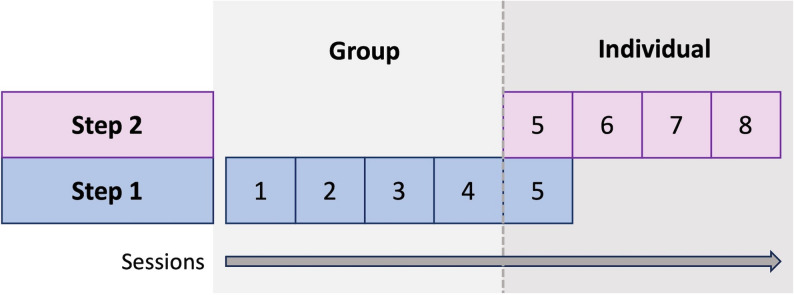
Background: Cognitive behavioral therapy (CBT) is an effective treatment for childhood anxiety, but CBT protocols suited for primary care are lacking, which limits accessibility. This study aimed to develop a CBT intervention for children aged 7–12 years with mild to moderate anxiety suitable for Swedish primary care. Methods: A participatory design approach was used, including workshops and interviews with parents (n = 6), therapists (n = 12), managers (n = 3), and CBT experts (n = 3). Following development of a preliminary CBT protocol, children (n = 4) and their parents piloted the intervention. Subsequent interviews with children, parents, and therapists explored treatment experiences and informed further refinement. Results: The developed intervention, Step by Step, followed a stepped-care model comprising two steps: Step 1 (four group sessions and one individual session) and Step 2 (three additional individual sessions if needed). Interviews with children, parents, and therapists piloting the intervention resulted in three themes with corresponding subthemes: (a) acceptance - sense of not being alone; appreciation of interactive session activities; (b) feasibility - suitable in primary care but a therapeutic challenge to shift from group to individual format; more time in group needed (c) appropriateness - flexibility promotes relevance and fit; strategies contribute to learning and behavioral change. Conclusions: This study illustrates how an intervention can be developed to fit a specific setting. A preliminary version of the stepped-care intervention yielded feedback that will be used to finalize the protocol. Larger-scale clinical trials are planned to evaluate feasibility and effectiveness.
Overview
CoChat Summary
## TL;DR
This qualitative participatory-design study developed a stepped-care CBT intervention, Step by Step, for children aged 7–12 years with mild to moderate anxiety in Swedish primary care. Feedback from parents, children, therapists, managers, and CBT experts was used to refine the protocol before planned pilot testing.
## Key findings
- The final prototype, Step by Step, used a stepped-care model with Step 1: four weekly group sessions (90 min each) plus one individual follow-up session and Step 2: three additional individual sessions if needed; the paper states the full protocol has 8 sessions in total if both steps are completed.
- Workshop feedback from CBT experts and FLMH centers suggested no clear universally superior format (group vs individual, face-to-face vs online), but there was a consistent preference for flexibility and for interventions that were no longer than 8–10 sessions.
- In the pilot with 4 children and their parents, all participating children and parents completed the intervention; the post-intervention analysis identified themes of acceptability, feasibility, and appropriateness.
- Participants valued normalization/peer support, interactive and practical activities, and exposure training, while therapists and families noted that the transition from group to individual work could be challenging and that more time in the group phase would help.
## Methods
- Design: Participatory design qualitative study conducted in six stages: CBT expert workshop; therapist/manager workshops; parent interviews about existing CBT; prototype creation and revision; pilot of the preliminary intervention in routine care; and post-intervention interviews.
- Sample/data: Conducted in primary care in Stockholm, Sweden (FLMH services); involved parents (n = 6), therapists (n = 12), managers (n = 3), CBT experts (n = 3), and a pilot group of 4 children (3 girls, 1 boy; mean age 10.3 years, SD 1.3) and their parents.
- Analysis: Workshop notes were categorized into predefined areas (components, format, length); parent interviews used inductive thematic analysis; post-pilot interviews used deductive thematic analysis organized around acceptability, appropriateness, and feasibility.
## Limitations
- The paper states that parent interview participants may have been more positive about group therapy because they had already agreed to participate in Cool Kids, and the study did not include families who declined the group program; this introduces selection bias.
- The paper states that the pilot families were a small sample, and that it did not collect detailed sociodemographic or diagnostic data from the Step by Step participants, which limits transferability.
- Evident from the text: the intervention was piloted in one FLMH center with only 4 children, so the findings are early-stage and not sufficient to establish feasibility or effectiveness.
Model-written summary. Check it against the paper before relying on it.
Integrity signals
Registry
Cites
Statistics
Figures
Verification
Claims the paper makes
22 Valid · 2 Not valid · 24 Not checked · 130 Own results and interpretations
Some cited sources support this claim and some don’t — read each source’s verdict below.
In the paper
“However, to our knowledge, this study presents the first stepped-care CBT protocol for childhood anxiety developed for use in a primary care setting.”
§ Developing a primary care-based cognitive behavioral intervention for anxiety in children through a participatory approach: a qualitative study > Discussion
What the sources say
- Partly supportedcites [36] Creswell C, Waite P, Hudson J. Practitioner review: anxiety disorders in children and young people – assessment and treatment. J Child Psychol Psychiatry. 2020;61(6):628–43. sourceExperimental — accuracy not yet measured
The section ‘Psychological interventions for populations at particular risk’ describes stepped-care CBT for childhood anxiety and calls an earlier study its first systematic evaluation. It does not say that the citing study presents the first stepped-care CBT protocol developed for primary care; that novelty claim is the citing authors’ own. (LLM, conf=0.83)
- Not checked — no full text of the sourcecites [37] Rapee RM, Lyneham HJ, Wuthrich V, Chatterton M Lou, Hudson JL, Kangas M, et al. Comparison of stepped care delivery against a single, empirically validated cognitive-behavioral therapy program for youth with anxiety: a randomized clinical trial. J Am Acad Child Adolesc Psychiatry. 2017;56(10):841–8. source
- Not checked — no full text of the sourcecites [38] Van Der Leeden AJM, Van Widenfelt BM, Van Der Leeden R, Liber JM, Utens EMWJ, Treffers PDA. Stepped care cognitive behavioural therapy for children with anxiety disorders: a new treatment approach. Behav Cogn Psychother. 2011;39(1):55–75. source
- Partly supportedcites [39] Jolstedt M, Vigerland S, Mataix-Cols D, Ljótsson B, Wahlund T, Nord M, et al. Long-term outcomes of internet-delivered cognitive behaviour therapy for paediatric anxiety disorders: towards a stepped care model of health care delivery. Eur Child Adolesc Psychiatry. 2021;30(11):1723–32. sourceExperimental — accuracy not yet measured
The Discussion says this was the first study to adopt a stepped-care approach in a clinical setting for paediatric anxiety, using internet-delivered CBT followed by face-to-face CBT for non-remitters. It does not say the protocol was developed for primary care: the Methodology > Interventions section places the face-to-face treatment at a specialised child and adolescent psychiatry research centre. Primary care centres are mentioned in Methodology > Participants as a source of referrals. (LLM, conf=0.87)
- Disputedcites [40] Aspvall K, Andersson E, Melin K, Norlin L, Eriksson V, Vigerland S, et al. Effect of an Internet-Delivered Stepped-Care program vs In-Person cognitive behavioral therapy on Obsessive-Compulsive disorder symptoms in children and adolescents: A randomized clinical trial. JAMA. 2021;325(18):1863–73. sourceExperimental — accuracy not yet measured
The Abstract describes a stepped-care CBT trial for children and adolescents with obsessive-compulsive disorder, conducted at two specialist mental health clinics in Sweden—not a childhood-anxiety protocol developed for primary care. The paper also does not establish the claimed ‘first’ status. (LLM, conf=0.88)
Checked by a reasoning model — may be wrong.
hedged- Asserted: passes — The authors put it forward as true.
- Checkable: passes — It can be checked against evidence.
- Load-bearing: passes — The paper’s conclusions depend on it.
- Based: passes — The paper gives a reason why it holds.
- Partly supported
The cited sources support only part of this claim — read each source’s verdict below.
In the paper
“When developing CBT interventions for youth anxiety, previous studies with participatory approaches have primarily been focused on digital interventions [18–23].”
§ Developing a primary care-based cognitive behavioral intervention for anxiety in children through a participatory approach: a qualitative study > Background
What the sources say
- Partly supportedcites [18] Patterson VC, Rossi MA, Pencer A, Wozney L. An internet-based cognitive behavioral therapy program for anxiety and depression (Tranquility): adaptation co-design and fidelity evaluation study. JMIR Form Res. 2022. https://doi.org/10.2196/33374. sourceExperimental — accuracy not yet measured
The Methods (Measures, page not provided) describe a participatory co-design process for Tranquility, a web-based CBT program addressing anxiety and depression. But Methods (Recruitment, page not provided) require participants to be at least 18 years old, and the paper does not establish that participatory studies of youth anxiety have primarily focused on digital interventions. (LLM, conf=0.87)
- Supportedcites [19] Li SH, Achilles MR, Spanos S, Habak S, Werner-Seidler A, O’Dea B. A cognitive behavioural therapy smartphone app for adolescent depression and anxiety: co-design of ClearlyMe. Cognitive Behaviour Therapist. 2022;15:e13. https://doi.org/10.1017/S1754470X22000095. source
The Principal findings section describes the co-design of ClearlyMe, a CBT smartphone app targeting depression and anxiety symptoms in adolescents. This paper therefore supports its use as an example of a participatory approach to a digital youth-anxiety intervention; the broader characterization of previous studies as 'primarily' digital rests on the cited group as a whole. (LLM, conf=0.90)
- Supportedcites [20] Hill C, Reardon T, Taylor L, Creswell C. Online support and intervention for child anxiety (OSI): development and usability testing. JMIR Form Res. 2022. https://doi.org/10.2196/29846. source
The Introduction > Aims (page unavailable) says the study collaborated with users to design an internet-based treatment for child anxiety disorders, based on parent-led CBT. It therefore supports this citation as an example of participatory development of a digital CBT intervention; the citation does not need to establish the overall ‘primarily’ pattern on its own. (LLM, conf=0.90)
- Not checked — no full text of the sourcecites [21] Ludlow K, March S, Russell JK, Ryan B, Brown RL, Hides L, et al. Co-designing a new digital mental health platform, ‘Momentum’, with caregivers of young people aged 7–17. DIGITAL HEALTH. 2024. https://doi.org/10.1177/20552076241263693. source
- Partly supportedcites [22] Sørensen NM, Skaarnes H, Mathiasen K, Thastum M, Lomholt JJ. Developing an internet-based cognitive behavioral therapy intervention for adolescents with anxiety disorders: design, usability, and initial evaluation of the CoolMinds intervention. JMIR Form Res. 2025. https://doi.org/10.2196/66966. sourceExperimental — accuracy not yet measured
The Introduction (Background; page unavailable) identifies previous studies that used end-user involvement or co-design to develop internet-based CBT interventions for young people with anxiety. It does not compare digital with nondigital participatory studies, so it does not establish that previous work has primarily focused on digital interventions. (LLM, conf=0.82)
- Partly supportedcites [23] Ludlow K, Russell JK, Ryan B, Brown RL, Joynt T, Uhlmann LR, et al. Co-designing a digital mental health platform, Momentum, with young people aged: A qualitative study. Digit Health. 2023;9:7–17. sourceExperimental — accuracy not yet measured
The Objective describes co-designing a digital treatment platform with young people aged 7–17 experiencing anxiety, so this paper is an example of a participatory approach to a digital youth-anxiety intervention. The cited paper does not identify Momentum as a CBT intervention or establish that previous participatory studies were primarily digital; its Introduction discusses digital CBT separately. (LLM, conf=0.82)
plain- Asserted: passes — The authors put it forward as true.
- Checkable: passes — It can be checked against evidence.
- Load-bearing: passes — The paper’s conclusions depend on it.
- Based: passes — The paper gives a reason why it holds.
- Partly supported
The cited sources support only part of this claim — read each source’s verdict below.
In the paper
“However, few CBT protocols have been specifically developed and evaluated for use in primary care.”
§ Developing a primary care-based cognitive behavioral intervention for anxiety in children through a participatory approach: a qualitative study > Background
What the sources say
- Partly supportedcites [11] Creswell C, Violato M, Fairbanks H, White E, Parkinson M, Abitabile G, et al. Clinical outcomes and cost-effectiveness of brief guided parent-delivered cognitive behavioural therapy and solution-focused brief therapy for treatment of childhood anxiety disorders: a randomised controlled trial. Lancet Psychiatry. 2017;4(7):529–39. sourceExperimental — accuracy not yet measured
The Introduction (page unavailable) says studies of psychological treatments for childhood anxiety have mainly been done in specialist settings, supporting the point that evaluation outside those settings is limited. It does not establish how many CBT protocols were specifically developed and evaluated for primary care, and its discussion is limited to childhood anxiety. (LLM, conf=0.82)
- Not checked — no full text of the sourcecites [12] Weersing VR, Gonzalez A, Campo JV, Lucas AN. Brief behavioral therapy for pediatric anxiety and depression: piloting an integrated treatment approach. Cogn Behav Pract. 2008;15(2):126–39. source
plain- Asserted: passes — The authors put it forward as true.
- Checkable: passes — It can be checked against evidence.
- Load-bearing: passes — The paper’s conclusions depend on it.
- Based: passes — The paper gives a reason why it holds.
- Partly supported
The sources with a verdict support this claim; the rest weren’t checked yet, have no full text we could read, or their verdicts aren’t rated yet.
In the paper
“international reviews have highlighted the need to improve access to CBT for childhood anxiety [5, 8].”
§ Developing a primary care-based cognitive behavioral intervention for anxiety in children through a participatory approach: a qualitative study > Background
What the sources say
- Not checked — no full text of the sourcecites [5] James AC, Reardon T, Soler A, James G, Creswell C. Cognitive behavioural therapy for anxiety disorders in children and adolescents. Cochrane Database Syst Rev. 2020(11):CD013162. source
- Supportedcites [8] Schwartz C, Barican J, Lou, Yung D, Zheng Y, Waddell C. Six decades of preventing and treating childhood anxiety disorders: A systematic review and meta-analysis to inform policy and practice. Evid Based Ment Health. 2019;22:103–10. source
The Background says access to psychosocial treatments for childhood anxiety is limited in most jurisdictions. The Conclusion and implications recommends more funding and wider delivery of effective interventions, particularly CBT. No page numbers are provided in our copy. (LLM, conf=0.93)
plain- Asserted: passes — The authors put it forward as true.
- Checkable: passes — It can be checked against evidence.
- Load-bearing: passes — The paper’s conclusions depend on it.
- Based: passes — The paper gives a reason why it holds.
The cited sources support only part of this claim — read each source’s verdict below.
In the paper
“Following treatment, 59% of the children howed much improvement in clinician-rated anxiety severity.”
§ Developing a primary care-based cognitive behavioral intervention for anxiety in children through a participatory approach: a qualitative study > Background
What the sources say
- Partly supportedcites [11] Creswell C, Violato M, Fairbanks H, White E, Parkinson M, Abitabile G, et al. Clinical outcomes and cost-effectiveness of brief guided parent-delivered cognitive behavioural therapy and solution-focused brief therapy for treatment of childhood anxiety disorders: a randomised controlled trial. Lancet Psychiatry. 2017;4(7):529–39. sourceExperimental — accuracy not yet measured
Results (Table 2; page unavailable) report that 40 children (59%) in the guided parent-delivered CBT group were rated much or very much improved after treatment; the corresponding figure in the solution-focused therapy group was 69%. Methods > Outcomes identifies this as clinician-rated improvement, not a clinical severity rating. The claim omits the treatment-group restriction and describes the measure imprecisely. (LLM, conf=0.90)
plainstates a cause- Asserted: passes — The authors put it forward as true.
- Checkable: passes — It can be checked against evidence.
- Load-bearing: unclear — It is unclear whether the paper’s conclusions depend on it.
- Based: passes — The paper gives a reason why it holds.
- Partly supported
100 more claims · 6 with their cited sources checked
Create a free account to see all 178 claims and to verify the 3 references still open.
- It may state two separate claims as one. 36
- Probably not a substantial claim. 49
Citations
Cites
Using thematic analysis in psychology
Braun, V., & Clarke, V. (2006) · Qualitative Research in Psychology · doi:10.1191/1478088706qp063oa · Cited by 194,414
Lincoln, Y. S., Guba, E. G., & Pilotta, J. J. (1985) · International Journal of Intercultural Relations · doi:10.1016/0147-1767(85)90062-8 · Cited by 45,787
S., N. L. (2017) · doi:10.1177/1609406917733847 · Cited by 14,051
Proctor, E., Silmere, H., Raghavan, R., Hovmand, P., Aarons, G., Bunger, A., Griffey, R., & Hensley, M. (2011) · Administration and Policy in Mental Health and Mental Health Services Research · doi:10.1007/s10488-010-0319-7 · Cited by 8,721 · cited 2×
“The analysis was guided by the definitions from Proctor and colleagues [33]: acceptability is defined as “the perception among implementation stakeholders that a given treatment, service, practice, or innovation is agreeable, palatable or satisfactory”; appropriateness is “the perceived fit,…”
Thematic Analysis: A Practical Guide
Braun, V., & Clarke, V. (2022) · QMiP Bulletin · doi:10.53841/bpsqmip.2022.1.33.46 · Cited by 5,438
Braun, V., & Clarke, V. (2021) · Qualitative Research in Sport, Exercise and Health · doi:10.1080/2159676x.2019.1704846 · Cited by 4,776 · cited 1×
“The operationalization of saturation varies, and the use of it in thematic analysis is disputed [51].”
Polanczyk, G. V., Salum, G. A., Sugaya, L. S., Caye, A., & Rohde, L. A. (2015) · Journal of Child Psychology and Psychiatry · doi:10.1111/jcpp.12381 · Cited by 3,990 · cited 1×
“Anxiety disorders are the most prevalent mental health conditions in children and are associated with significant distress and adverse effects in multiple life domains, including social functioning and academic performance [1, 2].”
Coproduction of healthcare service
Batalden, M., Batalden, P., Margolis, P., Seid, M., Armstrong, G., Opipari-Arrigan, L., & Hartung, H. (2016) · BMJ Quality & Safety · doi:10.1136/bmjqs-2015-004315 · Cited by 1,078 · cited 1×
“When developing interventions, involving diverse stakeholders (e.g., patients, healthcare staff and their managers, researchers, and policy makers) has been recommended to enhance accuracy, fit, and sense of ownership within the specific setting [15, 16].”
Weisz, J. R. (2012) · Archives of General Psychiatry · doi:10.1001/archgenpsychiatry.2011.147 · Cited by 827
What do childhood anxiety disorders predict?
Bittner, A., Egger, H. L., Erkanli, A., Jane Costello, E., Foley, D. L., & Angold, A. (2007) · Journal of Child Psychology and Psychiatry · doi:10.1111/j.1469-7610.2007.01812.x · Cited by 733 · cited 1×
“Beyond impairment in well-being and daily functioning, having an anxiety disorder in childhood is associated with an increased risk of developing other mental disorders and physical health issues later in life [3, 4].”
Research works printed but not linked: 3
- Rapee RM, Lyneham HJ, Hudson JL, Wuthrich VW, Kangas M, Schniering CA, Wignall A. Cool Kids Anxiety Program 2nd edition. Sydney, Australia: Centre for Emotional Health, Macquarie University. 2019.
- Sanders EBN. Design research in 2006. Des Res Q. 2006;1(1):1–8.
- Creswell C, Hentges F, Parkinson M, Sheffield P, Willetts L, Cooper P. Feasibility of guided cognitive behaviour therapy (CBT) self-help for childhood anxiety disorders in primary care. Ment Health Fam Med. 2010;7(1):49.
Metadata
- Authors
- Isaksson, A., Åhlén, J., Hasson, H., & Eriksson, L.
- Affiliations
- Karolinska Institutet (SE)
- Region Stockholm (SE)
- Corresponding author
- Isaksson, Albin
- Venue
- BMC Primary Care
- Published
- 2026-01-28
- Volume
- 27
- Issue
- 1
- ISSN
- 1471-2296 (ISSN-L)
- 2731-4553
- PMC
- PMC12924414
- OpenAlex
- W7125780049
- Semantic Scholar
- 1024f34664ada2281c675ac8c2372ea91cf935ef
- Cited by
- 0
- References
- 44
- FWCI
- 0.00
- Type
- journal article
- Language
- en
- Open access
- gold
- doi.org
- Licence
- cc-by
- creativecommons.org/licenses/by/4.0 (tdm)
- creativecommons.org/licenses/by/4.0 (vor, 23 d)
- Locations
- BMC Family Practice (publishedVersion, cc-by)
- PubMed (publishedVersion)
- PubMed Central (publishedVersion, cc-by)
- DOAJ (DOAJ: Directory of Open Access Journals) (submittedVersion, cc-by-sa)
- Funders
- Karolinska Institute
- Topics
- Social Sciences › Psychology › Experimental and Cognitive Psychology › Anxiety, Depression, Psychometrics, Treatment, Cognitive Processes
- Social Sciences › Psychology › Clinical Psychology › Child and Adolescent Psychosocial and Emotional Development
- Social Sciences › Psychology › Applied Psychology › Digital Mental Health Interventions
- Keywords
- childhood anxiety, cognitive behavioral therapy, primary care, stepped care, participatory design, intervention development, group therapy, parental involvement, feasibility, children aged 7-12
- MeSH terms
- Anxiety, Anxiety Disorders, Child, Female, Humans, Male, Parents, Primary Health Care, Sweden, Cognitive Behavioral Therapy, Qualitative Research
About these checks
Registry, retraction, Cites and statistics results are computed, not judged, with one exception: a printed reference that no index lists is read once by a model before it counts as a citation error. Claims are extracted by a model and kept only when their quote appears verbatim in the text; each cited source is then checked, with a model’s help, for whether it says what the claim relies on. Those verdicts can be wrong — read the claim’s quote and the cited source before relying on one.
The claim verdicts this report counts are experimental: their accuracy is not yet measured.
A language model drew the claims from the paper on 2026-10-11, under version 3 of the claim definition (model deepseek-v4.1-flash, prompt extract-v3).
A second model labelled each claim on 2026-10-11 (model jev-1.13-20260917, definition revision gold-guideline-v0.2).
Cited sources are checked with a language model’s help (gpt-6-sol).
Statistics and arithmetic are recomputed, not judged.
Confidence bands are shown only for fields calibrated on our annotated test set. None is calibrated yet, so no band is shown.
What counts as a claim ›How we measure confidence ›How we check this ›
Are you an author, or do you see a problem with this page? Request a review
How to cite
Cite CoChat for the checks on this page, and the paper for its own findings.
- This page
- CoChat. (2026). Citation check: Developing a primary care-based cognitive behavioral intervention for anxiety in children through a participatory approach: a qualitative study. https://app.cochat.ai/papers/10.1186/s12875-026-03191-y
- The paper
- Isaksson, A., Åhlén, J., Hasson, H., & Eriksson, L. (2026). Developing a primary care-based cognitive behavioral intervention for anxiety in children through a participatory approach: a qualitative study. BMC Primary Care. https://doi.org/10.1186/s12875-026-03191-y
Data sources
Bibliographic data: Semantic Scholar, OpenAlex, Crossref.
Contains information from the Semantic Scholar Academic Graph Datasets, made available under the ODC Attribution License (ODC-BY 1.0).
Semantic Scholar’s data is described in: Kinney, R., et al. (2023). The Semantic Scholar Open Data Platform. arXiv:2301.10140.
