

No distinct microbiome signature of irritable bowel syndrome found in a Swedish random population
Open accessThe DOI matches its Crossref record; 57 of the 57 references it cites were found in a registry or an index.
Abstract
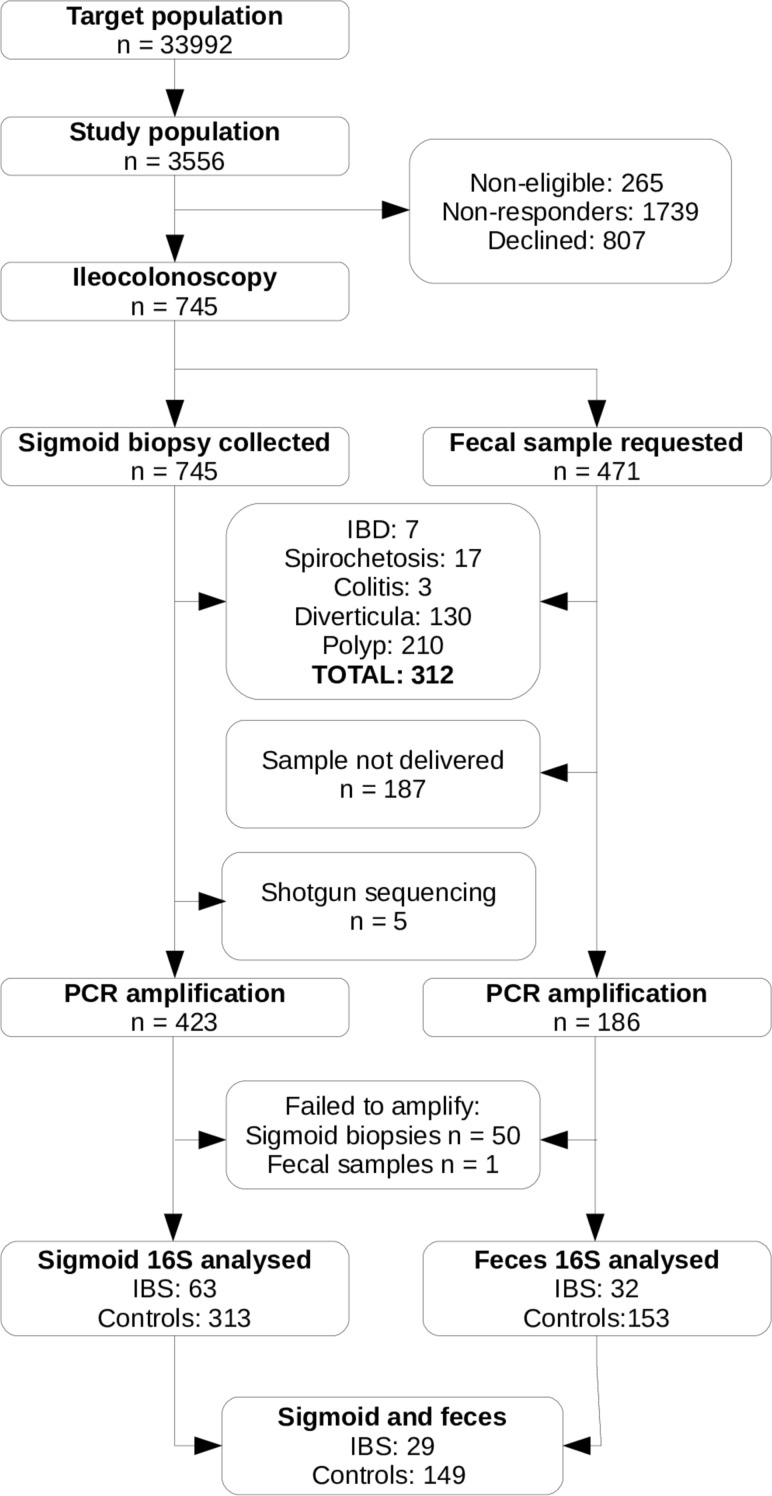
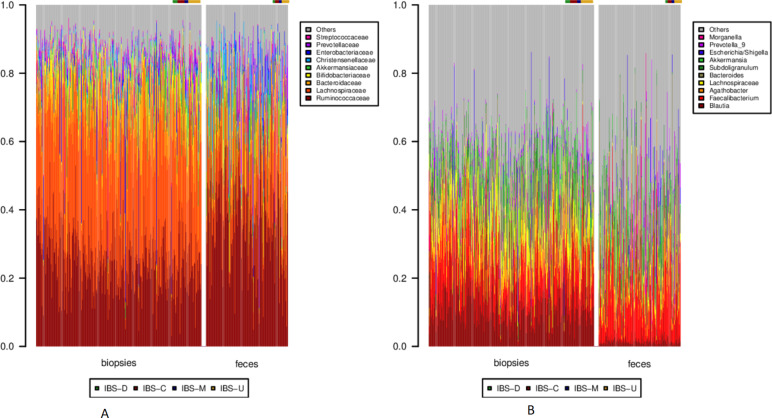
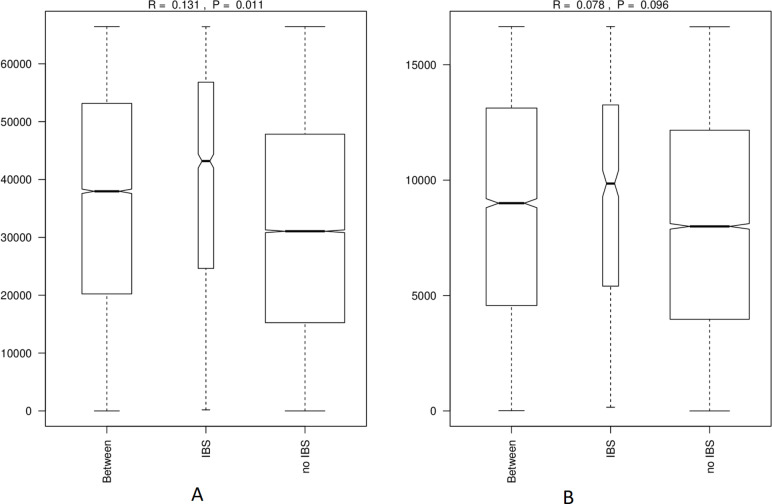
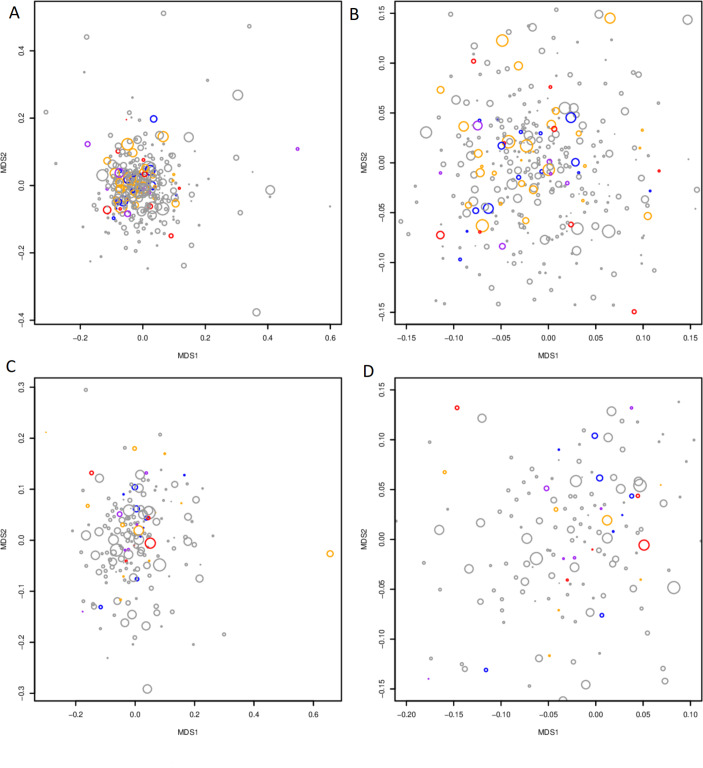
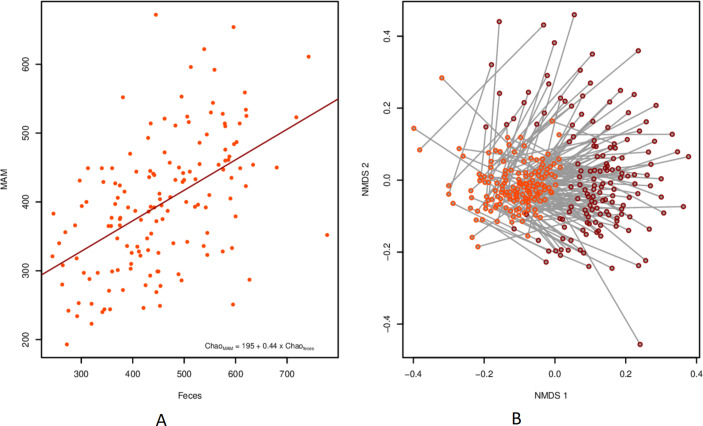
Objective: The ethiopathogenesis of irritable bowel syndrome (IBS) is unknown. While a link to the gut microbiome is postulated, the heterogeneity of the healthy gut makes it difficult to draw definitive conclusions. We aimed to describe the faecal and mucosa-associated microbiome (MAM) and health correlates on a community cohort of healthy and IBS individuals with no colonoscopic findings. Design: The PopCol study recruited a random sample of 3556 adults; 745 underwent colonoscopy. IBS was defined by Rome IV criteria and organic disease excluded. 16S rRNA gene sequencing was conducted on sigmoid biopsy samples from 376 representative individuals (63 IBS cases) and faecal samples from 185 individuals (32 IBS cases). Results: While sigmoid MAM was dominated by Lachnospiraceae, faeces presented a higher relative abundance of Ruminococcaceae. Microbial richness in MAM was linearly correlated to that in faeces from the same individual (R²=0.255, p<3E-11) as was diversity (R²=0.06, p=0.0022). MAM diversity decreased with increasing body mass index (BMI; Pearson’s r=−0.1, p=0.08) and poorer self-rated health (r=−0.15, p=0.007), but no other health correlates. Faecal microbiome diversity was correlated to stool consistency (r=−0.16, p=0.043). Several taxonomic groups were correlated to age, BMI, depression and self-reported health, including Coprococcus catus associated with lower levels of depression (r=−0.003, p=0.00017). The degree of heterogeneity observed between IBS patients is higher than that observed between healthy individuals. Conclusions: No distinct microbial signature was observed in IBS. Individuals presenting with low self-rated health or high BMI have lower gut microbiome richness.
Overview
The claims and statistics of this paper haven’t been checked yet.
Free: it reads the open-access text and checks the first 5 claims that cite a source we can check. Create a free account to check every claim.
Integrity signals
Registry
Cites
Statistics
Figures
Verification
Claims the paper makes
The claims and statistics of this paper haven’t been checked yet.
Free: it reads the open-access text and checks the first 5 claims that cite a source we can check. Create a free account to check every claim.
Self-check
Percentages, sums and reported differences re-computed from the paper’s own numbers.
The self-check needs the paper’s full text.
Citations
Cites
DADA2: High–resolution sample inference from Illumina amplicon data
Callahan, B. J., McMurdie, P. J., Rosen, M. J., Han, A. W., Johnson, A. J. A., & Holmes, S. P. (2016) · Nature Methods · doi:10.1038/nmeth.3869 · Cited by 35,698
Cutadapt removes adapter sequences from high-throughput sequencing reads
Martin, M. (2011) · EMBnet.journal · doi:10.14806/ej.17.1.200 · Cited by 33,889
vegan: Community Ecology Package
Oksanen, J., Simpson, G. L., Blanchet, F. G., Kindt, R., Legendre, P., Minchin, P. R., O'Hara, R. B., Solymos, P., Stevens, M. H. H., Szoecs, E., et al. (2001) · CRAN: Contributed Packages · doi:10.32614/cran.package.vegan · Cited by 22,615
A core gut microbiome in obese and lean twins
Turnbaugh, P. J., Hamady, M., Yatsunenko, T., Cantarel, B. L., Duncan, A., Ley, R. E., Sogin, M. L., Jones, W. J., Roe, B. A., Affourtit, J. P., et al. (2009) · Nature · doi:10.1038/nature07540 · Cited by 7,823
Pruesse, E., Quast, C., Knittel, K., Fuchs, B. M., Ludwig, W., Peplies, J., & Glockner, F. O. (2007) · Nucleic Acids Research · doi:10.1093/nar/gkm864 · Cited by 6,668
Davis, N. M., Proctor, D. M., Holmes, S. P., Relman, D. A., & Callahan, B. J. (2018) · Microbiome · doi:10.1186/s40168-018-0605-2 · Cited by 3,493
Dysfunction of the intestinal microbiome in inflammatory bowel disease and treatment
Morgan, X. C., Tickle, T. L., Sokol, H., Gevers, D., Devaney, K. L., Ward, D. V., Reyes, J. A., Shah, S. A., LeLeiko, N., Snapper, S. B., et al. (2012) · Genome Biology · doi:10.1186/gb-2012-13-9-r79 · Cited by 2,713
Population-level analysis of gut microbiome variation
Falony, G., Joossens, M., Vieira-Silva, S., Wang, J., Darzi, Y., Faust, K., Kurilshikov, A., Bonder, M. J., Valles-Colomer, M., Vandeputte, D., et al. (2016) · Science · doi:10.1126/science.aad3503 · Cited by 2,400
UNOISE2: improved error-correction for Illumina 16S and ITS amplicon sequencing
Edgar, R. C. (2016) · bioRxiv (Cold Spring Harbor Laboratory) · doi:10.1101/081257 · Cited by 1,809
Zmora, N., Zilberman-Schapira, G., Suez, J., Mor, U., Dori-Bachash, M., Bashiardes, S., Kotler, E., Zur, M., Regev-Lehavi, D., Brik, R. B.-Z., et al. (2018) · Cell · doi:10.1016/j.cell.2018.08.041 · Cited by 1,695
Cited by
British Society of Gastroenterology guidelines on the management of irritable bowel syndrome
Vasant, D. H., Paine, P. A., Black, C. J., Houghton, L. A., Everitt, H. A., Corsetti, M., Agrawal, A., Aziz, I., Farmer, A. D., Eugenicos, M. P., et al. (2021) · Gut · doi:10.1136/gutjnl-2021-324598 · Cited by 592
“74 75 However, an integrated longitudinal multi-omics analysis of the gut microbiome, metab-olome, host epigenome and transcriptome, in the context of host symptoms and physiology in patients with IBS-D and IBS-C, identified subtype-specific and symptom-related variations in microbial composition…”
The Bacterial Connection between the Oral Cavity and the Gut Diseases
Kitamoto, S., Nagao-Kitamoto, H., Hein, R., Schmidt, T. M., & Kamada, N. (2020) · Journal of Dental Research · doi:10.1177/0022034520924633 · Cited by 438
“In this context, notwithstanding the huge variations in the gut microbial composition of patients with IBS (Ohman et al. 2015; Chong et al. 2019; Hugerth et al. 2020), there are some common features in IBS, including an increase in the families Enterobacteriaceae and Lactobacillaceae and a decrease in the genera Clost…”
BackgroundResultInfluentialSasso, J. M., Ammar, R. M., Tenchov, R., Lemmel, S., Kelber, O., Grieswelle, M., & Zhou, Q. A. (2023) · ACS Chemical Neuroscience · doi:10.1021/acschemneuro.3c00127 · Cited by 204
The gut microbiota and mental health in adults
Järbrink-Sehgal, E., & Andreasson, A. (2020) · Current Opinion in Neurobiology · doi:10.1016/j.conb.2020.01.016 · Cited by 173
“• Age [28] • Sex [29,44] • Obesity status [6,28] • Personality [50]”
BackgroundGut bless you: The microbiota-gut-brain axis in irritable bowel syndrome
Hillestad, E. M. R., van der Meeren, A., Nagaraja, B. H., Bjørsvik, B. R., Haleem, N., Benítez‐Páez, A., Sanz, Y., Hausken, T., Lied, G. A., Lundervold, A., et al. (2022) · World Journal of Gastroenterology · doi:10.3748/wjg.v28.i4.412 · Cited by 169
Jacobs, J. P., Lagishetty, V., Hauer, M. C., Labus, J. S., Dong, T. S., Toma, R., Vuyisich, M., Naliboff, B. D., Lackner, J. M., Gupta, A., et al. (2023) · Microbiome · doi:10.1186/s40168-022-01450-5 · Cited by 120
Han, L., Zhao, L., Zhou, Y., Yang, C., Xiong, T., Lü, L., Deng, Y., Luo, W., Chen, Y., Qiu, Q., et al. (2021) · The ISME Journal · doi:10.1038/s41396-021-01123-5 · Cited by 146
“However, by analyzing the fecal and mucosa-associated microbiome of IBS patients from a Swedish random population, it was reported that no IBS-specific microbiota feature was identified [8].”
BackgroundBarandouzi, Z. A., Lee, J., Rosas, M. D. C., Chen, J., Henderson, W. A., Starkweather, A. R., & Cong, X. S. (2022) · Scientific Reports · doi:10.1038/s41598-022-05756-0 · Cited by 136
Immune activation in irritable bowel syndrome: what is the evidence?
Aguilera‐Lizarraga, J., Hussein, H., & Boeckxstaens, G. E. (2022) · Nature reviews. Immunology · doi:10.1038/s41577-022-00700-9 · Cited by 136
The Role of the FODMAP Diet in IBS
Bertin, L., Zanconato, M., Crepaldi, M., Marasco, G., Cremon, C., Barbara, G., Barberio, B., Zingone, F., & Savarino, E. V. (2024) · Nutrients · doi:10.3390/nu16030370 · Cited by 93
Su, T., Liu, R., Lee, A., Long, Y., Du, L., Lai, S., Chen, X., Wang, L., Si, J., Owyang, C., et al. (2018) · Gastroenterology Research and Practice · doi:10.1155/2018/6961783 · Cited by 117
B cell expansion hinders the stroma-epithelium regenerative cross talk during mucosal healing
Frede, A., Czarnewski, P., Monasterio, G., Tripathi, K. P., Bejarano, D. A., Flores, R. O. R., Sorini, C., Larsson, L., Luo, X., Geerlings, L., et al. (2022) · Immunity · doi:10.1016/j.immuni.2022.11.002 · Cited by 129
Carco, C., Young, W., Gearry, R. B., Talley, N. J., McNabb, W. C., & Roy, N. C. (2020) · Frontiers in Cellular and Infection Microbiology · doi:10.3389/fcimb.2020.00468 · Cited by 99
“Overall, differential relative abundance of taxa from the Bacteroidetes phylum and Ruminococcaceae or Lachnospiraceae families have been reported across studies (Rajilić–Stojanović et al., 2011; Jeffery et al., 2012b, 2019; Tap et al., 2017).”
BackgroundInfluentialSelf-citationThe role of microbiota-mitochondria crosstalk in pathogenesis and therapy of intestinal diseases
Zhang, Y., Zhang, J., & Duan, L. (2022) · Pharmacological Research · doi:10.1016/j.phrs.2022.106530 · Cited by 103
Artificial intelligence-based personalized diet: A pilot clinical study for irritable bowel syndrome
Karakan, T., Gundogdu, A., Alagözlü, H., Ekmen, N., Ozgul, S., Tunali, V., Hora, M., Beyazgul, D., & Nalbantoglu, O. U. (2022) · Gut Microbes · doi:10.1080/19490976.2022.2138672 · Cited by 79
“A recent systematic review of 24 studies performed before 2018 has found that while there was some overlap, none of the studies reported the same differences in gut microbiota.(8,9) This inconsistency can be the result of a unique microbiome composition for each patient and each disease state.”
ResultThe Influence of Nutrition on Intestinal Permeability and the Microbiome in Health and Disease
Inczefi, O., Bacsúr, P., Resál, T., Keresztes, C., & Molnár, T. (2022) · Frontiers in Nutrition · doi:10.3389/fnut.2022.718710 · Cited by 100
“Nevertheless, microbiome-richness has been found to be lower in the IBS group compared to healthy individuals (75).”
ResultFodor, A. A., Pimentel, M., Chey, W. D., Lembo, A., Golden, P. L., Israel, R. J., & Carroll, I. M. (2019) · Gut Microbes · doi:10.1080/19490976.2018.1460013 · Cited by 84
Goll, R., Johnsen, P. H., Hjerde, E., Diab, J., Valle, P. C., Hilpusch, F., & Cavanagh, J. P. (2020) · Gut Microbes · doi:10.1080/19490976.2020.1794263 · Cited by 59
“However, our Firmicutes: Bacteroidetes result is challenged by other studies where 16S rRNA sequencing demonstrates the exact opposite balance in IBS, or no distinct IBS profile.(24) Factors such as race, regional diet, and methodology may have had an impact on the taxonomic profiles reported.”
ResultImmune responses in the irritable bowel syndromes: time to consider the small intestine
Burns, G. L., Talley, N. J., & Keely, S. (2022) · BMC Medicine · doi:10.1186/s12916-022-02301-8 · Cited by 65
Self-citationMicrobiota of the gastrointestinal tract: Friend or foe?
Senchukova, M. A. (2023) · World Journal of Gastroenterology · doi:10.3748/wjg.v29.i1.19 · Cited by 62
El‐Salhy, M., Kristoffersen, A. B., Valeur, J., Casèn, C., Hatlebakk, J. G., Gilja, O. H., & Hausken, T. (2021) · Neurogastroenterology & Motility · doi:10.1111/nmo.14200 · Cited by 58
Microbial model communities: To understand complexity, harness the power of simplicity
Bengtsson‐Palme, J. (2020) · Computational and Structural Biotechnology Journal · doi:10.1016/j.csbj.2020.11.043 · Cited by 58
Mars, R. A. T., Frith, M., & Kashyap, P. (2020) · Gastroenterology · doi:10.1053/j.gastro.2020.10.058 · Cited by 54
Halkjær, S. I., Lo, B. Z. S., Cold, F., Christensen, A. H., Holster, S., König, J., Brummer, R. J., Aroniadis, O. C., Lahtinen, P., Holvoet, T., et al. (2023) · World Journal of Gastroenterology · doi:10.3748/wjg.v29.i20.3185 · Cited by 59
Intermittent fasting supports the balance of the gut microbiota composition
Teker, H. T., & Ceylani, T. (2022) · International Microbiology · doi:10.1007/s10123-022-00272-7 · Cited by 49
“This species has also been associated with lower levels of depression (Hugerth et al. 2020).”
BackgroundAltered Gut Microbiota in Irritable Bowel Syndrome and Its Association with Food Components
Barandouzi, Z. A., Lee, J., Maas, K., Starkweather, A. R., & Cong, X. S. (2021) · Journal of Personalized Medicine · doi:10.3390/jpm11010035 · Cited by 42
“In addition, some studies showed no distinction in terms of microbiome diversity between IBS patients and healthy people [44,45].”
BackgroundSo, D., Quigley, E. M. M., & Whelan, K. (2023) · Current Opinion in Gastroenterology · doi:10.1097/mog.0000000000000902 · Cited by 44
Boland, K., Bedrani, L., Turpin, W., Kabakchiev, B., Stempak, J. M., Borowski, K., Nguyen, G. C., Steinhart, A. H., Smith, M. I., Croitoru, K., et al. (2020) · Clinical Gastroenterology and Hepatology · doi:10.1016/j.cgh.2020.03.044 · Cited by 42
Marabita, F., James, T., Karhu, A., Virtanen, H., Kettunen, K., Stenlund, H. C., Boulund, F., Hellström, C., Neiman, M., Mills, R., et al. (2021) · Cell Systems · doi:10.1016/j.cels.2021.11.001 · Cited by 43
Self-citationEmerging Role of the Gut Microbiome in Irritable Bowel Syndrome
Singh, P., & Lembo, A. J. (2021) · Gastroenterology Clinics of North America · doi:10.1016/j.gtc.2021.03.003 · Cited by 42
The gut-brain axis and beyond: Microbiome control of spinal cord injury pain in humans and rodents
Bannerman, C. A., Douchant, K., Sheth, P. M., & Ghasemlou, N. (2020) · Neurobiology of Pain · doi:10.1016/j.ynpai.2020.100059 · Cited by 35
Phan, J., Nair, D., Jain, S., Montagne, T., Flores, D. V., Nguyen, A., Dietsche, S., Gombar, S., & Cotter, P. (2021) · mSystems · doi:10.1128/msystems.01215-21 · Cited by 33
“have not shown a difference between a healthy cohort and individuals with IBS (14).”
BackgroundGender Influences Gut Microbiota among Patients with Irritable Bowel Syndrome
Pecyna, P., Gabryel, M., Mańkowska‐Wierzbicka, D., Nowak-Malczewska, D. M., Jaśkiewicz, K., Jaworska, M. M., Tomczak, H., Rydzanicz, M., Płoski, R., Grzymislawski, M. B., et al. (2023) · International Journal of Molecular Sciences · doi:10.3390/ijms241310424 · Cited by 33
Antibiotics and Probiotics for Irritable Bowel Syndrome
Goodoory, V. C., & Ford, A. C. (2023) · Drugs · doi:10.1007/s40265-023-01871-y · Cited by 34
“However, even though there are several indicators that the gut microbiota may be implicated in the pathophysiology of IBS, and the rapid advances made in examining the microbiota [52], there is still no clear evidence of a specific reproducible microbial profile of individuals with IBS [53, 54].”
BackgroundKim, G.-H., Lee, K., & Shim, J. O. (2023) · Microbiology Spectrum · doi:10.1128/spectrum.02125-22 · Cited by 36
“Other studies have also reported a lower a-diversity in IBS than in HC (9, 12–16), whereas some reported no difference in gut microbial diversity between the two groups (17, 18).”
ResultHou, Y., Dong, L., Lu, X., Shi, H., Xu, B., Zhong, W., Ma, L., Wang, S., Yang, C., He, X., et al. (2022) · Digestive Diseases and Sciences · doi:10.1007/s10620-022-07588-4 · Cited by 29
“A recent study [23] on the microbiome signature in a Swedish random population found no difference in richness and diversity between IBS patients and healthy people or in the IBS subgroups.”
BackgroundTotal Transit Time and Probiotic Persistence in Healthy Adults: A Pilot Study
Tremblay, A., Auger, J., Alyousif, Z., Calero, S. E. C., Mathieu, O., Rivero‐Mendoza, D., Elmaoui, A., Dahl, W. J., & Tompkins, T. A. (2023) · Journal of Neurogastroenterology and Motility · doi:10.5056/jnm22031 · Cited by 27
“Gut transit time was shown to correlate with variations in fecal microbiota composition or diversity in both diseased and healthy populations, and was identified among covariates to consider for microbiome analyses.(8-12) Recently, in a study enrolling 1102 healthy individuals, microbiota composition was found to effe…”
BackgroundBile acid–gut microbiota crosstalk in irritable bowel syndrome
Gu, Y., Li, L., Yang, M., Liu, T., Song, X., Qin, X., Xu, X. J., Liu, J., Wang, B., & Cao, H. (2022) · Critical Reviews in Microbiology · doi:10.1080/1040841x.2022.2058353 · Cited by 30
Faecal microbial transplantation in IBS: ready for prime time?
Barbara, G., & Ianiro, G. (2020) · Gut · doi:10.1136/gutjnl-2019-320411 · Cited by 30
Vasapolli, R., Schulz, C., Schweden, M., Casèn, C., Kirubakaran, G. T., Kirste, K. H., Macke, L., Link, A., Schütte, K., & Malfertheiner, P. (2021) · European Journal of Clinical Investigation · doi:10.1111/eci.13666 · Cited by 26
Microbiota-neuroimmune cross talk in stress-induced visceral hypersensitivity of the bowel
van Thiel, I. A. M., de Jonge, W. J., Chiu, I. M., & van den Wijngaard, R. M. (2020) · American Journal of Physiology-Gastrointestinal and Liver Physiology · doi:10.1152/ajpgi.00196.2019 · Cited by 30
Choo, C. H., Mahurkar‐Joshi, S., Dong, T. S., Lenhart, A., Lagishetty, V., Jacobs, J. P., Labus, J. S., Jaffe, N., Mayer, E. A., & Chang, L. (2022) · American Journal of Physiology-Gastrointestinal and Liver Physiology · doi:10.1152/ajpgi.00352.2021 · Cited by 25
The Local Tumor Microbiome Is Associated with Survival in Late-Stage Colorectal Cancer Patients
Debelius, J. W., Engstrand, L. G., Matussek, A., Brusselaers, N., Morton, J. T., Stenmarker, M., & Olsen, R. S. (2023) · Microbiology Spectrum · doi:10.1128/spectrum.05066-22 · Cited by 26
Self-citationWang, T., Rijnaarts, I., Hermes, G. D. A., de Roos, N. M., Witteman, B. J. M., de Wit, N. J. W., Govers, C., Smidt, H., & Zoetendal, E. G. (2022) · Digestive Diseases and Sciences · doi:10.1007/s10620-022-07543-3 · Cited by 24
“It is evident that fecal samples only represent the end of the colon and previous studies have shown that comparing samples from small intestine and colon provides relevant insights into the microbiota at other locations in the intestine of IBS patients [37, 51].”
ResultBlount, K., Jones, C. R., Walsh, D. M., Gonzalez, C., & Shannon, W. D. (2022) · Frontiers in Microbiology · doi:10.3389/fmicb.2021.781275 · Cited by 24
Physiological mechanisms of unexplained (functional) gastrointestinal disorders
Burns, G. L., Hoedt, E. C., Walker, M. M., Talley, N. J., & Keely, S. (2021) · The Journal of Physiology · doi:10.1113/jp281620 · Cited by 26
“Such considerations may explain why a large population-based study of the IBS fecal and sigmoid mucosal associated microbiota (MAM) found no significant differences using 16S rRNA sequencing (Hugerth et al. 2020)while an earlier 16S study of the sigmoid MAM in 110 IBS outpatients identified a profile of reduced overal…”
MethodResultSelf-citationIrritable bowel syndrome – controversies in diagnosis and management
Duncanson, K., Tikhe, D., Williams, G. M., & Talley, N. J. (2023) · Expert Review of Gastroenterology & Hepatology · doi:10.1080/17474124.2023.2223975 · Cited by 25
“7× higher in IBS [48] but no consistent colonic [49,50] signature and inconsistent small intestinal microbiota signature [51,52] ● Wide variety of probiotics tested with Lactobacillus strain Lp299V only specific strain with clear symptom improvement [53] ● No convincing evidence of ‘prebiotic’ efficacy [54] although h…”
BackgroundSelf-citationThe gut microbiome: what every gastroenterologist needs to know
Mullish, B. H., Quraishi, M. N., Segal, J. P., Ianiro, G., & Iqbal, T. H. (2020) · Frontline Gastroenterology · doi:10.1136/flgastro-2019-101376 · Cited by 25
“40 As such, further research is needed to understand the significance of the contribution of the gut microbiome to IBS.”
Blount, K., Papazyan, R., Ferdyan, N., Srinivasan, K., Gonzalez, C., Shannon, W. D., & Fuchs, B. C. (2024) · The Journal of Infectious Diseases · doi:10.1093/infdis/jiae418 · Cited by 23
Jeffery, I. B., O’Herlihy, E. A., Shanahan, F., & Toole, P. W. O. (2020) · Gut · doi:10.1136/gutjnl-2020-320919 · Cited by 22
Impact of Enteric Nervous Cells on Irritable Bowel Syndrome: Potential Treatment Options
Pastras, P., Aggeletopoulou, I., & Triantos, C. K. (2024) · Microorganisms · doi:10.3390/microorganisms12102036 · Cited by 20
“While a definitive IBS gut microbiome profile has not yet been established, there have been efforts to integrate longitudinal multi-omics analyses of the gut microbiome, host epigenome, and transcriptome in patients with IBS-D and IBS-C [108,109].”
BackgroundGuo, H., Chen, Y., Dong, W., Lu, S., Du, Y., & Duan, L. (2024) · Journal of Translational Medicine · doi:10.1186/s12967-024-05316-2 · Cited by 19
“Coprococ-cus spp. within the family, Lachnospiraceae of Firmi-cutes are deemed the core genera for the maintenance of microbial homeostasis and healthy status [57, 58], as they contribute to the production of the health-promoting metabolite butyrate.”
BackgroundZhu, C., Wang, X., Li, J., Jiang, R., Chen, H., Chen, T., & Yang, Y. (2022) · BMC Microbiology · doi:10.1186/s12866-021-02414-9 · Cited by 18
“In addition, a recent construction of a large dataset from the 74 Swedish population did not reveal an apparent microbial signature associated with irritable 75 bowel syndrome (IBS) as previously reported in the literature, and the heterogeneity of the 76 microbial community among IBS patients was higher than that amo…”
BackgroundBrowne, P. D., Cold, F., Petersen, A. M., Halkjær, S. I., Christensen, A. H., Günther, S., & Hansen, L. H. (2021) · Gut Microbes · doi:10.1080/19490976.2021.1927635 · Cited by 20
“The relationship between the microbiome and the etiology of IBS still remains unsolved.(3,16) The term gut dysbiosis is often used in relation to IBS and other diseases while the term itself is not clearly defined and is probably different from disease to disease.”
BackgroundNovel Biomarkers in the Diagnosis of Benign and Malignant Gastrointestinal Diseases
Jonaitis, P., Kiudelis, V., Streleckienė, G., Gedgaudas, R., Skiecevičienė, J., & Kupčinskas, J. (2021) · Digestive Diseases · doi:10.1159/000515522 · Cited by 20
Alexandersson, B. T., Hugerth, L. W., Hedin, C. R. H., Forsberg, A. M., Talley, N. J., Agréus, L., Järbrink‐Sehgal, E., Engstrand, L. G., Andréasson, A., & Schmidt, P. T. (2023) · Scandinavian Journal of Gastroenterology · doi:10.1080/00365521.2023.2194010 · Cited by 20
“All samples were handled and analyzed as previously described [11].”
Self-citationTalley, N. J., Alexander, J. L., Walker, M. M., Jones, M. P., Hugerth, L. W., Engstrand, L. G., Agréus, L., Powell, N., & Andréasson, A. (2020) · Clinical and Translational Gastroenterology · doi:10.14309/ctg.0000000000000296 · Cited by 16
Self-citationKulecka, M., Żeber‐Lubecka, N., Bałabas, A., Czarnowski, P., Bagińska, K., Głowienka, M., Kluska, A., Piątkowska, M., Dąbrowska, M., Waker, E., et al. (2023) · Frontiers in Cellular and Infection Microbiology · doi:10.3389/fcimb.2023.1190910 · Cited by 15
“Low diversity dysbiosis is characterized by a decreased abundance of SCFA-producing bacteria (Hugerth et al., 2020; Rouhani et al., 2020) associated with lower concentrations of SCFA in fecal samples.”
BackgroundThe Potential Role of Human Milk Oligosaccharides in Irritable Bowel Syndrome
Morales, P. S., Wijeyesekera, A., Robertson, M. D., Jackson, P. P. J., & Gibson, G. R. (2022) · Microorganisms · doi:10.3390/microorganisms10122338 · Cited by 11
“theless, there has been no definite microbiome signature found to date for IBS [47].”
BackgroundFarup, P. G., & Maseng, M. G. (2021) · Microorganisms · doi:10.3390/microorganisms9030664 · Cited by 12
Gut Microbiota and Alimentary Tract Injury
Chen, Y., Wu, G., & Zhao, Y. (2020) · Advances in experimental medicine and biology · doi:10.1007/978-981-15-2385-4_2 · Cited by 10
Messages from the Fourth International Conference on Clinical Metagenomics
Charretier, Y., Lazarević, V., Schrenzel, J., & Ruppé, É. (2020) · Microbes and Infection · doi:10.1016/j.micinf.2020.07.007 · Cited by 9
Medical Therapies for Diarrhea-Predominant Irritable Bowel Syndrome
Sayuk, G. S. (2021) · Gastroenterology Clinics of North America · doi:10.1016/j.gtc.2021.04.003 · Cited by 8
Functional bowel symptoms in the general population (Review)
Ohlsson, B. (2022) · Molecular Medicine Reports · doi:10.3892/mmr.2022.12742 · Cited by 8
Temporal stability of fecal metabolomic profiles in irritable bowel syndrome
Iribarren, C., Savolainen, O. I., Sapnara, M., Törnblom, H., Simrén, M., Magnusson, M. K., & Öhman, L. (2024) · Neurogastroenterology & Motility · doi:10.1111/nmo.14741 · Cited by 6
“15,19,22 However, most of these studies do not account for the dynamic disease course of IBS that can include changes in gut transit time, 23 fluctuation of stool consistency, 24 and gastrointestinal symptoms, 25 all potential confounders of the outcome of microbiota-related studies.”
BackgroundRapid biotransformation of STW 5 constituents by human gut microbiome from IBS- and non-IBS donors
Thumann, T. A., Pferschy‐Wenzig, E., Kumpitsch, C., Duller, S., Högenauer, C., Kump, P. K., Aziz-Kalbhenn, H., Ammar, R. M., Rabini, S., Moissl‐Eichinger, C., et al. (2024) · Microbiology Spectrum · doi:10.1128/spectrum.04031-23 · Cited by 6
“Several studies have shown variations in microbial abundance and composition based on health status, with fecal samples from IBS patients generally displaying lower alpha diversity and spe cific microbial markers compared to those of healthy individuals (11–13, 43 ).”
BackgroundZaki, M. E. S., Elhammady, D., Salama, M. F., Abdelsalam, M., & Osman, A. O. B. (2021) · F1000Research · doi:10.12688/f1000research.52086.4 · Cited by 6
Global Microbiome: Core and Unique Signatures Across Diverse Populations
Huang, S., Chaudhari, D. S., Shukla, R., Kanani, P., Zeidan, R. S., Lin, Y., Burrow, W., Mankowski, R. T., Jain, S., & Yadav, H. (2026) · International Journal of Molecular Sciences · doi:10.3390/ijms27041776 · Cited by 4
Managing Chronic Diarrhea From a Gut Microbiota-Bile Acid Perspective
Zhao, L., Fang, X.-D., Jia, W. P., & Bian, Z. (2020) · Clinical and Translational Gastroenterology · doi:10.14309/ctg.0000000000000208 · Cited by 4
Park, Y. E., & Kim, J. H. (2023) · Kosin Medical Journal · doi:10.7180/kmj.23.115 · Cited by 5
“In contrast, a recent study conducted in Sweden, involving a random population sample of 3,556 individuals, did not identify a specific microbiota signature associated with IBS [36].”
ResultResearch Progress on Gut Microbiota in the Treatment of Irritable Bowel Syndrome
王, 思. (2024) · Traditional Chinese Medicine · doi:10.12677/tcm.2024.131002 · Cited by 4
Zhu, H., Zhang, Y. L., Du, S., Wang, H., & Zheng, Y. H. (2023) · Frontiers in Medicine · doi:10.3389/fmed.2023.1183484 · Cited by 3
“Some investigators found abnormal colonic mucosal flora of Actinobacteria, Proteobacteria and Bacteroides in IBS patients, while others found that the mucosal microbiota in IBS patients was not significantly different from that in the general population (19, 20).”
BackgroundTopic: Nutrition and the Gut-Liver-Brain Axis
Ho, A. H. Y., Wong, S. H., & Lui, R. N.-S. (2022) · Current Hepatology Reports · doi:10.1007/s11901-022-00589-x · Cited by 3
Bacterial therapy for irritable bowel syndrome
Talley, N. J., Irani, M. Z., & Keely, S. (2020) · The Lancet. Gastroenterology & hepatology · doi:10.1016/s2468-1253(20)30079-0 · Cited by 3
Self-citationMetaIBS - large-scale amplicon-based meta analysis of irritable bowel syndromePreprint
Carcy, S., Ostner, J., Tran, V., Menden, M. P., & Müller, C. L. (2024) · bioRxiv (Cold Spring Harbor Laboratory) · doi:10.1101/2024.01.22.575775 · Cited by 3
“Next, we asked whether the ↵ -diversity was altered in IBS samples, a heavily debated topic in the literature [11, 12, 28].”
BackgroundMethodResultInfluentialBlack, C. J., Yiannakou, Y., Houghton, L. A., Guthrie, E., West, R. M., & Ford, A. C. (2021) · Gut · doi:10.1136/gutjnl-2020-bsgcampus.400 · Cited by 2
Probiotics and intestinal health
Guslandi, M. (2022) · Elsevier eBooks · doi:10.1016/b978-0-323-85170-1.00013-0 · Cited by 2
How effective are antibiotics for the treatment of irritable bowel syndrome?
Black, C. J., & Ford, A. C. (2020) · Expert Opinion on Pharmacotherapy · doi:10.1080/14656566.2020.1808623 · Cited by 2
Blautia luti reduces neratinib-induced diarrhea in a rat model
Vieyra, C. P., Quinn, M. J., Bateman, E. H., Wardill, H. R., & Bowen, J. M. (2025) · Supportive Care in Cancer · doi:10.1007/s00520-025-09990-w · Cited by 1
“However, analysis of faecal contents effectively samples only the luminal microbiome, and there has been some evidence to suggest Blautia preferentially colonises the mucosal layers of the gut, with higher levels found in mucosal biopsies compared to faecal samples [40].”
Associations of the gut microbiome and cardiometabolic risk in adolescence: the HOME study
Arzu, J. L., Fleury, E. S., Cecil, K. M., Chen, A., Lanphear, B. P., Yolton, K. A., Buckley, J. P., Braun, J. M., & Laue, H. E. (2026) · BMC Medical Genomics · doi:10.1186/s12920-026-02359-w · Cited by 1
“Two studies of adults in Sweden and Spain found that Lachnospira pectinoschiza was correlated with lower BMI [82, 83].”
Ranasinghe, P. D., Barazanji, N., Bednarska, O., Jungeström, M. B., Lundberg, P., Keita, Å. V., Walter, S., & Simon, R. A. (2026) · Scientific Reports · doi:10.1038/s41598-026-52163-w · Cited by 2
Gut Microbiota Characteristics in Ulcerative Colitis and other Gastrointestinal Diseases
El-Lehleh, A., Elabd, N. S., Azmy, R. M., Tselepis, C., & Shaheen, W. (2021) · Afro-Egyptian Journal of Infectious and Endemic Diseases · doi:10.21608/aeji.2021.90989.1167 · Cited by 2
“Otherwise, no significant differences could be detected between IBS patients and healthy controls in terms of diversity or microbiota composition [61, 62].”
BackgroundThe place of antispasmodic drugs in modern therapy of irritable bowel syndrome
Khalaidzheva, K. N., Drozdov, V. N., Ших, Е. В., & Serebrova, S. Y. (2023) · Meditsinskiy sovet = Medical Council · doi:10.21518/ms2023-127 · Cited by 1
Microbiomes: human and environment
Vieira, L. Q. (2021) · Biophysical Reviews · doi:10.1007/s12551-021-00908-4 · Cited by 1
Fang, X., Han, L., Zhao, L., Zhou, Y., Yang, C., Xiong, T., Luo, W., Chen, Y., Qiu, Q., Shang, X., et al. (2020) · Research Square · doi:10.21203/rs.3.rs-51066/v1 · Cited by 1
“By analyzing the fecal and mucosa-associated microbiome of IBS patients from a Swedish random population, it reported that no IBS speci c microbiota feature was identi ed[7].”
BackgroundThe role of hydrogenotrophic microbiota in the human gut
Wang, T. (2022) · doi:10.18174/569022 · Cited by 1
Alexander, J. L., Andréasson, A., Hugerth, L. W., Engstrand, L. G., Walker, M. M., Talley, N., & Powell, N. (2021) · Gut · doi:10.1136/gutjnl-2020-bsgcampus.399
Self-citationFrancella, C., & Foster, J. A. (2021) · Wiley eBooks · doi:10.1002/0471266949.bmc297
P324 Mean nocturnal baseline impedance correlates with reflux disease severity but not symptoms
Dervin, H., Raeburn, A. J., Femi-Ayeni, O., Vales, A., Emmanuel, A. V., Zárate-López, N., & Sweis, R. (2021) · Gut · doi:10.1136/gutjnl-2020-bsgcampus.398
Black, C. J. (2021) · White Rose eTheses Online (University of Leeds, The University of Sheffield, University of York)
The protective effect of Coprococcus catus on hepatic ischemia-reperfusion injury in mice
Tong, Y., Li, R., & Peng, C. H. E. N. (2022) · Scientia Sinica Vitae · doi:10.1360/ssv-2021-0337
Babayeva, G. H. (2025) · Elsevier eBooks · doi:10.1016/b978-0-443-24836-8.00004-3
Guo, H., Chen, Y., Dong, W., Lu, S., Du, Y., & Duan, L. (2024) · Figshare · doi:10.6084/m9.figshare.26725658
Guo, H., Chen, Y., Dong, W., Lu, S., Du, Y., & Duan, L. (2024) · Figshare · doi:10.6084/m9.figshare.25903889
Jacobs, J. P., Lagishetty, V., Hauer, M. C., Labus, J. S., Dong, T. S., Toma, R., Vuyisich, M., Naliboff, B. D., Lackner, J. M., Gupta, A., et al. (2023) · Figshare · doi:10.6084/m9.figshare.22602221
Guo, H., Chen, Y., Dong, W., Lu, S., Du, Y., & Duan, L. (2024) · Figshare · doi:10.6084/m9.figshare.26725664
Guo, H., Chen, Y., Dong, W., Lu, S., Du, Y., & Duan, L. P. (2024) · Figshare · doi:10.6084/m9.figshare.26725652
Guo, H., Chen, Y., Dong, W., Lu, S., Du, Y., & Duan, L. P. (2024) · Figshare · doi:10.6084/m9.figshare.26725655
Guo, H., Chen, Y., Dong, W., Lu, S., Du, Y., & Duan, L. P. (2024) · Figshare · doi:10.6084/m9.figshare.26725661
Metadata
- Authors
- Hugerth, L. W., Andreasson, A., Talley, N. J., Forsberg, A. M., Kjellström, L., Schmidt, P. T., Agreus, L., & Engstrand, L.
- Affiliations
- Science for Life Laboratory (SE)
- Stress Research Institute, Stockholm University, Stockholm, Sweden
- University of Newcastle Australia (AU)
- Karolinska University Hospital (SE)
- Gastromottagning City, Stockholm, Sweden
- Center for Family and Community Medicine, Karolinska Institutet, Stockholm, Sweden
- Corresponding author
- Engstrand, Lars
- Venue
- Gut
- Publisher
- BMJ
- Published
- 2019-10-10
- Volume
- 69
- Issue
- 6
- Pages
- 1076-1084
- ISSN
- 0017-5749 (ISSN-L)
- 1468-3288
- PMC
- PMC7282555
- OpenAlex
- W2979481261
- Semantic Scholar
- ca97531ce5053b3cfe5732b7ec4b91357b6f79b3
- Cited by
- 102
- References
- 57
- Citations by year
- 2026: 4 · 2025: 2 · 2024: 14 · 2023: 17 · 2022: 22 · 2021: 22 · 2020: 19
- FWCI
- 5.21
- Type
- journal article
- Language
- en
- Open access
- hybrid
- doi.org
- Licence
- Locations
- Gut (publishedVersion, cc-by-nc)
- PubMed Central (publishedVersion, cc-by-nc)
- PubMed (publishedVersion)
- HighWire Press Open Archive (submittedVersion)
- NOVA (University of Newcastle Australia) (submittedVersion)
- Funders
- Ferring
- Torsten Söderbergs Stiftelse
- Topics
- Life Sciences › Biochemistry, Genetics and Molecular Biology › Molecular Biology › Gut microbiota and health
- Health Sciences › Medicine › Gastroenterology › Gastrointestinal motility and disorders
- Health Sciences › Medicine › Gastroenterology › Inflammatory Bowel Disease
- Keywords
- irritable bowel syndrome, gut microbiota, fecal microbiota, microbiome diversity, body mass index, self-rated health, stool consistency, depression, Lachnospiraceae, Ruminococcaceae
- MeSH terms
- Gastrointestinal Microbiome, Colonoscopy, Feces, Humans, Intestinal Mucosa, Male, Middle Aged, RNA, Ribosomal, 16S, Sweden, Case-Control Studies, Irritable Bowel Syndrome
About these checks
Registry, retraction, Cites and statistics results are computed, not judged, with one exception: a printed reference that no index lists is read once by a model before it counts as a citation error. Claims are extracted by a model and kept only when their quote appears verbatim in the text; each cited source is then checked, with a model’s help, for whether it says what the claim relies on. Those verdicts can be wrong — read the claim’s quote and the cited source before relying on one.
Statistics and arithmetic are recomputed, not judged.
Confidence bands are shown only for fields calibrated on our annotated test set. None is calibrated yet, so no band is shown.
What counts as a claim ›How we measure confidence ›How we check this ›
Are you an author, or do you see a problem with this page? Request a review
Data sources
Bibliographic data: Semantic Scholar, OpenAlex, Crossref.
Contains information from the Semantic Scholar Academic Graph Datasets, made available under the ODC Attribution License (ODC-BY 1.0).
Semantic Scholar’s data is described in: Kinney, R., et al. (2023). The Semantic Scholar Open Data Platform. arXiv:2301.10140.
