

No distinct microbiome signature of irritable bowel syndrome found in a Swedish random population
Open accessThe DOI matches its Crossref record; 57 of the 57 references it cites were found in a registry or an index.
Abstract
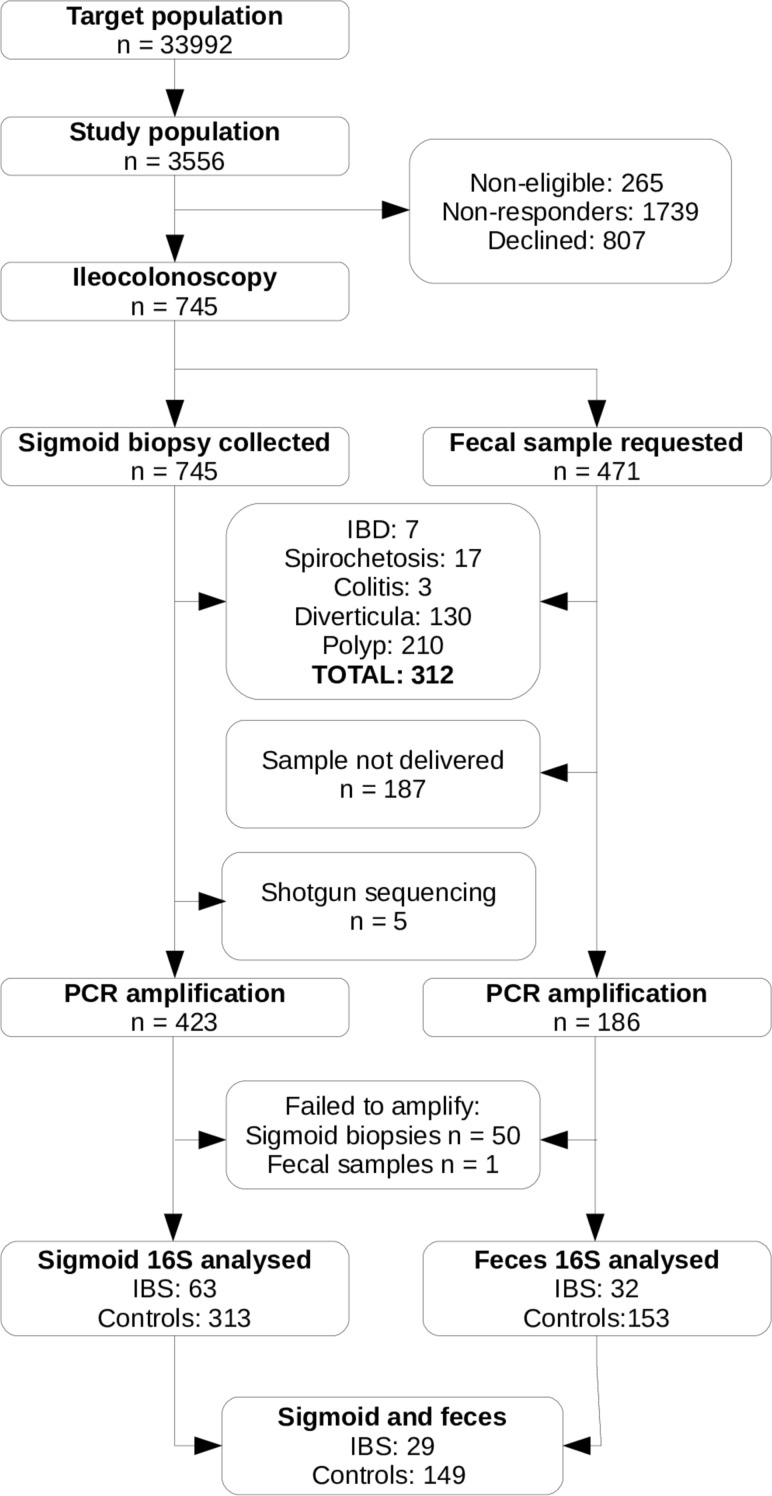
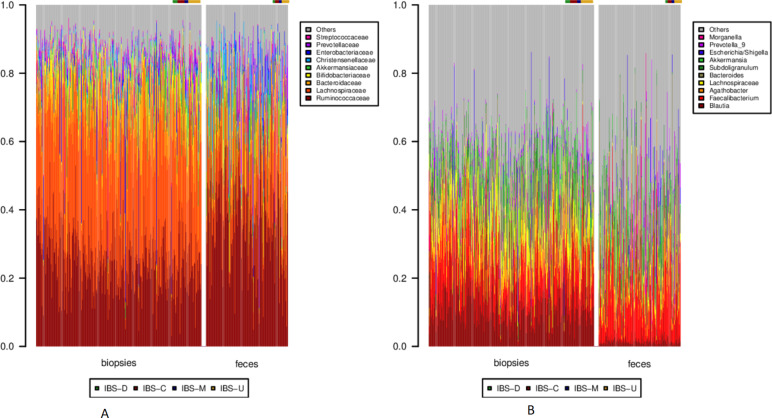
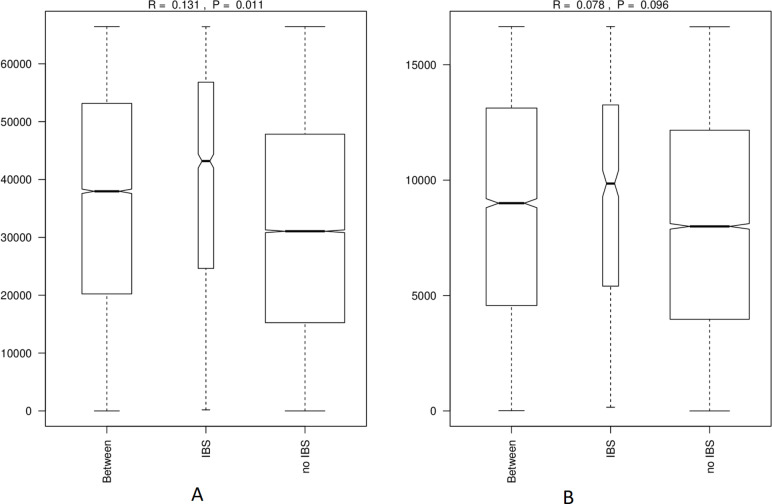
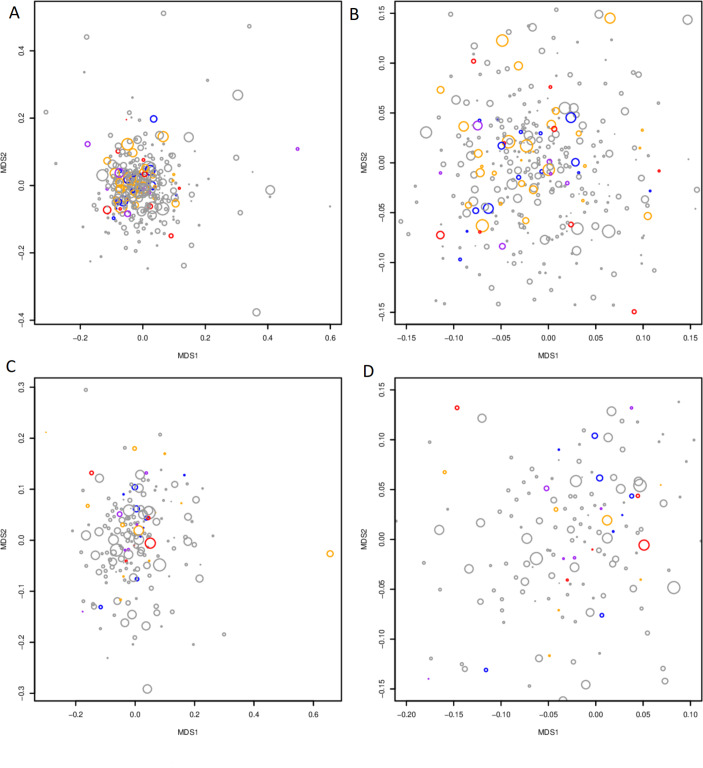
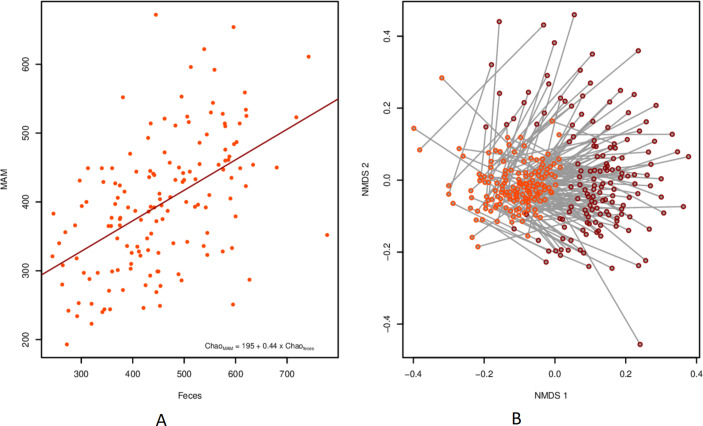
Objective: The ethiopathogenesis of irritable bowel syndrome (IBS) is unknown. While a link to the gut microbiome is postulated, the heterogeneity of the healthy gut makes it difficult to draw definitive conclusions. We aimed to describe the faecal and mucosa-associated microbiome (MAM) and health correlates on a community cohort of healthy and IBS individuals with no colonoscopic findings. Design: The PopCol study recruited a random sample of 3556 adults; 745 underwent colonoscopy. IBS was defined by Rome IV criteria and organic disease excluded. 16S rRNA gene sequencing was conducted on sigmoid biopsy samples from 376 representative individuals (63 IBS cases) and faecal samples from 185 individuals (32 IBS cases). Results: While sigmoid MAM was dominated by Lachnospiraceae, faeces presented a higher relative abundance of Ruminococcaceae. Microbial richness in MAM was linearly correlated to that in faeces from the same individual (R²=0.255, p<3E-11) as was diversity (R²=0.06, p=0.0022). MAM diversity decreased with increasing body mass index (BMI; Pearson’s r=−0.1, p=0.08) and poorer self-rated health (r=−0.15, p=0.007), but no other health correlates. Faecal microbiome diversity was correlated to stool consistency (r=−0.16, p=0.043). Several taxonomic groups were correlated to age, BMI, depression and self-reported health, including Coprococcus catus associated with lower levels of depression (r=−0.003, p=0.00017). The degree of heterogeneity observed between IBS patients is higher than that observed between healthy individuals. Conclusions: No distinct microbial signature was observed in IBS. Individuals presenting with low self-rated health or high BMI have lower gut microbiome richness.
Overview
The claims and statistics of this paper haven’t been checked yet.
Free: it reads the open-access text and checks the first 5 claims that cite a source we can check. Create a free account to check every claim.
Integrity signals
Registry
Cites
Statistics
Figures
Verification
Claims the paper makes
The claims and statistics of this paper haven’t been checked yet.
Free: it reads the open-access text and checks the first 5 claims that cite a source we can check. Create a free account to check every claim.
Self-check
Percentages, sums and reported differences re-computed from the paper’s own numbers.
The self-check needs the paper’s full text.
Citations
Cites
DADA2: High–resolution sample inference from Illumina amplicon data
Callahan, B. J., McMurdie, P. J., Rosen, M. J., Han, A. W., Johnson, A. J. A., & Holmes, S. P. (2016) · Nature Methods · doi:10.1038/nmeth.3869 · Cited by 35,698
Cutadapt removes adapter sequences from high-throughput sequencing reads
Martin, M. (2011) · EMBnet.journal · doi:10.14806/ej.17.1.200 · Cited by 33,889
vegan: Community Ecology Package
Oksanen, J., Simpson, G. L., Blanchet, F. G., Kindt, R., Legendre, P., Minchin, P. R., O'Hara, R. B., Solymos, P., Stevens, M. H. H., Szoecs, E., et al. (2001) · CRAN: Contributed Packages · doi:10.32614/cran.package.vegan · Cited by 22,615
A core gut microbiome in obese and lean twins
Turnbaugh, P. J., Hamady, M., Yatsunenko, T., Cantarel, B. L., Duncan, A., Ley, R. E., Sogin, M. L., Jones, W. J., Roe, B. A., Affourtit, J. P., et al. (2009) · Nature · doi:10.1038/nature07540 · Cited by 7,823
Pruesse, E., Quast, C., Knittel, K., Fuchs, B. M., Ludwig, W., Peplies, J., & Glockner, F. O. (2007) · Nucleic Acids Research · doi:10.1093/nar/gkm864 · Cited by 6,668
Davis, N. M., Proctor, D. M., Holmes, S. P., Relman, D. A., & Callahan, B. J. (2018) · Microbiome · doi:10.1186/s40168-018-0605-2 · Cited by 3,493
Dysfunction of the intestinal microbiome in inflammatory bowel disease and treatment
Morgan, X. C., Tickle, T. L., Sokol, H., Gevers, D., Devaney, K. L., Ward, D. V., Reyes, J. A., Shah, S. A., LeLeiko, N., Snapper, S. B., et al. (2012) · Genome Biology · doi:10.1186/gb-2012-13-9-r79 · Cited by 2,713
Population-level analysis of gut microbiome variation
Falony, G., Joossens, M., Vieira-Silva, S., Wang, J., Darzi, Y., Faust, K., Kurilshikov, A., Bonder, M. J., Valles-Colomer, M., Vandeputte, D., et al. (2016) · Science · doi:10.1126/science.aad3503 · Cited by 2,400
UNOISE2: improved error-correction for Illumina 16S and ITS amplicon sequencing
Edgar, R. C. (2016) · bioRxiv (Cold Spring Harbor Laboratory) · doi:10.1101/081257 · Cited by 1,809
Zmora, N., Zilberman-Schapira, G., Suez, J., Mor, U., Dori-Bachash, M., Bashiardes, S., Kotler, E., Zur, M., Regev-Lehavi, D., Brik, R. B.-Z., et al. (2018) · Cell · doi:10.1016/j.cell.2018.08.041 · Cited by 1,695
Irritable Bowel Syndrome: A Clinical Review
Chey, W. D., Kurlander, J., & Eswaran, S. (2015) · JAMA · doi:10.1001/jama.2015.0954 · Cited by 1,081
Rifaximin Therapy for Patients with Irritable Bowel Syndrome without Constipation
Pimentel, M., Lembo, A., Chey, W. D., Zakko, S., Ringel, Y., Yu, J., Mareya, S. M., Shaw, A. L., Bortey, E., & Forbes, W. P. (2011) · New England Journal of Medicine · doi:10.1056/nejmoa1004409 · Cited by 1,036
Mueller, S., Saunier, K., Hanisch, C., Norin, E., Alm, L., Midtvedt, T., Cresci, A., Silvi, S., Orpianesi, C., Verdenelli, M. C., et al. (2006) · Applied and Environmental Microbiology · doi:10.1128/aem.72.2.1027-1033.2006 · Cited by 1,006
Stress and stability: applying the Anna Karenina principle to animal microbiomes
Zaneveld, J. R., McMinds, R., & Vega Thurber, R. (2017) · Nature Microbiology · doi:10.1038/nmicrobiol.2017.121 · Cited by 977
The Human Gut Microbiome: From Association to Modulation
Schmidt, T. S. B., Raes, J., & Bork, P. (2018) · Cell · doi:10.1016/j.cell.2018.02.044 · Cited by 845
Meta‐analyses of human gut microbes associated with obesity and IBD
Walters, W. A., Xu, Z., & Knight, R. (2014) · FEBS Letters · doi:10.1016/j.febslet.2014.09.039 · Cited by 836
Gut Microbiota in Patients With Irritable Bowel Syndrome—A Systematic Review
Pittayanon, R., Lau, J. T., Yuan, Y., Leontiadis, G. I., Tse, F., Surette, M., & Moayyedi, P. (2019) · Gastroenterology · doi:10.1053/j.gastro.2019.03.049 · Cited by 719
The gut microbiome: connecting spatial organization to function
Tropini, C., Earle, K. A., Huang, K. C., & Sonnenburg, J. L. (2017) · Cell Host & Microbe · doi:10.1016/j.chom.2017.03.010 · Cited by 685
Insights into the role of the microbiome in obesity and type 2 diabetes
Hartstra, A. V., Bouter, K. E. C., Bäckhed, F., & Nieuwdorp, M. (2015) · Diabetes Care · doi:10.2337/dc14-0769 · Cited by 641
Looking for a Signal in the Noise: Revisiting Obesity and the Microbiome
Sze, M. A., & Schloss, P. D. (2016) · mBio · doi:10.1128/mbio.01018-16 · Cited by 600
Vich Vila, A., Imhann, F., Collij, V., Jankipersadsing, S. A., Gurry, T., Mujagic, Z., Kurilshikov, A., Bonder, M. J., Jiang, X., Tigchelaar, E. F., et al. (2018) · Science Translational Medicine · doi:10.1126/scitranslmed.aap8914 · Cited by 587
Colonic Butyrate-Producing Communities in Humans: an Overview Using Omics Data
Vital, M., Karch, A., & Pieper, D. H. (2017) · mSystems · doi:10.1128/msystems.00130-17 · Cited by 483
Obesity is Associated with Increased Risk of Gastrointestinal Symptoms: A Population-Based Study
Delgado-Aros, S., Locke, G. R., Camilleri, M., Talley, N. J., Fett, S., Zinsmeister, A. R., & Melton, L. J. (2004) · American Journal of Gastroenterology · doi:10.1111/j.1572-0241.2004.30887.x · Cited by 332
Self-citationPozuelo, M., Panda, S., Santiago, A., Mendez, S., Accarino, A., Santos, J., Guarner, F., Azpiroz, F., & Manichanh, C. (2015) · Scientific Reports · doi:10.1038/srep12693 · Cited by 325
An irritable bowel syndrome-specific symptom questionnaire: development and validation
K., W. I., S., F., J., H. C., H., J. R., F., L. G., A., M. E., A., P. R., K., W. I., & J., N. (2003) · Scandinavian Journal of Gastroenterology · doi:10.1080/00365520310004209 · Cited by 324
Martínez, C., Lobo, B., Pigrau, M., Ramos, L., González-Castro, A. M., Alonso, C., Guilarte, M., Guilá, M., de Torres, I., Azpiroz, F., et al. (2013) · Gut · doi:10.1136/gutjnl-2012-302093 · Cited by 283
Spatial heterogeneity and co-occurrence patterns of human mucosal-associated intestinal microbiota
Zhang, Z., Geng, J., Tang, X., Fan, H., Xu, J., Wen, X., Ma, Z. (., & Shi, P. (2014) · The ISME Journal · doi:10.1038/ismej.2013.185 · Cited by 232
Gut microbiota, metabolome and immune signatures in patients with uncomplicated diverticular disease
Barbara, G., Scaioli, E., Barbaro, M. R., Biagi, E., Laghi, L., Cremon, C., Marasco, G., Colecchia, A., Picone, G., Salfi, N., et al. (2017) · Gut · doi:10.1136/gutjnl-2016-312377 · Cited by 211
Parkes, G. C., Rayment, N. B., Hudspith, B. N., Petrovska, L., Lomer, M. C., Brostoff, J., Whelan, K., & Sanderson, J. D. (2012) · Neurogastroenterology & Motility · doi:10.1111/j.1365-2982.2011.01803.x · Cited by 200
Body Mass Index Differences in the Gut Microbiota Are Gender Specific
Gao, X., Zhang, M., Xue, J., Huang, J., Zhuang, R., Zhou, X., Zhang, H., Fu, Q., & Hao, Y. (2018) · Frontiers in Microbiology · doi:10.3389/fmicb.2018.01250 · Cited by 195
Black, C. J., Burr, N. E., Camilleri, M., Earnest, D. L., Quigley, E. M., Moayyedi, P., Houghton, L. A., & Ford, A. C. (2020) · Gut · doi:10.1136/gutjnl-2018-318160 · Cited by 191
Xu, D., Chen, V. L., Steiner, C. A., Berinstein, J. A., Eswaran, S., Waljee, A. K., Higgins, P. D. R., & Owyang, C. (2019) · American Journal of Gastroenterology · doi:10.14309/ajg.0000000000000198 · Cited by 181
Lopetuso, L. R., Petito, V., Graziani, C., Schiavoni, E., Paroni Sterbini, F., Poscia, A., Gaetani, E., Franceschi, F., Cammarota, G., Sanguinetti, M., et al. (2018) · Digestive Diseases · doi:10.1159/000477205 · Cited by 168
Burns, G., Carroll, G., Mathe, A., Horvat, J., Foster, P., Walker, M. M., Talley, N. J., & Keely, S. (2019) · American Journal of Gastroenterology · doi:10.1038/s41395-018-0377-0 · Cited by 145
Self-citationLi, G., Yang, M., Zhou, K., Zhang, L., Tian, L., Lv, S., Jin, Y., Qian, W., Xiong, H., Lin, R., et al. (2015) · Journal of Microbiology and Biotechnology · doi:10.4014/jmb.1412.12047 · Cited by 140
Talley, N. J., Quan, C., Jones, M. P., & Horowitz, M. (2004) · Neurogastroenterology & Motility · doi:10.1111/j.1365-2982.2004.00530.x · Cited by 133
Self-citationRichness and ecosystem development across faecal snapshots of the gut microbiota
Falony, G., Vieira‐Silva, S., & Raes, J. (2018) · Nature Microbiology · doi:10.1038/s41564-018-0143-5 · Cited by 132
Staudacher, H. M., & Whelan, K. (2016) · Proceedings of the Nutrition Society · doi:10.1017/s0029665116000021 · Cited by 125
Modulation of microbiota as treatment for intestinal inflammatory disorders: An uptodate
Gallo, A., Passaro, G., Gasbarrini, A., Landolfi, R., & Montalto, M. (2016) · World Journal of Gastroenterology · doi:10.3748/wjg.v22.i32.7186 · Cited by 119
Maharshak, N., Ringel, Y., Katibian, D., Lundqvist, A., Sartor, R. B., Carroll, I. M., & Ringel‐Kulka, T. (2018) · Digestive Diseases and Sciences · doi:10.1007/s10620-018-5086-4 · Cited by 119
Su, T., Liu, R., Lee, A., Long, Y., Du, L., Lai, S., Chen, X., Wang, L., Si, J., Owyang, C., et al. (2018) · Gastroenterology Research and Practice · doi:10.1155/2018/6961783 · Cited by 117
The microbiota link to irritable bowel syndrome: An emerging story
Jeffery, I. B., Quigley, E. M. M., Öhman, L., Simrén, M., & O'Toole, P. W. (2012) · Gut Microbes · doi:10.4161/gmic.21772 · Cited by 110
Use of broad-spectrum antibiotics and the development of irritable bowel syndrome.
Villarreal, A. A., Aberger, F. J., Benrud, R., & Gundrum, J. D. (2012) · PubMed · Cited by 95
Martinucci, I., Guidi, G., Savarino, E. V., Frazzoni, M., Tolone, S., Frazzoni, L., Fuccio, L., Bertani, L., Bodini, G., Ceccarelli, L., et al. (2018) · Gastroenterology Research and Practice · doi:10.1155/2018/7572430 · Cited by 95
Spatial Variation of the Native Colon Microbiota in Healthy Adults
Flynn, K. J., Ruffin, M. T., Turgeon, D. K., & Schloss, P. D. (2018) · Cancer Prevention Research · doi:10.1158/1940-6207.capr-17-0370 · Cited by 94
Walker, M. M., Talley, N. J., Inganäs, L., Engstrand, L. G., Jones, M. P., Nyhlin, H., Agréus, L., Kjellström, L., Öst, Å., & Andréasson, A. (2014) · Human Pathology · doi:10.1016/j.humpath.2014.10.026 · Cited by 93
Self-citationReproducibility and validity of a postal questionnaire: The abdominal symptom study
Agreus, L., Svärdsudd, K., Nyrén, O., & Tibblin, G. (1993) · Scandinavian Journal of Primary Health Care · doi:10.3109/02813439308994840 · Cited by 91
Fodor, A. A., Pimentel, M., Chey, W. D., Lembo, A., Golden, P. L., Israel, R. J., & Carroll, I. M. (2019) · Gut Microbes · doi:10.1080/19490976.2018.1460013 · Cited by 84
Adler, D., Kelly, S. T., Elliott, T. M., & Adamson, J. (2004) · doi:10.32614/cran.package.vioplot · Cited by 80
Lachnospira pectinoschiza sp. nov., an Anaerobic Pectinophile from the Pig Intestine
Cornick, N. A., Jensen, N. S., Stahl, D. A., Hartman, P. A., & Allison, M. J. (1994) · International Journal of Systematic Bacteriology · doi:10.1099/00207713-44-1-87 · Cited by 75
Stool frequency is associated with gut microbiota composition
Hadizadeh, F., Walter, S., Belheouane, M., Bonfiglio, F., Heinsen, F.-A., Andreasson, A., Agreus, L., Engstrand, L., Baines, J. F., Rafter, J., et al. (2017) · Gut · doi:10.1136/gutjnl-2016-311935 · Cited by 62
Self-citationEpidemiology of slow and fast colonic transit using a scale of stool form in a community
Choung, R. S., Locke, G. R., ZINSMEISTER, A. R., Schleck, C. D., & Talley, N. J. (2007) · Alimentary Pharmacology & Therapeutics · doi:10.1111/j.1365-2036.2007.03456.x · Cited by 59
Self-citationFaecal microbiota composition associates with abdominal pain in the general population
Hadizadeh, F., Bonfiglio, F., Belheouane, M., Vallier, M., Sauer, S., Bang, C., Bujanda, L., Andréasson, A., Agréus, L., Engstrand, L. G., et al. (2017) · Gut · doi:10.1136/gutjnl-2017-314792 · Cited by 48
Self-citationSymptomatic Diverticulosis Is Characterized By Loose Stools
Jarbrink-Sehgal, M. E., Andréasson, A., Talley, N. J., Agréus, L., Song, J.-Y., & Schmidt, P. T. (2016) · Clinical Gastroenterology and Hepatology · doi:10.1016/j.cgh.2016.06.014 · Cited by 46
Self-citationKjellström, L., Molinder, H., Agréus, L., Nyhlin, H., Talley, N. J., & Andreasson, A. (2014) · European Journal of Gastroenterology & Hepatology · doi:10.1097/meg.0000000000000024 · Cited by 45
Self-citationForsberg, A. M., Kjellström, L., Agréus, L., Andréasson, A., Nyhlin, H., Talley, N. J., & Björck, E. (2012) · Scandinavian Journal of Gastroenterology · doi:10.3109/00365521.2011.647062 · Cited by 44
Self-citationHugerth, L. W., Seifert, M., Pennhag, A. A. L., Du, J., Hamsten, M., Schuppe‐Koistinen, I., & Engstrand, L. G. (2018) · bioRxiv (Cold Spring Harbor Laboratory) · doi:10.1101/286526 · Cited by 35
Self-citation
Cited by
British Society of Gastroenterology guidelines on the management of irritable bowel syndrome
Vasant, D. H., Paine, P. A., Black, C. J., Houghton, L. A., Everitt, H. A., Corsetti, M., Agrawal, A., Aziz, I., Farmer, A. D., Eugenicos, M. P., et al. (2021) · Gut · doi:10.1136/gutjnl-2021-324598 · Cited by 592
“74 75 However, an integrated longitudinal multi-omics analysis of the gut microbiome, metab-olome, host epigenome and transcriptome, in the context of host symptoms and physiology in patients with IBS-D and IBS-C, identified subtype-specific and symptom-related variations in microbial composition…”
The Bacterial Connection between the Oral Cavity and the Gut Diseases
Kitamoto, S., Nagao-Kitamoto, H., Hein, R., Schmidt, T. M., & Kamada, N. (2020) · Journal of Dental Research · doi:10.1177/0022034520924633 · Cited by 438
“In this context, notwithstanding the huge variations in the gut microbial composition of patients with IBS (Ohman et al. 2015; Chong et al. 2019; Hugerth et al. 2020), there are some common features in IBS, including an increase in the families Enterobacteriaceae and Lactobacillaceae and a decrease in the genera Clost…”
BackgroundResultInfluentialSasso, J. M., Ammar, R. M., Tenchov, R., Lemmel, S., Kelber, O., Grieswelle, M., & Zhou, Q. A. (2023) · ACS Chemical Neuroscience · doi:10.1021/acschemneuro.3c00127 · Cited by 204
The gut microbiota and mental health in adults
Järbrink-Sehgal, E., & Andreasson, A. (2020) · Current Opinion in Neurobiology · doi:10.1016/j.conb.2020.01.016 · Cited by 173
“• Age [28] • Sex [29,44] • Obesity status [6,28] • Personality [50]”
BackgroundGut bless you: The microbiota-gut-brain axis in irritable bowel syndrome
Hillestad, E. M. R., van der Meeren, A., Nagaraja, B. H., Bjørsvik, B. R., Haleem, N., Benítez‐Páez, A., Sanz, Y., Hausken, T., Lied, G. A., Lundervold, A., et al. (2022) · World Journal of Gastroenterology · doi:10.3748/wjg.v28.i4.412 · Cited by 169
Metadata
- Authors
- Hugerth, L. W., Andreasson, A., Talley, N. J., Forsberg, A. M., Kjellström, L., Schmidt, P. T., Agreus, L., & Engstrand, L.
- Affiliations
- Science for Life Laboratory (SE)
- Stress Research Institute, Stockholm University, Stockholm, Sweden
- University of Newcastle Australia (AU)
- Karolinska University Hospital (SE)
- Gastromottagning City, Stockholm, Sweden
- Center for Family and Community Medicine, Karolinska Institutet, Stockholm, Sweden
- Corresponding author
- Engstrand, Lars
- Venue
- Gut
- Publisher
- BMJ
- Published
- 2019-10-10
- Volume
- 69
- Issue
- 6
- Pages
- 1076-1084
- ISSN
- 0017-5749 (ISSN-L)
- 1468-3288
- PMC
- PMC7282555
- OpenAlex
- W2979481261
- Cited by
- 102
- References
- 57
- Citations by year
- 2026: 4 · 2025: 2 · 2024: 14 · 2023: 17 · 2022: 22 · 2021: 22 · 2020: 19
- FWCI
- 5.21
- Type
- journal article
- Language
- en
- Open access
- hybrid
- doi.org
- Licence
- Locations
- Gut (publishedVersion, cc-by-nc)
- PubMed Central (publishedVersion, cc-by-nc)
- PubMed (publishedVersion)
- HighWire Press Open Archive (submittedVersion)
- NOVA (University of Newcastle Australia) (submittedVersion)
- Funders
- Ferring
- Torsten Söderbergs Stiftelse
- Topics
- Life Sciences › Biochemistry, Genetics and Molecular Biology › Molecular Biology › Gut microbiota and health
- Health Sciences › Medicine › Gastroenterology › Gastrointestinal motility and disorders
- Health Sciences › Medicine › Gastroenterology › Inflammatory Bowel Disease
- Keywords
- irritable bowel syndrome, gut microbiota, fecal microbiota, microbiome diversity, body mass index, self-rated health, stool consistency, depression, Lachnospiraceae, Ruminococcaceae
- MeSH terms
- Gastrointestinal Microbiome, Colonoscopy, Feces, Humans, Intestinal Mucosa, Male, Middle Aged, RNA, Ribosomal, 16S, Sweden, Case-Control Studies, Irritable Bowel Syndrome
About these checks
Registry, retraction, Cites and statistics results are computed, not judged, with one exception: a printed reference that no index lists is read once by a model before it counts as a citation error. Claims are extracted by a model and kept only when their quote appears verbatim in the text; each cited source is then checked, with a model’s help, for whether it says what the claim relies on. Those verdicts can be wrong — read the claim’s quote and the cited source before relying on one.
Statistics and arithmetic are recomputed, not judged.
Confidence bands are shown only for fields calibrated on our annotated test set. None is calibrated yet, so no band is shown.
What counts as a claim ›How we measure confidence ›How we check this ›
Are you an author, or do you see a problem with this page? Request a review
Data sources
Bibliographic data: Semantic Scholar, OpenAlex, Crossref.
Contains information from the Semantic Scholar Academic Graph Datasets, made available under the ODC Attribution License (ODC-BY 1.0).
Semantic Scholar’s data is described in: Kinney, R., et al. (2023). The Semantic Scholar Open Data Platform. arXiv:2301.10140.
