

High rates of non-adherence to antihypertensive treatment revealed by high-performance liquid chromatography-tandem mass spectrometry (HP LC-MS/MS) urine analysis
Open accessThe DOI matches its Crossref record; 23 of the 23 references it cites were found in a registry or an index.
Abstract
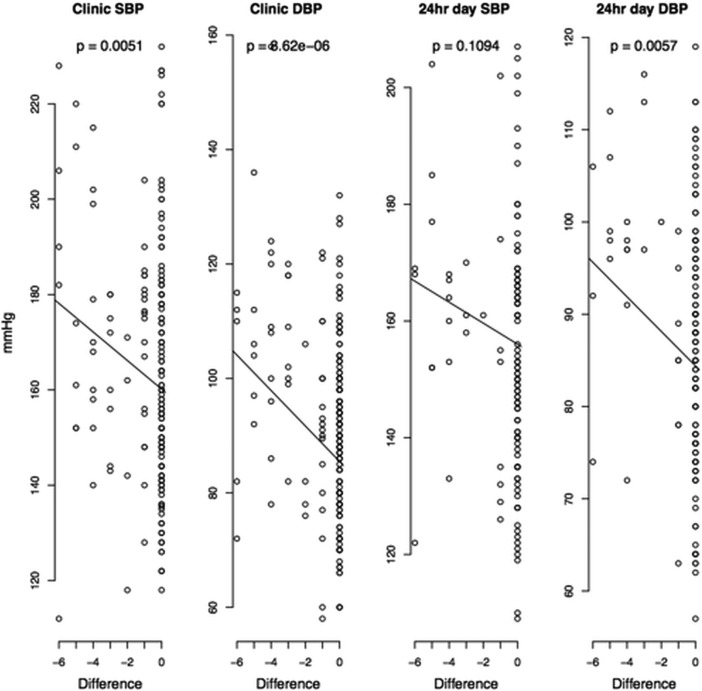
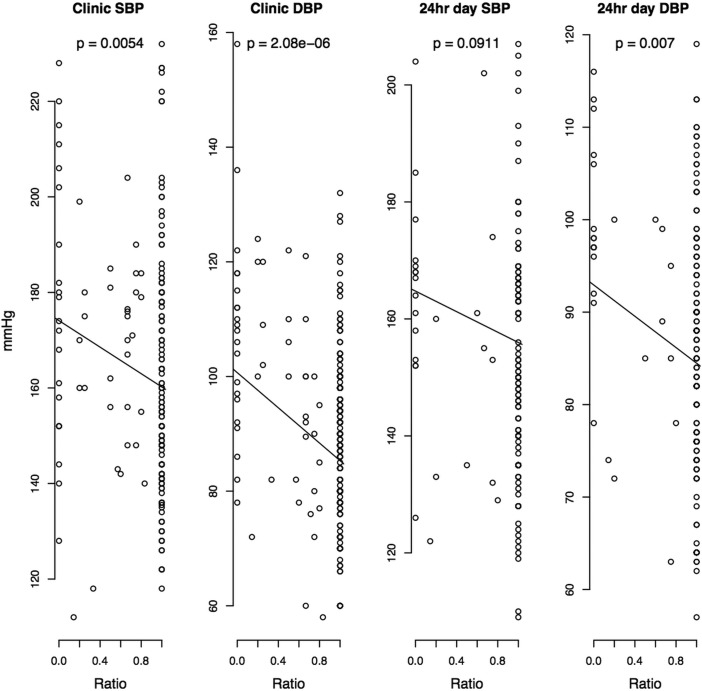
Objectives: Non-adherence to therapy is an important cause of suboptimal blood pressure control but few practical tools exist to accurately and routinely detect it. We used a simple urine-based assay to evaluate the prevalence of antihypertensive treatment non-adherence and its impact on blood pressure in a specialist hypertension centre. Methods: 208 hypertensive patients (125 new referrals, 66 follow-up patients with inadequate blood pressure control and 17 renal denervation referrals) underwent assessment of antihypertensive drug intake using high-performance liquid chromatography-tandem mass spectrometry (HP LC-MS/MS) urine analysis at the time of clinical appointment. A total of 40 most commonly prescribed antihypertensive medications (or their metabolites) were screened for in spot urine samples. Results: Overall, 25% of patients were totally or partially non-adherent to antihypertensive treatment (total non-adherence 10.1%, partial non-adherence 14.9%). The highest prevalence of partial and total non-adherence was among follow-up patients with inadequate blood pressure control (28.8%) and those referred for consideration of renal denervation (23.5%), respectively. There was a linear relationship between blood pressure and the numerical difference in detected/prescribed antihypertensive medications—every unit increase in this difference was associated with 3.0 (1.1) mm Hg, 3.1 (0.7) mm Hg and 1.9 (0.7) mm Hg increase in adjusted clinic systolic blood pressure, clinic diastolic blood pressure (DBP) and 24 h mean daytime DBP (p=0.0051, p=8.62×10 −6 , p=0.0057), respectively. Conclusions: Non-adherence to blood pressure lowering therapy is common, particularly in patients with suboptimal blood pressure control and those referred for renal denervation. HP LC-MS/MS urine analysis could be used to exclude non-adherence and better stratify further investigations and intervention.
Overview
The claims and statistics of this paper haven’t been checked yet.
Free: it reads the open-access text and checks the first 5 claims that cite a source we can check. Create a free account to check every claim.
Integrity signals
Registry
Cites
Statistics
Figures
Verification
Claims the paper makes
The claims and statistics of this paper haven’t been checked yet.
Free: it reads the open-access text and checks the first 5 claims that cite a source we can check. Create a free account to check every claim.
Claims other papers make about this one
Each is checked against this paper’s own text: does it say what the citing paper says it does?
The source backs part of the claim, not all of it — or backs it for a different population, condition or comparison.
In the citing paper
“Nonadherence to antihypertensive treatment affects 10%-80% of hypertensive patients and is one of the key drivers of suboptimal BP control. 75-77”
From 2020 International Society of Hypertension Global Hypertension Practice Guidelines (2020) · cites this paper as [75]
Experimental — accuracy not yet measured
Self-check
Percentages, sums and reported differences re-computed from the paper’s own numbers.
The self-check needs the paper’s full text.
Citations
Cites
Krum, H., Schlaich, M., Whitbourn, R., Sobotka, P. A., Sadowski, J., Bartus, K., Kapelak, B., Walton, A., Sievert, H., Thambar, S., et al. (2009) · The Lancet · doi:10.1016/s0140-6736(09)60566-3 · Cited by 2,108
Vrijens, B., Vincze, G., Kristanto, P., Urquhart, J., & Burnier, M. (2008) · BMJ · doi:10.1136/bmj.39553.670231.25 · Cited by 863
Mazzaglia, G., Ambrosioni, E., Alacqua, M., Filippi, A., Sessa, E., Immordino, V., Borghi, C., Brignoli, O., Caputi, A. P., Cricelli, C., et al. (2009) · Circulation · doi:10.1161/circulationaha.108.830299 · Cited by 637
Resistant hypertension? Assessment of adherence by toxicological urine analysis
Jung, O., Gechter, J. L., Wunder, C., Paulke, A., Bartel, C., Geiger, H., & Toennes, S. W. (2013) · Journal of Hypertension · doi:10.1097/hjh.0b013e32835e2286 · Cited by 474
Better compliance to antihypertensive medications reduces cardiovascular risk
Corrao, G., Parodi, A., Nicotra, F., Zambon, A., Merlino, L., Cesana, G., & Mancia, G. (2011) · Journal of Hypertension · doi:10.1097/hjh.0b013e328342ca97 · Cited by 367
ESH Position Paper: Renal denervation – an interventional therapy of resistant hypertension
Schmieder, R. E., Redon, J., Grassi, G., Kjeldsen, S. E., Mancia, G., Narkiewicz, K., Parati, G., Ruilope, L., van de Borne, P., & Tsioufis, C. (2012) · Journal of Hypertension · doi:10.1097/hjh.0b013e328352ce78 · Cited by 241
Mahfoud, F., Lüscher, T. F., Andersson, B., Baumgartner, I., Cifkova, R., DiMario, C., Doevendans, P., Fagard, R., Fajadet, J., Komajda, M., et al. (2013) · European Heart Journal · doi:10.1093/eurheartj/eht154 · Cited by 236
Self-citationMyat, A., Redwood, S. R., Qureshi Ayesha, C., Spertus, J. A., Williams, B., Liu, X., & 杜昕 (2013) · doi:10.1136/bmj.j.issn.1007-9742.2013.16.140 · Cited by 158
Self-citationFrom compliance to concordance in diabetes
Chatterjee, J. S. (2006) · Journal of Medical Ethics · doi:10.1136/jme.2005.012138 · Cited by 127
Cited by
Items 401–457 of 457
PREVALENCE, RISK FACTOR, MANAGEMENT AND OUTCOME OF RESISTANT HYPERTENSION: SYSTEMATIC REVIEW
Aziz, M. A., Kania, Y. I., Aziz, I., & Sibli (2024) · Journal of Advance Research in Medical & Health Science · doi:10.61841/mjnh1797
Kably, B. (2022) · theses.fr (ABES) · doi:10.70675/0548aa9bz78e3z4bdfzb0e1z940e41d4f3ea
Is Renal Denervation Effective in Treating Resistant Hypertension?
Kim, J. H., & Kwon, S. K. (2024) · Electrolytes & Blood Pressure · doi:10.5049/ebp.2024.22.1.1
“2) .”
Sall, F., Meneas, G. C., Siransy, B. A. E., Mottoh, M.-P. N., Kpi, Y. H., N’guessan, I., Assi, V. M., Diby, F. K., & Adoubi, A. K. (2024) · Frontiers in Cardiovascular Medicine · doi:10.3389/fcvm.2024.1403214
Assessment of Treatment Adherence in Chronic Heart Failure: A Narrative ReviewPreprint
Jelínek, L., Lazárová, M., & Václavík, J. (2024) · Authorea · doi:10.22541/au.172516290.06830775/v1
Coelho, J. C. (2022) · Digital Library of Theses and Dissertations (Universidade de São Paulo) · doi:10.11606/t.7.2022.tde-26112024-161413
Hipertensão resistente: atualizações no diagnóstico e tratamento
Rodrigues, B. B., Nunes, B. C., Werli, A., Branco, M. C. A. C., Melo, L., de Oliveira, R. G. Z., Kazmierczak, D. S., de Araujo, H. B., Moura, L. C., Santos, J. G. R., et al. (2025) · Journal of Medical and Biosciences Research. · doi:10.70164/jmbr.v2i2.669
“A associação da HR com comorbidades, como diabetes tipo 2, insuficiência renal crônica e obesidade, exige uma abordagem individualizada, coordenada por uma equipe multidisciplinar 3,12,19 .”
Saw, P. E., & Song, E. (2025) · Springer eBooks · doi:10.1007/978-981-96-3041-7_8
Ghai, N., Kumar, A., & Sah, S. P. (2025) · Elsevier eBooks · doi:10.1016/b978-0-443-22300-6.00049-8
‘4 Ss’ for successful blood pressure control
Wilkinson, I. B., Partridge, S., & Sever, P. (2025) · Journal of Hypertension · doi:10.1097/hjh.0000000000004054
Guimarães, M. C. D. L. P. (2024) · Digital Library of Theses and Dissertations (Universidade de São Paulo) · doi:10.11606/t.7.2024.tde-10092025-111921
Was ist gesichert in der Therapie der schwer zu kontrollierenden arteriellen Hypertonie?
Beger, C., & Limbourg, F. P. (2025) · Die Innere Medizin · doi:10.1007/s00108-025-02003-2
Resistant hypertension: diagnostic points and contemporary treatment
Moiseeva, A. (2025) · Bulletin of the Academy of Sciences of Moldova Medical Sciences · doi:10.52692/1857-0011.2025.1-81.12
The Continuing Challenge of Medication Adherence
(2025) · Frontiers research topics · doi:10.3389/978-2-8325-7235-1
Dr. Saeed Hussain Alqahtani, S. H. A. (2021) · Zenodo (CERN European Organization for Nuclear Research) · doi:10.5281/zenodo.4455782
Byrne, J. L., Dallosso, H. M., Rogers, S., Gray, L. J., Waheed, G., Patel, P., Gupta, P., Doherty, Y., Davies, M. J., & Khunti, K. (2020) · Figshare · doi:10.6084/m9.figshare.12721031
Self-citationPeeters, L. E. J., Kappers, M. H. W., Boersma, E., Massey, E. K., van Dijk, L., van Gelder, T., Koch, B. C. P., & Versmissen, J. (2023) · Figshare · doi:10.6084/m9.figshare.22599344
Byrne, J. L., Dallosso, H. M., Rogers, S., Gray, L. J., Waheed, G., Patel, P., Gupta, P., Doherty, Y., Davies, M. J., & Khunti, K. (2020) · Figshare · doi:10.6084/m9.figshare.12721025
Self-citationByrne, J. L., Dallosso, H. M., Rogers, S., Gray, L. J., Waheed, G., Patel, P., Gupta, P., Doherty, Y., Davies, M. J., & Khunti, K. (2020) · Figshare · doi:10.6084/m9.figshare.12721028
Self-citationHIPERTENSÃO E POLIMEDICAÇÃO: UMA EPIDEMIA A CONTROLAR
Lázaro Mendes, J., Batista, T., Manuel, P., & Lemos, A. (2022) · Revista Portuguesa de Hipertensão e Risco Cardiovascular · doi:10.58043/rphrc.16
Byrne, J. L., Dallosso, H. M., Rogers, S., Gray, L. J., Waheed, G., Patel, P., Gupta, P., Doherty, Y., Davies, M. J., & Khunti, K. (2020) · Figshare · doi:10.6084/m9.figshare.12721016
Self-citationByrne, J. L., Dallosso, H. M., Rogers, S., Gray, L. J., Waheed, G., Patel, P., Gupta, P., Doherty, Y., Davies, M. J., & Khunti, K. (2020) · Figshare · doi:10.6084/m9.figshare.12721040
Self-citationByrne, J. L., Dallosso, H. M., Rogers, S., Gray, L. J., Waheed, G., Patel, P., Gupta, P., Doherty, Y., Davies, M. J., & Khunti, K. (2020) · Figshare · doi:10.6084/m9.figshare.12721034
Self-citationByrne, J. L., Dallosso, H. M., Rogers, S., Gray, L. J., Waheed, G., Patel, P., Gupta, P., Doherty, Y., Davies, M. J., & Khunti, K. (2020) · Figshare · doi:10.6084/m9.figshare.12721022
Self-citationSilva, J. S. D. (2022) · Portuguese National Funding Agency for Science, Research and Technology (RCAAP Project by FCT)
Johannsen, J.-O. (2024) · Kölner Universitäts PublikationsServer (Universität zu Köln)
Metabolomics and metagenomics in hypertension
Palmu, J. (2022) · UTUPub (University of Turku)
Ritscher, S. (2020) · Publication Server of Goethe University Frankfurt am Main (Goethe University Frankfurt)
ACCOGLI, P. (2024) · Electronic Theses and Dissertations Repository (University of Pisa)
Medication Adherence Among Patients with Apparent Treatment-Resistant Hypertension
., U. (2025) · International Journal of Pharmaceutical Quality Assurance · doi:10.25258/ijpqa.16.5.41
УПРАВЛЕНИЕ ЛЕЧЕНИЕМ НА ОСНОВЕ ПРИВЕРЖЕННОСТИ
Н.А., Н., Мартынов, А. В., Ю.П., С., В.Н., А., И.А., В., О.И., В., Лазебник, Л. Б., И.В., П., Е.В., Р., А.В., Е., et al. (n.d.) · CyberLeninK (CyberLeninka)
Why do Patients with Arterial Hypertension not Adhere to Treatment Instructions?
Bralić Lang, V. (2025) · University of Zagreb University Computing Centre (SRCE)
Intolerance to antihypertensive drugs — a clinical view
Tyjas, K. K., & Stolarz‐Skrzypek, K. (2025) · Arterial Hypertension · doi:10.5603/ah.109591
Sutton, S. R., Jamison, J., Beardsell, K., Fineberg, M., Conceição, R., Mirzaei, V., Alvarez, C. T., Shpendi, S., Brimicombe, J. D., Bhattacharya, D., et al. (2026) · NIHR Open Research · doi:10.3310/nihropenres.14136.1
Self-citationAkyilmaz, E. C. D. (2023) · Dspace Repository (Marmara Üniversitesi)
Renal Denervation for Uncontrolled Hypertension: A Measurement-First, Program-Based Approach
Szarpak, Ł., Katipoğlu, B., Jaguszewski, M. J., Baier, A., Kubica, J., Maslyk, M. M., Pruc, M., Momot, K., Cander, B., & Lin, Q. (2026) · Journal of Clinical Medicine · doi:10.3390/jcm15072648
Marshall, W. R., Wu, H. H. L., Rengarajan, S., New, D. I., Poulikakos, D. J., & Chinnadurai, R. (2026) · Journal of Clinical Hypertension · doi:10.1111/jch.70243
Peacock, E., Mohundro, B. L., Li, J., BAZZANO, L., Shankar, A., Petty, R., Kegan, R. G., & Krousel-Wood, M. A. (2026) · Contemporary Clinical Trials · doi:10.1016/j.cct.2026.108353
Alghamdi, R., Osman, H., HIGHTON, P. J., Fahad, M., Salim, F., Lane, D., Bernieh, D., Jenkins, S., Pieri, B. A., Smith, O. M., et al. (2026) · Journal of Hypertension · doi:10.1097/hjh.0000000000004333
“The evi-dencecollectedusingobjectivedirectmethodsofassessmentsuggestthatasmanyas20–50%ofpatientsareatleast partiallynonadherenttoprescribedantihypertensivemedi-cations[3–6].”
Self-citationNjonnou, S. R. S., Wambo, C. D., Ouankou, C. N., Ongnessek, S., KOUONANG, O. L. D., & Ateudjieu, J. (2026) · Research Square · doi:10.21203/rs.3.rs-9788679/v1
Guimarães, M. C. D. L. P., Coelho, J. C., dos Santos, J., Meira, K. C., Vattimo, M. D. F. F., Costa, E., da Silva, G. V., Drager, L. F., & Pierin, Â. M. G. (2026) · Clinical Hypertension · doi:10.5646/ch.2026.32.e37
“HPLC-MS/MS is highly sensitive, rapid, and selective, and can be used to detect commonly prescribed antihypertensive drugs [11].”
Perceptions and practices of primary care physicians in the management of resistant hypertension
Wong, C. W. K., Lee, R., Lee, J., Leong, E. K. F., Ramani, N. V., Tan, N. C., Puar, T. H. K., & Parameswaran, R. (2026) · Singapore Medical Journal · doi:10.4103/singaporemedj.smj-2025-248
Sutton, S. R., Beardsell, K., Bhattacharya, D., Brimicombe, J. D., Cadorna, G., Conceição, R., Simoni, A. D., Eborall, H., Griffin, S. J., Gupta, P., et al. (2026) · Programme Grants for Applied Research · doi:10.3310/gjss0929
Self-citationMedication Non-Adherence in Resistant Hypertension: Detection, Drivers, and Practical Solutions
Perera, S., & Gallagher, B. D. (2026) · Current Cardiology Reports · doi:10.1007/s11886-026-02410-3
“…approach is chemical adherence testing, in which liquid chromatography–tandem mass spectrometry detects antihypertensive drugs and their metabolites in urine or blood, providing a point-in-time, drug-by-drug readout of whether the patient is actually taking each prescribed agent [7, 8, 13– 15].”
Medication adherence: An overlooked critical determinant of pharmacological effectiveness
Burnier, M., Azizi, M., Gupta, P., Kardas, P., Schneider, M. P., & Vrijens, B. (2026) · Pharmacological Reviews · doi:10.1016/j.pharmr.2026.100161 · Cited by 1
Self-citationLi, Z., Surapaneni, A., Charytan, D. M., Horwitz, L. I., Blecker, S., Shin, J., Thorpe, L. E., Melamed, M. L., & Grams, M. E. (2026) · Journal of the American Society of Nephrology · doi:10.1681/asn.0000001252
Tang, Y., Yao, J., Chen, Y., Jian, Y., Chen, T., Yang, Z., & Li, M. (2026) · Medical Review · doi:10.1515/mr-2026-0057
“Likewise, patients with suboptimal dosing, inadequate diuretic therapy, or medication nonadherence should not be classi fi ed in the same way as patients with con fi rmed biological resistance [1, 3, 4, 15, 17].”
InfluentialFinerenone-Empagliflozin Combination Therapy in Apparent Resistant Hypertension
Agarwal, R., Navaneethan, S. D., Correa‐Rotter, R., Estrella, M. M., Heerspink, H. J., McGill, J. B., Mottl, A. K., Nangaku, M., Rosenstock, J., Rossing, P., et al. (2026) · JACC Advances · doi:10.1016/j.jacadv.2026.103388
2026 International Society of Hypertension Global Hypertension Practice Guidelines – key messages
Tomaszewski, M., Charchar, F. J., & Guzik, T. J. (2026) · Cardiovascular Research · doi:10.1093/cvr/cvag259
Self-citationNogueiras‐Álvarez, R., Roncato, R., Benić, M. S., Kapo, S. M., Potočnjak, I., & Belančić, A. (2026) · Expert Review of Pharmacoeconomics & Outcomes Research · doi:10.1080/14737167.2026.2754563
Methods and strategies for detecting and preventing nonadherence in resistant hypertension
Greer, J., Kolli, D., & Dudenbostel, T. (2026) · Exploration of Medicine · doi:10.37349/emed.2026.1001433
Badarin, F. J. A., Nooryani, A. A. A., Mansoor, A., Hamid, S. G., Abudaqa, L., Aranki, D., & Bdair, A. (2026) · Drugs in Context · doi:10.7573/dic.2026-5-6
Brie, D. M., Mornoş, C., Popescu, R., & Brie, A. D. (2026) · Journal of Clinical Medicine · doi:10.3390/jcm15228811
Rabbitt, L., Curneen, J., Dennedy, M. C., & Molloy, G. J. (2024) · doi:10.3389/fphar.2024.1452464.s001
Metadata
- Authors
- Tomaszewski, M., White, C., Patel, P., Masca, N., Damani, R., Hepworth, J., Samani, N. J., Gupta, P., Madira, W., Stanley, A., & Williams, B.
- Affiliations
- University of Leicester (GB)
- University Hospitals of Leicester NHS Trust (GB)
- National Institute for Health and Care Research (GB)
- Corresponding author
- Tomaszewski, Maciej
- Venue
- Heart
- Publisher
- BMJ
- Published
- 2014-04-02
- Volume
- 100
- Issue
- 11
- Pages
- 855-861
- ISSN
- 1355-6037 (ISSN-L)
- 1468-201X
- PMC
- PMC4033175
- OpenAlex
- W2156249907
- Semantic Scholar
- fb1faa3a9c03d5a9ae2c007e7b040603fd826618
- Cited by
- 404
- References
- 23
- Citations by year
- 2026: 20 · 2025: 14 · 2024: 24 · 2023: 30 · 2022: 24 · 2021: 28 · 2020: 36 · 2019: 40 · 2018: 43 · 2017: 33 · 2016: 50 · 2015: 42 · 2014: 19
- FWCI
- 49.27
- Type
- journal article
- Language
- en
- Open access
- hybrid
- doi.org
- Licence
- cc-by-nc
- Locations
- Heart (publishedVersion, cc-by-nc)
- Europe PMC (PubMed Central) (publishedVersion, cc-by-nc)
- PubMed Central (publishedVersion, cc-by-nc)
- PubMed (publishedVersion)
- UCL Discovery (University College London) (submittedVersion)
- Figshare (submittedVersion, cc-by)
- Leicester Research Archive (University of Leicester) (submittedVersion, cc-by-nc)
- HighWire Press Open Archive (submittedVersion)
- Research Explorer (The University of Manchester) (submittedVersion)
- Funders
- National Institute for Health and Care Research (NF-SI-0611-10170)
- British Heart Foundation
- University College London
- Topics
- Health Sciences › Medicine › Family Practice › Medication Adherence and Compliance
- Health Sciences › Medicine › Cardiology and Cardiovascular Medicine › Blood Pressure and Hypertension Studies
- Health Sciences › Health Professions › Pharmacy › Pharmacy and Medical Practices
- Keywords
- medication non-adherence, antihypertensive drugs, hypertension, urine drug testing, spot urine, blood pressure control, renal denervation, drug metabolites
- MeSH terms
- Antihypertensive Agents, Blood Pressure, Chromatography, Liquid, Female, Follow-Up Studies, Humans, Hypertension, Male, Middle Aged, Patient Compliance, Reproducibility of Results, Urinalysis, Tandem Mass Spectrometry
About these checks
Registry, retraction, Cites and statistics results are computed, not judged, with one exception: a printed reference that no index lists is read once by a model before it counts as a citation error. Claims are extracted by a model and kept only when their quote appears verbatim in the text; each cited source is then checked, with a model’s help, for whether it says what the claim relies on. Those verdicts can be wrong — read the claim’s quote and the cited source before relying on one.
Statistics and arithmetic are recomputed, not judged.
Confidence bands are shown only for fields calibrated on our annotated test set. None is calibrated yet, so no band is shown.
What counts as a claim ›How we measure confidence ›How we check this ›
Are you an author, or do you see a problem with this page? Request a review
Data sources
Bibliographic data: Semantic Scholar, OpenAlex, Crossref.
Contains information from the Semantic Scholar Academic Graph Datasets, made available under the ODC Attribution License (ODC-BY 1.0).
Semantic Scholar’s data is described in: Kinney, R., et al. (2023). The Semantic Scholar Open Data Platform. arXiv:2301.10140.
