

T-cell agonists in cancer immunotherapy
Open accessThe DOI matches its Crossref record; 115 of the 119 references it cites were found in a registry or an index.
Abstract
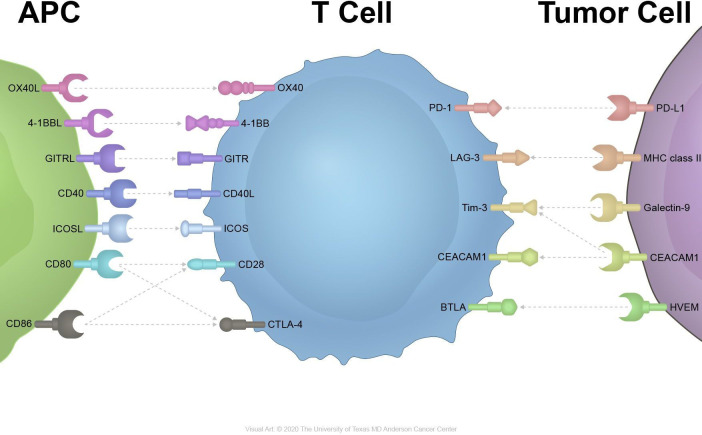
Cancer cells can evade immune surveillance in the body. However, immune checkpoint inhibitors can interrupt this evasion and enhance the antitumor activity of T cells. Other mechanisms for promoting antitumor T-cell function are the targeting of costimulatory molecules expressed on the surface of T cells, such as 4-1BB, OX40, inducible T-cell costimulator and glucocorticoid-induced tumor necrosis factor receptor. In addition, CD40 targets the modulation of the activation of antigen-presenting cells, which ultimately leads to T-cell activation. Agonists of these costimulatory molecules have demonstrated promising results in preclinical and early-phase trials and are now being tested in ongoing clinical trials. In addition, researchers are conducting trials of combinations of such immune modulators with checkpoint blockade, radiotherapy and cytotoxic chemotherapeutic drugs in patients with advanced tumors. This review gives a comprehensive picture of the current knowledge of T-cell agonists based on their use in recent and ongoing clinical trials.
Overview
The claims and statistics of this paper haven’t been checked yet.
Free: it reads the open-access text and checks the first 5 claims that cite a source we can check. Create a free account to check every claim.
Integrity signals
Registry
Cites
Statistics
Figures
Verification
Claims the paper makes
The claims and statistics of this paper haven’t been checked yet.
Free: it reads the open-access text and checks the first 5 claims that cite a source we can check. Create a free account to check every claim.
Claims other papers make about this one
Each is checked against this paper’s own text: does it say what the citing paper says it does?
The cited source says what the claim attributes to it.
In the citing paper
“however, a phase Ib study of an OX40 agonist combined with atezolizumab demonstrated safety but limited efficacy in patients (208-210).”
From The Next Decade of Immune Checkpoint Therapy (2021) · cites this paper as [210]
In the citing paper
“Preclinical work with OX40 and 4-1BB showed efficacy; however, a phase Ib study of an OX40 agonist combined with atezolizumab demonstrated safety but limited efficacy in patients (208-210).”
From The Next Decade of Immune Checkpoint Therapy (2021) · cites this paper as [210]
Self-check
Percentages, sums and reported differences re-computed from the paper’s own numbers.
The self-check needs the paper’s full text.
Citations
Cites
Tisagenlecleucel in children and young adults with B-cell lymphoblastic leukemia
Maude, S. L., Laetsch, T. W., Buechner, J., Rives, S., Boyer, M., Bittencourt, H., Bader, P., Verneris, M. R., Stefanski, H. E., Myers, G. D., et al. (2018) · New England Journal of Medicine · doi:10.1056/nejmoa1709866 · Cited by 5,735 · cited 1×
“44 45 Several studies have combined targeting 4-1BB with chimeric antigen receptor T-cell therapy.”
BackgroundNeoantigens in cancer immunotherapy
Schumacher, T. N., & Schreiber, R. D. (2015) · Science · doi:10.1126/science.aaa4971 · Cited by 4,783
Molecular mechanisms of T cell co-stimulation and co-inhibition
Chen, L., & Flies, D. B. (2013) · Nature Reviews Immunology · doi:10.1038/nri3405 · Cited by 3,114
Overall Survival with Durvalumab after Chemoradiotherapy in Stage III NSCLC
Antonia, S. J., Villegas, A., Daniel, D., Vicente, D., Murakami, S., Hui, R., Kurata, T., Chiappori, A., Lee, K. H., de Wit, M., et al. (2018) · New England Journal of Medicine · doi:10.1056/nejmoa1809697 · Cited by 2,798
Smith-Garvin, J. E., Koretzky, G. A., & Jordan, M. S. (2009) · Annual Review of Immunology · doi:10.1146/annurev.immunol.021908.132706 · Cited by 2,144
Towards a systems understanding of MHC class I and MHC class II antigen presentation
Neefjes, J., Jongsma, M. L. M., Paul, P., & Bakke, O. (2011) · Nature Reviews Immunology · doi:10.1038/nri3084 · Cited by 2,044
Sharpe, A. H., & Freeman, G. J. (2002) · Nature Reviews Immunology · doi:10.1038/nri727 · Cited by 1,712 · cited 1×
“89 90 The ligand of ICOS is ICOS ligand, which is mostly expressed on B cells, macrophages and DCs.”
BackgroundCD40 Agonists Alter Tumor Stroma and Show Efficacy Against Pancreatic Carcinoma in Mice and Humans
Beatty, G. L., Chiorean, E. G., Fishman, M. P., Saboury, B., Teitelbaum, U. R., Sun, W., Huhn, R. D., Song, W., Li, D., Sharp, L. L., et al. (2011) · Science · doi:10.1126/science.1198443 · Cited by 1,672
Molecular mechanism and function of CD40/CD40L engagement in the immune system
Elgueta, R., Benson, M. J., De Vries, V. C., Wasiuk, A., Guo, Y., & Noelle, R. J. (2009) · Immunological Reviews · doi:10.1111/j.1600-065x.2009.00782.x · Cited by 1,625
Cold Tumors: A Therapeutic Challenge for Immunotherapy
Bonaventura, P., Shekarian, T., Alcazer, V., Valladeau-Guilemond, J., Valsesia-Wittmann, S., Amigorena, S., Caux, C., & Depil, S. (2019) · Frontiers in Immunology · doi:10.3389/fimmu.2019.00168 · Cited by 1,108
Research works printed but not linked: 2
- Massarelli E, Segal N, Ribrag V Clinical safety and efficacy assessment of the CD137 agonist urelumab alone and in combination with nivolumab in patients with hematologic and solid tumor malignancies. J Immunother Cancer 2016; 4: O7.
- Elgueta R, Benson MJ, de Vries VC, et al Molecular mechanism and function of CD40/CD40L engagement in the immune system. Immunol Rev 2009; 229: 152– 72. 10.1111/j.1600-065X.2009.00782.x 19426221 PMC3826168 · DOI · Paper page
Cited by
The Next Decade of Immune Checkpoint Therapy
Sharma, P., Siddiqui, B. A., Anandhan, S., Yadav, S. S., Subudhi, S. K., Gao, J., Goswami, S., & Allison, J. P. (2021) · Cancer Discovery · doi:10.1158/2159-8290.cd-20-1680 · Cited by 750
Therapeutic targets and biomarkers of tumor immunotherapy: response versus non-response
Wang, D.-R., Wu, X.-L., & Sun, Y.-L. (2022) · Signal Transduction and Targeted Therapy · doi:10.1038/s41392-022-01136-2 · Cited by 501
CD8+ T cells in the cancer-immunity cycle
Giles, J. R., Globig, A.-M., Kaech, S. M., & Wherry, E. J. (2023) · Immunity · doi:10.1016/j.immuni.2023.09.005 · Cited by 449
Signal pathways of melanoma and targeted therapy
Guo, W., Wang, H., & Li, C. (2021) · Signal Transduction and Targeted Therapy · doi:10.1038/s41392-021-00827-6 · Cited by 379
“OX40 (CD134) that belongs to TNFR superfamily 4 is mainly expressed on CD4 T cells, CD8 T cells, neutrophils, and NK cells driven by TCR-engaged activation.(664) OX40 agonists promoted effector T cell expansion and survival, as well as depleted tumor-infiltrating Tregs.”
BackgroundTargeting innate immune pathways for cancer immunotherapy
Cao, L. L., & Kagan, J. C. (2023) · Immunity · doi:10.1016/j.immuni.2023.07.018 · Cited by 216
Geuijen, C. A. W., Tacken, P. J., Wang, L.-C., Klooster, R., van Loo, P. F., Zhou, J., Mondal, A., Liu, Y.-B., Kramer, A., Condamine, T., et al. (2021) · Nature Communications · doi:10.1038/s41467-021-24767-5 · Cited by 126
4-1BB immunotherapy: advances and hurdles
Singh, R., Kim, Y.-H., Lee, S.-J., Eom, H., & Choi, B. K. (2024) · Experimental & Molecular Medicine · doi:10.1038/s12276-023-01136-4 · Cited by 112
“Agonistic antibodies for cancer therapy are an active fi eld of research but have provided very few potential candidates for cancer immunotherapy 69 .”
BackgroundBiomaterials Facilitating Dendritic Cell‐Mediated Cancer Immunotherapy
Dong, H., Li, Q., Zhang, Y., Ding, M., Teng, Z., & Mou, Y. (2023) · Advanced Science · doi:10.1002/advs.202301339 · Cited by 95
Wang, R., Li, C., Cheng, Z., Li, M., Shi, J., Zhang, Z., Jin, S., & Ma, H. (2024) · Cell Reports · doi:10.1016/j.celrep.2024.114686 · Cited by 111
Davis, E. J., Martín-Liberal, J., Kristeleit, R. S., Cho, D. C., Blagden, S. P., Berthold, D., Cardin, D. B., Vieito, M., Miller, R. E., Dass, P. H., et al. (2022) · Journal for ImmunoTherapy of Cancer · doi:10.1136/jitc-2021-004235 · Cited by 80
Melero, I., Tanos, T., Bustamante, M., Sanmamed, M. F., Calvo, E., Moreno, I., Moreno, V., Hernández‐Guerrero, T., Martinez‐García, M., Rodríguez‐Vida, A., et al. (2023) · Science Translational Medicine · doi:10.1126/scitranslmed.abp9229 · Cited by 91
Rudqvist, N.-P., Charpentier, M., Lhuillier, C., Wennerberg, E., Spada, S., Sheridan, C. K., Zhou, X. K., Zhang, T., Formenti, S. C., Sims, J. S., et al. (2023) · Nature Communications · doi:10.1038/s41467-023-40844-3 · Cited by 76
“Agonistic OX40 antibodies have been shown to enhance tumor rejection by stimulating effector T cells while inhibiting the suppressive function of intratumoral Tregs 48,49 .”
Chan, S., Belmar, N. A., Ho, S., Rogers, B. M., Stickler, M. M., Graham, M., Lee, E., Tran, N., Zhang, D., Gupta, P., et al. (2022) · Nature Cancer · doi:10.1038/s43018-022-00334-9 · Cited by 70
OX40L–OX40 Signaling in Atopic Dermatitis
Furue, M., & Furue, M. (2021) · Journal of Clinical Medicine · doi:10.3390/jcm10122578 · Cited by 69
“Immune checkpoint molecules are primarily classified into two groups: the immunoglobulin superfamily, and the tumor necrosis factor superfamily (TNFSF) and its receptors (TNFRSFs) [3,4,9] (Figure 1).”
BackgroundWang, K., Patkar, S., Lee, J. S., Gertz, E. M., Robinson, W., Schischlik, F., Crawford, D. R., Schäffer, A. A., & Ruppin, E. (2022) · Cancer Discovery · doi:10.1158/2159-8290.cd-21-0887 · Cited by 55
The role of B cells in cancer development
Tan, R., Nie, M., & Wang, L. (2022) · Frontiers in Oncology · doi:10.3389/fonc.2022.958756 · Cited by 69
“T cell-based immunotherapy is critical and effective in cancer therapy, and the promising outcome of the antibodies targeting immune checkpoints in the treatment of cancer created a grave impact on immunotherapy (2, 3).”
BackgroundGao, J., Wang, Z., Jiang, W., Zhang, Y., Meng, Z., Niu, Y.-L., Sheng, Z., Chen, C., Liu, X., Chen, X., et al. (2023) · Journal for ImmunoTherapy of Cancer · doi:10.1136/jitc-2023-006704 · Cited by 65
Sadozai, H., Acharjee, A., Eppenberger‐Castori, S., Gloor, B., Gruber, T., Schenk, M., & Karamitopoulou, E. (2021) · Frontiers in Immunology · doi:10.3389/fimmu.2021.643529 · Cited by 55
“, CD137, OX40, GITR), a number of which are undergoing clinical trials (40).”
BackgroundTNF/TNFR Superfamily Members in Costimulation of T Cell Responses—Revisited
Watts, T. H., Yeung, K. K. M., Yu, T., Lee, S., & Eshraghisamani, R. (2025) · Annual Review of Immunology · doi:10.1146/annurev-immunol-082423-040557 · Cited by 51
The Immunotherapy for Colorectal Cancer, Lung Cancer and Pancreatic Cancer
Chen, S., Wang, S.-C., & Chen, Y. (2021) · International Journal of Molecular Sciences · doi:10.3390/ijms222312836 · Cited by 44
“Agonists of costimulatory molecules like CD40 have shown promising results in preclinical studies and are currently being tested in ongoing clinical trials [67].”
BackgroundWang, F., Zheng, A., Zhang, D., Zou, T., Xiao, M., Chen, J., Wen, B., Wen, Q., Wu, X., Li, M., et al. (2022) · Frontiers in Immunology · doi:10.3389/fimmu.2022.1024931 · Cited by 38
“The activated state of T cells enhances the responsiveness to pathogens or malignant cells, while further inhibiting tumor progression (33, 48).”
BackgroundWhen Natural Compounds Meet Nanotechnology: Nature-Inspired Nanomedicines for Cancer Immunotherapy
Yu, L., Jin, Y., Song, M., Zhao, Y., & Zhang, H. (2022) · Pharmaceutics · doi:10.3390/pharmaceutics14081589 · Cited by 37
“In this respect, the combination of T cell agonist-based treatment with other therapies might be a promising option [50], of which the sequence and dosage of compatible drugs need to be further optimized.”
BackgroundYao, H., Shen, N., Ji, G., Huang, J., Sun, J., Wang, G., Tang, Z., & Chen, X. (2022) · Nano Letters · doi:10.1021/acs.nanolett.2c00478 · Cited by 32
Revisiting T-cell adhesion molecules as potential targets for cancer immunotherapy: CD226 and CD2
Jo, Y., Sim, H.-I., Yun, B., Park, Y., & Jin, H. (2024) · Experimental & Molecular Medicine · doi:10.1038/s12276-024-01317-9 · Cited by 37
Roudi, R., D’Angelo, A., Sirico, M., & Sobhani, N. (2021) · International Immunopharmacology · doi:10.1016/j.intimp.2021.108322 · Cited by 32
Anti-Tumor Effect of Parasitic Protozoans
Ding, H., Wu, S., Jin, Z., Zheng, B., Hu, Y., He, K., Lu, S., & Zhuo, X. (2022) · Bioengineering · doi:10.3390/bioengineering9080395 · Cited by 31
“Activation of naïve T lymphocytes requires T cell receptor (TCR) signaling, costimulatory signaling, and cytokine support [51,52].”
BackgroundInfluence of Microbiota on Tumor Immunotherapy
Yu, X., Li, W., Li, Z., Wu, Q., & Sun, S. (2024) · International Journal of Biological Sciences · doi:10.7150/ijbs.91771 · Cited by 37
“Consequently, research efforts have noticeably shifted toward enhancing anti-tumor activity by manipulating signaling pathways with agonistic antibodies targeting specific molecules to augment anti-tumor T-cell responses [15].”
BackgroundRational Vaccinology: Harnessing Nanoscale Chemical Design for Cancer Immunotherapy
Huang, Z. N., Callmann, C. E., Wang, S., Vasher, M. K., Evangelopoulos, M., Petrosko, S. H., & Mirkin, C. A. (2022) · ACS Central Science · doi:10.1021/acscentsci.2c00227 · Cited by 33
Naito, Y., Koyama, S., Masuhiro, K., Hirai, T., Uenami, T., Inoue, T., Osa, A., Machiyama, H., Watanabe, G., Sax, N., et al. (2023) · Science Advances · doi:10.1126/sciadv.ade0718 · Cited by 32
“Sema4A expression in the TME could be vital biomarker to predict the response to ICIs.”
BackgroundInfluentialNanotechnology Applications in Breast Cancer Immunotherapy
Wang, R., Kumar, P., Reda, M. M., Wallstrum, A., Crumrine, N. A., Ngamcherdtrakul, W., & Yantasee, W. (2023) · Small · doi:10.1002/smll.202308639 · Cited by 37
Frankish, J., Mukherjee, D., Romano, E., Frey, K., Schröder, M., Heinonen, K., Merz, C., Müller, M. R., Gieffers, C., Hill, O., et al. (2023) · Frontiers in Immunology · doi:10.3389/fimmu.2023.1160116 · Cited by 25
“Agonistic approaches such as this have been proven to be an effective therapeutic approach, as demonstrated by completed and on-going clinical trials directly targeting the costimulation of T-cells, or indirectly, leading to their activation (22).”
BackgroundThe m6A revolution: transforming tumor immunity and enhancing immunotherapy outcomes
Shi, T., Zhang, H., & Chen, Y. (2025) · Cell & Bioscience · doi:10.1186/s13578-025-01368-z · Cited by 33
“Enhancing T cell function within the TME has emerged as a promising strategy to inhibit tumor progression [76, 77].”
Affolter, A., Kern, J., Bieback, K., Scherl, C., Rotter, N., & Lammert, A. (2022) · International Journal of Oncology · doi:10.3892/ijo.2022.5378 · Cited by 23
“CPI could probably be combined with immune agonists targeting co‐stimulatory molecules expressed on the surface of T cells, such as 4‐1BB, OX40, CD40, GITR) thereby directly stimulating immune response (1,44,45).”
BackgroundBudimir, N., Dolina, J. S., Wei, J., Wang, X., Chen, S.-H., Santiago, P., Tu, G., Micci, L., Al-Khami, A. A., Pfister, S. X., et al. (2021) · Journal for ImmunoTherapy of Cancer · doi:10.1136/jitc-2021-003614 · Cited by 26
“Although eight CD8 + T cell clusters were annotated in pretreatment and post-treatment B16 tumors, only six were numerically appreciable at baseline (clusters 5, 7, 9, 11, 13, and 14).”
Pandey, S., Anang, V., & Schumacher, M. M. (2024) · International review of cytology · doi:10.1016/bs.ircmb.2024.01.006 · Cited by 27
Recent Findings on Therapeutic Cancer Vaccines: An Updated Review
Sheikhlary, S., Lopez, D. H., Moghimi, S., & Sun, B. (2024) · Biomolecules · doi:10.3390/biom14040503 · Cited by 26
“T cell activation is modulated by a wide range of other factors and signals produced by the activated DCs [261], agonist antibodies [262,263], co-stimulatory molecule receptors [264,265], and co-inhibitors (immune checkpoint inhibitors) [84,266].”
BackgroundEmerging Next-Generation Target for Cancer Immunotherapy Research: The Orphan Nuclear Receptor NR2F6
Klepsch, V., Siegmund, K., & Baier, G. (2021) · Cancers · doi:10.3390/cancers13112600 · Cited by 21
“Therefore, the mixture of anti-CTLA-4 and anti-PD-1/PD-L1 therapies not only showed synergistic effects in pre-clinical models but also increased their efficacy compared to monotherapies in clinical settings such as in patients with metastatic melanoma and advanced renal cell carcinoma [26,27].”
BackgroundZhao, Y., Hou, J., Liu, Y., Xu, J., & Guo, Y. (2024) · Carbohydrate Polymers · doi:10.1016/j.carbpol.2024.121831 · Cited by 22
Giri, S., Lamichhane, G., Pandey, J., Khadayat, R., Sindhu, K. C., Devkota, H. P., & Khadka, D. (2025) · International Journal of Molecular Sciences · doi:10.3390/ijms26072923 · Cited by 26
“…include costimulatory receptors like CD28 and certain members of the tumor necrosis factor receptor (TNFR) family, including 41BB (CD137 or TNFRSF9), glucocorticoid-induced TNFR-related protein (GITR, also known as TNFRSF18), and OX40 (TNFRSF4), expressed on the outer surface of APCs [110].”
Cancer immunotherapy: T cells and neutrophils working together to attack cancers
Ager, A. (2023) · Cell · doi:10.1016/j.cell.2023.03.005 · Cited by 17
Martin, A. L., Powell, C. D., Nagy, M. Z., Innamarato, P., Powers, J. J., Nichols, D. A., Anadon, C. M., Chaurio, R. A., Kim, S., Wang, M.-H., et al. (2022) · Cancer Immunology Immunotherapy · doi:10.1007/s00262-022-03325-y · Cited by 16
The Role of OX40–OX40L Axis in the Pathogenesis of Atopic Dermatitis
Schettini, N., Pacetti, L., Corazza, M., & Borghi, A. (2024) · Dermatitis · doi:10.1089/derm.2024.0058 · Cited by 17
Capello, M., Sette, A., Plantinga, T. S., Thalhauser, C. J., Spires, V. M., Nuermberger, K., Blum, J. M., Higgs, B. W., Castro, P. G., Yu, C. Y., et al. (2025) · Journal for ImmunoTherapy of Cancer · doi:10.1136/jitc-2024-011377 · Cited by 19
Xin, D., Man, Y., Yang, Y., & Wang, F. (2022) · Frontiers in Genetics · doi:10.3389/fgene.2022.953997 · Cited by 15
“T cells, which are essential immune cells, play critical roles in antigen recognition, presentation, and tumor cell killing in gastric cancer (Thommen and Schumacher, 2018; Choi et al., 2020).”
BackgroundSmart delivery vehicles for cancer: categories, unique roles and therapeutic strategies
Zeng, Y., Gao, Y., He, L., Ge, W., Wang, X., Ma, T., & Xie, X.-Y. (2024) · Nanoscale Advances · doi:10.1039/d4na00285g · Cited by 16
“204 Tang et al. proposed using protein nanogels (NGs) to “ package ” large amounts of drugs onto T-cells and selectively release them upon T-cell receptor activation.”
BackgroundNagareddy, R., Thomas, R. G., & Jeong, Y. Y. (2021) · International Journal of Molecular Sciences · doi:10.3390/ijms222212510 · Cited by 17
Mechanisms of T-cell Depletion in Tumors and Advances in Clinical Research
Su, X., Zhang, M., Zhu, H., Cai, J., Wang, Z., Xu, Y., Wang, L., Shen, C., & Cai, M. M. (2025) · Biological Procedures Online · doi:10.1186/s12575-025-00265-6 · Cited by 18
Luo, L., Li, A., Fu, S., Du, W. T., He, L.-N., Zhang, X., Wang, Y., Zhou, Y., Yunpeng, Y., Li, Z., et al. (2022) · Immunologic Research · doi:10.1007/s12026-022-09335-3 · Cited by 16
FcγR requirements and costimulatory capacity of Urelumab, Utomilumab, and Varlilumab
Leitner, J. M., Egerer, R., Waidhofer‐Söllner, P., Grabmeier‐Pfistershammer, K., & Steinberger, P. (2023) · Frontiers in Immunology · doi:10.3389/fimmu.2023.1208631 · Cited by 13
“Currently, antibodies against several TNFRs have been evaluated in clinical trials (2, 12, 13, 55, 56).”
Challenges and opportunities in the development of combination immunotherapy with OX40 agonists
Redmond, W. L. (2023) · Expert Opinion on Biological Therapy · doi:10.1080/14712598.2023.2249396 · Cited by 14
“For example, aOX40 was combined with a4-1BB (CD137), in part because aOX40 can have more pronounced effects on CD4 + T cells, while a4-1BB primarily stimulates CD8 + T cell and NK cell responses [8,49,50,96,97].”
MethodT cell-related ubiquitination genes as prognostic indicators in hepatocellular carcinoma
Chen, C., Chen, Z., Zhou, Z., Ye, H., Xiong, S., Hu, W., Xu, Z., Ge, C., Zhao, C., Yu, D., et al. (2024) · Frontiers in Immunology · doi:10.3389/fimmu.2024.1424752 · Cited by 16
Hussein, O., Rayan, M., Matarid, T. R., Elkhalifa, D. H., Abunada, H. H., Therachiyil, L., Khalil, A. A., Shahab Uddin, M. S., Maccalli, C., & Korashy, H. M. (2025) · Journal of Experimental & Clinical Cancer Research · doi:10.1186/s13046-025-03514-4 · Cited by 16
“In particular, agonists of the costimulatory pathways OX40 (CD134), GITR, and ICOS have demonstrated encouraging outcomes in preclinical and early-phase trials [318].”
4-1BB Targeting Immunotherapy: Mechanism, Antibodies, and Chimeric Antigen Receptor T
Shen, X., Zhang, R., Nie, X., Yang, Y., Hua, Y., & Lü, P. (2023) · Cancer Biotherapy and Radiopharmaceuticals · doi:10.1089/cbr.2023.0022 · Cited by 14
Villaruz, L. C., Blumenschein, G. R., Otterson, G. A., & Leal, T. A. B. (2023) · Cancer · doi:10.1002/cncr.34683 · Cited by 14
“Targeting costimulatory checkpoints: OX40 and beyond OX40 is one of several costimulatory molecules expressed on T cells.(28) Binding of OX40 to OX40L promotes T‐cell survival and proliferation and the generation of memory T cells and inhibits Treg function.”
BackgroundInfluentialPan, C., Wu, Q., Wang, S., Mei, Z., Zhang, L., Gao, X., Qian, J., Xu, Z., Zhang, K., Su, R., et al. (2022) · OncoImmunology · doi:10.1080/2162402x.2022.2073010 · Cited by 15
“In preclinical studies, DTA-1 have been reported to cause robust tumor inhibition of various kinds of tumor and increase survival prognosis.(18,19) To further investigate the role DTA-1 played in anti-HCC response, hepa1-6 in situ in mouse model was established and treated with DTA-1.”
MethodCardiovascular Risk Factors in Adolescents with Type 1 Diabetes: Prevalence and Gender Differences
Vurallı, D., Jalilova, L., Alikaşifoğlu, A., Özön, Z. A., Gonc, E. N., & Kandemir, N. (2023) · Journal of Clinical Research in Pediatric Endocrinology · doi:10.4274/jcrpe.galenos.2023.2023-12-12 · Cited by 17
Targeting FGL2 in glioma immunosuppression and malignant progression
Ma, X., Zhu, H., Cheng, L., Chen, X., Shu, K., & Zhang, S. (2022) · Frontiers in Oncology · doi:10.3389/fonc.2022.1004700 · Cited by 11
“CD4+ or CD8+ T cells recognize tumor antigens and autoantigens by expressing ab T cell receptors (TCRs) and therefore play a crucial role in shaping the immune response in the formation of cancer or autoimmune diseases (60, 61).”
BackgroundGuo, C., Xie, B., & Liu, Q. (2022) · Functional & Integrative Genomics · doi:10.1007/s10142-022-00949-2 · Cited by 11
“T cells constitute a substantial part for antitumori-genic surveillance (Choi et al. 2020), and Treg cells, a subset of CD4 T cells, featured with the highly expressed biomarkers, like CD4 and CD25, are involved in maintaining immune homeostasis, inhibiting inflammation and autoimmunity (Tosolini…”
BackgroundMoyers, J. T., & Oliva, I. C. G. (2021) · Advances in experimental medicine and biology · doi:10.1007/978-3-030-79308-1_3 · Cited by 13
Targeting 4-1BB and PD-L1 induces potent and durable antitumor immunity in B-cell lymphoma
Wang, Y., Zhang, X., Xu, C., Nan, Y., Fan, J., Zeng, X. L., Kwon, B. S., & Ju, D. (2022) · Frontiers in Immunology · doi:10.3389/fimmu.2022.1004475 · Cited by 15
“In addition, there were enrichments in Protein digestion and absorption (4), ECMreceptor interaction (5), NF-kappa B signaling pathway (7), PI3K-Akt signaling pathway (8), and Cell adhesion molecules (9), demonstrating that the combination therapy had a widespread influence on the metabolism and metastasis of tumor ce…”
BackgroundOX40 and 4-1BB delineate distinct immune profiles in sarcoma
Melake, M., Smith, H., Mansfield, D., Davies, E., Dillon, M. T., Wilkins, A., Patin, E. C., Pedersen, M., Buus, R., Melcher, A. A., et al. (2022) · OncoImmunology · doi:10.1080/2162402x.2022.2066050 · Cited by 10
“Costimulatory signaling is required alongside T-cell receptor (TCR) signaling for full T-cell activation, with agonists against 4–1BB, OX40, GITR, and ICOS under clinical development.(22) High expression of costimulatory molecules has been identified on Tregs, with Treg depleting-antibody-based approaches suggested as…”
BackgroundMomenzadeh, N., Hajian, S., Shabankare, A., Ghavimi, R., Kabiri‐Samani, S., Kabiri, H., Hesamizadeh, K., Shabankareh, A. N. T., Nazaraghay, R., Nabipour, I., et al. (2022) · International Immunopharmacology · doi:10.1016/j.intimp.2022.109622 · Cited by 9
Bhutani, B., Sharma, V., Ganguly, N. K., & Rana, R. (2025) · Biomedicine & Pharmacotherapy · doi:10.1016/j.biopha.2025.117987 · Cited by 11
Ye, L., Jiang, G., Sun, Y., & Li, B. (2025) · Cell Death and Disease · doi:10.1038/s41419-025-07776-w · Cited by 9
“Anti-tumor immune responses involve various cell types and multiple steps and rely on the cooperation between innate and adaptive immune systems [5].”
Present and Emerging Biomarkers in Immunotherapy for Metastatic Non-Small Cell Lung Cancer: A Review
Khwaja, R., & Chu, Q. S.-C. (2022) · Current Oncology · doi:10.3390/curroncol29020043 · Cited by 13
“The cytotoxic T-cell response can be activated by the stimulation of agonistic immune checkpoints, such as OX40 and GITR, or inhibited by antagonistic checkpoints, such as CTL Antigen-4 (CTLA-4) and Programmed Death 1 (PD-1, Figure 1), simultaneously [2,3].”
BackgroundJu, Y., Dai, F., Wang, Y., Ye, Z., Li, Y., Ju, S., Ge, Y., & Chen, W. (2024) · Translational Oncology · doi:10.1016/j.tranon.2024.102151 · Cited by 8
“T cells are the crucial effector of an adaptive antitumor immune response, and their function is regulated by costimulatory signaling [9].”
Luteolin as an adjuvant effectively enhanced the efficacy of adoptive tumor-specific CTLs therapy
Lai, Z., Pang, Y., Zhou, Y., Chen, L., Zheng, K., Yuan, S., & Wang, W. (2025) · BMC Cancer · doi:10.1186/s12885-025-13831-8 · Cited by 8
“However, challenges remain. the adoptive effector T cells usually need activators, such as PD-1/PD-L1 or CTLA-4 inhibitors, to promote proliferation and activation, which adds to the treatment cost [4].”
Liang, X., Du, L., & Fan, Y. (2023) · Aging · doi:10.18632/aging.204766 · Cited by 12
“T-cell-based immunotherapies are promising treatments for cancer, which involve enhancing the ability of T cells to recognize and attack cancerous cells [62].”
BackgroundCrucial immunological roles of the invasion front in innate and adaptive immunity in cervical cancer
Hirahara, Y., Shimizu, K., Yamasaki, S., Iyoda, T., Ueda, S., Sato, S., Harada, J., Saji, H., Fujii, S., Miyagi, E., et al. (2024) · British Journal of Cancer · doi:10.1038/s41416-024-02877-3 · Cited by 7
“In contrast to LAG-3 and TIM-3, OX40 is considered as a co-stimulatory molecule that promotes T cell survival and effector T cell proliferation and/or inhibits CD4 + Tregs [30].”
Cancer ATF4-mediated CD58 endocytosis impairs anti-tumor immunity and immunotherapy
Zeng, H., Yu, J., Wang, H., Shen, M., Zou, X., Zhang, Z., & Liu, L. (2025) · Journal of Translational Medicine · doi:10.1186/s12967-025-06245-4 · Cited by 7
“Co-stimulatory molecules are also decisive in the formation of a special connection structure between CD8 + T cells and tumor cells, known as the immunological synapse (IS) [2, 3].”
Mechanism-Driven Design of Multispecific Antibodies for Targeted Disease Treatment
Fine, J., Meksiriporn, B., Tan, J., & Spangler, J. B. (2024) · Annual Review of Chemical and Biomolecular Engineering · doi:10.1146/annurev-chembioeng-100522-102155 · Cited by 8
An Update on Immune Based Therapies in Acute Myeloid Leukemia: 2021 and Beyond!
Haddad, F., & Daver, N. G. (2021) · Advances in experimental medicine and biology · doi:10.1007/978-3-030-79308-1_9 · Cited by 8
Gui, L., Wang, Z., Lou, W., Yekehfallah, V., Basiri, M., Gao, W., Wang, Y., & Ma, B. (2023) · International Immunopharmacology · doi:10.1016/j.intimp.2023.111249 · Cited by 6
Li, Z., Liu, X., Cai, N., Zhou, Z., Huang, H., Wu, Q., Xu, L., Zhu, W., Zhang, C., Wei, Z., et al. (2024) · Cancer Letters · doi:10.1016/j.canlet.2024.217152 · Cited by 7
Enhanced Antitumor Immunity Through T Cell Activation with Optimized Tandem Double-OX40L mRNAs
Deng, Z., Tian, Y., Wang, J., Xu, Y., Liu, Z., Xiao, Z., Wang, Z., Hu, M., Liu, R., & Yang, P. (2025) · International Journal of Nanomedicine · doi:10.2147/ijn.s479434 · Cited by 7
“12– 14 Members of the tumor necrosis factor receptor/tumor necrosis factor superfamily, OX40 (CD134) and OX40L (CD252) are expressed on activated CD4 + and CD8 + T cells as well as on a variety of other lymphoid and non-lymphoid cells.”
Aschmoneit, N., Kocher, K., Siegemund, M., Lutz, M. S., Kühl, L., Seifert, O., & Kontermann, R. E. (2022) · OncoImmunology · doi:10.1080/2162402x.2022.2028961 · Cited by 7
“antibodies targeting CTLA-4, PD-1 or PD-L1, more than 80% of patients do not respond to treatment or eventually experiencing resistance.(1) Hence, alternative strategies for promoting antitumor T-cell function, survival of T-cells and the formation of effector and memory phenotypes have gained increasing interest.”
BackgroundLong, S., Zhao, Y., Xu, Y., Li, H., Zhao, H., Chen, D., Zeng, J., Qiu, H., Li, X., & Gu, Y. (2022) · Journal of Innovative Optical Health Sciences · doi:10.1142/s1793545822400028 · Cited by 6
Liu, H., Wu, W., Sun, G., Chia, T., Cao, L., Liu, X., Guan, J., Fu, F., Yao, Y., Wu, Z., et al. (2022) · Cell Reports Medicine · doi:10.1016/j.xcrm.2022.100660 · Cited by 8
“But until now, successful translation of these therapies into patients still remains a big challenge, due to either insufficient efficacy or severe immunerelated toxicities.(50) In-depth research on the MOAs of immune agonists is of great significance to better guide their clinical development.”
BackgroundZhang, D., Wang, Y., Zhao, F., & Yang, Q. (2023) · Computers in Biology and Medicine · doi:10.1016/j.compbiomed.2023.106866 · Cited by 6
Immune Checkpoint Inhibitor (ICI)-Related Cardiotoxicity
Zarifa, A., Lopez‐Mattei, J., Palaskas, N. L., Iliescu, C., Durand, J., & Kim, P. Y. (2021) · Advances in experimental medicine and biology · doi:10.1007/978-3-030-79308-1_15 · Cited by 6
Li, Z., Simin, L., Jian, K., Xin, G., & Kuang, Y. (2022) · Immunotherapy · doi:10.2217/imt-2021-0232 · Cited by 6
Nghiem, E., Friedman, B., Srivastava, N., Takchi, A., Mohammadi, M., Dedushi, D., Edelmann, W., Kuang, C., & Bteich, F. (2025) · Pharmaceuticals · doi:10.3390/ph18081160 · Cited by 12
“…DC maturation and thus improved antigen presentation, activation, and proliferation of CD8 T-cells, a shift from the macrophage M2 (immunosuppressive) phenotype to the M1 (pro-inflammatory) phenotype, and an increase in the production of inflammatory cytokines, such as CXCL10 and CCL22 [162–164].”
Damane, B. P., Mkhize‐Kwitshana, Z. L., Kgokolo, M., Luvhengo, T. E., & Dlamini, Z. (2023) · Springer eBooks · doi:10.1007/978-3-031-21506-3_12 · Cited by 7
Wang, Y., Meraz, I. M., Qudratullah, M., Kotagiri, S., Han, Y., Xi, Y., Wang, J., & Lissanu, Y. (2024) · bioRxiv (Cold Spring Harbor Laboratory) · doi:10.1101/2024.06.18.599431 · Cited by 5
A novel immune checkpoint score system for prognostic evaluation in pancreatic adenocarcinoma
Chen, Y., Lin, X., Zou, X., Qian, Y., Liu, Y., Wang, R., Wang, X., Yu, X., Liu, C., & Cheng, H. (2023) · BMC Gastroenterology · doi:10.1186/s12876-023-02748-w · Cited by 4
Pan, J., Yang, H., Zhu, L., & Lou, Y. (2021) · Clinical Complementary Medicine and Pharmacology · doi:10.1016/j.ccmp.2021.100005 · Cited by 4
Neurologic Toxicities of Immunotherapy
Harrison, R. A., Majd, N., Tummala, S., & de Groot, J. (2021) · Advances in experimental medicine and biology · doi:10.1007/978-3-030-79308-1_18 · Cited by 4
Cbl-b inhibited CD4+ T cell activation by regulating the expression of miR-99a/miR-125b
Wu, M., Gao, X., Tang, Y., Wu, W., Zhou, J., Shao, Y., Hao, C., Yang, Y., & Zhang, J. (2023) · International Immunopharmacology · doi:10.1016/j.intimp.2022.109677 · Cited by 5
Chen, X., Peng, C., Chen, Y., Ding, B., Liu, S., Song, Y., Li, Y., Sun, B., & Yang, R. (2023) · BMC Bioinformatics · doi:10.1186/s12859-023-05344-7 · Cited by 4
“As one of the important mediating cells, T cells play a vital role in tumor immunotherapy [38].”
BackgroundRagulan, C., Desai, K., Lawrence, P. V., Ikami, Y., Aalam, S. M. M., Hari, P. S., Kannan, N., Cunningham, D., Starling, N., & Sadanandam, A. (2023) · bioRxiv (Cold Spring Harbor Laboratory) · doi:10.1101/2023.06.16.545301 · Cited by 5
Zhang, Y., Zheng, H., Zhang, R., Li, J., Yang, S., Hua, Y., Kleeff, J. H., Liao, Q., & Liu, Q. (2025) · Journal for ImmunoTherapy of Cancer · doi:10.1136/jitc-2025-012163 · Cited by 6
Emerging monoclonal antibody therapy for head and neck squamous cell carcinoma
Proulx-Rocray, F., & Soulières, D. (2024) · Expert Opinion on Emerging Drugs · doi:10.1080/14728214.2024.2339906 · Cited by 5
“One such receptor is the inducible T-cell co-stimulator (ICOS), which is expressed on various subtypes of activated CD4+ T-cells [67].”
BackgroundRothe, R., Tunger, A., Link, T., Lai, X., Kuhlmann, J. D., Wimberger, P., Schmitz, M., & Wehner, R. (2025) · Frontiers in Immunology · doi:10.3389/fimmu.2025.1607471 · Cited by 2
Zhang, J., Zhou, X., Wang, Y.-T., Yi, Z.-L., Li, L., & Liu, H. (2025) · Pharmacological Research · doi:10.1016/j.phrs.2025.108044 · Cited by 2
Long, S., Wang, B., Cui, Y., Shao, J., Zhao, Y., Xu, Y., Li, H., Qiu, H., Zhao, H., Zeng, J., et al. (2023) · Lasers in Medical Science · doi:10.1007/s10103-023-03894-z · Cited by 2
“Costimulatory molecules such as inducible co-stimulatory molecule (ICOS), OX-40, and 4-1BB on T cells are very important for antitumor T-cell function [14].”
BackgroundMalhotra, J. D., Lin, Y., Patel, M. M., Yellin, M. J., Zachariah, E., Krier, C., Saxena, A., & Jabbour, S. K. (2024) · JTO Clinical and Research Reports · doi:10.1016/j.jtocrr.2024.100687 · Cited by 3
Dissecting the immune infiltrate of primary luminal B‐like breast carcinomas in relation to age
Hatse, S., Lambrechts, Y., Antoranz, A., Schepper, M. D., Geukens, T., Vos, H., Berben, L., Messiaen, J., Marcelis, L., Herck, Y. V., et al. (2024) · The Journal of Pathology · doi:10.1002/path.6354 · Cited by 4
“Likewise, agonists of this costimulatory molecule show early promising results as a single agent or in combination with IC blocking therapy, radiotherapy, phototherapy, or chemotherapy in early-phase clinical trials or preclinical models of BC [46,47].”
Next Generation RNA/Protein‐Carrying Vector With Pleiotropic Activity
Nosaka, T., Ohtsuka, J., Ohtsuka, T., & Fukumura, M. (2024) · Reviews in Medical Virology · doi:10.1002/rmv.70008 · Cited by 2
“However,thelackofsufficientdatatosupportthe safety profiles of these agonistic antibodies has hampered their approval for clinical use [84].”
Stephen, B., & Hajjar, J. (2021) · Advances in experimental medicine and biology · doi:10.1007/978-3-030-79308-1_1 · Cited by 2
Xu, Z., Shin, H. S., Kim, Y. H., Ha, S. Y., Won, J., Kim, S., Park, Y. J., Parangi, S., Cho, S. W., & Lee, K. E. (2023) · Frontiers in Immunology · doi:10.3389/fimmu.2023.1187388 · Cited by 2
Metadata
- Authors
- Choi, Y., Shi, Y., Haymaker, C. L., Naing, A., Ciliberto, G., & Hajjar, J.
- Affiliations
- The University of Texas MD Anderson Cancer Center (US)
- Istituti di Ricovero e Cura a Carattere Scientifico (IT)
- Baylor College of Medicine (US)
- Corresponding author
- Choi, Yeonjoo
- Venue
- Journal for ImmunoTherapy of Cancer
- Publisher
- BMJ
- Published
- 2020-10
- Volume
- 8
- Issue
- 2
- Pages
- e000966
- ISSN
- 2051-1426 (ISSN-L)
- PMC
- PMC7537335
- OpenAlex
- W3091714068
- Cited by
- 119
- References
- 119
- Citations by year
- 2026: 6 · 2025: 23 · 2024: 21 · 2023: 26 · 2022: 26 · 2021: 17
- FWCI
- 1.85
- Type
- journal article
- Language
- en
- Open access
- gold
- doi.org
- Licence
- Locations
- Journal for ImmunoTherapy of Cancer (publishedVersion, cc-by-nc)
- PubMed Central (publishedVersion, cc-by-nc)
- PubMed (publishedVersion)
- DOAJ (DOAJ: Directory of Open Access Journals) (submittedVersion, cc-by-sa)
- Funders
- University of Texas MD Anderson Cancer Center
- Topics
- Health Sciences › Medicine › Oncology › Cancer Immunotherapy and Biomarkers
- Life Sciences › Immunology and Microbiology › Immunology › Immunotherapy and Immune Responses
- Life Sciences › Immunology and Microbiology › Immunology › T-cell and B-cell Immunology
- Keywords
- cancer immunotherapy, costimulatory molecules, immune checkpoint inhibitors, 4-1BB, OX40, ICOS, GITR, CD40, antigen-presenting cell activation, T cell activation, combination immunotherapy, radiotherapy, chemotherapy, clinical trials
- MeSH terms
- Humans, Immunotherapy, Neoplasms, T-Lymphocytes
About these checks
Registry, retraction, Cites and statistics results are computed, not judged, with one exception: a printed reference that no index lists is read once by a model before it counts as a citation error. Claims are extracted by a model and kept only when their quote appears verbatim in the text; each cited source is then checked, with a model’s help, for whether it says what the claim relies on. Those verdicts can be wrong — read the claim’s quote and the cited source before relying on one.
Statistics and arithmetic are recomputed, not judged.
Confidence bands are shown only for fields calibrated on our annotated test set. None is calibrated yet, so no band is shown.
What counts as a claim ›How we measure confidence ›How we check this ›
Are you an author, or do you see a problem with this page? Request a review
Data sources
Bibliographic data: Semantic Scholar, OpenAlex, Crossref.
Contains information from the Semantic Scholar Academic Graph Datasets, made available under the ODC Attribution License (ODC-BY 1.0).
Semantic Scholar’s data is described in: Kinney, R., et al. (2023). The Semantic Scholar Open Data Platform. arXiv:2301.10140.
