

T-cell agonists in cancer immunotherapy
Open accessThe DOI matches its Crossref record; 116 of the 119 references it cites were found in a registry or an index.
Abstract
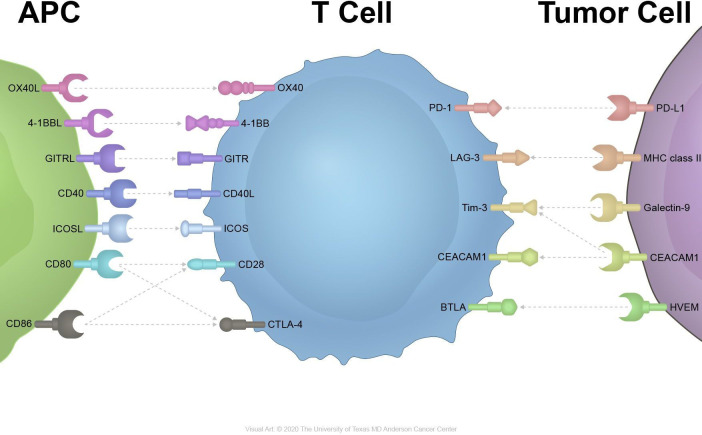
Cancer cells can evade immune surveillance in the body. However, immune checkpoint inhibitors can interrupt this evasion and enhance the antitumor activity of T cells. Other mechanisms for promoting antitumor T-cell function are the targeting of costimulatory molecules expressed on the surface of T cells, such as 4-1BB, OX40, inducible T-cell costimulator and glucocorticoid-induced tumor necrosis factor receptor. In addition, CD40 targets the modulation of the activation of antigen-presenting cells, which ultimately leads to T-cell activation. Agonists of these costimulatory molecules have demonstrated promising results in preclinical and early-phase trials and are now being tested in ongoing clinical trials. In addition, researchers are conducting trials of combinations of such immune modulators with checkpoint blockade, radiotherapy and cytotoxic chemotherapeutic drugs in patients with advanced tumors. This review gives a comprehensive picture of the current knowledge of T-cell agonists based on their use in recent and ongoing clinical trials.
Overview
The claims and statistics of this paper haven’t been checked yet.
Free: it reads the open-access text and checks the first 5 claims that cite a source we can check. Create a free account to check every claim.
Integrity signals
Registry
Cites
Statistics
Figures
Verification
Claims the paper makes
The claims and statistics of this paper haven’t been checked yet.
Free: it reads the open-access text and checks the first 5 claims that cite a source we can check. Create a free account to check every claim.
Claims other papers make about this one
Each is checked against this paper’s own text: does it say what the citing paper says it does?
The cited source says what the claim attributes to it.
In the citing paper
“however, a phase Ib study of an OX40 agonist combined with atezolizumab demonstrated safety but limited efficacy in patients (208-210).”
From The Next Decade of Immune Checkpoint Therapy (2021) · cites this paper as [210]
In the citing paper
“Preclinical work with OX40 and 4-1BB showed efficacy; however, a phase Ib study of an OX40 agonist combined with atezolizumab demonstrated safety but limited efficacy in patients (208-210).”
From The Next Decade of Immune Checkpoint Therapy (2021) · cites this paper as [210]
Self-check
Percentages, sums and reported differences re-computed from the paper’s own numbers.
The self-check needs the paper’s full text.
Citations
Cites
Tisagenlecleucel in children and young adults with B-cell lymphoblastic leukemia
Maude, S. L., Laetsch, T. W., Buechner, J., Rives, S., Boyer, M., Bittencourt, H., Bader, P., Verneris, M. R., Stefanski, H. E., Myers, G. D., et al. (2018) · New England Journal of Medicine · doi:10.1056/nejmoa1709866 · Cited by 5,735 · cited 1×
“44 45 Several studies have combined targeting 4-1BB with chimeric antigen receptor T-cell therapy.”
BackgroundNeoantigens in cancer immunotherapy
Schumacher, T. N., & Schreiber, R. D. (2015) · Science · doi:10.1126/science.aaa4971 · Cited by 4,783
Molecular mechanisms of T cell co-stimulation and co-inhibition
Chen, L., & Flies, D. B. (2013) · Nature Reviews Immunology · doi:10.1038/nri3405 · Cited by 3,114
Overall Survival with Durvalumab after Chemoradiotherapy in Stage III NSCLC
Antonia, S. J., Villegas, A., Daniel, D., Vicente, D., Murakami, S., Hui, R., Kurata, T., Chiappori, A., Lee, K. H., de Wit, M., et al. (2018) · New England Journal of Medicine · doi:10.1056/nejmoa1809697 · Cited by 2,798
Smith-Garvin, J. E., Koretzky, G. A., & Jordan, M. S. (2009) · Annual Review of Immunology · doi:10.1146/annurev.immunol.021908.132706 · Cited by 2,144
Towards a systems understanding of MHC class I and MHC class II antigen presentation
Neefjes, J., Jongsma, M. L. M., Paul, P., & Bakke, O. (2011) · Nature Reviews Immunology · doi:10.1038/nri3084 · Cited by 2,044
Sharpe, A. H., & Freeman, G. J. (2002) · Nature Reviews Immunology · doi:10.1038/nri727 · Cited by 1,712 · cited 1×
“89 90 The ligand of ICOS is ICOS ligand, which is mostly expressed on B cells, macrophages and DCs.”
BackgroundCD40 Agonists Alter Tumor Stroma and Show Efficacy Against Pancreatic Carcinoma in Mice and Humans
Beatty, G. L., Chiorean, E. G., Fishman, M. P., Saboury, B., Teitelbaum, U. R., Sun, W., Huhn, R. D., Song, W., Li, D., Sharp, L. L., et al. (2011) · Science · doi:10.1126/science.1198443 · Cited by 1,672
Molecular mechanism and function of CD40/CD40L engagement in the immune system
Elgueta, R., Benson, M. J., De Vries, V. C., Wasiuk, A., Guo, Y., & Noelle, R. J. (2009) · Immunological Reviews · doi:10.1111/j.1600-065x.2009.00782.x · Cited by 1,625
Cold Tumors: A Therapeutic Challenge for Immunotherapy
Bonaventura, P., Shekarian, T., Alcazer, V., Valladeau-Guilemond, J., Valsesia-Wittmann, S., Amigorena, S., Caux, C., & Depil, S. (2019) · Frontiers in Immunology · doi:10.3389/fimmu.2019.00168 · Cited by 1,108
Theelen, W. S. M. E., Peulen, H. M. U., Lalezari, F., van der Noort, V., de Vries, J. F., Aerts, J. G. J. V., Dumoulin, D. W., Bahce, I., Niemeijer, A.-L. N., de Langen, A. J., et al. (2019) · JAMA Oncology · doi:10.1001/jamaoncol.2019.1478 · Cited by 1,002
Davis, A. A., & Patel, V. G. (2019) · Journal for ImmunoTherapy of Cancer · doi:10.1186/s40425-019-0768-9 · Cited by 960
CD28 Costimulation: From Mechanism to Therapy
Esensten, J. H., Helou, Y. A., Chopra, G., Weiss, A., & Bluestone, J. A. (2016) · Immunity · doi:10.1016/j.immuni.2016.04.020 · Cited by 937
ICOS co-stimulatory receptor is essential for T-cell activation and function
Dong, C., Juedes, A. E., Temann, U.-A., Shresta, S., Allison, J. P., Ruddle, N. H., & Flavell, R. A. (2001) · Nature · doi:10.1038/35051100 · Cited by 936
The role of TNF superfamily members in T-cell function and diseases
Croft, M. (2009) · Nature Reviews Immunology · doi:10.1038/nri2526 · Cited by 920
T-cell regulation by CD28 and CTLA-4
Alegre, M.-L., Frauwirth, K. A., & Thompson, C. B. (2001) · Nature Reviews Immunology · doi:10.1038/35105024 · Cited by 914
Zhao, Z., Condomines, M., van der Stegen, S. J. C., Perna, F., Kloss, C. C., Gunset, G., Plotkin, J., & Sadelain, M. (2015) · Cancer Cell · doi:10.1016/j.ccell.2015.09.004 · Cited by 843
CD40 Ligand Gene Defects Responsible for X-Linked Hyper-IgM Syndrome
Allen, R. C., Armitage, R. J., Conley, M. E., Rosenblatt, H., Jenkins, N. A., Copeland, N. G., Bedell, M. A., Edelhoff, S., Disteche, C. M., Simoneaux, D. K., et al. (1993) · Science · doi:10.1126/science.7679801 · Cited by 830
CD40/CD154 Interactions at the Interface of Tolerance and Immunity
Quezada, S. A., Jarvinen, L. Z., Lind, E. F., & Noelle, R. J. (2004) · Annual Review of Immunology · doi:10.1146/annurev.immunol.22.012703.104533 · Cited by 683
The significance of OX40 and OX40L to T‐cell biology and immune disease
Croft, M., So, T., Duan, W., & Soroosh, P. (2009) · Immunological Reviews · doi:10.1111/j.1600-065x.2009.00766.x · Cited by 604
Enhancing CAR T cell persistence through ICOS and 4-1BB costimulation
Guedan, S., Posey, A. D., Shaw, C., Wing, A., Da, T., Patel, P. R., McGettigan, S. E., Casado-Medrano, V., Kawalekar, O. U., Uribe-Herranz, M., et al. (2018) · JCI Insight · doi:10.1172/jci.insight.96976 · Cited by 580 · cited 1×
“42 43 To increase T cells’ persistence, activity and ability to expand, chimeric antigen receptor T-cell therapy needs a costimulatory domain incorporated with the CD3 ξ chain’s cytoplasmic domain.”
BackgroundControl of Immunity by the TNFR-Related Molecule OX40 (CD134)
Croft, M. (2010) · Annual Review of Immunology · doi:10.1146/annurev-immunol-030409-101243 · Cited by 548 · cited 1×
“20 In addition, OX40 signaling promotes the generation of memory T cells and inhibits the function of Tregs.”
BackgroundVonderheide, R. H., Flaherty, K. T., Khalil, M., Stumacher, M. S., Bajor, D. L., Hutnick, N. A., Sullivan, P., Mahany, J. J., Gallagher, M., Kramer, A., et al. (2007) · Journal of Clinical Oncology · doi:10.1200/jco.2006.08.3311 · Cited by 513
Immunological Mechanisms Responsible for Radiation-Induced Abscopal Effect
Rodríguez-Ruiz, M. E., Vanpouille-Box, C., Melero, I., Formenti, S. C., & Demaria, S. (2018) · Trends in Immunology · doi:10.1016/j.it.2018.06.001 · Cited by 497
OX40 Is a Potent Immune-Stimulating Target in Late-Stage Cancer Patients
Curti, B. D., Kovacsovics-Bankowski, M., Morris, N., Walker, E., Chisholm, L., Floyd, K., Walker, J., Gonzalez, I., Meeuwsen, T., Fox, B. A., et al. (2013) · Cancer Research · doi:10.1158/0008-5472.can-12-4174 · Cited by 496
Winograd, R., Byrne, K. T., Evans, R. A., Odorizzi, P. M., Meyer, A. R. L., Bajor, D. L., Clendenin, C., Stanger, B. Z., Furth, E. E., Wherry, E. J., et al. (2015) · Cancer Immunology Research · doi:10.1158/2326-6066.cir-14-0215 · Cited by 459
Beatty, G. L., Torigian, D. A., Chiorean, E. G., Saboury, B., Brothers, A., Alavi, A., Troxel, A. B., Sun, W., Teitelbaum, U. R., Vonderheide, R. H., et al. (2013) · Clinical Cancer Research · doi:10.1158/1078-0432.ccr-13-1320 · Cited by 456
B7h, a Novel Costimulatory Homolog of B7.1 and B7.2, Is Induced by TNFα
Swallow, M. M., Wallin, J. J., & Sha, W. C. (1999) · Immunity · doi:10.1016/s1074-7613(00)80117-x · Cited by 453 · cited 1×
“91 ICOS ligand-ICOS signaling modestly promotes T-cell proliferation and differentiation and substantially enhances the production of cytokines such as IL-4, IL-5, IL-10, IFN-γ and TNF-α .”
BackgroundGray, J. E., Villegas, A., Daniel, D., Vicente, D., Murakami, S., Hui, R., Kurata, T., Chiappori, A., Lee, K. H., Cho, B. C., et al. (2020) · Journal of Thoracic Oncology · doi:10.1016/j.jtho.2019.10.002 · Cited by 427
Results from an integrated safety analysis of urelumab, an agonist anti-CD137 monoclonal antibody
Segal, N. H., Logan, T. F., Hodi, F. S., McDermott, D., Melero, I., Hamid, O., Schmidt, H., Robert, C., Chiarion-Sileni, V., Ascierto, P. A., et al. (2017) · Clinical Cancer Research · doi:10.1158/1078-0432.ccr-16-1272 · Cited by 424
Nocentini, G., Giunchi, L., Ronchetti, S., Krausz, L. T., Bartoli, A., Moraca, R., Migliorati, G., & Riccardi, C. (1997) · Proceedings of the National Academy of Sciences · doi:10.1073/pnas.94.12.6216 · Cited by 412 · cited 1×
“67 Preclinical data on GITR monotherapy demonstrated that the agonist anti-GITR antibody DTA-1 was efficacious against cancer cells in B16 melanoma mouse models.”
BackgroundCancer Immunotherapy Based on Natural Killer Cells: Current Progress and New Opportunities
Hu, W., Wang, G., Huang, D., Sui, M., & Xu, Y. (2019) · Frontiers in Immunology · doi:10.3389/fimmu.2019.01205 · Cited by 398
Depleting tumor-specific Tregs at a single site eradicates disseminated tumors
Marabelle, A., Kohrt, H., Sagiv-Barfi, I., Ajami, B., Axtell, R. C., Zhou, G., Rajapaksa, R., Green, M. R., Torchia, J., Brody, J., et al. (2013) · Journal of Clinical Investigation · doi:10.1172/jci64859 · Cited by 386
Mutations of CD40 gene cause an autosomal recessive form of immunodeficiency with hyper IgM
Ferrari, S., Giliani, S., Insalaco, A., Al-Ghonaium, A., Soresina, A. R., Loubser, M., Avanzini, M. A., Marconi, M., Badolato, R., Ugazio, A. G., et al. (2001) · Proceedings of the National Academy of Sciences · doi:10.1073/pnas.221456898 · Cited by 378
The promise and challenges of immune agonist antibody development in cancer
Mayes, P. A., Hance, K. W., & Hoos, A. (2018) · Nature Reviews Drug Discovery · doi:10.1038/nrd.2018.75 · Cited by 355 · cited 1×
“29 In a phase 1 clinical trial involving 52 patients with melanoma, hepatocellular carcinoma, head and neck squamous cell carcinomaor renal cell carcinoma, DLT was not reported at doses up to 10 mg/kg; thus, safety was confirmed and a dose expansion cohort for the recommended dose for phase 2 was…”
BackgroundOptimizing Timing of Immunotherapy Improves Control of Tumors by Hypofractionated Radiation Therapy
Young, K. H., Baird, J. R., Savage, T., Cottam, B., Friedman, D., Bambina, S., Messenheimer, D. J., Fox, B., Newell, P., Bahjat, K. S., et al. (2016) · PLOS ONE · doi:10.1371/journal.pone.0157164 · Cited by 325 · cited 1×
“33”
Timing of PD-1 Blockade Is Critical to Effective Combination Immunotherapy with Anti-OX40
Messenheimer, D. J., Jensen, S. M., Afentoulis, M. E., Wegmann, K. W., Feng, Z., Friedman, D. J., Gough, M. J., Urba, W. J., & Fox, B. A. (2017) · Clinical Cancer Research · doi:10.1158/1078-0432.ccr-16-2677 · Cited by 321
Rationale for anti-OX40 cancer immunotherapy
Aspeslagh, S., Postel-Vinay, S., Rusakiewicz, S., Soria, J.-C., Zitvogel, L., & Marabelle, A. (2016) · European Journal of Cancer · doi:10.1016/j.ejca.2015.08.021 · Cited by 318
Depleting tumor-specific Tregs at a single site eradicates disseminated tumors
Marabelle, A., Kohrt, H., Sagiv-Barfi, I., Ajami, B., Axtell, R. C., Zhou, G., Rajapaksa, R., Green, M. R., Torchia, J., Brody, J., et al. (2013) · Journal of Clinical Investigation · doi:10.1172/jci73340 · Cited by 307
Immune regulation by 4‐1BB and 4‐1BBL: complexities and challenges
Wang, C., Lin, G. H. Y., McPherson, A. J., & Watts, T. H. (2009) · Immunological Reviews · doi:10.1111/j.1600-065x.2009.00765.x · Cited by 298
ICOS Co-Stimulation: Friend or Foe?
Wikenheiser, D. J., & Stumhofer, J. S. (2016) · Frontiers in Immunology · doi:10.3389/fimmu.2016.00304 · Cited by 289 · cited 1×
“89 90 The ligand of ICOS is ICOS ligand, which is mostly expressed on B cells, macrophages and DCs.”
BackgroundChen, S., Lee, L.-F., Fisher, T. S., Jessen, B., Elliott, M., Evering, W., Logronio, K., Tu, G. H., Tsaparikos, K., Li, X., et al. (2015) · Cancer Immunology Research · doi:10.1158/2326-6066.cir-14-0118 · Cited by 277
Segal, N. H., He, A. R., Doi, T., Levy, R., Bhatia, S., Pishvaian, M. J., Cesari, R., Chen, Y., Davis, C. B., Huang, B., et al. (2018) · Clinical Cancer Research · doi:10.1158/1078-0432.ccr-17-1922 · Cited by 267
Cohen, A. D., Schaer, D. A., Liu, C., Li, Y., Hirschhorn-Cymmerman, D., Kim, S. C., Diab, A., Rizzuto, G., Duan, F., Perales, M. A., et al. (2010) · PLoS ONE · doi:10.1371/journal.pone.0010436 · Cited by 261 · cited 1×
“68 It stimulates both CD4 + and CD8 + T cells and inhibits intratumoral Tregs by altering their stability.”
Background4-1BB Agonists: Multi-Potent Potentiators of Tumor Immunity
Bartkowiak, T., & Curran, M. A. (2015) · Frontiers in Oncology · doi:10.3389/fonc.2015.00117 · Cited by 256 · cited 2×
“35 4-1BB expression levels peak about 12 hours after stimulation and decline within 72 hours.”
BackgroundTolcher, A. W., Sznol, M., Hu-Lieskovan, S., Papadopoulos, K. P., Patnaik, A., Rasco, D. W., Di Gravio, D., Huang, B., Gambhire, D., Chen, Y., et al. (2017) · Clinical Cancer Research · doi:10.1158/1078-0432.ccr-17-1243 · Cited by 236 · cited 3×
“61 In addition, PRs were seen in patients with non-small cell lung cancer who received 4-1BB agonist with anti PD-L1.”
BackgroundPhase I Study of Recombinant Human CD40 Ligand in Cancer Patients
Vonderheide, R. H., Dutcher, J. P., Anderson, J. E., Eckhardt, S. G., Stephans, K. F., Razvillas, B., Garl, S., Butine, M. D., Perry, V. P., Armitage, R. J., et al. (2001) · Journal of Clinical Oncology · doi:10.1200/jco.2001.19.13.3280 · Cited by 223
Rationale for anti-GITR cancer immunotherapy
Knee, D. A., Hewes, B., & Brogdon, J. L. (2016) · European Journal of Cancer · doi:10.1016/j.ejca.2016.06.028 · Cited by 221 · cited 1×
“64 It peaks after 2–3 days of single administration and declines by day 5.”
BackgroundSznol, M., Hodi, F. S., Margolin, K., McDermott, D. F., Ernstoff, M. S., Kirkwood, J. M., Wojtaszek, C., Feltquate, D., & Logan, T. (2008) · Journal of Clinical Oncology · doi:10.1200/jco.2008.26.15_suppl.3007 · Cited by 204 · cited 2×
“28 52 Some agents cause DLT, including non- ST-elevation myocardial infarctions, at doses below the MTD. 71 Finally, we do not have any useful biomarkers with which to gage responses to immune agonists.”
BackgroundVonderheide, R. H., Burg, J. M., Mick, R., Trosko, J. A., Li, D., Shaik, M. N., Tolcher, A. W., & Hamid, O. (2013) · OncoImmunology · doi:10.4161/onci.23033 · Cited by 202
Human Anti-tumor Immunity: Insights from Immunotherapy Clinical Trials
Egen, J. G., Ouyang, W., & Wu, L. C. (2020) · Immunity · doi:10.1016/j.immuni.2019.12.010 · Cited by 197
Prospect of Targeting the CD40 Pathway for Cancer Therapy
Vonderheide, R. H. (2007) · Clinical Cancer Research · doi:10.1158/1078-0432.ccr-06-1893 · Cited by 186
Lu, L., Xu, X., Zhang, B., Zhang, R., Ji, H., & Wang, X. (2014) · Journal of Translational Medicine · doi:10.1186/1479-5876-12-36 · Cited by 177 · cited 2×
“65 72 Furthermore, adding chemotherapy (cisplatin and paclitaxel) to the GITR agonist and PD-1 inhibitor enhanced the synergy of the treatments.”
BackgroundResultChemokines and Chemokine Receptors: Orchestrating Tumor Metastasization
Marcuzzi, E., Angioni, R., Molon, B., & Calì, B. (2018) · International Journal of Molecular Sciences · doi:10.3390/ijms20010096 · Cited by 173 · cited 1×
“109 110 The timing of drug administration should be calculated based on drug half-lives and the expression peaks for the agonist target.”
BackgroundClinical Development of Immunostimulatory Monoclonal Antibodies and Opportunities for Combination
Melero, I., Grimaldi, A. M., Perez-Gracia, J. L., & Ascierto, P. A. (2013) · Clinical Cancer Research · doi:10.1158/1078-0432.ccr-12-2214 · Cited by 170 · cited 1×
“111 Most toxic effects are manageable with proper care.”
BackgroundFisher, T. S., Kamperschroer, C., Oliphant, T., Love, V. A., Lira, P. D., Doyonnas, R., Bergqvist, S., Baxi, S. M., Rohner, A., Shen, A. C., et al. (2012) · Cancer Immunology, Immunotherapy · doi:10.1007/s00262-012-1237-1 · Cited by 166
Cutting Edge: OX40 Agonists Can Drive Regulatory T Cell Expansion if the Cytokine Milieu Is Right
Ruby, C. E., Yates, M. A., Hirschhorn-Cymerman, D., Chlebeck, P., Wolchok, J. D., Houghton, A. N., Offner, H., & Weinberg, A. D. (2009) · The Journal of Immunology · doi:10.4049/jimmunol.0901112 · Cited by 164 · cited 1×
“23 Thirty patients with advanced cancer (most common subtypes: melanoma and gastrointestinal, renal cell and prostate cancers) were included in the first phase 1 trial of an OX40 agonist as an anti-9B12 murine antibody.”
BackgroundDendritic Cells and Cancer: From Biology to Therapeutic Intervention
Wylie, B., Macri, C., Mintern, J. D., & Waithman, J. C. (2019) · Cancers · doi:10.3390/cancers11040521 · Cited by 163
Gough, M. J., Crittenden, M. R., Sarff, M., Pang, P., Seung, S. K., Vetto, J. T., Hu, H.-M., Redmond, W. L., Holland, J., & Weinberg, A. D. (2010) · Journal of Immunotherapy · doi:10.1097/cji.0b013e3181ee7095 · Cited by 160 · cited 1×
“31 32 In one trial, mice injected with CT26 colorectal tumor cells received radiation plus anti-OX40 antibodies via multiple methods.”
MethodYing, Z., He, T., Wang, X., Zheng, W., Lin, N., Tu, M., Xie, Y., Ping, L., Zhang, C., Liu, W., et al. (2019) · Molecular Therapy - Oncolytics · doi:10.1016/j.omto.2019.08.002 · Cited by 158 · cited 1×
“44 45 Several studies have combined targeting 4-1BB with chimeric antigen receptor T-cell therapy.”
BackgroundIntrinsic Resistance of Solid Tumors to Immune Checkpoint Blockade Therapy
Zhao, X., & Subramanian, S. (2017) · Cancer Research · doi:10.1158/0008-5472.can-16-2379 · Cited by 157
Immune regulation and control of regulatory T cells by OX40 and 4-1BB
So, T., Lee, S., & Croft, M. (2008) · Cytokine & Growth Factor Reviews · doi:10.1016/j.cytogfr.2008.04.003 · Cited by 156 · cited 1×
“39 On the other hand, scientists also reported that a soluble form of 4-1BBL promotes Treg expansion and immune-inhibitory function and that IL-2 upregulates 4-1BB on Tregs.”
BackgroundRole of 4-1BB:4-1BB ligand in cancer immunotherapy
Cheuk, A., Mufti, G. J., & Guinn, B. (2003) · Cancer Gene Therapy · doi:10.1038/sj.cgt.7700670 · Cited by 147
Elpek, K. G., Yolcu, E. S., Franke, D. D. H., Lacelle, C., Schabowsky, R.-H., & Shirwan, H. (2007) · The Journal of Immunology · doi:10.4049/jimmunol.179.11.7295 · Cited by 144 · cited 1×
“35 40 As for natural killer cells, Fc receptor engagement-upregulated 4-1BB expression enhances antibody-dependent cell-mediated cytotoxicity.”
BackgroundTu, J.-F., Ding, Y.-H., Ying, X.-H., Wu, F.-Z., Zhou, X.-M., Zhang, D.-K., Zou, H., & Ji, J.-S. (2016) · Scientific Reports · doi:10.1038/srep35056 · Cited by 144
Modulation of GITR for cancer immunotherapy
Schaer, D. A., Murphy, J. T., & Wolchok, J. D. (2012) · Current Opinion in Immunology · doi:10.1016/j.coi.2011.12.011 · Cited by 142 · cited 1×
“65 66 It also enhances T-cell survival by inhibiting TCR activation-induced apoptosis.”
BackgroundSo, T., & Croft, M. (2013) · Frontiers in Immunology · doi:10.3389/fimmu.2013.00139 · Cited by 130 · cited 1×
“37 38 4-1BB signaling also prolongs cytotoxic T-cell survival.”
BackgroundModulation of T reg cells/ T effector function by GITR signaling is context–dependent
Ephrem, A., Epstein, A. L., Stephens, G. L., Thornton, A. M., Glass, D. D., & Shevach, E. M. (2013) · European Journal of Immunology · doi:10.1002/eji.201343451 · Cited by 127 · cited 1×
“GITR (CD357), a member of TNF receptor superfamily 18, is highly expressed on Tregs—which contributes to Tregs’ expansion and differentiation 63 —and at low levels on naïve and memory T cells.”
BackgroundVetto, J. T., Lum, S. S., Morris, A. M., Sicotte, M., Davis, J. L., Lemon, M., & Weinberg, A. D. (1997) · The American Journal of Surgery · doi:10.1016/s0002-9610(97)00139-6 · Cited by 120
Glisson, B. S., Leidner, R. S., Ferris, R. L., Powderly, J. D., Rizvi, N. A., Keam, B., Schneider, R., Goel, S., Ohr, J. P., Burton, J., et al. (2020) · Clinical Cancer Research · doi:10.1158/1078-0432.ccr-19-3070 · Cited by 107
Nowak, A. K., Cook, A., McDonnell, A. M., Millward, M., Creaney, J., Francis, R. J., Hasani, A., Segal, A., Musk, A. W., Turlach, B. A., et al. (2015) · Annals of Oncology · doi:10.1093/annonc/mdv387 · Cited by 104 · cited 1×
“86 In other studies, CP-870, 893 combined with cisplatin and pemetrexed in patients with malignant pleural mesothelioma had tolerable toxicity profiles and tumor control effects (overall response rate, 40%, respectively) 87 (table 1).”
ResultMacrophage-Mediated Subversion of Anti-Tumour Immunity
Quaranta, V., & Schmid, M. C. (2019) · Cells · doi:10.3390/cells8070747 · Cited by 98
Yokouchi, H., Yamazaki, K., Chamoto, K., Kikuchi, E., Shinagawa, N., Oizumi, S., Hommura, F., Nishimura, T., & Nishimura, M. (2008) · Cancer Science · doi:10.1111/j.1349-7006.2007.00664.x · Cited by 90 · cited 1×
“31 32 In one trial, mice injected with CT26 colorectal tumor cells received radiation plus anti-OX40 antibodies via multiple methods.”
MethodAugmented antitumor effects of radiation therapy by 4-1BB antibody (BMS-469492) treatment.
Shi, W., & Siemann, D. W. (2006) · PubMed · Cited by 88
Tran, B., Carvajal, R. D., Marabelle, A., Patel, S. P., LoRusso, P. M., Rasmussen, E., Juan, G., Upreti, V. V., Beers, C., Ngarmchamnanrith, G., et al. (2018) · Journal for ImmunoTherapy of Cancer · doi:10.1186/s40425-018-0407-x · Cited by 84 · cited 1×
“70 The most common TRAEs were fatigue, infusion-related reactions, fever and decreased appetite.”
BackgroundIncreasing the efficacy of radiotherapy by modulating the CCR2/CCR5 chemokine axes
Connolly, K. A., Belt, B. A., Figueroa, N. M., Murthy, A., Patel, A. P., Kim, M., Lord, E. M., Linehan, D. C., & Gerber, S. A. (2016) · Oncotarget · doi:10.18632/oncotarget.13287 · Cited by 80
Tumor mutational burden (TMB) as a biomarker of response to immunotherapy in small cell lung cancer
Boumber, Y. (2018) · Journal of Thoracic Disease · doi:10.21037/jtd.2018.07.120 · Cited by 79
Infante, J. R., Hansen, A. R., Pishvaian, M. J., Chow, L. Q. M., McArthur, G. A., Bauer, T. M., Liu, S. V., Sandhu, S. K., Tsai, F. Y.-C., Kim, J. G., et al. (2016) · Journal of Clinical Oncology · doi:10.1200/jco.2016.34.15_suppl.101 · Cited by 78
Martínez‐Forero, I., Azpilikueta, A., Bolaños, E., Nistal‐Villán, E., Palazón, A., Teijeira, Á., Pérez-Chacón, G., Morales‐Kastresana, A., Murillo, O., Jure‐Kunkel, M., et al. (2013) · The Journal of Immunology · doi:10.4049/jimmunol.1203010 · Cited by 75 · cited 1×
“37 38 4-1BB signaling also prolongs cytotoxic T-cell survival.”
BackgroundMardiana, S., John, L. B., Henderson, M. A., Slaney, C. Y., von Scheidt, B., Giuffrida, L., Davenport, A. J., Trapani, J. A., Neeson, P. J., Loi, S., et al. (2017) · Cancer Research · doi:10.1158/0008-5472.can-16-1831 · Cited by 75
Garrison, K., Hahn, T., Lee, W., Ling, L. E., Weinberg, A. D., & Akporiaye, E. T. (2011) · Cancer Immunology Immunotherapy · doi:10.1007/s00262-011-1119-y · Cited by 73
O'Hara, M. H., O'Reilly, E. M., Rosemarie, M., Varadhachary, G., Wainberg, Z. A., Ko, A., Fisher, G. A., Rahma, O., Lyman, J. P., Cabanski, C. R., et al. (2019) · Cancer Research · doi:10.1158/1538-7445.am2019-ct004 · Cited by 66
Geva, R., Voskoboynik, M., Dobrenkov, K., Mayawala, K., Gwo, J., Wnek, R., Chartash, E., & Long, G. V. (2020) · Cancer · doi:10.1002/cncr.33133 · Cited by 66
A phase 1 study of PF-05082566 (anti-4-1BB) in patients with advanced cancer.
Segal, N. H., Gopal, A. K., Bhatia, S., Kohrt, H. E., Levy, R., Pishvaian, M. J., Houot, R., Bartlett, N., Nghiem, P., Kronenberg, S. A., et al. (2014) · Journal of Clinical Oncology · doi:10.1200/jco.2014.32.15_suppl.3007 · Cited by 65 · cited 1×
“50 Based on this preclinical study, researchers developed fully human monoclonal antibodies against 4-1BB, such as urelumab (BMS-663513) and utomilumab (PF-05082566).”
BackgroundAgonistic anti-CD137 antibody treatment leads to antitumor response in mice with liver cancer
Gauttier, V., Judor, J., Guen, V. L., Cany, J., Ferry, N., & Conchon, S. (2014) · International Journal of Cancer · doi:10.1002/ijc.28943 · Cited by 64
Glucocorticoid-induced TNFR-related gene (GITR) as a therapeutic target for immunotherapy
Riccardi, C., Ronchetti, S., & Nocentini, G. (2018) · Expert Opinion on Therapeutic Targets · doi:10.1080/14728222.2018.1512588 · Cited by 64 · cited 2×
“65 72 Furthermore, adding chemotherapy (cisplatin and paclitaxel) to the GITR agonist and PD-1 inhibitor enhanced the synergy of the treatments.”
BackgroundLi, B., Lin, J., VanRoey, M. J., Jure‐Kunkel, M., & Jooss, K. U. (2007) · Clinical Immunology · doi:10.1016/j.clim.2007.07.005 · Cited by 63
Kim, Y. H., Choi, B. K., Kim, K. H., Kang, S. W., & Kwon, B. S. (2008) · Cancer Research · doi:10.1158/0008-5472.can-08-1365 · Cited by 60
Sainson, R. C. A., Thotakura, A. K., Kosmač, M., Borhis, G., Parveen, N., Kimber, R., Carvalho, J. A., Henderson, S. J., Pryke, K. L., Okell, T., et al. (2020) · Cancer Immunology Research · doi:10.1158/2326-6066.cir-20-0034 · Cited by 58
Siu, L. L., Steeghs, N., Meniawy, T., Joerger, M., Spratlin, J. L., Rottey, S., Nagrial, A., Cooper, A., Meier, R., Guan, X., et al. (2017) · Journal of Clinical Oncology · doi:10.1200/jco.2017.35.15_suppl.104 · Cited by 55
ICOS signal facilitates Foxp3 transcription to favor suppressive function of regulatory T cells
Chen, Q., Mo, L., Cai, X., Wei, L., Xie, Z., Li, H., Li, J., & Hu, Z. (2018) · International Journal of Medical Sciences · doi:10.7150/ijms.23940 · Cited by 54 · cited 1×
“92 93 The efficacy of JTX2011, a cross-reactive humanized ICOS agonist, was tested first in murine cancer models.”
BackgroundMechanisms involved in synergistic anticancer effects of anti-4-1BB and cyclophosphamide therapy
Kim, Y. H., Choi, B. K., Oh, H. S., Kang, W. J., Mittler, R. S., & Kwon, B. S. (2009) · Molecular Cancer Therapeutics · doi:10.1158/1535-7163.mct-08-0993 · Cited by 51 · cited 1×
“57 60 On the basis of preclinical data, Tolcher et al 61 conducted a phase 1b study of utomilumab plus pembrolizumab for the treatment of advanced solid tumors, including non-small cell lung cancer, renal cell cancer, and head and neck squamous cell carcinoma.”
BackgroundJu, S., Cheon, S., Park, S., Tam, N. Q., Kim, Y. M., An, W. G., & Kim, B. (2008) · International Journal of Cancer · doi:10.1002/ijc.23457 · Cited by 43
Chimeric Antigen Receptor T-Cells: The Future Is Now
McHayleh, W. M., Bedi, P. S., Sehgal, R., & Solh, M. (2019) · Journal of Clinical Medicine · doi:10.3390/jcm8020207 · Cited by 42
Xie, F., Wang, Q., Chen, Y., Gu, Y., Mao, H. Z., Zeng, W. Y., & Zhang, X. (2010) · Pathology - Research and Practice · doi:10.1016/j.prp.2010.05.016 · Cited by 37 · cited 1×
“17–19 The signals from the binding of OX40 and its ligand promote effector T-cell expansion and survival by enhancing the expression of cyclin A, cyclin-dependent kinases, Bcl-2 antiapoptotic molecules, multiple cytokines and related receptors like interleukin (IL)-2.”
BackgroundWei, H., Zhao, L., Hellström, I., Hellström, K. E., & Guo, Y. (2014) · OncoImmunology · doi:10.4161/onci.28248 · Cited by 37 · cited 1×
“56 A study in which 4-1BB was given in combination with radiotherapy to mice with implanted tumor cells had similar results.”
ResultKoon, H. B., Shepard, D. R., Merghoub, T., Schaer, D., Sirard, C. A., & Wolchok, J. D. (2016) · Journal of Clinical Oncology · doi:10.1200/jco.2016.34.15_suppl.3017 · Cited by 36 · cited 2×
“69 The patients tolerated TRX-518 well and did not experience DLT.”
BackgroundHouot, R., Kohrt, H. E. K., & Levy, R. (2012) · OncoImmunology · doi:10.4161/onci.19974 · Cited by 31 · cited 1×
“41 In addition to being a target for immunotherapy, 4-1BB signaling has shown tremendous promise in the generation of the generation of chimeric antigen receptors.”
BackgroundStimulating T Cells Against Cancer With Agonist Immunostimulatory Monoclonal Antibodies
(2019) · International Review of Cell and Molecular Biology · doi:10.1016/bs.ircmb.2018.07.003 · Cited by 30 · cited 1×
“101 However, when combined with other treatment methods, synergism has been observed.”
BackgroundYap, T. A., Burris, H. A., Kummar, S., Falchook, G. S., Pachynski, R. K., LoRusso, P. M., Tykodi, S. S., Gibney, G. T., Gainor, J. F., Rahma, O. E., et al. (2018) · Journal of Clinical Oncology · doi:10.1200/jco.2018.36.15_suppl.3000 · Cited by 30 · cited 1×
“95 The study demonstrated that JTX2011-based therapy was tolerable, but it did not demonstrate promising results in terms of response.”
BackgroundSawada, R., Arai, Y., Sagawa, Y., Nagata, Y., Nishimura, T., Noguchi, M., Amano, K., Arihiro, S., Saruta, M., & Homma, S. (2019) · Oncology Reports · doi:10.3892/or.2019.7304 · Cited by 29 · cited 1×
“17–19 The signals from the binding of OX40 and its ligand promote effector T-cell expansion and survival by enhancing the expression of cyclin A, cyclin-dependent kinases, Bcl-2 antiapoptotic molecules, multiple cytokines and related receptors like interleukin (IL)-2.”
BackgroundPapadopoulos, K. P., Autio, K. A., Golan, T., Dobrenkov, K., Chartash, E., Li, X. N., Wnek, R., & Long, G. V. (2019) · Journal of Clinical Oncology · doi:10.1200/jco.2019.37.15_suppl.9509 · Cited by 25
Geva, R., Voskoboynik, M., Beebe, A. M., Gwo, J., Dobrenkov, K., Chartash, E., & Long, G. V. (2018) · Journal of Clinical Oncology · doi:10.1200/jco.2018.36.15_suppl.3029 · Cited by 22
Glisson, B. S., Leidner, R. S., Ferris, R. L., Powderly, J. D., Rizvi, N. A., Keam, B., Schneider, R., Goel, S., Ohr, J. P., Zheng, Y., et al. (2018) · Annals of Oncology · doi:10.1093/annonc/mdy288.025 · Cited by 22 · cited 3×
“25 Sixty-seven per cent of these AEs were treatment-related, but the researchers detected no serious treatment-related AEs (TRAEs) or immune-related AEs, including dose-limiting toxicity (DLT).”
BackgroundEl-Khoueiry, A. B., Hamid, O., Thompson, J. A., Ros, W., Eskens, F. A. L. M., Doi, T., Hu‐Lieskovan, S., Chou, J., Liao, K., Ganguly, B. J., et al. (2017) · Journal of Clinical Oncology · doi:10.1200/jco.2017.35.15_suppl.3027 · Cited by 21
Rischin, D., Groenland, S. L., Lim, A. M. L., Martín-Liberal, J., Moreno, V., Perez, J. M. T., Tourneau, C. L., Mathew, M., Cho, D. C., Hansen, A. R., et al. (2019) · Annals of Oncology · doi:10.1093/annonc/mdz252.011 · Cited by 19
Treatment duration with immune-based therapies in Cancer: an enigma
Bantia, S., & Choradia, N. (2018) · Journal for ImmunoTherapy of Cancer · doi:10.1186/s40425-018-0465-0 · Cited by 18 · cited 1×
“102 Therefore, the concept of treatment duration has been examined during long-term follow-up for immune modulator trials.”
BackgroundA phase I study of MEDI1873, a novel GITR agonist, in advanced solid tumors
Denlinger, C. S., Infante, J. R., Aljumaily, R. M., Naing, A., Chintakuntlawar, A. V., Rizvi, N. A., Ross, H. J., Gordon, M. S., Kumar, R. D., Ma, M., et al. (2018) · Annals of Oncology · doi:10.1093/annonc/mdy288.027 · Cited by 15 · cited 5×
“71 The combination of a GITR agonist with other treatments was explored as well.”
BackgroundInfluentialO’Hara, M. H., O'Reilly, E. M., Mick, R., Varadhachary, G. R., Wainberg, Z. A., Ko, A. H., Fisher, G. A., Rahma, O. E., Lyman, J. P., Cabanski, C. R., et al. (2019) · Clinical Trials · doi:10.1158/1538-7445.sabcs18-ct004 · Cited by 15
Hansen, A. R., Bauer, T. M., Moreno, V., Maio, M., Groenland, S. L., Martín-Liberal, J., Gan, H. K., Rischin, D., Millward, M., Olszanski, A. J., et al. (2018) · Annals of Oncology · doi:10.1093/annonc/mdy288.011 · Cited by 11
Glisson, B. S., Leidner, R. S., Ferris, R., Powderly, J. D., Rizvi, N. A., Norton, J., Burton, J., Lanasa, M. C., & Patel, S. P. (2016) · Annals of Oncology · doi:10.1093/annonc/mdw378.07 · Cited by 8
Quaratino, S., Sainson, R. C. A., Thotakura, A. K., Henderson, S. J., Pryke, K. L., Newton, A., Brennan, N., & Oelmann, E. M. (2019) · Journal of Clinical Oncology · doi:10.1200/jco.2019.37.15_suppl.tps2644 · Cited by 6
Claus, C., Ferrara, C., Lang, S., Albrecht, R., Herter, S., Amann, M., Grau-Richards, S., Sam, J., Colombetti, S., Bacac, M., et al. (2017) · Cancer Research · doi:10.1158/1538-7445.am2017-3634 · Cited by 4
Michaelson, J. S., Harvey, C. J., Elpek, K. G., Duong, E., Shallberg, L. A., Wallace, M., Mabry, R., Shu, J., Deshpande, A., Zi, T., et al. (2017) · Cancer Research · doi:10.1158/1538-7445.am2017-sy03-02 · Cited by 3 · cited 1×
“94 This study also demonstrated that non-small cell lung cancer and head and neck squamous cell carcinoma have higher percentages of ICOS-expressing cell infiltrates as demonstrated by an integrated expression analysis of human tumors.”
BackgroundCorrection to: Treatment duration with immune-based therapies in Cancer: an enigma
Bantia, S., & Choradia, N. (2019) · Journal for ImmunoTherapy of Cancer · doi:10.1186/s40425-018-0486-8 · Cited by 1
Sainson, R. C. A., Thotakura, A. K., Kosmač, M., Borhis, G., Parveen, N., Kimber, R., Carvalho, J., Henderson, S. C., Pryke, K. L., Okell, T., et al. (2019) · bioRxiv (Cold Spring Harbor Laboratory) · doi:10.1101/771493 · Cited by 1
Research works printed but not linked: 2
- Massarelli E, Segal N, Ribrag V Clinical safety and efficacy assessment of the CD137 agonist urelumab alone and in combination with nivolumab in patients with hematologic and solid tumor malignancies. J Immunother Cancer 2016; 4: O7.
- Elgueta R, Benson MJ, de Vries VC, et al Molecular mechanism and function of CD40/CD40L engagement in the immune system. Immunol Rev 2009; 229: 152– 72. 10.1111/j.1600-065X.2009.00782.x 19426221 PMC3826168 · DOI · Paper page
Cited by
The Next Decade of Immune Checkpoint Therapy
Sharma, P., Siddiqui, B. A., Anandhan, S., Yadav, S. S., Subudhi, S. K., Gao, J., Goswami, S., & Allison, J. P. (2021) · Cancer Discovery · doi:10.1158/2159-8290.cd-20-1680 · Cited by 750
Therapeutic targets and biomarkers of tumor immunotherapy: response versus non-response
Wang, D.-R., Wu, X.-L., & Sun, Y.-L. (2022) · Signal Transduction and Targeted Therapy · doi:10.1038/s41392-022-01136-2 · Cited by 501
CD8+ T cells in the cancer-immunity cycle
Giles, J. R., Globig, A.-M., Kaech, S. M., & Wherry, E. J. (2023) · Immunity · doi:10.1016/j.immuni.2023.09.005 · Cited by 449
Signal pathways of melanoma and targeted therapy
Guo, W., Wang, H., & Li, C. (2021) · Signal Transduction and Targeted Therapy · doi:10.1038/s41392-021-00827-6 · Cited by 379
“OX40 (CD134) that belongs to TNFR superfamily 4 is mainly expressed on CD4 T cells, CD8 T cells, neutrophils, and NK cells driven by TCR-engaged activation.(664) OX40 agonists promoted effector T cell expansion and survival, as well as depleted tumor-infiltrating Tregs.”
BackgroundTargeting innate immune pathways for cancer immunotherapy
Cao, L. L., & Kagan, J. C. (2023) · Immunity · doi:10.1016/j.immuni.2023.07.018 · Cited by 216
Metadata
- Authors
- Choi, Y., Shi, Y., Haymaker, C. L., Naing, A., Ciliberto, G., & Hajjar, J.
- Affiliations
- The University of Texas MD Anderson Cancer Center (US)
- Istituti di Ricovero e Cura a Carattere Scientifico (IT)
- Baylor College of Medicine (US)
- Corresponding author
- Choi, Yeonjoo
- Venue
- Journal for ImmunoTherapy of Cancer
- Publisher
- BMJ
- Published
- 2020-10
- Volume
- 8
- Issue
- 2
- Pages
- e000966
- ISSN
- 2051-1426 (ISSN-L)
- PMC
- PMC7537335
- OpenAlex
- W3091714068
- Cited by
- 119
- References
- 119
- Citations by year
- 2026: 6 · 2025: 23 · 2024: 21 · 2023: 26 · 2022: 26 · 2021: 17
- FWCI
- 1.85
- Type
- journal article
- Language
- en
- Open access
- gold
- doi.org
- Licence
- Locations
- Journal for ImmunoTherapy of Cancer (publishedVersion, cc-by-nc)
- PubMed Central (publishedVersion, cc-by-nc)
- PubMed (publishedVersion)
- DOAJ (DOAJ: Directory of Open Access Journals) (submittedVersion, cc-by-sa)
- Funders
- University of Texas MD Anderson Cancer Center
- Topics
- Health Sciences › Medicine › Oncology › Cancer Immunotherapy and Biomarkers
- Life Sciences › Immunology and Microbiology › Immunology › Immunotherapy and Immune Responses
- Life Sciences › Immunology and Microbiology › Immunology › T-cell and B-cell Immunology
- Keywords
- cancer immunotherapy, costimulatory molecules, immune checkpoint inhibitors, 4-1BB, OX40, ICOS, GITR, CD40, antigen-presenting cell activation, T cell activation, combination immunotherapy, radiotherapy, chemotherapy, clinical trials
- MeSH terms
- Humans, Immunotherapy, Neoplasms, T-Lymphocytes
About these checks
Registry, retraction, Cites and statistics results are computed, not judged, with one exception: a printed reference that no index lists is read once by a model before it counts as a citation error. Claims are extracted by a model and kept only when their quote appears verbatim in the text; each cited source is then checked, with a model’s help, for whether it says what the claim relies on. Those verdicts can be wrong — read the claim’s quote and the cited source before relying on one.
Statistics and arithmetic are recomputed, not judged.
Confidence bands are shown only for fields calibrated on our annotated test set. None is calibrated yet, so no band is shown.
What counts as a claim ›How we measure confidence ›How we check this ›
Are you an author, or do you see a problem with this page? Request a review
Data sources
Bibliographic data: Semantic Scholar, OpenAlex, Crossref.
Contains information from the Semantic Scholar Academic Graph Datasets, made available under the ODC Attribution License (ODC-BY 1.0).
Semantic Scholar’s data is described in: Kinney, R., et al. (2023). The Semantic Scholar Open Data Platform. arXiv:2301.10140.
