

Computational Psychiatry: towards a mathematically informed understanding of mental illness
Open accessThe DOI matches its Crossref record; 119 of the 123 references it cites were found in a registry or an index.
Abstract
Computational Psychiatry aims to describe the relationship between the brain's neurobiology, its environment and mental symptoms in computational terms. In so doing, it may improve psychiatric classification and the diagnosis and treatment of mental illness. It can unite many levels of description in a mechanistic and rigorous fashion, while avoiding biological reductionism and artificial categorisation. We describe how computational models of cognition can infer the current state of the environment and weigh up future actions, and how these models provide new perspectives on two example disorders, depression and schizophrenia. Reinforcement learning describes how the brain can choose and value courses of actions according to their long-term future value. Some depressive symptoms may result from aberrant valuations, which could arise from prior beliefs about the loss of agency ('helplessness'), or from an inability to inhibit the mental exploration of aversive events. Predictive coding explains how the brain might perform Bayesian inference about the state of its environment by combining sensory data with prior beliefs, each weighted according to their certainty (or precision). Several cortical abnormalities in schizophrenia might reduce precision at higher levels of the inferential hierarchy, biasing inference towards sensory data and away from prior beliefs. We discuss whether striatal hyperdopaminergia might have an adaptive function in this context, and also how reinforcement learning and incentive salience models may shed light on the disorder. Finally, we review some of Computational Psychiatry's applications to neurological disorders, such as Parkinson's disease, and some pitfalls to avoid when applying its methods.
Overview
The claims and statistics of this paper haven’t been checked yet.
Free: it reads the open-access text and checks the first 5 claims that cite a source we can check. Create a free account to check every claim.
Integrity signals
Registry
Cites
Statistics
Figures
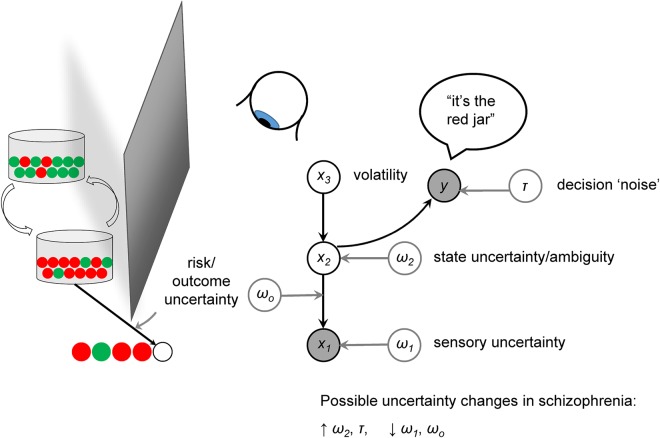
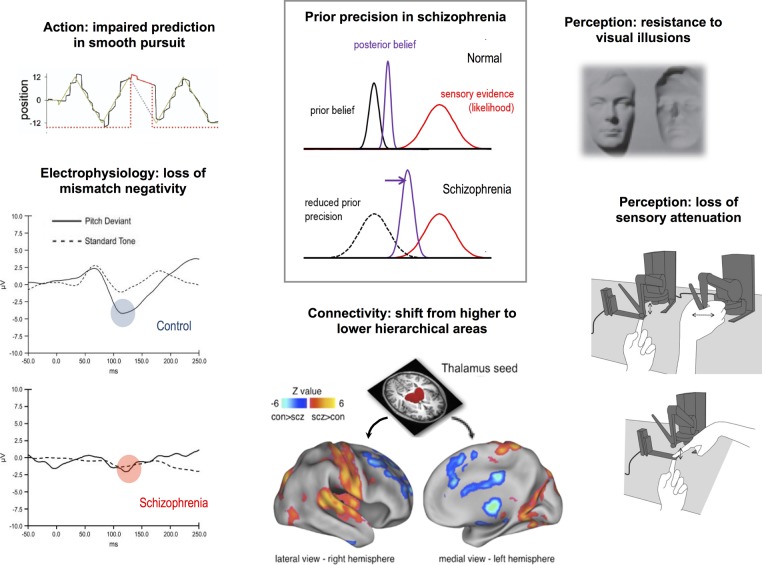
Verification
Claims the paper makes
The claims and statistics of this paper haven’t been checked yet.
Free: it reads the open-access text and checks the first 5 claims that cite a source we can check. Create a free account to check every claim.
Claims other papers make about this one
Each is checked against this paper’s own text: does it say what the citing paper says it does?
The source backs part of the claim, not all of it — or backs it for a different population, condition or comparison.
In the citing paper
“and moreover, unlike controls, they failed to increase this top-down connectivity when stimuli became predictable.”
From Predictive coding and neurocomputational psychiatry: a mechanistic framework for understanding mental disorders (2026) · cites this paper as [6]
Experimental — accuracy not yet measuredThe cited source says what the claim attributes to it.
In the citing paper
“Computational psychiatry offers a new paradigm (1–5): by integrating mathematical models with neurobiology, it seeks to explain psychiatric phenomena in terms of aberrant brain computations (6).”
From Predictive coding and neurocomputational psychiatry: a mechanistic framework for understanding mental disorders (2026) · cites this paper as [6]
The cited source says what the claim attributes to it.
In the citing paper
“As imagining aversive events has emotionally aversive consequences, internal simulations themselves incur some of the same costs as real-world experience [131].”
From Impact of Media-Induced Uncertainty on Mental Health: Narrative-Based Perspective. (2025) · cites this paper as [131]
Self-check
Percentages, sums and reported differences re-computed from the paper’s own numbers.
The self-check needs the paper’s full text.
Citations
Cites
The Need for a New Medical Model: A Challenge for Biomedicine
Engel, G. L. (1977) · Science · doi:10.1126/science.847460 · Cited by 12,887
A neural substrate of prediction and reward
Schultz, W., Dayan, P., & Montague, P. R. (1997) · Science · doi:10.1126/science.275.5306.1593 · Cited by 9,388
Marr, D. (1982) · Cumulative Index of Computer Aided Architectural Design · Cited by 5,733
Rao, R. P. N., & Ballard, D. H. (1999) · Nature Neuroscience · doi:10.1038/4580 · Cited by 5,483
Depression. Clinical, Experimental, and Theoretical Aspects.
(1968) · Annals of Internal Medicine · doi:10.7326/0003-4819-68-2-502 · Cited by 5,205
Nolen-Hoeksema, S., Wisco, B. E., & Lyubomirsky, S. (2008) · Perspectives on Psychological Science · doi:10.1111/j.1745-6924.2008.00088.x · Cited by 5,172 · cited 1×
“…patients with depression have a de fi cit in this inhibition of aversive processing, 64 65 with aversive stimuli hijacking rather than inhibiting processing: 66 This is a potential cause of the repetitive negative thoughts typical of rumination 67 — a key component of the depressive vicious circle.”
BackgroundFodor, J. A. (1975) · Medical Entomology and Zoology · Cited by 4,588
A mechanism for cognitive dynamics: neuronal communication through neuronal coherence.
Fries, P. (2005) · Trends in Cognitive Sciences · doi:10.1016/j.tics.2005.08.011 · Cited by 4,284 · cited 1×
“70 How can synaptic gain (and its loss) be understood in computational terms?”
BackgroundToward the future of psychiatric diagnosis: the seven pillars of RDoC
Cuthbert, B. N., & Insel, T. R. (2013) · BMC Medicine · doi:10.1186/1741-7015-11-126 · Cited by 3,053
(2013) · The Lancet · doi:10.1016/s0140-6736(12)62129-1 · Cited by 3,010
Cited by
Items 101–200 of 288
Psychedelics and schizophrenia: Distinct alterations to Bayesian inference
Rajpal, H., Mediano, P. A. M., Rosas, F. E., Timmermann, C., Brugger, S. P., Muthukumaraswamy, S. D., Seth, A. K., Bor, D., Carhart-Harris, R. L., & Jensen, H. J. (2022) · NeuroImage · doi:10.1016/j.neuroimage.2022.119624 · Cited by 29
Dzafic, I., Larsen, K. M., Darke, H., Pertile, H., Carter, O., Sundram, S., & Garrido, M. I. (2021) · Schizophrenia Bulletin · doi:10.1093/schbul/sbaa188 · Cited by 24
“Thus, the aims of this study were to investigate if anomalies in regularity learning behavior, PEs, and brain connectivity are: (1) specific to the schizophrenia spectrum or (2) generally related to hallucinations/delusions as well as psychotic-like experiences (independent of diagnosis).”
BackgroundMethodInfluentialWiese, W., & Friston, K. J. (2021) · Behavioural Brain Research · doi:10.1016/j.bbr.2021.113704 · Cited by 27
“between hypotheses, through Bayesian model selection [49].”
Visual Attention Decits in Schizophrenia Can Arise From Inhibitory Dysfunction in Thalamus or Cortex
John, Y. J., Zikopoulos, B., Bullock, D. H., & Barbas, H. (2018) · Computational Psychiatry · doi:10.1162/cpsy_a_00023 · Cited by 23
Impact of Media-Induced Uncertainty on Mental Health: Narrative-Based Perspective.
Kesner, L., Juríčková, V., Grygarová, D., & Horáček, J. (2025) · JMIR Mental Health · doi:10.2196/68640 · Cited by 23
“As imagining aversive events has emotionally aversive consequences, internal simulations themselves incur some of the same costs as real-world experience [131].”
Implications of Information Theory for Computational Modeling of Schizophrenia
Silverstein, S. M., Wibral, M., & Phillips, W. A. (2017) · Computational Psychiatry · doi:10.1162/cpsy_a_00004 · Cited by 26
“Through these efforts, it is hoped that a fuller understanding of the molecular, cellular, and microcircuit bases of altered cognitive and behavioral phenomena will be gained (Adams, Huys, & Roiser, 2016).”
BackgroundBudaev, S. V., Kristiansen, T. S., Giske, J., & Eliassen, S. (2020) · Royal Society Open Science · doi:10.1098/rsos.201886 · Cited by 26
Statistical Learning and Inference Is Impaired in the Nonclinical Continuum of Psychosis
Dzafic, I., Randeniya, R., Harris, C. D., Bammel, M., & Garrido, M. I. (2020) · Journal of Neuroscience · doi:10.1523/jneurosci.0315-20.2020 · Cited by 26
“Emerging theoretical accounts of psychosis postulate that psychotic experiences arise because of an impairment in the predictive ability of the brain to infer the causes of internal and external sensations (Adams et al., 2016; Sterzer et al., 2018).”
BackgroundMultiple faces of anxiety: a frontal lobe perspective
Roberts, A., & Mulvihill, K. G. (2024) · Trends in Neurosciences · doi:10.1016/j.tins.2024.07.001 · Cited by 26
“This frontal lobe account of the multiple faces of anxiety will, in our view, open up additional avenues for advancing computational models of anxiety disorders [117,118], thereby improving multimodal treatment strategies (see Outstanding questions).”
Huber, M. K., Wolf, R. C., Lepping, P., Kirchler, E., Kärner, M., Sambataro, F., Herrnberger, B., Corlett, P. R., & Freudenmann, R. W. (2017) · Progress in Neuro-Psychopharmacology and Biological Psychiatry · doi:10.1016/j.pnpbp.2017.11.022 · Cited by 23
“This may support that idea that delusions originate from a failure in top-down and bottom-up processing which ultimately results in a mismatch between expectations and experience (aberrant prediction errors) (Fletcher and Frith, 2009; Ding and Gold, 2013; Colder, 2015; Adams et al., 2016; Chanes and Barrett, 2016).”
BackgroundWeigard, A. S., Brislin, S. J., Cope, L. M., Hardee, J. E., Martz, M. E., Ly, A., Zucker, R. A., Sripada, C., & Heitzeg, M. M. (2021) · Psychopharmacology · doi:10.1007/s00213-021-05885-w · Cited by 28
“…dimensions that confer risk for psychopathology by focusing on formal model parameters that index mechanistic, biologically plausible processes underlying task behavior (Wang and Krystal 2014; Montague et al. 2012; Huys et al. 2016; Adams et al. 2016), offers a promising alternative framework.”
BackgroundReframing Psychiatry for Precision Medicine
Torres, E. B. (2020) · Journal of Personalized Medicine · doi:10.3390/jpm10040144 · Cited by 21
“Integrating the personalized concept of PM with the new advances in Computational Psychiatry could give us a new way to approach mental illness and help patients cope with lifelong changing needs.”
InfluentialGoodwin, I., Kugel, J., Hester, R., & Garrido, M. I. (2023) · PLoS Computational Biology · doi:10.1371/journal.pcbi.1011670 · Cited by 27
Music models aberrant rule decoding and reward valuation in dementia
Clark, C. N., Golden, H. L., McCallion, O., Nicholas, J. M., Cohen, M. H., Slattery, C. F., Paterson, R. W., Fletcher, P. D., Mummery, C. J., Rohrer, J. D., et al. (2017) · Social Cognitive and Affective Neuroscience · doi:10.1093/scan/nsx140 · Cited by 26
“Aberrant predictive coding has emerged as a key organizing principle in computational accounts of major psychiatric disorders (Friston et al., 2014; Adams et al., 2016) and may play a similarly fundamental role in the phenomenology of neurodegenerative diseases characterized by deficient simulation of future events an…”
BackgroundLevchenko, А., Losenkov, I. S., Vyalova, N. M., Simutkin, G. G., Bokhan, N. A., Wilffert, B., LOONEN, A. J. M., & Ivanova, S. А. (2018) · Pharmacogenomics and Personalized Medicine · doi:10.2147/pgpm.s171423 · Cited by 22
Levchenko, А., Nurgaliev, T., Kanapin, A. A., Samsonova, A. A., & Gainetdinov, R. R. (2020) · Heliyon · doi:10.1016/j.heliyon.2020.e03990 · Cited by 21
Psilocybin increases optimistic engagement over time: computational modelling of behaviour in rats
Fisher, E. L., Smith, R. S., Conn, K., Corcoran, A. W., Milton, L. K., Hohwy, J., & Foldi, C. J. (2024) · Translational Psychiatry · doi:10.1038/s41398-024-03103-7 · Cited by 34
“This result has translational potential, and should motivate con fi rmation of these effects in human studies.”
BackgroundBelief Updating in Subclinical and Clinical Delusions
Fromm, S. P., Katthagen, T., Deserno, L., Heinz, A., Kaminski, J. A., & Schlagenhauf, F. (2022) · Schizophrenia Bulletin Open · doi:10.1093/schizbullopen/sgac074 · Cited by 27
Low-level, prediction-based sensory and motor processes are unimpaired in Autism
Finnemann, J., Plaisted, K. C., Moore, J. W., Teufel, C., & Fletcher, P. C. (2021) · Neuropsychologia · doi:10.1016/j.neuropsychologia.2021.107835 · Cited by 24
(Mis)computation in Computational Psychiatry
Colombo, M. (2020) · Studies in brain and mind · doi:10.1007/978-3-030-54092-0_18 · Cited by 22
Karvelis, P., Charlton, C. E., Allohverdi, S. G., Bedford, P., Hauke, D. J., & Diaconescu, A. O. (2022) · Network Neuroscience · doi:10.1162/netn_a_00233 · Cited by 26
The Paradox of Delusions: Are Deluded Individuals Resistant to Evidence?
Furl, N., Coltheart, M., & McKay, R. (2024) · Oxford University Press eBooks · doi:10.1093/oso/9780198872221.003.0012 · Cited by 21
Computational models of the “active self” and its disturbances in schizophrenia
Möller, T. J., Georgie, Y. K., Schillaci, G., Voss, M., Hafner, V. V., & Kaltwasser, L. (2021) · Consciousness and Cognition · doi:10.1016/j.concog.2021.103155 · Cited by 24
Time to Abolish the Forced Swim Test in Rats for Depression Research?
Carvalho, C., Herrmann, K., Marques, T. A., & Knight, A. (2021) · Journal of Applied Animal Ethics Research · doi:10.1163/25889567-bja10026 · Cited by 18
“Computational models of cognition are promising new tools that simulate how the brain infers the state of the environment, to assess possible future actions (Adams et al., 2016).”
BackgroundInfluentialActive Inference in Psychology and Psychiatry: Progress to Date?
Badcock, P. B., & Davey, C. G. (2024) · Entropy · doi:10.3390/e26100833 · Cited by 25
“These proposals resemble computational models of reinforcement learning in psychiatry and biology [194,195], suggesting that depression emerges from successive discrepancies between actual and expected reward outcomes (i.e., prediction errors), thereby entrenching (empirical) prior beliefs that…”
BackgroundScholl, C., Rule, M. E., & Hennig, M. H. (2021) · PLoS Computational Biology · doi:10.1371/journal.pcbi.1009458 · Cited by 27
“Statistical theories view hallucinations as errors in internal predictive models (Adams et al., 2016; Fletcher and Frith, 2009).”
BackgroundMikuš, N., Eisenegger, C., Mathys, C. D., Clark, L., Müller, U., Robbins, T. W., Lamm, C., & Naef, M. (2023) · Nature Communications · doi:10.1038/s41467-023-39823-5 · Cited by 21
Towards a computational psychiatry of juvenile obsessive-compulsive disorder
Loosen, A. M., & Hauser, T. U. (2020) · Neuroscience & Biobehavioral Reviews · doi:10.1016/j.neubiorev.2020.07.021 · Cited by 19
Decoding expectation and surprise in dementia: the paradigm of music
Benhamou, E., Zhao, S., Sivasathiaseelan, H., Johnson, J. C. S., Requena‐Komuro, M., Bond, R. L., van Leeuwen, J. E. P., Russell, L. L., Greaves, C. V., Nelson, A., et al. (2021) · Brain Communications · doi:10.1093/braincomms/fcab173 · Cited by 23
Action selection in early stages of psychosis: an active inference approach
Knolle, F., Sterner, E., Moutoussis, M., Adams, R. A., Griffin, J. D., Haarsma, J., Taverne, H., Goodyer, I. M., Fletcher, P. C., & Murray, G. K. (2023) · Journal of Psychiatry and Neuroscience · doi:10.1503/jpn.220141 · Cited by 20
“2,68 Using model parameters in classification algorithms combines 2 approaches necessary to improve strategies of identifying individuals with psychosis early and precisely.”
Self-citationSpatiotemporal Precision of Neuroimaging in Psychiatry
McFadyen, J., & Dolan, R. J. (2022) · Biological Psychiatry · doi:10.1016/j.biopsych.2022.08.016 · Cited by 20
“For example, disordered belief formation in schizophrenia has been 55 ascribed to aberrant activity in prefrontal cortex and hippocampus related to reduced synaptic gain, causing 56 an imprecise coding of prior beliefs which, in turn, influences neural responses to surprising stimuli as early 57 as 50 ms post-stimulus…”
BackgroundLee, H., & Chung, D. (2022) · Frontiers in Psychiatry · doi:10.3389/fpsyt.2022.846535 · Cited by 27
Association between schizophrenia polygenic risk and neural correlates of emotion perception
Dzafic, I., Burianová, H., Periyasamy, S., & Mowry, B. J. (2018) · Psychiatry Research Neuroimaging · doi:10.1016/j.pscychresns.2018.04.005 · Cited by 16
“Recent evidence shows that individuals with SCZ have reduced precision in their prior expectations, which impairs perception (Adams et al., 2016); thus, it seems critical to explore the influence of SCZ genes on the underlying processes driving emotion perception impairment.”
Erb, J., Kreitewolf, J., Pinheiro, A. P., & Obleser, J. (2020) · Schizophrenia Bulletin Open · doi:10.1093/schizbullopen/sgaa059 · Cited by 17
A Robot Model of OC-Spectrum Disorders: Design Framework, Implementation, and First Experiments
Lewis, M., Fineberg, N. A., & Cañamero, L. D. (2019) · Computational Psychiatry · doi:10.1162/cpsy_a_00025 · Cited by 16
“The growing field of computational psychiatry (Adams, Huys, & Roiser, 2016; Corlett & Fletcher, 2014; Huys, Maia, & Frank, 2016; Montague, Dolan, Friston, & Dayan, 2012; Stephan & Mathys, 2014; Wang & Krystal, 2014) includes within its aims the application of computational techniques to understand,…”
BackgroundStrube, W., Marshall, L., Quattrocchi, G., Little, S. J., Cimpianu, C.-L., Ulbrich, M., Schneider-Axmann, T., Falkai, P., Hasan, A., & Bestmann, S. (2020) · Biological Psychiatry · doi:10.1016/j.biopsych.2020.03.018 · Cited by 17
Wu, T., Shen, H., Sheng, Y., Zhao, F., Guo, N., Liao, L., Li, L., Li, Y., & Dong, X. (2019) · Applied Neuropsychology Child · doi:10.1080/21622965.2018.1552866 · Cited by 14
Weydmann, G. J., Palmieri, I., Simões, R. A. G., Cabral, J. C. C., Eckhardt, J., Tavares, P. D. S., Moro, C. C., Alves, P., Buchmann, S., Schmidt, E., et al. (2022) · Behavior Research Methods · doi:10.3758/s13428-022-01982-6 · Cited by 14
“For instance, apart from the increasing number of studies about reinforcement learning (RL) (Adams et al., 2016; Huys et al., 2021), online experiments with reinforcement tasks seem to be scarce.”
BackgroundMeccia, J., Lopez, J., & Bagot, R. C. (2022) · Psychopharmacology · doi:10.1007/s00213-022-06297-0 · Cited by 14
On the Complexity of Brain Disorders: A Symptom-Based Approach
Moustafa, A. A., Phillips, J. R., Kéri, S., Misiak, B., & Frydecka, D. (2016) · Frontiers in Computational Neuroscience · doi:10.3389/fncom.2016.00016 · Cited by 16
“Recent developments in this area demonstrate that such models hold potential to expand our understanding of neurologic and psychiatric disorders (Frank et al., 2012; Adams et al., 2016).”
BackgroundIn defense of picturing; Sellars’s philosophy of mind and cognitive neuroscience
Sachs, C. B. (2018) · Phenomenology and the Cognitive Sciences · doi:10.1007/s11097-018-9598-3 · Cited by 23
Würtz, F., Κube, T., Woud, M. L., Margraf, J., & Blackwell, S. E. (2024) · Cognitive Therapy and Research · doi:10.1007/s10608-023-10454-w · Cited by 14
“Appealing to the hypothesis of a “Bayesian brain” (Adams et al., 2015; Fris-ton et al., 2014; Paulus et al., 2019), these accounts regard expectations as prior predictions to which newly incoming information is compared.”
Computational neurostimulation for Parkinson's disease
Little, S. J., & Bestmann, S. (2015) · Progress in brain research · doi:10.1016/bs.pbr.2015.09.002 · Cited by 12
“…of computational models has now pervaded into and even become imperative in many fields in basic and translational neuroscience, such as psychiatry (Adams et al., 2015; Montague et al., 2012; Wang and Krystal, 2014), reinforcement learning (Montague et al., 1996; Schultz et al., 1997), and neural…”
BackgroundThe Continuum from Temperament to Mental Illness: Dynamical Perspectives
Sulis, W. (2020) · Neuropsychobiology · doi:10.1159/000509572 · Cited by 12
The Continuum Between Temperament and Mental Illness as Dynamical Phases and Transitions
Sulis, W. (2021) · Frontiers in Psychiatry · doi:10.3389/fpsyt.2020.614982 · Cited by 13
Kwon, M., Lee, S. H., & Ahn, W. (2022) · Biological Psychiatry Cognitive Neuroscience and Neuroimaging · doi:10.1016/j.bpsc.2022.12.003 · Cited by 16
Reliability of Decision-Making and Reinforcement Learning Computational ParametersPreprint
Mkrtchian, A., Valton, V., & Roiser, J. P. (2021) · bioRxiv (Cold Spring Harbor Laboratory) · doi:10.1101/2021.06.30.450026 · Cited by 12
Self-citationUnderstanding mental health through computers: An introduction to computational psychiatry
Martínez, J. C. C., & Santamaría‐García, H. A. (2023) · Frontiers in Psychiatry · doi:10.3389/fpsyt.2023.1092471 · Cited by 17
“In psychiatry, mentioned models would help us elucidate and better understand psychopathological phenomena by relating them to neuronal processes and their normal function (35).”
BackgroundMethodResultInfluentialA systematic review of computational modeling of interpersonal dynamics in psychopathology
Zavlis, O., Story, G. W., Friedrich, C., Fonagy, P., & Moutoussis, M. (2025) · Nature Mental Health · doi:10.1038/s44220-025-00465-9 · Cited by 16
“From the 3,914 unique records, 3,758 were excluded (based on title and abstract), leaving 156 psychiatry, a growing field that aims to empirically examine and theoretically define mental disorders in terms of computational dysfunctions, rather than verbal descriptions 12–18 (Boxes 1–4).”
Bayesian Inference, Predictive Coding, and Computational Models of Psychosis
Adams, R. A. (2017) · Elsevier eBooks · doi:10.1016/b978-0-12-809825-7.00007-9 · Cited by 23
Self-citationA Transdisciplinary Integrative Approach for Precision Psychiatry
Jakovljević, M., & Jakovljević, I. (2019) · Advances in experimental medicine and biology · doi:10.1007/978-981-32-9721-0_20 · Cited by 14
Hales, C. A., Clark, L., & Winstanley, C. A. (2023) · Neuroscience & Biobehavioral Reviews · doi:10.1016/j.neubiorev.2023.105083 · Cited by 20
Mota, N. B., Copelli, M., & Ribeiro, S. T. G. (2016) · New Directions for Child and Adolescent Development · doi:10.1002/cad.20159 · Cited by 12
Anxiety and Beyond: Diversity in Ventral Hippocampus Circuits and Function
van der Veldt, S., Bagot, R. C., Ciocchi, S., Ito, R., Kheirbek, M. A., MacAskill, A. F., & Amilhon, B. (2025) · Journal of Neuroscience · doi:10.1523/jneurosci.1304-25.2025 · Cited by 13
Listening to the Data: Computational Approaches to Addiction and Learning
Wilkinson, C. S., Luján, M. Á., Hales, C. A., Costa, K. M., Fiore, V. G., Knackstedt, L. A., & Kober, H. (2023) · Journal of Neuroscience · doi:10.1523/jneurosci.1415-23.2023 · Cited by 13
“…field of computational psychiatry is on the rise, and computational tools have the potential to elucidate the neurobiology of motivated behavior and advance effective SUD treatment development (Wang and Krystal, 2014; Adams et al., 2016; Huys et al., 2016; Yip et al., 2022; Karvelis et al., 2023).”
BackgroundFradkin, I., Nour, M. M., & Dolan, R. J. (2023) · Biological Psychiatry Cognitive Neuroscience and Neuroimaging · doi:10.1016/j.bpsc.2023.05.005 · Cited by 25
Out of control: computational dynamic control dysfunction in stress- and anxiety-related disorders
Howlett, J. R., & Paulus, M. P. (2024) · Discover Mental Health · doi:10.1007/s44192-023-00058-x · Cited by 14
A Multilevel Computational Characterization of Endophenotypes in Addiction
Fiore, V. G., Ognibene, D., Adinoff, B. H., & Gu, X. (2018) · eNeuro · doi:10.1523/eneuro.0151-18.2018 · Cited by 12
“This multilevel modeling approach has been often used in computational psychiatry (Maia and Frank, 2011; Montague et al., 2012; Adams et al., 2016; Hauser et al., 2016; Huys et al., 2016) to highlight model convergence and associate specific neural structure and dynamics with mathematical formalizations of optimal and…”
MethodYu, J., Fiore, V. G., Briggs, R. W., Braud, J., Rubia, K., Adinoff, B. H., & Gu, X. (2020) · European Journal of Neuroscience · doi:10.1111/ejn.14917 · Cited by 13
Sanchez, G., Lecaignard, F., Otman, A., Maby, E., & Mattout, J. (2016) · Frontiers in Human Neuroscience · doi:10.3389/fnhum.2016.00347 · Cited by 12
“In this sense, the meta-Bayesian approach incorporates all the previously-mentioned model-based approaches that are used in neuroimaging nowadays and which are at the heart of the new field of computational psychiatry in particular (Adams et al., 2016).”
MethodWeber, L. A. E., Diaconescu, A. O., Mathys, C. D., Schmidt, A., Kometer, M., Vollenweider, F. X., & Stephan, K. E. (2019) · bioRxiv (Cold Spring Harbor Laboratory) · doi:10.1101/528372 · Cited by 10
Shaw, A. D., Sumner, R. L., & Berndt, L. C. S. (2026) · Frontiers in Psychiatry · doi:10.3389/fpsyt.2025.1713833 · Cited by 9
“Computational psychiatry offers a new paradigm (1 – 5): by integrating mathematical models with neurobiology, it seeks to explain psychiatric phenomena in terms of aberrant brain computations (6).”
Informing the treatment of social anxiety disorder with computational and neuroimaging data
Sohail, A., & Zhang, L. (2024) · Psychoradiology · doi:10.1093/psyrad/kkae010 · Cited by 12
“As a result, the burgeoning field of ’com-putational psychiatry’ (Montague et al. , 2012 ; Friston et al. , 2014 ; Adams et al ., 2016 ; Huys et al. , 2016 ; Zhang, 2023 ) aims to do so by taking an interdisciplinary a ppr oac h, incor por ating facets of psyc hiatry, neur oscience , mathematics ,…”
BackgroundAn Active Inference Model of the Optimism Bias
Fisher, E. L., Whyte, C. J., & Hohwy, J. (2025) · Computational Psychiatry · doi:10.5334/cpsy.125 · Cited by 14
Global Adversities, the Media, and Mental Health
Kesner, L., & Horáček, J. (2022) · Frontiers in Psychiatry · doi:10.3389/fpsyt.2021.809239 · Cited by 9
Grievance-fueled violence can be better understood using an enactive approach
Sizoo, B. B., Strijbos, D., & Glas, G. G. (2022) · Frontiers in Psychology · doi:10.3389/fpsyg.2022.997121 · Cited by 13
“One may think of recent computational approaches to psychopathology that combine computational modeling based on the principle of active inferencing (or: predictive coding) with evolutionary principles and socio-cultural analysis of looping effects (Adams et al., 2016; Friston et al., 2017; Wichers et al., 2019; Const…”
BackgroundLetkiewicz, A. M., Cochran, A. L., Mittal, V. A., Walther, S., & Shankman, S. A. (2021) · PsyArXiv (OSF Preprints) · doi:10.1016/j.jpsychires.2022.06.032 · Cited by 9
Bhuvaneshwar, K., & Gusev, Y. (2024) · Briefings in Bioinformatics · doi:10.1093/bib/bbae098 · Cited by 12
“Other aberrations associated with SCZ included glutamate receptor N-methyl-d-aspartate receptor (NMDA-R) and gamma-aminobutyric acid (GABA) [33].”
BackgroundArtificial and Human Intelligence in Mental Health
Sigman, M., Slezak, D. F., Drucaroff, L. J., Ribeiro, S. T. G., & Carrillo, F. (2021) · AI Magazine · doi:10.1002/j.2371-9621.2021.tb00009.x · Cited by 8
Signatures of heuristic-based directed exploration in two-step sequential decision task behaviour
Brands, A. M. A., Mathar, D., & Peters, J. (2025) · Computational Psychiatry · doi:10.5334/cpsy.101 · Cited by 7
How mood shapes belief updating bias in depression
Bottemanne, H., Frileux, S., Sévoz‐Couche, C., Pelloux, Y., Colle, R., & Corruble, E. (2025) · Cognitive Affective & Behavioral Neuroscience · doi:10.3758/s13415-025-01297-x · Cited by 12
“A more sophisticated approach would involve integrating methods capable of inferring implicit belief states through behavioral modeling, complementing traditional self-report measures (Adams et al., 2016).”
Bioelectric and physicochemical foundations of bioelectronics in tissue regeneration
Zheng, Y., Yang, G., Li, P., & Tian, B. (2025) · Biomaterials · doi:10.1016/j.biomaterials.2025.123385 · Cited by 10
Kim, M., & Seo, J. (2021) · Journal of Psychiatric Research · doi:10.1016/j.jpsychires.2021.07.044 · Cited by 11
Graph Theory Applied to Speech: Insights on Cognitive Deficit Diagnosis and Dream Research
Mota, N. B., Copelli, M., & Ribeiro, S. T. G. (2017) · Cambridge University Press eBooks · doi:10.1017/9781316676974.004 · Cited by 13
“In this scenario, the new field of computational psychiatry has been proposing mathematical tools to better quantify behavior (Adams, Huys, & Roiser, 2015; Montague, Dolan, Friston, & Dayan, 2012; Wang, & Krystal, 2014).”
BackgroundSuicide prevention and ketamine: insights from computational modeling
Charlton, C. E., Karvelis, P., McIntyre, R. S., & Diaconescu, A. O. (2023) · Frontiers in Psychiatry · doi:10.3389/fpsyt.2023.1214018 · Cited by 7
Li, Y., Zhang, B., Liu, Z., & Wang, R. (2023) · Computers in Biology and Medicine · doi:10.1016/j.compbiomed.2023.107500 · Cited by 9
Metzner, C., Mäki‐Marttunen, T., Zurowski, B., & Steuber, V. (2018) · Computational Psychiatry · doi:10.1162/cpsy_a_00015 · Cited by 7
“so have gained signicantly more attention over the last years and this has led to the emergence of ’Computational Psychiatry’ as a novel multidisciplinary and integrative discipline (see for example [33, 62, 17, 12, 55, 1]). This emergence can be attributed to three main factors: First, the above mentioned increase in…”
BackgroundBiases and Variability from Costly Bayesian Inference
Prat-Carrabin, A., Meyniel, F., Tsodyks, M. V., & da Silveira, R. A. (2021) · Entropy · doi:10.3390/e23050603 · Cited by 13
To be or not to be: The active inference of suicide
Krupnik, V., & Danilova, N. (2024) · Neuroscience & Biobehavioral Reviews · doi:10.1016/j.neubiorev.2023.105531 · Cited by 6
Detecting Signs of Depression Using Social Media Texts Through an Ensemble of Ensemble Classifiers
Raymond, C., Budhi, G. S., & Cambria, E. (2025) · IEEE Transactions on Affective Computing · doi:10.1109/taffc.2025.3571749 · Cited by 11
“A lack of diagnosis can further aggravate the condition, which can reach life-threatening severity (e.g., suicide attempt [4]), if the person enters a cycle of negative affect, cognition and behaviour and can no longer respond to positive influences [1, 2].”
Fradkin, I., & Eldar, E. (2022) · PLoS Computational Biology · doi:10.1371/journal.pcbi.1010285 · Cited by 8
Dzafic, I., Burianová, H., Martin, A. K., & Mowry, B. J. (2018) · Schizophrenia Research · doi:10.1016/j.schres.2018.06.015 · Cited by 6
Castagna, P. J., van Noordt, S. J. R., Sederberg, P. B., & Crowley, M. J. (2023) · NeuroImage · doi:10.1016/j.neuroimage.2023.119871 · Cited by 8
Apathy is Associated with Reduced Precision of Prior Beliefs about Action OutcomesPreprint
Hezemans, F. H., Wolpe, N., & Rowe, J. B. (2019) · bioRxiv (Cold Spring Harbor Laboratory) · doi:10.1101/672113 · Cited by 7
“Finally, the Bayesian framework for computational models enables relative evidences to be compared formally (Adams et al., 2016), but only between members of the subset of models tested.”
Current status, challenges and future prospects in computational psychiatry: a narrative review
Васильченко, К. Ф., & Chumakov, E. M. (2023) · Consortium Psychiatricum · doi:10.17816/cp11244 · Cited by 10
“The development of more sophisticated mathematical models and computational simulations will continue to improve our understanding of mental disorders [49, 50].”
BackgroundPredictive modeling of antidepressant efficacy based on cognitive neuropsychological theory
Bian, A., Xiao, F., Kong, X., Ji, X., Fang, S., He, J., Liu, Q., Zhong, R., Yao, S., Luo, Q., et al. (2024) · Journal of Affective Disorders · doi:10.1016/j.jad.2024.03.029 · Cited by 5
Naturalistic computational psychiatry: How to get there?
Palaniyappan, L. K., Voppel, A., & Wei, H. T. (2025) · Journal of Psychiatry and Neuroscience · doi:10.1503/jpn.250009 · Cited by 7
Κube, T., & Eggers, I. W. T. (2025) · Journal of Affective Disorders · doi:10.1016/j.jad.2025.03.167 · Cited by 6
ICT: Health’s Best Friend and Worst Enemy?
van den Broek, E. L. (2017) · International Joint Conference on Biomedical Engineering Systems and Technologies (BIOSTEC) · doi:10.5220/0006345506110616 · Cited by 5
“Moreover, a discussio n on computational techniques for personality models at a functional level would have been in place (cf. (Huys et al., 2016; Adams et al., 2016)).”
Quantifying mechanisms of cognition with an experiment and modeling ecosystem
Weichart, E. R., Darby, K., Fenton, A. W., Jacques, B. G., Kirkpatrick, R. P., Turner, B. M., & Sederberg, P. B. (2021) · Behavior Research Methods · doi:10.3758/s13428-020-01534-w · Cited by 8
“…balancing specificity (i.e. capturing relevant deficits in individual patient groups) with generalizability (i.e. being applicable in investigations of other patient groups) when developing tasks and models (Adams, Huys, & Roiser, 2016; Huys et al., 2016; Petzschner, Weber, Gard, & Stephan, 2017).”
BackgroundTodesco, S., Chao, T. W.-C., Schmid, L., Thiessen, K. A., & Schütz, C. G. (2022) · Frontiers in Psychiatry · doi:10.3389/fpsyt.2021.794014 · Cited by 6
“Moreover, the advantages to modelbased approaches include their potential to detect aspects of cognition relevant to psychiatric diagnoses (37, 38).”
BackgroundKucikova, L., Danso, S., Jia, L., & Su, L. (2022) · Frontiers in Computational Neuroscience · doi:10.3389/fncom.2022.865805 · Cited by 7
“Here, we extend historical discussions on this topic (Adams et al., 2016; Paulus et al., 2016; Hitchcock et al., 2022) by discussing the potential of integrative computational modeling for dementia research.”
BackgroundTalwar, A., Huys, Q. J. M., Cormack, F. K., & Roiser, J. P. (2024) · Cognitive Affective & Behavioral Neuroscience · doi:10.3758/s13415-024-01223-7 · Cited by 10
“…modelling of cognition can help to provide insights by describing the detailed mechanistic processes that result in the observed task behaviour—in this case how attention and learning interact to account for differences in set shifting performance (Adams et al., 2016; Montague et al., 2012).”
BackgroundSelf-citationRutledge, R. B., & Adams, R. A. (2017) · Wiley eBooks · doi:10.1002/9781119159193.ch3 · Cited by 7
Self-citationA formal theory of mood instabilityPreprint
Zavlis, O., Bentall, R. P., Fonagy, P., & Rigoli, F. (2024) · OSF Preprints (OSF Preprints) · doi:10.31219/osf.io/rgv5m · Cited by 8
Niederlohmann, E. (2026) · Frontiers in Psychiatry · doi:10.3389/fpsyt.2026.1817747 · Cited by 5
Fradkin, I., Simpson, H. B., Dolan, R. J., & Huppert, J. D. (2023) · World Psychiatry · doi:10.1002/wps.21116 · Cited by 5
Developing algorithmic psychiatry via multi-level spanning computational models
Halassa, M. M., Frank, M. J., Garety, P. A., Öngür, D., Airan, R. D., Sanacora, G., Dzirasa, K., Suresh, S., Fitzpatrick, S. M., & Rothman, D. L. (2025) · Cell Reports Medicine · doi:10.1016/j.xcrm.2025.102094 · Cited by 8
“A 92–94 Specifically, reduced precision is localized to the generative process of higher sensory areas but not to the associative areas above them.”
The Research Domain Criteria Project: Integrative Translation for Psychopathology
Cuthbert, B. N., Miller, G. A., Sanislow, C. A., & Vaidyanathan, U. (2023) · Oxford University Press eBooks · doi:10.1093/med-psych/9780197542521.003.0004 · Cited by 9
The Importance of Group Specification in Computational Modelling of BehaviourPreprint
Valton, V., Wise, T., & Robinson, O. J. (2020) · PsyArXiv (OSF Preprints) · doi:10.31234/osf.io/p7n3h · Cited by 4
Metadata
- Authors
- Adams, R. A., Huys, Q. J. M., & Roiser, J. P.
- Affiliations
- University College London (GB)
- University of Zurich (CH)
- Corresponding author
- Adams, Rick A
- Venue
- Journal of Neurology, Neurosurgery & Psychiatry
- Publisher
- BMJ
- Published
- 2015-07-08
- Volume
- 87
- Issue
- 1
- Pages
- jnnp-2015-310737
- ISSN
- 0022-3050 (ISSN-L)
- 1468-330X
- PMC
- PMC4717449
- OpenAlex
- W1951245330
- Cited by
- 285
- References
- 123
- Citations by year
- 2026: 16 · 2025: 30 · 2024: 32 · 2023: 28 · 2022: 26 · 2021: 31 · 2020: 32 · 2019: 21 · 2018: 29 · 2017: 24 · 2016: 14 · 2015: 2
- FWCI
- 2.26
- Type
- journal article
- Language
- en
- Open access
- hybrid
- doi.org
- Licence
- cc-by
- Locations
- Journal of Neurology Neurosurgery & Psychiatry (publishedVersion, cc-by)
- PubMed Central (publishedVersion, cc-by)
- PubMed (publishedVersion)
- UCL Discovery (University College London) (submittedVersion)
- Repository for Publications and Research Data (ETH Zurich) (submittedVersion, cc-by)
- Zurich Open Repository and Archive (University of Zurich) (submittedVersion)
- ETH Zürich Research Collection (cc-by)
- Funders
- National Science Foundation
- Wellcome Trust (101798/Z/13/Z)
- Schweizerischer Nationalfonds zur Förderung der Wissenschaftlichen Forschung (101798, 320030L_153449/1, 153449)
- Topics
- Life Sciences › Neuroscience › Cognitive Neuroscience › Neural and Behavioral Psychology Studies
- Social Sciences › Arts and Humanities › Philosophy › Mental Health and Psychiatry
- Life Sciences › Neuroscience › Cellular and Molecular Neuroscience › Neurotransmitter Receptor Influence on Behavior
- Keywords
- computational psychiatry, mental illness, reinforcement learning, predictive coding, Bayesian inference, depression, schizophrenia, helplessness, striatal dopamine, incentive salience, Parkinson's disease, psychiatric classification, cognitive modeling
- MeSH terms
- Mental Disorders, Humans, Mathematics, Psychiatry, Computational Biology
About these checks
Registry, retraction, Cites and statistics results are computed, not judged, with one exception: a printed reference that no index lists is read once by a model before it counts as a citation error. Claims are extracted by a model and kept only when their quote appears verbatim in the text; each cited source is then checked, with a model’s help, for whether it says what the claim relies on. Those verdicts can be wrong — read the claim’s quote and the cited source before relying on one.
Statistics and arithmetic are recomputed, not judged.
Confidence bands are shown only for fields calibrated on our annotated test set. None is calibrated yet, so no band is shown.
What counts as a claim ›How we measure confidence ›How we check this ›
Are you an author, or do you see a problem with this page? Request a review
Data sources
Bibliographic data: Semantic Scholar, OpenAlex, Crossref.
Contains information from the Semantic Scholar Academic Graph Datasets, made available under the ODC Attribution License (ODC-BY 1.0).
Semantic Scholar’s data is described in: Kinney, R., et al. (2023). The Semantic Scholar Open Data Platform. arXiv:2301.10140.
