

Motor neuroprosthesis implanted with neurointerventional surgery improves capacity for activities of daily living tasks in severe paralysis: first in-human experience
Open accessThe DOI matches its Crossref record; 25 of the 25 references it cites were found in a registry or an index.
Abstract
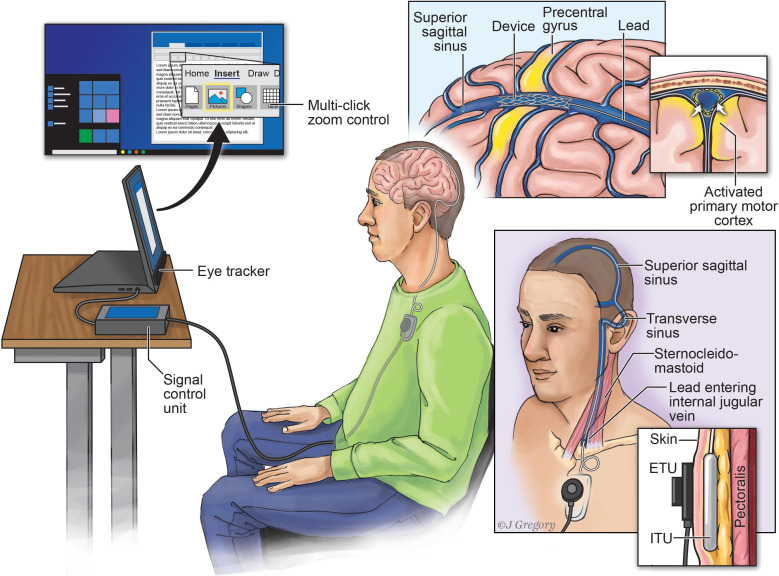
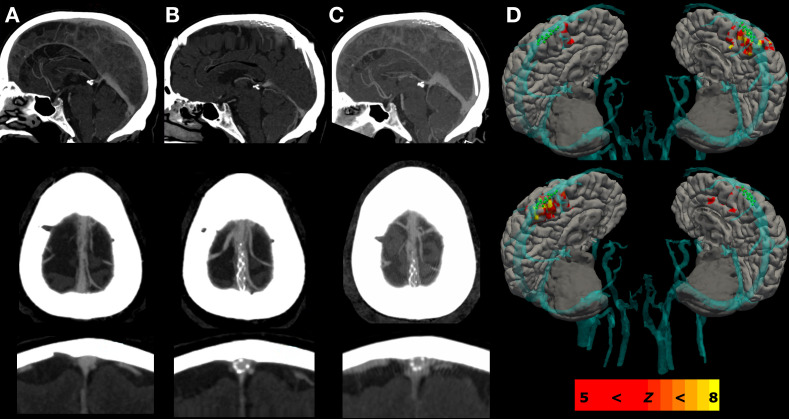
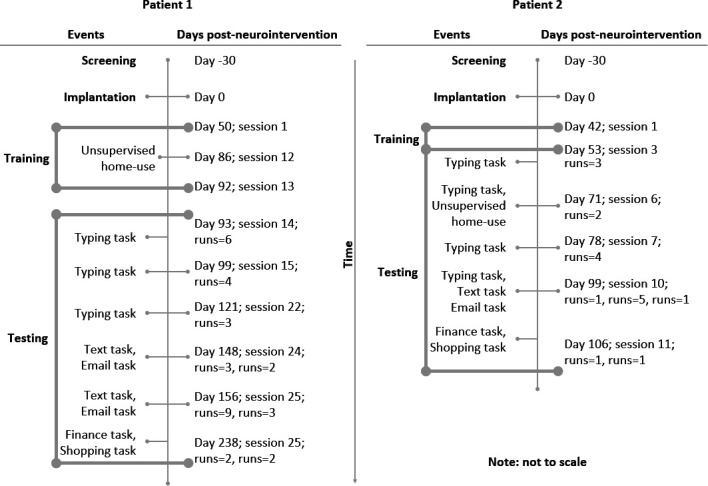
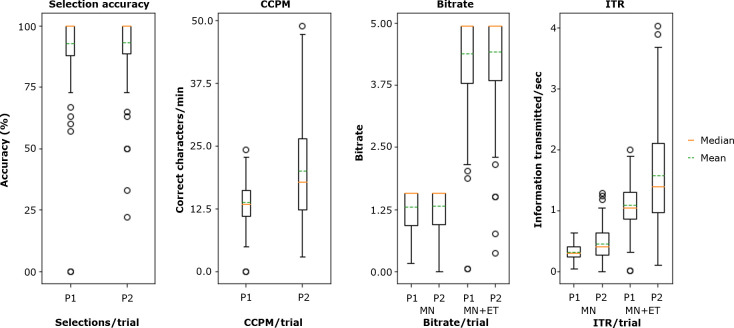
Background: Implantable brain–computer interfaces (BCIs), functioning as motor neuroprostheses, have the potential to restore voluntary motor impulses to control digital devices and improve functional independence in patients with severe paralysis due to brain, spinal cord, peripheral nerve or muscle dysfunction. However, reports to date have had limited clinical translation. Methods: Two participants with amyotrophic lateral sclerosis (ALS) underwent implant in a single-arm, open-label, prospective, early feasibility study. Using a minimally invasive neurointervention procedure, a novel endovascular Stentrode BCI was implanted in the superior sagittal sinus adjacent to primary motor cortex. The participants undertook machine-learning-assisted training to use wirelessly transmitted electrocorticography signal associated with attempted movements to control multiple mouse-click actions, including zoom and left-click. Used in combination with an eye-tracker for cursor navigation, participants achieved Windows 10 operating system control to conduct instrumental activities of daily living (IADL) tasks. Results: Unsupervised home use commenced from day 86 onwards for participant 1, and day 71 for participant 2. Participant 1 achieved a typing task average click selection accuracy of 92.63% (100.00%, 87.50%–100.00%) (trial mean (median, Q1–Q3)) at a rate of 13.81 (13.44, 10.96–16.09) correct characters per minute (CCPM) with predictive text disabled. Participant 2 achieved an average click selection accuracy of 93.18% (100.00%, 88.19%–100.00%) at 20.10 (17.73, 12.27–26.50) CCPM. Completion of IADL tasks including text messaging, online shopping and managing finances independently was demonstrated in both participants. Conclusion: We describe the first-in-human experience of a minimally invasive, fully implanted, wireless, ambulatory motor neuroprosthesis using an endovascular stent-electrode array to transmit electrocorticography signals from the motor cortex for multiple command control of digital devices in two participants with flaccid upper limb paralysis.
Overview
The claims and statistics of this paper haven’t been checked yet.
Free: it reads the open-access text and checks the first 5 claims that cite a source we can check. Create a free account to check every claim.
Integrity signals
Registry
Cites
Statistics
Figures
Verification
Claims the paper makes
The claims and statistics of this paper haven’t been checked yet.
Free: it reads the open-access text and checks the first 5 claims that cite a source we can check. Create a free account to check every claim.
Claims other papers make about this one
Each is checked against this paper’s own text: does it say what the citing paper says it does?
The source backs part of the claim, not all of it — or backs it for a different population, condition or comparison.
In the citing paper
“Similarly, both in academic and industry settings, approaches are being developed to improve throughput, sampling, biocompatibility and stability of MEAs183–186.”
From The speech neuroprosthesis (2024) · cites this paper as [183]
Experimental — accuracy not yet measuredThe source backs part of the claim, not all of it — or backs it for a different population, condition or comparison.
In the citing paper
“Another example of a battery-free implant is the Stentrode, designed for a 10-year lifespan, avoids invasive battery replacements through wireless power using near-field RF, with a transmission depth of ≈30 mm and 2% efficiency, connected to an Inductively Powered Internal Telemetry Unit (ITU) for power and Bluetooth signal transmission (Aldaoud et al., 2018; Oxley et al., 2020; Raza et al., 2020)”
From Comparative analysis of energy transfer mechanisms for neural implants (2024) · cites this paper as Oxley et al., 2020
Experimental — accuracy not yet measured
Self-check
Percentages, sums and reported differences re-computed from the paper’s own numbers.
The self-check needs the paper’s full text.
Citations
Cites
Assessment of Older People: Self-Maintaining and Instrumental Activities of Daily Living
Lawton, M. P., & Brody, E. M. (1969) · The Gerontologist · doi:10.1093/geront/9.3_part_1.179 · Cited by 18,540
Brain–computer interfaces for communication and control
Wolpaw, J. R., Birbaumer, N., McFarland, D. J., Pfurtscheller, G., & Vaughan, T. M. (2002) · Clinical Neurophysiology · doi:10.1016/s1388-2457(02)00057-3 · Cited by 7,927
Scoville, W. B. (1949) · Journal of neurosurgery · doi:10.3171/jns.1949.6.1.0065 · Cited by 7,381
International Classification of Functioning Disability and Health (ICF)
Battistella, L. R., & Brito, C. M. M. D. (2002) · Acta Fisiátrica · doi:10.5935/0104-7795.20020003 · Cited by 4,446
Neuronal ensemble control of prosthetic devices by a human with tetraplegia
Hochberg, L. R., Serruya, M. D., Friehs, G. M., Mukand, J. A., Saleh, M., Caplan, A. H., Branner, A., Chen, D., Penn, R. D., & Donoghue, J. P. (2006) · Nature · doi:10.1038/nature04970 · Cited by 3,295
Self-citationReach and grasp by people with tetraplegia using a neurally controlled robotic arm
Hochberg, L. R., Bacher, D., Jarosiewicz, B., Masse, N. Y., Simeral, J. D., Vogel, J., Haddadin, S., Liu, J., Cash, S. S., van der Smagt, P., et al. (2012) · Nature · doi:10.1038/nature11076 · Cited by 2,719
Self-citationA spelling device for the paralysed
Birbaumer, N., Ghanayim, N., Hinterberger, T., Iversen, I., Kotchoubey, B., Kübler, A., Perelmouter, J., Taub, E., & Flor, H. (1999) · Nature · doi:10.1038/18581 · Cited by 1,577
Falls, Injuries Due to Falls, and the Risk of Admission to a Nursing Home
Tinetti, M. E., & Williams, C. S. (1997) · New England Journal of Medicine · doi:10.1056/nejm199710303371806 · Cited by 1,403
Self-citationA brain–computer interface using electrocorticographic signals in humans
Leuthardt, E. C., Schalk, G., Wolpaw, J. R., Ojemann, J. G., & Moran, D. W. (2004) · Journal of Neural Engineering · doi:10.1088/1741-2560/1/2/001 · Cited by 1,188
A comprehensive review of EEG-based brain–computer interface paradigms
Abiri, R., Borhani, S., Sellers, E. W., Jiang, Y., & Zhao, X. (2019) · Journal of Neural Engineering · doi:10.1088/1741-2552/aaf12e · Cited by 946
Cited by
Items 201–274 of 274
A Wireless Neural Signal Acquisition System for Interventional Brain–Computer Interface
Li, S., Kuang, W., Zhang, Y., Liu, G., Wang, W., Jia, H., Ma, Y., & Duan, F. (2025) · IEEE Sensors Journal · doi:10.1109/jsen.2025.3631268 · Cited by 1
“These systems utilize endovascular electrodes placed within cerebral blood vessels to record neural activity, offering superior signal fidelity compared to surface recordings while avoiding the risks associated with direct brain tissue penetration [25], [26].”
Wall Shear Stress Predicts Venous Tissue Growth in Endovascular Neural Interfaces
Qi, W., Hammink, M., Ooi, A. S. H., Grayden, D. B., Booth, L. C., Farrugia, B. L., & John, S. E. (2025) · IEEE Transactions on Biomedical Engineering · doi:10.1109/tbme.2025.3645257 · Cited by 1
“Owing to its minimal invasiveness, the endovascular approach has sparked research utilizing electrode-mounting stents to record brain activity [4], treat neurological disorders [5], and develop neural prosthesis for paralysed patients seeking to restore vo-litional movements [6].”
Self-citationMeier, L. J. (2026) · Neuroethics · doi:10.1007/s12152-025-09628-y · Cited by 1
“BCIs were originally developed to enable para-lysed patients to move robotic arms or control wheel chairs, which is why attempts at the decoding of motor intent dominate the field [10, 11].”
Minguillón, J., López-Gordo, M. A., & Martínez‐Cañada, P. (2026) · IEEE Transactions on Human-Machine Systems · doi:10.1109/thms.2026.3663792 · Cited by 1
“Another example of invasive BCI is the novel endovascular Stentrode BCI [3], which was successfully implanted in two participants with ALS.”
Meyer, L. M., & Zamani, M. (2026) · Journal of Neural Engineering · doi:10.1088/1741-2552/ae6dfd · Cited by 1
Toward a fully wireless endovascular neural interface: Evaluating power transfer efficacy
Tai, Y.-D., Villalobos, J., Wickramasinghe, N., Widdicombe, B., Unnithan, R. R., Grayden, D. B., & John, S. E. (2026) · PLoS ONE · doi:10.1371/journal.pone.0351138 · Cited by 3
“This chest-implanted device wirelessly communicated to the external device for power and data transfer [10].”
Self-citationBrain-computer interfaces: Transforming healthcare and navigating ethical boundaries
Li, Y.-Y., Gilchrist, M. M., Tay, F. R., & Jin, Y. J. (2026) · Dental Research · doi:10.1016/j.dtrs.2026.100040 · Cited by 1
Al-Smadi, F., Lin, Z., Li, N., Liao, J., Al-Smadi, S., Abudourusuli, X., Xie, X., Yu, C., Li, Y., Liu, M., et al. (2026) · Journal of Orthopaedic Translation · doi:10.1016/j.jot.2026.101172 · Cited by 1
“However, the practical burden often shifts to external hardware, which may require tethering or large wearable batteries, creating trade-offs between autonomy, comfort, and adherence [91,92,96].”
Курбатова, С. М., & Aisner, L. Y. (2021) · Kutafin Law Review · doi:10.17803/2313-5395.2021.4.18.546-572 · Cited by 1
Dilevicius, I., Serdijn, W. A., & Costa, T. L. (2022) · Annual International Conference of the IEEE Engineering in Medicine and Biology Society (EMBC) · doi:10.1109/embc48229.2022.9871956 · Cited by 1
“Neurovascular stents augmented with microelectrode arrays have recently been developed to stimulate and record from cortical circuits in a minimally invasive manner [4] and prolonged safety [5].”
BackgroundBrain-Controlled Assistive Robotics and Prosthetics
Puthuveetil, K. P., & Krusienski, D. J. (2024) · Elsevier eBooks · doi:10.1016/b978-0-323-87865-4.00010-8 · Cited by 1
Combining Intuitive Gaze-Based Control with EEG-Based Detection of Motor Imagery and Quasi-Movements
Yashin, A. S., Shevtsova, Y. G., Svirin, E. P., Vasilyev, A. N., & Shishkin, S. L. (2025) · ACM Symposium on Eye Tracking Research and Applications (ETRA) · doi:10.1145/3715669.3726798 · Cited by 1
Sub-scalp EEG for sensorimotor brain–computer interface
Mahoney, T., Grayden, D. B., & John, S. E. (2025) · Journal of Neural Engineering · doi:10.1088/1741-2552/ade9f1 · Cited by 1
“Endovascular stent-electrode arrays offer a minimally invasive alternative signal acquisition method for BCIs [13].”
Self-citationScott, G. (2023) · Research Commons (University of Waikato) · Cited by 1
Neurointerventional Advances in 2021
Sheth, S. A., & Jadhav, A. P. (2022) · Stroke Vascular and Interventional Neurology · doi:10.1161/svin.121.000277
Albuquerque, F. C. (2022) · Journal of NeuroInterventional Surgery · doi:10.1136/neurintsurg-2021-018514
New Biomed-Tech Advances Poised to Change the Future
Mertz, L. (2022) · IEEE Pulse · doi:10.1109/mpuls.2022.3145605
Neuroscience and “Neurointerventions”: Ethical and Legal Issues
McSherry, B. (2022) · Springer eBooks · doi:10.1007/978-981-16-1278-7_36-1
Development and Clinical Application of BMI
Yanagisawa, T. (2022) · Japanese Journal of Neurosurgery · doi:10.7887/jcns.31.558
Two Studies Find Few Brain-Computer Interface-related Adverse Events
Hurley, D. (2023) · Neurology Today · doi:10.1097/01.nt.0000921180.36938.e7 · Cited by 1
Lasić, S., Đerke, F., Bašić, S., & Demarin, V. (2023) · World Congress on Medical Physics and Biomedical Engineering, September 7 - 12, 2009, Munich, Germany · doi:10.1007/978-3-031-42243-0_2
Harrigan, M. R., & Deveikis, J. P. (2023) · Contemporary medical imaging · doi:10.1007/978-3-031-45598-8_11
Venous Sinus Stent to Treat Paralysis
Yaeger, K., & Mocco, J. (2024) · Neurosurgery Clinics of North America · doi:10.1016/j.nec.2024.03.003
Self-citationNeuroscience and “Neurointerventions”: Ethical and Legal Issues
McSherry, B. (2024) · Springer eBooks · doi:10.1007/978-981-19-6056-7_36
A High-Performance Classification Method Based on CNN for Interventional EEG Data
Li, S., Liu, G., Feng, F., Wu, D., Ma, Y., & Duan, F. (2024) · International Symposium on Autonomous Systems (ISAS) · doi:10.1109/isas61044.2024.10552482
“Unlike the above two BCIs, interventional BCI utilizes intracranial blood vessels and place electrodes on the inside of vessel, enabling the collection of precise EEG signals without damaging the neurons in the brain [18].”
BackgroundWeydt, P., & Bernsen, S. (2024) · Elsevier eBooks · doi:10.1016/b978-3-437-21781-4.00009-2
A sociotechnical systems’ perspective to support brain–computer interface development
King, B. J., Read, G. J. M., & Salmon, P. M. (2024) · Elsevier eBooks · doi:10.1016/b978-0-323-95439-6.00006-5
Comparing a BCI communication system in a patient with Multiple System Atrophy, with an animal model
Premchand, B., Toe, K. K., Wang, C., Wan, K. R., Selvaratnam, T., Toh, V. E., Ng, W. H., Libedinsky, C., Chen, W., Lim, R., et al. (2025) · Brain Research Bulletin · doi:10.1016/j.brainresbull.2025.111289
“Locked-in patients have the potential to significantly benefit from BCI-based communication, as being able to access a computer not only enables communication, but also the execution of some IADLs [17], [22].”
The Future of Neurointervention: New Procedures, New Practitioners, and New Problems
Monteiro, A., Metcalf-Doetsch, W., Khawar, W. I., Siddiqui, A. H., & Levy, E. I. (2025) · Springer eBooks · doi:10.1007/978-3-031-67492-1_1
Chien, S.-C., Chang, C., Wang, H.-J., Hsu, C., Wang, Y., Chuang, C., & Chen, J.-C. (2025) · Sensing and Bio-Sensing Research · doi:10.1016/j.sbsr.2025.100805
Artifact Removal in Electrocorticography Devices With Cardiac Contamination
Liyanage, K., Yoo, P. E., Grayden, D. B., Opie, N. L., & Oxley, T. J. (2025) · IEEE Transactions on Neural Systems and Rehabilitation Engineering · doi:10.1109/tnsre.2025.3601445 · Cited by 1
“The Stentrode TM has been implanted in ten human participants with motor neurone disease and used as a brain-computer interface to assist in instrumental activities of daily living [9], [13], [37].”
Self-citationMahoney, T. B., Liu, J., Xin, H., Grayden, D. B., & John, S. E. (2025) · arXiv (Cornell University) · doi:10.48550/arxiv.2506.03452
“These patients have demonstrated consistent ability to produce binary output, providing a ‘click’ during computer-assisted scrolling [34].”
Self-citationGlannon, W. (2025) · The MIT Press eBooks · doi:10.7551/mitpress/15173.003.0011
Foundations of AI in Modern Neuroscience
Rudroff, T. (2025) · Neurocultural health and wellbeing · doi:10.1007/978-3-032-11596-6_1
Modulation: Fine Tuning and Resetting of Neurological Function
Gelman, K., Ranjan, M., Konrad, P. E., & Rezai, A. R. (2025) · Cambridge University Press eBooks · doi:10.1017/9781009597852.007
The “Neurosurgeon” – Quo Vadis
Koo, A. B., Theriault, B. C., & Apuzzo, M. L. J. (2025) · Cambridge University Press eBooks · doi:10.1017/9781009597852.027
CMOS driving channel for ultrasonic neurovascular stent
Ghosh, I. (. (2021) · Research Repository (Delft University of Technology)
Approcci bioingegneristici per il trattamento di lesioni al midollo spinale
Cassani, A. (2024) · AMS Degree Thesis (University of Bologna)
Hidden Algorithms in DNA and Discovering Approaches.
Lai, N. D. (2023) · Theseus (Ammattikorkeakoulujen)
Drainville, R. (2024) · Papyrus : Institutional Repository (Université de Montréal) · doi:10.71781/30480
Literature Study on the Technical Development of Invasive Recording Brain Computer Interfaces
Fredlund, J. M. (2024) · Lund University Publications Student Papers (Lund University)
Stent-Based Electrode for Long-Term Intracranial EEG Recording in Sheep: A Preliminary Study
Su, X., Pang, H., Zhang, H., & Ma, Y. (2026) · Stroke · doi:10.1161/strokeaha.125.054298
Enhancing point-of-care diagnosis through brain–computer interaction and IoT
Mazumdar, H., Das, S., Khondakar, K. R., Halder, A., & Kaushik, A. (2026) · Elsevier eBooks · doi:10.1016/b978-0-443-26466-5.00007-6
Far, S. B., Qazani, M. R. C., & Rad, A. I. (2026) · Engineering Reports · doi:10.1002/eng2.70708
Application of Physical-Layer Security System to Musical Sound
Yamamoto, Y., & Hirokawa, M. (2025) · International Conference on Electrical, Computer and Energy Technologies (ICECET) · doi:10.1109/icecet63943.2025.11472565
Exploring individual biases in BCI research and users: Does gender matter?
Herbert, C., Acuna, V. R., Kneipp, R. R. K., & Kapfer, N. I. (2026) · Frontiers in Human Neuroscience · doi:10.3389/fnhum.2025.1695370 · Cited by 1
Haines, M. H., Ronayne, S. M., Pickles, K., Begg, D. A., Hurley, P. J., Ferraccioli, M., Desmond, P. M., & Opie, N. L. (2026) · medRxiv · doi:10.64898/2026.04.14.26348906
Self-citationBrain–computer interfaces and the code-switching of consciousness
Hawkins, J. (2026) · AI & Society · doi:10.1007/s00146-026-03074-x
“A related BCI system (Oxley et al. 2021) enabled a patient with paralysis to perform activities of daily living independently for the first time in years.”
A BCI-Controlled UAV System With Peripheral High-Frequency SSVEP
Li, Z., Pang, Z., Huang, P., Cui, H., & Chen, X. (2026) · IEEE Internet of Things Journal · doi:10.1109/jiot.2026.3692950
“BCI provides a transformative framework for the engineering design of real-time brain-controlled robotic systems, enabling direct translation of neural activities into control strategies [10], [11], [12], [13].”
Higham, S. J., León, S. E. D., Jaylani, R., Yi, J., Nadarajah, A., Goris, T., Jung, Y. J., Stacey, A. D., Cloherty, S. L., Ibbotson, M. R., et al. (2026) · Diamond and Related Materials · doi:10.1016/j.diamond.2026.114363
A Fully Endovascular Neural InterfacePreprint
Stanton, J., Franzesi, G. T., Spinazzi, E. F., Haupt, J. L., Orbach, D., Sisti, J., Jamiel, M., Zhang, E., Lavine, S., Connolly, E. S., et al. (2026) · bioRxiv (Cold Spring Harbor Laboratory) · doi:10.64898/2026.06.07.730604
Advancing impact and access: Introducing JNIS Advances
Levitt, M. R. (2026) · Journal of NeuroInterventional Surgery · doi:10.1136/jnis-2026-025737
Ultra-flexible wireless endovascular stimulator for cortical simulation
Tai, Y.-D., Villalobos, J., Wickramasinghe, N., Xin, H., Widdicombe, B., Unnithan, R. R., Grayden, D. B., & John, S. E. (2026) · Journal of Neural Engineering · doi:10.1088/1741-2552/ae857c
“While the efficacy of ENS is promising, the electrodes in the Stentrode TM are connected to an exter-nal stimulator through a 50 cm long transvascular lead (Oxley et al 2021).”
Self-citationChen, L., Qing, W., Lin, F., Mo, L., Chai, X., Li, W., Zhijie, Z., Zhenhua, S., Liang, F., Yin, M., et al. (2026) · arXiv (Cornell University) · doi:10.48550/arxiv.2607.07185
“…neuromodulation [18,19]; emerging ECoG [14] and endovascular exploration early Intracortical arrays [5,8,20-23]; ECoG-based speech decoding interfaces [24,25]; endovascular stent-electrodes [26] Rehabilitation-oriented, lower-risk deployment vs. implant-focused, high-performance neural interfaces”
Strength-Duration Profiles of Endovascular Cerebellar Neurostimulation
Wickramasinghe, N., Villalobos, J., Liu, J., Xin, H., Spencer, M., Kazemi, S., Ho, S., West, J., Grayden, D. B., & John, S. E. (2025) · International IEEE/EMBS Conference on Neural Engineering · doi:10.1109/ner61569.2025.11588977
“Recently, endovascular neural interfaces, where electrodes are introduced through the vascular system, have emerged as promising alternatives, enabling chronic neural access with reduced surgical morbidity [6-8].”
Self-citationKordas, B. (2026) · Journal of Clinical Medicine · doi:10.3390/jcm15145398
“Early neurointerventional BCI work has shown that implanted systems can restore useful control in severe paralysis, but this is only the beginning of the translational problem [106].”
Advancing impact and access: introducing JNIS Advances
Levitt, M. R. (2026) · JNIS Advances · doi:10.1136/jnisadv-2026-000003
A Real-Time GUI Platform for Neural Signal Transmission: Design, Resource Profiling, and Usability
Alzubaidi, L. H. J., Farjami, Y., & Beni, M. A. (2026) · International Journal of Computer Information Systems and Industrial Management Applications · doi:10.70917/ijcisim-2026-3951
Grajski, K. A. (2026) · Scientific Reports · doi:10.1038/s41598-026-65477-6
FERREIRA, M. Y., Cardoso, L. J. C., Paleare, L. F. F., Monteiro, G. D. A., Nogueira, A., Sanches, N. B., Bertani, R., Paiva, W. S., Ullman, J. S., Hickman, Z. L., et al. (2026) · Journal of Craniofacial Surgery · doi:10.1097/scs.0000000000013188
Endovascular neuromodulation: feasibility of endovascular stimulation near the cerebellum
Wickramasinghe, N., Villalobos, J., Liu, J., Xin, H., Spencer, M., Kazemi, S., Ho, S., West, J., Grayden, D. B., & John, S. E. (2026) · Journal of Neural Engineering · doi:10.1088/1741-2552/ae998c
“Stent-based endovascular electrodes have demonstrated stable, chronic neural recording with preserved vessel patency, supporting their translational potential [6–8].”
Self-citationCreating a Roadmap for Pediatric Implanted Brain-Computer Interfaces
Branco, M. P., Kinney‐Lang, E., Ruest, N., Carlson, H. L., Kirton, A., & Vansteensel, M. J. (2026) · Neurorehabilitation and neural repair · doi:10.1177/15459683261481764
Preserving Motor Features by Alternative Re‐Referencing to Remove Heart Artifact on the Stentrode
Feldman, A. K., Kacker, K., Yun, R., Chetty, N., Bennett, J., Yoo, P. E., Nogueira, R. G., Collinger, J. L., Opie, N. L., Oxley, T. J., et al. (2026) · Advanced Science · doi:10.1002/advs.76647
“The surgical procedures and signal acquisition methods have been comprehensively outlined in prior studies [ 23, 24 ].”
Self-citationBidirectional Wireless Communication for Weakly Coupled Implantable Brain-Computer InterfacesPreprint
Sen, S., Chatterjee, B., Barik, G., & Roy, A. (2026) · arXiv (Cornell University) · doi:10.48550/arxiv.2609.05786
“The Synchron Switch (10,11) places a stentrode in the superior sagittal sinus, and communicates through a chest-implanted transmitter to a wearable receiver via 2.4 GHz ISM-band.”
InfluentialChetty, N., Bennett, J. D., Schone, H. R., Fry, A., Yoo, P. E., Lacomis, D., Oxley, T. J., Collinger, J. L., Putrino, D. F., & Weber, D. J. (2026) · Journal of Neural Engineering · doi:10.1088/1741-2552/ae9eef
“Recently, two publications have demonstrated successful decoding and BCI use in four individuals with severe bilateral upper extremity paralysis [9, 10].”
Self-citationFrom Neurons to Conversation: Speech Brain-Computer InterfacesPreprint
Khajehnejad, M., Habibollahi, F., Boccato, T., Sousa, M., Olak, M., Sheiban, F. J., & Ferrante, M. (2026) · arXiv (Cornell University) · doi:10.48550/arxiv.2609.36736
“Early home-use studies showed that long-term value depends on maintenance, electrode stability, and operation outside researcher-controlled settings [114, 115, 116, 54].”
Hawkins, J. (2026) · Torture Journal · doi:10.7146/torture.v36i2.170024
“Synchron’s Stentrode is minimally invasive and endovascular: delivered through a blood vessel and positioned adjacent to the motor cortex, which avoids the craniotomy required by parenchymal designs such as Neuralink’s implant (Oxley et al., 2021).”
ПЕРСПЕКТИВЫ РАЗВИТИЯ ЭНДОВАСКУЛЯРНЫХ НЕЙРОИНТЕРФЕЙСОВ
Селезнев, Д. А., & Иващенков, Н. А. (2026) · Международный журнал информационных технологий и энергоэффективности
Riva, G. M., Tiribelli, S., Ziccardi, G., Soekadar, S. R., Colantonio, S., & Solanas, A. (2026) · Frontiers research topics · doi:10.3389/978-2-8325-8898-7
Decoding attempted handwritten characters based on temporal endovascular neural features
Kokorin, K., Mu, J., Grayden, D. B., John, S. E., & Yoo, P. E. (2026) · Journal of Neural Engineering · doi:10.1088/1741-2552/aeb82b
Self-citationXing, B., Zhang, L., & Tu, W.-J. (2026) · Frontiers in Neuroscience · doi:10.3389/fnins.2026.1994636
“Venous systems would include patency and anti-thrombotic exposure (Mitchell et al., 2023; Oxley et al., 2021).”
Interfaces Cérebro-Máquina e Implantes Neurais de Nova Geração: Perspectivas Clínicas
Manechini, M. E. G., Plinta, B. R. A., Sousa, N. L. G., & Urzagaste, M. V. (2026) · doi:10.66396/hmc.v5.c45
Jangwan, N. S., Ashraf, G. M., Ram, V., Singh, V., Alghamdi, B. S., Abuzenadah, A. M., & Singh, M. F. (2022) · doi:10.3389/fnsys.2022.1000495.s001
Chapman, D. P., & Wu, J.-Y. (2024) · doi:10.3389/fmedt.2024.1211585.s001
Metadata
- Authors
- Oxley, T. J., Yoo, P. E., Rind, G. S., Ronayne, S. M., Lee, C. M. S., Bird, C., Hampshire, V., Sharma, R. P., Morokoff, A., Williams, D. L., MacIsaac, C., Howard, M. E., Irving, L., Vrljic, I., Williams, C., John, S. E., Weissenborn, F., Dazenko, M., Balabanski, A. H., Friedenberg, D., Burkitt, A. N., Wong, Y. T., Drummond, K. J., Desmond, P., Weber, D., Denison, T., Hochberg, L. R., Mathers, S., O"Brien, T. J., May, C. N., Mocco, J., Grayden, D. B., Campbell, B. C. V., Mitchell, P., & Opie, N. L.
- Affiliations
- The Royal Melbourne Hospital (AU)
- Calvary Health Care Bethlehem (AU)
- Stanford Medicine (US)
- Melbourne Health (AU)
- Institute for Breathing and Sleep (AU)
- Battelle (US)
- The University of Melbourne (AU)
- Monash University (AU)
- Carnegie Mellon University (US)
- University of Oxford (GB)
- Harvard University (US)
- Mount Sinai Health System (US)
- Corresponding author
- Oxley, Thomas J
- ORCID
- Oxley, Thomas J
- Yoo, Peter E
- Ronayne, Stephen M
- Sharma, Rahul P
- Morokoff, Andrew
- Williams, Daryl L
- MacIsaac, Christopher
- Howard, Mark E
- Williams, Cameron
- John, Sam E
- Balabanski, Anna H
- Friedenberg, David
- Burkitt, Anthony N
- Wong, Yan T
- Drummond, Katharine J
- Desmond, Patricia
- Weber, Douglas
- Denison, Timothy
- Hochberg, Leigh R
- Mathers, Susan
- May, Clive N
- Mocco, J
- Grayden, David B
- Campbell, Bruce C V
- Mitchell, Peter
- Opie, Nicholas L
- Venue
- Journal of NeuroInterventional Surgery
- Publisher
- BMJ
- Published
- 2020-10-28
- Volume
- 13
- Issue
- 2
- Pages
- 102-108
- ISSN
- 1759-8478 (ISSN-L)
- 1759-8486
- PMC
- PMC7848062
- OpenAlex
- W3095851333
- Cited by
- 243
- References
- 25
- Citations by year
- 2026: 34 · 2025: 58 · 2024: 58 · 2023: 39 · 2022: 36 · 2021: 17 · 2020: 1
- FWCI
- 12.49
- Type
- journal article
- Language
- en
- Open access
- hybrid
- doi.org
- Licence
- Locations
- Journal of NeuroInterventional Surgery (publishedVersion, cc-by-nc)
- PubMed Central (publishedVersion, cc-by-nc)
- Europe PMC (PubMed Central) (publishedVersion, cc-by-nc)
- PubMed (publishedVersion)
- Adelaide Research & Scholarship (AR&S) (University of Adelaide) (submittedVersion, cc-by-nc)
- Monash University Research Portal (Monash University) (submittedVersion, cc-by-nc)
- Minerva Access (University of Melbourne) (submittedVersion, cc-by-nc)
- Funders
- Australian Federal Government, Department of Industry, Innovation and Science (GIL73654)
- USA Department of Defense Office of the Congressionally Directed Medical Research Programs (SC160158)
- Motor Neurone Disease Research Institute of Australia (GIA1844)
- Office of the Assistant Secretary of Defense for Health Affairs, Spinal Cord Injury Award Program (W81XWH-17-1-0210)
- National Health and Medical Research Council of Australia (GNT1062532, GNT1138110, GNT1161108)
- US Defense Advanced Projects Agency (DARPA) Microsystems Technology Office (N6601-12-1-4045)
- Australia Research Council (ARC) Linkage Grant (LP150100038)
- Office of Naval Research (ONR) Global (N26909-14-1-N020)
- Topics
- Life Sciences › Neuroscience › Cognitive Neuroscience › EEG and Brain-Computer Interfaces
- Life Sciences › Neuroscience › Cellular and Molecular Neuroscience › Neuroscience and Neural Engineering
- Health Sciences › Medicine › Rehabilitation › Stroke Rehabilitation and Recovery
- Keywords
- brain-computer interface, amyotrophic lateral sclerosis, electrocorticography, superior sagittal sinus, primary motor cortex, upper limb paralysis, instrumental activities of daily living, first-in-human implantation
- MeSH terms
- Activities of Daily Living, Aged, Feasibility Studies, Female, Humans, Male, Middle Aged, Motor Cortex, Paralysis, Prospective Studies, Severity of Illness Index, Imaging, Three-Dimensional, Implantable Neurostimulators, Brain-Computer Interfaces
About these checks
Registry, retraction, Cites and statistics results are computed, not judged, with one exception: a printed reference that no index lists is read once by a model before it counts as a citation error. Claims are extracted by a model and kept only when their quote appears verbatim in the text; each cited source is then checked, with a model’s help, for whether it says what the claim relies on. Those verdicts can be wrong — read the claim’s quote and the cited source before relying on one.
Statistics and arithmetic are recomputed, not judged.
Confidence bands are shown only for fields calibrated on our annotated test set. None is calibrated yet, so no band is shown.
What counts as a claim ›How we measure confidence ›How we check this ›
Are you an author, or do you see a problem with this page? Request a review
Data sources
Bibliographic data: Semantic Scholar, OpenAlex, Crossref.
Contains information from the Semantic Scholar Academic Graph Datasets, made available under the ODC Attribution License (ODC-BY 1.0).
Semantic Scholar’s data is described in: Kinney, R., et al. (2023). The Semantic Scholar Open Data Platform. arXiv:2301.10140.
