

Motor neuroprosthesis implanted with neurointerventional surgery improves capacity for activities of daily living tasks in severe paralysis: first in-human experience
Open accessThe DOI matches its Crossref record; 25 of the 25 references it cites were found in a registry or an index.
Abstract
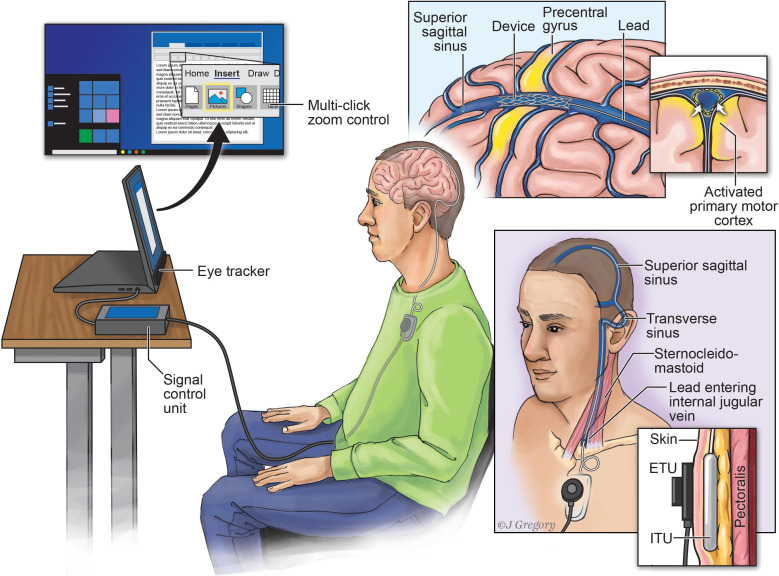
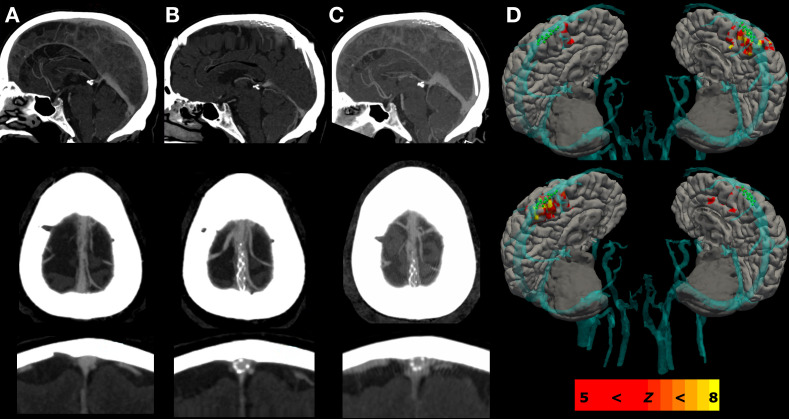
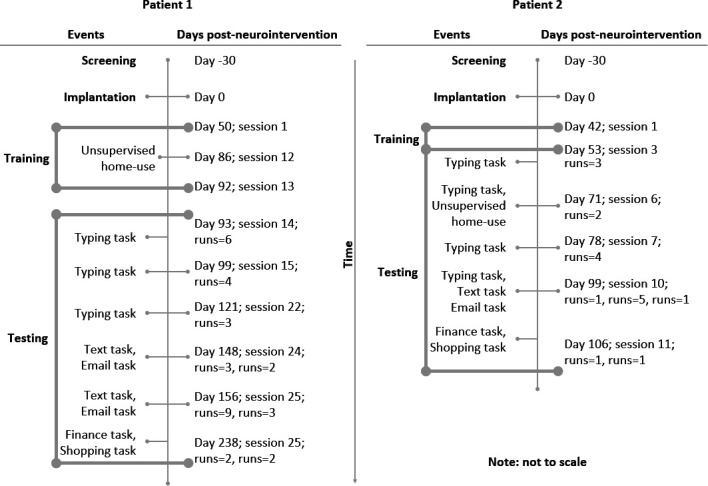
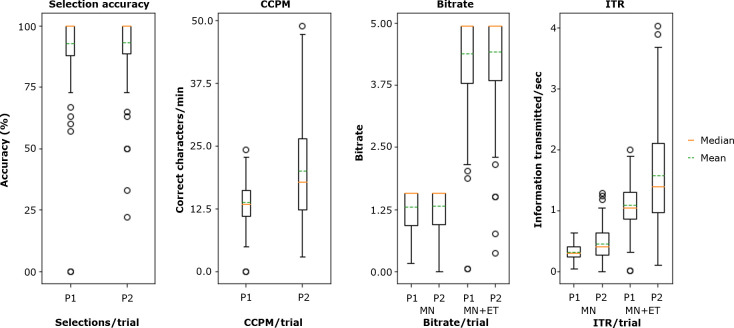
Background: Implantable brain–computer interfaces (BCIs), functioning as motor neuroprostheses, have the potential to restore voluntary motor impulses to control digital devices and improve functional independence in patients with severe paralysis due to brain, spinal cord, peripheral nerve or muscle dysfunction. However, reports to date have had limited clinical translation. Methods: Two participants with amyotrophic lateral sclerosis (ALS) underwent implant in a single-arm, open-label, prospective, early feasibility study. Using a minimally invasive neurointervention procedure, a novel endovascular Stentrode BCI was implanted in the superior sagittal sinus adjacent to primary motor cortex. The participants undertook machine-learning-assisted training to use wirelessly transmitted electrocorticography signal associated with attempted movements to control multiple mouse-click actions, including zoom and left-click. Used in combination with an eye-tracker for cursor navigation, participants achieved Windows 10 operating system control to conduct instrumental activities of daily living (IADL) tasks. Results: Unsupervised home use commenced from day 86 onwards for participant 1, and day 71 for participant 2. Participant 1 achieved a typing task average click selection accuracy of 92.63% (100.00%, 87.50%–100.00%) (trial mean (median, Q1–Q3)) at a rate of 13.81 (13.44, 10.96–16.09) correct characters per minute (CCPM) with predictive text disabled. Participant 2 achieved an average click selection accuracy of 93.18% (100.00%, 88.19%–100.00%) at 20.10 (17.73, 12.27–26.50) CCPM. Completion of IADL tasks including text messaging, online shopping and managing finances independently was demonstrated in both participants. Conclusion: We describe the first-in-human experience of a minimally invasive, fully implanted, wireless, ambulatory motor neuroprosthesis using an endovascular stent-electrode array to transmit electrocorticography signals from the motor cortex for multiple command control of digital devices in two participants with flaccid upper limb paralysis.
Overview
The claims and statistics of this paper haven’t been checked yet.
Free: it reads the open-access text and checks the first 5 claims that cite a source we can check. Create a free account to check every claim.
Integrity signals
Registry
Cites
Statistics
Figures
Verification
Claims the paper makes
The claims and statistics of this paper haven’t been checked yet.
Free: it reads the open-access text and checks the first 5 claims that cite a source we can check. Create a free account to check every claim.
Claims other papers make about this one
Each is checked against this paper’s own text: does it say what the citing paper says it does?
The source backs part of the claim, not all of it — or backs it for a different population, condition or comparison.
In the citing paper
“Similarly, both in academic and industry settings, approaches are being developed to improve throughput, sampling, biocompatibility and stability of MEAs183–186.”
From The speech neuroprosthesis (2024) · cites this paper as [183]
Experimental — accuracy not yet measuredThe source backs part of the claim, not all of it — or backs it for a different population, condition or comparison.
In the citing paper
“Another example of a battery-free implant is the Stentrode, designed for a 10-year lifespan, avoids invasive battery replacements through wireless power using near-field RF, with a transmission depth of ≈30 mm and 2% efficiency, connected to an Inductively Powered Internal Telemetry Unit (ITU) for power and Bluetooth signal transmission (Aldaoud et al., 2018; Oxley et al., 2020; Raza et al., 2020)”
From Comparative analysis of energy transfer mechanisms for neural implants (2024) · cites this paper as Oxley et al., 2020
Experimental — accuracy not yet measured
Self-check
Percentages, sums and reported differences re-computed from the paper’s own numbers.
The self-check needs the paper’s full text.
Citations
Cites
Assessment of Older People: Self-Maintaining and Instrumental Activities of Daily Living
Lawton, M. P., & Brody, E. M. (1969) · The Gerontologist · doi:10.1093/geront/9.3_part_1.179 · Cited by 18,540
Brain–computer interfaces for communication and control
Wolpaw, J. R., Birbaumer, N., McFarland, D. J., Pfurtscheller, G., & Vaughan, T. M. (2002) · Clinical Neurophysiology · doi:10.1016/s1388-2457(02)00057-3 · Cited by 7,927
Scoville, W. B. (1949) · Journal of neurosurgery · doi:10.3171/jns.1949.6.1.0065 · Cited by 7,381
International Classification of Functioning Disability and Health (ICF)
Battistella, L. R., & Brito, C. M. M. D. (2002) · Acta Fisiátrica · doi:10.5935/0104-7795.20020003 · Cited by 4,446
Neuronal ensemble control of prosthetic devices by a human with tetraplegia
Hochberg, L. R., Serruya, M. D., Friehs, G. M., Mukand, J. A., Saleh, M., Caplan, A. H., Branner, A., Chen, D., Penn, R. D., & Donoghue, J. P. (2006) · Nature · doi:10.1038/nature04970 · Cited by 3,295
Self-citationReach and grasp by people with tetraplegia using a neurally controlled robotic arm
Hochberg, L. R., Bacher, D., Jarosiewicz, B., Masse, N. Y., Simeral, J. D., Vogel, J., Haddadin, S., Liu, J., Cash, S. S., van der Smagt, P., et al. (2012) · Nature · doi:10.1038/nature11076 · Cited by 2,719
Self-citationA spelling device for the paralysed
Birbaumer, N., Ghanayim, N., Hinterberger, T., Iversen, I., Kotchoubey, B., Kübler, A., Perelmouter, J., Taub, E., & Flor, H. (1999) · Nature · doi:10.1038/18581 · Cited by 1,577
Falls, Injuries Due to Falls, and the Risk of Admission to a Nursing Home
Tinetti, M. E., & Williams, C. S. (1997) · New England Journal of Medicine · doi:10.1056/nejm199710303371806 · Cited by 1,403
Self-citationA brain–computer interface using electrocorticographic signals in humans
Leuthardt, E. C., Schalk, G., Wolpaw, J. R., Ojemann, J. G., & Moran, D. W. (2004) · Journal of Neural Engineering · doi:10.1088/1741-2560/1/2/001 · Cited by 1,188
A comprehensive review of EEG-based brain–computer interface paradigms
Abiri, R., Borhani, S., Sellers, E. W., Jiang, Y., & Zhao, X. (2019) · Journal of Neural Engineering · doi:10.1088/1741-2552/aaf12e · Cited by 946
Cited by
Items 101–200 of 274
Mosaad, N., Refai, M. K., Elshafey, K., & Ayoub, B. M. (2024) · Journal of Al-Azhar University Engineering Sector · doi:10.21608/auej.2024.249243.1477 · Cited by 10
“Participants were able to perform instrumental activities of daily living using Windows 10 when paired with an eye-tracker for a computer’s pointer movement [71].”
MethodOxley, T. J. (2025) · Journal of Neural Engineering · doi:10.1088/1741-2552/ad9633 · Cited by 10
“The signal output consists of commands such as short or long clicks, which enable users to perform tasks like typing or navigating digital environments [ 2, 3].”
InfluentialSelf-citationLeinders, S., Aarnoutse, E. J., Branco, M. P., Freudenburg, Z. V., Geukes, S. H., Schippers, A., Verberne, M. S. W., van den Boom, M., van der Vijgh, B. H., Crone, N. E., et al. (2026) · Scientific Reports · doi:10.1038/s41598-026-44228-7 · Cited by 10
Self-citationBionanotechnology and bioMEMS (BNM): state-of-the-art applications, opportunities, and challenges
Borenstein, J. T., Cummins, G., Dutta, A., Hamad, E. M., Hughes, M. P., Jiang, X., Lee, H., Lei, K. F., Tang, X. S., Zheng, Y., et al. (2023) · Lab on a Chip · doi:10.1039/d3lc00296a · Cited by 10
A perspective on electroencephalography sensors for brain-computer interfaces
Iacopi, F., & Lin, C. (2022) · Progress in Biomedical Engineering · doi:10.1088/2516-1091/ac993d · Cited by 10
“Some of the iEEG technologies at various stages of clinical trials and commercialisation include the one from Neuralink, organised in arrays of flexible threads containing each 32 microelectrodes for ECoG reading [28], and the stentrode BCI from Synchron, an endovascular approach containing ‘a self-expanding monolithi…”
MethodBeer‐Furlan, A., Munich, S. A., & Chen, M. (2020) · Journal of NeuroInterventional Surgery · doi:10.1136/neurintsurg-2020-017074 · Cited by 10
Implantable Neural Speech Decoders: Recent Advances, Future Challenges
Jhilal, S., Marchesotti, S., Thirion, B., Soudrie, B., Giraud, A., & Mandonnet, E. (2025) · Neurorehabilitation and neural repair · doi:10.1177/15459683251369468 · Cited by 9
Ikegawa, Y., Fukuma, R., Sugano, H., Oshino, S., Tani, N., Tamura, K., Iimura, Y., Suzuki, H., Yamamoto, S., Fujita, Y., et al. (2024) · Journal of Neural Engineering · doi:10.1088/1741-2552/ad417a · Cited by 10
“Patients with severe paralysis have been shown to communicate using chronically implanted BCIs that use signals from intracranial electroencephalography (iEEG) of the motor cortex [2–5].”
BackgroundFeasibility of endovascular stimulation of the femoral nerve using a stent-mounted electrode array
Liu, J., Grayden, D. B., Keast, J. R., Booth, L. C., May, C. N., & John, S. E. (2024) · Journal of Neural Engineering · doi:10.1088/1741-2552/ad4f16 · Cited by 9
“The first-in-human clinical trial of the Stentrode as an endovascular motor neuroprosthesis is well underway and the results so far demonstrated its safety and feasibility as a minimally invasive brain– computer interface [21, 24].”
BackgroundSelf-citationImplanted cortical neuroprosthetics for speech and movement restoration
Muirhead, W. R., Horsfall, H. L., Aicardi, C., Carolan, J., Akram, H., Vanhoestenberghe, A., Schaefer, A. T., & Marcus, H. J. (2024) · Journal of Neurology · doi:10.1007/s00415-024-12604-w · Cited by 10
Schippers, A., Vansteensel, M. J., Freudenburg, Z. V., & Ramsey, N. F. (2024) · doi:10.1101/2024.01.21.23300437 · Cited by 9
Branco, M. P., Verberne, M. S. W., van Balen, B., Bekius, A., Leinders, S., Ketelaar, M., Geytenbeek, J., van Driel-Boerrigter, M., Veld, M. W.-O. H., Rabbie-Baauw, K., et al. (2025) · Disability and Rehabilitation Assistive Technology · doi:10.1080/17483107.2025.2481426 · Cited by 8
Detection of Blood Clots Using a Whole Stent as an Active Implantable Biosensor
Kirimi, M. T., Hoare, D., Holsgrove, M., Czyzewski, J., Mirzai, N., Mercer, J. R., & Neale, S. L. (2024) · Advanced Science · doi:10.1002/advs.202304748 · Cited by 8
Haemodynamics of stent-mounted neural interfaces in tapered and deformed blood vessels
Qi, W., Ooi, A. S. H., Grayden, D. B., Opie, N. L., & John, S. E. (2024) · Scientific Reports · doi:10.1038/s41598-024-57460-w · Cited by 8
Self-citationCernera, S., Gemicioglu, T., Berezutskaya, J., Csáky, R., Verwoert, M., Polyakov, D., Papadopoulos, S., Spagnolo, V., Gonzalez-Astudillo, J., Kumar, S., et al. (2025) · Journal of Neural Engineering · doi:10.1088/1741-2552/adb335 · Cited by 8
Sahoo, A., Abdalkader, M. K., Saatçi, I., Raymond, J., Qiu, Z., Huo, X., Sun, D., Weyland, C. S., Jia, B., Zaidat, O. O., et al. (2023) · Seminars in Neurology · doi:10.1055/s-0043-1771455 · Cited by 8
van Balen, B. (2025) · Phenomenology and the Cognitive Sciences · doi:10.1007/s11097-024-10044-5 · Cited by 9
“This is not an exception (Benaroch et al., 2021; Oxley et al., 2021).”
Don’t put words in my mouth: speech perception can falsely activate a brain-computer interface
Schippers, A., Vansteensel, M. J., Freudenburg, Z. V., Luo, S., Crone, N. E., & Ramsey, N. F. (2025) · Journal of NeuroEngineering and Rehabilitation · doi:10.1186/s12984-025-01689-7 · Cited by 8
“It has been demonstrated that BCIs can be used by individuals with ALS to control a communication application on a computer by means of a binary click based on attempted hand movements [3, 4] with long-term stability [5].”
The Future of Endovascular Therapy
Jumaa, M. A., Salahuddin, H., & Burgess, R. (2021) · Neurology · doi:10.1212/wnl.0000000000012807 · Cited by 8
Yang, D., Liu, X., Hu, J., & Zhang, W. (2026) · Medical Science Monitor · doi:10.12659/msm.951925 · Cited by 7
“Endovascular implantation using the Stentrode device enabled minimally invasive cortical signal acquisition without craniotomy [10], with subsequent clinical studies demonstrating sustained daily communication in patients with amyotrophic lateral sclerosis [11].”
Mahoney, T., Liu, P.-C., Grayden, D. B., & John, S. E. (2023) · Annual International Conference of the IEEE Engineering in Medicine and Biology Society (EMBC) · doi:10.1109/embc40787.2023.10340834 · Cited by 7
Self-citationPhenomenology and the Philosophy of Technology
Boer, B. D., & Zwier, J. (2024) · Open Book Publishers · doi:10.11647/obp.0421 · Cited by 8
Gustatory interface for operative assessment and taste decoding in patients with tongue cancer
Wang, X., Bai, G., Liang, J., Xie, Q., Chen, Z., Zhou, E., Li, M., Wei, X., Sun, L., Zhang, Z., et al. (2024) · Nature Communications · doi:10.1038/s41467-024-53379-y · Cited by 7
Caregivers in implantable brain-computer interface research: a scoping review
Wohns, N., Dorfman, N. J., & Klein, E. P. (2024) · Frontiers in Human Neuroscience · doi:10.3389/fnhum.2024.1490066 · Cited by 7
Neurosurgery and the Brain-Computer Interface
Rosenfeld, J. V. (2024) · Advances in experimental medicine and biology · doi:10.1007/978-3-031-64892-2_32 · Cited by 8
Neural–Computer Interfaces: Theory, Practice, Perspectives
Dubynin, I. A., Zemlyanskov, M. S., Shalayeva, I., Gorskii, O., Grinevich, V. P., & Евгеньевич, М. П. (2025) · Applied Sciences · doi:10.3390/app15168900 · Cited by 7
Fujimoto, A., Matsumaru, Y., Masuda, Y., Marushima, A., Hosoo, H., Araki, K., & Ishikawa, E. (2022) · Brain Sciences · doi:10.3390/brainsci12030309 · Cited by 7
“Since the equipment required for an eEEG in this study was already used not only in endovascular treatments [36,37], but also other treatments [38], we believe that the day will come when this device can be used as a tool in preoperative evaluations for epilepsy surgery.”
MethodEthical Considerations of Endovascular Brain–Computer Interfaces
Fry, A., Breyman, E., LaGrassa, E., Oxley, T. J., & Putrino, D. F. (2023) · Advances in neuroethics · doi:10.1007/978-3-031-26801-4_4 · Cited by 7
Self-citationBrain-Computer Interfaces: The Technology of Our Future
Davis, K. R. (2022) · UC Merced Undergraduate Research Journal · doi:10.5070/m414157331 · Cited by 7
Raghavan, V., O’Sullivan, J., Herrero, J. L., Bickel, S., Mehta, A. D., & Mesgarani, N. (2024) · Imaging Neuroscience · doi:10.1162/imag_a_00148 · Cited by 6
“Developments in hardware have opened up the prospect of minimally-invasive surgeries for intra-cranial recordings ( Oxley et al., 2016, 2021), and even smaller devices like the Neuropixel ( Steinmetz et al., 2021), that can record reliably in speech cortices ( Khanna et al., 2024; Leonard et al.,…”
BackgroundEndovascular stimulation of the pudendal nerve using a stent-mounted electrode array
Liu, J., Grayden, D. B., Keast, J. R., & John, S. E. (2024) · Journal of Neural Engineering · doi:10.1088/1741-2552/ad6590 · Cited by 6
“Among the endovascular nerve interfaces, one of the most recent breakthroughs is Stentrode TM (Synchron, Inc., Brooklyn, USA) electrode arrays mounted on self-expanding stents suitable for chronic endovascular implantation [32, 33, 40–42].”
Self-citationExplainability in AI-enabled medical neurotechnology: a scoping review
Schopp, L., Starke, G., & Ienca, M. (2026) · Journal of NeuroEngineering and Rehabilitation · doi:10.1186/s12984-026-01892-0 · Cited by 6
Xu, Y., Chen, D., Ye, Q., Zhang, P., Shi, J., Li, S., Sun, Y., Zhao, Z., Tang, Y., Zhang, P., et al. (2026) · MedComm · doi:10.1002/mco2.70739 · Cited by 6
“(A ) The Stentrode: sixteen electrodes are arrayed around a nitinol scaffold measuring 8 mm × 40 mm. Authorization was obtained to make minor modifications [ 74 ].”
van Grunsven, J., van Balen, B., & Bollen, C. J. M. (2024) · Open Book Publishers · doi:10.11647/obp.0421.10 · Cited by 6
Non‐Surgical, In‐Stent Membrane Bioelectronics for Long‐Term Intracranial Pressure Monitoring
Lee, J., Bateman, A., Kim, M. H., Rigo, B., Kim, H., Lee, J., Choi, Y. H., Herbert, R., Lee, D. H., & Yeo, W. (2025) · Advanced Healthcare Materials · doi:10.1002/adhm.202404680 · Cited by 5
Direct 3D rotational venography: Insights in optimizing visualization
Shekhtman, O., Sioutas, G. S., Mannam, S. S., Kandregula, S., Catapano, J. S., Ehtiati, T., Burkhardt, J., & Srinivasan, V. M. (2025) · Interventional Neuroradiology · doi:10.1177/15910199251329098 · Cited by 5
Guggisberg, A. G., Siebner, H. R., Lundell, H., Madsen, M. A. J., Madsen, K. H., Wiggermann, V., Mégevand, P., Proix, T., Dalal, S. S., Grouiller, F., et al. (2025) · Clinical Neurophysiology · doi:10.1016/j.clinph.2025.2110942 · Cited by 5
Combining cortical and spinal stimulation maximizes the improvement of gait after spinal cord injury
Drainville, R., Bonizzato, M., Burchielli, D., Hottin, R. G., Sheasby, A., & Martinez, M. (2025) · iScience · doi:10.1016/j.isci.2025.113580 · Cited by 6
Araki, K., Masuda, Y., Fujimoto, A., Nishimura, M., Hosoo, H., Ishida, H., Enokizono, T., Kawai, K., Ishikawa, E., & Matsumaru, Y. (2025) · Epilepsia Open · doi:10.1002/epi4.70166 · Cited by 5
“17 This suggests that similar strategies could be explored for EP-01 to mitigate thrombus-related risks.”
Li, T., Gao, Y., Zhou, J., Chen, Y., Zhang, S., Gong, X., & Liu, Y. (2025) · Frontiers in Neuroscience · doi:10.3389/fnins.2025.1658315 · Cited by 8
Lin, D., Tran, T., Thaploo, S., Matias, J. G. E., Pixley, J. E., Nenadić, Z., & Do, A. H. (2026) · Frontiers in Neuroscience · doi:10.3389/fnins.2026.1678175 · Cited by 6
Brain-computer interface: an update for the clinicians
Jain, A., Raveendran, S., Nair, K. P. S., & Ramakrishnan, S. (2026) · Frontiers in Human Neuroscience · doi:10.3389/fnhum.2026.1777024 · Cited by 6
“This was the first minimally invasive device to allow ambulation and wireless control of external devices, and it received FDA “Breakthrough Device Designation” in 2020 (Han, 2021; Oxley et al., 2021).”
Wirelessly interfacing sensor‐equipped implants and MR scanners for improved safety and imaging
Silemek, B., Seifert, F. C., Petzold, J., Brühl, R., Ittermann, B., & Winter, L. (2023) · Magnetic Resonance in Medicine · doi:10.1002/mrm.29818 · Cited by 5
“Simage = |uim ⋅ uopt| = ||uim||uopt| cos(θ)| = | cos(θ)| (1)”
Vasko, J. L., Aume, L., Tamrakar, S., Colachis, S. C., Dunlap, C. F., Rich, A., Meyers, E., Gabrieli, D. J., & Friedenberg, D. A. (2022) · Frontiers in Neuroscience · doi:10.3389/fnins.2022.858377 · Cited by 5
“Despite significant progress in intracortical brain computer interface (BCI) technology, there are few examples of practical use in home environments (Collinger et al., 2013b; Murphy et al., 2016; Oxley et al., 2020; Weiss et al., 2020; Cajigas et al., 2021).”
BackgroundSelf-citationKim, W. J., Samarage, H. M., Zarrin, D., Goël, K., Wang, A., Johnson, J. N., Nael, K., & Colby, G. P. (2022) · Journal of NeuroInterventional Surgery · doi:10.1136/jnis-2022-019583 · Cited by 5
Developing clinical grade flexible implantable electronics
Liu, Y., Balsamo, D., & Degenaar, P. A. (2023) · Flexible and Printed Electronics · doi:10.1088/2058-8585/aca779 · Cited by 5
Future Directions and Innovations in Venous Sinus Stenting
Pandey, A., Schreiber, C., Garton, A. L. A., Jung, B., Goldberg, J. L., Kocharian, G., Carnevale, J. A., & Boddu, S. R. (2024) · World Neurosurgery · doi:10.1016/j.wneu.2023.12.128 · Cited by 5
Semi-Autonomous Continuous Robotic Arm Control Using an Augmented Reality Brain-Computer Interface
Kokorin, K., Zehra, S., Mu, J., Yoo, P., Grayden, D. B., & John, S. E. (2024) · IEEE Transactions on Neural Systems and Rehabilitation Engineering · doi:10.1109/tnsre.2024.3500217 · Cited by 6
“A BRAIN-COMPUTER interface (BCI) allows a person to control a computer or external device using recorded brain activity [1], bypassing natural neuromuscular pathways to help people with paralysis perform activities of daily living [2], [3].”
Self-citationHow Does Artificial Intelligence Contribute to iEEG Research?
Berezutskaya, J., Saive, A.-L., Jerbi, K., & van Gerven, M. A. J. (2023) · Studies in neuroscience, psychology and behavioral economics · doi:10.1007/978-3-031-20910-9_47 · Cited by 5
Can Quasi-Movements be Used as a Model of the BCI Based on Attempted Movements?
Yashin, A. S., Vasilyev, A. N., Shevtsova, Y. G., & Shishkin, S. L. (2024) · Conference proceedings/Conference proceedings - IEEE International Conference on Systems, Man, and Cybernetics · doi:10.1109/smc54092.2024.10831475 · Cited by 4
“However, in the recent clinical study of endovascular BCI technology the AM-based BCI confirmation was used very successfully in combination with eye tracker based control [9].”
Applications of Endovascular Brain–Computer Interface in Patients with Alzheimer’s Disease
Sun, Y., Chen, D., Ye, Q., You, Z., Zhao, Z., Shi, J., Sun, H., Li, S., Xu, X., Xu, Y., et al. (2025) · Research · doi:10.34133/research.1049 · Cited by 5
“During follow-up, no thrombotic events were reported among the implanted subjects [ 14 , 35 ].”
Endovascular neural interfaces: current platforms and clinical readiness
Hosoo, H., Araki, K., Masuda, Y., Hiroki, I., & Matsumaru, Y. (2026) · Journal of NeuroInterventional Surgery · doi:10.1136/jnis-2025-024870 · Cited by 4
“…neural interfaces: increasing spatial resolution and reducing lead Intended use Chronic neural recording for BCI (assistive communication/ control) 19–22 Temporary multi-site diagnostic eEEG for epilepsy lateralization/localization 24 25 27 28 Concept Endovascular stent-mounted electrode array…”
Higgins, N., Blakely, B. D., Everingham, R., Gilbert, F., Griffin, S., Harris, A. R., Herring, S. E., Ho, C. W.-L., Hoy, K. E., Kiel-Chisholm, S., et al. (2026) · BMC Medical Ethics · doi:10.1186/s12910-026-01475-7 · Cited by 4
An overview of noninvasive imaging strategies in neural engineering
Modo, M., Didwischus, N., & Kisel, A. A. (2024) · Elsevier eBooks · doi:10.1016/b978-0-323-95730-4.00001-9 · Cited by 4
Trans-arterial approach for neural recording and stimulation: Present and future
Li, J., Yang, X., Musmar, B., & Hasan, D. M. (2025) · Journal of Clinical Neuroscience · doi:10.1016/j.jocn.2025.111180 · Cited by 4
Li, S., Liu, G., Feng, F., Chang, Z., Li, W., & Duan, F. (2025) · IEEE Transactions on Neural Systems and Rehabilitation Engineering · doi:10.1109/tnsre.2025.3562922 · Cited by 4
“…these drawbacks, we propose an interventional BCI, which utilizes an interventional technique to place signal acquisition electrodes on the medial aspect of the superior sagittal sinus to ensure that high-precision primary motor cortex signals are acquired without damaging nerves [18], [19].”
Fargen, K. M., & Couture, D. E. (2021) · Journal of NeuroInterventional Surgery · doi:10.1136/neurintsurg-2021-018517 · Cited by 4
Distribution of Electrical Stimulation Current of a Minimally Invasive Endovascular Stent-Electrode
Wen, B., Zhang, J., Wang, M., Liu, L., Zhang, Y., Wang, A., Wang, L., Zhang, L., & Kang, X. (2023) · International Winter Conference on Brain-Computer Interface (BCI) · doi:10.1109/bci57258.2023.10078540 · Cited by 4
“In the past 40 years, the intracranial vascular electrode array has been proven to be feasible in biological technology for the first time[4, 7-14] , which represents a breakthrough in the new method of detecting intracranial EEG data, and the damage to brain tissue is much smaller than the traditional hard electrode…”
BackgroundSafe Retrieval of a Stent-Based Endovascular Neural Recording Array
Tarigoppula, V. S. A., Rind, G. S., Ronayne, S. M., Stent, A. W., Eiber, C. D., Oxley, T. J., & Opie, N. L. (2023) · International IEEE/EMBS Conference on Neural Engineering · doi:10.1109/ner52421.2023.10123895 · Cited by 4
“We have previously reported the ability of our endovascular brain-computer-interface (BCI), the Stentrode, to access the brain via blood vessels and acquire brain signals from within the superior sagittal sinus (SSS) overlying the primary motor cortex in sheep and humans [1], [2].”
BackgroundSelf-citationMotor Cortex Coverage Predicts Signal Strength of a Stentrode Endovascular Brain-Computer InterfacePreprint
Schone, H. R., Yoo, P. E., Fry, A., Chetty, N., Sawyer, A., Herbers, C., Liu, F., Moon, C., Hill, K. J., Majidi, S., et al. (2025) · medRxiv · doi:10.1101/2025.09.19.25335875 · Cited by 5
Self-citationSignal properties and stability of a chronically implanted endovascular brain computer interfacePreprint
Chetty, N., Kacker, K., Feldman, A. K., Yoo, P. E., Bennett, J. D., Fry, A., Tal, I., Hardy, N. F., Ebrahimi, S., Echavarria, C., et al. (2025) · medRxiv · doi:10.1101/2025.09.19.25335897 · Cited by 4
“The deployment of the stent-electrode array into the superior sagittal sinus via a catheter guided by angiography has been described previously 20,21 .”
InfluentialSelf-citationConcept for intrathecal delivery of brain recording and stimulation device
Chapman, D. P., & Wu, J. (2024) · Frontiers in Medical Technology · doi:10.3389/fmedt.2024.1211585 · Cited by 3
Fan, G., Yin, M., Wang, Y., Yu, S., & Wang, X. (2025) · Biomedical Signal Processing and Control · doi:10.1016/j.bspc.2024.107448 · Cited by 3
Offenberg, E. C., Berezutskaya, J., Müller, L., Freudenburg, Z. V., Ramsey, N. F., & Vansteensel, M. J. (2026) · Clinical Neurophysiology · doi:10.1016/j.clinph.2026.2111940 · Cited by 3
Decoding cortical responses from visual input using an endovascular brain–computer interface
van der Eerden, J. H. M., Liu, P.-C., Villalobos, J., Yanagisawa, T., Grayden, D. B., & John, S. E. (2025) · Journal of Neural Engineering · doi:10.1088/1741-2552/addb7c · Cited by 3
“Electrodes in an endovascular neural interface (ENI) enable recording brain signals from within cerebral blood vessels [13].”
Self-citationInvasive Brain-Computer Interface (BCI) for Communication
Chaudhary, U. (2025) · Springer eBooks · doi:10.1007/978-3-031-78991-5_5 · Cited by 3
Brannigan, J., Kian, A., Eiber, C. D., Tarigoppula, V. S. A., Bogard, J., Siddiqui, A. H., Rind, G. S., Berenstein, A., Majidi, S., & Oxley, T. J. (2025) · Journal of NeuroInterventional Surgery · doi:10.1136/jnis-2025-023532 · Cited by 3
“Recent preclinical studies have demonstrated the successful deployment of electrodes in cerebral vessels measuring 1 mm in diameter, 10 11 compared with the 4–9 mm diameter of the SSS, 12 the current target for neurovascular devices.”
InfluentialSelf-citationSecuring a Training Position as an Interventional Neurologist: How to Overcome the Barriers
Wong, G. J., Das, S., & Sheth, S. A. (2022) · Stroke · doi:10.1161/strokeaha.121.036311 · Cited by 3
Nischal, S. A., Fernández‐Méndez, R., Gautam, V., Patel, S., McMahon, C. J., Hutchinson, P. J., Pickard, J. D., Higgins, N. J., & Joannides, A. J. (2025) · Acta Neurochirurgica · doi:10.1007/s00701-025-06514-7 · Cited by 3
“However, the relative rarity of certain clinical indications identified by this review may make randomisation challenging, particularly if VSS is combined with other interventional modalities, such as the dual stent-electrode (“stentrode”) system for deep brain stimulation [6, 27, 28].”
Seventy-five years of neurosurgery residency training at The Mount Sinai Hospital
Carr, M. T., Zimering, J. H., Beroza, J. M., Melillo, A., Kellner, C. P., Mocco, J., Post, K. D., Bederson, J. B., & Shrivastava, R. K. (2022) · Journal of neurosurgery · doi:10.3171/2022.1.jns212195 · Cited by 3
Self-citationCoin, A., & Dubljević, V. (2023) · Advances in neuroethics · doi:10.1007/978-3-031-26801-4_1 · Cited by 3
Perspectives of Current FDA Guidance on BCI Technology
Pflanzer, M. (2023) · Advances in neuroethics · doi:10.1007/978-3-031-26801-4_14 · Cited by 3
Hochberg, L. R., & Cash, S. S. (2021) · New England Journal of Medicine · doi:10.1056/nejme2106392 · Cited by 3
Self-citationGolden age of cerebral venous and CSF disorders
Amans, M. R., & Leacy, R. A. D. (2024) · Journal of NeuroInterventional Surgery · doi:10.1136/jnis-2024-022553 · Cited by 3
The Evolution of Do-It-Yourself Brain Hacking: From Fringe to Frontier
Lakhan, S. E. (2025) · Cureus · doi:10.7759/cureus.85330 · Cited by 3
“Synchron’s stentrode device, which is implanted via blood vessels rather than open brain surgery, has already been tested in human patients with amyotrophic lateral sclerosis to enable texting and device control by neural signals, with encouraging early results [21].”
Oxley, T. J. (2024) · American Journal of Physical Medicine & Rehabilitation · doi:10.1097/phm.0000000000002463 · Cited by 2
Self-citationDetecting and Eliminating Cardiac Artifact from Endovascular EEG Signals
Sreekantham, S., Chetty, N., & Weber, D. J. (2024) · Annual International Conference of the IEEE Engineering in Medicine and Biology Society (EMBC) · doi:10.1109/embc53108.2024.10782938 · Cited by 2
“The Stentrode is a novel minimally invasive technology that is fully implanted, wireless, ambulatory, and the first permanent BCI approved for clinical trials [4].”
Self-citationRusso, J. S., Colebatch, J. G., Lin, C., John, S. E., Grayden, D. B., & Todd, N. P. M. (2025) · Journal of Neural Engineering · doi:10.1088/1741-2552/ae18fa · Cited by 2
“Recent innovations in minimally invasive interventions, such as the endovascular array (Oxley et al 2021, Mitchell et al 2023), may provide a recording modality that is able to access the superior cerebellum via adjacent veins.”
Self-citationPromises and performance in brain–machine interfaces: will AI be our saviour?
Saldanha, P., Vaupel, M., Dunn, B. A., & Whitlock, J. R. (2026) · The European Physical Journal Special Topics · doi:10.1140/epjs/s11734-026-02169-2 · Cited by 2
Sharma, K. K., & Chauhan, B. (2025) · Neuroscience Insights Advances in Brain Studies · doi:10.64978/niabs-0104 · Cited by 2
Restoring vision and touch with cortical microstimulation
Valle, G. D., Oswalt, D. N., Gaunt, R. A., Roelfsema, P. R., Greenspon, C. M., & Fernandez, E. (2026) · Nature Reviews Bioengineering · doi:10.1038/s44222-026-00449-z · Cited by 2
“This approach leverages vascular access to record neural activity without craniotomy, reducing surgical risks while capturing cortical signals filtered through the vessel wall 173 .”
Swanson, E., Dohle, E., Bashford, L., Horsfall, H. L., Jovanovic, L., Muirhead, W. R., & Brannigan, J. (2026) · Journal of Neural Engineering · doi:10.1088/1741-2552/ae7694 · Cited by 2
“Most of these studies used either endovascular or planar ECoG arrays to record neural activity [7, 18, 39, 40, 43, 45–48, 50, 52–58], and only three used alternative devices [28, 49, 51].”
InfluentialFares, H., Ronchini, M., Zamani, M., Farkhani, H., Chiappalone, M., Neftci, E., & Moradi, F. (2026) · npj Biomedical Innovations. · doi:10.1038/s44385-026-00074-w · Cited by 2
Intraarterial encephalography from an acutely implanted aneurysm embolization device in awake humans
Li, L., Ibayashi, K., Piscopo, A. J., Streese, C. D., Chen, H., Greenlee, J. D. W., & Hasan, D. M. (2022) · Journal of neurosurgery · doi:10.3171/2022.6.jns22932 · Cited by 2
Qi, W., Ooi, A. S. H., Grayden, D. B., & John, S. E. (2023) · Annual International Conference of the IEEE Engineering in Medicine and Biology Society (EMBC) · doi:10.1109/embc40787.2023.10341099 · Cited by 2
“In addition, the device can be used as a neural prosthesis to control digital devices, which will improve the quality of life for disabled patients [24].”
BackgroundSelf-citationInvasive neurointerfaces – fields of their application.
Витальевна, Б. Е., Moscow, R., Shaderkina, A. I., Efimochkina, S. M., Litavrin, A. I., & Kuznetsova, M. A. (2024) · Russian Journal of Telemedicine and E-Health · doi:10.29188/2712-9217-2024-10-2-27-42 · Cited by 2
Ognard, J., Douri, D., Hajj, G. E., Ghozy, S. A., Rohleder, M., Gentric, J., Kadirvel, R., Kallmes, D. F., & Brinjikji, W. (2025) · American Journal of Neuroradiology · doi:10.3174/ajnr.a8942 · Cited by 2
Iwata, T., Nakamura, H., Uemura, T., Araki, T., Matsumura, T., Abe, T., Nezu, T., Takagaki, M., Ozaki, T., Miura, S., et al. (2025) · Advanced Intelligent Systems · doi:10.1002/aisy.202500487 · Cited by 2
Self-citationComparing cardiac artifact removal algorithms for endovascular brain-computer interface recordings
Rasheed, S., Bennett, J., Yoo, P., Opie, N. L., Burkitt, A. N., & Grayden, D. B. (2024) · International Winter Conference on Brain-Computer Interface (BCI) · doi:10.1109/bci60775.2024.10480513 · Cited by 2
Self-citationIntroduction of brain computer interface to neurologists
Kim, D.-H., Yeom, H. G., Kim, M., Kim, S. H., Yang, T., Kwon, O., & Kim, Y. (2021) · Annals of Clinical Neurophysiology · doi:10.14253/acn.2021.23.2.92 · Cited by 2
“In that study, the cursor of a computer mouse was moved by pupil movement, and left clicking or zooming was performed based on information obtained from the Stentrode.18 However, the Stentrode did not appear to be permanently usable, and its applications may be restricted by certain risks.”
MethodA Method to Extract Task-Related EEG Feature Based on Lightweight Convolutional Neural Network
Huang, Q., Ding, J., & Wang, X. (2024) · Neuroscience Bulletin · doi:10.1007/s12264-024-01247-6 · Cited by 2
“Such systems have been successfully applied to understand the connectivity of the human brain [2], to facilitate stroke communication [3], to improve capacity for activities of daily living tasks in severe paralysis [4], and to map epileptic brain networks prior to respective epilepsy surgery [5].”
Mocco, J. (2022) · Journal of NeuroInterventional Surgery · doi:10.1136/neurintsurg-2022-018862 · Cited by 2
Self-citationSub-Scalp Brain-Computer Interface Device Design and FabricationPreprint
Mahoney, T. B., Grayden, D. B., & John, S. E. (2025) · arXiv (Cornell University) · doi:10.48550/arxiv.2504.12578 · Cited by 2
“Endovascular (EV) stent-electrode arrays have recently attempted to address these limitations [20]; however, these devices have poor spatial coverage (being confined to brain regions with large endovascular structures), cannot be removed once implanted, and may lead to adverse effects seen with…”
Self-citationA Review of the Clinical Application of Endovascular Electrodes and Its Future Prospects
Zhang, Z., Zhang, R., Chen, Z., & Meng, J. (2025) · Applied and Computational Engineering · doi:10.54254/2755-2721/2024.20527 · Cited by 1
Korkmaz, F., Doychinov, V., Steenson, P., & Chakrabarty, S. (2024) · International Workshop on Antenna Technology · doi:10.1109/iwat57102.2024.10535811 · Cited by 1
Invasive Brain–Computer Interfaces: 25 Years of Clinical Trials, Scientific and Practical Issues
Mokienko, O. A. (2025) · Annals of the Russian academy of medical sciences · doi:10.15690/vramn17994 · Cited by 1
Designing an online BCI forum: insights from researchers and end-users
Ziebell, P., Modde, A., Roland, E., Eidel, M., Vansteensel, M. J., Mrachacz‐Kersting, N., Vaughan, T. M., & Kübler, A. (2025) · Journal of Neural Engineering · doi:10.1088/1741-2552/adaf57 · Cited by 1
“…example, via speech generation, e-mail writing, internet browsing, artistic painting, or off-the-shelf software use (Sellers et al 2010, Zickler et al 2013, Botrel et al 2015, Holz et al 2015, Vansteensel et al 2016, Gosmanova et al 2017, Wolpaw et al 2018, Shahriari et al 2019, Oxley et al 2021).”
Stentrode: Pioneering Minimally Invasive Brain-Computer Interfaces – A Review
Talluri, P., Raghunath, S., & Sankargalsubhan, N. B. (2024) · Global Conference on Communications and Information Technologies (GCCIT) · doi:10.1109/gccit63234.2024.10862378 · Cited by 1
Li, J. (2025) · Theoretical and Natural Science · doi:10.54254/2753-8818/2025.ld25857 · Cited by 1
Decoding saccadic eye movements from brain signals using an endovascular neural interface
Rasheed, S., Bennett, J. D., Yoo, P. E., Burkitt, A. N., & Grayden, D. B. (2025) · Journal of Neural Engineering · doi:10.1088/1741-2552/ae0f52 · Cited by 1
“The Stentrode consisted of 16 platinum electrodes, each with a diameter of 500 µ m and spaced, on average, 3 mm apart, mounted on a self-expanding nitinol scaffold measuring 8 × 40 mm [20, 24, 25].”
Self-citation
Metadata
- Authors
- Oxley, T. J., Yoo, P. E., Rind, G. S., Ronayne, S. M., Lee, C. M. S., Bird, C., Hampshire, V., Sharma, R. P., Morokoff, A., Williams, D. L., MacIsaac, C., Howard, M. E., Irving, L., Vrljic, I., Williams, C., John, S. E., Weissenborn, F., Dazenko, M., Balabanski, A. H., Friedenberg, D., Burkitt, A. N., Wong, Y. T., Drummond, K. J., Desmond, P., Weber, D., Denison, T., Hochberg, L. R., Mathers, S., O"Brien, T. J., May, C. N., Mocco, J., Grayden, D. B., Campbell, B. C. V., Mitchell, P., & Opie, N. L.
- Affiliations
- The Royal Melbourne Hospital (AU)
- Calvary Health Care Bethlehem (AU)
- Stanford Medicine (US)
- Melbourne Health (AU)
- Institute for Breathing and Sleep (AU)
- Battelle (US)
- The University of Melbourne (AU)
- Monash University (AU)
- Carnegie Mellon University (US)
- University of Oxford (GB)
- Harvard University (US)
- Mount Sinai Health System (US)
- Corresponding author
- Oxley, Thomas J
- ORCID
- Oxley, Thomas J
- Yoo, Peter E
- Ronayne, Stephen M
- Sharma, Rahul P
- Morokoff, Andrew
- Williams, Daryl L
- MacIsaac, Christopher
- Howard, Mark E
- Williams, Cameron
- John, Sam E
- Balabanski, Anna H
- Friedenberg, David
- Burkitt, Anthony N
- Wong, Yan T
- Drummond, Katharine J
- Desmond, Patricia
- Weber, Douglas
- Denison, Timothy
- Hochberg, Leigh R
- Mathers, Susan
- May, Clive N
- Mocco, J
- Grayden, David B
- Campbell, Bruce C V
- Mitchell, Peter
- Opie, Nicholas L
- Venue
- Journal of NeuroInterventional Surgery
- Publisher
- BMJ
- Published
- 2020-10-28
- Volume
- 13
- Issue
- 2
- Pages
- 102-108
- ISSN
- 1759-8478 (ISSN-L)
- 1759-8486
- PMC
- PMC7848062
- OpenAlex
- W3095851333
- Cited by
- 243
- References
- 25
- Citations by year
- 2026: 34 · 2025: 58 · 2024: 58 · 2023: 39 · 2022: 36 · 2021: 17 · 2020: 1
- FWCI
- 12.49
- Type
- journal article
- Language
- en
- Open access
- hybrid
- doi.org
- Licence
- Locations
- Journal of NeuroInterventional Surgery (publishedVersion, cc-by-nc)
- PubMed Central (publishedVersion, cc-by-nc)
- Europe PMC (PubMed Central) (publishedVersion, cc-by-nc)
- PubMed (publishedVersion)
- Adelaide Research & Scholarship (AR&S) (University of Adelaide) (submittedVersion, cc-by-nc)
- Monash University Research Portal (Monash University) (submittedVersion, cc-by-nc)
- Minerva Access (University of Melbourne) (submittedVersion, cc-by-nc)
- Funders
- Australian Federal Government, Department of Industry, Innovation and Science (GIL73654)
- USA Department of Defense Office of the Congressionally Directed Medical Research Programs (SC160158)
- Motor Neurone Disease Research Institute of Australia (GIA1844)
- Office of the Assistant Secretary of Defense for Health Affairs, Spinal Cord Injury Award Program (W81XWH-17-1-0210)
- National Health and Medical Research Council of Australia (GNT1062532, GNT1138110, GNT1161108)
- US Defense Advanced Projects Agency (DARPA) Microsystems Technology Office (N6601-12-1-4045)
- Australia Research Council (ARC) Linkage Grant (LP150100038)
- Office of Naval Research (ONR) Global (N26909-14-1-N020)
- Topics
- Life Sciences › Neuroscience › Cognitive Neuroscience › EEG and Brain-Computer Interfaces
- Life Sciences › Neuroscience › Cellular and Molecular Neuroscience › Neuroscience and Neural Engineering
- Health Sciences › Medicine › Rehabilitation › Stroke Rehabilitation and Recovery
- Keywords
- brain-computer interface, amyotrophic lateral sclerosis, electrocorticography, superior sagittal sinus, primary motor cortex, upper limb paralysis, instrumental activities of daily living, first-in-human implantation
- MeSH terms
- Activities of Daily Living, Aged, Feasibility Studies, Female, Humans, Male, Middle Aged, Motor Cortex, Paralysis, Prospective Studies, Severity of Illness Index, Imaging, Three-Dimensional, Implantable Neurostimulators, Brain-Computer Interfaces
About these checks
Registry, retraction, Cites and statistics results are computed, not judged, with one exception: a printed reference that no index lists is read once by a model before it counts as a citation error. Claims are extracted by a model and kept only when their quote appears verbatim in the text; each cited source is then checked, with a model’s help, for whether it says what the claim relies on. Those verdicts can be wrong — read the claim’s quote and the cited source before relying on one.
Statistics and arithmetic are recomputed, not judged.
Confidence bands are shown only for fields calibrated on our annotated test set. None is calibrated yet, so no band is shown.
What counts as a claim ›How we measure confidence ›How we check this ›
Are you an author, or do you see a problem with this page? Request a review
Data sources
Bibliographic data: Semantic Scholar, OpenAlex, Crossref.
Contains information from the Semantic Scholar Academic Graph Datasets, made available under the ODC Attribution License (ODC-BY 1.0).
Semantic Scholar’s data is described in: Kinney, R., et al. (2023). The Semantic Scholar Open Data Platform. arXiv:2301.10140.
