

Motor neuroprosthesis implanted with neurointerventional surgery improves capacity for activities of daily living tasks in severe paralysis: first in-human experience
Open accessThe DOI matches its Crossref record; 25 of the 25 references it cites were found in a registry or an index.
Abstract
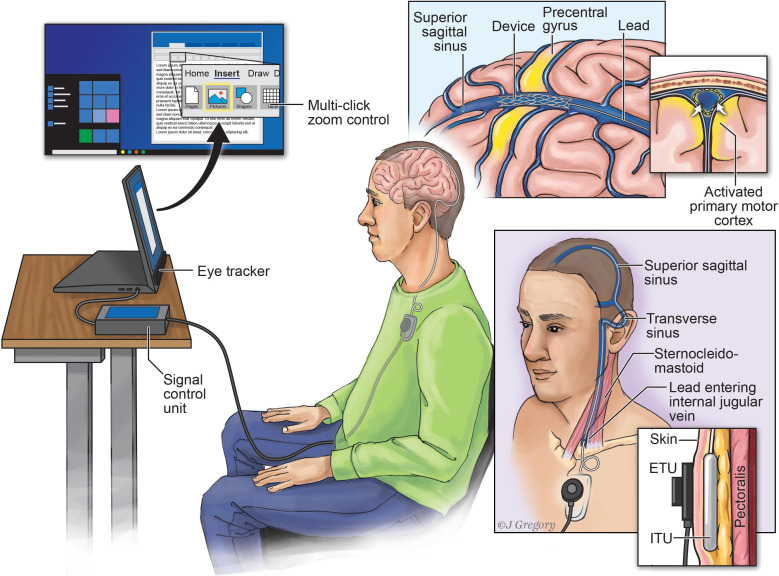
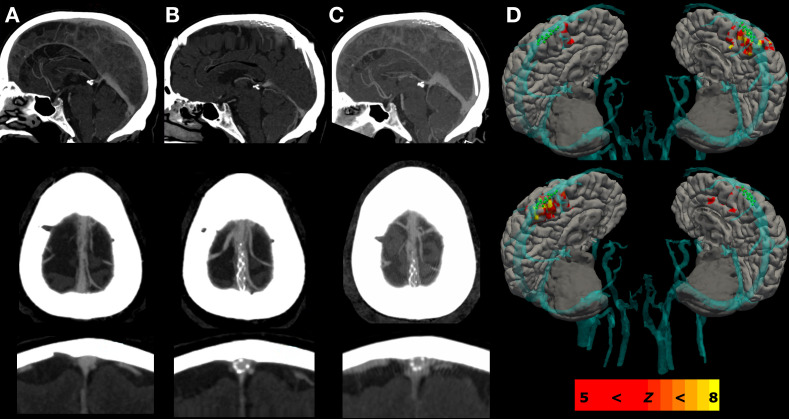
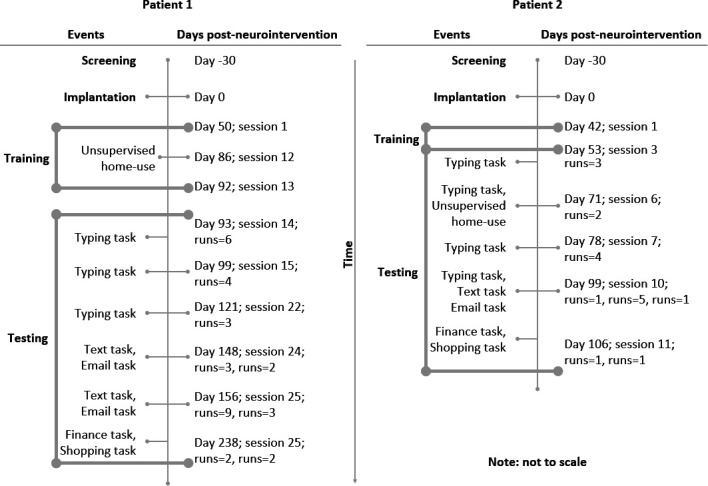
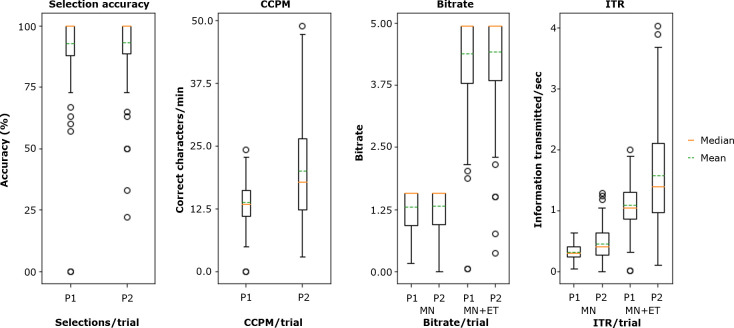
Background: Implantable brain–computer interfaces (BCIs), functioning as motor neuroprostheses, have the potential to restore voluntary motor impulses to control digital devices and improve functional independence in patients with severe paralysis due to brain, spinal cord, peripheral nerve or muscle dysfunction. However, reports to date have had limited clinical translation. Methods: Two participants with amyotrophic lateral sclerosis (ALS) underwent implant in a single-arm, open-label, prospective, early feasibility study. Using a minimally invasive neurointervention procedure, a novel endovascular Stentrode BCI was implanted in the superior sagittal sinus adjacent to primary motor cortex. The participants undertook machine-learning-assisted training to use wirelessly transmitted electrocorticography signal associated with attempted movements to control multiple mouse-click actions, including zoom and left-click. Used in combination with an eye-tracker for cursor navigation, participants achieved Windows 10 operating system control to conduct instrumental activities of daily living (IADL) tasks. Results: Unsupervised home use commenced from day 86 onwards for participant 1, and day 71 for participant 2. Participant 1 achieved a typing task average click selection accuracy of 92.63% (100.00%, 87.50%–100.00%) (trial mean (median, Q1–Q3)) at a rate of 13.81 (13.44, 10.96–16.09) correct characters per minute (CCPM) with predictive text disabled. Participant 2 achieved an average click selection accuracy of 93.18% (100.00%, 88.19%–100.00%) at 20.10 (17.73, 12.27–26.50) CCPM. Completion of IADL tasks including text messaging, online shopping and managing finances independently was demonstrated in both participants. Conclusion: We describe the first-in-human experience of a minimally invasive, fully implanted, wireless, ambulatory motor neuroprosthesis using an endovascular stent-electrode array to transmit electrocorticography signals from the motor cortex for multiple command control of digital devices in two participants with flaccid upper limb paralysis.
Overview
The claims and statistics of this paper haven’t been checked yet.
Free: it reads the open-access text and checks the first 5 claims that cite a source we can check. Create a free account to check every claim.
Integrity signals
Registry
Cites
Statistics
Figures
Verification
Claims the paper makes
The claims and statistics of this paper haven’t been checked yet.
Free: it reads the open-access text and checks the first 5 claims that cite a source we can check. Create a free account to check every claim.
Claims other papers make about this one
Each is checked against this paper’s own text: does it say what the citing paper says it does?
The source backs part of the claim, not all of it — or backs it for a different population, condition or comparison.
In the citing paper
“Similarly, both in academic and industry settings, approaches are being developed to improve throughput, sampling, biocompatibility and stability of MEAs183–186.”
From The speech neuroprosthesis (2024) · cites this paper as [183]
Experimental — accuracy not yet measuredThe source backs part of the claim, not all of it — or backs it for a different population, condition or comparison.
In the citing paper
“Another example of a battery-free implant is the Stentrode, designed for a 10-year lifespan, avoids invasive battery replacements through wireless power using near-field RF, with a transmission depth of ≈30 mm and 2% efficiency, connected to an Inductively Powered Internal Telemetry Unit (ITU) for power and Bluetooth signal transmission (Aldaoud et al., 2018; Oxley et al., 2020; Raza et al., 2020)”
From Comparative analysis of energy transfer mechanisms for neural implants (2024) · cites this paper as Oxley et al., 2020
Experimental — accuracy not yet measured
Self-check
Percentages, sums and reported differences re-computed from the paper’s own numbers.
The self-check needs the paper’s full text.
Citations
Cites
Assessment of Older People: Self-Maintaining and Instrumental Activities of Daily Living
Lawton, M. P., & Brody, E. M. (1969) · The Gerontologist · doi:10.1093/geront/9.3_part_1.179 · Cited by 18,540
Brain–computer interfaces for communication and control
Wolpaw, J. R., Birbaumer, N., McFarland, D. J., Pfurtscheller, G., & Vaughan, T. M. (2002) · Clinical Neurophysiology · doi:10.1016/s1388-2457(02)00057-3 · Cited by 7,927
Scoville, W. B. (1949) · Journal of neurosurgery · doi:10.3171/jns.1949.6.1.0065 · Cited by 7,381
International Classification of Functioning Disability and Health (ICF)
Battistella, L. R., & Brito, C. M. M. D. (2002) · Acta Fisiátrica · doi:10.5935/0104-7795.20020003 · Cited by 4,446
Neuronal ensemble control of prosthetic devices by a human with tetraplegia
Hochberg, L. R., Serruya, M. D., Friehs, G. M., Mukand, J. A., Saleh, M., Caplan, A. H., Branner, A., Chen, D., Penn, R. D., & Donoghue, J. P. (2006) · Nature · doi:10.1038/nature04970 · Cited by 3,295
Self-citationReach and grasp by people with tetraplegia using a neurally controlled robotic arm
Hochberg, L. R., Bacher, D., Jarosiewicz, B., Masse, N. Y., Simeral, J. D., Vogel, J., Haddadin, S., Liu, J., Cash, S. S., van der Smagt, P., et al. (2012) · Nature · doi:10.1038/nature11076 · Cited by 2,719
Self-citationA spelling device for the paralysed
Birbaumer, N., Ghanayim, N., Hinterberger, T., Iversen, I., Kotchoubey, B., Kübler, A., Perelmouter, J., Taub, E., & Flor, H. (1999) · Nature · doi:10.1038/18581 · Cited by 1,577
Falls, Injuries Due to Falls, and the Risk of Admission to a Nursing Home
Tinetti, M. E., & Williams, C. S. (1997) · New England Journal of Medicine · doi:10.1056/nejm199710303371806 · Cited by 1,403
Self-citationA brain–computer interface using electrocorticographic signals in humans
Leuthardt, E. C., Schalk, G., Wolpaw, J. R., Ojemann, J. G., & Moran, D. W. (2004) · Journal of Neural Engineering · doi:10.1088/1741-2560/1/2/001 · Cited by 1,188
A comprehensive review of EEG-based brain–computer interface paradigms
Abiri, R., Borhani, S., Sellers, E. W., Jiang, Y., & Zhao, X. (2019) · Journal of Neural Engineering · doi:10.1088/1741-2552/aaf12e · Cited by 946
Brain-Machine Interfaces: From Basic Science to Neuroprostheses and Neurorehabilitation
Lebedev, M. A., & Nicolelis, M. A. L. (2017) · Physiological Reviews · doi:10.1152/physrev.00027.2016 · Cited by 653
Fully Implanted Brain–Computer Interface in a Locked-In Patient with ALS
Vansteensel, M. J., Pels, E. G. M., Bleichner, M. G., Branco, M. P., Denison, T., Freudenburg, Z. V., Gosselaar, P., Leinders, S., Ottens, T. H., Van Den Boom, M. A., et al. (2016) · New England Journal of Medicine · doi:10.1056/nejmoa1608085 · Cited by 578
Self-citationPandarinath, C., Nuyujukian, P., Blabe, C. H., Sorice, B. L., Saab, J., Willett, F. R., Hochberg, L. R., Shenoy, K. V., & Henderson, J. M. (2017) · eLife · doi:10.7554/elife.18554 · Cited by 566
Self-citationFenoy, A. J., & Simpson, R. K. (2014) · Journal of Neurosurgery · doi:10.3171/2013.10.jns131225 · Cited by 449
Benabid, A. L., Costecalde, T., Eliseyev, A., Charvet, G., Verney, A., Karakas, S., Foerster, M., Lambert, A., Morinière, B., Abroug, N., et al. (2019) · The Lancet Neurology · doi:10.1016/s1474-4422(19)30321-7 · Cited by 404
Oxley, T. J., Opie, N. L., John, S. E., Rind, G. S., Ronayne, S. M., Wheeler, T. L., Judy, J. W., McDonald, A. J., Dornom, A., Lovell, T. J. H., et al. (2016) · Nature Biotechnology · doi:10.1038/nbt.3428 · Cited by 339
Self-citationFALLS, INJURIES DUE TO FALLS, AND THE RISK OF ADMISSION TO A NURSING HOME
Inetti, M. A. E. T., & Illiams, S. W. (2014) · Cited by 235
Cortical control of a tablet computer by people with paralysis
Nuyujukian, P., Albites Sanabria, J., Saab, J., Pandarinath, C., Jarosiewicz, B., Blabe, C. H., Franco, B., Mernoff, S. T., Eskandar, E. N., Simeral, J. D., et al. (2018) · PLOS ONE · doi:10.1371/journal.pone.0204566 · Cited by 170
Self-citationBrain communication in a completely locked-in patient using bedside near-infrared spectroscopy
Gallegos-Ayala, G., Furdea, A., Takano, K., Ruf, C. A., Flor, H., & Birbaumer, N. (2014) · Neurology · doi:10.1212/wnl.0000000000000449 · Cited by 143
Neural decoding using gyral and intrasulcal electrocorticograms
Yanagisawa, T., Hirata, M., Saitoh, Y., Kato, A., Shibuya, D., Kamitani, Y., & Yoshimine, T. (2009) · NeuroImage · doi:10.1016/j.neuroimage.2008.12.069 · Cited by 102
Idiopathic Intracranial Hypertension: A Systematic Analysis of Transverse Sinus Stenting
Teleb, M., Cziep, M. E., Lazzaro, M. A., Gheith, A., Asif, K. S., Remler, B. F., & Zaidat, O. O. (2013) · Interventional Neurology · doi:10.1159/000357503 · Cited by 101
Micro-CT and Histological Evaluation of an Neural Interface Implanted Within a Blood Vessel
Opie, N. L., van der Nagel, N. R., John, S. E., Vessey, K., Rind, G. S., Ronayne, S. M., Fletcher, E. L., May, C. N., O'Brien, T. J., & Oxley, T. J. (2017) · IEEE Transactions on Biomedical Engineering · doi:10.1109/tbme.2016.2552226 · Cited by 56
Self-citationAn ovine model of cerebral catheter venography for implantation of an endovascular neural interface
Oxley, T. J., Opie, N. L., Rind, G. S., Liyanage, K., John, S. E., Ronayne, S. M., McDonald, A. J., Dornom, A., Lovell, T. J. H., Mitchell, P. J., et al. (2017) · Journal of neurosurgery · doi:10.3171/2016.11.jns161754 · Cited by 45
Self-citationOral Presentations 2018 AANS Annual Scientific Meeting
_, _. (2018) · Journal of neurosurgery · doi:10.3171/2018.4.jns.aans2018abstracts · Cited by 38
Profile of patients with amyotrophic lateral sclerosis across continuum of care
Kehyayan, V., Korngut, L., Jetté, N., & Hirdes, J. P. (2014) · Canadian Journal of Neurological Sciences / Journal Canadien des Sciences Neurologiques · doi:10.1017/s0317167100016656 · Cited by 14
Cited by
Progress in Brain Computer Interface: Challenges and Opportunities
Saha, S., Mamun, K. A., Ahmed, K., Mostafa, R., Naik, G. R., Darvishi, S., Khandoker, A. H., & Baumert, M. (2021) · Frontiers in Systems Neuroscience · doi:10.3389/fnsys.2021.578875 · Cited by 365
A wireless millimetric magnetoelectric implant for the endovascular stimulation of peripheral nerves
Chen, J. C., Kan, P., Yu, Z., Alrashdan, F., Garcia, R., Singer, A., Lai, C. S. E., Avants, B., Crosby, S., Li, Z., et al. (2022) · Nature Biomedical Engineering · doi:10.1038/s41551-022-00873-7 · Cited by 231
Bio-inspired electronics: Soft, biohybrid, and “living” neural interfaces
Boufidis, D., Garg, R., Angelopoulos, E., Cullen, D. K., & Vitale, F. (2025) · Nature Communications · doi:10.1038/s41467-025-57016-0 · Cited by 201
Mitchell, P., Lee, S. C. M., Yoo, P. E., Morokoff, A., Sharma, R. P., Williams, D. L., MacIsaac, C., Howard, M. E., Irving, L., Vrljic, I., et al. (2023) · JAMA Neurology · doi:10.1001/jamaneurol.2022.4847 · Cited by 186
Self-citationNon-Invasive Brain-Computer Interfaces: State of the Art and Trends
Edelman, B. J., Zhang, S., Schalk, G., Brunner, P., Müller-Putz, G., Guan, C., & He, B. (2025) · IEEE Reviews in Biomedical Engineering · doi:10.1109/rbme.2024.3449790 · Cited by 170
“Nevertheless, the Stentrode received approval for human BCI use from the United States Federal Drug Administration (FDA) and has already shown successful control of computer cursor-related tasks in patients [43], [44].”
Metadata
- Authors
- Oxley, T. J., Yoo, P. E., Rind, G. S., Ronayne, S. M., Lee, C. M. S., Bird, C., Hampshire, V., Sharma, R. P., Morokoff, A., Williams, D. L., MacIsaac, C., Howard, M. E., Irving, L., Vrljic, I., Williams, C., John, S. E., Weissenborn, F., Dazenko, M., Balabanski, A. H., Friedenberg, D., Burkitt, A. N., Wong, Y. T., Drummond, K. J., Desmond, P., Weber, D., Denison, T., Hochberg, L. R., Mathers, S., O"Brien, T. J., May, C. N., Mocco, J., Grayden, D. B., Campbell, B. C. V., Mitchell, P., & Opie, N. L.
- Affiliations
- The Royal Melbourne Hospital (AU)
- Calvary Health Care Bethlehem (AU)
- Stanford Medicine (US)
- Melbourne Health (AU)
- Institute for Breathing and Sleep (AU)
- Battelle (US)
- The University of Melbourne (AU)
- Monash University (AU)
- Carnegie Mellon University (US)
- University of Oxford (GB)
- Harvard University (US)
- Mount Sinai Health System (US)
- Corresponding author
- Oxley, Thomas J
- ORCID
- Oxley, Thomas J
- Yoo, Peter E
- Ronayne, Stephen M
- Sharma, Rahul P
- Morokoff, Andrew
- Williams, Daryl L
- MacIsaac, Christopher
- Howard, Mark E
- Williams, Cameron
- John, Sam E
- Balabanski, Anna H
- Friedenberg, David
- Burkitt, Anthony N
- Wong, Yan T
- Drummond, Katharine J
- Desmond, Patricia
- Weber, Douglas
- Denison, Timothy
- Hochberg, Leigh R
- Mathers, Susan
- May, Clive N
- Mocco, J
- Grayden, David B
- Campbell, Bruce C V
- Mitchell, Peter
- Opie, Nicholas L
- Venue
- Journal of NeuroInterventional Surgery
- Publisher
- BMJ
- Published
- 2020-10-28
- Volume
- 13
- Issue
- 2
- Pages
- 102-108
- ISSN
- 1759-8478 (ISSN-L)
- 1759-8486
- PMC
- PMC7848062
- OpenAlex
- W3095851333
- Cited by
- 243
- References
- 25
- Citations by year
- 2026: 34 · 2025: 58 · 2024: 58 · 2023: 39 · 2022: 36 · 2021: 17 · 2020: 1
- FWCI
- 12.49
- Type
- journal article
- Language
- en
- Open access
- hybrid
- doi.org
- Licence
- Locations
- Journal of NeuroInterventional Surgery (publishedVersion, cc-by-nc)
- PubMed Central (publishedVersion, cc-by-nc)
- Europe PMC (PubMed Central) (publishedVersion, cc-by-nc)
- PubMed (publishedVersion)
- Adelaide Research & Scholarship (AR&S) (University of Adelaide) (submittedVersion, cc-by-nc)
- Monash University Research Portal (Monash University) (submittedVersion, cc-by-nc)
- Minerva Access (University of Melbourne) (submittedVersion, cc-by-nc)
- Funders
- Australian Federal Government, Department of Industry, Innovation and Science (GIL73654)
- USA Department of Defense Office of the Congressionally Directed Medical Research Programs (SC160158)
- Motor Neurone Disease Research Institute of Australia (GIA1844)
- Office of the Assistant Secretary of Defense for Health Affairs, Spinal Cord Injury Award Program (W81XWH-17-1-0210)
- National Health and Medical Research Council of Australia (GNT1062532, GNT1138110, GNT1161108)
- US Defense Advanced Projects Agency (DARPA) Microsystems Technology Office (N6601-12-1-4045)
- Australia Research Council (ARC) Linkage Grant (LP150100038)
- Office of Naval Research (ONR) Global (N26909-14-1-N020)
- Topics
- Life Sciences › Neuroscience › Cognitive Neuroscience › EEG and Brain-Computer Interfaces
- Life Sciences › Neuroscience › Cellular and Molecular Neuroscience › Neuroscience and Neural Engineering
- Health Sciences › Medicine › Rehabilitation › Stroke Rehabilitation and Recovery
- Keywords
- brain-computer interface, amyotrophic lateral sclerosis, electrocorticography, superior sagittal sinus, primary motor cortex, upper limb paralysis, instrumental activities of daily living, first-in-human implantation
- MeSH terms
- Activities of Daily Living, Aged, Feasibility Studies, Female, Humans, Male, Middle Aged, Motor Cortex, Paralysis, Prospective Studies, Severity of Illness Index, Imaging, Three-Dimensional, Implantable Neurostimulators, Brain-Computer Interfaces
About these checks
Registry, retraction, Cites and statistics results are computed, not judged, with one exception: a printed reference that no index lists is read once by a model before it counts as a citation error. Claims are extracted by a model and kept only when their quote appears verbatim in the text; each cited source is then checked, with a model’s help, for whether it says what the claim relies on. Those verdicts can be wrong — read the claim’s quote and the cited source before relying on one.
Statistics and arithmetic are recomputed, not judged.
Confidence bands are shown only for fields calibrated on our annotated test set. None is calibrated yet, so no band is shown.
What counts as a claim ›How we measure confidence ›How we check this ›
Are you an author, or do you see a problem with this page? Request a review
Data sources
Bibliographic data: Semantic Scholar, OpenAlex, Crossref.
Contains information from the Semantic Scholar Academic Graph Datasets, made available under the ODC Attribution License (ODC-BY 1.0).
Semantic Scholar’s data is described in: Kinney, R., et al. (2023). The Semantic Scholar Open Data Platform. arXiv:2301.10140.
