

Plant-based food patterns to stimulate muscle protein synthesis and support muscle mass in humans: a narrative review
Open accessThe DOI matches its Crossref record; 75 of the 75 references it cites were found in a registry or an index.
Abstract
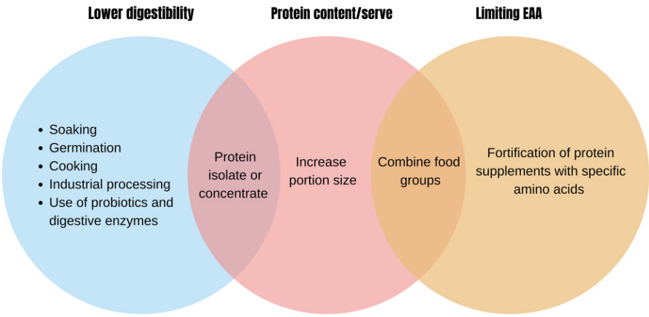
The interest in a diet with a higher proportion of plant-based foods to animal-based foods is a global food pattern trend. However, there are concerns regarding adopting plants as the main dietary protein source to support muscle protein synthesis (MPS) and muscle mass. These concerns are centered on three issues: lower protein bioavailability due to antinutritional compounds in plants, lower per-serve scores of protein at similar energy intake, and amino acid scores of plants being lower than optimal. We aimed here to synthesize and discuss evidence around plant protein in human nutrition focusing on the capacity of these proteins to stimulate MPS as a key part of gaining or maintaining muscle mass. In this review, we addressed the issues of plant protein quality and provided evidence for how plant proteins can be made more effective to stimulate MPS and support muscle mass in partial or total replacement of consumption of products of animal origin. Novelty: Plant proteins are known, in general, to have lower protein quality scores than animal proteins, and this may have important implications, especially for those aiming to increase their skeletal muscle mass through exercise. A plant-based diet has been postulated to have lower protein quality limiting MPS responses and potentially compromising exercise-induced gains in muscle mass. Current evidence shows that plant proteins can stimulate MPS, as can whole foods, especially when combining food groups, increasing portion sizes, and optimizing amino acid bioavailability through processing or common preparation methods.
Overview
The claims and statistics of this paper haven’t been checked yet.
Free: it reads the open-access text and checks the first 5 claims that cite a source we can check. Create a free account to check every claim.
Integrity signals
Registry
Cites
Statistics
Figures

Verification
Claims the paper makes
The claims and statistics of this paper haven’t been checked yet.
Free: it reads the open-access text and checks the first 5 claims that cite a source we can check. Create a free account to check every claim.
Claims other papers make about this one
Each is checked against this paper’s own text: does it say what the citing paper says it does?
The cited source says what the claim attributes to it.
In the citing paper
“current evidence shows that plant proteins can stimulate muscle protein synthesis.77”
From Changes in lean body mass with glucagon‐like peptide ‐1‐based therapies and mitigation strategies (2024) · cites this paper as [77]
In the citing paper
“Recently, it has been shown that plant-based proteins can stimulate muscle protein synthesis [88].”
From Nutrition and Physical Activity in Optimizing Weight Loss and Lean Mass Preservation in the Incretin-Based Medications Era: A Narrative Review (2025) · cites this paper as [88]
Self-check
Percentages, sums and reported differences re-computed from the paper’s own numbers.
The self-check needs the paper’s full text.
Citations
Cites
Food in the Anthropocene: the EAT–Lancet Commission on healthy diets from sustainable food systems
Willett, W., Rockström, J., Loken, B., Springmann, M., Lang, T., Vermeulen, S., Garnett, T., Tilman, D., DeClerck, F., Wood, A., et al. (2019) · The Lancet · doi:10.1016/s0140-6736(18)31788-4 · Cited by 10,880
Trumbo, P., Schlicker, S., Yates, A. A., & Poos, M. (2002) · Journal of the American Dietetic Association · doi:10.1016/s0002-8223(02)90346-9 · Cited by 5,993
Global diets link environmental sustainability and human health
Tilman, D., & Clark, M. (2014) · Nature · doi:10.1038/nature13959 · Cited by 3,026
Micro-algae as a source of protein
Becker, E. W. (2007) · Biotechnology Advances · doi:10.1016/j.biotechadv.2006.11.002 · Cited by 2,311
Position of the Academy of Nutrition and Dietetics: Vegetarian Diets
Melina, V., Craig, W., & Levin, S. (2016) · Journal of the Academy of Nutrition and Dietetics · doi:10.1016/j.jand.2016.09.025 · Cited by 1,360
Thomas, D. T., Erdman, K. A., & Burke, L. M. (2016) · Journal of the Academy of Nutrition and Dietetics · doi:10.1016/j.jand.2015.12.006 · Cited by 1,359
Protein content and amino acid composition of commercially available plant-based protein isolates
Gorissen, S. H. M., Crombag, J. J. R., Senden, J. M. G., Waterval, W. A. H., Bierau, J., Verdijk, L. B., & van Loon, L. J. C. (2018) · Amino Acids · doi:10.1007/s00726-018-2640-5 · Cited by 1,169
Algal Proteins: Extraction, Application, and Challenges Concerning Production
Bleakley, S., & Hayes, M. (2017) · Foods · doi:10.3390/foods6050033 · Cited by 1,092
Tang, J. E., Moore, D. R., Kujbida, G. W., Tarnopolsky, M. A., & Phillips, S. M. (2009) · Journal of Applied Physiology · doi:10.1152/japplphysiol.00076.2009 · Cited by 998
Self-citationHoffman, J. R., & Falvo, M. J. (2004) · Europe PMC (PubMed Central) · Cited by 988
Research works printed but not linked: 4
- Food and Agriculture Organization (FAO). 1981. Food Policy and Food Sci- ence Service: report of amino-acid content of foods and biological data on proteins. 3rd ed. FAO Press, Italy.
- Food and Agriculture Organization (FAO). 2013. Dietary protein qual- ity evaluation in human nutrition: report of an expert consultation. Food and nutrition paper. FAO Press, Rome.
- U.S. retail market data for the plant-based industry. Available from https://gf i.org/marketresearch[accessed 21 April 2021].
- U.S. Department of Agriculture (USDA), Agricultural Research Service, 2019, FoodData Central
Cited by
Changes in lean body mass with glucagon‐like peptide ‐1‐based therapies and mitigation strategies
Neeland, I. J., Linge, J., & Birkenfeld, A. L. (2024) · Diabetes, Obesity and Metabolism · doi:10.1111/dom.15728 · Cited by 391
Microalgae: potential novel protein for sustainable human nutrition
Williamson, E., Ross, I. L., Wall, B. T., & Hankamer, B. (2024) · Trends in Plant Science · doi:10.1016/j.tplants.2023.08.006 · Cited by 117
Popular Dietary Trends’ Impact on Athletic Performance: A Critical Analysis Review
Kaufman, M., Nguyen, C., Shetty, M., Oppezzo, M., Barrack, M., & Fredericson, M. (2023) · Nutrients · doi:10.3390/nu15163511 · Cited by 51
“If the source of soy or other vegetable protein were to be of lower quality, the amount of protein density or protein per calorie is lower and would requires more calories to achieve the same levels of muscle protein synthesis [88].”
BackgroundInfluentialMcKendry, J., Lowisz, C. V., Nanthakumar, A., Macdonald, M. L., Lim, C., Currier, B. S., & Phillips, S. M. (2024) · American Journal of Clinical Nutrition · doi:10.1016/j.ajcnut.2024.05.009 · Cited by 61
“Plant-protein isolates provide a digestible protein source, of which the AA composition can be modi-fi ed to provide lower than recommended EAAs [41].”
Self-citationSarathy, S. P., Ravikumar, H., Nanjan, P., Alagesan, N., & Chua, B. L. (2025) · International Journal of Biological Macromolecules · doi:10.1016/j.ijbiomac.2025.146465 · Cited by 39
Stoodley, I. L., Williams, L. M., & Wood, L. G. (2023) · Nutrients · doi:10.3390/nu15184060 · Cited by 32
“However, plant-based protein sources have been considered to be less nutritionally effective than animal sources due to reduced digestibility, lower levels of amino acids, and incomplete amino acid profiles [21,22].”
BackgroundLi, S., Lu, Z., Leung, J. C. S., & Kwok, T. C. Y. (2024) · The journal of nutrition health & aging · doi:10.1016/j.jnha.2024.100163 · Cited by 31
Protein content and amino acid composition in the diet of Danish vegans: a cross-sectional study
Aaslyng, M. D., Dam, A. B., Petersen, I. L., & Christoffersen, T. (2023) · BMC Nutrition · doi:10.1186/s40795-023-00793-y · Cited by 26
“To ensure a balanced amino acid composition [19, 20] it is necessary to combine several different protein sources that complement each other [10].”
BackgroundProteins in Our Diet: Challenges in Feeding the Global Population
Nadathur, S., Wanasundara, J. P. D., Marinangeli, C. P. F., & Scanlin, L. (2024) · Elsevier eBooks · doi:10.1016/b978-0-323-91652-3.00026-5 · Cited by 28
Plant-based proteins: clinical and technological importance
Vera, I., Ávila-Nava, A., León-López, L., Solis, A. L. G., Talamantes-Gómez, J. M., & Marquez-Mota, C. C. (2024) · Food Science and Biotechnology · doi:10.1007/s10068-024-01600-5 · Cited by 22
“However, there are concerns regarding substituting plant protein for animal protein, primarily due to the lower protein quality of plant-based protein compared to animal protein, which could result in a reduced rate of muscle protein synthesis (Nichele et al., 2022).”
BackgroundInfluentialDerbyshire, E. J., Higgs, J., Feeney, M. J., & Carughi, A. (2023) · Nutrients · doi:10.3390/nu15092158 · Cited by 17
Habumugisha, T., Engebretsen, I. M. S., Måren, I. E., Kaiser, C., & Dierkes, J. (2023) · Nutrition Reviews · doi:10.1093/nutrit/nuad055 · Cited by 16
Zhao, S., Xu, Y., Liu, J., & Ning, Z. (2024) · Nutrients · doi:10.3390/nu16162748 · Cited by 23
“Nichele et al. concluded that plant proteins can be nutrition-Nutrients ally adequate alternatives to animal proteins in stimulating MPS and supporting muscle mass [49].”
BackgroundCornelissen, V., Hanssen, H., Hurst, C., Knaier, R., Marqués‐Sulé, E., Moholdt, T. T., Neunhäeuserer, D., Norman, K., Pedretti, R. F. E., Salzwedel, A., et al. (2025) · European Journal of Preventive Cardiology · doi:10.1093/eurjpc/zwaf432 · Cited by 17
The Impact Plant-Based Diets Have on Athletic Performance and Body Composition: A Systematic Review
Presti, N., Mansouri, T., Maloney, M. K., & Hostler, D. P. (2024) · Journal of the American Nutrition Association · doi:10.1080/27697061.2024.2365755 · Cited by 19
Singh, R. G., Guérin‐Deremaux, L., Lefranc‐Millot, C., Perreau, C., Crowley, D. C., Lewis, E. D., Evans, M., & Moulin, M. (2024) · Nutrients · doi:10.3390/nu16132017 · Cited by 17
“However, emerging evidence suggests that both types of proteins may have similar effects on protein synthesis [16].”
BackgroundJareonsin, S., Pumas, C., Jaitiang, D., & Uttarotai, T. (2024) · Future Foods · doi:10.1016/j.fufo.2024.100415 · Cited by 26
Barana, L., De Fano, M., Cavallo, M., Manco, M., Prete, D., Fanelli, C. G., Porcellati, F., & Pippi, R. (2025) · Nutrients · doi:10.3390/nu18010131 · Cited by 13
“Recently, it has been shown that plant-based proteins can stimulate muscle protein synthesis [88].”
López‐Moreno, M., Rossi, E. V., López‐Gil, J. F., Marrero‐Fernández, P., Roldán‐Ruiz, A., & Bertotti, G. (2025) · Sports Medicine - Open · doi:10.1186/s40798-025-00852-7 · Cited by 11
“From a musculoskeletal perspective, the lower leucine content and digestibility of plant proteins may influence muscle protein synthesis rates, potentially affecting muscle mass maintenance and hypertrophy [11].”
Contribution of Proteins to the Latin American Diet: Results of the ELANS Study
Herrera‐Cuenca, M., García, M. C. Y., Cortés, L. Y., Hernández, P., Sifontes, Y., Ramírez, G., Gómez, G., Vásquez, M., Liria-Domínguez, M. R., Rigotti, A., et al. (2023) · Nutrients · doi:10.3390/nu15030669 · Cited by 16
Impact of Plant Protein Intakes on Nutrient Adequacy in the US
Fulgoni, V. L. I., Agarwal, S., Marinangeli, C. P. F., & Miller, K. B. (2024) · Nutrients · doi:10.3390/nu16081158 · Cited by 12
“Furthermore, cereal grains also have lower protein density (protein amount per gram of food or per calorie) and protein quality compared to animal protein sources and plant foods designated as “plant proteins,” such as legumes [32–35].”
BackgroundDijk, F. J., van Dijk, M., Roberts, J., van Helvoort, A., & Furber, M. (2024) · European Journal of Nutrition · doi:10.1007/s00394-024-03506-8 · Cited by 9
Coelho‐Júnior, H. J., Calvani, R., Picca, A., Cacciatore, S., Tosato, M., Landi, F., & Marzetti, E. (2023) · Nutrients · doi:10.3390/nu15132963 · Cited by 8
“Such findings led experts in the field to propose that a high consumption of plantbased protein might properly stimulate muscle protein synthesis [69].”
BackgroundAmatori, S., Callarelli, C., Gobbi, E., Bertuccioli, A., Zeppa, S. D., Sisti, D., Rocchi, M., & Perroni, F. (2023) · International Journal of Environmental Research and Public Health · doi:10.3390/ijerph20065187 · Cited by 8
“Indeed, plant protein quality has been reported to likely limit the stimulation of muscle protein synthesis and, subsequently, the gains in muscle mass [10,11].”
BackgroundWhite lupin: improving legume-based protein production via intercropping
Dourmap, C., Fustec, J., Naudin, C., Carton, N., & Tcherkez, G. G. B. (2025) · Journal of Experimental Botany · doi:10.1093/jxb/eraf127 · Cited by 5
Brook, M. S. (2025) · Experimental Physiology · doi:10.1113/ep092016 · Cited by 5
“With a growing research interest in the identification of sustainable protein sources that meet dietary needs without compromising environmental concerns (Nichele et al., 2022), D 2 O offers opportunities to understand the long-term effects of protein quantity and quality on MPS.”
Govindasamy, K., Parpa, K., Katanić, B., Clark, C. C. T., Elayaraja, M., Valappil, I. N. K., Dulceanu, C. R., Geantă, V. A., Tolan, G. A., & Zouhal, H. (2025) · Nutrients · doi:10.3390/nu17152571 · Cited by 8
“…well-formulated plant protein blends Although there is increasing interest in plant-based proteins within the field of sports nutrition particularly for their potential to support MPS and recovery following resistance exercise [2,13,41–43], the current body of evidence remains nascent.”
Effects of hemp supplementation during resistance training in trained young adults
Kaviani, M., Shaw, K. A., Candow, D. G., Farthing, J. P., & Chilibeck, P. D. (2023) · European Journal of Applied Physiology · doi:10.1007/s00421-023-05337-7 · Cited by 4
“…2022), recent evidence suggests plant-based protein to be no different than consuming whey protein for improving measures of body composition or strength when the plant-based protein contains a variety of sources to match the amino acid profile of whey (Nichele et al. 2022; Teixeira et al. 2022).”
Petkova, Y., Johnston, J. D., & Collins, A. L. (2026) · Food Science & Nutrition · doi:10.1002/fsn3.71485 · Cited by 3
“To our knowledge, this is the first study to compare the effects of whey and a plant protein blend, ingested in the absence of other nutrients, on plasma biomarkers of fasting metabolism, REE, RER, and appetite.”
InfluentialVanutelli, M. E., Adorni, R., Leone, P. A., Luperini, A., D’Αddario, M., & Steca, P. (2025) · Frontiers in Nutrition · doi:10.3389/fnut.2025.1712358 · Cited by 3
“However, plant-based protein sources have long been considered less nutritionally effective than animal sources due to their incomplete amino acid profile (21, 22).”
Zhu, Y., Ocké, M. C., & de Vet, E. (2025) · American Journal of Clinical Nutrition · doi:10.1016/j.ajcnut.2025.03.010 · Cited by 3
Arif, I., Rasheed, A., Nazeer, S., & Shahid, F. (2025) · European Journal of Translational Myology · doi:10.4081/ejtm.2025.13177 · Cited by 5
Nebl, J., Bruns, P., Meier, M., Mayer, F., Smollich, M., & Keller, M. (2025) · Nutrients · doi:10.3390/nu17142351 · Cited by 2
“In addition to quantity, the protein quality, amino acid composition, and distribution across meals are key factors influencing muscle protein synthesis in vegan athletes [61,62].”
Hernández, N. C. I., Carrasco, A. R., de Luis, D. A., de Pablos-Velasco, P. L., Continente, A. J. C., Soto, M. J. R., Gómez, J. J. L., Comi-Diaz, C., García-Rey, S., Pérez-Rambla, C., et al. (2025) · Frontiers in Nutrition · doi:10.3389/fnut.2025.1667954 · Cited by 3
Nguyen, D. H. N., Chen, C., Lin, S.-P., Lam, H. N., Su, C., Liu, K. E., Lee, S.-C., & Li, S. (2025) · Nutrition · doi:10.1016/j.nut.2025.113085 · Cited by 2
Aragón-Espinosa, P., Pérez, C., Bompart, C., Gueugneau, M., Capel, F., Arbonés-Mainar, J. M., Gómez-Zorita, S., Mas‐Capdevila, A., Escoté, X., Pinent, M., et al. (2026) · Journal of Physiology and Biochemistry · doi:10.1007/s13105-026-01154-6 · Cited by 4
Griffen, C., Renshaw, D. W., Duncan, M., Dallaway, A., Randeva, H. S., Weickert, M. O., & Hattersley, J. G. (2026) · Experimental Gerontology · doi:10.1016/j.exger.2026.113101 · Cited by 3
Xia, H., Xiang, R., Song, X., Qu, Y., Zhao, X., Liu, T., Xia, M., Zhong, Y., Chen, Z., Ju, Y., et al. (2026) · Frontiers in Nutrition · doi:10.3389/fnut.2026.1821758 · Cited by 3
“Plant-based proteins, while less efficient at MPS stimulation due to incomplete amino acids and lower leucine bioavailability, contain beneficial bioactive compounds like polyphenols and fibers that support muscle health through anti-inflammatory and antioxidant effects (12, 13).”
Back, S., Marinangeli, C. P. F., Rossi, A., Elfaki, L., Ahmed, M., Chen, V., Yang, S., Zurbau, A., Duncan, A. M., L’Abbé, M. R., et al. (2025) · Nutrients · doi:10.3390/nu17182987 · Cited by 3
“The lower PQ of plant foods does not negate their contribution to protein and IAA intakes and provides the opportunity for protein complementarity [53].”
Dukaew, N., Klinjan, P., Inpan, R., Takuathung, M. N., Jiranusornkul, S., Chaichit, S., Taychaworaditsakul, W., Aisara, J., Karat, W., & Koonrungsesomboon, N. (2025) · Journal of Functional Foods · doi:10.1016/j.jff.2025.106816 · Cited by 1
Yoon, S. R., Lee, J. J., Park, J., Ryu, J. A., Nam, J., Kang, M., Kim, S. H., & Jeong, Y. (2023) · Korean Journal of Food Preservation · doi:10.11002/kjfp.2023.30.6.905 · Cited by 1
Pratt, J., Acheson, J., Lazaratou, A., Greenhalgh, E. K., Witard, O. C., Sale, C., Hannaian, S. J., Gritsas, A., Churchward‐Venne, T. A., Hearris, M. A., et al. (2025) · The Journal of Nutritional Physiology · doi:10.1016/j.jnphys.2025.100001 · Cited by 4
Insights into Nutritional Properties of Plant Proteins for Health Benefits
Prasad, S., Singh, R., Singh, A., Pandey, A., & Misra, S. (2025) · Springer eBooks · doi:10.1007/978-981-96-4190-1_2 · Cited by 1
Marinangeli, C. P. F. (2024) · Journal of Nutrition · doi:10.1016/j.tjnut.2024.10.045 · Cited by 1
Pflanzliche Ernährung und ausreichende Proteinzufuhr für ein gesundes Altern
Haß, U., & Norman, K. (2023) · Aktuelle Kardiologie · doi:10.1055/a-1981-6339
“Um die Proteinqualität pflanzlicher Proteine zu erhöhen, sollte auf günstige Kombinationen geachtet werden, die ein ausgewogenes Aminosäureprofil aufweisen (z. B. Mais mit Bohnen oder Hülsenfrüchte mit Getreide).”
BackgroundInfluentialThe Muscle Building Potential of Vegan Eating for Older Folks
Barnes, T. M., & Burd, N. A. (2025) · Journal of Nutrition · doi:10.1016/j.tjnut.2025.01.029
Marinangeli, C. P. F., & Nosworthy, M. G. (2025) · Elsevier eBooks · doi:10.1016/b978-0-443-21714-2.00009-2
Top 5 Dietary Supplements for Bodybuilders
Haubenstricker, J. E., & Roberts, B. M. (2025) · Strength and conditioning journal · doi:10.1519/ssc.0000000000000925
管, 宇. (2025) · Advances in Clinical Medicine · doi:10.12677/acm.2025.15102906
Kariyawasam, K. P., Wickramaarachchi, L. A., Somaratne, G., Roy, D., & Herath, H. M. T. (2025) · Elsevier eBooks · doi:10.1016/b978-0-443-33345-3.00034-1
Hussein, J. B., Workneh, T. S., Allison, S., Ilesanmi, J. O. Y., Angwedel, Y. R., & Oke, M. O. O. M. O. (2026) · Elsevier eBooks · doi:10.1016/b978-0-443-33433-7.00002-2
Turner, O., Mitchell, N., Jenkinson, A., Louis, H., Oakley, C., Parker, S., Chantler, S., & Costello, N. B. (2026) · Performance Nutrition · doi:10.1186/s44410-026-00035-9
Sources de protéines animales et végétales en santé humaine
Mariotti, F. (2026) · Bulletin de l Académie Nationale de Médecine · doi:10.1016/j.banm.2025.12.029 · Cited by 1
Protein Adequacy across Meals in Dutch Elite and Sub-Elite AthletesPreprint
Riccò, A., Grootswagers, P., Mensink, M., & Wardenaar, F. C. (2026) · Research Square · doi:10.21203/rs.3.rs-9640801/v1
Withrow, N. A., Hsueh, E. E., Wolever, T., Jenkins, A. L., Campbell, J. C., Zurbau, A., McMahon, R., & Valentine, C. J. (2026) · Current Developments in Nutrition · doi:10.1016/j.cdnut.2026.109393
The Development and Validation of the Vegan/Vegetarian Athlete’s Plate
Lynch, H. M., Reguant-Closa, A., & Meyer, N. L. (2026) · Journal of Nutrition · doi:10.1016/j.tjnut.2026.101720
Moghri, P., & Fayazi, A. (2026) · JAND Global Reports · doi:10.1016/j.jaglob.2026.100028
Pang, B. W. J., Yang, Y., & Cheon, B. K. (2026) · Nutrients · doi:10.3390/nu18193255
“…consideration: supplements provided contained dairy; practical considerations: vegans and vegetarians often require higher protein intakes due to the lower digestibility, bioavailability, and sub-optimal essential amino acid content of plant-based proteins compared to animal proteins [26].”
van Oppenraaij, S. L., Weijs, P. J. M., & Verlaan, S. (2026) · American Journal of Clinical Nutrition · doi:10.1016/j.ajcnut.2026.101533
Riccò, A., Grootswagers, P., Mensink, M., & Wardenaar, F. C. (2026) · Performance Nutrition · doi:10.1186/s44410-026-00031-z
“More broadly, combinations such as cereals with legumes, legumes with tubers, and plant-based meat or dairy substitutes with cereals appear particularly effective in improving amino acid availability [14, 17, 26].”
InfluentialCheng, C., Zhang, J., Zhao, Y., Bai, J., He, Y., & Xiao, X. (2026) · Food & Function · doi:10.1039/d6fo03345h
Metadata
- Authors
- Nichele, S., Phillips, S. M., & Boaventura, B. C. B.
- Affiliations
- Universidade Federal de Santa Catarina (BR)
- McMaster University (CA)
- Venue
- Applied Physiology, Nutrition, and Metabolism
- Publisher
- Canadian Science Publishing
- Published
- 2022-07-01
- Volume
- 47
- Issue
- 7
- Pages
- 700-710
- ISSN
- 1715-5312 (ISSN-L)
- 1715-5320
- OpenAlex
- W4229011139
- Cited by
- 61
- References
- 74
- Citations by year
- 2026: 15 · 2025: 22 · 2024: 12 · 2023: 12
- FWCI
- 1.64
- Type
- journal article
- Language
- en
- Open access
- hybrid
- doi.org
- Locations
- Applied Physiology, Nutrition, and Metabolism (publishedVersion, cc-by)
- PubMed (publishedVersion)
- TSpace (University of Toronto) (acceptedVersion)
- Funders
- Canada Research Chairs
- Topics
- Health Sciences › Nursing › Nutrition and Dietetics › Muscle metabolism and nutrition
- Health Sciences › Medicine › Physiology (medical) › Nutrition and Health in Aging
- Health Sciences › Medicine › Public Health, Environmental and Occupational Health › Nutritional Studies and Diet
- Keywords
- plant-based diet, plant proteins, muscle protein synthesis, muscle mass, protein quality, antinutritional factors, amino acid bioavailability, dietary protein source
- MeSH terms
- Amino Acids, Animals, Dietary Proteins, Humans, Muscle Proteins, Plant Proteins, Muscle, Skeletal
About these checks
Registry, retraction, Cites and statistics results are computed, not judged, with one exception: a printed reference that no index lists is read once by a model before it counts as a citation error. Claims are extracted by a model and kept only when their quote appears verbatim in the text; each cited source is then checked, with a model’s help, for whether it says what the claim relies on. Those verdicts can be wrong — read the claim’s quote and the cited source before relying on one.
Statistics and arithmetic are recomputed, not judged.
Confidence bands are shown only for fields calibrated on our annotated test set. None is calibrated yet, so no band is shown.
What counts as a claim ›How we measure confidence ›How we check this ›
Are you an author, or do you see a problem with this page? Request a review
Data sources
Bibliographic data: Semantic Scholar, OpenAlex, Crossref.
Contains information from the Semantic Scholar Academic Graph Datasets, made available under the ODC Attribution License (ODC-BY 1.0).
Semantic Scholar’s data is described in: Kinney, R., et al. (2023). The Semantic Scholar Open Data Platform. arXiv:2301.10140.
