

Investigating Explainability of Generative AI for Code through Scenario-based Design
Open accessThe DOI matches its Crossref record; 103 of the 104 references it cites were found in a registry or an index, and 1 are not checked yet; 35 of the 56 sources its claims cite were checked for support.
Abstract
What does it mean for a generative AI model to be explainable? The emergent discipline of explainable AI (XAI) has made great strides in helping people understand discriminative models. Less attention has been paid to generative models that produce artifacts, rather than decisions, as output. Meanwhile, generative AI (GenAI) technologies are maturing and being applied to application domains such as software engineering. Using scenario-based design and question-driven XAI design approaches, we explore users’ explainability needs for GenAI in three software engineering use cases: natural language to code, code translation, and code auto-completion. We conducted 9 workshops with 43 software engineers in which real examples from state-of-the-art generative AI models were used to elicit users’ explainability needs. Drawing from prior work, we also propose 4 types of XAI features for GenAI for code and gathered additional design ideas from participants. Our work explores explainability needs for GenAI for code and demonstrates how human-centered approaches can drive the technical development of XAI in novel domains.
Verified 2026-11-22 · 1 reference not checked yet
Overview
CoChat Summary
TL;DR
This paper uses scenario-based design and question-driven XAI methods to investigate what software engineers need to understand about generative AI for code. Across 9 workshops with 43 software engineers, it identifies 11 categories of explainability needs and proposes four XAI feature areas for code-generation use cases.
Key findings
- The study identified 11 categories of explainability needs for GenAI for code; the top five most frequent were Input, Output, How (global), Performance, and How to. Four categories did not appear as prominent needs in prior discriminative-ML decision-support work: Input, Control, System Requirements & Impact, and Limitations.
- Participants’ needs centered on understanding the scope, characteristics, and limitations of input/output spaces and on getting a global view of how code is generated, rather than on model internals or representation visualizations.
- The paper proposes four XAI feature areas: AI documentation, uncertainty indicators, attention visualization, and social transparency. For AI documentation, participants requested categories including Examples and tutorials, Software engineering capabilities, Output code quality and utility, Supported languages and frameworks, Control, and Deployment Requirements & Platform.
- For uncertainty, participants found line-level indicators useful but insufficient; they wanted alternative outputs, uncertainty explanations, fine-grained uncertainty, human input to resolve uncertainty, and interactive testing. Attention visualizations were seen as useful for understanding and improving inputs, while social transparency was mapped across software development life-cycle stages.
Methods
- Design: scenario-based design workshops combined with a question-driven XAI approach. The study ran 9 semi-structured remote workshops lasting 60–70 minutes with 3–6 participants each, using Mural for collaboration.
- Data/sample: 43 software engineers were selected from 81 survey respondents; selection required 1+ year of Python experience, or 1+ year of both Python and Java for code translation. Three use cases were studied: code translation, code autocompletion, and natural language to code. Real outputs from TransCoder and Copilot were used in scenarios.
- Analysis: content analysis of Mural content and transcribed recordings. The authors extracted 487 Mural messages and 249 relevant transcript paragraphs; around 600 minutes of interviews were recorded and transcribed. For question coding, two researchers independently coded 106 questions and reached agreement on 66 of 71 messages (93%) before finalizing the schema.
Limitations
- Stated by the paper: the method has limitations the authors reflect on, including that less experienced participants generally asked fewer questions and may need more proactive explanations; the choice of data point can sway workshop discussions; and the open-endedness of design probes required balancing concreteness and openness. The paper also notes that some transcribed comments could not be reliably attributed to individual speakers.
- Stated by the paper: the AI documentation categories in Table 3 are not meant to be an exhaustive template, and the paper raises a fundamental question about the readiness of GenAI for code that may not be addressable by explainability alone.
- Evident from the text: participants came from one large international IT company, were mostly from the United States and India, and were predominantly male; the study covers only three GenAI-for-code use cases and does not report an evaluation of the proposed XAI features with users.
Model-written summary. Check it against the paper before relying on it.
Integrity signals
Registry
Cites
Statistics
Figures
Verification
Claims the paper makes
20 Valid · 4 Not valid · 13 Not checked · 98 Own results and interpretations
The cited sources support only part of this claim — read each source’s verdict below.
In the paper
“users' explainability needs emerge in a usage context, guided by their goals and shaped by their backgrounds, expectations, as well as socio, organizational and cultural contexts [20,48,52].”
§ Investigating Explainability of Generative AI for Code through Scenario-based Design > 1 INTRODUCTION
What the sources say
- Not checked — no full text of the sourcecites [20] 20. Upol Ehsan and Mark Riedl. 2021. Explainability Pitfalls: Beyond Dark Patterns in Explainable AI -paper at HCAI@NeurIPS2021 workshop on human centered AI. https://sites.google.com/view/hcai-human-centered-ai-neurips/home Accessed January 19, 2022. source
- Partly supportedcites [48] 48. Q Vera Liao, Daniel Gruen, and Sarah Miller. 2020. Questioning the AI: informing design practices for explainable AI user experiences. In Proceedings of the 2020 CHI Conference on Human Factors in Computing Systems. 1-15. sourceExperimental — accuracy not yet measured
In “Understanding user needs for explainability” (page unavailable), the paper identifies usage points, decision contexts, and user characteristics as factors relevant to explainability needs. It also links motivation for explanation to users’ system goals and discusses backgrounds and beliefs in “In quest for human-like explanations.” Our copy does not establish that cultural contexts shape those needs, and the paper explicitly says it does not conclude how the identified factors vary them. (LLM, conf=0.84)
- Partly supportedcites [52] 52. Q Vera Liao and Kush R Varshney. 2021. Human-Centered Explainable AI (XAI): From Algorithms to User Experiences. arXiv preprint arXiv:2110.10790 (2021). sourceExperimental — accuracy not yet measured
Section 3 (p. 5) says users’ explainability needs vary with their goals, backgrounds, and usage contexts. Section 4 (p. 12) also says those needs should be situated in socio-organizational contexts. Our copy does not clearly say that users’ expectations or cultural contexts shape those needs. (LLM, conf=0.85)
plainstates a cause- Asserted: passes — The authors put it forward as true.
- Checkable: passes — It can be checked against evidence.
- Load-bearing: passes — The paper’s conclusions depend on it.
- Based: passes — The paper gives a reason why it holds.
The cited sources support only part of this claim — read each source’s verdict below.
In the paper
“Similar studies in the code space are limited to the number of few-shot examples in the prompt, and the effect of length of prompt on performance [9,15].”
§ Investigating Explainability of Generative AI for Code through Scenario-based Design > 6 DISCUSSION 6.1 Informing XAI approaches for GenAI for code
What the sources say
- Partly supportedcites [9] 9. Jacob Austin, Augustus Odena, Maxwell Nye, Maarten Bosma, Henryk Michalewski, David Dohan, Ellen Jiang, Carrie Cai, Michael Terry, Quoc Le, et al. 2021. Program Synthesis with Large Language Models. arXiv preprint arXiv:2108.07732 (2021). sourceExperimental — accuracy not yet measured
Section 4.2 (p. 7) examines performance by the number of prompting examples, and Section 4.3 (p. 8) discusses how long prompts can hurt synthesis performance. But the study is not limited to those questions: the Introduction (p. 3) also lists model size, example selection, and sampling technique among the factors analyzed. (LLM, conf=0.85)
- Partly supportedcites [15] 15. Mark Chen, Jerry Tworek, Heewoo Jun, Qiming Yuan, Henrique Ponde de Oliveira Pinto, Jared Kaplan, Harri Edwards, Yuri Burda, Nicholas Joseph, Greg Brockman, Alex Ray, Raul Puri, Gretchen Krueger, Michael Petrov, Heidy Khlaaf, Girish Sastry, Pamela Mishkin, Brooke Chan, Scott Gray, Nick Ryder, Mikhail Pavlov, Alethea Power, Lukasz Kaiser, Mohammad Bavarian, Clemens Winter, Philippe Tillet, Felipe Petroski Such, Dave Cummings, Matthias Plappert, Fotios Chantzis, Elizabeth Barnes, Ariel Herbert-Voss, William Hebgen Guss, Alex Nichol, Alex Paino, Nikolas Tezak, Jie Tang, Igor Babuschkin, Suchi sourceExperimental — accuracy not yet measured
The APPS results (section 3.5, p. 7) evaluate a one-shot prompt, and the Limitations section (p. 10) reports declining performance as synthetic docstrings grow longer. Our copy does not show an investigation of how varying the number of few-shot examples affects performance, nor establish that similar code studies are limited to these two topics. (LLM, conf=0.82)
plain- Asserted: passes — The authors put it forward as true.
- Checkable: passes — It can be checked against evidence.
- Load-bearing: unclear — It is unclear whether the paper’s conclusions depend on it.
- Based: passes — The paper gives a reason why it holds.
- Partly supported
The cited sources support only part of this claim — read each source’s verdict below.
In the paper
“Participants' questions reflected their desire for an actionable or utility-oriented understanding to support their end goal of optimizing code generation and programming productivity [18,50,52], such as asking the Input, Output, How and How-to XAI questions (described in Section 4) to facilitate strategies to get better outputs from the AI.”
§ Investigating Explainability of Generative AI for Code through Scenario-based Design > 6 DISCUSSION 6.1 Informing XAI approaches for GenAI for code
What the sources say
- Not checked — no full text of the sourcecites [18] 18. Shipi Dhanorkar, Christine T Wolf, Kun Qian, Anbang Xu, Lucian Popa, and Yunyao Li. 2021. Who needs to know what, when?: Broadening the Explainable AI (XAI) Design Space by Looking at Explanations Across the AI Lifecycle. In Designing Interactive Systems Conference 2021. 1591-1602. source
- Partly supportedcites [50] 50. Q Vera Liao, Milena Pribić, Jaesik Han, Sarah Miller, and Daby Sow. 2021. Question-Driven Design Process for Explainable AI User Experiences. arXiv preprint arXiv:2104.03483 (2021). sourceExperimental — accuracy not yet measured
In “Question Analysis” (pp. 13–14), participants’ questions are linked to practical goals, including deciding actionable next steps for patient management. The paper’s participants were healthcare providers considering patient-risk predictions; it does not support the claim that their goal was optimizing code generation or programming productivity. (LLM, conf=0.87)
- Partly supportedcites [52] 52. Q Vera Liao and Kush R Varshney. 2021. Human-Centered Explainable AI (XAI): From Algorithms to User Experiences. arXiv preprint arXiv:2110.10790 (2021). sourceExperimental — accuracy not yet measured
Section 4 (p. 8) says users seek actionable understanding that serves their objectives, and Section 3 (p. 6) describes eliciting users’ XAI questions. The paper does not report the citing study’s participants or establish that their questions aimed to optimize code generation and programming productivity. (LLM, conf=0.87)
plainstates an association- Asserted: passes — The authors put it forward as true.
- Checkable: passes — It can be checked against evidence.
- Load-bearing: passes — The paper’s conclusions depend on it.
- Based: passes — The paper gives a reason why it holds.
Every source the paper cites for this claim was checked and supports it.
In the paper
“These results move beyond Ehsan et al. [19]'s work that defined ST features at the point of AI decision-support.”
§ Investigating Explainability of Generative AI for Code through Scenario-based Design > 5.4 Social Transparency
What the sources say
- Supportedcites [19] 19. Upol Ehsan, Q Vera Liao, Michael Muller, Mark O Riedl, and Justin D Weisz. 2021. Expanding explainability: Towards social transparency in ai systems. In Proceedings of the 2021 CHI Conference on Human Factors in Computing Systems. 1-19. source
Section 3 (p. 8) calls the What, Why, Who, and When elements the constitutive design features of social transparency and presents them in a scenario built around an AI-mediated price recommendation tool. This supports the description of Ehsan et al.’s work; the citing authors’ statement that their results “move beyond” it is their own comparison. (LLM, conf=0.92)
plain- Asserted: passes — The authors put it forward as true.
- Checkable: passes — It can be checked against evidence.
- Load-bearing: passes — The paper’s conclusions depend on it.
- Based: passes — The paper gives a reason why it holds.
- Supported
A result the paper reports from its own data — it cites no other source for it, so there is none to check. The quote shows it is in the paper.
In the paper
“To understand what output the GenAI can produce is another frequent explainability need.”
§ Investigating Explainability of Generative AI for Code through Scenario-based Design > Output.
plain- Asserted: passes — The authors put it forward as true.
- Checkable: passes — It can be checked against evidence.
- Load-bearing: unclear — It is unclear whether the paper’s conclusions depend on it.
- Based: passes — The paper gives a reason why it holds.
50 more claims
Create a free account to see all 135 claims and to verify the 2 references still open.
- Probably not a substantial claim. 64
- It may state two separate claims as one. 31
- The quote only partly states this claim. 2
Claims other papers make about this one
Each is checked against this paper’s own text: does it say what the citing paper says it does?
In the citing paper
“This process is typically informal and relies on trial-and-error [104, 131, 165, 190].”
From Design Principles for Generative AI Applications (2024) · cites this paper as [165]
In the citing paper
“The recommendation to, 'Make clear what the system can do' may be difficult to implement in light of the emergent and unanticipated behaviors of generative foundation models [19], as well as the trial-and-error methods by which users iterate toward a desired outcome [104, 131, 165, 190].”
From Design Principles for Generative AI Applications (2024) · cites this paper as [165]
Self-check
Percentages, sums and reported differences re-computed from the paper’s own numbers.
Each contradiction between two passages listed here was confirmed by an independent check.
Rated minor: it would not touch a result — a value no result rests on, a p-value that stays on the same side of the significance level, or a conflict that is clerical, resolved elsewhere in the paper, or outside its own findings.
In the paper
“(N=14; 41%), with smaller numbers from Canada”
§ Investigating Explainability of Generative AI for Code through Scenario-based Design > Selection Criteria.
Reported 41 · recomputed 32.55814
Rated minor: it would not touch a result — a value no result rests on, a p-value that stays on the same side of the significance level, or a conflict that is clerical, resolved elsewhere in the paper, or outside its own findings.
In the paper
§ Investigating Explainability of Generative AI for Code through Scenario-based Design > 7 CONCLUSION
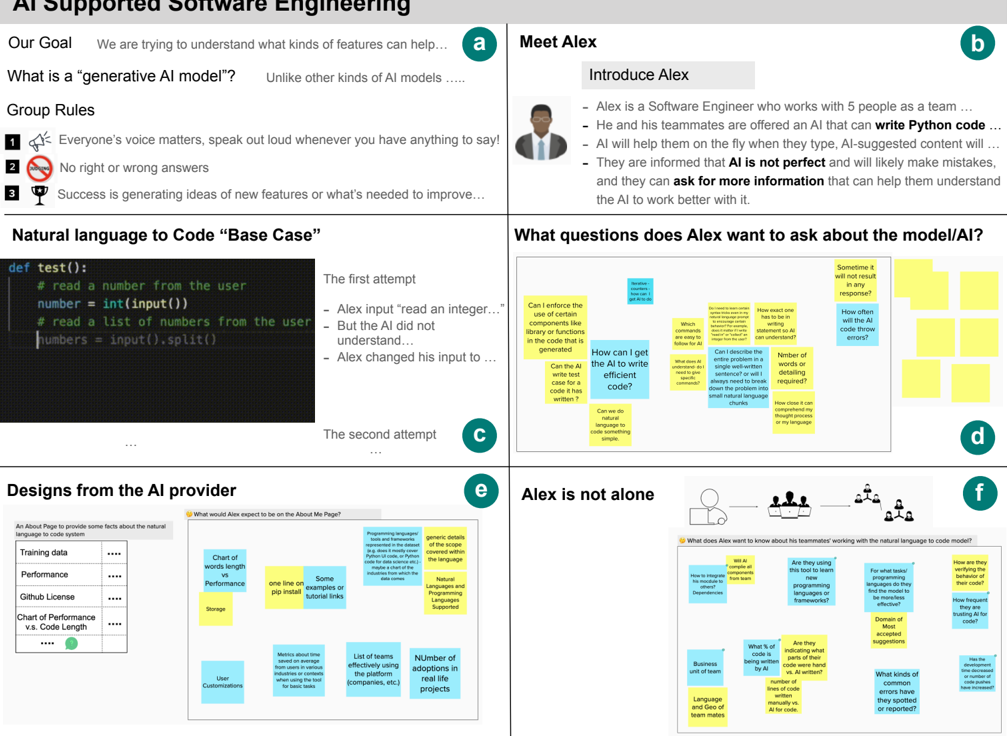
“Figure 1: Overview of the Mural used in workshop #6 (W6-NL2Code) for the code autocompletion use case.”
§ Investigating Explainability of Generative AI for Code through Scenario-based Design > Additional information
“We show the example code as the base case for workshops about natural language to code (W6-NL2Code, W7-NL2Code, W8-NL2Code) in Figure 1.”
Rated minor: it would not touch a result — a value no result rests on, a p-value that stays on the same side of the significance level, or a conflict that is clerical, resolved elsewhere in the paper, or outside its own findings.
In the paper
“the majority of our participants were from the United States (N=22; 65%)”
§ Investigating Explainability of Generative AI for Code through Scenario-based Design > Selection Criteria.
Reported 65 · recomputed 51.162791
Rated minor: it would not touch a result — a value no result rests on, a p-value that stays on the same side of the significance level, or a conflict that is clerical, resolved elsewhere in the paper, or outside its own findings.
In the paper
§ Investigating Explainability of Generative AI for Code through Scenario-based Design > How (global).
“P61 from W1-CT saying that”
§ Investigating Explainability of Generative AI for Code through Scenario-based Design > Data availability
“4 Code Autocompletion (CA) Software Engineer (P17, P39), Researcher/Scientist (P37, P55), Bioinformatician (P48), Data Scientist (P61)”
Citations
Cites
A Unified Approach to Interpreting Model Predictions
Lundberg, S., & Lee, S.-I. (2017) · arXiv · doi:10.48550/arxiv.1705.07874 · Cited by 23,707
Language Models are Few-Shot Learners
Brown, T. B., Mann, B., Ryder, N., Subbiah, M., Kaplan, J., Dhariwal, P., Neelakantan, A., Shyam, P., Sastry, G., Askell, A., et al. (2020) · arXiv · doi:10.48550/arxiv.2005.14165 · Cited by 23,372
Generative adversarial networks
Goodfellow, I., Pouget-Abadie, J., Mirza, M., Xu, B., Warde-Farley, D., Ozair, S., Courville, A., & Bengio, Y. (2020) · Communications of the ACM · doi:10.1145/3422622 · Cited by 18,384
"Why Should I Trust You?": Explaining the Predictions of Any Classifier
Ribeiro, M. T., Singh, S., & Guestrin, C. (2016) · Proceedings of the 22nd ACM SIGKDD International Conference on Knowledge Discovery and Data Mining · doi:10.1145/2939672.2939778 · Cited by 17,555 · cited 1×
“been developed for discriminative ML models, both through producing directly interpretable models [14, 44] and generating posthoc explanations for a trained opaque-box model [47, 62, 80, 104].”
MethodLearning Deep Features for Discriminative Localization
Zhou, B., Khosla, A., Lapedriza, A., Oliva, A., & Torralba, A. (2016) · 2016 IEEE Conference on Computer Vision and Pattern Recognition (CVPR) · doi:10.1109/cvpr.2016.319 · Cited by 11,428
“Why Should I Trust You?”: Explaining the Predictions of Any Classifier
Ribeiro, M., Singh, S., & Guestrin, C. (2016) · Proceedings of the 2016 Conference of the North American Chapter of the Association for Computational Linguistics: Demonstrations · doi:10.18653/v1/n16-3020 · Cited by 6,682
Peeking Inside the Black-Box: A Survey on Explainable Artificial Intelligence (XAI)
Adadi, A., & Berrada, M. (2018) · IEEE Access · doi:10.1109/access.2018.2870052 · Cited by 6,294 · cited 1×
“A full review of XAI techniques is beyond the scope of this paper and can be found in many recent survey papers [1, 29, 55, 56].”
BackgroundLipton, Z. C. (2018) · Queue · doi:10.1145/3236386.3241340 · Cited by 5,427 · cited 1×
“A full review of XAI techniques is beyond the scope of this paper and can be found in many recent survey papers [1, 29, 55, 56].”
BackgroundProceedings of the 21st International Conference on Neural Information Processing Systems
Koller, D., Schuurmans, D., Bengio, Y., & Bottou, L. (2008) · Cited by 4,461
Liu, P., Yuan, W., Fu, J., Jiang, Z., Hayashi, H., & Neubig, G. (2021) · arXiv · doi:10.48550/arxiv.2107.13586 · Cited by 4,352 · cited 1×
“To understand performance differences and limitations with regard to different types of input, solutions have been explored for natural language generation under Prompt Engineering [57, 58].”
Background
Research works printed but not linked: 6
- 6. Cecilia Aragon, Shion Guha, Marina Kogan, Michael Muller, and Gina Neff. 2022. Human-Centered Data Science: An Introduction. MIT Press, Cambridge, MA.
- 20. Upol Ehsan and Mark Riedl. 2021. Explainability Pitfalls: Beyond Dark Patterns in Explainable AI -paper at HCAI@NeurIPS2021 workshop on human centered AI. https://sites.google.com/view/hcai-human-centered-ai-neurips/home Accessed January 19, 2022.
- 60. Ryan Louie, Any Cohen, Cheng-Zhi Anna Huang, Michael Terry, and Carrie J Cai. 2020. Cococo: AI-Steering Tools for Music Novices Co-Creating with Generative Models.. In HAI-GEN+ user2agent@ IUI.
- 65. Michael Muller, Plamen Angelov, Shion Guha, Marina Kogan, Gina Neff, Nuria Oliver, Manuel Gomez Rodriquez, and Adrian Weller. 2021. HCAI@NeurIPS2021: Human Centered AI workshop at NeurIPS 2021. https://sites.google.com/view/ hcai-human-centered-ai-neurips/home Accessed January 17, 2022.
- 82. John T. Richards, David Piorkowski, M. Hind, Stephanie Houde, and Alek- sandra Mojsilovi'c. 2020. A Methodology for Creating AI FactSheets. ArXiv abs/2006.13796 (2020). · arXiv
- 84. Karl Ridgeway and Michael C. Mozer. 2018. Learning Deep Disentangled Em- beddings with the F-Statistic Loss. In NeurIPS.
Cited by
Generative AI and ChatGPT: applications, challenges, and AI-human collaboration
Fui-Hoon Nah, F., Zheng, R., Cai, J., Siau, K., & Chen, L. (2023) · Journal of Information Technology Case and Application Research · doi:10.1080/15228053.2023.2233814 · Cited by 1,363
Large language models for software engineering: survey and open problems
Fan, A., Gokkaya, B., Harman, M., Lyubarskiy, M., Sengupta, S., Yoo, S., & Zhang, J. M. (2023) · 2023 IEEE/ACM International Conference on Software Engineering: Future of Software Engineering (ICSE-FoSE) · doi:10.1109/icse-fose59343.2023.00008 · Cited by 650
“Sun et al. [82] focus on users’ explainability needs for generative AI in three software engineering use cases: code generation based on natural language description (with Copilot), translation between different programming languages (with Transcoder), and code autocompletion (with Copilot).”
MethodGenerative artificial intelligence
Banh, L., & Strobel, G. (2023) · Electronic Markets · doi:10.1007/s12525-023-00680-1 · Cited by 579
“Programmers using applications such as GitHub Copilot are supported by automatically written chunks of code, ideas converted into actionable scripts, auto-completion functions, generated unit tests, duplicate code detection, and bug fixing (Sun et al., 2022).”
BackgroundMethodLarge Language Models for Software Engineering: Survey and Open Problems
Fan, A., Gokkaya, B., Harman, M., Lyubarskiy, M., Sengupta, S., Yoo, S., & Zhang, J. M. (2023) · arXiv · doi:10.48550/arxiv.2310.03533 · Cited by 523
A Comprehensive Review on Generative AI for Education
Mittal, U., Sai, S., Chamola, V., & Sangwan, D. (2024) · IEEE Access · doi:10.1109/access.2024.3468368 · Cited by 383
“This issue can be addressed by promoting the concept of explainable AI, which is based on the idea that the model should be able to explain each and everything that it produces [141].”
BackgroundStudying the effect of AI Code Generators on Supporting Novice Learners in Introductory Programming
Kazemitabaar, M., Chow, J., Ma, C. K. T., Ericson, B. J., Weintrop, D., & Grossman, T. (2023) · Proceedings of the 2023 CHI Conference on Human Factors in Computing Systems · doi:10.1145/3544548.3580919 · Cited by 366
“To explore the explainability needs of AI code generators, Jiao et al. [83] conducted 9 semi-structured workshops with 43 software engineers using AI Coding Assistants and identified 11 categories of explainability needs such as types of input that the model can take, and the data that these models…”
The Metacognitive Demands and Opportunities of Generative AI
Tankelevitch, L., Kewenig, V., Simkute, A., Scott, A. E., Sarkar, A., Sellen, A., & Rintel, S. (2024) · Proceedings of the CHI Conference on Human Factors in Computing Systems · doi:10.1145/3613904.3642902 · Cited by 493
Lau, S., & Guo, P. (2023) · Proceedings of the 2023 ACM Conference on International Computing Education Research V.1 · doi:10.1145/3568813.3600138 · Cited by 241
Design Principles for Generative AI Applications
Weisz, J. D., He, J., Muller, M., Hoefer, G., Miles, R., & Geyer, W. (2024) · Proceedings of the CHI Conference on Human Factors in Computing Systems · doi:10.1145/3613904.3642466 · Cited by 232
“At the end of Iteration 2, we had a set of 8 high-level principles implemented by 29 specifc strategies.”
BackgroundSelf-citationWhat is Human-Centered about Human-Centered AI? A Map of the Research Landscape
Capel, T., & Brereton, M. (2023) · Proceedings of the 2023 CHI Conference on Human Factors in Computing Systems · doi:10.1145/3544548.3580959 · Cited by 228
“…95, 120, 127, 132, 133, 136, 142, 145, 146, 150, 151, 158, 159, 170, 174, 186, 187, 196, 197, 207, 209, 221, 224, 235, 236, 246, 257, 262, 264, 280, 282, 283, 286, 288, 294, 318, 325, 326], to people being able to interact with and contest those explanations through asking “What if?” questions in…”
Students' perceptions of using ChatGPT in a physics class as a virtual tutor
Ding, L., Li, T., Jiang, S., & Gapud, A. (2023) · International Journal of Educational Technology in Higher Education · doi:10.1186/s41239-023-00434-1 · Cited by 208
“What makes it more distinguishable from other GenAI is its unique ability to not only provide a response but also generate related content based on subsequent questions and prompts derived from its initial responses (Sun et al., 2022).”
BackgroundMethodInfluentialUnderstanding Human-Centred AI: a review of its defining elements and a research agenda
Schmager, S., Pappas, I. O., & Vassilakopoulou, P. (2025) · Behaviour and Information Technology · doi:10.1080/0144929x.2024.2448719 · Cited by 258
“Especially since generative AI (GenAI) technologies are advancing and maturing, applying established HCD methods can provide useful tools (Sun et al. 2022).”
Bridging the Gulf of Envisioning: Cognitive Challenges in Prompt Based Interactions with LLMs
Subramonyam, H., Pea, R., Pondoc, C., Agrawala, M., & Seifert, C. (2024) · Proceedings of the CHI Conference on Human Factors in Computing Systems · doi:10.1145/3613904.3642754 · Cited by 162
Generative Echo Chamber? Effect of LLM-Powered Search Systems on Diverse Information Seeking
Sharma, N., Liao, Q. V., & Xiao, Z. (2024) · Proceedings of the CHI Conference on Human Factors in Computing Systems · doi:10.1145/3613904.3642459 · Cited by 132
Self-citationGmeiner, F., Yang, H., Yao, L., Holstein, K., & Martelaro, N. (2023) · Proceedings of the 2023 CHI Conference on Human Factors in Computing Systems · doi:10.1145/3544548.3580999 · Cited by 130
“To address these issues, various strategies like explainable AI or intelligibility are aimed at helping users refine their mental models of AI systems [55, 70].”
BackgroundSchöbel, S., Schmitt, A., Benner, D., Saqr, M., Janson, A., & Leimeister, J. M. (2024) · Information Systems Frontiers · doi:10.1007/s10796-023-10375-9 · Cited by 127
“This technology is enabling a wide range of tasks during a conversational interaction, such as writing essays (Sun et al., 2022), helping with coding (Castelvecchi, 2022) and other creative tasks (Davenport & Mittal, 2022).”
Digital transformation in engineering education: Exploring the potential of AI-assisted learning
Pham, T., Nguyen, T. B., Ha, S., & Nguyen Ngoc, N. T. (2023) · Australasian Journal of Educational Technology · doi:10.14742/ajet.8825 · Cited by 105
“Sun et al. (2022) delved into a critical aspect of AI application in education – the explainability of generative AI models in the context of coding.”
BackgroundHadi, M. U., tashi, Q. A., Qureshi, R., Shah, A., muneer, A., Irfan, M., Zafar, A., Shaikh, M. B., Akhtar, N., Wu, J., et al. (2023) · doi:10.36227/techrxiv.23589741.v4 · Cited by 103
Ironies of Generative AI: Understanding and Mitigating Productivity Loss in Human-AI Interaction
Simkute, A., Tankelevitch, L., Kewenig, V., Scott, A. E., Sellen, A., & Rintel, S. (2024) · International Journal of Human–Computer Interaction · doi:10.1080/10447318.2024.2405782 · Cited by 89
Is It AI or Is It Me? Understanding Users’ Prompt Journey with Text-to-Image Generative AI Tools
Mahdavi Goloujeh, A., Sullivan, A., & Magerko, B. (2024) · Proceedings of the CHI Conference on Human Factors in Computing Systems · doi:10.1145/3613904.3642861 · Cited by 89
“Following established human-AI interaction guidelines [5, 34, 45], text-to-image tools should explicitly communicate both strengths and limitations, emphasizing the inherent imperfection and unpredictability of results [56, 59, 63].”
Wan, Q., Hu, S., Zhang, Y., Wang, P., Wen, B., & Lu, Z. (2024) · Proceedings of the ACM on Human-Computer Interaction · doi:10.1145/3637361 · Cited by 88
“Sun et al. also investigated the explainability of LLMs for code generation using a question-driven approach [42, 43, 67].”
BackgroundMethodInfluentialInvestigating and Designing for Trust in AI-powered Code Generation Tools
Wang, R., Cheng, R., Ford, D., & Zimmermann, T. (2024) · The 2024 ACM Conference on Fairness, Accountability, and Transparency · doi:10.1145/3630106.3658984 · Cited by 87
“During the 60-minute retrospective interview sessions, we asked participants about their general experience with AI tools and then asked them to walk through the significant moments they collected during the prior week.”
BackgroundCharting the Sociotechnical Gap in Explainable AI: A Framework to Address the Gap in XAI
Ehsan, U., Saha, K., De Choudhury, M., & Riedl, M. O. (2023) · Proceedings of the ACM on Human-Computer Interaction · doi:10.1145/3579467 · Cited by 85
“Given AI systems (Human-AI assemblages [38, 43]) exist in sociotechnical settings [88, 146], it takes more than just algorithmic transparency to make them explainable [49, 108].”
BackgroundSingh, B. (2024) · Advances in computational intelligence and robotics book series · doi:10.4018/979-8-3693-1565-1.ch009 · Cited by 88
Using LLMs in Software Requirements Specifications: An Empirical Evaluation
Krishna, M., Gaur, B., Verma, A., & Jalote, P. (2024) · IEEE International Requirements Engineering Conference (RE) · doi:10.1109/re59067.2024.00056 · Cited by 157
“The mainstream adoption of LLMs, which serve as powerful information retrieval and zero-shot generation tools [28], [29] has led to a transition in the software development lifecycle [30].”
BackgroundKhurana, A., Subramonyam, H., & Chilana, P. K. (2024) · ACM International Conference on Intelligent User Interfaces (IUI) · doi:10.1145/3640543.3645200 · Cited by 115
“While SoftAIBot generated relevant and accurate software assistance compared to Baseline ChatGPT, there were obvious limitations as users were not able to leverage this information to complete the software tasks accurately.”
MethodHow Far Are We? The Triumphs and Trials of Generative AI in Learning Software Engineering
Choudhuri, R., Liu, D., Steinmacher, I., Gerosa, M., & Sarma, A. (2024) · Proceedings of the IEEE/ACM 46th International Conference on Software Engineering · doi:10.1145/3597503.3639201 · Cited by 72
Generative Artificial Intelligence for Software Engineering - a Research Agenda
NguyenDuc, A., Cabrero-Daniel, B., Arora, C., Przybylek, A., Khanna, D., Herda, T., Rafiq, U., Melegati, J., Guerra, E., Kemell, K.-K., et al. (2023) · doi:10.2139/ssrn.4622517 · Cited by 71
Bertrand, A., Viard, T., Belloum, R., Eagan, J. R., & Maxwell, W. (2023) · Proceedings of the 2023 CHI Conference on Human Factors in Computing Systems · doi:10.1145/3544548.3581314 · Cited by 71
“The list of explanation focus points was adapted from Lim and Dey’s [71], Liao et al. ’s [70] and from Sun et al. ’s [113] classifca-tions of user questions in XAI.”
MethodHow Beginning Programmers and Code LLMs (Mis)read Each Other
Nguyen, S., Babe, H. M., Zi, Y., Guha, A., Anderson, C. J., & Feldman, M. Q. (2024) · Proceedings of the CHI Conference on Human Factors in Computing Systems · doi:10.1145/3613904.3642706 · Cited by 66
“This is an example of an ongoing equity concern for researchers and educators.”
BackgroundBeyond Discrimination: Generative AI Applications and Ethical Challenges in Forensic Psychiatry
Tortora, L. (2024) · Frontiers in Psychiatry · doi:10.3389/fpsyt.2024.1346059 · Cited by 91
Ulfsnes, R., Moe, N. B., Stray, V., & Skarpen, M. (2024) · Generative AI for Effective Software Development · doi:10.1007/978-3-031-55642-5_10 · Cited by 62
Liu, Y., Chen, S., Cheng, H., Yu, M., Ran, X., Mo, A., Tang, Y., & Huang, Y. (2024) · Proceedings of the CHI Conference on Human Factors in Computing Systems · doi:10.1145/3613904.3642698 · Cited by 61
“Many human-AI co-creation systems utilize generative AI technologies [43, 62].”
BackgroundKim, T. S., Lee, Y., Chang, M., & Kim, J. (2023) · Proceedings of the 36th Annual ACM Symposium on User Interface Software and Technology · doi:10.1145/3586183.3606833 · Cited by 56
“…and justify two interactions that designers should support regarding cells, create and assemble . create and maintain various generation inputs that they can ex-periment with—allowing them to more easily answer their own “what if” questions about the effect of inputs on outputs [56, 84, 86].”
BackgroundHadi, M. U., tashi, Q. A., Qureshi, R., Shah, A., muneer, A., Irfan, M., Zafar, A., Shaikh, M. B., Akhtar, N., Wu, J., et al. (2023) · doi:10.36227/techrxiv.23589741.v3 · Cited by 53
Praveen, C. K., & Srinivasan, K. (2022) · Computational and Mathematical Methods in Medicine · doi:10.1155/2022/8802542 · Cited by 121
“In addition, it can generate human-like language output [67].”
BackgroundKim, M., Kim, S., Kim, J., Song, T.-J., & Kim, Y. (2024) · International Journal of Human-Computer Studies · doi:10.1016/j.ijhcs.2023.103160 · Cited by 53
Improving Steering and Verification in AI-Assisted Data Analysis with Interactive Task Decomposition
Kazemitabaar, M., Williams, J., Drosos, I., Grossman, T., Henley, A. Z., Negreanu, C., & Sarkar, A. (2024) · ACM Symposium on User Interface Software and Technology (UIST) · doi:10.1145/3654777.3676345 · Cited by 112
Chandra, M., Naik, S., Ford, D., Okoli, E., De Choudhury, M., Ershadi, M., Ramos, G., Hernandez, J., Bhattacharjee, A., Warreth, S., et al. (2025) · Proceedings of the 2025 ACM Conference on Fairness, Accountability, and Transparency · doi:10.1145/3715275.3732063 · Cited by 44
Cheng, R., Wang, R., Zimmermann, T., & Ford, D. (2024) · ACM Transactions on Interactive Intelligent Systems · doi:10.1145/3651990 · Cited by 47
“, [12, 49]), as our goal is not to settle on specific design elements, but rather to explore what is possible in the design space.”
BackgroundEvaluating a Large Language Model on Searching for GUI Layouts
Brie, P., Burny, N., Sluÿters, A., & Vanderdonckt, J. M. (2023) · Proceedings of the ACM on Human-Computer Interaction · doi:10.1145/3593230 · Cited by 66
Analyzing behavioral intentions toward Generative Artificial Intelligence: the case of ChatGPT
Nan, D., Sun, S., Zhang, S., Zhao, X., & Kim, J. H. (2024) · Universal Access in the Information Society · doi:10.1007/s10209-024-01116-z · Cited by 55
“Generative artificial intelligence (AI) is a unique category of AI, representing a powerful technology [1, 2].”
What Should We Engineer in Prompts? Training Humans in Requirement-Driven LLM Use
Ma, Q., Peng, W., Yang, C., Shen, H., Koedinger, K. R., & Wu, T. (2025) · ACM Transactions on Computer-Human Interaction · doi:10.1145/3731756 · Cited by 115
“Good quality requirements need to be accurate and complete , without commission (inclusion of irrelevant or incorrect details) and omission (exclusion of necessary details) defects [1].”
Software engineering education in the era of conversational AI: current trends and future directions
Sengul, C., Neykova, R., & Destefanis, G. (2024) · Frontiers in Artificial Intelligence · doi:10.3389/frai.2024.1436350 · Cited by 84
How Do Analysts Understand and Verify AI-Assisted Data Analyses?
Gu, K., Shang, R., Althoff, T., Wang, C., & Drucker, S. M. (2024) · Proceedings of the CHI Conference on Human Factors in Computing Systems · doi:10.1145/3613904.3642497 · Cited by 37
“In addition, because understanding the sequence of data manipulations is vital to understanding the output [105, 136], the probe includes descriptions of any intermediate data computed as a result of an atomic data wrangling operation (Fig.”
InfluentialAn Activity System-based Perspective of Generative AI: Challenges and Research Directions
Nah, F. F., Cai, J., Zheng, R., & Pang, N. L.-S. (2023) · AIS Transactions on Human-Computer Interaction · doi:10.17705/1thci.00190 · Cited by 60
Which Contributions Deserve Credit? Perceptions of Attribution in Human-AI Co-Creation
He, J., Houde, S., & Weisz, J. D. (2025) · Proceedings of the 2025 CHI Conference on Human Factors in Computing Systems · doi:10.1145/3706598.3713522 · Cited by 36
“The incorporation of AI assistance into writing workflows raises new questions regarding the need for transparency and explain-ability [77].”
Self-citationSmith, C. E., Shiekh, K., Cooreman, H., Rahman, S., Zhu, Y., Siam, M. K., Ivanitskiy, M., Ahmed, A. M., Hallinan, M., Grisak, A., et al. (2024) · Proceedings of the 2024 on Innovation and Technology in Computer Science Education V. 1 · doi:10.1145/3649217.3653575 · Cited by 31
Shanshan, S., & Sen, G. (2024) · Journal of Computer Assisted Learning · doi:10.1111/jcal.12996 · Cited by 29
A nascent design theory for explainable intelligent systems
Herm, L.-V., Steinbach, T., Wanner, J., & Janiesch, C. (2022) · Electronic Markets · doi:10.1007/s12525-022-00606-3 · Cited by 41
AI‐Driven Generative Design Redefines the Engineering Process
Channi, H. K., Kaur, A., & Kaur, S. P. (2025) · Wiley eBooks · doi:10.1002/9781394271078.ch17 · Cited by 39
Repository-Level Prompt Generation for Large Language Models of Code
Shrivastava, D., Larochelle, H., & Tarlow, D. (2022) · arXiv · doi:10.48550/arxiv.2206.12839 · Cited by 27
“With the increasing use of LLMs as assistive agents to humans, the demand for transparency, and the desire of software engineers to tailor prompts to suit their requirements (Jiang et al., 2022; Sun et al., 2022), this capability becomes important.”
BackgroundMachine Learning With Computer Networks: Techniques, Datasets, and Models
Afifi, H., Pochaba, S., Boltres, A., Laniewski, D., Haberer, J., Paeleke, L., Poorzare, R., Stolpmann, D., Wehner, N., Redder, A., et al. (2024) · IEEE Access · doi:10.1109/access.2024.3384460 · Cited by 45
“Generative AI (GenAI) is a broader concept that can apply to any type of data [102].”
Generative AI Models in Time-Varying Biomedical Data: Scoping Review
He, R., Sarwal, V., Qiu, X., Zhuang, Y., Zhang, L., Liu, Y., & Chiang, J. N. (2025) · Journal of Medical Internet Research · doi:10.2196/59792 · Cited by 43
“Enhancing transparency and explainability through techniques such as feature importance scores and decision trees is crucial for gaining trust and ensuring comprehensible AI decisions [235-237].”
Hwang, A. H., Siy, J. O., Shelby, R. M., & Lentz, A. (2024) · Designing Interactive Systems Conference · doi:10.1145/3643834.3661555 · Cited by 43
“Currently, much of the genAI discussions have centered around its utility, accompanied by research examining the usability of genAI to facilitate and even automate workfows in various domains (e.g. writing emails, copilot-ing code) [28, 60, 62, 99].”
BackgroundBertrand, A., Eagan, J., & Maxwell, W. (2023) · ACM Conference on Fairness, Accountability, and Transparency (FAccT) · doi:10.1145/3593013.3594053 · Cited by 61
“Using semistructured interviews, articles such as [27, 28, 45] give an account of users’ questions and motivations regarding explainability.”
BackgroundGoogle or ChatGPT: Who is the better helper for university students
Zhang, M., & Yang, X. (2024) · Education and Information Technologies · doi:10.1007/s10639-024-13002-5 · Cited by 42
“It can not only respond but also generate related content based on subsequent questions and prompts derived from the initial response (Sun et al., 2022).”
Literature Review on the Integration of Generative AI in Programming Education
Nathaniel, J., Oyelere, S. S., Suhonen, J. T., & Tedre, M. (2025) · International Journal of Artificial Intelligence in Education · doi:10.1007/s40593-025-00524-3 · Cited by 71
“…programming education, demonstrating how GenAI-assisted learning supports active approaches such as workshops and experimental methods (Jonsson & Tholander, 2022), scenario-based design and question-driven learning (Sun et al., 2022), and lectures and exercises (Yilmaz & Yilmaz, 2023a).”
Generation Probabilities Are Not Enough: Uncertainty Highlighting in AI Code Completions
Vasconcelos, H., Bansal, G., Fourney, A., Liao, Q. V., & Vaughan, J. W. (2024) · ACM Transactions on Computer-Human Interaction · doi:10.1145/3702320 · Cited by 91
Self-citationGeneration Probabilities Are Not Enough: Uncertainty Highlighting in AI Code Completions
Vasconcelos, H., Bansal, G., Fourney, A., Liao, Q. V., & Vaughan, J. W. (2023) · arXiv · doi:10.48550/arxiv.2302.07248 · Cited by 23
Self-citationPanchanadikar, R., & Freeman, G. (2024) · Proceedings of the ACM on Human-Computer Interaction · doi:10.1145/3677082 · Cited by 43
“Sun et al.’s work echoes this understanding and elaborates generative AI’s role in code translation and code autocompletion beyond just natural language to code [64].”
Take It, Leave It, or Fix It: Measuring Productivity and Trust in Human-AI Collaboration
Qian, C., & Wexler, J. (2024) · ACM International Conference on Intelligent User Interfaces (IUI) · doi:10.1145/3640543.3645198 · Cited by 63
A Map of Exploring Human Interaction Patterns with LLM: Insights into Collaboration and Creativity
Li, J., Li, J., & Su, Y. (2024) · Lecture notes in computer science · doi:10.1007/978-3-031-60615-1_5 · Cited by 44
Liu, Y., & Siau, K. L. (2023) · Communications in computer and information science · doi:10.1007/978-981-99-7587-7_10 · Cited by 30
VeriPlan: Integrating Formal Verification and LLMs into End-User Planning
Lee, C. P., Porfirio, D., Wang, X. J., Zhao, K. C., & Mutlu, B. (2025) · Proceedings of the 2025 CHI Conference on Human Factors in Computing Systems · doi:10.1145/3706598.3714113 · Cited by 21
“Another usability barrier is users’ difficulty understanding how prompts influence outputs and building accurate mental models of the system’s behavior and the reasoning behind it [7, 101, 107].”
Explorable Explainable AI: Improving AI Understanding for Community Health Workers in India
Solano-Kamaiko, I. R., Mishra, D., Dell, N. L., & Vashistha, A. (2024) · CHI Conference on Human Factors in Computing Systems · doi:10.1145/3613904.3642733 · Cited by 37
“More recently, researchers studying AI have begun to use design probes to gain insights into how to develop XAI systems for key stakeholders [48, 106, 121, 135].”
BackgroundNon-Expert Programmers in the Generative AI Future
Feldman, M. Q., & Anderson, C. J. (2024) · Annual Symposium on Human-Computer Interaction for Work (CHIWORK) · doi:10.1145/3663384.3663393 · Cited by 51
Human-centered AI development in practice—insights from a multidisciplinary approach
Friedrich, J., Brückner, A., Mayan, J., Schumann, S., Kirschenbaum, A., & Zinke-Wehlmann, C. (2024) · Zeitschrift für Arbeitswissenschaft · doi:10.1007/s41449-024-00434-5 · Cited by 38
“Human-centered AI design involves creating AI systems that align with human values and serve the needs of human stakeholders (Sun et al. 2022).”
How Can We Develop Explainable Systems? Insights from a Literature Review and an Interview Study
Chazette, L., Klünder, J., Balci, M., & Schneider, K. A. (2022) · doi:10.1145/3529320.3529321 · Cited by 34
Huang, Y. (2023) · Annual Symposium on Computer-Human Interaction in Play · doi:10.1145/3573382.3616033 · Cited by 34
“, images, texts, music, code, and other forms of design) and generates new, plausible content [22, 29].”
BackgroundGenerative Artificial Intelligence in Medicine
Shanmugam, D., Agrawal, M., Movva, R., Chen, I. Y., Ghassemi, M., Jacobs, M. L., & Pierson, E. (2025) · Annual Review of Biomedical Data Science · doi:10.1146/annurev-biodatasci-103123-095332 · Cited by 42
Building Appropriate Mental Models: What Users Know and Want to Know about an Agentic AI Chatbot
Brachman, M., Kunde, S., Miller, S., Fucs, A., Dempsey, S., Jabbour, J., & Geyer, W. (2025) · Proceedings of the 30th International Conference on Intelligent User Interfaces · doi:10.1145/3708359.3712071 · Cited by 18
A Conceptual Model Framework for XAI Requirement Elicitation of Application Domain System
Aslam, M., Segura-Velandia, D., & Goh, Y. M. (2023) · IEEE Access · doi:10.1109/access.2023.3315605 · Cited by 21
“needs in the absence of prior knowledge of requirements engineering [26].”
Bomba, F., Menéndez-Blanco, M., Grigis, P., Cremaschi, M., & Angeli, A. D. (2024) · ACM Transactions on Computer-Human Interaction · doi:10.1145/3689040 · Cited by 33
“This research field aims to develop systems that explain their decision-making [66, 75].”
Navigating Complexity in Software Engineering: A Prototype for Comparing GPT-n Solutions
Treude, C. (2023) · IEEE/ACM International Workshop on Bots in Software Engineering (BotSE) · doi:10.1109/botse59190.2023.00008 · Cited by 32
“The application of modern natural language processing techniques to programming languages can be traced back to the idea that software is a form of human communication [17], known as the naturalness hypothesis [18].”
BackgroundHe, Q., Zheng, W., Bao, H., Chen, R., & Tong, X. (2023) · Proceedings of the Eleventh International Symposium of Chinese CHI · doi:10.1145/3629606.3629675 · Cited by 15
Explainable AI Reloaded: Challenging the XAI Status Quo in the Era of Large Language Models
Ehsan, U., & Riedl, M. O. (2024) · Halfway to the Future Symposium · doi:10.1145/3686169.3686185 · Cited by 26
Usage of Large Language Model for Code Generation Tasks: A Review
Bistarelli, S., Fiore, M., Mercanti, I., & Mongiello, M. (2025) · SN Computer Science · doi:10.1007/s42979-025-04241-5 · Cited by 48
“…tasks compared to code generation, offering insights for short-term potential and suggestions for improvement in the modelling community [39, 54, 60] They demonstrate the GPT model’s ability to generate syntactically correct code and highlight its limitations in producing effective bug fixes in…”
Lyu, W., Wang, Y., Sun, Y., & Zhang, Y. (2025) · ACM Conference on Learning @ Scale (L@S) · doi:10.1145/3698205.3729544 · Cited by 36
“Recent advancements in Generative AI (GenAI) have ushered in a transformative area in programming [6, 14, 23, 50], driven by breakthroughs in Large Language Models (LLMs).”
Impacts of the Usage of Generative Artificial Intelligence on Software Development Process
Santos, P. D. O., Figueiredo, A. C., Moura, P., Diirr, B., Alvim, A. C. F., & dos Santos, R. P. (2024) · Anais do Simpósio Brasileiro de Sistemas de Informação (SBSI) · doi:10.1145/3658271.3658337 · Cited by 23
“Em contraste com os modelos discriminativos (condicionais) de Aprendizado de Máquina ( Machine Learning - ML), que aprendem limiares de decisão, mod-elos de IA generativa produzem artefatos como saída, que podem ter uma ampla variedade e complexidade [44].”
BackgroundWhen, What, and how should generative artificial intelligence explain to Users?
Jang, S., Lee, H., Kim, Y., Lee, D., Shin, J., & Nam, J. (2024) · Telematics and Informatics · doi:10.1016/j.tele.2024.102175 · Cited by 21
Generative AI in Agile Software Development: A Comprehensive Survey
Malladi, N. V., & Reddy, K. S. (2025) · International Conference on Innovative Data Communication Technologies and Application (ICIDCA) · doi:10.1109/icidca66325.2025.11280486 · Cited by 27
Human-AI experience in integrated development environments: a systematic literature review
Sergeyuk, A., Zakharov, I., Koshchenko, E., & Izadi, M. (2026) · Empirical Software Engineering · doi:10.1007/s10664-025-10793-0 · Cited by 51
“Addressing these gaps through deliberate cumulative and interdisciplinary research will not only advance the field but also ensure its continued relevance in shaping AI-enhanced software development.”
Chamola, V., Dave, D., Goyal, I., & Sharma, S. (2026) · Expert Systems · doi:10.1111/exsy.70201 · Cited by 30
The AI-DEC: A Card-based Design Method for User-centered AI Explanations
Lee, C. P., Lee, M. K., & Mutlu, B. (2024) · Designing Interactive Systems Conference · doi:10.1145/3643834.3661576 · Cited by 22
Generative AI Techniques and Models
Gupta, R., Tiwari, S. M., & Chaudhary, P. (2025) · Lecture notes on data engineering and communications technologies · doi:10.1007/978-3-031-82062-5_3 · Cited by 20
Next Steps for Human-Centered Generative AI: A Technical Perspective
Chen, X. '., Burke, J., Du, R., Hong, M. K., Jacobs, J., Laban, P., Li, D., Peng, N., Willis, K. D. D., Wu, C.-S., et al. (2023) · arXiv · doi:10.48550/arxiv.2306.15774 · Cited by 13
“One recent work focused on code generation and took a scenario-based approach to elicit developers’ needs for explanation when using Generative AI in various programming scenarios: natural language to code, code translation, and code auto-completion [127].”
BackgroundApplication of generative AI technologies to engineering design
Byrne, D., Hargaden, V., & Papakostas, N. (2025) · Procedia CIRP · doi:10.1016/j.procir.2025.01.025 · Cited by 20
Towards Directive Explanations: Crafting Explainable AI Systems for Actionable Human-AI Interactions
Bhattacharya, A. (2024) · CHI Conference Extended Abstracts on Human Factors in Computing Systems (CHI EA) · doi:10.1145/3613905.3638177 · Cited by 19
“However, with the recent advancements in Generative AI [48] and Large Language Models (LLMs) [55], he plans to research on designing XAI systems, which include AI models built on unstructured data such as text or images.”
Rethinking AI code generation: a one-shot correction approach based on user feedback
Le, K. T., & Andrzejak, A. (2024) · Automated Software Engineering · doi:10.1007/s10515-024-00451-y · Cited by 23
“In the context of code generation, generative AI leverages the naturalness hypothesis (Hindle et al 2016; Sun et al 2022; Weisz et al 2022), which posits that software can be viewed as a form of human communication.”
Valdez, A. S. C., Heine, M., Franke, T., Jochems, N., Jetter, H.-C., & Schrills, T. (2024) · i-com · doi:10.1515/icom-2024-0014 · Cited by 22
Explanation needs and ethical demands: unpacking the instrumental value of XAI
Alpsancar, S., Buhl, H. M., Matzner, T., & Scharlau, I. (2024) · AI and Ethics · doi:10.1007/s43681-024-00622-3 · Cited by 24
Peláez, C. A., Solano, A. F., Galindez, J. A. O., Espinosa, J. C., Montaño, A. S., Beltrán, P. A. C., Duque, J. S., Castro, D., Velasco, J. M. N., & la Prieta, F. D. (2025) · Informatics · doi:10.3390/informatics12010010 · Cited by 20
Brachman, M., Pan, Q., Do, H. J., Dugan, C., Chaudhary, A., Johnson, J. M., Rai, P., Chakraborti, T., Gschwind, T., Laredo, J. A., et al. (2023) · Proceedings of the 28th International Conference on Intelligent User Interfaces · doi:10.1145/3581641.3584088 · Cited by 11
“Users of intelligent systems want to understand how the inputs are processed [76, 115].”
BackgroundMethodInfluentialSelf-citationA Review of Generative AI from Historical PerspectivesPreprint
Dasgupta, D., Venugopal, D., & Gupta, K. D. (2023) · doi:10.36227/techrxiv.22097942 · Cited by 30
Lodovico, C. D., Torrielli, F., Di, L., & Rapp, A. (2025) · International Journal of Human-Computer Interaction · doi:10.1080/10447318.2025.2491009 · Cited by 19
“On this line, further research focuses on attention visualization methods, a type of explanation that provides cues into the reasons why a specific prediction or decision of the model took place (Mansimov et al., 2015; Sun et al., 2022).”
Generative artificial intelligence and social media: insights for tobacco control
Kong, G., Ouellette, R. R., & Murthy, D. (2024) · Tobacco Control · doi:10.1136/tc-2024-058813 · Cited by 11
“38 However, achieving this transparency requires the willingness of technology companies to disclose this information.”
Leveraging Generative AI for Public Service Innovation: A Path to Smart Government in Indonesia
Alamsyah, A., & Aryfiyanto, H. (2025) · Digital Government Research and Practice · doi:10.1145/3761820 · Cited by 22
“Pract., Vol. 6, No. 4 [Sun et al. 2022 ; Cámara et al. 2023 ; Farah et al., 2023; Lv 2023 ; Xu et al. 2024 ; Chowdhury et al. 2024 ; Sun et al. 2024 ; Wirtz and Müller 2019 ].”
Rong, A., Edward, N. H., & Li, D. (2023) · Color Research & Application · doi:10.1002/col.22912 · Cited by 16
Explainable Generative AI: A Two-Stage Review of Existing Techniques and Future Research Directions
Kumarage, P. M., & Saarela, M. (2026) · AI · doi:10.3390/ai7010031 · Cited by 18
“Expert verification appears across categories [49,56,58,67,69,71,87,90,91], adding credibility but incurring potential bias and scalability limits.”
Influential
Metadata
- Authors
- Sun, J., Liao, Q. V., Muller, M., Agarwal, M., Houde, S., Talamadupula, K., & Weisz, J. D.
- Affiliations
- University of Southern California (US)
- IBM (United States) (US)
- ORCID
- Venue
- 27th International Conference on Intelligent User Interfaces
- Publisher
- ACM
- Published
- 2022-03-22
- Pages
- 212-228
- OpenAlex
- W4220962633
- Semantic Scholar
- 76ebf56d6ebb833d8c8c4124f7b2f15771a4997c
- Cited by
- 219
- References
- 78
- Citations by year
- 2026: 29 · 2025: 58 · 2024: 91 · 2023: 37 · 2022: 4
- FWCI
- 26.25
- Type
- conference paper
- Language
- en
- Open access
- hybrid
- doi.org
- Licence
- Locations
- ACM International Conference on Intelligent User Interfaces (IUI) (publishedVersion, cc-by)
- arXiv (Cornell University) (submittedVersion)
- arXiv (Cornell University) (cc-by)
- Topics
- Physical Sciences › Computer Science › Artificial Intelligence › Explainable Artificial Intelligence (XAI)
- Physical Sciences › Computer Science › Information Systems › Software Engineering Research
- Physical Sciences › Computer Science › Information Systems › Software Engineering Techniques and Practices
- Keywords
- explainable AI, scenario-based design, natural language to code, program translation, human-centered AI design, software engineering
About these checks
Registry, retraction, Cites and statistics results are computed, not judged, with one exception: a printed reference that no index lists is read once by a model before it counts as a citation error. Claims are extracted by a model and kept only when their quote appears verbatim in the text; each cited source is then checked, with a model’s help, for whether it says what the claim relies on. Those verdicts can be wrong — read the claim’s quote and the cited source before relying on one.
The claim verdicts this report counts are experimental: their accuracy is not yet measured.
A language model drew the claims from the paper on 2026-09-30, under version 3 of the claim definition (model deepseek-v4.1-flash, prompt extract-v3).
A second model labelled each claim on 2026-09-30 (model jev-1.13-20260917, definition revision gold-guideline-v0.2).
Cited sources are checked with a language model’s help (gpt-6-sol).
Statistics and arithmetic are recomputed, not judged.
Confidence bands are shown only for fields calibrated on our annotated test set. None is calibrated yet, so no band is shown.
What counts as a claim ›How we measure confidence ›How we check this ›
Are you an author, or do you see a problem with this page? Request a review
Data sources
Bibliographic data: Semantic Scholar, OpenAlex, Crossref.
Contains information from the Semantic Scholar Academic Graph Datasets, made available under the ODC Attribution License (ODC-BY 1.0).
Semantic Scholar’s data is described in: Kinney, R., et al. (2023). The Semantic Scholar Open Data Platform. arXiv:2301.10140.
