

Mentigo: An Intelligent Agent for Mentoring Students in the Creative Problem Solving Process
Open accessThe DOI matches its Crossref record; 90 of the 90 references it cites were found in a registry or an index.
Abstract
Creative Problem-Solving (CPS) promotes creative and critical thinking while enhancing real-world problem-solving skills, making it essential for middle school education.However, providing personalized mentorship in CPS projects at scale is challenging due to resource constraints and diverse student needs.To address this, we developed Mentigo, an AI-driven mentor agent designed to guide middle school students through the CPS process.Using a dataset of real classroom interactions, we encoded CPS task stages, adaptive guidance strategies, and personalized feedback mechanisms to inform Mentigo's dynamic mentoring framework powered by large language models (LLMs).A comparative experiment with 12 students and evaluations from five expert educators demonstrated improved student engagement, creativity, and task performance.Our findings highlight design implications for using LLM-based AI mentors to enhance CPS learning in educational environments.
Overview
The claims and statistics of this paper haven’t been checked yet.
Free: it reads the open-access text and checks the first 5 claims that cite a source we can check. Create a free account to check every claim.
Integrity signals
Registry
Cites
Statistics
Figures



Verification
Claims the paper makes
The claims and statistics of this paper haven’t been checked yet.
Free: it reads the open-access text and checks the first 5 claims that cite a source we can check. Create a free account to check every claim.
Claims other papers make about this one
Each is checked against this paper’s own text: does it say what the citing paper says it does?
The source backs part of the claim, not all of it — or backs it for a different population, condition or comparison.
In the citing paper
“In design and problem-solving tasks, conversational scaffolds or CPS tutor agents are used to cultivate creative thinking and social responsibility, addressing the shortage of individualized guidance [117,118].”
From A Systematic Review of Generative AI in K–12: Mapping Goals, Activities, Roles, and Outcomes via the 3P Model (2025) · cites this paper as [118]
Experimental — accuracy not yet measuredThe cited source says what the claim attributes to it.
In the citing paper
“Some use cases will benefit from high degrees of humanness, such as the use of anthropomorphic agents for role-play in training situations (144, 145), or as tutors and coaches in education (84, 87).”
From The benefits and dangers of anthropomorphic conversational agents (2025) · cites this paper as [84]
Self-check
Percentages, sums and reported differences re-computed from the paper’s own numbers.
The self-check needs the paper’s full text.
Citations
Cites
2 retracted
Retracted: The Impact of AI on Teacher Roles and Pedagogy in the 21st Century Classroom
Taufikin, M. S. I., Supaat, S., Azifah, N., Nikmah, F., Kuanr, J., & Parminder (2024) · International Conference on Knowledge Engineering and Communication Systems (ICKECS) · doi:10.1109/ickecs61492.2024.10617236 · Cited by 38
RetractedMahamuni, A. J., Parminder, & Tonpe, S. S. (2024) · 2024 International Conference on Knowledge Engineering and Communication Systems (ICKECS) · doi:10.1109/ickecs61492.2024.10616620 · Cited by 31
RetractedDevelopment of NASA-TLX (Task Load Index): Results of Empirical and Theoretical Research
(1988) · Advances in Psychology · doi:10.1016/s0166-4115(08)62386-9 · Cited by 15,003 · cited 1×
“At the behavioral level, we assessed students’ task duration, the number of conversation rounds, and the word count of student speech while using both systems (as shown in Table 8 ).”
ChatGPT for good? On opportunities and challenges of large language models for education
Kasneci, E., Sessler, K., Küchemann, S., Bannert, M., Dementieva, D., Fischer, F., Gasser, U., Groh, G., Günnemann, S., Hüllermeier, E., et al. (2023) · Learning and Individual Differences · doi:10.1016/j.lindif.2023.102274 · Cited by 7,326 · cited 1×
“This reflects a broader trend where the deployment of generative AI in education remains a work in progress.”
(2014) · Medical Entomology and Zoology · Cited by 6,828
Doing a thematic analysis: A practical, step-by-step guide for learning and teaching scholars.
Maguire, M., & Delahunt, B. (2017) · All Ireland Journal of Higher Education · doi:10.62707/aishej.v9i3.335 · Cited by 2,099
What Is the Impact of ChatGPT on Education? A Rapid Review of the Literature
Lo, C. K. (2023) · Education Sciences · doi:10.3390/educsci13040410 · Cited by 2,024
ChatGPT: Bullshit spewer or the end of traditional assessments in higher education?
(2023) · Journal of Applied Learning & Teaching · doi:10.37074/jalt.2023.6.1.9 · Cited by 1,806 · cited 1×
“Recent studies highlight the need for more structured strategies and guidelines for integrating generative AI into educational settings [25, 38, 39].”
Proceedings for the Annual Meeting of the Cognitive Science Society
Dziemianko, M., Clarke, A. D. F., & Keller, F. (2013) · Cited by 1,726
Ethical principles for artificial intelligence in education
Nguyen, A., Ngo, H. N., Hong, Y., Dang, B., & Nguyen, B.-P. T. (2023) · Education and Information Technologies · doi:10.1007/s10639-022-11316-w · Cited by 1,228
Tree of Thoughts: Deliberate Problem Solving with Large Language Models
Yao, S., Yu, D., Zhao, J., Shafran, I., Griffiths, T. L., Cao, Y., & Narasimhan, K. (2023) · arXiv · doi:10.48550/arxiv.2305.10601 · Cited by 1,158
Effectiveness of Intelligent Tutoring Systems: A Meta-Analytic Review
Kulik, J. A., & Fletcher, J. D. (2016) · Review of Educational Research · doi:10.3102/0034654315581420 · Cited by 930
Intelligent tutoring systems and learning outcomes: A meta-analysis
Ma, W., Adesope, O. O., Nesbit, J. C., & Liu, Q. (2014) · Journal of Educational Psychology · doi:10.1037/a0037123 · Cited by 840 · cited 1×
“Tutors focus on helping students master specific academic content or skills and facilitate an effective learning environment within small groups [21].”
Bahroun, Z., Anane, C., Ahmed, V., & Zacca, A. (2023) · Sustainability · doi:10.3390/su151712983 · Cited by 784
Large Language Models in Medical Education: Opportunities, Challenges, and Future Directions
Abd-alrazaq, A., AlSaad, R., Alhuwail, D., Ahmed, A., Healy, P. M., Latifi, S., Aziz, S., Damseh, R., Alabed Alrazak, S., & Sheikh, J. (2023) · JMIR Medical Education · doi:10.2196/48291 · Cited by 722
Proceedings of the 2025 CHI Conference on Human Factors in Computing Systems
(2025) · doi:10.1145/3706598 · Cited by 534
ChatGPT improves creative problem-solving performance in university students: An experimental study
Urban, M., Děchtěrenko, F., Lukavský, J., Hrabalová, V., Svacha, F., Brom, C., & Urban, K. (2024) · Computers & Education · doi:10.1016/j.compedu.2024.105031 · Cited by 396
ChatGPT: The End of Online Exam Integrity?
Susnjak, T. (2022) · arXiv · doi:10.48550/arxiv.2212.09292 · Cited by 370 · cited 1×
“Some advocate for their potential to transform learning environments, citing tools like ChatGPT as instrumental in enriching education, supporting educators, and redefining objectives and practices [1, 3, 28, 36].”
Artificial intelligence and learning analytics in teacher education: A systematic review
Salas-Pilco, S., Xiao, K., & Hu, X. (2022) · Education Sciences · doi:10.3390/educsci12080569 · Cited by 326
Bailey, B. P., & Iqbal, S. T. (2008) · ACM Transactions on Computer-Human Interaction · doi:10.1145/1314683.1314689 · Cited by 325
Is ChatGPT Leading Generative AI? What is Beyond Expectations?
AYDIN, Ö., & KARAARSLAN, E. (2023) · Academic Platform Journal of Engineering and Smart Systems · doi:10.21541/apjess.1293702 · Cited by 311
Mentoring as professional development: ‘growth for both’ mentor and mentee
Hudson, P. (2013) · Professional Development in Education · doi:10.1080/19415257.2012.749415 · Cited by 285 · cited 1×
“Moreover, teachers face the challenge of guiding students in group work, planning, problem-solving, idea testing, and peer presentations, often within constrained timeframes [31].”
A systematic review of ChatGPT use in K‐12 education
Zhang, P., & Tur, G. (2024) · European Journal of Education · doi:10.1111/ejed.12599 · Cited by 280
Mollick, E. R., & Mollick, L. (2023) · doi:10.2139/ssrn.4391243 · Cited by 278 · cited 1×
“These reports provided insights into participants’ ability to apply CPS techniques, the quality of their solutions, and their reasoning processes.”
Developing Personalized Education: A Dynamic Framework
Tetzlaff, L., Schmiedek, F., & Brod, G. (2021) · Educational Psychology Review · doi:10.1007/s10648-020-09570-w · Cited by 266 · cited 1×
“DG3: Provide Personalize Feedback through Dynamic Student State Students require timely and personalized feedback throughout their CPS tasks, where they heavily depend on specific, process-oriented guidance [7, 45].”
Creative Problem Solving: Overview and educational implications
Treffinger, D. J. (1995) · Educational Psychology Review · doi:10.1007/bf02213375 · Cited by 235 · cited 4×
“CPS is known to significantly enhance students’ cognitive skills, creativity, and problem-solving abilities, making it an essential component of modern education [40, 46].”
InfluentialRethinking STEM Education: An Interdisciplinary STEAM Curriculum
Madden, M. E., Baxter, M., Beauchamp, H., Bouchard, K., Habermas, D., Huff, M., Ladd, B., Pearon, J., & Plague, G. (2013) · Procedia Computer Science · doi:10.1016/j.procs.2013.09.316 · Cited by 230 · cited 1×
“However, implementing CPS in educational settings also presents several challenges.”
The principalship: how significant is mentoring?
Hansford, B., & Ehrich, L. C. (2006) · Journal of Educational Administration · doi:10.1108/09578230610642647 · Cited by 205 · cited 1×
“In contrast, this study adopts the concept of mentoring, which provides comprehensive support through learner-centered relationships often involving counseling, friend-ship, and socialization [8, 16, 26].”
The cognitive challenges of effective teaching
Chew, S. L., & Cerbin, W. J. (2021) · The Journal of Economic Education · doi:10.1080/00220485.2020.1845266 · Cited by 189 · cited 1×
“We began by identifying a broad range of potential strategies from recorded dialogues between mentors and students during various CPS stages.”
Holstein, K., McLaren, B. M., & Aleven, V. (2019) · Lecture Notes in Computer Science · doi:10.1007/978-3-030-23204-7_14 · Cited by 189
Steenbergen-Hu, S., & Cooper, H. (2013) · Journal of Educational Psychology · doi:10.1037/a0032447 · Cited by 175 · cited 1×
“Tutors focus on helping students master specific academic content or skills and facilitate an effective learning environment within small groups [21].”
Designing for collaborative creative problem solving
Hilliges, O., Terrenghi, L., Boring, S., Kim, D., Richter, H., & Butz, A. (2007) · Proceedings of the 6th ACM SIGCHI conference on Creativity & cognition - C&C '07 · doi:10.1145/1254960.1254980 · Cited by 169 · cited 1×
“Within the framework of CPS, creativity is defined as a process by which individuals or groups can formulate problems, generate and evaluate diverse and novel options, and effectively implement new solutions or courses of action [46].”
Zhang, C., Yao, C., Wu, J., Lin, W., Liu, L., Yan, G., & Ying, F. (2022) · CHI Conference on Human Factors in Computing Systems · doi:10.1145/3491102.3501914 · Cited by 114
THE USE OF ARTIFICIAL INTELLIGENCE IN EDUCATION (AIED): CAN AI REPLACE THE TEACHER'S ROLE?
Fitria, T. N. (2023) · Epigram · doi:10.32722/epi.v20i2.5711 · Cited by 113
Cooper, R., & Heaverlo, C. (2013) · American Journal of Engineering Education (AJEE) · doi:10.19030/ajee.v4i1.7856 · Cited by 105 · cited 1×
“However, research on how to effectively integrate GAI into different educational contexts and engage middle school students in real-world problem-solving is still in its early stages [25, 38, 51].”
McDaniel, M. A., & Einstein, G. O. (2020) · Perspectives on Psychological Science · doi:10.1177/1745691620920723 · Cited by 103 · cited 2×
“These 20 strategies were subsequently organized into five overarching categories: "Task Planning and Execution," "Creative Thinking Stimulation," "In-depth Thinking and Systematic Analysis," "Information Integration and Resource Support," and "Emotional Support and Motivation."”
Identifying Individual Differences In Creative Problem Solving Style*
Basadur, M., Graen, G. B., & Wakabayashi, M. (1990) · The Journal of Creative Behavior · doi:10.1002/j.2162-6057.1990.tb00533.x · Cited by 95 · cited 1×
“DG3: Provide Personalize Feedback through Dynamic Student State Students require timely and personalized feedback throughout their CPS tasks, where they heavily depend on specific, process-oriented guidance [7, 45].”
Strategies for mentoring pedagogical knowledge
Hudson, P. (2013) · Teachers and Teaching · doi:10.1080/13540602.2013.770226 · Cited by 91 · cited 2×
“These 20 strategies were subsequently organized into five overarching categories: "Task Planning and Execution," "Creative Thinking Stimulation," "In-depth Thinking and Systematic Analysis," "Information Integration and Resource Support," and "Emotional Support and Motivation."”
Fostering Student Engagement: Creative Problem-Solving in Small Group Facilitations
Samson, P. (2015) · Collected Essays on Learning and Teaching · doi:10.22329/celt.v8i0.4227 · Cited by 88
ChatGPT: The brightest student in the class
Vázquez-Cano, E., Ramírez-Hurtado, J. M., Sáez-López, J. M., & López-Meneses, E. (2023) · Thinking Skills and Creativity · doi:10.1016/j.tsc.2023.101380 · Cited by 84 · cited 1×
“For instance, researchers highlighted generative AI could empower students’ learning by providing personalized information, resources, and step-by-step solutions based on students’ unique learning needs and interests [22].”
Chang, K., Chu, K.-C., Wang, H.-C., Lin, Y.-C., & Pan, J. (2020) · Future Generation Computer Systems · doi:10.1016/j.future.2020.03.006 · Cited by 84 · cited 1×
“Toaccomplish the fourth and fifth design goals (DG4-DG5), we designed an agent workflow that integrates both a controller agent and a mentor agent.”
The Value, Benefits, and Concerns of Generative AI-Powered Assistance in Writing
Li, Z., Liang, C., Peng, J., & Yin, M. (2024) · Proceedings of the CHI Conference on Human Factors in Computing Systems · doi:10.1145/3613904.3642625 · Cited by 81 · cited 1×
“Recent discussions in the human-computer interaction (HCI) and educational technology communities have focused on exploring how GAI applications can be integrated into learning designs to facilitate CPS [1, 28, 36].”
Student mentoring in higher education: Hong Kong Baptist University
Lee, L. M., & Bush, T. (2003) · Mentoring & Tutoring: Partnership in Learning · doi:10.1080/1361126032000138319 · Cited by 79 · cited 1×
“In contrast, this study adopts the concept of mentoring, which provides comprehensive support through learner-centered relationships often involving counseling, friend-ship, and socialization [8, 16, 26].”
A Systematic Review on Prompt Engineering in Large Language Models for K-12 STEM Education
Chen, E., Wang, D., Xu, L., Cao, C., Fang, X., & Lin, J. (2024) · arXiv (Cornell University) · doi:10.48550/arxiv.2410.11123 · Cited by 74 · cited 2×
“The feedback also provided actionable guidance for future development to enhance the system’s support for CPS and improve student learning experiences in real-world educational settings.”
Defining Creativity: How Far Have We Come Since Plucker, Beghetto, and Dow?
Puryear, J. S., & Lamb, K. N. (2020) · Creativity Research Journal · doi:10.1080/10400419.2020.1821552 · Cited by 73 · cited 2×
“While many current studies focus on creative expression through open-ended activities such as drawing or storytelling, creativity in education is increasingly associated with problem-solving and finding innovative solutions [37].”
IdeaBot: Investigating Social Facilitation in Human-Machine Team Creativity
Hwang, A. H.-C., & Won, A. S. (2021) · Proceedings of the 2021 CHI Conference on Human Factors in Computing Systems · doi:10.1145/3411764.3445270 · Cited by 72 · cited 1×
“These findings all underscore the implications and the need for careful oversight when using generative AI.”
Pétursdóttir, A., McComas, J. J., McMaster, K. L., & Horner, K. (2007) · Journal of Applied Behavior Analysis · doi:10.1901/jaba.2007.160-05 · Cited by 70 · cited 1×
“We hope this work contributes to the HCI and educational technology field by demonstrating the potential of AI systems to provide personalized and adaptive mentor that fosters deeper learning and engagement.”
Chakrabarty, T., Padmakumar, V., Brahman, F., & Muresan, S. (2023) · arXiv (Cornell University) · doi:10.48550/arxiv.2309.12570 · Cited by 69 · cited 1×
“Susnjak et al. revealed that essays generated by ChatGPT display advanced critical thinking and textual discourse, sparking debates about the risks of cheating in online assessments [43].”
Tan, K., Pang, T., Fan, C., & Yu, S. (2023) · arXiv (Cornell University) · doi:10.48550/arxiv.2305.03433 · Cited by 69
Ünal, E., & Çakır, H. (2021) · Education and Information Technologies · doi:10.1007/s10639-021-10463-w · Cited by 69
Time to guide: Evidence for delayed attentional guidance in contextual cueing
Kunar, M. A., Flusberg, S. J., & Wolfe, J. M. (2008) · Visual Cognition · doi:10.1080/13506280701751224 · Cited by 67
Artificial intelligence in schools: Towards a democratic future
Leaton Gray, S. (2020) · London Review of Education · doi:10.14324/lre.18.2.02 · Cited by 64 · cited 1×
“Recent studies highlight the need for more structured strategies and guidelines for integrating generative AI into educational settings [25, 38, 39].”
Exploring the Role of ChatGPT in Education: Applications and Challenges
Mosaiyebzadeh, F., Pouriyeh, S., Parizi, R., Dehbozorgi, N., Dorodchi, M., & Macêdo Batista, D. (2023) · The 24th Annual Conference on Information Technology Education · doi:10.1145/3585059.3611445 · Cited by 63
Developing and supporting creative problem solving teams: part 2 – facilitator competencies
McFadzean, E. (2002) · Management Decision · doi:10.1108/00251740210433936 · Cited by 59 · cited 2×
“Moreover, teachers face the challenge of guiding students in group work, planning, problem-solving, idea testing, and peer presentations, often within constrained timeframes [31].”
Newman, M., Sun, K., Dalla Gasperina, I. B., Shin, G. Y., Pedraja, M. K., Kanchi, R., Song, M. B., Li, R., Lee, J. H., & Yip, J. (2024) · Proceedings of the CHI Conference on Human Factors in Computing Systems · doi:10.1145/3613904.3642492 · Cited by 59
Hakiki, M., Fadli, R., Samala, A. D., Fricticarani, A., Dayurni, P., Rahmadani, K., Astiti, A. D., & Sabir, A. (2023) · Advances in Mobile Learning Educational Research · doi:10.25082/amler.2023.02.013 · Cited by 56 · cited 1×
“These reports provided insights into participants’ ability to apply CPS techniques, the quality of their solutions, and their reasoning processes.”
Becoming a tutor: exploring the learning experiences and needs of novice tutors in a PBL programme
Jung, B., Tryssenaar, J., & Wilkins, S. (2005) · Medical Teacher · doi:10.1080/01421590500069728 · Cited by 51 · cited 1×
“Tutors focus on helping students master specific academic content or skills and facilitate an effective learning environment within small groups [21].”
Creative Problem Solving in Artificially Intelligent Agents: A Survey and Framework
Gizzi, E., Nair, L., Chernova, S., & Sinapov, J. (2022) · Journal of Artificial Intelligence Research · doi:10.1613/jair.1.13864 · Cited by 48
Nurrijal, Setyosarı, P., Kuswandi, D., & Ulfa, S. U. (2023) · The Electronic Journal of e-Learning · doi:10.34190/ejel.21.2.2653 · Cited by 48
Creative Problem Solving (CPS): Powerful Tools for Managing Change and Developing Talent
Treffinger, D. J. (2007) · Gifted and Talented International · doi:10.1080/15332276.2007.11673491 · Cited by 46 · cited 1×
“The controller agent is responsible for logical decision-making, including matching CPS stages, student states, and suitable guidance strategies, while the mentor agent focuses on generating empathetic interactions and controlling emotional expressions to enhance the mentoring experience.”
Developing Human Capital: training and mentoring for principals
Bush, T., & Chew, J. O. A. (1999) · Compare A Journal of Comparative and International Education · doi:10.1080/0305792990290104 · Cited by 45 · cited 1×
“" Despiteitspotential, implementing CPS projects in classrooms presents several challenges.”
Creative Process Mentoring: Teaching the “Making” in Dance-Making
Lavender, L. (2006) · Journal of Dance Education · doi:10.1080/15290824.2006.10387306 · Cited by 42
Ezzaim, A., Dahbi, A., Haidine, A., & Aqqal, A. (2023) · Data and Metadata · doi:10.56294/dm2023164 · Cited by 42
Emotional Intelligence in the Digital Age: Harnessing AI for Students’ Inner Development
Keshishi, N., & Hack, S. (2023) · Journal of Perspectives in Applied Academic Practice · doi:10.56433/jpaap.v11i3.579 · Cited by 39
Peng, S., & Nagao, K. (2021) · IEEE Access · doi:10.1109/access.2021.3054176 · Cited by 38 · cited 2×
“Each strategy was then clearly defined to capture its unique characteristics and application.”
Scripted collaborative learning with the cognitive tutor algebra
Rummel, N., Mullins, D., & Spada, H. (2012) · International Journal of Computer-Supported Collaborative Learning · doi:10.1007/s11412-012-9146-z · Cited by 36 · cited 1×
“We hope this work contributes to the HCI and educational technology field by demonstrating the potential of AI systems to provide personalized and adaptive mentor that fosters deeper learning and engagement.”
Lim, C., & Han, H.-J. (2020) · Asia Pacific Education Review · doi:10.1007/s12564-020-09638-w · Cited by 30 · cited 1×
“DG2: Diversify Guided Strategies for Enhanced CPS Skills Effective CPS requires students to engage in deep, creative, and critical thinking, which is best supported through diverse guided strategies [27, 47].”
Future of Education with Neuro-Symbolic AI Agents in Self-Improving Adaptive Instructional Systems
Tong, R. J., & Hu, X. (2024) · Frontiers of digital education. · doi:10.1007/s44366-024-0008-9 · Cited by 28
Escape!Bot: Social Robots as Creative Problem-Solving Partners
Ali, S., Devasia, N., & Breazeal, C. (2022) · Creativity and Cognition · doi:10.1145/3527927.3532793 · Cited by 26
HoloBoard: a Large-format Immersive Teaching Board based on pseudo HoloGraphics
Gong, J., Han, T., Guo, S., Li, J., Zha, S., Zhang, L., Tian, F., Wang, Q., & Rui, Y. (2021) · ACM Symposium on User Interface Software and Technology (UIST) · doi:10.1145/3472749.3474761 · Cited by 26 · cited 1×
“Empirical studies have shown that CPS can significantly enhance learning engagement, stimulate creativity, and promote active learning among students [37, 40].”
Self-citationBahar, K., Maker, J., & Scherbakova, A. (2021) · Australasian Journal of Gifted Education · doi:10.21505/ajge.2021.0013 · Cited by 23 · cited 1×
“Scholars have highlighted the potential of using GAI in education to improve student computational, creative and critical thinking skills [6].”
Testing of adaptive and context‐aware systems: approaches and challenges
Siqueira, B. R., Ferrari, F. C., de Souza, K. E., de Camargo, V. V., & de Lemos, R. (2021) · Software Testing Verification and Reliability · doi:10.1002/stvr.1772 · Cited by 21
Factors That Enhance the Quality of Relationships Between Mentors and Mentees During Check & Connect
Kern, L., Harrison, J. R., Custer, B. E., & Mehta, P. D. (2019) · Behavioral Disorders · doi:10.1177/0198742918779791 · Cited by 20
Huong, X. V. (2024) · The American Journal of Social Science and Education Innovations · doi:10.37547/tajssei/volume06issue03-17 · Cited by 18
Sari, H. I., Munawaroh, M., & Raharjo, H. (2020) · Eduma Mathematics Education Learning and Teaching · doi:10.24235/eduma.v9i1.6153 · Cited by 9 · cited 1×
“…gain, system usability, and task load, 2) learning reports created by participants during tasks to evaluate task performance outcomes, 3) screen recordings and system logs to capture student-system interaction data, and 4) in-depth interviews to gather qualitative feedback on user experiences.”
Sideridis, G. D., Vansteenkiste, M., Shiakalli, M. A., Γεωργίου, Μ., Irakleous, I., Tsigourla, I., & Fragioudaki, E. (2008) · Journal of Learning Disabilities · doi:10.1177/0022219408331034 · Cited by 8 · cited 1×
“We began by identifying a broad range of potential strategies from recorded dialogues between mentors and students during various CPS stages.”
Proceedings of the 6th WSEAS International Conference on Distance Learning and Web Engineering
Impedovo, S., Kalpić, D., & Stjepanović, Z. (2006) · Cited by 7
Prompt Engineering For Students of Medicine and Their TeachersPreprint
Heston, T. F. (2023) · arXiv (Cornell University) · doi:10.48550/arxiv.2308.11628 · Cited by 6
Zha, S., Qiao, Y., Hu, Q., Li, Z., Gong, J., & Xu, Y. (2024) · arXiv (Cornell University) · doi:10.48550/arxiv.2403.16159 · Cited by 6 · cited 1×
“However, research on how to effectively integrate GAI into different educational contexts and engage middle school students in real-world problem-solving is still in its early stages [25, 38, 51].”
Self-citationPark, I.-S., & Kang, S.-H. (2012) · Journal of The Korean Association For Science Education · doi:10.14697/jkase.2012.32.2.210 · Cited by 6 · cited 2×
“However, implementing CPS in educational settings also presents several challenges.”
An interdisciplinary design framework for creative collaboration
Zha, S., Zhao, D., Li, M., Gong, W., Hu, Q., & Li, Z. (2023) · International Association of Societies of Design Research Congress (IASDR) · doi:10.21606/iasdr.2023.550 · Cited by 6 · cited 1×
“Creative Problem Solving (CPS) is a well-established instructional method that encourages students to develop creativity by working collaboratively on complex real-world problems [40].”
Self-citationEberle, B., & Stanish, B. (2021) · Routledge eBooks · doi:10.4324/9781003233848 · Cited by 4
Song, Y., Kim, J., Liu, Z., et al. (2024) · arXiv (Cornell University) · doi:10.48550/arxiv.2409.06721 · Cited by 2
Maslovarić, B., Blečić, M., & Cohen, S. (2020) · НАША ШКОЛА · doi:10.7251/nsk2002027m · Cited by 2
Tretiak, T., Севериновська, О. В., & Boyko, M. (2016) · Visnyk of Dnipropetrovsk University Biology medicine · doi:10.15421/021604 · Cited by 2 · cited 1×
“…gain, system usability, and task load, 2) learning reports created by participants during tasks to evaluate task performance outcomes, 3) screen recordings and system logs to capture student-system interaction data, and 4) in-depth interviews to gather qualitative feedback on user experiences.”
Efficient Implementation of Task Automation to Support Multidisciplinary Engineering of CPS
Maier, R., Unverdorben, S., & Gepp, M. M. (2018) · IEEE International Conference on Automation Science and Engineering (CASE) · doi:10.1109/coase.2018.8560507 · Cited by 2 · cited 1×
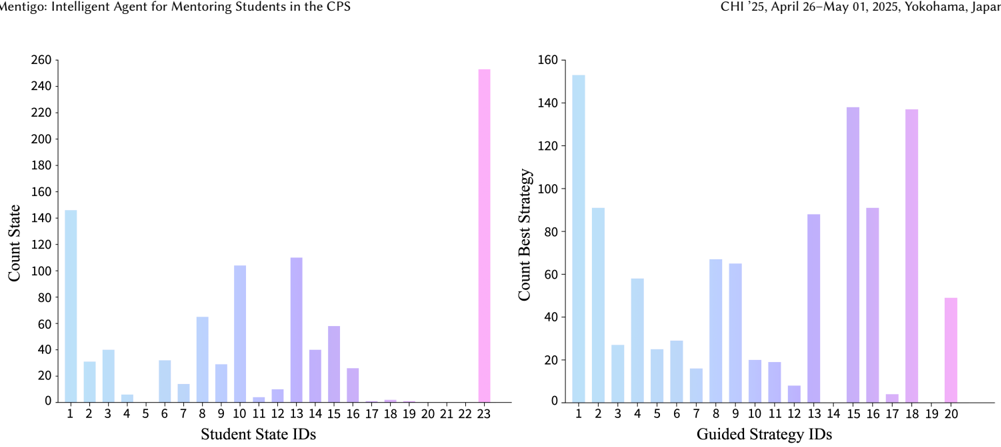
“To achieve the first three design goals (DG1-DG3), we collected and structured data from human mentors, which forms the foundation of the database in three parts: stages, states, and strategies.”
Learning Outcomes of Global Project-Based Learning: Insights From Teaching Assistants
Kitpo, N., Kongwat, S., HIRABAYASHI, T., Lawanont, W., Hasegawa, H., Inoue, M., & Khantachawana, A. (2020) · Journal of JSEE · doi:10.4307/jsee.68.5_39 · Cited by 2 · cited 2×
“The system divides the learning process into six distinct phases: "Problem Discovery," "Information Collection," "Problem Definition," "Solution Ideation," "Solution Evaluation," and "Solution Implementation."”
Personality Type and Persuasive Strategies in Writing of Junior High School Students
Bañez, R. M., Mendoza, B. M., Reondanga, A. C., & Villanueva, M. O. (2018) · International Educational Research · doi:10.30560/ier.v1n2p84 · Cited by 1 · cited 1×
“…gain, system usability, and task load, 2) learning reports created by participants during tasks to evaluate task performance outcomes, 3) screen recordings and system logs to capture student-system interaction data, and 4) in-depth interviews to gather qualitative feedback on user experiences.”
Schroth, S. T., & Helfer, J. A. (2023) · IGI Global eBooks · doi:10.4018/978-1-6684-6371-0.ch008 · Cited by 1
COLP: Scaffolding Children's Online Long-term Collaborative LearningPreprint
Zha, S., Tang, Y., Gong, J., et al. (2025) · arXiv (Cornell University) · doi:10.48550/arxiv.2502.03226 · cited 1×
“Although concerns about its misuse persist, there is no doubt that GAI has become one of the most transfor-mative technologies in recent years [39].”
Self-citation
Research works printed but not linked: 19
- 10.1145/3527927.3532793 · DOI
- Lei Huang Weijiang Yu Weitao Ma Weihong Zhong Zhangyin Feng Haotian Wang Qianglong Chen Weihua Peng Xiaocheng Feng Bing Qin et al. 2023. A survey on hallucination in large language models: Principles taxonomy challenges and open questions. ACM Transactions on Information Systems (2023).
- Gwo-Jen Hwang and Nian-Shing Chen. 2023. Exploring the potential of generative artificial intelligence in education: applications challenges and future research directions. Journal of Educational Technology & Society 26 2 (2023).
- YongJu Jeon and TaeYoung Kim. 2017. The Analysis of Cognitive and Affective Effects on the CT-CPS Instructional Model for the Software Education Class in Middle School. The Journal of Korean association of computer education 20 4 (2017) 47–57.
- Hamid Khan. 2014. Teaching Effectiveness Using Emotional Intelligence of Cognitive, Affective and Psychomotor Behaviors. In Competition Forum , Vol. 12. American Society for Competitiveness, 88.
- Meng Li Siyu Zha Wei Gong and Yunpeng Jia. 2023. A Survey of Human-Computer Interaction Technology in Intelligent Home for Children‘s Learning. Journal of Computer-Aided Design & Computer Graphics 35 2 (2023) 248–261.
- Wei-Lun Lin Yunn-Wen Lien and Chun-Hui Jen. 2005. Is the More the Better? The Role of Divergent Thinking in Creative Problem Solving. Chinese Journal of Psychology (2005).
- Yiren Liu, Si Chen, Haocong Cheng, Mengxia Yu, Xiao Ran, Andrew Mo, Yiliu Tang, and Yun Huang. 2024. CoQuest: Exploring Research Question Co-Creation with an LLM-based Agent. In 2024 CHI Conference on Human Factors in Computing Sytems, CHI 2024. Association for Computing Machinery, 17.
- Regina P McCurdy Megan L Nickels and Sarah B Bush. 2020. Problem-based design thinking tasks: Engaging student empathy in STEM. The electronic journal for research in science & mathematics education 24 2 (2020) 22–55.
- Tracy C Missett Carolyn M Callahan and Holly Hertberg-Davis. 2013. Evaluating the impacts of destination ImagiNation on the creative problem solving skills of middle school students. The International Journal of Creativity and Problem Solving 23 2 (2013) 97–112.
- Siti Neno Muawiyah. 2023. Fostering Creative and Critical Thinking Skills through Collaborative Learning: A Theoretical Approach. In International Student Conference on Business, Education, Economics, Accounting, and Management (ISC-BEAM) , Vol. 1. 612–620.
- Alexander Tobias Neumann, Peter de Lange, Ralf Klamma, Norbert Pengel, and Tamar Arndt. 2020. Intelligent Mentoring Bots in Learning Management Systems: Concepts, Realizations and Evaluations. In International Symposium on Emerging Technologies for Education. Springer, 3–14.
- Shakked Noy and Whitney Zhang. 2023. Experimental evidence on the productivity effects of generative artificial intelligence. Available at SSRN 4375283 (2023).
- Katharina Prummer, Salomé Human-Vogel, Marien Alet Graham, and Daniel Pittich. 2024. The role of mentoring in developing leaders‘ emotional intelligence: exploring mentoring types, emotional intelligence, organizational factors, and gender. In Frontiers in Education , Vol. 9. Frontiers Media SA, 1393660.
- Alexander Renkl and Robert K Atkinson. 2016. Structuring the transition from example study to problem solving in cognitive skill acquisition: A cognitive load perspective. In Cognitive Load Theory. Routledge, 15–22.
- Douglas Summers-Stay, Clare R Voss, and Stephanie M Lukin. 2023. Brainstorm, then Select: a Generative Language Model Improves Its Creativity Score. In The AAAI-23 Workshop on Creative AI Across Modalities.
- Shifang Tang. 2019. An exploratory study of the cultural impact on middle school students’ collaborative problem-solving learning. Educational Research Quarterly 42 4 (2019).
- Marek Urban Filip Děchtěrenko Jiří Lukavskỳ Veronika Hrabalová Filip Svacha Cyril Brom and Kamila Urban. 2023. Can ChatGPT Improve Creative Problem-Solving Performance in University Students? (2023). · DOI
- Chai Xun Yu and Ganakumaran Subramaniam. 2017. A mentoring approach for developing creativity in teaching. Malaysian Journal of ELT Research 14 1 (2017).
Cited by
The benefits and dangers of anthropomorphic conversational agents
Peter, S., Riemer, K., & West, J. D. (2025) · Proceedings of the National Academy of Sciences · doi:10.1073/pnas.2415898122 · Cited by 110
Lin, X., & Tan, H. (2025) · Systems · doi:10.3390/systems13100840 · Cited by 22
Goyez, J. P. L., González‐Briones, A., & Demazeau, Y. (2026) · Applied Sciences · doi:10.3390/app16031323 · Cited by 33
AI‐Augmented Approaches to Creative Problem‐Solving: A Metacognitive Perspective
Hoßbach, C., & Isaksen, S. G. (2025) · Creativity and Innovation Management · doi:10.1111/caim.70003 · Cited by 26
Zheng, L., Shi, Z., & Gao, L. (2025) · Computers & Education · doi:10.1016/j.compedu.2025.105489 · Cited by 22
Metadata
- Authors
- Zha, S., Liu, Y., Zheng, C., Xu, J., Yu, F., Gong, J., & Xu, Y.
- Affiliations
- Tsinghua University (CN)
- Hong Kong University of Science and Technology (HK)
- University of California, Los Angeles (US)
- Beijing University of Technology (CN)
- Venue
- Proceedings of the 2025 CHI Conference on Human Factors in Computing Systems
- Publisher
- ACM
- Published
- 2025-04-25
- Pages
- 1-22
- OpenAlex
- W4409885113
- Cited by
- 19
- References
- 80
- Citations by year
- 2026: 11 · 2025: 8
- FWCI
- 18.02
- Type
- conference paper
- Language
- en
- Open access
- hybrid
- doi.org
- Licence
- Locations
- CHI Conference on Human Factors in Computing Systems (publishedVersion, cc-by)
- arXiv (Cornell University) (submittedVersion, cc-by-nc-sa)
- arXiv (Cornell University)
- Funders
- National Natural Science Foundation of China (Grant No. 62441219)
- Beijing Municipal Science and Technology Project (Z231100010323005)
- Topics
- Physical Sciences › Computer Science › Artificial Intelligence › Intelligent Tutoring Systems and Adaptive Learning
- Social Sciences › Education › Artificial Intelligence in Education
- Social Sciences › Psychology › Experimental and Cognitive Psychology › Creativity in Education and Neuroscience
- Keywords
- creative problem solving, large language models, junior high school students, personalized feedback, adaptive guidance, creativity, student engagement, educational technology
About these checks
Registry, retraction, Cites and statistics results are computed, not judged, with one exception: a printed reference that no index lists is read once by a model before it counts as a citation error. Claims are extracted by a model and kept only when their quote appears verbatim in the text; each cited source is then checked, with a model’s help, for whether it says what the claim relies on. Those verdicts can be wrong — read the claim’s quote and the cited source before relying on one.
Statistics and arithmetic are recomputed, not judged.
Confidence bands are shown only for fields calibrated on our annotated test set. None is calibrated yet, so no band is shown.
What counts as a claim ›How we measure confidence ›How we check this ›
Are you an author, or do you see a problem with this page? Request a review
Data sources
Bibliographic data: Semantic Scholar, OpenAlex, Crossref.
Contains information from the Semantic Scholar Academic Graph Datasets, made available under the ODC Attribution License (ODC-BY 1.0).
Semantic Scholar’s data is described in: Kinney, R., et al. (2023). The Semantic Scholar Open Data Platform. arXiv:2301.10140.
