

The DOI matches its Crossref record; 283 of the 283 references it cites were found in a registry or an index.
Glutathione Homeostasis and Functions: Potential Targets for Medical Interventions
Open accessAbstract
Glutathione (GSH) is a tripeptide, which has many biological roles including protection against reactive oxygen and nitrogen species. The primary goal of this paper is to characterize the principal mechanisms of the protective role of GSH against reactive species and electrophiles. The ancillary goals are to provide up-to-date knowledge of GSH biosynthesis, hydrolysis, and utilization; intracellular compartmentalization and interorgan transfer; elimination of endogenously produced toxicants; involvement in metal homeostasis; glutathione-related enzymes and their regulation; glutathionylation of sulfhydryls. Individual sections are devoted to the relationships between GSH homeostasis and pathologies as well as to developed research tools and pharmacological approaches to manipulating GSH levels. Special attention is paid to compounds mainly of a natural origin (phytochemicals) which affect GSH-related processes. The paper provides starting points for development of novel tools and provides a hypothesis for investigation of the physiology and biochemistry of glutathione with a focus on human and animal health.
Overview
The claims and statistics of this paper haven’t been checked yet.
Run the check — free, no account needed. It reads the open-access text and checks the sources it cites.
Integrity signals
Registry
Cites
Statistics
Figures
Verification
Claims the paper makes
The claims and statistics of this paper haven’t been checked yet.
Run the check — free, no account needed. It reads the open-access text and checks the sources it cites.
Claims other papers make about this one
Each is checked against this paper’s own text: does it say what the citing paper says it does?
In the citing paper
“The abundance of GSH is unusually high, the cytosol concentration is ca 1–11 mM, mitochondria contain 6–10 mM, and nuclei 3–15 mM of GSH.”
From Reactive Oxygen Species, Toxicity, Oxidative Stress, and Antioxidants: Chronic Diseases and Aging (2023) · cites this paper as Lushchak 2012
Self-check
Percentages, sums and reported differences re-computed from the paper’s own numbers.
The self-check needs the paper’s full text.
Citations
Cites
Colowick, S. P., Joshi, M. D., Jagannathan, & KAPLAN, N. O. (1966) · Cited by 26,137
Free radicals in biology and medicine
Gutteridge, J. M. C. (1991) · General Pharmacology The Vascular System · doi:10.1016/0306-3623(91)90478-o · Cited by 17,178
Aging: a theory based on free radical and radiation chemistry
Harman, D. (1956) · Journal of Gerontology · doi:10.1093/geronj/11.3.298 · Cited by 8,567
Metals, Toxicity and Oxidative Stress
Valko, M., Morris, H., & Cronin, M. (2005) · Current Medicinal Chemistry · doi:10.2174/0929867053764635 · Cited by 5,018
Oxidative stress: oxidants and antioxidants
Sies, H. (1997) · Experimental Physiology · doi:10.1113/expphysiol.1997.sp004024 · Cited by 4,577
Environmentally induced oxidative stress in aquatic animals
Lushchak, V. I. (2011) · Aquatic Toxicology · doi:10.1016/j.aquatox.2010.10.006 · Cited by 2,729
Self-citationThe Nrf2-antioxidant response element signaling pathway and its activation by oxidative stress
Nguyen, T., Nioi, P., & Pickett, C. B. (2009) · Journal of Biological Chemistry · doi:10.1074/jbc.r900010200 · Cited by 2,655
Regulation of glutathione synthesis
Lu, S. C.-L. (2008) · Molecular Aspects of Medicine · doi:10.1016/j.mam.2008.05.005 · Cited by 2,131
The Biologic Clock: The Mitochondria?
Harman, D. (1972) · Journal of the American Geriatrics Society · doi:10.1111/j.1532-5415.1972.tb00787.x · Cited by 2,019
The importance of glutathione in human disease
Townsend, D. M., Tew, K. D., & Tapiero, H. (2003) · Biomedicine & Pharmacotherapy · doi:10.1016/s0753-3322(03)00043-x · Cited by 2,009
Research works printed but not linked: 12
- 2007, Cellular & Molecular Immunology, 4, 353
- 2005, Ukrainskii Biokhimicheskii Zhurnal, 77, 35
- 1988, Cancer Research, 48, 2764
- 1996, Pathologie Biologie, 44, 57
- 1994, American Journal of Physiology, 266, R979
- 2009, Reviews on Environmental Health, 24, 129
- 2000, Cellular and Molecular Life Sciences, 57, 1825
- 1967, National Cancer Institute monograph, 27, 81
- 10.3892/ijo-00000475 · DOI
- 2007, International Journal of Molecular Medicine, 19, 165
- 1989, International Journal of Radiation Oncology Biology Physics, 6, 1325
- 2004, The Brazilian Journal of Infectious Diseases, 8, 363
Cited by
Sorted by citations
Reactive Oxygen Species, Toxicity, Oxidative Stress, and Antioxidants: Chronic Diseases and Aging
Jomova, K., Raptova, R., Alomar, S. Y., Alwasel, S. H., Nepovimova, E., Kuca, K., & Valko, M. (2023) · Archives of Toxicology · doi:10.1007/s00204-023-03562-9 · Cited by 2,638
Free radicals, reactive oxygen species, oxidative stress and its classification
Lushchak, V. I. (2014) · Chemico-Biological Interactions · doi:10.1016/j.cbi.2014.10.016 · Cited by 1,665
Self-citationOxidative Stress in Neurodegenerative Diseases
Simonian, N. A., & Coyle, J. T. (1996) · Annual Review of Pharmacology and Toxicology · doi:10.1146/annurev.pa.36.040196.000503 · Cited by 1,377
Mitochondrial energetics in the kidney
Bhargava, P., & Schnellmann, R. G. (2017) · Nature Reviews Nephrology · doi:10.1038/nrneph.2017.107 · Cited by 1,391
Glutathione metabolism in cancer progression and treatment resistance
Bansal, A., & Simon, M. C. (2018) · The Journal of Cell Biology · doi:10.1083/jcb.201804161 · Cited by 1,253
“Apart from the classical antioxidant role, GSH also has several organelle-specific functions discussed in detail by Lushchak (2012).”
BackgroundRole of Glutathione in Cancer Progression and Chemoresistance
Traverso, N., Ricciarelli, R., Nitti, M., Marengo, B., Furfaro, A. L., Pronzato, M. A., Marinari, U. M., & Domenicotti, C. (2013) · Oxidative Medicine and Cellular Longevity · doi:10.1155/2013/972913 · Cited by 1,208
Niu, B., Liao, K., Zhou, Y., Wen, T., Quan, G., Pan, X., & Wu, C. (2021) · Biomaterials · doi:10.1016/j.biomaterials.2021.121110 · Cited by 1,168
Oxidative Stress in Neurodegenerative Diseases
Niedzielska, E., Smaga, I., Gawlik, M., Moniczewski, A., Stankowicz, P., Pera, J., & Filip, M. (2016) · Molecular Neurobiology · doi:10.1007/s12035-015-9337-5 · Cited by 800
Chemical biology of anticancer gold( iii ) and gold( i ) complexes
Zou, T., Lum, C. T., Lok, C., Zhang, J., & Che, C. (2015) · Chemical Society Reviews · doi:10.1039/c5cs00132c · Cited by 628
Endogenous non-enzymatic antioxidants in the human body
Mirończuk-Chodakowska, I., Witkowska, A. M., & Zujko, M. E. (2017) · Advances in Medical Sciences · doi:10.1016/j.advms.2017.05.005 · Cited by 620
Srinivasarao, M., & Low, P. S. (2017) · Chemical Reviews · doi:10.1021/acs.chemrev.7b00013 · Cited by 624
Lushchak, V. I., Matviishyn, T. M., Hušák, V., Storey, J. M., & Storey, K. B. (2018) · EXCLI journal · doi:10.17179/excli2018-1710 · Cited by 578
“In this case, changes in the levels of different glutathione forms (either reduced GSH or oxidized GSSG) may indicate a shift in the prooxidant-antioxidant balance, which often takes place under pesticide-induced stress conditions (Atamaniuk et al., 2013; Lushchak, 2012; Maher, 2005).”
BackgroundMethodInfluentialSelf-citationSilymarin as Supportive Treatment in Liver Diseases: A Narrative Review
Gillessen, A., & Schmidt, H. (2020) · Advances in Therapy · doi:10.1007/s12325-020-01251-y · Cited by 521
TGF-β Promotes Heterogeneity and Drug Resistance in Squamous Cell Carcinoma
Oshimori, N., Oristian, D., & Fuchs, E. (2015) · Cell · doi:10.1016/j.cell.2015.01.043 · Cited by 471
Altered amino acid concentrations in NAFLD: Impact of obesity and insulin resistance
Gaggini, M., Carli, F., Rosso, C., Buzzigoli, E., Marietti, M., Latta, V. D., Ciociaro, D., Abate, M. L., Gambino, R., Cassader, M., et al. (2017) · Hepatology · doi:10.1002/hep.29465 · Cited by 476
“GSH is an antioxidant molecule produced by several tissues in response to oxidative stress and increased production of reactive oxygen species (ROS).((41,42)) Oxidative stress is one of the mechanisms responsible for liver damage and is characterized by mitochondrial dysfunction, impaired oxidation, and production of…”
BackgroundThe promise of N-acetylcysteine in neuropsychiatry
Berk, M., Malhi, G. S., Gray, L. J., & Dean, O. M. (2013) · Trends in Pharmacological Sciences · doi:10.1016/j.tips.2013.01.001 · Cited by 434
Effector T Cells Abrogate Stroma-Mediated Chemoresistance in Ovarian Cancer
Wang, W., Kryczek, I., Dostál, L., Lin, H., Tan, L., Zhao, L., Lu, F., Wei, S., Maj, T., Peng, D., et al. (2016) · Cell · doi:10.1016/j.cell.2016.04.009 · Cited by 422
Antioxidants of Edible Mushrooms
Kozarski, M., Klaus, A., Jakovljevic, D., Todorovic, N., Vunduk, J., Petrović, P., Niksic, M., Vrvic, M., & Van Griensven, L. (2015) · Molecules · doi:10.3390/molecules201019489 · Cited by 413
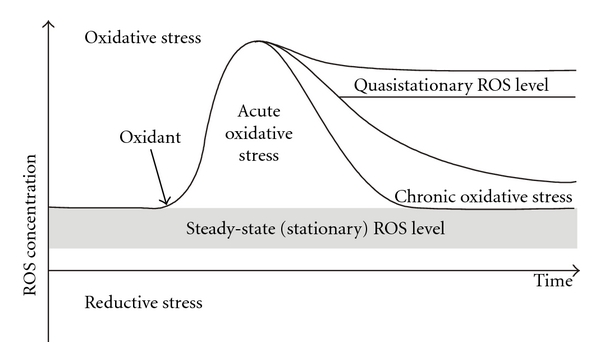
“Under high intensity oxidative stress perturbations of mitochondrial permeability transition pore, activation of apoptosis cascade, destruction of electron transporters take place, which may culminate in apoptosis and/or necrosis [23,69].”
BackgroundReactive Oxygen Species‐Regulating Strategies Based on Nanomaterials for Disease Treatment
Zhang, C., Wang, X., Du, J., Gu, Z., & Zhao, Y. (2020) · Advanced Science · doi:10.1002/advs.202002797 · Cited by 407
RONS and Oxidative Stress: An Overview of Basic Concepts
Aranda‐Rivera, A. K., Cruz‐Gregorio, A., Arancibia‐Hernández, Y. L., Cruz, E. Y. H., & Pedraza‐Chaverrí, J. (2022) · Oxygen · doi:10.3390/oxygen2040030 · Cited by 437
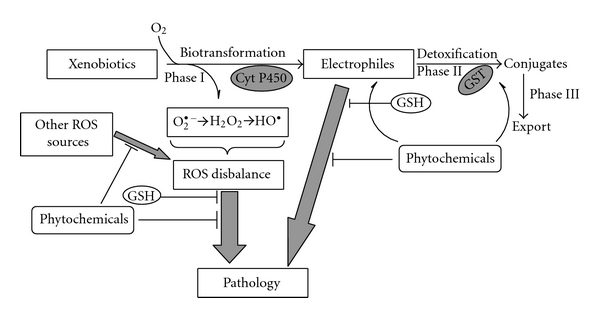
“For example, the conjugation of GSH by the enzyme GST with xenobiotic compounds produces non-toxic products, which affects their detoxification [269].”
BackgroundContaminant-induced oxidative stress in fish: a mechanistic approach
Lushchak, V. I. (2015) · Fish Physiology and Biochemistry · doi:10.1007/s10695-015-0171-5 · Cited by 392
Self-citationGlutathione-Related Enzymes and Proteins: A Review
Vašková, J., Kočan, L., Vaško, L., & Perjési, P. (2023) · Molecules · doi:10.3390/molecules28031447 · Cited by 395
“As Lushchak [60] discussed, inhibition of glutathione reductase, phosphofructokinase, fatty acid synthase, or activation of fructose-1,6-bisphosphatase by CoASSG was shown.”
BackgroundJanaszak-Jasiecka, A., Płoska, A., Wierońska, J. M., Dobrucki, L. W., & Kalinowski, L. (2023) · Cellular & Molecular Biology Letters · doi:10.1186/s11658-023-00423-2 · Cited by 358
“Glutathione is produced ubiquitously in eukaryotes, and its intracellular concentration is in the millimolar range [153].”
BackgroundClinical perspective on oxidative stress in sporadic amyotrophic lateral sclerosis
D’Amico, E., Factor-Litvak, P. R., Santella, R. M., & Mitsumoto, H. (2013) · Free Radical Biology and Medicine · doi:10.1016/j.freeradbiomed.2013.06.029 · Cited by 328
Targeting Glutamine Metabolism for Cancer Treatment
Choi, Y., & Park, K. (2017) · Biomolecules & Therapeutics · doi:10.4062/biomolther.2017.178 · Cited by 335
“GSH can be regenerated from its oxidized form (GSSG), along with the conversion of NADPH to NADP+ (Gorrini et al., 2013).”
BackgroundChanges in Glutathione Content in Liver Diseases: An Update
Vairetti, M., Pasqua, L. G. D., Cagna, M., Richelmi, P., Ferrigno, A., & Berardo, C. (2021) · Antioxidants · doi:10.3390/antiox10030364 · Cited by 331
“From these considerations, it emerges that GSH cannot be considered a mere free radical scavenger but that it has a weighty role in the network governing the choice between survival, necrosis and apoptosis [9,10] as well as in cell signaling [10,11] and metabolism [3,12].”
BackgroundInfluentialRecent Progress in Bioconjugation Strategies for Liposome-Mediated Drug Delivery
Almeida, B., Nag, O. K., Rogers, K. E., & Delehanty, J. B. (2020) · Molecules · doi:10.3390/molecules25235672 · Cited by 305
“Utilization of the strong reducing conditions of the cellular cytosol, where glutathione (GSH) concentrations are 10 mM [45], has become a very effective way to mediate the release of drugs through the intracellular reduction of disulfide linkages.”
BackgroundNatasha, N., Shahid, M. A. R., Khalid, S., Bibi, I., Bundschuh, J., Niazi, N. K., & Dumat, C. (2019) · The Science of The Total Environment · doi:10.1016/j.scitotenv.2019.134749 · Cited by 298
RetractedSadiq, I. Z. (2021) · Current Molecular Medicine · doi:10.2174/1566524022666211222161637 · Cited by 293
Oxidative Stress in Pulmonary Fibrosis
Otoupalova, E., Smith, S., Cheng, G., & Thannickal, V. J. (2020) · Comprehensive physiology · doi:10.1002/cphy.c190017 · Cited by 312
Mitochondria in Sepsis-Induced AKI
Sun, J., Zhang, J., Tian, J., Virzì, G. M., Digvijay, K., Bravo, L. C., Yin, Y., Rosner, M. H., & Ronco, C. (2019) · Journal of the American Society of Nephrology · doi:10.1681/asn.2018111126 · Cited by 265
The Necroptosis Adaptor RIPK3 Promotes Injury-Induced Cytokine Expression and Tissue Repair
Moriwaki, K., Balaji, S., McQuade, T. J., Malhotra, N., Kang, J., & Chan, F. K.-M. (2014) · Immunity · doi:10.1016/j.immuni.2014.09.016 · Cited by 259
Ashok, A., Andrabi, S. S., Mansoor, S., Kuang, Y., Kwon, B. K., & Labhasetwar, V. D. (2022) · Antioxidants · doi:10.3390/antiox11020408 · Cited by 270
“GSH can directly neutralize ROS and is an important factor in the xenobiotic metabolism [140].”
BackgroundThe Multifaceted Role of Glutathione S-Transferases in Health and Disease
Mazari, A. M. A., Zhang, L., Ye, Z., Zhang, J., Tew, K. D., & Townsend, D. M. (2023) · Biomolecules · doi:10.3390/biom13040688 · Cited by 260
Formaldehyde in brain: an overlooked player in neurodegeneration?
Tulpule, K., & Dringen, R. (2013) · Journal of Neurochemistry · doi:10.1111/jnc.12356 · Cited by 241
Mitochondrial Glutathione in Cellular Redox Homeostasis and Disease Manifestation
Chen, T., Wang, H., Chang, C.-J., & Lee, S. (2024) · International Journal of Molecular Sciences · doi:10.3390/ijms25021314 · Cited by 250
“The dicarboxylate carrier and 2-oxoglutarate carrier were identified as the main transporters of GSH [65].”
BackgroundSrikanth, K., Pereira, E., Duarte, A. C., & Ahmad, I. (2013) · Environmental Science and Pollution Research · doi:10.1007/s11356-012-1459-y · Cited by 229
Soldevila‐Barreda, J. J., & Metzler‐Nolte, N. (2019) · Chemical Reviews · doi:10.1021/acs.chemrev.8b00493 · Cited by 219
The mechanism of ferroptosis and its related diseases
Feng, S., Tang, D., Wang, Y., Li, X., Bao, H., Tang, C., Dong, X., Li, X., Yang, Q., Yan, Y., et al. (2023) · Molecular Biomedicine · doi:10.1186/s43556-023-00142-2 · Cited by 241
Metabolic cell death in cancer: ferroptosis, cuproptosis, disulfidptosis, and beyond
Mao, C., Wang, M., Zhuang, L., & Gan, B. (2024) · Protein & Cell · doi:10.1093/procel/pwae003 · Cited by 228
“Cysteine, in turn, serves as the essential precursor for the synthesis of glutathione (GSH), a tripeptide of paramount importance in maintaining redox homeostasis (Lushchak, 2012).”
BackgroundCopper signalling: causes and consequences
Kardos, J., Héja, L., Simon, Á., Jablonkai, I., Kovács, R., & Jemnitz, K. (2018) · Cell Communication and Signaling · doi:10.1186/s12964-018-0277-3 · Cited by 223
“Redox propensity of chelates between copper and pertinent peptides (tripeptide glutathione (γ-L-glutamyl-L-cysteinylglycine: GSH) [116, 117]; peptide fragments of matricellular calcium-binding glycoprotein (secreted protein, acidic and rich in cysteine: SPARC) Gly-His-Lys (GHK) (for a recent review see [118] and prote…”
Glutathione in Brain Disorders and Aging
Iskusnykh, I. Y., Zakharova, A. A., & Pathak, D. (2022) · Molecules · doi:10.3390/molecules27010324 · Cited by 213
“Redox reactions Neutralizes charges on ROS, RNS, and other reactive species [4]”
BackgroundTan, M., Yin, Y., Ma, X., Zhang, J., Pan, W., Tan, M., Zhao, Y., Yang, T., Jiang, T., & Li, H. (2023) · Cell Death and Disease · doi:10.1038/s41419-023-05645-y · Cited by 221
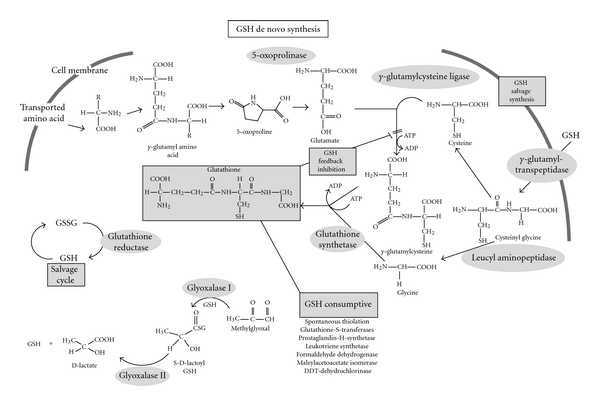
“Glutathione synthetase (GS) then catalyzes the combination of glycine residues and gammaglutamyl-cysteine to form GSH [31].”
BackgroundDNA damage by lipid peroxidation products: Implications in cancer, inflammation and autoimmunity
Gentile, F., Arcaro, A., Pizzimenti, S., Daga, M., Cetrangolo, G. P., Dianzani, C., Lepore, A., Graf, M., Ames, P. R. J., & Barrera, G. (2017) · AIMS Genetics · doi:10.3934/genet.2017.2.103 · Cited by 205
Optical imaging of localized chemical events using programmable diamond quantum nanosensors
Rendler, T., Neburková, J., Zemek, O., Kotek, J., Zappe, A., Chu, Z., Cígler, P., & Wrachtrup, J. (2017) · Nature Communications · doi:10.1038/ncomms14701 · Cited by 202
“Similarly, the intracellular GSH concentrations usually range from 0.5 to 10 mM, whereas extracellular values are almost three orders of magnitude lower 51 .”
InfluentialLushchak, O. V., Piroddi, M., Galli, F., & Lushchak, V. I. (2013) · Redox Report · doi:10.1179/1351000213y.0000000073 · Cited by 195
Self-citationCellular and subcellular oxidative stress parameters following severe spinal cord injury
Visavadiya, N. P., Patel, S. P., VanRooyen, J. L., Sullivan, P. G., & Rabchevsky, A. G. (2015) · Redox Biology · doi:10.1016/j.redox.2015.12.011 · Cited by 192
Redox Imbalance in Inflammation: The Interplay of Oxidative and Reductive Stress
Bellanti, F., Coda, A. R. D., Trecca, M. I., Buglio, A. L., Serviddio, G., & Vendemiale, G. (2025) · Antioxidants · doi:10.3390/antiox14060656 · Cited by 222
“The GSH/GSSG ratio is crucial for maintaining redox balance [67].”
The Glutathione System: A New Drug Target in Neuroimmune Disorders
Morris, G., Anderson, G., Dean, O. M., Berk, M., Gałecki, P., Martín-Subero, M., & Maes, M. H. J. (2014) · Molecular Neurobiology · doi:10.1007/s12035-014-8705-x · Cited by 194
Rizvi, S. A. A., Einstein, G. P., Tulp, O. L., Sainvil, F., & Branly, R. (2022) · Biomolecules · doi:10.3390/biom12101442 · Cited by 181
“removal from the body, is of great physiological importance as it is produced from the metabolism of choline, methanol, sarcosine, xenobiotics, and methionine [91].”
BackgroundChromium(VI) Toxicity in Legume Plants: Modulation Effects of Rhizobial Symbiosis
Stambulska, U. Y., Bayliak, M. M., & Lushchak, V. I. (2018) · BioMed Research International · doi:10.1155/2018/8031213 · Cited by 188
“In particular, Cr can form highly stable complexes with organic compounds such as peptides (glutathione), carbohydrates (especially pentoses), NADH, FADH2, and possibly also organic acids, and these complexes are stored in vacuoles of root cells [37, 43].”
BackgroundSelf-citationVitamin C and Cardiovascular Disease: An Update
Morelli, M. B., Gambardella, J., Castellanos, V., Trimarco, V., & Santulli, G. (2020) · Antioxidants · doi:10.3390/antiox9121227 · Cited by 178
Cee, V. J., Volak, L. P., Chen, Y., Bartberger, M. D., Tegley, C. M., Arvedson, T., McCarter, J. D., Tasker, A. S., & Fotsch, C. H. (2015) · Journal of Medicinal Chemistry · doi:10.1021/acs.jmedchem.5b01018 · Cited by 165
Sexual dimorphism in glutathione metabolism and glutathione-dependent responses
Wang, L., Ahn, Y. J., & Asmis, R. (2019) · Redox Biology · doi:10.1016/j.redox.2019.101410 · Cited by 159
Farokhnia, M., Azarkolah, A., Adinehfar, F., Khodaie-Ardakani, M.-R., Hosseini, S.-M.-R., Yekehtaz, H., Tabrizi, M., Rezaei, F., Salehi, B., Sadeghi, S.-M.-H., et al. (2013) · Clinical Neuropharmacology · doi:10.1097/wnf.0000000000000001 · Cited by 155
Dwivedi, D., Megha, K., Mishra, R., & Mandal, P. K. (2020) · Neurochemical Research · doi:10.1007/s11064-020-03030-1 · Cited by 161
Exercise-Induced Oxidative Stress and Dietary Antoxidative
Yavari, A., Javadi, M., Mirmiran, P., & Bahadoran, Z. (2015) · Asian Journal of Sports Medicine · doi:10.5812/asjsm.24898 · Cited by 159
Kung, H., Lin, K.-J., Kung, C., & Lin, T. (2021) · Biomedicines · doi:10.3390/biomedicines9080918 · Cited by 163
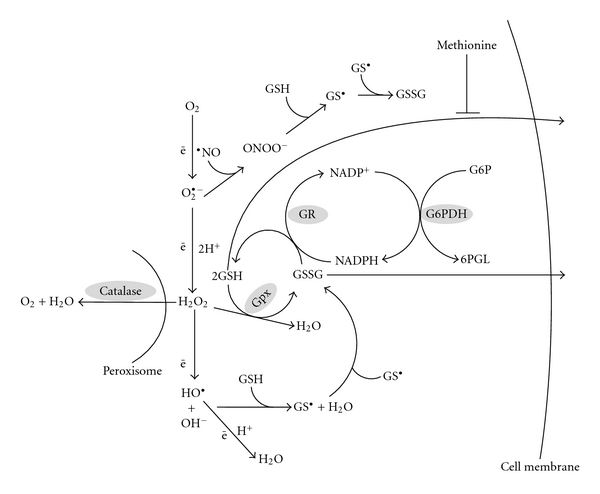
“Two molecules of GSH are oxidized into glutathione disulfide (GSSG) in order to eliminate H2O2 by GSH peroxidase (GPX) isozymes (GPX1 and GPX2) in the mitochondria [58,60].”
BackgroundInfluentialApproaches to the design of catalytic metallodrugs
Soldevila‐Barreda, J. J., & Sadler, P. J. (2015) · Current Opinion in Chemical Biology · doi:10.1016/j.cbpa.2015.01.024 · Cited by 152
Sappington, D. R., Siegel, E. R., Hiatt, G., Desai, A., Penney, R. B., Jamshidi-Parsian, A., Griffin, R. J., & Boysen, G. (2016) · Biochimica et Biophysica Acta (BBA) - General Subjects · doi:10.1016/j.bbagen.2016.01.021 · Cited by 143
“Glutathione, the most abundant thiol-compound, (i) functions as an antioxidant, (ii) is a precursor for conjugation reactions, (iii) participates in maintenance of the cysteine pool and (iv) contributes to the regulation of cellular processes, including apoptosis [20].”
BackgroundThe role of glutathione redox imbalance in autism spectrum disorder: A review
Bjørklund, G., Tinkov, A. A., Hosnedlová, B., Kizek, R., Ajsuvakova, O. P., Chirumbolo, S., Геннадиевна, С. М., Peana, M., Dadar, M., El-Ansary, A. K., et al. (2020) · Free Radical Biology and Medicine · doi:10.1016/j.freeradbiomed.2020.07.017 · Cited by 156
Glutathione Participation in the Prevention of Cardiovascular Diseases
Matuz‐Mares, D., Riveros‐Rosas, H., Vilchis‐Landeros, M. M., & Vázquez‐Meza, H. (2021) · Antioxidants · doi:10.3390/antiox10081220 · Cited by 152
“It is four times more effective than GSH monoester [61].”
BackgroundManchope, M. F., Calixto-Campos, C., Coelho-Silva, L., Zarpelon, A. C., Pinho-Ribeiro, F. A., Georgetti, S. R., Baracat, M. M., Casagrande, R., & Verri, W. A., Jr. (2016) · PLoS ONE · doi:10.1371/journal.pone.0153015 · Cited by 147
“GSH is an important redox cellular system, with efficacy partly driven by the direct interactions of sulfhydryl groups (-SH) with ROS, thereby promoting a direct detox reaction [50].”
BackgroundGlutathione: Role in Oxidative/Nitrosative Stress, Antioxidant Defense, and Treatments
Raj, S. R., Bhattacharyya, C., Sarkar, A., Chakraborty, S., Sircar, E., Dutta, S., & Sengupta, R. (2021) · ChemistrySelect · doi:10.1002/slct.202100773 · Cited by 155
Labarrere, C. A., & Kassab, G. S. (2022) · Frontiers in Nutrition · doi:10.3389/fnut.2022.1007816 · Cited by 153
Potential Role of Sulfur-Containing Antioxidant Systems in Highly Oxidative Environments
Mukwevho, E., Ferreira, Z., & Ayeleso, A. O. (2014) · Molecules · doi:10.3390/molecules191219376 · Cited by 146
Smart Targeting To Improve Cancer Therapeutics
Morales‐Cruz, M., Delgado, Y., Castillo, B., Figueroa, C. M., Molina, A., Torres, A., Milián, M., & Griebenow, K. H. (2019) · Drug Design Development and Therapy · doi:10.2147/dddt.s219489 · Cited by 146
Zare, I., Chevrier, D. M., Cifuentes‐Rius, A., Moradi, N., Xianyu, Y., Ghosh, S., Trapiella‐Alfonso, L., Tian, Y., Shourangiz-Haghighi, A., Mukherjee, S., et al. (2021) · Materials Today · doi:10.1016/j.mattod.2020.10.027 · Cited by 135
miR-145 micelles mitigate atherosclerosis by modulating vascular smooth muscle cell phenotype
Chin, D. D., Poon, C. J., Wang, J., Joo, J., Ong, V., Jiang, Z., Cheng, K., Plotkin, A., Magee, G. A., & Chung, E. J. (2021) · Biomaterials · doi:10.1016/j.biomaterials.2021.120810 · Cited by 138
The Implication of Reactive Oxygen Species and Antioxidants in Knee Osteoarthritis
Tudorachi, N. B., Totu, E. E., Fifere, A., Ardeleanu, V., Mocanu, V., Mircea, C., Işıldak, İ., Smilkov, K., & Cărăușu, E. M. (2021) · Antioxidants · doi:10.3390/antiox10060985 · Cited by 137
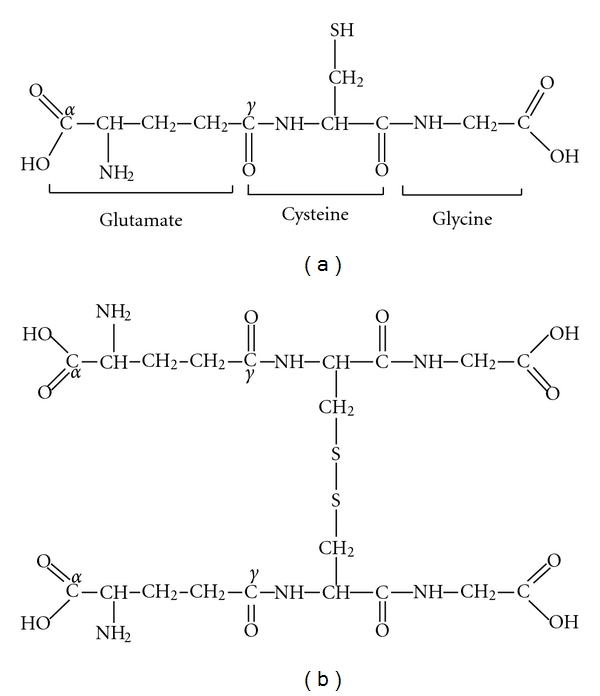
“Nonenzymatic Antioxidants Comprise Compounds such as GSH, Carotenoids, Vitamin C, Vitamin E, or Coenzyme Q10 GSH- is an antioxidant of endogenous source; it is a tripeptide comprising amino acids such as glycine, L-glutamic acid, or L-cysteine [44].”
BackgroundImpact of Supplementary Amino Acids, Micronutrients, and Overall Diet on Glutathione Homeostasis
Gould, R. L., & Pazdro, R. (2019) · Nutrients · doi:10.3390/nu11051056 · Cited by 134
“It is synthesized from the amino acids glutamate, cysteine, and glycine, produced exclusively in the cytosol [2], and transported to other subcellular organelles, including mitochondria [3], endoplasmic reticulum [4], and the nucleus [5].”
BackgroundResponsive Nanocarriers as an Emerging Platform for Cascaded Delivery of Nucleic Acids to Cancer
Liu, Y., Xu, C., Iqbal, S., Yang, X., & Wang, J. (2017) · Advanced Drug Delivery Reviews · doi:10.1016/j.addr.2017.03.004 · Cited by 130
“glutathione (GSH) in the cytoplasm [105] and high levels of reactive oxygen species [106].”
Antimicrobial Compounds in Food Packaging
Duda‐Chodak, A., Tarko, T., & Petka, K. (2023) · International Journal of Molecular Sciences · doi:10.3390/ijms24032457 · Cited by 135
Moura, R. P., Martins, C., Pinto, S. F. T., Sousa, F., & Sarmento, B. F. C. C. (2019) · Expert Opinion on Drug Delivery · doi:10.1080/17425247.2019.1583205 · Cited by 127
Redox-sensitive nanoscale drug delivery systems for cancer treatment
Mirhadi, E., Mashreghi, M., Maleki, M. F., Alavizadeh, S. H., Arabi, L., Badiee, A., & Jaafari, M. R. (2020) · International Journal of Pharmaceutics · doi:10.1016/j.ijpharm.2020.119882 · Cited by 122
Streptococcus pneumoniae Uses Glutathione To Defend against Oxidative Stress and Metal Ion Toxicity
Potter, A. J., Trappetti, C., & Paton, J. C. (2012) · Journal of Bacteriology · doi:10.1128/jb.01393-12 · Cited by 123
Bhattacharjee, A., Chakraborty, K., & Shukla, A. (2017) · Metallomics · doi:10.1039/c7mt00066a · Cited by 121
Mons, E., Jansen, I., Loboda, J., van Doodewaerd, B. R., Hermans, J., Verdoes, M., Boeckel, C. V. V., van Veelen, P. V., Turk, B., Turk, D., et al. (2019) · Journal of the American Chemical Society · doi:10.1021/jacs.8b11027 · Cited by 96
“Glutathione (GSH), a tripeptide with a cellular concentration of 0.5 − 10 mM, 39 is a commonly used biological thiol to assess the risk of iodiosyncratic toxicity.”
InfluentialPotęga, A. (2022) · Molecules · doi:10.3390/molecules27165252 · Cited by 123
“, it has a direct impact on DNA biosynthesis and the related proliferation process [8].”
BackgroundInfluentialeIF4A supports an oncogenic translation program in pancreatic ductal adenocarcinoma
Chan, K., Robert, F., Oertlin, C., Kapeller-Libermann, D., Avizonis, D., Gutierrez, J., Handly-Santana, A., Doubrovin, M., Park, J., Schoepfer, C., et al. (2019) · Nature Communications · doi:10.1038/s41467-019-13086-5 · Cited by 106
Nonenzymatic Exogenous and Endogenous Antioxidants
Moussa, Z., Judeh, Z. M. A., & Ahmed, S. A. (2019) · IntechOpen eBooks · doi:10.5772/intechopen.87778 · Cited by 123
Shahcheraghi, S. H., Salemi, F., Small, S., Syed, S., Salari, F., Alam, W., Cheang, W. S., Saso, L., & Khan, H. Z. (2023) · Phytotherapy Research · doi:10.1002/ptr.7754 · Cited by 119
“These findings may benefit the development of resveratrol in the prevention and intervention of human HCC (Bishayee, Barnes, Bhatia, Darvesh, & Carroll, 2010; Lushchak, 2012).”
BackgroundOxidative stress concept updated: Definitions, classifications and regulatory pathways implicated
Lushchak, V. I., & Storey, K. B. (2021) · EXCLI journal · doi:10.17179/excli2021-3596 · Cited by 124
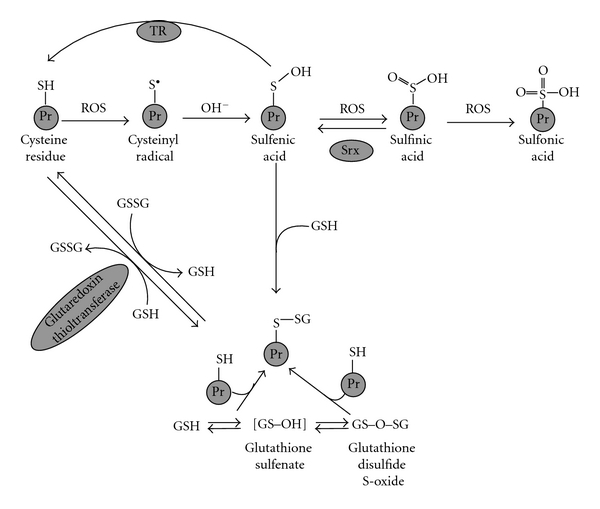
“Sulfenic acid derivatives may be returned to their initial form by several reductases such as thioredoxin and glutaredoxin (Lushchak, 2012).”
BackgroundSelf-citationPasserieux, E., Hayot, M., Jaussent, A., Carnac, G., Gouzi, F., Pillard, F., Picot, M., Böcker, K. B. E., Hugon, G., Pincemail, J., et al. (2014) · Free Radical Biology and Medicine · doi:10.1016/j.freeradbiomed.2014.09.014 · Cited by 114
Pleiotropic effects of alpha-ketoglutarate as a potential anti-ageing agent
Bayliak, M. M., & Lushchak, V. I. (2020) · Ageing Research Reviews · doi:10.1016/j.arr.2020.101237 · Cited by 117
Self-citationWong, C. Y. J., Al‐Salami, H., & Dass, C. R. (2020) · Journal of Pharmacy and Pharmacology · doi:10.1111/jphp.13359 · Cited by 112
Mitochondrial Dysfunction and Kidney Stone Disease
Chaiyarit, S., & Thongboonkerd, V. (2020) · Frontiers in Physiology · doi:10.3389/fphys.2020.566506 · Cited by 109
“GSSG can be reversed to mGSH by glutathione reductase that requires NADPH from the pentose phosphate pathway (Baudouin-Cornu et al., 2012; Lushchak, 2012; Bajic et al., 2019).”
BackgroundZhang, T., Hu, Y., Tang, M. X., Kong, L., Ying, J., Wu, T., Xue, Y., & Pu, Y. (2015) · International Journal of Molecular Sciences · doi:10.3390/ijms161023279 · Cited by 107
“Meanwhile, the liver is an important biosynthetic organ where ROS are produced in substantial amounts as side products of energy production in the mitochondrial electron transport chain or as the result of biosyntheses involving diverse oxygenases [34].”
BackgroundUllah, S., Li, Z., Hasan, Z., Khan, S. U., & Fahad, S. (2018) · Ecotoxicology and Environmental Safety · doi:10.1016/j.ecoenv.2018.06.002 · Cited by 107
Nuhu, F., Gordon, A. D., Sturmey, R. G., Seymour, A. L., & Bhandari, S. (2020) · Molecules · doi:10.3390/molecules25184196 · Cited by 108
“GSH is synthesised de novo from glutamate, cysteine and glycine [13] with a γ-carboxyl linkage between glutamate and cysteine of GSH, which is only susceptible to hydrolysis by γ glutamyltranspeptidase, [14] rather than the usual α-carboxyl group.”
BackgroundThe Universal Soldier: Enzymatic and Non-Enzymatic Antioxidant Functions of Serum Albumin
Belinskaia, D. A., Voronina, P. A., Shmurak, V. I., Vovk, M. A., Batalova, A. A., Jenkins, R. O., & Goncharov, N. V. (2020) · Antioxidants · doi:10.3390/antiox9100966 · Cited by 114
“5) oxidise their substrates to organic acids using GSH as a coenzyme [43].”
MethodItsumi, M., Inoue, S., Elia, A., Murakami, K., Sasaki, M., Lind, E. F., Brenner, D., Harris, I. S., Chio, I. I. C., Afzal, S., et al. (2015) · Cell Death and Differentiation · doi:10.1038/cdd.2015.38 · Cited by 107
Amine, R. E., Germini, D., Zakharova, V., Tsfasman, T., Sheval, E. V., Louzada, R. A. N., Dupuy, C., Bilhou‐Nabera, C., Hamadé, A., Najjar, F., et al. (2017) · Redox Biology · doi:10.1016/j.redox.2017.11.024 · Cited by 104
Amino acids and the regulation of oxidative stress and immune function in dairy cattle
Coleman, D. N., Lopreiato, V., Alharthi, A. S., & Loor, J. J. (2020) · Journal of Animal Science · doi:10.1093/jas/skaa138 · Cited by 110
Liang, C., Zheng, D., Lee, Y. H., Chan, T. K., Kumar, Y., Ho, W. E., Chen, J. Z., Tannenbaum, S. R., & Ong, C. N. (2016) · Scientific Reports · doi:10.1038/srep26076 · Cited by 99
How to Increase Cellular Glutathione
Giustarini, D., Milzani, A., Dalle‐Donne, I., & Rossi, R. (2023) · Antioxidants · doi:10.3390/antiox12051094 · Cited by 108
“The most important chemical functionality of GSH is its cysteinyl moiety, which can act as a radical scavenger and reducing agent via its sulfhydryl group (SH) or participate in detoxification reactions through its addition to the electrophilic center of xenobiotics [1].”
BackgroundThe Role of microRNAs in Metabolic Syndrome-Related Oxidative Stress
Włodarski, A., Strycharz, J., Wróblewski, A. M., Kasznicki, J., Drzewoski, J., & Śliwińska, A. (2020) · International Journal of Molecular Sciences · doi:10.3390/ijms21186902 · Cited by 99
“, glyoxalases) along with reducing, and thus, regenerating vast antioxidants such as vitamins C and E [41,42].”
BackgroundMetal- and metalloid-based compounds to target and reverse cancer multidrug resistance
Valente, A., Podolski-Renić, A., Poetsch, I., Filipović, N. R., López, Ó., Turel, I., & Heffeter, P. (2021) · Drug Resistance Updates · doi:10.1016/j.drup.2021.100778 · Cited by 98
Hashem, H. A. (2013) · Botany · doi:10.1139/cjb-2013-0164 · Cited by 98
The Biochemistry and Effectiveness of Antioxidants in Food, Fruits, and Marine Algae
Pruteanu, L.-L., Bailey, D. S., Grădinaru, A. C., & Jäntschi, L. (2023) · Antioxidants · doi:10.3390/antiox12040860 · Cited by 123
“It is mainly synthesized by the body [88], and it can increase the level of cytotoxic T cells in lymphocytes and neutralize free radicals [89,90].”
Background
Metadata
- Authors
- Lushchak, V. I.
- Affiliations
- Vasyl Stefanyk Carpathian National University (UA)
- Corresponding author
- Lushchak, Volodymyr I.
- Venue
- Journal of Amino Acids
- Publisher
- Wiley
- Published
- 2012-02-28
- Volume
- 2012
- Pages
- 1-26
- ISSN
- 2090-0104 (ISSN-L)
- 2090-0112
- PMC
- PMC3303626
- OpenAlex
- W2043037824
- Cited by
- 1,266
- References
- 283
- Citations by year
- 2026: 70 · 2025: 117 · 2024: 119 · 2023: 126 · 2022: 125 · 2021: 131 · 2020: 110 · 2019: 79 · 2018: 76 · 2017: 93 · 2016: 64 · 2015: 64 · 2014: 52 · 2013: 29 · 2012: 7
- FWCI
- 20.84
- Type
- journal article
- Language
- en
- Open access
- hybrid
- doi.org
- Locations
- Journal of Amino Acids (publishedVersion, cc-by)
- Europe PMC (PubMed Central) (publishedVersion, cc-by)
- PubMed Central (publishedVersion, cc-by)
- PubMed (publishedVersion)
- Funders
- Ministry of Education and Science of Ukraine (0106U002245)
- Topics
- Life Sciences › Biochemistry, Genetics and Molecular Biology › Biochemistry › Sulfur Compounds in Biology
- Life Sciences › Biochemistry, Genetics and Molecular Biology › Molecular Biology › Glutathione Transferases and Polymorphisms
- Life Sciences › Biochemistry, Genetics and Molecular Biology › Molecular Biology › Redox biology and oxidative stress
- Keywords
- glutathione, glutathione homeostasis, reactive oxygen species, reactive nitrogen species, glutathione synthesis, glutathione metabolism, metal homeostasis, glutathionylation, sulfhydryl groups, phytochemicals, disease pathology
About these checks
Registry, retraction, Cites and statistics results are computed, not judged, with one exception: a printed reference that no index lists is read once by a model before it counts as a citation error. Claims are extracted by a model and kept only when their quote appears verbatim in the text; each cited source is then checked, with a model’s help, for whether it says what the claim relies on. Those verdicts can be wrong — read the claim’s quote and the cited source before relying on one.
Statistics and arithmetic are recomputed, not judged.
Confidence bands are shown only for fields calibrated on our annotated test set. None is calibrated yet, so no band is shown.
What counts as a claim ›How we measure confidence ›How we check this ›
Are you an author, or do you see a problem with this page? Request a review
