

Motor Control and Neural Plasticity through Interhemispheric Interactions
Open accessThe DOI matches its Crossref record; 135 of the 135 references it cites were found in a registry or an index.
Abstract
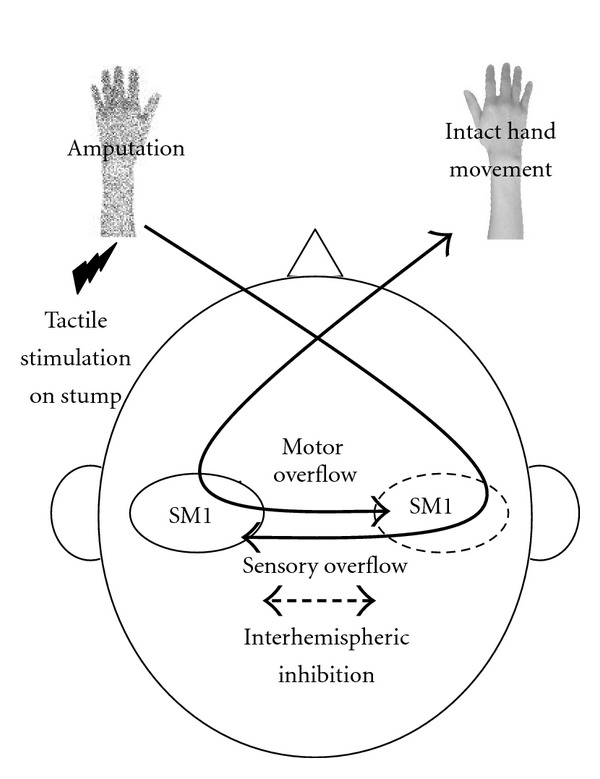
The corpus callosum, which is the largest white matter structure in the human brain, connects the 2 cerebral hemispheres. It plays a crucial role in maintaining the independent processing of the hemispheres and in integrating information between both hemispheres. The functional integrity of interhemispheric interactions can be tested electrophysiologically in humans by using transcranial magnetic stimulation, electroencephalography, and functional magnetic resonance imaging. As a brain structural imaging, diffusion tensor imaging has revealed the microstructural connectivity underlying interhemispheric interactions. Sex, age, and motor training in addition to the size of the corpus callosum influence interhemispheric interactions. Several neurological disorders change hemispheric asymmetry directly by impairing the corpus callosum. Moreover, stroke lesions and unilateral peripheral impairments such as amputation alter interhemispheric interactions indirectly. Noninvasive brain stimulation changes the interhemispheric interactions between both motor cortices. Recently, these brain stimulation techniques were applied in the clinical rehabilitation of patients with stroke by ameliorating the deteriorated modulation of interhemispheric interactions. Here, we review the interhemispheric interactions and mechanisms underlying the pathogenesis of these interactions and propose rehabilitative approaches for appropriate cortical reorganization.
Overview
The claims and statistics of this paper haven’t been checked yet.
Free: it reads the open-access text and checks the first 5 claims that cite a source we can check. Create a free account to check every claim.
Integrity signals
Registry
Cites
Statistics
Figures

Verification
Claims the paper makes
The claims and statistics of this paper haven’t been checked yet.
Free: it reads the open-access text and checks the first 5 claims that cite a source we can check. Create a free account to check every claim.
Claims other papers make about this one
Each is checked against this paper’s own text: does it say what the citing paper says it does?
The source backs part of the claim, not all of it — or backs it for a different population, condition or comparison.
In the citing paper
“This suggests that while the initiation of the reflex is slower in the elderly, the overall reflex duration stays comparable. Elderly individuals may rely on compensatory mechanisms, such as greater reliance on experience or adaptations to physiological changes.”
From Assessing neuromuscular system via patellar tendon reflex analysis using EMG in healthy individuals (2025) · cites this paper as [23]
Experimental — accuracy not yet measuredThe cited source says what the claim attributes to it.
In the citing paper
“Similarly, studies by Takeuchi et al. and Goble et al. highlighted how overactivation of specific brain regions, such as the prefrontal cortex and supplementary motor areas, may compensate for declines in motor control and cognitive tasks in older adults (23, 24).”
From Assessing neuromuscular system via patellar tendon reflex analysis using EMG in healthy individuals (2025) · cites this paper as [23]
Self-check
Percentages, sums and reported differences re-computed from the paper’s own numbers.
The self-check needs the paper’s full text.
Citations
Cites
Aging Gracefully: Compensatory Brain Activity in High-Performing Older Adults
Cabeza, R., Anderson, N. D., Locantore, J. K., & McIntosh, A. R. (2002) · NeuroImage · doi:10.1006/nimg.2002.1280 · Cited by 1,964
Memory and Executive Function in Aging and AD
Buckner, R. L. (2004) · Neuron · doi:10.1016/j.neuron.2004.09.006 · Cited by 1,508
Interhemispheric inhibition of the human motor cortex.
Ferbert, A., Priori, A., Rothwell, J. C., Day, B. L., Colebatch, J. G., & Marsden, C. D. (1992) · The Journal of Physiology · doi:10.1113/jphysiol.1992.sp019243 · Cited by 1,486
Influence of interhemispheric interactions on motor function in chronic stroke
Murase, N., Duque, J., Mazzocchio, R., & Cohen, L. G. (2004) · Annals of Neurology · doi:10.1002/ana.10848 · Cited by 1,472
Neuroplasticity Subserving Motor Skill Learning
Dayan, E., & Cohen, L. G. (2011) · Neuron · doi:10.1016/j.neuron.2011.10.008 · Cited by 1,408
Age differences in the frontal lateralization of verbal and spatial working memory revealed by PET
Reuter-Lorenz, P. A., Jonides, J., Smith, E. E., Hartley, A., Miller, A., Marshuetz, C., & Koeppe, R. A. (2000) · Journal of Cognitive Neuroscience · doi:10.1162/089892900561814 · Cited by 998
Non-invasive brain stimulation: a new strategy to improve neurorehabilitation after stroke?
Hummel, F. C., & Cohen, L. G. (2006) · The Lancet Neurology · doi:10.1016/s1474-4422(06)70525-7 · Cited by 838
Early consolidation in human primary motor cortex
Muellbacher, W., Ziemann, U., Wissel, J., Dang, N., Kofler, M., Facchini, S., Boroojerdi, B., Poewe, W., & Hallett, M. (2002) · Nature · doi:10.1038/nature712 · Cited by 803 · cited 1×
“In addition, the increased motor cortical excitability induced by inhibitory NIBS enhances the effects of motor training on the ipsilateral side [120, 121], as the increase in excitability in the motor cortex appears to be a necessity for motor learning [122, 123].”
BackgroundGrefkes, C., & Fink, G. R. (2011) · Brain · doi:10.1093/brain/awr033 · Cited by 632
Dynamic functional reorganization of the motor execution network after stroke
Wang, L., Yu, C., Chen, H., Qin, W., He, Y., Fan, F., Zhang, Y., Wang, M., Li, K., Zang, Y., et al. (2010) · Brain · doi:10.1093/brain/awq043 · Cited by 629
Research works printed but not linked: 8
- 2008, Reviews in the Neurosciences, 19, 451
- 1995, Experimental Brain Research, 104, 527
- 1999, Electroencephalography and Clinical Neurophysiology. Supplement, 51, 243
- 2003, American Journal of Neuroradiology, 24, 410
- 2003, American Journal of Neuroradiology, 24, 1049
- 2013, Neuropharmacology, 64, 579
- 2007, Restorative Neurology and Neuroscience, 25, 461
- 2010, Clinical Neurophysiology, 121, s316
Cited by
Hartwigsen, G., & Saur, D. (2019) · NeuroImage · doi:10.1016/j.neuroimage.2017.11.056 · Cited by 272
Motor learning in neurological rehabilitation
Levin, M. F., & Demers, M. (2021) · Disability and Rehabilitation · doi:10.1080/09638288.2020.1752317 · Cited by 198
Interactions between brain structure and behavior: The corpus callosum and bimanual coordination
Gooijers, J., & Swinnen, S. P. (2014) · Neuroscience & Biobehavioral Reviews · doi:10.1016/j.neubiorev.2014.03.008 · Cited by 175
Pisegna, J. M., Kaneoka, A., Pearson, W. G., Kumar, S., & Langmore, S. E. (2016) · Clinical Neurophysiology · doi:10.1016/j.clinph.2015.04.069 · Cited by 170
Morya, E., Monte-Silva, K., Bikson, M., Esmaeilpour, Z., Biazoli, C. E., Fonseca, A., Bocci, T., Farzan, F., Chatterjee, R., Hausdorff, J. M., et al. (2019) · Journal of NeuroEngineering and Rehabilitation · doi:10.1186/s12984-019-0581-1 · Cited by 166
Metadata
- Authors
- Takeuchi, N., Oouchida, Y., & Izumi, S.-I.
- Affiliations
- Tohoku University (JP)
- Corresponding author
- Takeuchi, Naoyuki
- Venue
- Neural Plasticity
- Publisher
- Wiley
- Published
- 2012
- Volume
- 2012
- Pages
- 1-13
- ISSN
- 1687-5443 (ISSN-L)
- 2090-5904
- PMC
- PMC3541646
- OpenAlex
- W1964353232
- Cited by
- 171
- References
- 134
- Citations by year
- 2026: 7 · 2025: 16 · 2024: 14 · 2023: 12 · 2022: 12 · 2021: 16 · 2020: 17 · 2019: 13 · 2018: 13 · 2017: 11 · 2016: 12 · 2015: 14 · 2014: 9 · 2013: 4
- FWCI
- 0.80
- Type
- journal article
- Language
- en
- Open access
- gold
- doi.org
- Locations
- Neural Plasticity (publishedVersion, cc-by)
- Europe PMC (PubMed Central) (publishedVersion, cc-by)
- PubMed Central (publishedVersion, cc-by)
- PubMed (publishedVersion)
- DOAJ (DOAJ: Directory of Open Access Journals) (submittedVersion, cc-by-sa)
- Funders
- Japan Society for the Promotion of Science (23650314)
- Topics
- Life Sciences › Neuroscience › Neurology › Transcranial Magnetic Stimulation Studies
- Life Sciences › Neuroscience › Cognitive Neuroscience › Hemispheric Asymmetry in Neuroscience
- Health Sciences › Medicine › Radiology, Nuclear Medicine and Imaging › Advanced Neuroimaging Techniques and Applications
- Keywords
- interhemispheric interaction, corpus callosum, motor control, hemispheric lateralization, motor cortex, stroke rehabilitation, diffusion tensor imaging, non-invasive brain stimulation, cortical reorganization, amputation, sex differences, motor training
- MeSH terms
- Aging, Brain Diseases, Corpus Callosum, Humans, Functional Laterality, Learning, Magnetic Resonance Imaging, Motor Skills, Neuronal Plasticity, Sex Factors, Stroke
About these checks
Registry, retraction, Cites and statistics results are computed, not judged, with one exception: a printed reference that no index lists is read once by a model before it counts as a citation error. Claims are extracted by a model and kept only when their quote appears verbatim in the text; each cited source is then checked, with a model’s help, for whether it says what the claim relies on. Those verdicts can be wrong — read the claim’s quote and the cited source before relying on one.
Statistics and arithmetic are recomputed, not judged.
Confidence bands are shown only for fields calibrated on our annotated test set. None is calibrated yet, so no band is shown.
What counts as a claim ›How we measure confidence ›How we check this ›
Are you an author, or do you see a problem with this page? Request a review
How to cite
Cite CoChat for the checks on this page, and the paper for its own findings.
- This page
- CoChat. (2026). Citation check: Motor Control and Neural Plasticity through Interhemispheric Interactions. https://app.cochat.ai/papers/10.1155/2012/823285
- The paper
- Takeuchi, N., Oouchida, Y., & Izumi, S.-I. (2012). Motor Control and Neural Plasticity through Interhemispheric Interactions. Neural Plasticity. https://doi.org/10.1155/2012/823285
Data sources
Bibliographic data: Semantic Scholar, OpenAlex, Crossref.
Contains information from the Semantic Scholar Academic Graph Datasets, made available under the ODC Attribution License (ODC-BY 1.0).
Semantic Scholar’s data is described in: Kinney, R., et al. (2023). The Semantic Scholar Open Data Platform. arXiv:2301.10140.
