

The DOI matches its Crossref record; 180 of the 184 references it cites were found in a registry or an index, and 4 are not checked yet.
Artificial Mitochondria Transfer: Current Challenges, Advances, and Future Applications
Open accessAbstract
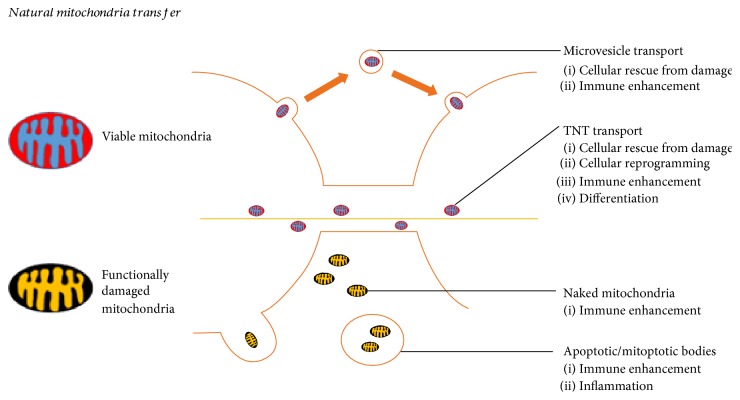
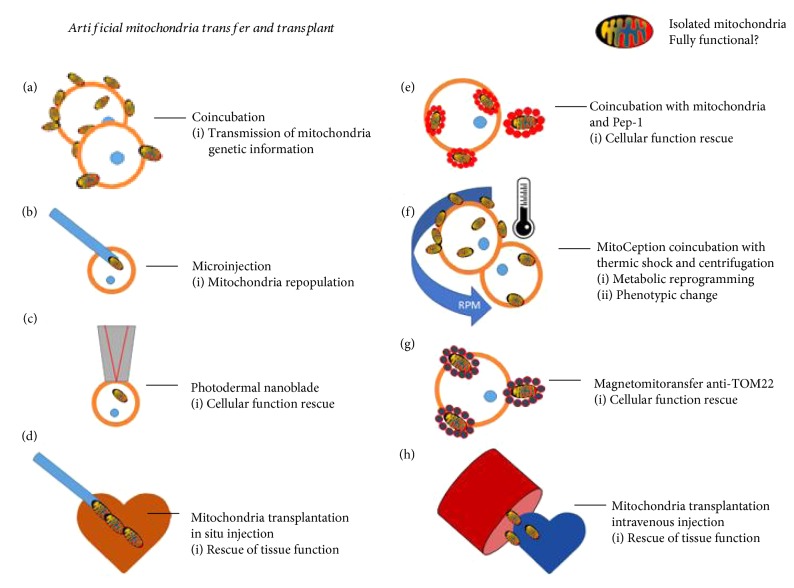
The objective of this review is to outline existing artificial mitochondria transfer techniques and to describe the future steps necessary to develop new therapeutic applications in medicine. Inspired by the symbiotic origin of mitochondria and by the cell’s capacity to transfer these organelles to damaged neighbors, many researchers have developed procedures to artificially transfer mitochondria from one cell to another. The techniques currently in use today range from simple coincubations of isolated mitochondria and recipient cells to the use of physical approaches to induce integration. These methods mimic natural mitochondria transfer. In order to use mitochondrial transfer in medicine, we must answer key questions about how to replicate aspects of natural transport processes to improve current artificial transfer methods. Another priority is to determine the optimum quantity and cell/tissue source of the mitochondria in order to induce cell reprogramming or tissue repair, in both in vitro and in vivo applications. Additionally, it is important that the field explores how artificial mitochondria transfer techniques can be used to treat different diseases and how to navigate the ethical issues in such procedures. Without a doubt, mitochondria are more than mere cell power plants, as we continue to discover their potential to be used in medicine.
Overview
The claims and statistics of this paper haven’t been checked yet.
Run the check — free, no account needed. It reads the open-access text and checks the sources it cites.
Integrity signals
Registry
Cites
Statistics
Figures
Verification
Claims the paper makes
The claims and statistics of this paper haven’t been checked yet.
Run the check — free, no account needed. It reads the open-access text and checks the sources it cites.
Claims other papers make about this one
Each is checked against this paper’s own text: does it say what the citing paper says it does?
The source backs part of the claim, not all of it — or backs it for a different population, condition or comparison.
In the citing paper
“Assessing the presence of extracellular mitochondria or their fragments by measuring ccf-mtDNA levels could allow on-flight direct estimation of cellular stress to take preventive measures of cumulative damage196,199–206.”
From Key points for the development of antioxidant cocktails to prevent cellular stress and damage caused by reactive oxygen species (ROS) during manned space missions (2021) · cites this paper as [200]
Experimental — accuracy not yet measured
Self-check
Percentages, sums and reported differences re-computed from the paper’s own numbers.
The self-check needs the paper’s full text.
Citations
Cites
Valadi, H., Ekström, K., Bossios, A., Sjöstrand, M., Lee, J. J., & Lötvall, J. O. (2007) · Nature Cell Biology · doi:10.1038/ncb1596 · Cited by 12,834
Extracellular vesicles: Exosomes, microvesicles, and friends
Raposo, G., & Stoorvogel, W. (2013) · Journal of Cell Biology · doi:10.1083/jcb.201211138 · Cited by 8,099
Kocher, T. D., Thomas, W. K., Meyer, A., Edwards, S. V., Pääbo, S., Villablanca, F. X., & Wilson, A. C. C. (1989) · Proceedings of the National Academy of Sciences · doi:10.1073/pnas.86.16.6196 · Cited by 4,964
Danial, N. N., & Korsmeyer, S. J. (2004) · Cell · doi:10.1016/s0092-8674(04)00046-7 · Cited by 4,651
Circulating mitochondrial DAMPs cause inflammatory responses to injury
Zhang, Q., Raoof, M., Chen, Y., Sumi, Y., Sursal, T., Junger, W., Brohi, K., Itagaki, K., & Hauser, C. J. (2010) · Nature · doi:10.1038/nature08780 · Cited by 3,812
PINK1/Parkin-mediated mitophagy is dependent on VDAC1 and p62/SQSTM1
Geisler, S., Holmström, K. M., Skujat, D., Fiesel, F. C., Rothfuss, O. C., Kahle, P. J., & Springer, W. (2010) · Nature Cell Biology · doi:10.1038/ncb2012 · Cited by 2,835
Mitochondrial DNA mutation associated with Leber’s hereditary optic neuropathy
Wallace, D. C., Singh, G., Lott, M. T., Hodge, J. A., Schurr, T. G., Lezza, A. M. S., Elsas, L. J., & Nikoskelainen, E. K. (1988) · Science · doi:10.1126/science.3201231 · Cited by 2,440
Regulation of immune responses by extracellular vesicles
Robbins, P. D., & Morelli, A. E. (2014) · Nature Reviews Immunology · doi:10.1038/nri3622 · Cited by 2,260
Nanotubular Highways for Intercellular Organelle Transport
Rustom, A., Saffrich, R., Markovic, I., Walther, P., & Gerdes, H.-H. (2004) · Science · doi:10.1126/science.1093133 · Cited by 2,038
Deletions of muscle mitochondrial DNA in patients with mitochondrial myopathies
Holt, I. J., Harding, A. E., & MORGAN-HUGHES, J. A. (1988) · Nature · doi:10.1038/331717a0 · Cited by 1,860
Research works printed but not linked: 9
- 2016, Scientific Reports, 6, article 26057
- 2016, Biofabrication, 8
- 2014, Frontiers in Physiology, 5, 400
- 2016, Gastroenterology and Hepatology from Bed to Bench, 9, 105
- 2017, Biochimica et Biophysica Acta (BBA)-Bioenergetics
- 2017, Stem Cells International, 2017
- 2016, Nippon Ganka Gakkai Zasshi, 120, 210
- 2016, American Journal of Stem Cells, 5, 39
- 2015, Diabetologia, 59, 325
Cited by
Sorted by citations
Intercellular mitochondrial transfer as a means of tissue revitalization
Liu, D., Gao, Y., Liu, J., Huang, Y., Yin, J., Feng, Y., Shi, L., Meloni, B. P., Zhang, C., Zheng, M., et al. (2021) · Signal Transduction and Targeted Therapy · doi:10.1038/s41392-020-00440-z · Cited by 403
Regenerative abilities of mesenchymal stem cells through mitochondrial transfer
Paliwal, S., Chaudhuri, R., Agrawal, A., & Mohanty, S. (2018) · Journal of Biomedical Science · doi:10.1186/s12929-018-0429-1 · Cited by 343
Mitochondrial transfer/transplantation: an emerging therapeutic approach for multiple diseases
Liu, Z., Sun, Y., Qi, Z., Cao, L., & Ding, S. (2022) · Cell & Bioscience · doi:10.1186/s13578-022-00805-7 · Cited by 236
Advanced Maternal Age in IVF: Still a Challenge? The Present and the Future of Its Treatment
Ubaldi, F. M., Cimadomo, D., Vaiarelli, A., Fabozzi, G., Venturella, R., Maggiulli, R., Mazzilli, R., Ferrero, S., Palagiano, A., & Rienzi, L. F. (2019) · Frontiers in Endocrinology · doi:10.3389/fendo.2019.00094 · Cited by 220
Bustamante-Barrientos, F. A., Luque‐Campos, N., Araya, M. J., Lara-Barba, E., Solminihac, J. D., Pradenas, C., Molina, L., Herrera-Luna, Y., Utreras‐Mendoza, Y., Elizondo-Vega, R. J., et al. (2023) · Journal of Translational Medicine · doi:10.1186/s12967-023-04493-w · Cited by 204
Guo, Y., Chi, X., Wang, Y., Heng, B. C., Wei, Y. Q., Zhang, X., Zhao, H., Yin, Y., & Deng, X. (2020) · Stem Cell Research & Therapy · doi:10.1186/s13287-020-01704-9 · Cited by 191
Yan, W., Diao, S., & Fan, Z. (2021) · Stem Cell Research & Therapy · doi:10.1186/s13287-021-02194-z · Cited by 167
Nitzan, K., Benhamron, S., Valitsky, M., Kesner, E. E., Lichtenstein, M., Ben‐Zvi, A., Ella, E., Segalstein, Y., Saada, A., Lorberboum‐Galski, H., et al. (2019) · Journal of Alzheimer s Disease · doi:10.3233/jad-190853 · Cited by 162
Burtscher, J., Millet, G. P., Place, N., Kayser, B., & Zanou, N. (2021) · International Journal of Molecular Sciences · doi:10.3390/ijms22126479 · Cited by 164
Iron oxide nanoparticles augment the intercellular mitochondrial transfer–mediated therapy
Huang, T., Zhang, T., Jiang, X., Li, A., Su, Y., Bian, Q., Wu, H., Lin, R., Li, N., Cao, H., et al. (2021) · Science Advances · doi:10.1126/sciadv.abj0534 · Cited by 144
Forms of extracellular mitochondria and their impact in health
Miliotis, S., Nicolalde, B., Ortega, M., Yepez, J., & Caicedo, A. (2019) · Mitochondrion · doi:10.1016/j.mito.2019.02.002 · Cited by 138
Self-citationShen, J., Zhang, J., Xiao, H., Wu, J., He, K., Lv, Z.-Z., Li, Z., Xu, M., & Zhang, Y. (2018) · Cell Death and Disease · doi:10.1038/s41419-017-0145-x · Cited by 124
Mitochondrial transplantation as a promising therapy for mitochondrial diseases
Zhang, T.-G., & Miao, C. (2022) · Acta Pharmaceutica Sinica B · doi:10.1016/j.apsb.2022.10.008 · Cited by 124
Mitochondria on the move: Horizontal mitochondrial transfer in disease and health
Dong, L., Rohlena, J., Zobalová, R., Nahácka, Z., Rodriguez, A., Berridge, M. V., & Neužil, J. (2023) · The Journal of Cell Biology · doi:10.1083/jcb.202211044 · Cited by 118
Huang, T., Lin, R., Su, Y., Sun, H., Zheng, X., Zhang, J., Lu, X., Zhao, B.-Q., Jiang, X., Huang, L., et al. (2023) · Nature Communications · doi:10.1038/s41467-023-41529-7 · Cited by 123
Mitochondrial stress and mitokines in aging
Burtscher, J., Soltany, A., Visavadiya, N. P., Burtscher, M., Millet, G. P., Khoramipour, K., & Khamoui, A. V. (2023) · Aging Cell · doi:10.1111/acel.13770 · Cited by 123
Mitochondria transplantation between living cells
Gäbelein, C. G., Feng, Q., Sarajlic, E., Zambelli, T., Guillaume-Gentil, O. J., Kornmann, B., & Vorholt, J. A. (2022) · PLoS Biology · doi:10.1371/journal.pbio.3001576 · Cited by 117
Current progress of mitochondrial transplantation that promotes neuronal regeneration
Chang, C.-Y., Liang, M.-Z., & Chen, L. (2019) · Translational Neurodegeneration · doi:10.1186/s40035-019-0158-8 · Cited by 102
Mesenchymal stem cell-mediated transfer of mitochondria: mechanisms and functional impact
Velarde, F., Ezquerra, S., Delbruyere, X., Caicedo, A., Hidalgo, Y., & Khoury, M. (2022) · Cellular and Molecular Life Sciences · doi:10.1007/s00018-022-04207-3 · Cited by 109
Self-citationChang, J., Chao, Y., Chang, H.-S., Wu, Y., Chang, H.-J., Lin, Y.-S., Cheng, W., Lin, T., & Liu, C. (2021) · Scientific Reports · doi:10.1038/s41598-021-90094-w · Cited by 102
Mitochondrial Transfer as a Novel Therapeutic Approach in Disease Diagnosis and Treatment
Clemente‐Suárez, V. J., Martín-Rodríguez, A., Sepulveda, R. A. Y., & Tornero-Aguilera, J. F. (2023) · International Journal of Molecular Sciences · doi:10.3390/ijms24108848 · Cited by 95
Gómez, X., Sanon, S., Zambrano, K., Asquel, S., Bassantes, M., Morales, J. E., Otáñez, G., Pomaquero, C., Villarroel, S., Zurita, A., et al. (2021) · npj Microgravity · doi:10.1038/s41526-021-00162-8 · Cited by 92
Self-citationMechanisms behind therapeutic potentials of mesenchymal stem cell mitochondria transfer/delivery
Malekpour, K., Hazrati, A., Soudi, S., & Hashemi, S. M. (2023) · Journal of Controlled Release · doi:10.1016/j.jconrel.2023.01.059 · Cited by 86
Mitochondrial transplantation for organ rescue
McCully, J. D., del Nido, P. J., & Emani, S. M. (2022) · Mitochondrion · doi:10.1016/j.mito.2022.02.007 · Cited by 73
A 3D Biohybrid Real‐Scale Model of the Brain Cancer Microenvironment for Advanced In Vitro Testing
Tricinci, O., Pasquale, D. D., Marino, A., Battaglini, M., Pucci, C., & Ciofani, G. (2020) · Advanced Materials Technologies · doi:10.1002/admt.202000540 · Cited by 75
Comparison of similar cells: Mesenchymal stromal cells and fibroblasts
Ugurlu, B., & Karaöz, E. (2020) · Acta Histochemica · doi:10.1016/j.acthis.2020.151634 · Cited by 73
Intercellular Communication in Tumor Biology: A Role for Mitochondrial Transfer
Herst, P. M., Dawson, R. H., & Berridge, M. V. (2018) · Frontiers in Oncology · doi:10.3389/fonc.2018.00344 · Cited by 68
Mitochondrial Transplantation in Mitochondrial Medicine: Current Challenges and Future Perspectives
D’Amato, M., Morra, F., Meo, I. D., & Tiranti, V. (2023) · International Journal of Molecular Sciences · doi:10.3390/ijms24031969 · Cited by 72
Mitochondrial Retrograde Signalling and Metabolic Alterations in the Tumour Microenvironment
Yang, D., & Kim, J. (2019) · Cells · doi:10.3390/cells8030275 · Cited by 67
Targeted mitochondrial delivery: A therapeutic new era for disease treatment
Huang, T., Zhang, T., & Gao, J. (2022) · Journal of Controlled Release · doi:10.1016/j.jconrel.2022.01.025 · Cited by 63
Mobarak, H., Heidarpour, M., Tsai, P., Rezabakhsh, A., Rahbarghazi, R., Nouri, M., & Mahdipour, M. (2019) · Cell & Bioscience · doi:10.1186/s13578-019-0360-5 · Cited by 63
Mitochondrial Transfer as a Therapeutic Strategy Against Ischemic Stroke
Chen, W., Huang, J., Hu, Y., Khoshnam, S. E., & Sarkaki, A. (2020) · Translational Stroke Research · doi:10.1007/s12975-020-00828-7 · Cited by 62
Sun, J., Lo, H. T. J., Fan, L., Yiu, T. L., Shakoor, A., Li, G., Lee, W., & Sun, D. B. (2022) · Science Advances · doi:10.1126/sciadv.abp9245 · Cited by 62
Mitochondrial Transfer in Cardiovascular Disease: From Mechanisms to Therapeutic Implications
Chen, J., Zhong, J., Wang, L., & Chen, Y. (2021) · Frontiers in Cardiovascular Medicine · doi:10.3389/fcvm.2021.771298 · Cited by 64
The role of mitochondrial dysfunction in Alzheimer's disease: A potential pathway to treatment
Reiss, A. B., Ahmed, S., Dayaramani, C., Glass, A. D., Gomolin, I. H., Pinkhasov, A., Stecker, M. M., Wısnıewskı, T., & Leon, J. D. (2022) · Experimental Gerontology · doi:10.1016/j.exger.2022.111828 · Cited by 55
Radiotherapy resistance: identifying universal biomarkers for various human cancers
Larionova, I., Rakina, M. A., Ivanyuk, E. E., Trushchuk, Y. M., Чернышова, А. Л., & Denisov, E. V. (2022) · Journal of Cancer Research and Clinical Oncology · doi:10.1007/s00432-022-03923-4 · Cited by 53
Nanozyme‐Based Artificial Organelles: An Emerging Direction for Artificial Organelles
Zhang, S., Zhang, R., Yan, X., & Fan, K. (2022) · Small · doi:10.1002/smll.202202294 · Cited by 52
Jørgensen, C., & Khoury, M. (2021) · Frontiers in Immunology · doi:10.3389/fimmu.2021.606781 · Cited by 52
Self-citationGeng, Z., Guan, S., Wang, S., Yu, Z., Liu, T., Du, S., & Zhu, C. (2023) · CNS Neuroscience & Therapeutics · doi:10.1111/cns.14344 · Cited by 49
Caicedo, A., Zambrano, K., Sanon, S., Luis Vélez, J., Montalvo, M., Jara, F., Moscoso, S. A., Vélez, P., Maldonado, A., & Velarde, G. (2021) · Mitochondrion · doi:10.1016/j.mito.2021.02.014 · Cited by 48
Self-citationPathogenic Mitochondria DNA Mutations: Current Detection Tools and Interventions
Mustafa, M. F., Fakurazi, S., Abdullah, M. A., & Maniam, S. (2020) · Genes · doi:10.3390/genes11020192 · Cited by 47
Mitochondria: emerging therapeutic strategies for oocyte rescue
Jiang, Z., & Shen, H. (2021) · Reproductive Sciences · doi:10.1007/s43032-021-00523-4 · Cited by 44
Mitochondrial transplantation: A promising therapy for mitochondrial disorders
Jiao, Q., Li, X., & Chen, Y. (2024) · International Journal of Pharmaceutics · doi:10.1016/j.ijpharm.2024.124194 · Cited by 47
Fighting Parkinson’s disease: The return of the mitochondria
Zambrano, K., Barba, D., Castillo, K., Noboa, L. E., Argueta-Zamora, D., Robayo, P., Arizaga, E., Caicedo, A., & Gavilanes, A. W. D. (2022) · Mitochondrion · doi:10.1016/j.mito.2022.02.003 · Cited by 44
Self-citationĎúranová, H., Válková, V., Kňažická, Z., Olexíková, L., & Vašíček, J. (2020) · Acta Histochemica · doi:10.1016/j.acthis.2020.151646 · Cited by 47
Cabrera, F., Ortega, M., Velarde, F., Parra, E., Gallardo, S., Barba, D., Soto, L., Peña, G., Pedroza, L. A., Jørgensen, C., et al. (2019) · BMC Biotechnology · doi:10.1186/s12896-019-0534-6 · Cited by 41
Self-citationJin, P., Pan, Q., Lin, Y., Dong, Y., Zhu, J., Liu, T., Zhu, W., & Cheng, B. (2023) · Oxidative Medicine and Cellular Longevity · doi:10.1155/2023/2345279 · Cited by 39
Targeting autophagy and mitophagy for mitochondrial diseases treatment
Paz, M. V., Cotán, D., Garrido‐Maraver, J., Cordero, M. D., Oropesa-Ávila, M., de la Mata, M., Pavón, A. D., de Lavera, I., Alcocer‐Gómez, E., & Sánchez-Alcázar, J. A. (2015) · Expert Opinion on Therapeutic Targets · doi:10.1517/14728222.2016.1101068 · Cited by 42
Bases for Treating Skin Aging With Artificial Mitochondrial Transfer/Transplant (AMT/T)
Balcázar, M., Cañizares, S., Borja, T., Pontón, P., Bisiou, S., Carabasse, E., Bacilieri, A., Canavese, C., Diaz, R. F., Cabrera, F., et al. (2020) · Frontiers in Bioengineering and Biotechnology · doi:10.3389/fbioe.2020.00919 · Cited by 37
Self-citationYamada, Y., Maruyama, M., Kita, T., Usami, S., Kitajiri, S., & Harashima, H. (2020) · Mitochondrion · doi:10.1016/j.mito.2020.09.008 · Cited by 37
Mitochondrial Transplantation for Ischemia Reperfusion Injury
Doulamis, I. P., & McCully, J. D. (2021) · Methods in molecular biology · doi:10.1007/978-1-0716-1270-5_2 · Cited by 36
Shakoor, A., Wang, B., Fan, L., Kong, L., Gao, W., Sun, J., Man, K., Li, G., & Sun, D. B. (2021) · Small · doi:10.1002/smll.202103086 · Cited by 37
Brizuela, C., Huang, G. T. ‐., Diogenes, A. R., Botero, T. M., & Khoury, M. (2022) · Stem Cells International · doi:10.1155/2022/1580842 · Cited by 36
Self-citationRequirements for successful mitochondrial transplantation
Kubat, G. B., Ülger, Ö., & Akın, Ş. (2021) · Journal of Biochemical and Molecular Toxicology · doi:10.1002/jbt.22898 · Cited by 36
Caicedo, A., Zambrano, K., Sanon, S., & Gavilanes, A. W. D. (2021) · Mitochondrion · doi:10.1016/j.mito.2021.02.006 · Cited by 34
Self-citationJacoby, E., Yakir-Blumkin, M. B., Blumenfeld, S., Brody, Y., Meir, A., Melamed‐Book, N., Napso, T., Pozner, G., Saadi, E., Shabtay‐Orbach, A., et al. (2021) · npj Regenerative Medicine · doi:10.1038/s41536-021-00167-7 · Cited by 33
Mitochondrial transfer - a novel promising approach for the treatment of metabolic diseases
Chen, R., & Chen, J. (2024) · Frontiers in Endocrinology · doi:10.3389/fendo.2023.1346441 · Cited by 34
Hayden, M. R. (2022) · International Journal of Molecular Sciences · doi:10.3390/ijms23094820 · Cited by 31
Wu, H.-C., Fan, X., Hu, C.-H., Chao, Y., Liu, C., Chang, J., & Sen, Y. (2020) · Biomedicine & Pharmacotherapy · doi:10.1016/j.biopha.2020.110520 · Cited by 29
Ciubuc-Batcu, M. T., Stapelberg, N. J. C., Headrick, J. P., & Renshaw, G. M. C. (2023) · Biochimica et Biophysica Acta (BBA) - Molecular Basis of Disease · doi:10.1016/j.bbadis.2023.166920 · Cited by 31
Use of Human Umbilical Cord and Its Byproducts in Tissue Regeneration
Velarde, F., Castañeda, V., Morales, E., Ortega, M., Ocaña, E., Álvarez-Barreto, J. F., Grunauer, M., Eguiguren, L., & Caicedo, A. (2020) · Frontiers in Bioengineering and Biotechnology · doi:10.3389/fbioe.2020.00117 · Cited by 30
Self-citationAtlante, A., & Valenti, D. (2023) · Current Issues in Molecular Biology · doi:10.3390/cimb45050283 · Cited by 31
Mitochondrial donation in translational medicine; from imagination to reality
Bagheri, H. S., Bani, F., Taşoğlu, S., Zarebkohan, A., Rahbarghazi, R., & Sokullu, E. (2020) · Journal of Translational Medicine · doi:10.1186/s12967-020-02529-z · Cited by 28
Gebara, N., Rossi, A., Škovroňová, R., Aziz, J. M., Asthana, A., & Bussolati, B. (2020) · Current Transplantation Reports · doi:10.1007/s40472-020-00282-2 · Cited by 27
Duroux-Richard, I., Apparailly, F., & Khoury, M. (2021) · Frontiers in Physiology · doi:10.3389/fphys.2021.738140 · Cited by 28
Self-citationTargeting mitochondria for ovarian aging: new insights into mechanisms and therapeutic potential
Wang, Z., Wang, Z.-J., Liu, H.-C., Wang, C.-Y., Wang, Y., Yang, Y., Zhao, C., Wang, G., & Wan, J. (2024) · Frontiers in Endocrinology · doi:10.3389/fendo.2024.1417007 · Cited by 27
Gardin, C., Ferroni, L., Chachques, J. C., & Zavan, B. (2020) · Journal of Clinical Medicine · doi:10.3390/jcm9092762 · Cited by 26
Mitochondrial transfer from mesenchymal stem cells: Mechanisms and functions
Liu, Q., Zhang, X., Zhu, T., Xu, Z., Dong, Y., & Chen, B. (2024) · Mitochondrion · doi:10.1016/j.mito.2024.101950 · Cited by 26
Extracellular Delivery of Functional Mitochondria Rescues the Dysfunction of CD4 + T Cells in Aging
Headley, C. A., Gautam, S., Olmo-Fontánez, A. M., Garcia‐Vilanova, A., Dwivedi, V., Akhter, A., Schami, A., Chiem, K., Ault, R., Zhang, H., et al. (2023) · Advanced Science · doi:10.1002/advs.202303664 · Cited by 24
Sobek, A., Tkadlec, E., Klásková, E., & Procházka, M. (2020) · Reproductive Sciences · doi:10.1007/s43032-020-00371-8 · Cited by 24
Caicedo, A., Benavides-Almeida, A., Haro-Vinueza, A., Peña-Cisneros, J., Pérez-Meza, Á. A., Michelson, J., Peñaherrera, S., & Picard, M. A. (2024) · Mitochondrion · doi:10.1016/j.mito.2024.101848 · Cited by 23
Self-citationCaicedo, A., Morales, E., Moyano, A., Peñaherrera, S., Peña-Cisneros, J., Benavides-Almeida, A., Pérez-Meza, Á. A., Haro-Vinueza, A., Ruiz, C., Robayo, P., et al. (2023) · Pharmacological Research · doi:10.1016/j.phrs.2023.107018 · Cited by 21
Self-citationMitochondrial Transplantation/Transfer: Promising Therapeutic Strategies for Spinal Cord Injury
Xiong, X., Zhou, C., Yu, Y., Xie, Q., Xia, L., Li, Q., Lin, H., Zhang, S., & Liang, W. (2025) · Journal of Orthopaedic Translation · doi:10.1016/j.jot.2025.04.017 · Cited by 21
Mitochondria: A Potential Rejuvenation Tool against Aging
Phua, Q. H., Ng, S., & Soh, B.-S. (2023) · Aging and Disease · doi:10.14336/ad.2023.0712 · Cited by 21
Targeting mitochondrial transfer: a new horizon in cardiovascular disease treatment
Zuo, B., Li, X., Xu, D., Zhao, L., Yang, Y., Luan, Y., & Zhang, B. (2024) · Journal of Translational Medicine · doi:10.1186/s12967-024-05979-x · Cited by 23
Emerging Landscape of Cell-Penetrating Peptide-Mediated Organelle Restoration and Replacement
Geng, J., Wang, J., & Wang, H. (2023) · ACS Pharmacology & Translational Science · doi:10.1021/acsptsci.2c00229 · Cited by 21
Letter by McCully et al Regarding Article, “Mitochondria Do Not Survive Calcium Overload"
McCully, J. D., Emani, S. M., & del Nido, P. J. (2020) · Circulation Research · doi:10.1161/circresaha.120.316832 · Cited by 19
The Role of Astrocytic Mitochondria in the Pathogenesis of Brain Ischemia
Zhang, L., Hu, Y., Liu, X., Wang, X., Li, S., Zhang, J., Xian, X., Li, W., & Zhang, M. (2023) · Molecular Neurobiology · doi:10.1007/s12035-023-03714-z · Cited by 18
Aponte, P. M., Gutiérrez-Reinoso, M. A., & García‐Herreros, M. (2023) · Life · doi:10.3390/life14010017 · Cited by 18
Self-citationStable retention of chloramphenicol-resistant mtDNA to rescue metabolically impaired cells
Dawson, E. R., Patananan, A. N., Sercel, A. J., & Teitell, M. A. (2020) · Scientific Reports · doi:10.1038/s41598-020-71199-0 · Cited by 18
Devi, S. M., Abishek Kumar, B., Iyer, M., & Vellingiri, B. (2021) · Mitochondrion · doi:10.1016/j.mito.2021.08.013 · Cited by 18
Mitochondrial transplantation and transfer: The promising method for diseases
Kubat, G. B. (2023) · TURKISH JOURNAL OF BIOLOGY · doi:10.55730/1300-0152.2665 · Cited by 17
Mitochondria in Mesenchymal Stem Cells: Key to Fate Determination and Therapeutic Potential
Liu, Y., Wang, L., Ai, J., & Li, K. (2024) · Stem Cell Reviews and Reports · doi:10.1007/s12015-024-10681-y · Cited by 17
Mitochondrial destabilization in tendinopathy and potential therapeutic strategies
Cheng, L., Zheng, Q., Qiu, K., Ker, D. F. E., Chen, X., & Yin, Z. (2024) · Journal of Orthopaedic Translation · doi:10.1016/j.jot.2024.09.003 · Cited by 18
Wu, S.-F., Lin, C.-Y., Tsai, R., Wen, Y., Lin, F., Chang, C.-Y., Shen, C., Lin, S., Harn, H., Chiou, T., et al. (2022) · Biomedicines · doi:10.3390/biomedicines10112883 · Cited by 16
Mitochondrial Dysfunction in Mitochondrial Medicine: Current Limitations, Pitfalls, and Tomorrow
Guéguen, N., Lenaers, G., Reynier, P., Weissig, V., & Edeas, M. A. (2021) · Methods in molecular biology · doi:10.1007/978-1-0716-1266-8_1 · Cited by 17
One step forward: extracellular mitochondria transplantation
Popov, L. (2021) · Cell and Tissue Research · doi:10.1007/s00441-021-03428-5 · Cited by 16
Engineered Mitochondrial Transplantation as An Anti-Aging Therapy
Zhao, R. Z., Dong, C., Liang, Q. Y., Gao, J., Sun, C. C., Gu, Z., & Zhu, Y. (2024) · Aging and Disease · doi:10.14336/ad.2024.0231 · Cited by 15
Jiang, Z., Shi, C., Han, H., Fu, M., Zhu, H., Han, T., Fei, J., Huang, Y., Jin, Z.-P., He, J., et al. (2023) · Biological Research · doi:10.1186/s40659-023-00470-1 · Cited by 14
Bourebaba, L., Bourebaba, N., Galuppo, L. D., & Marycz, K. (2024) · Biochimica et Biophysica Acta (BBA) - Molecular Cell Research · doi:10.1016/j.bbamcr.2024.119806 · Cited by 14
Javani, G., Babri, S., Farajdokht, F., Ghaffari‐Nasab, A., & Mohaddes, G. (2023) · Biogerontology · doi:10.1007/s10522-022-10014-x · Cited by 14
RetractedPeñaherrera, S., Ruiz, C., Castañeda, V., Livingston, K., Barba, D., Burzio, V. A., Caicedo, A., & Singh, K. K. (2023) · Mitochondrion · doi:10.1016/j.mito.2023.02.012 · Cited by 14
Self-citationConsiderations for Developing Mitochondrial Transplantation Techniques for Individualized Medicine
Neikirk, K., Stephens, D. C., Beasley, H. K., Marshall, A. G., Gaddy, J. A., Damo, S. M., & Hinton, A. O., Jr. (2024) · BioTechniques · doi:10.2144/btn-2023-0072 · Cited by 12
Cabrera, F., Castañeda, V., Morales, E., Velarde, F., Ortega, M., León-Sosa, A., Jørgensen, C., & Caicedo, A. (2022) · Mitochondrion · doi:10.1016/j.mito.2022.05.006 · Cited by 13
Self-citationBuilding the case for mitochondrial transplantation as an anti-aging cardiovascular therapy
Headley, C. A., & Tsao, P. S. (2023) · Frontiers in Cardiovascular Medicine · doi:10.3389/fcvm.2023.1141124 · Cited by 11
Ying, Y., Hu, S., Shu, Y., He, B., Cheng, G., Wang, H., Tao, N., Hoffman, R. D., Shi, D., Chen, Z., et al. (2025) · Phytomedicine · doi:10.1016/j.phymed.2025.156452 · Cited by 9
“Empowering” Cardiac Cells via Stem Cell Derived Mitochondrial Transplantation- Does Age Matter?
Mietsch, M., & Hinkel, R. (2021) · International Journal of Molecular Sciences · doi:10.3390/ijms22041824 · Cited by 9
Therapeutic mitochondrial transplantation
McCully, J. D., del Nido, P. J., & Emani, S. M. (2022) · Current Opinion in Physiology · doi:10.1016/j.cophys.2022.100558 · Cited by 9
Zhang, X., Zhang, P., Zhu, Y., Lou, J., Wu, P., Wang, Z., Wang, Z., Lu, B., Li, Q., Li, Q., et al. (2025) · Journal of Nanobiotechnology · doi:10.1186/s12951-025-03480-1 · Cited by 8
Mitochondrial Transplantation: A Paradigm Shift in Osteoporosis Therapy
Shen, J., Lai, Y., Peng, Q., Lin, X., Chen, S., Guo, L., Xu, M., Lu, Y., Zhu, J., Lin, X., et al. (2025) · International Journal of Nanomedicine · doi:10.2147/ijn.s537166 · Cited by 10
Metadata
- Authors
- Caicedo, A., Aponte, P. M., Cabrera, F., Hidalgo, C., & Khoury, M.
- Affiliations
- Universidad San Francisco de Quito (EC)
- Inserm (FR)
- Universidad de Los Andes, Chile (CL)
- Corresponding author
- Caicedo, Andrés
- Venue
- Stem Cells International
- Publisher
- Wiley
- Published
- 2017
- Volume
- 2017
- Pages
- 1-23
- ISSN
- 1687-966X (ISSN-L)
- 1687-9678
- PMC
- PMC5511681
- OpenAlex
- W2724908046
- Cited by
- 150
- References
- 180
- Citations by year
- 2026: 11 · 2025: 13 · 2024: 22 · 2023: 27 · 2022: 21 · 2021: 22 · 2020: 20 · 2019: 9 · 2018: 4
- FWCI
- 0.84
- Type
- journal article
- Language
- en
- Open access
- gold
- doi.org
- Locations
- Stem Cells International (publishedVersion, cc-by)
- PubMed Central (publishedVersion, cc-by)
- PubMed (publishedVersion)
- DOAJ (DOAJ: Directory of Open Access Journals) (submittedVersion, cc-by-sa)
- Greater South Information System
- Funders
- Chilean FONDECYT (1170852)
- USFQ Publication Fund (1170852)
- USFQ Medical School (1170852)
- USFQ Chancellor (1170852)
- USFQ Collaboration (1170852)
- Universidad San Francisco (1170852)
- Topics
- Life Sciences › Biochemistry, Genetics and Molecular Biology › Molecular Biology › Mitochondrial Function and Pathology
- Life Sciences › Biochemistry, Genetics and Molecular Biology › Cell Biology › Mesenchymal stem cell research
- Life Sciences › Biochemistry, Genetics and Molecular Biology › Cell Biology › Autophagy in Disease and Therapy
- Keywords
- mitochondrial transfer, mitochondrial biogenesis, cellular reprogramming, tissue repair, mitochondrial transport, therapeutic applications, ethical considerations
About these checks
Registry, retraction, Cites and statistics results are computed, not judged, with one exception: a printed reference that no index lists is read once by a model before it counts as a citation error. Claims are extracted by a model and kept only when their quote appears verbatim in the text; each cited source is then checked, with a model’s help, for whether it says what the claim relies on. Those verdicts can be wrong — read the claim’s quote and the cited source before relying on one.
Statistics and arithmetic are recomputed, not judged.
Confidence bands are shown only for fields calibrated on our annotated test set. None is calibrated yet, so no band is shown.
What counts as a claim ›How we measure confidence ›How we check this ›
Are you an author, or do you see a problem with this page? Request a review
