

The Glucagon-Like Peptide-1 Receptor Agonist Exendin-4 Inhibits Lipopolysaccharide-Induced Osteoclast Formation and Bone Resorption via Inhibition of TNF- α Expression in Macrophages
Open accessThe DOI matches its Crossref record; 46 of the 46 references it cites were found in a registry or an index.
Abstract
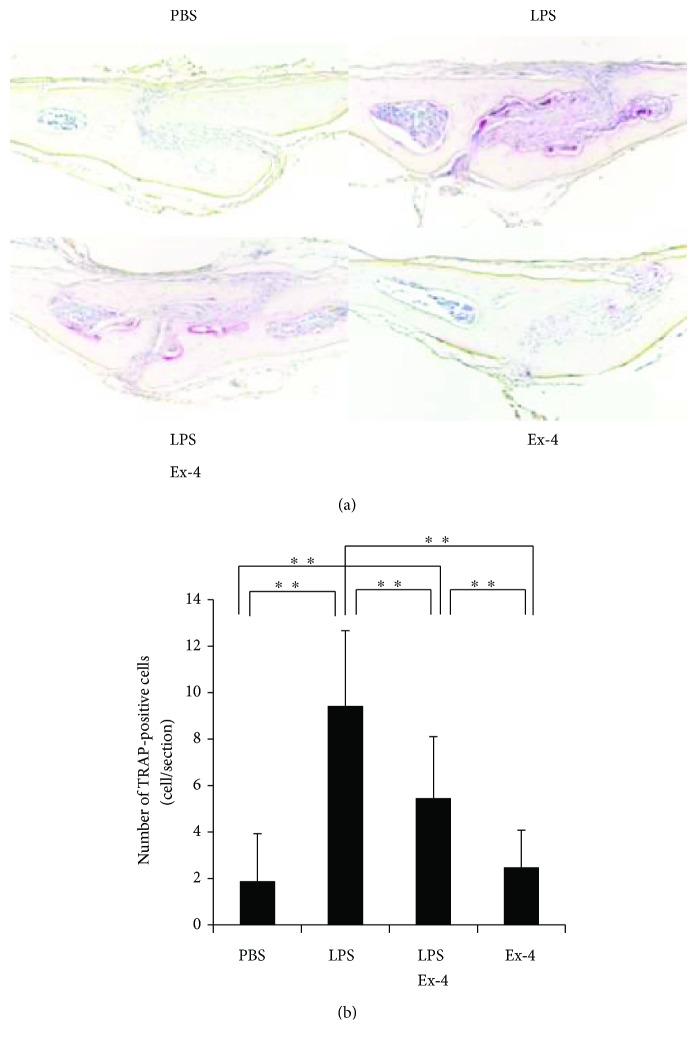
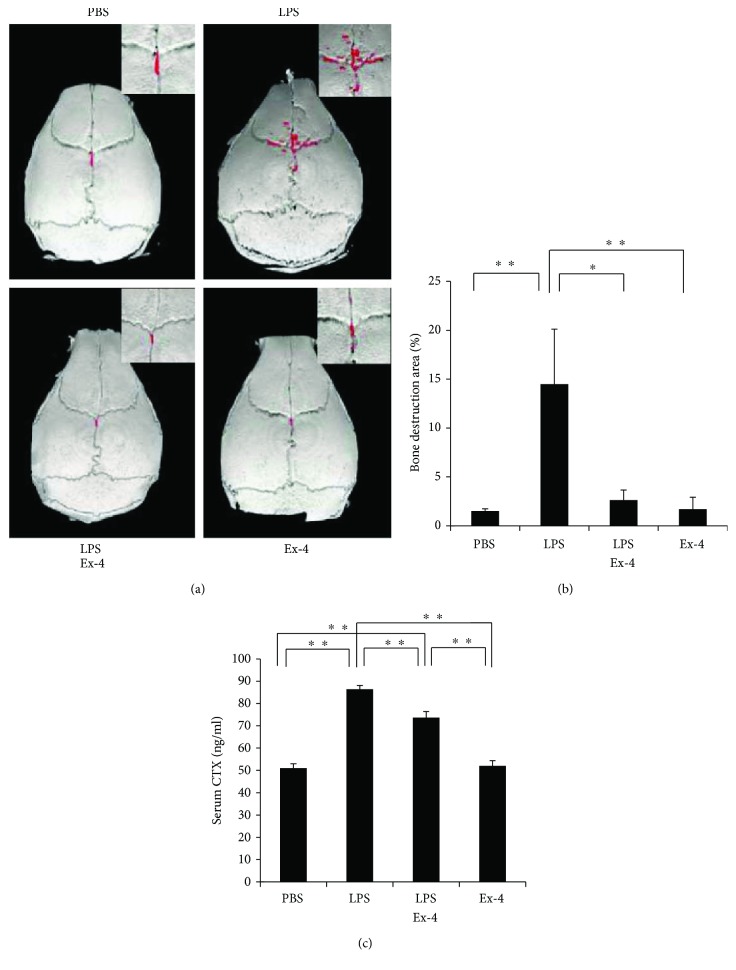
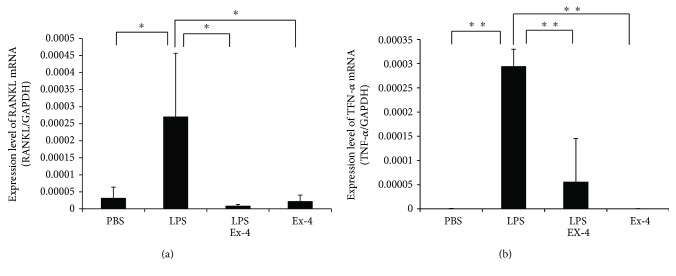
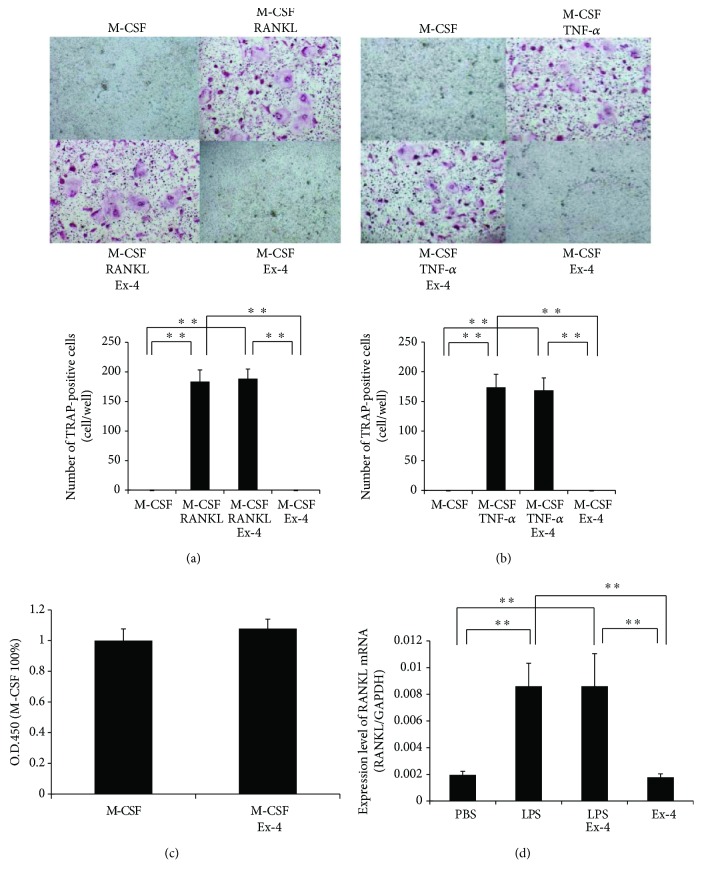
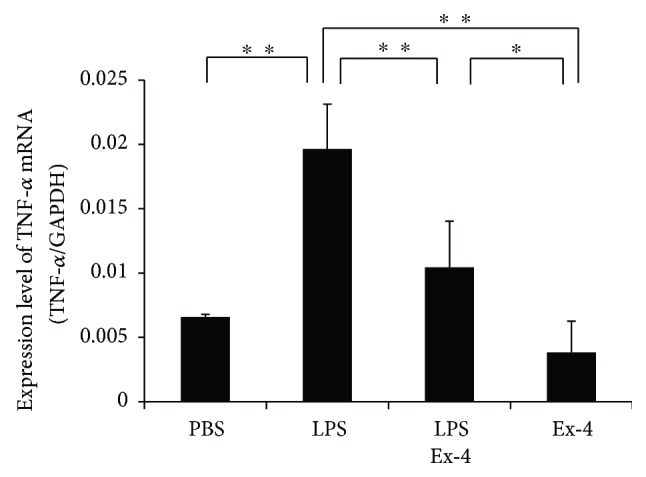
Glucagon-like peptide-1 (GLP-1) receptor agonists are an effective treatment approach for type 2 diabetes. Recently, anti-inflammatory effects of GLP-1 receptor agonists have also been reported. Lipopolysaccharide (LPS) induces inflammation and osteoclast formation. In this study, we investigated the effect of exendin-4, a widely used GLP-1 receptor agonist, in LPS-induced osteoclast formation and bone resorption. LPS with or without exendin-4 was administered on mouse calvariae by daily subcutaneous injection. The number of osteoclasts, the ratio of bone resorption pits, and the level of C-terminal cross-linked telopeptide of type I collagen (CTX) were significantly lower in LPS- and exendin-4-coadministered mice than in mice administered with LPS alone. RANKL and TNF- α mRNA expression levels were lower in the exendin-4- and LPS-coadministered group than in the LPS-administered group. Our in vitro results showed no direct effects of exendin-4 on RANKL-induced osteoclast formation, TNF- α -induced osteoclast formation, or LPS-induced RANKL expression in stromal cells. Conversely, TNF- α mRNA expression was inhibited in the exendin-4- and LPS-cotreated macrophages compared with cells treated with LPS alone. These results indicate that the GLP-1 receptor agonist exendin-4 may inhibit LPS-induced osteoclast formation and bone resorption by inhibiting LPS-induced TNF- α production in macrophages.
Overview
The claims and statistics of this paper haven’t been checked yet.
Free: it reads the open-access text and checks the first 5 claims that cite a source we can check. Create a free account to check every claim.
Integrity signals
Registry
Cites
Statistics
Figures
Verification
Claims the paper makes
The claims and statistics of this paper haven’t been checked yet.
Free: it reads the open-access text and checks the first 5 claims that cite a source we can check. Create a free account to check every claim.
Claims other papers make about this one
Each is checked against this paper’s own text: does it say what the citing paper says it does?
The cited source says what the claim attributes to it.
In the citing paper
“According to previous reports, exendin-4, a GLP-1RA, has the potential to inhibit LPS-induced osteoclast formation and bone resorption in vivo.363,364”
From Glucagon-like peptide-1 receptor: mechanisms and advances in therapy (2024) · cites this paper as [363]
Self-check
Percentages, sums and reported differences re-computed from the paper’s own numbers.
The self-check needs the paper’s full text.
Citations
Cites
Bone Resorption by Osteoclasts
Teitelbaum, S. L. (2000) · Science · doi:10.1126/science.289.5484.1504 · Cited by 3,962 · cited 2×
“Osteoclasts derived from bone marrow cells are responsible for bone resorption and remodeling [10].”
BackgroundThe Physiology of Glucagon-like Peptide 1
Holst, J. J. (2007) · Physiological Reviews · doi:10.1152/physrev.00034.2006 · Cited by 3,371
Kobayashi, K., Takahashi, N., Jimi, E., Udagawa, N., Takami, M., Kotake, S., Nakagawa, N., Kinosaki, M., Yamaguchi, K., Shima, N., et al. (2000) · The Journal of Experimental Medicine · doi:10.1084/jem.191.2.275 · Cited by 1,304
Tumor Necrosis Factor-α Induces Differentiation of and Bone Resorption by Osteoclasts
Azuma, Y., Kaji, K., Katogi, R., Takeshita, S., & Kudo, A. (2000) · Journal of Biological Chemistry · doi:10.1074/jbc.275.7.4858 · Cited by 731
Osteoclasts: What Do They Do and How Do They Do It?
Teitelbaum, S. L. (2007) · The American Journal of Pathology · doi:10.2353/ajpath.2007.060834 · Cited by 730 · cited 1×
“Receptor activator of NF-kB ligand (RANKL) and macrophage colony-stimulating factor (M-CSF) are two key factors required for osteoclast formation and activation [11].”
BackgroundAssociation of BMD and FRAX Score With Risk of Fracture in Older Adults With Type 2 Diabetes
Schwartz, A. V. (2011) · JAMA · doi:10.1001/jama.2011.715 · Cited by 717
Vestergaard, P., Rejnmark, L., & Mosekilde, L. (2005) · Diabetologia · doi:10.1007/s00125-005-1786-3 · Cited by 557
Long-term use of thiazolidinediones and fractures in type 2 diabetes: a meta-analysis
Loke, Y. K., Singh, S., & Furberg, C. D. (2009) · Canadian Medical Association Journal · doi:10.1503/cmaj.080486 · Cited by 551
Osteoclasts are essential for TNF-α–mediated joint destruction
Redlich, K., Hayer, S., Ricci, R., David, J.-P., Tohidast-Akrad, M., Kollias, G., Steiner, G., Smolen, J. S., Wagner, E. F., & Schett, G. (2002) · Journal of Clinical Investigation · doi:10.1172/jci15582 · Cited by 531
Osteoclasts are essential for TNF-α-mediated joint destruction.
Redlich, K., Hayer, S., Ricci, R., David, J.-P., Tohidast-Akrad, M., Kollias, G., Steiner, G., Smolen, J. S., Wagner, E. F., & Schett, G. (2002) · Journal of Clinical Investigation · doi:10.1172/jci0215582 · Cited by 474
Cited by
Glucagon-like peptide-1 receptor: mechanisms and advances in therapy
Zheng, Z., Zong, Y., Ma, Y., Tian, Y., Pang, Y., Zhang, C., & Gao, J. (2024) · Signal Transduction and Targeted Therapy · doi:10.1038/s41392-024-01931-z · Cited by 1,036
The role of GPCRs in bone diseases and dysfunctions
Luo, J., Sun, P., Siwko, S., Liu, M., & Xiao, J. (2019) · Bone Research · doi:10.1038/s41413-019-0059-6 · Cited by 99
Ghosh, S., Luo, D., He, W., Chen, J., Su, X., & Huang, H. (2020) · Pharmacological Research · doi:10.1016/j.phrs.2020.104861 · Cited by 103
Wei, M., Li, C., Dai, Y., Zhou, H., Cui, Y., Zeng, Y., Huang, Q., & Wang, Q. (2021) · Frontiers in Cellular and Infection Microbiology · doi:10.3389/fcimb.2021.630372 · Cited by 99
“Lipopolysaccharide (LPS), a component of the gram-negative bacterial outer membrane, can stimulate the production of pro-inflammatory cytokines, resulting in systemic inflammations (Maldonado et al., 2016; Shen et al., 2018).”
BackgroundCai, T.-T., Li, H.-Q., Jiang, L.-L., Wang, H.-Y., Luo, M.-H., Su, X.-F., & Ma, J.-H. (2021) · BioMed Research International · doi:10.1155/2021/3361309 · Cited by 84
“GLP-1 RAs can also reduce the number of osteoclasts and levels of serum bone resorption markers along with inhibiting bone resorption [26, 29].”
BackgroundLi, Z., Li, S., Wang, N., Xue, P., & Li, Y. (2020) · Biomedicine & Pharmacotherapy · doi:10.1016/j.biopha.2020.110523 · Cited by 72
IL-33 Inhibits TNF-α-Induced Osteoclastogenesis and Bone Resorption
Ohori, F., Kitaura, H., Ogawa, S., Shen, W.-R., Qi, J., Noguchi, T., Marahleh, A., Nara, Y., Pramusita, A., & Mizoguchi, I. (2020) · International Journal of Molecular Sciences · doi:10.3390/ijms21031130 · Cited by 72
Self-citationAnti-inflammatory potentials of incretin-based therapies used in the management of diabetes
Yaribeygi, H., Maleki, M., Sathyapalan, T., Jamialahmadi, T., & Sahebkar, A. (2020) · Life Sciences · doi:10.1016/j.lfs.2019.117152 · Cited by 63
Ejarque, M., Guerrero-Pérez, F., de la Morena, N., Casajoana, A., Virgili, N., López-Urdiales, R., Maymó-Masip, E., Pujol Gebelli, J., Garcia Ruiz de Gordejuela, A., Perez-Maraver, M., et al. (2019) · Scientific Reports · doi:10.1038/s41598-019-42770-1 · Cited by 53
Kishikawa, A., Kitaura, H., Kimura, K., Ogawa, S., Qi, J., Shen, W.-R., Ohori, F., Noguchi, T., Marahleh, A., Nara, Y., et al. (2019) · Frontiers in Endocrinology · doi:10.3389/fendo.2019.00157 · Cited by 55
“The number of osteoclasts located at the mesenchyme of the sagittal suture was counted in all slides as described previously (37, 38).”
MethodInfluentialSelf-citationChallenges to Improve Bone Healing Under Diabetic Conditions
Chen, Y., Zhou, Y., Lin, J., & Zhang, S. (2022) · Frontiers in Endocrinology · doi:10.3389/fendo.2022.861878 · Cited by 59
“It can also inhibit macrophages to produce tumor necrosis factor-a (TNF-a) in lipopolysaccharide (LPS) environments, thereby reducing LPS-induced osteoclast differentiation and bone resorption (32).”
BackgroundLi, X., Yang, L., & Chen, L. (2024) · International Journal of Endocrinology · doi:10.1155/2024/1785321 · Cited by 50
Gut Microbiota in Bone Health and Diabetes
Knudsen, J. K., Leutscher, P., & Sørensen, S. (2021) · Current Osteoporosis Reports · doi:10.1007/s11914-020-00629-9 · Cited by 42
Effects of Incretin-Related Diabetes Drugs on Bone Formation and Bone Resorption
Kitaura, H., Ogawa, S., Ohori, F., Noguchi, T., Marahleh, A., Nara, Y., Pramusita, A., Kinjo, R., Ma, J., Kanou, K., et al. (2021) · International Journal of Molecular Sciences · doi:10.3390/ijms22126578 · Cited by 45
Self-citationChan, Y.-C., Chuang, S., Kuo, Y., Lian, Y.-Z., & Chen, Y. (2025) · The Journal of Arthroplasty · doi:10.1016/j.arth.2025.06.083 · Cited by 44
Effects of Incretin Therapy on Skeletal Health in Type 2 Diabetes—A Systematic Review
Viggers, R., Rasmussen, N. H., & Vestergaard, P. (2023) · JBMR Plus · doi:10.1002/jbm4.10817 · Cited by 29
Meta-Analysis on the Association Between DPP-4 Inhibitors and Bone Mineral Density and Osteoporosis
Huang, L., Zhong, W., Liang, X., Wang, H., Fu, S., & Luo, Z. (2023) · Journal of Clinical Densitometry · doi:10.1016/j.jocd.2023.101455 · Cited by 25
Pramusita, A., Kitaura, H., Ohori, F., Noguchi, T., Marahleh, A., Nara, Y., Kinjo, R., Ma, J., Kanou, K., Tanaka, Y., et al. (2022) · Frontiers in Cell and Developmental Biology · doi:10.3389/fcell.2022.816764 · Cited by 25
Self-citationNara, Y., Kitaura, H., Ogawa, S., Shen, W.-R., Qi, J., Ohori, F., Noguchi, T., Marahleh, A., Pramusita, A., Kinjo, R., et al. (2020) · International Journal of Molecular Sciences · doi:10.3390/ijms21176120 · Cited by 19
Self-citationDeng, B., Zhu, W., Duan, Y., Hu, Y., Chen, X., Song, S., Yi, Z., & Song, Y. (2019) · Molecular Medicine Reports · doi:10.3892/mmr.2019.10764 · Cited by 19
“Notably, a recent study revealed that exendin‑4 inhibited lipopolysaccharide‑induced osteo-clast formation and bone resorption via inhibition of TNF‑ α expression in macrophages (33).”
De Fano, M., Malara, M., Vermigli, C., & Murdolo, G. (2024) · International Journal of Molecular Sciences · doi:10.3390/ijms25168650 · Cited by 17
“For instance, exendin-4 prevents macrophages from expressing TNF-α in response to LPS [74].”
BackgroundTong, C., Liang, H., Liu, X., Yuan, B., Xue, B., Tong, Z., & Yin, P. (2019) · PubMed · Cited by 16
Shi, S., Ding, F., Liu, X., Wang, L., Wang, X., Zhang, S., Zhao, G., & Song, Y. (2021) · BMC Oral Health · doi:10.1186/s12903-021-01583-3 · Cited by 18
Shen, W.-R., Kitaura, H., Qi, J., Ogawa, S., Ohori, F., Noguchi, T., Marahleh, A., Nara, Y., Pramusita, A., & Mizoguchi, I. (2020) · The Angle Orthodontist · doi:10.2319/021320-103.1 · Cited by 19
“not be possible because minimal in vitro effects have been observed.(14,22) Subcutaneous injections of exen-”
BackgroundInfluentialSelf-citationEffect of risperidone on proliferation and apoptosis of MC3T3-E1 cells
Zheng, L., Yang, L., Zhao, X., Long, N., Li, P., & Wang, Y. (2019) · Brazilian Journal of Medical and Biological Research · doi:10.1590/1414-431x20188098 · Cited by 12
Jindarojanakul, P., Kobayashi, Y., Kamimoto, H., Niki, Y., Myo, A. C., Satrawaha, S., & Moriyama, K. (2023) · European Journal of Orthodontics · doi:10.1093/ejo/cjad005 · Cited by 10
Fan, Z., Kitaura, H., Ren, J., Ohori, F., Noguchi, T., Marahleh, A., Ma, J., Kanou, K., Miura, M., Narita, K., et al. (2023) · Frontiers in Endocrinology · doi:10.3389/fendo.2023.1207502 · Cited by 11
Self-citationReduction of hippocampal IL-6 levels in LPS-injected rats following acute exendin-4 treatment
Géa, L. P., da Rosa, E. D., Panizzutti, B., de Aguiar, É. Z., de Oliveira, L. F., Ferrari, P., Piato, Â., Gomez, R., Colombo, R., & Rosa, A. R. (2020) · Naunyn-Schmiedeberg s Archives of Pharmacology · doi:10.1007/s00210-020-01867-5 · Cited by 10
Update on: effects of anti-diabetic drugs on bone metabolism
Mabilleau, G., & Bouvard, B. (2020) · Expert Review of Endocrinology & Metabolism · doi:10.1080/17446651.2020.1831911 · Cited by 9
GLP-1 and GIP: Magic bullet for musculoskeletal diseases?
Fang, Q., Gan, L., Liu, P., Ding, P., & Gao, Y. (2025) · Journal of Advanced Research · doi:10.1016/j.jare.2025.08.046 · Cited by 6
“Exendin-4 can reduce TNF-a in macrophages and subsequently inhibit osteoclast differentiation and bone resorption activities [131].”
Huang, Y., Xu, Y., Huang, Z., Mao, J., Hui, Y., Min, R., Jiang, X., Wu, J., Ding, Z., Feng, Y., et al. (2024) · Journal of Materials Chemistry B · doi:10.1039/d3tb02965d · Cited by 5
Alida, A., Winoto, E. R., & Narmada, I. B. (2020) · Pesquisa Brasileira em Odontopediatria e Clínica Integrada · doi:10.1590/pboci.2020.145 · Cited by 4
“the production of macrophage colony-stimulating factor (MCSF), tumor necrosis factor-α (TNF-α), and receptor activator of nuclear factor-kappa ligand (RANKL), which are all crucial factors in proliferation and osteoclast differentiation [13,14].”
BackgroundNoguchi, T., Kitaura, H., Marahleh, A., Agista, A. Z., Ohsaki, Y., Shirakawa, H., & Mizoguchi, I. (2023) · Nutrients · doi:10.3390/nu15133044 · Cited by 3
“ferentiation by producing TNF-α upon LPS stimulation [43,44].”
BackgroundInfluentialSelf-citationRen, J., Kitaura, H., Noguchi, T., Ohori, F., Marahleh, A., Ma, J., Kanou, K., Fan, Z., & Mizoguchi, I. (2024) · Calcified Tissue International · doi:10.1007/s00223-024-01257-6 · Cited by 4
“A previous study demonstrated that LPS boosted RANKL expression in bone marrow stromal cells [40].”
BackgroundSelf-citationAlmohammad, A. A., Aldossari, S. K., Sukumbaji, Z. A., Faden, R. A., Almutairi, M. A., Al-Harbi, N. H., Al-Saaib, M. Y., Almarshedy, B., Alharabi, E., Alhazri, W. A., et al. (2025) · Cureus · doi:10.7759/cureus.95792 · Cited by 10
“This calcitonin-mediated pathway likely complements local periodontal effects, particularly in inflammatory conditions [115,116].”
InfluentialAfsharian, Y. P., Rahimnejad, M., Rabiee, S. M., Feizi, F., & Seitz, H. (2025) · Advanced Therapeutics · doi:10.1002/adtp.202400400 · Cited by 3
Narrative Review of Perioperative Glucagon-like Peptide-1 (GLP-1) Agonists in Spine Surgery
Connelly, J. W., Narayanan, R., Ezeonu, T., Kothari, P., Spina, N., Spiker, W. R., Lawrence, B. D., Brodke, D. S., Schroeder, G. D., & Karamian, B. A. (2025) · Clinical Spine Surgery A Spine Publication · doi:10.1097/bsd.0000000000001888 · Cited by 2
Yang, C., Yue, Y., Wang, Y.-T., Chiang, J. Y., Cheng, B., Hsu, T., Chen, Y.-L., Li, Y., & Yip, H. (2025) · International Journal of Molecular Medicine · doi:10.3892/ijmm.2025.5592 · Cited by 2
“GLP-1 is known to impact the intestinal environment and can directly inhibit LPS-induced TNF-α production, providing anti-inflammatory effects (27).”
The Thyroid Twist: How GLP-1 Agonists Are Influencing Autoimmune Thyroid Care
Mazza, A. D. (2025) · Cureus · doi:10.7759/cureus.98153 · Cited by 4
“GLP-1 GLP-1 signaling has been shown to inhibit activation of the NLRP3 inflammasome, a key driver of innate immune-mediated inflammation, and to enhance Treg activity, suggesting a broader role in restoring immune tolerance [26,27].”
Chan, Y.-C., Chuang, S., Wu, L.-C., Kuo, Y., Lian, Y.-Z., & Chen, Y. (2025) · The Journal of Arthroplasty · doi:10.1016/j.arth.2025.11.036 · Cited by 1
Zhang, S., Liu, S., Zhou, M., Wang, J., Zhang, Y., Zhong, H., & Ning, G. (2026) · Molecular Neurobiology · doi:10.1007/s12035-026-06090-6
“In bone tissue, GLP-1RAs exert bone-protective effects by inhibiting bone resorption and promoting bone formation [108, 109 ].”
Impact of glucagon-like peptide-1 receptor agonists on bone metabolism
Vadini, V., Duan, D., & Moseley, K. F. (2026) · The Journal of Clinical Endocrinology & Metabolism · doi:10.1210/clinem/dgag323 · Cited by 2
Exendin-4 as a multi-target therapy for Fetal Inflammatory Response Syndrome-induced brain injury
Li, S., Cai, C., & Arigong, G. (2026) · Frontiers in Neurology · doi:10.3389/fneur.2026.1848474
For Weight Loss: Why Do GLP-1 Agonists Work, and How Can We Make Them Work Better?
Giang, C., Meng, J., Mohammad, M. A., Liu, Z., Wu, X., & Zhu, Y. (2026) · Biology · doi:10.3390/biology15161395 · Cited by 1
Papastathopoulou, N. S., Neri, S., Assirelli, E., D’Amuri, A., Greco, S., Ciaffi, J., & Ursini, F. (2026) · Rheumatology Advances in Practice · doi:10.1093/rap/rkag105
Metadata
- Authors
- Shen, W.-R., Kimura, K., Ishida, M., Sugisawa, H., Kishikawa, A., Shima, K., Ogawa, S., Qi, J., & Kitaura, H.
- Affiliations
- Tohoku University (JP)
- Corresponding author
- Kitaura, Hideki
- ORCID
- Kitaura, Hideki
- Venue
- Journal of Immunology Research
- Publisher
- Wiley
- Published
- 2018
- Volume
- 2018
- Issue
- 5783639
- Pages
- 1-10
- ISSN
- 2314-7156 (ISSN-L)
- 2314-8861
- PMC
- PMC5872659
- OpenAlex
- W2789846563
- Cited by
- 45
- References
- 46
- Citations by year
- 2026: 5 · 2025: 8 · 2024: 5 · 2023: 5 · 2022: 2 · 2021: 5 · 2020: 8 · 2019: 7
- FWCI
- 1.78
- Type
- journal article
- Language
- en
- Open access
- gold
- doi.org
- Locations
- Journal of Immunology Research (publishedVersion, cc-by)
- Europe PMC (PubMed Central) (publishedVersion, cc-by)
- PubMed Central (publishedVersion, cc-by)
- PubMed (publishedVersion)
- Institutional Repositories DataBase (IRDB) (submittedVersion)
- DOAJ (DOAJ: Directory of Open Access Journals) (submittedVersion, cc-by-sa)
- Funders
- Japan Society for the Promotion of Science (16K11776)
- Topics
- Life Sciences › Biochemistry, Genetics and Molecular Biology › Molecular Biology › Bone Metabolism and Diseases
- Health Sciences › Dentistry › Periodontics › Oral microbiology and periodontitis research
- Health Sciences › Medicine › Rheumatology › Rheumatoid Arthritis Research and Therapies
- Keywords
- exendin-4, GLP-1 receptor agonists, osteoclastogenesis, bone resorption, lipopolysaccharide, TNF-α, macrophages, RANKL, anti-inflammatory activity, type 2 diabetes, calvaria, CTX
- MeSH terms
- Glucagon-Like Peptide-1 Receptor, Exenatide, Glucagon-Like Peptide-1 Receptor Agonists, Animals, Anti-Inflammatory Agents, Bone Resorption, Cell Differentiation, Cells, Cultured, Diabetes Mellitus, Type 2, Lipopolysaccharides, Macrophages, Male, Mice, Inbred C57BL, Osteoclasts, Peptides, Tumor Necrosis Factor-alpha, Venoms, Mice
About these checks
Registry, retraction, Cites and statistics results are computed, not judged, with one exception: a printed reference that no index lists is read once by a model before it counts as a citation error. Claims are extracted by a model and kept only when their quote appears verbatim in the text; each cited source is then checked, with a model’s help, for whether it says what the claim relies on. Those verdicts can be wrong — read the claim’s quote and the cited source before relying on one.
Statistics and arithmetic are recomputed, not judged.
Confidence bands are shown only for fields calibrated on our annotated test set. None is calibrated yet, so no band is shown.
What counts as a claim ›How we measure confidence ›How we check this ›
Are you an author, or do you see a problem with this page? Request a review
Data sources
Bibliographic data: Semantic Scholar, OpenAlex, Crossref.
Contains information from the Semantic Scholar Academic Graph Datasets, made available under the ODC Attribution License (ODC-BY 1.0).
Semantic Scholar’s data is described in: Kinney, R., et al. (2023). The Semantic Scholar Open Data Platform. arXiv:2301.10140.
