

Evaluation of Polyphenolics Content and Antioxidant Activity in Edible Wild Fruits
Open accessThe DOI matches its Crossref record; 61 of the 61 references it cites were found in a registry or an index.
Abstract
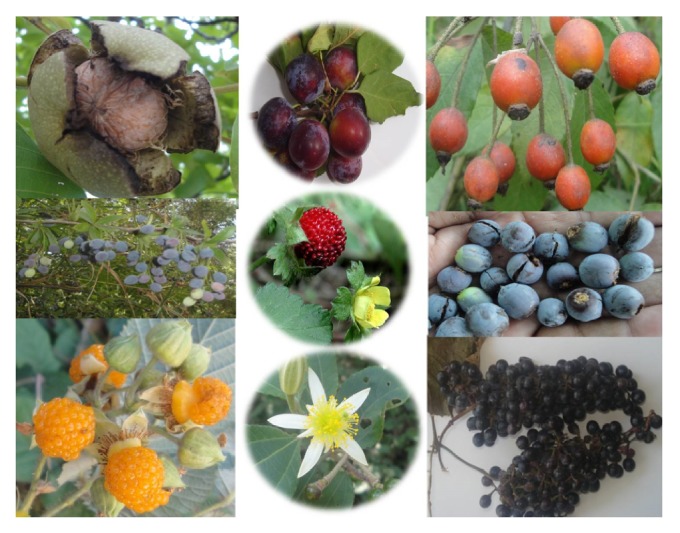
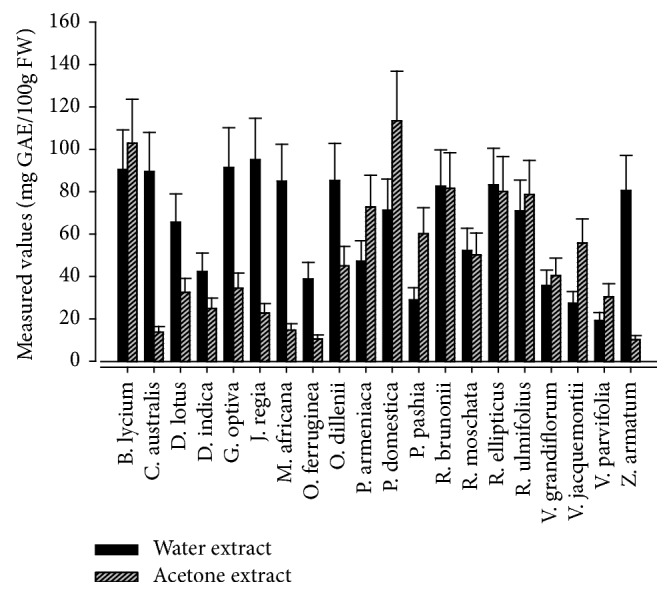
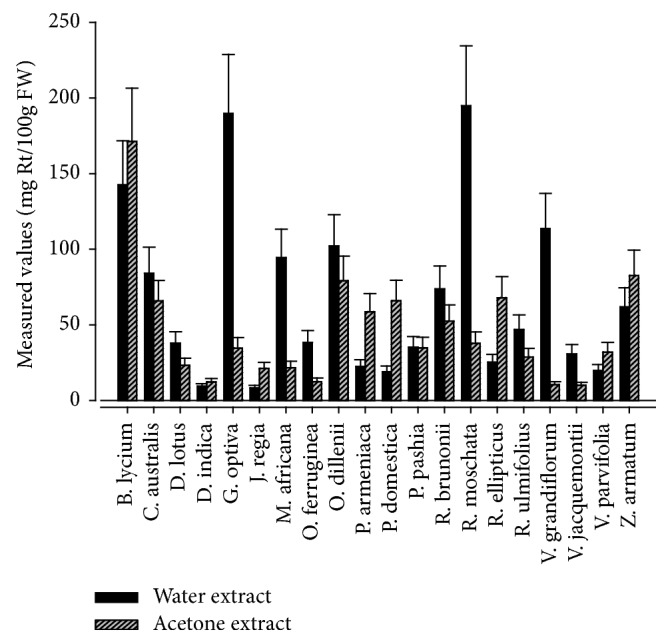
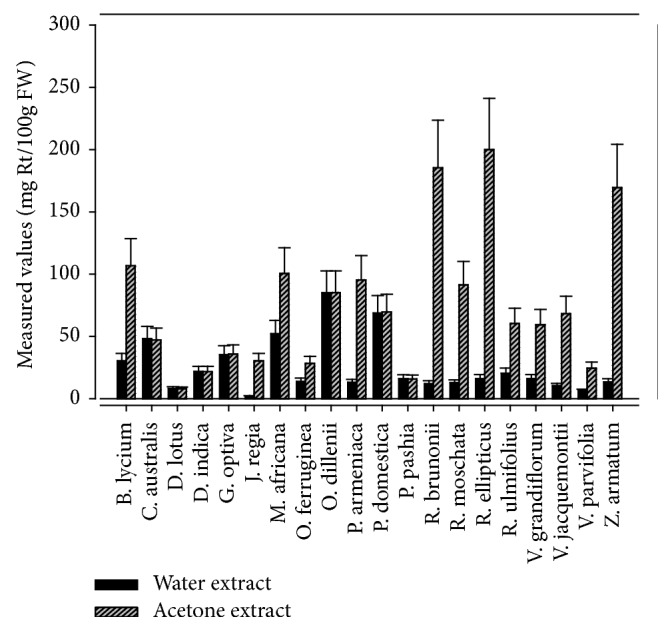
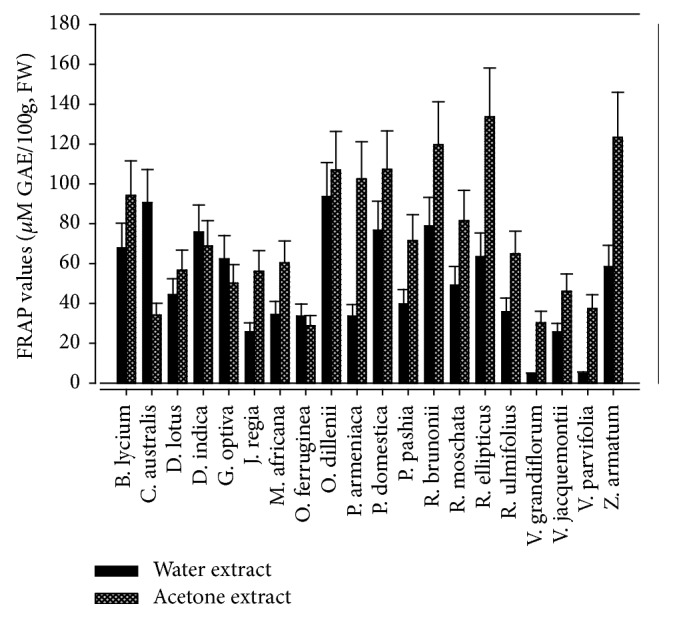
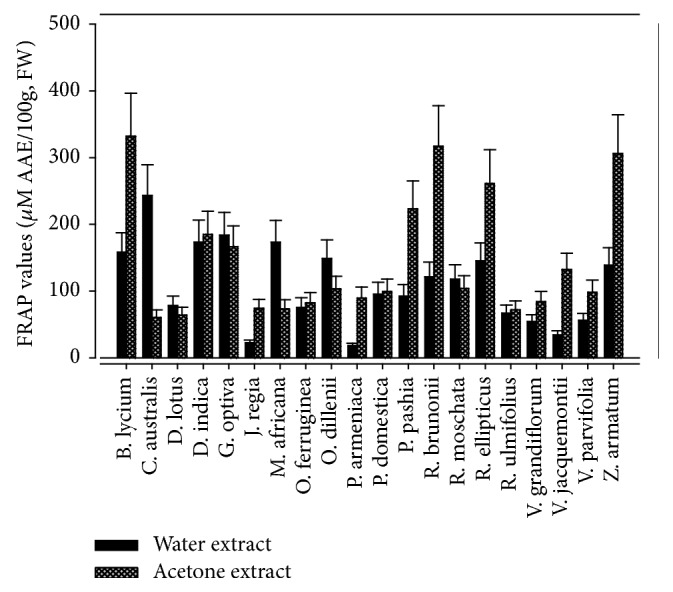
Plant diversity is a basic source of food and medicines for the local communities of the Himalayas. Current study was intended to assess polyphenolics content and antioxidant potential in edible wild fruits used as food and to treat various diseases by the inhabitants of Himalayan region of Pakistan. The fruits of 20 plant species were evaluated using standard protocols, whereas information on medicinal uses was gathered through semistructured interviews. Comparatively,Prunus domestica and Rubus ellipticus fruits exhibited highest levels of phenolics and flavonols contents (113.55 ± 0.61 mg GAE/100 g and 200.06 ± 1.57 mg RtE/100 g FW, respectively) in acetone extract. Nevertheless, flavonoids were maximum in the water extract of Rosa moschata(194.82 ± 3.46 mg RtE/100 g FW). Contrary,Duchesnea indica fruit depicted significant potential to scavenge DPPH and H 2 O 2 radicals at 94.66 ± 8.89% in acetone extract and 83.54± 9.37% in water extract, while acetone extract of Rubus ellipticus had maximum potential to reduce ferric ions (133.66 ± 15.00 µ M GAE/100 g FW). Additionally, total antioxidant capacity was highest in the acetone extract of Berberis lycium fruit (332.08 ± 21.90 µ M AAE/100 g FW). The relationships between polyphenolics and antioxidant activity revealed synergistic role of secondary metabolites in the prevention of diseases. Our study revealed that wild fruits consumed by the local communities of Himalayas are rich in health beneficial phytochemicals and hold significant potential to treat chronic diseases, particularly associated with free radicals.
Overview
The claims and statistics of this paper haven’t been checked yet.
Free: it reads the open-access text and checks the first 5 claims that cite a source we can check. Create a free account to check every claim.
Integrity signals
Registry
Cites
Statistics
Figures
Verification
Claims the paper makes
The claims and statistics of this paper haven’t been checked yet.
Free: it reads the open-access text and checks the first 5 claims that cite a source we can check. Create a free account to check every claim.
Claims other papers make about this one
Each is checked against this paper’s own text: does it say what the citing paper says it does?
The source backs part of the claim, not all of it — or backs it for a different population, condition or comparison.
In the citing paper
“This confers the flesh and peel of both fruits as natural antioxidant sources and further connotes the contributory role of secondary metabolites of M. sinensis and M. paradisiaca in disease prevention [82].”
From Comparative and Correlational Evaluation of the Phytochemical Constituents and Antioxidant Activity of Musa sinensis L. and Musa paradisiaca L. Fruit Compartments (Musaceae) (2020) · cites this paper as [82]
Experimental — accuracy not yet measuredThe source backs part of the claim, not all of it — or backs it for a different population, condition or comparison.
In the citing paper
“This confers the flesh and peel of both fruits as natural antioxidant sources and further connotes the contributory role of secondary metabolites of M. sinensis and M. paradisiaca in disease prevention [82].”
From Comparative and Correlational Evaluation of the Phytochemical Constituents and Antioxidant Activity of Musa sinensis L. and Musa paradisiaca L. Fruit Compartments (Musaceae) (2020) · cites this paper as [82]
Experimental — accuracy not yet measuredIn the citing paper
“According to Tibetan traditional medicine, the leaves and fruits of R. ellipticus can be used treat a variety of conditions such as bronchitis, nausea, ulcers, and diabetes, as well as for its antimicrobial, carminative, and tonic properties [37,50,51].”
From Yellow Himalayan Raspberry (Rubus ellipticus Sm.): Ethnomedicinal, Nutraceutical, and Pharmacological Aspects (2023) · cites this paper as [51]
Self-check
Percentages, sums and reported differences re-computed from the paper’s own numbers.
The self-check needs the paper’s full text.
Citations
Cites
Prieto, P., Pineda, M., & Aguilar, M. (1999) · Analytical Biochemistry · doi:10.1006/abio.1999.4019 · Cited by 6,221 · cited 1×
“The PM assay was conducted following the guidelines as reported earlier [26] using ascorbic acid as standard.”
MethodThe Chemistry behind Antioxidant Capacity Assays
Huang, D., Ou, B., & Prior, R. L. (2005) · Journal of Agricultural and Food Chemistry · doi:10.1021/jf030723c · Cited by 6,162 · cited 1×
“The scavenging of free radical increases with increasing percentage of their inhibition [53, 54].”
BackgroundNatural products as sources of new drugs over the last 25 years
Newman, D. J., & Cragg, G. M. (2007) · Journal of Natural Products · doi:10.1021/np068054v · Cited by 5,517 · cited 1×
“Profiling of secondary metabolites and assessment of pharmacological efficacy of wild food resources, that is, fruits, vegetables, mushrooms, and grains, are substantial to introduce functional foods and novel drugs [15].”
BackgroundMitochondria, Oxidants, and Aging
Balaban, R. S., Nemoto, S., & Finkel, T. (2005) · Cell · doi:10.1016/j.cell.2005.02.001 · Cited by 4,388 · cited 1×
“This radical reacts with different biomolecules, causing oxidative damage and mutation at cellular level [59, 60].”
BackgroundPolyphenols: Chemistry, dietary sources, metabolism, and nutritional significance
Bravo, L. (2009) · Nutrition Reviews · doi:10.1111/j.1753-4887.1998.tb01670.x · Cited by 4,030
Benzie, I. F. F., & Strain, J. J. (1999) · Methods in Enzymology · doi:10.1016/s0076-6879(99)99005-5 · Cited by 3,929
Free radicals, antioxidants, and nutrition
Fang, Y.-Z., Yang, S., & Wu, G. (2002) · Nutrition · doi:10.1016/s0899-9007(02)00916-4 · Cited by 2,565
Review on in vivo and in vitro methods evaluation of antioxidant activity
Alam, M. N., Bristi, N. J., & Rafiquzzaman, M. (2013) · Saudi Pharmaceutical Journal · doi:10.1016/j.jsps.2012.05.002 · Cited by 1,758
Antioxidant and Antiproliferative Activities of Common Fruits
Sun, J., Chu, Y.-F., Wu, X., & Liu, R. H. (2002) · Journal of Agricultural and Food Chemistry · doi:10.1021/jf0207530 · Cited by 1,558
Flavonoids in Food and Their Health Benefits
YAO, L. H., JIANG, Y. M., SHI, J., TOM�S-BARBER�N, F. A., DATTA, N., SINGANUSONG, R., & CHEN, S. S. (2004) · Plant Foods for Human Nutrition · doi:10.1007/s11130-004-0049-7 · Cited by 1,545 · cited 1×
“Flavonoids provide protection to lipids and vital cells from oxidative damage [45, 46], involve in the prevention of coronary heart diseases, and exhibit antiproliferative or anticancer activities [45, 47].”
Background
Research works printed but not linked: 8
- Ajesh T. P. Naseef S. A. A. Kumuthakalavalli R. Preliminary study on the utilization of wild vegetables by muthuvan tribes of idukki district of kerala, india International Journal of Applied Biology & Pharmaceutical Technology 2012 2
- Aliyu A. B. Musa A. M. Oshanimi J. A. Ibrahim H. A. Oyewale A. O. Phytochemical analyses and mineral elements composition of some medicinal plants of northern nigeria Nigerian Journal of Pharmaceutical Sciences 2008
- Sood P. Modgil R. Sood M. Physico-chemical and nutritional evaluation of indigenous wild fruit Kasmal, Berberis lycium Royle Indian Journal of Natural Products and Resources (IJNPR) 2010 1 3 362 366 2-s2.0-79551650031
- Singh T. P. Singh O. M. Phytochemical and pharmacological profile of Zanthoxylum armatum DC. - An overview Indian Journal of Natural Products & Resources 2011 2 3 275 285 2-s2.0-80053301421
- Seal T. Antioxidant activity of some wild edible plants of meghalaya state of india: A comparison using two solvent extraction systems International Journal of Nutrition & Metabolism 2012 3 51 56
- Karuppusamy G. M. S. Rajasekaran K. M. Antioxidant activity of selected lesser known edible fruits from western ghats of india Molecular & Cellular Endocrinology 2011 19 1 57 67
- Lamuela-Raventós R. M. Singleton V. L. Orthofer R. Analysis of Total Phenols and Other Oxidation Substrates and Antioxidants by Means of Folin-Ciocalteu Reagent 1999 John Wiley & Sons
- Miladi S. Damak M. In vitro antioxidant activities of aloe vera leaf skin extracts Journal De La Société Chimique De Tunisie 2008
Cited by
Antioxidants of Fruit Extracts as Antimicrobial Agents against Pathogenic Bacteria
Suriyaprom, S., Mosoni, P., Léroy, S., Kaewkod, T., Desvaux, M., & Tragoolpua, Y. (2022) · Antioxidants · doi:10.3390/antiox11030602 · Cited by 170
Hong, Y., Wang, Z., Barrow, C. J., Dunshea, F. R., & Suleria, H. A. R. (2021) · Antioxidants · doi:10.3390/antiox10020234 · Cited by 93
“However, compared with another study on plum in North Pakistan, our DPPH value was slightly higher [48].”
ResultEffiong, M. E., Umeokwochi, C. P., Afolabi, I. S., & Chinedu, S. N. (2024) · Scientific Reports · doi:10.1038/s41598-024-54201-x · Cited by 102
Fernández-Poyatos, M. D. P., Ruiz-Medina, A., Zengin, G., & Llorent-Martínez, E. J. (2019) · Molecules · doi:10.3390/molecules24224171 · Cited by 66
“In earlier studies, several Berberis species have exhibited significant antioxidant effects [30,33,39], thus, members of the genus Berberis could be considered as significant sources of natural antioxidants.”
BackgroundZeghbib, W., Boudjouan, F., Vasconcelos, V. M., & Lopes, G. (2022) · Molecules · doi:10.3390/molecules27154763 · Cited by 80
Ahmad, W., Amir, M., Ahmad, A. N., Ali, A., Ali, A., Wahab, S., Barkat, H. A., Ansari, M. A., Sarafroz, M., Ahmad, A., et al. (2021) · Plants · doi:10.3390/plants10122573 · Cited by 82
“The reducing power of iron from (Fe3+) to Fe2+ was evaluated in triplicate [34].”
MethodBiochemical and antioxidant activity of wild edible fruits of the eastern Himalaya, India
Rymbai, H., Verma, V. K., Talang, H., Assumi, S. R., Devi, M. B., Vanlalruati, Sangma, R. H. C., Biam, K. P., Chanu, L. J., Makdoh, B., et al. (2023) · Frontiers in Nutrition · doi:10.3389/fnut.2023.1039965 · Cited by 59
“, agroclimatic conditions, organ, plant developmental stage, and their interaction with the genotype (10).”
BackgroundInfluentialUntargeted and Targeted Metabolomic Profiling of Australian Indigenous Fruits
Lim, V., Gorji, S. G., Daygon, V. D., & Fitzgerald, M. A. (2020) · Metabolites · doi:10.3390/metabo10030114 · Cited by 52
“Spectrophotometric technique was used for total phenolic, flavonoid and flavonol contents and were quantified following the protocol of [52,53].”
MethodSheoran, S., Nidhi, P., Kumar, V., Singh, G., Lal, U. R., Sourirajan, A., & Dev, K. (2019) · Vegetos · doi:10.1007/s42535-019-00048-x · Cited by 45
Polyphenols and ω-3 PUFAs: Beneficial Outcomes to Obesity and Its Related Metabolic Diseases
Siroma, T. K., Machate, D. J., Zorgetto-Pinheiro, V. A., Figueiredo, P. S., Marcelino, G., Hiane, P. A., Bogo, D., Pott, A., Pontes, E. R. J. C., Guimarães, R. D. C. A., et al. (2022) · Frontiers in Nutrition · doi:10.3389/fnut.2021.781622 · Cited by 48
“The main polyphenol substances occurs in leaves, flowers, roots, bulbs, and rhizomes of several wild edible plants (31, 32).”
BackgroundAntioxidant and antiproliferative activity of Basella alba against colorectal cancer
Aliya, S., Kim, E., Uma, A., Alhammadi, M., & Huh, Y. S. (2023) · Saudi Journal of Biological Sciences · doi:10.1016/j.sjbs.2023.103609 · Cited by 37
“Flavonoids, as biological modifiers, modify the degradative effects of carcinogens allergens, and viruses (Shan et al., 2019).”
BackgroundLamichhane, A., Lamichhane, G., & Devkota, H. P. (2023) · Molecules · doi:10.3390/molecules28166071 · Cited by 28
“ellipticus can be used treat a variety of conditions such as bronchitis, nausea, ulcers, and diabetes, as well as for its antimicrobial, carminative, and tonic properties [37,50,51].”
BackgroundOyeyinka, B. O., & Afolayan, A. J. (2020) · The Scientific World JOURNAL · doi:10.1155/2020/4503824 · Cited by 25
“paradisiaca in disease prevention [82].”
An Ethnobotanical Study of Medicinal Plants in Kinmen
Huang, S., Huang, C.-H., Ko, C.-Y., Chen, T.-Y., Cheng, Y., & Chao, J. (2022) · Frontiers in Pharmacology · doi:10.3389/fphar.2021.681190 · Cited by 22
“In Kinmen, Taiwan, and even Fujian, China, Lycium barbarum is used for nourishing the liver, improving eyesight, clearing heat, and annealing (Fujian Academy of Medical Sciences, 1979; Lu, 2011; Executive Yuan Committee on Chinese Medicine and Pharmacy, 2003), and its antioxidant activity has been confirmed by many st…”
BackgroundKewlani, P., Tiwari, D., Rawat, S., & BHATT, I. D. (2023) · Journal of Pharmacy and Pharmacology · doi:10.1093/jpp/rgac053 · Cited by 26
Tibebe, D., Belete, A., Kassa, Y., Mulugeta, M., Moges, Z., Yenealem, D., Fentie, T., & Amare, A. (2024) · Food Analytical Methods · doi:10.1007/s12161-024-02622-9 · Cited by 21
“These results are consistent with findings reported by Shan et al. (2019), wherein extracts from Nigella sativa and Elettaria cardamomum seeds yielded high total phenolic contents (2.7 ± 0.059 and 2.2 ± 0.010 mg GAE/g sample respectively) (Martemucci et al. 2022).”
InfluentialMarjanović, A., Djedjibegovíc, J., Lugusić, A., Šober, M., & Saso, L. (2021) · Scientific Reports · doi:10.1038/s41598-021-98896-8 · Cited by 20
Boudjouan, F., Zeghbib, W., Carneiro, J., Silva, R., Morais, J., Vasconcelos, V. M., & Lopes, G. (2022) · Agriculture · doi:10.3390/agriculture12111755 · Cited by 21
“[66], who reported that PMA varied between the different fruits studied.”
BackgroundIlyas, S., Mardina, V., Harmawan, T., Halimatussakdiah, H., & Tanjung, M. (2020) · Journal of Advanced Pharmaceutical Technology amp Research · doi:10.4103/japtr.japtr_31_20 · Cited by 23
“Currently, researches have increased interest to discovery therapeutic medicinal plants that have high antioxidant activity to reduce oxidative stress tissue injury.[22,23] One of them was S.”
BackgroundMonika, Mishra, D., Bisht, P. S., & Chaturvedi, P. (2020) · Journal of scientific research · doi:10.37398/jsr.2020.640117 · Cited by 18
Al-Sayyed, H. F., Alkurd, R. A. F., Mahmoud, I. F., Qader, S. M. A., Sweidan, D. H., Rizeq, L. T., Arafat, T., & Mwalla, M. M. (2022) · International Journal of Food Properties · doi:10.1080/10942912.2022.2077369 · Cited by 17
Phenolic Profiling of Berries Waste and Determination of Their Antioxidant Potential
Jiang, Y., Subbiah, V., Wu, H., Amrit, B. K., Sharifi‐Rad, J., & Suleria, H. A. R. (2022) · Journal of Food Quality · doi:10.1155/2022/5605739 · Cited by 23
“[46] reported that the fresh raspberry extract with acetone contains a lower TAC level.”
BackgroundAyyanar, M., Krupa, J., Jenipher, C., Amalraj, S., & Gurav, S. S. (2023) · Vegetos · doi:10.1007/s42535-023-00663-9 · Cited by 16
“%) at a concentration of 50 µg/mL. Shan et al. (2019) stated that, hydroxyl radical (OH − ) is most reactive which damages various biomolecules and causes oxidative damage and mutation at cellular level.”
Berberis lycium : A Miracle Medicinal Plant with Multifaceted Health Benefits
Ahmad, B., Murshed, A., Zaky, M. Y., Khan, I., Rahman, F. U., Abdellattif, M. H., Liu, G., & Lu, J. (2024) · Journal of Food Quality · doi:10.1155/2024/3152456 · Cited by 15
Pande, J., & Chanda, S. V. (2020) · Journal of Pharmaceutical and Biomedical Analysis · doi:10.1016/j.jpba.2020.113347 · Cited by 13
Mir, R. A., Argal, S., Ahanger, M. A., Tomar, N. S., & Agarwal, R. M. (2021) · Journal of Plant Growth Regulation · doi:10.1007/s00344-021-10348-9 · Cited by 13
Hazrati, S., Govahi, M., & Mollaei, S. (2019) · Food Science & Nutrition · doi:10.1002/fsn3.1352 · Cited by 13
“A similar report has been issued as to the antioxidant activity of Pyrus species (Shan, Huang, Shah, & Abbasi, 2019).”
Chakraborty, A., Majumdar, S., & Bhowal, J. (2021) · Archives of Microbiology · doi:10.1007/s00203-021-02572-4 · Cited by 12
Ethnobotany, phytochemistry and pharmacological activities of Celtis australis: A review
Benamar, K., Koraichi, S. I., & Fikri-Benbrahim, K. (2022) · Journal of Herbmed Pharmacology · doi:10.34172/jhp.2023.05 · Cited by 12
Ullah, S., Anwar, F., Rehman, M. F. U., Qadir, R., Ansar, M. R., Ali, H. M., Mustaqeem, M., & Dias, C. D. S. (2023) · Arabian Journal of Chemistry · doi:10.1016/j.arabjc.2023.105195 · Cited by 15
The protective effect of Artepillin C against lipid oxidation on model membranes
Pazin, W. M., Ruiz, G. C. M., Oliveira, M. J. D. S., Aoki, P. H. B., Ito, A. S., & Constantino, C. J. L. (2020) · Journal of Molecular Liquids · doi:10.1016/j.molliq.2020.115089 · Cited by 11
Hutabarat, D. J. C., & Irene, I. (2021) · IOP Conference Series Earth and Environmental Science · doi:10.1088/1755-1315/794/1/012140 · Cited by 11
“2 Antioxidant Activity on Fermented Beverages from Plant-Based Milk Antioxidant activity analysis aimed to determine the ability of antioxidant compounds in the sample to inhibit free radical activity [26].”
BackgroundCharacteristics and Valorization Potential of Fermentation Waste of Greengage (Prunus mume)
Wang, J., Wang, J., Wu, C., Huang, J., Zhou, R., & Jin, Y. (2021) · Applied Sciences · doi:10.3390/app11188296 · Cited by 10
Koubala, B. B., Bayang, J. P., Wangso, H., Kolla, M. C., & Laya, A. (2021) · BioMed Research International · doi:10.1155/2021/4154381 · Cited by 12
“Fact, numerous researches demonstrated that nonconventional edible fruits are good sources of important components with potential biological activities promoting health benefits especially polyphenolic compounds such as flavonoids, anthocyanins, and tannins [4, 5] as well as minerals.”
BackgroundCosmeceutical and anticancer potential of aqueous extracts of Dalbergia sissoo Roxb. aerial parts
Yasmeen, S., & Gupta, P. (2021) · Journal of Herbal Medicine · doi:10.1016/j.hermed.2021.100456 · Cited by 15
Antioxidant Activity of Natural Products from Medicinal Plants
Saavedra‐Molina, A., la Cruz, J. L., Landa‐Moreno, C. I., Murillo‐Villicaña, M., Garcia‐Berumen, C. I., Montoya-Pérez, R. D. C., Manzo‐Ávalos, S., Méndez, A. A., Salgado‐Garciglia, R., & Cortés‐Rojo, C. (2024) · Biochemistry · doi:10.5772/intechopen.1004272 · Cited by 9
Antioxidant activity from non-conventional beverage plant sources in Argentina
Conforti, P. A., & Patrignani, M. (2024) · Beverage Plant Research · doi:10.48130/bpr-0024-0037 · Cited by 7
Kumar, V., Sharma, A., Sharma, N., Saini, R., Dev, K., El‐Shazly, M., & Bari, A. B. A. (2024) · Naunyn-Schmiedeberg s Archives of Pharmacology · doi:10.1007/s00210-024-02964-5 · Cited by 9
“According to Shan et al. (2019), the highest scavenging activity was reported in acetone extract with the DPPH assay (94.65 ± 9.87%), the OH − assay (67.63 ± 9.21%), the H 2 O 2 assay (76.42 ± 9.11%), the phosphomolybdenum (PMA) assay (261.27 ± 17.49 µM AAE/100 g FW) and the FRAP assay (133.66 ±…”
InfluentialSuastegui-Baylón, L., Salazar, R., Maldonado-Astudillo, Y. I., Ramírez‐Sucre, M. O., Arámbula‐Villa, G., Flores‐Casamayor, V., & Jiménez‐Hernández, J. (2021) · Molecules · doi:10.3390/molecules26072097 · Cited by 11
“Furthermore, they have a good amount of phytochemicals with functional properties, mainly phenolic compounds [2].”
BackgroundGlobal use of Ethnomedicinal Plants to Treat Toothache
Álvarez-Vásquez, J. L., Solano, N. F. P., Saavedra-Cornejo, G. E., & Vásquez, X. E. E. (2022) · Biomedical & Pharmacology Journal · doi:10.13005/bpj/2421 · Cited by 13
Erdoğan, Ü., Önem, E., Muhammed, M. T., Soyocak, A., Ak, A., Evren, A. R. I. N., & Erzurumlu, Y. (2025) · Chemistry & Biodiversity · doi:10.1002/cbdv.202402591 · Cited by 5
“Previous research indicates that various Berberis species demonstrate notable antioxidant properties [13, 14].”
A Preliminary Up-To-Date Review on Pakistani Medicinal Plants with Potential Antioxidant Activity
Hussain, A. (2020) · RADS Journal of Biological Research & Applied Sciences · doi:10.37962/jbas.v11i1.275 · Cited by 8
Ishaque, M. F., Bibi, Y., & Qayyum, A. (2021) · Arabian Journal for Science and Engineering · doi:10.1007/s13369-021-05581-z · Cited by 7
KULSUM, N. N. S., & Susandarini, R. (2023) · Biodiversitas Journal of Biological Diversity · doi:10.13057/biodiv/d240755 · Cited by 8
A Study on Anti-oxidant and Anti-cancer Perspectives of Rutin
Tiwari, P. K., Mishra, R., Mazumder, R., Mazumder, A., & Singh, A. (2023) · Current Cancer Therapy Reviews · doi:10.2174/1573394719666230519095551 · Cited by 4
Evaluation of antioxidant activity of selected wild fruits and vegetables from Zambia
Phiri, H., Lumai, A., Zombe, K., & Nyirenda, J. (2024) · Food and Humanity · doi:10.1016/j.foohum.2024.100390 · Cited by 4
Forest-Based Edible Seeds and Nuts for Health Care and Disease Control
Godeto, Y. G., Bachheti, A., Husen, A., Pandey, D. P., & Bachheti, R. K. (2021) · Springer eBooks · doi:10.1007/978-3-030-73077-2_7 · Cited by 5
Fragaria spp. (Fragaria indica, Fragaria nubicola)
Bahukhandi, A., Attri, D. C., Mehra, T., & BHATT, I. D. (2022) · Elsevier eBooks · doi:10.1016/b978-0-323-85591-4.00011-8 · Cited by 6
Hu, X., Sun, Y., Wang, H., Rahman, K. U., Chen, Y., Li, C., Chi, X., & Cui, Z. (2026) · Microchemical Journal · doi:10.1016/j.microc.2026.118602 · Cited by 5
Nutraceutical Potentials of Azanza garckeana (Snot Apple): A Review
Kazeem, M. I., Adenowo, A. F., Salisu, T. F., & Akinsanya, M. A. (2022) · Current Nutraceuticals · doi:10.2174/2665978603666220321122409 · Cited by 3
Duchesnea genus: a comprehensive review of its phytochemistry, bioactivity, and pharmacology
Fan, M., Zhu, M., Chen, G., & Guo, M. (2022) · Phytochemistry Reviews · doi:10.1007/s11101-022-09842-z · Cited by 3
Kirillov, V., Pathak, A. R., Zholdasbayev, M. E., Atazhanova, G. A., Sapiyeva, A., Stikhareva, T., Serafimovich, M., & Daulenova, M. (2022) · Natural Product Research · doi:10.1080/14786419.2022.2137801 · Cited by 4
“P. armeniaca L. has a carminative effect and is useful in the treatment of constipation (Shan et al. 2019), whereas P. persica (L.) Batsch has anti-inflammatory, anti-allergic, and antioxidant activities (Haleema et al. 2020).”
BackgroundLestario, L. N., Melanie, M., & Rahardjo, M. (2023) · Jurnal Teknologi dan Industri Pangan · doi:10.6066/jtip.2023.34.2.142 · Cited by 8
“The antioxidant activity of rukem fruit was higher compared to dragon fruit 51.35±0.87%, goji berry 65.03±7.79%, and persim-mon 66.31±8.97% ( Shan et al., 2019).”
BackgroundInfluentialRaju, M. V., Sekar, S., Chandrasekaran, M. K., Rajendran, M. S., & Ahalliya, R. M. (2024) · Indian Journal of Natural Products and Resources · doi:10.56042/ijnpr.v15i1.4468 · Cited by 3
Gouollaly, T., Yoca, J. E., Bouesse, B. M., Thimoleon, A.-B., & Ongoka, P. (2020) · Food and Nutrition Sciences · doi:10.4236/fns.2020.118055 · Cited by 3
Folklore use of wild fruits by the Oraon tribe of Sarguja district of Chhattisgarh, India
Panda, A. K., Bisht, S. S., Lakra, S., Kumar, A., Kerketta, A., Mishra, R., Kumar, P. K., Bisht, S. S., & Kerketta, S. (2022) · Ethnobotany Research and Applications · doi:10.32859/era.24.3.1-16 · Cited by 9
Raza, S. A., Chaudhary, A. R., Mumtaz, M. W., Bashir, S., Ahmad, M., William, J., & Arshad, M. (2020) · Acta Scientifica Naturalis · doi:10.2478/asn-2020-0002 · Cited by 2
“The phenolics and flavonoids of plants are believed to be good chelating agents and antioxidants [7].”
BackgroundWild Fruits: Medicinal Use and Health Benefits
Mariod, A. A. (2019) · Springer eBooks · doi:10.1007/978-3-030-31885-7_10 · Cited by 2
Saeed, M., Zahra, N., Ahmad, I., & Syed, Q. (2022) · Bangladesh Journal of Scientific and Industrial Research · doi:10.3329/bjsir.v57i2.60409 · Cited by 2
“Radical scavenging activity (RSA) DPPH is a stable organic radical with an absorption band around 515-528 nm and is commonly used as a reagent to measure the free radical scavenging activity of antioxidants (Shan et al., 2019; Natasa et al., 2021).”
BackgroundSadia, H., Ahmad, M., Belgacem, A. O., Zafar, M. N., Baig, M. B., Sultana, S., Majeed, S., & Yaseen, G. (2022) · Springer eBooks · doi:10.1007/978-3-031-12586-7_11 · Cited by 2
Osama, M., Ikram, R., Wei, C. R., Saleem, R., Zippi, M., Khadim, S., Qureshi, M., & Alam, S. (2023) · doi:10.53555/jptcp.v30i2.2865 · Cited by 2
Gargi, B., Painuli, S., Gururani, P., Semwal, P., & Kumar, S. (2025) · eFood · doi:10.1002/efd2.70037 · Cited by 2
Molecular Networking Reveals Antioxidant Properties and Phenolic Profiles of Four Rosaceae Seeds
Lim, M. J., Park, J., Lee, M., Choi, S. Y., Yang, H., Kim, T., & Na, C. S. (2025) · Plants · doi:10.3390/plants14243749 · Cited by 1
“Such differences are attributed to environmental factors and genetic diversity among species [34].”
Negi, V. S., Rawat, S., & BHATT, I. D. (2026) · Environmental Sustainability · doi:10.1007/s42398-026-00436-5 · Cited by 3
“…australis , Pyrus pashia , Vitis parvifolia , Vitis jacquemontii , Juglans regia , Duchesnea indica, B. asiatica, T. chebula, P. crenulata, and Ficus palmata have also been reported to exhibit comparatively high antioxidant activity in the western Himalaya (Bhatt et al. 2017; Shan et al. 2019).”
Comparative Antioxidant Study of Different Fruits and Vegetables Commonly Consumed in Odisha, India
Sahoo, S. K., Gangopadhyay, A., Kar, D., Bhuyan, R., & Bose, A. (2021) · International Journal of Current Research and Review · doi:10.31782/ijcrr.2021.131133 · Cited by 1
Comparative study of antioxidative properties of Jhelum valley fruits
Karim, I. (2022) · Pure and Applied Biology · doi:10.19045/bspab.2022.110088 · Cited by 1
THE DEPENDENCE OF TRIBAL LIVELIHOODS ON FOREST FRUITS IN RURAL JHARKHAND, INDIA
Islam, M. A., Ali, A., & Ansari, A. M. (2020) · Journal of Experimental Biology and Agricultural Sciences · doi:10.18006/2020.8(5).576.585
Effect of insulin on carbohydrate metabolism.
Goswami, M. (1984) · PubMed
Study of antioxidant and anticytolytic activity of extract from Prunus domestica leaves
Сенюк, І., Кравченко, В. М., & Tkachenko, O. V. (2022) · Reports of Vinnytsia National Medical University · doi:10.31393/reports-vnmedical-2022-26(1)-02 · Cited by 1
Vidinamo, F. (2022) · Queensland University of Technology · doi:10.5204/thesis.eprints.232309
Experimental studies on the hepatoprotective properties of herbal substances
Сенюк, І., Кравченко, В., & Tkachenko, O. (2022) · Izdevniecība “Baltija Publishing” eBooks · doi:10.30525/978-9934-26-199-2-14
Sharma, G., Poudel, P., Lamichhane, S., Lamichhane, G., & Bastola, T. (2022) · Elsevier eBooks · doi:10.1016/b978-0-323-85591-4.00037-4
Bisht, A., Bahukhandi, A., Pande, V., & BHATT, I. D. (2023) · National Academy Science Letters · doi:10.1007/s40009-023-01229-8
“65 mg GAE/100 g) of Berberis lycium fruit [12].”
BackgroundKuanar, A., Pattnaik, B., Nayak, G. C., Bose, A., Das, S., Pattnaik, P. K., & Kar, D. (2023) · Biomedical & Pharmacology Journal · doi:10.13005/bpj/2717
Bioactive Compounds in Pyrus pashia, their Bioactivities, and Associated Health Benefits: A Review
(2024) · Journal of Food Chemistry and Nanotechnology · doi:10.17756/jfcn.2024-s1-018
“…issues, digestive ailments such as dyspepsia, relief from headaches, induction of body sweating as a diaphoretic, hysteria and epilepsy, alleviation of sore throats, mitigation of irritability, addressing anemia, lowering blood cholesterol levels, and providing relief from abdominal pain [26].”
BackgroundInfluentialOlatunya, A. M., Adesina, A. J., Komolafe, O. Y., Anifowose, A. S., Ikuesan, A. E., Adeshina, A., Sodiq, O., Aladesanmi, A., & AKINTAYO, E. T. (2024) · ASM Science Journal · doi:10.32802/asmscj.2023.1511
Benamar, K., Moudani, N. A., Jaafar, D. M. B., Ouassete, M. E., Achetoui, H., Dehbi, I., Lahlali, R., Aarab, L., Bencheikh, R., Koraichi, S. I., et al. (2025) · International Journal of Environmental Health Research · doi:10.1080/09603123.2025.2554636
“Indeed, in the reaction mixture, ferric ions are reduced to ferrous ions by the complete reducing power of the phytochemicals included in the sample being tested (Shan et al. 2019).”
Feng, H., Qiao, Q., Zhang, J., Zhang, K., Wang, L., & Li, J. (2025) · Biochemistry and Biophysics Reports · doi:10.1016/j.bbrep.2025.102273 · Cited by 2
“Focke [26,27].”
Phytochemical contents and in vitro activities of Berberis thunbergii hydroethanolic extract
Karakuş, E. C., Özen, T., Yenigün, S., Başar, Y., Demirtaş, İ., & Yıldız, İ. (2025) · Türk doğa ve fen dergisi :/Türk doğa ve fen dergisi · doi:10.46810/tdfd.1664372
“Nonetheless, Berberis fruits were the subject of the majority of research [42-44].”
Aladhadh, M. A., Ebrahim, H. N. E.-D. A. E.-K., Ahmed, R. M., Al‐Saman, M. A., Ramadan, M. F., Elsanhoty, R. M., & Abou-Elazm, F. I. (2026) · Scientific Reports · doi:10.1038/s41598-026-57257-z
“This conclusion has been clarified by earlier studies by Pereira et al., 62 , Demir et al. 61 , and Shan et al. 68 .”
Gül, A., Yilmaz, F., Topal, F., Özgen, İ., Aydoğmuş, E., & Arslanoğlu, H. (2026) · Chemistry & Biodiversity · doi:10.1002/cbdv.71825
“The ABTS + radical scavenging assay measures the ability to neutralize the color of theABTS + radicalcation,whichisapplicableinbothaqueousand organic solvent systems, thereby providing a suitable antioxidant assessment across a broad range of compounds [67].”
Mlambo, B., Belay, Z. A., Kutu, F. R., Mphahlele, R. R., & Caleb, O. J. (2026) · Acta Horticulturae · doi:10.17660/actahortic.2026.1466.16
Metadata
- Authors
- Shan, S., Huang, X., Shah, M. H., & Abbasi, A. M.
- Affiliations
- Guangdong Pharmaceutical University (CN)
- Quaid-i-Azam University (PK)
- COMSATS University Islamabad (PK)
- Corresponding author
- Huang, Xuming
- Abbasi, Arshad Mehmood
- Venue
- BioMed Research International
- Publisher
- Wiley
- Published
- 2019-01-16
- Volume
- 2019
- Pages
- 1-11
- ISSN
- 1110-7243 (ISSN-L)
- 2314-6133
- 2314-6141
- PMC
- PMC6354156
- OpenAlex
- W2909548375
- Cited by
- 84
- References
- 61
- Citations by year
- 2026: 5 · 2025: 6 · 2024: 10 · 2023: 11 · 2022: 22 · 2021: 14 · 2020: 11 · 2019: 4
- FWCI
- 7.66
- Type
- journal article
- Language
- en
- Open access
- hybrid
- doi.org
- Locations
- BioMed Research International (publishedVersion, cc-by)
- Europe PMC (PubMed Central) (publishedVersion, cc-by)
- PubMed Central (publishedVersion, cc-by)
- PubMed (publishedVersion)
- DOAJ (DOAJ: Directory of Open Access Journals) (submittedVersion)
- Funders
- Guangdong Pharmaceutical University (16-18/CRGP/CIIT/ATD/17/1041)
- COMSATS University Islamabad (16-18/CRGP/CIIT/ATD/17/1041)
- Topics
- Health Sciences › Medicine › Biochemistry (medical) › Phytochemicals and Antioxidant Activities
- Life Sciences › Agricultural and Biological Sciences › Plant Science › Medicinal Plant Research
- Life Sciences › Agricultural and Biological Sciences › Plant Science › Ethnobotanical and Medicinal Plants Studies
- Keywords
- polyphenols, antioxidant activity, flavonoids, flavonols, plum, Rubus ellipticus, Rosa moschata, Duchesnea indica, Berberis lycium, DPPH radical scavenging, hydrogen peroxide scavenging, ferric ion reduction, total antioxidant capacity, therapeutic applications, secondary metabolites
- MeSH terms
- Prunus domestica, Antioxidants, Flavonoids, Fruit, Humans, Hydrogen Peroxide, Plant Extracts, Plants, Edible, Polyphenols, Phytochemicals, Rubus
About these checks
Registry, retraction, Cites and statistics results are computed, not judged, with one exception: a printed reference that no index lists is read once by a model before it counts as a citation error. Claims are extracted by a model and kept only when their quote appears verbatim in the text; each cited source is then checked, with a model’s help, for whether it says what the claim relies on. Those verdicts can be wrong — read the claim’s quote and the cited source before relying on one.
Statistics and arithmetic are recomputed, not judged.
Confidence bands are shown only for fields calibrated on our annotated test set. None is calibrated yet, so no band is shown.
What counts as a claim ›How we measure confidence ›How we check this ›
Are you an author, or do you see a problem with this page? Request a review
Data sources
Bibliographic data: Semantic Scholar, OpenAlex, Crossref.
Contains information from the Semantic Scholar Academic Graph Datasets, made available under the ODC Attribution License (ODC-BY 1.0).
Semantic Scholar’s data is described in: Kinney, R., et al. (2023). The Semantic Scholar Open Data Platform. arXiv:2301.10140.
