

A New Steel Defect Detection Algorithm Based on Deep Learning
Open accessThe DOI matches its Crossref record; 38 of the 38 references it cites were found in a registry or an index; 5 of the 15 sources its claims cite were checked for support.
Abstract
In recent years, more and more scholars devoted themselves to the research of the target detection algorithm due to the continuous development of deep learning. Among them, the detection and recognition of small and complex targets are still a problem to be solved. The authors of this article have understood the shortcomings of the deep learning detection algorithm in detecting small and complex defect targets and would like to share a new improved target detection algorithm in steel surface defect detection. The steel surface defects will affect the quality of steel seriously. We find that most of the current detection algorithms for NEU-DET dataset detection accuracy are low, so we choose to verify a steel surface defect detection algorithm based on machine vision on this dataset for the problem of defect detection in steel production. A series of improvement measures are carried out in the traditional Faster R-CNN algorithm, such as reconstructing the network structure of Faster R-CNN. Based on the small features of the target, we train the network with multiscale fusion. For the complex features of the target, we replace part of the conventional convolution network with a deformable convolution network. The experimental results show that the deep learning network model trained by the proposed method has good detection performance, and the mean average precision is 0.752, which is 0.128 higher than the original algorithm. Among them, the average precision of crazing, inclu…
Overview
CoChat Summary
TL;DR
The paper proposes an improved Faster R-CNN for steel surface defect detection by adding deformable convolution, deformable ROI pooling, FPN multiscale fusion, and soft NMS. On the NEU-DET dataset, it reports a mean average precision of 0.752, which is 0.128 higher than the original algorithm.
Key findings
- On NEU-DET, the proposed method achieves mAP = 0.752, which is 0.128 higher than the original algorithm.
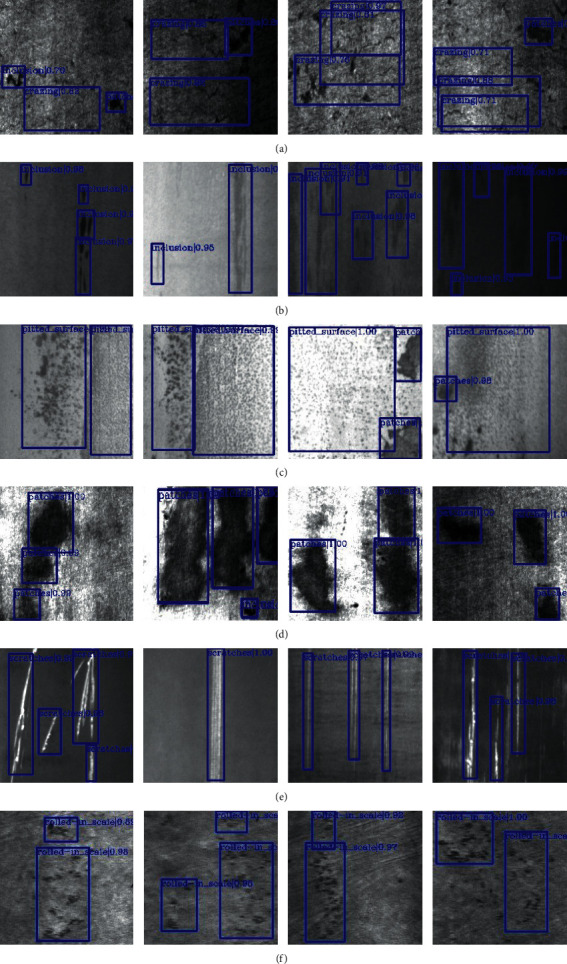
- Reported per-class APs are 0.501 (crazing), 0.791 (inclusion), 0.792 (patches), 0.874 (pitted_surface), 0.649 (rolled-in_scale), and 0.905 (scratches).
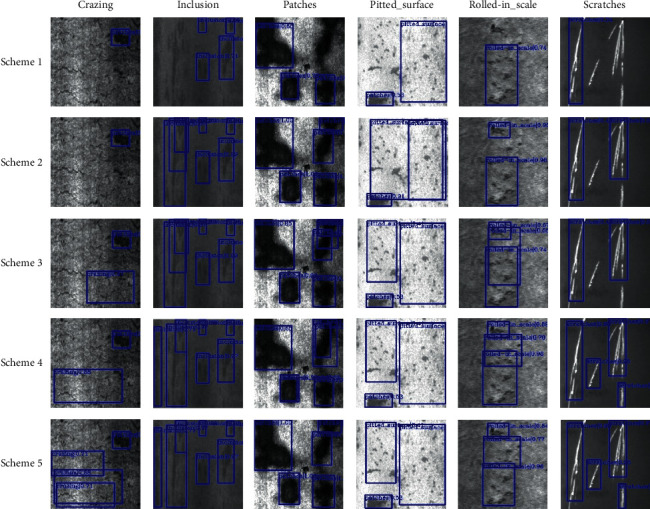
- In the ablation study, the original Faster R-CNN reaches 62.4% overall mean average accuracy; adding ResNet-50 raises it by 1.9%, adding deformable convolution raises it by 9% over the original, adding FPN raises it by 12.1%, and the full proposed scheme improves by 10.9%, 3.8%, and 0.7% compared with Schemes 2–4.
- Compared with other detectors, the paper states the proposed algorithm’s mean average accuracy is 24.2%, 14.6%, and 12.6% higher than SSD, RetinaNet, and Cascade R-CNN, respectively.
Methods
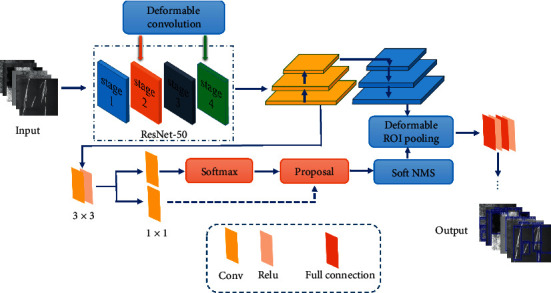
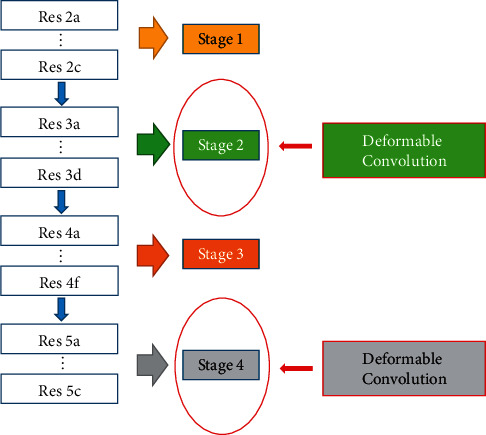
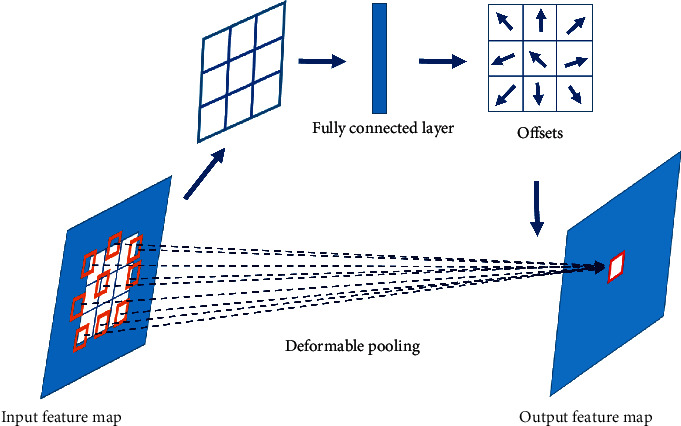
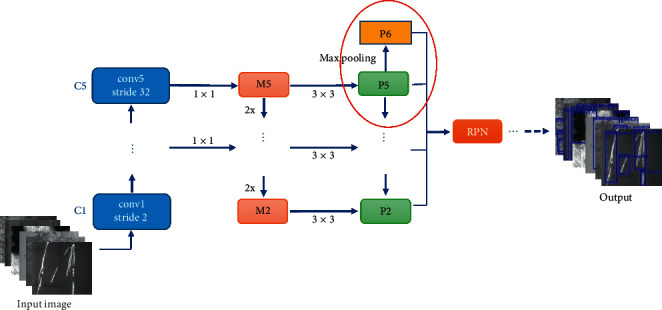
- The model is based on Faster R-CNN and modifies the feature extractor with ResNet-50, deformable convolution, and deformable ROI pooling; it also adds FPN and soft NMS.
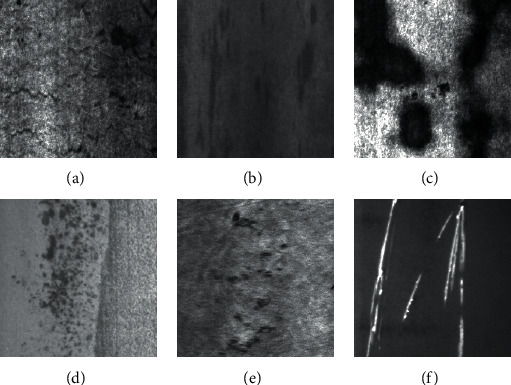
- Experiments are conducted on NEU-DET, described as an open dataset from Northeast University with 1800 pictures total and 300 pictures of six kinds of defects.
- Performance is evaluated using AP for each defect class and mAP for the overall model; ablation experiments compare five schemes, and the model is also compared with SSD, RetinaNet, and Cascade R-CNN.
Limitations
- The paper states that the detection time is long and says the algorithm should be further optimized to reduce detection time.
- The paper states that the processed images “could be affected by uncertainty” and suggests using soft computing technology in future research.
- The text makes evident that crazing/small targets remain challenging, since it notes fuzzy, small-sized crazing defects and “a small number of missed detection” — this is inferred from the results discussion, not stated as a formal limitation.
Model-written summary. Check it against the paper before relying on it.
Integrity signals
Registry
Cites
Statistics
Figures
Verification
Claims the paper makes
3 Valid · 6 Not valid · 2 Not checked · 37 Own results and interpretations
Every source the paper cites for this claim was checked and supports it.
In the paper
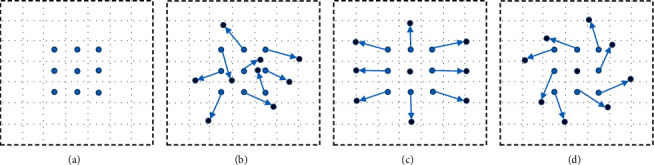
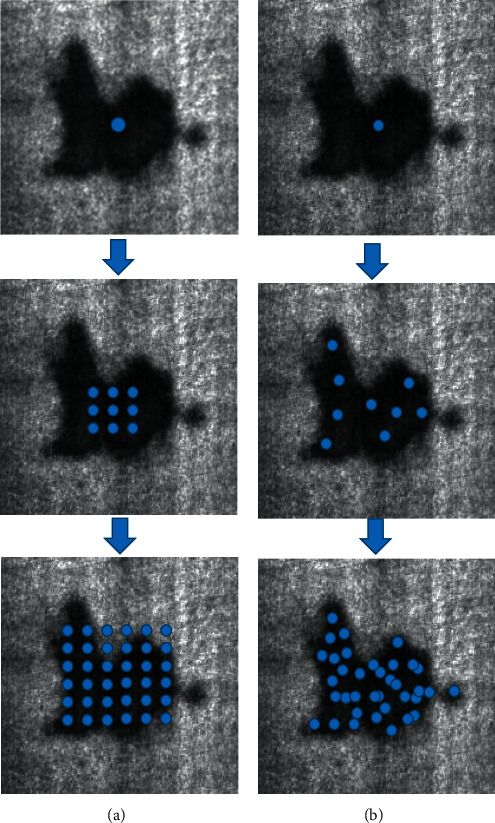
“Dai et al. [36] introduced deformable convolution and deformable pooling into convolution neural network to enhance the modeling ability of the network.”
§ A New Steel Defect Detection Algorithm Based on Deep Learning > 2. Steel Defect Detection Method > 2.3. Deformable Network
What the sources say
- Supportedcites [36] source
The Abstract (p. 1) says the authors introduce deformable convolution and deformable RoI pooling to enhance CNNs’ transformation-modeling capability. Section 2.1 (p. 2) explains that both modules can replace their standard counterparts in deep CNNs. The citing sentence’s “deformable pooling” is a reasonable shorthand for deformable RoI pooling. (LLM, conf=0.95)
plainstates a cause- Asserted: passes — The authors put it forward as true.
- Checkable: passes — It can be checked against evidence.
- Load-bearing: passes — The paper’s conclusions depend on it.
- Based: passes — The paper gives a reason why it holds.
- Supported
The cited sources support only part of this claim — read each source’s verdict below.
In the paper
“There are some shortcomings in manual testing, such as low confidence and high labor intensity.”
§ A New Steel Defect Detection Algorithm Based on Deep Learning > 1. Introduction
What the sources say
- Not checked — no full text of the sourcecites [2] source
- Not checked — no full text of the sourcecites [3] source
- Not checked — no full text of the sourcecites [4] source
- Not checked — no full text of the sourcecites [5] source
- Partly supportedcites [6] sourceExperimental — accuracy not yet measured
The Discussion (page unavailable) says manually labeling light-trap insects is a large task, which supports the labor-intensity point in a different setting. The paper does not address manual inspection of steel surfaces or say that manual testing has low confidence. (LLM, conf=0.78)
- Not checked — no full text of the sourcecites [7] source
plain- Asserted: passes — The authors put it forward as true.
- Checkable: passes — It can be checked against evidence.
- Load-bearing: passes — The paper’s conclusions depend on it.
- Based: passes — The paper gives a reason why it holds.
The cited sources that could be checked couldn’t confirm or dispute this claim.
In the paper
“The reduction range of the prediction accuracy of dense targets nearby is determined by soft NMS in light of the intersection over union (IOU) [36] of the highest score box, so as to improve the prediction accuracy of dense targets.”
§ A New Steel Defect Detection Algorithm Based on Deep Learning > 2. Steel Defect Detection Method > 2.5. Soft Nonmaximum Suppression Nonmaximum suppression (NMS) is used as a postprocessing method commonly to eliminate duplicate frames and reduce the false detection rate in the target detection. However, other similar targets attached to the box with higher prediction score are removed by the NMS, which will lead to missed detection and false detection of similar targets with close proximity and overlapping. The reduction range of the prediction accuracy of dense targets nearby is determined by soft NMS in light of the intersection over union (IOU) [36] of the highest score box, so as to improve the prediction accuracy of dense targets. For example, the IOU of the detection frames A and B [35] is the following:(5)IOU=A∩BA∪B=SUSA+SB−SU,where SA, SB are the areas of the detection frame A and B, respectively, and SU is the overlapping area of the detection frames A and B. The expressions of traditional NMS and Soft NMS algorithms are as follows [35]:(6)Si=Si, IOUM, bi< Nt,0, IOUM,bi ≥ Nt,(7)Si=Si, IOUM,bi< Nt,Si1−IOUM, bi, IOUM,bi≥ Nt,where Si is the score of the detection box i, M is the maximum score box, bi is the collection of detection frames i, Nt is the threshold set. The NMS sets the score of the detection frame whose IOU is greater than the threshold value to 0, while the soft NMS attenuates the score of the detection frame whose IOU is greater than the threshold value, which can alleviate the problems of missed detection and false detection of targets. The IOU threshold of soft NMS is 0.5 and the minimum score is 0.05.
What the sources say
- Could not verifycites [36] sourceExperimental — accuracy not yet measured
Section 4.1 (p. 7) mentions IoU only as a threshold for evaluating detection results. Sections 4.2–4.3 (pp. 8–9) report accuracy gains from deformable ConvNets, not from soft NMS. Searches for soft NMS, highest-scoring boxes, and IoU-based score reduction found no passage addressing the attributed mechanism or its effect on nearby dense targets. (LLM, conf=0.77)
plainstates a cause- Asserted: passes — The authors put it forward as true.
- Checkable: passes — It can be checked against evidence.
- Load-bearing: passes — The paper’s conclusions depend on it.
- Based: passes — The paper gives a reason why it holds.
- Could not verify
A result the paper reports from its own data — it cites no other source for it, so there is none to check. The quote shows it is in the paper.
In the paper
“mean average precision is 0.752, which is 0.128 higher than the original algorithm.”
§ A New Steel Defect Detection Algorithm Based on Deep Learning > Abstract In recent years, more and more scholars devoted themselves to the research of the target detection algorithm due to the continuous development of deep learning. Among them, the detection and recognition of small and complex targets are still a problem to be solved. The authors of this article have understood the shortcomings of the deep learning detection algorithm in detecting small and complex defect targets and would like to share a new improved target detection algorithm in steel surface defect detection. The steel surface defects will affect the quality of steel seriously. We find that most of the current detection algorithms for NEU-DET dataset detection accuracy are low, so we choose to verify a steel surface defect detection algorithm based on machine vision on this dataset for the problem of defect detection in steel production. A series of improvement measures are carried out in the traditional Faster R-CNN algorithm, such as reconstructing the network structure of Faster R-CNN. Based on the small features of the target, we train the network with multiscale fusion. For the complex features of the target, we replace part of the conventional convolution network with a deformable convolution network. The experimental results show that the deep learning network model trained by the proposed method has good detection performance, and the mean average precision is 0.752, which is 0.128 higher than the original algorithm. Among them, the average precision of crazing, inclusion, patches, pitted surface, rolled in scale and scratches is 0.501, 0.791, 0.792, 0.874, 0.649, and 0.905, respectively. The detection method is able to identify small target defects on the steel surface effectively, which can provide a reference for the automatic detection of steel defects.
plain- Asserted: passes — The authors put it forward as true.
- Checkable: passes — It can be checked against evidence.
- Load-bearing: passes — The paper’s conclusions depend on it.
- Based: passes — The paper gives a reason why it holds.
A result the paper reports from its own data — it cites no other source for it, so there is none to check. The quote shows it is in the paper.
In the paper
“mean average precision is 0.752, which is 0.128 higher than the original algorithm.”
- Also stated in: § 2.7. Analysis of Experimental Results · plain
“the overall mean average accuracy is 75.2%.”
§ A New Steel Defect Detection Algorithm Based on Deep Learning > Abstract In recent years, more and more scholars devoted themselves to the research of the target detection algorithm due to the continuous development of deep learning. Among them, the detection and recognition of small and complex targets are still a problem to be solved. The authors of this article have understood the shortcomings of the deep learning detection algorithm in detecting small and complex defect targets and would like to share a new improved target detection algorithm in steel surface defect detection. The steel surface defects will affect the quality of steel seriously. We find that most of the current detection algorithms for NEU-DET dataset detection accuracy are low, so we choose to verify a steel surface defect detection algorithm based on machine vision on this dataset for the problem of defect detection in steel production. A series of improvement measures are carried out in the traditional Faster R-CNN algorithm, such as reconstructing the network structure of Faster R-CNN. Based on the small features of the target, we train the network with multiscale fusion. For the complex features of the target, we replace part of the conventional convolution network with a deformable convolution network. The experimental results show that the deep learning network model trained by the proposed method has good detection performance, and the mean average precision is 0.752, which is 0.128 higher than the original algorithm. Among them, the average precision of crazing, inclusion, patches, pitted surface, rolled in scale and scratches is 0.501, 0.791, 0.792, 0.874, 0.649, and 0.905, respectively. The detection method is able to identify small target defects on the steel surface effectively, which can provide a reference for the automatic detection of steel defects.
plain- Asserted: passes — The authors put it forward as true.
- Checkable: passes — It can be checked against evidence.
- Load-bearing: passes — The paper’s conclusions depend on it.
- Based: passes — The paper gives a reason why it holds.
- Also stated in: § 2.7. Analysis of Experimental Results · plain
12 more claims
Create a free account to see all 48 claims and every source verdict.
- It may state two separate claims as one. 24
- Probably not a substantial claim. 8
- The quote only partly states this claim. 3
Self-check
Percentages, sums and reported differences re-computed from the paper’s own numbers.
Each contradiction between two passages listed here was confirmed by an independent check.
Rated minor: it would not touch a result — a value no result rests on, a p-value that stays on the same side of the significance level, or a conflict that is clerical, resolved elsewhere in the paper, or outside its own findings.
In the paper
§ A New Steel Defect Detection Algorithm Based on Deep Learning > 2. Steel Defect Detection Method > 2.7. Analysis of Experimental Results
“It is not hard to see that the average accuracy of “scratch” is the highest and the “pitted_ surface” is the second in Table 3, which can reach 90.5% and 87.4%, respectively. The average accuracy of “crashing” is the lowest, which is 50.1%, and the overall mean average accuracy is 75.2%.”
§ A New Steel Defect Detection Algorithm Based on Deep Learning > Abstract
“Among them, the average precision of crazing, inclusion, patches, pitted surface, rolled in scale and scratches is 0.501, 0.791, 0.792, 0.874, 0.649, and 0.905, respectively.”
Rated minor: it would not touch a result — a value no result rests on, a p-value that stays on the same side of the significance level, or a conflict that is clerical, resolved elsewhere in the paper, or outside its own findings.
In the paper
§ A New Steel Defect Detection Algorithm Based on Deep Learning > 2. Steel Defect Detection Method > 2.8. Ablation Experiments
“The five specific schemes in Table 4 are as follows:Scheme 1 is the original Faster R-CNN model.Scheme 2 uses ResNet-50 as the feature extraction network of Faster R-CNN.Scheme 3 introduces a deformable network on the basis of ResNet-50 as the feature extraction network of Faster R-CNN.Scheme 4 adds the feature pyramid network on the basis of Scheme 5.Scheme 5 replaces nonmaximum suppression scheme with a soft nonmaximum on the basis of Scheme 4.”
§ A New Steel Defect Detection Algorithm Based on Deep Learning > 2. Steel Defect Detection Method > 2.8. Ablation Experiments
“The final test results of the four schemes are shown in Figure 11.”
Citations
Cites
Deep Residual Learning for Image Recognition
He, K., Zhang, X., Ren, S., & Sun, J. (2016) · 2016 IEEE Conference on Computer Vision and Pattern Recognition (CVPR) · doi:10.1109/cvpr.2016.90 · Cited by 235,474 · cited 1×
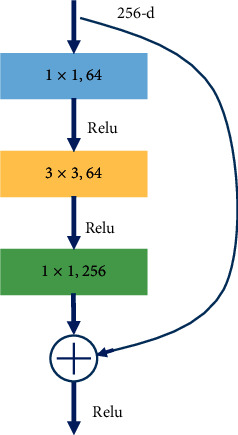
“At the first, the ResNet-50 [21–24] network is reconstructed by deformable convolution as the prefeature extraction network of Faster R-CNN [25–27].”
MethodFaster R-CNN: Towards Real-Time Object Detection with Region Proposal Networks
Ren, S., He, K., Girshick, R., & Sun, J. (2017) · IEEE Transactions on Pattern Analysis and Machine Intelligence · doi:10.1109/tpami.2016.2577031 · Cited by 73,472 · cited 1×
“At the first, the ResNet-50 [21–24] network is reconstructed by deformable convolution as the prefeature extraction network of Faster R-CNN [25–27].”
Method(2016) · Cited by 31,590
Feature Pyramid Networks for Object Detection
Lin, T.-Y., Dollar, P., Girshick, R., He, K., Hariharan, B., & Belongie, S. (2017) · 2017 IEEE Conference on Computer Vision and Pattern Recognition (CVPR) · doi:10.1109/cvpr.2017.106 · Cited by 30,939 · cited 1×
“Finally, the FPN [28–30] network is used for multifeature fusion, and the soft non-maximum suppression (soft NMS) [31] is used to reduce the confidence of the detection frame larger than the threshold, so as to alleviate the situation of the target missing detection.”
MethodSSD: Single Shot MultiBox Detector
Liu, W., Anguelov, D., Erhan, D., Szegedy, C., Reed, S., Fu, C.-Y., & Berg, A. C. (2016) · Lecture Notes in Computer Science · doi:10.1007/978-3-319-46448-0_2 · Cited by 22,128
Focal Loss for Dense Object Detection
Lin, T.-Y., Goyal, P., Girshick, R., He, K., & Dollar, P. (2020) · IEEE Transactions on Pattern Analysis and Machine Intelligence · doi:10.1109/tpami.2018.2858826 · Cited by 9,556 · cited 1×
“…other mainstream target detection algorithms in order to further verify the advantages of the proposed algorithm, as shown in Table 6. comparison algorithms include single-stage target detection algorithms SSD and RetinaNet [38, 39] and double-stage target detection algorithm Cascade R-CNN [40].”
MethodDeformable Convolutional Networks
Dai, J., Qi, H., Xiong, Y., Li, Y., Zhang, G., Hu, H., & Wei, Y. (2017) · 2017 IEEE International Conference on Computer Vision (ICCV) · doi:10.1109/iccv.2017.89 · Cited by 7,513 · cited 5×
“To solve the above problems, Dai et al. [36] introduced deformable convolution and deformable pooling into convolution neural network to enhance the modeling ability of the network. end-to-end training is carried out through standard backpropagation to generate a deformable convolution network.”
BackgroundMethodInfluentialSoft-NMS — Improving Object Detection with One Line of Code
Bodla, N., Singh, B., Chellappa, R., & Davis, L. S. (2017) · 2017 IEEE International Conference on Computer Vision (ICCV) · doi:10.1109/iccv.2017.593 · Cited by 2,274 · cited 1×
“Finally, the FPN [28–30] network is used for multifeature fusion, and the soft non-maximum suppression (soft NMS) [31] is used to reduce the confidence of the detection frame larger than the threshold, so as to alleviate the situation of the target missing detection.”
MethodAn End-to-End Steel Surface Defect Detection Approach via Fusing Multiple Hierarchical Features
He, Y., Song, K., Meng, Q., & Yan, Y. (2020) · IEEE Transactions on Instrumentation and Measurement · doi:10.1109/tim.2019.2915404 · Cited by 1,341 · cited 1×
“…of several common defects on the steel surface are shown in Figure 1, including crazing, inclusions, patches, and pitted surface, rolled in scale and scratches. traditional steel surface defect detection [2–4] is completed by manual visual inspection combined with traditional machine vision [5–7].”
MethodDeep Metallic Surface Defect Detection: The New Benchmark and Detection Network
Lv, X., Duan, F., Jiang, J.-J., Fu, X., & Gan, L. (2020) · Sensors · doi:10.3390/s20061562 · Cited by 643 · cited 1×
“Lv et al. [16] proposed a new end-to-end defect detection network (EDDN) to deal with different types of steel surface defects.”
Background
Research works printed but not linked: 5
- Sun B., 2010, Classification and formation mechanism of typical press in scale of hot rolled steel plate, Journal of Northeastern University (Natural Science), 31, 1417
- Qu E., 2017, Improved Gabor filter for detection of strip surface defects, Journal of Huazhong University of Science and Technology (Natural Science Edition), 45, 12
- Xu S., 2017, Design of surface defect detection system for cold rolled strip, Instrument Technique and Sensor, 1, 65
- Wang H., 2020, Research on surface defect detection of metal sheet and strip based on multi-level feature Faster R-CNN, Mechanical Science and Technology for Aerospace Engineering, 2020
- Dai X., 2020, Research on surface defect detection and implementation of metal workpiece based on improved Faster R-CNN, Surface Technology, 49, 362
Cited by
Mixed local channel attention for object detection
Wan, D., Lu, R., Shen, S., Xu, T., Lang, X., & Ren, Z. (2023) · Engineering Applications of Artificial Intelligence · doi:10.1016/j.engappai.2023.106442 · Cited by 431
DCC-CenterNet: A rapid detection method for steel surface defects
Tian, R., & Jia, M. (2022) · Measurement · doi:10.1016/j.measurement.2021.110211 · Cited by 222
Steel Surface Defect Recognition: A Survey
Wen, X., Shan, J., He, Y., & Song, K. (2022) · Coatings · doi:10.3390/coatings13010017 · Cited by 210
MSC-DNet: An efficient detector with multi-scale context for defect detection on strip steel surface
Liu, R., Huang, M., Gao, Z., Cao, Z., & Cao, P. (2023) · Measurement · doi:10.1016/j.measurement.2023.112467 · Cited by 159
Ma, Y., Yin, J., Huang, F. C., & Li, Q. (2024) · Artificial Intelligence Review · doi:10.1007/s10462-024-10956-3 · Cited by 265
“In 2021, Zhao et al. (2021b ) made progress in refining the Faster R-CNN algorithm, crafting an innovative approach tailored for steel surface defect detection.”
YOLO-MIF: Improved YOLOv8 with Multi-Information fusion for object detection in Gray-Scale images
Wan, D., Lu, R., Hu, B., Yin, J., Shen, S., xu, T., & Lang, X. (2024) · Advanced Engineering Informatics · doi:10.1016/j.aei.2024.102709 · Cited by 161
Method for diagnosis of acute lymphoblastic leukemia based on vit-cnn ensemble model
Jiang, Z., Dong, Z., Wang, L., & Jiang, W. (2021) · Computational Intelligence and Neuroscience · doi:10.1155/2021/7529893 · Cited by 124
Bukhari, M., Yasmin, S., Sammad, S., & El‐Latif, A. A. A. (2022) · Mathematical Problems in Engineering · doi:10.1155/2022/2801227 · Cited by 142
“Conventional image identification techniques need hand-crafted features extraction followed by categorization, while the CNN-based methods only require the image data which are given as an input to the network, and the task of image classification is achieved by their self-learning property [30].”
MethodZhang, Y., Wang, W., Li, Z., Shu, S., Lang, X., Zhang, T., & Dong, J. (2022) · Engineering Applications of Artificial Intelligence · doi:10.1016/j.engappai.2022.105628 · Cited by 118
Defect Detection Using Shuffle Net-CA-SSD Lightweight Network for Turbine Blades in IoT
Zhao, H., Gao, Y., & Deng, W. (2024) · IEEE Internet of Things Journal · doi:10.1109/jiot.2024.3409823 · Cited by 112
“Zhao et al. [9] improved Faster R-CNN by reconfiguring the network structure for multiscale fusion training and using deformable convolutional networks instead of traditional convolutional networks.”
MethodETDNet: Efficient Transformer-Based Detection Network for Surface Defect Detection
Zhou, H., Yang, R., Hu, R., Shu, C., Tang, X., & Li, X. (2023) · IEEE Transactions on Instrumentation and Measurement · doi:10.1109/tim.2023.3307753 · Cited by 146
“[27] introduced feature pyramid networks (FPNs) and deformable convolutional networks (DCNs) into the Faster R-CNN for detecting small and complex steel defects.”
BackgroundSSA-YOLO: An Improved YOLO for Hot-Rolled Strip Steel Surface Defect Detection
Huang, X., Zhu, J., & Huo, Y. (2024) · IEEE Transactions on Instrumentation and Measurement · doi:10.1109/tim.2024.3488136 · Cited by 125
LFF-YOLO: A YOLO Algorithm With Lightweight Feature Fusion Network for Multi-Scale Defect Detection
Qian, X., Wang, X., Yang, S., & Lei, J. (2022) · IEEE Access · doi:10.1109/access.2022.3227205 · Cited by 98
“Zhao et al. [26] improved the traditional Faster-RCNN by reconstructing the network structure using multi-scale feature fusion and replacing part of the convolution with deformable convolution.”
MethodA Real-Time Steel Surface Defect Detection Approach With High Accuracy
Wang, W., Mi, C., Wu, Z., Lu, K., Long, H., Pan, B., Li, D., Zhang, J., Chen, P., & Wang, B. (2021) · IEEE Transactions on Instrumentation and Measurement · doi:10.1109/tim.2021.3127648 · Cited by 77
“Aiming at the problem that deep learning method is difficult to recognize small and complex targets, Zhao et al. [19] proposed an improved Faster-RCNN method, and achieved the mAP of 75%.”
MethodSelf-citationWu, Q., Qin, X., Dong, K., Shi, A., & Hu, Z. (2022) · Expert Systems with Applications · doi:10.1016/j.eswa.2022.118966 · Cited by 69
Automated steel surface defect detection and classification using a new deep learning-based approach
Demir, K., Ay, M., Çavaş, M., & Demir, F. (2022) · Neural Computing and Applications · doi:10.1007/s00521-022-08112-5 · Cited by 80
“The defects such as cracks, pitted surfaces, scratches, and patches occur because of heat treatment, non-metallic inclusion, corrosion, and emulsification during the production of flat-rolled steel [3].”
BackgroundMethodSteel Surface Defect Detection Method Based on Improved YOLOX
Li, C., Xu, A., Zhang, Q., & Cai, Y. (2024) · IEEE Access · doi:10.1109/access.2024.3374869 · Cited by 69
“Zhao et al. [23] presented an improved Faster-RCNN network model, which first replaces part of the regular convolution with variability convolution to reconstruct the ResNet50 for feature extraction.”
MethodXia, K., Lv, Z., Zhou, C., Gu, G., Zhao, Z., Liu, K., & Li, Z. (2023) · Sensors · doi:10.3390/s23115114 · Cited by 59
“Faster R-CNN has high detection accuracy, but there are a large number of overlapping boxes during detection, which is not conducive to actual industrial detection needs.”
MethodInfluentialPeng, Y., Xia, F., Zhang, C., & Mao, J. (2024) · IEEE Transactions on Industrial Informatics · doi:10.1109/tii.2024.3370330 · Cited by 56
Chen, F., Deng, M., Gao, H., Yang, X., & Zhang, D. (2024) · IET Image Processing · doi:10.1049/ipr2.13073 · Cited by 48
Self-citationSelamet, F., Kaman, S. Ç., & Kotan, M. (2022) · IEEE Access · doi:10.1109/access.2022.3224037 · Cited by 44
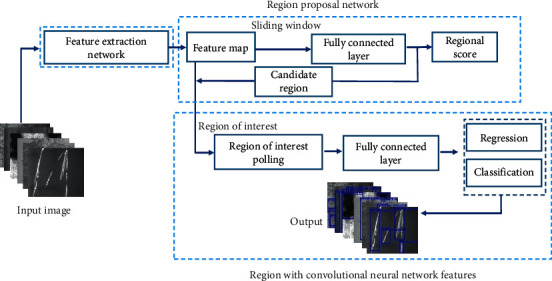
“The Structure diagram of Faster R-CNN [32].”
Konovalenko, І. V., Maruschak, P. O., Brevus, V., & Prentkovskis, O. (2021) · Metals · doi:10.3390/met11040549 · Cited by 40
Strip steel surface defect detection based on lightweight YOLOv5
Zhang, Y., Shen, S., & Xu, S. (2023) · Frontiers in Neurorobotics · doi:10.3389/fnbot.2023.1263739 · Cited by 38
Multi-Scale Lightweight Neural Network for Steel Surface Defect Detection
Shao, Y., Fan, S., Sun, H., Tan, Z., Cai, Y., Zhang, C. Y., & Zhang, L. (2023) · Coatings · doi:10.3390/coatings13071202 · Cited by 35
“LSHADE-SVC-PCD proposes an intelligent method for automatic detection of pitting corrosion by employing LSHADE metaheuristics, SVM machine learning, and image processing techniques [15,16].”
Zhao, H., Wan, F., Lei, G., Xiong, Y., Xu, L., Xu, C., & Wen, Z. (2023) · Sensors · doi:10.3390/s23146558 · Cited by 34
“However, current research primarily concentrates on enhancing the precision of surface defect classification [25,26], while simultaneously considering the recognition speed and lightweight design of the model can be challenging.”
BackgroundRandom Interpolation Resize: A free image data augmentation method for object detection in industry
Wan, D., Lu, R., Xu, T., Shen, S., Lang, X., & Ren, Z. (2023) · Expert Systems with Applications · doi:10.1016/j.eswa.2023.120355 · Cited by 36
Luo, W., & Yuan, S. (2024) · Digital Signal Processing · doi:10.1016/j.dsp.2024.104964 · Cited by 46
CASPPNet: a chained atrous spatial pyramid pooling network for steel defect detection
Zheng, Z., Hu, Y., Zhang, Y., Yang, H., Qiao, Y., Qu, Z., & Huang, Y. (2022) · Measurement Science and Technology · doi:10.1088/1361-6501/ac68d2 · Cited by 31
“These methods can be divided into image classification [11–13], object detection [14–16] and segmentation methods [17–19].”
WFRE-YOLOv8s: A New Type of Defect Detector for Steel Surfaces
Huang, Y., Tan, W., Li, L., & Wu, L. (2023) · Coatings · doi:10.3390/coatings13122011 · Cited by 39
“Zhao et al. [33] used deformable convolution in Faster R-CNN and introduced a feature pyramid network to obtain an improved Faster R-CNN network for steel surface defect detection.”
MethodA Lightweight Network for Defect Detection in Nickel-Plated Punched Steel Strip Images
Liang, Y., Li, J., Zhu, J., Du, R., Wu, X., & Bing-quan, C. (2023) · IEEE Transactions on Instrumentation and Measurement · doi:10.1109/tim.2023.3237844 · Cited by 32
“For example, Zhao et al. [4] improved the traditional faster R-CNN algorithm by using multiscale fusion to train the network and replacing traditional convolution with deformable convolution to improve the detection accuracy for steel strip defects.”
MethodReal-Time Defect Detection Scheme Based on Deep Learning for Laser Welding System
Peng, P., Fan, K., Fan, X., et al. (2023) · IEEE Sensors Journal · doi:10.1109/jsen.2023.3277732 · Cited by 27
“…into the production, operation, and defect detection of the equipment, which enables the equipment to have the ability of self-perception, self-adaptive, self-control, self-learning, and so on, thus greatly improving the overall operation stability and reliability of the industrial system [19].”
BackgroundUnderwater small target detection based on dynamic convolution and attention mechanism
Cheng, C., Wang, C., Yang, D., Wen, X., Liu, W., & Zhang, F. (2024) · Frontiers in Marine Science · doi:10.3389/fmars.2024.1348883 · Cited by 30
RFAConv-CBM-ViT: enhanced vision transformer for metal surface defect detection
Wei, H., Zhao, L., Li, R., & Zhang, M. (2024) · The Journal of Supercomputing · doi:10.1007/s11227-024-06662-0 · Cited by 42
“In recent years, research on metal surface defect detection has shifted from relying on traditional image processing techniques and manual feature extraction to utilizing deep learning and automated feature learning methods [4–8].”
Fabric defect detection based on anchor-free network
Wang, X., Fang, W., & Xiang, S. (2023) · Measurement Science and Technology · doi:10.1088/1361-6501/ace8af · Cited by 30
“It is demonstrated that the mAP of YOLOX-CATD is significantly improved by 13.6%, 9%, and 11.8% compared to the anchor-based detection algorithms Cascade RCNN, Spare RCNN [42], and YOLOv5.”
InfluentialRagab, K. (2023) · Sensors · doi:10.3390/s23010544 · Cited by 24
“Recently, authors in [56] reconstructed the network structure of two-stage object detection (Faster R-CNN) for small features of the target, replaced part of the CNN with a deformable convolution network [57] and trained the network with multiscale feature fusion on NEU dataset [3].”
BackgroundContrastive self-supervised representation learning framework for metal surface defect detection
Zabin, M., Kabir, A. N. B., Kabir, M. K., Choi, H., & Uddin, J. (2023) · Journal Of Big Data · doi:10.1186/s40537-023-00827-z · Cited by 32
“For the automatic detection of small and complex steel defects, a deformable convolution network with multi-scale feature fusion was applied [29].”
MethodQian, K., Zou, L., Wang, Z., & Wang, W. (2024) · Applied Soft Computing · doi:10.1016/j.asoc.2024.111589 · Cited by 31
CFE-YOLOv8s: Improved YOLOv8s for Steel Surface Defect Detection
Yang, S., Xie, Y., Wu, J., Huang, W., Yan, H., Wang, J., Bi, W., Yu, X., Wu, Q., & Xie, F. (2024) · Electronics · doi:10.3390/electronics13142771 · Cited by 26
STD2: Swin Transformer-Based Defect Detector for Surface Anomaly Detection
Mia, M. S., & Li, C. (2024) · IEEE Transactions on Instrumentation and Measurement · doi:10.1109/tim.2024.3492728 · Cited by 43
DEW-YOLO: An Efficient Algorithm for Steel Surface Defect Detection
Li, J., & Chen, M. (2024) · Applied Sciences · doi:10.3390/app14125171 · Cited by 29
Advancements and prospects of deep learning in biomaterials evolution
You, S., Fan, Y., Chen, Y., Jiang, X., Liu, W., Zhou, X.-Y., Zhang, J., Zheng, J., Yang, H., & Hou, X. (2024) · Cell Reports Physical Science · doi:10.1016/j.xcrp.2024.102116 · Cited by 33
Classification and Fast Few-Shot Learning of Steel Surface Defects with Randomized Network
Nagy, A. M., & Czúni, L. (2022) · Applied Sciences · doi:10.3390/app12083967 · Cited by 30
Konovalenko, І. V., Maruschak, P. O., Kozbur, H., Brezinová, J., Brezina, J., & Guzanová, A. (2021) · Metals · doi:10.3390/met11111851 · Cited by 22
Improved faster R-CNN for steel surface defect detection in industrial quality control
Leng, Y., & Liu, J. (2025) · Scientific Reports · doi:10.1038/s41598-025-12740-x · Cited by 21
Deep Learning-Based Automatic Defect Detection of Additive Manufactured Stainless Steel
Zubayer, M. H., Zhang, C., & Wang, Y. (2023) · Metals · doi:10.3390/met13121987 · Cited by 26
Multiscale Local and Global Feature Fusion for the Detection of Steel Surface Defects
Zhang, L., Fu, Z., Guo, H., Sun, Y., Li, X., & Xu, M. (2023) · Electronics · doi:10.3390/electronics12143090 · Cited by 22
Current Trends on Deep Learning Techniques Applied in Iron and Steel Making Field: A Review
Tsutsui, K., Namba, T., Kihara, K., Hirata, J., Matsuo, S., & Ito, K. (2024) · ISIJ International · doi:10.2355/isijinternational.isijint-2024-098 · Cited by 23
Steel surface defect detection based on multi-layer fusion networks
Li, H., Liu, M., Yin, Y., & Sun, W. (2025) · Scientific Reports · doi:10.1038/s41598-024-74601-3 · Cited by 26
“Additionally, Zhao et al. 12 enhanced Fast R-CNN by introducing deformation convolution to strengthen feature extraction capabilities.”
Wu, Q., Hu, Z., Qin, X., Huang, B., Dong, K., & Shi, A. (2023) · Expert Systems with Applications · doi:10.1016/j.eswa.2023.122225 · Cited by 20
Optimization Algorithm for Steel Surface Defect Detection Based on PP-YOLOE
Qu, Y., Wan, B., Wang, C., Ju, H., Yu, J., Kong, Y., & Chen, X. (2023) · Electronics · doi:10.3390/electronics12194161 · Cited by 21
Fu, M., Wu, J., Wang, Q., Sun, L., Ma, Z., Zhang, C., Guan, W., Li, W., Chen, N., Wang, D., et al. (2023) · IET Signal Processing · doi:10.1049/sil2.12208 · Cited by 18
Liu, J., Song, S., Wang, J., Balaiti, M., Song, N., & Li, S. (2022) · Sensors · doi:10.3390/s22020656 · Cited by 18
Research on Fault Diagnosis of Steel Surface Based on Improved YOLOV5
Liu, W., Xiao, Y., Zheng, A., Zheng, Z., Liu, X., Zhang, Z., & Li, C. (2022) · Processes · doi:10.3390/pr10112274 · Cited by 19
YOLO-DD: Improved YOLOv5 for Defect Detection
Wang, J., Wang, W., Zhang, Z., Lin, X., Zhao, J., Chen, M., & Luo, L. (2023) · Computers, materials & continua/Computers, materials & continua (Print) · doi:10.32604/cmc.2023.041600 · Cited by 21
Improved YOLOv5 Network for Steel Surface Defect Detection
Huang, B., Liu, J., Liu, X., Liu, K., Liao, X., Li, K., & Wang, J. (2023) · Metals · doi:10.3390/met13081439 · Cited by 21
Jiang, F., Ye, W., Lu, P., Zhang, S., Wu, Z., & Zhu, H. (2024) · IEEE Sensors Journal · doi:10.1109/jsen.2024.3454311 · Cited by 15
“Zhao et al. [16] improved the accuracy of steel defect detection by replacing part of the traditional convolutional network in R-CNN with a deformable convolutional network.”
MethodLi, L., Zhang, R., Xie, T., He, Y., Zhou, H., & Zhang, Y. (2024) · Electronics · doi:10.3390/electronics13183783 · Cited by 17
Athar, A., Mozumder, M. A. I., Abdullah, Ali, S., & Kim, H. (2024) · PeerJ Computer Science · doi:10.7717/peerj-cs.2389 · Cited by 17
“Zhao et al. (2021) proposed an improved target defect detection algorithm for steel surfaces.”
Bártová, B., Bína, V., & Váchová, L. (2022) · Production · doi:10.1590/0103-6513.20210097 · Cited by 21
YOLO-SDH: improved YOLOv5 using scaled decoupled head for object detection
Ren, Z., Kang, Y., Sheng, S., Wang, B., Lang, X., Wan, D., & Fu, W. (2024) · International Journal of Machine Learning and Cybernetics · doi:10.1007/s13042-024-02357-3 · Cited by 20
“NEU-DET : NEU-DET [43] dataset is an open steel surface defect detection data, which contain 1800 pieces of data in total.,It has six defect objects, including the craz-ing, inclusion, patches, pitted_surface, rolled - in_scale, scratches.”
Industrial Defect Detection Through Computer Vision: A Survey
Tang, Y., Sun, K., Zhao, D., Lu, Y., Jiang, J., & Chen, H. (2022) · IEEE International Conference on Data Science in Cyberspace · doi:10.1109/dsc55868.2022.00091 · Cited by 20
“[21]–[24] proposed methods with modified Faster R-CNN on fabric defect detection and [25], [26] on metal surface.”
MethodCoating Defect Detection Method Based on Data Augmentation and Network Optimization Design
Tang, K., Zi, B., Xu, F., Zhu, W., & Feng, K. (2023) · IEEE Sensors Journal · doi:10.1109/jsen.2023.3277979 · Cited by 13
“The Anchor size of the add additional detection layer is set to [12, 5, 7; 9, 11; 8] by the clustering algorithm, which makes the network more sensitive to microcoating defects.”
MethodFEB-YOLOv8: A Steel Surface Defect Detection Algorithm Based on Improved YOLOv8s
Yuan, J., Wan, F., Lei, G., et al. (2023) · International Conference on Computer Science, Electronic Information Engineering and Intelligent Control Technology (CEI) · doi:10.1109/cei60616.2023.10527815 · Cited by 14
“Zhao et al [4] proposed a steel surface defect detection algorithm based on improved Faster R-CNN [5], which uses multi-scale fusion to train the network and improve the detection of small targets, but the model has many parameters and the detection speed is slow.”
MethodSteel Sheet Defect Detection using Feature Pyramid Network and RESNET
Uraon, P. K., Verma, A., & Badholia, A. (2022) · International Conference on Edge Computing and Applications (ICECAA) · doi:10.1109/icecaa55415.2022.9936318 · Cited by 15
“It is feasible to minimize flaws in the production cycle by employing the item's causes of defects in real-time production [1]-[2].”
MethodDCS-YOLOv8: An Improved Steel Surface Defect Detection Algorithm Based on YOLOv8
Yang, S., Zhang, Z., Bi, W., & Wu, J. (2024) · International Conference on Image and Graphics Processing (ICIGP) · doi:10.1145/3647649.3647656 · Cited by 15
“Zhao et al. [8] introduced an enhanced approach based on Faster R-CNN, employing an RPN network to delineate target regions pertaining to surface defects on steel.”
MethodYOLO-LSDI: An Enhanced Algorithm for Steel Surface Defect Detection Using a YOLOv11 Network
Wang, F., Jiang, X., Han, Y., & Wu, L. (2025) · Electronics · doi:10.3390/electronics14132576 · Cited by 19
Choi, J.-S., Choi, S.-W., & Lee, E. (2023) · Sustainability · doi:10.3390/su15097676 · Cited by 18
Islam, M. A., & Olm, G. (2024) · Ultrasonics · doi:10.1016/j.ultras.2024.107314 · Cited by 15
Yedukondalu, J., Karaddi, S. H., Bindu, C. H., Sharma, D., Sarkar, A. K., & Sharma, L. D. (2024) · Arabian Journal for Science and Engineering · doi:10.1007/s13369-024-09230-z · Cited by 15
“Because the steel oxide scale or other foreign objects come into contact with the high temperature rolled piece and scratch it, the steel surface may exhibit the scratch phenomenon [1].”
YOLOv8-WTDD: multi-scale defect detection algorithm for wind turbines
Yu, X., Peng, Y., Zheng, S., Du, Q., & Wang, D. (2024) · The Journal of Supercomputing · doi:10.1007/s11227-024-06487-x · Cited by 13
“In recent years, surface defect detection technology based on deep learning has been widely applied in various industrial scenarios [24].”
Prediction of Inclusion Types From BSE Images: RF vs. CNN
Abdulsalam, M., Gao, N., Webler, B. A., & Holm, E. A. (2021) · Frontiers in Materials · doi:10.3389/fmats.2021.754089 · Cited by 16
“Most of the current work has been focused on utilizing computer vision for the detection of surface defects and scratches (Wang et al., 1883; Konovalenko et al., 2021; Zhao et al., 2021).”
BackgroundDANet: Enhancing Small Object Detection through an Efficient Deformable Attention Network
Mia, M. S., Voban, A. A. B., Arnob, A. B. H., Naim, A., Ahmed, M. K., & Islam, M. S. (2023) · IEEE International Conference on Cognitive Computing and Complex Data (ICCD) · doi:10.1109/iccd59681.2023.10420622 · Cited by 11
“Zhao et al. [10] proposes an improved target detection algorithm for steel surface defect detection, addressing the problem of detecting small and complex defect targets, by introducing several improvements to the traditional Faster R-CNN algorithm.”
MethodSteel Plate Surface Defect Detection Method - Based on Improved YOLO Algorithm
Lv, X., & Xu, J. (2023) · China Automation Congress (CAC) · doi:10.1109/cac59555.2023.10450211 · Cited by 12
Current Status of Image Recognition Technology in the Field of Corrosion Protection Applications
Wang, X., Zhang, W., Lin, Z., Li, H., Zhang, Y., Quan, W., Chen, Z., You, X., Zeng, Y. C., Wang, G., et al. (2024) · Coatings · doi:10.3390/coatings14081051 · Cited by 12
“Electrochemical Impedance Spectroscopy (EIS) is”
Zero-shot learning and classification of steel surface defects
Abdo, A. M. A. N., & Czúni, L. (2022) · International Conference on Machine Vision · doi:10.1117/12.2623570 · Cited by 12
Defect-Net: a new CNN model for steel surface defect classification
Abbes, W., Elleuch, J. F., & Sellami, D. (2024) · International Symposium on Signal, Image, Video and Communications (ISIVC) · doi:10.1109/isivc61350.2024.10577945 · Cited by 12
“Based on Convolution Neural Networks (CNN), [9] introduced a set of enhancements to the conventional Faster R-CNN algo-rithm, including a reconstruction of the Faster R-CNN network structure.”
MethodSurface Defect Detection Based on Adaptive Multi-Scale Feature Fusion
Wen, G., Cheng, L., Yuan, H., & Li, X. (2025) · Sensors · doi:10.3390/s25061720 · Cited by 17
“In recent years, researchers have proposed object detection models such as Faster R-CNN [8], YOLO [9], and SSD [10].”
Deng, Y., & Song, Y. (2023) · ISIJ International · doi:10.2355/isijinternational.isijint-2023-118 · Cited by 13
Yang, S., Wang, X., Qian, X., Yu, Y., & Jin, W. (2023) · IEEE Access · doi:10.1109/access.2023.3333918 · Cited by 11
“Therefore, we use CIOU Loss [35] as the loss function of our prediction frame.”
MethodInfluentialCNN‐based defect detection in manufacturing
Hou, M., Li, P., Cheng, S., & Yv, J. (2024) · Advanced Control for Applications · doi:10.1002/adc2.196 · Cited by 15
“Zhao et al. 22 proposed a vision-based automated detection solution to accomplish a series of tasks, including defect detection.”
Getachew, M., Beshah, B., Mulugeta, A., & Kitaw, D. (2024) · International Journal of Production Research · doi:10.1080/00207543.2024.2407919 · Cited by 15
WCAY object detection of fractures for X-ray images of multiple sites
Chen, P., Liu, S., Lu, W., Lu, F., & Ding, B. (2024) · Scientific Reports · doi:10.1038/s41598-024-77878-6 · Cited by 19
Wu, R., Wei, H., Lu, C., et al. (2024) · Journal of Nondestructive Evaluation · doi:10.1007/s10921-024-01149-7 · Cited by 10
“Deep learning, recognized for its strong learning capacity, expansive applicability, and adaptability, has emerged as a crucial tool for target recognition and classification in defect detection systems [14–17] as well as visual inspection systems [18, 19].”
Luo, Y., Ling, J., Chen, F., et al. (2025) · Nondestructive Testing And Evaluation · doi:10.1080/10589759.2025.2548374 · Cited by 10
Self-citationFlexible Material Quality Assessment Based on Visual–Tactile Fusion
Xu, S., Xu, H., Mao, F., Su, W., Ji, M., Gan, H., & Yang, W. (2024) · IEEE Transactions on Instrumentation and Measurement · doi:10.1109/tim.2024.3386205 · Cited by 8
“Typical cases include steel surface defect detection [1], complex fabric defect detection [2], surface crack inspection system [3], tiny darning needle defect detection [4], and leather defect detection [5].”
BackgroundECM-YOLO: a real-time detection method of steel surface defects based on multiscale convolution
Yan, C., & Xu, E. (2024) · Journal of the Optical Society of America A · doi:10.1364/josaa.533407 · Cited by 10
Hao, Z., Liu, B., & Xu, B. (2025) · Journal of Nondestructive Evaluation · doi:10.1007/s10921-025-01251-4 · Cited by 18
“…detection models, such as RT-DETR-L [23], Faster R-CNN [11], YOLOv7 [36], YOLOv8l [37], YOLOv10m [38], and YOLOv11m [39], as well as surface defect detection models, such as Li's method [40], DNN [8], Li's method [41], YOLOv7-BA [42], EDDN [43], SSDD-Net [44], LAACNet [45], and Zhao's method [46].”
Intelligent Classification of Different Types of Plastics using Deep Transfer Learning
Chazhoor, A. A. P., Zhu, M., Ho, E. S. L., et al. (2021) · doi:10.5220/0010716500003061 · Cited by 9
“CNN has made unprecedented success in the field of image processing (Ruan et al., 2020) and because of its superior performance in computer vision, deep learning has changed a variety of sectors (Zhao et al., 2021).”
BackgroundThe Steel Surface Multiple Defect Detection and Size Measurement System Based on Improved YOLOv5
Xu, Y., Ding, Z., Wang, L., Zhang, K., & Tong, L. (2023) · Journal of Electrical and Computer Engineering · doi:10.1155/2023/5399616 · Cited by 16
Toward phytoplankton parasite detection using autoencoders
Bilík, Š., Batrakhanov, D., Eerola, T., Haraguchi, L., Kraft, K., den Wyngaert, S. V., Kangas, J., Sjöqvist, C., Madsen, K., Lensu, L. T., et al. (2023) · Machine Vision and Applications · doi:10.1007/s00138-023-01450-x · Cited by 12
“For example, in [25], an improved Faster R-CNN to detect defects in steel plates was used.”
MethodLi, Y., He, L., Zhang, M., Cheng, Z., Liu, W., & Wu, Z. (2023) · Electronics · doi:10.3390/electronics12112440 · Cited by 10
Using Anchor-Free Object Detectors to Detect Surface Defects
Liu, J., Zhang, C., & Li, J. (2024) · Processes · doi:10.3390/pr12122817 · Cited by 13
Steel surface defect detection based on PSO-Gabor and an improved faster RCNN
Song, F., Bao, K., Deng, M., Xia, X., Sun, L., Zhou, J. H., Liu, L., & Jiang, L. (2025) · Nondestructive Testing And Evaluation · doi:10.1080/10589759.2025.2512553 · Cited by 9
“Faster region-based convolutional neural network (RCNN) is a commonly used two-stage target detection algorithm that is widely applied in the field of surface defect detection on strip steel [23].”
YOLOv8n-GAM: an improved surface defect detection network for hot-rolled strip steel
Xu, H., Xiao, X., Zhao, Z., & Wang, Z. (2024) · Engineering Research Express · doi:10.1088/2631-8695/ad5417 · Cited by 9
Automated Detection of Non-metallic Inclusion Clusters in Aluminum-deoxidized Steel
Abdulsalam, M., Jacobs, M., & Webler, B. A. (2021) · Metallurgical and Materials Transactions B · doi:10.1007/s11663-021-02312-5 · Cited by 8
A Novel Scratch Detection and Measurement Method for Automotive Stamping Parts
Liu, C., An, B., Hou, Y., Wang, H., & Liu, Y. (2022) · IEEE Transactions on Instrumentation and Measurement · doi:10.1109/tim.2022.3193970 · Cited by 8
Defective Surface Detection based on Improved Faster R-CNN
Duan, H. M., Huang, J., Liu, W., & Shu, F. (2022) · IEEE International Conference on Industrial Technology (ICIT) · doi:10.1109/icit48603.2022.10002822 · Cited by 11
“After experiments on NEU-DET, the algorithm in this paper is compared to some state-of-art methods, Faster R-CNN, Cascade R-CNN, End-to-end Defect Detection Network (EDDN) [23], which are all two-stage algorithms, and also YOLO, SSD, RetinaNet [24], which are one-stage algorithms.”
MethodYOLOv5s‐GC‐Based Surface Defect Detection Method of Strip Steel
Li, X., Yang, R., & Zhou, H. (2024) · steel research international · doi:10.1002/srin.202300421 · Cited by 9
Guan, S., Wang, X., Lin, H. U. A., et al. (2024) · Chinese Journal of Aeronautics · doi:10.1016/j.cja.2024.103379 · Cited by 7
Zhang, W. (2025) · Engineering Applications of Artificial Intelligence · doi:10.1016/j.engappai.2025.112537 · Cited by 10
Metadata
- Authors
- Zhao, W., Chen, F., Huang, H., Li, D., & Cheng, W.
- Affiliations
- Anhui University of Technology (CN)
- Corresponding author
- Chen, Feng
- Venue
- Computational Intelligence and Neuroscience
- Publisher
- Wiley
- Published
- 2021-01
- Volume
- 2021
- Issue
- 1
- Pages
- 5592878-5592878
- ISSN
- 1687-5265 (ISSN-L)
- 1687-5273
- PMC
- PMC8007367
- OpenAlex
- W3137333070
- Semantic Scholar
- 5cda88f64395289d1745069e80381e365cd76309
- Cited by
- 259
- References
- 38
- Citations by year
- 2026: 31 · 2025: 62 · 2024: 76 · 2023: 53 · 2022: 28 · 2021: 9
- FWCI
- 21.42
- Type
- journal article
- Language
- en
- Open access
- hybrid
- doi.org
- Licence
- Locations
- Computational Intelligence and Neuroscience (publishedVersion, cc-by)
- PubMed Central (publishedVersion, cc-by)
- PubMed (publishedVersion)
- DOAJ (DOAJ: Directory of Open Access Journals) (submittedVersion)
- Funders
- Opening Project of Key Laboratory of Power Electronics and Motion Control of Anhui Higher Education Institutions (PEMC1902)
- Topics
- Physical Sciences › Engineering › Industrial and Manufacturing Engineering › Industrial Vision Systems and Defect Detection
- Physical Sciences › Engineering › Mechanical Engineering › Non-Destructive Testing Techniques
- Physical Sciences › Engineering › Civil and Structural Engineering › Infrastructure Maintenance and Monitoring
- Keywords
- steel surface defect detection, small object detection, Faster R-CNN, multi-scale feature fusion, deformable convolution, NEU-DET dataset, machine vision, inclusion detection
- MeSH terms
- Deep Learning, Algorithms, Rotation, Steel, Neural Networks, Computer
About these checks
Registry, retraction, Cites and statistics results are computed, not judged, with one exception: a printed reference that no index lists is read once by a model before it counts as a citation error. Claims are extracted by a model and kept only when their quote appears verbatim in the text; each cited source is then checked, with a model’s help, for whether it says what the claim relies on. Those verdicts can be wrong — read the claim’s quote and the cited source before relying on one.
The claim verdicts this report counts are experimental: their accuracy is not yet measured.
A language model drew the claims from the paper on 2026-10-10, under version 3 of the claim definition (model deepseek-v4.1-flash, prompt extract-v3).
A second model labelled each claim on 2026-10-10 (model jev-1.13-20260917, definition revision gold-guideline-v0.2).
Cited sources are checked with a language model’s help (gpt-6-sol).
Statistics and arithmetic are recomputed, not judged.
Confidence bands are shown only for fields calibrated on our annotated test set. None is calibrated yet, so no band is shown.
What counts as a claim ›How we measure confidence ›How we check this ›
Are you an author, or do you see a problem with this page? Request a review
Data sources
Bibliographic data: Semantic Scholar, OpenAlex, Crossref.
Contains information from the Semantic Scholar Academic Graph Datasets, made available under the ODC Attribution License (ODC-BY 1.0).
Semantic Scholar’s data is described in: Kinney, R., et al. (2023). The Semantic Scholar Open Data Platform. arXiv:2301.10140.
