

A New Steel Defect Detection Algorithm Based on Deep Learning
Open accessThe DOI matches its Crossref record; 38 of the 38 references it cites were found in a registry or an index; 5 of the 15 sources its claims cite were checked for support.
Abstract
In recent years, more and more scholars devoted themselves to the research of the target detection algorithm due to the continuous development of deep learning. Among them, the detection and recognition of small and complex targets are still a problem to be solved. The authors of this article have understood the shortcomings of the deep learning detection algorithm in detecting small and complex defect targets and would like to share a new improved target detection algorithm in steel surface defect detection. The steel surface defects will affect the quality of steel seriously. We find that most of the current detection algorithms for NEU-DET dataset detection accuracy are low, so we choose to verify a steel surface defect detection algorithm based on machine vision on this dataset for the problem of defect detection in steel production. A series of improvement measures are carried out in the traditional Faster R-CNN algorithm, such as reconstructing the network structure of Faster R-CNN. Based on the small features of the target, we train the network with multiscale fusion. For the complex features of the target, we replace part of the conventional convolution network with a deformable convolution network. The experimental results show that the deep learning network model trained by the proposed method has good detection performance, and the mean average precision is 0.752, which is 0.128 higher than the original algorithm. Among them, the average precision of crazing, inclu…
Overview
CoChat Summary
TL;DR
The paper proposes an improved Faster R-CNN for steel surface defect detection by adding deformable convolution, deformable ROI pooling, FPN multiscale fusion, and soft NMS. On the NEU-DET dataset, it reports a mean average precision of 0.752, which is 0.128 higher than the original algorithm.
Key findings
- On NEU-DET, the proposed method achieves mAP = 0.752, which is 0.128 higher than the original algorithm.
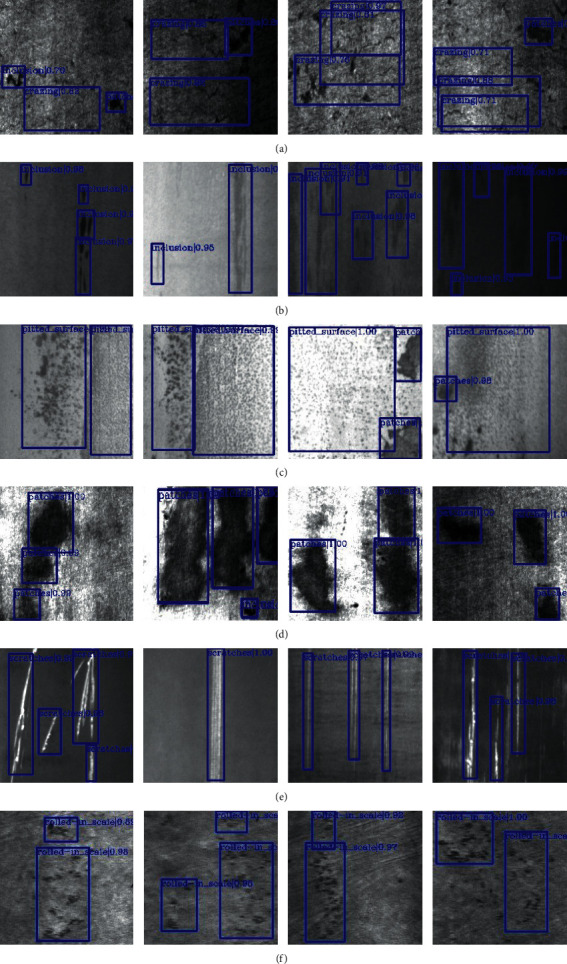
- Reported per-class APs are 0.501 (crazing), 0.791 (inclusion), 0.792 (patches), 0.874 (pitted_surface), 0.649 (rolled-in_scale), and 0.905 (scratches).
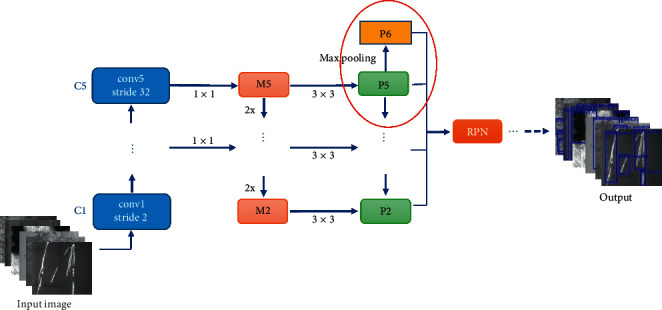
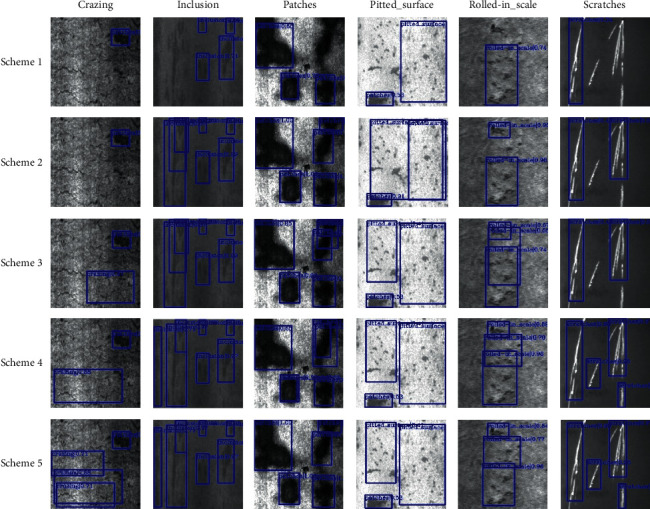
- In the ablation study, the original Faster R-CNN reaches 62.4% overall mean average accuracy; adding ResNet-50 raises it by 1.9%, adding deformable convolution raises it by 9% over the original, adding FPN raises it by 12.1%, and the full proposed scheme improves by 10.9%, 3.8%, and 0.7% compared with Schemes 2–4.
- Compared with other detectors, the paper states the proposed algorithm’s mean average accuracy is 24.2%, 14.6%, and 12.6% higher than SSD, RetinaNet, and Cascade R-CNN, respectively.
Methods
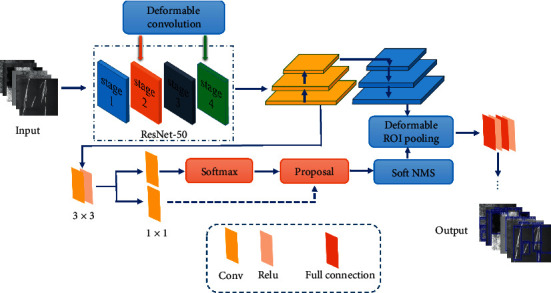
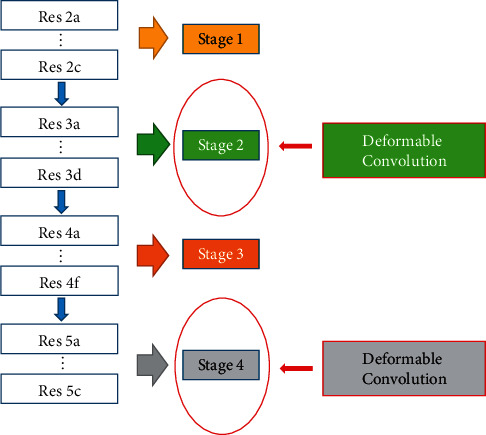
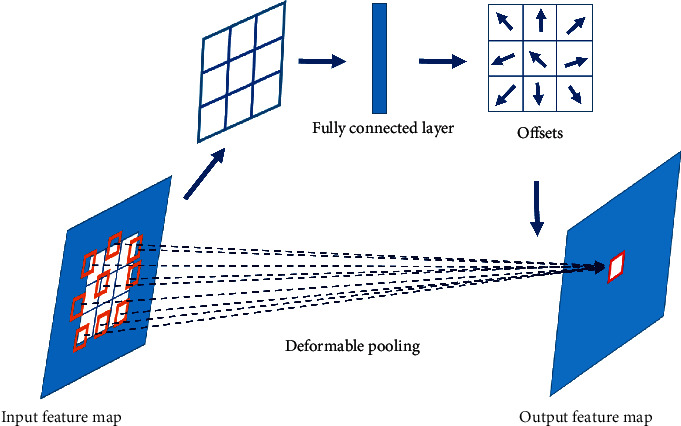
- The model is based on Faster R-CNN and modifies the feature extractor with ResNet-50, deformable convolution, and deformable ROI pooling; it also adds FPN and soft NMS.
- Experiments are conducted on NEU-DET, described as an open dataset from Northeast University with 1800 pictures total and 300 pictures of six kinds of defects.
- Performance is evaluated using AP for each defect class and mAP for the overall model; ablation experiments compare five schemes, and the model is also compared with SSD, RetinaNet, and Cascade R-CNN.
Limitations
- The paper states that the detection time is long and says the algorithm should be further optimized to reduce detection time.
- The paper states that the processed images “could be affected by uncertainty” and suggests using soft computing technology in future research.
- The text makes evident that crazing/small targets remain challenging, since it notes fuzzy, small-sized crazing defects and “a small number of missed detection” — this is inferred from the results discussion, not stated as a formal limitation.
Model-written summary. Check it against the paper before relying on it.
Integrity signals
Registry
Cites
Statistics
Figures
Verification
Claims the paper makes
3 Valid · 6 Not valid · 2 Not checked · 37 Own results and interpretations
Every source the paper cites for this claim was checked and supports it.
In the paper
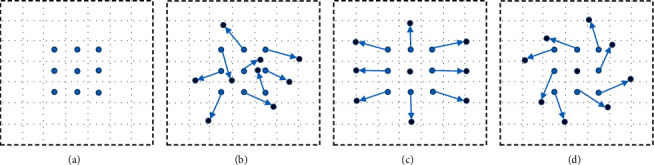
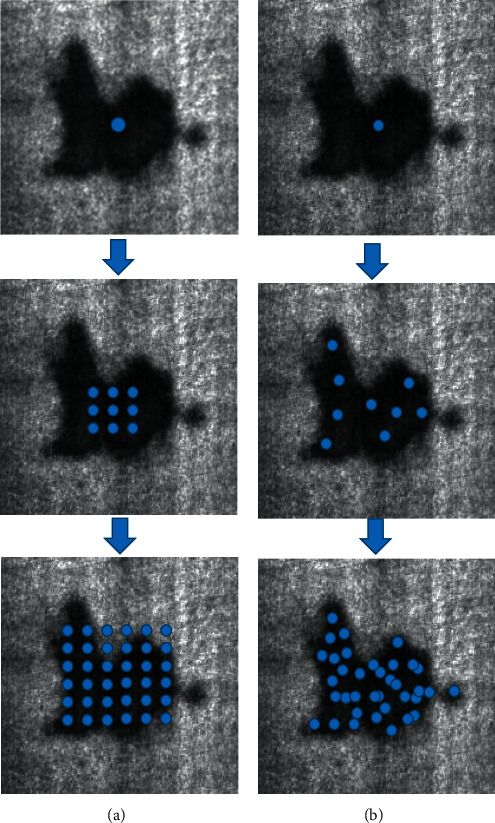
“Dai et al. [36] introduced deformable convolution and deformable pooling into convolution neural network to enhance the modeling ability of the network.”
§ A New Steel Defect Detection Algorithm Based on Deep Learning > 2. Steel Defect Detection Method > 2.3. Deformable Network
What the sources say
- Supportedcites [36] source
The Abstract (p. 1) says the authors introduce deformable convolution and deformable RoI pooling to enhance CNNs’ transformation-modeling capability. Section 2.1 (p. 2) explains that both modules can replace their standard counterparts in deep CNNs. The citing sentence’s “deformable pooling” is a reasonable shorthand for deformable RoI pooling. (LLM, conf=0.95)
plainstates a cause- Asserted: passes — The authors put it forward as true.
- Checkable: passes — It can be checked against evidence.
- Load-bearing: passes — The paper’s conclusions depend on it.
- Based: passes — The paper gives a reason why it holds.
- Supported
The cited sources support only part of this claim — read each source’s verdict below.
In the paper
“There are some shortcomings in manual testing, such as low confidence and high labor intensity.”
§ A New Steel Defect Detection Algorithm Based on Deep Learning > 1. Introduction
What the sources say
- Not checked — no full text of the sourcecites [2] source
- Not checked — no full text of the sourcecites [3] source
- Not checked — no full text of the sourcecites [4] source
- Not checked — no full text of the sourcecites [5] source
- Partly supportedcites [6] sourceExperimental — accuracy not yet measured
The Discussion (page unavailable) says manually labeling light-trap insects is a large task, which supports the labor-intensity point in a different setting. The paper does not address manual inspection of steel surfaces or say that manual testing has low confidence. (LLM, conf=0.78)
- Not checked — no full text of the sourcecites [7] source
plain- Asserted: passes — The authors put it forward as true.
- Checkable: passes — It can be checked against evidence.
- Load-bearing: passes — The paper’s conclusions depend on it.
- Based: passes — The paper gives a reason why it holds.
The cited sources that could be checked couldn’t confirm or dispute this claim.
In the paper
“The reduction range of the prediction accuracy of dense targets nearby is determined by soft NMS in light of the intersection over union (IOU) [36] of the highest score box, so as to improve the prediction accuracy of dense targets.”
§ A New Steel Defect Detection Algorithm Based on Deep Learning > 2. Steel Defect Detection Method > 2.5. Soft Nonmaximum Suppression Nonmaximum suppression (NMS) is used as a postprocessing method commonly to eliminate duplicate frames and reduce the false detection rate in the target detection. However, other similar targets attached to the box with higher prediction score are removed by the NMS, which will lead to missed detection and false detection of similar targets with close proximity and overlapping. The reduction range of the prediction accuracy of dense targets nearby is determined by soft NMS in light of the intersection over union (IOU) [36] of the highest score box, so as to improve the prediction accuracy of dense targets. For example, the IOU of the detection frames A and B [35] is the following:(5)IOU=A∩BA∪B=SUSA+SB−SU,where SA, SB are the areas of the detection frame A and B, respectively, and SU is the overlapping area of the detection frames A and B. The expressions of traditional NMS and Soft NMS algorithms are as follows [35]:(6)Si=Si, IOUM, bi< Nt,0, IOUM,bi ≥ Nt,(7)Si=Si, IOUM,bi< Nt,Si1−IOUM, bi, IOUM,bi≥ Nt,where Si is the score of the detection box i, M is the maximum score box, bi is the collection of detection frames i, Nt is the threshold set. The NMS sets the score of the detection frame whose IOU is greater than the threshold value to 0, while the soft NMS attenuates the score of the detection frame whose IOU is greater than the threshold value, which can alleviate the problems of missed detection and false detection of targets. The IOU threshold of soft NMS is 0.5 and the minimum score is 0.05.
What the sources say
- Could not verifycites [36] sourceExperimental — accuracy not yet measured
Section 4.1 (p. 7) mentions IoU only as a threshold for evaluating detection results. Sections 4.2–4.3 (pp. 8–9) report accuracy gains from deformable ConvNets, not from soft NMS. Searches for soft NMS, highest-scoring boxes, and IoU-based score reduction found no passage addressing the attributed mechanism or its effect on nearby dense targets. (LLM, conf=0.77)
plainstates a cause- Asserted: passes — The authors put it forward as true.
- Checkable: passes — It can be checked against evidence.
- Load-bearing: passes — The paper’s conclusions depend on it.
- Based: passes — The paper gives a reason why it holds.
- Could not verify
A result the paper reports from its own data — it cites no other source for it, so there is none to check. The quote shows it is in the paper.
In the paper
“mean average precision is 0.752, which is 0.128 higher than the original algorithm.”
§ A New Steel Defect Detection Algorithm Based on Deep Learning > Abstract In recent years, more and more scholars devoted themselves to the research of the target detection algorithm due to the continuous development of deep learning. Among them, the detection and recognition of small and complex targets are still a problem to be solved. The authors of this article have understood the shortcomings of the deep learning detection algorithm in detecting small and complex defect targets and would like to share a new improved target detection algorithm in steel surface defect detection. The steel surface defects will affect the quality of steel seriously. We find that most of the current detection algorithms for NEU-DET dataset detection accuracy are low, so we choose to verify a steel surface defect detection algorithm based on machine vision on this dataset for the problem of defect detection in steel production. A series of improvement measures are carried out in the traditional Faster R-CNN algorithm, such as reconstructing the network structure of Faster R-CNN. Based on the small features of the target, we train the network with multiscale fusion. For the complex features of the target, we replace part of the conventional convolution network with a deformable convolution network. The experimental results show that the deep learning network model trained by the proposed method has good detection performance, and the mean average precision is 0.752, which is 0.128 higher than the original algorithm. Among them, the average precision of crazing, inclusion, patches, pitted surface, rolled in scale and scratches is 0.501, 0.791, 0.792, 0.874, 0.649, and 0.905, respectively. The detection method is able to identify small target defects on the steel surface effectively, which can provide a reference for the automatic detection of steel defects.
plain- Asserted: passes — The authors put it forward as true.
- Checkable: passes — It can be checked against evidence.
- Load-bearing: passes — The paper’s conclusions depend on it.
- Based: passes — The paper gives a reason why it holds.
A result the paper reports from its own data — it cites no other source for it, so there is none to check. The quote shows it is in the paper.
In the paper
“mean average precision is 0.752, which is 0.128 higher than the original algorithm.”
- Also stated in: § 2.7. Analysis of Experimental Results · plain
“the overall mean average accuracy is 75.2%.”
§ A New Steel Defect Detection Algorithm Based on Deep Learning > Abstract In recent years, more and more scholars devoted themselves to the research of the target detection algorithm due to the continuous development of deep learning. Among them, the detection and recognition of small and complex targets are still a problem to be solved. The authors of this article have understood the shortcomings of the deep learning detection algorithm in detecting small and complex defect targets and would like to share a new improved target detection algorithm in steel surface defect detection. The steel surface defects will affect the quality of steel seriously. We find that most of the current detection algorithms for NEU-DET dataset detection accuracy are low, so we choose to verify a steel surface defect detection algorithm based on machine vision on this dataset for the problem of defect detection in steel production. A series of improvement measures are carried out in the traditional Faster R-CNN algorithm, such as reconstructing the network structure of Faster R-CNN. Based on the small features of the target, we train the network with multiscale fusion. For the complex features of the target, we replace part of the conventional convolution network with a deformable convolution network. The experimental results show that the deep learning network model trained by the proposed method has good detection performance, and the mean average precision is 0.752, which is 0.128 higher than the original algorithm. Among them, the average precision of crazing, inclusion, patches, pitted surface, rolled in scale and scratches is 0.501, 0.791, 0.792, 0.874, 0.649, and 0.905, respectively. The detection method is able to identify small target defects on the steel surface effectively, which can provide a reference for the automatic detection of steel defects.
plain- Asserted: passes — The authors put it forward as true.
- Checkable: passes — It can be checked against evidence.
- Load-bearing: passes — The paper’s conclusions depend on it.
- Based: passes — The paper gives a reason why it holds.
- Also stated in: § 2.7. Analysis of Experimental Results · plain
12 more claims
Create a free account to see all 48 claims and every source verdict.
- It may state two separate claims as one. 24
- Probably not a substantial claim. 8
- The quote only partly states this claim. 3
Self-check
Percentages, sums and reported differences re-computed from the paper’s own numbers.
Each contradiction between two passages listed here was confirmed by an independent check.
Rated minor: it would not touch a result — a value no result rests on, a p-value that stays on the same side of the significance level, or a conflict that is clerical, resolved elsewhere in the paper, or outside its own findings.
In the paper
§ A New Steel Defect Detection Algorithm Based on Deep Learning > 2. Steel Defect Detection Method > 2.7. Analysis of Experimental Results
“It is not hard to see that the average accuracy of “scratch” is the highest and the “pitted_ surface” is the second in Table 3, which can reach 90.5% and 87.4%, respectively. The average accuracy of “crashing” is the lowest, which is 50.1%, and the overall mean average accuracy is 75.2%.”
§ A New Steel Defect Detection Algorithm Based on Deep Learning > Abstract
“Among them, the average precision of crazing, inclusion, patches, pitted surface, rolled in scale and scratches is 0.501, 0.791, 0.792, 0.874, 0.649, and 0.905, respectively.”
Rated minor: it would not touch a result — a value no result rests on, a p-value that stays on the same side of the significance level, or a conflict that is clerical, resolved elsewhere in the paper, or outside its own findings.
In the paper
§ A New Steel Defect Detection Algorithm Based on Deep Learning > 2. Steel Defect Detection Method > 2.8. Ablation Experiments
“The five specific schemes in Table 4 are as follows:Scheme 1 is the original Faster R-CNN model.Scheme 2 uses ResNet-50 as the feature extraction network of Faster R-CNN.Scheme 3 introduces a deformable network on the basis of ResNet-50 as the feature extraction network of Faster R-CNN.Scheme 4 adds the feature pyramid network on the basis of Scheme 5.Scheme 5 replaces nonmaximum suppression scheme with a soft nonmaximum on the basis of Scheme 4.”
§ A New Steel Defect Detection Algorithm Based on Deep Learning > 2. Steel Defect Detection Method > 2.8. Ablation Experiments
“The final test results of the four schemes are shown in Figure 11.”
Citations
Cites
Deep Residual Learning for Image Recognition
He, K., Zhang, X., Ren, S., & Sun, J. (2016) · 2016 IEEE Conference on Computer Vision and Pattern Recognition (CVPR) · doi:10.1109/cvpr.2016.90 · Cited by 235,474 · cited 1×
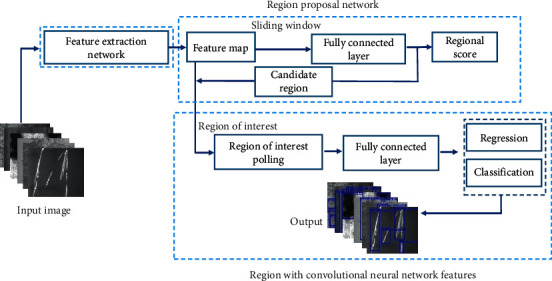
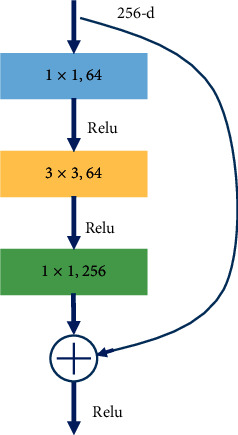
“At the first, the ResNet-50 [21–24] network is reconstructed by deformable convolution as the prefeature extraction network of Faster R-CNN [25–27].”
MethodFaster R-CNN: Towards Real-Time Object Detection with Region Proposal Networks
Ren, S., He, K., Girshick, R., & Sun, J. (2017) · IEEE Transactions on Pattern Analysis and Machine Intelligence · doi:10.1109/tpami.2016.2577031 · Cited by 73,472 · cited 1×
“At the first, the ResNet-50 [21–24] network is reconstructed by deformable convolution as the prefeature extraction network of Faster R-CNN [25–27].”
Method(2016) · Cited by 31,590
Feature Pyramid Networks for Object Detection
Lin, T.-Y., Dollar, P., Girshick, R., He, K., Hariharan, B., & Belongie, S. (2017) · 2017 IEEE Conference on Computer Vision and Pattern Recognition (CVPR) · doi:10.1109/cvpr.2017.106 · Cited by 30,939 · cited 1×
“Finally, the FPN [28–30] network is used for multifeature fusion, and the soft non-maximum suppression (soft NMS) [31] is used to reduce the confidence of the detection frame larger than the threshold, so as to alleviate the situation of the target missing detection.”
MethodSSD: Single Shot MultiBox Detector
Liu, W., Anguelov, D., Erhan, D., Szegedy, C., Reed, S., Fu, C.-Y., & Berg, A. C. (2016) · Lecture Notes in Computer Science · doi:10.1007/978-3-319-46448-0_2 · Cited by 22,128
Focal Loss for Dense Object Detection
Lin, T.-Y., Goyal, P., Girshick, R., He, K., & Dollar, P. (2020) · IEEE Transactions on Pattern Analysis and Machine Intelligence · doi:10.1109/tpami.2018.2858826 · Cited by 9,556 · cited 1×
“…other mainstream target detection algorithms in order to further verify the advantages of the proposed algorithm, as shown in Table 6. comparison algorithms include single-stage target detection algorithms SSD and RetinaNet [38, 39] and double-stage target detection algorithm Cascade R-CNN [40].”
MethodDeformable Convolutional Networks
Dai, J., Qi, H., Xiong, Y., Li, Y., Zhang, G., Hu, H., & Wei, Y. (2017) · 2017 IEEE International Conference on Computer Vision (ICCV) · doi:10.1109/iccv.2017.89 · Cited by 7,513 · cited 5×
“To solve the above problems, Dai et al. [36] introduced deformable convolution and deformable pooling into convolution neural network to enhance the modeling ability of the network. end-to-end training is carried out through standard backpropagation to generate a deformable convolution network.”
BackgroundMethodInfluentialSoft-NMS — Improving Object Detection with One Line of Code
Bodla, N., Singh, B., Chellappa, R., & Davis, L. S. (2017) · 2017 IEEE International Conference on Computer Vision (ICCV) · doi:10.1109/iccv.2017.593 · Cited by 2,274 · cited 1×
“Finally, the FPN [28–30] network is used for multifeature fusion, and the soft non-maximum suppression (soft NMS) [31] is used to reduce the confidence of the detection frame larger than the threshold, so as to alleviate the situation of the target missing detection.”
MethodAn End-to-End Steel Surface Defect Detection Approach via Fusing Multiple Hierarchical Features
He, Y., Song, K., Meng, Q., & Yan, Y. (2020) · IEEE Transactions on Instrumentation and Measurement · doi:10.1109/tim.2019.2915404 · Cited by 1,341 · cited 1×
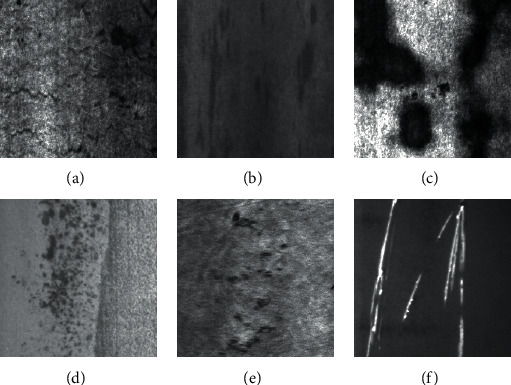
“…of several common defects on the steel surface are shown in Figure 1, including crazing, inclusions, patches, and pitted surface, rolled in scale and scratches. traditional steel surface defect detection [2–4] is completed by manual visual inspection combined with traditional machine vision [5–7].”
MethodDeep Metallic Surface Defect Detection: The New Benchmark and Detection Network
Lv, X., Duan, F., Jiang, J.-J., Fu, X., & Gan, L. (2020) · Sensors · doi:10.3390/s20061562 · Cited by 643 · cited 1×
“Lv et al. [16] proposed a new end-to-end defect detection network (EDDN) to deal with different types of steel surface defects.”
Background
Research works printed but not linked: 5
- Sun B., 2010, Classification and formation mechanism of typical press in scale of hot rolled steel plate, Journal of Northeastern University (Natural Science), 31, 1417
- Qu E., 2017, Improved Gabor filter for detection of strip surface defects, Journal of Huazhong University of Science and Technology (Natural Science Edition), 45, 12
- Xu S., 2017, Design of surface defect detection system for cold rolled strip, Instrument Technique and Sensor, 1, 65
- Wang H., 2020, Research on surface defect detection of metal sheet and strip based on multi-level feature Faster R-CNN, Mechanical Science and Technology for Aerospace Engineering, 2020
- Dai X., 2020, Research on surface defect detection and implementation of metal workpiece based on improved Faster R-CNN, Surface Technology, 49, 362
Cited by
Items 201–255 of 255
Automatic Thread Defect Examination System
Kim, J. (2022) · Applied Sciences · doi:10.3390/app12126109
Otm-Fusion: An Image Preprocessing Method for Object Detection in Grayscale ImagePreprint
Wan, D., Lu, R., Hu, B., et al. (2023) · SSRN Electronic Journal · doi:10.2139/ssrn.4532335
Surface Defect Detection on Strip Steel Based on Hybrid Attention Mechanism and Yolov8Preprint
Zhang, Y., Shen, S., & Xu, S. (2023) · SSRN Electronic Journal · doi:10.2139/ssrn.4588486
Steel surface defect detection based on lightweight model
He, L., Huang, J., Li, X., & Guan, B. (2023) · Youth Academic Annual Conference of Chinese Association of Automation (YAC) · doi:10.1109/yac59482.2023.10401449
“Due to the presence of steel oxide scales or other outside causes, the steel surface may seem scraped [1].”
BackgroundZhu, X., Xu, J., Shi, L., et al. (2024) · SSRN Electronic Journal · doi:10.2139/ssrn.4752358
AUTOMATED METALLIC SURFACE FLAW INSPECTION USING ARTIFICIAL INTELLIGENCE TECHNIQUES
Anwar, S. R., Thangarasu, N., Sahoo, G. S., & Saxena, K. (2024) · Proceedings on Engineering Sciences · doi:10.24874/pes.si.24.02.009
“Initially, it reduces the inspection time, enabling producers to improve efficiency and satisfy demanding production schedules (Zhao et al., (2021)).”
BackgroundSteel Strips Surface Defect Detection Algorithm Combining Balance Mechanism and Dynamic Mechanism
Wang, S., & Wei, Y. (2023) · International Conference on Robotics, Intelligent Control and Artificial Intelligence (RICAI) · doi:10.1109/ricai60863.2023.10489651
“These defects significantly impact the corrosion resistance, abrasion resistance, and service life of the strip [1].”
BackgroundLi, D., Wang, Y., Wang, L., Liang, Y., Huang, L., Huang, L., & Yang, H. (2024) · SSRN Electronic Journal · doi:10.2139/ssrn.4831553
Self-citationA Novel Approach for Steel Defects Detection Using Yolo-Ae: Iiot Enabled Defect Detection SystemPreprint
Biswas, S., Ganesh, A., & Banerjee, K. (2024) · SSRN Electronic Journal · doi:10.2139/ssrn.4866209
Deep Learning Application and Analysis In Detection of Metal Plate Surface Defects
Tuncer, C., Közkurt, C., & Kılıçarslan, S. (2024) · Journal of Materials and Mechatronics A · doi:10.55546/jmm.1512549
Visual inspection of coatings in hydrogen fuel cells
Li, C. G., Zhou, M., & Pan, W. (2024) · International Conference on Artificial Intelligence and Intelligent Information Processing (AIIIP) · doi:10.1145/3707292.3707380
Steel Surface Defect Recognition Based on Evolutionary Network Architecture Search
Lu, T., & Wu, G. (2024) · China Automation Congress (CAC) · doi:10.1109/cac63892.2024.10864969
“Prominent architectures such as the VGG [22] series, GoogleNet [22] family, ResNet [23], and DenseNet [24] have significantly advanced the field of strip steel surface defect recognition [6], [11]–[13].”
DEC-YOLO: Surface Defect Detection Algorithm for Laser Nozzles
Li, S., Deng, H., Zhou, F., & Zheng, Y. (2025) · Electronics · doi:10.3390/electronics14071279
SGNet: A Multi-Scale Method for Steel Surface Defect Detection
Liu, S., Liu, X., Man, J., et al. (2024) · IEEE Smart World Congress (SWC) · doi:10.1109/swc62898.2024.00215
“Zhao [7] et al. reconstructed the Faster R-CNN network structure, employing a multi-scale fusion approach and deformable convolutions, effectively identifying small target defects on steel surfaces.”
Wang, H., Meng, B., Zhu, J., & Du, R. (2025) · IEEE Transactions on Instrumentation and Measurement · doi:10.1109/tim.2025.3558829
“Similar scenarios can be referenced in surface defect detection based on machine vision, such as battery defect detection [3], [4], [5], steel strip defect detection [6], [7], [8], and electric two-wheeled vehicle defect detection [9].”
Research on a rapid pre-delivery inspection strategy for harmonic reducers
Zhang, Y., Xu, Y., Xie, G., & Yu, Z. (2025) · Transactions of the Canadian Society for Mechanical Engineering · doi:10.1139/tcsme-2024-0217
Chen, T., Xia, X., Yang, H., et al. (2025) · Journal of the Australian Ceramic Society · doi:10.1007/s41779-025-01200-4
“In summary, with the rapid development of non-destructive testing technology, researchers in the image processing proposed a new steel defect detection algorithm [19], single image dehazing algorithm [20], improved median filter image enhancement Algorithm [21], and achieved good results.”
ZFD-Net: Zinc flower defect detection model of galvanized steel surface based on improved YOLOV5
Gao, Y., Zhang, H., Zhu, L., Xie, F., & Xiao, D. (2025) · PLoS ONE · doi:10.1371/journal.pone.0325507
“Zhao et al. [12] based on Faster R-CNN can effectively identify small defects on steel surfaces.”
PHG-YOLO: A Lightweight Steel Surface Defect Detection Algorithm based on YOLOv8
Zhang, Y., Xie, Y., & Lu, Y. (2025) · International Conference on Computer Supported Cooperative Work in Design (CSCWD) · doi:10.1109/cscwd64889.2025.11033659
Papers Steel Defect Detection Model Based on State Space Model
Lu, Y., & Li, R. (2025) · International Conference on Neural Networks, Information and Communication Engineering (NNICE) · doi:10.1109/nnice64954.2025.11063822
“Therefore, accurate and efficient steel defect detection is essential [3].”
Zeng, Y., & Lim, W. (2025) · International Conference on Computer Vision, Image and Deep Learning (CVIDL) · doi:10.1109/cvidl65390.2025.11085992
“Region-based Convolutional Neural Networks (R-CNN family), such as R-CNN [1] and Faster R-CNN [2,3], employ a two-stage process of region proposal and classification/regression, achieving high accuracy but at significant computational cost.”
Jiang, Y., Dai, J., & Jiang, Z. (2025) · Symmetry · doi:10.3390/sym17081313
AWBN-YOLO: a surface defect detection method for aero-engine blades in sample-limited scenarios
Gao, W., Lv, N., & Du, F. (2025) · Multimedia Systems · doi:10.1007/s00530-025-01967-3
Sareminia, S., Sattar, M., & Amini, F. (2025) · Measurement Interdisciplinary Research and Perspectives · doi:10.1080/15366367.2025.2545007
“Several factors influence the HSMP, including machine attributes, process variables, product specifications, and overall quality factors (L. Ma et al., 2017; K. Peng et al., 2013, 2015; R. Peng et al., 2022; Ray, 2016; S. Zhao et al., 2021).”
InfluentialXiao, J., & Ma, L. (2025) · International Symposium on Robotics, Artificial Intelligence and Information Engineering (RAIIE) · doi:10.1109/raiie65740.2025.11139376
“Zhao et al.[3] improved the detection accuracy by 12.8% compared to the original model by reconstructing the Faster R-CNN network with multi-scale fusion and deformable convolutional networks.”
InfluentialCMA-YOLO11: An Advanced Algorithm for High-Precision Steel Surface Defect Detection
Lin, H., & Fang, Z. (2025) · Asia-Pacific Conference on Communications Technology and Computer Science (ACCTCS) · doi:10.1109/acctcs66275.2025.00186
“For example, Zhao et al. [5] proposed an enhanced version of the Faster R-CNN algorithm, which introduced multi-scale fusion training network and variable convolution to reconstruct its structure, improving small-target-defect recognition on steel surfaces.”
Steel Surface Defect Detection Based on YOLOv11
Guo, C., Huang, K., Lin, Q., et al. (2025) · International Conference on Natural Computation, Fuzzy Systems and Knowledge Discovery (ICNC-FSKD) · doi:10.1109/icnc-fskd67701.2025.11198008
“Zhao et al. [9] improved Faster R-CNN by combining variable convolution and the ResNet-50 network model, and used FPN to perform multi-scale operations on the feature maps.”
Pipeline Defect Identification Method Based on Attention Mechanism and CNN-GRU Model
Zheng, W., Guo, P., & Li, J. (2025) · doi:10.1109/spml66318.2025.11199778
“Zhao et al. [12] replaced part of the traditional convolutional networks with deformable convolutional networks and trained the networks with a multiscale fusion method to solve the problem of small size and complex shape of steel defects.”
Liao, J., Liu, M., Jiang, L., & Li, K. (2025) · Measurement Science and Technology · doi:10.1088/1361-6501/ae1aa8
“Zhao et al [28] proposed an improved Faster R-CNN employing multi-scale feature fusion and deformable convolutions to better handle minor and complex defects.”
MSENet: Multi-Scale Enhancement Network for Surface Tiny Defect Detection in Laptop CasingsPreprint
Zheng, T., & Huang, X. (2025) · SSRN Electronic Journal · doi:10.2139/ssrn.5709805
Ibrahim, A. A. M. S., & Tapamo, J. (2025) · Lecture notes in networks and systems · doi:10.1007/978-3-032-02312-4_3
Huang, X., & Peilin, L. (2025) · Expert Systems · doi:10.1111/exsy.70177
“For instance, Feature Pyramid Networks and Deformable Convolutional Networks have been integrated with Faster R-CNN to enhance small defect detection in steel (Zhao et al. 2021).”
Alemán, S. C., Ponce, D. V., Navarro, J. C., et al. (2025) · International Conference on Electrical, Computer, Communications and Mechatronics Engineering (ICECCME) · doi:10.1109/iceccme64568.2025.11277685
“For example, they developed a Faster R-CNN-based architecture for surface inspection of steel, achieving a mAP of 0.752 [11].”
InfluentialSDC-YOLO: An Efficient Model for Steel Surface Defect Detection
Zhou, S., Sheng, Z., & Cong, S. (2025) · International Conference on Computer Systems (ICCS) · doi:10.1109/iccs67844.2025.11292165
“For two-stage detection algorithms, Zhao et al. [3] improved Faster R-CNN by replacing traditional convolution networks with deformable convolutional networks.”
GCaSNet: Global Context-Aware Selective Detection Network for Rail Surface Defect Detection
Hua, Y., Yang, Y. H., Sheng, W., Zhu, S., Zhu, J., & Li, Q. (2025) · IEEE Transactions on Intelligent Transportation Systems · doi:10.1109/tits.2025.3612032
“Zhao et al. [36] introduced feature pyramid networks (FPN) and deformable convolutional networks (DCN) in Faster R-CNN to improve detection of small defects.”
Contrastive learning enhanced MobileMamba for real time industrial defect detection on edge devices
Huang, J., Ariffin, S. A., Yang, Q., et al. (2026) · Scientific Reports · doi:10.1038/s41598-026-35515-4
“In the two-stage network, Zhao et al. 7 proposed an improved Faster-RCNN network model, using variable convolution to replace part of the regular convolution to reconstruct ResNet50 for feature extraction, and using a deformable pool to replace the fixed ROI pool.”
GEFA-YOLO: Lightweight Weed Detection with Group-Enhanced Fusion Attention
Li, H., Zhao, P., Kang, F., Su, Y., Zhou, Q., Wang, Z., & Wang, L. (2026) · Sensors · doi:10.3390/s26020540 · Cited by 2
“To further evaluate the robustness and generalization capability of the proposed GEFAY model beyond the weed detection task, additional experiments were conducted on the SSDD [37] and NEU-DET [38] datasets.”
Clustering-guided Generative Adversarial Network with Data Augmentation for Surface Defect Detection
Lin, Z., Che, Z., Fang, S., Zhao, X., Lin, C., & Zhiping, M. (2025) · International Conference on Big Data Analytics and Artificial Intelligence Application · doi:10.1145/3788108.3788528
Liu, G., Chang, L., Wang, L., Sun, J. Z., & Chen, S. (2026) · The Journal of Supercomputing · doi:10.1007/s11227-026-08318-7 · Cited by 2
“Steel surface defect detection methods can be divided into three main categories: manual detection methods[2], photoelectric detection methods, and deep learning-based detection methods[3, 4].”
Research on Micro Defect Detection Algorithm Based on YOLOv8
莫, 景. (2026) · Computer Science and Application · doi:10.12677/csa.2026.164128
EFI-YOLO: An enhanced framework for industrial object detection
Zhao, K., Miao, X., Huang, C., & Li, J. (2026) · Journal of Visual Communication and Image Representation · doi:10.1016/j.jvcir.2026.104796
MSNet: an enhanced YOLOv8-based approach to detect defects in vial body
Xu, H., & Dai, H. (2026) · International Journal of Machine Learning and Cybernetics · doi:10.1007/s13042-026-03097-2
“W. Zhao et al. [ 21] address the challenges of detecting small and complex-shaped defects in steel inspection.”
Optimized Deep Learning Model for Effective Strip Steel Defect Detection Based on Data Fusion
Wang, J. J., Fu, Z. J., Wan, L. X., & Park, J. J. (2026) · Data & Metadata · doi:10.56294/dm2026794
A Review of Computer Vision-Based Damage Detection in Steel Structures
Yikang, L. I. U., ZHANG, M., & Qianqian, Y. U. (2026) · Industrial Construction · doi:10.3724/j.gyjzg26033109 · Cited by 1
Wan, Q., Xiao, S., He, W., Sun, Q., Wang, J., & Yu, M. (2026) · Journal of Engineering and Applied Science · doi:10.1186/s44147-026-01065-9
“The vast majority of these models and meth-ods have continued to exhibit strong vitality in recent years, and there are still researchers who are enthusiastically pursuing CSR methods [20].”
Ma, C., Yu, Q., & Ma, S. (2026) · Measurement Science and Technology · doi:10.1088/1361-6501/ae7620
“However, these methods exhibit high computational complexity, making it challenging to meet the real-time requirements of industrial production lines [8].”
DIDW-YOLOv11: The Steel Surface Defect Detection Method Based on Improved YOLOv11 Network
Jiang, J., Zhang, Y., Xue, Z., & Wang, C. (2026) · Electronics · doi:10.3390/electronics15122593
Fuzzy Logic-Based Hybrid Deep Learning System for Metal Surface Defect Detection
Şahin, E. B., & Ari, S. (2026) · Sakarya University Journal of Computer and Information Sciences · doi:10.35377/saucis...1945069
Semi-Supervised Steel Surface Defect Detection Method Based on Improved Yolov8
Zhang, M., Ren, Y., Qin, H., Zhang, H., Sun, Y., & Hu, Z. (2026) · Chinese Control and Decision Conference (CCDC) · doi:10.1109/ccdc69976.2026.11559743
“Zhao et al. [10] reconstructed the Faster R-CNN network and used a multi-scale fusion training network to detect steel defects.”
Mamba-driven sifter for salient object detection
Chen, K., Li, C., Liu, Y., Zhang, D., Zhang, Y., & Xu, S. (2026) · Expert Systems with Applications · doi:10.1016/j.eswa.2026.133595
Yang, Y., & Li, N. (2026) · Measurement Science and Technology · doi:10.1088/1361-6501/ae8bce
“For example, Kou et al [9] and Zhao et al [10] utilized improved YOLO variants to capture tiny defects.”
RCSNet: A recalibration-driven cross-scale collaborative network for steel surface defect detection
Li, L., Lu, S., Ren, Z., Tang, C., & Liang, Y. (2026) · Neurocomputing · doi:10.1016/j.neucom.2026.134684 · Cited by 1
Unsupervised Transformer Framework for Real-World Furniture Surface Defect Detection
Wu, X., Wang, L., & Chen, X. (2026) · Smart innovation, systems and technologies · doi:10.1007/978-981-92-0607-0_25
Deep learning based reconstruction of particle reinforced materials from wave measurements
Sang, S., & Johnson, E. (2026) · Engineering Structures · doi:10.1016/j.engstruct.2026.123657
Metadata
- Authors
- Zhao, W., Chen, F., Huang, H., Li, D., & Cheng, W.
- Affiliations
- Anhui University of Technology (CN)
- Corresponding author
- Chen, Feng
- Venue
- Computational Intelligence and Neuroscience
- Publisher
- Wiley
- Published
- 2021-01
- Volume
- 2021
- Issue
- 1
- Pages
- 5592878-5592878
- ISSN
- 1687-5265 (ISSN-L)
- 1687-5273
- PMC
- PMC8007367
- OpenAlex
- W3137333070
- Semantic Scholar
- 5cda88f64395289d1745069e80381e365cd76309
- Cited by
- 259
- References
- 38
- Citations by year
- 2026: 31 · 2025: 62 · 2024: 76 · 2023: 53 · 2022: 28 · 2021: 9
- FWCI
- 21.42
- Type
- journal article
- Language
- en
- Open access
- hybrid
- doi.org
- Licence
- Locations
- Computational Intelligence and Neuroscience (publishedVersion, cc-by)
- PubMed Central (publishedVersion, cc-by)
- PubMed (publishedVersion)
- DOAJ (DOAJ: Directory of Open Access Journals) (submittedVersion)
- Funders
- Opening Project of Key Laboratory of Power Electronics and Motion Control of Anhui Higher Education Institutions (PEMC1902)
- Topics
- Physical Sciences › Engineering › Industrial and Manufacturing Engineering › Industrial Vision Systems and Defect Detection
- Physical Sciences › Engineering › Mechanical Engineering › Non-Destructive Testing Techniques
- Physical Sciences › Engineering › Civil and Structural Engineering › Infrastructure Maintenance and Monitoring
- Keywords
- steel surface defect detection, small object detection, Faster R-CNN, multi-scale feature fusion, deformable convolution, NEU-DET dataset, machine vision, inclusion detection
- MeSH terms
- Deep Learning, Algorithms, Rotation, Steel, Neural Networks, Computer
About these checks
Registry, retraction, Cites and statistics results are computed, not judged, with one exception: a printed reference that no index lists is read once by a model before it counts as a citation error. Claims are extracted by a model and kept only when their quote appears verbatim in the text; each cited source is then checked, with a model’s help, for whether it says what the claim relies on. Those verdicts can be wrong — read the claim’s quote and the cited source before relying on one.
The claim verdicts this report counts are experimental: their accuracy is not yet measured.
A language model drew the claims from the paper on 2026-10-10, under version 3 of the claim definition (model deepseek-v4.1-flash, prompt extract-v3).
A second model labelled each claim on 2026-10-10 (model jev-1.13-20260917, definition revision gold-guideline-v0.2).
Cited sources are checked with a language model’s help (gpt-6-sol).
Statistics and arithmetic are recomputed, not judged.
Confidence bands are shown only for fields calibrated on our annotated test set. None is calibrated yet, so no band is shown.
What counts as a claim ›How we measure confidence ›How we check this ›
Are you an author, or do you see a problem with this page? Request a review
Data sources
Bibliographic data: Semantic Scholar, OpenAlex, Crossref.
Contains information from the Semantic Scholar Academic Graph Datasets, made available under the ODC Attribution License (ODC-BY 1.0).
Semantic Scholar’s data is described in: Kinney, R., et al. (2023). The Semantic Scholar Open Data Platform. arXiv:2301.10140.
