

A New Steel Defect Detection Algorithm Based on Deep Learning
Open accessThe DOI matches its Crossref record; 38 of the 38 references it cites were found in a registry or an index; 5 of the 15 sources its claims cite were checked for support.
Abstract
In recent years, more and more scholars devoted themselves to the research of the target detection algorithm due to the continuous development of deep learning. Among them, the detection and recognition of small and complex targets are still a problem to be solved. The authors of this article have understood the shortcomings of the deep learning detection algorithm in detecting small and complex defect targets and would like to share a new improved target detection algorithm in steel surface defect detection. The steel surface defects will affect the quality of steel seriously. We find that most of the current detection algorithms for NEU-DET dataset detection accuracy are low, so we choose to verify a steel surface defect detection algorithm based on machine vision on this dataset for the problem of defect detection in steel production. A series of improvement measures are carried out in the traditional Faster R-CNN algorithm, such as reconstructing the network structure of Faster R-CNN. Based on the small features of the target, we train the network with multiscale fusion. For the complex features of the target, we replace part of the conventional convolution network with a deformable convolution network. The experimental results show that the deep learning network model trained by the proposed method has good detection performance, and the mean average precision is 0.752, which is 0.128 higher than the original algorithm. Among them, the average precision of crazing, inclu…
Overview
CoChat Summary
TL;DR
The paper proposes an improved Faster R-CNN for steel surface defect detection by adding deformable convolution, deformable ROI pooling, FPN multiscale fusion, and soft NMS. On the NEU-DET dataset, it reports a mean average precision of 0.752, which is 0.128 higher than the original algorithm.
Key findings
- On NEU-DET, the proposed method achieves mAP = 0.752, which is 0.128 higher than the original algorithm.
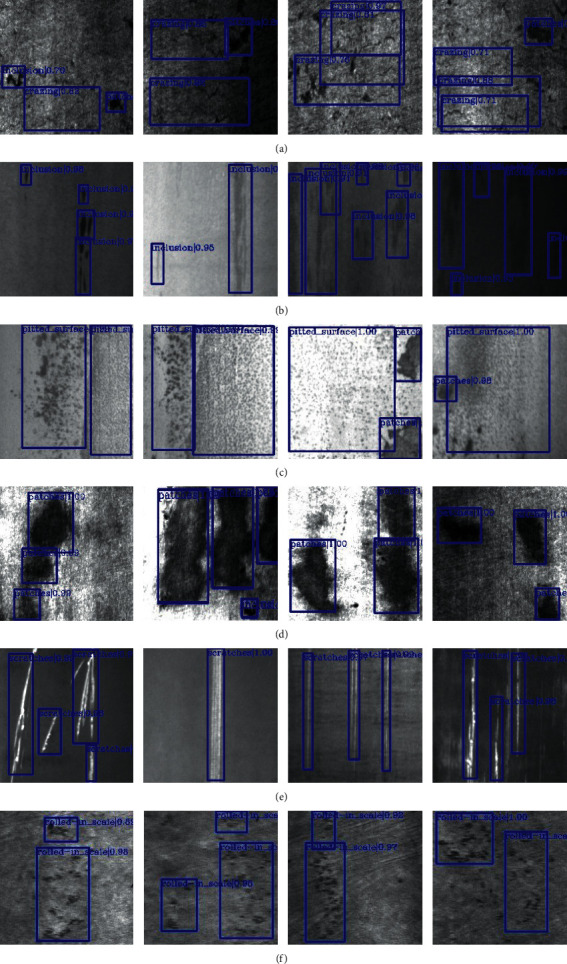
- Reported per-class APs are 0.501 (crazing), 0.791 (inclusion), 0.792 (patches), 0.874 (pitted_surface), 0.649 (rolled-in_scale), and 0.905 (scratches).
- In the ablation study, the original Faster R-CNN reaches 62.4% overall mean average accuracy; adding ResNet-50 raises it by 1.9%, adding deformable convolution raises it by 9% over the original, adding FPN raises it by 12.1%, and the full proposed scheme improves by 10.9%, 3.8%, and 0.7% compared with Schemes 2–4.
- Compared with other detectors, the paper states the proposed algorithm’s mean average accuracy is 24.2%, 14.6%, and 12.6% higher than SSD, RetinaNet, and Cascade R-CNN, respectively.
Methods
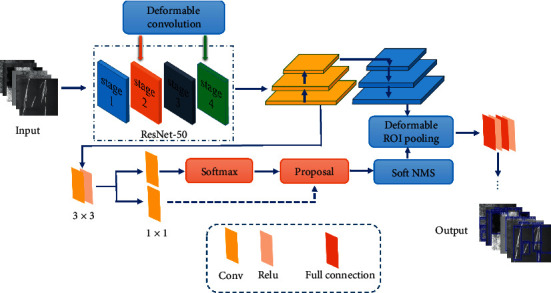
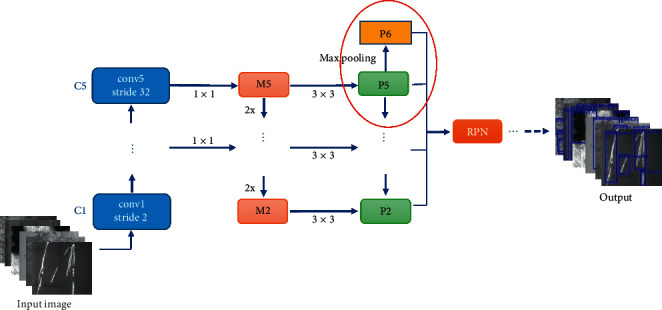
- The model is based on Faster R-CNN and modifies the feature extractor with ResNet-50, deformable convolution, and deformable ROI pooling; it also adds FPN and soft NMS.
- Experiments are conducted on NEU-DET, described as an open dataset from Northeast University with 1800 pictures total and 300 pictures of six kinds of defects.
- Performance is evaluated using AP for each defect class and mAP for the overall model; ablation experiments compare five schemes, and the model is also compared with SSD, RetinaNet, and Cascade R-CNN.
Limitations
- The paper states that the detection time is long and says the algorithm should be further optimized to reduce detection time.
- The paper states that the processed images “could be affected by uncertainty” and suggests using soft computing technology in future research.
- The text makes evident that crazing/small targets remain challenging, since it notes fuzzy, small-sized crazing defects and “a small number of missed detection” — this is inferred from the results discussion, not stated as a formal limitation.
Model-written summary. Check it against the paper before relying on it.
Integrity signals
Registry
Cites
Statistics
Figures
Verification
Claims the paper makes
3 Valid · 6 Not valid · 2 Not checked · 37 Own results and interpretations
Every source the paper cites for this claim was checked and supports it.
In the paper
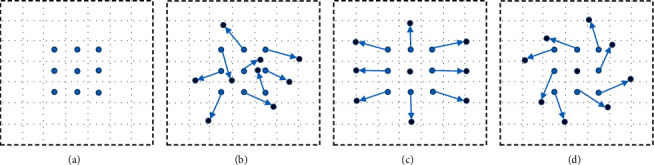
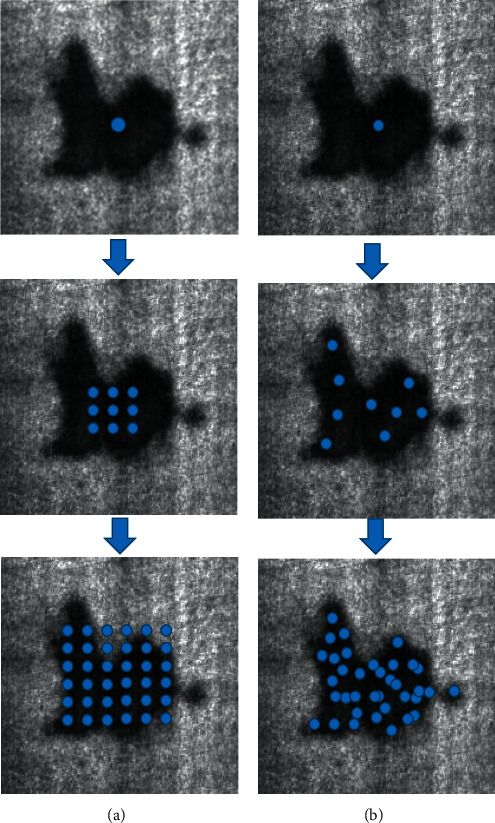
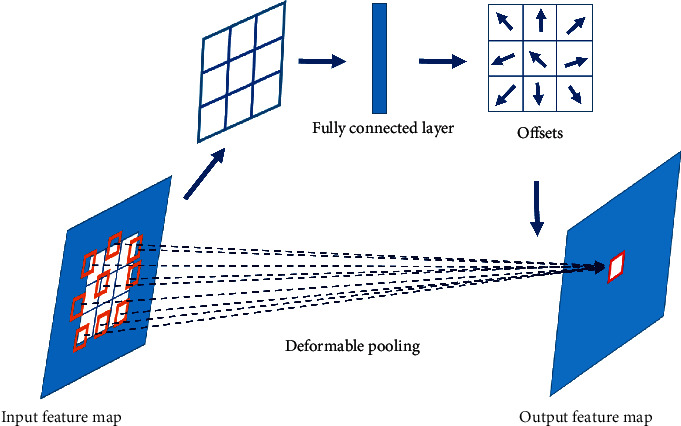
“Dai et al. [36] introduced deformable convolution and deformable pooling into convolution neural network to enhance the modeling ability of the network.”
§ A New Steel Defect Detection Algorithm Based on Deep Learning > 2. Steel Defect Detection Method > 2.3. Deformable Network
What the sources say
- Supportedcites [36] source
The Abstract (p. 1) says the authors introduce deformable convolution and deformable RoI pooling to enhance CNNs’ transformation-modeling capability. Section 2.1 (p. 2) explains that both modules can replace their standard counterparts in deep CNNs. The citing sentence’s “deformable pooling” is a reasonable shorthand for deformable RoI pooling. (LLM, conf=0.95)
plainstates a cause- Asserted: passes — The authors put it forward as true.
- Checkable: passes — It can be checked against evidence.
- Load-bearing: passes — The paper’s conclusions depend on it.
- Based: passes — The paper gives a reason why it holds.
- Supported
The cited sources support only part of this claim — read each source’s verdict below.
In the paper
“There are some shortcomings in manual testing, such as low confidence and high labor intensity.”
§ A New Steel Defect Detection Algorithm Based on Deep Learning > 1. Introduction
What the sources say
- Not checked — no full text of the sourcecites [2] source
- Not checked — no full text of the sourcecites [3] source
- Not checked — no full text of the sourcecites [4] source
- Not checked — no full text of the sourcecites [5] source
- Partly supportedcites [6] sourceExperimental — accuracy not yet measured
The Discussion (page unavailable) says manually labeling light-trap insects is a large task, which supports the labor-intensity point in a different setting. The paper does not address manual inspection of steel surfaces or say that manual testing has low confidence. (LLM, conf=0.78)
- Not checked — no full text of the sourcecites [7] source
plain- Asserted: passes — The authors put it forward as true.
- Checkable: passes — It can be checked against evidence.
- Load-bearing: passes — The paper’s conclusions depend on it.
- Based: passes — The paper gives a reason why it holds.
The cited sources that could be checked couldn’t confirm or dispute this claim.
In the paper
“The reduction range of the prediction accuracy of dense targets nearby is determined by soft NMS in light of the intersection over union (IOU) [36] of the highest score box, so as to improve the prediction accuracy of dense targets.”
§ A New Steel Defect Detection Algorithm Based on Deep Learning > 2. Steel Defect Detection Method > 2.5. Soft Nonmaximum Suppression Nonmaximum suppression (NMS) is used as a postprocessing method commonly to eliminate duplicate frames and reduce the false detection rate in the target detection. However, other similar targets attached to the box with higher prediction score are removed by the NMS, which will lead to missed detection and false detection of similar targets with close proximity and overlapping. The reduction range of the prediction accuracy of dense targets nearby is determined by soft NMS in light of the intersection over union (IOU) [36] of the highest score box, so as to improve the prediction accuracy of dense targets. For example, the IOU of the detection frames A and B [35] is the following:(5)IOU=A∩BA∪B=SUSA+SB−SU,where SA, SB are the areas of the detection frame A and B, respectively, and SU is the overlapping area of the detection frames A and B. The expressions of traditional NMS and Soft NMS algorithms are as follows [35]:(6)Si=Si, IOUM, bi< Nt,0, IOUM,bi ≥ Nt,(7)Si=Si, IOUM,bi< Nt,Si1−IOUM, bi, IOUM,bi≥ Nt,where Si is the score of the detection box i, M is the maximum score box, bi is the collection of detection frames i, Nt is the threshold set. The NMS sets the score of the detection frame whose IOU is greater than the threshold value to 0, while the soft NMS attenuates the score of the detection frame whose IOU is greater than the threshold value, which can alleviate the problems of missed detection and false detection of targets. The IOU threshold of soft NMS is 0.5 and the minimum score is 0.05.
What the sources say
- Could not verifycites [36] sourceExperimental — accuracy not yet measured
Section 4.1 (p. 7) mentions IoU only as a threshold for evaluating detection results. Sections 4.2–4.3 (pp. 8–9) report accuracy gains from deformable ConvNets, not from soft NMS. Searches for soft NMS, highest-scoring boxes, and IoU-based score reduction found no passage addressing the attributed mechanism or its effect on nearby dense targets. (LLM, conf=0.77)
plainstates a cause- Asserted: passes — The authors put it forward as true.
- Checkable: passes — It can be checked against evidence.
- Load-bearing: passes — The paper’s conclusions depend on it.
- Based: passes — The paper gives a reason why it holds.
- Could not verify
A result the paper reports from its own data — it cites no other source for it, so there is none to check. The quote shows it is in the paper.
In the paper
“mean average precision is 0.752, which is 0.128 higher than the original algorithm.”
§ A New Steel Defect Detection Algorithm Based on Deep Learning > Abstract In recent years, more and more scholars devoted themselves to the research of the target detection algorithm due to the continuous development of deep learning. Among them, the detection and recognition of small and complex targets are still a problem to be solved. The authors of this article have understood the shortcomings of the deep learning detection algorithm in detecting small and complex defect targets and would like to share a new improved target detection algorithm in steel surface defect detection. The steel surface defects will affect the quality of steel seriously. We find that most of the current detection algorithms for NEU-DET dataset detection accuracy are low, so we choose to verify a steel surface defect detection algorithm based on machine vision on this dataset for the problem of defect detection in steel production. A series of improvement measures are carried out in the traditional Faster R-CNN algorithm, such as reconstructing the network structure of Faster R-CNN. Based on the small features of the target, we train the network with multiscale fusion. For the complex features of the target, we replace part of the conventional convolution network with a deformable convolution network. The experimental results show that the deep learning network model trained by the proposed method has good detection performance, and the mean average precision is 0.752, which is 0.128 higher than the original algorithm. Among them, the average precision of crazing, inclusion, patches, pitted surface, rolled in scale and scratches is 0.501, 0.791, 0.792, 0.874, 0.649, and 0.905, respectively. The detection method is able to identify small target defects on the steel surface effectively, which can provide a reference for the automatic detection of steel defects.
plain- Asserted: passes — The authors put it forward as true.
- Checkable: passes — It can be checked against evidence.
- Load-bearing: passes — The paper’s conclusions depend on it.
- Based: passes — The paper gives a reason why it holds.
A result the paper reports from its own data — it cites no other source for it, so there is none to check. The quote shows it is in the paper.
In the paper
“mean average precision is 0.752, which is 0.128 higher than the original algorithm.”
- Also stated in: § 2.7. Analysis of Experimental Results · plain
“the overall mean average accuracy is 75.2%.”
§ A New Steel Defect Detection Algorithm Based on Deep Learning > Abstract In recent years, more and more scholars devoted themselves to the research of the target detection algorithm due to the continuous development of deep learning. Among them, the detection and recognition of small and complex targets are still a problem to be solved. The authors of this article have understood the shortcomings of the deep learning detection algorithm in detecting small and complex defect targets and would like to share a new improved target detection algorithm in steel surface defect detection. The steel surface defects will affect the quality of steel seriously. We find that most of the current detection algorithms for NEU-DET dataset detection accuracy are low, so we choose to verify a steel surface defect detection algorithm based on machine vision on this dataset for the problem of defect detection in steel production. A series of improvement measures are carried out in the traditional Faster R-CNN algorithm, such as reconstructing the network structure of Faster R-CNN. Based on the small features of the target, we train the network with multiscale fusion. For the complex features of the target, we replace part of the conventional convolution network with a deformable convolution network. The experimental results show that the deep learning network model trained by the proposed method has good detection performance, and the mean average precision is 0.752, which is 0.128 higher than the original algorithm. Among them, the average precision of crazing, inclusion, patches, pitted surface, rolled in scale and scratches is 0.501, 0.791, 0.792, 0.874, 0.649, and 0.905, respectively. The detection method is able to identify small target defects on the steel surface effectively, which can provide a reference for the automatic detection of steel defects.
plain- Asserted: passes — The authors put it forward as true.
- Checkable: passes — It can be checked against evidence.
- Load-bearing: passes — The paper’s conclusions depend on it.
- Based: passes — The paper gives a reason why it holds.
- Also stated in: § 2.7. Analysis of Experimental Results · plain
12 more claims
Create a free account to see all 48 claims and every source verdict.
- It may state two separate claims as one. 24
- Probably not a substantial claim. 8
- The quote only partly states this claim. 3
Self-check
Percentages, sums and reported differences re-computed from the paper’s own numbers.
Each contradiction between two passages listed here was confirmed by an independent check.
Rated minor: it would not touch a result — a value no result rests on, a p-value that stays on the same side of the significance level, or a conflict that is clerical, resolved elsewhere in the paper, or outside its own findings.
In the paper
§ A New Steel Defect Detection Algorithm Based on Deep Learning > 2. Steel Defect Detection Method > 2.7. Analysis of Experimental Results
“It is not hard to see that the average accuracy of “scratch” is the highest and the “pitted_ surface” is the second in Table 3, which can reach 90.5% and 87.4%, respectively. The average accuracy of “crashing” is the lowest, which is 50.1%, and the overall mean average accuracy is 75.2%.”
§ A New Steel Defect Detection Algorithm Based on Deep Learning > Abstract
“Among them, the average precision of crazing, inclusion, patches, pitted surface, rolled in scale and scratches is 0.501, 0.791, 0.792, 0.874, 0.649, and 0.905, respectively.”
Rated minor: it would not touch a result — a value no result rests on, a p-value that stays on the same side of the significance level, or a conflict that is clerical, resolved elsewhere in the paper, or outside its own findings.
In the paper
§ A New Steel Defect Detection Algorithm Based on Deep Learning > 2. Steel Defect Detection Method > 2.8. Ablation Experiments
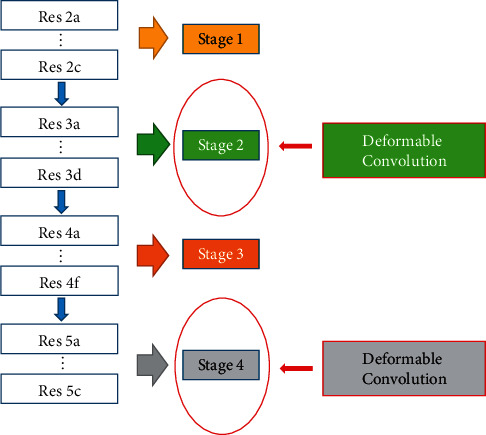
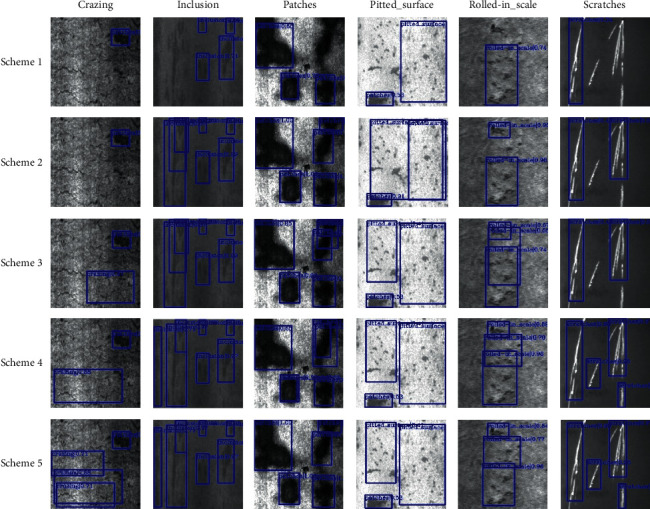
“The five specific schemes in Table 4 are as follows:Scheme 1 is the original Faster R-CNN model.Scheme 2 uses ResNet-50 as the feature extraction network of Faster R-CNN.Scheme 3 introduces a deformable network on the basis of ResNet-50 as the feature extraction network of Faster R-CNN.Scheme 4 adds the feature pyramid network on the basis of Scheme 5.Scheme 5 replaces nonmaximum suppression scheme with a soft nonmaximum on the basis of Scheme 4.”
§ A New Steel Defect Detection Algorithm Based on Deep Learning > 2. Steel Defect Detection Method > 2.8. Ablation Experiments
“The final test results of the four schemes are shown in Figure 11.”
Citations
Cites
Deep Residual Learning for Image Recognition
He, K., Zhang, X., Ren, S., & Sun, J. (2016) · 2016 IEEE Conference on Computer Vision and Pattern Recognition (CVPR) · doi:10.1109/cvpr.2016.90 · Cited by 235,474 · cited 1×
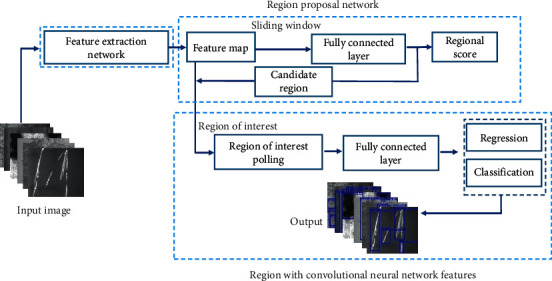
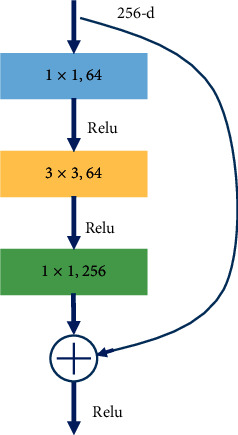
“At the first, the ResNet-50 [21–24] network is reconstructed by deformable convolution as the prefeature extraction network of Faster R-CNN [25–27].”
MethodFaster R-CNN: Towards Real-Time Object Detection with Region Proposal Networks
Ren, S., He, K., Girshick, R., & Sun, J. (2017) · IEEE Transactions on Pattern Analysis and Machine Intelligence · doi:10.1109/tpami.2016.2577031 · Cited by 73,472 · cited 1×
“At the first, the ResNet-50 [21–24] network is reconstructed by deformable convolution as the prefeature extraction network of Faster R-CNN [25–27].”
Method(2016) · Cited by 31,590
Feature Pyramid Networks for Object Detection
Lin, T.-Y., Dollar, P., Girshick, R., He, K., Hariharan, B., & Belongie, S. (2017) · 2017 IEEE Conference on Computer Vision and Pattern Recognition (CVPR) · doi:10.1109/cvpr.2017.106 · Cited by 30,939 · cited 1×
“Finally, the FPN [28–30] network is used for multifeature fusion, and the soft non-maximum suppression (soft NMS) [31] is used to reduce the confidence of the detection frame larger than the threshold, so as to alleviate the situation of the target missing detection.”
MethodSSD: Single Shot MultiBox Detector
Liu, W., Anguelov, D., Erhan, D., Szegedy, C., Reed, S., Fu, C.-Y., & Berg, A. C. (2016) · Lecture Notes in Computer Science · doi:10.1007/978-3-319-46448-0_2 · Cited by 22,128
Focal Loss for Dense Object Detection
Lin, T.-Y., Goyal, P., Girshick, R., He, K., & Dollar, P. (2020) · IEEE Transactions on Pattern Analysis and Machine Intelligence · doi:10.1109/tpami.2018.2858826 · Cited by 9,556 · cited 1×
“…other mainstream target detection algorithms in order to further verify the advantages of the proposed algorithm, as shown in Table 6. comparison algorithms include single-stage target detection algorithms SSD and RetinaNet [38, 39] and double-stage target detection algorithm Cascade R-CNN [40].”
MethodDeformable Convolutional Networks
Dai, J., Qi, H., Xiong, Y., Li, Y., Zhang, G., Hu, H., & Wei, Y. (2017) · 2017 IEEE International Conference on Computer Vision (ICCV) · doi:10.1109/iccv.2017.89 · Cited by 7,513 · cited 5×
“To solve the above problems, Dai et al. [36] introduced deformable convolution and deformable pooling into convolution neural network to enhance the modeling ability of the network. end-to-end training is carried out through standard backpropagation to generate a deformable convolution network.”
BackgroundMethodInfluentialSoft-NMS — Improving Object Detection with One Line of Code
Bodla, N., Singh, B., Chellappa, R., & Davis, L. S. (2017) · 2017 IEEE International Conference on Computer Vision (ICCV) · doi:10.1109/iccv.2017.593 · Cited by 2,274 · cited 1×
“Finally, the FPN [28–30] network is used for multifeature fusion, and the soft non-maximum suppression (soft NMS) [31] is used to reduce the confidence of the detection frame larger than the threshold, so as to alleviate the situation of the target missing detection.”
MethodAn End-to-End Steel Surface Defect Detection Approach via Fusing Multiple Hierarchical Features
He, Y., Song, K., Meng, Q., & Yan, Y. (2020) · IEEE Transactions on Instrumentation and Measurement · doi:10.1109/tim.2019.2915404 · Cited by 1,341 · cited 1×
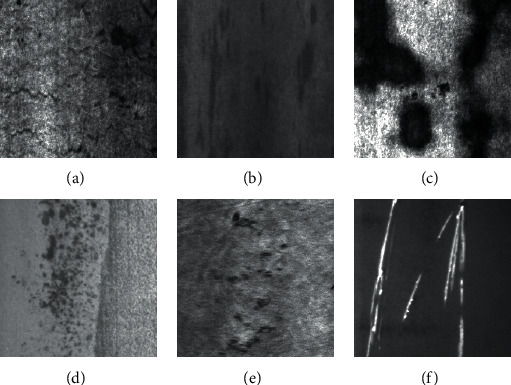
“…of several common defects on the steel surface are shown in Figure 1, including crazing, inclusions, patches, and pitted surface, rolled in scale and scratches. traditional steel surface defect detection [2–4] is completed by manual visual inspection combined with traditional machine vision [5–7].”
MethodDeep Metallic Surface Defect Detection: The New Benchmark and Detection Network
Lv, X., Duan, F., Jiang, J.-J., Fu, X., & Gan, L. (2020) · Sensors · doi:10.3390/s20061562 · Cited by 643 · cited 1×
“Lv et al. [16] proposed a new end-to-end defect detection network (EDDN) to deal with different types of steel surface defects.”
Background
Research works printed but not linked: 5
- Sun B., 2010, Classification and formation mechanism of typical press in scale of hot rolled steel plate, Journal of Northeastern University (Natural Science), 31, 1417
- Qu E., 2017, Improved Gabor filter for detection of strip surface defects, Journal of Huazhong University of Science and Technology (Natural Science Edition), 45, 12
- Xu S., 2017, Design of surface defect detection system for cold rolled strip, Instrument Technique and Sensor, 1, 65
- Wang H., 2020, Research on surface defect detection of metal sheet and strip based on multi-level feature Faster R-CNN, Mechanical Science and Technology for Aerospace Engineering, 2020
- Dai X., 2020, Research on surface defect detection and implementation of metal workpiece based on improved Faster R-CNN, Surface Technology, 49, 362
Cited by
Items 101–200 of 255
DB-YOLO: A Dual-Branch Parallel Industrial Defect Detection Network
Fan, Z., Zhao, Y., Liu, C. H. B., & Qiu, J. (2025) · Sensors · doi:10.3390/s25216614 · Cited by 7
Taghian, M., Meibody, A. P., Saboori, A., & Iuliano, L. (2026) · Journal of Manufacturing Processes · doi:10.1016/j.jmapro.2026.01.026 · Cited by 10
DEENet: an edge-enhanced CNN–Transformer dual-encoder model for steel surface defect detection
Pan, W., Zhong, R., Huang, J., Li, Y., Zhang, W., Liu, T., & Liu, Y. (2026) · Scientific Reports · doi:10.1038/s41598-026-36390-9 · Cited by 9
“This study uses the NEU-DET dataset 39 During training, hyperparameters were carefully configured to improve convergence.”
A Lightweight YOLOv7 Algorithm for Steel Surface Defect Detection
Zhou, Y., & Piao, J.-C. (2023) · International Conference on Pattern Recognition and Artificial Intelligence (PRAI) · doi:10.1109/prai59366.2023.10331937 · Cited by 7
“…generalization, so to achieve fast and efficient defect detection on steel surfaces, defect detection tasks need to be combined with object detection algorithms that are best adapted to the dataset used in this paper, and whose detection results are vastly improved based on manual detection [2].”
MethodSteel Surface Defect Detection Based on Improved YOLOv7
Li, M., Wei, L., & Zheng, B. (2024) · International Conference on Computer, Control and Robotics (ICCCR) · doi:10.1109/icccr61138.2024.10585576 · Cited by 7
“…is mainly divided into two categories, one is a two-stage detection algorithm, the representative algorithms are Faster R-CNN [1], and Mask R-CNN [2]; the other is a single-stage detection algorithm, the representative algorithms are YOLO (You only look once) [3] series network and SSD (Single…”
MethodSethy, P. K., Korada, L., Behera, S. K., Shirole, A., Amat, R., & Nanthaamornphong, A. (2024) · Systems and Soft Computing · doi:10.1016/j.sasc.2024.200170 · Cited by 11
YOLO-DBL: a multi-dimensional optimized model for detecting surface defects in steel
Xu, K., Zhu, D., Shi, C., & Zhou, C. (2025) · Journal of Membrane Computing · doi:10.1007/s41965-024-00178-5 · Cited by 13
CSAMamba-YOLOv8: a method for detecting defects on steel surfaces
Zhao, Z., & Liu, X. (2025) · Signal Image and Video Processing · doi:10.1007/s11760-025-04044-4 · Cited by 7
“The object detection algorithms include Faster R-CNN, SSD, and YOLOv8n, while the defect detection algorithms consist of EDDN [27], DDN [26], Improved Faster R-CNN [28], and Improved YOLOv7-tiny.”
Deep Learning-Based Defect Inspection in Sheet Metal Stamping Parts
Singh, A. R., Bashford‐Rogers, T., Hazra, S., & Debattista, K. (2022) · The minerals, metals & materials series · doi:10.1007/978-3-031-06212-4_38 · Cited by 11
Ma, B., He, J., Ramazani, A., Fehlemann, N. C., Wang, X., & Münstermann, S. (2023) · Materials Today Communications · doi:10.1016/j.mtcomm.2023.105979 · Cited by 9
Industrial Application of AI-Based Assistive Magnetic Particle Inspection
Baumeyer, J., Chatoux, H., Pelletier, A., et al. (2024) · Applied Sciences · doi:10.3390/app14041499 · Cited by 6
Aşar, E., & Özgür, A. (2024) · Engineering materials · doi:10.1007/978-3-031-57468-9_3 · Cited by 11
Su, J., Zhang, H., Przystupa, K., & Kochan, O. (2024) · J. Electronic Imaging · doi:10.1117/1.jei.33.3.033019 · Cited by 5
“Zhao et al. 20 proposed a Faster-RCNN based on multi-scale feature fusion and a deformable convolution network for detecting small defects on steel surfaces.”
BackgroundDeep Learning Applications in the Analysis of Wear Mechanisms in Metallic Materials: A Review
Wang, X., Xiao, B., Zhang, B., Sun, R., Li, C., & Liaw, P. K. (2025) · ACS Materials Letters · doi:10.1021/acsmaterialslett.5c00688 · Cited by 7
Xu, Z., Xu, Y., Wang, M., Wei, L., Chen, J., & Wang, M. (2025) · Knowledge-Based Systems · doi:10.1016/j.knosys.2025.114129 · Cited by 10
Fang, W., Yang, Y. Q., Zhang, W., Wang, T., Feng, J., & Liu, G. (2025) · Measurement Science and Technology · doi:10.1088/1361-6501/ae06bf · Cited by 8
“Although several studies have attempted to optimize faster R-CNN—for example, Zhao et al [18] introduced deformable convolutions and multi-scale feature fusion, and Shi et al [19] incorporated the CBAM attention mechanism to enhance defect feature extraction and improve accuracy—these meth-ods…”
A Survey of Deep learning in Advancing Steel Industry Standards
Aghapanah, H., Rad, A. S., & Rasti, R. (2024) · CSI International Symposium on Artificial Intelligence and Signal Processing · doi:10.1109/aisp61396.2024.10475283 · Cited by 9
“The Northeastern University (NEU) dataset is also related to steel surface defect detection with 1800 images [41][42].”
Steel Surface Defect Detection Based on Denoising Diffusion Implicit Models with Data Augmentation
Hong, Y., Wang, Z., Wu, W., et al. (2024) · International Conference on Imaging, Signal Processing and Communications (ICISPC) · doi:10.1109/icispc63824.2024.00010 · Cited by 5
“For two-stage detection algorithms, Zhao et al. [5] improved the traditional Faster R-CNN algorithm in terms of network structure and feature extraction to improve the accuracy of target detection.”
MethodRecognition and classification of casting defects using the CNN algorithm
Chigateri, K. B., Poojary, S., & Padmashali, S. (2023) · Materials Today Proceedings · doi:10.1016/j.matpr.2023.03.818 · Cited by 6
Simulation of Fatigue Fracture Detection of Bridge Steel Structures under Cyclic Loads
Yang, D., Yao, L., & Pang, Q. (2022) · Computational Intelligence and Neuroscience · doi:10.1155/2022/8534824 · Cited by 5
Ci, J., Tan, H., Zhai, H., & Tang, X. (2024) · Remote Sensing · doi:10.3390/rs16162953 · Cited by 4
“…an improved algorithm based on YOLOv4; Wang et al. [17] proposed a deformable convolutional network (DCNet) for hybrid defect pattern recognition; Zhao et al. [18] raised a fast R-CNN algorithm with deformable convolution for recognizing small targets and used it for steel defect detection.”
MethodREL-YOLO: surface defect detection of elevator wire rope based on improved YOLOv8
Lv, X., Lan, Y., Wu, B. H., et al. (2025) · The Journal of Supercomputing · doi:10.1007/s11227-025-07585-0 · Cited by 4
“As a representative model in the field of object detection, YOLO (You Only Look Once) has been widely used in industrial defect detection tasks [12–14].”
Li, J., He, X., Chen, X., Kong, D., Huang, T., & Song, P. Y. (2025) · Measurement · doi:10.1016/j.measurement.2025.119390 · Cited by 5
Multiclass small target detection algorithm for surface defects of chemicals special steel
Wang, Y., Yan, S., Abdullahi, H. S., et al. (2024) · Frontiers in Physics · doi:10.3389/fphy.2024.1451165 · Cited by 4
Xu, W., Liu, J., He, Y., Yang, Y., Xie, X., & Yang, X. (2025) · Metallurgical and Materials Transactions B · doi:10.1007/s11663-025-03557-0 · Cited by 4
Machine Learning Approaches for Quality Control in Pulp Packaging Manufacturers
Ceesay, R., Boonchoo, T., & Rattanatamrong, P. (2023) · International Joint Conference on Computer Science and Software Engineering · doi:10.1109/jcsse58229.2023.10202113 · Cited by 4
“…minute, repetitive jobs and wasted human resources thus a new detection method, the YOLOv4 model algorithm, is proposed [12] or in steel industry where Faster R-CNN model algorithm was proposed to solve current problems of steel surface defect detection which was slow and with low precision [13].”
MethodA Fast Surface-Defect Detection Method Based on Dense-Yolo Network
Gao, F., Zhu, Q., Shao, G., Su, Y., Yang, J., & Yu, X. (2022) · CAAI Transactions on Intelligence Technology · doi:10.1049/cit2.12407 · Cited by 8
Enhancing Crack Segmentation Network with Multiple Selective Fusion Mechanisms
Yang, C., Tao, Y., Dong, S., et al. (2025) · Buildings · doi:10.3390/buildings15071088 · Cited by 4
Rao, K. B. V. B., Prasad, G. N. R., Amudha, S., Kumar, A., Prasad, D., & Mohanavel, V. (2022) · International Conference on Inventive Research in Computing Applications (ICIRCA) · doi:10.1109/icirca54612.2022.9985717 · Cited by 6
“The confusion matrix of each database picture is generated using this statistical method [9].”
MethodResearch on surface defect detection model of steel strip based on MFFA‐YOLOv5
Chen, H., Qiu, J., Gao, D., Qian, L., & Li, X. (2024) · IET Image Processing · doi:10.1049/ipr2.13086 · Cited by 4
Tusnin, A. R., Alekseytsev, A., & Tusnina, O. A. (2024) · Buildings · doi:10.3390/buildings14061711 · Cited by 4
Ban, G.-W., & Yoo, J. (2021) · Applied Sciences · doi:10.3390/app11209632 · Cited by 4
An on-line global–local defect detection framework for wide cold-rolled strip steel
Jiang, P., Xu, Z., Fan, W., & Zhang, J. (2025) · Engineering Applications of Artificial Intelligence · doi:10.1016/j.engappai.2025.111872 · Cited by 3
Mobile-YOLO: A Lightweight YOLO for Road Crack Detection on Mobile Devices
Yu, A., Editorial Office, Gao, Y., Xiong, Y., Liu, W., & She, J. (2025) · Journal of Advanced Computational Intelligence and Intelligent Informatics · doi:10.20965/jaciii.2025.p1443 · Cited by 4
Su, S., Shen, J., Lin, P., Tang, W., Zhang, W., & Chen, Z. (2026) · Sensors · doi:10.3390/s26082311 · Cited by 3
“For steel surface defect detection, Zhao et al. [19] added deformable convolution to the second and fourth stages of the ResNet-50 backbone and presented Feature Pyramid Network (FPN) to incorporate multi-scale feature fusion that resulted in an mAP of 75.2% on the NEU-DET dataset.”
InfluentialDefect Detection with less training samples using Deep Neural Networks
Pranav, G., Sonam, T., & Sharmila, T. S. (2023) · International Conference on Smart Technologies and Systems for Next Generation Computing (ICSTSN) · doi:10.1109/icstsn57873.2023.10151506 · Cited by 4
“In the midst of so many modalities, application of deep learning algorithms is becoming increasingly effectual [13].”
BackgroundComputational Intelligence and Its Transformative Influence
Jyothi, A. P., Shankar, A., Narayan, A., R, M. T., Gaur, P., & Kumar, S. S. (2024) · IEEE International Conference for Convergence in Technology (I2CT) · doi:10.1109/i2ct61223.2024.10543715 · Cited by 3
“In reference to [18], a CI-based steel defect detection algorithm is proposed, showcasing CI's effectiveness in ensuring precise and reliable defect detection.”
MethodMetal Surface Defect Detection Using Deep Learning Techniques
Abhinav, S., & Elakiya, E. (2024) · International Conference on Signal Processing, Computation, Electronics, Power and Telecommunication (IConSCEPT) · doi:10.1109/iconscept61884.2024.10627790 · Cited by 3
“Paper by [W. Zhao et al.,2021], addresses the limitations of deep learning algorithms in detecting such targets, particularly in the context of steel surface defects, which critically impact steel quality.”
BackgroundCar Paint Defect Detection Based on PMD With Multisource Image Fusion
Liu, J., Zhao, S., Jin, J., & Wang, Q. (2025) · IEEE Transactions on Instrumentation and Measurement · doi:10.1109/tim.2025.3551922 · Cited by 4
“To overcome these limitations, automated defect detection algorithms have been extensively explored, leveraging advancements in computer vision and machine learning [3], [4], [5], [6].”
Optimized Adaptive Multi-Scale Architecture for Surface Defect Recognition
Chang, X., Wang, Y., Zhang, H., Adamyk, B., & Yan, L. (2025) · Algorithms · doi:10.3390/a18080529 · Cited by 4
“Zhao et al. improved Faster R-CNN with deformable networks for random steel defects [23].”
Sports-Assisted Education Based on a Support Vector Machine and Genetic Algorithm
Li, C. (2022) · Mathematical Problems in Engineering · doi:10.1155/2022/5194937 · Cited by 3
“achieved the target detection of steel defects by the average background model [3].”
MethodXu, J., Zhu, X., Shi, L., Li, J., & Guo, Z. (2024) · Journal of Electronic Imaging · doi:10.1117/1.jei.33.4.043044 · Cited by 5
“Zhao et al. 26 used a multi-scale fusion approach on the conventional faster-RCNN algorithm for defect detection on steel surfaces.”
Wang, L., Yang, Z., & Gu, J. (2025) · Journal of Engineering Design · doi:10.1080/09544828.2025.2467003 · Cited by 3
PMSE-YOLO: an efficient framework for detecting surface defects of hot-rolled strip steel
Zhou, M., Wang, R., & Chen, Y. (2025) · Signal Image and Video Processing · doi:10.1007/s11760-025-04189-2 · Cited by 5
Cheraghi, S., Chalechale, A., & Safari, F. (2023) · International Conference on Web Research (ICWR) · doi:10.1109/icwr57742.2023.10139279 · Cited by 4
“The researchers in [24] realized that deep learning fails to detect small and complex defects.”
BackgroundCurrent Trends on Deep Learning Techniques Applied in Iron and Steel Making Field: A Review
Tsutsui, K., Namba, T., Kihara, K., Hirata, J., Matsuo, S., & Ito, K. (2022) · 鐵と鋼 : 日本鐡鋼協會々誌 · doi:10.2355/tetsutohagane.tetsu-2022-098 · Cited by 5
Yolo-Mif: Improved Yolov8 with Multi-Information Fusion for Object Detection in Gray-Scale ImagesPreprint
Wan, D., Lu, R., Hu, B., et al. (2024) · SSRN Electronic Journal · doi:10.2139/ssrn.4767026 · Cited by 3
Zhao, X., & Yang, W. (2024) · Metallurgical Research & Technology · doi:10.1051/metal/2024033 · Cited by 2
MCF: Multi-scale Context Fusion for Strip Steel Surface Detection
Hu, J., Chen, W., & Zhao, L. (2024) · International Joint Conference on Neural Networks (IJCNN) · doi:10.1109/ijcnn60899.2024.10650482 · Cited by 2
“Zhao et al. [25] employed multi-scale fusion techniques to train their network, incorporating deformable convolution and utilizing the FPN network for multi-feature fusion, thereby enhancing the detection capability of small targets.”
BackgroundDetection of Edge-blurred Small Targets of Steel Surface Defects Based on SAM-YOLO
Wu, Y., Liu, K., Zhou, X., & Zhang, X. (2024) · IEEE International Conference on Electrical, Automation and Computer Engineering (ICEACE) · doi:10.1109/iceace63551.2024.10898887 · Cited by 3
“During the production and processing of steel, affected by modern production technology and external factors, many kinds of flaws such as plaque, inclusions, scratches, and other defects may appear on its surfaces[1].”
Improved of YOLOv8-n Algorithm for Steel Surface Defect Detection
Xiang, Q., Wu, G., Liu, Z., et al. (2025) · Metals · doi:10.3390/met15080843 · Cited by 2
ImbDef-GAN: Defect Image-Generation Method Based on Sample Imbalance
Jiang, D., Tao, N., Zhu, K., Wang, Y., & Shao, H. (2025) · Journal of Imaging · doi:10.3390/jimaging11100367 · Cited by 3
Wang, X., Xian, W., Li, J., et al. (2025) · Complex & Intelligent Systems · doi:10.1007/s40747-025-02131-0 · Cited by 2
Wang, J., Zheng, C., Qi, Y., et al. (2026) · Journal of Nondestructive Evaluation · doi:10.1007/s10921-025-01314-6 · Cited by 2
Wang, X., Pu, Y., Zhao, X., Peng, W., & Sun, J. (2026) · Computers in Industry · doi:10.1016/j.compind.2026.104464 · Cited by 2
Saberironaghi, M., Ren, J., & Saberironaghi, A. (2026) · Algorithms · doi:10.3390/a19040294 · Cited by 3
A Novel Defect Detection Method for Ferrite Shield Surface Defects by Improved Faster R-CNN
Ye, X., Ye, J., He, Z., Zhang, D., Hu, X., & Chen, Q. (2022) · Scientific Programming · doi:10.1155/2022/5695243 · Cited by 3
Automatic Examination of Condition of Used Books with YOLO-Based Object Detection Framework
Hong, S., & Jeong, J.-W. (2023) · Computer Systems Science and Engineering · doi:10.32604/csse.2023.038319 · Cited by 4
Research on tile surface defect detection by improved YOLOv5
Yu, X., Yu, Q., Zhang, Y., Wang, A., & Wang, J.-Y. (2023) · Journal of Intelligent & Fuzzy Systems · doi:10.3233/jifs-231991 · Cited by 2
“For instance, Zhao et al. [5] proposed an improved Faster R-CNN algorithm for detecting steel surface defects.”
Wang, C., Liu, H., Yang, X., Ma, S., & Zhonghui, J. (2023) · Journal of Electronic Imaging · doi:10.1117/1.jei.32.6.063007 · Cited by 2
“To address the limitations of the general-purpose object detection model in detecting strip steel surface defects, Zhao et al. 20 proposed a defect detection model for strip surfaces based on the Faster RCNN framework.”
MethodMitigating Bias in Aesthetic Quality Control Tasks: An Adversarial Learning Approach
Bernovschi, D., Giacomini, A., Rosati, R., et al. (2024) · Procedia Computer Science · doi:10.1016/j.procs.2024.01.071 · Cited by 2
Steel Defect Detection Using a ResNet-Inspired Model and Fourier Transforms
Anand, P., Madhavan, R., Ramachandran, V., & Prusty, M. R. (2024) · International Conference on Advances in Electrical, Computing, Communication and Sustainable Technologies (ICAECT) · doi:10.1109/icaect60202.2024.10469579 · Cited by 2
“Researchers such as Zhao et al. in [1] developed a model using the concept of R-CNN network structure reconfiguration to eliminate the bottlenecks associated with detecting small and complex defect targets, and the model achieved a mean average precision score (mAP) of 0.752, the score being 0.128…”
MethodInfluentialWang, B., & Lv, Y. (2024) · Scalable Computing Practice and Experience · doi:10.12694/scpe.v25i4.2083 · Cited by 2
Steel Plate Defect Detection and Classification using Light weight MobileNetV2 Model
Nimsarkar, K. R., Sawwashere, S., Sonekar, S. V., Lanjewar, A. O., & Baig, M. M. (2024) · DMIHER International Conference on Artificial Intelligence in Healthcare, Education and Industry (IDICAIHEI) · doi:10.1109/idicaiei61867.2024.10842734 · Cited by 2
“[2].”
InfluentialMAFF-Net: PCB defect detection via feature-enhancement fusion
Chen, J., Wang, S., Chen, Z., Huang, W., Lin, L., Hong, H., Chen, G., & Jiang, Z. (2025) · Measurement Science and Technology · doi:10.1088/1361-6501/ad9346 · Cited by 4
“To obtain features at different levels, Zhao et al [37] proposed a Faster R-CNN-based method for steel surface defect detection, which improves defect localization and detection performance via introducing FPN and region of interest pooling.”
Demir, F., & Parlak, K. Ş. (2025) · Applied Sciences · doi:10.3390/app15084255 · Cited by 2
Mishra, S. P., Kamaraj, A., Rajinikanth, V., & Rahul, M. R. (2025) · Journal of Industrial Information Integration · doi:10.1016/j.jii.2025.100860 · Cited by 3
Li, D., Ci, X., & Li, C. (2025) · Engineering Research Express · doi:10.1088/2631-8695/ae2762 · Cited by 4
Self-citationDetection and Identification of Strip Surface Defects Based on Deep Learning
Zhan, Y., & Feng, F. (2022) · International Conference on Machine Learning and Intelligent Systems Engineering (MLISE) · doi:10.1109/mlise57402.2022.00086 · Cited by 2
Tur, E. (2023) · International Congress on Human-Computer Interaction, Optimization and Robotic Applications (ICHORA) · doi:10.1109/hora58378.2023.10156750 · Cited by 3
“In summary, existing literature strongly supports the potential of deep learning for defect detection and analysis of contributing factors in manufacturing processes [7, 8, 9].”
BackgroundImproved YOLOV5 based industrial surface defect detection method
Li, Z., Zhang, Z., Ma, J., et al. (2023) · International Conference on Computers, Information Processing and Advanced Education (CIPAE) · doi:10.1109/cipae60493.2023.00077 · Cited by 2
“Moreover, deep learning models are capable of detecting subtle defects that may be challenging to identify visually or with conventional algorithms [7, 8, and 9] by using deep learning and machine learning algorithms, automated inspection techniques can process large amounts of data, improve…”
BackgroundCNN and Random Forest Fusion for Enhanced Steel Defect Classification
Rawat, S., Banerjee, D., Aggarwal, P., & Singh, M. K. (2024) · International Conference on Advances in Modern Age Technologies for Health and Engineering Science (AMATHE) · doi:10.1109/amathe61652.2024.10582052 · Cited by 2
Application Study of YOLOv5 Algorithm on Automotive Wheel Surface Defect DetectionPreprint
Xia, X., Zhang, Z., & Liu, F. (2023) · Preprints.org · doi:10.20944/preprints202306.1069.v1 · Cited by 2
Otieno, S., Kotak, N. A., & Parmar, C. (2023) · Research Square · doi:10.21203/rs.3.rs-3281494/v1 · Cited by 2
Wu, R., Fang, Y., Lu, C., et al. (2024) · SSRN Electronic Journal · doi:10.2139/ssrn.4853347 · Cited by 2
Comparative Analysis of Deep Learning-Based Defect Monitoring in Metal Additive Manufacturing
Zubayer, M. H., Zhang, C., & Yafei, W. (2024) · International Conference on Computer, Control and Robotics (ICCCR) · doi:10.1109/icccr61138.2024.10585345 · Cited by 2
“This line of models has set a standard for precision and durability in a wide range of applications, including object identification, picture classification, and segmentation [15].”
MethodResearch on Steel Surface Defect Identification based on YOLO
Li, S., Yang, B., Kang, J., Ma, B., Pan, Z., & Chang, T. (2024) · International Conference on Computer Information Science and Application Technology (CISAT) · doi:10.1109/cisat62382.2024.10695177 · Cited by 2
“…cover multiple key steps such as image preprocessing, segmentation, feature extraction, and classification, each of which has a decisive impact on the final detection result, these methods face the challenges of slow processing speed and insufficient accuracy in practical applications [8] .”
BackgroundUncertainty evaluation for dynamic observations of unknown models based on mixture density network
Jiang, W., Zhang, C. C., Cheng, Z., et al. (2024) · Measurement Science and Technology · doi:10.1088/1361-6501/ad9f8c · Cited by 1
“Deep learning, which utilizes a layered structure of algorithms to make predictions using the information collected from data, has been applied for classification and regression problems in various fields, such as image processing, robotics and control and computer vision [16–18].”
Junying, 陈. C., Hantao, 黄. H., & Zhaoyang, 李. L. (2024) · Laser & Optoelectronics Progress · doi:10.3788/lop240876 · Cited by 1
Zhang, T., Sun, C., Wang, T., et al. (2025) · Communications in computer and information science · doi:10.1007/978-981-96-0354-1_27 · Cited by 1
Noise-robust anomaly detection framework using temporal features for industrial applications
Jang, H., Lee, T.-H., Kim, B. J., et al. (2025) · Computers & Electrical Engineering · doi:10.1016/j.compeleceng.2025.110885 · Cited by 1
Defect Detection Algorithm of Galvanized Sheet Based on S-C-B-YOLO
Liu, Y., Fan, G., Zhang, H., & Xiao, D. (2025) · Mathematics · doi:10.3390/math14010110 · Cited by 1
Yin, Z., Zhang, L., Liu, H., Du, Q., & Yu, C. (2026) · Frontiers in Computer Science · doi:10.3389/fcomp.2025.1700167 · Cited by 1
“Zhao et al. (2021) proposed a multi-scale fusion training network using deformable convolutions to improve the detection of small and complex defects on steel surfaces, which increased mAP by 0.128% compared to the baseline.”
InfluentialZhang, B., Cheng, D., Liang, Z., Li, X., Zhao, F., & An, Z. (2026) · PeerJ Computer Science · doi:10.7717/peerj-cs.3627 · Cited by 1
LRCR-YOLOv8: a method for detecting surface defects in steel
Huo, M., Chen, W., Zeng, X., Yang, G., & Ma, T. (2026) · Engineering Research Express · doi:10.1088/2631-8695/ae52a7 · Cited by 1
A deformable convolution and shuffle attention enhanced network for surface defect detection
Tang, Y., Lv, X., & Sun, T. (2026) · Engineering Applications of Artificial Intelligence · doi:10.1016/j.engappai.2026.114864 · Cited by 1
Simsek, O. I., & Alagöz, B. B. (2022) · Iğdır Üniversitesi Fen Bilimleri Enstitüsü Dergisi · doi:10.21597/jist.1099154 · Cited by 2
Rapid Defect Detection in Cigarette Capsules Based on 1D Residual Network with Multi-Feature Fusion
Yang, X., Dong, H., Wu, M., Feng, D., Wang, S., & Zhang, L. (2022) · IEEE International Conference on High Performance Computing and Communications; IEEE International Conference on Smart City; IEEE International Conference on Data Science and Systems (HPCC/SmartCity/DSS) · doi:10.1109/hpcc-dss-smartcity-dependsys57074.2022.00167 · Cited by 1
“A model that incorporated ResNet to extract features and a pyramid network for detecting steel defects was proposed to perform multi-feature fusion [25], but this was time-consuming and inaccurate.”
MethodCommutator Surface Defect Detection Algorithm based on Genetic Algorithm
Li, X., & Pan, X. (2023) · International Conference for Emerging Technology (INCET) · doi:10.1109/incet57972.2023.10170437 · Cited by 1
“In recent years, infrared nondestructive testing has been widely used in petrochemical, electrical machinery, aerospace and other fields due to its advantages of noncontact, non-damage, non-radiation damage and suitable for large-area testing [1-4].”
BackgroundSurface Defect Detection for Die Castings Based on the Improved YOLOv5 Method
Zhang, H., Xu, X., Zhu, Z., You, T., Li, Q., & Li, D. (2023) · International Conference on Advanced Robotics and Mechatronics (ICARM) · doi:10.1109/icarm58088.2023.10218864 · Cited by 1
Self-citationParametric Study of Inspecting Surface Defects in Investment Casting
(2023) · Jordan Journal of Mechanical and Industrial Engineering · doi:10.59038/jjmie/170409 · Cited by 4
Deep Learning Approach for Bone Marrow Cell Detection and Classification on Whole-Slide Images
Abbas, N. F., Meraj, S. S., Khedher, A. M. Z., & Shah, A. (2023) · IEEE International Conference on Engineering Technologies and Applied Sciences (ICETAS) · doi:10.1109/icetas59148.2023.10346515 · Cited by 1
Innovative UNET-Based Steel Defect Detection Using 5 Pretrained Models
Yulianto, R., Faqihudin, F., Rusli, M. S., Karno, A. S. B., Hastomo, W., Kardian, A. R., Terisia, V., & Surawan, T. (2023) · Evergreen · doi:10.5109/7160923 · Cited by 11
Multi-level supervised vision language model based steel surface defect detection
Tan, Y., Shan, J., & Wang, J. (2024) · International Conference on High Performance Computing and Communication Engineering (HPCCE) · doi:10.1117/12.3026387 · Cited by 4
“Zhao et al. [5] employed a multi-scale fusion approach to enhance the Faster RCNN [6] for addressing defect detection in steel production.”
MethodRecognition of Steel Surface Defects Based on Broad Learning System
Qiu, Z. (2024) · Academic Journal of Computing & Information Science · doi:10.25236/ajcis.2024.070207 · Cited by 1
Photometric stereo multi-information fusion unsupervised anomaly detection algorithm
Lan, J., & Shi, J. (2024) · Applied Optics · doi:10.1364/ao.524199 · Cited by 1
Surface Tiny Defect Detection Based on Gaussian Distribution Modeling and Adaptive Feature Fusion
Wang, W., Liang, H., Wang, J., et al. (2024) · International Conference on Electronic Engineering and Information Systems (EEISS) · doi:10.1109/eeiss62553.2024.00012 · Cited by 1
Application Study of YOLOv5 Algorithm on Automotive Wheel Surface Defect Detection
Xia, X., Zhang, Z., & Liu, F. (2024) · Chinese Control Conference (CCC) · doi:10.23919/ccc63176.2024.10662206 · Cited by 3
“Zhao et al. [11] changed the network structure of the Faster R-CNN and replaced the convolutional network with deformable convolution network, achieving 75.2% mAP on the NEU-DET dataset.”
MethodInfluentialDetection Method of Steel Surface Defects Based on Semi-Supervised Frame
Lei, M., Qi, W., Chen, Y., Xinyi, H., Hujian, P., & Xinru, H. (2024) · IEEE International Conference on Software Engineering and Artificial Intelligence (SEAI) · doi:10.1109/seai62072.2024.10674129 · Cited by 1
“Considering the existing noise in steel image, direct enhancement of Poisson noise image will affect the training results and is not conducive to information discrimination [10].”
BackgroundFusion YOLOv8s and Dynamic Convolution Algorithm for Steel Surface Defect Detection
Huang, C., Cui, J., Li, Y., et al. (2025) · Symmetry · doi:10.3390/sym17050701 · Cited by 1
Metadata
- Authors
- Zhao, W., Chen, F., Huang, H., Li, D., & Cheng, W.
- Affiliations
- Anhui University of Technology (CN)
- Corresponding author
- Chen, Feng
- Venue
- Computational Intelligence and Neuroscience
- Publisher
- Wiley
- Published
- 2021-01
- Volume
- 2021
- Issue
- 1
- Pages
- 5592878-5592878
- ISSN
- 1687-5265 (ISSN-L)
- 1687-5273
- PMC
- PMC8007367
- OpenAlex
- W3137333070
- Semantic Scholar
- 5cda88f64395289d1745069e80381e365cd76309
- Cited by
- 259
- References
- 38
- Citations by year
- 2026: 31 · 2025: 62 · 2024: 76 · 2023: 53 · 2022: 28 · 2021: 9
- FWCI
- 21.42
- Type
- journal article
- Language
- en
- Open access
- hybrid
- doi.org
- Licence
- Locations
- Computational Intelligence and Neuroscience (publishedVersion, cc-by)
- PubMed Central (publishedVersion, cc-by)
- PubMed (publishedVersion)
- DOAJ (DOAJ: Directory of Open Access Journals) (submittedVersion)
- Funders
- Opening Project of Key Laboratory of Power Electronics and Motion Control of Anhui Higher Education Institutions (PEMC1902)
- Topics
- Physical Sciences › Engineering › Industrial and Manufacturing Engineering › Industrial Vision Systems and Defect Detection
- Physical Sciences › Engineering › Mechanical Engineering › Non-Destructive Testing Techniques
- Physical Sciences › Engineering › Civil and Structural Engineering › Infrastructure Maintenance and Monitoring
- Keywords
- steel surface defect detection, small object detection, Faster R-CNN, multi-scale feature fusion, deformable convolution, NEU-DET dataset, machine vision, inclusion detection
- MeSH terms
- Deep Learning, Algorithms, Rotation, Steel, Neural Networks, Computer
About these checks
Registry, retraction, Cites and statistics results are computed, not judged, with one exception: a printed reference that no index lists is read once by a model before it counts as a citation error. Claims are extracted by a model and kept only when their quote appears verbatim in the text; each cited source is then checked, with a model’s help, for whether it says what the claim relies on. Those verdicts can be wrong — read the claim’s quote and the cited source before relying on one.
The claim verdicts this report counts are experimental: their accuracy is not yet measured.
A language model drew the claims from the paper on 2026-10-10, under version 3 of the claim definition (model deepseek-v4.1-flash, prompt extract-v3).
A second model labelled each claim on 2026-10-10 (model jev-1.13-20260917, definition revision gold-guideline-v0.2).
Cited sources are checked with a language model’s help (gpt-6-sol).
Statistics and arithmetic are recomputed, not judged.
Confidence bands are shown only for fields calibrated on our annotated test set. None is calibrated yet, so no band is shown.
What counts as a claim ›How we measure confidence ›How we check this ›
Are you an author, or do you see a problem with this page? Request a review
Data sources
Bibliographic data: Semantic Scholar, OpenAlex, Crossref.
Contains information from the Semantic Scholar Academic Graph Datasets, made available under the ODC Attribution License (ODC-BY 1.0).
Semantic Scholar’s data is described in: Kinney, R., et al. (2023). The Semantic Scholar Open Data Platform. arXiv:2301.10140.
