

Angiotensin Receptor Blocker Is Associated with a Lower Fracture Risk: An Updated Systematic Review and Meta-Analysis
Open accessThe DOI matches its Crossref record; 49 of the 51 references it cites were found in a registry or an index.
Abstract
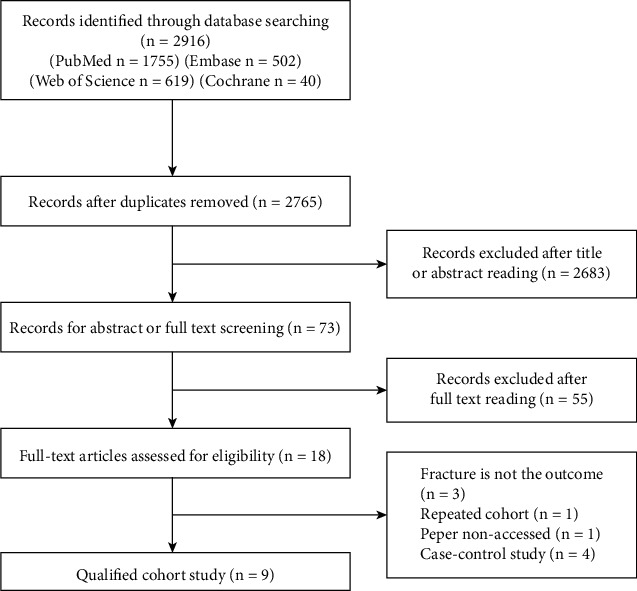
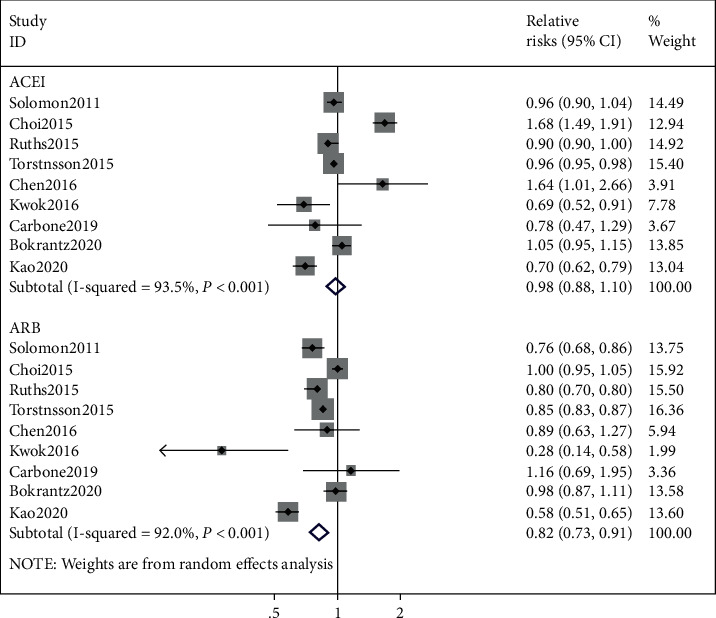
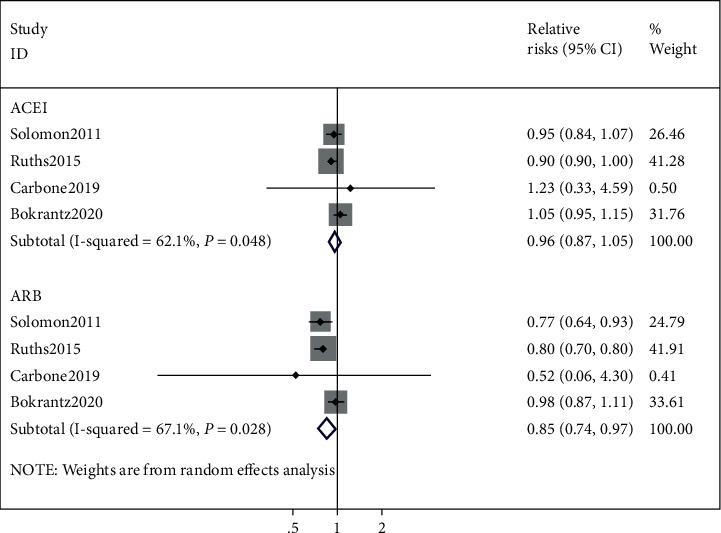
Background. Angiotensin‐converting enzyme inhibitors (ACEIs) and angiotensin receptor blockers (ARBs) are widely used in the treatment of hypertension. Hypertension is often accompanied by osteoporosis. However, the relationship between ACEI/ARB and fractures remains controversial. The purpose of this meta‐analysis was to update the potential relationship between ACEI/ARB and fractures. Methods. This meta‐analysis was identified through PubMed, EMBASE, Cochrane Library, and Web of Science. Related studies about ACEI/ARB with the risk of fracture were published from inception to June 2022. Results. Nine qualified prospective designed studies, involving 3,649,785 subjects, were included in this analysis. Overall, the RRs of ACEI compared with the nonusers were 0.98 (95% CI: 0.88, 1.10; P < 0.001) for composite fractures and 0.96 (95% CI: 0.87, 1.05; P = 0.048) for hip fractures; the RRs of ARB compared to the nonusers were 0.82 (95% CI: 0.73, 0.91; P < 0.001) for composite fractures and 0.85 (95% CI: 0.74, 0.97; P = 0.028) for hip fractures. Furthermore, in the subgroup analysis, male may benefit from ARB (RR = 0.65, 95% CI: 0.49, 0.89, P = 0.028), and the European may also benefit from ARB (RR = 0.86, 95% CI: 0.80, 0.93, P = 0.015). Conclusions. ACEI usage will not decrease the risk of osteoporosis fracture. On the contrary, ARB usage can decrease the risk of total fracture and hip fracture, especially for males and Europeans. Compared with ACEI, for patients at higher risk of fracture in cardiovascular diseases such as hypertension, the protective effect of ARB should be considered.
Overview
The claims and statistics of this paper haven’t been checked yet.
Free: it reads the open-access text and checks the first 5 claims that cite a source we can check. Create a free account to check every claim.
Integrity signals
Registry
Cites
Statistics
Figures
Verification
Claims the paper makes
The claims and statistics of this paper haven’t been checked yet.
Free: it reads the open-access text and checks the first 5 claims that cite a source we can check. Create a free account to check every claim.
Claims other papers make about this one
Each is checked against this paper’s own text: does it say what the citing paper says it does?
The cited source says what the claim attributes to it.
In the citing paper
“The systemic review by Wu et al. [12] reported that lower fracture risk is consistently reported in users of ARB, but not ACEi.”
Self-check
Percentages, sums and reported differences re-computed from the paper’s own numbers.
The self-check needs the paper’s full text.
Citations
Cites
Meta-analysis in clinical trials
DerSimonian, R., & Laird, N. (1986) · Controlled Clinical Trials · doi:10.1016/0197-2456(86)90046-2 · Cited by 39,552 · cited 1×
“For the best explanation of the heterogeneity between these studies, we used a random-effect model to calculate RRs and 95% Cis [18].”
Quantifying heterogeneity in a meta‐analysis
Higgins, J. P. T., & Thompson, S. G. (2002) · Statistics in Medicine · doi:10.1002/sim.1186 · Cited by 36,763 · cited 1×
“Heterogeneity was assessed with both the Q statistic and the I 2 index [19].”
Zhang, J., & Yu, K. F. (1998) · JAMA · doi:10.1001/jama.280.19.1690 · Cited by 4,138 · cited 7×
“In this meta-analysis, both ORs and HRs were transformed into RRs [17, 18].”
MethodInfluentialInternational Union of Pharmacology. XXIII. The Angiotensin II Receptors
de Gasparo, M., Catt, K. J., Inagami, T., Wright, J. W., & Unger, T. (2000) · Pharmacological Reviews · doi:10.1016/s0031-6997(24)01458-3 · Cited by 2,132 · cited 1×
“In some ways, however, the AT2 receptor can counteract several effects initiated by the AT1, though the mechanism remains unclear [45].”
Estimating the Relative Risk in Cohort Studies and Clinical Trials of Common Outcomes
McNutt, L.-A. (2003) · American Journal of Epidemiology · doi:10.1093/aje/kwg074 · Cited by 2,096 · cited 1×
“RRs were used as a common measure of the association between ACEI/ARB use and fracture risk [15].”
1,25-Dihydroxyvitamin D3 is a negative endocrine regulator of the renin-angiotensin system
Li, Y. C., Kong, J., Wei, M., Chen, Z.-F., Liu, S. Q., & Cao, L.-P. (2002) · Journal of Clinical Investigation · doi:10.1172/jci0215219 · Cited by 1,625
Smoking and fracture risk: a meta-analysis
Kanis, J. A., Johnell, O., Oden, A., Johansson, H., De Laet, C., Eisman, J. A., Fujiwara, S., Kroger, H., McCloskey, E. V., Mellstrom, D., et al. (2005) · Osteoporosis International · doi:10.1007/s00198-004-1640-3 · Cited by 999 · cited 1×
“At present, known factors associated with the incidence of fractures include physical age [2], smoking [3], alcohol consumption [4], and physical exercise [5].”
Israili, Z. H., & Hall, W. D. (1992) · Annals of Internal Medicine · doi:10.7326/0003-4819-117-3-234 · Cited by 910 · cited 1×
“ACEI is known to cause dry cough and angioedema [46] as it can inhibit bradykinin degradation [47].”
BackgroundMortality and morbidity after hip fractures.
Keene, G. S., Parker, M. J., & Pryor, G. A. (1993) · BMJ · doi:10.1136/bmj.307.6914.1248 · Cited by 876 · cited 1×
“Hip fractures often result in paralysis and loss of self-care, and there was a twenty percent increase in the mortality rate during the first year [1].”
Hypertension: Renin–Angiotensin–Aldosterone System Alterations
te Riet, L., van Esch, J. H. M., Roks, A. J. M., van den Meiracker, A. H., & Danser, A. H. J. (2015) · Circulation Research · doi:10.1161/circresaha.116.303587 · Cited by 706 · cited 1×
“RAAS blockers have been widely used in patients with hypertension [6], and mainly contain the angiotensin-converting enzyme inhibitor (ACEI) and angiotensin receptor blocker (ARB) in clinical practice.”
BackgroundPlasma 25-Hydroxyvitamin D and Regulation of the Renin-Angiotensin System in Humans
Forman, J. P., Williams, J. S., & Fisher, N. D. L. (2010) · Hypertension · doi:10.1161/hypertensionaha.109.148619 · Cited by 331 · cited 1×
“Serum vitamin D level was negatively correlated with circulating RAAS activity [31, 32].”
The AT2 receptor—A matter of love and hate
Steckelings, U. M., Kaschina, E., & Unger, T. (2005) · Peptides · doi:10.1016/j.peptides.2005.03.010 · Cited by 257 · cited 1×
“ARB can only reduce AT1 receptor activity, while ACEI can block multiple receptor activities including AT1 and AT2 receptors [44].”
BackgroundRoig, E. (2000) · European Heart Journal · doi:10.1053/euhj.1999.1740 · Cited by 249 · cited 1×
“. e relative efficacy of ACEI in suppressing Ang II levels was less than that of ARB during chronic treatment [38].”
Tomaschitz, A., Pilz, S., Ritz, E., Grammer, T., Drechsler, C., Boehm, B. O., & März, W. (2010) · Clinica Chimica Acta · doi:10.1016/j.cca.2010.05.037 · Cited by 246 · cited 1×
“Serum vitamin D level was negatively correlated with circulating RAAS activity [32, 33].”
BackgroundACE Inhibitor-Induced Angioedema: a Review
Kostis, W. J., Shetty, M., Chowdhury, Y. S., & Kostis, J. B. (2018) · Current Hypertension Reports · doi:10.1007/s11906-018-0859-x · Cited by 192 · cited 1×
“ACEI is known to cause dry cough and angioedema [45] as it can inhibit bradykinin degradation [46].”
Activation of Renin-Angiotensin System Induces Osteoporosis Independently of Hypertension
Asaba, Y., Ito, M., Fumoto, T., Watanabe, K., Fukuhara, R., Takeshita, S., Nimura, Y., Ishida, J., Fukamizu, A., & Ikeda, K. (2009) · Journal of Bone and Mineral Research · doi:10.1359/jbmr.081006 · Cited by 173 · cited 1×
“Apart from the more well-known systemic RAAS activations, the tissue RAAS activation also plays an important role via the endocrine effects, which mediate important physiological stimuli including bone and osteoporosis [26].”
Risk Factors for Low Bone Mass-Related Fractures in Men: A Systematic Review and Meta-Analysis
Drake, M. T., Murad, M. H., Mauck, K. F., Lane, M. A., Undavalli, C., Elraiyah, T., Stuart, L. M., Prasad, C., Shahrour, A., Mullan, R. J., et al. (2012) · The Journal of Clinical Endocrinology & Metabolism · doi:10.1210/jc.2011-3058 · Cited by 165 · cited 1×
“At present, known factors associated with the incidence of fractures include physical age [2], smoking [3], alcohol consumption [4] and physical exercise [5].”
BackgroundAgarwal, D., Welsch, M. A., Keller, J. N., & Francis, J. (2011) · Basic Research in Cardiology · doi:10.1007/s00395-011-0231-7 · Cited by 161
Update on Estrogens and the Skeleton
Khosla, S. (2010) · The Journal of Clinical Endocrinology & Metabolism · doi:10.1210/jc.2010-0856 · Cited by 158 · cited 1×
“. is may be because women’s bone metabolism and bone density are more affected by estrogen than ARB [48], which has a smaller effect on fracture risk.”
Angiotensin II Type 2 Receptor Blockade Increases Bone Mass
Izu, Y., Mizoguchi, F., Kawamata, A., Hayata, T., Nakamoto, T., Nakashima, K., Inagami, T., Ezura, Y., & Noda, M. (2009) · Journal of Biological Chemistry · doi:10.1074/jbc.m807610200 · Cited by 128
Risk of fractures in older adults using antihypertensive medications
Solomon, D. H., Mogun, H., Garneau, K., & Fischer, M. A. (2011) · Journal of Bone and Mineral Research · doi:10.1002/jbmr.356 · Cited by 121 · cited 2×
“studies were from different regions: three from America [12, 20, 25], three from Europe [13, 22, 23], and three from Asia [14, 21, 24]. time of follow-up durations for the qualified studies ranged from 1 to 11 years, and the sample size ranged from 1144 to 1,586,554.”
Hagiwara, H., Hiruma, Y., Inoue, A., Yamaguchi, A., & Hirose, S. (1998) · Journal of Endocrinology · doi:10.1677/joe.0.1560543 · Cited by 115
Ilić, K., Obradović, N., & Vujasinović-Stupar, N. (2012) · Calcified Tissue International · doi:10.1007/s00223-012-9671-9 · Cited by 114 · cited 1×
“Strikingly, hypertension is also a common chronic disease that often presents with osteoporosis [7].”
Regulation by glucocorticoids of angiotensinogen gene expression and secretion in adipose cells
AUBERT, J., DARIMONT, C., SAFONOVA, I., AILHAUD, G., & NEGREL, R. (1997) · Biochemical Journal · doi:10.1042/bj3280701 · Cited by 96 · cited 1×
“On the contrary, obesity may increase tissue RAAS activity [36].”
Major role for ACE-independent intrarenal ANG II formation in type II diabetes
Park, S., Bivona, B. J., Kobori, H., Seth, D. M., Chappell, M. C., Lazartigues, E. D., & Harrison‐Bernard, L. M. (2009) · American Journal of Physiology-Renal Physiology · doi:10.1152/ajprenal.00519.2009 · Cited by 87 · cited 1×
“Alternative enzymatic pathways bypassing ACEI may produce angiotensin II, which will be blocked by ARB [39].”
Association Between Physical Activity and Risk of Fracture
Qu, X., Zhang, X., Zhai, Z., Li, H., Liu, X., Li, H., Liu, G., Zhu, Z., Hao, Y., & Dai, K. (2014) · Journal of Bone and Mineral Research · doi:10.1002/jbmr.2019 · Cited by 81 · cited 1×
“At present, known factors associated with the incidence of fractures include physical age [2], smoking [3], alcohol consumption [4], and physical exercise [5].”
Barretti, D. L. M., Magalhães, F. D. C., Fernandes, T., do Carmo, E. C., Rosa, K. T., Irigoyen, M. C., Negrão, C. E., & de Oliveira, E. M. (2012) · PLoS ONE · doi:10.1371/journal.pone.0046114 · Cited by 71
Risk of hip fracture among older people using antihypertensive drugs: a nationwide cohort study
Ruths, S., Bakken, M. S., Ranhoff, A. H., Hunskaar, S., Engesaeter, L. B., & Engeland, A. (2015) · BMC Geriatrics · doi:10.1186/s12877-015-0154-5 · Cited by 71 · cited 1×
“studies were from different regions: three from America [12, 20, 25], three from Europe [13, 22, 23], and three from Asia [14, 21, 24]. time of follow-up durations for the qualified studies ranged from 1 to 11 years, and the sample size ranged from 1144 to 1,586,554.”
AT1 and AT2 receptor in the kidney: role in health and disease
Siragy, H. M. (2004) · Seminars in Nephrology · doi:10.1016/j.semnephrol.2003.11.009 · Cited by 68 · cited 1×
“AT1 receptors play a dominant role in the known actions of Ang II [42].”
Abuohashish, H. M., Ahmed, M. M., Sabry, D., Khattab, M. M., & Al-Rejaie, S. S. (2017) · Biomedicine & Pharmacotherapy · doi:10.1016/j.biopha.2017.05.062 · Cited by 51 · cited 1×
“Abuohashish [9] showed that ACEI has a protective effect in estrogen-de cient osteoporotic rats.”
BackgroundKunutsor, S. K., Blom, A. W., Whitehouse, M. R., Kehoe, P. G., & Laukkanen, J. A. (2017) · European Journal of Epidemiology · doi:10.1007/s10654-017-0285-4 · Cited by 49 · cited 2×
“Before us, one meta-analysis has discussed the relationship between RASS blockers and fracture risk [11].”
Mega clinical trials which have shaped the RAS intervention clinical practice
Düsing, R. (2016) · Therapeutic Advances in Cardiovascular Disease · doi:10.1177/1753944716644131 · Cited by 48 · cited 1×
“.erefore, the ability of ACEI to maintain a consistent suppression of plasma and tissue Ang II levels is limited [40].”
Torstensson, M., Hansen, A. H., Leth-Møller, K., Jørgensen, T. S. H., Sahlberg, M., Andersson, C., Nelveg-Kristensen, K. E., Ryg, J., Weeke, P. E., Torp-Pedersen, C. T., et al. (2015) · BMJ Open · doi:10.1136/bmjopen-2015-009522 · Cited by 46 · cited 10×
“What’s more, when grouped by regions, the European may bene t from ARB blockers (RR 0.86, 95% CI 0.80–0.93, I2 76.1%, P 0.015).”
BackgroundInfluentialCiampone, S., Borges, R. D. C. P., de Lima, I. P., Mesquita, F. F., Cambiucci, E. C., & Gontijo, J. A. R. (2011) · Journal of the Renin-Angiotensin-Aldosterone System · doi:10.1177/1470320311408750 · Cited by 44 · cited 1×
“Besides, regular exercise could prevent tissue RAAS and inhibit future osteoporosis [33–35].”
(2001) · American Journal of Public Health · doi:10.2105/ajph.91.7.1089 · Cited by 43 · cited 1×
“At present, known factors associated with the incidence of fractures include physical age [2], smoking [3], alcohol consumption [4] and physical exercise [5].”
BackgroundRisk of fractures in subjects with antihypertensive medications: A nationwide claim study
Choi, H. J., Park, C. M., Lee, Y., Ha, Y., Jang, S., & Shin, C. S. (2015) · International Journal of Cardiology · doi:10.1016/j.ijcard.2015.01.072 · Cited by 43 · cited 2×
“studies were from different regions: three from America [12, 20, 25], three from Europe [13, 22, 23], and three from Asia [14, 21, 24]. time of follow-up durations for the qualified studies ranged from 1 to 11 years, and the sample size ranged from 1144 to 1,586,554.”
Losartan increases bone mass and accelerates chondrocyte hypertrophy in developing skeleton
Chen, S., Grover, M., Sibai, T. A., Black, J. O., Rianon, N. J., Rajagopal, A., Munivez, E. M., Bertin, T., Dawson, B., Chen, Y., et al. (2015) · Molecular Genetics and Metabolism · doi:10.1016/j.ymgme.2015.02.006 · Cited by 38 · cited 1×
“Meanwhile, Chen [9] reported that ARB can increase bone mass via suppressing RANKL-induced ERK1/2 phosphorylation.”
ARB users exhibit a lower fracture incidence than ACE inhibitor users among older hypertensive men
Kwok, T. C. Y., Leung, J. C. S., & Barrett-Connor, E. L. (2016) · Age and Ageing · doi:10.1093/ageing/afw150 · Cited by 38 · cited 3×
“Moreover, we also searched Google Scholar, World Cat Dissertations, conference abstracts of the American Society for Bone and Mineral Research, and the proceedings of the International Osteoporosis Foundation World Conference on Osteoporosis.”
BackgroundBradykinin Regulates Osteoblast Differentiation by Akt/ERK/NFκB Signaling Axis
Srivastava, S., Sharma, K., Kumar, N., & Roy, P. (2014) · Journal of Cellular Physiology · doi:10.1002/jcp.24668 · Cited by 35 · cited 1×
“Studies have shown that bradykinin, as a mediator of in ammation, can decrease osteoblasts differentiation and increase osteoclast formation [48].”
BackgroundAntihypertensive drug classes and the risk of hip fracture
Bokrantz, T., Schiöler, L., Boström, K. B., Kahan, T., Mellström, D., Ljungman, C. E. A., Hjerpe, P., Hasselström, J., & Manhem, K. (2019) · Journal of Hypertension · doi:10.1097/hjh.0000000000002245 · Cited by 35 · cited 10×
“What’s more, when grouped by regions, the European may bene t from ARB blockers (RR 0.86, 95% CI 0.80–0.93, I2 76.1%, P 0.015).”
BackgroundResultInfluentialShuai, B., Yang, Y., Shen, L., Zhu, R., Xu, X., Ma, C., Lv, L., Zhao, J., & Rong, J. (2014) · Osteoporosis International · doi:10.1007/s00198-014-2992-y · Cited by 33 · cited 1×
“. is phenomenon might via affecting the RANKL/RANK/OPG system to adjust bone metabolism [27–29].”
Carbone, L. D., Vasan, S., Prentice, R. L., Harshfield, G. A., Haring, B., Cauley, J. A., & Johnson, K. (2019) · Osteoporosis International · doi:10.1007/s00198-019-05041-3 · Cited by 32
Ferrario, C. M., VonCannon, J. L., Jiao, Y., Ahmad, S., Bäder, M., Dell’Italia, L. J., Groban, L., & Varagić, J. (2016) · American Journal of Physiology-Heart and Circulatory Physiology · doi:10.1152/ajpheart.00833.2015 · Cited by 30 · cited 1×
“Although ACEI and ARB share the same mechanism pathway (renin-angiotensin-aldosterone system blocking), neither ACEI nor ARB can completely inhibit the production of Ang II and the toxic effects of Ang II [37].”
Muayed, M. E., Stegbauer, J., Oberhauser, V., Vonend, O., & Rump, L. C. (2004) · Journal of Cardiovascular Pharmacology · doi:10.1097/00005344-200402000-00024 · Cited by 17 · cited 1×
“Second, the classical actions of Ang II are mediated by binding to the angiotensin II type 1 (AT1) receptors and angiotensin II type 2 (AT2) receptors [41].”
Chen, H., Ma, K., Hsieh, P., Liou, Y., & Jong, G. (2016) · Chinese Medical Journal · doi:10.4103/0366-6999.195472 · Cited by 17 · cited 2×
“The studies were from different regions: three from the America [13, 21, 26], three from Europe [14, 23, 24] and three from Asia [15, 22, 25].”
BackgroundKao, Y., Huang, C., Fang, Y.-A., & Liu, J. (2020) · International Journal of Cardiology · doi:10.1016/j.ijcard.2019.12.069 · Cited by 13 · cited 2×
“studies were from different regions: three from America [12, 20, 25], three from Europe [13, 22, 23], and three from Asia [14, 21, 24]. time of follow-up durations for the qualified studies ranged from 1 to 11 years, and the sample size ranged from 1144 to 1,586,554.”
Impairing effects of angiotensin-converting enzyme inhibitor Captopril on bone of normal mice
Yang, M., Xia, C. Q., Song, Y., Zhao, X., Wong, M., & Zhang, Y. (2015) · European Journal of Pharmacology · doi:10.1016/j.ejphar.2015.12.011 · Cited by 10 · cited 2×
“On the contrary, Yang [11] showed that captopril, one of the angiotensin-converting enzyme inhibitors, can poison the bone of normal mice.”
Angiotensin II type 2 receptor blockade increases bone mass.
Izu, Y., Mizoguchi, F., Kawamata, A., Hayata, T., Nakamoto, T., Nakashima, K., Inagami, T., Ezura, Y., & Noda, M. (2009) · Journal of Biological Chemistry · doi:10.1074/jbc.a807610200 · Cited by 9
Danser, A. H. J., & van den Meiracker, A. H. (2016) · Circulation Research · doi:10.1161/circresaha.116.309664 · Cited by 1
Research works printed but not linked: 1
- Wu J. Du X.-Y. Guo M. Angiotensin Receptor Blocker Is Associated with A Lower Fracture Risk: An Updated Systematic Review and Meta-Analysis 2021 Durham, NC, USA Research Square PMC9303078 35910069
Cited by
Advanced Progress of the Relationship Between Antihypertensive Drugs and Bone Metabolism
Zhang, R., Yin, H., Yang, M., Lei, X., Zhen, D., & Zhang, Z. (2023) · Hypertension · doi:10.1161/hypertensionaha.123.21648 · Cited by 43
Huang, X., Zhang, T., Guo, P., Gong, W., Zhu, H., Zhao, M., & Yuan, Z. (2023) · Frontiers in Endocrinology · doi:10.3389/fendo.2023.1164387 · Cited by 26
Mkhize, B. C., Mosili, P., Ngubane, P. S., Sibiya, N. H., & Khathi, A. (2023) · International Journal of Molecular Sciences · doi:10.3390/ijms241511963 · Cited by 23
Michaëlsson, K., Zheng, R., Baron, J. A., Fall, T., Wolk, A., Lind, L., Höijer, J., Brunius, C. F., Lemming, E. W., Titova, O. E., et al. (2025) · EBioMedicine · doi:10.1016/j.ebiom.2025.105580 · Cited by 11
Exploring the Interplay Between Hypertension and Osteoporosis: A Narrative Review
Gutierrez, Y., Shaju, R. A., Sepulveda, A., & Çoban, S. A. (2025) · Cureus · doi:10.7759/cureus.97459 · Cited by 7
“If there are benefits observed, they are less than angiotensin II receptor blockers (ARBs) [60-63].”
Metadata
- Authors
- Wu, J., Wang, M., Guo, M., Du, X.-Y., Tan, X.-Z., Teng, F.-Y., & Xu, Y.
- Affiliations
- Southwest Medical University (CN)
- Corresponding author
- Teng, Fang-Yuan
- Xu, Yong
- Venue
- International Journal of Clinical Practice
- Publisher
- Wiley
- Published
- 2022-01
- Volume
- 2022
- Issue
- 1
- Pages
- 7581110-7581110
- ISSN
- 1368-5031 (ISSN-L)
- 1742-1241
- PMC
- PMC9303078
- OpenAlex
- W4285494188
- Cited by
- 19
- References
- 51
- Citations by year
- 2026: 6 · 2025: 5 · 2024: 3 · 2023: 4 · 2022: 1
- FWCI
- 0.71
- Type
- journal article
- Language
- en
- Open access
- gold
- doi.org
- Locations
- International Journal of Clinical Practice (publishedVersion, cc-by)
- PubMed Central (publishedVersion, cc-by)
- PubMed (publishedVersion)
- Funders
- National Natural Science Foundation of China (81970676)
- Health Commission of Sichuan Province (21PJ090)
- Southwest Medical University (2021ZKMS032)
- Topics
- Health Sciences › Medicine › Orthopedics and Sports Medicine › Bone health and osteoporosis research
- Health Sciences › Medicine › Cardiology and Cardiovascular Medicine › Renin-Angiotensin System Studies
- Health Sciences › Medicine › Cardiology and Cardiovascular Medicine › Blood Pressure and Hypertension Studies
- Keywords
- angiotensin receptor blockers, ACE inhibitors, fracture risk, hip fracture, osteoporosis, hypertension, sex differences, European populations
- MeSH terms
- Angiotensin-Converting Enzyme Inhibitors, Hip Fractures, Humans, Hypertension, Male, Osteoporosis, Prospective Studies, Angiotensin Receptor Antagonists
About these checks
Registry, retraction, Cites and statistics results are computed, not judged, with one exception: a printed reference that no index lists is read once by a model before it counts as a citation error. Claims are extracted by a model and kept only when their quote appears verbatim in the text; each cited source is then checked, with a model’s help, for whether it says what the claim relies on. Those verdicts can be wrong — read the claim’s quote and the cited source before relying on one.
Statistics and arithmetic are recomputed, not judged.
Confidence bands are shown only for fields calibrated on our annotated test set. None is calibrated yet, so no band is shown.
What counts as a claim ›How we measure confidence ›How we check this ›
Are you an author, or do you see a problem with this page? Request a review
Data sources
Bibliographic data: Semantic Scholar, OpenAlex, Crossref.
Contains information from the Semantic Scholar Academic Graph Datasets, made available under the ODC Attribution License (ODC-BY 1.0).
Semantic Scholar’s data is described in: Kinney, R., et al. (2023). The Semantic Scholar Open Data Platform. arXiv:2301.10140.
