

The DOI matches its Crossref record; 43 of the 43 references it cites were found in a registry or an index.
Functional Precision Medicine Provides Clinical Benefit in Advanced Aggressive Hematologic Cancers and Identifies Exceptional Responders
Open accessPublished version of a preprint
Abstract
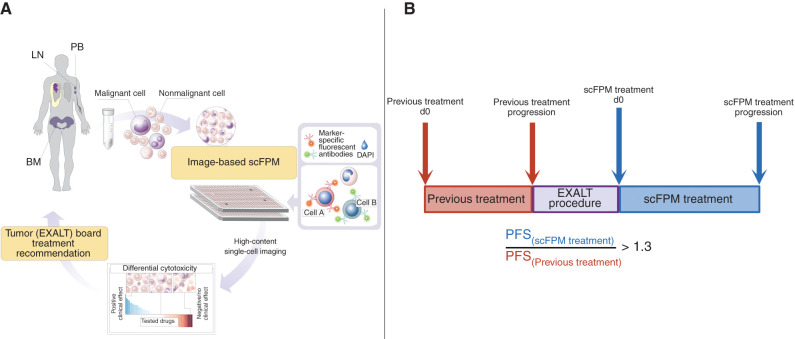
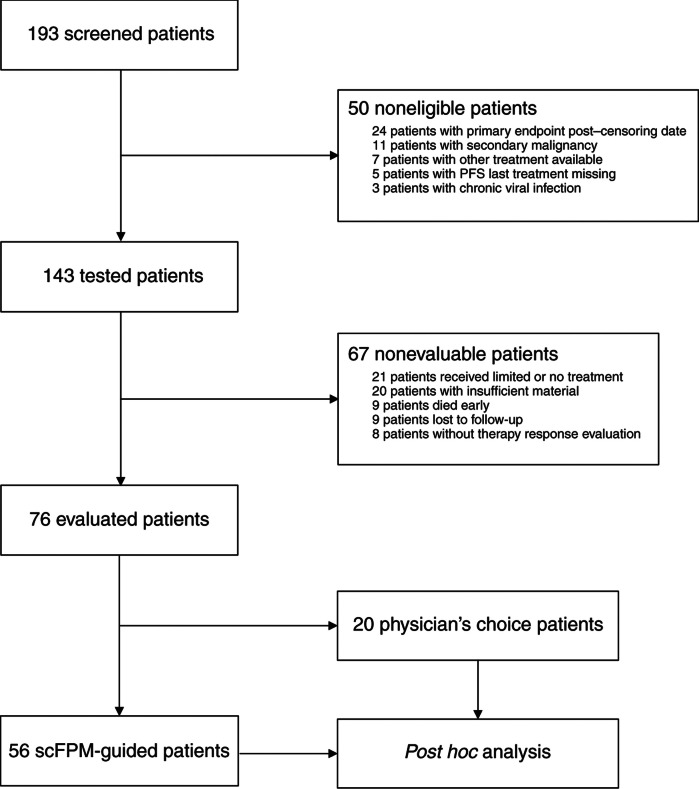
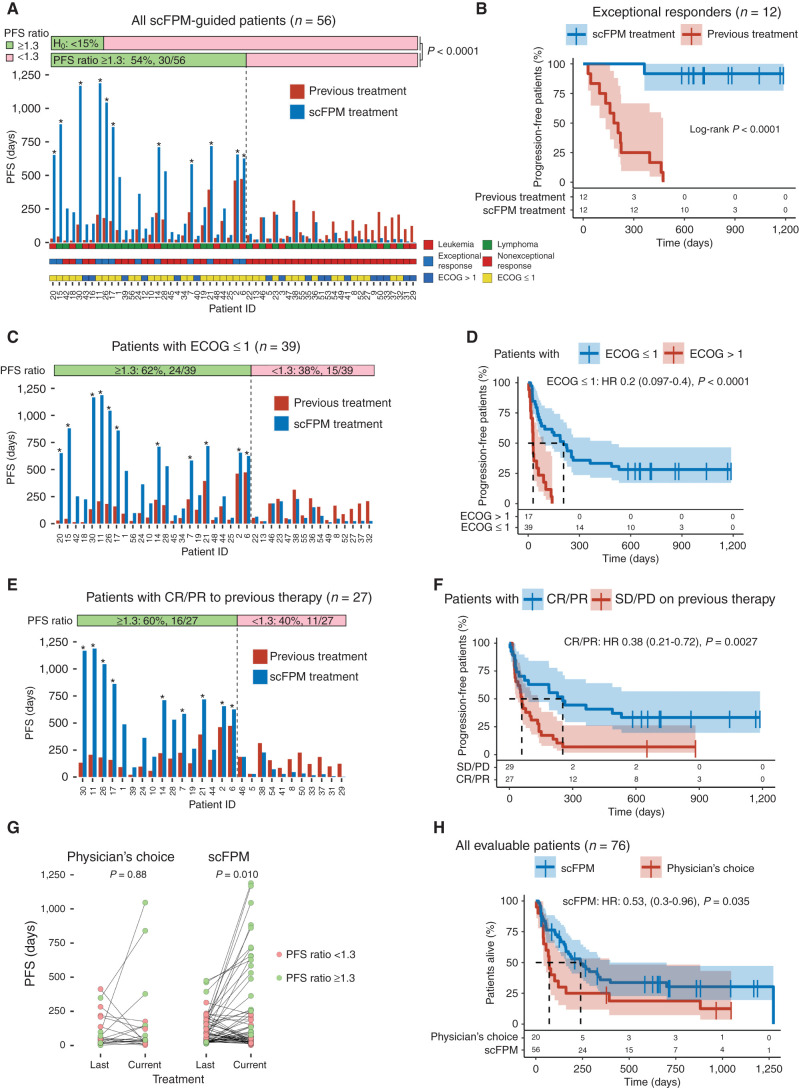
Abstract Personalized medicine aims to match the right drug with the right patient by using specific features of the individual patient's tumor. However, current strategies of personalized therapy matching provide treatment opportunities for less than 10% of patients with cancer. A promising method may be drug profiling of patient biopsy specimens with single-cell resolution to directly quantify drug effects. We prospectively tested an image-based single-cell functional precision medicine (scFPM) approach to guide treatments in 143 patients with advanced aggressive hematologic cancers. Fifty-six patients (39%) were treated according to scFPM results. At a median follow-up of 23.9 months, 30 patients (54%) demonstrated a clinical benefit of more than 1.3-fold enhanced progression-free survival compared with their previous therapy. Twelve patients (40% of responders) experienced exceptional responses lasting three times longer than expected for their respective disease. We conclude that therapy matching by scFPM is clinically feasible and effective in advanced aggressive hematologic cancers. Significance: This is the first precision medicine trial using a functional assay to instruct n-of-one therapies in oncology. It illustrates that for patients lacking standard therapies, high-content assay-based scFPM can have a significant value in clinical therapy guidance based on functional dependencies of each patient's cancer. See related commentary by Letai, p. 290. This article is highlighted in the In This Issue feature, p. 275
Overview
The claims and statistics of this paper haven’t been checked yet.
Run the check — free, no account needed. It reads the open-access text and checks the sources it cites.
Integrity signals
Registry
Cites
Statistics
Figures
Verification
Claims the paper makes
The claims and statistics of this paper haven’t been checked yet.
Run the check — free, no account needed. It reads the open-access text and checks the sources it cites.
Claims other papers make about this one
Each is checked against this paper’s own text: does it say what the citing paper says it does?
The cited source says what the claim attributes to it.
In the citing paper
“High-throughput ex vivo drug screening is a powerful tool to identify effective compounds and drug repurposing candidates,10,11”
From Integrated drug profiling and CRISPR screening identify BCR::ABL1-independent vulnerabilities in chronic myeloid leukemia (2024) · cites this paper as [11]
Self-check
Percentages, sums and reported differences re-computed from the paper’s own numbers.
The self-check needs the paper’s full text.
Citations
Cites
Döhner, H., Estey, E. H., Grimwade, D. J., Amadori, S., Appelbaum, F. R., Büchner, T., Dombret, H., Ebert, B. L., Fenaux, P., Larson, R. A., et al. (2016) · Blood · doi:10.1182/blood-2016-08-733196 · Cited by 5,938 · cited 2×
“Response evaluation was based on RECIL criteria for lymphoma and ELN criteria for 468 leukemia (42,43).”
MethodRecurring mutations found by sequencing an acute myeloid leukemia genome
Mardis, E. R., Ding, L., Dooling, D. J., Larson, D. E., McLellan, M. D., Chen, K., Koboldt, D. C., Fulton, R. S., Delehaunty, K. D., McGrath, S. D., et al. (2009) · New England Journal of Medicine · doi:10.1056/nejmoa0903840 · Cited by 2,219 · cited 1×
“The median time from sampling to scFPM report was 5 (1189 33) days, with longer times accounting for re-staining due to updated immunophenotyping 190 data, and to treatment 21 (4-77) days.”
Principles of cancer therapy: oncogene and non-oncogene addiction
Luo, J., Solimini, N. L., & Elledge, S. J. (2009) · Cell · doi:10.1016/j.cell.2009.02.024 · Cited by 1,765 · cited 2×
“The median time from sampling to scFPM report was 5 (1189 33) days, with longer times accounting for re-staining due to updated immunophenotyping 190 data, and to treatment 21 (4-77) days.”
Outcomes in refractory diffuse large B-cell lymphoma: results from the international SCHOLAR-1 study
Crump, M., Neelapu, S. S., Farooq, U., Neste, É. V. D., Kuruvilla, J. G., Westin, J. R., Link, B. K., Hay, A. E., Cerhan, J. R., Zhu, L., et al. (2017) · Blood · doi:10.1182/blood-2017-03-769620 · Cited by 1,755 · cited 1×
“For T-NHL, 9 months of PFS was considered exceptional, and for aggressive B-NHL and myeloid disease, 18 months was considered exceptional based on the definition by Wheeler and colleagues (26) and others (18, 43, 44).”
BackgroundFunctional genomic landscape of acute myeloid leukaemia
Tyner, J. W., Tognon, C. E., Bottomly, D., Wilmot, B., Kurtz, S. E., Savage, S. L., Long, N., Schultz, A. R., Traer, E. A., Abel, M. L., et al. (2018) · Nature · doi:10.1038/s41586-018-0623-z · Cited by 1,359 · cited 1×
“The median time from sampling to scFPM report was 5 (1189 33) days, with longer times accounting for re-staining due to updated immunophenotyping 190 data, and to treatment 21 (4-77) days.”
Le Tourneau, C., Delord, J.-P., Gonçalves, A., Gavoille, C., Dubot, C., Isambert, N., Campone, M., Trédan, O., Massiani, M.-A., Mauborgne, C., et al. (2015) · The Lancet Oncology · doi:10.1016/s1470-2045(15)00188-6 · Cited by 1,137 · cited 2×
“therapeutic outcome impossible at our current state of knowledge (3).”
BackgroundBRAF Mutations in Hairy-Cell Leukemia
Tiacci, E., Trifonov, V. A., Schiavoni, G., Holmes, A. B., Kern, W., Martelli, M. P., Pucciarini, A., Bigerna, B., Pacini, R., Wells, V. A., et al. (2011) · New England Journal of Medicine · doi:10.1056/nejmoa1014209 · Cited by 1,029 · cited 1×
“Genomic tumor characterization and treatment matching have improved the management of some patients with hematologic malignancies, such as BRAF in hairy cell leukemia (11, 12), IDH1/2 in acute myeloid leukemia ABSTRACT Personalized medicine aims to match the right drug with the right patient by using specific features…”
BackgroundReview of precision cancer medicine: Evolution of the treatment paradigm
Tsimberidou, A. M., Fountzilas, E., Nikanjam, M., & Kurzrock, R. (2020) · Cancer Treatment Reviews · doi:10.1016/j.ctrv.2020.102019 · Cited by 803 · cited 2×
“In contrast, a major 315 setback uniformly described in other personalized medicine trials is patient deterioration or 316 death during time of analysis (4,33).”
BackgroundMassard, C., Michiels, S., Ferté, C., Deley, M. L., Lacroix, L., Hollebecque, A., Verlingue, L., Ileana, E. E., Rosellini, S., Ammari, S., et al. (2017) · Cancer Discovery · doi:10.1158/2159-8290.cd-16-1396 · Cited by 802 · cited 2×
“The median time from sampling to scFPM report was 5 (1189 33) days, with longer times accounting for re-staining due to updated immunophenotyping 190 data, and to treatment 21 (4-77) days.”
BackgroundMolecular profiling of cancer patients enables personalized combination therapy: the I-PREDICT study
Sicklick, J. K., Kato, S., Okamura, R., Schwaederle, M. C., Hahn, M. E., Williams, C. B., De, P. K., Krie, A. K., Piccioni, D. E., Miller, V. A., et al. (2019) · Nature Medicine · doi:10.1038/s41591-019-0407-5 · Cited by 726 · cited 3×
“329 This strategy could raise the limited matching numbers, but has not yet been validated in a 330 prospective fashion (28).”
Background
Research works printed but not linked: 1
- Swerdlow, 2017, WHO classification of tumours of haematopoietic and lymphoid tissues. Rev. 4th ed
Cited by
Sorted by citations
The present and future of the Cancer Dependency Map
Arafeh, R., Shibue, T., Dempster, J. M., Hahn, W. C., & Vazquez, F. (2025) · Nature Reviews Cancer · doi:10.1038/s41568-024-00763-x · Cited by 454
“These efforts, including the Beat AML (acute myeloid leukaemia) programme led by the Oregon Health and Science University 138,139 , are now demonstrating the promise of this approach in guiding therapeutic decision making 140–142 .”
Letai, A. G., Bhola, P. D., & Welm, A. L. (2021) · Cancer Cell · doi:10.1016/j.ccell.2021.12.004 · Cited by 282
Artificial Intelligence for Drug Discovery: Are We There Yet?
Hasselgren, C., & Oprea, T. I. (2024) · Annual Review of Pharmacology and Toxicology · doi:10.1146/annurev-pharmtox-040323-040828 · Cited by 236
“A single-cell functional precision medicine (scFPM) platform successfully guided treatment selection and enhanced patient outcomes in a prospective clinical study (157).”
BackgroundAkhoundova, D., & Rubin, M. A. (2022) · Cancer Cell · doi:10.1016/j.ccell.2022.08.011 · Cited by 198
Drug screening at single-organoid resolution via bioprinting and interferometry
Tebon, P. J., Wang, B., Markowitz, A. L., Davarifar, A., Tsai, B. L., Krawczuk, P., Gonzalez, A. E., Sartini, S., Murray, G. F., Nguyen, H. T. L., et al. (2023) · Nature Communications · doi:10.1038/s41467-023-38832-8 · Cited by 163
“Adjusted p -values were 0.0253, 0.6087, >0.9999, 0.1499 for print pressures 10, 15, 20, 25 kPa, respectively. e H&E staining shows the development of multicellular organoids over time regardless of seeding method.”
InfluentialOrganoids for Functional Precision Medicine in Advanced Pancreatic Cancer
Boilève, A., Cartry, J., Goudarzi, N., Bedja, S., Mathieu, J. R. R., Bani, M. A., Nicolle, R., Mouawia, A., Bouyakoub, R., Nicotra, C., et al. (2024) · Gastroenterology · doi:10.1053/j.gastro.2024.05.032 · Cited by 103
Lee, S. H. R., Yang, W., Gocho, Y., John, A. J., Rowland, L., Smart, B., Williams, H., Maxwell, D., Hunt, J. P., Yang, W., et al. (2023) · Nature Medicine · doi:10.1038/s41591-022-02112-7 · Cited by 99
“Early data from the EXALT trial 34 pointed to the feasibility of this approach and similar studies are much needed for ALL.”
Computational drug repurposing: approaches, evaluation of in silico resources and case studies
Tanoli, Z., Fernández‐Torras, A., Özcan, U. O., Kushnir, A., Nader, K. M., Gadiya, Y., Fiorenza, L., Ianevski, A., Vähä-Koskela, M. J. V., Miihkinen, M., et al. (2025) · Nature Reviews Drug Discovery · doi:10.1038/s41573-025-01164-x · Cited by 104
“There are multiple ongoing functional precision medicine studies, in both blood cancers and solid tumours 199,200 , and the first findings show promising results and clinical benefits, even in cases in which standard genomic profiling cannot provide any actionable information 201 .”
Precision cancer medicine: Concepts, current practice, and future developments
Edsjö, A., Holmquist, L., Geoerger, B., Nowak, F., Gomon, G., Alix‐Panabières, C., Staaf, J., Ploeger, C., Lassen, U., Tourneau, C. L., et al. (2023) · Journal of Internal Medicine · doi:10.1111/joim.13709 · Cited by 91
Lee, S., Weiß, T., Bühler, M., Mena, J., Lottenbach, Z., Wegmann, R., Sun, M., Bihl, M., Augustynek, B., Baumann, S. P., et al. (2024) · Nature Medicine · doi:10.1038/s41591-024-03224-y · Cited by 92
“…with the prior successful use of PCY to guide patient treat-ment for blood cancers and growing community efforts in functional precision oncology 32,33,35,55,56 , our results indicate the feasibility of using PCY as a drug discovery and personalized treatment selection platform for hard-to-treat…”
Self-citationde la Rocha, A. A., Berlow, N., Fader, M. E., Coats, E. R., Saghira, C., Espinal, P. S., Galano, J., Khatib, Z. A., Abdella, H., Maher, O. M., et al. (2024) · Nature Medicine · doi:10.1038/s41591-024-02848-4 · Cited by 75
“The secondary objectives included in the study reflect those that are now commonly reported in genomics and FPM studies 15,26–29 , including ORR between cohorts, PFS between cohorts and PFS2/PFS1 ratio metrics between the study regimen and the most recent previous regimen of the same patient above…”
BackgroundMethodResultInfluentialPeterziel, H., Jamaladdin, N., ElHarouni, D., Gerloff, X. F., Herter, S., Fiesel, P., Berker, Y., Blattner-Johnson, M., Schramm, K., Jones, B. C., et al. (2022) · npj Precision Oncology · doi:10.1038/s41698-022-00335-y · Cited by 69
Artificial Intelligence in Clinical Oncology: From Data to Digital Pathology and Treatment
Kumar, K. S., Miskovic, V., Blasiak, A., Sundar, R., Pedrocchi, A., Pearson, A. T., Prelaj, A., & Ho, D. (2023) · American Society of Clinical Oncology Educational Book · doi:10.1200/edbk_390084 · Cited by 68
Cartry, J., Bedja, S., Boilève, A., Mathieu, J. R. R., Gontran, E., Annereau, M., Job, B., Mouawia, A., Mathias, P., de Baère, T., et al. (2023) · Journal of Experimental & Clinical Cancer Research · doi:10.1186/s13046-023-02853-4 · Cited by 71
“Recently, Malani et al . and Kor-nauth et al . showed excellent results in FPM-based strategies for patient with hematological malignancies [8, 9].”
BackgroundEx vivo venetoclax sensitivity testing predicts treatment response in acute myeloid leukemia
Kuusanmäki, H. A., Kytölä, S., Vänttinen, I., Ruokoranta, T. M., Ranta, A., Huuhtanen, J., Suvela, M. H., Parsons, A., Holopainen, A., Partanen, A., et al. (2022) · Haematologica · doi:10.3324/haematol.2022.281692 · Cited by 55
Novel precision medicine approaches and treatment strategies in hematological malignancies
Rosenquist, R., Bernard, E., Erkers, T., Scott, D. W., Itzykson, R., Rousselot, P. H., Soulier, J., Hutchings, M., Östling, P., Cavelier, L. B., et al. (2023) · Journal of Internal Medicine · doi:10.1111/joim.13697 · Cited by 56
Relapsed pediatric acute myeloid leukaemia: state-of-the-art in 2023
Egan, G., & Tasian, S. K. (2023) · Haematologica · doi:10.3324/haematol.2022.281106 · Cited by 47
Kropivšek, K., Kachel, P., Götze, S., Wegmann, R., Festl, Y., Severin, Y., Hale, B. D., Mena, J., van Drogen, A., Dietliker, N., et al. (2023) · Nature Cancer · doi:10.1038/s43018-023-00544-9 · Cited by 50
Self-citationJose, A., Kulkarni, P., Thilakan, J., Munisamy, M., Malhotra, A. G., Singh, J., Kumar, A., Rangnekar, V. M., Arya, N., & Rao, M. (2024) · Molecular Cancer · doi:10.1186/s12943-023-01916-6 · Cited by 49
“About 40% of these patients had exceptional responses that lasted three times longer than expected for their condition [160].”
BackgroundLiebers, N., Bruch, P., Terzer, T., Hernández-Hernández, M. V., Paramasivam, N., Fitzgerald, D., Altmann, H., Roider, T., Kolb, C., Knoll, M., et al. (2023) · Nature Cancer · doi:10.1038/s43018-023-00645-5 · Cited by 46
“…Approach to Rational Treatment Trial of Blood Cancer (SMARTrial; ClinicalTrials.gov NCT03488641) complements recently published studies 11,12 by demonstrating the feasibility of ex vivo DRP as a clinical routine test and by directly relating ex vivo and in vivo drug effects for…”
InfluentialLeppä, A., Grimes, K., Jeong, H., Huang, F. Y., Andrades, Á., Waclawiczek, A., Boch, T., Jauch, A. S., Renders, S., Stelmach, P., et al. (2024) · Nature Genetics · doi:10.1038/s41588-024-01999-x · Cited by 43
“Although we were not able to identify inhibitors with strong efficacy toward LSCs in all patients, our platform shows promise for discovering alternative treatments in CK-AML, which may be particularly relevant for personalized cancer therapy 42,43 .”
Multiplexed high-throughput immune cell imaging reveals molecular health-associated phenotypes
Severin, Y., Hale, B. D., Mena, J., Goslings, D. A. M., Frey, B. M., & Snijder, B. (2022) · Science Advances · doi:10.1126/sciadv.abn5631 · Cited by 45
Self-citationAn ex vivo platform to guide drug combination treatment in relapsed/refractory lymphoma
Goh, J., Mel, S. D., Hoppe, M. M., Rashid, M. B. M. A., Zhang, X. Y., Jaynes, P. W., Ng, E. K. Y., Rahmat, N. D. B., Jayalakshmi, Liu, C. X., et al. (2022) · Science Translational Medicine · doi:10.1126/scitranslmed.abn7824 · Cited by 39
Functional Drug Screening in the Era of Precision Medicine
Napoli, G. C., Figg, W. D., & Chau, C. H. (2022) · Frontiers in Medicine · doi:10.3389/fmed.2022.912641 · Cited by 41
“3-fold improvements in PFS compared with prior therapies, and 40% of these patients had outstanding responses that lasted 3-fold longer than predicted for their disease (93).”
ResultLeading artificial intelligence–driven drug discovery platforms: 2025 landscape and global outlook
Dharmasivam, M., Kaya, B., Akinware, A., Azad, M. G., & Richardson, D. R. (2025) · Pharmacological Reviews · doi:10.1016/j.pharmr.2025.100102 · Cited by 45
Single-cell landscape of innate and acquired drug resistance in acute myeloid leukemia
Wegmann, R., Bonilla, X., Casanova, R., Chevrier, S., Coelho, R., Esposito, C., Ficek, J., Götze, S., Gut, G., Jacob, F., et al. (2024) · Nature Communications · doi:10.1038/s41467-024-53535-4 · Cited by 35
“Pharmacoscopy (PCY) was performed as previously described 13,20,27,72 .”
InfluentialApplication of precision medicine in clinical routine in haematology—Challenges and opportunities
Wästerlid, T., Cavelier, L. B., Haferlach, C., Konopleva, M. Y., Fröhling, S., Östling, P., Bullinger, L., Fioretos, T., & Smedby, K. E. E. (2022) · Journal of Internal Medicine · doi:10.1111/joim.13508 · Cited by 35
“Recently, the clinical feasibility of pharmacoscopy was shown in the first prospective single-cell FPM (scFPM) trial called EXALT [128].”
Kytölä, S., Vänttinen, I., Ruokoranta, T. M., Partanen, A., Holopainen, A., Saad, J. J., Kuusisto, M. E. L., Koskela, S. M., Räty, R., Itälä‐Remes, M., et al. (2024) · Blood · doi:10.1182/blood.2024024968 · Cited by 32
Precision oncology using ex vivo technology: a step towards individualised cancer care?
Williams, S. T., Wells, G., Conroy, S., Gagg, H., Allen, R. J., Rominiyi, O., Helleday, T., Hullock, K., Pennington, C. E. W., Rantala, J., et al. (2022) · Expert Reviews in Molecular Medicine · doi:10.1017/erm.2022.32 · Cited by 35
“19 ).”
BackgroundRelapsed Acute Lymphoblastic Leukemia
Sidhu, J., Gogoi, M. P., Krishnan, S., & Saha, V. (2023) · The Indian Journal of Pediatrics · doi:10.1007/s12098-023-04635-4 · Cited by 31
“%) who received DRP-based therapy [44].”
Fatty acid synthase ( FASN ) signalome: A molecular guide for precision oncology
Menéndez, J. A., Cuyàs, E., Encinar, J. A., Steen, T. V., Verdura, S., Llop‐Hernández, À., López, J., Serrano‐Hervás, E., Osuna, S., Martín-Castillo, B., et al. (2023) · Molecular Oncology · doi:10.1002/1878-0261.13582 · Cited by 41
Deep Morphology Learning Enhances Ex Vivo Drug Profiling-Based Precision Medicine
Heinemann, T., Kornauth, C., Severin, Y., Vladimer, G. I., Pemovska, T., Hadzijusufovic, E., Agis, H., Krauth, M.-T., Sperr, W. R., Valent, P., et al. (2022) · Blood Cancer Discovery · doi:10.1158/2643-3230.bcd-21-0219 · Cited by 28
“However, genetically stratified precision medicine is currently estimated to benefit around 10% of all patients with cancer (4), indicating a clear need for additional methods to identify effective treatments.”
BackgroundMethodInfluentialSelf-citationÅkerlund, E., Gudoitytė, G., Moussaud-Lamodière, E. L., Lind, O., Bwanika, H. C., Lehti, K., Salehi, S., Carlson, J. W., Wallin, E., Fernebro, J., et al. (2023) · npj Precision Oncology · doi:10.1038/s41698-023-00463-z · Cited by 28
Feasibility of multiomics tumor profiling for guiding treatment of melanoma
Miglino, N., Toussaint, N. C., Ring, A., Bonilla, X., Tusup, M., Gosztonyi, B., Mehra, T., Gut, G., Jacob, F., Chevrier, S., et al. (2025) · Nature Medicine · doi:10.1038/s41591-025-03715-6 · Cited by 31
Njouendou, A. J., Szarvas, T., Tiofack, A. A. Z., Kenfack, R. N., Tonouo, P. D., Ananga, S. N., Bell, E. H. M. D., Simo, G., Hoheisel, J. D., Siveke, J. T., et al. (2023) · Molecular Cancer · doi:10.1186/s12943-023-01734-w · Cited by 25
Functional Precision Medicine: Putting Drugs on Patient Cancer Cells and Seeing What Happens
Letai, A. G. (2022) · Cancer Discovery · doi:10.1158/2159-8290.cd-21-1498 · Cited by 23
Murumägi, A., Ungureanu, D., Khan, S. A., Arjama, M., Välimäki, K. E., Ianevski, A., Ianevski, P., Bergström, R., Dini, A., Kanerva, A., et al. (2022) · British Journal of Cancer · doi:10.1038/s41416-022-02067-z · Cited by 24
Fisch, A.-S., Pestana, A., Sachse, V., Doll, C., Hofmann, E., Heiland, M., Obermueller, T., Heidemann, J., Dommerich, S., Schoppe, D., et al. (2024) · European Journal of Cancer · doi:10.1016/j.ejca.2024.115100 · Cited by 22
Wang, H., Chan, K. Y. Y., Cheng, C., Ng, M. H. L., Lee, P. Y., Cheng, F. W. T., Lam, G., Chow, T. W., Ha, S., Chiang, A., et al. (2022) · Blood Cancer Discovery · doi:10.1158/2643-3230.bcd-22-0011 · Cited by 22
Standardized assays to monitor drug sensitivity in hematologic cancers
Durán, P. A., Hermansen, J. U., Giliberto, M., Yin, Y., Hanes, R., Gordon, S. L., Kuusanmäki, H. A., Brodersen, A. M., Andersen, A. N., Taskén, K., et al. (2023) · Cell Death Discovery · doi:10.1038/s41420-023-01722-5 · Cited by 22
Strategies for the biological synthesis of D-glucuronic acid and its derivatives
Hu, H., Li, J., Jiang, W., Jiang, Y., Wan, Y., Wang, Y., Xin, F., & Zhang, W. (2024) · World Journal of Microbiology and Biotechnology · doi:10.1007/s11274-024-03900-8 · Cited by 22
“In order to reduce the cost, the multi-enzyme cascade reaction has been developed in recent years (Kornauth et al. 2022).”
Mutation Patterns Predict Drug Sensitivity in Acute Myeloid Leukemia
Qin, G., Dai, J., Chien, S. S., Martins, T. J., Loera, B., Nguyen, Q., Oakes, M., Tercan, B., Aguilar, B. H., Hagen, L., et al. (2024) · Clinical Cancer Research · doi:10.1158/1078-0432.ccr-23-1674 · Cited by 21
“However, the current ex vivo drug sensitivity testing methods are now showing predictive value or correlations with response in clinical trials (17, 38, 39).”
MethodSamarkhazan, H. S. (2025) · Clinical and Experimental Medicine · doi:10.1007/s10238-025-01858-x · Cited by 23
“Similarly, proteogenomic studies have uncovered post-translational modifications, such as STAT3 phosphorylation, that mediate resistance to FLT3 inhibitors despite favorable mutation profiles [12].”
Functional precision cancer medicine: drug sensitivity screening enabled by cell culture models
Flobak, Å., Skånland, S. S., Hovig, E. J., Taskén, K., & Russnes, H. G. (2022) · Trends in Pharmacological Sciences · doi:10.1016/j.tips.2022.08.009 · Cited by 26
Long-term maintenance of patient-specific characteristics in tumoroids from six cancer indications
Paul, C. D., Yankaskas, C., Thakuri, P. S., Balhouse, B. N., Salen, S., Bullock, A., Beam, S., Chatman, A., Djikeng, S., Yang, X. J., et al. (2025) · Scientific Reports · doi:10.1038/s41598-025-86979-9 · Cited by 19
“Finally, multiple reports have demonstrated that drug response in patient-derived tumoroid models, at least in some cases, correlates highly with matched donor response during clinical treatment 29,48–52 , 63– 68 .”
Impact of Age on Pharmacogenomics and Treatment Outcomes of B-Cell Acute Lymphoblastic Leukemia
Yoshimura, S., Li, Z., Gocho, Y., Yang, W., Crews, K. R., Lee, S. H. R., Roberts, K. G., Mullighan, C. G., Relling, M. V., Yu, J., et al. (2024) · Journal of Clinical Oncology · doi:10.1200/jco.24.00500 · Cited by 19
“…therapy for adults with aggressive hematological malignancies demonstrated both the feasibility of this approach and its clinical bene fi ts. 24,27 For pediatric ALL, our group and others recently reported that leukemia pharmacotypes are associated with treatment response and survival…”
Hermansen, J. U., Yin, Y., Urban, A., Myklebust, C. V., Karlsen, L., Melvold, K., Tveita, A. A., Taskén, K., Munthe, L. A., Tjønnfjord, G. E., et al. (2023) · Cell Death Discovery · doi:10.1038/s41420-023-01426-w · Cited by 18
“3-fold prolonged progression-free survival compared with the previous line of therapy) [5].”
BackgroundMethodInfluentialArtificial Intelligence for Personalized Genetics and New Drug Development: Benefits and Cautions
Gallo, C. (2023) · Bioengineering · doi:10.3390/bioengineering10050613 · Cited by 18
“A study [53] from the Medizinische Universität Wien (Medical University of Vienna) successfully tested the use of artificial intelligence in the fight against a tumor.”
BackgroundProteogenetic drug response profiling elucidates targetable vulnerabilities of myelofibrosis
Wildschut, M. H. E., Mena, J., Doerdelmann, C., van Oostrum, M., Hale, B. D., Settelmeier, J., Festl, Y., Lysenko, V., Schürch, P. M., Ring, A., et al. (2023) · Nature Communications · doi:10.1038/s41467-023-42101-z · Cited by 18
“Utilizing pharmacoscopy, previously shown to be clinically predictive across a variety of hematological malignancies 17,18 , we developed a single-cell multiplexed and deep learning-based MF drug response pro fi ling platform that captures patient heterogeneity and quanti fi es drug ef fi cacy on the…”
Self-citationThe future of precision cancer therapy might be to try everything
Dolgin, E. (2024) · Nature · doi:10.1038/d41586-024-00392-2 · Cited by 18
Mcl‐1 and Bcl‐xL levels predict responsiveness to dual MEK/Bcl‐2 inhibition in B‐cell malignancies
Melvold, K., Giliberto, M., Karlsen, L., Durán, P. A., Hanes, R., Holien, T., Enserink, J. M., Brown, J. R., Tjønnfjord, G. E., Taskén, K., et al. (2021) · Molecular Oncology · doi:10.1002/1878-0261.13153 · Cited by 19
Hunt, A. L., Nutcharoen, A., Randall, J., Papazian, A., Deeken, J. F., Maxwell, G. L., Bateman, N. W., Petricoin, E. F., Benyounes, A., Conrads, T. P., et al. (2023) · The Oncologist · doi:10.1093/oncolo/oyad129 · Cited by 17
Robust scoring of selective drug responses for patient-tailored therapy selection
Chen, Y., He, L., Ianevski, A., Durán, P. A., Potdar, S., Saarela, J., Miettinen, J. J., Kytölä, S., Miettinen, S., Manninen, M. J., et al. (2023) · Nature Protocols · doi:10.1038/s41596-023-00903-x · Cited by 17
The challenge of making the right choice: patient avatars in the era of cancer immunotherapies
Kayser, C., Bräuer, A., Susanne, S., & Wandmacher, A. M. (2023) · Frontiers in Immunology · doi:10.3389/fimmu.2023.1237565 · Cited by 17
“In this approach, the drug response of tumor cells within the cell bulk was determined by immunofluorescent microscopy and quantification of the surviving proportion of tumor cells in comparison to controls (40).”
MethodResultChen, Y., He, L., Ianevski, A., Nader, K. M., Ruokoranta, T. M., Linnavirta, N., Miettinen, J. J., Vähä-Koskela, M. J. V., Vänttinen, I., Kuusanmäki, H. A., et al. (2025) · Cancer Research · doi:10.1158/0008-5472.can-24-3840 · Cited by 20
Fernandez, E. G., Mai, W. X., Song, K., Bayley, N. A., Kim, J., Zhu, H., Pioso, M. S., Young, P., Andrasz, C. L., Cadet, D., et al. (2024) · Nature Communications · doi:10.1038/s41467-024-54138-9 · Cited by 15
Discovery of predictive biomarkers for cancer therapy through computational approaches
Wang, X., Nguyen, J., Nader, K. M., Miihkinen, M., Wall, P., Singhal, A., Bedard, P. L., Ideker, T., Aittokallio, T. A., & Haibe‐Kains, B. (2026) · Nature Reviews Clinical Oncology · doi:10.1038/s41571-025-01109-8 · Cited by 24
Adnan Awad, S., Dufva, O., Klievink, J., Karjalainen, E., Ianevski, A., Pietarinen, P., Kim, D., Potdar, S., Wolf, M., Lotfi, K., et al. (2024) · Cell Reports Medicine · doi:10.1016/j.xcrm.2024.101521 · Cited by 14
Schmid, J. A., Festl, Y., Severin, Y., Bacher, U., Kronig, M.-N., Snijder, B., & Pabst, T. (2023) · Haematologica · doi:10.3324/haematol.2023.283224 · Cited by 14
Self-citationEx vivo Drug Sensitivity Imaging-based Platform for Primary Acute Lymphoblastic Leukemia Cells
Rowland, L., Smart, B., Brown, A., Dettorre, G. M., Gocho, Y., Hunt, J. P., Yang, W., Yoshimura, S., Reyes, N., Du, G., et al. (2023) · BIO-PROTOCOL · doi:10.21769/bioprotoc.4731 · Cited by 14
“, pharmacotyping) with genomic testing to elucidate the biological basis of variability in treatment response (Frismantas et al., 2017; Kornauth et al., 2022; Lee et al., 2023).”
Wang, P., Leong, Q. Y., Lau, N. Y., Ng, W. Y., Kwek, S. P., Tan, L. W. J., Song, S.-W., You, K., Chong, L. M., Zhuang, I., et al. (2024) · Singapore Medical Journal · doi:10.4103/singaporemedj.smj-2023-243 · Cited by 14
“[43] Recently, phenotypic-driven approaches based on correlations discovered via neural networks have also been developed.”
BackgroundYin, Y., Athanasiadis, P., Karlsen, L., Urban, A., Xu, H., Murali, I., Fernandes, S. M., Arribas, A. J., Hilli, A. K., Taskén, K., et al. (2022) · Clinical Cancer Research · doi:10.1158/1078-0432.ccr-22-1221 · Cited by 14
Therapeutic biomarkers in acute myeloid leukemia: functional and genomic approaches
Bhatia, K. S., Sandhu, V., Wong, M. H., Iyer, P., & Bhatt, S. (2024) · Frontiers in Oncology · doi:10.3389/fonc.2024.1275251 · Cited by 13
Acquired Multidrug Resistance in AML Is Caused by Low Apoptotic Priming in Relapsed Myeloblasts
Olesinski, E. A., Bhatia, K. S., Wang, C., Pioso, M. S., Lin, X. X., Mamdouh, A. M., Ng, S. X., Sandhu, V., Jasdanwala, S. S., Yilma, B., et al. (2024) · Blood Cancer Discovery · doi:10.1158/2643-3230.bcd-24-0001 · Cited by 14
Skånland, S. S., Inngjerdingen, M., Bendiksen, H., York, J. P., Spetalen, S., Munthe, L. A., & Tjønnfjord, G. E. (2022) · Haematologica · doi:10.3324/haematol.2021.280393 · Cited by 13
Microfluidic-based dynamic BH3 profiling predicts anticancer treatment efficacy
Manzano-Muñoz, A., Yeste, J., Ortega, M. A., Martín, F., López, A., Rosell, J., Castro, S., Serrano, C., Samitier, J., Ramón‐Azcón, J., et al. (2022) · npj Precision Oncology · doi:10.1038/s41698-022-00333-0 · Cited by 14
Delineating functional and molecular impact of ex vivo sample handling in precision medicine
Struyf, N., Österroos, A., Vesterlund, M., Arnroth, C., James, T., Sunandar, S., Mermelekas, G., Bohlin, A., Levedahl, K. H., Bengtzén, S., et al. (2024) · npj Precision Oncology · doi:10.1038/s41698-024-00528-7 · Cited by 11
Molecular and functional landscape of malignant serous effusions for precision oncology
Wegmann, R., Bankel, L., Festl, Y., Lau, K., Lee, S., Arnold, F. M., Cappelletti, V., Fehr, A., Picotti, P., Dedes, K. J., et al. (2024) · Nature Communications · doi:10.1038/s41467-024-52694-8 · Cited by 14
“This drug concentration was chosen based on prior experience in hemato-oncology 26,46,47 .”
InfluentialSelf-citationWu, W., Ishamuddin, S. H., Quinn, T. W., Yerrum, S., Zhang, Y., Debaize, L., Kao, P.-L., Duquette, S. M., Murakami, M. A., Mohseni, M., et al. (2025) · Nature Biomedical Engineering · doi:10.1038/s41551-025-01408-6 · Cited by 19
“Functional precision medicine (FPM) approaches, which involve drug testing performed directly on patient tumour cells, have emerged in recent years to help select the optimal drug treatment at the time of diagnosis or relapse 40 .”
Herbst, S. A., Kim, V., Roider, T., Schitter, E. C., Bruch, P., Liebers, N., Kolb, C., Knoll, M., Lu, J., Dreger, P., et al. (2023) · Blood Advances · doi:10.1182/bloodadvances.2022009652 · Cited by 11
“11,12 The disadvantage that most of these studies face is that, deprived of microenvironmental stimuli, leukemia cells undergo spontaneous apoptosis ex vivo.”
Pichler, A., Amador, C., Fujimoto, A., Takeuchi, K., de Jong, D., Iqbal, J., & Staber, P. B. (2024) · Histopathology · doi:10.1111/his.15376 · Cited by 11
“144 The promising results prompted current testing in the prospective randomised EXALT-2 study.”
Self-citationStrachan, D. C., Gu, C. J., Kita, R., Anderson, E. K., Richardson, M. A., Yam, G. C., Pimm, G., Roselli, J., Schweickert, A., Terrell, M., et al. (2022) · Cancers · doi:10.3390/cancers14246240 · Cited by 11
Functional Precision Oncology: The Next Frontier to Improve Glioblastoma Outcome?
Panovska, D., & Smet, F. D. (2022) · International Journal of Molecular Sciences · doi:10.3390/ijms23158637 · Cited by 11
“One of the greatest advantages of this approach was the short time between the testing and making treatment decisions [90].”
BackgroundClinical forecasting of acute myeloid leukemia using ex vivo drug-sensitivity profiling
Andersen, A. N., Brodersen, A. M., Durán, P. A., Piechaczyk, L., Tadele, D. S., Baken, L., Fredriksen, J., Stoksflod, M., Lenartova, A., Fløisand, Y., et al. (2023) · Cell Reports Methods · doi:10.1016/j.crmeth.2023.100654 · Cited by 10
Pediatric AML: state of the Art and Future Directions
Iyer, P. (2025) · Pediatric Hematology and Oncology · doi:10.1080/08880018.2025.2453861 · Cited by 10
“105 These approaches have been tested in a functional precision tumor board that promises quick turnarounds and encouraging outcomes.”
Wang, S. S. Y., Chng, W. J., Liu, H., & Mel, S. D. (2022) · Cancers · doi:10.3390/cancers14225654 · Cited by 10
Hermansen, J. U., Yin, Y., Rein, I. D., & Skånland, S. S. (2024) · npj Precision Oncology · doi:10.1038/s41698-024-00604-y · Cited by 9
“Functional biomarkers such as drug sensitivity screens, BH3 pro fi les, and (phospho)protein pro fi les have demonstrated pre-clinical and clinical value in predicting drug responses and guiding clinical decision-making 7,15,16,29 – 34 .”
Majumder, B., Nataraj, N. B., Maitreyi, L., & Datta, S. (2024) · Frontiers in Immunology · doi:10.3389/fimmu.2024.1414376 · Cited by 10
Next‐generation spatial transcriptomics: unleashing the power to gear up translational oncology
Wang, N., Hong, W., Wu, Y., Chen, Z., Bai, M., Wang, W., & Zhu, J. Y. (2024) · MedComm · doi:10.1002/mco2.765 · Cited by 10
Chong, S. J. F., Lu, J., Valentin, R., Lehmberg, T. Z., Eu, J. Q., Wang, J., Fen, Z., Kong, L. R., Fernandes, S. M., Zhang, J., et al. (2025) · Molecular Cancer · doi:10.1186/s12943-025-02260-7 · Cited by 9
“Subsequent efforts using ex vivo profiling of response to individual drugs or combinations revealed synergistic drug effects and genetic dependences in CLL [7] as well as guided treatment with improved clinical benefits in certain patients with aggressive hematologic malignancies [8].”
Patient-derived tumoroids from CIC::DUX4 rearranged sarcoma identify MCL1 as a therapeutic target
Breunis, W. B., Brack, E. K., Ehlers, A. C., Bechtold, I., Kisele, S., Wurth, J., Mous, L., Zabėlė, D., Steffen, F. D., Zahnow, F., et al. (2025) · Nature Communications · doi:10.1038/s41467-025-62629-6 · Cited by 10
“Therapy guidance based on DRP data has been shown to improve outcomes in heavily pretreated patients with hematologic malignancies 17 .”
Kimmerling, R. J., Stevens, M. M., Olçum, S., Minnah, A., Vacha, M., LaBella, R., Ferri, M., Wasserman, S. C., Fujii, J., Shaheen, Z., et al. (2022) · Communications Biology · doi:10.1038/s42003-022-04270-3 · Cited by 8
Gökçe, F., Kaestli, A. J., Lohasz, C., de Geus, M., Kaltenbach, H., Renggli, K., Bornhauser, B. C., Hierlemann, A. R., & Modena, M. M. (2023) · Advanced Healthcare Materials · doi:10.1002/adhm.202202506 · Cited by 8
Macrophage sensitivity to bexmarilimab-induced reprogramming is shaped by the tumor microenvironment
Rannikko, J. H., Turpin, R., Boström, P., Virtakoivu, R., Harth, C., Takeda, A., Tamminen, A., Koskivuo, I., & Hollmén, M. (2025) · Journal for ImmunoTherapy of Cancer · doi:10.1136/jitc-2024-011292 · Cited by 9
Ledford, A., Rodriguez, A., Lipinski, L., Abad, A. P., Fenstermaker, R. A., Edenfield, J., Kanos, C. C., Redjal, N., Mansouri, A., Zacharia, B. E., et al. (2024) · Scientific Reports · doi:10.1038/s41598-024-68801-0 · Cited by 8
Functional precision medicine: the future of cancer care
de la Rocha, A. A., Berlow, N., & Azzam, D. J. (2024) · Trends in Molecular Medicine · doi:10.1016/j.molmed.2024.10.015 · Cited by 8
Yin, Y., Xu, H., He, L., Brown, J. R., Mato, A. R., Aittokallio, T. A., & Skånland, S. S. (2025) · Clinical Cancer Research · doi:10.1158/1078-0432.ccr-24-2911 · Cited by 7
Chan, S. P. Y., Rashid, M. B. M. A., Lim, J. J., Goh, J. J. N., Wong, W. Y., Hooi, L., Ismail, N. N., Luo, B., Chen, B. J., Noor, N. F. B. M., et al. (2025) · npj Precision Oncology · doi:10.1038/s41698-025-00851-7 · Cited by 7
“Functional precision oncology (FPO) has promising potential to expand treatment options when standard or salvage options are exhausted 20 – 24 .”
Jädersten, M., Lilienthal, I., Nilsson, C. C., Fredrikson, L., Pronk, C. J., Juul-Dam, K. L., Kontro, M., & Herold, N. (2025) · Journal of Internal Medicine · doi:10.1111/joim.70004 · Cited by 7
“The EXALT trial profiled 143 patients with advanced haematologic malignancies using a microscopy-based single-cell readout, with 56 participants treated [93].”
Leveraging Single-Cell Technologies to Advance Understanding of Myocardial Disease
Gardner, R. S., Tucker, N. R., & Amancherla, K. V. (2026) · Circulation Research · doi:10.1161/circresaha.125.326002 · Cited by 9
Panovska, D., Nazari, P., Cole, B., Creemers, P.-J., Derweduwe, M., Solie, L., Gassen, S. V., Claeys, A., Verbeke, T., Cohen, E. F., et al. (2023) · Cellular and Molecular Life Sciences · doi:10.1007/s00018-023-04772-1 · Cited by 7
“Inspired by the recent success of a functional diagnostics approach introduced in advanced hematological malignances [15,16], we developed a brain-tumor-focused functional readout to interrogate therapeutic efficacy at single-cell resolution, called the PROSPERO assay.”
BackgroundDecoding Acute Myeloid Leukemia: A Clinician’s Guide to Functional Profiling
Iyer, P., Jasdanwala, S. S., Wang, Y., Bhatia, K. S., & Bhatt, S. (2024) · Diagnostics · doi:10.3390/diagnostics14222560 · Cited by 8
Herling, M., Dearden, C. E., Zaja, F. F., El‐Sharkawi, D., Ding, W., Bellido, M., Khot, A. S., Tick, L. W., Jacobsen, E. D., Eyre, T. A., et al. (2024) · Blood Advances · doi:10.1182/bloodadvances.2023012248 · Cited by 7
Self-citationComparing functional and genomic‐based precision medicine in blood cancer patients
Kazianka, L., Pichler, A., Agreiter, C., Rohrbeck, J., Kornauth, C., Porpaczy, E. A., Sillaber, C., Sperr, W. R., Gleixner, K. V., Hauswirth, A. W., et al. (2025) · HemaSphere · doi:10.1002/hem3.70129 · Cited by 6
Self-citationCelebrating Ulrik Ringborg: Multi-Omics-Based Patient Stratification for Precision Cancer Treatment
Teleanu, M., Schneider, A., Ball, C. R., Leber, M. F., Stange, C., Krieghoff‐Henning, E., Beck, K., Heilig, C. E., Kreutzfeldt, S., Küster, B., et al. (2025) · Biomolecules · doi:10.3390/biom15050693 · Cited by 6
“…on these results, the EXALT2 trial will prospectively compare functional testing, genomic profiling, and standard-of-care approaches in patients with relapsed or refractory hematologic malignancies and will incorporate an interdisciplinary tumor board to discuss treatment recommendations [65].”
Spiró, Z., Amin, E.-H., Mair, M. J., Pieber, T. R., Prietl, B., Spiegl‐Kreinecker, S., Stanzer, S., Wöhrer, A., Preusser, M., & Berghoff, A. S. (2025) · Cancer Treatment Reviews · doi:10.1016/j.ctrv.2025.103072 · Cited by 7
Grünewald, T. G. P., Oehme, I., Wagner, J., & Fröhling, S. (2026) · Seminars in Cancer Biology · doi:10.1016/j.semcancer.2026.02.001 · Cited by 6
Mutational analysis and protein profiling predict drug sensitivity in multiple myeloma cell lines
Giliberto, M., Santana, L. M., Holien, T., Misund, K., Nakken, S., Vodák, D., Hovig, E. J., Meza‐Zepeda, L. A., Coward, E., Waage, A., et al. (2022) · Frontiers in Oncology · doi:10.3389/fonc.2022.1040730 · Cited by 6
Wu, W., Ishamuddin, S. H., Quinn, T. W., Yerrum, S., Zhang, Y., Debaize, L. L., Kao, P.-L., Duquette, S. M., Murakami, M. A., Mohseni, M., et al. (2024) · bioRxiv (Cold Spring Harbor Laboratory) · doi:10.1101/2024.04.25.591092 · Cited by 6
“Functional precision medicine (FPM) approaches, which involve drug testing performed directly on patient tumor cells, have emerged in recent years to help select the optimal drug treatment at the time of diagnosis or relapse 42 .”
Haladik, B., Maurer‐Granofszky, M., Zoescher, P., Heredia, R. J., Frohne, A., Segarra‐Roca, A., Casey, C., Kartnig, F., Giuliani, S., Rashkova, C., et al. (2025) · Cell Reports Medicine · doi:10.1016/j.xcrm.2025.102304 · Cited by 5
“Building upon our previously established approach with demonstrated clinical efficacy 26,27 —albeit with a relatively short incubation time—we here established an image-based screening platform that enables fast turnover times for a vast array of drugs with clinical relevance, such as…”
InfluentialSelf-citation
Metadata
- Authors
- Kornauth, C., Pemovska, T., Vladimer, G. I., Bayer, G., Bergmann, M., Eder, S., Eichner, R., Erl, M., Esterbauer, H., Exner, R., Felsleitner-Hauer, V., Forte, M., Gaiger, A., Geissler, K., Greinix, H. T., Gstöttner, W., Hacker, M., Hartmann, B. L., Hauswirth, A. W., Heinemann, T., Heintel, D., Hoda, M. A., Hopfinger, G., Jaeger, U., Kazianka, L., Kenner, L., Kiesewetter, B., Krall, N., Krajnik, G., Kubicek, S., Le, T., Lubowitzki, S., Mayerhoefer, M. E., Menschel, E., Merkel, O., Miura, K., Müllauer, L., Neumeister, P., Noesslinger, T., Ocko, K., Öhler, L., Panny, M., Pichler, A., Porpaczy, E., Prager, G. W., Raderer, M., Ristl, R., Ruckser, R., Salamon, J., Schiefer, A.-I., Schmolke, A.-S., Schwarzinger, I., Selzer, E., Sillaber, C., Skrabs, C., Sperr, W. R., Srndic, I., Thalhammer, R., Valent, P., van der Kouwe, E., Vanura, K., Vogt, S., Waldstein, C., Wolf, D., Zielinski, C. C., Zojer, N., Simonitsch-Klupp, I., Superti-Furga, G., Snijder, B., & Staber, P. B.
- Affiliations
- Vienna General Hospital (AT)
- Austrian Academy of Sciences (AT)
- Medical University of Vienna (AT)
- Klinikum Klagenfurt (AT)
- 8Abteilung für Innere Medizin, Krankenhaus der Barmherzigen Brüder Salzburg, Salzburg, Austria.
- Universitätsklinikum Wiener Neustadt (AT)
- Sigmund Freud Privatuniversität Wien (AT)
- Medical University of Graz (AT)
- Landeskrankenhaus Feldkirch (AT)
- ETH Zurich (CH)
- 17Division of Medicine I, Klinik Ottakring, Vienna, Austria.
- 19Third Medical Department, Centre for Oncology and Haematology, Klinik Favoriten, Vienna, Austria.
- Universitätsklinikum St. Pölten (AT)
- Memorial Sloan Kettering Cancer Center (US)
- Hanusch Hospital (AT)
- Nihon University (JP)
- St. Josef-Krankenhaus Wien (AT)
- 29Second Medical Department, Klinik Donaustadt, Vienna, Austria.
- 30Department of Medicine, Landesklinikum Waidhofen a.d. Ybbs, Waidhofen-Ybbs, Austria.
- Ludwig Boltzmann Institute for Hematology and Oncology (AT)
- 1Department of Medicine I, Division of Hematology and Hemostaseology, Medical University of Vienna, Vienna, Austria.
- Innsbruck Medical University (AT)
- 5Department of Pathology, Medical University of Vienna, Vienna, Austria.
- 3CeMM Research Center for Molecular Medicine of the Austrian Academy of Sciences, Vienna, Austria.
- Corresponding author
- Staber, Philipp B.
- ORCID
- Kornauth, Christoph
- Pemovska, Tea
- Vladimer, Gregory I.
- Bergmann, Michael
- Eichner, Ruth
- Esterbauer, Harald
- Exner, Ruth
- Gaiger, Alexander
- Geissler, Klaus
- Hacker, Marcus
- Hartmann, Bernd Lorenz
- Heinemann, Tim
- Hoda, Mir Alireza
- Hopfinger, Georg
- Kazianka, Lukas
- Kenner, Lukas
- Kiesewetter, Barbara
- Krall, Nikolaus
- Kubicek, Stefan
- Le, Trang
- Lubowitzki, Simone
- Mayerhoefer, Marius E.
- Merkel, Olaf
- Miura, Katsuhiro
- Müllauer, Leonhard
- Neumeister, Peter
- Panny, Michael
- Pichler, Alexander
- Porpaczy, Edit
- Prager, Gerald W.
- Ristl, Robin
- Schiefer, Ana-Iris
- Schwarzinger, Ilse
- Selzer, Edgar
- Sperr, Wolfgang R.
- Valent, Peter
- van der Kouwe, Emiel
- Vanura, Katrina
- Waldstein, Cora
- Wolf, Dominik
- Zielinski, Christoph C.
- Snijder, Berend
- Staber, Philipp B.
- Venue
- Cancer Discovery
- Published
- 2021-10-11
- Volume
- 12
- Issue
- 2
- Pages
- 372-387
- ISSN
- 2159-8274 (ISSN-L)
- 2159-8290
- PMC
- PMC9762339
- OpenAlex
- W3205761999
- Cited by
- 206
- References
- 43
- Citations by year
- 2026: 36 · 2025: 47 · 2024: 45 · 2023: 46 · 2022: 29 · 2021: 3
- FWCI
- 20.21
- Type
- journal article
- Language
- en
- Open access
- hybrid
- doi.org
- Licence
- Locations
- Cancer Discovery (publishedVersion, cc-by-nc-nd)
- PubMed Central (publishedVersion, cc-by-nc-nd)
- PubMed (publishedVersion)
- Funders
- Vienna Science and Technology Fund (LS16-034)
- Austrian Science Fund (F4704-B20, F4711-B20, P27132-B20)
- European Molecular Biology Organization (1543-2012, 733-2016)
- Schweizerischer Nationalfonds zur Förderung der Wissenschaftlichen Forschung (PP00P3_163961, PP00P3_194809, CRSII5_193832)
- European Research Council
- Topics
- Health Sciences › Medicine › Hematology › Acute Myeloid Leukemia Research
- Health Sciences › Medicine › Hematology › Chronic Lymphocytic Leukemia Research
- Life Sciences › Biochemistry, Genetics and Molecular Biology › Molecular Biology › Protein Degradation and Inhibitors
- Keywords
- functional precision medicine, hematologic malignancies, high-content imaging, drug response prediction, progression-free survival, exceptional responders
- MeSH terms
- Progression-Free Survival, Adult, Aged, Aged, 80 and over, Austria, Female, Humans, Male, Middle Aged, Cohort Studies, Hematologic Neoplasms, Young Adult, Precision Medicine, Molecular Targeted Therapy
About these checks
Registry, retraction, Cites and statistics results are computed, not judged, with one exception: a printed reference that no index lists is read once by a model before it counts as a citation error. Claims are extracted by a model and kept only when their quote appears verbatim in the text; each cited source is then checked, with a model’s help, for whether it says what the claim relies on. Those verdicts can be wrong — read the claim’s quote and the cited source before relying on one.
Statistics and arithmetic are recomputed, not judged.
Confidence bands are shown only for fields calibrated on our annotated test set. None is calibrated yet, so no band is shown.
What counts as a claim ›How we measure confidence ›How we check this ›
Are you an author, or do you see a problem with this page? Request a review
