

The DOI matches its Crossref record; 43 of the 43 references it cites were found in a registry or an index.
Functional Precision Medicine Provides Clinical Benefit in Advanced Aggressive Hematologic Cancers and Identifies Exceptional Responders
Open accessPublished version of a preprint
Abstract
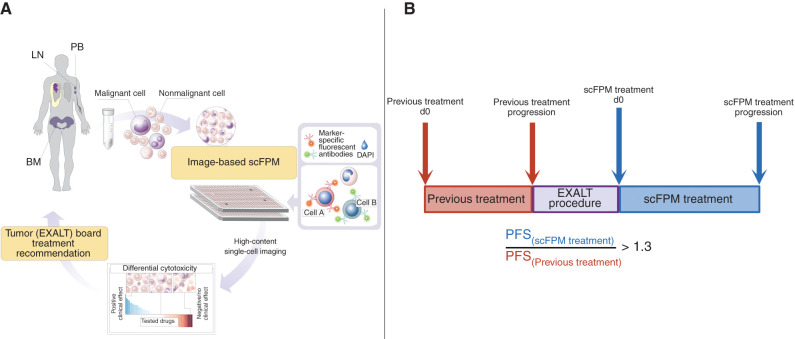
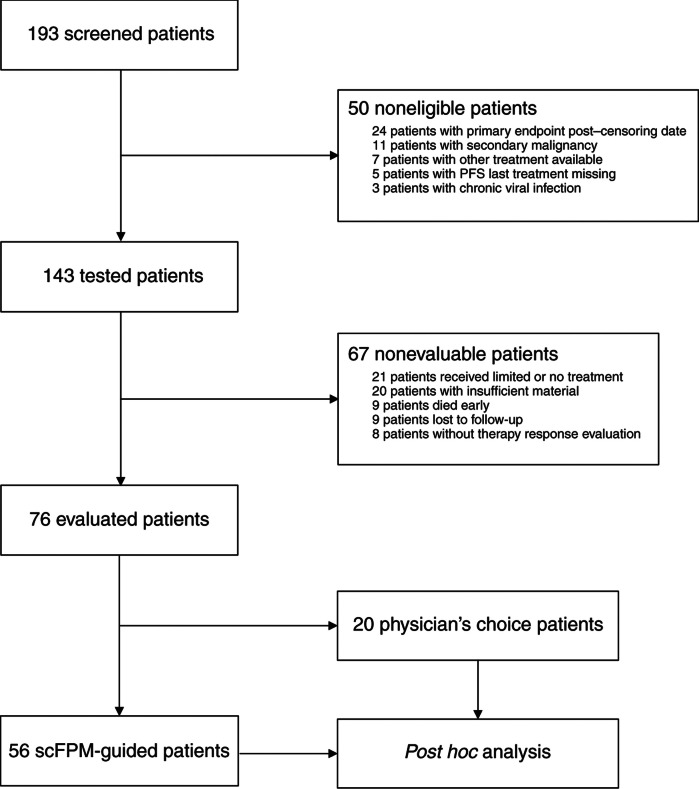
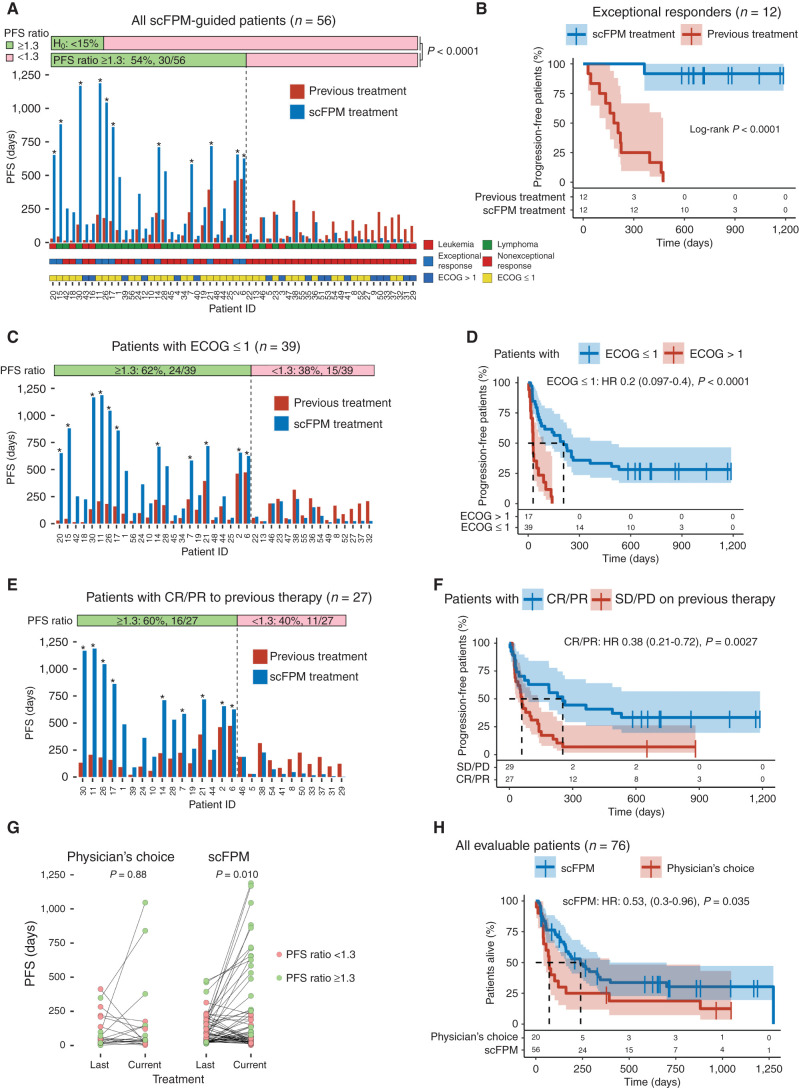
Abstract Personalized medicine aims to match the right drug with the right patient by using specific features of the individual patient's tumor. However, current strategies of personalized therapy matching provide treatment opportunities for less than 10% of patients with cancer. A promising method may be drug profiling of patient biopsy specimens with single-cell resolution to directly quantify drug effects. We prospectively tested an image-based single-cell functional precision medicine (scFPM) approach to guide treatments in 143 patients with advanced aggressive hematologic cancers. Fifty-six patients (39%) were treated according to scFPM results. At a median follow-up of 23.9 months, 30 patients (54%) demonstrated a clinical benefit of more than 1.3-fold enhanced progression-free survival compared with their previous therapy. Twelve patients (40% of responders) experienced exceptional responses lasting three times longer than expected for their respective disease. We conclude that therapy matching by scFPM is clinically feasible and effective in advanced aggressive hematologic cancers. Significance: This is the first precision medicine trial using a functional assay to instruct n-of-one therapies in oncology. It illustrates that for patients lacking standard therapies, high-content assay-based scFPM can have a significant value in clinical therapy guidance based on functional dependencies of each patient's cancer. See related commentary by Letai, p. 290. This article is highlighted in the In This Issue feature, p. 275
Overview
The claims and statistics of this paper haven’t been checked yet.
Run the check — free, no account needed. It reads the open-access text and checks the sources it cites.
Integrity signals
Registry
Cites
Statistics
Figures
Verification
Claims the paper makes
The claims and statistics of this paper haven’t been checked yet.
Run the check — free, no account needed. It reads the open-access text and checks the sources it cites.
Claims other papers make about this one
Each is checked against this paper’s own text: does it say what the citing paper says it does?
The cited source says what the claim attributes to it.
In the citing paper
“High-throughput ex vivo drug screening is a powerful tool to identify effective compounds and drug repurposing candidates,10,11”
From Integrated drug profiling and CRISPR screening identify BCR::ABL1-independent vulnerabilities in chronic myeloid leukemia (2024) · cites this paper as [11]
Self-check
Percentages, sums and reported differences re-computed from the paper’s own numbers.
The self-check needs the paper’s full text.
Citations
Cites
Döhner, H., Estey, E. H., Grimwade, D. J., Amadori, S., Appelbaum, F. R., Büchner, T., Dombret, H., Ebert, B. L., Fenaux, P., Larson, R. A., et al. (2016) · Blood · doi:10.1182/blood-2016-08-733196 · Cited by 5,938 · cited 2×
“Response evaluation was based on RECIL criteria for lymphoma and ELN criteria for 468 leukemia (42,43).”
MethodRecurring mutations found by sequencing an acute myeloid leukemia genome
Mardis, E. R., Ding, L., Dooling, D. J., Larson, D. E., McLellan, M. D., Chen, K., Koboldt, D. C., Fulton, R. S., Delehaunty, K. D., McGrath, S. D., et al. (2009) · New England Journal of Medicine · doi:10.1056/nejmoa0903840 · Cited by 2,219 · cited 1×
“The median time from sampling to scFPM report was 5 (1189 33) days, with longer times accounting for re-staining due to updated immunophenotyping 190 data, and to treatment 21 (4-77) days.”
Principles of cancer therapy: oncogene and non-oncogene addiction
Luo, J., Solimini, N. L., & Elledge, S. J. (2009) · Cell · doi:10.1016/j.cell.2009.02.024 · Cited by 1,765 · cited 2×
“The median time from sampling to scFPM report was 5 (1189 33) days, with longer times accounting for re-staining due to updated immunophenotyping 190 data, and to treatment 21 (4-77) days.”
Outcomes in refractory diffuse large B-cell lymphoma: results from the international SCHOLAR-1 study
Crump, M., Neelapu, S. S., Farooq, U., Neste, É. V. D., Kuruvilla, J. G., Westin, J. R., Link, B. K., Hay, A. E., Cerhan, J. R., Zhu, L., et al. (2017) · Blood · doi:10.1182/blood-2017-03-769620 · Cited by 1,755 · cited 1×
“For T-NHL, 9 months of PFS was considered exceptional, and for aggressive B-NHL and myeloid disease, 18 months was considered exceptional based on the definition by Wheeler and colleagues (26) and others (18, 43, 44).”
BackgroundFunctional genomic landscape of acute myeloid leukaemia
Tyner, J. W., Tognon, C. E., Bottomly, D., Wilmot, B., Kurtz, S. E., Savage, S. L., Long, N., Schultz, A. R., Traer, E. A., Abel, M. L., et al. (2018) · Nature · doi:10.1038/s41586-018-0623-z · Cited by 1,359 · cited 1×
“The median time from sampling to scFPM report was 5 (1189 33) days, with longer times accounting for re-staining due to updated immunophenotyping 190 data, and to treatment 21 (4-77) days.”
Le Tourneau, C., Delord, J.-P., Gonçalves, A., Gavoille, C., Dubot, C., Isambert, N., Campone, M., Trédan, O., Massiani, M.-A., Mauborgne, C., et al. (2015) · The Lancet Oncology · doi:10.1016/s1470-2045(15)00188-6 · Cited by 1,137 · cited 2×
“therapeutic outcome impossible at our current state of knowledge (3).”
BackgroundBRAF Mutations in Hairy-Cell Leukemia
Tiacci, E., Trifonov, V. A., Schiavoni, G., Holmes, A. B., Kern, W., Martelli, M. P., Pucciarini, A., Bigerna, B., Pacini, R., Wells, V. A., et al. (2011) · New England Journal of Medicine · doi:10.1056/nejmoa1014209 · Cited by 1,029 · cited 1×
“Genomic tumor characterization and treatment matching have improved the management of some patients with hematologic malignancies, such as BRAF in hairy cell leukemia (11, 12), IDH1/2 in acute myeloid leukemia ABSTRACT Personalized medicine aims to match the right drug with the right patient by using specific features…”
BackgroundReview of precision cancer medicine: Evolution of the treatment paradigm
Tsimberidou, A. M., Fountzilas, E., Nikanjam, M., & Kurzrock, R. (2020) · Cancer Treatment Reviews · doi:10.1016/j.ctrv.2020.102019 · Cited by 803 · cited 2×
“In contrast, a major 315 setback uniformly described in other personalized medicine trials is patient deterioration or 316 death during time of analysis (4,33).”
BackgroundMassard, C., Michiels, S., Ferté, C., Deley, M. L., Lacroix, L., Hollebecque, A., Verlingue, L., Ileana, E. E., Rosellini, S., Ammari, S., et al. (2017) · Cancer Discovery · doi:10.1158/2159-8290.cd-16-1396 · Cited by 802 · cited 2×
“The median time from sampling to scFPM report was 5 (1189 33) days, with longer times accounting for re-staining due to updated immunophenotyping 190 data, and to treatment 21 (4-77) days.”
BackgroundMolecular profiling of cancer patients enables personalized combination therapy: the I-PREDICT study
Sicklick, J. K., Kato, S., Okamura, R., Schwaederle, M. C., Hahn, M. E., Williams, C. B., De, P. K., Krie, A. K., Piccioni, D. E., Miller, V. A., et al. (2019) · Nature Medicine · doi:10.1038/s41591-019-0407-5 · Cited by 726 · cited 3×
“329 This strategy could raise the limited matching numbers, but has not yet been validated in a 330 prospective fashion (28).”
Background
Research works printed but not linked: 1
- Swerdlow, 2017, WHO classification of tumours of haematopoietic and lymphoid tissues. Rev. 4th ed
Cited by
Sorted by citations
Items 101–200 of 207
Kordyukova, M., Bulgakov, T. K., Sorokina, M. A., Kudryashova, O. M., Abakumova, T. O., Meshcheryakova, V., Grigoriev, I. V., Senko, I. V., Shevchenko, E. K., & Belousov, V. V. (2026) · International Journal of Molecular Sciences · doi:10.3390/ijms27052207 · Cited by 6
“These approaches have been validated in hematological malignancies [302] and in a range of solid tumors, including ovarian, breast, colorectal, and head and neck cancers [303].”
Sahib, N. R. B. M., Mohamed, J. S., Rashid, M. B. M. A., Jayalakshmi, Lin, Y. C., Chee, Y. L., Fan, B. E., Mel, S. D., Ooi, M. G. M., Jen, W., et al. (2024) · Cancer Medicine · doi:10.1002/cam4.70401 · Cited by 5
“While these studies show that FPM approaches are beneficial [21], they are usually dependent on single drug sensitivity results that may not recapitulate combinatorial drug sensitivity [26, 27] or may rely on extensive molecular profiling that requires long turnaround time [28–30].”
Precision Medicine in Myeloid Neoplasia: Challenges and Opportunities
Hochman, M. J., Muñiz, J. P., & Papadantonakis, N. (2025) · Journal of Personalized Medicine · doi:10.3390/jpm15020049 · Cited by 5
“It was evaluated in multiple aggressive hematologic malignancies in the EXALT trial [198] and SMARTrial [199], and was assessed in AML patients in the DARTT-Figure for Therapy Choice (“MyeloMATCH”) study hopes to take a rigorous precision-based approach for patients, evaluating patients within a…”
Morikawa, A., Li, J., Ulintz, P., Cheng, X., Apfel, A. M., Robinson, D. R., Hopkins, A., Kumar‐Sinha, C., Wu, Y., Serhan, H. A., et al. (2023) · Cancer Research Communications · doi:10.1158/2767-9764.crc-22-0492 · Cited by 6
“Our findings are consistent with other published reports and further support the incorporation of rigorous ex vivo functional testing in precision medicine approaches (53, 54).”
Advances in preclinical assessment of therapeutic targets for bladder cancer precision medicine
Nössing, C., Herek, P., Shariat, S. F., Berger, W., & Englinger, B. (2024) · Current Opinion in Urology · doi:10.1097/mou.0000000000001177 · Cited by 5
Functional personalized complex combination nano therapy for osteosarcoma
Bar-Natan, O., Harris, Y., Sason, H., & Shamay, Y. (2025) · Scientific Reports · doi:10.1038/s41598-025-20222-3 · Cited by 5
“Our findings align with Kornauth et al. 17 , who demonstrated that functional precision medicine provides clinical benefit in aggressive hematologic cancers by identifying unexpected drug sensitivities that genomic profiling alone could not predict.”
Nikanjam, M., & Kurzrock, R. (2025) · Seminars in Cancer Biology · doi:10.1016/j.semcancer.2025.10.004 · Cited by 4
Sun, R., Feng, Z., Wu, T., Ding, F., Wu, Y., Jin, K., Li, L., Jia, Z., Gao, R., Cong, Y., et al. (2026) · Microsystems & Nanoengineering · doi:10.1038/s41378-026-01215-2 · Cited by 6
“Functional precision medicine methods involve exposing tumor cells to therapeutic agents and rapidly assessing their response, thereby elucidating patterns of drug sensitivity and resistance without requiring prior knowledge of the underlying molecular vulnerabilities 6,7.”
Microfluidic and organ-on-a-chip approaches to model the tumor microenvironment
Bonnet, V., Angelidakis, E., Sart, S., & Baroud, C. N. (2025) · Current Opinion in Biomedical Engineering · doi:10.1016/j.cobme.2025.100606 · Cited by 7
Chaves, B., Silva, J. C. S. E., Nakaya, H. I., Socquet-Juglard, N., Bucciarelli, F., Prunier, G., Almeida, M. V., Lacouture, C., Kari, S., Astier, A., et al. (2025) · Nature Communications · doi:10.1038/s41467-025-60224-3 · Cited by 4
“The potential of HCI to provide support for treatment decision has recently been highlighted by its ability to predict drug ef fi cacy in patients with hematological cancers 26,33 .”
Ex vivo discovery of synergistic drug combinations for hematologic malignancies
Ali, K. A., Shah, R. D., Dhar, A., Myers, N. M., Nguyen, C., Paul, A., Mancuso, J. E., Patterson, A., Brody, J. P., & Heiser, D. (2023) · SLAS DISCOVERY · doi:10.1016/j.slasd.2023.12.001 · Cited by 4
“With this approach to personalized medicine, selected therapies guided by DSS improved survival of patients with hematologic malignancies [24].”
BackgroundBerghoff, A. S., Mair, M. J., Spiró, Z., Malak, C. A., Heliebi, A. E., Eckert, F., Furtner, J., König, F., Leibetseder, A., Nowosielski, M., et al. (2025) · Neuro-Oncology Advances · doi:10.1093/noajnl/vdaf056 · Cited by 4
“24,25 Notwithstanding, as we were aiming to design a study applicable and feasible for clinical routine, we decided to use the objective and robust ATP measurements as a readout.”
Establishing predictive machine learning models for drug responses in patient derived cell culture
Abdel‐Rehim, A., Orhobor, O. I., Griffiths, G., Soldatova, L., & King, R. D. (2025) · npj Precision Oncology · doi:10.1038/s41698-025-00937-2 · Cited by 6
“6 The Alan Turing Institute, London, UK. e-mail: aar52@cam.ac.uk based on their ex vivo performance, as opposed to standard treatments 7 – 9 .”
Botrugno, O. A., Bianchi, E., Bruno, J. M., Gallo, G. F. M., Felici, C., Sommella, E., Stefano, P. D., Giansanti, V., Rossella, V., Merciai, F., et al. (2024) · bioRxiv (Cold Spring Harbor Laboratory) · doi:10.1101/2024.12.28.630600 · Cited by 4
Lee, R. X., Rashid, M. B. M. A., Sahib, N. R. B. M., Goh, J., Mel, S. D., Batumalai, Y., Jayalakshmi, Chua, R., Poon, L. M., Chan, E. H. L., et al. (2025) · JCO Precision Oncology · doi:10.1200/po-24-00780 · Cited by 3
Predicting drug‐perturbed transcriptional responses using multi‐conditional diffusion transformer
Hu, Q., Chen, Z., & Gu, J. (2025) · Quantitative Biology · doi:10.1002/qub2.70016 · Cited by 6
“Drug ‐ perturbed transcriptomes can comprehensively depict the mechanism of action of drugs and play a significant role in the fields of personalized medicine [1, 2] and new drug discovery [3].”
PatientProfiler: building patient-specific signaling models from proteogenomic data
Lombardi, V., Rocco, L. D., Meo, E., Venafra, V., Nisio, E. D., Perticaroli, V., Nicolaeasa, M. L., Cencioni, C., Spallotta, F., Negri, R., et al. (2025) · Molecular Systems Biology · doi:10.1038/s44320-025-00160-y · Cited by 3
The functional imperative in high-grade glioma
Goh, L. S. H., Thng, D. K. H., Ang, Y. L. E., Ho, D., Toh, T. B., & Wong, A. L. A. (2026) · Experimental & Molecular Medicine · doi:10.1038/s12276-025-01614-x · Cited by 3
“Notably, 23% of patients remained progression-free at 12 months after FPO-guided therapy, signi fi cantly outperforming the 5% progression-free rate observed with previous treatments 86 .”
InfluentialLet’s get functional: Drug sensitivity profiling to enable precision sarcoma medicine
Ball, C. R., & Fröhling, S. (2024) · Cell stem cell · doi:10.1016/j.stem.2024.09.006 · Cited by 3
Hermansen, J. U., Athanasiadis, P., Yin, Y., Rise, A.-S. F., Arribas, A. J., Cascione, L., Russnes, H. G., Helland, Å., Mato, A. R., Bertoni, F., et al. (2025) · Cell Death and Disease · doi:10.1038/s41419-025-07884-7 · Cited by 3
Gijsels, S., Vekeman, M., Fischer, S., Creytens, D., Ackerman, A., Ongenaet, A., Boi, L., Segers, E., Temmerman, J. D., Casteur, F., et al. (2025) · Surgical Oncology · doi:10.1016/j.suronc.2025.102209 · Cited by 2
Ex Vivo Drug Screening: An Emerging Paradigm in the Treatment of Childhood Cancer
Ahmed, A., Cox, E., Lane, L., Rominiyi, O., Danson, S. J., Bryant, H. E., Wells, G., & King, D. A. (2025) · Journal of Pediatric Hematology/Oncology · doi:10.1097/mph.0000000000003017 · Cited by 2
Tan, P. K., Martins, T. J., Becker, P. S., Wechsler‐Reya, R. J., & Crawford, J. R. (2025) · Frontiers in Oncology · doi:10.3389/fonc.2025.1606575 · Cited by 2
The role of advanced diagnostics on precision medicine in hemato oncology
Mandefro, B., Berta, D. M., Kelem, A., Teketelew, B. B., Melkamu, A., Much, Y., Mulatie, Z., & Adane, T. (2025) · Discover Oncology · doi:10.1007/s12672-025-03169-9 · Cited by 2
Struyf, N., Gezelius, H., Lundmark, A., Barizza, C., Ploeger, H., Pizarro, L. R., Vesterlund, M., Mermelekas, G., Österroos, A., Bohlin, A. B., et al. (2026) · npj Precision Oncology · doi:10.1038/s41698-026-01363-8 · Cited by 2
“In line with other functional precision medicine studies 19 – 21 , our fi ndings indicate that ex vivo drug testing may re fl ect clinical response.”
A roadmap of therapeutic strategies for patients with multiple myeloma
(2023) · Nature Cancer · doi:10.1038/s43018-023-00545-8 · Cited by 2
Genetically informed therapy for lymphoma: the discomfiting benefit of lumping splits
Hahn, C. K., Palmer, A. C., & Weinstock, D. M. (2023) · Cancer Cell · doi:10.1016/j.ccell.2023.08.005 · Cited by 2
Integrated functional genomic screening to bypass TKI resistance in chronic myeloid leukemia
Beinortas, T., & Huntly, B. J. P. (2024) · Cell Reports Medicine · doi:10.1016/j.xcrm.2024.101565 · Cited by 2
Roos-Mattila, M., Kallio, P., Luck, T. J., Polso, M., Kumari, R., Mikkonen, P., Välimäki, K. E., Malmstedt, M., Ellonen, P., Pellinen, T. S., et al. (2024) · Communications Biology · doi:10.1038/s42003-024-07004-9 · Cited by 2
“Integration of omics data at the pathway level gives insight into the molecular pathways of patient-speci fi c drug responses Functional ex vivo DSRT empowers fi nding new molecular vulnerabilities and supports the clinical decision-making for personalized treatment 35 – 38 .”
Ex vivo imaging-based high content phenotyping of patients with rheumatoid arthritis
Kartnig, F., Bonelli, M. M., Goldmann, U., Mészáros, N., Krall, N., Aletaha, D., Heinz, L. X., & Superti‐Furga, G. (2024) · EBioMedicine · doi:10.1016/j.ebiom.2024.105522 · Cited by 2
Self-citationPrecision Medicine in Oncology and Cancer Therapeutics
Geantă, M., Боата, А., Brand, A. M., Cucoş, B., & Lehrach, H. (2022) · Springer eBooks · doi:10.1007/978-981-19-5082-7_3 · Cited by 2
Targeting tumour-intrinsic neural vulnerabilities of glioblastomaPreprint
Lee, S., Weiß, T., Bühler, M., Mena, J., Lottenbach, Z., Wegmann, R., Sun, M., Bihl, M., Augustynek, B., Baumann, S., et al. (2022) · bioRxiv (Cold Spring Harbor Laboratory) · doi:10.1101/2022.10.07.511321 · Cited by 2
Self-citationHall, P. E., Williams, M., Peerani, E., Tham, E. L., Iori, F., de Fraine, G. R. T. B., Loughrey, K. L., Kaffa, A. D., Richardson, T. D. L., Liberal, C., et al. (2024) · medRxiv · doi:10.1101/2024.10.25.24314885 · Cited by 2
“Other work is mainly focused in hematological malignancies (22) and most previous work on FPM has been limited by the inability to include the impact of immunotherapy-based drugs.”
BackgroundLymphoma and Leukemia Cell Vulnerabilities and Resistance Identified by Compound Library Screens
Tomska, K., Scheinost, S., Kivioja, J. L., Kummer, S., Do, T. H. L., & Zenz, T. (2024) · Methods in molecular biology · doi:10.1007/978-1-0716-4188-0_11 · Cited by 1
Trin, K., Dalleau, C., Mathoulin-Pélissier, S., Tourneau, C. L., Dinart, D., & Bellera, C. A. (2025) · Current Oncology Reports · doi:10.1007/s11912-025-01667-1 · Cited by 1
“» [ 176 ] any prospective trial that relied on a sample size estimation process based on GMI modelling.”
Stratégie intégrée de prise en charge des LAL-T en rechute/réfractaires au laboratoire
Courtois, L., Lhermitte, L., & Asnafi, V. (2025) · Revue Francophone des Laboratoires · doi:10.1016/s1773-035x(25)76375-3 · Cited by 1
Neural Vulnerabilities in Glioblastoma: Rethinking Therapy Through Neuroactive Drug Repurposing
Colobon, P. O., & Lee, S. (2025) · Brain Tumor Research and Treatment · doi:10.14791/btrt.2025.0024 · Cited by 1
Adefolaju, A., Kram, D. E., Mann, B., Hingtgen, S., & Satterlee, A. (2025) · Advanced Drug Delivery Reviews · doi:10.1016/j.addr.2025.115736 · Cited by 1
Drug screening reveals differential drug response in primary and metastatic clear cell sarcoma
Vejzović, D., Karner, C., Fechter, K., Ritter, G., Holzer, V., Barones, L., Schweintzger, N. A., Wagner, K., Lyssy, F., Gauster, M., et al. (2025) · Cancer Letters · doi:10.1016/j.canlet.2025.218131 · Cited by 1
Beyond genomics: 3D microtumor assays for rapid, clinically relevant functional drug testing
Chan, M., & Gujral, T. S. (2025) · Oncogene · doi:10.1038/s41388-025-03637-0 · Cited by 1
Leveraging AI for cell biology discovery
Simizo, A., de Morais, M., Vesco, M. F. [., & Nakaya, H. I. (2026) · Biochemical Society Transactions · doi:10.1042/bst20253023 · Cited by 1
“Exscientia has developed the first functional precision oncology platform using AI, with several AI-designed compounds currently in clinical development [88,89].”
Biomarkers and advances in AML-MRC: from bench to bedside
Meng, F., Al-Khafaji, Z., Muzammil, K., Sarbazjoda, E., Khaksari, M. N., Bayani, A., & Samarkhazan, H. S. (2026) · Annals of Hematology · doi:10.1007/s00277-026-06805-8 · Cited by 1
An ex vivo functional biomarker of treatment response in pediatric low-grade glioma
Artz, N., Mann, B., Ebbs, A., Darawsheh, R., Dasari, R., Adefolaju, A., Bell, N., Trembath, D. G., Higgins, D. M. O., Elton, S., et al. (2026) · PLoS ONE · doi:10.1371/journal.pone.0331423 · Cited by 1
Integration and validation of complementary ex vivo assays for functional precision oncology
Loboda, A., Paluncic, J., Freitas, M., Weidmann, M., Herter, S., Zeiser, C., Schulz, J. P., Jády, A., Blattner-Johnson, M., Autry, R. J., et al. (2026) · npj Precision Oncology · doi:10.1038/s41698-026-01555-2 · Cited by 1
“The high potential of FPO is highlightedby the growing number of precisiononcology programs 10,11 and clinical trials employing FPO strategies 1,12,13 .”
Meszaros, N., LIND, K., Sehlke, R., Vilagos, B., Krall, N., Vladimer, G. I., & Sill, H. (2022) · British Journal of Haematology · doi:10.1111/bjh.18557 · Cited by 1
Self-citationVienna Cancer Stem Cell Club (VCSCC): 20 year jubilee and future perspectives
Valent, P., Sadovnik, I., Peter, B., Ivanov, D., Schulenburg, A., Hadzijusufovic, E., Willmann, M., Rülicke, T., Herrmann, H., Rabitsch, W., et al. (2023) · Expert Review of Hematology · doi:10.1080/17474086.2023.2232545 · Cited by 1
Self-citationVenEx precisely predicts ven-aza response
Becker, P. S. (2025) · Blood · doi:10.1182/blood.2024027054 · Cited by 1
News on Peripheral T-cell lymphoma
Pichler, A. (2023) · memo - Magazine of European Medical Oncology · doi:10.1007/s12254-022-00864-z · Cited by 1
“Especially the heterogeneous subgroup of patients with T cell lymphomas demonstrated a benefit in median PFS compared to B-cell malignancies [16].”
ResultSelf-citationYin, Y., Athanasiadis, P., Karlsen, L., Urban, A., Murali, I., Fernandes, S. M., Arribas, A. J., Hilli, A. K., Taskén, K., Bertoni, F., et al. (2022) · bioRxiv (Cold Spring Harbor Laboratory) · doi:10.1101/2022.04.14.488428 · Cited by 1
Njouendou, A. J., Tiofack, A. A. Z., Kenfack, R. N., Ananga, S. N., Bell, E. H. M. D., Simo, G., Hoheisel, J. D., Siveke, J. T., & Lueong, S. (2022) · bioRxiv (Cold Spring Harbor Laboratory) · doi:10.1101/2022.06.09.495487 · Cited by 1
Clinical Forecasting using Ex Vivo Drug Sensitivity Profiling of Acute Myeloid LeukemiaPreprint
Andersen, A. N., Brodersen, A. M., Durán, P. A., Piechaczyk, L., Tadele, D. S., Baken, L., Fredriksen, J., Stoksflod, M., Lenartova, A., Fløisand, Y., et al. (2022) · bioRxiv (Cold Spring Harbor Laboratory) · doi:10.1101/2022.10.11.509866 · Cited by 1
Schmid, J. A., Festl, Y., Severin, Y., Bacher, U., Kronig, M.-N., Snijder, B., & Pabst, T. (2023) · medRxiv · doi:10.1101/2023.03.28.23287745 · Cited by 1
Self-citationClonal morphology-guided combination therapies overcome heterogeneity-driven drug tolerancePreprint
Li, X. W., Liu, L., Yan, Y., Yang, M., Luo, L., Jiang, Y., & Ren, W. (2026) · bioRxiv (Cold Spring Harbor Laboratory) · doi:10.64898/2026.01.31.703021 · Cited by 1
“Several clinical studies have demonstrated that treatment plans based on FPM results can improve patient outcomes 6 – 8 .”
Paluncic, J., Carrero, Z. I., Fischer, L. K., Schulz, J. P., Hanf, D., Jády, A., GutierrezTenorio, F., Klimova, A., Dagostino, C., Wolf, I., et al. (2026) · bioRxiv (Cold Spring Harbor Laboratory) · doi:10.64898/2026.02.18.705724 · Cited by 1
Pharmakoskopie-geführte Therapie: Wenn einzelne Zellen den Behandlungsplan vorgeben
Zylka-Menhorn, V. (2021) · Deutsches Ärzteblatt · doi:10.3238/personko.2021.11.26.06
Prädiktive Testung von Tumorgewebe und ihre klinischen Konsequenzen
Hoffmann, J. (2022) · Springer Reference Medizin · doi:10.1007/978-3-662-46764-0_148-1
Chen, L.-X., Liu, X.-D., Zeng, S.-J., Zhu, H., Wang, J., & Jiang, Q. (2022) · PubMed Central
Yin, Y., Athanasiadis, P., Karlsen, L., Urban, A., Xu, H., Murali, I., Fernandes, S. M., Arribas, A. J., Hilli, A. K., Taskén, K., et al. (2023) · doi:10.1158/1078-0432.c.6532718
Yin, Y., Athanasiadis, P., Karlsen, L., Urban, A., Xu, H., Murali, I., Fernandes, S. M., Arribas, A. J., Hilli, A. K., Taskén, K., et al. (2023) · doi:10.1158/1078-0432.c.6532718.v1
Morikawa, A., Li, J., Ulintz, P., Cheng, X., Apfel, A. M., Robinson, D. R., Hopkins, A., Kumar‐Sinha, C., Wu, Y., Serhan, H. A., et al. (2023) · doi:10.1158/2767-9764.c.6689056.v1
Morikawa, A., Li, J., Ulintz, P., Cheng, X., Apfel, A. M., Robinson, D. R., Hopkins, A., Kumar‐Sinha, C., Wu, Y., Serhan, H. A., et al. (2023) · doi:10.1158/2767-9764.c.6689056
A New Microfluidic Device to Facilitate Functional Precision Medicine Assays
Manzano-Muñoz, A., Yeste, J., Ortega, M. A., Samitier, J., Ramón‐Azcón, J., & Montero, J. (2023) · Methods in molecular biology · doi:10.1007/978-1-0716-3593-3_8
Kager, L., & Evans, W. E. (2024) · doi:10.1002/9781394180486.ch23
Njouendou, A. J., Szarvas, T., Tiofack, A. A. Z., Kenfack, R. N., Tonouo, P. D., Ananga, S. N., Bell, E. H. M. D., Simo, G., Hoheisel, J. D., Siveke, J. T., et al. (2023) · Figshare · doi:10.6084/m9.figshare.22623367
Alig, S., Pott, C., & Chapuy, B. (2024) · DMW - Deutsche Medizinische Wochenschrift · doi:10.1055/a-2160-5397
“Einen ebenfalls sehr pragmatischen Weg hat die EXALT-Stu-die beschritten [20].”
BackgroundThe cellular hierarchy of acute myeloid leukemia informs personalized treatmentPreprint
Severin, Y., Festl, Y., Benoit, T. M., Wegmann, R., Hale, B. D., Roiss, M., Kienzler, A., Pabst, T., Scharl, M. M., Sunagawa, S., et al. (2024) · medRxiv · doi:10.1101/2024.07.24.24310768
“For example, we have developed pharmacoscopy, a high-throughput ex vivo drug sensitivity screening platform with single-cell resolution, which showed promising potential to guide treatment selection leading to improved overall survival in AML patients 18,19,23,26 .”
MethodSelf-citationPatient-derived Organoids as a Tool for Advancing Precision Immuno-oncology
Than, X. Y., Ong, T. T., & Chow, E. K. (2024) · World Scientific Annual Review of Cancer Immunology · doi:10.1142/s2972389224300019
Exploring the Anti-Tumor Effects of Brusatol in Aggressive B-Cell LymphomasPreprint
Szmyra, M., Haingartner, S., Jantscher, S., Bernhart, E. M., Kovács-Hajdu, P., Bošková, V., Krall, N., Zupo, A., Pircher, T., Pansy, K., et al. (2025) · bioRxiv (Cold Spring Harbor Laboratory) · doi:10.1101/2025.04.16.649058
“Furthermore, drug response score (DRS) [33] analysis confirmed increased brusatol’s cytotoxic activity in samples with higher c-MYC expression after 24 (Fig.”
Self-citationCui, W., Haffa, M., Massai, F., Qian, K., Vallin, M., Axelsson, H., & Seashore-Ludlow, B. A. (2025) · Royal Society of Chemistry eBooks · doi:10.1039/9781837676941-00168
Lothe, R., Kryeziu, K., Klokkerud, S. M. K., Totland, M. Z., Moosavi, S. H., Reims, H. M., Bergsland, C. H., Eilertsen, I. A., Smeby, J., Lassen, K., et al. (2025) · Research Square · doi:10.21203/rs.3.rs-6507406/v1
Horne, G. A., & Copland, M. (2025) · Elsevier eBooks · doi:10.1016/b978-0-323-95311-5.00003-8
An ex vivo functional biomarker of treatment response in pediatric low-grade gliomaPreprint
Artz, N., Mann, B., Ebbs, A., Darawsheh, R., Dasari, R., Adefolaju, A., Bell, N., Trembath, D. G., Higgins, D. M. O., Elton, S., et al. (2025) · medRxiv · doi:10.1101/2025.09.11.25333944
Cartry, J., Bedja, S., Boilève, A., Mathieu, J. R. R., Gontran, E., Annereau, M., Job, B., Mouawia, A., Mathias, P., de Baère, T., et al. (2024) · Figshare · doi:10.6084/m9.figshare.24439456
Njouendou, A. J., Szarvas, T., Tiofack, A. A. Z., Kenfack, R. N., Tonouo, P. D., Ananga, S. N., Bell, E. H. M. D., Simo, G., Hoheisel, J. D., Siveke, J. T., et al. (2023) · Figshare · doi:10.6084/m9.figshare.22623358
Njouendou, A. J., Szarvas, T., Tiofack, A. A. Z., Kenfack, R. N., Tonouo, P. D., Ananga, S. N., Bell, E. H. M. D., Simo, G., Hoheisel, J. D., Siveke, J. T., et al. (2023) · Figshare · doi:10.6084/m9.figshare.22623349
Njouendou, A. J., Szarvas, T., Tiofack, A. A. Z., Kenfack, R. N., Tonouo, P. D., Ananga, S. N., Bell, E. H. M. D., Simo, G., Hoheisel, J. D., Siveke, J. T., et al. (2023) · Figshare · doi:10.6084/m9.figshare.22623355
Njouendou, A. J., Szarvas, T., Tiofack, A. A. Z., Kenfack, R. N., Tonouo, P. D., Ananga, S. N., Bell, E. H. M. D., Simo, G., Hoheisel, J. D., Siveke, J. T., et al. (2023) · Figshare · doi:10.6084/m9.figshare.22623352
Njouendou, A. J., Szarvas, T., Tiofack, A. A. Z., Kenfack, R. N., Tonouo, P. D., Ananga, S. N., Bell, E. H. M. D., Simo, G., Hoheisel, J. D., Siveke, J. T., et al. (2023) · Figshare · doi:10.6084/m9.figshare.22623364
Njouendou, A. J., Szarvas, T., Tiofack, A. A. Z., Kenfack, R. N., Tonouo, P. D., Ananga, S. N., Bell, E. H. M. D., Simo, G., Hoheisel, J. D., Siveke, J. T., et al. (2023) · Figshare · doi:10.6084/m9.figshare.22623361
Paul, D. (2025) · Springer eBooks · doi:10.1007/978-3-032-08808-6_4 · Cited by 2
Ex vivo drug sensitivity testing predicts treatment outcomes in advanced ovarian cancer
Labrosse, K. B., Lombardo, F. C., Bartoszek, E. M., Sauteur, L., Tanner, N., Tanna, T., Wolf, A., TUNKOVÁ, B., Kašíková, L., Fedier, A., et al. (2026) · npj Precision Oncology · doi:10.1038/s41698-026-01321-4
“This approachhasdemonstratedutilityinexvivocultureplatformsacross bothsolidtumors 53,55,63,64 and hematologic malignancies 53,64 .”
Wöhrl, L., Das, D., Weidele, K., Treitschke, S., Baron, C., Halbritter, D., Botteron, C., Lüke, F., Gužvić, N. S., Werner‐Klein, M., et al. (2026) · bioRxiv (Cold Spring Harbor Laboratory) · doi:10.64898/2026.02.06.704037
“Functional precision oncology is beginning to influence treatment decisions in hematologic malignancies ( 28, 32 ) and early data now suggest that similar strategies may be applied to solid tumors, further expanding the scope of functional testing beyond hematologic cancers ( 29, 30 ).”
Immunomodulation des lymphocytes Vγ9Vδ2 dans les leucémies aigües
Floch, A.-C. L. (2023) · theses.fr (ABES) · doi:10.70675/b4e332efz0a66z4c9az85eaz8eea012e9839
Steffen, F. D., Lissat, A., Alten, J., Kriston, A., Scheidegger, N. K., Eckert, C., Bodmer, N., Schori, L. J., Schühle, S., Arpagaus, A., et al. (2026) · medRxiv · doi:10.64898/2026.04.08.26350164
Melanoma cell states define therapeutic vulnerabilities in a multimodal single-cell atlasPreprint
Levesque, M. P., Wegmann, R., Chevrier, S., Lehmann, K.-V., Prummer, M., Tusup, M., Gut, G., Casanova, R., Kuipers, J., Lischetti, U., et al. (2026) · Research Square · doi:10.21203/rs.3.rs-9413884/v1 · Cited by 1
Self-citationWilloch, K., Zhao, Z., Durán, P. A., Mikaeloff, F., Struyf, N., Österroos, A., Lehmann, S., Kallioniemi, O., Saarela, J., Tyner, J. W., et al. (2026) · npj Precision Oncology · doi:10.1038/s41698-026-01480-4 · Cited by 1
“4, 5).”
Kryeziu, K., Klokkerud, S. M. K., Totland, M. Z., Moosavi, S. H., Reims, H. M., Bergsland, C. H., Eilertsen, I. A., Smeby, J., Lassen, K., Lundesgaard, K., et al. (2026) · Cell Reports Medicine · doi:10.1016/j.xcrm.2026.102840 · Cited by 3
Evolution of the drug sensitivity landscape of chronic lymphocytic leukaemia
Hermansen, J. U., Yin, Y., Tjønnfjord, G. E., Mato, A., & Skånland, S. S. (2026) · British Journal of Haematology · doi:10.1111/bjh.70603
Werner, J., Schiller, L., Müller, C., Lehmann, J. O. R., Przybilla, J., Schlosser, T., Hoffmeister, A., Kallendrusch, S., & Vissiennon, C. (2026) · Clinical and Experimental Medicine · doi:10.1007/s10238-026-02209-0
“Notably in oncology, functional precision medicine approaches using ex vivo drug testing on patient-derived tissue have demonstrated predictive value for clinical outcomes [4 ].”
Sun, C., Wu, G., Wu, D., Du, Q., Lu, Q. W., Hu, W., Wang, J., xie, A., Yao, Z., Xia, M., et al. (2026) · Bioactive Materials · doi:10.1016/j.bioactmat.2026.06.041
Herzberg, F., Lu, F., Korenkov, M., Fregona, V., Didoss, C., Heisterkamp, N., Sprechert, M., Polici, A., Heck, C., Haas, S. F., et al. (2026) · Leukemia · doi:10.1038/s41375-026-03047-5
Chatzichristos, C., Katsimpokis, D., Lai, C., van Santvliet, L., Camarrone, F., Knoors, D., Geleijnse, G., Speybroek, M. V., Lewi, M., Vannieuwenhuyse, B., et al. (2026) · BMC Medical Informatics and Decision Making · doi:10.1186/s12911-026-03719-3 · Cited by 1
Cederlund, A., Struyf, N., Pizarro, L. R., Östling, P., Sonnevi, K., Wahlin, B. E., & Erkers, T. (2026) · npj Precision Oncology · doi:10.1038/s41698-026-01630-8
“…in the assay requires further investigation, extensive resistance is reasonable in a heavily pre-treated cohort however other studies have shown mixed results for conventional chemotherapeutics using shorter incubations 12,25 potentially introducing a disproportionate disadvantage for these agents.”
Ali, K. M., Monedeiro, F., Stanzer, S., BANDRES-MERIZ, J., Franz, J., Harbusch, N., Magnes, C., Zügner, E., Leoni, M., Asslaber, M., et al. (2026) · Acta Neuropathologica Communications · doi:10.1186/s40478-026-02396-7
Integrating ex vivo platforms with AI to guide glioblastoma treatment
Bardhan, M., Paul, S., Pun, S., Aryal, M. R., Claudio, P. P., Binder, J., Barrile, R., & Krummel, D. P. (2026) · Journal of Neuro-Oncology · doi:10.1007/s11060-026-05708-y
“[54 ] GlioFlow3D: a scalable and physiologically relevant microphysiological platform MPSs integrate tissue engineering, biomaterials, and micro - fluidics to recreate key aspects of organ-level physiology in vitro [15, 16 ].”
Isigkeit, L., Sinderwald, R., Neumann, J., Ismaili, A., Hong, Y., & Oppermann, S. (2026) · SLAS DISCOVERY · doi:10.1016/j.slasd.2026.100337
Premaratne, G., & Ameratunga, M. (2026) · Frontiers in Genetics · doi:10.3389/fgene.2026.1921857
Metadata
- Authors
- Kornauth, C., Pemovska, T., Vladimer, G. I., Bayer, G., Bergmann, M., Eder, S., Eichner, R., Erl, M., Esterbauer, H., Exner, R., Felsleitner-Hauer, V., Forte, M., Gaiger, A., Geissler, K., Greinix, H. T., Gstöttner, W., Hacker, M., Hartmann, B. L., Hauswirth, A. W., Heinemann, T., Heintel, D., Hoda, M. A., Hopfinger, G., Jaeger, U., Kazianka, L., Kenner, L., Kiesewetter, B., Krall, N., Krajnik, G., Kubicek, S., Le, T., Lubowitzki, S., Mayerhoefer, M. E., Menschel, E., Merkel, O., Miura, K., Müllauer, L., Neumeister, P., Noesslinger, T., Ocko, K., Öhler, L., Panny, M., Pichler, A., Porpaczy, E., Prager, G. W., Raderer, M., Ristl, R., Ruckser, R., Salamon, J., Schiefer, A.-I., Schmolke, A.-S., Schwarzinger, I., Selzer, E., Sillaber, C., Skrabs, C., Sperr, W. R., Srndic, I., Thalhammer, R., Valent, P., van der Kouwe, E., Vanura, K., Vogt, S., Waldstein, C., Wolf, D., Zielinski, C. C., Zojer, N., Simonitsch-Klupp, I., Superti-Furga, G., Snijder, B., & Staber, P. B.
- Affiliations
- Vienna General Hospital (AT)
- Austrian Academy of Sciences (AT)
- Medical University of Vienna (AT)
- Klinikum Klagenfurt (AT)
- 8Abteilung für Innere Medizin, Krankenhaus der Barmherzigen Brüder Salzburg, Salzburg, Austria.
- Universitätsklinikum Wiener Neustadt (AT)
- Sigmund Freud Privatuniversität Wien (AT)
- Medical University of Graz (AT)
- Landeskrankenhaus Feldkirch (AT)
- ETH Zurich (CH)
- 17Division of Medicine I, Klinik Ottakring, Vienna, Austria.
- 19Third Medical Department, Centre for Oncology and Haematology, Klinik Favoriten, Vienna, Austria.
- Universitätsklinikum St. Pölten (AT)
- Memorial Sloan Kettering Cancer Center (US)
- Hanusch Hospital (AT)
- Nihon University (JP)
- St. Josef-Krankenhaus Wien (AT)
- 29Second Medical Department, Klinik Donaustadt, Vienna, Austria.
- 30Department of Medicine, Landesklinikum Waidhofen a.d. Ybbs, Waidhofen-Ybbs, Austria.
- Ludwig Boltzmann Institute for Hematology and Oncology (AT)
- 1Department of Medicine I, Division of Hematology and Hemostaseology, Medical University of Vienna, Vienna, Austria.
- Innsbruck Medical University (AT)
- 5Department of Pathology, Medical University of Vienna, Vienna, Austria.
- 3CeMM Research Center for Molecular Medicine of the Austrian Academy of Sciences, Vienna, Austria.
- Corresponding author
- Staber, Philipp B.
- ORCID
- Kornauth, Christoph
- Pemovska, Tea
- Vladimer, Gregory I.
- Bergmann, Michael
- Eichner, Ruth
- Esterbauer, Harald
- Exner, Ruth
- Gaiger, Alexander
- Geissler, Klaus
- Hacker, Marcus
- Hartmann, Bernd Lorenz
- Heinemann, Tim
- Hoda, Mir Alireza
- Hopfinger, Georg
- Kazianka, Lukas
- Kenner, Lukas
- Kiesewetter, Barbara
- Krall, Nikolaus
- Kubicek, Stefan
- Le, Trang
- Lubowitzki, Simone
- Mayerhoefer, Marius E.
- Merkel, Olaf
- Miura, Katsuhiro
- Müllauer, Leonhard
- Neumeister, Peter
- Panny, Michael
- Pichler, Alexander
- Porpaczy, Edit
- Prager, Gerald W.
- Ristl, Robin
- Schiefer, Ana-Iris
- Schwarzinger, Ilse
- Selzer, Edgar
- Sperr, Wolfgang R.
- Valent, Peter
- van der Kouwe, Emiel
- Vanura, Katrina
- Waldstein, Cora
- Wolf, Dominik
- Zielinski, Christoph C.
- Snijder, Berend
- Staber, Philipp B.
- Venue
- Cancer Discovery
- Published
- 2021-10-11
- Volume
- 12
- Issue
- 2
- Pages
- 372-387
- ISSN
- 2159-8274 (ISSN-L)
- 2159-8290
- PMC
- PMC9762339
- OpenAlex
- W3205761999
- Cited by
- 206
- References
- 43
- Citations by year
- 2026: 36 · 2025: 47 · 2024: 45 · 2023: 46 · 2022: 29 · 2021: 3
- FWCI
- 20.21
- Type
- journal article
- Language
- en
- Open access
- hybrid
- doi.org
- Licence
- Locations
- Cancer Discovery (publishedVersion, cc-by-nc-nd)
- PubMed Central (publishedVersion, cc-by-nc-nd)
- PubMed (publishedVersion)
- Funders
- Vienna Science and Technology Fund (LS16-034)
- Austrian Science Fund (F4704-B20, F4711-B20, P27132-B20)
- European Molecular Biology Organization (1543-2012, 733-2016)
- Schweizerischer Nationalfonds zur Förderung der Wissenschaftlichen Forschung (PP00P3_163961, PP00P3_194809, CRSII5_193832)
- European Research Council
- Topics
- Health Sciences › Medicine › Hematology › Acute Myeloid Leukemia Research
- Health Sciences › Medicine › Hematology › Chronic Lymphocytic Leukemia Research
- Life Sciences › Biochemistry, Genetics and Molecular Biology › Molecular Biology › Protein Degradation and Inhibitors
- Keywords
- functional precision medicine, hematologic malignancies, high-content imaging, drug response prediction, progression-free survival, exceptional responders
- MeSH terms
- Progression-Free Survival, Adult, Aged, Aged, 80 and over, Austria, Female, Humans, Male, Middle Aged, Cohort Studies, Hematologic Neoplasms, Young Adult, Precision Medicine, Molecular Targeted Therapy
About these checks
Registry, retraction, Cites and statistics results are computed, not judged, with one exception: a printed reference that no index lists is read once by a model before it counts as a citation error. Claims are extracted by a model and kept only when their quote appears verbatim in the text; each cited source is then checked, with a model’s help, for whether it says what the claim relies on. Those verdicts can be wrong — read the claim’s quote and the cited source before relying on one.
Statistics and arithmetic are recomputed, not judged.
Confidence bands are shown only for fields calibrated on our annotated test set. None is calibrated yet, so no band is shown.
What counts as a claim ›How we measure confidence ›How we check this ›
Are you an author, or do you see a problem with this page? Request a review
