

Mast Cell Activation Syndromes: Collegium Internationale Allergologicum Update 2022
Open accessThe DOI matches its Crossref record; 104 of the 104 references it cites were found in a registry or an index.
Abstract
Mast cell activation syndromes (MCASs) are defined by systemic severe and recurrent mast cell activation, usually in form of anaphylaxis, a substantial, event-related increase of the serum tryptase level beyond the individual’s baseline and a response of the symptomatology to drugs directed against mast cells, mast cell-derived mediators, or mediator effects. A number of predisposing genetic conditions, underlying allergic and other hypersensitivity states, and related comorbidities can contribute to the clinical manifestation of MCASs. These conditions include hereditary alpha tryptasemia, mastocytosis with an expansion of clonal KIT-mutated mast cells, atopic diathesis, and overt IgE-dependent and IgE-independent allergies. Several of these conditions have overlapping definitions and diagnostic criteria and may also develop concomitantly in the same patient. However, although criteria and clinical features overlap, each of these conditions is characterized by a unique constellation of variables and diagnostic criteria. Since two, three, or more conditions can coexist in the same patient, with obvious clinical implications, it is of crucial importance to diagnose the variant of MCAS precisely and to take all accompanying, underlying and potentially complicating conditions, and comorbidities into account when establishing the management plan. Indeed, most of these patients require multidisciplinary investigations and only a personalized treatment approach can lead to an optimal management plan providing an optimal quality of life and low risk of anaphylaxis.
Overview
The claims and statistics of this paper haven’t been checked yet.
Free: it reads the open-access text and checks the first 5 claims that cite a source we can check. Create a free account to check every claim.
Integrity signals
Registry
Cites
Statistics
Figures
Verification
Claims the paper makes
The claims and statistics of this paper haven’t been checked yet.
Free: it reads the open-access text and checks the first 5 claims that cite a source we can check. Create a free account to check every claim.
Claims other papers make about this one
Each is checked against this paper’s own text: does it say what the citing paper says it does?
The source backs part of the claim, not all of it — or backs it for a different population, condition or comparison.
In the citing paper
“MCAS is defined by severe recurrent systemic symptoms related to MCA, which resemble anaphylaxis.8,9,13”
From Mast cell activation syndrome: Current understanding and research needs (2024) · cites this paper as [9]
Experimental — accuracy not yet measuredThe cited source says what the claim attributes to it.
In the citing paper
“These criteria were developed by consensus based on literature review and expert opinion, have been validated, and are considered standard.6–9”
From Mast cell activation syndrome: Current understanding and research needs (2024) · cites this paper as [9]
The check wasn’t confident either way, so it gives no verdict — never disputed.
In the citing paper
“A tryptase > 20 ng/mL serves as a minor criterion to diagnose systemic mastocytosis and an increase in tryptase > 20% + 2 during an acute event is a required criterion in the diagnosis of mast cell activation syndrome.”
From Diagnostic Significance of Tryptase for Suspected Mast Cell Disorders (2023) · cites this paper as [13]
Experimental — accuracy not yet measuredIn the citing paper
“Furthermore, MCAS has been reported in patients with hereditary a-tryptasemia (HaT), an autosomal dominant genetic trait caused by an increased copy-number of the atryptase gene TPSAB1, resulting in increased baseline serum tryptase levels.7,8”
From Low Prevalence of Idiopathic Mast Cell Activation Syndrome Among 703 Patients With Suspected Mast Cell Disorders (2024) · cites this paper as [8]
Self-check
Percentages, sums and reported differences re-computed from the paper’s own numbers.
The self-check needs the paper’s full text.
Citations
Cites
IgE and mast cells in allergic disease
Galli, S. J., & Tsai, M. (2012) · Nature Medicine · doi:10.1038/nm.2755 · Cited by 1,799
Diagnostic criteria and classification of mastocytosis: a consensus proposal
Valent, P., Horny, H.-P., Escribano, L., Longley, B. J., Li, C. Y., Schwartz, L. B., Marone, G., Nuñez, R., Akin, C., Sotlar, K., et al. (2001) · Leukemia Research · doi:10.1016/s0145-2126(01)00038-8 · Cited by 1,108
Self-citationNagata, H., Worobec, A. S., Oh, C. K., Chowdhury, B. A., Tannenbaum, S., Suzuki, Y., & Metcalfe, D. D. (1995) · Proceedings of the National Academy of Sciences · doi:10.1073/pnas.92.23.10560 · Cited by 872
Furitsu, T., Tsujimura, T., Tono, T., Ikeda, H., Kitayama, H., Koshimizu, U., Sugahara, H., Butterfield, J. H., Ashman, L. K., & Kanayama, Y. (1993) · Journal of Clinical Investigation · doi:10.1172/jci116761 · Cited by 816
Tryptase levels as an indicator of mast-cell activation in systemic anaphylaxis and mastocytosis
Schwartz, L. B., Metcalfe, D. D., Miller, J. S., Earl, H., & Sullivan, T. (1987) · New England Journal of Medicine · doi:10.1056/nejm198706253162603 · Cited by 784
Sampson, H. A., Muñoz-Furlong, A., Campbell, R. L., Adkinson, N. F., Allan Bock, S., Branum, A., Brown, S. G. A., Camargo, C. A., Cydulka, R., Galli, S. J., et al. (2006) · Annals of Emergency Medicine · doi:10.1016/j.annemergmed.2006.01.018 · Cited by 748
Valent, P., Akin, C., Arock, M., Brockow, K., Butterfield, J. H., Carter, M. C., Castells, M., Escribano, L., Hartmann, K., Lieberman, P., et al. (2012) · International Archives of Allergy and Immunology · doi:10.1159/000328760 · Cited by 654
Self-citationBrockow, K., Jofer, C., Behrendt, H., & Ring, J. (2008) · Allergy · doi:10.1111/j.1398-9995.2007.01569.x · Cited by 523
Self-citationMast Cells, Mastocytosis, and Related Disorders
Theoharides, T. C., Valent, P., & Akin, C. (2015) · New England Journal of Medicine · doi:10.1056/nejmra1409760 · Cited by 518
Self-citation
Cited by
Allergy, Anaphylaxis, and Nonallergic Hypersensitivity: IgE, Mast Cells, and Beyond
Vitte, J., Vibhushan, S., Bratti, M., Montero-Hernández, J. E., & Blank, U. (2022) · Medical Principles and Practice · doi:10.1159/000527481 · Cited by 126
Allergy: Mechanistic insights into new methods of prevention and therapy
Akdiş, C. A., Akdiş, M., Boyd, S. D., Sampath, V., Galli, S. J., & Nadeau, K. C. (2023) · Science Translational Medicine · doi:10.1126/scitranslmed.add2563 · Cited by 88
The international consensus classification of mastocytosis and related entities
Leguit, R. J., Wang, S. A., George, T. I., Tzankov, A., & Orazi, A. (2023) · Virchows Archiv · doi:10.1007/s00428-022-03423-3 · Cited by 65
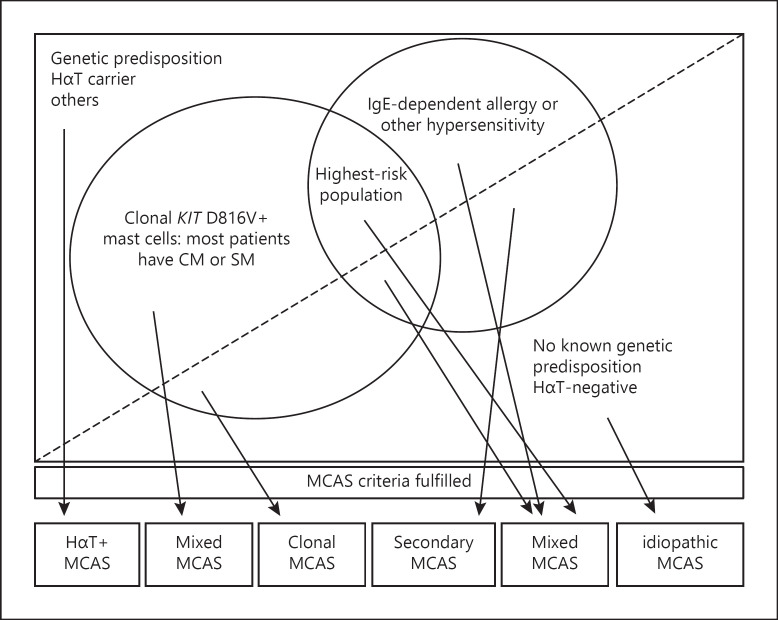
“Five different variants of MCAS are presently being recognized [3, 4]:”
BackgroundInfluentialTheoharides, T. C., Twahir, A., & Kempuraj, D. (2023) · Annals of Allergy Asthma & Immunology · doi:10.1016/j.anai.2023.10.032 · Cited by 60
Mast cell activation syndrome: Current understanding and research needs
Castells, M., Giannetti, M. P., Hamilton, M. J., Novak, P., Pozdnyakova, O., Nicoloro-SantaBarbara, J., Jennings, S. V., Francomano, C., Kim, B., Glover, S. C., et al. (2024) · Journal of Allergy and Clinical Immunology · doi:10.1016/j.jaci.2024.05.025 · Cited by 45
Self-citationSzukiewicz, D. (2023) · International Journal of Molecular Sciences · doi:10.3390/ijms241512195 · Cited by 45
Clonal mast cell disorders and hereditary α-tryptasemia as risk factors for anaphylaxis
Kačar, M., Rijavec, M., Šelb, J., & Korošec, P. (2023) · Clinical & Experimental Allergy · doi:10.1111/cea.14264 · Cited by 37
The Role of Mast Cells in the Induction and Maintenance of Inflammation in Selected Skin Diseases
Woźniak, E., Owczarczyk-Saczonek, A. B., Lange, M., Czarny, J. H., Wygonowska, E., Placek, W. J., & Nedoszytko, B. (2023) · International Journal of Molecular Sciences · doi:10.3390/ijms24087021 · Cited by 38
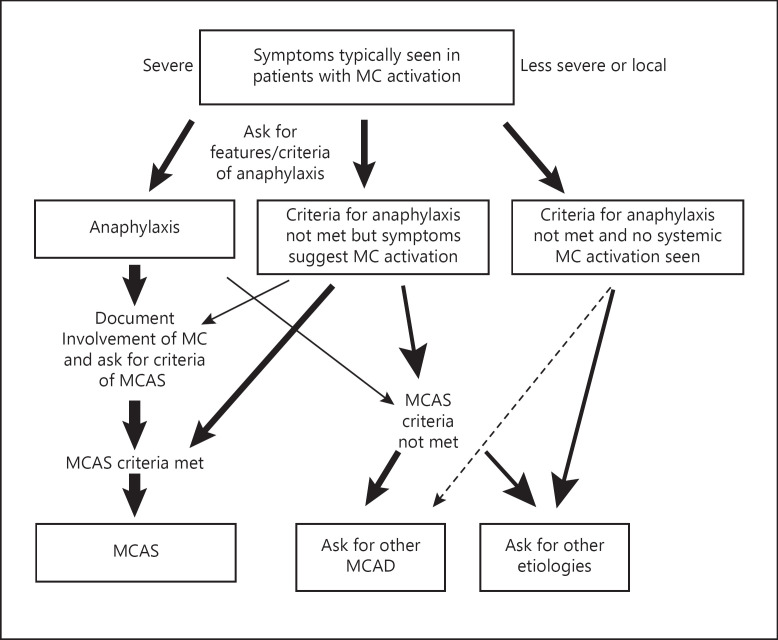
“Signs of MC activation may be local (flush, erythema, pruritus, urticaria, local angioedema, rhinitis, sneezing, cough, dyspnea, diarrhea) or systemic—mild (mild hypotension without shock, mild headache, cough, mild dyspnea, mild diarrhea, loose stool, nausea, and mild abdominal cramping), severe (anaphylactic shock,…”
BackgroundInfluentialSemmler, A., Mundorf, A. K., Kuechler, A. S., Schulze-Bosse, K., Heidecke, H., Schulze‐Forster, K., Schott, M., Uhrberg, M., Weinhold, S., Lackner, K. J., et al. (2023) · Vaccines · doi:10.3390/vaccines11111642 · Cited by 34
“…established multisystemic dysautonomia syndromes such as myalgic encephalomyelitis/chronic fatigue syndrome (ME/CFS) [6,7], postural orthostatic tachycardia syndrome (POTS) [8], fibromyal-gia/chronic pain syndrome [9], small fiber neuropathy (SFN) [10] and mast cell activation syndrome (MCAS) [11].”
BackgroundResultReview and updates on systemic mastocytosis and related entities
Li, J. Y., Ryder, C. B., Zhang, H., Cockey, S. G., Hyjek, E., Moscinski, L. C., Sagatys, E., & Song, J. (2023) · Cancers · doi:10.3390/cancers15235626 · Cited by 31
Mast cell activation: beyond histamine and tryptase
Theoharides, T. C., Perlman, A. I., Twahir, A., & Kempuraj, D. (2023) · Expert Review of Clinical Immunology · doi:10.1080/1744666x.2023.2200936 · Cited by 32
Systemic Mastocytosis and Other Entities Involving Mast Cells: A Practical Review and Update
Hussein, S. E., Chifotides, H. T., Khoury, J. D., Verstovšek, S., & Thakral, B. (2022) · Cancers · doi:10.3390/cancers14143474 · Cited by 33
“MCAS is characterized by systemic (involving more than one organ), severe, recurring mast cell activation, typically manifested as severe anaphylaxis (life-threatening events) [64].”
BackgroundClinical and Diagnostic Features of Post-Acute COVID-19 Vaccination Syndrome (PACVS)
Mundorf, A. K., Semmler, A., Heidecke, H., Schott, M., Steffen, F., Bittner, S., Lackner, K. J., Schulze-Bosse, K., Pawlitzki, M., Meuth, S. G., et al. (2024) · Vaccines · doi:10.3390/vaccines12070790 · Cited by 35
“Participants were assigned to ME/CSF, POTS, MCAS, or SFN when reporting more than the cohort average of related symptoms as specified in published guidelines [4,5,7,8] and/or when having been explicitly diagnosed with that syndrome by a physician.”
BackgroundMethodInfluentialZaghmout, T., Maclachlan, L., Bedi, N., & Gülen, T. (2024) · The Journal of Allergy and Clinical Immunology: In Practice · doi:10.1016/j.jaip.2023.11.041 · Cited by 23
Diagnostic Significance of Tryptase for Suspected Mast Cell Disorders
Beyens, M., Toscano, A., Ebo, D., Gülen, T., & Sabato, V. (2023) · Diagnostics · doi:10.3390/diagnostics13243662 · Cited by 22
Getting the BS out of Irritable Bowel Syndrome with Diarrhea (IBS-D): Let’s Make a Diagnosis
Frissora, C. L., & Schiller, L. R. (2023) · Current Gastroenterology Reports · doi:10.1007/s11894-023-00909-1 · Cited by 21
Mast cell activation syndrome: An up-to-date review of literature
Özdemır, Ö., Kasımoğlu, G., Bak, A., Sütlüoğlu, H., & Savaşan, S. (2024) · World Journal of Clinical Pediatrics · doi:10.5409/wjcp.v13.i2.92813 · Cited by 23
Diffuse Cutaneous Mastocytosis: A Current Understanding of a Rare Disease
Rydz, A., Lange, M., Ługowska‐Umer, H., Sikorska, M., Nowicki, R. J., Morales‐Cabeza, C., & Álvarez‐Twöse, I. (2024) · International Journal of Molecular Sciences · doi:10.3390/ijms25031401 · Cited by 18
Mast Cell Activation Syndrome Update—A Dermatological Perspective
Mihele, D., Nistor, P., Bruma, G., Mitran, C. I., Mitran, M. I., Condrat, C. E., Țovaru, M., Tampa, M. Ş., & Georgescu, S. R. (2023) · Journal of Personalized Medicine · doi:10.3390/jpm13071116 · Cited by 15
Navarro‐Navarro, P., González-Tablas, M., Pérez‐Pons, A., Sánchez‐Muñoz, L., Henriques, A., Álvarez‐Twöse, I., Nafria, P., Araco-Sánchez, D., Morales‐Cabeza, C., Caligaris, H., et al. (2025) · Blood · doi:10.1182/blood.2025029507 · Cited by 16
Systemic mastocytosis: 2023 update on diagnosis and management in adults
Costa, A. N., Scalzulli, E., Carmosino, I., Capriata, M., Ielo, C., Masucci, C., Passucci, M., Martelli, M., & Breccia, M. (2023) · Expert Opinion on Emerging Drugs · doi:10.1080/14728214.2023.2221028 · Cited by 14
“…the diagnosis of ‘Mast Cell Activation Syndrome’ (MCAS) can be made in presence of typical MCA-related symptoms involving at least two organ system, increased MC-derived mediators in serum (tryp-tase) or urine (histamine or prostaglandin-D2-metabolites) and symptoms response to treatment [10].”
BackgroundChallenges in Drug and Hymenoptera Venom Hypersensitivity Diagnosis and Management in Mastocytosis
Giannetti, M. P., Nicoloro‐SantaBarbara, J. M., Godwin, G., Middlesworth, J., Espeland, A., Douvas, J. L., & Castells, M. (2024) · Diagnostics · doi:10.3390/diagnostics14020123 · Cited by 14
Mast cells: The unregulated master immune response conductor
Theoharides, T. C. (2024) · Allergy medicine. · doi:10.1016/j.allmed.2024.100003 · Cited by 11
Immune function of colon cancer associated miRNA and target genes
Han, L., Chen, S., Luan, Z., Fan, M., Wang, Y., Sun, G., & Dai, G. (2023) · Frontiers in Immunology · doi:10.3389/fimmu.2023.1203070 · Cited by 10
“cell activation in colorectal cancer is not fully understood (49).”
BackgroundHoermann, G., Orfao, A., Lyons, J. J., Chantran, Y., Broesby‐Olsen, S., Sabato, V., & Arock, M. (2025) · The Journal of Allergy and Clinical Immunology In Practice · doi:10.1016/j.jaip.2025.07.055 · Cited by 8
Self-citationPrevention of Anaphylaxis Episodes in Idiopathic Anaphylaxis by Omalizumab
Košnik, M., Zugan, L., & Rijavec, M. (2024) · International Archives of Allergy and Immunology · doi:10.1159/000538046 · Cited by 8
Progress in mast cell activation syndrome: the global consensus-2 diagnostic criteria at six years
Afrin, L. B., Blitshteyn, S., Bluestein, L. S., Dempsey, T. T., Maxwell, A. J., Miller, C. S., Nagy, È., Nugent, D. J., Schofield, J. R., Weinstock, L. B., et al. (2026) · Diagnosis · doi:10.1515/dx-2026-0016 · Cited by 7
González-Alvarez, F., Estañol, B., González-Hermosillo, J. A., Gomez-Perez, F. J., Tamez-Torres, K. M., Peña, E., Cantú, C., Chiquete, E., Sifuentes‐Osornio, J., Alba-Lorenzo, M. D. C., et al. (2024) · Journal of Hypertension · doi:10.1097/hjh.0000000000003669 · Cited by 6
“…from recurrent, acute, multiorgan mast cell activation are documented; mast cell mediators are increased in serum or urine from baseline; and remission of symptoms with pharmacological blockage of mast cell activation, mast cell mediators, mediator production, or their effects is achieved [11].”
BackgroundManagement of indolent mastocytosis and mast cell activation syndrome
Akin, C., Butterfield, J. H., Castells, M., & Lyons, J. J. (2025) · Annals of Allergy Asthma & Immunology · doi:10.1016/j.anai.2025.06.032 · Cited by 5
Pediatric idiopathic anaphylaxis: practical management from infants to adolescents
Mori, F., Saretta, F., Giovannini, M., Gelsomino, M., Liotti, L., Barni, S., Mastrorilli, C., Pecoraro, L., Castagnoli, R., Arasi, S., et al. (2024) · The Italian Journal of Pediatrics/Italian journal of pediatrics · doi:10.1186/s13052-024-01712-y · Cited by 6
Hertz, D., Scorza, F. A., FIORINI, A. C., & Finsterer, J. (2023) · Clinics · doi:10.1016/j.clinsp.2023.100304 · Cited by 4
Tamasi, J., & Kalabay, L. (2025) · Journal of Clinical Medicine · doi:10.3390/jcm14020311 · Cited by 7
Moehnke, K. L., Kemp, J. V., Campbell, M. R., Singh, R. J., Tebo, A. E., & Maus, A. D. (2024) · Clinical Biochemistry · doi:10.1016/j.clinbiochem.2024.110745 · Cited by 3
Tissue‐Resident Myeloid and Histiocytic Cells in Health and Disease: Novel Emerging Concepts
Valent, P., Wojta, J., Kovanen, P. T., Hermine, O., Fend, F., Sotlar, K., Greinix, H., Geissler, K. H., Hartmann, K., Schwaab, J., et al. (2025) · American Journal of Hematology · doi:10.1002/ajh.70062 · Cited by 3
Self-citationDermatologic manifestations of hematologic disorders
King, H. L., Benedetti, G. B., Keller, J. J., DeLoughery, T. G., Shatzel, J. J., & Martens, K. L. (2024) · Annals of Hematology · doi:10.1007/s00277-024-05761-5 · Cited by 3
Rydz, A., & Lange, M. (2023) · Forum Dermatologicum · doi:10.5603/fd.96810 · Cited by 2
“In such cases, the risk of anaphylaxis and severe allergic reactions is heightened [7].”
InfluentialJunior, P. F. G.-B., Giavina-Bianchi, M., Morais-Almeida, M., Álvarez‐Twöse, I., Bernstein, J. A., Broesby‐Olsen, S., Castells, M., Gulen, T., Hartmann, K., Orfao, A., et al. (2026) · World Allergy Organization Journal · doi:10.1016/j.waojou.2026.101470 · Cited by 2
“15 , 16 MCAS is a distinct and clinically complex entity.”
Self-citationSerum tryptase and drug hypersensitivity: why, how and what? A systematic review
Klingebiel, C., Belhocine, W., & Vitte, J. (2023) · Current Opinion in Allergy and Clinical Immunology · doi:10.1097/aci.0000000000000916 · Cited by 2
Romantowski, J., Fabiańczyk, K., Skrzypkowska, M. W., Cubała, W. J., Trzonkowski, P., & Niedoszytko, M. (2025) · International Journal of Molecular Sciences · doi:10.3390/ijms26020529 · Cited by 2
Self-citationTočkova, O., Ručigaj, T. P., Ivančan, S., Bidovec‐Stojkovič, U., Rijavec, M., Šelb, J., & Korošec, P. (2025) · International Journal of Molecular Sciences · doi:10.3390/ijms26136023 · Cited by 1
Giannetti, M. P. (2026) · Current Allergy and Asthma Reports · doi:10.1007/s11882-026-01268-3 · Cited by 1
Biological diagnosis of hereditary alpha-tryptasemia
Chantran, Y. (2023) · Revue française d'allergologie · doi:10.1016/j.reval.2023.103299 · Cited by 3
Choi, K. S., Shin, T.-S., Ahn, G., Kim, S. H., Chun, J., Lee, M., Kim, D. H., Choi, H., Lee, K.-D., & Shim, S.-Y. (2023) · Journal of Microbiology and Biotechnology · doi:10.4014/jmb.2310.10015 · Cited by 1
“Among the substances, -hexosaminidase is a strong degranulation marker in allergic reactions [4, 7, 8].”
BackgroundSciumé, M., Serpenti, F., Zanotti, R., Bonadonna, P., Tanasi, I., Crosera, L., Elena, C., Mannelli, F., Crupi, F., Papayannidis, C., et al. (2024) · Hematological Oncology · doi:10.1002/hon.3277 · Cited by 1
Self-citationLa previsión del futuro en la empresa
de Aizpuru, M. A. T. (1987) · Dialnet (Universidad de la Rioja) · Cited by 2
Jiang, M., Lebovic, G., Hicks, L. K., Trinkaus, M. A., Nikonova, A., & Vadas, P. (2024) · Research Square · doi:10.21203/rs.3.rs-4356220/v1
Systemic mastocytosis - a common diagnosis for allergists and hematologists
Žemličková, M., & Kozák, T. (2024) · Vnitřní lékařství · doi:10.36290/vnl.2024.045
The role of tryptase in the human body: From normal to pathology
Lisiecka, M. Z. (2025) · Medicinski casopis · doi:10.5937/mckg59-55869
Dondolin, R., Maher, N., Andorno, A., Sayedi, S. M., Nawabi, M. R., Patriarca, A., Gaïdano, G., & Moia, R. (2025) · Hematology Reports · doi:10.3390/hematolrep17060064
“The rarity and the overlapping definitions of mast cell disorders make this case a diagnostic challenge, with a substantial risk of under-or overdiagnosis [5,7].”
InfluentialPlatzgummer, S., SIPMeL, A. N. D. G.-A., Onida, R., Bruno, L., Caponi, L., Anzivino, P., Conte, M., ZANONI, G., Ghisellini, S., Deleonardi, G., et al. (2026) · La Rivista Italiana della Medicina di Laboratorio - Italian Journal of Laboratory Medicine · doi:10.23736/s1825-859x.25.00312-3
Smoluchowski, K., Szymański, M., Skiba, M. M., & Piasecka, M. (2026) · American Journal of Case Reports · doi:10.12659/ajcr.951085
“MCAS refers to a heterogeneous group of disorders characterized by severe, generalized, and recurrent symptoms resulting from the release of inflammatory mediators from mast cells [12].”
Mast Cell Activation Syndrome and Mimickers
Ahn, C., Calle, C. A. G., & Bernstein, J. A. (2026) · Immunology and Allergy Clinics of North America · doi:10.1016/j.iac.2026.01.014
Analysis of CCL2 chemokine vesicular trafficking and secretion in FceRI-activated mast cells
Montero-Hernández, J. E. (2024) · theses.fr (ABES) · doi:10.70675/2ac26cf8z79a0z40e3za84az4dd2962e34da
Post-Exertional Malaise in Post-COVID-19 Syndrome: A Shift in the Frequency Across Pandemic Phases
Ghali, A., Lavigne, C., Ghali, M., & Lacombe, V. (2026) · Journal of Clinical Medicine · doi:10.3390/jcm15082948
Cheng, A. M. S., Ali, A., LiVecchi, J. T., Mair, H., Yang, E. S., & Guevara, J. G. (2026) · American Journal of Ophthalmology Case Reports · doi:10.1016/j.ajoc.2026.102588
Katran, Z. Y., Argın, Ö., Erdem, S., & Bulut, İ. (2026) · Advances in Dermatology and Allergology · doi:10.5114/ada.2026.162040
“More recently, a comprehensive update by the Collegium Internationale Allergologi-cum (CIA) published in 2022 provided a refined and widely accepted classification and diagnostic framework for mast cell activation syndromes [5].”
InfluentialMast cell activation disorders: mechanisms, comorbidities and look-alike
Theoharides, T. C., Kempuraj, D., & Maitland, A. L. (2026) · Expert Review of Clinical Immunology · doi:10.1080/1744666x.2026.2699311
“The contribution of MCs in normal and pathological processes has been discussed not only in allergic diseases [15,16,281] and SM [8,127,282] but also in non-allergic conditions [15], especially inflammatory [16,18], neuroinflammatory [17,142] and neuropsychiatric [175] disorders.”
Karpinska-Leydier, K., & Greene, J. (2026) · Infectious Diseases in Clinical Practice · doi:10.1097/ipc.0000000000001645
The Role of Mast Cells and Their Potential as a Therapeutic Target For Neuroinflammation
Scuderi, S. A., Basilotta, R., Cucinotta, L., Ardizzone, A., & Esposito, E. (2026) · Journal of Inflammation Research · doi:10.2147/jir.s540890
“32 By contrast, secondary MCAS is generally driven by IgE-dependent or other immunological stimuli without an underlying clonal mast cell disorder, whereas in idiopathic MCAS no specific trigger or clonal abnormality is identified.”
O ESPECTRO DA HIPERMOBILIDADE: hEDS, HSD, POTS E SAMC
de Moraes, M. E. F., de Moraes, F. B., & de Camargo, F. L. (2026) · doi:10.68564/conexao.2026.002.15
Metadata
- Authors
- Valent, P., Hartmann, K., Bonadonna, P., Niedoszytko, M., Triggiani, M., Arock, M., & Brockow, K.
- Affiliations
- Ludwig Boltzmann Institute for Hematology and Oncology (AT)
- University of Basel (CH)
- Azienda Ospedaliera Universitaria Integrata Verona (IT)
- Gdańsk Medical University (PL)
- University of Salerno (IT)
- Pitié-Salpêtrière Hospital (FR)
- Helmholtz Munich (DE)
- Corresponding author
- Valent, Peter
- ORCID
- Venue
- International Archives of Allergy and Immunology
- Publisher
- S. Karger AG
- Published
- 2022
- Volume
- 183
- Issue
- 7
- Pages
- 693-705
- ISSN
- 1018-2438 (ISSN-L)
- 1423-0097
- PMC
- PMC9393812
- OpenAlex
- W4281392104
- Cited by
- 55
- References
- 104
- Citations by year
- 2026: 9 · 2025: 9 · 2024: 14 · 2023: 19 · 2022: 3
- FWCI
- 4.30
- Type
- journal article
- Language
- en
- Open access
- hybrid
- doi.org
- Licence
- cc-by-nc
- creativecommons.org/licenses/by-nc/4.0/ (vor)
- creativecommons.org/licenses/by-nc/4.0/ (tdm)
- Locations
- International Archives of Allergy and Immunology (publishedVersion, cc-by-nc)
- PubMed Central (publishedVersion, cc-by-nc)
- PubMed (publishedVersion)
- mediaTUM – the media and publications repository of the Technical University Munich (Technical University Munich) (submittedVersion)
- mediaTUM – the media and publications repository of the Technical University Munich (Technical University Munich) (submittedVersion, other-oa)
- PuSH - Publication Server of Helmholtz Zentrum München (submittedVersion, cc-by-nc)
- Topics
- Life Sciences › Immunology and Microbiology › Immunology › Mast cells and histamine
- Health Sciences › Medicine › Immunology and Allergy › Food Allergy and Anaphylaxis Research
- Health Sciences › Medicine › Pharmacology (medical) › Drug-Induced Adverse Reactions
- Keywords
- mast cell activation syndrome, anaphylaxis, serum tryptase, hereditary alpha-tryptasemia, mastocytosis, KIT mutations, atopy, IgE-dependent allergy, comorbidities, diagnostic criteria, mast cell stabilizers, personalized treatment
- MeSH terms
- Mast Cell Activation Syndrome, Anaphylaxis, Humans, Immunoglobulin E, Mast Cells, Mastocytosis, Quality of Life, Tryptases
About these checks
Registry, retraction, Cites and statistics results are computed, not judged, with one exception: a printed reference that no index lists is read once by a model before it counts as a citation error. Claims are extracted by a model and kept only when their quote appears verbatim in the text; each cited source is then checked, with a model’s help, for whether it says what the claim relies on. Those verdicts can be wrong — read the claim’s quote and the cited source before relying on one.
Statistics and arithmetic are recomputed, not judged.
Confidence bands are shown only for fields calibrated on our annotated test set. None is calibrated yet, so no band is shown.
What counts as a claim ›How we measure confidence ›How we check this ›
Are you an author, or do you see a problem with this page? Request a review
Data sources
Bibliographic data: Semantic Scholar, OpenAlex, Crossref.
Contains information from the Semantic Scholar Academic Graph Datasets, made available under the ODC Attribution License (ODC-BY 1.0).
Semantic Scholar’s data is described in: Kinney, R., et al. (2023). The Semantic Scholar Open Data Platform. arXiv:2301.10140.
