

The DOI matches its Crossref record; 74 of the 74 references it cites were found in a registry or an index.
Methodological Rigor in Preclinical Cardiovascular Studies: Targets to Enhance Reproducibility and Promote Research Translation
Open accessAbstract
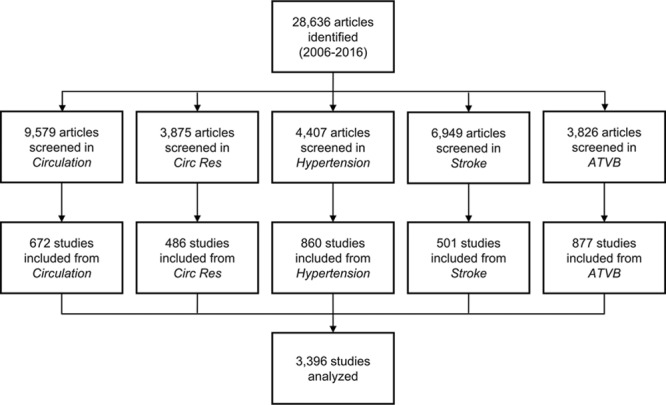
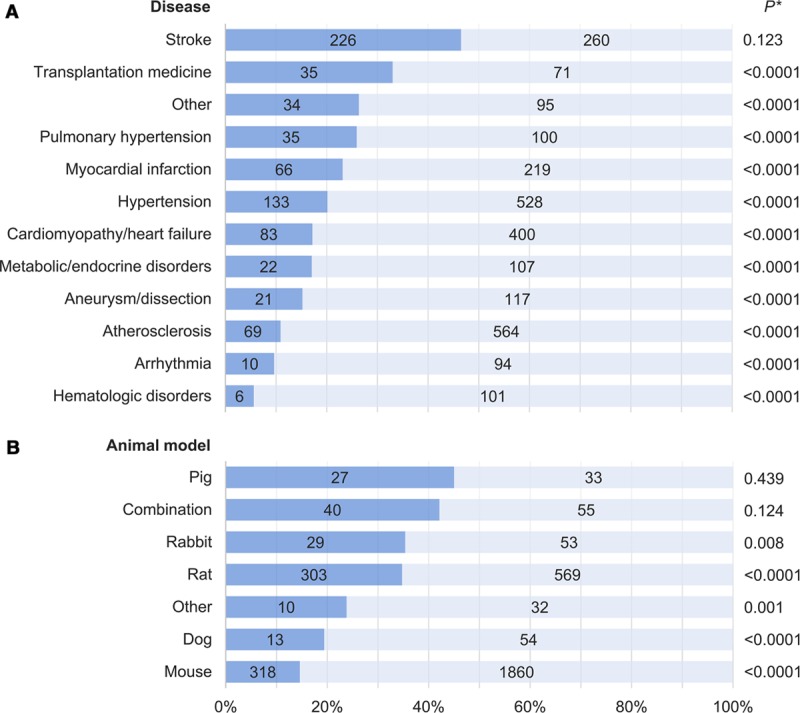
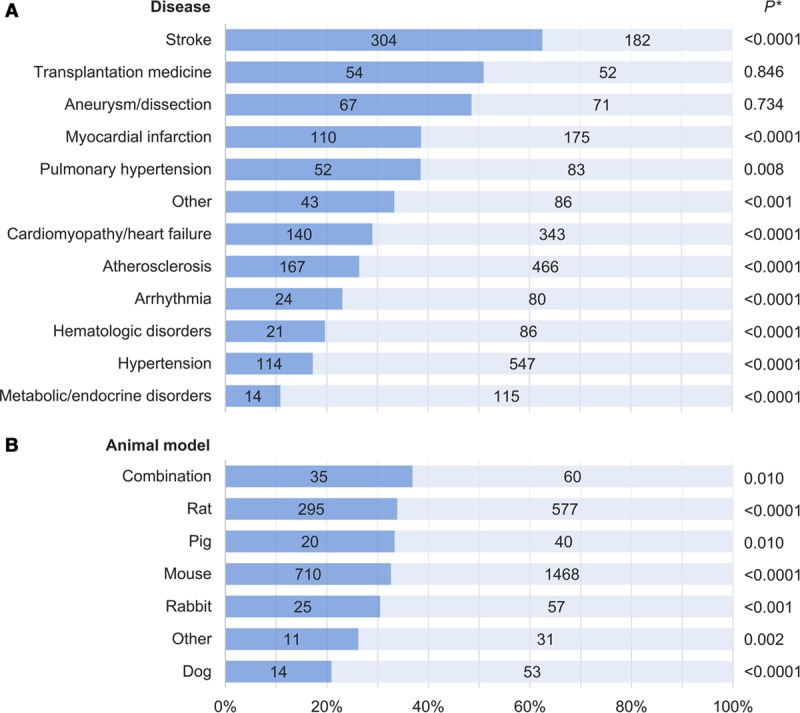
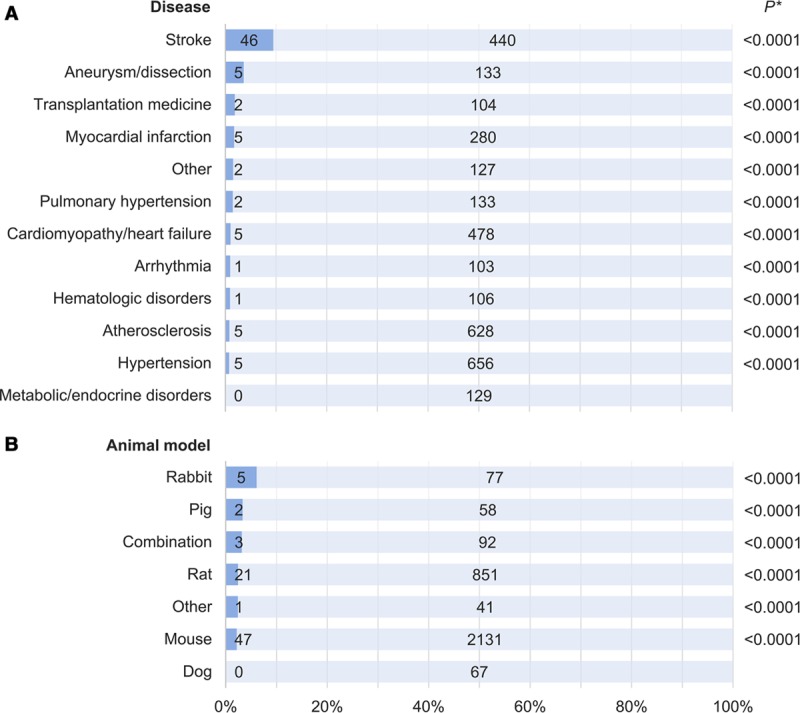
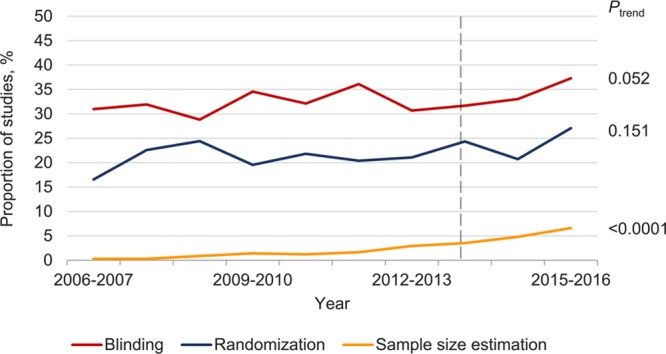
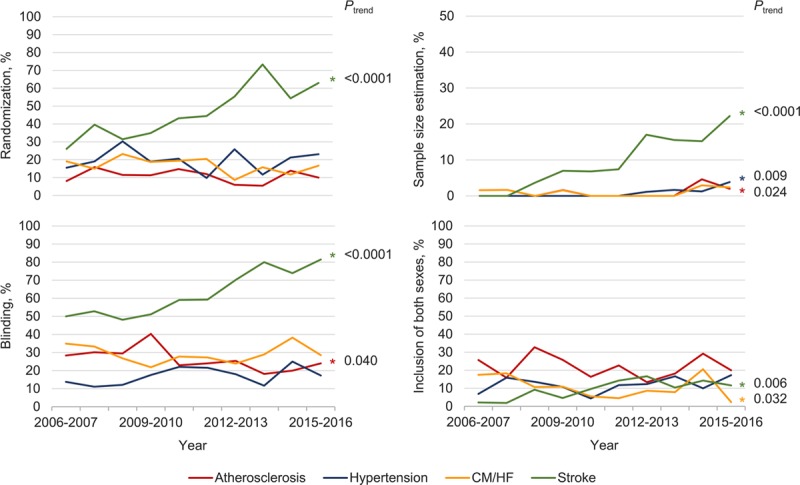
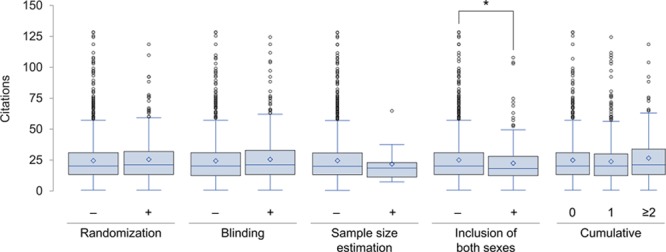
Rationale: Methodological sources of bias and suboptimal reporting contribute to irreproducibility in preclinical science and may negatively affect research translation. Randomization, blinding, sample size estimation, and considering sex as a biological variable are deemed crucial study design elements to maximize the quality and predictive value of preclinical experiments. Objective: To examine the prevalence and temporal patterns of recommended study design element implementation in preclinical cardiovascular research. Methods and Results: All articles published over a 10-year period in 5 leading cardiovascular journals were reviewed. Reports of in vivo experiments in nonhuman mammals describing pathophysiology, genetics, or therapeutic interventions relevant to specific cardiovascular disorders were identified. Data on study design and animal model use were collected. Citations at 60 months were additionally examined as a surrogate measure of research impact in a prespecified subset of studies, stratified by individual and cumulative study design elements. Of 28 636 articles screened, 3396 met inclusion criteria. Randomization was reported in 21.8%, blinding in 32.7%, and sample size estimation in 2.3%. Temporal and disease-specific analyses show that the implementation of these study design elements has overall not appreciably increased over the past decade, except in preclinical stroke research, which has uniquely demonstrated significant improvements in methodological rigor. In a subset of 1681 preclinical studies, randomization, blinding, sample size estimation, and inclusion of both sexes were not associated with increased citations at 60 months. Conclusions: Methodological shortcomings are prevalent in preclinical cardiovascular research, have not substantially improved over the past 10 years, and may be overlooked when basing subsequent studies. Resultant risks of bias and threats to study validity have the potential to hinder progress in cardiovascular medicine as preclinical research often precedes and informs clinical trials. Stroke research quality has uniquely improved in recent years, warranting a closer examination for interventions to model in other cardiovascular fields.
Overview
The claims and statistics of this paper haven’t been checked yet.
Run the check — free, no account needed. It reads the open-access text and checks the sources it cites.
Integrity signals
Registry
Cites
Statistics
Figures
Verification
Claims the paper makes
The claims and statistics of this paper haven’t been checked yet.
Run the check — free, no account needed. It reads the open-access text and checks the sources it cites.
Claims other papers make about this one
Each is checked against this paper’s own text: does it say what the citing paper says it does?
The cited source says what the claim attributes to it.
In the citing paper
“In contrast, other studies using shorter checklists (primarily focused on experimental design) with more editorial follow-up have shown a marked improvement in the nature and detail of the information included in publications [34–36].”
From The ARRIVE guidelines 2.0: Updated guidelines for reporting animal research (2020) · cites this paper as [36]
Self-check
Percentages, sums and reported differences re-computed from the paper’s own numbers.
The self-check needs the paper’s full text.
Citations
Cites
Why Most Published Research Findings Are False
Ioannidis, J. P. A. (2005) · PLoS Medicine · doi:10.1371/journal.pmed.0020124 · Cited by 10,505
A simulation study of the number of events per variable in logistic regression analysis
Peduzzi, P., Concato, J., Kemper, E., Holford, T. R., & Feinstein, A. R. (1996) · Journal of Clinical Epidemiology · doi:10.1016/s0895-4356(96)00236-3 · Cited by 9,655
Improving Bioscience Research Reporting: The ARRIVE Guidelines for Reporting Animal Research
Kilkenny, C., Browne, W. J., Cuthill, I. C., Emerson, M., & Altman, D. G. (2010) · PLoS Biology · doi:10.1371/journal.pbio.1000412 · Cited by 7,300
Improving bioscience research reporting: The ARRIVE guidelines for reporting animal research
Kilkenny, C., Browne, W. J., Cuthill, I. C., Emerson, M., & Altman, D. G. (2010) · Journal of Pharmacology and Pharmacotherapeutics · doi:10.4103/0976-500x.72351 · Cited by 6,277
Why Most Published Research Findings Are False
Ioannidis, J. P. A. (2005) · CHANCE · doi:10.1080/09332480.2005.10722754 · Cited by 4,702 · cited 1×
“portending a waning confidence in animal model data to identify promising therapeutic targets.(5,7,11,12,22,23) Cardiovascular research and development, in particular, has fared poorly in recent years relative to other disease categories, exhibiting the greatest decline as a percentage of total projects(4) and among t…”
SYRCLE’s risk of bias tool for animal studies
Hooijmans, C. R., Rovers, M. M., de Vries, R. B., Leenaars, M., Ritskes-Hoitinga, M., & Langendam, M. W. (2014) · BMC Medical Research Methodology · doi:10.1186/1471-2288-14-43 · Cited by 4,415
1,500 scientists lift the lid on reproducibility
Baker, M. (2016) · Nature · doi:10.1038/533452a · Cited by 4,209
Raise standards for preclinical cancer research
Begley, C. G., & Ellis, L. M. (2012) · Nature · doi:10.1038/483531a · Cited by 2,979 · cited 5×
“portending a waning confidence in animal model data to identify promising therapeutic targets.(5,7,11,12,22,23) Cardiovascular research and development, in particular, has fared poorly in recent years relative to other disease categories, exhibiting the greatest decline as a percentage of total projects(4) and among t…”
InfluentialClinical development success rates for investigational drugs
Hay, M., Thomas, D. W., Craighead, J. L., Economides, C., & Rosenthal, J. (2014) · Nature Biotechnology · doi:10.1038/nbt.2786 · Cited by 2,536 · cited 1×
“Cardiovascular research and development, in particular, has fared poorly in recent years relative to other disease categories, exhibiting the greatest decline as a percentage of total projects(4) and among the lowest success rates and likelihood of approval at all phases of clinical trials.(24) Moreover, research and…”
Peduzzi, P., Concato, J., Feinstein, A. R., & Holford, T. R. (1995) · Journal of Clinical Epidemiology · doi:10.1016/0895-4356(95)00048-8 · Cited by 2,154
Believe it or not: how much can we rely on published data on potential drug targets?
Prinz, F., Schlange, T., & Asadullah, K. (2011) · Nature Reviews Drug Discovery · doi:10.1038/nrd3439-c1 · Cited by 1,888 · cited 2×
“portending a waning confidence in animal model data to identify promising therapeutic targets.(5,7,11,12,22,23) Cardiovascular research and development, in particular, has fared poorly in recent years relative to other disease categories, exhibiting the greatest decline as a percentage of total projects(4) and among t…”
Empirical evidence of design-related bias in studies of diagnostic tests.
Lijmer, J. G. (1999) · JAMA · doi:10.1001/jama.282.11.1061 · Cited by 1,861
Policy: NIH to balance sex in cell and animal studies
Clayton, J. A., & Collins, F. S. (2014) · Nature · doi:10.1038/509282a · Cited by 1,816 · cited 2×
“logical variable in applications for preclinical research funding.(26) These principles and guidelines have been endorsed by prominent academic societies, associations, and journals, including all American Heart Association (AHA) journals,(25) with evidence of editorial commitment to complying.”
Sex bias in neuroscience and biomedical research
Beery, A. K., & Zucker, I. (2011) · Neuroscience & Biobehavioral Reviews · doi:10.1016/j.neubiorev.2010.07.002 · Cited by 1,763
Increasing value and reducing waste in research design, conduct, and analysis
Ioannidis, J. P. A., Greenland, S., Hlatky, M. A., Khoury, M. J., Macleod, M. R., Moher, D., Schulz, K. F., & Tibshirani, R. (2014) · The Lancet · doi:10.1016/s0140-6736(13)62227-8 · Cited by 1,597
1,026 Experimental treatments in acute stroke
O’Collins, V. E., Macleod, M. R., Donnan, G. A., Horky, L. L., van der Worp, H. B., & Howells, D. W. (2006) · Annals of Neurology · doi:10.1002/ana.20741 · Cited by 1,453
Can Animal Models of Disease Reliably Inform Human Studies?
van der Worp, H. B., Howells, D. W., Sena, E. S., Porritt, M. J., Rewell, S., O'Collins, V., & Macleod, M. R. (2010) · PLoS Medicine · doi:10.1371/journal.pmed.1000245 · Cited by 1,354 · cited 2×
“The high degree of experimental control that is possible in preclinical research (eg, via genetic and environmental homogeneity) can reduce variation and the sample sizes required relative to clinical trials; however, variations in injury or disease induction and the potential for persistent and unrecognized confounde…”
Update of the Stroke Therapy Academic Industry Roundtable Preclinical Recommendations
Fisher, M., Feuerstein, G., Howells, D. W., Hurn, P. D., Kent, T. A., Savitz, S. I., & Lo, E. H. (2009) · Stroke · doi:10.1161/strokeaha.108.541128 · Cited by 1,352
Reducing waste from incomplete or unusable reports of biomedical research
Glasziou, P., Altman, D. G., Bossuyt, P., Boutron, I., Clarke, M., Julious, S., Michie, S., Moher, D., & Wager, E. (2014) · The Lancet · doi:10.1016/s0140-6736(13)62228-x · Cited by 1,319 · cited 1×
“Several guidelines and checklists have been developed to improve preclinical methodology(45,58,59) and reporting, yet there is little indication that they are effecting change despite being widely endorsed.(43,58,63) Systematic reviews and meta-analyses have been advocated as safeguards to expose bias in preclinical r…”
Recommendations for Standards Regarding Preclinical Neuroprotective and Restorative Drug Development
Roundtable, S. T. A. I. (1999) · Stroke · doi:10.1161/01.str.30.12.2752 · Cited by 1,256
Policy: NIH plans to enhance reproducibility
Collins, F. S., & Tabak, L. A. (2014) · Nature · doi:10.1038/505612a · Cited by 1,247
A call for transparent reporting to optimize the predictive value of preclinical research
Landis, S. C., Amara, S. G., Asadullah, K., Austin, C. P., Blumenstein, R., Bradley, E. W., Crystal, R. G., Darnell, R. B., Ferrante, R. J., Fillit, H., et al. (2012) · Nature · doi:10.1038/nature11556 · Cited by 1,196 · cited 5×
“portending a waning confidence in animal model data to identify promising therapeutic targets.(5,7,11,12,22,23) Cardiovascular research and development, in particular, has fared poorly in recent years relative to other disease categories, exhibiting the greatest decline as a percentage of total projects(4) and among t…”
InfluentialThe economics of reproducibility in preclinical research
Freedman, L. P., Cockburn, I. M., & Simcoe, T. S. (2015) · PLOS Biology · doi:10.1371/journal.pbio.1002165 · Cited by 1,055 · cited 1×
“The suggestion that methodologically robust studies are given equal consideration as studies at greater risk of bias by cardiovascular researchers is troubling as it undermines the reputed “self-correcting” tenet of science and increases the risk of pursuing unfruitful avenues of research.(2,5,44,48) Cogent analyses a…”
Savović, J., Jones, H. E., Altman, D. G., Harris, R. J., Jüni, P., Pildal, J., Als-Nielsen, B., Balk, E. M., Gluud, C., Gluud, L. L., et al. (2012) · Annals of Internal Medicine · doi:10.7326/0003-4819-157-6-201209180-00537 · Cited by 1,049
Reproducibility in Science: Improving the Standard for Basic and Preclinical Research
Begley, C. G., & Ioannidis, J. P. A. (2015) · Circulation Research · doi:10.1161/circresaha.114.303819 · Cited by 1,035 · cited 5×
“However, evidence of changes in research practice and data on the impact of corrective actions are scarce.(13) Several guidelines and checklists have been developed to improve preclinical methodology(45,58,59) and reporting, yet there is little indication that they are effecting change despite being widely endorsed.”
InfluentialThe productivity crisis in pharmaceutical R&D
Pammolli, F., Magazzini, L., & Riccaboni, M. (2011) · Nature Reviews Drug Discovery · doi:10.1038/nrd3405 · Cited by 918 · cited 3×
“opment productivity has declined with decreasing numbers of medications approved, increasing attrition rates at all stages of research, and lengthening development times despite rising expenditures.(4) This decline has been attributed, in part, to flawed preclinical research methodology, highlighting the importance of…”
Kilkenny, C., Parsons, N., Kadyszewski, E., Festing, M. F. W., Cuthill, I. C., Fry, D., Hutton, J., & Altman, D. G. (2009) · PLoS ONE · doi:10.1371/journal.pone.0007824 · Cited by 860
Comparison of Treatment Effects between Animal Experiments and Clinical Trials: Systematic Review
Perel, P., Roberts, I., Sena, E., Wheble, P., Briscoe, C., Sandercock, P., Macleod, M., Mignini, L. E., Jayaram, P., & Khan, K. S. (2007) · BMJ · doi:10.1136/bmj.39048.407928.be · Cited by 827
Kulkarni, A. V. (2009) · JAMA · doi:10.1001/jama.2009.1307 · Cited by 821 · cited 1×
“Scopus was selected because it is the largest database available for citation analysis and retrieves a greater number of citations when compared with others.(38) Prespecified analyses of citations at 60 months after the index publication were performed, stratified by individual and cumulative study design elements and…”
Revised standards for statistical evidence
Johnson, V. E. (2013) · Proceedings of the National Academy of Sciences · doi:10.1073/pnas.1313476110 · Cited by 808
Concato, J., Peduzzi, P. N., Holford, T. R., & Feinstein, A. R. (1995) · Journal of Clinical Epidemiology · doi:10.1016/0895-4356(95)00510-2 · Cited by 797
How to Make More Published Research True
Ioannidis, J. P. A. (2014) · PLoS Medicine · doi:10.1371/journal.pmed.1001747 · Cited by 760
Pooling of Animal Experimental Data Reveals Influence of Study Design and Publication Bias
Macleod, M. R., O’Collins, T., Howells, D. W., & Donnan, G. A. (2004) · Stroke · doi:10.1161/01.str.0000125719.25853.20 · Cited by 734
Translation of Research Evidence From Animals to Humans
Hackam, D. G., & Redelmeier, D. A. (2006) · JAMA · doi:10.1001/jama.296.14.1731 · Cited by 733 · cited 1×
“portending a waning confidence in animal model data to identify promising therapeutic targets.(5,7,11,12,22,23) Cardiovascular research and development, in particular, has fared poorly in recent years relative to other disease categories, exhibiting the greatest decline as a percentage of total projects(4) and among t…”
Preclinical research: Make mouse studies work
Perrin, S. (2014) · Nature · doi:10.1038/507423a · Cited by 668
Evidence of bias and variation in diagnostic accuracy studies
Rutjes, A. W., Reitsma, J. B., Nisio, M. D., Smidt, N., van Rijn, J. C., & Bossuyt, P. M. (2006) · Canadian Medical Association Journal · doi:10.1503/cmaj.050090 · Cited by 623
Where is the evidence that animal research benefits humans?
Pound, P., Ebrahim, S. B. J., Sandercock, P. A., Bracken, M. B., & Roberts, I. (2004) · BMJ · doi:10.1136/bmj.328.7438.514 · Cited by 507
Design, power, and interpretation of studies in the standard murine model of ALS
Scott, S., Kranz, J. E., Cole, J., Lincecum, J. M., Thompson, K., Kelly, N., Bostrom, A., Theodoss, J., Al‐Nakhala, B. M., Vieira, F. G., et al. (2008) · Amyotrophic Lateral Sclerosis · doi:10.1080/17482960701856300 · Cited by 504
Why has the number of scientific retractions increased?
Steen, R. G., Casadevall, A., & Fang, F. C. (2013) · PLoS ONE · doi:10.1371/journal.pone.0068397 · Cited by 415 · cited 1×
“Given the possibility that certain publications may have garnered attention in the short-term but could have ultimately been disproven or deemed irreproducible, a sensitivity analysis of citation counts at 36 months was also undertaken as this time point approximates contemporary mean time-to-retraction.(39) Categoric…”
How can we improve the pre-clinical development of drugs for stroke?
Sena, E. S., van der Worp, H. B., Howells, D. W., & Macleod, M. R. (2007) · Trends in Neurosciences · doi:10.1016/j.tins.2007.06.009 · Cited by 367
Risk of bias in reports of in vivo research: a focus for improvement
Macleod, M. R., Lawson McLean, A., Kyriakopoulou, A., Serghiou, S., de Wilde, A., Sherratt, N., Hirst, T., Hemblade, R., Bahor, Z., Nunes-Fonseca, C., et al. (2015) · PLOS Biology · doi:10.1371/journal.pbio.1002273 · Cited by 358 · cited 1×
“deemed crucial to improving the quality of preclinical research by addressing selection bias (randomization); minimizing performance, detection, and attrition bias (blinding); ensuring adequate statistical power and the ethical use of animals (sample size estimation); and promoting research relevance for both men and…”
Studying both sexes: a guiding principle for biomedicine
Clayton, J. A. (2016) · The FASEB Journal · doi:10.1096/fj.15-279554 · Cited by 358 · cited 2×
“The suggestion that methodologically robust studies are given equal consideration as studies at greater risk of bias by cardiovascular researchers is troubling as it undermines the reputed “self-correcting” tenet of science and increases the risk of pursuing unfruitful avenues of research.(2,5,44,48) Cogent analyses a…”
Henderson, V. C., Kimmelman, J., Fergusson, D. A., Grimshaw, J., & Hackam, D. G. (2013) · PLoS Medicine · doi:10.1371/journal.pmed.1001489 · Cited by 331
Macleod, M. R., van der Worp, H. B., Sena, E. S., Howells, D. W., Dirnagl, U., & Donnan, G. A. (2008) · Stroke · doi:10.1161/strokeaha.108.515957 · Cited by 319 · cited 1×
“described candidate therapies that have advanced to testing in humans despite irreproducible or inconsistent results in animals.(8,20,21) Since the mid-1990s, pharmaceutical research and devel-”
Hooijmans, C. R., Leenaars, M., & Ritskes-Hoitinga, M. J. (2010) · Alternatives to Laboratory Animals · doi:10.1177/026119291003800208 · Cited by 311
Baker, D., Lidster, K., Sottomayor, A., & Amor, S. (2014) · PLoS Biology · doi:10.1371/journal.pbio.1001756 · Cited by 305
The need for randomization in animal trials: an overview of systematic reviews
Hirst, J. A., Howick, J., Aronson, J. K., Roberts, N., Perera, R., Koshiaris, C., & Heneghan, C. (2014) · PLoS ONE · doi:10.1371/journal.pone.0098856 · Cited by 294
Sex bias exists in basic science and translational surgical research
Yoon, D. Y., Mansukhani, N. A., Stubbs, V. C., Helenowski, I. B., Woodruff, T. K., & Kibbe, M. R. (2014) · Surgery · doi:10.1016/j.surg.2014.07.001 · Cited by 270
Getting pharmaceutical R&D back on target
Bunnage, M. E. (2011) · Nature Chemical Biology · doi:10.1038/nchembio.581 · Cited by 269 · cited 3×
“portending a waning confidence in animal model data to identify promising therapeutic targets.(5,7,11,12,22,23) Cardiovascular research and development, in particular, has fared poorly in recent years relative to other disease categories, exhibiting the greatest decline as a percentage of total projects(4) and among t…”
Announcement: Reducing our irreproducibility
(2013) · Nature · doi:10.1038/496398a · Cited by 243
Distinguishing between exploratory and confirmatory preclinical research will improve translation
Kimmelman, J., Mogil, J. S., & Dirnagl, U. (2014) · PLoS Biology · doi:10.1371/journal.pbio.1001863 · Cited by 236 · cited 2×
“These criteria are consistent with previously proposed definitions of preclinical (“confirmatory” or “proof-of-concept”) experiments.(7,30,31) CVDs of interest included atherosclerosis or vascular homeostasis, arterial aneurysms or dissections, myocardial infarction, valvular disease, cardiomyopathy or heart failure,…”
Empirical Evidence of Bias in the Design of Experimental Stroke Studies
Crossley, N. A., Sena, E. S., Göhler, J., Horn, J., van der Worp, H. B., Bath, P. M., Macleod, M. R., & Dirnagl, U. (2008) · Stroke · doi:10.1161/strokeaha.107.498725 · Cited by 235
Nimodipine in Animal Model Experiments of Focal Cerebral Ischemia
Horn, J., de Haan, R. J., Vermeulen, M., Luiten, P. G. M., & Limburg, M. (2001) · Stroke · doi:10.1161/hs1001.096009 · Cited by 231 · cited 2×
“but also may result in erroneous conclusions regarding the treatment effects,(9,21,23,45,46) which can ultimately spur or deter clinical trials in humans with consequent risk of harm.(12,20,47)”
Six red flags for suspect work
Begley, C. G. (2013) · Nature · doi:10.1038/497433a · Cited by 230
Are Peer Reviewers Encouraged to Use Reporting Guidelines? A Survey of 116 Health Research Journals
Hirst, A., & Altman, D. G. (2012) · PLoS ONE · doi:10.1371/journal.pone.0035621 · Cited by 200 · cited 1×
“Journal editors and reviewers directly influence what is published thereby often serving as ultimate gatekeepers of research findings; yet, few journals effectively encourage the use of reporting guidelines.(67) At the time of writing, there exists considerable variation in author guidelines for reporting animal studi…”
Incongruence between test statistics and P values in medical papers
García-Berthou, E., & Alcaraz, C. (2004) · BMC Medical Research Methodology · doi:10.1186/1471-2288-4-13 · Cited by 181
Systematic Review and Metaanalysis of the Efficacy of FK506 in Experimental Stroke
Macleod, M. R., O’Collins, T., Horky, L. L., Howells, D. W., & Donnan, G. A. (2005) · Journal of Cerebral Blood Flow & Metabolism · doi:10.1038/sj.jcbfm.9600064 · Cited by 176
Systematic reviews of animal experiments
Sandercock, P. A., & Roberts, I. (2002) · The Lancet · doi:10.1016/s0140-6736(02)09812-4 · Cited by 157
How to make more published research true
Ioannidis, J. P. A. (2015) · Acimed · Cited by 115
Whole animal experiments should be more like human randomized controlled trials
Muhlhausler, B. S., Bloomfield, F. H., & Gillman, M. W. (2013) · PLoS Biology · doi:10.1371/journal.pbio.1001481 · Cited by 105 · cited 1×
“deemed crucial to improving the quality of preclinical research by addressing selection bias (randomization); minimizing performance, detection, and attrition bias (blinding); ensuring adequate statistical power and the ethical use of animals (sample size estimation); and promoting research relevance for both men and…”
Systematic Reviews of Animal Studies; Missing Link in Translational Research?
van Luijk, J. A. K. R., Bakker, B., Rovers, M. M., Ritskes-Hoitinga, M. J., de Vries, R. B. M., & Leenaars, M. (2014) · PLoS ONE · doi:10.1371/journal.pone.0089981 · Cited by 92
Danthi, N. S., Wu, C. O., Shi, P., & Lauer, M. S. (2014) · Circulation Research · doi:10.1161/circresaha.114.302656 · Cited by 82 · cited 1×
“Although article citation is the most commonly used measure of research impact, it is an imperfect indicator.(33,34) Finally, study design elements may have been implemented but not reported, which could result in underestimates of their prevalence.”
Tzoulaki, I., Siontis, K. C., & Ioannidis, J. P. A. (2011) · BMJ · doi:10.1136/bmj.d6829 · Cited by 78
Ramirez, F. D., Motazedian, P., Jung, R. G., Santo, P. D., MacDonald, Z., Simard, T., Clancy, A. A., Russo, J. J., Welch, V. A., Wells, G. A., et al. (2017) · Circulation · doi:10.1161/circulationaha.116.026668 · Cited by 77
Self-citationA mouse’s house may ruin experiments
Reardon, S. (2016) · Nature · doi:10.1038/nature.2016.19335 · Cited by 63
Predicting Productivity Returns on Investment
Lauer, M. S., Danthi, N. S., Kaltman, J. R., & Wu, C. O. (2015) · Circulation Research · doi:10.1161/circresaha.115.306830 · Cited by 57
Kaltman, J. R., Evans, F. J., Danthi, N. S., Wu, C. O., DiMichele, D., & Lauer, M. S. (2014) · Circulation Research · doi:10.1161/circresaha.115.304766 · Cited by 51
Osherovich, L. Z. (2011) · Science-Business eXchange · doi:10.1038/scibx.2011.416 · Cited by 43 · cited 1×
“increasingly so among the lay public and the biopharmaceutical industry.(13,18) In 2011, Bayer HealthCare published an analysis of 67 in-house target identification and validation projects in the”
Reporting standards for preclinical studies of stroke therapy
Vahidy, F., Schäbitz, W.-R., Fisher, M., & Aronowski, J. (2016) · Stroke · doi:10.1161/strokeaha.116.013643 · Cited by 39 · cited 1×
“These principles and guidelines have been endorsed by prominent academic societies, associations, and journals, including all American Heart Association (AHA) journals,(25) with evidence of editorial commitment to complying.(27,28) However, there are limited data on the extent of suboptimal methodological rigor or inc…”
Poorly Cited Articles in Peer-Reviewed Cardiovascular Journals from 1997 to 2007
Ranasinghe, I., Shojaee, A., Bikdeli, B., Gupta, A., Chen, R., Ross, J. S., Masoudi, F. A., Spertus, J. A., Nallamothu, B. K., & Krumholz, H. M. (2015) · Circulation · doi:10.1161/circulationaha.114.015080 · Cited by 37 · cited 1×
“Although article citation is the most commonly used measure of research impact, it is an imperfect indicator.(33,34) Finally, study design elements may have been implemented but not reported, which could result in underestimates of their prevalence.”
Methodological Quality of Experimental Stroke Studies Published in the Stroke Journal
Minnerup, J., Zentsch, V., Schmidt, A., Fisher, M., & Schäbitz, W. (2015) · Stroke · doi:10.1161/strokeaha.115.011695 · Cited by 36
All Is Not Well in the World of Translational Research
Unger, E. F. (2007) · Journal of the American College of Cardiology · doi:10.1016/j.jacc.2007.04.067 · Cited by 30 · cited 3×
“These criteria are consistent with previously proposed definitions of preclinical (“confirmatory” or “proof-of-concept”) experiments.(7,30,31) CVDs of interest included atherosclerosis or vascular homeostasis, arterial aneurysms or dissections, myocardial infarction, valvular disease, cardiomyopathy or heart failure,…”
Daugherty, A., Hegele, R. A., Mackman, N., Rader, D. J., Schmidt, A. M., & Weber, C. (2016) · Arteriosclerosis Thrombosis and Vascular Biology · doi:10.1161/atvbaha.116.307906 · Cited by 15 · cited 1×
“These principles and guidelines have been endorsed by prominent academic societies, associations, and journals, including all American Heart Association (AHA) journals,(25) with evidence of editorial commitment to complying.(27,28) However, there are limited data on the extent of suboptimal methodological rigor or inc…”
Fabsitz, R. R., Papanicolaou, G., Sholinsky, P. D., Coady, S., Jaquish, C. E., Nelson, C. R., Olson, J. L., Puggal, M. A., Purkiser, K. L., Srinivas, P. R., et al. (2015) · Circulation · doi:10.1161/circulationaha.114.014147 · Cited by 5
Research works printed but not linked: 3
- Lehrer J. The truth wears off: Is there something wrong with the scientific method? The New Yorker. 2010.
- Freedman DH. Lies, damned lies, and medical science. The Atlantic. 2010.
- 10.1038/scibx.2011.1416 · DOI
Cited by
Sorted by citations
The ARRIVE guidelines 2.0: Updated guidelines for reporting animal research
Percie du Sert, N., Hurst, V., Ahluwalia, A., Alam, S., Avey, M. T., Baker, M., Browne, W. J., Clark, A., Cuthill, I. C., Dirnagl, U., et al. (2020) · PLOS Biology · doi:10.1371/journal.pbio.3000410 · Cited by 5,939
The ARRIVE guidelines 2.0: Updated guidelines for reporting animal research
du Sert, N. P., Hurst, V., Ahluwalia, A., Alam, S., Avey, M. T., Baker, M., Browne, W. J., Clark, A., Cuthill, I. C., Dirnagl, U., et al. (2020) · Experimental Physiology · doi:10.1113/ep088870 · Cited by 3,547
The ARRIVE guidelines 2.0: Updated guidelines for reporting animal research*
Percie du Sert, N., Hurst, V., Ahluwalia, A., Alam, S., Avey, M. T., Baker, M., Browne, W. J., Clark, A., Cuthill, I. C., Dirnagl, U., et al. (2020) · Journal of Cerebral Blood Flow & Metabolism · doi:10.1177/0271678x20943823 · Cited by 1,443
“34– 36 It is likely that the level of resource required from journals and editors currently prohibits the implementation of all the items of the ARRIVE guidelines.”
The ARRIVE guidelines 2.0: Updated guidelines for reporting animal research
du Sert, N. P., Hurst, V., Ahluwalia, A., Alam, S., Avey, M. T., Baker, M., Browne, W. J., Clark, A., Cuthill, I. C., Dirnagl, U., et al. (2020) · British Journal of Pharmacology · doi:10.1111/bph.15193 · Cited by 1,152
The ARRIVE guidelines 2019: updated guidelines for reporting animal researchPreprint
du Sert, N. P., Hurst, V., Ahluwalia, A., Alam, S., Avey, M. T., Baker, M., Browne, W. J., Clark, A., Cuthill, I. C., Dirnagl, U., et al. (2019) · bioRxiv (Cold Spring Harbor Laboratory) · doi:10.1101/703181 · Cited by 1,044
Metadata
- Authors
- Ramirez, F. D., Motazedian, P., Jung, R. G., Di Santo, P., MacDonald, Z. D., Moreland, R., Simard, T., Clancy, A. A., Russo, J. J., Welch, V. A., Wells, G. A., & Hibbert, B.
- Affiliations
- From the Division of Cardiology (F.D.R., P.M., R.G.J., P.D.S., T.S., J.J.R., B.H.), CAPITAL Research Group (F.D.R., P.M., R.G.J., P.D.S., Z.D.M.D., R.M., T.S., J.J.R., B.H.), Vascular Biology and Experimental Medicine Laboratory (R.G.J., T.S., B.H.), and Cardiovascular Research Methods Centre (G.A.W.), University of Ottawa Heart Institute, Ontario, Canada; and School of Epidemiology, Public Health and Preventive Medicine (F.D.R., V.A.W., G.A.W.), Department of Cellular and Molecular Medicine (R.G.J....
- Corresponding author
- Hibbert, Benjamin
- ORCID
- Venue
- Circulation Research
- Published
- 2017-06-09
- Volume
- 120
- Issue
- 12
- Pages
- 1916-1926
- ISSN
- 0009-7330 (ISSN-L)
- 1524-4571
- PMC
- PMC5466021
- OpenAlex
- W2604920686
- Cited by
- 138
- References
- 74
- Citations by year
- 2026: 4 · 2025: 5 · 2024: 11 · 2023: 12 · 2022: 16 · 2021: 17 · 2020: 22 · 2019: 18 · 2018: 25 · 2017: 8
- FWCI
- 31.58
- Type
- journal article
- Language
- en
- Open access
- hybrid
- doi.org
- Licence
- cc-by-nc-nd
- Locations
- Circulation Research (publishedVersion, cc-by-nc-nd)
- Europe PMC (PubMed Central) (publishedVersion, other-oa)
- PubMed Central (publishedVersion, cc-by-nc-nd)
- PubMed (publishedVersion)
- Topics
- Health Sciences › Veterinary › Small Animals › Animal testing and alternatives
- Social Sciences › Decision Sciences › Statistics, Probability and Uncertainty › Meta-analysis and systematic reviews
- Social Sciences › Library and Information Sciences › Academic Publishing and Open Access
- Keywords
- methodological quality, randomization, blinding, sample size determination, sex as a biological variable, research bias, irreproducibility, citation impact, animal models, stroke research, research translation
- MeSH terms
- Animals, Cardiovascular Diseases, Disease Models, Animal, Drug Evaluation, Preclinical, Humans, Research Design, Reproducibility of Results, Translational Research, Biomedical
About these checks
Registry, retraction, Cites and statistics results are computed, not judged, with one exception: a printed reference that no index lists is read once by a model before it counts as a citation error. Claims are extracted by a model and kept only when their quote appears verbatim in the text; each cited source is then checked, with a model’s help, for whether it says what the claim relies on. Those verdicts can be wrong — read the claim’s quote and the cited source before relying on one.
Statistics and arithmetic are recomputed, not judged.
Confidence bands are shown only for fields calibrated on our annotated test set. None is calibrated yet, so no band is shown.
What counts as a claim ›How we measure confidence ›How we check this ›
Are you an author, or do you see a problem with this page? Request a review
