

The DOI matches its Crossref record; 56 of the 56 references it cites were found in a registry or an index; none of the 75 sources its claims cite is checked for support yet.
Gut Microbiota Metabolites and Risk of Major Adverse Cardiovascular Disease Events and Death: A Systematic Review and Meta‐Analysis of Prospective Studies
Open accessAbstract
Background: Gut microbial metabolites have been implicated as novel risk factors for cardiovascular events and premature death. The strength and consistency of associations between blood concentrations of the gut microbial metabolites, trimethylamine‐N‐oxide ( TMAO ) and its precursors, with major adverse cardiovascular events ( MACE ) or death have not been comprehensively assessed. We quantified associations of blood concentrations of TMAO and its precursors with risks of MACE and mortality. Methods and Results: PubMed and Embase databases were searched up, and a total of 19 prospective studies from 16 publications (n=19 256, including 3315 incident cases) with quantitative estimates of the associations of TMAO with the development of MACE or death were included in our main analysis. Multivariate‐adjusted relative risks ( RR s) were used when these were available. Elevated concentrations of TMAO were associated with a pooled RR of 1.62 (95% CI, 1.45, 1.80; P heterogeneity =0.2; I 2 =23.5%) for MACE compared with low TMAO levels, and 1 study of black participants influenced the heterogeneity of the association. After excluding the data of blacks, the RR s were not different according to body mass index, prevalence of diabetes mellitus, history of cardiovascular diseases, and kidney dysfunction. Furthermore, elevated TMAO concentrations were associated with a pooled RR of 1.63 (1.36, 1.95) for all‐cause mortality. Individuals with elevated concentrations of TMAO precursors ( l ‐carnitine, choline, or betaine) had an approximately 1.3 to 1.4 times higher risk for MACE compared to those with low concentrations. Conclusions: Elevated concentrations of TMAO and its precursors were associated with increased risks of MACE and all‐cause mortality independently of traditional risk factors.
Overview
AI snapshot
Written from the paper’s full text.
TL;DR
This systematic review and meta-analysis found that elevated circulating trimethylamine-N-oxide (TMAO) and its precursors were associated with higher risks of major adverse cardiovascular events (MACE) and all-cause mortality in prospective clinical cohorts. The associations were independent of traditional risk factors, but evidence was limited to higher-risk clinical populations and causality remains unestablished.
Key findings
- In the main analysis of 19 data points from 16 publications (n=19,256; 3,315 incident cases), elevated TMAO was associated with a pooled RR of 1.62 (95% CI, 1.45–1.80; P heterogeneity=0.2; I²=23.5%) for MACE compared with low TMAO.
- Elevated TMAO was associated with a pooled RR of 1.63 (95% CI, 1.36–1.95) for all-cause mortality; after excluding data from black participants, pooled RRs were 1.70 (95% CI, 1.52–1.91) for MACE and 1.72 (95% CI, 1.50–1.97) for all-cause mortality.
- Elevated TMAO precursors were associated with MACE: pooled RR 1.26 (95% CI, 1.10–1.44) for L-carnitine or choline and 1.43 (95% CI, 1.19–1.73) for betaine.
- Dose-response analyses showed adjusted pooled RRs of 1.02 (95% CI, 1.01–1.03) per 1-μmol/L increment in TMAO and 1.21 (95% CI, 1.14–1.29) per 1-SD increment in log-transformed TMAO for MACE.
Methods
- Systematic review and meta-analysis of prospective studies identified through PubMed/MEDLINE and Embase searches up to December 6, 2016, with no language restrictions; protocol registered in PROSPERO (CRD42016052185).
- Eligible studies reported blood TMAO concentrations and RRs with 95% CIs for MACE or death; 19 data points from 16 publications were included in the main TMAO-MACE analysis, and 15 data points from 12 articles were included for all-cause mortality.
- Pooled RRs used fixed- or random-effects models depending on heterogeneity, with stratified/meta-regression analyses, dose-response analyses, sensitivity analyses, and Begg’s and Egger’s tests for publication bias; quality was assessed with the Newcastle–Ottawa scale.
Limitations
- The paper states: no data were available from general populations; included studies were clinical cohorts with pre-existing cardiovascular risk; definitions of elevated TMAO differed across studies; residual confounding could not be excluded; dietary intake data were not available in all studies; participants were mostly from Europe and the United States and mainly white (approximately 65–90% of total participants in some studies); TMAO was measured at one time point; and causality cannot be inferred without clinical trials.
- Evident from the text: all included studies were observational, MACE definitions varied across studies, and one study of black hemodialysis patients influenced heterogeneity, limiting generalizability to other race/ethnic groups and lower-risk populations.
Model-written summary. Check it against the paper before relying on it.
Integrity signals
Registry
Cites
Statistics
Figures
Verification
Claims the paper makes
48 Own result · 38 Not checked yet · 12 Own method · 7 Own interpretation · 5 No basis given
A result the paper reports from its own data — it cites no other source for it, so there is none to check. The quote shows it is in the paper.
In the paper
“a total of 19 prospective studies from 16 publications (n=19 256, including 3315 incident cases) with quantitative estimates of the associations of TMAO with the development of MACE or death were included in our main analysis.”
§ Gut Microbiota Metabolites and Risk of Major Adverse Cardiovascular Disease Events and Death: A Systematic Review and Meta‐Analysis of Prospective Studies > Abstract > Methods and Results
plainn = 3,315- Asserted: passes — The authors put it forward as true.
- Checkable: passes — It can be checked against evidence.
- Load-bearing: passes — The paper’s conclusions depend on it.
- Based: passes — The paper gives a reason why it holds.
A result the paper reports from its own data — it cites no other source for it, so there is none to check. The quote shows it is in the paper.
In the paper
“After excluding the data of blacks, the RRs were not different according to body mass index, prevalence of diabetes mellitus, history of cardiovascular diseases, and kidney dysfunction.”
§ Gut Microbiota Metabolites and Risk of Major Adverse Cardiovascular Disease Events and Death: A Systematic Review and Meta‐Analysis of Prospective Studies > Abstract > Methods and Results
plainn = 3,315- Asserted: passes — The authors put it forward as true.
- Checkable: passes — It can be checked against evidence.
- Load-bearing: unclear — It is unclear whether the paper’s conclusions depend on it.
- Based: passes — The paper gives a reason why it holds.
A result the paper reports from its own data — it cites no other source for it, so there is none to check. The quote shows it is in the paper.
In the paper
“Individuals with elevated concentrations of TMAO precursors (l‐carnitine, choline, or betaine) had an approximately 1.3 to 1.4 times higher risk for MACE compared to those with low concentrations.”
§ Gut Microbiota Metabolites and Risk of Major Adverse Cardiovascular Disease Events and Death: A Systematic Review and Meta‐Analysis of Prospective Studies > Abstract > Methods and Results
plaincorrelational- Asserted: passes — The authors put it forward as true.
- Checkable: passes — It can be checked against evidence.
- Load-bearing: passes — The paper’s conclusions depend on it.
- Based: passes — The paper gives a reason why it holds.
A result the paper reports from its own data — it cites no other source for it, so there is none to check. The quote shows it is in the paper.
In the paper
“Furthermore, elevated TMAO concentrations were associated with a pooled RR of 1.63 (1.36, 1.95) for all‐cause mortality.”
§ Gut Microbiota Metabolites and Risk of Major Adverse Cardiovascular Disease Events and Death: A Systematic Review and Meta‐Analysis of Prospective Studies > Abstract > Methods and Results
plaincorrelationaln = 3,315- Asserted: passes — The authors put it forward as true.
- Checkable: passes — It can be checked against evidence.
- Load-bearing: passes — The paper’s conclusions depend on it.
- Based: passes — The paper gives a reason why it holds.
A result the paper reports from its own data — it cites no other source for it, so there is none to check. The quote shows it is in the paper.
In the paper
“Elevated concentrations of TMAO were associated with a pooled RR of 1.62 (95% CI, 1.45, 1.80; P heterogeneity=0.2; I2=23.5%) for MACE compared with low TMAO levels”
§ Gut Microbiota Metabolites and Risk of Major Adverse Cardiovascular Disease Events and Death: A Systematic Review and Meta‐Analysis of Prospective Studies > Abstract > Methods and Results
plaincorrelationaln = 3,315- Asserted: passes — The authors put it forward as true.
- Checkable: passes — It can be checked against evidence.
- Load-bearing: passes — The paper’s conclusions depend on it.
- Based: passes — The paper gives a reason why it holds.
A result the paper reports from its own data — it cites no other source for it, so there is none to check. The quote shows it is in the paper.
In the paper
“and 1 study of black participants influenced the heterogeneity of the association.”
§ Gut Microbiota Metabolites and Risk of Major Adverse Cardiovascular Disease Events and Death: A Systematic Review and Meta‐Analysis of Prospective Studies > Abstract > Methods and Results
plaindirect- Asserted: passes — The authors put it forward as true.
- Checkable: passes — It can be checked against evidence.
- Load-bearing: unclear — It is unclear whether the paper’s conclusions depend on it.
- Based: passes — The paper gives a reason why it holds.
A result the paper reports from its own data — it cites no other source for it, so there is none to check. The quote shows it is in the paper.
In the paper
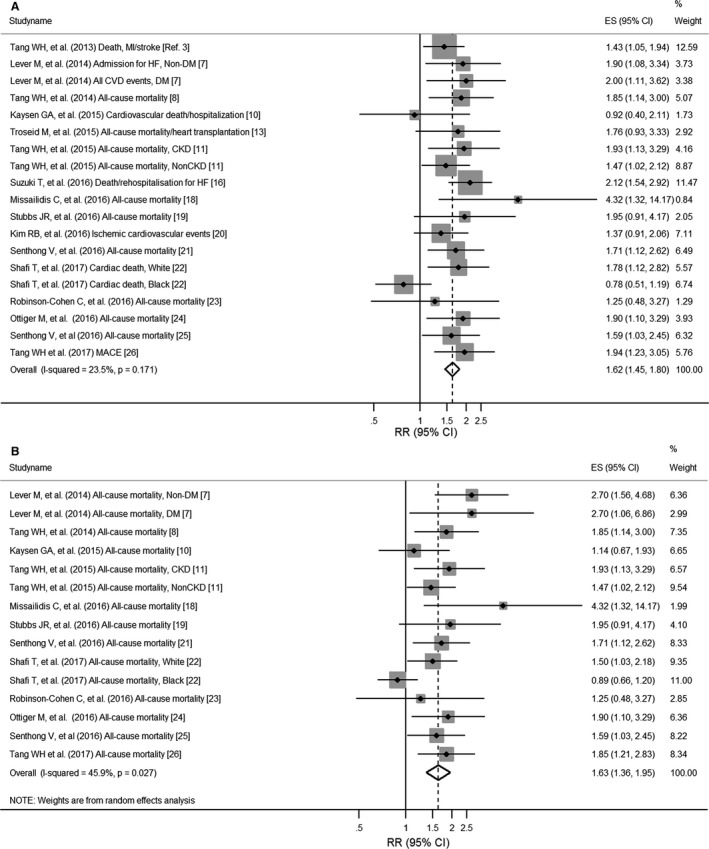
“The pooled RR using the random‐effect model was 1.62 (95% CI, 1.43 1.85).”
§ Gut Microbiota Metabolites and Risk of Major Adverse Cardiovascular Disease Events and Death: A Systematic Review and Meta‐Analysis of Prospective Studies > Results > TMAO Levels With the Risk of MACE and All‐Cause Mortality
plaincorrelationaln = 3,315- Asserted: passes — The authors put it forward as true.
- Checkable: passes — It can be checked against evidence.
- Load-bearing: passes — The paper’s conclusions depend on it.
- Based: passes — The paper gives a reason why it holds.
- Rests on an assumption: The highest versus lowest TMAO categories across the included studies represent comparable contrasts of high versus low TMAO exposure.
- Rests on an assumption: The included prospective studies are sufficiently similar in design and population to be combined in a single pooled estimate.
- Rests on an assumption: Blood TMAO concentrations measured by different assays across studies are comparable.
A result the paper reports from its own data — it cites no other source for it, so there is none to check. The quote shows it is in the paper.
In the paper
“In results of further sensitivity analysis removing 12 studies that included RRs for any death or all‐cause mortality, a pooled RR of elevated levels of TMAO for MACE (MACE: CVD events, admission for HF, cardiovascular death/hospitalization, ischemic cardiovascular events, cardiac death, or MACE) was 1.66 (95% CI, 1.35, 2.05; P heterogeneity= 0.6; I2=0%).”
§ Gut Microbiota Metabolites and Risk of Major Adverse Cardiovascular Disease Events and Death: A Systematic Review and Meta‐Analysis of Prospective Studies > Results > TMAO Levels With the Risk of MACE and All‐Cause Mortality
plaincorrelational- Asserted: passes — The authors put it forward as true.
- Checkable: passes — It can be checked against evidence.
- Load-bearing: unclear — It is unclear whether the paper’s conclusions depend on it.
- Based: passes — The paper gives a reason why it holds.
None of the sources cited for this claim have been checked yet.
In the paper
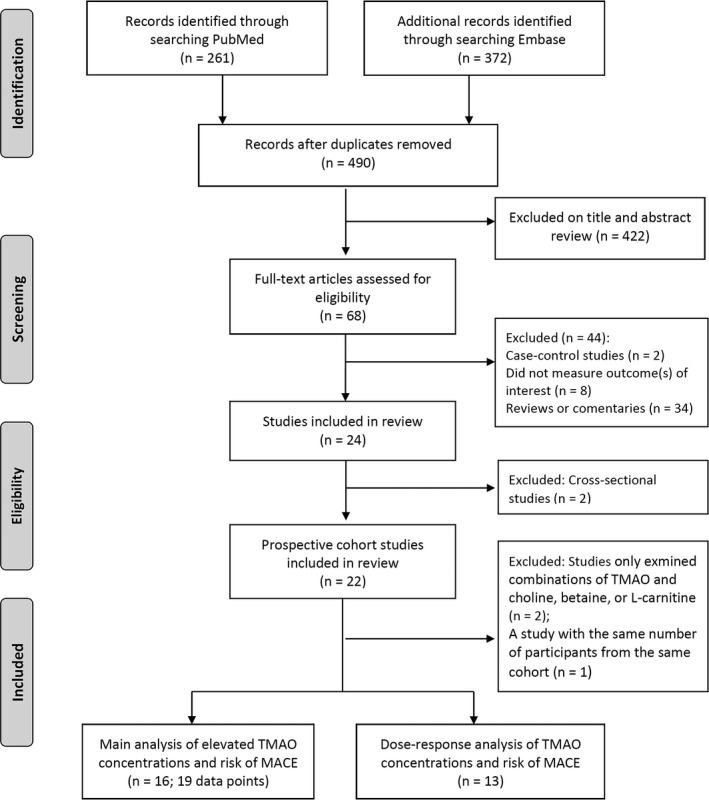
“Of the 19 publications, a total of 16 publications, including 19 data points, were eligible for our main analysis to calculate a pooled RR of elevated TMAO levels as compared with low levels3, 7, 8, 10, 11, 13, 16, 18, 19, 20, 21, 22, 23, 24, 25, 26 (Table 1 and Figure 1).”
§ Gut Microbiota Metabolites and Risk of Major Adverse Cardiovascular Disease Events and Death: A Systematic Review and Meta‐Analysis of Prospective Studies > Results > Literature Flow
What the sources say
- Not checked yetcites [3] Tang WH, Wang Z, Levison BS, Koeth RA, Britt EB, Fu X, Wu Y, Hazen SL. Intestinal microbial metabolism of phosphatidylcholine and cardiovascular risk. N Engl J Med. 2013; 368: 1575– 1584. 23614584 PMC3701945 source
- Not checked yetcites [7] Lever M, George PM, Slow S, Bellamy D, Young JM, Ho M, McEntyre CJ, Elmslie JL, Atkinson W, Molyneux SL, Troughton RW, Frampton CM, Richards AM, Chambers ST. Betaine and trimethylamine‐N‐oxide as predictors of cardiovascular outcomes show different patterns in diabetes mellitus: an observational study. PLoS One. 2014; 9: e114969. 25493436 PMC4262445 source
- Not checked yetcites [8] Tang WH, Wang Z, Fan Y, Levison B, Hazen JE, Donahue LM, Wu Y, Hazen SL. Prognostic value of elevated levels of intestinal microbe‐generated metabolite trimethylamine‐N‐oxide in patients with heart failure: refining the gut hypothesis. J Am Coll Cardiol. 2014; 64: 1908– 1914. 25444145 PMC4254529 source
plain- Asserted: passes — The authors put it forward as true.
- Checkable: passes — It can be checked against evidence.
- Load-bearing: passes — The paper’s conclusions depend on it.
- Based: passes — The paper gives a reason why it holds.
None of the sources cited for this claim have been checked yet.
In the paper
“we also performed a sensitivity analysis for the 18 data when we replaced RRs for all‐cause mortality in these publications7, 10, 22, 26; the pooled RR was 1.69 (95% CI, 1.52, 1.89; P<0.001; P heterogeneity=0.6; I2=0%).”
§ Gut Microbiota Metabolites and Risk of Major Adverse Cardiovascular Disease Events and Death: A Systematic Review and Meta‐Analysis of Prospective Studies > Results > TMAO Levels With the Risk of MACE and All‐Cause Mortality
What the sources say
- Not checked yetcites [7] Lever M, George PM, Slow S, Bellamy D, Young JM, Ho M, McEntyre CJ, Elmslie JL, Atkinson W, Molyneux SL, Troughton RW, Frampton CM, Richards AM, Chambers ST. Betaine and trimethylamine‐N‐oxide as predictors of cardiovascular outcomes show different patterns in diabetes mellitus: an observational study. PLoS One. 2014; 9: e114969. 25493436 PMC4262445 source
- Not checked yetcites [10] Kaysen GA, Johansen KL, Chertow GM, Dalrymple LS, Kornak J, Grimes B, Dwyer T, Chassy AW, Fiehn O. Associations of trimethylamine N‐oxide with nutritional and inflammatory biomarkers and cardiovascular outcomes in patients new to dialysis. J Ren Nutr. 2015; 25: 351– 356. 25802017 PMC4469547 source
- Not checked yetcites [22] Shafi T, Powe NR, Meyer TW, Hwang S, Hai X, Melamed ML, Banerjee T, Coresh J, Hostetter TH. Trimethylamine N‐oxide and cardiovascular events in hemodialysis patients. J Am Soc Nephrol. 2017; 28: 321– 331. 27436853 PMC5198291 source
plaincorrelational- Asserted: passes — The authors put it forward as true.
- Checkable: passes — It can be checked against evidence.
- Load-bearing: unclear — It is unclear whether the paper’s conclusions depend on it.
- Based: passes — The paper gives a reason why it holds.
- It may state two separate claims as one. 21
- Probably not a substantial claim. 28
None of the sources cited for this claim have been checked yet.
In the paper
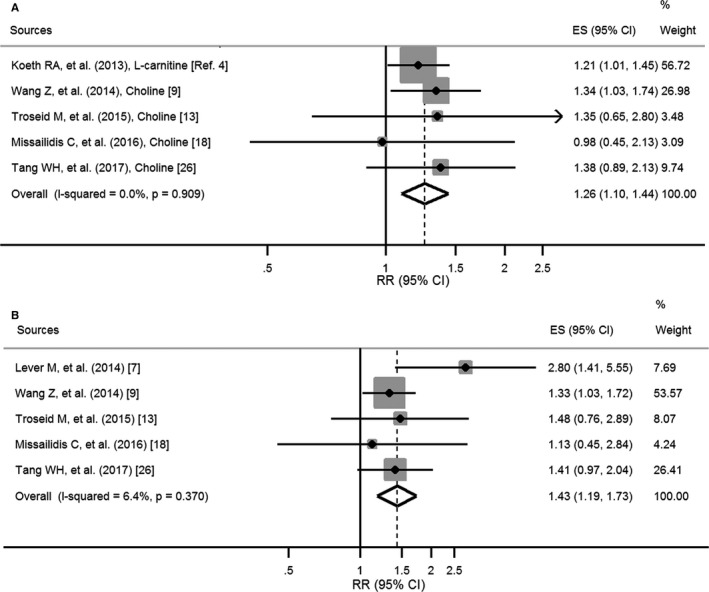
“Of the 22 studies, 2 only investigated combinations of TMAO and choline, betaine,9 or l‐carnitine4; thus we did not include the 2 studies4, 9 in the analysis for TMAO, although these studies were eligible for the analysis of TMAO precursors and risk of MACE.”
§ Gut Microbiota Metabolites and Risk of Major Adverse Cardiovascular Disease Events and Death: A Systematic Review and Meta‐Analysis of Prospective Studies > Results > Literature Flow
What the sources say
- Not checked yetcites [9] Wang Z, Tang WH, Buffa JA, Fu X, Britt EB, Koeth RA, Levison BS, Fan Y, Wu Y, Hazen SL. Prognostic value of choline and betaine depends on intestinal microbiota‐generated metabolite trimethylamine‐N‐oxide. Eur Heart J. 2014; 35: 904– 910. 24497336 PMC3977137 source
- Not checked yetcites [4] Koeth RA, Wang Z, Levison BS, Buffa JA, Org E, Sheehy BT, Britt EB, Fu X, Wu Y, Li L, Smith JD, Didonato JA, Chen J, Li H, Wu GD, Lewis JD, Warrier M, Brown JM, Krauss RM, Tang WHW, Bushman FD, Lusis AJ, Hazen SL. Intestinal microbiota metabolism of L‐carnitine, a nutrient in red meat, promotes atherosclerosis. Nat Med. 2013; 19: 576– 585. 23563705 PMC3650111 source
plain- Asserted: passes — The authors put it forward as true.
- Checkable: passes — It can be checked against evidence.
- Load-bearing: passes — The paper’s conclusions depend on it.
- Based: passes — The paper gives a reason why it holds.
It may state two separate claims as one.
In the paper
“Of the 19 data points, the study in blacks by Shafi et al22 affected the heterogeneity; removal of the data in blacks22 resulted in a pooled RR of 1.70 (95% CI, 1.52, 1.91; P<0.001; P heterogeneity=0.9; I2=0%; fixed‐effect model; Figure S1A).”
§ Gut Microbiota Metabolites and Risk of Major Adverse Cardiovascular Disease Events and Death: A Systematic Review and Meta‐Analysis of Prospective Studies > Results > TMAO Levels With the Risk of MACE and All‐Cause Mortality
What the sources say
- Not checked yetcites [22] Shafi T, Powe NR, Meyer TW, Hwang S, Hai X, Melamed ML, Banerjee T, Coresh J, Hostetter TH. Trimethylamine N‐oxide and cardiovascular events in hemodialysis patients. J Am Soc Nephrol. 2017; 28: 321– 331. 27436853 PMC5198291 source
plaincorrelationaln = 3,315 ·- Asserted: passes — The authors put it forward as true.
- Checkable: passes — It can be checked against evidence.
- Load-bearing: unclear — It is unclear whether the paper’s conclusions depend on it.
- Based: passes — The paper gives a reason why it holds.
It may state two separate claims as one.
A result the paper reports from its own data — it cites no other source for it, so there is none to check. The quote shows it is in the paper.
In the paper
“The mean or median value of TMAO ranged from 1.74 to 103.8 μmol/L across the 22 prospective studies listed in Table 1.”
§ Gut Microbiota Metabolites and Risk of Major Adverse Cardiovascular Disease Events and Death: A Systematic Review and Meta‐Analysis of Prospective Studies > Results > Literature Flow
plain- Asserted: passes — The authors put it forward as true.
- Checkable: passes — It can be checked against evidence.
- Load-bearing: fails — The paper’s conclusions may not depend on it.
- Based: passes — The paper gives a reason why it holds.
Probably not a substantial claim. The paper’s conclusions may not depend on it.
A result the paper reports from its own data — it cites no other source for it, so there is none to check. The quote shows it is in the paper.
In the paper
“Of the total 22 publications, multivariate‐adjusted RRs were available for 21 (95%) publications; of the 19 data points used for the main analysis, 79% (n=15) were multivariate‐adjusted data.”
§ Gut Microbiota Metabolites and Risk of Major Adverse Cardiovascular Disease Events and Death: A Systematic Review and Meta‐Analysis of Prospective Studies > Results > Literature Flow
plain- Asserted: passes — The authors put it forward as true.
- Checkable: passes — It can be checked against evidence.
- Load-bearing: fails — The paper’s conclusions may not depend on it.
- Based: passes — The paper gives a reason why it holds.
Probably not a substantial claim. The paper’s conclusions may not depend on it. It may state two separate claims as one.
None of the sources cited for this claim have been checked yet.
In the paper
“All of the studies included clinical cohorts, including patients at higher cardiovascular risk, that is, enriched for baseline heart disease,3, 8, 12, 13, 14, 15, 16, 17, 21 kidney disease,10, 11, 18, 19, 20, 22, 23 peripheral artery disease,25 or diabetes mellitus.7, 26”
§ Gut Microbiota Metabolites and Risk of Major Adverse Cardiovascular Disease Events and Death: A Systematic Review and Meta‐Analysis of Prospective Studies > Results > Literature Flow
What the sources say
- Not checked yetcites [3] Tang WH, Wang Z, Levison BS, Koeth RA, Britt EB, Fu X, Wu Y, Hazen SL. Intestinal microbial metabolism of phosphatidylcholine and cardiovascular risk. N Engl J Med. 2013; 368: 1575– 1584. 23614584 PMC3701945 source
- Not checked yetcites [8] Tang WH, Wang Z, Fan Y, Levison B, Hazen JE, Donahue LM, Wu Y, Hazen SL. Prognostic value of elevated levels of intestinal microbe‐generated metabolite trimethylamine‐N‐oxide in patients with heart failure: refining the gut hypothesis. J Am Coll Cardiol. 2014; 64: 1908– 1914. 25444145 PMC4254529 source
- Not checked yetcites [12] Tang WH, Wang Z, Shrestha K, Borowski AG, Wu Y, Troughton RW, Klein AL, Hazen SL. Intestinal microbiota‐dependent phosphatidylcholine metabolites, diastolic dysfunction, and adverse clinical outcomes in chronic systolic heart failure. J Card Fail. 2015; 21: 91– 96. 25459686 PMC4312712 source
plain- Asserted: passes — The authors put it forward as true.
- Checkable: passes — It can be checked against evidence.
- Load-bearing: unclear — It is unclear whether the paper’s conclusions depend on it.
- Based: passes — The paper gives a reason why it holds.
It may state two separate claims as one.
A result the paper reports from its own data — it cites no other source for it, so there is none to check. The quote shows it is in the paper.
In the paper
“In results of a sensitivity analysis omitting 1 study at a time and calculating the pooled RRs for the remainder of 18 studies (the data in blacks were not included), the pooled RRs ranged from 1.65 (95% CI, 1.47, 1.86) to 1.75 (95% CI, 1.55, 1.98), and no other study was identified as an influential outlier across the 18 studies (P heterogeneity ranged 0.8–0.9; I2 was consistently 0%).”
§ Gut Microbiota Metabolites and Risk of Major Adverse Cardiovascular Disease Events and Death: A Systematic Review and Meta‐Analysis of Prospective Studies > Results > TMAO Levels With the Risk of MACE and All‐Cause Mortality
plainn = 3,315- Asserted: passes — The authors put it forward as true.
- Checkable: passes — It can be checked against evidence.
- Load-bearing: unclear — It is unclear whether the paper’s conclusions depend on it.
- Based: passes — The paper gives a reason why it holds.
It may state two separate claims as one.
The paper states this without a source or data behind it here, so there is nothing to check it against. The quote shows it is in the paper.
In the paper
“Subsequently, the remaining 19 articles published from 2013 to 2017 assessed the RRs of TMAO (either as a categorical or continuous variable) and risk of MACE.”
§ Gut Microbiota Metabolites and Risk of Major Adverse Cardiovascular Disease Events and Death: A Systematic Review and Meta‐Analysis of Prospective Studies > Results > Literature Flow
plain- Asserted: passes — The authors put it forward as true.
- Checkable: passes — It can be checked against evidence.
- Load-bearing: fails — The paper’s conclusions may not depend on it.
- Based: passes — The paper gives a reason why it holds.
Probably not a substantial claim. The paper’s conclusions may not depend on it.
A result the paper reports from its own data — it cites no other source for it, so there is none to check. The quote shows it is in the paper.
In the paper
“We identified 24 potentially eligible articles, including 2 cross‐sectional studies and 22 prospective studies (Figure 1).”
§ Gut Microbiota Metabolites and Risk of Major Adverse Cardiovascular Disease Events and Death: A Systematic Review and Meta‐Analysis of Prospective Studies > Results > Literature Flow
plain- Asserted: passes — The authors put it forward as true.
- Checkable: passes — It can be checked against evidence.
- Load-bearing: passes — The paper’s conclusions depend on it.
- Based: passes — The paper gives a reason why it holds.
It may state two separate claims as one.
A result the paper reports from its own data — it cites no other source for it, so there is none to check. The quote shows it is in the paper.
In the paper
“Associations appeared to be stronger among studies with participants who had generally lower BMI, or lower prevalence of smoking, although such differences did not attain statistical significance.”
§ Gut Microbiota Metabolites and Risk of Major Adverse Cardiovascular Disease Events and Death: A Systematic Review and Meta‐Analysis of Prospective Studies > Results > Stratified Analyses
hedgedcorrelational- Asserted: passes — The authors put it forward as true.
- Checkable: passes — It can be checked against evidence.
- Load-bearing: fails — The paper’s conclusions may not depend on it.
- Based: passes — The paper gives a reason why it holds.
Probably not a substantial claim. The paper’s conclusions may not depend on it. It may state two separate claims as one.
The paper states this without a source or data behind it here, so there is nothing to check it against. The quote shows it is in the paper.
In the paper
“Second, the definition of elevated TMAO levels was difference across individual studies.”
§ Gut Microbiota Metabolites and Risk of Major Adverse Cardiovascular Disease Events and Death: A Systematic Review and Meta‐Analysis of Prospective Studies > Discussion > Strengths and Limitations
plain- Asserted: passes — The authors put it forward as true.
- Checkable: passes — It can be checked against evidence.
- Load-bearing: fails — The paper’s conclusions may not depend on it.
- Based: passes — The paper gives a reason why it holds.
Probably not a substantial claim. The paper’s conclusions may not depend on it.
A result the paper reports from its own data — it cites no other source for it, so there is none to check. The quote shows it is in the paper.
In the paper
“We observed the highly consistent positive associations between TMAO levels and the outcomes across studies, even among studies with low (<5.0 μmol/L) concentrations of TMAO at baseline, particularly after excluding the data among blacks.”
§ Gut Microbiota Metabolites and Risk of Major Adverse Cardiovascular Disease Events and Death: A Systematic Review and Meta‐Analysis of Prospective Studies > Discussion > Association Between Our Results and Other Studies
boostedcorrelational- Asserted: passes — The authors put it forward as true.
- Checkable: passes — It can be checked against evidence.
- Load-bearing: passes — The paper’s conclusions depend on it.
- Based: passes — The paper gives a reason why it holds.
It may state two separate claims as one.
A result the paper reports from its own data — it cites no other source for it, so there is none to check. The quote shows it is in the paper.
In the paper
“We also performed a stratified analysis using a cut‐off value of 8.0 μmol/L. We observed similarly increased risks of MACE regardless of studies with <8.0 (range, 3.0–7.9) or ≥8.0 (range, 20.41–98.4) μmol/L mean/median TMAO levels. Again, there was no heterogeneity between low or high TMAO concentrations at baseline.”
§ Gut Microbiota Metabolites and Risk of Major Adverse Cardiovascular Disease Events and Death: A Systematic Review and Meta‐Analysis of Prospective Studies > Results > Stratified Analyses
plaincorrelational- Asserted: passes — The authors put it forward as true.
- Checkable: passes — It can be checked against evidence.
- Load-bearing: unclear — It is unclear whether the paper’s conclusions depend on it.
- Based: passes — The paper gives a reason why it holds.
It may state two separate claims as one.
None of the sources cited for this claim have been checked yet.
In the paper
“Fifth, most of the study participants were from Europe and the United States and included mainly (approximately of 65–90% of total study participants) whites,10, 19, 20, 23 so that our results might not be applicable to other race/ethnic groups such as Asians and Africans.”
§ Gut Microbiota Metabolites and Risk of Major Adverse Cardiovascular Disease Events and Death: A Systematic Review and Meta‐Analysis of Prospective Studies > Discussion > Strengths and Limitations
What the sources say
- Not checked yetcites [10] Kaysen GA, Johansen KL, Chertow GM, Dalrymple LS, Kornak J, Grimes B, Dwyer T, Chassy AW, Fiehn O. Associations of trimethylamine N‐oxide with nutritional and inflammatory biomarkers and cardiovascular outcomes in patients new to dialysis. J Ren Nutr. 2015; 25: 351– 356. 25802017 PMC4469547 source
- Not checked yetcites [19] Stubbs JR, House JA, Ocque AJ, Zhang S, Johnson C, Kimber C, Schmidt K, Gupta A, Wetmore JB, Nolin TD, Spertus JA, Yu AS. Serum trimethylamine‐N‐oxide is elevated in CKD and correlates with coronary atherosclerosis burden. J Am Soc Nephrol. 2016; 27: 305– 313. 26229137 PMC4696571 source
- Not checked yetcites [20] Kim RB, Morse BL, Djurdjev O, Tang M, Muirhead N, Barrett B, Holmes DT, Madore F, Clase CM, Rigatto C, Levin A, Can PI. Advanced chronic kidney disease populations have elevated trimethylamine N‐oxide levels associated with increased cardiovascular events. Kidney Int. 2016; 89: 1144– 1152. 27083288 source
- Not checked yetcites [23] Robinson‐Cohen C, Newitt R, Shen DD, Rettie AE, Kestenbaum BR, Himmelfarb J, Yeung CK. Association of FMO3 variants and trimethylamine N‐oxide concentration, disease progression, and mortality in CKD patients. PLoS One. 2016; 11: e0161074. 27513517 PMC4981377 source
plain- Asserted: passes — The authors put it forward as true.
- Checkable: passes — It can be checked against evidence.
- Load-bearing: passes — The paper’s conclusions depend on it.
- Based: passes — The paper gives a reason why it holds.
It may state two separate claims as one.
A result the paper reports from its own data — it cites no other source for it, so there is none to check. The quote shows it is in the paper.
In the paper
“In addition, there were 5 studies with extremely high mean/median TMAO values (>20 μmol/L).”
§ Gut Microbiota Metabolites and Risk of Major Adverse Cardiovascular Disease Events and Death: A Systematic Review and Meta‐Analysis of Prospective Studies > Results > Stratified Analyses
plain- Asserted: passes — The authors put it forward as true.
- Checkable: passes — It can be checked against evidence.
- Load-bearing: fails — The paper’s conclusions may not depend on it.
- Based: passes — The paper gives a reason why it holds.
Probably not a substantial claim. The paper’s conclusions may not depend on it.
A result the paper reports from its own data — it cites no other source for it, so there is none to check. The quote shows it is in the paper.
In the paper
“The associations did not significantly differ according to the past histories of CVD, prevalence of diabetes mellitus, kidney dysfunction, follow‐up duration, or TMAO levels at baseline.”
§ Gut Microbiota Metabolites and Risk of Major Adverse Cardiovascular Disease Events and Death: A Systematic Review and Meta‐Analysis of Prospective Studies > Discussion
plain- Asserted: passes — The authors put it forward as true.
- Checkable: passes — It can be checked against evidence.
- Load-bearing: unclear — It is unclear whether the paper’s conclusions depend on it.
- Based: passes — The paper gives a reason why it holds.
It may state two separate claims as one.
A result the paper reports from its own data — it cites no other source for it, so there is none to check. The quote shows it is in the paper.
In the paper
“Again, after removal of the data in blacks, there was no heterogeneity across the studies (pooled RR, 1.72; 95% CI, 1.50, 1.97; P heterogeneity=0.7; I2=0%; Figure S1B).”
§ Gut Microbiota Metabolites and Risk of Major Adverse Cardiovascular Disease Events and Death: A Systematic Review and Meta‐Analysis of Prospective Studies > Results > TMAO Levels With the Risk of MACE and All‐Cause Mortality
plain- Asserted: passes — The authors put it forward as true.
- Checkable: passes — It can be checked against evidence.
- Load-bearing: unclear — It is unclear whether the paper’s conclusions depend on it.
- Based: passes — The paper gives a reason why it holds.
It may state two separate claims as one.
What the paper did — it cites no source for this, so there is none to check. The quote shows it is in the paper.
In the paper
“The protocol of the present study was registered with the PROSPERO database: CRD42016052185.”
§ Gut Microbiota Metabolites and Risk of Major Adverse Cardiovascular Disease Events and Death: A Systematic Review and Meta‐Analysis of Prospective Studies > Methods > Data Sources and Search Strategy
plain- Asserted: passes — The authors put it forward as true.
- Checkable: passes — It can be checked against evidence.
- Load-bearing: fails — The paper’s conclusions may not depend on it.
- Based: passes — The paper gives a reason why it holds.
Probably not a substantial claim. The paper’s conclusions may not depend on it.
In the paper
“There is no standard definition for MACE, and the definition varies by study, whereas most studies include MI and death to define MACE.30”
§ Gut Microbiota Metabolites and Risk of Major Adverse Cardiovascular Disease Events and Death: A Systematic Review and Meta‐Analysis of Prospective Studies > Methods > Data Sources and Search Strategy
What the sources say
- Not checked yetcites [30] Kip KE, Hollabaugh K, Marroquin OC, Williams DO. The problem with composite end points in cardiovascular studies: the story of major adverse cardiac events and percutaneous coronary intervention. J Am Coll Cardiol. 2008; 51: 701– 707. 18279733 source
plain- Asserted: passes — The authors put it forward as true.
- Checkable: passes — It can be checked against evidence.
- Load-bearing: fails — The paper’s conclusions may not depend on it.
- Based: passes — The paper gives a reason why it holds.
Probably not a substantial claim. The paper’s conclusions may not depend on it.
What the paper did — it cites no source for this, so there is none to check. The quote shows it is in the paper.
In the paper
“Two reviewers (Y.H. and W.M.) independently extracted data on study design and population characteristics and compared results to ensure consistency. Inconsistencies in data were resolved by a third reviewer (L.Q.).”
§ Gut Microbiota Metabolites and Risk of Major Adverse Cardiovascular Disease Events and Death: A Systematic Review and Meta‐Analysis of Prospective Studies > Methods > Study Selection, Data Extraction, and Quality Assessment
plain- Asserted: passes — The authors put it forward as true.
- Checkable: passes — It can be checked against evidence.
- Load-bearing: fails — The paper’s conclusions may not depend on it.
- Based: passes — The paper gives a reason why it holds.
Probably not a substantial claim. The paper’s conclusions may not depend on it. It may state two separate claims as one.
In the paper
“We assessed publication bias by using Begg's and Egger's tests and visual inspection of the funnel plot if 10 or more studies were available.35”
§ Gut Microbiota Metabolites and Risk of Major Adverse Cardiovascular Disease Events and Death: A Systematic Review and Meta‐Analysis of Prospective Studies > Methods > Statistical Analysis
What the sources say
- Not checked yetcites [35] Sterne JA, Gavaghan D, Egger M. Publication and related bias in meta‐analysis: power of statistical tests and prevalence in the literature. J Clin Epidemiol. 2000; 53: 1119– 1129. 11106885 source
plain- Asserted: passes — The authors put it forward as true.
- Checkable: passes — It can be checked against evidence.
- Load-bearing: fails — The paper’s conclusions may not depend on it.
- Based: passes — The paper gives a reason why it holds.
Probably not a substantial claim. The paper’s conclusions may not depend on it.
None of the sources cited for this claim have been checked yet.
In the paper
“Heterogeneity was assessed by the Cochran Q test and I2 statistic; low, moderate, and high I2 values were considered to be 25%, 50%, and 75%, respectively.32, 33”
§ Gut Microbiota Metabolites and Risk of Major Adverse Cardiovascular Disease Events and Death: A Systematic Review and Meta‐Analysis of Prospective Studies > Methods > Statistical Analysis
What the sources say
- Not checked yetcites [32] Higgins JP. Commentary: heterogeneity in meta‐analysis should be expected and appropriately quantified. Int J Epidemiol. 2008; 37: 1158– 1160. 18832388 source
- Not checked yetcites [33] Higgins JP, Thompson SG, Deeks JJ, Altman DG. Measuring inconsistency in meta‐analyses. BMJ. 2003; 327: 557– 560. 12958120 PMC192859 source
plain- Asserted: passes — The authors put it forward as true.
- Checkable: passes — It can be checked against evidence.
- Load-bearing: passes — The paper’s conclusions depend on it.
- Based: passes — The paper gives a reason why it holds.
Probably not a substantial claim. It may state two separate claims as one.
In the paper
“There is no standard definition for MACE, and the definition varies by study, whereas most studies include MI and death to define MACE.30”
§ Gut Microbiota Metabolites and Risk of Major Adverse Cardiovascular Disease Events and Death: A Systematic Review and Meta‐Analysis of Prospective Studies > Methods > Data Sources and Search Strategy
What the sources say
- Not checked yetcites [30] Kip KE, Hollabaugh K, Marroquin OC, Williams DO. The problem with composite end points in cardiovascular studies: the story of major adverse cardiac events and percutaneous coronary intervention. J Am Coll Cardiol. 2008; 51: 701– 707. 18279733 source
plain- Asserted: passes — The authors put it forward as true.
- Checkable: passes — It can be checked against evidence.
- Load-bearing: fails — The paper’s conclusions may not depend on it.
- Based: passes — The paper gives a reason why it holds.
Probably not a substantial claim. The paper’s conclusions may not depend on it.
In the paper
“We used a fixed‐effect model, using the method of Mantel and Haenszel when there was no significant heterogeneity, and a random effect model when heterogeneity was significant.34”
§ Gut Microbiota Metabolites and Risk of Major Adverse Cardiovascular Disease Events and Death: A Systematic Review and Meta‐Analysis of Prospective Studies > Methods > Statistical Analysis
What the sources say
- Not checked yetcites [34] Lau J, Ioannidis JP, Schmid CH. Quantitative synthesis in systematic reviews. Ann Intern Med. 1997; 127: 820– 826. 9382404 source
plain- Asserted: passes — The authors put it forward as true.
- Checkable: passes — It can be checked against evidence.
- Load-bearing: passes — The paper’s conclusions depend on it.
- Based: passes — The paper gives a reason why it holds.
Probably not a substantial claim. It may state two separate claims as one.
In the paper
“Quality assessment was performed using to the Newcastle–Ottawa quality assessment scale.31”
§ Gut Microbiota Metabolites and Risk of Major Adverse Cardiovascular Disease Events and Death: A Systematic Review and Meta‐Analysis of Prospective Studies > Methods > Study Selection, Data Extraction, and Quality Assessment
What the sources say
- Not checked yetcites [31] Wells GA, Shea B, O'Connell D, Peterson J, Welch V, Losos M, Tugwell P. The Newcastle‐Ottawa Scale (NOS) for assessing the quality of nonrandomised studies in meta‐analyses. 2014 Available at: http://www.ohri.ca/programs/clinical_epidemiology/oxford.asp. Accessed May 7, 2016.
plain- Asserted: passes — The authors put it forward as true.
- Checkable: passes — It can be checked against evidence.
- Load-bearing: fails — The paper’s conclusions may not depend on it.
- Based: passes — The paper gives a reason why it holds.
Probably not a substantial claim. The paper’s conclusions may not depend on it.
None of the sources cited for this claim have been checked yet.
In the paper
“TMAO is a small organic compound, mainly derived from choline (found in foods such as red meat, fish, poultry, and eggs), which is metabolized to produce trimethylamine (TMA) by microbiota1, 4 and then to TMAO by the hepatic enzyme, flavin monooxygenase 3.1, 5”
§ Gut Microbiota Metabolites and Risk of Major Adverse Cardiovascular Disease Events and Death: A Systematic Review and Meta‐Analysis of Prospective Studies > Introduction
What the sources say
- Not checked yetcites [1] Wang Z, Klipfell E, Bennett BJ, Koeth R, Levison BS, Dugar B, Feldstein AE, Britt EB, Fu X, Chung YM, Wu Y, Schauer P, Smith JD, Allayee H, Tang WH, DiDonato JA, Lusis AJ, Hazen SL. Gut flora metabolism of phosphatidylcholine promotes cardiovascular disease. Nature. 2011; 472: 57– 63. 21475195 PMC3086762 source
- Not checked yetcites [4] Koeth RA, Wang Z, Levison BS, Buffa JA, Org E, Sheehy BT, Britt EB, Fu X, Wu Y, Li L, Smith JD, Didonato JA, Chen J, Li H, Wu GD, Lewis JD, Warrier M, Brown JM, Krauss RM, Tang WHW, Bushman FD, Lusis AJ, Hazen SL. Intestinal microbiota metabolism of L‐carnitine, a nutrient in red meat, promotes atherosclerosis. Nat Med. 2013; 19: 576– 585. 23563705 PMC3650111 source
- Not checked yetcites [5] Bennett BJ, de Aguiar Vallim TQ, Wang Z, Shih DM, Meng Y, Gregory J, Allayee H, Lee R, Graham M, Crooke R, Edwards PA, Hazen SL, Lusis AJ. Trimethylamine‐N‐oxide, a metabolite associated with atherosclerosis, exhibits complex genetic and dietary regulation. Cell Metab. 2013; 17: 49– 60. 23312283 PMC3771112 source
plaindirect- Asserted: passes — The authors put it forward as true.
- Checkable: passes — It can be checked against evidence.
- Load-bearing: unclear — It is unclear whether the paper’s conclusions depend on it.
- Based: passes — The paper gives a reason why it holds.
It may state two separate claims as one.
In the paper
“There is no standard definition for MACE, and the definition varies by study, whereas most studies include MI and death to define MACE.30”
§ Gut Microbiota Metabolites and Risk of Major Adverse Cardiovascular Disease Events and Death: A Systematic Review and Meta‐Analysis of Prospective Studies > Methods > Data Sources and Search Strategy
What the sources say
- Not checked yetcites [30] Kip KE, Hollabaugh K, Marroquin OC, Williams DO. The problem with composite end points in cardiovascular studies: the story of major adverse cardiac events and percutaneous coronary intervention. J Am Coll Cardiol. 2008; 51: 701– 707. 18279733 source
plain- Asserted: passes — The authors put it forward as true.
- Checkable: passes — It can be checked against evidence.
- Load-bearing: fails — The paper’s conclusions may not depend on it.
- Based: passes — The paper gives a reason why it holds.
Probably not a substantial claim. The paper’s conclusions may not depend on it.
What the paper did — it cites no source for this, so there is none to check. The quote shows it is in the paper.
In the paper
“The reference lists of identified articles were also scanned to identify any other relevant studies.”
§ Gut Microbiota Metabolites and Risk of Major Adverse Cardiovascular Disease Events and Death: A Systematic Review and Meta‐Analysis of Prospective Studies > Methods > Data Sources and Search Strategy
plain- Asserted: passes — The authors put it forward as true.
- Checkable: passes — It can be checked against evidence.
- Load-bearing: fails — The paper’s conclusions may not depend on it.
- Based: passes — The paper gives a reason why it holds.
Probably not a substantial claim. The paper’s conclusions may not depend on it.
None of the sources cited for this claim have been checked yet.
In the paper
“Recent studies by Wang and Tang et al reported that circulating concentrations of trimethylamine N‐oxide (TMAO), a metabolite derived from the gut microbiota, were predictive of prevalent cardiovascular diseases (CVDs)1 and future cardiovascular events3 in clinical cohorts.”
§ Gut Microbiota Metabolites and Risk of Major Adverse Cardiovascular Disease Events and Death: A Systematic Review and Meta‐Analysis of Prospective Studies > Introduction
What the sources say
- Not checked yetcites [1] Wang Z, Klipfell E, Bennett BJ, Koeth R, Levison BS, Dugar B, Feldstein AE, Britt EB, Fu X, Chung YM, Wu Y, Schauer P, Smith JD, Allayee H, Tang WH, DiDonato JA, Lusis AJ, Hazen SL. Gut flora metabolism of phosphatidylcholine promotes cardiovascular disease. Nature. 2011; 472: 57– 63. 21475195 PMC3086762 source
- Not checked yetcites [3] Tang WH, Wang Z, Levison BS, Koeth RA, Britt EB, Fu X, Wu Y, Hazen SL. Intestinal microbial metabolism of phosphatidylcholine and cardiovascular risk. N Engl J Med. 2013; 368: 1575– 1584. 23614584 PMC3701945 source
plaincorrelational- Asserted: passes — The authors put it forward as true.
- Checkable: passes — It can be checked against evidence.
- Load-bearing: passes — The paper’s conclusions depend on it.
- Based: passes — The paper gives a reason why it holds.
Probably not a substantial claim. It may state two separate claims as one.
In the paper
“We followed the standard criteria for conducting meta‐analyses of observational studies and reporting the results.29”
§ Gut Microbiota Metabolites and Risk of Major Adverse Cardiovascular Disease Events and Death: A Systematic Review and Meta‐Analysis of Prospective Studies > Methods > Data Sources and Search Strategy
What the sources say
- Not checked yetcites [29] Stroup DF, Berlin JA, Morton SC, Olkin I, Williamson GD, Rennie D, Moher D, Becker BJ, Sipe TA, Thacker SB. Meta‐analysis of observational studies in epidemiology: a proposal for reporting. Meta‐analysis Of Observational Studies in Epidemiology (MOOSE) group. JAMA. 2000; 283: 2008– 2012. 10789670 source
plain- Asserted: passes — The authors put it forward as true.
- Checkable: passes — It can be checked against evidence.
- Load-bearing: passes — The paper’s conclusions depend on it.
- Based: passes — The paper gives a reason why it holds.
Probably not a substantial claim.
What the paper did — it cites no source for this, so there is none to check. The quote shows it is in the paper.
In the paper
“We searched MEDLINE (PubMed) and Embase up to December 6, 2016 for eligible studies with a search strategy that combined text word and Medical Subject Headings identifying reports relating blood concentrations of TMAO and the MACE.”
§ Gut Microbiota Metabolites and Risk of Major Adverse Cardiovascular Disease Events and Death: A Systematic Review and Meta‐Analysis of Prospective Studies > Methods > Data Sources and Search Strategy
plain- Asserted: passes — The authors put it forward as true.
- Checkable: passes — It can be checked against evidence.
- Load-bearing: fails — The paper’s conclusions may not depend on it.
- Based: passes — The paper gives a reason why it holds.
Probably not a substantial claim. The paper’s conclusions may not depend on it.
What the paper did — it cites no source for this, so there is none to check. The quote shows it is in the paper.
In the paper
“No language restrictions were applied.”
§ Gut Microbiota Metabolites and Risk of Major Adverse Cardiovascular Disease Events and Death: A Systematic Review and Meta‐Analysis of Prospective Studies > Methods > Data Sources and Search Strategy
plain- Asserted: passes — The authors put it forward as true.
- Checkable: passes — It can be checked against evidence.
- Load-bearing: fails — The paper’s conclusions may not depend on it.
- Based: passes — The paper gives a reason why it holds.
Probably not a substantial claim. The paper’s conclusions may not depend on it.
In the paper
“We also estimated dose‐response associations based on data for categories of TMAO levels on median dose, number of cases and participants, and effect estimates with corresponding SEs using the generalized least‐squares for trend estimation method of Greenland and Longnecker.36”
§ Gut Microbiota Metabolites and Risk of Major Adverse Cardiovascular Disease Events and Death: A Systematic Review and Meta‐Analysis of Prospective Studies > Methods > Statistical Analysis
What the sources say
- Not checked yetcites [36] Greenland S, Longnecker MP. Methods for trend estimation from summarized dose‐response data, with applications to meta‐analysis. Am J Epidemiol. 1992; 135: 1301– 1309. 1626547 source
plaincorrelational- Asserted: passes — The authors put it forward as true.
- Checkable: passes — It can be checked against evidence.
- Load-bearing: passes — The paper’s conclusions depend on it.
- Based: passes — The paper gives a reason why it holds.
Probably not a substantial claim.
In the paper
“The burden of CVD is high among patients with chronic kidney disease (CKD) or end‐stage renal disease,47 and the circulating TMAO is predominantly excreted by the kidneys.42”
§ Gut Microbiota Metabolites and Risk of Major Adverse Cardiovascular Disease Events and Death: A Systematic Review and Meta‐Analysis of Prospective Studies > Discussion > Association Between Our Results and Other Studies
What the sources say
- Not checked yetcites [42] Tang WH, Hazen SL. The contributory role of gut microbiota in cardiovascular disease. J Clin Invest. 2014; 124: 4204– 4211. 25271725 PMC4215189 source
plaindirect- Asserted: passes — The authors put it forward as true.
- Checkable: passes — It can be checked against evidence.
- Load-bearing: fails — The paper’s conclusions may not depend on it.
- Based: passes — The paper gives a reason why it holds.
Probably not a substantial claim. The paper’s conclusions may not depend on it.
None of the sources cited for this claim have been checked yet.
In the paper
“Nonetheless, median values of TMAO concentrations in healthy individuals were reported as ranges of 3 to 6 μmol/L,8, 17, 18, 19 and the study by Shafi et al22 consisted of hemodialysis patients with the substantially high mean vale of TMAO (101.9 μmol/L among total participants).”
§ Gut Microbiota Metabolites and Risk of Major Adverse Cardiovascular Disease Events and Death: A Systematic Review and Meta‐Analysis of Prospective Studies > Discussion > Association Between Our Results and Other Studies
What the sources say
- Not checked yetcites [8] Tang WH, Wang Z, Fan Y, Levison B, Hazen JE, Donahue LM, Wu Y, Hazen SL. Prognostic value of elevated levels of intestinal microbe‐generated metabolite trimethylamine‐N‐oxide in patients with heart failure: refining the gut hypothesis. J Am Coll Cardiol. 2014; 64: 1908– 1914. 25444145 PMC4254529 source
- Not checked yetcites [17] Skagen K, Troseid M, Ueland T, Holm S, Abbas A, Gregersen I, Kummen M, Bjerkeli V, Reier‐Nilsen F, Russell D, Svardal A, Karlsen TH, Aukrust P, Berge RK, Hov JE, Halvorsen B, Skjelland M. The carnitine‐butyrobetaine‐trimethylamine‐N‐oxide pathway and its association with cardiovascular mortality in patients with carotid atherosclerosis. Atherosclerosis. 2016; 247: 64– 69. 26868510 source
- Not checked yetcites [18] Missailidis C, Hallqvist J, Qureshi AR, Barany P, Heimburger O, Lindholm B, Stenvinkel P, Bergman P. Serum trimethylamine‐N‐oxide is strongly related to renal function and predicts outcome in chronic kidney disease. PLoS One. 2016; 11: e0141738. 26751065 PMC4709190 source
- Not checked yetcites [19] Stubbs JR, House JA, Ocque AJ, Zhang S, Johnson C, Kimber C, Schmidt K, Gupta A, Wetmore JB, Nolin TD, Spertus JA, Yu AS. Serum trimethylamine‐N‐oxide is elevated in CKD and correlates with coronary atherosclerosis burden. J Am Soc Nephrol. 2016; 27: 305– 313. 26229137 PMC4696571 source
plain- Asserted: passes — The authors put it forward as true.
- Checkable: passes — It can be checked against evidence.
- Load-bearing: fails — The paper’s conclusions may not depend on it.
- Based: passes — The paper gives a reason why it holds.
Probably not a substantial claim. The paper’s conclusions may not depend on it.
In the paper
“It has also been reported that morality risk may differ between black and white dialysis patients.46”
§ Gut Microbiota Metabolites and Risk of Major Adverse Cardiovascular Disease Events and Death: A Systematic Review and Meta‐Analysis of Prospective Studies > Discussion > Association Between Our Results and Other Studies
What the sources say
- Not checked yetcites [46] Kucirka LM, Grams ME, Lessler J, Hall EC, James N, Massie AB, Montgomery RA, Segev DL. Association of race and age with survival among patients undergoing dialysis. JAMA. 2011; 306: 620– 626. 21828325 PMC3938098
hedgedconditional- Asserted: passes — The authors put it forward as true.
- Checkable: passes — It can be checked against evidence.
- Load-bearing: fails — The paper’s conclusions may not depend on it.
- Based: passes — The paper gives a reason why it holds.
Probably not a substantial claim. The paper’s conclusions may not depend on it.
None of the sources cited for this claim have been checked yet.
In the paper
“Fourth, the gut microbiota are affected by environmental factors37, 38 such as dietary intakes,39, 40, 41 which may, in turn, influence blood levels of TMAO and its precursors.4”
§ Gut Microbiota Metabolites and Risk of Major Adverse Cardiovascular Disease Events and Death: A Systematic Review and Meta‐Analysis of Prospective Studies > Discussion > Strengths and Limitations
What the sources say
- Not checked yetcites [37] Scalbert A, Brennan L, Manach C, Andres‐Lacueva C, Dragsted LO, Draper J, Rappaport SM, van der Hooft JJ, Wishart DS. The food metabolome: a window over dietary exposure. Am J Clin Nutr. 2014; 99: 1286– 1308. 24760973 source
- Not checked yetcites [38] Wong JM. Gut microbiota and cardiometabolic outcomes: influence of dietary patterns and their associated components. Am J Clin Nutr. 2014; 100(suppl 1): 369S– 377S. 24898225 source
- Not checked yetcites [39] Claesson MJ, Jeffery IB, Conde S, Power SE, O'Connor EM, Cusack S, Harris HM, Coakley M, Lakshminarayanan B, O'Sullivan O, Fitzgerald GF, Deane J, O'Connor M, Harnedy N, O'Connor K, O'Mahony D, van Sinderen D, Wallace M, Brennan L, Stanton C, Marchesi JR, Fitzgerald AP, Shanahan F, Hill C, Ross RP, O'Toole PW. Gut microbiota composition correlates with diet and health in the elderly. Nature. 2012; 488: 178– 184. 22797518 source
- Not checked yetcites [40] Kong LC, Holmes BA, Cotillard A, Habi‐Rachedi F, Brazeilles R, Gougis S, Gausseres N, Cani PD, Fellahi S, Bastard JP, Kennedy SP, Dore J, Ehrlich SD, Zucker JD, Rizkalla SW, Clement K. Dietary patterns differently associate with inflammation and gut microbiota in overweight and obese subjects. PLoS One. 2014; 9: e109434. 25330000 PMC4203727 source
- Not checked yetcites [41] Cotillard A, Kennedy SP, Kong LC, Prifti E, Pons N, Le Chatelier E, Almeida M, Quinquis B, Levenez F, Galleron N, Gougis S, Rizkalla S, Batto JM, Renault P; Consortium ANRM, Dore J, Zucker JD, Clement K, Ehrlich SD. Dietary intervention impact on gut microbial gene richness. Nature. 2013; 500: 585– 588. 23985875 source
- Not checked yetcites [4] Koeth RA, Wang Z, Levison BS, Buffa JA, Org E, Sheehy BT, Britt EB, Fu X, Wu Y, Li L, Smith JD, Didonato JA, Chen J, Li H, Wu GD, Lewis JD, Warrier M, Brown JM, Krauss RM, Tang WHW, Bushman FD, Lusis AJ, Hazen SL. Intestinal microbiota metabolism of L‐carnitine, a nutrient in red meat, promotes atherosclerosis. Nat Med. 2013; 19: 576– 585. 23563705 PMC3650111 source
hedgedconditional- Asserted: passes — The authors put it forward as true.
- Checkable: passes — It can be checked against evidence.
- Load-bearing: fails — The paper’s conclusions may not depend on it.
- Based: passes — The paper gives a reason why it holds.
Probably not a substantial claim. The paper’s conclusions may not depend on it. It may state two separate claims as one.
What the paper did — it cites no source for this, so there is none to check. The quote shows it is in the paper.
In the paper
“Third, similar to other observational studies, we could not exclude the possibility of residual confounding attributed to unmeasured factors.”
§ Gut Microbiota Metabolites and Risk of Major Adverse Cardiovascular Disease Events and Death: A Systematic Review and Meta‐Analysis of Prospective Studies > Discussion > Strengths and Limitations
hedged- Asserted: passes — The authors put it forward as true.
- Checkable: passes — It can be checked against evidence.
- Load-bearing: fails — The paper’s conclusions may not depend on it.
- Based: passes — The paper gives a reason why it holds.
Probably not a substantial claim. The paper’s conclusions may not depend on it.
None of the sources cited for this claim have been checked yet.
In the paper
“Emerging evidence has shown associations of gut microbiota with obesity.48, 49, 50, 51”
§ Gut Microbiota Metabolites and Risk of Major Adverse Cardiovascular Disease Events and Death: A Systematic Review and Meta‐Analysis of Prospective Studies > Discussion > Association Between Our Results and Other Studies
What the sources say
- Not checked yetcites [48] Turnbaugh PJ, Hamady M, Yatsunenko T, Cantarel BL, Duncan A, Ley RE, Sogin ML, Jones WJ, Roe BA, Affourtit JP, Egholm M, Henrissat B, Heath AC, Knight R, Gordon JI. A core gut microbiome in obese and lean twins. Nature. 2009; 457: 480– 484. 19043404 PMC2677729 source
- Not checked yetcites [49] Ley RE, Turnbaugh PJ, Klein S, Gordon JI. Microbial ecology: human gut microbes associated with obesity. Nature. 2006; 444: 1022– 1023. 17183309 source
- Not checked yetcites [50] Zhernakova A, Kurilshikov A, Bonder MJ, Tigchelaar EF, Schirmer M, Vatanen T, Mujagic Z, Vila AV, Falony G, Vieira‐Silva S, Wang J, Imhann F, Brandsma E, Jankipersadsing SA, Joossens M, Cenit MC, Deelen P, Swertz MA, Weersma RK, Feskens EJ, Netea MG, Gevers D, Jonkers D, Franke L, Aulchenko YS, Huttenhower C, Raes J, Hofker MH, Xavier RJ, Wijmenga C, Fu J. Population‐based metagenomics analysis reveals markers for gut microbiome composition and diversity. Science. 2016; 352: 565– 569. 27126040 PMC5240844 source
- Not checked yetcites [51] Sonnenburg JL, Backhed F. Diet‐microbiota interactions as moderators of human metabolism. Nature. 2016; 535: 56– 64. 27383980 PMC5991619 source
hedgedcorrelational- Asserted: passes — The authors put it forward as true.
- Checkable: passes — It can be checked against evidence.
- Load-bearing: fails — The paper’s conclusions may not depend on it.
- Based: passes — The paper gives a reason why it holds.
Probably not a substantial claim. The paper’s conclusions may not depend on it.
What the paper did — it cites no source for this, so there is none to check. The quote shows it is in the paper.
In the paper
“However, detailed assessment of dietary intakes was not available in all the included studies; this limited our abilities to investigate the potential roles of dietary factors in the associations of gut microbiota metabolites and the outcomes.”
§ Gut Microbiota Metabolites and Risk of Major Adverse Cardiovascular Disease Events and Death: A Systematic Review and Meta‐Analysis of Prospective Studies > Discussion > Strengths and Limitations
plain- Asserted: passes — The authors put it forward as true.
- Checkable: passes — It can be checked against evidence.
- Load-bearing: unclear — It is unclear whether the paper’s conclusions depend on it.
- Based: passes — The paper gives a reason why it holds.
It may state two separate claims as one.
What the paper did — it cites no source for this, so there is none to check. The quote shows it is in the paper.
In the paper
“We carefully assessed the influence of several potential confounders and traditional risk factors for CVDs.”
§ Gut Microbiota Metabolites and Risk of Major Adverse Cardiovascular Disease Events and Death: A Systematic Review and Meta‐Analysis of Prospective Studies > Discussion > Strengths and Limitations
plain- Asserted: passes — The authors put it forward as true.
- Checkable: passes — It can be checked against evidence.
- Load-bearing: passes — The paper’s conclusions depend on it.
- Based: passes — The paper gives a reason why it holds.
Probably not a substantial claim.
In the paper
“A study4 showed that plasma l‐carnitine concentrations predicted MACE independent of traditional cardiovascular risk factors, but the significant association disappeared after adjustment for plasma TMAO concentration.”
§ Gut Microbiota Metabolites and Risk of Major Adverse Cardiovascular Disease Events and Death: A Systematic Review and Meta‐Analysis of Prospective Studies > Discussion > Association Between Our Results and Other Studies
What the sources say
- Not checked yetcites [4] Koeth RA, Wang Z, Levison BS, Buffa JA, Org E, Sheehy BT, Britt EB, Fu X, Wu Y, Li L, Smith JD, Didonato JA, Chen J, Li H, Wu GD, Lewis JD, Warrier M, Brown JM, Krauss RM, Tang WHW, Bushman FD, Lusis AJ, Hazen SL. Intestinal microbiota metabolism of L‐carnitine, a nutrient in red meat, promotes atherosclerosis. Nat Med. 2013; 19: 576– 585. 23563705 PMC3650111 source
plaincorrelational- Asserted: passes — The authors put it forward as true.
- Checkable: passes — It can be checked against evidence.
- Load-bearing: unclear — It is unclear whether the paper’s conclusions depend on it.
- Based: passes — The paper gives a reason why it holds.
It may state two separate claims as one.
What the paper did — it cites no source for this, so there is none to check. The quote shows it is in the paper.
In the paper
“In our analyses, the associations of these correlated gut microbiota metabolites could not be mutually adjusted; therefore, we could not determine whether the TMAO or its precursors were independently associated with the outcomes.”
§ Gut Microbiota Metabolites and Risk of Major Adverse Cardiovascular Disease Events and Death: A Systematic Review and Meta‐Analysis of Prospective Studies > Discussion > Association Between Our Results and Other Studies
plaincorrelational- Asserted: passes — The authors put it forward as true.
- Checkable: passes — It can be checked against evidence.
- Load-bearing: passes — The paper’s conclusions depend on it.
- Based: passes — The paper gives a reason why it holds.
It may state two separate claims as one.
The paper relies on this without support.
No study has comprehensively analyzed the strength and consistency of associations of TMAO and its precursors with the risk of MACE.
“No study has comprehensively analyzed the strength and consistency of associations of TMAO and its precursors with the risk of MACE.”
The paper relies on this without support.
The multivariate-adjusted relative risks from the included studies adequately control for traditional cardiovascular risk factors, so the pooled associations are independent of them.
“Multivariate‐adjusted relative risks (RRs) were used when these were available.”
“Elevated concentrations of TMAO and its precursors were associated with increased risks of MACE and all‐cause mortality independently of traditional risk factors.”
The paper relies on this without support.
The definitions of MACE across the included studies are sufficiently comparable to pool their estimates.
“There is no standard definition for MACE, and the definition varies by study, whereas most studies include MI and death to define MACE.30”
“In the current study, MACE was indicated by composites of MI, stroke, heart transplant, heart failure (HF), other ischemic cardiovascular events, or death (either cardiovascular or all‐cause death) as presented in Tables 1 and 2.”
The paper relies on this without support.
The highest versus lowest TMAO categories across the included studies represent comparable contrasts of high versus low TMAO exposure.
“The original articles used tertiles, quartiles, or quintiles as categories for TMAO levels.”
“The high TMAO group was indicated by the highest tertile,13, 16, 19, 23, 26 the top 2 tertiles18 (because a RR of the top 2 tertiles vs the lowest tertile was presented in the original study), the highest quartile,1 or the highest quintile.7, 22”
The paper relies on this without support.
The included prospective studies are sufficiently similar in design and population to be combined in a single pooled estimate.
“We performed a main analysis to estimate a pooled RR of MACE associated with high concentrations of TMAO in comparison with low concentrations.”
“Results stratified by disease status at baseline or ethnicity were treated as 2 separate data points.7, 11, 22”
The paper relies on this without support.
Blood TMAO concentrations measured by different assays across studies are comparable.
“One study14 introduced a newly developed method for the measurement of TMAO showing the lowest value of TMAO.”
“One study14 introduced a newly developed method for the measurement of TMAO, and their IQRs of TMAO were lower than other studies, so that we calculated a RR without data from the study.”
Claims other papers make about this one
Each is checked against this paper’s own text: does it say what the citing paper says it does?
The cited source says what the claim attributes to it.
In the citing paper
“Notably, a clinical prognostic value of TMAO has been supported by multiple meta-analyses reaffirming that elevated circulating TMAO levels are associated with both CVD and mortality risks across multiple cohorts and continents.[10][11][12]”
From Impact of chronic dietary red meat, white meat, or non-meat protein on trimethylamine N-oxide metabolism and renal excretion in healthy men and women (2019) · cites this paper as [12]
The cited source says what the claim attributes to it.
In the citing paper
“These observations have since been replicated in multiple independent observational cohorts across a spectrum of CKD patients199–203.”
From Dietary metabolism, the gut microbiome, and heart failure (2019) · cites this paper as [201]
In the citing paper
“several recent meta-analyses confirm a strong clinical association between increased levels of TMAO and incident adverse cardiovascular event and mortality risks in multiple populations25–27.”
From Development of a gut microbe–targeted nonlethal therapeutic to inhibit thrombosis potential (2018) · cites this paper as [25]
In the citing paper
“While not all studies have observed the relationship between heightened TMAO levels and incident CVD risks, examination of extant clinical studies with TMAO in multiple meta-analyses have concluded that a strong relationship indeed exists between elevated circulating TMAO levels and both CVD risk and mortality in multiple cohorts on different continents105–107.”
From Gut microbiota and cardiovascular disease. (2020) · cites this paper as [107]
In the citing paper
“Shafi et al. reported that black CKD populations tended to have better survival than their white CKD counterparts within the same quintile of TMAO levels201.”
From Dietary metabolism, the gut microbiome, and heart failure (2019) · cites this paper as [201]
Citations
Cites
Measuring inconsistency in meta-analyses
Higgins, J. P. T., Thompson, S. G., Deeks, J. J., & Altman, D. G. (2003) · BMJ · doi:10.1136/bmj.327.7414.557 · Cited by 63,139
Meta-analysis of Observational Studies in Epidemiology<SUBTITLE>A Proposal for Reporting</SUBTITLE>
Stroup, D. F. (2000) · JAMA · doi:10.1001/jama.283.15.2008 · Cited by 20,623
(2014) · Medical Entomology and Zoology · Cited by 17,633
Human gut microbes associated with obesity
Ley, R. E., Turnbaugh, P. J., Klein, S., & Gordon, J. I. (2006) · Nature · doi:10.1038/4441022a · Cited by 8,785
A core gut microbiome in obese and lean twins
Turnbaugh, P. J., Hamady, M., Yatsunenko, T., Cantarel, B. L., Duncan, A., Ley, R. E., Sogin, M. L., Jones, W. J., Roe, B. A., Affourtit, J. P., et al. (2009) · Nature · doi:10.1038/nature07540 · Cited by 7,823
Gut flora metabolism of phosphatidylcholine promotes cardiovascular disease
Wang, Z., Klipfell, E., Bennett, B. J., Koeth, R., Levison, B. S., DuGar, B., Feldstein, A. E., Britt, E. B., Fu, X., Chung, Y.-M., et al. (2011) · Nature · doi:10.1038/nature09922 · Cited by 5,597
Intestinal microbiota metabolism of l-carnitine, a nutrient in red meat, promotes atherosclerosis
Koeth, R. A., Wang, Z., Levison, B. S., Buffa, J. A., Org, E., Sheehy, B. T., Britt, E. B., Fu, X., Wu, Y., Li, L., et al. (2013) · Nature Medicine · doi:10.1038/nm.3145 · Cited by 4,386
Intestinal microbial metabolism of phosphatidylcholine and cardiovascular risk
Tang, W. H. W., Wang, Z., Levison, B. S., Koeth, R. A., Britt, E. B., Fu, X., Wu, Y., & Hazen, S. L. (2013) · New England Journal of Medicine · doi:10.1056/nejmoa1109400 · Cited by 3,400
Gut microbiota composition correlates with diet and health in the elderly
Claesson, M. J., Jeffery, I. B., Conde, S., Power, S. E., O’Connor, E. M., Cusack, S., Harris, H. M. B., Coakley, M., Lakshminarayanan, B., O’Sullivan, O., et al. (2012) · Nature · doi:10.1038/nature11319 · Cited by 3,314
Quantitative Synthesis in Systematic Reviews
Lau, J., Ioannidis, J. P. A., & Schmid, C. H. (1997) · Annals of Internal Medicine · doi:10.7326/0003-4819-127-9-199711010-00008 · Cited by 2,517
Cited by
Sorted by citations
Items 201–300 of 542
Microbiota and cardiovascular disease risk: A scoping review
Scarmozzino, F., Poli, A., & Visioli, F. (2020) · Pharmacological Research · doi:10.1016/j.phrs.2020.104952 · Cited by 32
Alhajri, N., Khursheed, R., Ali, M. T., Izneid, T. A., Al-Kabbani, O., Al-Haidar, M. B., Al-Hemeiri, F., Alhashmi, M., & Pottoo, F. H. (2021) · Microorganisms · doi:10.3390/microorganisms9102013 · Cited by 34
Wu, W., Liu, W., Wang, H., Wang, W., Chu, W., & Jin, J. (2022) · Frontiers in Cardiovascular Medicine · doi:10.3389/fcvm.2022.986905 · Cited by 30
Intestinal microbiota: A promising therapeutic target for hypertension
Sun, D., Xiang, H., Yan, J., & He, L. (2022) · Frontiers in Cardiovascular Medicine · doi:10.3389/fcvm.2022.970036 · Cited by 30
Gut Microbiota Composition and Cardiovascular Disease: A Potential New Therapeutic Target?
Belli, M., Barone, L., Longo, S., Prandi, F. R., Lecis, D., Mollace, R., Margonato, D., Muscoli, S., Sergi, D., Federici, M., et al. (2023) · International Journal of Molecular Sciences · doi:10.3390/ijms241511971 · Cited by 43
Misra, B. B., Puppala, S., Comuzzie, A. G., Mahaney, M. C., VandeBerg, J. L., Olivier, M., & Cox, L. A. (2019) · PLoS ONE · doi:10.1371/journal.pone.0214487 · Cited by 29
Golzarand, M., Mirmiran, P., & Azizi, F. (2022) · Nutrition Journal · doi:10.1186/s12937-021-00755-9 · Cited by 27
Zhou, Z., Jin, H., Ju, H., Sun, M., Chen, H., & Li, L. (2022) · Frontiers in Medicine · doi:10.3389/fmed.2022.828343 · Cited by 35
Gut-Immune-Kidney Axis: Influence of Dietary Protein in Salt-Sensitive Hypertension
Mattson, D. L., Dasinger, J. H., & Abais‐Battad, J. M. (2022) · Hypertension · doi:10.1161/hypertensionaha.122.18556 · Cited by 30
Lu, M., Yang, Y., Xu, Y., Wang, X., Li, B., Le, G., & Xie, Y. (2023) · Nutrients · doi:10.3390/nu15010206 · Cited by 35
Gut Microbiota and Coronary Artery Disease: Current Therapeutic Perspectives
Katsimichas, T., Theofilis, P., Tsioufis, K. P., & Tousoulis, D. (2023) · Metabolites · doi:10.3390/metabo13020256 · Cited by 34
Hou, C., Chen, Y., Hazeena, S. H., Tain, Y., Hsieh, C., Chen, D., Liu, R., & Shih, M. (2023) · FEBS Open Bio · doi:10.1002/2211-5463.13762 · Cited by 31
Lemaître, R. N., Jensen, P. N., Wang, Z., Fretts, A. M., Sitlani, C. M., Nemet, I., Sotoodehnia, N., Otto, M. C. D. O., Zhu, W., Budoff, M. J., et al. (2023) · Journal of the American Heart Association · doi:10.1161/jaha.122.029230 · Cited by 29
Microbiome in Cancer Development and Treatment
Čierniková, S., Ševčíková, A., Mladosievičová, B., & Mego, M. (2023) · Microorganisms · doi:10.3390/microorganisms12010024 · Cited by 29
Huang, J., Lin, Y., Ding, X., Lin, S., Li, X., Yan, W., & Chen, M. (2024) · Microbial Pathogenesis · doi:10.1016/j.micpath.2024.106647 · Cited by 32
Camelo-Castillo, A. J., Rivera‐Caravaca, J. M., Orenes‐Piñero, E., Ramírez-Macías, I., Roldán, V., Lip, G. Y. H., & Marín, F. R. (2021) · Journal of Clinical Medicine · doi:10.3390/jcm10040715 · Cited by 28
Flores-Guerrero, J. L., van Dijk, P. R., Connelly, M. A., Garcia, E., Bilo, H. J. G., Navis, G. J., Bakker, S. J. L., & Dullaart, R. P. F. (2021) · Journal of Clinical Medicine · doi:10.3390/jcm10112269 · Cited by 26
The gut–heart axis: a review of gut microbiota, dysbiosis, and cardiovascular disease development
Abdulrahim, A. O., Doddapaneni, N. S. P., Salman, N., Giridharan, A., Thomas, J., Sharma, K., Abboud, E., Rochill, K., Shreelakshmi, B., Gupta, V., et al. (2024) · Annals of Medicine and Surgery · doi:10.1097/ms9.0000000000002789 · Cited by 33
Gut Microbiota-Derived Metabolites in Atherosclerosis: Pathways, Biomarkers, and Targets
Tonch-Cerbu, A.-K., Boicean, A., Stoia, O., & Teodoru, M. (2025) · International Journal of Molecular Sciences · doi:10.3390/ijms26178488 · Cited by 46
Kalagi, N. A., Abbott, K. A., Alburikan, K. A., Alkofide, H., Stojanovski, E., & Garg, M. L. (2019) · Advances in Nutrition · doi:10.1093/advances/nmz012 · Cited by 27
Gatate, Y., Nakano, S., Mizuno, Y., Muramatsu, T., Senbonmatsu, T., Nishimura, S., Kono, R., Kaneko, K., Miura, Y., & Kuro‐o, M. (2020) · Atherosclerosis · doi:10.1016/j.atherosclerosis.2020.03.016 · Cited by 28
Heng, X., Liu, W., & Chu, W. (2020) · Microbial Pathogenesis · doi:10.1016/j.micpath.2020.104658 · Cited by 26
Trimethylamine N-oxide—a marker for atherosclerotic vascular disease
Xie, G., An, Y., Lin, P., Wang, Y., & Guo, L. (2021) · Reviews in Cardiovascular Medicine · doi:10.31083/j.rcm2203085 · Cited by 27
Intestinal Flora: A Potential New Regulator of Cardiovascular Disease
Zou, Y., Song, X., Liu, N., Sun, W., & Liu, B. (2022) · Aging and Disease · doi:10.14336/ad.2021.1022 · Cited by 27
Detoxification of Trimethylamine N-Oxide by the Mitochondrial Amidoxime Reducing Component mARC
Schneider, J., Girreser, U., Havemeyer, A., Bittner, F., & Clement, B. (2018) · Chemical Research in Toxicology · doi:10.1021/acs.chemrestox.7b00329 · Cited by 26
Andraos, S., Lange, K., Clifford, S. A., Jones, B., Thorstensen, E. B., Kerr, J. A., Wake, M. A., Saffery, R., Burgner, D. P., & O'Sullivan, J. M. (2020) · Current Developments in Nutrition · doi:10.1093/cdn/nzaa103 · Cited by 29
Scola, L., Giarratana, R. M., Torre, S., Argano, V., Lio, D., & Balistreri, C. R. (2019) · International Journal of Molecular Sciences · doi:10.3390/ijms20236015 · Cited by 22
Dai, L., Meijers, B. K. I., Bammens, B., de Loor, H., Schurgers, L. J., Qureshi, A. R., Stenvinkel, P., & Evenepoel, P. (2020) · Toxins · doi:10.3390/toxins12060351 · Cited by 25
Protein-Bound Uremic Toxins and Immunity
Rocchetti, M. T., Cosola, C., Ranieri, E., & Gesualdo, L. (2021) · Methods in molecular biology · doi:10.1007/978-1-0716-1507-2_15 · Cited by 26
Right Side of the Heart Pulmonary Circulation Unit Involvement in Left-Sided Heart Failure
Marra, A. M., Sherman, A. E., Salzano, A., Guazzi, M., Saggar, R., Squire, I. B., Cittadini, A., Channick, R. N., & Bossone, E. (2021) · CHEST Journal · doi:10.1016/j.chest.2021.09.023 · Cited by 27
Nutrition for precision health: The time is now
Qi, L. (2022) · Obesity · doi:10.1002/oby.23448 · Cited by 29
Self-citationRole of the Gut Microbiota in Children with Kidney Disease
Tain, Y., & Hsu, C. (2023) · Children · doi:10.3390/children10020269 · Cited by 24
Karlin, E. T., Rush, J. E., & Freeman, L. M. (2018) · Journal of Veterinary Internal Medicine · doi:10.1111/jvim.15347 · Cited by 24
Mammalian RNA switches: Molecular rheostats in gene regulation, disease, and medicine
Subbaiah, K. C. V., Hedaya, O. M., Wu, J., Jiang, F., & Yao, P. (2019) · Computational and Structural Biotechnology Journal · doi:10.1016/j.csbj.2019.10.001 · Cited by 24
Bibliometric and Visual Analysis on Metabolomics in Coronary Artery Disease Research
Yu, N., Wang, R., Liu, B., & Zhang, L. (2022) · Frontiers in Cardiovascular Medicine · doi:10.3389/fcvm.2022.804463 · Cited by 24
The role of the gut microbiome and its metabolites in cerebrovascular diseases
Xu, H., Xu, Z., Long, S., Li, Z., Jiang, J., Zhou, Q., Huang, X., Wu, X., Wei, W., & Li, X. (2023) · Frontiers in Microbiology · doi:10.3389/fmicb.2023.1097148 · Cited by 26
Role of Gut Microbiota in the Pathogenesis of Cardiovascular Diseases and Metabolic Syndrome
Drapkina, O. M., & Shirobokikh, O. E. (2018) · Rational Pharmacotherapy in Cardiology · doi:10.20996/1819-6446-2018-14-4-567-574 · Cited by 25
Mao, L., Gao, B., Chang, H., & Shen, H. (2024) · Metabolites · doi:10.3390/metabo14010043 · Cited by 27
The gut-heart axis: unveiling the roles of gut microbiota in cardiovascular diseases
Zhang, Y., Wu, H., Jin, M., Feng, G., & Wang, S. (2025) · Frontiers in Cardiovascular Medicine · doi:10.3389/fcvm.2025.1572948 · Cited by 30
TMAO: a potential mediator of clopidogrel resistance
Ma, R., Fu, W., Zhang, J., Hu, X., Yang, J., & Jiang, H. (2021) · Scientific Reports · doi:10.1038/s41598-021-85950-8 · Cited by 25
Senthong, V., Kiatchoosakun, S., Wongvipaporn, C., Phetcharaburanin, J., Tatsanavivat, P., Sritara, P., & Phrommintikul, A. (2021) · Scientific Reports · doi:10.1038/s41598-021-93803-7 · Cited by 25
Metabolomics and Cardiovascular Imaging: A Combined Approach for Cardiovascular Ageing
Koh, A. S.-M., & Kovalik, J. (2021) · ESC Heart Failure · doi:10.1002/ehf2.13274 · Cited by 22
Thomas, M. S., DiBella, M., Blesso, C. N., Malysheva, O., Caudill, M. A., Sholola, M. J., Cooperstone, J. L., & Fernández, M. L. (2022) · Nutrients · doi:10.3390/nu14061179 · Cited by 22
Trimethylamine N-oxide (TMAO): a new attractive target to decrease cardiovascular risk
Swanepoel, I., Roberts, A. M., Brauns, C., Chaliha, D. R., Papa, V., Palmer, R. D., & Vaccarezza, M. (2021) · Postgraduate Medical Journal · doi:10.1136/postgradmedj-2021-139839 · Cited by 23
Eyileten, C., Jarosz-Popek, J., Jakubik, D., Gąsecka, A., Wolska, M., Ufnal, M., Postula, M. A., Toma, A., Lang, I. M., & Siller-Matula, J. M. (2021) · Frontiers in Cardiovascular Medicine · doi:10.3389/fcvm.2021.728724 · Cited by 22
Taesuwan, S., Vermeylen, F., Caudill, M. A., & Cassano, P. A. (2019) · American Journal of Clinical Nutrition · doi:10.1093/ajcn/nqy330 · Cited by 20
Pathogenesis and Therapeutic Perspectives of Tubular Injury in Diabetic Kidney Disease: An Update
Geng, J., Ma, S., Tang, H. R., & Zhang, C. (2025) · Biomedicines · doi:10.3390/biomedicines13061424 · Cited by 26
Zhai, Q., Sun, T., Sun, C., Yan, L., Wang, X., Wang, Y., Sun, J., & Zhao, Y. (2020) · Neurological Sciences · doi:10.1007/s10072-020-04618-9 · Cited by 22
Zhang, H., & Yao, G. (2022) · European Journal of Clinical Nutrition · doi:10.1038/s41430-022-01104-7 · Cited by 20
Gastrointestinal Microbiome and Multiple Health Outcomes: Umbrella Review
Chang, C., Yuan, X., Zhang, X., Chen, X., & Li, K. (2022) · Nutrients · doi:10.3390/nu14183726 · Cited by 22
Shea, J., Jacobs, D. R., Howard, A. G., Lulla, A., Lloyd‐Jones, D. M., Murthy, V. L., Shah, R. V., Trujillo‐Gonzalez, I., Gordon‐Larsen, P., & Meyer, K. A. (2023) · American Journal of Clinical Nutrition · doi:10.1016/j.ajcnut.2023.10.012 · Cited by 20
Diet, the Gut Microbiome and Heart Failure
Harikrishnan, S. (2019) · Cardiac failure review · doi:10.15420/cfr.2018.39.2 · Cited by 21
Askarpour, M., Djafarian, K., Ghaedi, E., Sadeghi, O., Sheikhi, A., & Shab‐Bidar, S. (2020) · Archives of Medical Research · doi:10.1016/j.arcmed.2019.12.005 · Cited by 22
Zhao, X., Zhou, R., Li, H., Fan, Y., Sun, Y., Hu, X., & Zhang, S. (2021) · Frontiers in Cardiovascular Medicine · doi:10.3389/fcvm.2021.767692 · Cited by 23
Yang, Y., Xu, J., Zhou, J., Xue, J., Gao, J., Li, X., Sun, B., Yang, B., Liu, Z., Zhao, Z., et al. (2022) · Frontiers in Cardiovascular Medicine · doi:10.3389/fcvm.2022.852009 · Cited by 13
Abrahamsen, R. K., Lund, A. M., & Rasmussen, J. (2023) · JIMD Reports · doi:10.1002/jmd2.12383 · Cited by 14
Cieslarová, Z., Magaldi, M., Barros, L. A., do Lago, C. L., Oliveira, D. R., Fonseca, F. A. H., Izar, M. C. D. O., Lopes, A. S., Tavares, M. F. M., & Klassen, A. (2018) · Journal of Chromatography A · doi:10.1016/j.chroma.2018.10.005 · Cited by 20
Document of recommendations of the SEA 2018. Lifestyle in cardiovascular prevention
Pérez‐Jiménez, F., Pascual, V., Meco, J. F., Pérez‐Martínez, P., Delgado‐Lista, J., Doménech, M., Estruch, R., Leon‐Acuña, A., López‐Miranda, J., Sánchez-Ramos, A., et al. (2018) · Clínica e Investigación en Arteriosclerosis (English Edition) · doi:10.1016/j.artere.2018.11.001 · Cited by 21
Diet and the gut microbiome: from hype to hypothesis
Daniel, H. (2020) · British Journal Of Nutrition · doi:10.1017/s0007114520001142 · Cited by 19
Jačan, A., Kashofer, K., Zenz, G., Fröhlich, E. E., Reichmann, F., Hassan, A. M., & Holzer, P. D. (2019) · European Journal of Nutrition · doi:10.1007/s00394-019-02035-z · Cited by 16
Role of Gut Microbiome in Cardiovascular Events: A Systematic Review
Mansuri, N. M., Mann, N. K., Rizwan, S., Mohamed, A. E., Elshafey, A. E., Khadka, A., Mosuka, E. M., Thilakarathne, K. N., & Mohammed, L. (2022) · Cureus · doi:10.7759/cureus.32465 · Cited by 18
Intestinal Flora Metabolite Trimethylamine Oxide Is Inextricably Linked to Coronary Heart Disease
Zhang, H., Jing, L., Zhai, C., Xiang, Q., Tian, H., & Hu, H. (2022) · Journal of Cardiovascular Pharmacology · doi:10.1097/fjc.0000000000001387 · Cited by 21
Changes in the gut microbiota structure and function in rats with doxorubicin-induced heart failure
Fan, Y., Liang, L., Tang, X., Zhu, J., Mu, L., Wang, M., Huang, X., Gong, S., Xu, J., Liu, T., et al. (2023) · Frontiers in Cellular and Infection Microbiology · doi:10.3389/fcimb.2023.1135428 · Cited by 18
Cao, R., Gao, T., Yue, J., Sun, G., & Yang, X. (2024) · Journal of the American Heart Association · doi:10.1161/jaha.123.034230 · Cited by 19
Bermingham, E. N., Agnew, M. P., Reis, M. G., Taukiri, K., Jonker, A., Cameron‐Smith, D., & Craigie, C. R. (2020) · Animal Production Science · doi:10.1071/an19427 · Cited by 18
Sharma, S., Tiwari, N., & Tanwar, S. S. (2025) · Naunyn-Schmiedeberg s Archives of Pharmacology · doi:10.1007/s00210-025-04069-z · Cited by 24
Battillo, D. J., & Malin, S. K. (2023) · Nutrients · doi:10.3390/nu15061455 · Cited by 20
Yang, Q., Han, H., Sun, Z., Liu, L., Zheng, X., Meng, Z., Tao, N., & Liu, J. (2023) · European Journal of Clinical Investigation · doi:10.1111/eci.14041 · Cited by 18
Yang, S., Yu, C., Guo, Y., Bian, Z., Fan, M., Yang, L., Du, H., Chen, Y., Yan, S., Zang, Y., et al. (2020) · BMJ Open · doi:10.1136/bmjopen-2019-031028 · Cited by 19
Dahl, W. J., Hung, W., Ford, A., Suh, J. H., Auger, J., Nagulesapillai, V., & Wang, Y. (2020) · Nutrition Research · doi:10.1016/j.nutres.2020.05.004 · Cited by 18
Gut microbiota and cardiovascular diseases axis
MOLDOVAN, D. C., Ismaiel, A., Fagoonee, S., Pellicano, R., Abenavoli, L., & DUMITRASCU, D. L. (2022) · Minerva Medica · doi:10.23736/s0026-4806.21.07527-3 · Cited by 18
Lipids, Apolipoproteins, and Inflammatory Biomarkers of Cardiovascular Risk: What Have We Learned?
Rhainds, D., Brodeur, M. R., & Tardif, J. (2018) · Clinical Pharmacology & Therapeutics · doi:10.1002/cpt.1114 · Cited by 19
Human Gut Microbiota in Cardiovascular Disease
Ronen, D., Rokach, Y., Abedat, S., Qadan, A., Daana, S., Amir, O., & Asleh, R. (2024) · Comprehensive physiology · doi:10.1002/cphy.c230012 · Cited by 28
Andreu‐Sánchez, S., Ahmad, S., Kurilshikov, A., Beekman, M., Ghanbari, M., van Faassen, M. H. J. R., van den Munckhof, I., Steur, M., Harms, A. C., Hankemeier, T., et al. (2024) · iMeta · doi:10.1002/imt2.183 · Cited by 24
Liu, J., Lin, C., Chen, M., et al. (2021) · The Prostate · doi:10.1002/pros.24096 · Cited by 17
Khan, Q. A., Asad, M., Ali, A. H., Farrukh, A. M., Naseem, U., Semakieh, B., Levin-Carrion, Y., & Afzal, M. (2024) · Medicine · doi:10.1097/md.0000000000037825 · Cited by 18
Singh, A., Verma, A., Ashraf, S., Sheikh, D. S., Irfan, H., Riaz, R., Venjhraj, F., Meghwar, S., Kumar, R., Tariq, M. D., et al. (2025) · Annals of Medicine and Surgery · doi:10.1097/ms9.0000000000003656 · Cited by 18
Myers, W. A., Wang, F., Chang, C., Davis, A. N., Rico, J. E., Tate, B. N., France, T. L., Wang, L., & McFadden, J. W. (2021) · Journal of Dairy Science · doi:10.3168/jds.2021-20169 · Cited by 16
Wassenaar, T. M., Juncos, V. A., & Zimmermann, K. (2021) · International Journal of Molecular Sciences · doi:10.3390/ijms22189700 · Cited by 18
Trimethylamine N-oxide in cardiovascular disease
Konieczny, R., & Kuliczkowski, W. (2022) · Advances in Clinical and Experimental Medicine · doi:10.17219/acem/147666 · Cited by 18
Research development on gut microbiota and vulnerable atherosclerotic plaque
Zheng, S., Liu, Z., Liu, H., Lim, J. Y., Li, D. W. H., Zhang, S., Luo, F., Wang, X., Sun, C., Tang, R., et al. (2024) · Heliyon · doi:10.1016/j.heliyon.2024.e25186 · Cited by 18
Molecular Therapeutics for Diabetic Kidney Disease: An Update
Guo, M., He, F.-F., & Zhang, C. (2024) · International Journal of Molecular Sciences · doi:10.3390/ijms251810051 · Cited by 18
Abais‐Battad, J. M., & Mattson, D. L. (2018) · American Journal of Physiology-Regulatory, Integrative and Comparative Physiology · doi:10.1152/ajpregu.00399.2017 · Cited by 14
Jing, Y., Han, S., Chen, J., Lai, Y., Cheng, J., Li, F., Xiao, Y., Jiang, P., Sun, X., Luo, R., et al. (2021) · The American Journal of Chinese Medicine · doi:10.1142/s0192415x21500567 · Cited by 16
Immediate Risk for Cardiovascular Events in Hip Fracture Patients: A Population-Based Cohort Study
Hsu, W. W. Q., Sing, C., Li, G. H., Tan, K. C. B., Cheung, B. M. Y., Wong, J. S. H., Wong, I. C. K., & Cheung, C. (2021) · The Journals of Gerontology Series A · doi:10.1093/gerona/glab336 · Cited by 16
Liu, J., Ge, P., Luo, Y., Sun, Z., Luo, X., Li, H., Pei, B., Xun, L., Zhang, X., Jiang, Y., et al. (2025) · Drug Design Development and Therapy · doi:10.2147/dddt.s512207 · Cited by 20
Liu, T., Liu, C., Wang, X., Wei, Y., Li, S., Song, Y., Chen, P., Liu, L., Wang, B., & Shi, H. (2022) · Nutrients · doi:10.3390/nu14234999 · Cited by 14
Almeida, C., Nobre, J. G., Costa, D. A., & Barata, P. (2023) · Frontiers in Gastroenterology · doi:10.3389/fgstr.2023.1235126 · Cited by 17
Leng, X., Wei, X., Wang, J., Yao, X., Zhang, M., Sun, D., Liang, J., Chi, L., & Cheng, Y. (2025) · Frontiers in Microbiology · doi:10.3389/fmicb.2024.1491731 · Cited by 13
Oliphant, K., Cochrane, K., Schroeter, K., Daigneault, M. C., Yen, S., Verdu, E. F., & Allen‐Vercoe, E. (2020) · mSystems · doi:10.1128/msystems.00404-19 · Cited by 17
Microbiome and Cardiovascular Disease
Herrema, H., Nieuwdorp, M., & Groen, A. K. (2020) · Handbook of experimental pharmacology · doi:10.1007/164_2020_356 · Cited by 17
Lamminpää, I., Amedei, A., & Parolini, C. (2024) · Marine Drugs · doi:10.3390/md22110523 · Cited by 21
Interaction between gut-heart axis in sepsis-induced cardiomyopathy
Zhou, Z.-K., Yu, M., Shou, S., Chai, Y., & Liu, Y. (2025) · Pharmacological Research · doi:10.1016/j.phrs.2025.107806 · Cited by 18
Liu, M., Lin, X., & Xiao, L. (2023) · Tissue and Cell · doi:10.1016/j.tice.2023.102276 · Cited by 14
Mirzababaei, A., Mahmoodi, M. S., Keshtkar, A., Ashraf, H., Abaj, F., Soveid, N., Hajmir, M. M., Radmehr, M., Khalili, P., & Mirzaei, K. (2024) · Frontiers in Nutrition · doi:10.3389/fnut.2024.1326782 · Cited by 15
Role of Trimethylamine N-Oxide in Heart Failure
Jing, L., Zhang, H., Xiang, Q., Hu, H., Zhai, C., Xu, S., & Tian, H. (2024) · Reviews in Cardiovascular Medicine · doi:10.31083/j.rcm2507240 · Cited by 16
Menichelli, D., Carnevale, R., Nocella, C., Cammisotto, V., Castellani, V., Bartimoccia, S., Frati, G., Pignatelli, P., & Pastori, D. (2021) · Frontiers in Cardiovascular Medicine · doi:10.3389/fcvm.2021.779503 · Cited by 14
The Gut Microbiome, Microbial Metabolites, and Cardiovascular Disease in People Living with HIV
Peters, B. A., Burk, R. D., Kaplan, R. C., & Qi, Q. (2023) · Current HIV/AIDS Reports · doi:10.1007/s11904-023-00648-y · Cited by 16
Cheng, E., Hung, S., & Lin, T. (2024) · Clinical Nutrition · doi:10.1016/j.clnu.2024.12.001 · Cited by 14
Bokhari, S. F. H., Umais, M., Sattar, S. M. F., Mehboob, U., Iqbal, A., Amir, M., Bakht, D., Ali, K., Hasan, A. H., Javed, M. A., et al. (2025) · World Journal of Cardiology · doi:10.4330/wjc.v17.i7.106561 · Cited by 17
Metadata
- Authors
- Heianza, Y., Ma, W., Manson, J. E., Rexrode, K. M., & Qi, L.
- Affiliations
- Tulane University (US)
- Harvard University (US)
- Brigham and Women's Hospital (US)
- Corresponding author
- Qi, Lu
- Venue
- Journal of the American Heart Association
- Published
- 2017-07
- Volume
- 6
- Issue
- 7
- ISSN
- 2047-9980 (ISSN-L)
- PMC
- PMC5586261
- OpenAlex
- W2729775538
- Semantic Scholar
- 060117517ad12c4072a097f695692a8320ea7b5b
- Cited by
- 544
- References
- 56
- Citations by year
- 2026: 39 · 2025: 59 · 2024: 49 · 2023: 58 · 2022: 65 · 2021: 77 · 2020: 92 · 2019: 48 · 2018: 50 · 2017: 4
- FWCI
- 4.96
- Type
- journal article
- Language
- en
- Open access
- gold
- doi.org
- Licence
- cc-by-nc
- Locations
- Journal of the American Heart Association (publishedVersion, cc-by-nc)
- Europe PMC (PubMed Central) (publishedVersion, cc-by-nc)
- PubMed Central (publishedVersion, cc-by-nc)
- PubMed (publishedVersion)
- Digital Access to Scholarship at Harvard (DASH) (Harvard University) (submittedVersion, cc-by)
- DOAJ (DOAJ: Directory of Open Access Journals) (submittedVersion)
- Funders
- National Heart, Lung, and Blood Institute (R01HL034594, R01HL088521)
- Topics
- Life Sciences › Biochemistry, Genetics and Molecular Biology › Molecular Biology › Gut microbiota and health
- Health Sciences › Medicine › Public Health, Environmental and Occupational Health › Nutritional Studies and Diet
- Health Sciences › Medicine › Cardiology and Cardiovascular Medicine › Cardiovascular Health and Risk Factors
- Keywords
- gut microbiota metabolites, trimethylamine N-oxide, major adverse cardiovascular events, all-cause mortality, cardiovascular risk factors, L-carnitine, choline, betaine, gut microbiota, Black participants
- MeSH terms
- Gastrointestinal Microbiome, Aged, Cardiovascular Diseases, Cause of Death, Humans, Methylamines, Middle Aged, Prospective Studies, Risk Factors, Biomarkers
About these checks
Registry, retraction, Cites and statistics results are computed, not judged, with one exception: a printed reference that no index lists is read once by a model before it counts as a citation error. Claims are extracted by a model and kept only when their quote appears verbatim in the text; each cited source is then checked, with a model’s help, for whether it says what the claim relies on. Those verdicts can be wrong — read the claim’s quote and the cited source before relying on one.
A language model drew the claims from the paper on 2026-10-07, under version 3 of the claim definition (model deepseek-v4.1-flash, prompt extract-v3).
A second model labelled each claim on 2026-10-07 (model jev-1.13-20260917, definition revision gold-guideline-v0.2).
Statistics and arithmetic are recomputed, not judged.
Confidence bands are shown only for fields calibrated on our annotated test set. None is calibrated yet, so no band is shown.
What counts as a claim ›How we measure confidence ›How we check this ›
Are you an author, or do you see a problem with this page? Request a review
