

White paper defining optimal palliative care in older people with dementia: a Delphi study and recommendations from the European Association for Palliative Care.
Open accessThe DOI matches its Crossref record; 57 of the 57 references it cites were found in a registry or an index.
Abstract
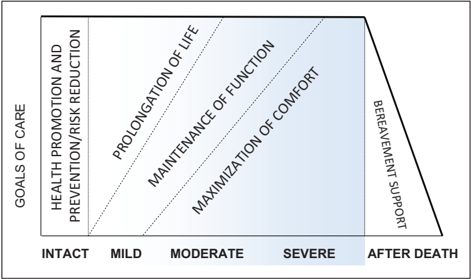
Background: Dementia is a life-limiting disease without curative treatments. Patients and families may need palliative care specific to dementia. Aim: To define optimal palliative care in dementia. Methods: Five-round Delphi study. Based on literature, a core group of 12 experts from 6 countries drafted a set of core domains with salient recommendations for each domain. We invited 89 experts from 27 countries to evaluate these in a two-round online survey with feedback. Consensus was determined according to predefined criteria. The fourth round involved decisions by the core team, and the fifth involved input from the European Association for Palliative Care. Results: A total of 64 (72%) experts from 23 countries evaluated a set of 11 domains and 57 recommendations. There was immediate and full consensus on the following eight domains, including the recommendations: person-centred care, communication and shared decision-making; optimal treatment of symptoms and providing comfort (these two identified as central to care and research); setting care goals and advance planning; continuity of care; psychosocial and spiritual support; family care and involvement; education of the health care team; and societal and ethical issues. After revision, full consensus was additionally reached for prognostication and timely recognition of dying. Recommendations on nutrition and dehydration (avoiding overly aggressive, burdensome or futile treatment) and on dementia stages in relation to care goals (applicability of palliative care) achieved moderate consensus. Conclusion: We have provided the first definition of palliative care in dementia based on evidence and consensus, a framework to provide guidance for clinical practice, policy and research.
Overview
The claims and statistics of this paper haven’t been checked yet.
Free: it reads the open-access text and checks the first 5 claims that cite a source we can check. Create a free account to check every claim.
Integrity signals
Registry
Cites
Statistics
Figures
Verification
Claims the paper makes
The claims and statistics of this paper haven’t been checked yet.
Free: it reads the open-access text and checks the first 5 claims that cite a source we can check. Create a free account to check every claim.
Claims other papers make about this one
Each is checked against this paper’s own text: does it say what the citing paper says it does?
The source backs part of the claim, not all of it — or backs it for a different population, condition or comparison.
In the citing paper
“While diagnostic disclosure has been a focus of dementia research and palliative dementia care has emerged as a critical domain that focuses on improving care at end-of-life, 25 those CPs who find themselves caregiving between or into these stages remain understudied.”
From Care setting transitions for people with dementia: Qualitative perspectives of current and former care partners (2023) · cites this paper as [25]
Experimental — accuracy not yet measuredThe cited source says what the claim attributes to it.
In the citing paper
“ACP is recommended for individuals living with dementia”
From Acceptability of the voice your values, an advance care planning intervention in persons living with mild dementia using videoconferencing technology (2022) · cites this paper as [5]
The check wasn’t confident either way, so it gives no verdict — never disputed.
In the citing paper
“ACP is recommended for individuals living with dementia, yet it is uncommon in clinical practice [5–7].”
From Acceptability of the voice your values, an advance care planning intervention in persons living with mild dementia using videoconferencing technology (2022) · cites this paper as [5]
Experimental — accuracy not yet measured
Self-check
Percentages, sums and reported differences re-computed from the paper’s own numbers.
The self-check needs the paper’s full text.
Citations
Cites
Early Palliative Care for Patients with Metastatic Non–Small-Cell Lung Cancer
Temel, J. S., Greer, J. A., Muzikansky, A., Gallagher, E. R., Admane, S., Jackson, V. A., Dahlin, C. M., Blinderman, C. D., Jacobsen, J., Pirl, W. F., et al. (2010) · New England Journal of Medicine · doi:10.1056/nejmoa1000678 · Cited by 7,482
Research guidelines for the Delphi survey technique
Hasson, F. (2000) · Journal of Advanced Nursing · doi:10.1046/j.1365-2648.2000.01567.x · Cited by 5,951
The Delphi technique: myths and realities
Powell, C. (2003) · Journal of Advanced Nursing · doi:10.1046/j.1365-2648.2003.02537.x · Cited by 2,584
Steinhauser, K. E. (2000) · JAMA · doi:10.1001/jama.284.19.2476 · Cited by 2,514
Dementia: a public health priority
Acosta, D. M., Krishnamoorthy, E. S., Wortmann, M., Prince, M. J., & Saxena, S. (2012) · Cited by 1,955
The Clinical Course of Advanced Dementia.
Mitchell, S. L., Teno, J. M., Kiely, D. K., Shaffer, M. L., Jones, R. N., Prigerson, H. G., Volicer, L., Givens, J. L., & Hamel, M. B. (2009) · New England Journal of Medicine · doi:10.1056/nejmoa0902234 · Cited by 1,618
Self-citationPatterns of Functional Decline at the End of Life
Lunney, J. R. (2003) · JAMA · doi:10.1001/jama.289.18.2387 · Cited by 1,416
CRISP, J., PELLETIER, D., DUFFIELD, C., ADAMS, A., & NAGY, S. (1997) · Nursing Research · doi:10.1097/00006199-199703000-00010 · Cited by 1,388
Trajectories of disability in the last year of life
Gill, T. M., Gahbauer, E. A., Han, L., & Allore, H. G. (2010) · New England Journal of Medicine · doi:10.1056/nejmoa0909087 · Cited by 894
ALZHEIMER'S DISEASE INTERNATIONAL
Graham, N., & Brodaty, H. (1997) · International Journal of Geriatric Psychiatry · doi:10.1002/(sici)1099-1166(199707)12:7<737::aid-gps625>3.0.co;2-b · Cited by 851
Research works printed but not linked: 4
- 33. Herr K, Bursch H, Ersek M, et al. Use of pain-behavioral assessment tools in the nursing home: expert consensus recommendations for practice. J Gerontol Nurs 2010; 36(3): 18-29; quiz 30-31.
- 35. UK Central Office of Information (COI). End of Life Care Strategy - promoting high quality care for all adults at the end of life . London: Department of Health, 2008.
- 45. National Council for Palliative Care (NCPC). Out of the shadows: end of life care for people with dementia . London: National Council for Palliative Care (NCPC), 2009.
- 48. Tilly J. Quality end of life care for individuals with dementia in assisted living and nursing homes and public policy barriers to delivering this care . Chicago, IL: US Alzheimer's Association, 2006.
Cited by
Dementia prevention, intervention, and care
Livingston, G., Sommerlad, A., Orgeta, V., Costafreda, S. G., Huntley, J., Ames, D., Ballard, C., Banerjee, S., Burns, A., Cohen-Mansfield, J., et al. (2017) · The Lancet · doi:10.1016/s0140-6736(17)31363-6 · Cited by 6,072
Jünger, S., Payne, S. A., Brine, J., Radbruch, L., & Brearley, S. G. (2017) · Palliative Medicine · doi:10.1177/0269216317690685 · Cited by 2,210
“scale (n=6) referring to the original RAND UCLA method 32-34,45,47-49,60 or a 5-point Likert scale (35,36,42,46,51,53,61,62,64), but 6- / 7- / 10- or 11-point scales were also used.(37,38,41,45,51,53,57,59,62) Some studies used a ranking (n=4) 30,31,40,43,58 or selection of items (n=3) 39,52,63 rather than a”
Self-citationSudore, R. L., Lum, H. D., You, J. J., Hanson, L. C., Meier, D. E., Pantilat, S. Z., Matlock, D. D., Rietjens, J. A. C., Korfage, I. J., Ritchie, C. S., et al. (2017) · Journal of Pain and Symptom Management · doi:10.1016/j.jpainsymman.2016.12.331 · Cited by 1,726
Rietjens, J. A. C., Sudore, R. L., Connolly, M., van Delden, J. J., Drickamer, M. A., Droger, M., van der Heide, A., Heyland, D. K., Houttekier, D., Janssen, D. J. A., et al. (2017) · The Lancet Oncology · doi:10.1016/s1470-2045(17)30582-x · Cited by 1,371
“A smaller median indicates more agreement; a median of 1 indicated very strong agreement, and a median of 2 indicated strong agreement.(17) Consensus was calculated by the interquartile range (IQR), which represents the distance between the 25th and the 75th percentile value of ratings.”
The Alzheimer’s Disease Clinical Spectrum
Atri, A. (2019) · Medical Clinics of North America · doi:10.1016/j.mcna.2018.10.009 · Cited by 623
“In the end or terminal stages of AD, when personhood has disintegrated and when there is no meaningful communication or interaction, patients should only receive care (pharmacologic or otherwise) that is directed to provide palliation and comfort.(131)”
Belton, I., MacDonald, A., Wright, G., & Hamlin, I. (2019) · Technological Forecasting and Social Change · doi:10.1016/j.techfore.2019.07.002 · Cited by 474
Outcomes That Define Successful Advance Care Planning: A Delphi Panel Consensus
Sudore, R. L., Heyland, D. K., Lum, H. D., Rietjens, J. A. C., Korfage, I. J., Ritchie, C. S., Hanson, L. C., Meier, D. E., Pantilat, S. Z., Lorenz, K., et al. (2018) · Journal of Pain and Symptom Management · doi:10.1016/j.jpainsymman.2017.08.025 · Cited by 354
“Consensus was defined as an interquartile range (IQR) of 0, indicating very strong consensus.(3, 18, 31) We anticipated requiring at least 3 rounds, one to finalize the organizing framework, domains, and outcome constructs and two rounds for consensus.”
MethodCurrent and future treatments in Alzheimer’s disease
Atri, A. (2019) · Seminars in Neurology · doi:10.1055/s-0039-1678581 · Cited by 309
Advance care planning in dementia: recommendations for healthcare professionals.
Piers, R., Albers, G., Gilissen, J., De Lepeleire, J., Steyaert, J., Van Mechelen, W., Steeman, E., Dillen, L., Vanden Berghe, P., & Van den Block, L. (2018) · BMC Palliative Care · doi:10.1186/s12904-018-0332-2 · Cited by 254
Dixon, J., Karagiannidou, M., & Knapp, M. (2018) · Journal of Pain and Symptom Management · doi:10.1016/j.jpainsymman.2017.04.009 · Cited by 245
Sampson, E. L., Candy, B., Davis, S., Gola, A. B., Harrington, J., King, M., Kupeli, N., Leavey, G., Moore, K., Nazareth, I., et al. (2018) · Palliative Medicine · doi:10.1177/0269216317726443 · Cited by 213
Factors Associated with Initiation of Advance Care Planning in Dementia: A Systematic Review
van der Steen, J. T., van Soest-Poortvliet, M. C., Hallie-Heierman, M., Onwuteaka-Philipsen, B. D., Deliens, L., de Boer, M. E., Van den Block, L., van Uden, N., Hertogh, C. M. P. M., & de Vet, H. C. W. (2014) · Journal of Alzheimer's Disease · doi:10.3233/jad-131967 · Cited by 204
“In spite of evidence still being sparse, there is a consensus among experts around the globe that planning ahead regarding end-of-life issues can be beneficial in dementia, and that ACP preferably starts early, which maybe around diagnosis, anticipating the patient’s cognitive decline [11].”
Self-citationHill, L., Prager Geller, T., Baruah, R., Beattie, J. M., Boyne, J., de Stoutz, N., Di Stolfo, G., Lambrinou, E., Skibelund, A. K., Uchmanowicz, I., et al. (2020) · European Journal of Heart Failure · doi:10.1002/ejhf.1994 · Cited by 176
Wendrich-van Dael, A., Bunn, F., Lynch, J., Pivodic, L., Van den Block, L., & Goodman, C. (2020) · International Journal of Nursing Studies · doi:10.1016/j.ijnurstu.2020.103576 · Cited by 192
Diehl, E., Rieger, S., Letzel, S., Schablon, A., Nienhaus, A., Pinzón, L. C. E., & Dietz, P. (2021) · PLoS ONE · doi:10.1371/journal.pone.0245798 · Cited by 217
“At the same time, cancer patients, patients with non-oncological diseases, multimorbid patients [3] and patients suffering from dementia [4] are to benefit from palliative care.”
BackgroundPayne, S. A., Harding, A. J. E., Williams, T., Ling, J., & Ostgathe, C. (2022) · Palliative Medicine · doi:10.1177/02692163221074547 · Cited by 185
Husebo, B. S., Achterberg, W., & Flo, E. (2016) · CNS Drugs · doi:10.1007/s40263-016-0342-7 · Cited by 162
“We further extended our search to studies that included dying people with dementia because it is widely acknowledged that dementia is a life-limiting disease with considerable pain and symptom burden in the last days and hours of life [31, 56, 57].”
BackgroundPalliative Care in Advanced Dementia
Eisenmann, Y., Golla, H., Schmidt, H., Voltz, R., & Perrar, K. M. (2020) · Frontiers in Psychiatry · doi:10.3389/fpsyt.2020.00699 · Cited by 196
“Still shared decision making with the person with dementia, family caregiver and health professionals is the goal (105).”
BackgroundInfluentialHendriks, S. A., Smalbrugge, M., Galindo‐Garre, F., Hertogh, C. M. P. M., & van der Steen, J. T. (2015) · Journal of the American Medical Directors Association · doi:10.1016/j.jamda.2014.12.016 · Cited by 158
Self-citationPalliative care interventions in advanced dementia
Murphy, E., Froggatt, K., Connolly, S., O'Shea, E., Sampson, E. L., Casey, D., & Devane, D. (2016) · Cochrane Database of Systematic Reviews · doi:10.1002/14651858.cd011513.pub2 · Cited by 127
Reyniers, T., Deliëns, L., Pasman, H. R. W., Morin, L., Addington-Hall, J. M., Frova, L., Cárdenas-Turanzas, M., Onwuteaka-Philipsen, B. D., Naylor, W. A., Ruíz-Ramos, M., et al. (2014) · Journal of the American Medical Directors Association · doi:10.1016/j.jamda.2014.11.003 · Cited by 154
Equity in the provision of palliative care in the UK: review of evidence
Dixon, J., King, D., Matosevic, T., Clark, M., & Knapp, M. R. J. (2015) · London School of Economics and Political Science Research Online (London School of Economics and Political Science) · Cited by 174
Enteral tube feeding for people with severe dementia
Davies, N., Barrado‐Martín, Y., Vickerstaff, V., Rait, G., Fukui, A., Candy, B., Smith, C. H., Manthorpe, J., Moore, K. J., & Sampson, E. L. (2021) · Cochrane Database of Systematic Reviews · doi:10.1002/14651858.cd013503.pub2 · Cited by 148
Gonella, S., Basso, I., Marinis, M. G. D., Campagna, S., & Giulio, P. D. (2019) · Palliative Medicine · doi:10.1177/0269216319840275 · Cited by 142
Jansen, B. D. W., Brazil, K., Passmore, P., Buchanan, H., Maxwell, D., McIlfatrick, S., Morgan, S. M., Watson, M., & Parsons, C. (2017) · Journal of Clinical Nursing · doi:10.1111/jocn.13442 · Cited by 152
Mueller, C., Soysal, P., Rongve, A., Işık, A. T., Thompson, T., Maggi, S., Smith, L., Basso, C., Stewart, R. J., Ballard, C. G., et al. (2019) · Ageing Research Reviews · doi:10.1016/j.arr.2019.01.005 · Cited by 125
Tilburgs, B., Vernooij-Dassen, M., Koopmans, R., van Gennip, H., Engels, Y., & Perry, M. (2018) · PLoS ONE · doi:10.1371/journal.pone.0198535 · Cited by 119
Self-citationMidtbust, M. H., Alnes, R. E., Gjengedal, E., & Lykkeslet, E. (2018) · BMC Health Services Research · doi:10.1186/s12913-018-3515-x · Cited by 133
Sommerbakk, R., Haugen, D. F., Tjora, A., Kaasa, S., & Hjermstad, M. J. (2016) · BMC Palliative Care · doi:10.1186/s12904-016-0132-5 · Cited by 102
End-of-life care: A qualitative study comparing the views of people with dementia and family carers
Poole, M., Bamford, C., McLellan, E., Lee, R. P., Exley, C., Hughes, J. C., Dening, K. H., & Robinson, L. A. (2017) · Palliative Medicine · doi:10.1177/0269216317736033 · Cited by 115
Self-citationIjaopo, E. O. (2017) · Translational Psychiatry · doi:10.1038/tp.2017.199 · Cited by 123
Advance care planning in dementia: recommendations for healthcare professionals
Harrison Dening, K., Sampson, E. L., & De Vries, K. (2019) · Palliative Care: Research and Treatment · doi:10.1177/1178224219826579 · Cited by 114
Fosse, A., Schaufel, M. A., Ruths, S., & Malterud, K. (2014) · Patient Education and Counseling · doi:10.1016/j.pec.2014.05.025 · Cited by 112
“However, the core values, needs and wishes apply to care and health services for nursing home patients [36,37].”
BackgroundQuality end-of-life care for dementia: What have family carers told us so far? A narrative synthesis
Davies, N., Maio, L., Rait, G., & Iliffe, S. (2014) · Palliative Medicine · doi:10.1177/0269216314526766 · Cited by 108
Defining end of life in dementia: A systematic review
Browne, B., Kupeli, N., Moore, K. J., Sampson, E. L., & Davies, N. (2021) · Palliative Medicine · doi:10.1177/02692163211025457 · Cited by 111
End of Life Care: A Scoping Review of Experiences of Advance Care Planning for People with Dementia
Jones, K., Birchley, G., Huxtable, R., Clare, L., Walter, T., & Dixon, J. (2016) · Dementia · doi:10.1177/1471301216676121 · Cited by 112
“While the importance of palliative care for people with dementia is recognised globally, a coordinated palliative care philosophy is lacking (Gott, Ibrahim, & Binstock, 2011; Houttekier, et al, 2010; van der Steen et al, 2013).”
BackgroundTilburgs, B., Vernooij-Dassen, M., Koopmans, R., Weidema, M., Perry, M., & Engels, Y. (2018) · BMC Geriatrics · doi:10.1186/s12877-018-0872-6 · Cited by 93
Self-citationWang, L., Sha, L., Lakin, J. R., Bynum, J., Bates, D. W., Hong, P., & Zhou, L. (2019) · JAMA Network Open · doi:10.1001/jamanetworkopen.2019.6972 · Cited by 105
van der Steen, J. T., Lemos Dekker, N., Gijsberts, M.-J. H. E., Vermeulen, L. H., Mahler, M. M., & The, B. A.-M. (2017) · BMC Palliative Care · doi:10.1186/s12904-017-0201-4 · Cited by 95
“From the EAPC Delphi study, based on both consensus and evidence [4], we identified the avoiding of treatment that is inappropriate or futile in this phase, and a new or renewed focus on comfort as particularly important.”
BackgroundMethodDichter, M., Sander, M., Seismann-Petersen, S., & Köpke, S. (2020) · International Psychogeriatrics · doi:10.1017/s1041610220000897 · Cited by 124
“Moreover, between 70% and 80% of nursing home residents are affected by dementia (Helvik et al., 2015; Rothgang, 2010), a life-limiting disease requiring palliative care (van der Steen et al., 2014).”
BackgroundMoore, K. J., Candy, B., Davis, S., Gola, A., Harrington, J., Kupeli, N., Vickerstaff, V., King, M., Leavey, G., Nazareth, I., et al. (2017) · BMJ Open · doi:10.1136/bmjopen-2016-015515 · Cited by 93
Consensus definition of advance care planning in dementia: A 33‐country Delphi study
van der Steen, J. T., Nakanishi, M., den Block, L. V., Giulio, P. D., Gonella, S., der Schmitten, J. I., Sudore, R. L., Dening, K. H., Parker, D., Mimica, N., et al. (2023) · Alzheimer s & Dementia · doi:10.1002/alz.13526 · Cited by 103
“∙ Fluctuating capacity was visualized in relation to roles and engaging stakeholders.”
Self-citationKnowledge regarding advance care planning: A systematic review
Schiffman, I. K., & Werner, P. (2017) · Archives of Gerontology and Geriatrics · doi:10.1016/j.archger.2017.07.012 · Cited by 98
Bamford, C., Lee, R. P., McLellan, E., Poole, M., Dening, K. H., Hughes, J. C., Robinson, L. A., & Exley, C. (2018) · BMC Geriatrics · doi:10.1186/s12877-018-0983-0 · Cited by 101
Self-citationDavies, N., Mathew, R., Wilcock, J., Manthorpe, J., Sampson, E. L., Lamahewa, K., & Iliffe, S. (2016) · BMC Palliative Care · doi:10.1186/s12904-016-0146-z · Cited by 95
“feeding increases quality of life, [52] and a general consensus from International EAPC recommendations that permanent artificial feeding should be avoided [17].”
BackgroundMethodInfluentialPalliative care interventions in advanced dementia
Walsh, S., Murphy, E., Devane, D., Sampson, E. L., Connolly, S., Carney, P. A., & O’Shea, E. (2021) · Cochrane Database of Systematic Reviews · doi:10.1002/14651858.cd011513.pub3 · Cited by 104
Jansen, B. D. W., Brazil, K., Passmore, P., Buchanan, H., Maxwell, D., McIlfatrick, S., Morgan, S. M., Watson, M., & Parsons, C. (2017) · BMC Palliative Care · doi:10.1186/s12904-017-0184-1 · Cited by 101
Abreu, W., Tolson, D., Jackson, G. A., & Costa, N. (2020) · Dementia · doi:10.1177/1471301218773842 · Cited by 76
Sizoo, E. M., Monnier, A. A., Bloemen, M., Hertogh, C. M. P. M., & Smalbrugge, M. (2020) · Journal of the American Medical Directors Association · doi:10.1016/j.jamda.2020.10.024 · Cited by 83
Self-citationWang, C., Song, P., & Niu, Y. (2022) · BioScience Trends · doi:10.5582/bst.2022.01042 · Cited by 86
Fortinsky, R. H., & Downs, M. (2014) · Health Affairs · doi:10.1377/hlthaff.2013.1304 · Cited by 82
Ellis-Smith, C. I., Evans, C., Murtagh, F. E., Henson, L. A., Firth, A. M., Higginson, I. J., Daveson, B. A., & BuildCARE, O. B. O. (2016) · Palliative Medicine · doi:10.1177/0269216316675096 · Cited by 87
“33 Our findings help deliver this through the provision of data on a new measure for this population.”
BackgroundVerreault, R., Arcand, M., Misson, L., Durand, P. J., Kröger, E., Aubin, M., Savoie, M., Hadjistavropoulos, T., Kaasalainen, S., Bédard, A., et al. (2017) · Palliative Medicine · doi:10.1177/0269216317719588 · Cited by 87
Bolt, S., van der Steen, J. T., Mujezinovíc, I., Janssen, D. J. A., Schols, J. M. G. A., Zwakhalen, S. M. G., Khemai, C., Knapen, E. P. A. G. M., Dijkstra, L., & Meijers, J. M. M. (2020) · International Journal of Nursing Studies · doi:10.1016/j.ijnurstu.2020.103781 · Cited by 85
Smedbäck, J., Öhlén, J., Årestedt, K., Alvariza, A., Fürst, C.-J., & Håkanson, C. (2017) · Palliative & Supportive Care · doi:10.1017/s1478951516000948 · Cited by 82
Factors influencing palliative care in advanced dementia: a systematic review
Mataqi, M., & Aslanpour, Z. (2019) · BMJ Supportive & Palliative Care · doi:10.1136/bmjspcare-2018-001692 · Cited by 81
Supporting families in end-of-life care and bereavement in the COVID-19 era
Moore, K. J., Sampson, E. L., Kupeli, N., & Davies, N. (2020) · International Psychogeriatrics · doi:10.1017/s1041610220000745 · Cited by 81
“Guidelines generally recommend that these discussions take place during the early stages of a disease trajectory, in particular, in conditions where mental capacity may become compromised such as dementia (van der Steen et al., 2014).”
BackgroundBurns, M., & McIlfatrick, S. (2015) · International Journal of Palliative Nursing · doi:10.12968/ijpn.2015.21.8.400 · Cited by 96
Tuffrey‐Wijne, I., McLaughlin, D., Curfs, L., Dusart, A., Hoenger, C., McEnhill, L., Read, S., Ryan, K., Satgé, D., Straßer, B., et al. (2015) · Palliative Medicine · doi:10.1177/0269216315600993 · Cited by 87
Balancing the struggle to live with dementia: a systematic meta-synthesis of coping
Bjørkløf, G. H., Helvik, A., Ibsen, T. L., Telenius, E. W., Grov, E. K., & Eriksen, S. (2019) · BMC Geriatrics · doi:10.1186/s12877-019-1306-9 · Cited by 83
“During progression of this decline the need for help from others are unavoidable and the focus moves from maintenance of daily functioning and activities in early phase towards comfort and well-being in late stage [3].”
BackgroundStacpoole, M., Hockley, J., Thompsell, A., Simard, J., & Volicer, L. (2017) · Annals of Palliative Medicine · doi:10.21037/apm.2017.06.26 · Cited by 84
“A palliative care approach to dementia is now widely accepted (7), with quality of life for the patient and his/her family established as the principal goal of care.”
BackgroundSelf-citationPennbrant, S., Hjorton, C., Nilsson, C., & Karlsson, M. (2020) · Journal of Clinical Nursing · doi:10.1111/jocn.15415 · Cited by 88
Moore, K. J., Davis, S., Gola, A., Harrington, J., Kupeli, N., Vickerstaff, V., King, M., Leavey, G., Nazareth, I., Jones, L., et al. (2017) · BMC Geriatrics · doi:10.1186/s12877-017-0523-3 · Cited by 76
“The European Association for Palliative Care published recommendations for optimal palliative care for people with dementia and includes recommendations on meeting the needs of family carers covering burden, grief, and need for information and support throughout dementia [6].”
Anticipatory grief of spousal and adult children caregivers of people with dementia
Cheung, D. S. K., Ho, K. H. M., Cheung, T. F., Lam, S. C., & Tse, M. M. Y. (2018) · BMC Palliative Care · doi:10.1186/s12904-018-0376-3 · Cited by 75
Agar, M., Luckett, T., Luscombe, G., Phillips, J., Beattie, E., Pond, D., Mitchell, G., Davidson, P. M., Cook, J., Brooks, D., et al. (2017) · PLOS ONE · doi:10.1371/journal.pone.0181020 · Cited by 74
Gonella, S., Basso, I., Dimonte, V., Martin, B., Berchialla, P., Campagna, S., & Di Giulio, P. (2019) · Journal of the American Medical Directors Association · doi:10.1016/j.jamda.2018.10.001 · Cited by 74
Beernaert, K., Deliëns, L., Pardon, K., den Block, L. V., Devroey, D., Chambaere, K., & Cohen, J. (2015) · PLoS ONE · doi:10.1371/journal.pone.0137251 · Cited by 74
Ampe, S., Sevenants, A., Smets, T., Declercq, A., & Audenhove, C. V. (2016) · Patient Education and Counseling · doi:10.1016/j.pec.2016.08.010 · Cited by 74
Martinsson, L., Lundström, S., & Sundelöf, J. E. (2018) · PLoS ONE · doi:10.1371/journal.pone.0201051 · Cited by 74
McWilliams, L., Farrell, C., Grande, G., Keady, J. D., Swarbrick, C., & Yorke, J. (2017) · Aging & Mental Health · doi:10.1080/13607863.2017.1348476 · Cited by 77
Decision aids to support decision-making in dementia care: a systematic review
Davies, N., Schiowitz, B., Rait, G., Vickerstaff, V., & Sampson, E. L. (2019) · International Psychogeriatrics · doi:10.1017/s1041610219000826 · Cited by 74
Froggatt, K. A., Moore, D. C., den Block, L. V., Ling, J., Payne, S. A., den Block, L. V., Arrue, B., Barańska, I., Moore, D. C., Deliëns, L., et al. (2020) · Journal of the American Medical Directors Association · doi:10.1016/j.jamda.2020.01.009 · Cited by 72
Fleming, R., Kelly, F., & Stillfried, G. E. (2015) · BMC Palliative Care · doi:10.1186/s12904-015-0026-y · Cited by 83
“Delphi surveys are an iterative method used to reach consensus of a group of experts on a particular issue [32] and have been used to assist in defining palliation in dementia care [7].”
BackgroundMethodSymptoms and treatment when death is expected in dementia patients in long-term care facilities
Klapwijk, M. S., Caljouw, M. A. A., van Soest‐Poortvliet, M. C., van der Steen, J. T., & Achterberg, W. P. (2014) · BMC Geriatrics · doi:10.1186/1471-2318-14-99 · Cited by 79
Beck, E., McIlfatrick, S., Hasson, F., & Leavey, G. (2017) · Journal of Clinical Nursing · doi:10.1111/jocn.13690 · Cited by 80
“Furthermore, whilst there is an increased emphasis from policy to embed ACP into practice (van der Steen et al. 2014a), research studies undertaken in the USA (Cavalieri et al. 2002) and Europe (Rurup et al. 2006, Vandervoort et al. 2014), indicate that health professionals, including nurses, are…”
BackgroundResultInfluentialWiggins, N., Droney, J., Mohammed, K., Riley, J., & Sleeman, K. E. (2019) · Age and Ageing · doi:10.1093/ageing/afz015 · Cited by 75
“Despite its prominence in national and international strategies, [13, 14] there is a paucity of research addressing preferred place of death in people with dementia [15].”
BackgroundCarter, G., McLaughlin, D., Kernohan, G. W., Hudson, P., Clarke, M. J., Froggatt, K. A., Passmore, P., & Brazil, K. (2018) · Journal of Advanced Nursing · doi:10.1111/jan.13576 · Cited by 76
“This requires education founded on the EAPC’s 11 domains of best practice in palliative care provision for people with dementia and their family carers (van der Steen et al., 2014).”
BackgroundInfluentialEvans, N., Pasman, H. R. W., Donker, G., Deliëns, L., den Block, L. V., Onwuteaka-Philipsen, B. D., EUROIMPACT, O. B. O., den Block, L. V., Groote, Z. D., Brearley, S. G., et al. (2014) · Palliative Medicine · doi:10.1177/0269216314526271 · Cited by 75
“Options for palliative treatment 365 (81) 1 70 (44) 0.”
BackgroundInfluentialSelf-citationNakanishi, M., Nakashima, T., Shindo, Y., Miyamoto, Y., Gove, D., Radbruch, L., & van der Steen, J. T. (2015) · International Psychogeriatrics · doi:10.1017/s1041610215000150 · Cited by 69
Self-citationJohnston, B. M., Lawton, S., McCaw, C., Law, E., Murray, J., Gibb, J., Pringle, J., Munro, G., & Rodriguez, C. (2015) · International Journal of Older People Nursing · doi:10.1111/opn.12103 · Cited by 74
“Dementia has been recognised as being a palliative condition (van der Steen et al 2013).”
Backgroundden Block, L. V., Smets, T., van Dop, N., Adang, E., Andreasen, P., Moore, D. C., Engels, Y., Finne‐Soveri, H., Froggatt, K. A., Gambassi, G., et al. (2016) · Journal of the American Medical Directors Association · doi:10.1016/j.jamda.2016.03.008 · Cited by 77
Bolt, S., van der Steen, J. T., Schols, J. M. G. A., Zwakhalen, S. M. G., Pieters, S., & Meijers, J. M. M. (2019) · International Journal of Nursing Studies · doi:10.1016/j.ijnurstu.2018.12.011 · Cited by 72
Midtbust, M. H., Alnes, R. E., Gjengedal, E., & Lykkeslet, E. (2018) · BMC Palliative Care · doi:10.1186/s12904-018-0282-8 · Cited by 83
“Communicating with patients and families of people with dementia requires special skills due to the cognitive problems that complicate decision making [10, 11].”
BackgroundInfluentialQuality palliative care for cancer and dementia in five European countries: some common challenges
Davies, N., Maio, L., Paap, J. V. R., Mariani, E., Jaspers, B., Sommerbakk, R., Grammatico, D., Manthorpe, J., Ahmedzai, S., Vernooij-Dassen, M., et al. (2014) · Aging & Mental Health · doi:10.1080/13607863.2013.843157 · Cited by 60
Froggatt, K. A., Best, A., Bunn, F., Burnside, G., Coast, J., Dunleavy, L., Goodman, C. M., Hardwick, B., Jackson, C., Kinley, J., et al. (2020) · Health Technology Assessment · doi:10.3310/hta24060 · Cited by 75
“There is therefore a need for appropriate care that will ensure a good quality of life and a good quality of dying.(13,16)”
BackgroundEnd‐of‐life treatment decisions in nursing home residents dying with dementia in the Netherlands
Hendriks, S. A., Smalbrugge, M., Deliëns, L., Koopmans, R. T. C. M., Onwuteaka-Philipsen, B. D., Hertogh, C. M. P. M., & van der Steen, J. T. (2016) · International Journal of Geriatric Psychiatry · doi:10.1002/gps.4650 · Cited by 71
“…of perspectives avoids the risk of recall bias involved in fully retrospective studies and provides the benefit of understanding how the truncated longitudinal sample differs from a representative sample of residents who died with dementia in Dutch nursing homes (van der Steen et al. 2014b).”
BackgroundMethodSelf-citationMcInerney, F., Doherty, K., Bindoff, A. D., Robinson, A., & Vickers, J. C. (2017) · Palliative Medicine · doi:10.1177/0269216317743433 · Cited by 68
Duties to Care: Dementia, Relationality and Law
Harding, R. (2017) · Cambridge University Press eBooks · doi:10.1017/9781316160688 · Cited by 112
Palliative care for people with dementia living at home: A systematic review of interventions
Miranda, R., Bunn, F., Lynch, J. K., den Block, L. V., & Goodman, C. M. (2019) · Palliative Medicine · doi:10.1177/0269216319847092 · Cited by 72
Huang, H., Lu, W.-R., Liu, C., & Chang, H. (2020) · PLoS ONE · doi:10.1371/journal.pone.0240684 · Cited by 66
“Currently, there is no cure for dementia, thus it is considered to be an end-stage disease requiring hospice-palliative care in the late stages [9].”
Backgroundvan Soest‐Poortvliet, M. C., van der Steen, J. T., Gutschow, G., Deliëns, L., Onwuteaka-Philipsen, B. D., de Vet, H. C. W., & Hertogh, C. M. P. M. (2015) · Journal of the American Medical Directors Association · doi:10.1016/j.jamda.2015.06.015 · Cited by 66
Self-citationFox, S., Fitzgerald, C., Dening, K. H., Irving, K., Kernohan, G. W., Treloar, A. J., Oliver, D., Guérin, S., & Timmons, S. (2017) · BMC Palliative Care · doi:10.1186/s12904-017-0221-0 · Cited by 73
“A Delphi Study on palliative care for people with dementia, produced as a White Paper from the EAPC [27], found that the areas for research that received the highest importance ratings were person-centred care, communication and shared decision making; optimal treatment of symptoms and providing comfort, setting care…”
Watson, J. (2016) · Dementia · doi:10.1177/1471301216682880 · Cited by 61
Ashton, S. E., Roe, B., Jack, B., & McClelland, B. (2016) · Dementia · doi:10.1177/1471301214548521 · Cited by 51
The extended palliative phase of dementia – An integrative literature review
Hanson, E. J., Hellström, A., Sandvide, Å., Jackson, G. A., MacRae, R., Jack-Waugh, A., Abreu, W., & Tolson, D. (2016) · Dementia · doi:10.1177/1471301216659797 · Cited by 60
Sandvik, R. K. N. M., Selbæk, G., Bergh, S., Aarsland, D., & Husebo, B. S. (2016) · Journal of the American Medical Directors Association · doi:10.1016/j.jamda.2016.05.006 · Cited by 72
Lee, R. P., Bamford, C., Poole, M., McLellan, E., Exley, C., & Robinson, L. A. (2017) · PLoS ONE · doi:10.1371/journal.pone.0179355 · Cited by 59
Tilburgs, B., Koopmans, R. T. C. M., Vernooij-Dassen, M. J. F. J., Adang, E., Schers, H., Teerenstra, S., van de Pol, M. H. J., Smits, C. H. M., Engels, Y., & Perry, M. (2019) · Journal of the American Medical Directors Association · doi:10.1016/j.jamda.2019.09.010 · Cited by 65
Self-citationLi, R., Tan, X., Xu, Y., Zhang, K., Chen, X., Zhang, Y., Li, M., & Zhang, Y. (2020) · Sustainable Cities and Society · doi:10.1016/j.scs.2020.102581 · Cited by 59
What should we know about dementia in the 21st Century? A Delphi consensus study
Annear, M. J., Toye, C., McInerney, F., Eccleston, C., Tranter, B., Elliott, K.-E., & Robinson, A. (2015) · BMC Geriatrics · doi:10.1186/s12877-015-0008-1 · Cited by 58
“They determined that maximization of comfort for a person with dementia was the highest priority during the progression of the condition, underpinned by personcentred care, communication, shared decision making, advance planning, provision of physical comfort, and treatment of symptoms that reduce quality of life [14].”
BackgroundMethodInfluential
Metadata
- Authors
- van der Steen, J. T., Radbruch, L., Hertogh, C. M., de Boer, M. E., Hughes, J. C., Larkin, P., Francke, A. L., Jünger, S., Gove, D., Firth, P., Koopmans, R. T., Volicer, L., & on behalf of the European Association for Palliative Care (EAPC)
- Affiliations
- Department of General Practice & Elderly Care Medicine, EMGO Institute for Health and Care Research, VU University Medical Center, Amsterdam, the Netherlands
- University Hospital Bonn (DE)
- Amsterdam Public Health (NL)
- Northumbria Healthcare NHS Foundation Trust (GB)
- University College Dublin (IE)
- Netherlands Institute for Health Services Research (NL)
- Alzheimer Europe (LU)
- Lancaster University (GB)
- Radboud University Medical Center (NL)
- University of South Florida (US)
- ORCID
- Venue
- Palliative Medicine
- Publisher
- SAGE Publications
- Published
- 2013-07-04
- Volume
- 28
- Issue
- 3
- Pages
- 197-209
- ISSN
- 0269-2163 (ISSN-L)
- 1477-030X
- OpenAlex
- W2137200701
- Cited by
- 997
- References
- 57
- Citations by year
- 2026: 36 · 2025: 70 · 2024: 95 · 2023: 68 · 2022: 105 · 2021: 97 · 2020: 132 · 2019: 90 · 2018: 72 · 2017: 79 · 2016: 58 · 2015: 50 · 2014: 34 · 2013: 6
- FWCI
- 50.45
- Type
- journal article
- Language
- en
- Open access
- hybrid
- doi.org
- Licence
- cc-by-nc
- journals.sagepub.com/page/policies/text-and-data-mining-license (tdm)
- Locations
- Palliative Medicine (publishedVersion, cc-by-nc)
- PubMed (publishedVersion)
- Pure Amsterdam UMC (publishedVersion)
- Amsterdam UMC (VU Amsterdam) - Institutional Repository (publishedVersion)
- Radboud Repository (Radboud University) (submittedVersion)
- Data Archiving and Networked Services (DANS) (submittedVersion, other-oa)
- Bristol Research (University of Bristol) (submittedVersion)
- Lenus, The Irish Health Repository (Dr Steevens Hospital Library) (submittedVersion)
- Radboud Repository (Radboud University) (submittedVersion, other-oa)
- Data Archiving and Networked Services (DANS) (submittedVersion)
- Newcastle University ePrints (Newcastle Univesity) (cc-by-nc)
- Funders
- Ministerie van Volksgezondheid, Welzijn en Sport
- Nederlandse Organisatie voor Wetenschappelijk Onderzoek (916.66.073, 91711339)
- Topics
- Health Sciences › Medicine › Public Health, Environmental and Occupational Health › Palliative Care and End-of-Life Issues
- Health Sciences › Medicine › Public Health, Environmental and Occupational Health › Palliative and Oncologic Care
- Health Sciences › Medicine › Psychiatry and Mental health › Dementia and Cognitive Impairment Research
- Keywords
- palliative care, dementia, older adults, person-centred care, shared decision-making, symptom management, advance care planning, continuity of care, family involvement, outcome prediction, treatment goals, European Association for Palliative Care
- MeSH terms
- Adult, Aged, Aged, 80 and over, Delphi Technique, Dementia, Europe, Humans, Middle Aged, Palliative Care, Practice Guidelines as Topic, Consensus
About these checks
Registry, retraction, Cites and statistics results are computed, not judged, with one exception: a printed reference that no index lists is read once by a model before it counts as a citation error. Claims are extracted by a model and kept only when their quote appears verbatim in the text; each cited source is then checked, with a model’s help, for whether it says what the claim relies on. Those verdicts can be wrong — read the claim’s quote and the cited source before relying on one.
Statistics and arithmetic are recomputed, not judged.
Confidence bands are shown only for fields calibrated on our annotated test set. None is calibrated yet, so no band is shown.
What counts as a claim ›How we measure confidence ›How we check this ›
Are you an author, or do you see a problem with this page? Request a review
Data sources
Bibliographic data: Semantic Scholar, OpenAlex, Crossref.
Contains information from the Semantic Scholar Academic Graph Datasets, made available under the ODC Attribution License (ODC-BY 1.0).
Semantic Scholar’s data is described in: Kinney, R., et al. (2023). The Semantic Scholar Open Data Platform. arXiv:2301.10140.
