

Propranolol for the treatment of anxiety disorders: Systematic review and meta-analysis
Open accessThe DOI matches its Crossref record; 65 of the 65 references it cites were found in a registry or an index.
Abstract
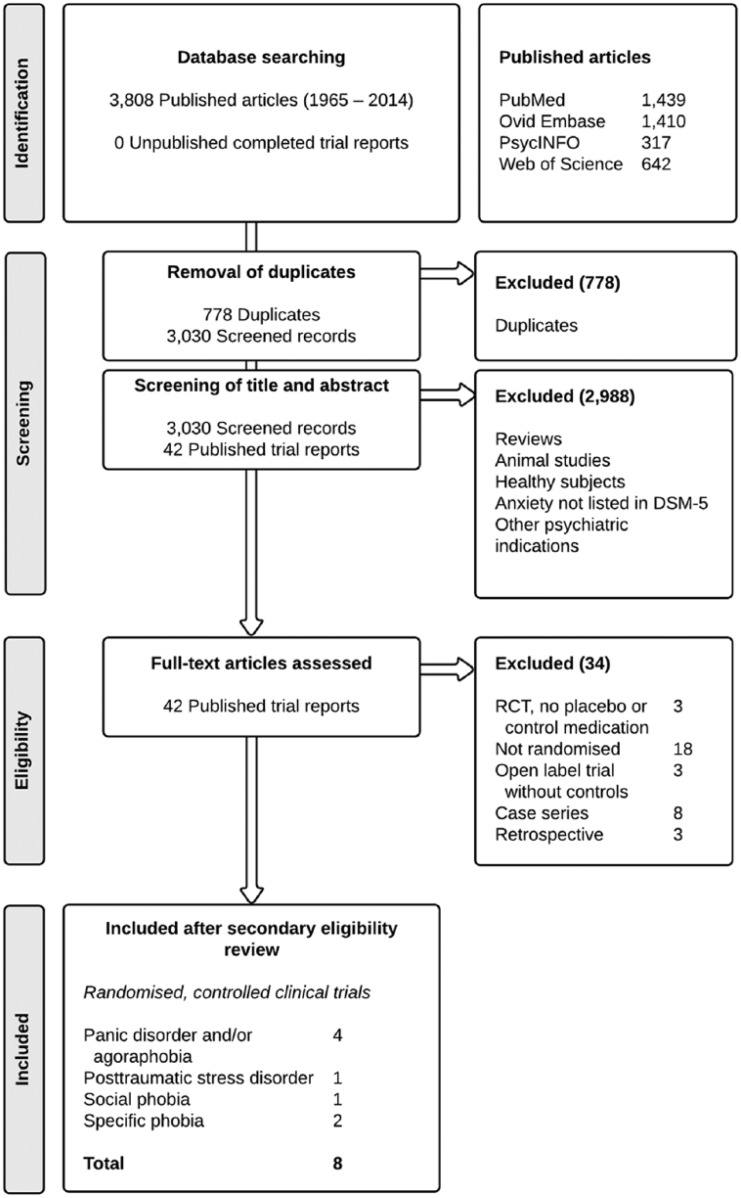
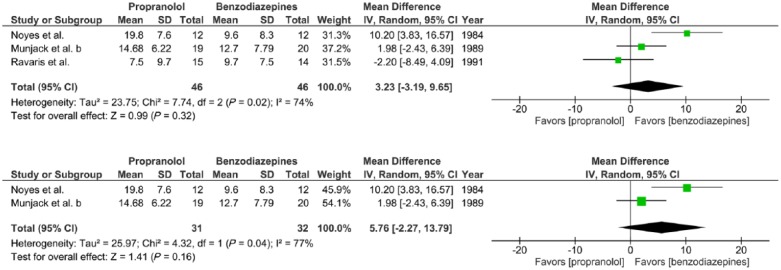
The effects of propranolol in the treatment of anxiety disorders have not been systematically evaluated previously. The aim was to conduct a systematic review and meta-analysis of randomised controlled trials, addressing the efficacy of oral propranolol versus placebo or other medication as a treatment for alleviating either state or trait anxiety in patients suffering from anxiety disorders. Eight studies met the inclusion criteria. These studies concerned panic disorder with or without agoraphobia (four studies, total n = 130), specific phobia (two studies, total n = 37), social phobia (one study, n = 16), and posttraumatic stress disorder (PTSD) (one study, n = 19). Three out of four panic disorder trials qualified for pooled analyses. These meta-analyses found no statistically significant differences between the efficacy of propranolol and benzodiazepines regarding the short-term treatment of panic disorder with or without agoraphobia. Also, no evidence was found for effects of propranolol on PTSD symptom severity through inhibition of memory reconsolidation. In conclusion, the quality of evidence for the efficacy of propranolol at present is insufficient to support the routine use of propranolol in the treatment of any of the anxiety disorders.
Overview
The claims and statistics of this paper haven’t been checked yet.
Free: it reads the open-access text and checks the first 5 claims that cite a source we can check. Create a free account to check every claim.
Integrity signals
Registry
Cites
Statistics
Figures




Verification
Claims the paper makes
The claims and statistics of this paper haven’t been checked yet.
Free: it reads the open-access text and checks the first 5 claims that cite a source we can check. Create a free account to check every claim.
Claims other papers make about this one
Each is checked against this paper’s own text: does it say what the citing paper says it does?
The source backs part of the claim, not all of it — or backs it for a different population, condition or comparison.
In the citing paper
“There is some evidence that patients with 'performance only' social anxiety disorder may respond to beta-adrenergic blockers (such as propranolol or atenolol) 98 .”
From The clinical characterization of the adult patient with an anxiety or related disorder aimed at personalization of management (2021) · cites this paper as [98]
Experimental — accuracy not yet measuredIn the citing paper
“Subsequent trials were negative, and one meta-analysis concluded that there was no evidence for the utility of propranolol in limiting PTSD development 156 .”
From Post‐traumatic stress disorder: a state‐of‐the‐art review of evidence and challenges (2019) · cites this paper as [156]
Self-check
Percentages, sums and reported differences re-computed from the paper’s own numbers.
The self-check needs the paper’s full text.
Citations
Cites
Diagnostic and Statistical Manual of Mental Disorders
American Psychiatric Association (2013) · doi:10.1176/appi.books.9780890425596 · Cited by 116,369
Preferred Reporting Items for Systematic Reviews and Meta-Analyses: the PRISMA statement
Moher, D., Liberati, A., Tetzlaff, J., Altman, D. G., & for the PRISMA Group (2009) · BMJ · doi:10.1136/bmj.b2535 · Cited by 83,823
Preferred Reporting Items for Systematic Reviews and Meta-Analyses: The PRISMA Statement
Moher, D., Liberati, A., Tetzlaff, J., Altman, D. G., & The PRISMA Group (2009) · PLoS Medicine · doi:10.1371/journal.pmed.1000097 · Cited by 64,042
Preferred reporting items for systematic reviews and meta-analyses: the PRISMA Statement.
(2009) · PubMed Central · Cited by 44,859
Cochrane Handbook for Systematic Reviews of Interventions: Cochrane Book Series
(2008) · doi:10.1002/9780470712184 · Cited by 25,048
Preferred Reporting Items for Systematic Reviews and Meta-Analyses: The PRISMA Statement
Moher, D., Liberati, A., Tetzlaff, J., & Altman, D. G. (2009) · Journal of Clinical Epidemiology · doi:10.1016/j.jclinepi.2009.06.005 · Cited by 19,575
Wang, G., Ma, R., Qiao, G., Wada, K., Aizawa, Y., & Satoh, T. (2015) · Integrative Medicine International · doi:10.1159/000368408 · Cited by 18,657
The assessment of anxiety states by rating
HAMILTON, M. (1959) · British Journal of Medical Psychology · doi:10.1111/j.2044-8341.1959.tb00467.x · Cited by 11,455
January, C. T., Wann, L. S., Alpert, J. S., Calkins, H., Cigarroa, J. E., Cleveland, J. C., Conti, J. B., Ellinor, P. T., Ezekowitz, M. D., Field, M. E., et al. (2014) · Circulation · doi:10.1161/cir.0000000000000041 · Cited by 7,115
Diagnostic and Statistical Manual of Mental Disorders, 5th Edition
(2013) · American Psychiatric Association Publishing eBooks · doi:10.1176/appi.books.9780890425596.893619 · Cited by 4,383
Memory - A century of consolidation
McGaugh, J. L. (2000) · Science · doi:10.1126/science.287.5451.248 · Cited by 4,250
(2008) · Cited by 3,790
Assessing Risk of Bias in Included Studies
Higgins, J. P., & Altman, D. G. (2008) · Cochrane Handbook for Systematic Reviews of Interventions · doi:10.1002/9780470712184.ch8 · Cited by 3,396
Fuster, V., Rydén, L. E., Cannom, D. S., Crijns, H. J., Curtis, A. B., Ellenbogen, K. A., Halperin, J. L., Le Heuzey, J.-Y., Kay, G. N., Lowe, J. E., et al. (2006) · Circulation · doi:10.1161/circulationaha.106.177292 · Cited by 2,805 · cited 1×
“Clinically, propranolol is used widely to target peripheral sites of the noradrenergic system to treat hypertension, coronary artery disease and tachyarrhythmias (Freemantle et al., 1999; Fuster et al., 2006; Webb et al., 2010).”
BackgroundFear memories require protein synthesis in the amygdala for reconsolidation after retrieval
Nader, K., Schafe, G. E., & Le Doux, J. E. (2000) · Nature · doi:10.1038/35021052 · Cited by 2,706 · cited 1×
“…events), propranolol selectively blocks protein synthesis, thereby prohibiting the ‘reconsolidation’ of the fear memory while sparing declarative memory (Debiec and Ledoux, 2004; Finnie and Nader, 2012; Kindt et al., 2009; Merlo et al., 2014, 2015; Nader et al., 2000; Sevenster et al., 2013).”
BackgroundClark, D. M. (1986) · Behaviour Research and Therapy · doi:10.1016/0005-7967(86)90011-2 · Cited by 2,422
beta Blockade after myocardial infarction: systematic review and meta regression analysis
Freemantle, N., Cleland, J., Young, P., Mason, J., & Harrison, J. (1999) · BMJ · doi:10.1136/bmj.318.7200.1730 · Cited by 1,509
Molecular mechanisms of fear learning and memory
Johansen, J. P., Cain, C. K., Ostroff, L. E., & LeDoux, J. E. (2011) · Cell · doi:10.1016/j.cell.2011.10.009 · Cited by 1,012
Beyond extinction: erasing human fear responses and preventing the return of fear
Kindt, M., Soeter, M., & Vervliet, B. (2009) · Nature Neuroscience · doi:10.1038/nn.2271 · Cited by 826 · cited 4×
“…events), propranolol selectively blocks protein synthesis, thereby prohibiting the ‘reconsolidation’ of the fear memory while sparing declarative memory (Debiec and Ledoux, 2004; Finnie and Nader, 2012; Kindt et al., 2009; Merlo et al., 2014, 2015; Nader et al., 2000; Sevenster et al., 2013).”
BackgroundInfluentialChapter 16: Special Topics in Statistics
Higgins, J. P. T., Deeks, J. J., & Altman, D. (2008) · Cited by 730
Webb, A. J., Fischer, U., Mehta, Z., & Rothwell, P. M. (2010) · The Lancet · doi:10.1016/s0140-6736(10)60235-8 · Cited by 729
Schmidt, F. L., Oh, I., & Hayes, T. L. (2009) · British Journal of Mathematical and Statistical Psychology · doi:10.1348/000711007x255327 · Cited by 708 · cited 1×
“Results were combined using the random effects model, in order to prevent substantially overstated precision of final estimates of effects even when statistical heterogeneity was low (I2 < 60% and p > 0.10; Schmidt et al., 2009).”
MethodInfluentialBaldwin, D. S., Anderson, I. M., Nutt, D. J., Allgulander, C., Bandelow, B., den Boer, J. A., Christmas, D. M., Davies, S., Fineberg, N., Lidbetter, N., et al. (2014) · Journal of Psychopharmacology · doi:10.1177/0269881114525674 · Cited by 676
Dębiec, J., & Ledoux, J. E. (2004) · Neuroscience · doi:10.1016/j.neuroscience.2004.08.018 · Cited by 602 · cited 1×
“…events), propranolol selectively blocks protein synthesis, thereby prohibiting the ‘reconsolidation’ of the fear memory while sparing declarative memory (Debiec and Ledoux, 2004; Finnie and Nader, 2012; Kindt et al., 2009; Merlo et al., 2014, 2015; Nader et al., 2000; Sevenster et al., 2013).”
BackgroundBrunet, A., Orr, S. P., Tremblay, J., Robertson, K., Nader, K., & Pitman, R. K. (2008) · Journal of Psychiatric Research · doi:10.1016/j.jpsychires.2007.05.006 · Cited by 548
Black, J. W., Crowther, A. F., Shanks, R. G., Smith, L. H., & Dornhorst, A. C. (1964) · The Lancet · doi:10.1016/s0140-6736(64)91275-9 · Cited by 498 · cited 2×
“Propranolol, a ß1,2-adrenoreceptor antagonist, competes at receptor level with catecholamines, thereby blocking their orthosympathetic effects (Black et al., 1964).”
BackgroundMitte, K. (2005) · Journal of Affective Disorders · doi:10.1016/j.jad.2005.05.003 · Cited by 396
Prediction Error Governs Pharmacologically Induced Amnesia for Learned Fear
Sevenster, D., Beckers, T., & Kindt, M. (2013) · Science · doi:10.1126/science.1231357 · Cited by 305
Dissociating response systems: Erasing fear from memory
Soeter, M., & Kindt, M. (2010) · Neurobiology of Learning and Memory · doi:10.1016/j.nlm.2010.03.004 · Cited by 290
Paroxetine in the Treatment of Panic Disorder a Randomised, Double-Blind, Placebo-Controlled Study
Oehrberg, S., Christiansen, P. E., Behnke, K., Borup, A. L., Severin, B., Soegaard, J., Calberg, H., Judge, R., Ohrstrom, J. K., & Manniche, P. M. (1995) · British Journal of Psychiatry · doi:10.1192/bjp.167.3.374 · Cited by 261 · cited 1×
“SSRIs generally require a period of 2–4 weeks, while in some patients with panic disorder the onset of action may take up to 12 weeks (Michelson et al., 2001; Oehrberg et al., 1995).”
BackgroundRoy-Byrne, P. P., Craske, M. G., & Stein, M. B. (2006) · The Lancet · doi:10.1016/s0140-6736(06)69418-x · Cited by 245
Merlo, E., Milton, A. L., Goozée, Z. Y., Theobald, D. E., & Everitt, B. J. (2014) · The Journal of Neuroscience · doi:10.1523/jneurosci.4001-13.2014 · Cited by 242 · cited 1×
“…events), propranolol selectively blocks protein synthesis, thereby prohibiting the ‘reconsolidation’ of the fear memory while sparing declarative memory (Debiec and Ledoux, 2004; Finnie and Nader, 2012; Kindt et al., 2009; Merlo et al., 2014, 2015; Nader et al., 2000; Sevenster et al., 2013).”
BackgroundLonergan, M. H., Olivera-Figueroa, L. A., Pitman, R. K., & Brunet, A. (2013) · Journal of Psychiatry and Neuroscience · doi:10.1503/jpn.120111 · Cited by 237
The assessment and treatment of performance anxiety in musicians
(1991) · American Journal of Psychiatry · doi:10.1176/ajp.148.5.598 · Cited by 235 · cited 3×
“…favourable effects were found in the treatment of performance anxieties, in which enhanced sensitivity for adrenergic hyperactivation may similarly initiate the fear response (Brantigan et al., 1982; Brewer, 1972; Clark and Agras, 1991; Drew et al., 1985; Elman et al., 1998; Stone et al., 1973).”
BackgroundPharmacological management for agitation and aggression in people with acquired brain injury
Fleminger, S., Greenwood, R. R., & Oliver, D. L. (2006) · Cochrane Database of Systematic Reviews · doi:10.1002/14651858.cd003299.pub2 · Cited by 227
The role of metaplasticity mechanisms in regulating memory destabilization and reconsolidation
Finnie, P. S. B., & Nader, K. (2012) · Neuroscience & Biobehavioral Reviews · doi:10.1016/j.neubiorev.2012.03.008 · Cited by 189
Diazepam and Propranolol in Panic Disorder and Agoraphobia
Noyes, R. (1984) · Archives of General Psychiatry · doi:10.1001/archpsyc.1984.01790140077009 · Cited by 184
Effect of beta blockade and beta stimulation on stage fright.
Brantigan, C. O., Brantigan, T. A., & Joseph, N. (1982) · The American Journal of Medicine · doi:10.1016/0002-9343(82)90592-7 · Cited by 178
Otto, M. W., Tuby, K. S., Gould, R. A., McLean, R. Y. S., & Pollack, M. H. (2001) · American Journal of Psychiatry · doi:10.1176/appi.ajp.158.12.1989 · Cited by 162
EFFECT OF ADRENERGIC RECEPTOR BLOCKADE ON THE TACHYCARDIA OF THYROTOXICOSIS AND ANXIETY STATE
Turner, P., Granville-Grossman, K. L., & Smart, J. V. (1965) · The Lancet · doi:10.1016/s0140-6736(65)92340-8 · Cited by 162
Propranolol in the Control of Schizophrenic Symptoms
Yorkston, N. J., Zaki, S. A., Malik, M. K. U., Morrison, R. C., & Havard, C. W. H. (1974) · BMJ · doi:10.1136/bmj.4.5945.633 · Cited by 159 · cited 1×
“, 1987; Wheatley, 1969), substance disorder and withdrawal symptoms (Grosz, 1972), schizophrenia (Yorkston et al., 1974), autism (Ratey et al.”
BackgroundComparative Effects of Propranolol and Chlordiazepoxide in Anxiety States
Wheatley, D. (1969) · British Journal of Psychiatry · doi:10.1192/bjp.115.529.1411 · Cited by 117
Propranolol in Chronic Anxiety Disorders: A Controlled Study
Kathol, R. G. (1980) · Archives of General Psychiatry · doi:10.1001/archpsyc.1980.01780250047005 · Cited by 115
The Treatment of Social Phobia: Real-life Rehearsal with Nonprofessional Therapists
FALLOON, I. R. H., LLOYD, G. G., & HARPIN, R. E. (1981) · The Journal of Nervous and Mental Disease · doi:10.1097/00005053-198103000-00005 · Cited by 109 · cited 1×
“It reported absence of statistically significant effects of propranolol on state and trait anxiety 6 months follow-up after a social skills training (Falloon et al., 1981).”
BackgroundRatey, J. J., Bemporad, J. R., Sorgi, P., Bick, P. A., Polakoff, S., O’Driscoll, G. A., & Mikkelsen, E. J. (1987) · Journal of Autism and Developmental Disorders · doi:10.1007/bf01487073 · Cited by 96 · cited 1×
“…such as its use in the treatment of high trait anxiety (Becker, 1976; Kathol et al., 1980; Meibach et al., 1987; Wheatley, 1969), substance disorder and withdrawal symptoms (Grosz, 1972), schizophrenia (Yorkston et al., 1974), autism (Ratey et al., 1987), and aggression (Fleminger et al., 2006).”
BackgroundNARCOTIC WITHDRAWAL SYMPTOMS IN HEROIN USERS TREATED WITH PROPRANOLOL
Hj, G. (1972) · The Lancet · doi:10.1016/s0140-6736(72)91959-9 · Cited by 85
MUNJACK, D. J., CROCKER, B., CABE, D., BROWN, R., USIGLI, R., ZULUETA, A., MCMANUS, M., MCDOWELL, D., PALMER, R., & LEONARD, M. (1989) · Journal of Clinical Psychopharmacology · doi:10.1097/00004714-198902000-00005 · Cited by 81 · cited 10×
“…in panic disorder with or without agoraphobia (outcome: HAM-A after 6 weeks treatment). after 2 weeks of treatment and meta-analyses II, HAM-A after 2 weeks treatment (Noyes et al., 1984), and one study remained for the meta-analysis IV, HAM-A after 6 weeks treatment (Munjack et al., 1989).”
BackgroundMethodInfluentialWilkinson, G., Balestrieri, M., Ruggeri, M., & Bellantuono, C. (1991) · Psychological Medicine · doi:10.1017/s0033291700029986 · Cited by 63
Michelson, D., Allgulander, C., Dantendorfer, K., Knezevic, A., Maierhofer, D., Micev, V., Paunovic, V. R., Timotijevic, I., Sarkar, N., Skoglund, L., et al. (2001) · British Journal of Psychiatry · doi:10.1192/bjp.179.6.514 · Cited by 62
The effect of propranolol versus placebo on resident surgical performance.
(1998) · PubMed Central · Cited by 61
Beta-blockers tackle memories of horror
Giles, J. (2005) · Nature · doi:10.1038/436448a · Cited by 53
BENEFICIAL EFFECT OF BETA-ADRENERGIC BLOCKADE ON "EXAM. NERVES"
Brewer, C. L. (1972) · The Lancet · doi:10.1016/s0140-6736(72)91840-5 · Cited by 51
A Controlled Study of Alprazolam and Propranolol in: Panic-Disordered and Agoraphobic Outpatients
RAVARIS, C. L., FRIEDMAN, M. J., HAURI, P. J., & McHUGO, G. J. (1991) · Journal Of Clinical Psychopharmacology · doi:10.1097/00004714-199112000-00003 · Cited by 48
Imipramine versus propranolol for the treatment of panic attacks: A pilot study
Munjack, D. J., Rebal, R. F., Shaner, R., Staples, F. R., Braun, R., & Leonard, M. D. (1985) · Comprehensive Psychiatry · doi:10.1016/0010-440x(85)90052-5 · Cited by 41
The effect of acute beta‐adrenoceptor blockade on examination performance.
Drew, P., Barnes, J., & Evans, S. (1985) · British Journal of Clinical Pharmacology · doi:10.1111/j.1365-2125.1985.tb02714.x · Cited by 40
Meibach, R. C., Dunner, D., Wilson, L. G., Ishiki, D., & Dager, S. R. (1987) · PubMed · Cited by 38
A comparison of propranolol and diazepam for preoperative anxiolysis
Dyck, J. B., & Chung, F. F. (1991) · Canadian Journal of Anesthesia/Journal canadien d anesthésie · doi:10.1007/bf03008446 · Cited by 33
Propranolol reduces the anxiety associated with day case surgery.
Mealy, K., Ngeh, N., Gillen, P., Fitzpatrick, G., Keane, F. B. V., & Tanner, A. (1996) · PubMed · Cited by 32
Anxiety and β-Adrenergic Blockade
Stone, W. N. (1973) · Archives of General Psychiatry · doi:10.1001/archpsyc.1973.04200050033005 · Cited by 28 · cited 2×
“…favourable effects were found in the treatment of performance anxieties, in which enhanced sensitivity for adrenergic hyperactivation may similarly initiate the fear response (Brantigan et al., 1982; Brewer, 1972; Clark and Agras, 1991; Drew et al., 1985; Elman et al., 1998; Stone et al., 1973).”
BackgroundEffect of a Beta-adrenergic Blocking Agent on Dental Anxiety
Liu, H. H., Milgrom, P., & Fiset, L. O. (1991) · Journal of Dental Research · doi:10.1177/00220345910700091401 · Cited by 28
Oxprenolol and propranolol in anxiety states. A double-blind comparative study.
Al, B. (1976) · PubMed · Cited by 21
m, O. F. O., Hugdahl, K., & m, N. L. O. (2008) · Neuropsychobiology · doi:10.1159/000118186 · Cited by 17 · cited 2×
“One 3-week crossover trial with specific (animal type: snake or spider) phobia subjects by reported no significant effects of propranolol on self-reported trait anxiety (Fagerström et al., 1985).”
BackgroundSomatic and psychological symptoms during isoproterenol-induced panic attacks
Balon, R., Yeragani, V. K., Pohl, R., Muench, J., & Berchou, R. (1990) · Psychiatry Research · doi:10.1016/0165-1781(90)90076-h · Cited by 16
Enhancing cognition by affecting memory reconsolidation
Merlo, E., Milton, A. L., & Everitt, B. J. (2015) · Current Opinion in Behavioral Sciences · doi:10.1016/j.cobeha.2015.02.003 · Cited by 15
Oral premedication one hour before minor gynaecological surgery — does it have any effect?
Jakobsson, J., Rane, K., & Ryberg, G. (1995) · Acta Anaesthesiologica Scandinavica · doi:10.1111/j.1399-6576.1995.tb04078.x · Cited by 9 · cited 1×
“…1972; Drew et al., 1985; Stone et al., 1973), stage fright (Brantigan et al., 1982), performance anxiety in musicians (Clark and Agras, 1991), performance anxiety in surgeons (Elman et al., 1998), and fear of undergoing surgery (Dyck and Chung, 1991; Jakobsson et al., 1995; Mealy et al., 1996).”
Background
Research works printed but not linked: 1
- Roy-Byrne P Stein M Hermann R (2013) Pharmacotherapy for panic disorder.In: Post T (ed.) UpToDate®. Waltham, MA: UpToDate® Available at: http://www.uptodate.com/contents/pharmacotherapy-for-panic-disorder (accessed 9 July 2015).
Cited by
Szuhany, K. L., & Simon, N. M. (2022) · JAMA · doi:10.1001/jama.2022.22744 · Cited by 541
Craske, M. G., Stein, M. B., Eley, T. C., Milad, M. R., Holmes, A., Rapee, R. M., & Wittchen, H.-U. (2017) · Nature Reviews Disease Primers · doi:10.1038/nrdp.2017.24 · Cited by 652
Post‐traumatic stress disorder: a state‐of‐the‐art review of evidence and challenges
Bryant, R. A. (2019) · World Psychiatry · doi:10.1002/wps.20656 · Cited by 528
Pharmacotherapy of Anxiety Disorders: Current and Emerging Treatment Options
Garakani, A., Murrough, J. W., Freire, R. C., Thom, R. P., Larkin, K., Buono, F. D., & Iosifescu, D. V. (2020) · Frontiers in Psychiatry · doi:10.3389/fpsyt.2020.595584 · Cited by 440
“There is, however, a lack of research support for the use of propranolol in anxiety disorders (77) although it may still have a role in certain task-specific anxieties (78).”
BackgroundBandelow, B., Baldwin, D., Abelli, M., Bolea-Alamanac, B., Bourin, M., Chamberlain, S. R., Cinosi, E., Davies, S., Domschke, K., Fineberg, N., et al. (2017) · The World Journal of Biological Psychiatry · doi:10.1080/15622975.2016.1190867 · Cited by 347
“2010), which accords with its lack of efficacy in anxiety disorders (Gorman et al. 1988; Steenen et al. 2015); and the same study also found the anti-histamine hydroxyzine (25mg) had only limited effects, which accords with its questionable efficacy in relieving symptoms of GAD (Gorman”
Result
Metadata
- Authors
- Steenen, S. A., van Wijk, A. J., van der Heijden, G. J., van Westrhenen, R., de Lange, J., & de Jongh, A.
- Affiliations
- Amsterdam UMC Location University of Amsterdam (NL)
- Department of Social Dentistry and Behavioural Sciences, Academic Centre for Dentistry Amsterdam, University of Amsterdam and VU University, Amsterdam, the Netherlands
- Department of Psychiatry, Erasmus University Medical Centre, Rotterdam, the Netherlands
- Department of Oral and Maxillofacial Surgery, Academic Medical Centre, University of Amsterdam, Amsterdam, the Netherlands
- Corresponding author
- Steenen, Serge A
- ORCID
- Steenen, Serge A
- Venue
- Journal of Psychopharmacology
- Publisher
- SAGE Publications
- Published
- 2015-10-20
- Volume
- 30
- Issue
- 2
- Pages
- 128-139
- ISSN
- 0269-8811 (ISSN-L)
- 1461-7285
- PMC
- PMC4724794
- OpenAlex
- W2266059207
- Cited by
- 237
- References
- 65
- Citations by year
- 2026: 14 · 2025: 29 · 2024: 31 · 2023: 24 · 2022: 28 · 2021: 24 · 2020: 17 · 2019: 20 · 2018: 24 · 2017: 18 · 2016: 7 · 2015: 1
- FWCI
- 2.17
- Type
- journal article
- Language
- en
- Open access
- hybrid
- doi.org
- Licence
- cc-by-nc
- journals.sagepub.com/page/policies/text-and-data-mining-license (tdm)
- Locations
- Journal of Psychopharmacology (publishedVersion, cc-by-nc)
- PubMed Central (publishedVersion, cc-by-nc)
- PubMed (publishedVersion)
- UvA-DARE (University of Amsterdam) (publishedVersion, cc-by-nc)
- EUR Research Repository (Erasmus University Rotterdam) (publishedVersion)
- VU Research Portal (publishedVersion, other-oa)
- Data Archiving and Networked Services (DANS) (submittedVersion)
- EUR Research Repository (Erasmus University Rotterdam) (submittedVersion)
- RePub (Erasmus University Rotterdam) (submittedVersion, other-oa)
- UvA-DARE (University of Amsterdam) (submittedVersion, cc-by-nc)
- Pure Amsterdam UMC (submittedVersion, other-oa)
- Data Archiving and Networked Services (DANS) (submittedVersion, other-oa)
- Funders
- Universiteit van Amsterdam
- Topics
- Social Sciences › Psychology › Experimental and Cognitive Psychology › Anxiety, Depression, Psychometrics, Treatment, Cognitive Processes
- Health Sciences › Medicine › Cardiology and Cardiovascular Medicine › Cardiac Health and Mental Health
- Health Sciences › Medicine › Public Health, Environmental and Occupational Health › Maternal Mental Health During Pregnancy and Postpartum
- Keywords
- propranolol, anxiety disorders, panic disorder, agoraphobia, specific phobia, social anxiety disorder, post-traumatic stress disorder, benzodiazepines, memory reconsolidation, state anxiety, trait anxiety, beta-blockers
- MeSH terms
- Administration, Oral, Adrenergic beta-Antagonists, Anxiety Disorders, Humans, Propranolol, Severity of Illness Index, Anti-Anxiety Agents, Randomized Controlled Trials as Topic
About these checks
Registry, retraction, Cites and statistics results are computed, not judged, with one exception: a printed reference that no index lists is read once by a model before it counts as a citation error. Claims are extracted by a model and kept only when their quote appears verbatim in the text; each cited source is then checked, with a model’s help, for whether it says what the claim relies on. Those verdicts can be wrong — read the claim’s quote and the cited source before relying on one.
Statistics and arithmetic are recomputed, not judged.
Confidence bands are shown only for fields calibrated on our annotated test set. None is calibrated yet, so no band is shown.
What counts as a claim ›How we measure confidence ›How we check this ›
Are you an author, or do you see a problem with this page? Request a review
Data sources
Bibliographic data: Semantic Scholar, OpenAlex, Crossref.
Contains information from the Semantic Scholar Academic Graph Datasets, made available under the ODC Attribution License (ODC-BY 1.0).
Semantic Scholar’s data is described in: Kinney, R., et al. (2023). The Semantic Scholar Open Data Platform. arXiv:2301.10140.
