

Propranolol for the treatment of anxiety disorders: Systematic review and meta-analysis
Open accessThe DOI matches its Crossref record; 65 of the 65 references it cites were found in a registry or an index.
Abstract
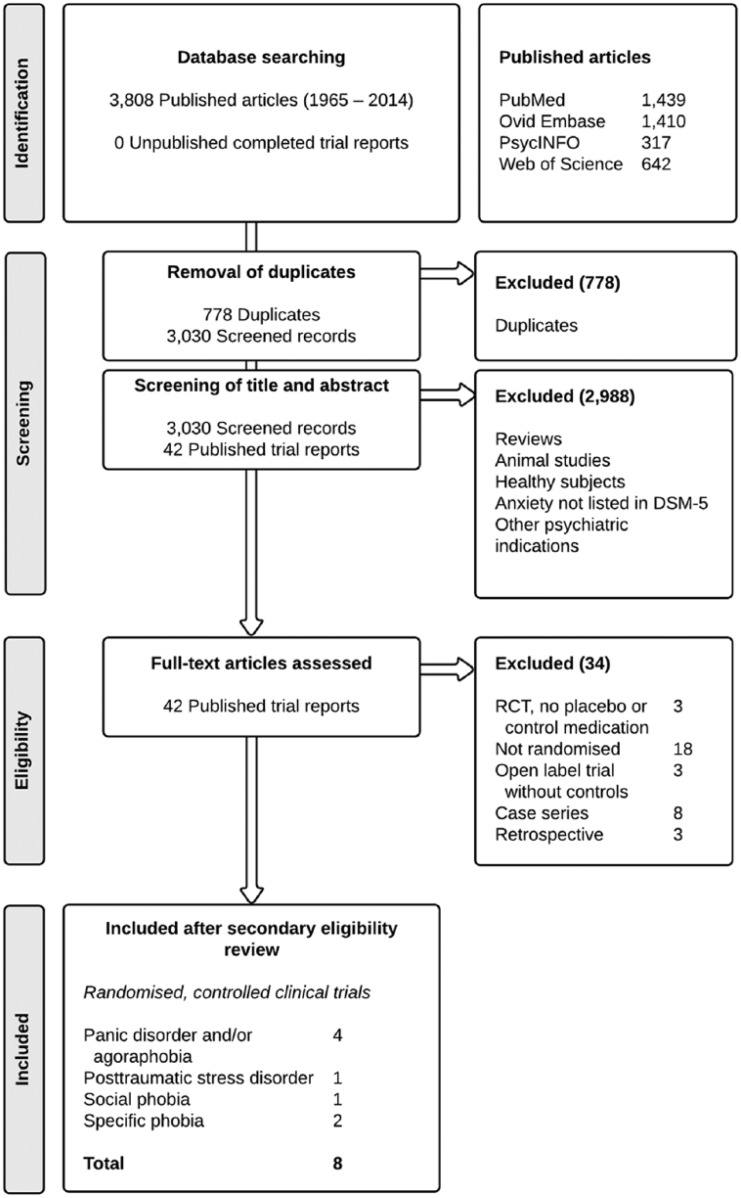
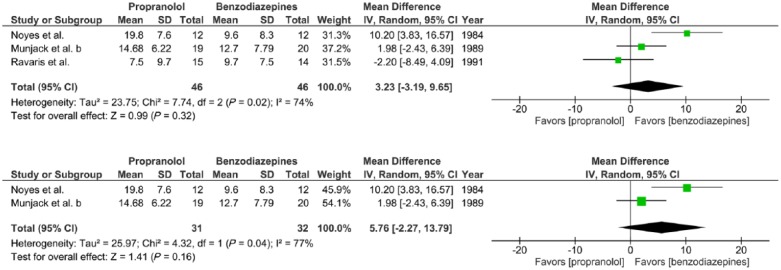
The effects of propranolol in the treatment of anxiety disorders have not been systematically evaluated previously. The aim was to conduct a systematic review and meta-analysis of randomised controlled trials, addressing the efficacy of oral propranolol versus placebo or other medication as a treatment for alleviating either state or trait anxiety in patients suffering from anxiety disorders. Eight studies met the inclusion criteria. These studies concerned panic disorder with or without agoraphobia (four studies, total n = 130), specific phobia (two studies, total n = 37), social phobia (one study, n = 16), and posttraumatic stress disorder (PTSD) (one study, n = 19). Three out of four panic disorder trials qualified for pooled analyses. These meta-analyses found no statistically significant differences between the efficacy of propranolol and benzodiazepines regarding the short-term treatment of panic disorder with or without agoraphobia. Also, no evidence was found for effects of propranolol on PTSD symptom severity through inhibition of memory reconsolidation. In conclusion, the quality of evidence for the efficacy of propranolol at present is insufficient to support the routine use of propranolol in the treatment of any of the anxiety disorders.
Overview
The claims and statistics of this paper haven’t been checked yet.
Free: it reads the open-access text and checks the first 5 claims that cite a source we can check. Create a free account to check every claim.
Integrity signals
Registry
Cites
Statistics
Figures




Verification
Claims the paper makes
The claims and statistics of this paper haven’t been checked yet.
Free: it reads the open-access text and checks the first 5 claims that cite a source we can check. Create a free account to check every claim.
Claims other papers make about this one
Each is checked against this paper’s own text: does it say what the citing paper says it does?
The source backs part of the claim, not all of it — or backs it for a different population, condition or comparison.
In the citing paper
“There is some evidence that patients with 'performance only' social anxiety disorder may respond to beta-adrenergic blockers (such as propranolol or atenolol) 98 .”
From The clinical characterization of the adult patient with an anxiety or related disorder aimed at personalization of management (2021) · cites this paper as [98]
Experimental — accuracy not yet measuredIn the citing paper
“Subsequent trials were negative, and one meta-analysis concluded that there was no evidence for the utility of propranolol in limiting PTSD development 156 .”
From Post‐traumatic stress disorder: a state‐of‐the‐art review of evidence and challenges (2019) · cites this paper as [156]
Self-check
Percentages, sums and reported differences re-computed from the paper’s own numbers.
The self-check needs the paper’s full text.
Citations
Cites
Diagnostic and Statistical Manual of Mental Disorders
American Psychiatric Association (2013) · doi:10.1176/appi.books.9780890425596 · Cited by 116,369
Preferred Reporting Items for Systematic Reviews and Meta-Analyses: the PRISMA statement
Moher, D., Liberati, A., Tetzlaff, J., Altman, D. G., & for the PRISMA Group (2009) · BMJ · doi:10.1136/bmj.b2535 · Cited by 83,823
Preferred Reporting Items for Systematic Reviews and Meta-Analyses: The PRISMA Statement
Moher, D., Liberati, A., Tetzlaff, J., Altman, D. G., & The PRISMA Group (2009) · PLoS Medicine · doi:10.1371/journal.pmed.1000097 · Cited by 64,042
Preferred reporting items for systematic reviews and meta-analyses: the PRISMA Statement.
(2009) · PubMed Central · Cited by 44,859
Cochrane Handbook for Systematic Reviews of Interventions: Cochrane Book Series
(2008) · doi:10.1002/9780470712184 · Cited by 25,048
Preferred Reporting Items for Systematic Reviews and Meta-Analyses: The PRISMA Statement
Moher, D., Liberati, A., Tetzlaff, J., & Altman, D. G. (2009) · Journal of Clinical Epidemiology · doi:10.1016/j.jclinepi.2009.06.005 · Cited by 19,575
Wang, G., Ma, R., Qiao, G., Wada, K., Aizawa, Y., & Satoh, T. (2015) · Integrative Medicine International · doi:10.1159/000368408 · Cited by 18,657
The assessment of anxiety states by rating
HAMILTON, M. (1959) · British Journal of Medical Psychology · doi:10.1111/j.2044-8341.1959.tb00467.x · Cited by 11,455
January, C. T., Wann, L. S., Alpert, J. S., Calkins, H., Cigarroa, J. E., Cleveland, J. C., Conti, J. B., Ellinor, P. T., Ezekowitz, M. D., Field, M. E., et al. (2014) · Circulation · doi:10.1161/cir.0000000000000041 · Cited by 7,115
Diagnostic and Statistical Manual of Mental Disorders, 5th Edition
(2013) · American Psychiatric Association Publishing eBooks · doi:10.1176/appi.books.9780890425596.893619 · Cited by 4,383
Research works printed but not linked: 1
- Roy-Byrne P Stein M Hermann R (2013) Pharmacotherapy for panic disorder.In: Post T (ed.) UpToDate®. Waltham, MA: UpToDate® Available at: http://www.uptodate.com/contents/pharmacotherapy-for-panic-disorder (accessed 9 July 2015).
Cited by
Szuhany, K. L., & Simon, N. M. (2022) · JAMA · doi:10.1001/jama.2022.22744 · Cited by 541
Craske, M. G., Stein, M. B., Eley, T. C., Milad, M. R., Holmes, A., Rapee, R. M., & Wittchen, H.-U. (2017) · Nature Reviews Disease Primers · doi:10.1038/nrdp.2017.24 · Cited by 652
Post‐traumatic stress disorder: a state‐of‐the‐art review of evidence and challenges
Bryant, R. A. (2019) · World Psychiatry · doi:10.1002/wps.20656 · Cited by 528
Pharmacotherapy of Anxiety Disorders: Current and Emerging Treatment Options
Garakani, A., Murrough, J. W., Freire, R. C., Thom, R. P., Larkin, K., Buono, F. D., & Iosifescu, D. V. (2020) · Frontiers in Psychiatry · doi:10.3389/fpsyt.2020.595584 · Cited by 440
“There is, however, a lack of research support for the use of propranolol in anxiety disorders (77) although it may still have a role in certain task-specific anxieties (78).”
BackgroundBandelow, B., Baldwin, D., Abelli, M., Bolea-Alamanac, B., Bourin, M., Chamberlain, S. R., Cinosi, E., Davies, S., Domschke, K., Fineberg, N., et al. (2017) · The World Journal of Biological Psychiatry · doi:10.1080/15622975.2016.1190867 · Cited by 347
“2010), which accords with its lack of efficacy in anxiety disorders (Gorman et al. 1988; Steenen et al. 2015); and the same study also found the anti-histamine hydroxyzine (25mg) had only limited effects, which accords with its questionable efficacy in relieving symptoms of GAD (Gorman”
ResultAndrews, G., Bell, C., Boyce, P., Gale, C., Lampe, L., Marwat, O., Rapee, R., & Wilkins, G. (2018) · Australian & New Zealand Journal of Psychiatry · doi:10.1177/0004867418799453 · Cited by 243
“However, studies have failed to show superiority over placebo (Steenen et al., 2016).”
BackgroundSartori, S. B., & Singewald, N. (2019) · Pharmacology & Therapeutics · doi:10.1016/j.pharmthera.2019.107402 · Cited by 236
Putting the “mental” back in “mental disorders”: a perspective from research on fear and anxiety
Taschereau-Dumouchel, V., Michel, M., Lau, H., Hofmann, S. G., & LeDoux, J. E. (2022) · Molecular Psychiatry · doi:10.1038/s41380-021-01395-5 · Cited by 186
“, trembling hands, fidgeting) in the presence of actual or perceived threats without necessarily affecting the subjective experience of anxiety [104].”
BackgroundWon, E., & Kim, Y.-K. (2020) · International Journal of Molecular Sciences · doi:10.3390/ijms21186546 · Cited by 178
“Only a few systematic reviews on the effects of propranolol for the treatment of anxiety disorders have been conducted, with a recent meta-analysis reporting the quality of evidence for the efficacy of propranolol to be insufficient to support its routine use for the treatment of anxiety disorders [170].”
BackgroundSequential drug treatment algorithm for agitation and aggression in Alzheimer’s and mixed dementia
Davies, S. J., Burhan, A. M., Kim, D., Gerretsen, P., Graff-Guerrero, A., Woo, V. L., Kumar, S., Colman, S., Pollock, B. G., Mulsant, B. H., et al. (2018) · Journal of Psychopharmacology · doi:10.1177/0269881117744996 · Cited by 146
“This beta-blocking agent is sometimes used to address physical symptoms associated with anxiety, although evidence of effectiveness is limited (Steenen et al., 2016).”
BackgroundSex differences in fear extinction
Velasco, E. R., Florido, A., Milad, M. R., & Andero, R. (2019) · Neuroscience & Biobehavioral Reviews · doi:10.1016/j.neubiorev.2019.05.020 · Cited by 146
Jowf, G. I. A., Ahmed, Z. T., Reijnders, R. A., de Nijs, L., & Eijssen, L. (2023) · International Journal of Molecular Sciences · doi:10.3390/ijms24065238 · Cited by 167
Fluyau, D., Revadigar, N., & Manobianco, B. E. (2018) · Therapeutic Advances in Psychopharmacology · doi:10.1177/2045125317753340 · Cited by 109
Prophylactic Ketamine Attenuates Learned Fear
McGowan, J. C., LaGamma, C. T., Lim, S. C., Tsitsiklis, M., Neria, Y., Brachman, R. A., & Denny, C. A. (2017) · Neuropsychopharmacology · doi:10.1038/npp.2017.19 · Cited by 95
Ramanathan, N., Tan, E. T., Loh, L. J., Soh, B.-S., & Yap, W. N. (2018) · Nutrition & Metabolism · doi:10.1186/s12986-018-0244-4 · Cited by 102
“Over the years, betablockers have proven to be efficacious in several other indications as well, most notably anxiety [111].”
BackgroundIncreased Skin Conductance Response in the Immediate Aftermath of Trauma Predicts PTSD Risk
Hinrichs, R. C., van Rooij, S. J. H., Michopoulos, V., Schultebraucks, K., Winters, S., Maples‐Keller, J. L., Rothbaum, A. O., Stevens, J. S., Galatzer‐Levy, I. R., Rothbaum, B. O., et al. (2019) · Chronic Stress · doi:10.1177/2470547019844441 · Cited by 91
Neuropsychiatric Consequences of Lipophilic Beta-Blockers
Cojocariu, S. A., Maștaleru, A., Sascău, R. A., Stătescu, C., Mitu, F., & Leon, M. M. (2021) · Medicina · doi:10.3390/medicina57020155 · Cited by 88
Jaggard, J. B., Lloyd, E., Yuiska, A., Patch, A., Fily, Y., Kowalko, J. E., Appelbaum, L., Duboué, E. R., & Keene, A. C. (2020) · Science Advances · doi:10.1126/sciadv.aba3126 · Cited by 73
Stein, D. J., Craske, M. G., Rothbaum, B. O., Chamberlain, S. R., Fineberg, N. A., Choi, K. W., de Jonge, P., Baldwin, D. S., & Maj, M. (2021) · World Psychiatry · doi:10.1002/wps.20919 · Cited by 60
Sagar-Ouriaghli, I., Lievesley, K., & Santosh, P. J. (2018) · Journal of Psychopharmacology · doi:10.1177/0269881118756245 · Cited by 56
“As propranolol is highly lipophilic, it enters the blood–brain barrier, indicating its potential use for anxiety disorders (Steenen et al., 2016).”
BackgroundCarnovale, C., Perrotta, C., Baldelli, S., Cattaneo, D., Montrasio, C., Barbieri, S. S., Pompilio, G., Vantaggiato, C., Clementi, E., & Pozzi, M. (2022) · Cardiovascular Research · doi:10.1093/cvr/cvac110 · Cited by 71
“A recent meta-analysis of RCTs found no evidence for effects of propranolol on PTSD symptom severity.(70) Despite the wide range of potential psychiatric applications for β blockers, positive evidence is currently most robust for treating symptoms of social anxiety; further potential roles for β blockers include panic…”
Lustberg, D. J., Iannitelli, A. F., Tillage, R. P., Pruitt, M., Liles, L. C., & Weinshenker, D. (2020) · Psychopharmacology · doi:10.1007/s00213-020-05512-0 · Cited by 53
“Propranolol and guanfacine are well tolerated by patients and have been used both on- and off-label for the treatment of other psychiatric disorders (Chappell et al. 1995; Cummings et al. 2002; Lederman 1999; Steenen et al. 2016).”
BackgroundBryant, R. A. (2021) · Clinical Psychology Review · doi:10.1016/j.cpr.2021.101981 · Cited by 51
Exercise Counteracts the Cardiotoxicity of Psychosocial Stress
O’Keefe, E. L., O’Keefe, J. H., & Lavie, C. J. (2019) · Mayo Clinic Proceedings · doi:10.1016/j.mayocp.2019.02.022 · Cited by 55
“Propranolol also seems to be useful for the treatment of performance anxiety, wherein the b-blocker blunts the adrenergic hypersensitivity, thereby diminishing the fear response.(135) bBlockers do not treat the underlying psychological causes of anxiety but can help reduce physical manifestations of excess adrenergic…”
BackgroundRouette, J., McDonald, E. G., Schuster, T., Brophy, J. M., & Azoulay, L. (2022) · BMJ Open · doi:10.1136/bmjopen-2021-057510 · Cited by 55
Cannabinoid hyperemesis syndrome: A disorder of the HPA axis and sympathetic nervous system?
Richards, J. R. (2017) · Medical Hypotheses · doi:10.1016/j.mehy.2017.04.018 · Cited by 50
“Propranolol has a long history of use for migraine and anxiety disorders [111,112].”
BackgroundCapolupo, M., Díaz-Garduño, B., & Martín-Díaz, M. L. (2018) · Environmental Science and Pollution Research · doi:10.1007/s11356-018-3185-6 · Cited by 52
Ecker, B. (2018) · International Journal of Neuropsychotherapy · doi:10.12744/ijnpt.2018.0001-0092 · Cited by 64
Propranolol Decreases Fear Expression by Modulating Fear Memory Traces
Santos, S. L., Stackmann, M., Zamora, A., Mastrodonato, A., Landri, A. V. D., Vaughan, N. D., Chen, B. K., Lanio, M., & Denny, C. A. (2021) · Biological Psychiatry · doi:10.1016/j.biopsych.2021.01.005 · Cited by 62
Szeleszczuk, Ł., & Frączkowski, D. (2022) · International Journal of Molecular Sciences · doi:10.3390/ijms231710099 · Cited by 46
“It is classified as a competitive noncardioselective sympatholytic beta blocker that crosses the blood–brain barrier and, thus, exerts effects on the central nervous system, in addition to its peripheral activity [2].”
BackgroundInfluentialIs Camphor the Future in Supporting Therapy for Skin Infections?
Duda-Madej, A., Viscardi, S., Grabarczyk, M., Topola, E., Kozłowska, J., Mączka, W., & Wińska, K. (2024) · Pharmaceuticals · doi:10.3390/ph17060715 · Cited by 49
“…of camphor has signi fi cant clinical implications, as propranolol, a non-selective β 1 - and β 2 -adrenergic receptor antagonist, is used in the treatment of hypertension, coronary artery disease, and tachyarrhythmias [91]. lidocaine, aspirin, antipyrine, tegafur, and 5-fluorouracil [88,89].”
BackgroundRaut, S. B., Canales, J. J., Ravindran, M., Eri, R. D., Benedek, D. M., Ursano, R. J., & Johnson, L. R. (2022) · Journal of Psychiatric Research · doi:10.1016/j.jpsychires.2022.03.045 · Cited by 54
Altered Insula Connectivity under MDMA
Walpola, I. C., Nest, T., Roseman, L., Erritzøe, D., Feilding, A., Nutt, D. J., & Carhart-Harris, R. L. (2017) · Neuropsychopharmacology · doi:10.1038/npp.2017.35 · Cited by 53
Beta-blockers in cardiac arrhythmias–Clinical pharmacologist’s point of view
Wołowiec, Ł., Grześk, G., Osiak, J., Wijata, A., Mędlewska, M., Gaborek, P., Banach, J., Wołowiec, A., & Głowacka, M. (2023) · Frontiers in Pharmacology · doi:10.3389/fphar.2022.1043714 · Cited by 38
“concluded, that currently there is no sufficient evidence for the routine administration of propranolol in case of any anxiety disorders (Steenen et al., 2016).”
BackgroundRosenberg, L., Rosenberg, M., Sharp, S., THOMAS, C. R., Humphries, H. F., Holzer, C. E., Herndon, D. N., & Meyer, W. J. (2017) · Journal of Child and Adolescent Psychopharmacology · doi:10.1089/cap.2017.0073 · Cited by 40
“Steenen et al. (2016) did a meta-analysis of the literature on the efficacy of propranolol for the treatment of anxiety disorders and found inconclusive results.”
Advances in Behavioral Psychopharmacology
Sinn, L. (2018) · Veterinary Clinics of North America Small Animal Practice · doi:10.1016/j.cvsm.2017.12.011 · Cited by 48
Wendt, F. R., Pathak, G. A., Deak, J. D., Angelis, F. D., Koller, D., Cabrera‐Mendoza, B., Lebovitch, D. S., Levey, D. F., Stein, M. B., Kranzler, H. R., et al. (2022) · Molecular Psychiatry · doi:10.1038/s41380-022-01469-y · Cited by 41
Skvortsova, A., Han, J. H., Tosovska, A., Bainova, P., Kim, R. M., Burtsev, V., Erzina, M., Fitl, P., Urbanová, M., Švorčı́k, V., et al. (2024) · ACS Applied Materials & Interfaces · doi:10.1021/acsami.4c09301 · Cited by 36
Baldwin, D. S., Hou, R. H., Gordon, R., Huneke, N. T. M., & Garner, M. J. (2017) · CNS Drugs · doi:10.1007/s40263-017-0423-2 · Cited by 42
The potential of epigenetics in stress-enhanced fear learning models of PTSD
Blouin, A. M., Sillivan, S. E., Joseph, N. F., & Miller, C. A. (2016) · Learning & Memory · doi:10.1101/lm.040485.115 · Cited by 38
“However, translating these achievements to the clinic has come with varying levels of success (Soeter and Kindt 2012; Steenen et al. 2016).”
BackgroundEnvironmental risk assessment of propranolol in the groundwater bodies of Europe
Lorenzo, T. D., Cicco, M. D., Censo, D. D., Galante, A., Boscaro, F., Messana, G., & Galassi, D. M. P. (2019) · Environmental Pollution · doi:10.1016/j.envpol.2019.113189 · Cited by 36
Meyerbröker, K., Morina, N., & Emmelkamp, P. M. G. (2018) · Journal of Anxiety Disorders · doi:10.1016/j.janxdis.2018.05.001 · Cited by 34
“While propranolol is often prescribed to reduce stress and anxiety symptoms in participants with anxiety disorders, there is hardly any research and clinical evidence to support the use of pro-pranolol in anxiety treatment (Steenen et al., 2016).”
Central Noradrenergic Interactions with Alcohol and Regulation of Alcohol-Related Behaviors
Vazey, E. M., den Hartog, C. R., & Moorman, D. E. (2018) · Handbook of experimental pharmacology · doi:10.1007/164_2018_108 · Cited by 39
“Signaling through the β adrenergic receptor influences stress responses, indicating a potential mechanism to explain AUD-associated stress and anxiety (Do Monte et al. 2008; Giustino et al. 2016; Gorman and Dunn 1993; Steenen et al. 2016).”
BackgroundSocial Anxiety Disorder: Associated Conditions and Therapeutic Approaches
Alomari, N. A., Bedaiwi, S. K., Ghasib, A. M., Kabbarah, A. J., Alnefaie, S. A., Hariri, N., Altammar, M. A., Fadhel, A. M., & Altowairqi, F. M. (2022) · Cureus · doi:10.7759/cureus.32687 · Cited by 77
Forsman, J., Taipale, H. T., Masterman, T., Tiihonen, J., & Tanskanen, A. J. (2018) · Pharmacoepidemiology and Drug Safety · doi:10.1002/pds.4426 · Cited by 34
“Another possible explanation for the measured predicted low adherence is that some drugs are prescribed at sub‐therapeutic dosage as part of an individualized treatment regimen, or prescribed to be taken as needed in off‐label use, as when propranolol and other beta‐blockers are prescribed for anxiety and other psychi…”
BackgroundAnti-anxiety Properties of Selected Medicinal Plants
Khan, A., Akram, M., Thiruvengadam, M., Daniyal, M., Zakki, S. A., Munir, N., Zainab, R., Heydari, M., Mosavat, S. H., Ребезов, М. Б., et al. (2021) · Current Pharmaceutical Biotechnology · doi:10.2174/1389201022666210122125131 · Cited by 40
The Development and Impact of Anxiety With Migraines: A Narrative Review
Kumar, R., Asif, S., Bali, A., Dang, A. K., & Gonzalez, D. A. (2022) · Cureus · doi:10.7759/cureus.26419 · Cited by 43
Cardiovascular therapeutics: A new potential for anxiety treatment?
Repova, K., Aziriova, S., Krajcirovicova, K., & Šimko, F. (2022) · Medicinal Research Reviews · doi:10.1002/med.21875 · Cited by 32
“Propranolol, the nonselective beta‐adrenergic receptor antagonist, exerted an anxiolytic effect in both experimental and clinical settings supposedly due to its sympatholytic action.(86) However, this drug is seldomly used in current clinical practice due to a number of novel beta‐blockers with higher receptor selecti…”
BackgroundGisquet-Verrier, P., & Dorze, C. L. (2019) · Frontiers in Behavioral Neuroscience · doi:10.3389/fnbeh.2019.00026 · Cited by 34
Sergio, T. D. O., Frasier, R. M., & Hopf, F. W. (2023) · Frontiers in Psychiatry · doi:10.3389/fpsyt.2023.1116901 · Cited by 36
Beta-blockers for the treatment of anxiety disorders: A systematic review and meta-analysis
Archer, C., Wiles, N., Kessler, D. A., Turner, K. M., & Caldwell, D. M. (2024) · Journal of Affective Disorders · doi:10.1016/j.jad.2024.09.068 · Cited by 40
So, H., Chau, C. K., Lau, A., Wong, S., & Zhao, K. (2018) · Psychological Medicine · doi:10.1017/s0033291718003641 · Cited by 31
“A number of studies (Gold and Chrousos, 2002; Stetler and Miller, 2011; Lamers et al., 2013) have shown that hyperactivity of the hypothalamic–pituitary axis is an important feature of melancholic depression.”
Backgroundβ-Adrenergic Contributions to Emotion and Physiology During an Acute Psychosocial Stressor
MacCormack, J. K., Armstrong‐Carter, E., Gaudier‐Diaz, M. M., Meltzer-Brody, S. E., Sloan, E. K., Lindquist, K. A., & Muscatell, K. A. (2021) · Psychosomatic Medicine · doi:10.1097/psy.0000000000001009 · Cited by 33
“In treatment, it has been mostly used to reduce hypertension, tachycardia, and muscle tremors but is sometimes prescribed off-label to reduce anxiety in acutely stressful situations such as musical performances or public speaking (9).”
BackgroundArcher, C., MacNeill, S., Mars, B., Turner, K., Kessler, D. S., & Wiles, N. (2022) · British Journal of General Practice · doi:10.3399/bjgp.2021.0561 · Cited by 40
“13 Although propranolol is licensed for anxiety 14 there is no conclusive evidence for its effectiveness, 15,16 and it is not recommended in NICE guidance.”
Panic Disorder: A Review of Treatment Options
Ziffra, M. (2021) · Annals of Clinical Psychiatry · doi:10.12788/acp.0014 · Cited by 33
“87 Treatment guidelines tend to characterize beta blockers as being a third-line intervention.”
Martinez, A., Lakkimsetti, M., Maharjan, S., Aslam, M. A., Basnyat, A., Kafley, S., Reddy, S. S., Ahmed, S. S., Razzaq, W., Adusumilli, S., et al. (2023) · Cureus · doi:10.7759/cureus.44043 · Cited by 39
“symptoms such as increased heart rate, respiration rate, change in blood pressure, and skin conductance [17].”
BackgroundNovel pharmacological treatment strategies for posttraumatic stress disorder
Thomas, E., & Stein, D. J. (2016) · Expert Review of Clinical Pharmacology · doi:10.1080/17512433.2017.1260001 · Cited by 27
Pharmacotherapy of Anxiety Disorders: Current and Emerging Treatment Options
Garakani, A., Murrough, J. W., Freire, R. C. R., Thom, R. P., Larkin, K., Buono, F. D., & Iosifescu, D. V. (2021) · FOCUS The Journal of Lifelong Learning in Psychiatry · doi:10.1176/appi.focus.19203 · Cited by 31
Petersen, K. K., Andersen, H. H., Tsukamoto, M., Tracy, L. M., Koenig, J., & Arendt‐Nielsen, L. (2018) · Scandinavian Journal of Pain · doi:10.1515/sjpain-2018-0054 · Cited by 32
“an anxiolytic [2] and migraine prophylactic [3].”
Río, R. T.-D., van den Burg, E. H., Stoop, R., & Hegoburu, C. (2018) · Psychopharmacology · doi:10.1007/s00213-018-5030-5 · Cited by 26
Angiotensin Receptor Blockers for Hypertension and Risk of Epilepsy
Wen, X., Otoo, M. N., Tang, J., Brothers, T. N., Ward, K. E., Asal, N. J., & Meador, K. J. (2024) · JAMA Neurology · doi:10.1001/jamaneurol.2024.1714 · Cited by 30
Duff, S., Connolly, C. M., & Buggy, D. J. (2016) · International Anesthesiology Clinics · doi:10.1097/aia.0000000000000120 · Cited by 28
“A recent meta-analysis showed no significant difference between propranolol and benzodiazepines in the treatment of anxiety and panic disorders.(11) This means that a number of nonadrenergic stress response mechanisms such as cortisol, growth hormone, and thyroxine release may have been attenuated.”
BackgroundThe Use of β-Adrenergic Receptor Antagonists in Psychiatry: A Review
Boyce, T. G., Ballone, N. T., Certa, K., & Becker, M. A. (2021) · Journal of the Academy of Consultation-Liaison Psychiatry · doi:10.1016/j.jaclp.2020.12.009 · Cited by 30
Hoffmeister, J. D., Kelm‐Nelson, C. A., & Ciucci, M. R. (2021) · Behavioural Brain Research · doi:10.1016/j.bbr.2021.113642 · Cited by 27
Ernst, M., Lago, T. R., Davis, A., & Grillon, C. (2016) · Psychopharmacology · doi:10.1007/s00213-016-4390-y · Cited by 24
A Preliminary Investigation on the Effects of Atenolol for Treating Symptoms of Anxiety
Armstrong, C., & Kapolowicz, M. R. (2020) · Military Medicine · doi:10.1093/milmed/usaa170 · Cited by 28
Propranolol resolution using enantioselective biphasic systems
Carreira, A. R. F., Ferreira, A. M., Almeida, M. R., Coutinho, J. A. P., & Sintra, T. E. (2020) · Separation and Purification Technology · doi:10.1016/j.seppur.2020.117682 · Cited by 22
A Case for Translation From the Clinic to the Laboratory
Kredlow, M. A., de Voogd, L. D., & Phelps, E. A. (2022) · Perspectives on Psychological Science · doi:10.1177/17456916211039852 · Cited by 29
Kriikku, P., Pelkonen, S., Kaukonen, M., & Ojanperä, I. A. (2021) · Forensic Science International · doi:10.1016/j.forsciint.2021.110978 · Cited by 20
Pharmacotherapy for Anxiety Disorders.
O’Leary, K. B., & Khan, J. S. (2024) · Psychiatric Clinics of North America · doi:10.1016/j.psc.2024.04.012 · Cited by 22
Molero, Y., Kaddoura, S., Kuja‐Halkola, R., Larsson, H., Lichtenstein, P., D'Onofrio, B. M., & Fazel, S. (2023) · PLoS Medicine · doi:10.1371/journal.pmed.1004164 · Cited by 26
“Although β-blockers have no clear psychiatric indications, they are widely prescribed for treating anxiety [2].”
BackgroundResultPost-retrieval oxytocin facilitates next day extinction of threat memory in humans
Hu, J., Wang, Z., Feng, X., Long, C., & Schiller, D. (2018) · Psychopharmacology · doi:10.1007/s00213-018-5074-6 · Cited by 22
Maples‐Keller, J. L., Watkins, L. E., Hellman, N. M., Phillips, N. L., & ROTHBAUM, B. O. (2024) · Biological Psychiatry · doi:10.1016/j.biopsych.2024.07.010 · Cited by 20
Lin, S.-Y., Hsu, W., Lin, C., Lin, C., Tsai, C., Lin, C., Chen, D.-C., Lin, T.-C., Hsu, C. Y., & Kao, C. (2018) · Journal of Clinical Medicine · doi:10.3390/jcm7090236 · Cited by 16
“system and its duration is short-acting [39,40].”
Wincewicz, D., & Braszko, J. J. (2017) · Pharmacopsychiatry · doi:10.1055/s-0043-112345 · Cited by 18
“[136] Steenen SA, van Wijk AJ, van der Heijden GJ et al.”
BackgroundTofler, G. H., Morel-Kopp, M.-C., Spinaze, M., Dent, J., Ward, C., McKinley, S., Mihailidou, A. S., Havyatt, J., Whitfield, V., Bartrop, R., et al. (2020) · American Heart Journal · doi:10.1016/j.ahj.2019.11.003 · Cited by 16
Facile Synthesis of Propranolol and Novel Derivatives
Tran, V. A., Tran, N. H. T., Bạch, L. G., Nguyen, T. D., Nguyen, T. T., Nguyen, T. T., Nguyen, T. A. N., Vo, T. K., Vo, T.-T. T., & Le, V. T. (2020) · Journal of Chemistry · doi:10.1155/2020/9597426 · Cited by 16
“Propranolol is one of the original medicines of the betablocker used to treat hypertension, tremors, angina, and cardiovascular disorders [1, 2].”
BackgroundAnxiety Presentations and Treatments in Populations With Kidney Disease
Donahue, S. L., Quinn, D. K., Cukor, D., & Kimmel, P. L. (2021) · Seminars in Nephrology · doi:10.1016/j.semnephrol.2021.10.004 · Cited by 20
Digital revolution in depression: A technologies update for clinicians
Lazar, M. A., Pan, Z., Ragguett, R.-M., Lee, Y., Subramaniapillai, M., Mansur, R. B., Rodrigues, N., & McIntyre, R. S. (2017) · Personalized Medicine in Psychiatry · doi:10.1016/j.pmip.2017.09.001 · Cited by 14
Windsor, R. B., Sierra, M., Zappitelli, M. W., & McDaniel, M. (2020) · Children · doi:10.3390/children7120268 · Cited by 16
Treatment of Comorbid Anxiety and Epilepsy
Salpekar, J. A., Grace, J., Mietchen, J. J., Mani, J., & Jones, J. E. (2023) · Journal of Neuropsychiatry · doi:10.1176/appi.neuropsych.20220116 · Cited by 15
Alsini, A. Y., Alkhodaidi, I., Alsini, Y., Alsseeni, S., Alkhodaidi, S. T., Alsini, E., Alsini, A., Sindi, H., & Alswat, K. A. (2021) · Neuropsychiatric Disease and Treatment · doi:10.2147/ndt.s289833 · Cited by 14
“Several trials studied its effective role in the treatment of anxiety, addiction and withdrawal symptoms, schizophrenia, stage fright, and performance anxiety.(2) BBs are also used to control cardiovascular disorders that involve angina, tremors, hypertension, and arrhythmias.”
BackgroundTranscriptional Regulation Involved in Fear Memory Reconsolidation
Wang, X., Li, M., Zhu, H., Yu, Y., Xu, Y., Zhang, W., & Bian, C. (2018) · Journal of Molecular Neuroscience · doi:10.1007/s12031-018-1084-4 · Cited by 14
Robinson, S., Christ, C. C., Cahill, M. M., Aldrich, S. J., & Taylor-Yeremeeva, E. M. (2018) · Physiology & Behavior · doi:10.1016/j.physbeh.2018.10.012 · Cited by 17
Speech-Stimulating Substances in Autism Spectrum Disorders
Castillo, M., Urdaneta, K. E., Semprún-Hernández, N., Brigida, A. L., Antonucci, N., Schultz, S. T., & Siniscalco, D. (2019) · Behavioral Sciences · doi:10.3390/bs9060060 · Cited by 15
“Propranolol is a ß1,2-adrenoreceptor antagonist clinically used to target peripheral sites of the noradrenergic system and can be deployed to block ß-adrenoreceptors in the central nervous system, since as a lipophilic compound it readily crosses the blood–brain barrier [90].”
BackgroundBasińska-Szafrańska, A. (2021) · European Journal of Clinical Pharmacology · doi:10.1007/s00228-020-03048-y · Cited by 12
Li, Y., Zhi, W., Qi, B., Wang, L., & Hu, X. (2023) · Frontiers in Behavioral Neuroscience · doi:10.3389/fnbeh.2023.1216524 · Cited by 18
“, 1990; Chamberlain and Baldwin, 2021), benzodiazepines (Steenen et al., 2016), selective serotonin reuptake inhibitor (SSRIs; Zohar and Westenberg, 2007), and antiepileptic drugs (Berlin, 2007; Gasparyan et al.”
BackgroundChaudhary, G., Gupta, N., & Singh, A. P. (2021) · Polyhedron · doi:10.1016/j.poly.2021.115348 · Cited by 12
The (un)habitual geographies of Social Anxiety Disorder
Boyle, L. E. (2018) · Social Science & Medicine · doi:10.1016/j.socscimed.2018.03.002 · Cited by 20
Trends in the off‐label use of β‐blockers in pediatric patients
Kaley, V. R., Aregullin, E. O., Samuel, B. P., & Vettukattil, J. J. (2019) · Pediatrics International · doi:10.1111/ped.14015 · Cited by 16
Structural and Pharmacological Insights into Propranolol: An Integrated Crystallographic Perspective
Witczyńska, A., Fijałkowski, Ł., Mirowska-Guzel, D. M., Blecharz‐Klin, K., & Nowaczyk, A. (2025) · International Journal of Molecular Sciences · doi:10.3390/ijms262010080 · Cited by 11
“Propranolol has also gained approval for the prophylaxis of migraine and essential tremor [4], as well as off-label uses such as managing performance anxiety and stage fright, where its capacity to attenuate the sympathetic nervous system’s response is particularly beneficial [5].”
The adrenal medulla in cardiovascular medicine: an untold story
Esler, M., Jennings, G., Schlaich, M. P., Lambert, G. W., Thompson, J. M., Lambert, É., Guo, L. J., Alvarenga, M. E., Esler, D., Eikelis, N., et al. (2020) · Journal of Hypertension · doi:10.1097/hjh.0000000000002748 · Cited by 12
“In panic attack sufferers, beta-blockers have comparable benefit, minimizing the ADR-driven symptoms which contribute to the distress, and to the continuation of an attack [65].”
BackgroundControlling intrusive thoughts of future fears under stress
Ashton, S. M., Smeets, T., & Quaedflieg, C. W. E. M. (2023) · Neurobiology of Stress · doi:10.1016/j.ynstr.2023.100582 · Cited by 13
“Propranolol is a common treat-ment method for anxiety disorders (Steenen et al., 2016) and has been shown to decrease fear in PTSD (Brunet et al., 2018).”
Alkhatabi, R., Alowfi, J., Arshad, L., & Khan, M. A. (2020) · Cureus · doi:10.7759/cureus.11450 · Cited by 15
Akgöl, J., Özkut, B., Denizoğlu, İ. İ., Orhon, E. Ş., Aycan, K., & Güven, A. (2022) · Journal of Voice · doi:10.1016/j.jvoice.2022.09.015 · Cited by 10
AlOkda, A., Nasr, M., & Amin, S. N. (2018) · Journal of Cellular Physiology · doi:10.1002/jcp.27441 · Cited by 11
“In addition, it is also used to treat essential tremors (Barnes, Soares‐Weiser, & Bacaltchuk, 2009), hyperhidrosis (Siefferman & Lai, 2015) and the prevention of migraine and cluster headache (Shields & Goadsby, 2005) while being researched for its psychiatric effects in the treatment of anxiety, some phobias (Steenen…”
Lei, Z., Lam, Y., Li, C., Fu, Z., Ramkrishnan, A. S., Liu, S., & Li, Y. (2022) · International Journal of Molecular Sciences · doi:10.3390/ijms23105578 · Cited by 11
Gaina, M.-A., Sbarcea, S.-V., Popa, B.-S., Stefanescu, B.-V., Gaina, A.-M., Szalontay, A.-S., Bolos, A., & Stefanescu, C. (2024) · Brain Sciences · doi:10.3390/brainsci14070651 · Cited by 9
“Use beta-blockers like propranolol for managing physiological symptoms during high-anxiety situations [129].”
BackgroundAttackenangst bei Migräne: Diagnostik und Behandlung
Klan, T., Diezemann, A., Guth, A., Gaul, C., & Witthöft, M. (2023) · Der Schmerz · doi:10.1007/s00482-023-00711-y · Cited by 10
Metadata
- Authors
- Steenen, S. A., van Wijk, A. J., van der Heijden, G. J., van Westrhenen, R., de Lange, J., & de Jongh, A.
- Affiliations
- Amsterdam UMC Location University of Amsterdam (NL)
- Department of Social Dentistry and Behavioural Sciences, Academic Centre for Dentistry Amsterdam, University of Amsterdam and VU University, Amsterdam, the Netherlands
- Department of Psychiatry, Erasmus University Medical Centre, Rotterdam, the Netherlands
- Department of Oral and Maxillofacial Surgery, Academic Medical Centre, University of Amsterdam, Amsterdam, the Netherlands
- Corresponding author
- Steenen, Serge A
- ORCID
- Steenen, Serge A
- Venue
- Journal of Psychopharmacology
- Publisher
- SAGE Publications
- Published
- 2015-10-20
- Volume
- 30
- Issue
- 2
- Pages
- 128-139
- ISSN
- 0269-8811 (ISSN-L)
- 1461-7285
- PMC
- PMC4724794
- OpenAlex
- W2266059207
- Cited by
- 237
- References
- 65
- Citations by year
- 2026: 14 · 2025: 29 · 2024: 31 · 2023: 24 · 2022: 28 · 2021: 24 · 2020: 17 · 2019: 20 · 2018: 24 · 2017: 18 · 2016: 7 · 2015: 1
- FWCI
- 2.17
- Type
- journal article
- Language
- en
- Open access
- hybrid
- doi.org
- Licence
- cc-by-nc
- journals.sagepub.com/page/policies/text-and-data-mining-license (tdm)
- Locations
- Journal of Psychopharmacology (publishedVersion, cc-by-nc)
- PubMed Central (publishedVersion, cc-by-nc)
- PubMed (publishedVersion)
- UvA-DARE (University of Amsterdam) (publishedVersion, cc-by-nc)
- EUR Research Repository (Erasmus University Rotterdam) (publishedVersion)
- VU Research Portal (publishedVersion, other-oa)
- Data Archiving and Networked Services (DANS) (submittedVersion)
- EUR Research Repository (Erasmus University Rotterdam) (submittedVersion)
- RePub (Erasmus University Rotterdam) (submittedVersion, other-oa)
- UvA-DARE (University of Amsterdam) (submittedVersion, cc-by-nc)
- Pure Amsterdam UMC (submittedVersion, other-oa)
- Data Archiving and Networked Services (DANS) (submittedVersion, other-oa)
- Funders
- Universiteit van Amsterdam
- Topics
- Social Sciences › Psychology › Experimental and Cognitive Psychology › Anxiety, Depression, Psychometrics, Treatment, Cognitive Processes
- Health Sciences › Medicine › Cardiology and Cardiovascular Medicine › Cardiac Health and Mental Health
- Health Sciences › Medicine › Public Health, Environmental and Occupational Health › Maternal Mental Health During Pregnancy and Postpartum
- Keywords
- propranolol, anxiety disorders, panic disorder, agoraphobia, specific phobia, social anxiety disorder, post-traumatic stress disorder, benzodiazepines, memory reconsolidation, state anxiety, trait anxiety, beta-blockers
- MeSH terms
- Administration, Oral, Adrenergic beta-Antagonists, Anxiety Disorders, Humans, Propranolol, Severity of Illness Index, Anti-Anxiety Agents, Randomized Controlled Trials as Topic
About these checks
Registry, retraction, Cites and statistics results are computed, not judged, with one exception: a printed reference that no index lists is read once by a model before it counts as a citation error. Claims are extracted by a model and kept only when their quote appears verbatim in the text; each cited source is then checked, with a model’s help, for whether it says what the claim relies on. Those verdicts can be wrong — read the claim’s quote and the cited source before relying on one.
Statistics and arithmetic are recomputed, not judged.
Confidence bands are shown only for fields calibrated on our annotated test set. None is calibrated yet, so no band is shown.
What counts as a claim ›How we measure confidence ›How we check this ›
Are you an author, or do you see a problem with this page? Request a review
Data sources
Bibliographic data: Semantic Scholar, OpenAlex, Crossref.
Contains information from the Semantic Scholar Academic Graph Datasets, made available under the ODC Attribution License (ODC-BY 1.0).
Semantic Scholar’s data is described in: Kinney, R., et al. (2023). The Semantic Scholar Open Data Platform. arXiv:2301.10140.
