

Naturalistic psychedelic therapy: The role of relaxation and subjective drug effects in antidepressant response
Open accessThe DOI matches its Crossref record; 83 of the 83 references it cites were found in a registry or an index; 26 of the 61 sources its claims cite were checked for support.
Abstract
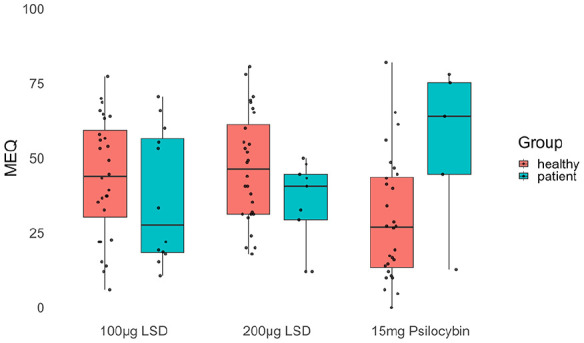
Background: Psychedelic-assisted therapy (PAT) is permitted in Switzerland under its limited medical use program. Data from patients in this program represent a unique opportunity to analyze the real-world practice of PAT. Aims: This study compared the subjective effects of lysergic acid diethylamide (LSD) and psilocybin between patients undergoing PAT and healthy volunteers. For the patients, it also investigated the relationship between antidepressant effects and six measures of acute drug effects. Methods: We compared data on acute psychedelic drug effects between 28 PAT patients with data from 28 healthy participants who participated in a randomized, double-blind crossover trial. All participants received varying doses of psilocybin and LSD. Subjective effects were assessed on an hourly basis during the acute drug effects, and the Mystical Experience Questionnaire (MEQ) was completed retrospectively. For patients, depressive symptoms were assessed using the Montgomery-Åsberg Depression Rating Scale (MADRS). Results: Ratings of overall drug effect and mystical experience were similar across groups. Compared with healthy controls, patients reported lower ratings of ego dissolution. Patients showed a significant decrease in MADRS scores, and the greatest predictor of antidepressant outcome was relaxation during the PAT session. We did not observe a relationship between mystical-type experiences and antidepressant effects. Most patients experienced mild adverse effects which resolved within 48 h. Conclusion: PAT reduced depressive symptoms in this heterogeneous patient group. Patients may experience more challenging psychedelic effects and reduced ego dissolution. Hourly assessment of drug effects may predict clinical outcomes better than retrospectively assessed mystical experiences, and the impact of relaxation during PAT should be investigated further. © The Author(s) 2024.
Overview
CoChat Summary
## TL;DR
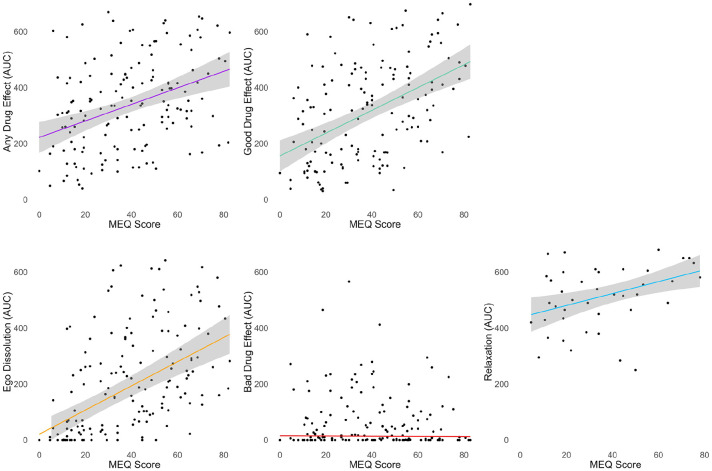
In this naturalistic Swiss PAT study, patients receiving LSD or psilocybin showed a significant reduction in depressive symptoms, and the strongest predictor of immediate antidepressant response was relaxation during the session. Compared with healthy volunteers, patients reported less ego dissolution, while retrospective mystical-experience scores were not associated with antidepressant effects.
## Key findings
- In 21 patients with treatment-resistant depression, mean MADRS score was 20.9 at baseline and fell by 29% (6.2 points) immediately after PAT; the improvement remained significant at follow-up about 7.7 days later.
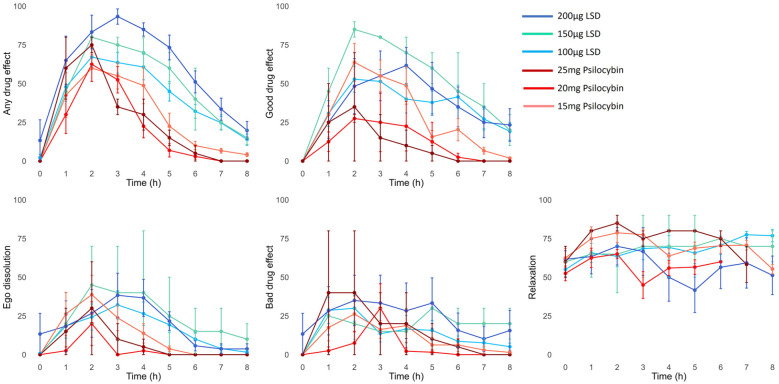
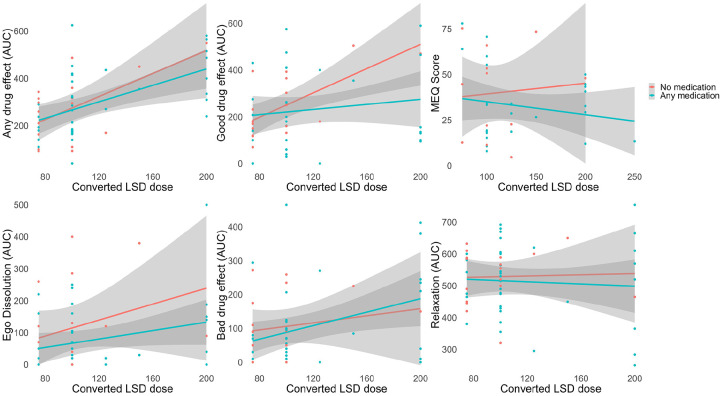
- Across 55 treatment sessions in 28 patients, subjective “any drug effect” ratings increased with dose (F(5, 30) = 6.884, p < 0.001).
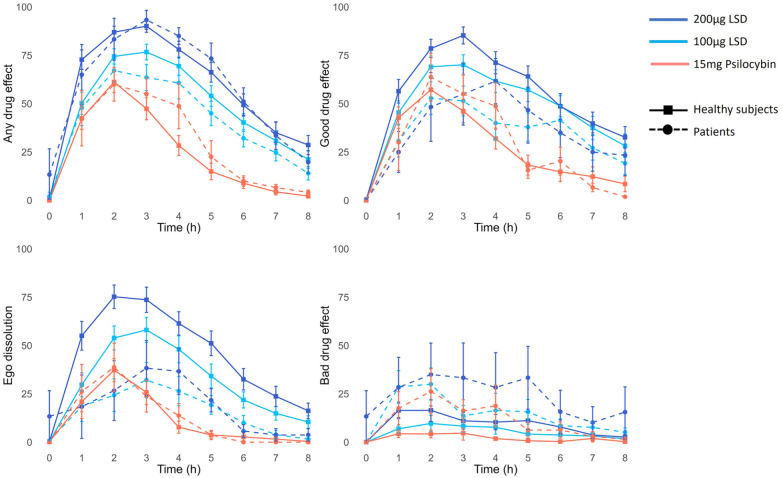
- Compared with 28 healthy participants, patients had significantly lower ego dissolution ratings (β = −183.50, SE = 36.01, p < 0.001); overall drug effect and good drug effect were not significantly different, and bad drug effect was higher but not statistically significant (p = 0.09).
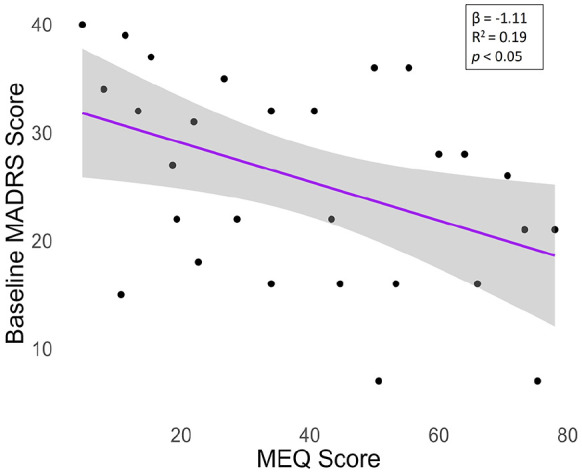
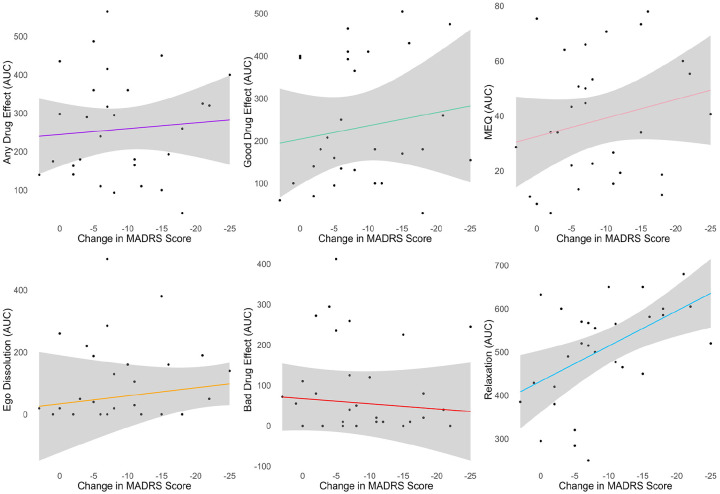
- For immediate antidepressant response, real-time acute effect ratings explained 28% of the variance in MADRS improvement, while MEQ scores explained 4%; among the real-time ratings, relaxation was the only significant predictor (β = −0.04, SE = 0.01, p = 0.03).
## Methods
- Naturalistic, open-label PAT data from 28 Swiss patients undergoing 55 sessions with LSD or psilocybin were compared with data from 28 healthy volunteers in a randomized, double-blind crossover trial.
- Patients were mostly residents of Switzerland, average age 49, and 78.6% were taking psychiatric medications; 24/28 had treatment-resistant major depressive disorder and the rest had OCD, bipolar disorder, or social anxiety.
- Acute effects were rated hourly in patients and at least hourly in healthy participants; analyses used linear mixed-effects models, with AUC for acute ratings and MADRS used to assess depressive symptoms.
## Limitations
- The paper states that the patient data were heterogeneous, open-label, non-randomized, and uncontrolled, and that all patients were in psychotherapy before and after dosing, limiting causal inference.
- Follow-up times were relatively short, the patient sample was relatively small and underpowered for some analyses, and some MADRS and MEQ data were missing.
- The paper notes that some dose groups were extremely small, flexible dosing limited dose comparability, and the patient and healthy samples came from two different hospitals; these are evident limitations from the text.
Model-written summary. Check it against the paper before relying on it.
Integrity signals
Registry
Cites
Statistics
Figures


Verification
Claims the paper makes
20 Valid · 0 Not valid · 22 Not checked · 75 Own results and interpretations
The cited sources support only part of this claim — read each source’s verdict below.
In the paper
“Psychedelic-assisted therapy (PAT) with psilocybin and lysergic acid diethylamide (LSD) has demonstrated efficacy in the treatment of depression, anxiety, and some other neuropsychiatric disorders”
§ Naturalistic psychedelic therapy: The role of relaxation and subjective drug effects in antidepressant response > Introduction Psychedelic-assisted therapy (PAT) with psilocybin and lysergic acid diethylamide (LSD) has demonstrated efficacy in the treatment of depression, anxiety, and some other neuropsychiatric disorders (Gasser et al., 2014; Goodwin et al., 2022; Holze et al., 2023b; Raison et al., 2023; von Rotz et al., 2023). Given promising preliminary data, PAT has been conducted in Switzerland under its limited medical use program from 1988 to 1993, and again since 2014 (Calder and Hasler, 2023a). This program allows PAT with LSD, psilocybin, or the empathogen 3,4-methylenedioxymethamphetamine (MDMA) under the supervision of a licensed physician for patients with an applicable treatment-resistant diagnosis. Eligible diagnoses include post-traumatic stress disorder (Mitchell et al., 2023), major depressive disorder (Galvao-Coelho et al., 2021), anxiety disorders (Holze et al., 2023b), substance use disorders (Bogenschutz et al., 2022), obsessive-compulsive disorder (Moreno et al., 2006), eating disorders (Calder et al., 2023), and others. Patients may undergo multiple sessions if needed, typically at intervals of several weeks or months, and this flexible dosing schedule is an important difference between naturalistic PAT and controlled trials. Patients are also not required to taper off psychiatric medications before undergoing PAT when the risk of unfavorable drug interactions appears low (Becker et al., 2022; Malcolm and Thomas, 2022). In addition, patients who positively responded to PAT in clinical trials sponsored by academia or industry may continue PAT within the limited medical use program, fulfilling recent recommendations for ethical continuing care after clinical trials of PAT (Jacobs et al., 2024). Data from Swiss PAT reflect real-world variation in substances, doses, diagnoses, treatment duration, and concomitant medications, and can thus offer valuable insights into how PAT is already practiced outside of controlled clinical trials. Many PAT practitioners regard the subjective acute psychedelic effects as important for the therapeutic outcome (Yaden and Griffiths, 2021). However, there is some debate about precisely which effects are important. One view is that mystical-type experiences, commonly measured at the end of a PAT session with the Mystical Experience Questionnaire (MEQ), are particularly important for therapeutic effects (Griffiths et al., 2006, 2016; Liechti et al., 2017; Ross et al., 2016). A “complete” mystical experience involves feelings of profound unity and sacredness, euphoria, and transcendence of time and space, as well as a sense of experiencing profound truth one struggles to capture in words (i.e., ineffability; Barrett et al., 2015). The association between mystical-type experiences and clinical outcomes has been shown in studies of psilocybin-assisted therapy for depression, end-of-life distress, and substance use disorders, as well as in LSD-assisted therapy for anxiety (Holze et al., 2023b; Ko et al., 2022). However, other studies have not found associations between symptom improvement and mystical-type experiences (Agin-Liebes et al., 2020; Gukasyan et al., 2022; Sloshower et al., 2023). Some scholars argue that the acceptance of mystical-type experiences as a defining therapeutic mechanism in PAT is too hasty and that the role of other psychedelic effects is in danger of being overlooked (Sanders and Zijlmans, 2021). Previous research has also investigated whether the intensity of pleasant and unpleasant psychedelic effects is related to therapeutic outcomes. One meta-analysis found that the overall intensity of a psychedelic experience was the best predictor of therapeutic effects (Romeo et al., 2021). In general, overall positively experienced psychedelic effects also seem to correlate positively with long-term therapeutic outcomes (Holze et al., 2023b; Roseman et al., 2017). The pattern is less clear for acutely unpleasant effects or “challenging experiences,” whose relationship with therapeutic efficacy likely depends on how they are resolved (Carhart-Harris et al., 2018). In addition, the experience of ego dissolution is considered important in PAT by some practitioners. Ego dissolution is the temporary full or partial cessation of the subjective sense of self (Nour et al., 2016). Many consider it to be a typical effect of both LSD and psilocybin (Mason et al., 2020; Tagliazucchi et al., 2016), particularly at higher doses (Holze et al., 2021). In supportive settings, ego dissolution appears to be related to subsequent reductions in symptoms of depression and anxiety (Kiraga et al., 2022; van Oorsouw et al., 2022). Mystical-type experiences, ego dissolution, and other psychedelic drug effects are usually measured retrospectively, after a return to normal consciousness (Schmid et al., 2021; Schmidt and Berkemeyer, 2018). However, it is also feasible to obtain measures of psychedelic drug effects in real time using relatively simple measures in the form of visual analog scales (Holze et al., 2022b) or verbal Likert scales (Vogt et al., 2023). Many studies in healthy volunteers have asked participants to rate the intensity of psychedelic effects at regular intervals during the experience, including the overall intensity of drug effects, positive and negative effects, and ego dissolution (Holze et al., 2021; Ley et al., 2023; Straumann et al., 2023; Vogt et al., 2023). Real-time data may be valuable in clinical settings as well, for two main reasons. First, there can be significant variation in how people view an experience while it is happening and after it has ended (Oishi, 2016). It is thus interesting to assess whether real-time ratings correlate with therapeutic outcomes in the same way that retrospective ratings, such as MEQ scores, appear to do. Notably, previous research suggests that retrospectively measured effects of LSD at 10 or 24 h post-dosing were very similar to those measured during the peak response at 3 h (Liechti et al., 2017). Second, real-time ratings can give PAT practitioners valuable and immediate feedback on how a psychedelic experience is progressing in a clear and minimally intrusive way while there is still time to influence the experience if necessary. People undergoing psychedelic treatments may not spontaneously articulate how they are feeling, and simple verbal feedback about the overall intensity, valence, and other effects can provide valuable information about the progress and nature of patients’ experiences and the therapeutic process. In the present study, we analyze naturalistic data from PAT with psilocybin and LSD from the Swiss limited medical use program together with data from a randomized controlled crossover trial with psilocybin and LSD in healthy participants (Holze et al., 2022b). In the patient group, we investigate dose–response relationships of different doses of LSD and psilocybin on subjective effects, as well as the relationship between subjective drug effects and depressive symptoms. In addition, we investigate whether subjective effects differ between patients and healthy participants receiving the same well-characterized drug formulation and dose (Holze et al., 2019, 2023a), as well as the relationship between real-time assessments of subjective effects and retrospective MEQ scores. Finally, we report the adverse effects of PAT in the patient group. These data offer valuable insights into PAT in real-world clinical practice outside of controlled trials.
What the sources say
- Partly supportedcites Gasser et al., 2014 matched to “Safety and Efficacy of Lysergic Acid Diethylamide-Assisted Psychotherapy for Anxiety Associated With Life-threatening Diseases” (2014) sourceExperimental — accuracy not yet measured
The Conclusions (page unavailable) report positive trends in reduced anxiety after LSD-assisted psychotherapy for people with life-threatening illnesses and describe a psilocybin study as promising. The Abstract reports a historical finding of reduced depression in advanced-stage cancer patients. These qualified findings do not establish efficacy across depression, anxiety, and other neuropsychiatric disorders as the citing sentence suggests. (LLM, conf=0.88)
- Partly supportedcites Goodwin et al., 2022 matched to “Single-Dose Psilocybin for a Treatment-Resistant Episode of Major Depression” (2022) sourceExperimental — accuracy not yet measured
The Abstract reports that a 25-mg dose of psilocybin given with psychological support reduced depression scores more than a 1-mg dose over three weeks in adults with treatment-resistant depression. It also cites preliminary studies involving depression and anxiety in patients with life-threatening cancer, but this trial did not test anxiety treatment. The cited paper provides no evidence about LSD or efficacy for other neuropsychiatric disorders, and it says larger, longer trials are needed to determine psilocybin’s efficacy and safety. (LLM, conf=0.88)
- Not matchedcites Holze et al., 2023b
More than one paper fits this citation.
boostedstates a cause- Asserted: passes — The authors put it forward as true.
- Checkable: passes — It can be checked against evidence.
- Load-bearing: passes — The paper’s conclusions depend on it.
- Based: passes — The paper gives a reason why it holds.
- Partly supported
The cited sources support only part of this claim — read each source’s verdict below.
In the paper
“However, it is also feasible to obtain measures of psychedelic drug effects in real time using relatively simple measures in the form of visual analog scales (Holze et al., 2022b) or verbal Likert scales (Vogt et al., 2023).”
§ Naturalistic psychedelic therapy: The role of relaxation and subjective drug effects in antidepressant response > Introduction Psychedelic-assisted therapy (PAT) with psilocybin and lysergic acid diethylamide (LSD) has demonstrated efficacy in the treatment of depression, anxiety, and some other neuropsychiatric disorders (Gasser et al., 2014; Goodwin et al., 2022; Holze et al., 2023b; Raison et al., 2023; von Rotz et al., 2023). Given promising preliminary data, PAT has been conducted in Switzerland under its limited medical use program from 1988 to 1993, and again since 2014 (Calder and Hasler, 2023a). This program allows PAT with LSD, psilocybin, or the empathogen 3,4-methylenedioxymethamphetamine (MDMA) under the supervision of a licensed physician for patients with an applicable treatment-resistant diagnosis. Eligible diagnoses include post-traumatic stress disorder (Mitchell et al., 2023), major depressive disorder (Galvao-Coelho et al., 2021), anxiety disorders (Holze et al., 2023b), substance use disorders (Bogenschutz et al., 2022), obsessive-compulsive disorder (Moreno et al., 2006), eating disorders (Calder et al., 2023), and others. Patients may undergo multiple sessions if needed, typically at intervals of several weeks or months, and this flexible dosing schedule is an important difference between naturalistic PAT and controlled trials. Patients are also not required to taper off psychiatric medications before undergoing PAT when the risk of unfavorable drug interactions appears low (Becker et al., 2022; Malcolm and Thomas, 2022). In addition, patients who positively responded to PAT in clinical trials sponsored by academia or industry may continue PAT within the limited medical use program, fulfilling recent recommendations for ethical continuing care after clinical trials of PAT (Jacobs et al., 2024). Data from Swiss PAT reflect real-world variation in substances, doses, diagnoses, treatment duration, and concomitant medications, and can thus offer valuable insights into how PAT is already practiced outside of controlled clinical trials. Many PAT practitioners regard the subjective acute psychedelic effects as important for the therapeutic outcome (Yaden and Griffiths, 2021). However, there is some debate about precisely which effects are important. One view is that mystical-type experiences, commonly measured at the end of a PAT session with the Mystical Experience Questionnaire (MEQ), are particularly important for therapeutic effects (Griffiths et al., 2006, 2016; Liechti et al., 2017; Ross et al., 2016). A “complete” mystical experience involves feelings of profound unity and sacredness, euphoria, and transcendence of time and space, as well as a sense of experiencing profound truth one struggles to capture in words (i.e., ineffability; Barrett et al., 2015). The association between mystical-type experiences and clinical outcomes has been shown in studies of psilocybin-assisted therapy for depression, end-of-life distress, and substance use disorders, as well as in LSD-assisted therapy for anxiety (Holze et al., 2023b; Ko et al., 2022). However, other studies have not found associations between symptom improvement and mystical-type experiences (Agin-Liebes et al., 2020; Gukasyan et al., 2022; Sloshower et al., 2023). Some scholars argue that the acceptance of mystical-type experiences as a defining therapeutic mechanism in PAT is too hasty and that the role of other psychedelic effects is in danger of being overlooked (Sanders and Zijlmans, 2021). Previous research has also investigated whether the intensity of pleasant and unpleasant psychedelic effects is related to therapeutic outcomes. One meta-analysis found that the overall intensity of a psychedelic experience was the best predictor of therapeutic effects (Romeo et al., 2021). In general, overall positively experienced psychedelic effects also seem to correlate positively with long-term therapeutic outcomes (Holze et al., 2023b; Roseman et al., 2017). The pattern is less clear for acutely unpleasant effects or “challenging experiences,” whose relationship with therapeutic efficacy likely depends on how they are resolved (Carhart-Harris et al., 2018). In addition, the experience of ego dissolution is considered important in PAT by some practitioners. Ego dissolution is the temporary full or partial cessation of the subjective sense of self (Nour et al., 2016). Many consider it to be a typical effect of both LSD and psilocybin (Mason et al., 2020; Tagliazucchi et al., 2016), particularly at higher doses (Holze et al., 2021). In supportive settings, ego dissolution appears to be related to subsequent reductions in symptoms of depression and anxiety (Kiraga et al., 2022; van Oorsouw et al., 2022). Mystical-type experiences, ego dissolution, and other psychedelic drug effects are usually measured retrospectively, after a return to normal consciousness (Schmid et al., 2021; Schmidt and Berkemeyer, 2018). However, it is also feasible to obtain measures of psychedelic drug effects in real time using relatively simple measures in the form of visual analog scales (Holze et al., 2022b) or verbal Likert scales (Vogt et al., 2023). Many studies in healthy volunteers have asked participants to rate the intensity of psychedelic effects at regular intervals during the experience, including the overall intensity of drug effects, positive and negative effects, and ego dissolution (Holze et al., 2021; Ley et al., 2023; Straumann et al., 2023; Vogt et al., 2023). Real-time data may be valuable in clinical settings as well, for two main reasons. First, there can be significant variation in how people view an experience while it is happening and after it has ended (Oishi, 2016). It is thus interesting to assess whether real-time ratings correlate with therapeutic outcomes in the same way that retrospective ratings, such as MEQ scores, appear to do. Notably, previous research suggests that retrospectively measured effects of LSD at 10 or 24 h post-dosing were very similar to those measured during the peak response at 3 h (Liechti et al., 2017). Second, real-time ratings can give PAT practitioners valuable and immediate feedback on how a psychedelic experience is progressing in a clear and minimally intrusive way while there is still time to influence the experience if necessary. People undergoing psychedelic treatments may not spontaneously articulate how they are feeling, and simple verbal feedback about the overall intensity, valence, and other effects can provide valuable information about the progress and nature of patients’ experiences and the therapeutic process. In the present study, we analyze naturalistic data from PAT with psilocybin and LSD from the Swiss limited medical use program together with data from a randomized controlled crossover trial with psilocybin and LSD in healthy participants (Holze et al., 2022b). In the patient group, we investigate dose–response relationships of different doses of LSD and psilocybin on subjective effects, as well as the relationship between subjective drug effects and depressive symptoms. In addition, we investigate whether subjective effects differ between patients and healthy participants receiving the same well-characterized drug formulation and dose (Holze et al., 2019, 2023a), as well as the relationship between real-time assessments of subjective effects and retrospective MEQ scores. Finally, we report the adverse effects of PAT in the patient group. These data offer valuable insights into PAT in real-world clinical practice outside of controlled trials.
What the sources say
- Not matchedcites Holze et al., 2022b
More than one paper fits this citation.
- Supportedcites Vogt et al., 2023 matched to “Acute effects of intravenous DMT in a randomized placebo-controlled study in healthy participants” (2023) source
The Methods and Materials section (“Subjective drug effects and effect durations”; page not supplied) says participants repeatedly rated DMT effects during the session using verbal 0–10 Likert scales. The Results section reports effects over time from those scales. Vogt et al. therefore supports the verbal-Likert-scale part of the citing sentence; the visual-analog-scale part is attributed to a different source. (LLM, conf=0.94)
plain- Asserted: passes — The authors put it forward as true.
- Checkable: passes — It can be checked against evidence.
- Load-bearing: passes — The paper’s conclusions depend on it.
- Based: passes — The paper gives a reason why it holds.
- Not matched
The cited sources support only part of this claim — read each source’s verdict below.
In the paper
“Controlled clinical trials with psilocybin, as well as other psychedelics, have occasionally reported increases in suicidality after treatment, sometimes with extremely brief information about treatment-relatedness (Breeksema et al., 2022; Goodwin et al., 2022).”
§ Naturalistic psychedelic therapy: The role of relaxation and subjective drug effects in antidepressant response > Discussion
What the sources say
- Partly supportedcites Breeksema et al., 2022 matched to “Adverse events in clinical treatments with serotonergic psychedelics and MDMA: a mixed-methods systematic review.” (2022) sourceExperimental — accuracy not yet measured
The Discussion’s “Suicidality” section reports preliminary psilocybin trial results suggesting higher suicidality rates in active-dose groups than in the low-dose group, while cautioning that interpretation awaits peer-reviewed results. It also reports suicidal ideation and behavior in MDMA studies, but says rates were lower than or similar to controls; it does not establish an increase for other psychedelics. The suicide 11 days after a placebo-like psilocybin dose was reported as unrelated to the study. (LLM, conf=0.86)
- Supportedcites Goodwin et al., 2022 matched to “Single-Dose Psilocybin for a Treatment-Resistant Episode of Major Depression” (2022) source
The Safety section reports worsening of suicidal state from baseline to week 3 in all three psilocybin dose groups and describes suicidal ideation and behavior after dosing. This supports the psilocybin-trial portion of the jointly cited sentence; Goodwin et al. do not need to establish the separate claim about other psychedelics. (LLM, conf=0.91)
plainstates a cause- Asserted: passes — The authors put it forward as true.
- Checkable: passes — It can be checked against evidence.
- Load-bearing: unclear — It is unclear whether the paper’s conclusions depend on it.
- Based: passes — The paper gives a reason why it holds.
- Partly supported
Every source the paper cites for this claim was checked and supports it.
In the paper
“Consistently, escitalopram and psilocybin co-administration were well tolerated (Becker et al., 2022).”
§ Naturalistic psychedelic therapy: The role of relaxation and subjective drug effects in antidepressant response > Discussion
What the sources say
- Supportedcites Becker et al., 2022 matched to “Acute Effects of Psilocybin After Escitalopram or Placebo Pretreatment in a Randomized, Double‐Blind, Placebo‐Controlled, Crossover Study in Healthy Subjects” (2022) source
The Conclusion states that escitalopram and psilocybin can be safely administered together. The Results (Autonomic and adverse effects) report that escitalopram pretreatment reduced acute adverse effects associated with psilocybin, supporting the claim that the combination was well tolerated in this study of healthy subjects. (LLM, conf=0.94)
boosted- Asserted: passes — The authors put it forward as true.
- Checkable: passes — It can be checked against evidence.
- Load-bearing: passes — The paper’s conclusions depend on it.
- Based: passes — The paper gives a reason why it holds.
- Supported
The cited sources support only part of this claim — read each source’s verdict below.
In the paper
“The ability to relax oneself, especially in stressful situations, may be an important coping mechanism that promotes feelings of self-efficacy, which are often reduced in depression (Fung and White, 2012).”
§ Naturalistic psychedelic therapy: The role of relaxation and subjective drug effects in antidepressant response > Discussion
What the sources say
- Partly supportedcites Fung and White, 2012 matched to “Systematic Review of the Effectiveness of Relaxation Training for Depression” (2012) sourceExperimental — accuracy not yet measured
Section 3.3.1 describes relaxation training as a coping skill that can increase self-control and self-efficacy, and Section 4.2 describes it as a self-administered stress-relief technique. The copy does not establish that self-efficacy is often reduced in depression or specifically assess relaxation during stressful situations. (LLM, conf=0.82)
hedgedstates a possible cause- Asserted: passes — The authors put it forward as true.
- Checkable: passes — It can be checked against evidence.
- Load-bearing: unclear — It is unclear whether the paper’s conclusions depend on it.
- Based: passes — The paper gives a reason why it holds.
- Partly supported
53 more claims
Create a free account to see all 117 claims and to verify the 12 references still open.
- Probably not a substantial claim. 45
- It may state two separate claims as one. 22
- The quote only partly states this claim. 3
Statistics recomputed
Every reported test result, recomputed from its test statistic and degrees of freedom. A result shows as not adding up only once an independent check has confirmed it.
- ConsistentF(5, 30) = 6.884reported p < .001 · recomputed p < .001
“F(5, 30) = 6.884, p < .001”
- Consistentt(45.71) = 4.2reported p < .001 · recomputed p < .001
“t(45.71) = 4.2, p < .001”
Self-check
Percentages, sums and reported differences re-computed from the paper’s own numbers.
Self-check results appear here once an independent check has confirmed them.
Citations
Cites
Fitting Linear Mixed-Effects Models Using lme4
Bates, D., Mächler, M., Bolker, B., & Walker, S. (2015) · Journal of Statistical Software · doi:10.18637/jss.v067.i01 · Cited by 86,835 · cited 1×
“1.35.1) (Bates et al., 2015; Dixon, 2003).”
InfluentialVEGAN, a package of R functions for community ecology
Dixon, P. (2003) · Journal of Vegetation Science · doi:10.1111/j.1654-1103.2003.tb02228.x · Cited by 6,824 · cited 1×
“1.35.1) (Bates et al., 2015; Dixon, 2003).”
InfluentialGriffiths, R. R., Johnson, M. W., Carducci, M. A., Umbricht, A., Richards, W. A., Richards, B. D., Cosimano, M. P., & Klinedinst, M. A. (2016) · Journal of Psychopharmacology · doi:10.1177/0269881116675513 · Cited by 2,201 · cited 2×
“…effect (Gasser et al., 2015; Schmid et al., 2021), although other studies do show correlations between MEQ30 scores and therapeutic effects in PAT for depression and anxiety disorders (Davis et al., 2021; Griffiths et al., 2016; Holze et al., 2023b; Ross et al., 2016; Roseman et al., 2017).”
BackgroundResultRoss, S., Bossis, A., Guss, J., Agin-Liebes, G., Malone, T., Cohen, B., Mennenga, S. E., Belser, A., Kalliontzi, K., Babb, J., et al. (2016) · Journal of Psychopharmacology · doi:10.1177/0269881116675512 · Cited by 1,698 · cited 2×
“…effect (Gasser et al., 2015; Schmid et al., 2021), although other studies do show correlations between MEQ30 scores and therapeutic effects in PAT for depression and anxiety disorders (Davis et al., 2021; Griffiths et al., 2016; Holze et al., 2023b; Ross et al., 2016; Roseman et al., 2017).”
BackgroundResultGriffiths, R. R., Richards, W. A., McCann, U., & Jesse, R. (2006) · Psychopharmacology · doi:10.1007/s00213-006-0457-5 · Cited by 1,684 · cited 1×
“One view is that mystical-type experiences, commonly measured at the end of a PAT session with the Mystical Experience Questionnaire (MEQ), are particularly important for therapeutic effects (Griffiths et al., 2006, 2016; Liechti et al., 2017; Ross et al., 2016).”
BackgroundEffects of Psilocybin-Assisted Therapy on Major Depressive Disorder: A Randomized Clinical Trial
Davis, A. K., Barrett, F. S., May, D. G., Cosimano, M. P., Sepeda, N. D., Johnson, M. W., Finan, P. H., & Griffiths, R. R. (2021) · JAMA Psychiatry · doi:10.1001/jamapsychiatry.2020.3285 · Cited by 1,301 · cited 1×
“…effect (Gasser et al., 2015; Schmid et al., 2021), although other studies do show correlations between MEQ30 scores and therapeutic effects in PAT for depression and anxiety disorders (Davis et al., 2021; Griffiths et al., 2016; Holze et al., 2023b; Ross et al., 2016; Roseman et al., 2017).”
ResultHuman hallucinogen research: guidelines for safety
Johnson, M., Richards, W., & Griffiths, R. (2008) · Journal of Psychopharmacology · doi:10.1177/0269881108093587 · Cited by 1,203 · cited 1×
“In addition, both antipsychotics and benzodiazepines can reduce the acute effects of psychedelics (Johnson et al., 2008).”
BackgroundSingle-Dose Psilocybin for a Treatment-Resistant Episode of Major Depression
Goodwin, G. M., Aaronson, S. T., Alvarez, O., Arden, P. C., Baker, A., Bennett, J. C., Bird, C., Blom, R. E., Brennan, C., Brusch, D., et al. (2022) · New England Journal of Medicine · doi:10.1056/nejmoa2206443 · Cited by 1,167 · cited 2×
“Controlled clinical trials with psilocybin, as well as other psychedelics, have occasionally reported increases in suicidality after treatment, sometimes with extremely brief information about treatment-relatedness (Breeksema et al., 2022; Goodwin et al., 2022).”
BackgroundRoseman, L., Nutt, D. J., & Carhart-Harris, R. L. (2018) · Frontiers in Pharmacology · doi:10.3389/fphar.2017.00974 · Cited by 808
Safety, tolerability, and efficacy of psilocybin in 9 patients with obsessive-compulsive disorder
Moreno, F. A., Wiegand, C. B., Taitano, E. K., & Delgado, P. L. (2006) · The Journal of Clinical Psychiatry · doi:10.4088/jcp.v67n1110 · Cited by 789 · cited 1×
“…stress disorder (Mitchell et al., 2023), major depressive disorder (Galvao-Coelho et al., 2021), anxiety disorders (Holze et al., 2023b), substance use disorders (Bogenschutz et al., 2022), obsessive-compulsive disorder (Moreno et al., 2006), eating disorders (Calder et al., 2023), and others.”
BackgroundGasser, P., Holstein, D., Michel, Y., Doblin, R., Yazar-Klosinski, B., Passie, T., & Brenneisen, R. (2014) · Journal of Nervous & Mental Disease · doi:10.1097/nmd.0000000000000113 · Cited by 750 · cited 1×
“…therapy (PAT) with psilocybin and lysergic acid diethylamide (LSD) has demonstrated efficacy in the treat-ment of depression, anxiety, and some other neuropsychiatric disorders (Gasser et al., 2014; Goodwin et al., 2022; Holze et al., 2023b; Raison et al., 2023; von Rotz et al., 2023).”
BackgroundBogenschutz, M. P., Ross, S., Bhatt, S., Baron, T., Forcehimes, A. A., Laska, E., Mennenga, S. E., O’Donnell, K., Owens, L. T., Podrebarac, S., et al. (2022) · JAMA Psychiatry · doi:10.1001/jamapsychiatry.2022.2096 · Cited by 711 · cited 1×
“…stress disorder (Mitchell et al., 2023), major depressive disorder (Galvao-Coelho et al., 2021), anxiety disorders (Holze et al., 2023b), substance use disorders (Bogenschutz et al., 2022), obsessive-compulsive disorder (Moreno et al., 2006), eating disorders (Calder et al., 2023), and others.”
BackgroundNeuroticism and common mental disorders: meaning and utility of a complex relationship.
Ormel, J., Jeronimus, B. F., Kotov, R., Riese, H., Bos, E. H., Hankin, B., Rosmalen, J. G. M., & Oldehinkel, A. J. (2013) · Clinical Psychology Review · doi:10.1016/j.cpr.2013.04.003 · Cited by 703 · cited 1×
“In addition, people with higher scores on the personality trait neuroticism may be prone to more severe challenging experiences from psychedelics (i.e., bad drug effects), and neuroticism is closely related to symptoms of anxiety and depression (Barrett et al., 2017; Ormel et al., 2013).”
BackgroundPsychedelics and the essential importance of context
Carhart-Harris, R. L., Roseman, L., Haijen, E., Erritzoe, D., Watts, R., Branchi, I., & Kaelen, M. (2018) · Journal of Psychopharmacology · doi:10.1177/0269881118754710 · Cited by 657 · cited 3×
“…experiences vary depending not only on individual characteristics, such as health status, but also on the type of preparation available, intentions agreed upon before the experience, and the environment in which the experience takes place (Carhart-Harris et al., 2018; Golden et al., 2022).”
BackgroundValidation of the revised Mystical Experience Questionnaire in experimental sessions with psilocybin
Barrett, F. S., Johnson, M. W., & Griffiths, R. R. (2015) · Journal of Psychopharmacology · doi:10.1177/0269881115609019 · Cited by 637 · cited 4×
““Complete” mystical experiences were defined as a score of > 60% of the total possible score on all four subscales of the MEQ30 (Barrett et al., 2015).”
BackgroundInfluentialThe Standardized Psychometric Assessment of Altered States of Consciousness (ASCs) in Humans
Dittrich, A. (1998) · Pharmacopsychiatry · doi:10.1055/s-2007-979351 · Cited by 577 · cited 1×
“The study also investigated differences in scores on the 5D-ASC (Dittrich, 1998), showing that patients tended to score lower on a few subscales (changed meaning of percepts, visionary restructuralization, and audio-visual synes-thesia), despite an overall similarity in LSD effects (Schmid et al.,…”
Carbonaro, T. M., Bradstreet, M. P., Barrett, F. S., MacLean, K. A., Jesse, R., Johnson, M. W., & Griffiths, R. R. (2016) · Journal of Psychopharmacology · doi:10.1177/0269881116662634 · Cited by 553 · cited 1×
“…have been reported in the literature outside of clinical settings (Evans et al., 2023; Simonsson et al., 2023), and according to one report, 7.6% of people who had a challenging psilocybin experience reported psychological difficulties requiring professional support (Carbonaro et al., 2016).”
BackgroundInfluentialSingle-Dose Psilocybin Treatment for Major Depressive Disorder: A Randomized Clinical Trial
Raison, C. L., Sanacora, G., Woolley, J., Heinzerling, K., Dunlop, B. W., Brown, R. T., Kakar, R., Hassman, M., Trivedi, R. P., Robison, R., et al. (2023) · JAMA · doi:10.1001/jama.2023.14530 · Cited by 545 · cited 1×
“…therapy (PAT) with psilocybin and lysergic acid diethylamide (LSD) has demonstrated efficacy in the treat-ment of depression, anxiety, and some other neuropsychiatric disorders (Gasser et al., 2014; Goodwin et al., 2022; Holze et al., 2023b; Raison et al., 2023; von Rotz et al., 2023).”
BackgroundThe subjective effects of psychedelics are necessary for their enduring therapeutic effects
Yaden, D. B., & Griffiths, R. R. (2021) · ACS Pharmacology & Translational Science · doi:10.1021/acsptsci.0c00194 · Cited by 541
Increased global functional connectivity correlates with LSD-induced ego dissolution
Tagliazucchi, E., Roseman, L., Kaelen, M., Orban, C., Muthukumaraswamy, S. D., Murphy, K., Laufs, H., Leech, R., McGonigle, J., Crossley, N., et al. (2016) · Current Biology · doi:10.1016/j.cub.2016.02.010 · Cited by 503 · cited 1×
“Many consider it to be a typical effect of both LSD and psilocybin (Mason et al., 2020; Tagliazucchi et al., 2016), particularly at higher doses (Holze et al., 2021).”
BackgroundEgo-dissolution and psychedelics: validation of the ego-dissolution inventory (EDI).
Nour, M. M., Evans, L., Nutt, D., & Carhart-Harris, R. L. (2016) · Frontiers in Human Neuroscience · doi:10.3389/fnhum.2016.00269 · Cited by 470 · cited 1×
“Ego dissolution is the temporary full or partial cessation of the subjective sense of self (Nour et al., 2016).”
BackgroundGasser, P., Kirchner, K., & Passie, T. (2015) · Journal of Psychopharmacology · doi:10.1177/0269881114555249 · Cited by 456 · cited 3×
“The importance of mental and physical relaxation in PAT has been noted in qualitative accounts from patients before (Gasser et al., 2015).”
BackgroundResultMDMA-assisted therapy for moderate to severe PTSD: A randomized, placebo-controlled phase 3 trial
Mitchell, J. M., Ot’alora G., M., van der Kolk, B., Shannon, S., Bogenschutz, M., Gelfand, Y., Paleos, C., Nicholas, C. R., Quevedo, S., Balliett, B., et al. (2023) · Nature Medicine · doi:10.1038/s41591-023-02565-4 · Cited by 455 · cited 1×
“Eligible diagnoses include post-traumatic stress disorder (Mitchell et al., 2023), major depressive disorder (Galvao-Coelho et al., 2021), anxiety disorders (Holze et al., 2023b), substance use disorders (Bogenschutz et al., 2022), obsessive-compulsive disorder (Moreno et al., 2006), eating…”
BackgroundGukasyan, N., Davis, A. K., Barrett, F. S., Cosimano, M. P., Sepeda, N. D., Johnson, M. W., & Griffiths, R. R. (2022) · Journal of Psychopharmacology · doi:10.1177/02698811211073759 · Cited by 425 · cited 1×
“However, other studies have not found associations between symptom improvement and mystical-type experiences (Agin-Liebes et al., 2020; Gukasyan et al., 2022; Sloshower et al., 2023).”
BackgroundPredicting responses to psychedelics: a prospective study
Haijen, E. C. H. M., Kaelen, M., Roseman, L., Timmermann, C., Kettner, H., Russ, S., Nutt, D., Daws, R. E., Hampshire, A. D. G., Lorenz, R., et al. (2018) · Frontiers in Pharmacology · doi:10.3389/fphar.2018.00897 · Cited by 417 · cited 1×
“Relaxation may also reflect feelings of comfort and safety with the setting, which has been associated with more positive effects on well-being in previous studies (Golden et al., 2022; Haijen et al., 2018).”
ResultEmotional breakthrough and psychedelics: Validation of the Emotional Breakthrough Inventory
Roseman, L., Haijen, E., Idialu-Ikato, K., Kaelen, M., Watts, R., & Carhart-Harris, R. (2019) · Journal of Psychopharmacology · doi:10.1177/0269881119855974 · Cited by 413 · cited 1×
“…“letting go” and allowing the psychedelic experience to take its course, creating more favorable conditions for facing difficult psychological material, important learning experiences, trauma processing, and emotional breakthroughs (Wolff et al., 2020; Roseman et al., 2019; Zeifman et al., 2023).”
BackgroundPreller, K. H., Herdener, M., Pokorny, T., Planzer, A., Kraehenmann, R., Stämpfli, P., Liechti, M. E., Seifritz, E., & Vollenweider, F. X. (2017) · Current Biology · doi:10.1016/j.cub.2016.12.030 · Cited by 402 · cited 1×
“Notably, psilocybin and LSD induce subjective effects via the serotonin 2A receptor (Kometer et al., 2013; Preller et al., 2017), the expression of which declines steadily with age (Versijpt et al., 2003).”
BackgroundSelf-citationPrediction of Psilocybin Response in Healthy Volunteers
Studerus, E., Gamma, A., Kometer, M., & Vollenweider, F. X. (2012) · PLoS ONE · doi:10.1371/journal.pone.0030800 · Cited by 369 · cited 1×
“…this is the first report of a relationship between age and psychedelic-induced ego dissolution, but previous research suggested a general trend toward reduced psychedelic drug effects (Aday et al., 2021) or fewer impairments of control and cognition with advancing age (Studerus et al., 2012).”
ResultGender differences in the subjective effects of MDMA
Liechti, M. E., Gamma, A., & Vollenweider, F. X. (2001) · Psychopharmacology · doi:10.1007/s002130000648 · Cited by 360 · cited 1×
“We drew on questions from several sources, beginning with 42 questions from the List of Complaints which had previously been used with various psychedelics (Holze et al., 2022a; Liechti et al., 2001).”
MethodSelf-citationAgin-Liebes, G. I., Malone, T., Yalch, M. M., Mennenga, S. E., Ponté, K. L., Guss, J., Bossis, A. P., Grigsby, J., Fischer, S., & Ross, S. (2020) · Journal of Psychopharmacology · doi:10.1177/0269881119897615 · Cited by 360 · cited 1×
“However, other studies have not found associations between symptom improvement and mystical-type experiences (Agin-Liebes et al., 2020; Gukasyan et al., 2022; Sloshower et al., 2023).”
BackgroundKometer, M., Schmidt, A., Jancke, L., & Vollenweider, F. X. (2013) · Journal of Neuroscience · doi:10.1523/jneurosci.3007-12.2013 · Cited by 355 · cited 1×
“Notably, psilocybin and LSD induce subjective effects via the serotonin 2A receptor (Kometer et al., 2013; Preller et al., 2017), the expression of which declines steadily with age (Versijpt et al., 2003).”
Backgroundvon Rotz, R., Schindowski, E. M., Jungwirth, J., Schuldt, A., Rieser, N. M., Zahoranszky, K., Seifritz, E., Nowak, A., Nowak, P., Jäncke, L., et al. (2023) · eClinicalMedicine · doi:10.1016/j.eclinm.2022.101809 · Cited by 354 · cited 1×
“…therapy (PAT) with psilocybin and lysergic acid diethylamide (LSD) has demonstrated efficacy in the treat-ment of depression, anxiety, and some other neuropsychiatric disorders (Gasser et al., 2014; Goodwin et al., 2022; Holze et al., 2023b; Raison et al., 2023; von Rotz et al., 2023).”
BackgroundHolze, F., Gasser, P., Müller, F., Dolder, P. C., & Liechti, M. E. (2023) · Biological Psychiatry · doi:10.1016/j.biopsych.2022.08.025 · Cited by 318 · cited 6×
“…therapy (PAT) with psilocybin and lysergic acid diethylamide (LSD) has demonstrated efficacy in the treat-ment of depression, anxiety, and some other neuropsychiatric disorders (Gasser et al., 2014; Goodwin et al., 2022; Holze et al., 2023b; Raison et al., 2023; von Rotz et al., 2023).”
BackgroundResultInfluentialSelf-citationTowards an understanding of psychedelic-induced neuroplasticity
Calder, A. E., & Hasler, G. (2023) · Neuropsychopharmacology · doi:10.1038/s41386-022-01389-z · Cited by 313
Self-citationPsychedelics, mystical experience, and therapeutic efficacy: a systematic review
Ko, K., Knight, G., Rucker, J. J., & Cleare, A. J. (2022) · Frontiers in Psychiatry · doi:10.3389/fpsyt.2022.917199 · Cited by 306 · cited 1×
“The association between mystical-type experiences and clinical outcomes has been shown in studies of psilocybin-assisted therapy for depression, end-of-life distress, and substance use disorders, as well as in LSD-assisted therapy for anxiety (Holze et al., 2023b; Ko et al., 2022).”
BackgroundMason, N. L., Kuypers, K. P. C., Müller, F., Reckweg, J., Tse, D. H. Y., Toennes, S. W., Hutten, N. R. P. W., Jansen, J. F. A., Stiers, P., Feilding, A., et al. (2020) · Neuropsychopharmacology · doi:10.1038/s41386-020-0718-8 · Cited by 258 · cited 1×
“Many consider it to be a typical effect of both LSD and psilocybin (Mason et al., 2020; Tagliazucchi et al., 2016), particularly at higher doses (Holze et al., 2021).”
BackgroundThe Experiencing and Remembering of Well-Being: A Cross-Cultural Analysis
Oishi, S. (2002) · Personality and Social Psychology Bulletin · doi:10.1177/014616702236871 · Cited by 245 · cited 2×
“One view is that mystical-type experiences, commonly measured at the end of a PAT session with the Mystical Experience Questionnaire (MEQ), are particularly important for therapeutic effects (Griffiths et al., 2006, 2016; Liechti et al., 2017; Ross et al., 2016).”
BackgroundHolze, F., Vizeli, P., Ley, L., Müller, F., Dolder, P., Stocker, M., Duthaler, U., Varghese, N., Eckert, A., Borgwardt, S., et al. (2021) · Neuropsychopharmacology · doi:10.1038/s41386-020-00883-6 · Cited by 245 · cited 2×
“Many consider it to be a typical effect of both LSD and psilocybin (Mason et al., 2020; Tagliazucchi et al., 2016), particularly at higher doses (Holze et al., 2021).”
BackgroundSelf-citationHolze, F., Ley, L., Müller, F., Becker, A. M., Straumann, I., Vizeli, P., Kuehne, S. S., Roder, M. A., Duthaler, U., Kolaczynska, K. E., et al. (2022) · Neuropsychopharmacology · doi:10.1038/s41386-022-01297-2 · Cited by 226 · cited 9×
“Importantly, psilocybin and LSD were similarly effective in improving depressive symptoms, consistent with their similar acute effects in healthy subjects and controlled clinical studies in patients (Holze et al., 2022b, 2024).”
BackgroundMethodResultInfluentialSelf-citationAday, J. S., Davis, A. K., Mitzkovitz, C. M., Bloesch, E. K., & Davoli, C. C. (2021) · ACS Pharmacology & Translational Science · doi:10.1021/acsptsci.1c00014 · Cited by 224 · cited 2×
“…this is the first report of a relationship between age and psychedelic-induced ego dissolution, but previous research suggested a general trend toward reduced psychedelic drug effects (Aday et al., 2021) or fewer impairments of control and cognition with advancing age (Studerus et al., 2012).”
ResultAlterations of consciousness and mystical-type experiences after acute LSD in humans
Liechti, M. E., Dolder, P. C., & Schmid, Y. (2017) · Psychopharmacology · doi:10.1007/s00213-016-4453-0 · Cited by 198 · cited 6×
“In the patient group, these findings are consistent with previous research showing that “complete” mystical experiences are rare and not necessary for therapeutic effect (Gasser et al., 2015; Schmid et al., 2021), although other studies do show correlations between MEQ30 scores and therapeutic effects in PAT for depre…”
BackgroundInfluentialSelf-citationLearning to Let Go: A Cognitive-Behavioral Model of How Psychedelic Therapy Promotes Acceptance
Wolff, M., Evens, R., Mertens, L. J., Koslowski, M., Betzler, F., Gründer, G., & Jungaberle, H. (2020) · Frontiers in Psychiatry · doi:10.3389/fpsyt.2020.00005 · Cited by 194 · cited 1×
“…“letting go” and allowing the psychedelic experience to take its course, creating more favorable conditions for facing difficult psychological material, important learning experiences, trauma processing, and emotional breakthroughs (Wolff et al., 2020; Roseman et al., 2019; Zeifman et al., 2023).”
BackgroundPsilocybin for treatment resistant depression in patients taking a concomitant SSRI medication
Goodwin, G. M., Croal, M., Feifel, D., Kelly, J. R., Marwood, L., Mistry, S., O’Keane, V., Peck, S. K., Simmons, H., Sisa, C., et al. (2023) · Neuropsychopharmacology · doi:10.1038/s41386-023-01648-7 · Cited by 187 · cited 1×
“A previous study of 19 patients who did not wish to taper off of their SSRIs before psilocybin-assisted therapy also reported no negative effects on safety, though it was an uncontrolled study (Goodwin et al., 2023).”
BackgroundExtended difficulties following the use of psychedelic drugs: A mixed methods study
Evans, J., Robinson, O. C., Argyri, E. K., Suseelan, S., Murphy-Beiner, A., McAlpine, R., Luke, D., Michelle, K., & Prideaux, E. (2023) · PLOS ONE · doi:10.1371/journal.pone.0293349 · Cited by 185 · cited 1×
“Furthermore, similar post-trip difficulties have been reported in the literature outside of clinical settings (Evans et al., 2023; Simonsson et al., 2023), and according to one report, 7.6% of people who had a challenging psilocybin experience reported psychological difficulties requiring…”
BackgroundInfluentialBecker, A. M., Holze, F., Grandinetti, T., Klaiber, A., Toedtli, V. E., Kolaczynska, K. E., Duthaler, U., Varghese, N., Eckert, A., Grünblatt, E., et al. (2022) · Clinical Pharmacology & Therapeutics · doi:10.1002/cpt.2487 · Cited by 184
Self-citationBreeksema, J. J., Kuin, B. W., Kamphuis, J., van den Brink, W., Vermetten, E., & Schoevers, R. A. (2022) · Journal of Psychopharmacology · doi:10.1177/02698811221116926 · Cited by 178 · cited 1×
“Controlled clinical trials with psilocybin, as well as other psychedelics, have occasionally reported increases in suicidality after treatment, sometimes with extremely brief information about treatment-relatedness (Breeksema et al., 2022; Goodwin et al., 2022).”
BackgroundSloshower, J., Skosnik, P. D., Safi-Aghdam, H., Pathania, S., Syed, S., Pittman, B., & D’Souza, D. C. (2023) · Journal of Psychopharmacology · doi:10.1177/02698811231154852 · Cited by 165 · cited 1×
“However, other studies have not found associations between symptom improvement and mystical-type experiences (Agin-Liebes et al., 2020; Gukasyan et al., 2022; Sloshower et al., 2023).”
BackgroundJorm, A. F., Morgan, A. J., & Hetrick, S. E. (2008) · Cochrane Database of Systematic Reviews · doi:10.1002/14651858.cd007142.pub2 · Cited by 160 · cited 1×
“Outside of PAT several types of relaxation therapy, including progressive muscle relaxation and meditation techniques, have been shown to help treat depression and may be similarly effective to psychotherapy (Jia et al., 2020; Jorm et al., 2008).”
Serotonin toxicity of serotonergic psychedelics
Malcolm, B., & Thomas, K. (2022) · Psychopharmacology · doi:10.1007/s00213-021-05876-x · Cited by 138
Galvão-Coelho, N. L., Marx, W., Gonzalez, M., Sinclair, J., de Manincor, M., Perkins, D., & Sarris, J. (2021) · Psychopharmacology · doi:10.1007/s00213-020-05719-1 · Cited by 137 · cited 1×
“Eligible diagnoses include post-traumatic stress disorder (Mitchell et al., 2023), major depressive disorder (Galvao-Coelho et al., 2021), anxiety disorders (Holze et al., 2023b), substance use disorders (Bogenschutz et al., 2022), obsessive-compulsive disorder (Moreno et al., 2006), eating…”
BackgroundSimonsson, O., Hendricks, P. S., Chambers, R., Osika, W., & Goldberg, S. B. (2023) · Journal of Affective Disorders · doi:10.1016/j.jad.2023.01.073 · Cited by 132 · cited 1×
“Furthermore, similar post-trip difficulties have been reported in the literature outside of clinical settings (Evans et al., 2023; Simonsson et al., 2023), and according to one report, 7.6% of people who had a challenging psilocybin experience reported psychological difficulties requiring…”
BackgroundInfluentialLey, L., Holze, F., Arikci, D., Becker, A. M., Straumann, I., Klaiber, A., Coviello, F., Dierbach, S., Thomann, J., Duthaler, U., et al. (2023) · Neuropsychopharmacology · doi:10.1038/s41386-023-01607-2 · Cited by 130 · cited 1×
“…have asked participants to rate the intensity of psychedelic effects at regular intervals during the experience, including the overall intensity of drug effects, positive and negative effects, and ego dissolution (Holze et al., 2021; Ley et al., 2023; Straumann et al., 2023; Vogt et al., 2023).”
BackgroundSelf-citationPharmacokinetics and Pharmacodynamics of Oral Psilocybin Administration in Healthy Participants
Holze, F., Becker, A. M., Kolaczynska, K. E., Duthaler, U., & Liechti, M. E. (2023) · Clinical Pharmacology & Therapeutics · doi:10.1002/cpt.2821 · Cited by 119 · cited 9×
“Importantly, psilocybin and LSD were similarly effective in improving depressive symptoms, consistent with their similar acute effects in healthy subjects and controlled clinical studies in patients (Holze et al., 2022b, 2024).”
BackgroundMethodResultInfluentialSelf-citationImaging of the 5-HT2A system: age-, gender-, and Alzheimer’s disease-related findings
Versijpt, J., Van Laere, K. J., Dumont, F., Decoo, D., Vandecapelle, M., Santens, P., Goethals, I., Audenaert, K., Slegers, G., Dierckx, R. A., et al. (2003) · Neurobiology of Aging · doi:10.1016/s0197-4580(02)00137-9 · Cited by 102 · cited 1×
“Notably, psilocybin and LSD induce subjective effects via the serotonin 2A receptor (Kometer et al., 2013; Preller et al., 2017), the expression of which declines steadily with age (Versijpt et al., 2003).”
BackgroundKadriu, B., Greenwald, M., Henter, I. D., Gilbert, J. R., Kraus, C., Park, L. T., & Zarate, C. A. (2021) · International Journal of Neuropsychopharmacology · doi:10.1093/ijnp/pyaa087 · Cited by 99 · cited 1×
“This allowed us to assess rapid antidepressant effects, which typically appear immediately after PAT (Kadriu et al., 2021).”
BackgroundNeuroticism is associated with challenging experiences with psilocybin mushrooms
Barrett, F. S., Johnson, M. W., & Griffiths, R. R. (2017) · Personality and Individual Differences · doi:10.1016/j.paid.2017.06.004 · Cited by 98 · cited 1×
“In addition, people with higher scores on the personality trait neuroticism may be prone to more severe challenging experiences from psychedelics (i.e., bad drug effects), and neuroticism is closely related to symptoms of anxiety and depression (Barrett et al., 2017; Ormel et al., 2013).”
BackgroundMoving Past Mysticism in Psychedelic Science
Sanders, J. W., & Zijlmans, J. (2021) · ACS Pharmacology & Translational Science · doi:10.1021/acsptsci.1c00097 · Cited by 96 · cited 1×
“Some scholars argue that the acceptance of mystical-type experiences as a defining therapeutic mechanism in PAT is too hasty and that the role of other psychedelic effects is in danger of being overlooked (Sanders and Zijlmans, 2021).”
BackgroundAcute effects of intravenous DMT in a randomized placebo-controlled study in healthy participants
Vogt, S. B., Ley, L., Erne, L., Straumann, I., Becker, A. M., Klaiber, A., Holze, F., Vandersmissen, A., Mueller, L., Duthaler, U., et al. (2023) · Translational Psychiatry · doi:10.1038/s41398-023-02477-4 · Cited by 89 · cited 2×
“However, it is also feasible to obtain measures of psychedelic drug effects in real time using relatively simple measures in the form of visual analog scales (Holze et al., 2022b) or verbal Likert scales (Vogt et al., 2023).”
BackgroundPerez, N., Langlest, F., Mallet, L., De Pieri, M., Sentissi, O., Thorens, G., Seragnoli, F., Zullino, D., Kirschner, M., Kaiser, S., et al. (2023) · European Neuropsychopharmacology · doi:10.1016/j.euroneuro.2023.07.011 · Cited by 88 · cited 1×
“Given the dose–response effects reported by recent meta-analyses with greater dose ranges and sample sizes, we would not draw strong conclusions from this (Perez et al., 2023).”
BackgroundAcute subjective effects in LSD- and MDMA-assisted psychotherapy
Schmid, Y., Gasser, P., Oehen, P., & Liechti, M. E. (2021) · Journal of Psychopharmacology · doi:10.1177/0269881120959604 · Cited by 85 · cited 4×
“Mystical-type experiences, ego dissolution, and other psyche-delic drug effects are usually measured retrospectively, after a return to normal consciousness (Schmid et al., 2021; Schmidt and Berkemeyer, 2018).”
BackgroundResultInfluentialSelf-citationGolden, T. L., Magsamen, S., Sandu, C. C., Lin, S., Roebuck, G. M., Shi, K. M., & Barrett, F. S. (2022) · Current Topics in Behavioral Neurosciences · doi:10.1007/7854_2021_298 · Cited by 85
Levin, A. W., Lancelotta, R., Sepeda, N. D., Gukasyan, N., Nayak, S., Wagener, T. L., Barrett, F. S., Griffiths, R. R., & Davis, A. K. (2024) · PLoS ONE · doi:10.1371/journal.pone.0300501 · Cited by 82 · cited 1×
“In the current case, we wish to emphasize the vital role of intensive therapeutic support and a strong therapeutic alliance for dealing with post-trip difficulties (Levin et al., 2024).”
BackgroundLower-dose psycholytic therapy – A neglected approach
Passie, T., Guss, J., & Krähenmann, R. (2022) · Frontiers in Psychiatry · doi:10.3389/fpsyt.2022.1020505 · Cited by 81 · cited 1×
“While psychedelic therapy seeks to induce ecstatic mystical-type experiences, including the dissolution of ego boundaries, psycholytic therapy seeks to activate therapeutically useful psychodynamic processes while leaving some ego structures intact (Passie et al., 2022).”
BackgroundDrug–drug interactions involving classic psychedelics: A systematic review
Halman, A., Kong, G., Sarris, J. J., & Perkins, D. (2023) · Journal of Psychopharmacology · doi:10.1177/02698811231211219 · Cited by 80 · cited 1×
“This flexibility was necessary because the effects of psychiatric medications on psy-chedelic drug effects are still only partially understood, in addition to the fact that individuals vary in their sensitivity to psychedelics (Halman et al., 2023).”
BackgroundStenbæk, D. S., Madsen, M. K., Ozenne, B., Kristiansen, S., Burmester, D., Erritzoe, D., Knudsen, G. M., & Fisher, P. M. (2021) · Journal of Psychopharmacology · doi:10.1177/0269881120959609 · Cited by 78
Holze, F., Singh, N., Liechti, M. E., & D’Souza, D. C. (2024) · Biological Psychiatry Cognitive Neuroscience and Neuroimaging · doi:10.1016/j.bpsc.2024.01.007 · Cited by 78 · cited 1×
“Importantly, psilocybin and LSD were similarly effective in improving depressive symptoms, consistent with their similar acute effects in healthy subjects and controlled clinical studies in patients (Holze et al., 2022b, 2024).”
ResultSelf-citationRomeo, B., Hermand, M., Pétillion, A., Karila, L., & Benyamina, A. (2021) · Journal of Psychiatric Research · doi:10.1016/j.jpsychires.2021.03.002 · Cited by 76 · cited 1×
“One meta-analysis found that the overall intensity of a psychedelic experience was the best predictor of therapeutic effects (Romeo et al., 2021).”
BackgroundEstimating Risk of Antidepressant Withdrawal from a Review of Published Data
Horowitz, M. A., Framer, A., Hengartner, M. P., Sørensen, A., & Taylor, D. (2023) · CNS Drugs · doi:10.1007/s40263-022-00960-y · Cited by 76
van Oorsouw, K., Toennes, S. W., & Ramaekers, J. G. (2022) · Psychopharmacology · doi:10.1007/s00213-021-06046-9 · Cited by 74 · cited 1×
“In supportive settings, ego dissolution appears to be related to subsequent reductions in symptoms of depression and anxiety (Kiraga et al., 2022; van Oorsouw et al., 2022).”
BackgroundPharmacokinetics and subjective effects of a novel oral LSD formulation in healthy subjects
Holze, F., Duthaler, U., Vizeli, P., Müller, F., Borgwardt, S., & Liechti, M. E. (2019) · British Journal of Clinical Pharmacology · doi:10.1111/bcp.13918 · Cited by 73 · cited 1×
“…we investigate whether subjective effects differ between patients and healthy participants receiving the same well-characterized drug formulation and dose (Holze et al., 2019, 2023a), as well as the relationship between real-time assessments of subjective effects and retrospective MEQ scores.”
BackgroundSelf-citationThe Altered States Database: Psychometric Data of Altered States of Consciousness
Schmidt, T. T., & Berkemeyer, H. (2018) · Frontiers in Psychology · doi:10.3389/fpsyg.2018.01028 · Cited by 68 · cited 1×
“Mystical-type experiences, ego dissolution, and other psyche-delic drug effects are usually measured retrospectively, after a return to normal consciousness (Schmid et al., 2021; Schmidt and Berkemeyer, 2018).”
BackgroundSafety pharmacology of acute LSD administration in healthy subjects
Holze, F., Caluori, T. V., Vizeli, P., & Liechti, M. E. (2022) · Psychopharmacology · doi:10.1007/s00213-021-05978-6 · Cited by 61 · cited 2×
“Many consider it to be a typical effect of both LSD and psilocybin (Mason et al., 2020; Tagliazucchi et al., 2016), particularly at higher doses (Holze et al., 2021).”
BackgroundSelf-citationZeifman, R. J., Wagner, A. C., Monson, C. M., & Carhart-Harris, R. L. (2023) · Journal of Affective Disorders · doi:10.1016/j.jad.2023.04.105 · Cited by 60 · cited 1×
“…“letting go” and allowing the psychedelic experience to take its course, creating more favorable conditions for facing difficult psychological material, important learning experiences, trauma processing, and emotional breakthroughs (Wolff et al., 2020; Roseman et al., 2019; Zeifman et al., 2023).”
BackgroundPsychedelics in the treatment of eating disorders: Rationale and potential mechanisms
Calder, A. E., Mock, S., Friedli, N., Pasi, P., & Hasler, G. (2023) · European Neuropsychopharmacology · doi:10.1016/j.euroneuro.2023.05.008 · Cited by 55 · cited 1×
“…stress disorder (Mitchell et al., 2023), major depressive disorder (Galvao-Coelho et al., 2021), anxiety disorders (Holze et al., 2023b), substance use disorders (Bogenschutz et al., 2022), obsessive-compulsive disorder (Moreno et al., 2006), eating disorders (Calder et al., 2023), and others.”
BackgroundSelf-citationStraumann, I., Ley, L., Holze, F., Becker, A., Klaiber, A., Wey, K., Duthaler, U., Varghese, N., Eckert, A., & Liechti, M. E. (2023) · Neuropsychopharmacology · doi:10.1038/s41386-023-01609-0 · Cited by 52 · cited 1×
“…have asked participants to rate the intensity of psychedelic effects at regular intervals during the experience, including the overall intensity of drug effects, positive and negative effects, and ego dissolution (Holze et al., 2021; Ley et al., 2023; Straumann et al., 2023; Vogt et al., 2023).”
BackgroundSelf-citationWhen the Trial Ends: The Case for Post-Trial Provisions in Clinical Psychedelic Research
Jacobs, E., Murphy-Beiner, A., Rouiller, I., Nutt, D. J., & Spriggs, M. J. (2023) · Neuroethics · doi:10.1007/s12152-023-09536-z · Cited by 35
Calder, A. E., & Hasler, G. (2024) · Journal of Affective Disorders · doi:10.1016/j.jad.2024.08.091 · Cited by 28 · cited 1×
“Adverse effects were systematically assessed after PAT sessions using a preliminary version of the Swiss Psychedelic Side Effects Inventory (SPSI), which was developed in our clinic by GH and AEC and will be described in detail in an upcoming publication (Calder and Hasler, 2024).”
MethodSelf-citationKiraga, M. K., Kuypers, K. P. C., Uthaug, M. V., Ramaekers, J. G., & Mason, N. L. (2022) · Frontiers in Psychiatry · doi:10.3389/fpsyt.2022.883869 · Cited by 26 · cited 1×
“In supportive settings, ego dissolution appears to be related to subsequent reductions in symptoms of depression and anxiety (Kiraga et al., 2022; van Oorsouw et al., 2022).”
BackgroundRelaxation Therapy for Depression: An Updated Meta-analysis
Jia, Y., Wang, X., & Cheng, Y. (2020) · Journal of Nervous & Mental Disease · doi:10.1097/nmd.0000000000001121 · Cited by 20
Toward the “helioscope” hypothesis of psychedelic therapy
Hasler, G. (2022) · European Neuropsychopharmacology · doi:10.1016/j.euroneuro.2022.02.006 · Cited by 17 · cited 1×
“…of mystical experience may be explained by the focus on biographical, trauma-related, and challenging content in the treatment of patients with severe forms of depression (Hasler, 2022), as well as the fact that patients may have sought treatment without a specific interest in spiritual healing.”
BackgroundSelf-citationAzmoodeh, K., Thomas, E., & Kamboj, S. K. (2023) · Experimental and Clinical Psychopharmacology · doi:10.1037/pha0000617 · Cited by 14 · cited 1×
“In addition, a study of people combining psychedelics with meditation identified feelings of deep relaxation and peacefulness as helpful for navigating psy-chedelic experiences, as well as meaningful aspects of the experience itself (Azmoodeh et al., 2023).”
BackgroundExtrapharmacological Safety Topics in Psychedelic-Assisted Psychotherapy
Calder, A. E., & Hasler, G. (2023) · JAMA Psychiatry · doi:10.1001/jamapsychiatry.2023.1031 · Cited by 14 · cited 2×
“It is essential for patients’ well-being that proper support is readily available, particularly given that the few days after PAT may constitute a particularly sensitive “window of neuroplasti-city” (Calder and Hasler, 2023b).”
BackgroundMethodSelf-citationSystematic Review of the Effectiveness of Relaxation Training for Depression
N. S. Fung, C., & White, R. (2012) · International Journal of Applied Psychology · doi:10.5923/j.ijap.20120202.02 · Cited by 10
Research works printed but not linked: 1
- Haden M (2019) Manual for Psychedelic Guides. UK: Independently Published.
Cited by
Roméo, B., Kervadec, E., Fauvel, B., Strika-Bruneau, L., Amirouche, A., Bezo, A., Piolino, P., & Benyamina, A. (2025) · Neuroscience & Biobehavioral Reviews · doi:10.1016/j.neubiorev.2025.106086 · Cited by 68
Calder, A. E., & Hasler, G. (2024) · Journal of Affective Disorders · doi:10.1016/j.jad.2024.08.091 · Cited by 28
Self-citationLiechti, M. E., Gasser, P., Aicher, H., Müller, F., Hawrot, T., & Schmid, Y. (2025) · Neuroscience Applied · doi:10.1016/j.nsa.2025.105525 · Cited by 24
Self-citationTraumatic Psychedelic Experiences
Calder, A. E., Diehl, V. J., & Hasler, G. (2025) · Current topics in behavioral neurosciences · doi:10.1007/7854_2025_579 · Cited by 21
Self-citationSeragnoli, F., Picard, F., Thorens, G., Buchard, A., Geyer, M., Abatista, A., Ponomarenko, P., Petignat, C., Riccardi, M., Bisson, M. D., et al. (2025) · Cognitive Therapy and Research · doi:10.1007/s10608-025-10588-z · Cited by 8
“/ “Eureka!” or insight experience, also definable as metacognitive feeling of epistemic gain It has nevertheless been argued that the mystical-type experience is not essential for psychotherapeutic outcomes in PAT (Calder et al., 2024; Gasser et al., 2015; Schmid et al., 2021).”
Metadata
- Authors
- Calder, A. E., Rausch, B., Liechti, M. E., Holze, F., & Hasler, G.
- Affiliations
- University of Freiburg (DE)
- Saarland University (DE)
- University of Basel (CH)
- Corresponding author
- Hasler, Gregor
- Venue
- Journal of Psychopharmacology
- Publisher
- SAGE Publications
- Published
- 2024-09-20
- Volume
- 38
- Issue
- 10
- Pages
- 873-886
- ISSN
- 0269-8811 (ISSN-L)
- 1461-7285
- PMC
- PMC11487903
- OpenAlex
- W4402680012
- Cited by
- 20
- References
- 83
- Citations by year
- 2026: 10 · 2025: 9 · 2024: 1
- FWCI
- 9.97
- Type
- journal article
- Language
- en
- Open access
- hybrid
- doi.org
- Locations
- Journal of Psychopharmacology (publishedVersion, cc-by)
- PubMed Central (publishedVersion, cc-by)
- PubMed (publishedVersion)
- Topics
- Social Sciences › Psychology › Clinical Psychology › Psychedelics and Drug Studies
- Health Sciences › Medicine › Pharmacology (medical) › Treatment of Major Depression
- Social Sciences › Health › Religion, Spirituality, and Psychology
- Keywords
- psychedelic therapy, psilocybin, lysergic acid diethylamide, depression, antidepressant response, subjective drug effects, relaxation, ego dissolution, mystical experience, adverse effects, real-world practice
- MeSH terms
- Adult, Antidepressive Agents, Depression, Double-Blind Method, Female, Hallucinogens, Humans, Lysergic Acid Diethylamide, Male, Middle Aged, Mysticism, Psilocybin, Psychiatric Status Rating Scales, Relaxation, Switzerland, Treatment Outcome, Cross-Over Studies, Young Adult
About these checks
Registry, retraction, Cites and statistics results are computed, not judged, with one exception: a printed reference that no index lists is read once by a model before it counts as a citation error. Claims are extracted by a model and kept only when their quote appears verbatim in the text; each cited source is then checked, with a model’s help, for whether it says what the claim relies on. Those verdicts can be wrong — read the claim’s quote and the cited source before relying on one.
The claim verdicts this report counts are experimental: their accuracy is not yet measured.
A language model drew the claims from the paper on 2026-10-11, under version 3 of the claim definition (model deepseek-v4.1-flash, prompt extract-v3).
A second model labelled each claim on 2026-10-11 (model jev-1.13-20260917, definition revision gold-guideline-v0.2).
Cited sources are checked with a language model’s help (gpt-6-sol).
Statistics and arithmetic are recomputed, not judged.
Confidence bands are shown only for fields calibrated on our annotated test set. None is calibrated yet, so no band is shown.
What counts as a claim ›How we measure confidence ›How we check this ›
Are you an author, or do you see a problem with this page? Request a review
Data sources
Bibliographic data: Semantic Scholar, OpenAlex, Crossref.
Contains information from the Semantic Scholar Academic Graph Datasets, made available under the ODC Attribution License (ODC-BY 1.0).
Semantic Scholar’s data is described in: Kinney, R., et al. (2023). The Semantic Scholar Open Data Platform. arXiv:2301.10140.
