

Acceptance and Commitment Therapy Tele-Counselling Program With Care Partners of Persons Living With Dementia: A Pilot Feasibility RCT.
Open accessThe DOI matches its Crossref record; 33 of the 34 references it cites were found in a registry or an index, and 1 are not checked yet; 16 of the 33 sources its claims cite were checked for support.
Abstract
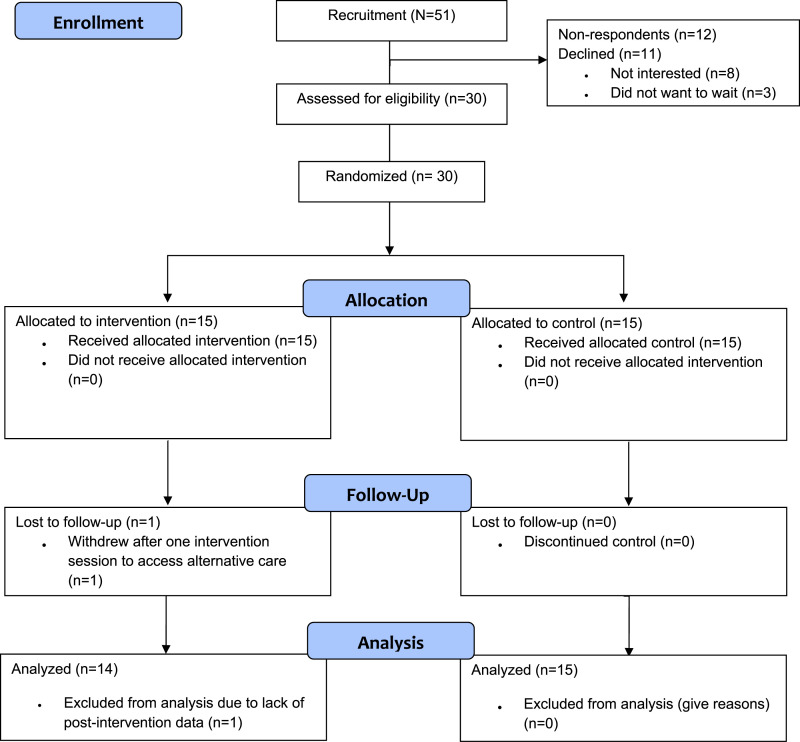
We evaluate the feasibility, acceptability, and potential effect of an acceptance and commitment therapy (ACT) tele-counselling program offered by a non-profit organization for care partners of persons with dementia (PWD) in a bilingual rural province. Thirty participants enrolled and one withdrew. Intervention group participants (n = 14) received 6–8 individual counselling sessions via telephone, videoconference, or text. Control group participants (n = 15) received two general support telephone calls from Alzheimer Society staff. Results indicated limited recruitment and adherence (completion) feasibility, although acceptability and usability were high. Significant within-group reductions in anxiety and stress symptoms (DASS-21) and burden (ZBI-12) in the intervention group were demonstrated, although the groups were not significantly different post-intervention. ACT tele-counselling may increase care partner access to mental health services, improve symptoms, and alleviate strain on Alzheimer Society staff, though a larger trial is needed with a longer duration, multiple ACT therapists, and additional recruitment efforts. Protocol registered at https://clinicaltrials.gov/study/NCT05385458.
Verified 2026-11-22 · 1 reference not checked yet
Overview
CoChat Summary
## TL;DR
This pilot parallel RCT tested an ACT tele-counselling program for care partners of persons living with dementia in a bilingual rural Canadian province and found high acceptability but limited recruitment and completion feasibility. The intervention showed within-group reductions in anxiety, stress, and burden, but no significant post-intervention between-group differences.
## Key findings
- Thirty participants enrolled; 1 withdrew, leaving 29 participants for analysis. The sample was predominantly White (93.3%), women (86.7%), with a mean age of 55.43 years (SD = 9.86).
- Recruitment feasibility was limited: recruitment rate was 58.8% (30/51), below the 80-participant target; enrollment rate was 73.2% (30/41), and among ACT participants, 62.5% completed the target 6–8 sessions within the study timeline.
- Acceptability was high: retention was 97% (n = 29), mean CSQ-8 satisfaction was 3.67/4.0 (SD = 0.46), 67% were “very satisfied,” 75% would definitely recommend the program, and the mean SUS usability score was 95.2%.
- In the intervention group, paired-sample t-tests showed significant decreases in DASS-21 anxiety, t(13) = 3.16, p = .008, stress, t(13) = 2.93, p = .012, and ZBI-12 burden, t(13) = 2.97, p = .011; between-group post-intervention differences were not significant.
- Among participants who completed at least 6 sessions, the only significant within-group change remaining was decreased DASS-21 anxiety, t(8) = 3.55, p = .008.
## Methods
- Mixed-methods, pilot feasibility, parallel RCT with 1:1 randomization to ACT tele-counselling or usual care; recruitment ran on a rolling basis from May to October 2023.
- Participants were adults 19+ who were French- or English-speaking and providing unpaid care to a family member/friend with Alzheimer’s disease or related dementia; 30 enrolled and 29 completed both time points.
- Quantitative outcomes were assessed at baseline and 16–24 weeks later using self-report measures (DASS-21, ZBI-12, AAQ-2, EMAS), with descriptive statistics, chi-square tests, paired-sample t-tests, independent-samples t-tests, and correlations; qualitative feedback was analyzed using content analysis.
## Limitations
- The paper states that the small sample size and single-province geographic focus limit generalizability, and that the small sample leaves it unclear whether differences between primary and sensitivity analyses reflect intervention effects or limited power.
- The paper states that participants were predominantly younger, English-speaking, White women caring for a parent, which may not reflect the broader population; it also notes that people with acute mental illness were excluded.
- Evident from the text: the study was not blinded to participants and relied on self-reported outcomes, which the authors note may have introduced social desirability bias; also, a single therapist delivered the intervention, which likely constrained completion and availability.
Model-written summary. Check it against the paper before relying on it.
Integrity signals
Registry
Cites
Statistics
Figures
Verification
Claims the paper makes
13 Valid · 2 Not valid · 10 Not checked · 65 Own results and interpretations
The cited sources support only part of this claim — read each source’s verdict below.
In the paper
“Evidence for feasibility and acceptability of remote and in-person ACT interventions has been generated in the USA and Europe (Atefi et al., 2024; Ferreira et al., 2023; Scott et al., 2023).”
§ Acceptance and Commitment Therapy Tele-Counselling Program With Care Partners of Persons Living With Dementia: A Pilot Feasibility RCT > Introduction
What the sources say
- Supportedcites Atefi et al., 2024 matched to “A Web-Based Intervention Based on Acceptance and Commitment Therapy for Family Caregivers of People With Dementia: Mixed Methods Feasibility Study” (2024) source
The Methods (Recruitment Procedure and Screening; page unavailable) place this study in the Netherlands. The Discussion (Conclusions; page unavailable) reports that its web-based ACT intervention was feasible and acceptable. This paper supplies the European remote-intervention example in a sentence supported by multiple citations; it is not offered as the US or in-person example. (LLM, conf=0.90)
- Partly supportedcites Ferreira et al., 2023 matched to “Effects of Acceptance and Commitment Therapy (ACT) group intervention for the treatment of anxiety in family carers of people with dementia: an exploratory randomised controlled trial” (2023) sourceExperimental — accuracy not yet measured
The Abstract (page unavailable) describes a remotely delivered ACT intervention, which supports the remote-intervention part of the claim. But this trial involved Brazilian family carers, not participants in the USA or Europe, and the reported outcomes concern effectiveness rather than feasibility or acceptability. It provides no evidence for an in-person intervention. (LLM, conf=0.84)
- Not matchedcites Scott et al., 2023
An author–year citation the paper’s reference list doesn’t settle. We don’t search these by name.
plain- Asserted: passes — The authors put it forward as true.
- Checkable: passes — It can be checked against evidence.
- Load-bearing: passes — The paper’s conclusions depend on it.
- Based: passes — The paper gives a reason why it holds.
- Supported
The cited sources that could be checked couldn’t confirm or dispute this claim.
In the paper
“however, no studies of ACT with care partners have been completed in Canada to date (Gloster et al., 2020).”
§ Acceptance and Commitment Therapy Tele-Counselling Program With Care Partners of Persons Living With Dementia: A Pilot Feasibility RCT > Introduction
What the sources say
- Could not verifycites Gloster et al., 2020 matched to “The empirical status of acceptance and commitment therapy: A review of meta-analyses” (2020) sourceExperimental — accuracy not yet measured
The abstract describes a review of ACT meta-analyses, and §2.1 describes a search for meta-analyses rather than a survey of all ACT studies. Searches for Canadian care-partner and caregiver studies found no passage addressing whether any such studies had been completed in Canada. The review therefore does not establish the claimed absence of studies. (LLM, conf=0.76)
plain- Asserted: passes — The authors put it forward as true.
- Checkable: passes — It can be checked against evidence.
- Load-bearing: passes — The paper’s conclusions depend on it.
- Based: passes — The paper gives a reason why it holds.
- Could not verify
Every source the paper cites for this claim was checked and supports it.
In the paper
“Community service providers, including AS staff, have reported emotional and moral distress when system challenges prevent them from meeting client needs (Webber et al., 2022).”
§ Acceptance and Commitment Therapy Tele-Counselling Program With Care Partners of Persons Living With Dementia: A Pilot Feasibility RCT > Discussion
What the sources say
- Supportedcites Webber et al., 2022 matched to “Moral distress experienced by community service providers of home health and social care in Ontario, Canada” (2022) source
The Introduction identifies Alzheimer's Society (AS) staff as community service providers. The Findings (§3) report frustration, guilt, anger and grief when providers could not deliver the care clients needed, while §3.3 links system challenges to their inability to provide effective care. (LLM, conf=0.92)
plainstates a cause- Asserted: passes — The authors put it forward as true.
- Checkable: passes — It can be checked against evidence.
- Load-bearing: unclear — It is unclear whether the paper’s conclusions depend on it.
- Based: passes — The paper gives a reason why it holds.
- Supported
A result the paper reports from its own data — it cites no other source for it, so there is none to check. The quote shows it is in the paper.
In the paper
“Most geographic regions were represented (n = 7/8, 87.5%), except for one distant Francophone community.”
§ Acceptance and Commitment Therapy Tele-Counselling Program With Care Partners of Persons Living With Dementia: A Pilot Feasibility RCT > Results > Feasibility, Fidelity, and Acceptability
plainn = 7- Asserted: passes — The authors put it forward as true.
- Checkable: passes — It can be checked against evidence.
- Load-bearing: unclear — It is unclear whether the paper’s conclusions depend on it.
- Based: passes — The paper gives a reason why it holds.
A result the paper reports from its own data — it cites no other source for it, so there is none to check. The quote shows it is in the paper.
In the paper
“Additionally, some participants struggled to find a private space for sessions, with one explaining, “I’d either go to my car or find a quiet spot at work” (ACT23).”
§ Acceptance and Commitment Therapy Tele-Counselling Program With Care Partners of Persons Living With Dementia: A Pilot Feasibility RCT > Results > Feasibility, Fidelity, and Acceptability
plain- Asserted: passes — The authors put it forward as true.
- Checkable: passes — It can be checked against evidence.
- Load-bearing: unclear — It is unclear whether the paper’s conclusions depend on it.
- Based: passes — The paper gives a reason why it holds.
25 more claims
Create a free account to see all 90 claims and to verify the 6 references still open.
- Probably not a substantial claim. 32
- It may state two separate claims as one. 41
Statistics recomputed
Every reported test result, recomputed from its test statistic and degrees of freedom. A result shows as not adding up only once an independent check has confirmed it.
- Consistentt(13) = 3.16reported p = .008 · recomputed p = .008
“t(13) = 3.16, p = .008”
- Consistentt(13) = 2.93reported p = .012 · recomputed p = .012
“t(13) = 2.93, p = .012”
- Consistentt(13) = 2.97reported p = .011 · recomputed p = .011
“t(13) = 2.97, p = .011”
- Consistentt(14) = 2.58reported p = .022 · recomputed p = .022
“t(14) = 2.58, p = .022”
- Consistentt(8) = 3.55reported p = .008 · recomputed p = .008
“t(8) = 3.55, p = .008”
Self-check
Percentages, sums and reported differences re-computed from the paper’s own numbers.
Each contradiction between two passages listed here was confirmed by an independent check.
Rated minor: it would not touch a result — a value no result rests on, a p-value that stays on the same side of the significance level, or a conflict that is clerical, resolved elsewhere in the paper, or outside its own findings.
In the paper
§ Acceptance and Commitment Therapy Tele-Counselling Program With Care Partners of Persons Living With Dementia: A Pilot Feasibility RCT > Methods > Design
“Recruitment followed a rolling basis, initiating the intervention or usual care between May and October 2023.”
§ Acceptance and Commitment Therapy Tele-Counselling Program With Care Partners of Persons Living With Dementia: A Pilot Feasibility RCT > Results > Feasibility, Fidelity, and Acceptability
“However, 35.7% (n = 5) who enrolled closer to the grant end date (October 2022) did not complete all sessions on time, finishing after Time 2 data collection.”
Citations
Cites
Tabachnick, B. G., & Fidell, L. S. (1983) · Cited by 80,058
Lovibond, P. F., & Lovibond, S. H. (1995) · Behaviour Research and Therapy · doi:10.1016/0005-7967(94)00075-u · Cited by 14,523 · cited 2×
“Exclusion criteria were self-reported acute mental illness (e.g., schizophrenia) and/or severe distress scores on two or more DASS-21 subscales: depression (>21), anxiety (>14), and stress (>25) (Lovibond & Lovibond, 1995).”
What's in a name? Qualitative description revisited
Sandelowski, M. (2010) · Research in Nursing & Health · doi:10.1002/nur.20362 · Cited by 4,975 · cited 1×
“Participant and staff feedback were analyzed using content analysis as outlined by Sandelowski (2010).”
Research Design: Qualitative, Quantitative, and Mixed Methods Approaches
Perreault, K. (2011) · Manual Therapy · doi:10.1016/j.math.2010.09.003 · Cited by 4,759
Bond, F. W., Hayes, S. C., Baer, R. A., Carpenter, K. M., Guenole, N., Orcutt, H. K., Waltz, T., & Zettle, R. D. (2011) · Behavior Therapy · doi:10.1016/j.beth.2011.03.007 · Cited by 3,950 · cited 2×
“Total scores are calculated by summing item responses, with higher scores indicating greater psychological in fl exibility and experiential avoidance (Bond et al., 2011; Monestès & Villatte, 2011).”
CONSORT 2010 statement: Updated guidelines for reporting parallel group randomised trials
Schulz, K. F., Altman, D. G., & Moher, D. (2010) · Journal of Pharmacology and Pharmacotherapeutics · doi:10.4103/0976-500x.72352 · Cited by 2,165
The System Usability Scale: Past, Present, and Future
Lewis, J. R. (2018) · International Journal of Human–Computer Interaction · doi:10.1080/10447318.2018.1455307 · Cited by 1,958 · cited 2×
“The SUS has evidence for internal consistency (typically α > .85) and concurrent validity when compared with other usability measures (Lewis, 2018).”
Bédard, M., Molloy, D. W., Squire, L., Dubois, S., Lever, J. A., & O'Donnell, M. (2001) · The Gerontologist · doi:10.1093/geront/41.5.652 · Cited by 1,691 · cited 2×
“The ZBI-12 is a 12-item tool measuring caregiver burden across three domains: caregiving impact on the caregiver ’ s life, feelings of guilt, and caregiving role frustration or embarrassment (B´edard et al., 2001).”
The Use of Psychological Testing for Treatment Planning and Outcome Assessment
Maruish, M. E., & Leahy, R. L. (2000) · Journal of Cognitive Psychotherapy · doi:10.1891/0889-8391.14.2.205 · Cited by 1,634
(2013) · Journal of Usability Studies archive · Cited by 1,357
Guidelines for designing and evaluating feasibility pilot studies
Teresi, J. A., Yu, X., Stewart, A. L., & Hays, R. D. (2022) · Medical Care · doi:10.1097/mlr.0000000000001664 · Cited by 734 · cited 1×
“The study aimed to recruit 80 participants to allow a 25% attrition rate and a fi nal sample of 40 participants, appropriate for pilot feasibility studies (Creswell & Creswell, 2022; Teresi et al., 2022).”
Acceptance and Commitment Therapy as a Unified Model of Behavior Change
Hayes, S. C., Pistorello, J., & Levin, M. E. (2012) · The Counseling Psychologist · doi:10.1177/0011000012460836 · Cited by 718 · cited 3×
“The AAQ-2 is a seven-item scale designed to assess psychological fl exi-bility; the core mechanism and standard outcome measure of ACT (Hayes et al., 2012).”
The empirical status of acceptance and commitment therapy: A review of meta-analyses
Gloster, A. T., Walder, N., Levin, M. E., Twohig, M. P., & Karekla, M. (2020) · Journal of Contextual Behavioral Science · doi:10.1016/j.jcbs.2020.09.009 · Cited by 622 · cited 3×
“…of logical yet distressing thoughts, emotions, and situations making it particularly suited for care partners of PWD. Researchers from Europe and the United States (USA) have consistently demonstrated reduced symptoms of depression, anxiety, and stress in ACT studies (Gloster et al., 2020).”
InfluentialAn overview of and recommendations for more accessible digital mental health services
Lattie, E. G., Stiles-Shields, C., & Graham, A. K. (2022) · Nature Reviews Psychology · doi:10.1038/s44159-021-00003-1 · Cited by 446 · cited 1×
“Remote-delivered psychotherapy (e.g., text, telephone, and videoconference) can help overcome barriers and shows similar effects to in-person therapy (Lattie et al., 2022).”
Short-form Zarit caregiver burden interviews were valid in advanced conditions
Higginson, I. J., Gao, W., Jackson, D., Murray, J., & Harding, R. (2010) · Journal of Clinical Epidemiology · doi:10.1016/j.jclinepi.2009.06.014 · Cited by 343 · cited 1×
“Reliability has been demonstrated ( α = .87) and concurrent validity (Rho = .96 with the long-version) (Higginson et al., 2010).”
Goldberg, B., Brintnell, E. S., & Goldberg, J. (2002) · Occupational Therapy in Mental Health · doi:10.1300/j004v18n02_03 · Cited by 228 · cited 3×
“Baseline ZBI-12, AAQ-2, and EMAS scores aligned with prior research, indicating high burden and low-to-moderate engagement in meaningful activities (B´edard et al., 2001; Fauth et al., 2022; Goldberg et al., 2002).”
(1994) · Cited by 98
O'Neill, L., Latchford, G., McCracken, L. M., & Graham, C. D. (2019) · Journal of Contextual Behavioral Science · doi:10.1016/j.jcbs.2019.08.008 · Cited by 87 · cited 4×
“Therapist fi delity was measured using an adapted version of the ACT-Fidelity Measure (O ’ Neil et al., 2019), achieving 86% inter-rater reliability between the therapist and a graduate student external to the study.”
Influentialde Moissac, D., & Bowen, S. (2017) · Healthcare Management Forum · doi:10.1177/0840470417706378 · Cited by 72 · cited 2×
“Harsh weather and rugged terrain limit transportation for 6 months of the year, make internet connectivity inconsistent, and create additional barriers to accessing mental health services (de Moissac & Bowen, 2017).”
Recruitment of Community-Based Samples: Experiences and Recommendations for Optimizing Success
Garnett, A., & Northwood, M. (2021) · Canadian Journal of Nursing Research · doi:10.1177/08445621211060935 · Cited by 45
Fauth, E. B., Novak, J. R., & Levin, M. E. (2022) · Aging & Mental Health · doi:10.1080/13607863.2021.1942432 · Cited by 38 · cited 1×
“Baseline ZBI-12, AAQ-2, and EMAS scores aligned with prior research, indicating high burden and low-to-moderate engagement in meaningful activities (B´edard et al., 2001; Fauth et al., 2022; Goldberg et al., 2002).”
Depression in Main Caregivers of Dementia Patients: Prevalence and Predictors
Omranifard, V., Haghighizadeh, E., & Akouchekian, S. (2018) · Advanced Biomedical Research · doi:10.4103/2277-9175.225924 · Cited by 34 · cited 2×
“While caregiving can be deeply rewarding, it is also associated with burden, stress, suicidal thoughts, and complicated grief (Omranifard et al., 2018).”
Psychological flexibility in older adulthood: a scoping review.
Plys, E., Jacobs, M. L., Allen, R. S., & Arch, J. J. (2023) · Aging & Mental Health · doi:10.1080/13607863.2022.2036948 · Cited by 29 · cited 2×
“Increasing psychological fl exibility reduces burden and depression, helping care partners manage losses related to dementia that are unchangeable or incurable (Plys et al., 2023).”
Ye, F., Lee, J. J., Xue, D., & Yu, D. S.-F. (2023) · JAMA Network Open · doi:10.1001/jamanetworkopen.2023.46216 · Cited by 23 · cited 1×
“However, most randomized control trials (RCTs) include in-person, face-to-face modalities which are often inaccessible in practice due to barriers such as caregiving responsibilities, rural isolation, and mental and dementia stigma (Giebel et al., 2022; Ye et al., 2023).”
Traduction et validation du Questionnaire sur l’engagement dans les activités signifiantes
Lacroix, P.-A., Pelletier, A.-J., Blondin, M.-P., Dugal, A., Langlois, C., Levasseur, M., & Larivière, N. (2018) · Canadian Journal of Occupational Therapy · doi:10.1177/0008417417702925 · Cited by 21 · cited 1×
“The EMAS is a 12-item measure that evaluates the extent to which participants ’ daily activities align with their values and provide a sense of purpose (Goldberg et al., 2002; Lacroix et al., 2018).”
Vahabi, M., Pui-Hing Wong, J., Moosapoor, M., Akbarian, A., & Fung, K. (2022) · JMIR Formative Research · doi:10.2196/32136 · Cited by 18 · cited 1×
“Summative subscale scores are calculated with higher scores indicating greater levels of distress ( α = .78 – .89) (Vahabi et al., 2022).”
Giebel, C., Lion, K., Mackowiak, M., Chattat, R., Kumar, P. N. S., Cations, M., Gabbay, M., Moyle, W., Ottoboni, G., Rymaszewska, J., et al. (2022) · BMC Geriatrics · doi:10.1186/s12877-022-02821-1 · Cited by 18 · cited 1×
“However, most randomized control trials (RCTs) include in-person, face-to-face modalities which are often inaccessible in practice due to barriers such as caregiving responsibilities, rural isolation, and mental and dementia stigma (Giebel et al., 2022; Ye et al., 2023).”
Atefi, G. L., van Knippenberg, R. J. M., Bartels, S. L., Losada-Baltar, A., Márquez-González, M., Verhey, F. R. J., & de Vugt, M. E. (2024) · JMIR Aging · doi:10.2196/53489 · Cited by 15 · cited 5×
“…(at least by telephone) by a trained therapist with perceived bene fi ts. CBTremains the most widely available form of psychotherapy; however, therapists and mental health providers should consider offering ACT to care partners and providing services through remote modalities (Ate fi et al., 2024).”
InfluentialWebber, J., Trothen, T. J., Finlayson, M., & Norman, K. E. (2022) · Health & Social Care in the Community · doi:10.1111/hsc.13592 · Cited by 15 · cited 1×
“Community service providers, including AS staff, have reported emotional and moral distress when system challenges prevent them from meeting client needs (Webber et al., 2022).”
Scott, A. M., Peiris, R., Atkins, T., Cardona, M., Greenwood, H., Clark, J., & Glasziou, P. (2025) · Journal of Telemedicine and Telecare · doi:10.1177/1357633x231204071 · Cited by 11 · cited 1×
“Evidence for feasibility and acceptability of remote and in-person ACT interventions has been generated in the USA and Europe (Ate fi et al., 2024; Ferreira et al., 2023; Scott et al., 2023).”
Towards defining quality in home care for persons living with dementia
Saragosa, M., Jeffs, L., Okrainec, K., & Kuluski, K. (2022) · PLOS ONE · doi:10.1371/journal.pone.0274269 · Cited by 10 · cited 1×
“Research has similarly linked care partners ’ mental and physical health to PWD care quality and long-term care admission timing (Saragosa et al., 2022).”
Durepos, P., MacLean, R., Ricketts, N., Boamah, S. A., Witherspoon, R., Gould, O., Olthuis, J. V., Totton, K., Tucker, K., Boulay, I., et al. (2024) · Aging & Mental Health · doi:10.1080/13607863.2023.2288864 · Cited by 4 · cited 2×
“These fi ndings align with existing literature on ACT with participants which describe fl exibility, convenience, and remote delivery with minimal need for technology as increasing access to mental health services (Ate fi et al., 2024; Durepos et al., 2023).”
Self-citationFerreira, M. G., Kishita, N., de Faria, R. C. V., Plautino, M. E. A., Yonamine, G. C., Torres, S. C. R., & Caramelli, P. (2023) · Alzheimer's & Dementia · doi:10.1002/alz.073140 · Cited by 2 · cited 1×
“Evidence for feasibility and acceptability of remote and in-person ACT interventions has been generated in the USA and Europe (Ate fi et al., 2024; Ferreira et al., 2023; Scott et al., 2023).”
Comment devenir un thérapeute ACT ?
Monestès, J.-L., & Villatte, M. (2011) · La Thérapie D'acceptation et D'engagement · doi:10.1016/b978-2-294-71087-2.00014-1
Research works printed but not linked: 1
- Monestès J. L. Villatte M. (2011). La thérapie d’acceptation et d’engagement. ACT: Elsevier Masson.
Cited by
Liang, M., Rong, J., Grosan, C.-D., & Wang, X. (2026) · Journal of Medical Internet Research · doi:10.2196/78568 · Cited by 5
Hao, X., Gao, W., & Lu, Y. (2026) · BMJ Open · doi:10.1136/bmjopen-2025-111183
Metadata
- Authors
- Durepos, P., Ricketts, N., Olthuis, J. V., Gould, O. N., Boamah, S. A., McCloskey, R., Lanteigne, M., Giberson, E. R., Caverhill, K., Pickford, K., MacBean, C., & Kaasalainen, S.
- Affiliations
- University of New Brunswick (CA)
- Alzheimer Society of New Brunswick
- Mount Allison University (CA)
- McMaster University (CA)
- Université de Moncton (CA)
- Corresponding author
- Durepos, Pamela
- ORCID
- Venue
- Journal of Applied Gerontology
- Publisher
- SAGE Publications
- Published
- 2025-05-12
- Volume
- 45
- Issue
- 2
- Pages
- 225-236
- ISSN
- 0733-4648 (ISSN-L)
- 1552-4523
- PMC
- PMC12759096
- OpenAlex
- W4410307166
- Cited by
- 3
- References
- 34
- Citations by year
- 2026: 3
- FWCI
- 3.53
- Type
- journal article
- Language
- en
- Open access
- hybrid
- doi.org
- Licence
- cc-by-nc
- creativecommons.org/licenses/by-nc/4.0/ (vor)
- journals.sagepub.com/page/policies/text-and-data-mining-license (tdm)
- Locations
- Journal of Applied Gerontology (publishedVersion, cc-by-nc)
- PubMed (publishedVersion)
- PubMed Central (publishedVersion, cc-by-nc)
- Funders
- Mental Health Research Canada (2022-2023)
- ResearchNB (2022-2023)
- Council of the Federation Award for Innovation in Mental Health and Addictions (2022)
- Topics
- Social Sciences › Psychology › Clinical Psychology › Mindfulness and Compassion Interventions
- Health Sciences › Medicine › Psychiatry and Mental health › Dementia and Cognitive Impairment Research
- Health Sciences › Medicine › Public Health, Environmental and Occupational Health › Telemedicine and Telehealth Implementation
- Keywords
- acceptance and commitment therapy, care partners, dementia, caregiver burden, anxiety, stress, feasibility, acceptability, rural population, bilingual population
- MeSH terms
- Aged, Aged, 80 and over, Anxiety, Counseling, Dementia, Feasibility Studies, Female, Humans, Male, Middle Aged, Patient Acceptance of Health Care, Pilot Projects, Stress, Psychological, Caregivers, Telemedicine, Acceptance and Commitment Therapy
About these checks
Registry, retraction, Cites and statistics results are computed, not judged, with one exception: a printed reference that no index lists is read once by a model before it counts as a citation error. Claims are extracted by a model and kept only when their quote appears verbatim in the text; each cited source is then checked, with a model’s help, for whether it says what the claim relies on. Those verdicts can be wrong — read the claim’s quote and the cited source before relying on one.
The claim verdicts this report counts are experimental: their accuracy is not yet measured.
A language model drew the claims from the paper on 2026-10-11, under version 3 of the claim definition (model deepseek-v4.1-flash, prompt extract-v3).
A second model labelled each claim on 2026-10-11 (model jev-1.13-20260917, definition revision gold-guideline-v0.2).
Cited sources are checked with a language model’s help (gpt-6-sol).
Statistics and arithmetic are recomputed, not judged.
Confidence bands are shown only for fields calibrated on our annotated test set. None is calibrated yet, so no band is shown.
What counts as a claim ›How we measure confidence ›How we check this ›
Are you an author, or do you see a problem with this page? Request a review
Data sources
Bibliographic data: Semantic Scholar, OpenAlex, Crossref.
Contains information from the Semantic Scholar Academic Graph Datasets, made available under the ODC Attribution License (ODC-BY 1.0).
Semantic Scholar’s data is described in: Kinney, R., et al. (2023). The Semantic Scholar Open Data Platform. arXiv:2301.10140.
